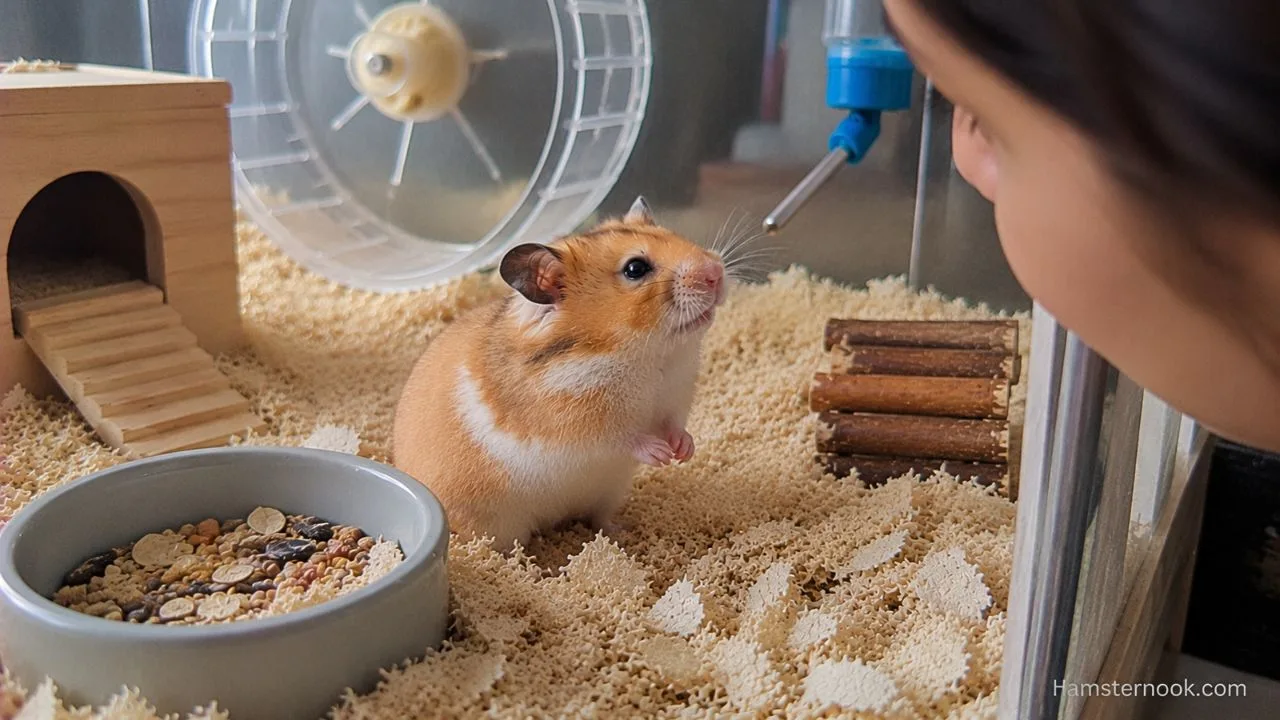
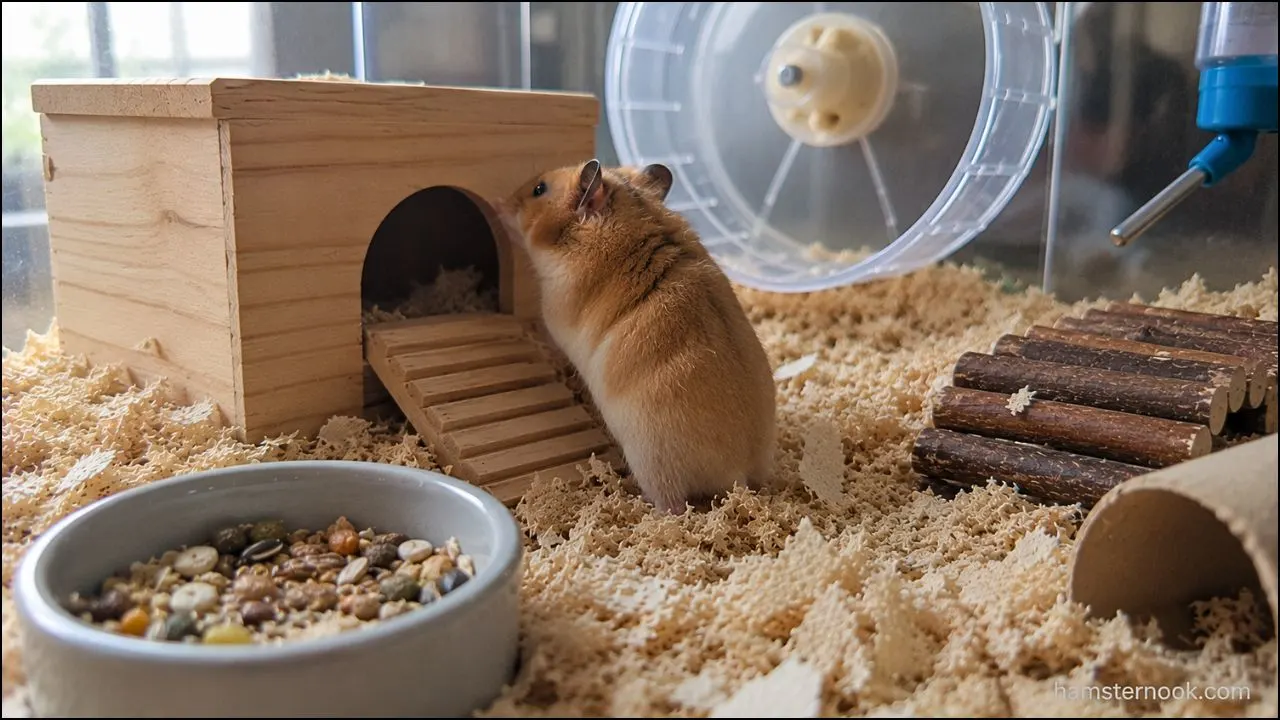
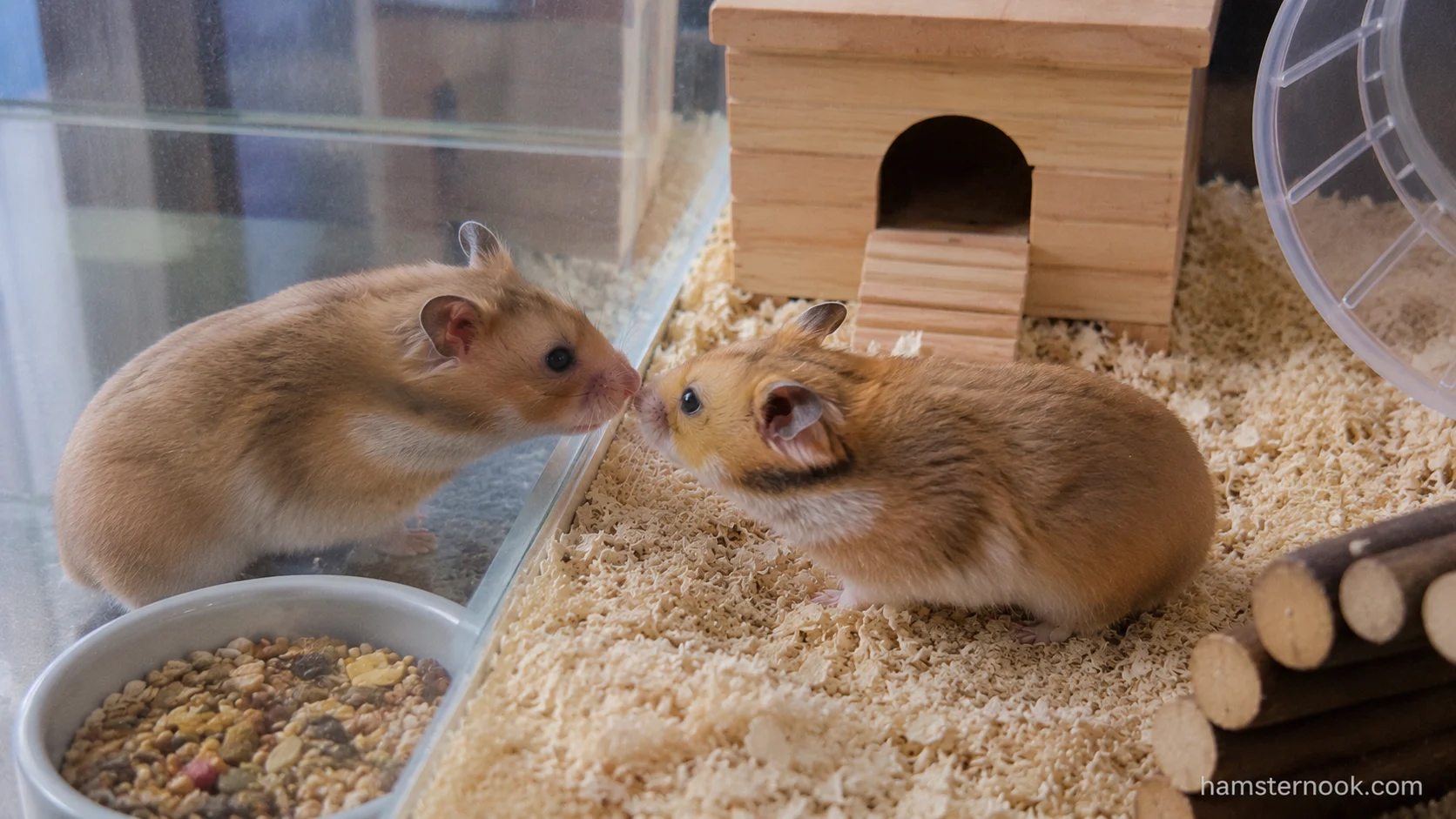
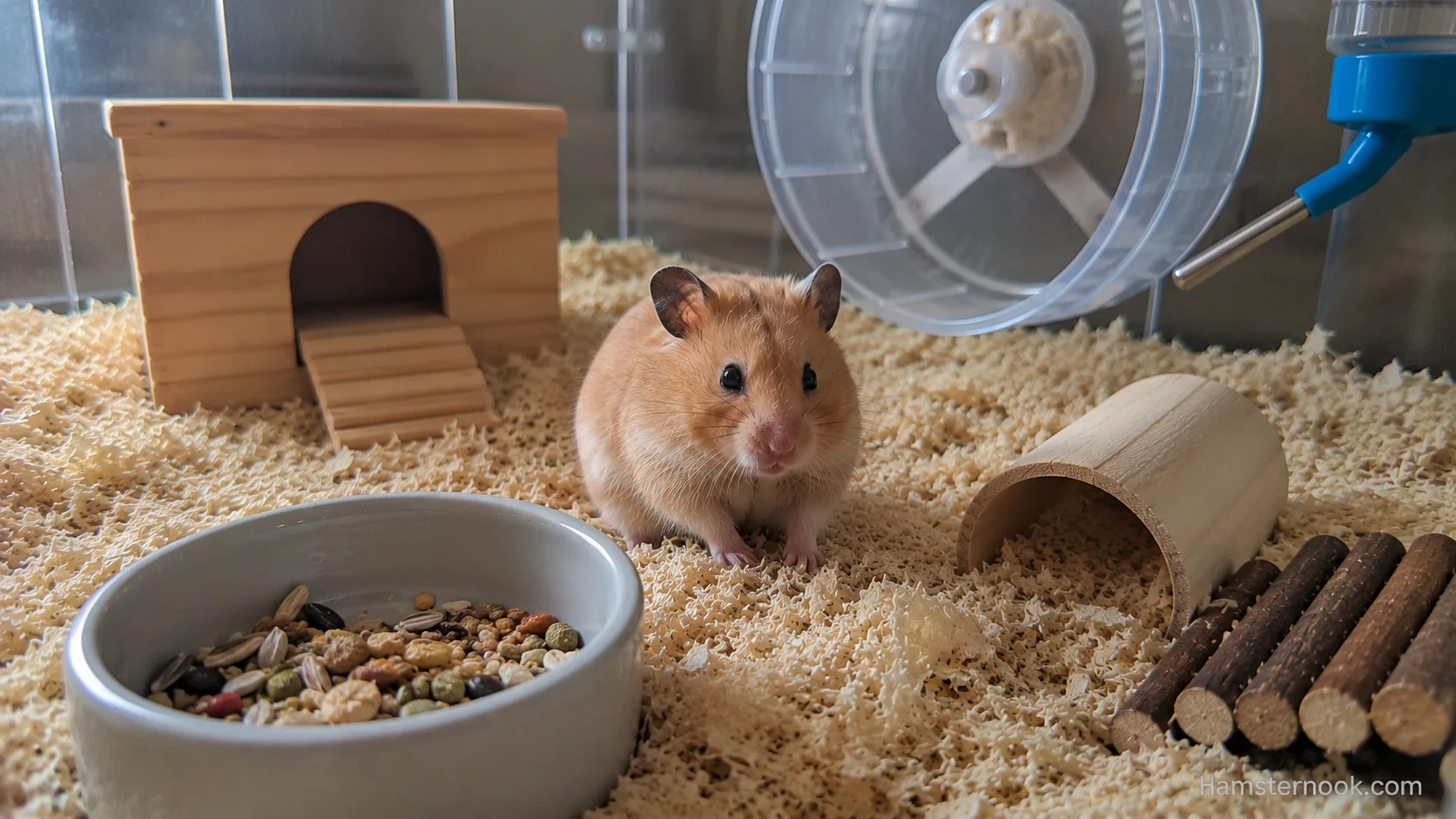
Seeing your hamster open its mouth wide and stretch can be surprising, especially if it happens right after waking up. An occasional yawn is not automatically a sign that something is wrong. What matters more is what happens around the yawn: whether your hamster stretches, grooms, eats, explores, and returns to its normal activity, or whether the mouth opening comes with breathing difficulty, weakness, loss of appetite, or another unusual change.
Quick Answer
A yawn is usually more reassuring when your hamster quickly returns to normal activity. Repeated mouth opening is more concerning when it occurs with breathing difficulty, reduced appetite, weakness, discharge, or other noticeable changes.
A hamster may yawn around periods of rest and activity, particularly when waking up or settling down. However, there is limited species-specific evidence explaining exactly why pet hamsters yawn, so it would be a mistake to assign one definite meaning to every yawn.
What matters most is what your hamster does before and after it happens.
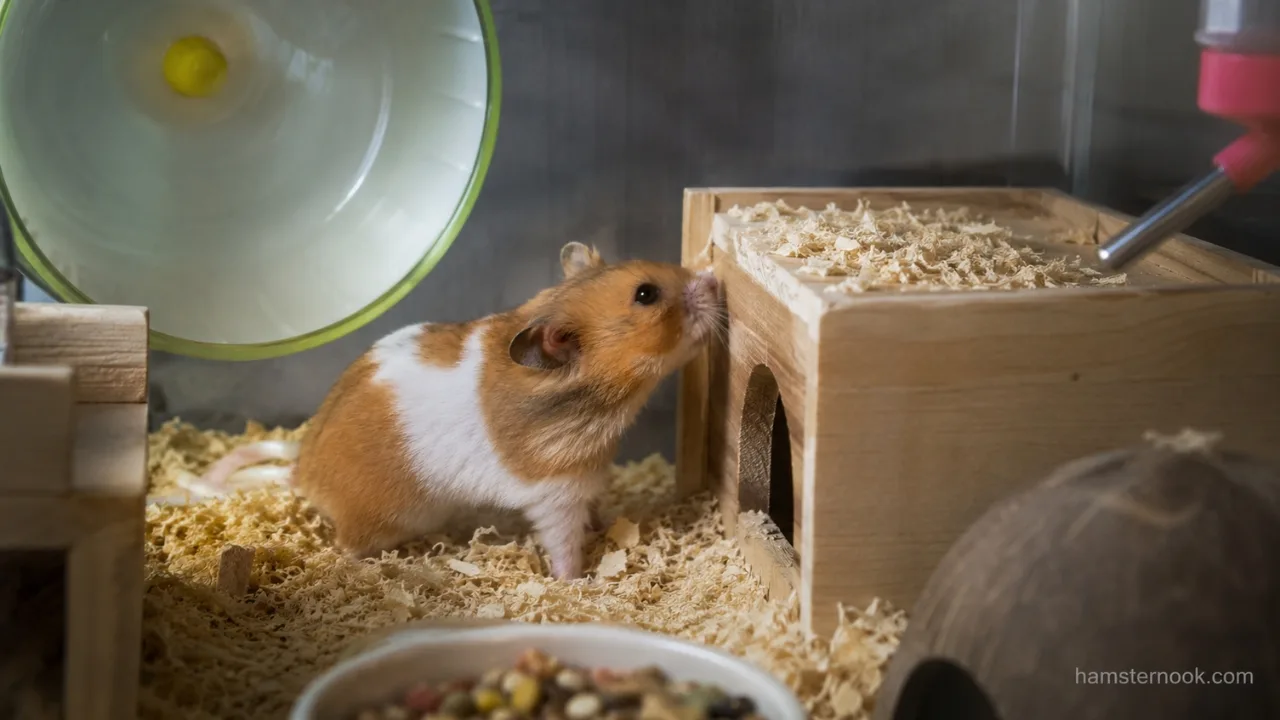
A hamster that yawns, stretches, starts grooming, eats, explores, or returns to normal activity is very different from a hamster that repeatedly opens its mouth while struggling to breathe, drooling, refusing food, or acting unusually weak.
Why Does My Hamster Yawn?
Yawning is a normal behavior seen in many mammals, but there isn’t enough hamster-specific evidence to say exactly why pet hamsters yawn.
For hamsters specifically, there isn’t strong veterinary evidence showing that every yawn has one particular function. Because of that, you shouldn’t assume that a yawn automatically means your hamster is tired, happy, bored, stressed, or sick.
The situation surrounding the yawn provides much more useful information.
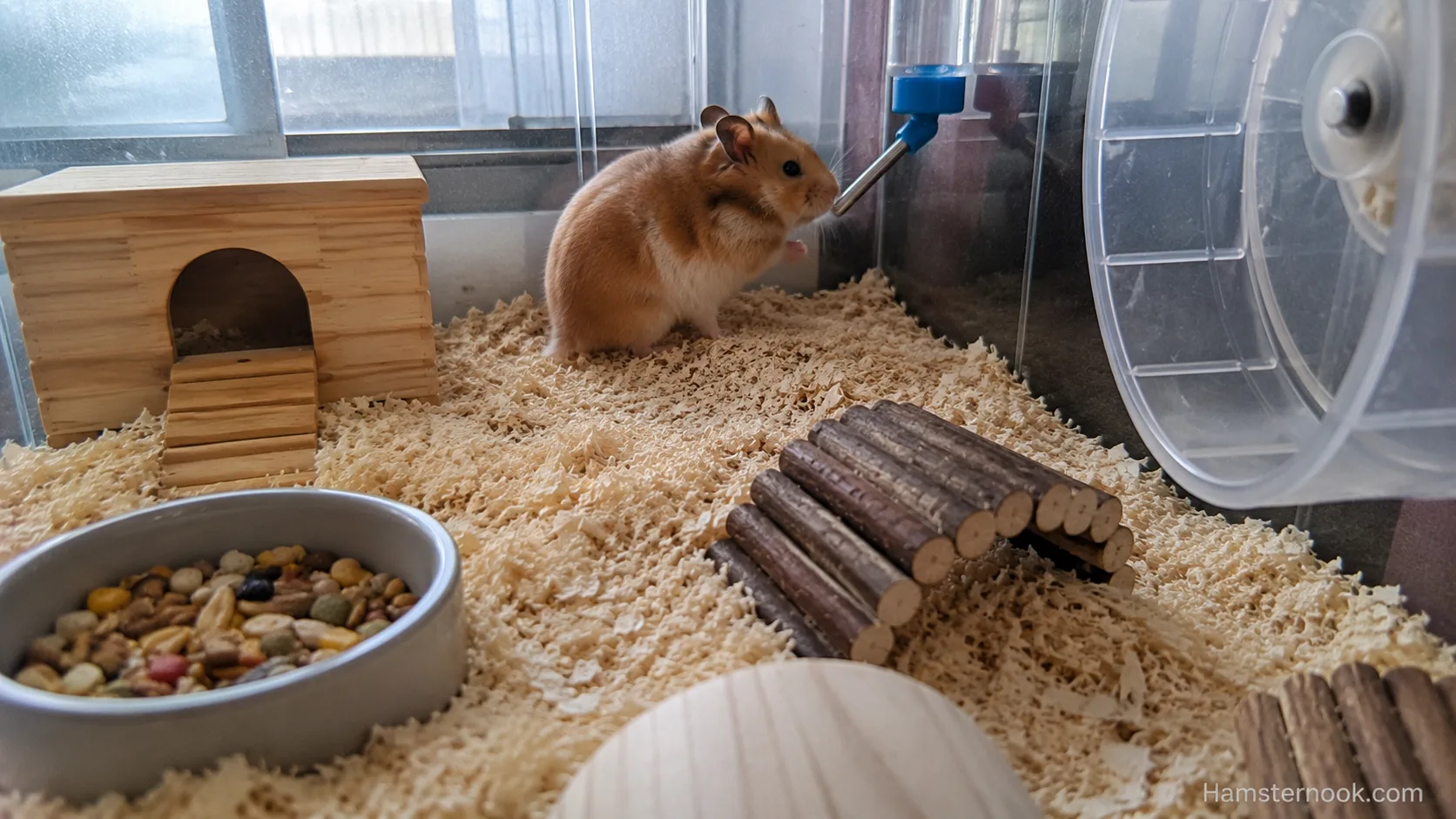
For example, a hamster waking from a long period of sleep may yawn and stretch before becoming active. Another hamster may yawn while relaxing in its nest. Both can occur without indicating a health problem.
Hamster Yawning After Waking Up
Hamsters spend substantial portions of the day resting and sleeping, with their activity concentrated around their normal active periods. When your hamster wakes, you may see several behaviors close together:
- Stretching its body
- Yawning
- Grooming
- Sniffing around
- Leaving its sleeping area
- Beginning to explore
Seeing a yawn as part of this larger wake-up routine is generally less concerning than seeing mouth-opening accompanied by obvious respiratory or behavioral abnormalities.
MSD Veterinary Manual notes that hamsters are most active during the night and that owners should become familiar with their pet’s normal behavior so changes are easier to recognize.
Does Yawning Mean My Hamster Is Tired?
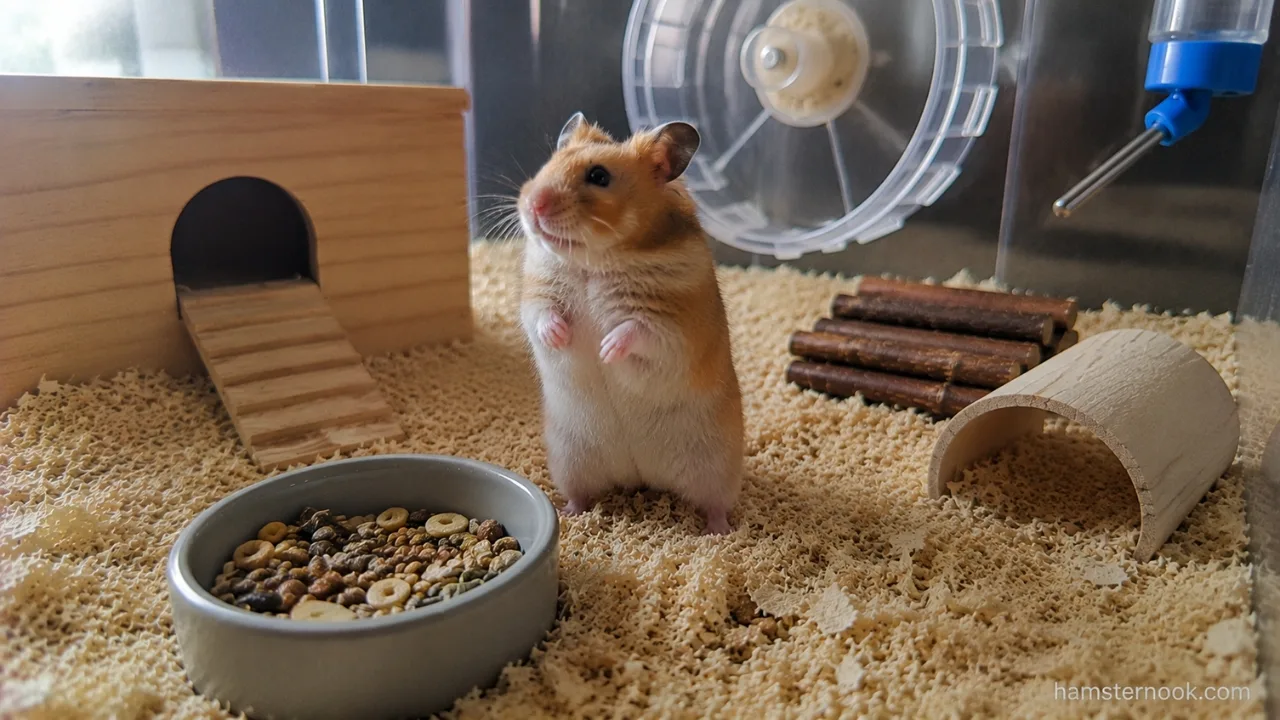
It may occur when your hamster is transitioning between rest and activity, but you should avoid treating yawning as a reliable “tiredness meter.”
A hamster can yawn and then immediately become active, running on its wheel, foraging, grooming, digging through bedding, or exploring its enclosure.
That’s why the idea that every hamster yawn means “I’m sleepy” is too simplistic.
Instead of asking only, “Why did my hamster yawn?” look at the next few minutes of behavior.
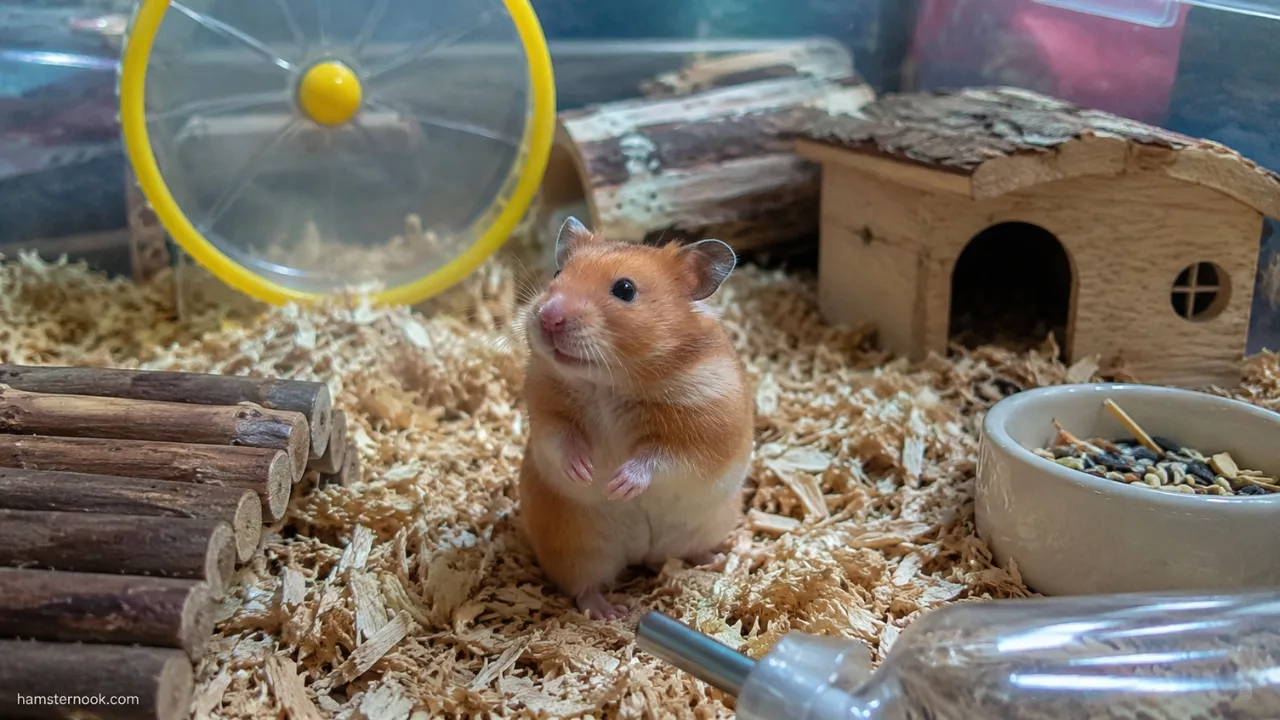
If your hamster returns to its normal routine, that’s reassuring.
Knowing what is normal for your hamster makes changes in behavior much easier to recognize. Complete Hamster Care Guide for Beginners (2026) covers the wider daily-care, housing, feeding, and health basics every owner should understand.
Yawning vs. Trouble Breathing
This is one distinction every hamster owner should know.
A normal yawn is a brief movement. The hamster opens its mouth, often stretches its jaw and body, and then closes its mouth and continues normally.
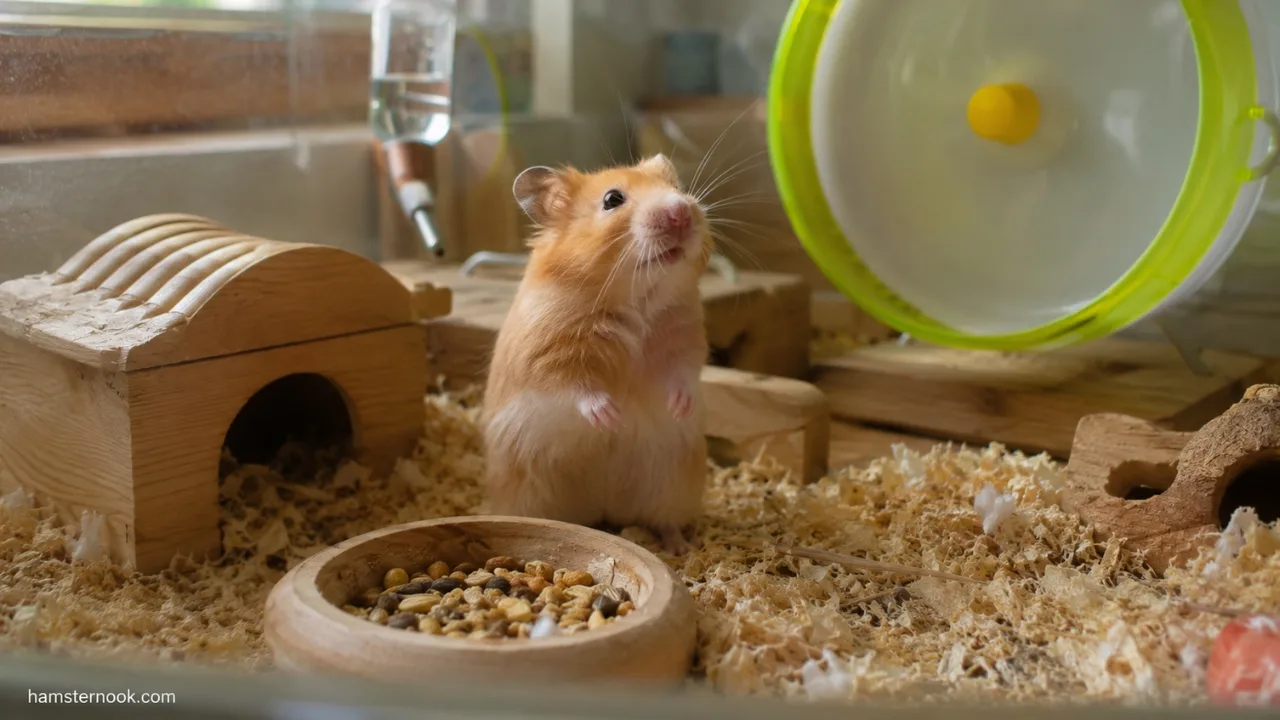
Breathing difficulty is different.
A hamster with a respiratory problem may show signs such as:
- Labored breathing
- Unusual breathing sounds
- Nasal or eye discharge
- Reduced activity
- Loss of appetite
- A hunched posture
- Abnormal behavior
MSD Veterinary Manual lists trouble breathing, inactivity, loss of appetite or weight, hunched posture, abnormal walking, and discharge from the eyes, ears, or nose among signs that can indicate illness in hamsters.
So if what you’re seeing doesn’t look like a quick yawn and your hamster appears to be struggling for air, don’t dismiss it as normal yawning.
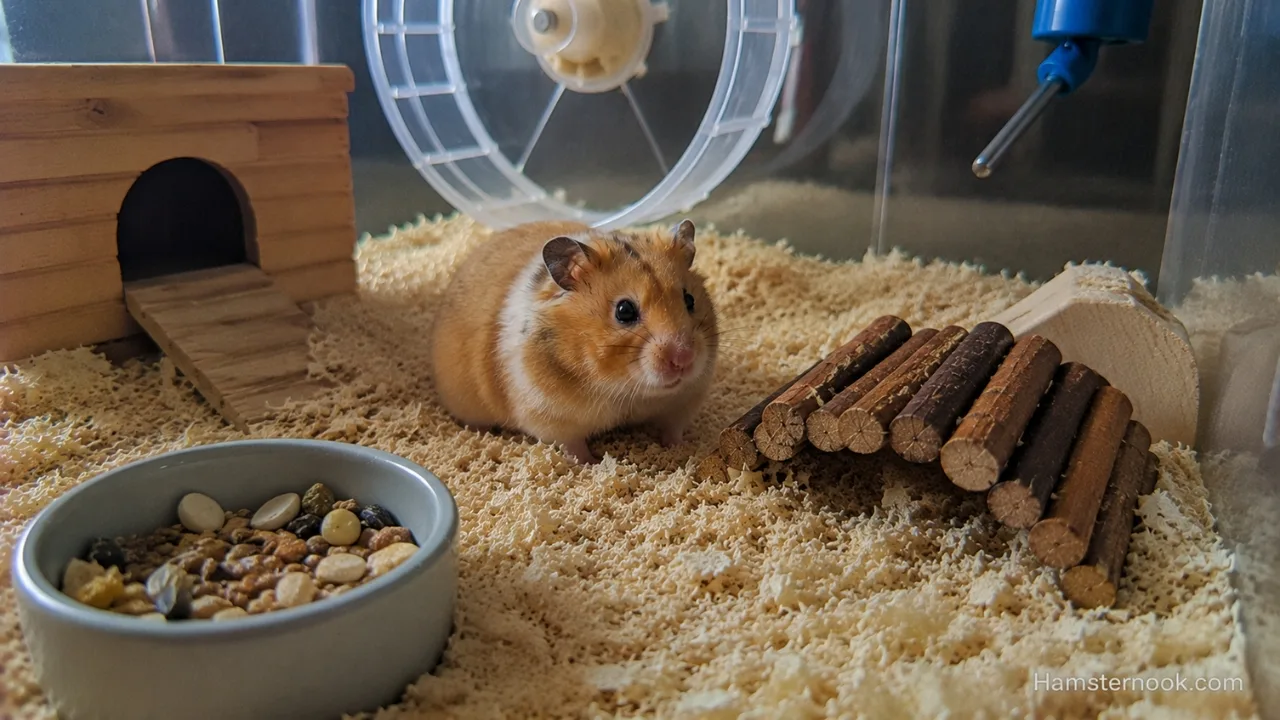
When mouth opening is accompanied by obvious breathing changes, it is important to consider respiratory problems rather than treating the behavior as a normal yawn. Why Is My Hamster Breathing Fast? Causes, Warning Signs & When To Worry explains the respiratory signs owners should take seriously.
How Can You Tell a Normal Yawn From Abnormal Mouth Opening?

The surrounding body language is useful.
| Normal yawning | Concerning mouth opening |
|---|---|
| Brief and occasional | Repeated or persistent |
| Hamster quickly returns to normal | Hamster appears distressed |
| Often happens around rest or activity changes | May occur alongside breathing difficulty |
| No obvious weakness | Reduced activity or weakness |
| Eating and drinking normally | Loss of appetite or difficulty eating |
| Normal movement | Abnormal movement or posture |
This isn’t a diagnostic test. A hamster cannot tell you why it is opening its mouth, so the table is simply a way to notice when the behavior deserves closer attention.
Can Hamsters Yawn When They Are Stressed?
There isn’t enough hamster-specific evidence to treat yawning by itself as a reliable sign of stress.
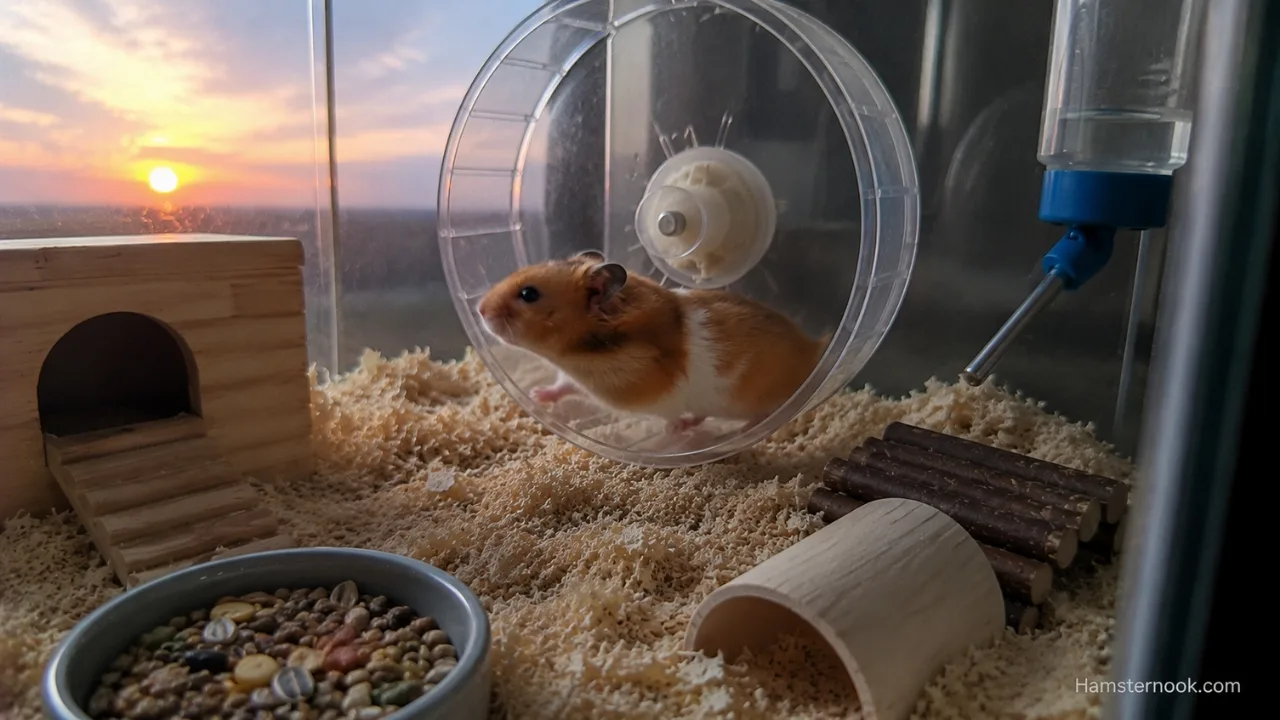
Hamsters can certainly become stressed by inappropriate handling, sudden disturbances, unsuitable housing, or other environmental problems, but you shouldn’t diagnose stress from one yawn.
Look for broader changes instead.
Looking at the hamster’s complete body language is more useful than interpreting one movement in isolation. Hamster Body Language Explained: Signs of Stress, Fear, Happiness & Trust explains how posture, movement, and other behaviors can help you understand what your hamster may be communicating.
A stressed or unwell hamster may show changes in its normal activity, hiding behavior, appetite, or interaction with its environment. Blue Cross emphasizes allowing hamsters to rest undisturbed and never waking them for playtime, while providing suitable hides and a secure environment to help them feel safe.
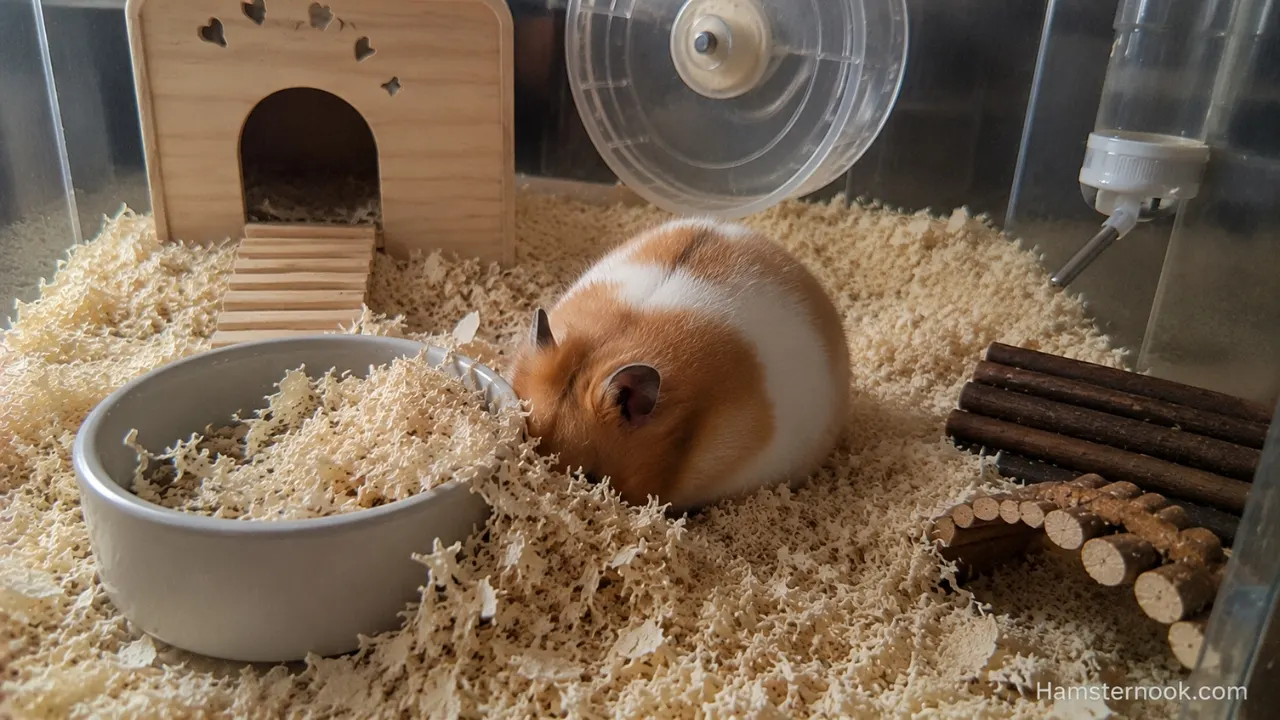
If you notice broader changes such as increased hiding, repetitive behavior, or other signs of stress, our 7 Signs You’re Accidentally Stressing Your Hamster (Without Even Realizing It) guide covers common environmental and handling-related stress signals.
If your hamster yawns once after you approach the enclosure, that alone doesn’t tell you that it is stressed.
Does My Hamster Yawn Because I Woke It Up?
It can happen during the transition from sleep to activity, but deliberately waking a hamster isn’t recommended just to observe the behavior.
Hamsters need uninterrupted opportunities to rest. Blue Cross specifically advises owners not to wake hamsters for playpen time and recommends putting them into a playpen only when they are awake.
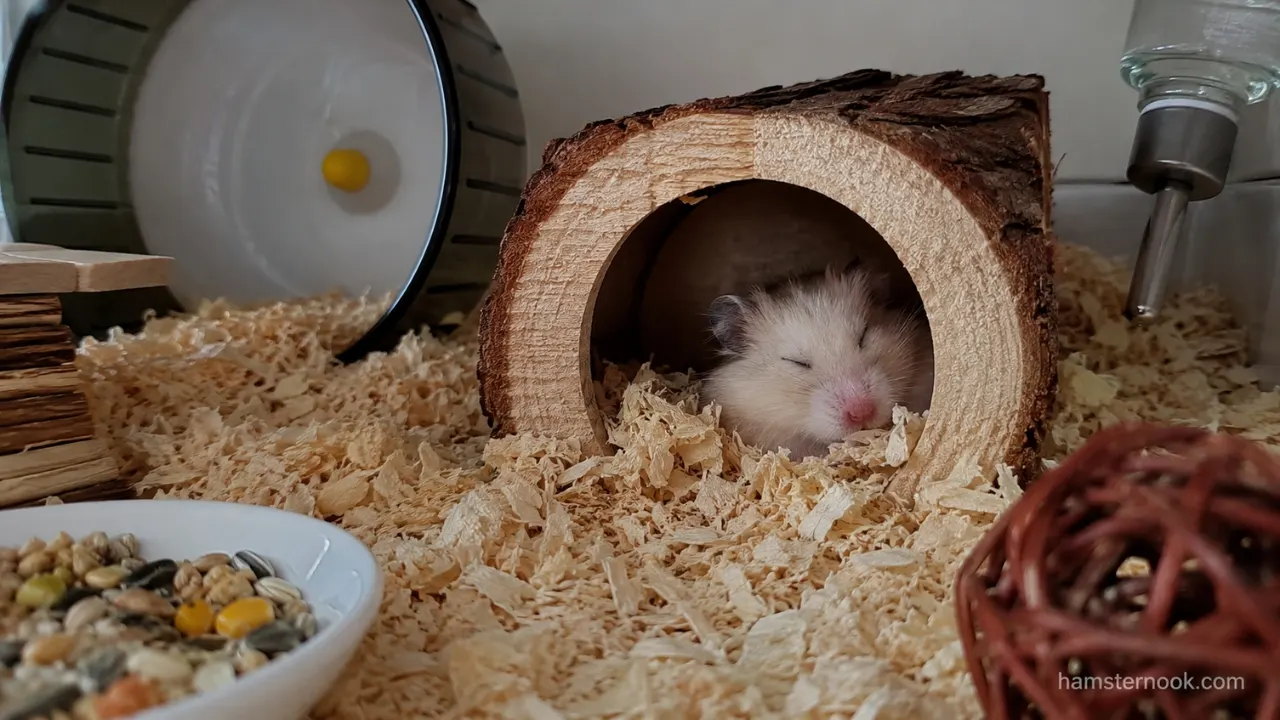
If you happen to see your hamster yawn naturally after waking on its own, there’s no reason to interrupt its routine.
Allow it to wake gradually, groom itself, explore, and decide when it is ready to become active.
What Does a Hamster Yawn Look Like?
Your hamster may pause, open its mouth widely, stretch its jaw, and sometimes extend its body at the same time. The whole movement is generally brief.
Some hamsters may follow the yawn with grooming or a full-body stretch before continuing with whatever they were doing.
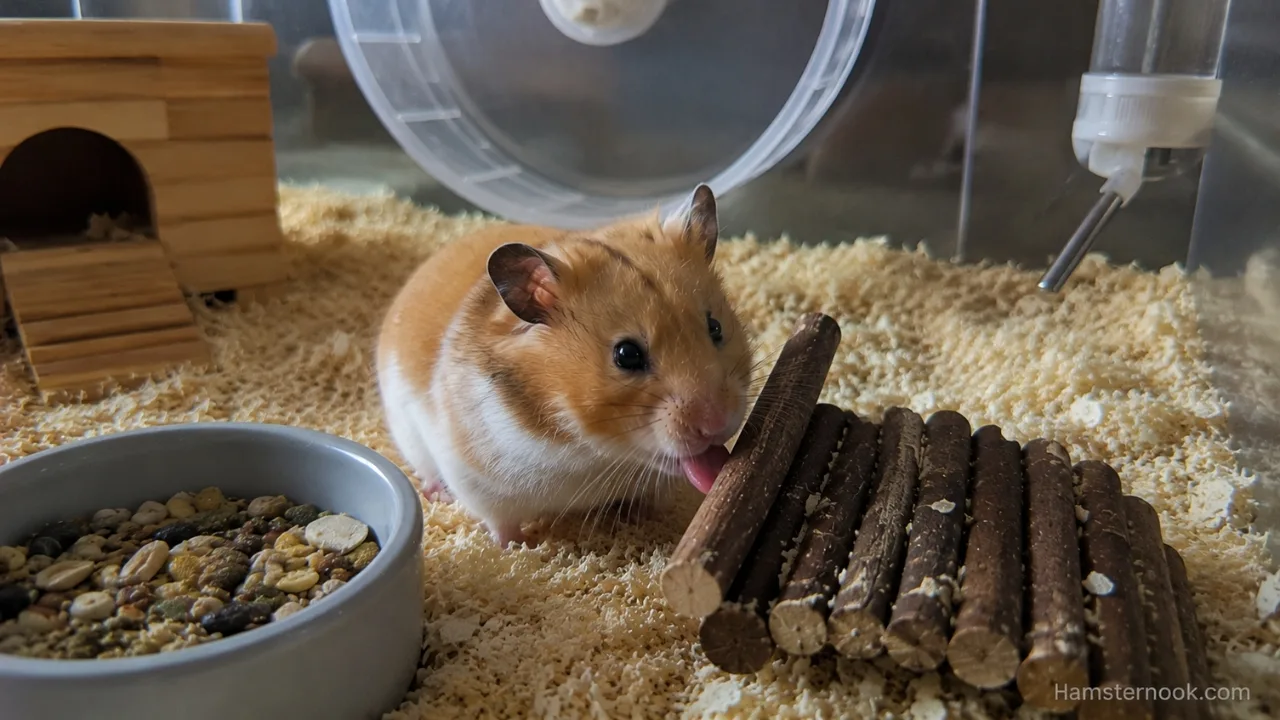
Because hamsters are small and quick, a yawn can easily be mistaken for other mouth movements. This becomes especially important if you’re watching your hamster while it is eating, grooming, or using its cheek pouches.
Could It Be Cheek Pouch Behavior Instead?

Before assuming a wide-mouth movement is a yawn, consider what your hamster was doing immediately beforehand. Eating, grooming, chewing, or carrying food can all produce mouth movements that look different from a brief yawn.
Yes, and this is an easy mistake for new owners to make.
Hamsters have large cheek pouches that extend backward along the sides of the head and neck. These pouches allow them to collect food and carry it back to their nest or another storage location.
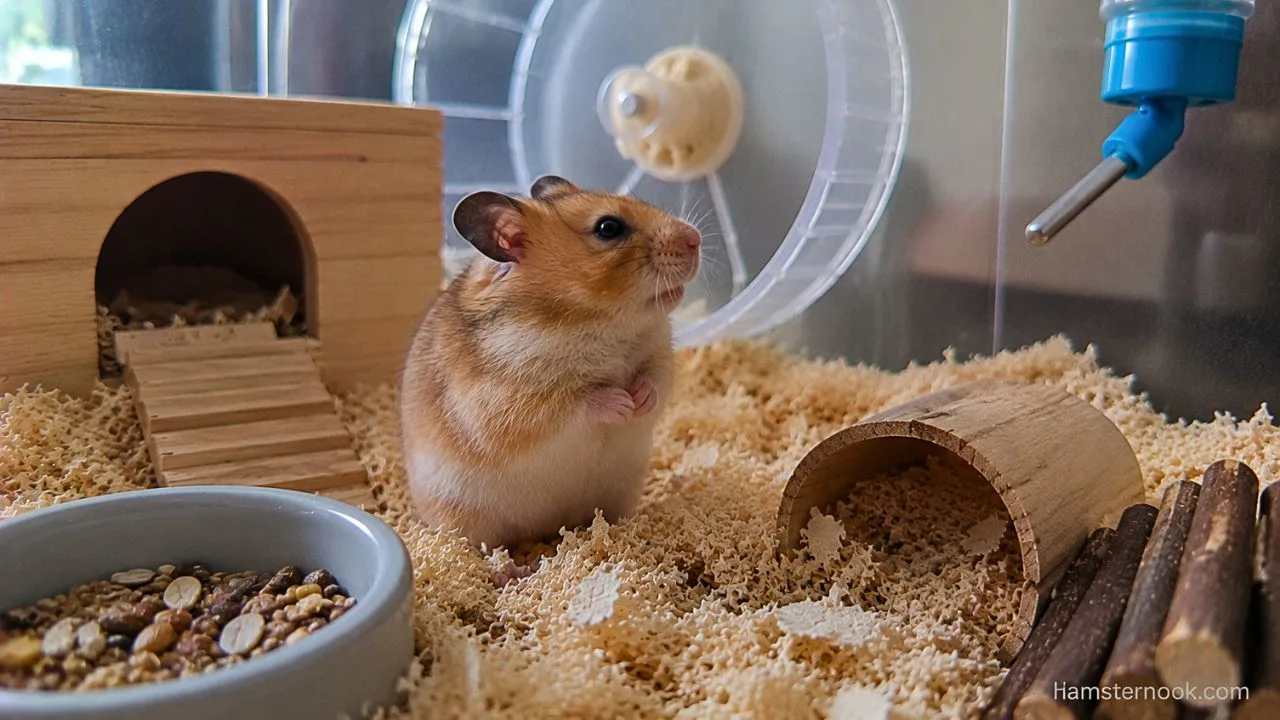
A hamster with food in its cheek pouches may make mouth movements that look unusual if you’re expecting every wide-mouth movement to be a yawn.
If your hamster has just been eating or carrying food, don’t assume every unusual mouth movement is a yawn.
MSD Veterinary Manual describes the cheek pouches as a distinctive feature of hamsters and explains that they are used to gather and transport food.
Could Yawning Be Related to Dental Problems?
A yawn itself doesn’t mean your hamster has a dental problem.
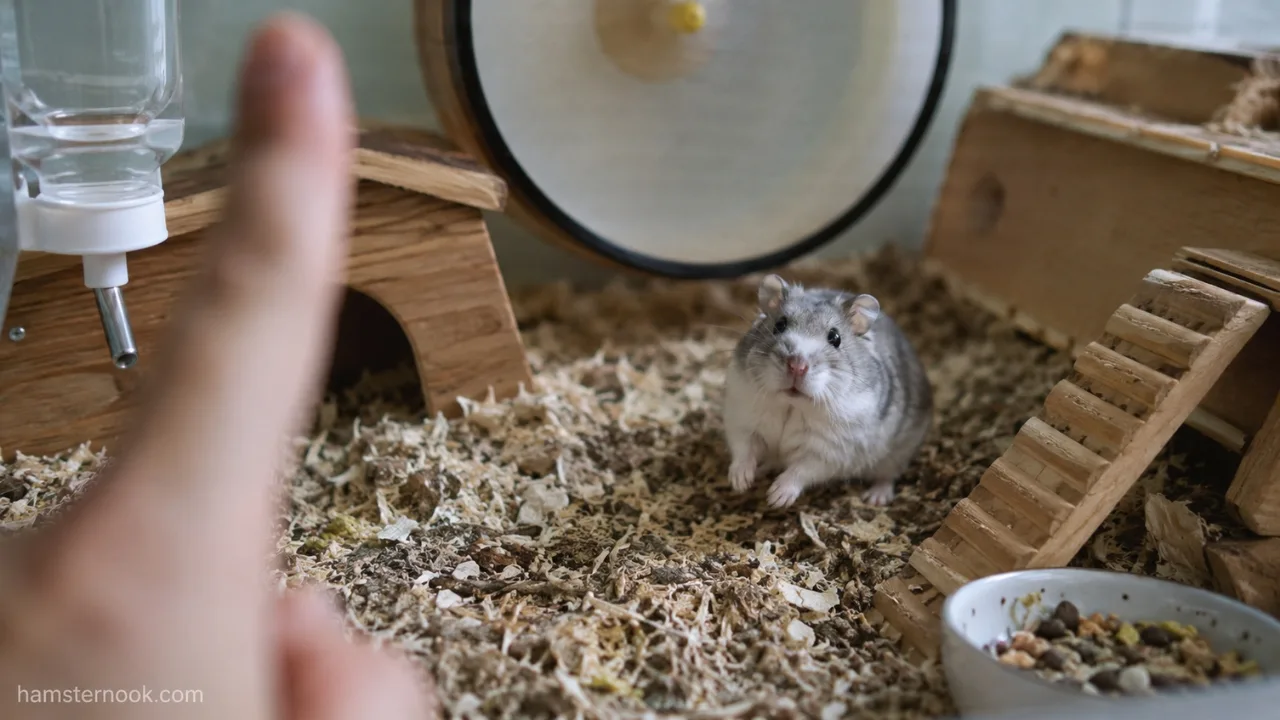
However, changes involving the mouth deserve attention because hamster teeth grow continuously throughout life. Normal chewing and eating help wear the incisors down, while dental problems can interfere with eating.
MSD Veterinary Manual notes that overgrown teeth can lead to drooling, reduced appetite, and weight loss.
That means a hamster repeatedly opening its mouth should be viewed differently if you also notice:
- Drooling
- Difficulty eating
- Dropped food
- Reduced appetite
- Weight loss
- Visible abnormal teeth
- Wet fur around the mouth
Those changes are more important to pay attention to than the yawn itself.

A Simple Example
Imagine your hamster wakes up in the evening.
It comes out of its hide, yawns once, stretches, grooms its face, and starts digging through the bedding. A little later it runs on the wheel and eats normally.
There is no obvious reason to be alarmed.
Now imagine a different situation.

Your hamster repeatedly opens its mouth, seems to work harder to breathe, stays unusually still, and isn’t interested in food.
Calling this “just yawning” would be a mistake. The additional signs change the picture completely.
The important difference is the rest of the hamster’s behavior. A brief yawn followed by normal eating and activity is very different from repeated mouth opening accompanied by breathing or eating problems.
Why Your Hamster’s Normal Routine Matters
Every hamster has its own normal pattern of activity.
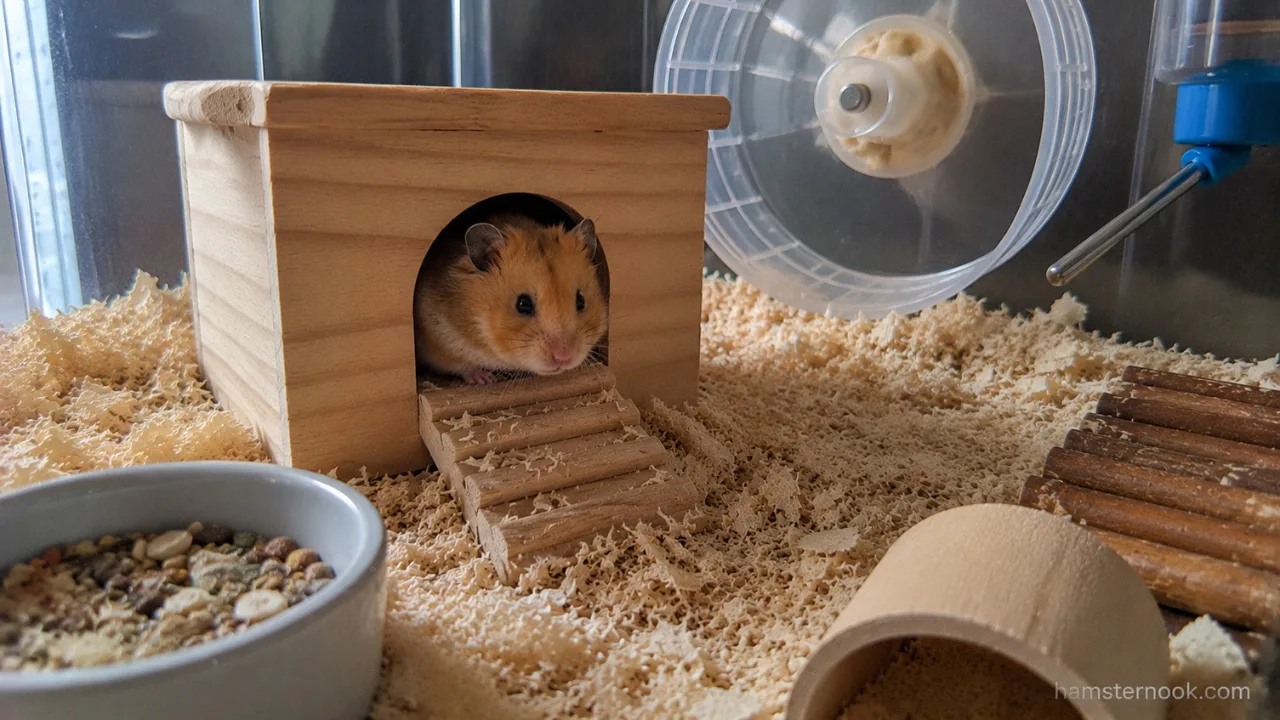
Some spend a lot of time digging. Others spend more time running, foraging, grooming, or exploring. Your hamster’s usual behavior gives you a baseline.
MSD Veterinary Manual recommends paying attention to how your hamster routinely looks and acts because changes from that baseline can help owners recognize illness.
If you know how your hamster normally wakes up, eats, explores, and settles down, you’ll be much better positioned to notice a genuine change.
Sleep-related behavior can also provide useful clues about what is normal for your individual hamster. What Your Hamster’s Sleeping Position Says About Their Health (Normal vs Warning Signs) explains how different sleeping positions can be interpreted alongside other signs.
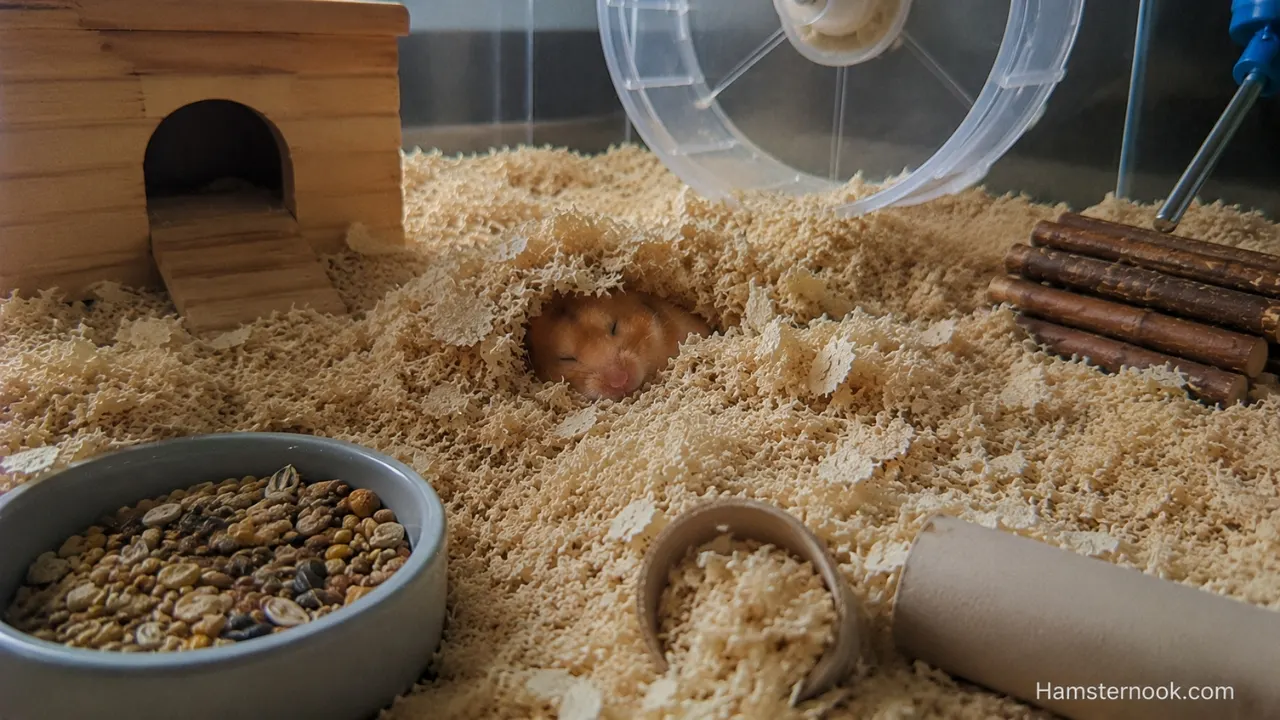
Should You Be Concerned If Your Hamster Yawns a Lot?
The number of times your hamster yawns is not enough by itself to tell you whether something is wrong.
There isn’t a well-established veterinary rule saying that a particular number of yawns per day is abnormal for hamsters. If someone tells you that your hamster is sick because it yawned a specific number of times, that conclusion isn’t supported by reliable hamster-specific evidence.
Instead, consider the full pattern.
Is your hamster:
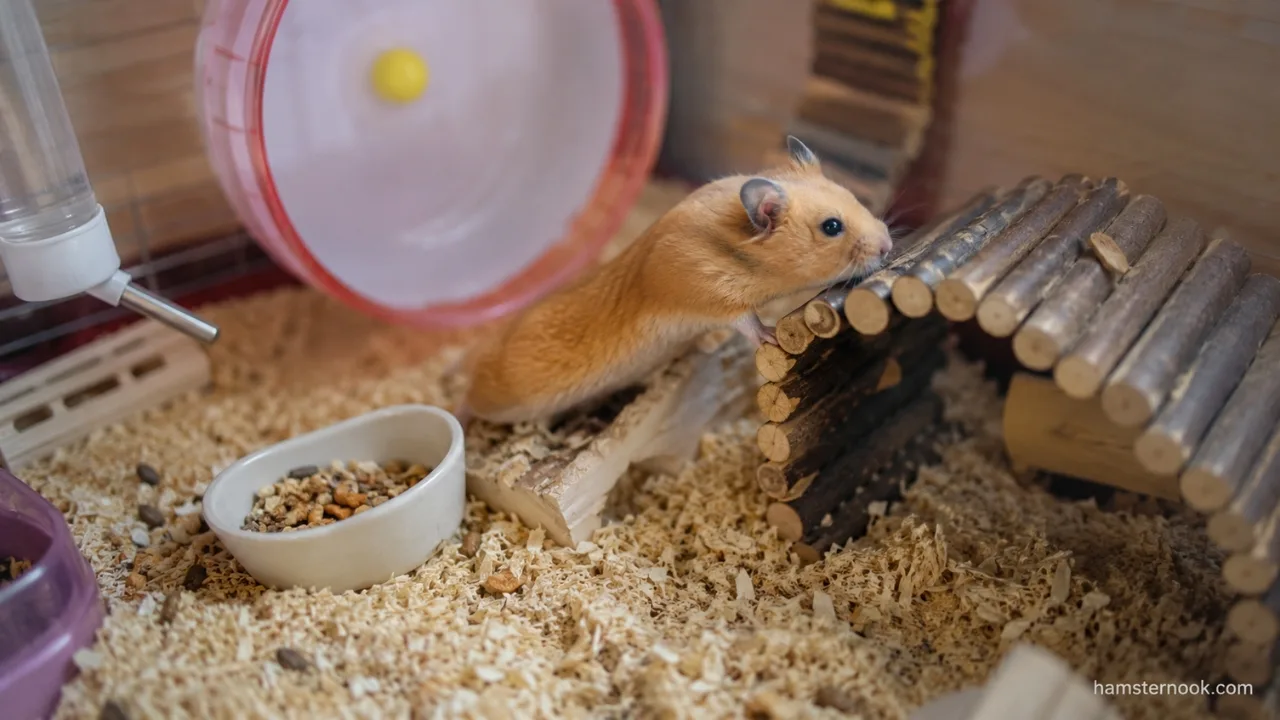
- Eating normally?
- Drinking normally?
- Moving normally?
- Grooming itself?
- Exploring during its usual active period?
- Breathing comfortably?
- Maintaining its normal body condition?
If everything else looks normal, an occasional yawn is much less concerning.
If yawning is accompanied by a clear change in health or behavior, that’s when the situation deserves more attention.
Common Mistakes Owners Make
It is easy to focus too much on a single yawn when you’re watching your hamster closely. The more useful approach is to look at its breathing, appetite, activity, posture, and other normal behaviors as well.
Assuming Every Yawn Means Your Hamster Is Sick
An occasional yawn from an otherwise normal hamster is not enough to suggest illness.
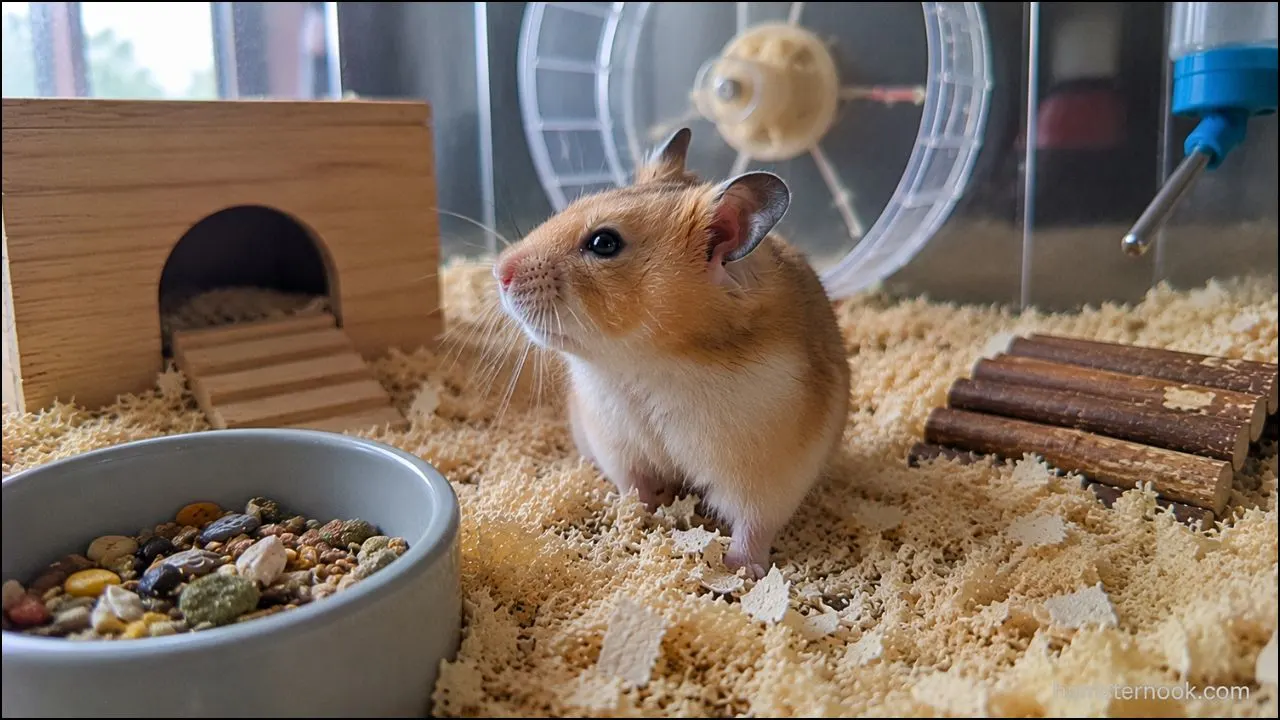
If your hamster yawns, stretches, grooms itself, eats, explores, and behaves normally afterward, there may be nothing wrong at all.
Assuming Every Mouth Movement Is a Yawn
Hamsters use their mouths for many things. Eating, grooming, moving food in their cheek pouches, chewing, and other normal activities can all involve noticeable mouth movements.
Watch the entire movement before deciding that you’re seeing a yawn.
Waking Your Hamster to Check on It
It’s tempting to pick up a sleeping hamster because you’re worried about a new behavior. Avoid doing this unnecessarily.
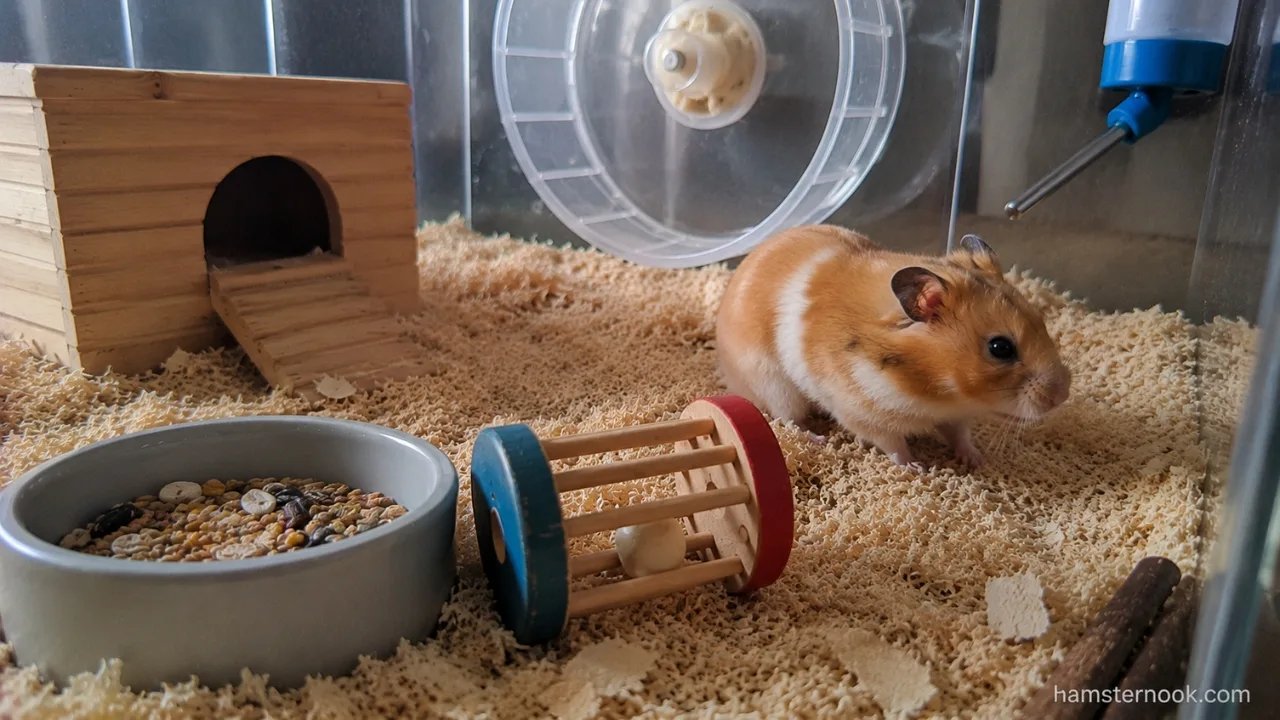
Hamsters need uninterrupted rest during their normal sleeping period. RSPCA recommends allowing hamsters to sleep undisturbed during the day and maintaining predictable lighting patterns.
If you want to observe your hamster, it’s much better to watch it during its normal active period.
Ignoring a Change Because “It’s Just a Yawn”
The opposite mistake can also happen.
If your hamster has suddenly started opening its mouth repeatedly and is also breathing abnormally, eating less, becoming inactive, or showing discharge around the nose or eyes, don’t assume the behavior is harmless.
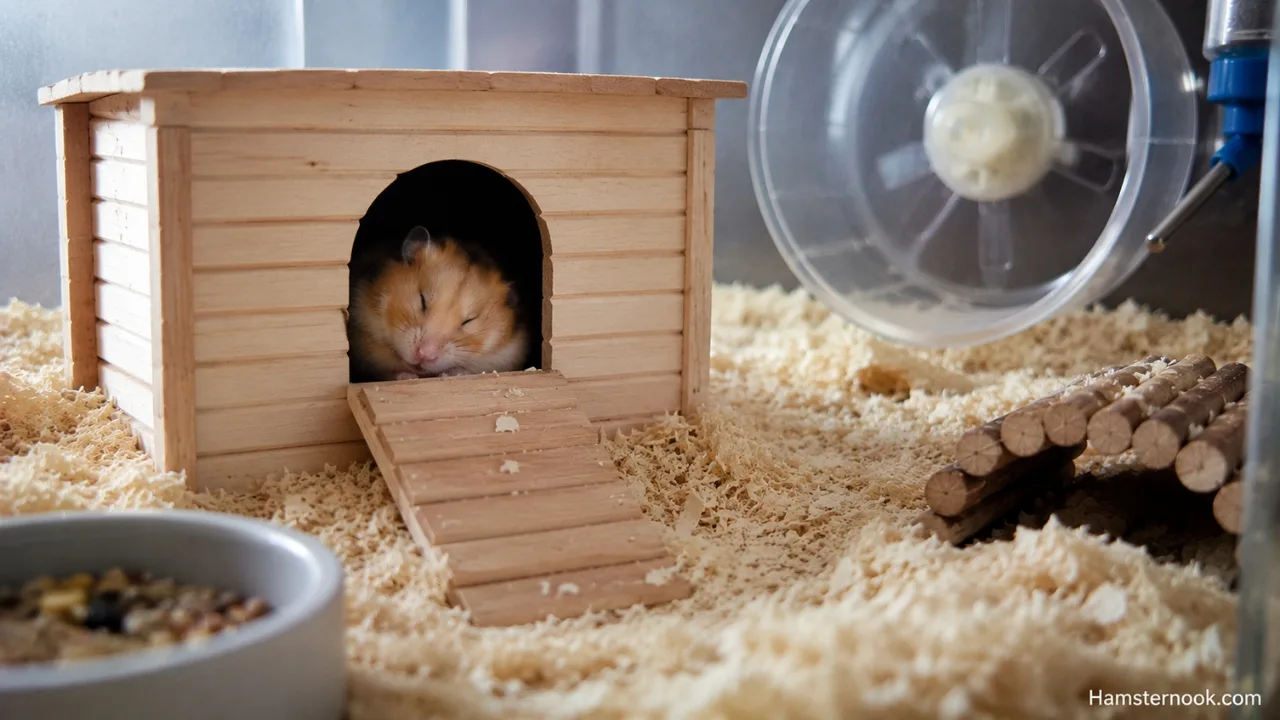
Hamsters can become seriously ill quickly and may show only subtle signs at first. RSPCA recommends contacting a veterinarian promptly when a hamster shows signs such as labored breathing, not eating or drinking, unusual inactivity, or persistent sneezing or coughing.
What You Should Do
If you notice your hamster yawning, don’t immediately intervene.
Instead, spend a few minutes observing without disturbing it.
Look at:
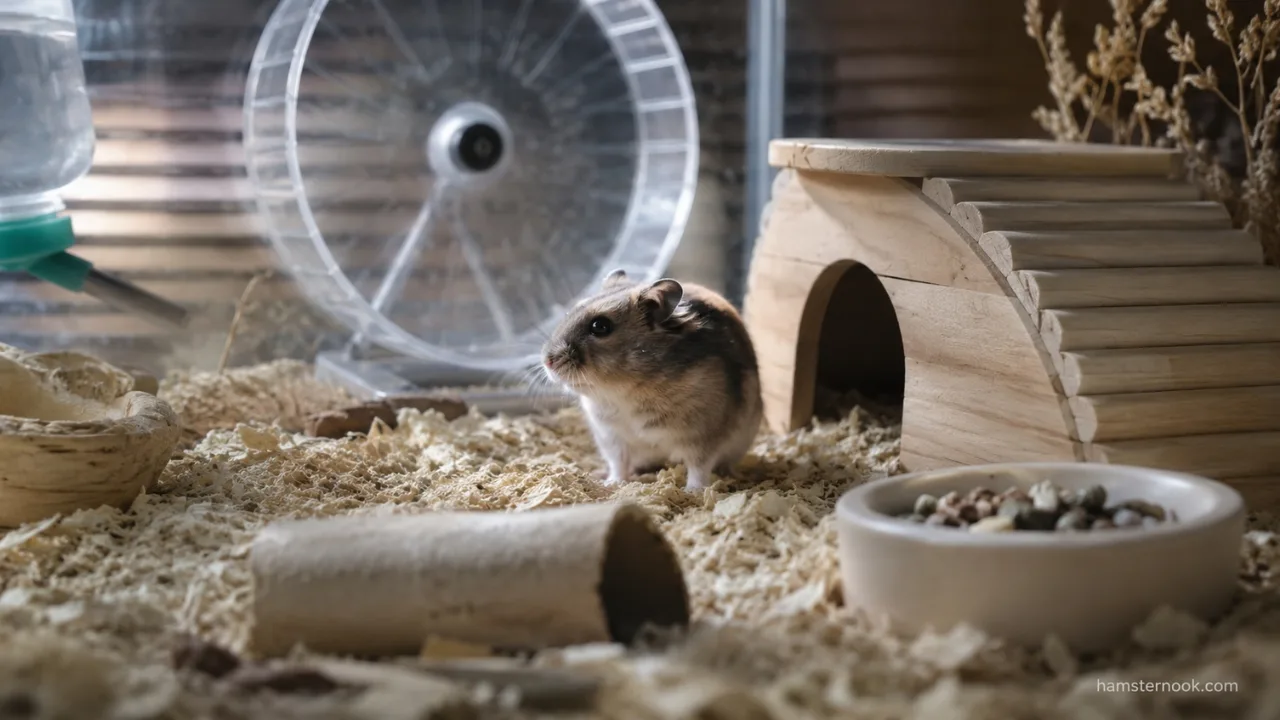
- How easily it is breathing
- Whether it moves normally
- Whether it is interested in its surroundings
- Whether it eats and drinks normally
- Whether it grooms itself normally
- Whether it returns to its usual activities
- Whether the yawn was brief or keeps happening repeatedly
If everything else looks normal, there is no need to interfere; continue observing your hamster during its usual routine.
It’s also useful to keep a mental baseline of your hamster’s usual behavior. Knowing when it normally wakes up, how actively it explores, how much it eats, and how it normally moves makes genuine changes much easier to recognize.
RSPCA recommends visually checking hamsters every day to make sure they are behaving normally, moving and breathing well, and showing no obvious wounds or other abnormalities.
Warning Signs That Need More Attention
A yawn deserves closer attention when it occurs alongside other changes in breathing, appetite, activity, movement, or appearance.

Breathing Problems
Watch carefully for:
- Labored breathing
- Rapid or unusually difficult breathing
- Wheezing or other unusual respiratory sounds
- Nasal discharge
- Repeated coughing or sneezing
- Open-mouth breathing that does not look like a brief yawn
Trouble breathing is an important sign of illness in hamsters. If your hamster is struggling to breathe or repeatedly opening its mouth in a way that does not look like a brief yawn, veterinary attention is warranted.
Eating Problems
A hamster that suddenly eats less should not be assumed to be simply tired.
If your hamster suddenly eats less, treat the appetite change as the important sign rather than assuming it is simply related to yawning. Why Is My Hamster Not Eating? 9 Causes You Should Never Ignore explains other reasons a hamster may suddenly lose interest in food.
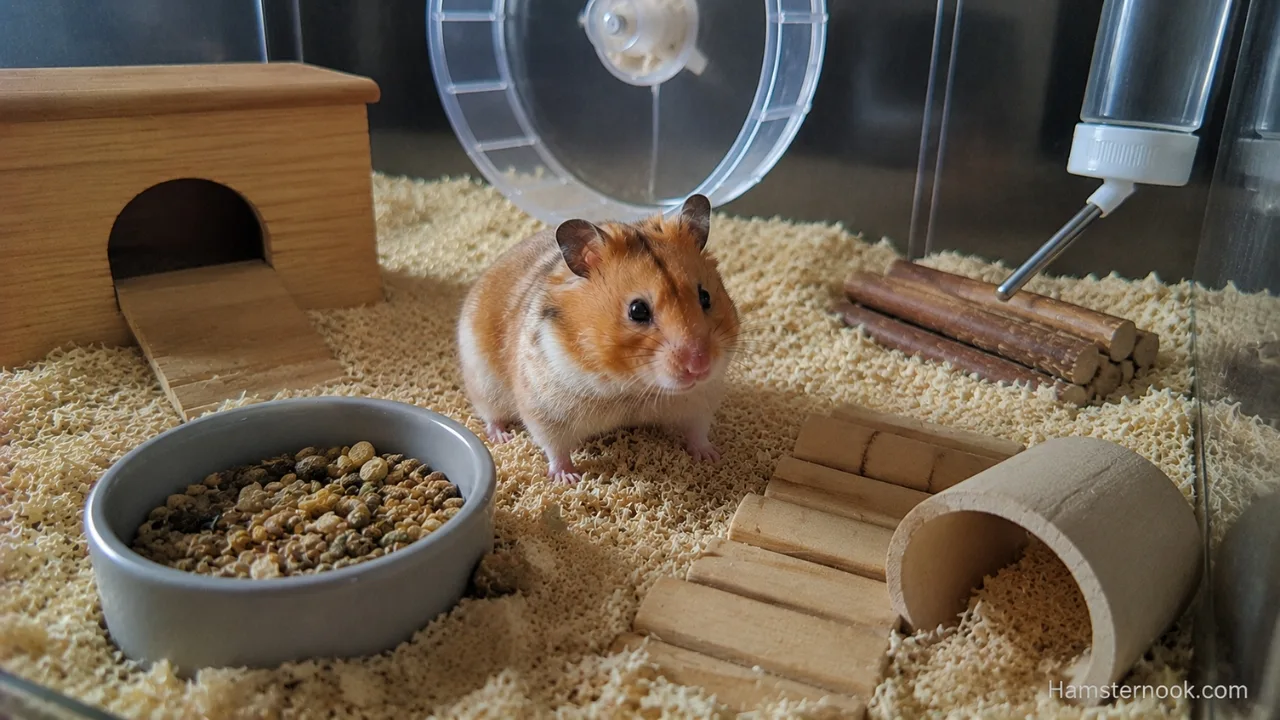
Loss of appetite can accompany several health problems, including dental and respiratory disorders. RSPCA advises contacting a veterinarian if a hamster begins eating less or develops other changes in its normal diet.
Changes Around the Mouth
Pay attention if your hamster has:
- Drooling
- Difficulty chewing
- Difficulty swallowing
- Food falling from its mouth
- Noticeably overgrown teeth
- Swelling around the face or mouth
Hamsters’ incisors continue growing throughout life, and dental problems can interfere with normal eating. RSPCA recommends regular attention to hamster teeth and veterinary assessment if teeth become overgrown.
Unusual Inactivity
A hamster sleeping during its normal daytime rest isn’t automatically concerning.
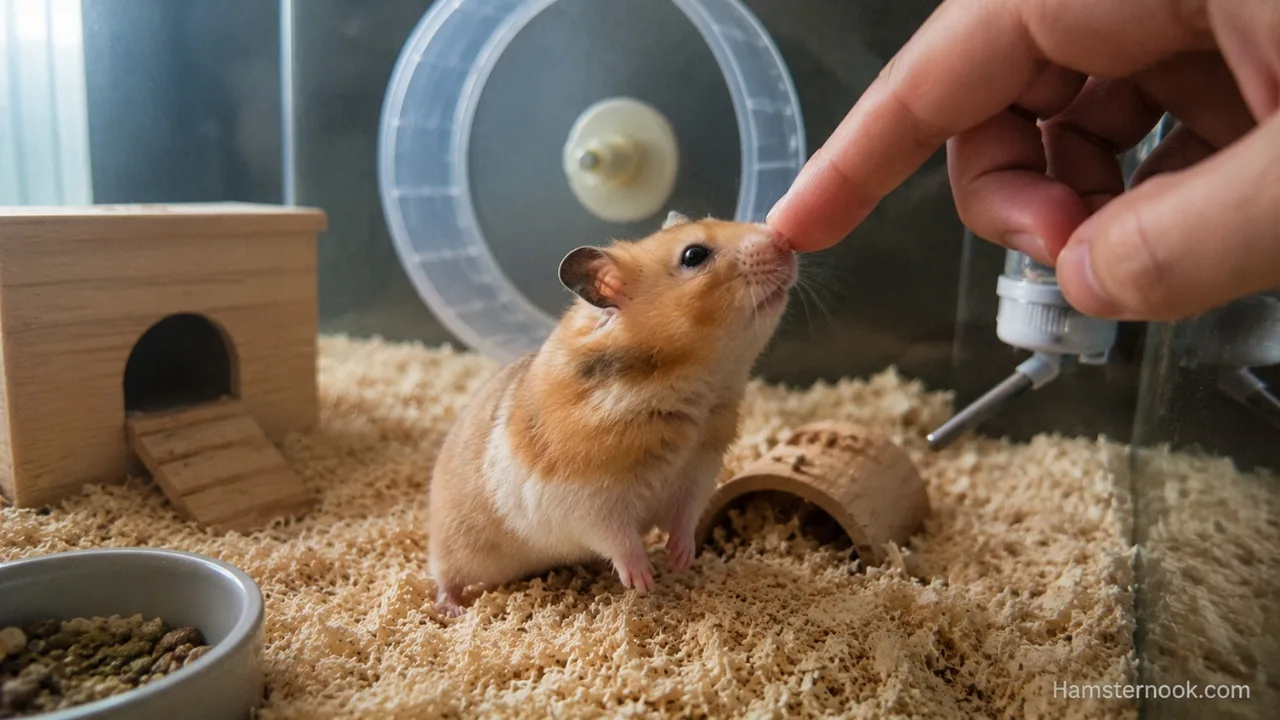
The more useful comparison is how your hamster behaves during its normal active period.
If it normally becomes energetic in the evening but suddenly remains inactive, doesn’t explore, or stays in its hide, that change matters more than an occasional yawn.
A sudden drop in activity is more important to notice than how many times your hamster yawns. Why Is My Hamster Suddenly Weak? 9 Possible Causes & What To Do covers other warning signs that can accompany an unexpected change in activity.
When to Worry
You should seek veterinary advice if your hamster’s yawning is accompanied by signs that suggest illness, particularly difficulty breathing, loss of appetite, marked inactivity, abnormal posture, discharge, or difficulty walking.
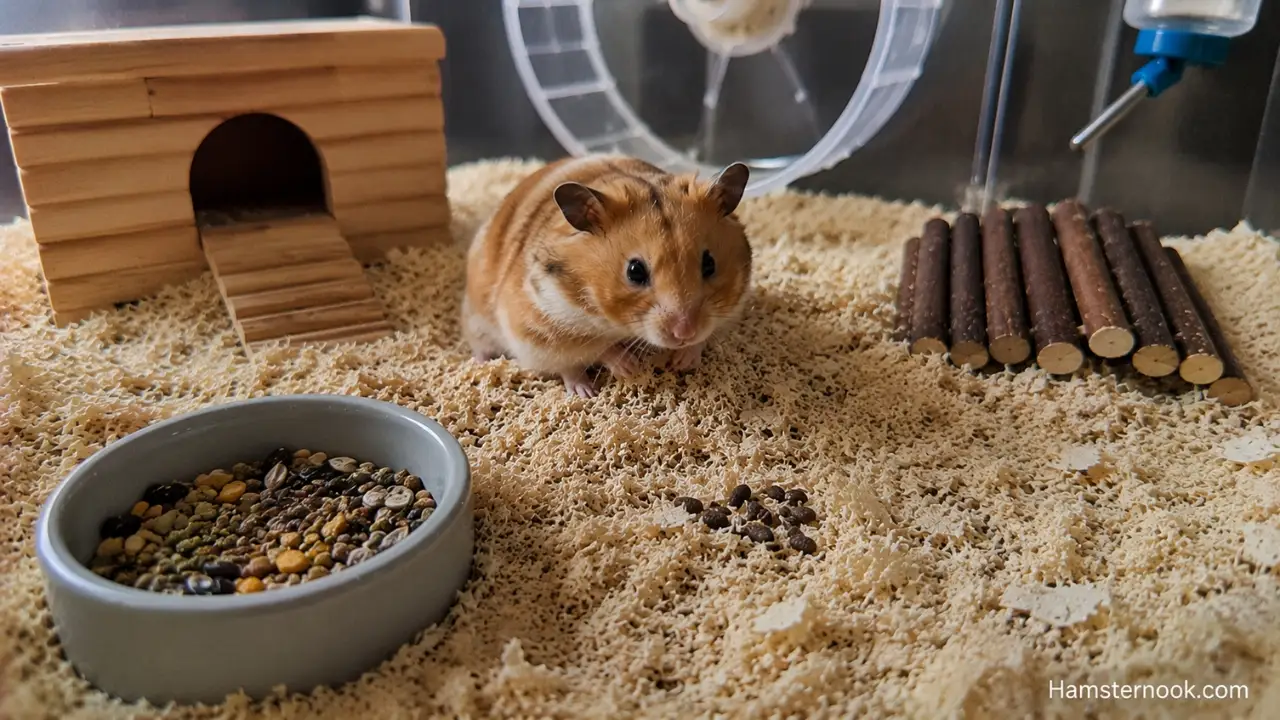
RSPCA advises immediate veterinary attention for signs including not eating or drinking, a hunched posture, unusual inactivity during normally active periods, labored breathing, discharge, persistent sneezing or coughing, and problems with walking or balance.
Do not try to treat a potentially sick hamster with human medication or leftover medicine intended for another animal. RSPCA specifically warns that human and other animal medicines can be dangerous to hamsters.
If your hamster is struggling to breathe or appears seriously unwell, treat that as a veterinary issue rather than trying to determine whether it is simply yawning.
Unusual inactivity is another change that should be considered alongside other symptoms rather than dismissed as part of normal rest. Why Is My Hamster Sitting Still and Not Moving Much? Causes & Warning Signs explains when staying unusually still may deserve closer attention.
A Simple Way to Monitor Your Hamster
You don’t need to constantly watch your hamster or disturb it to check its health.
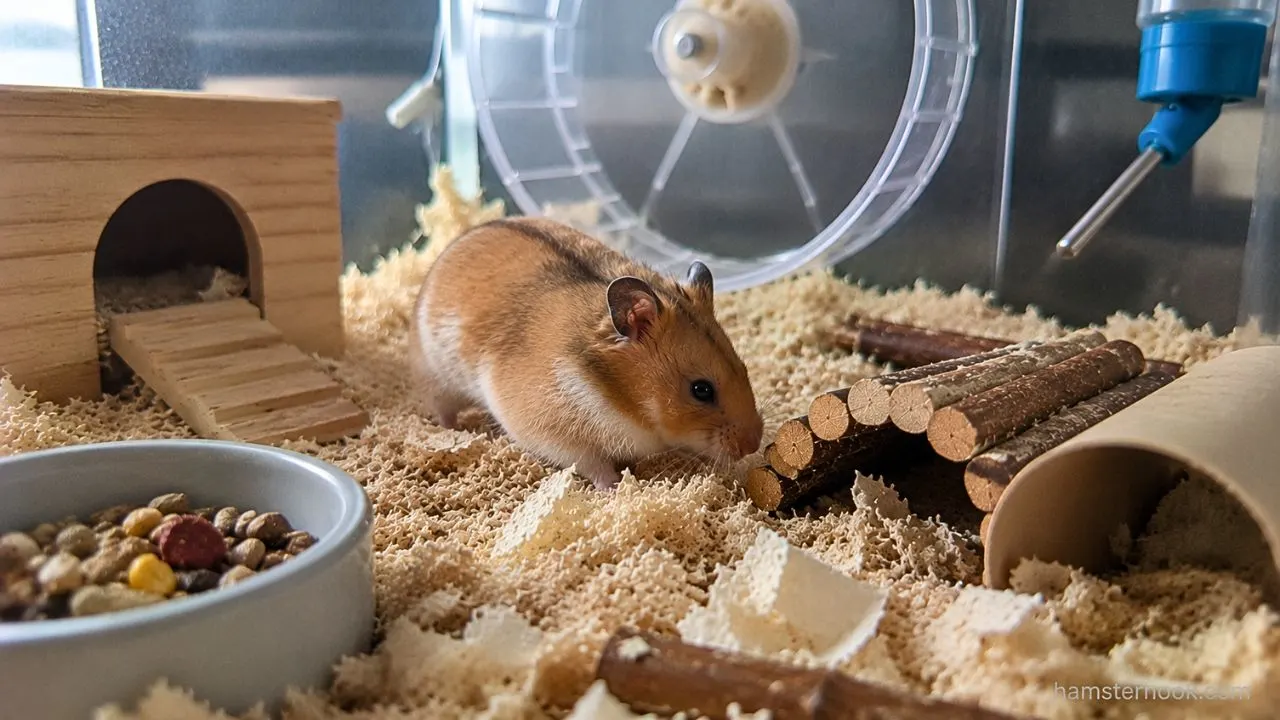
A quick daily observation during its normal active period can tell you a lot.
Notice whether it:
- Comes out of its sleeping area normally.
- Moves around the enclosure normally.
- Eats and drinks.
- Grooms itself.
- Uses its usual wheel or enrichment.
- Breathes comfortably.
- Shows interest in its surroundings.
If these behaviors remain normal and you occasionally see a yawn, there’s little reason to focus on the yawn itself.
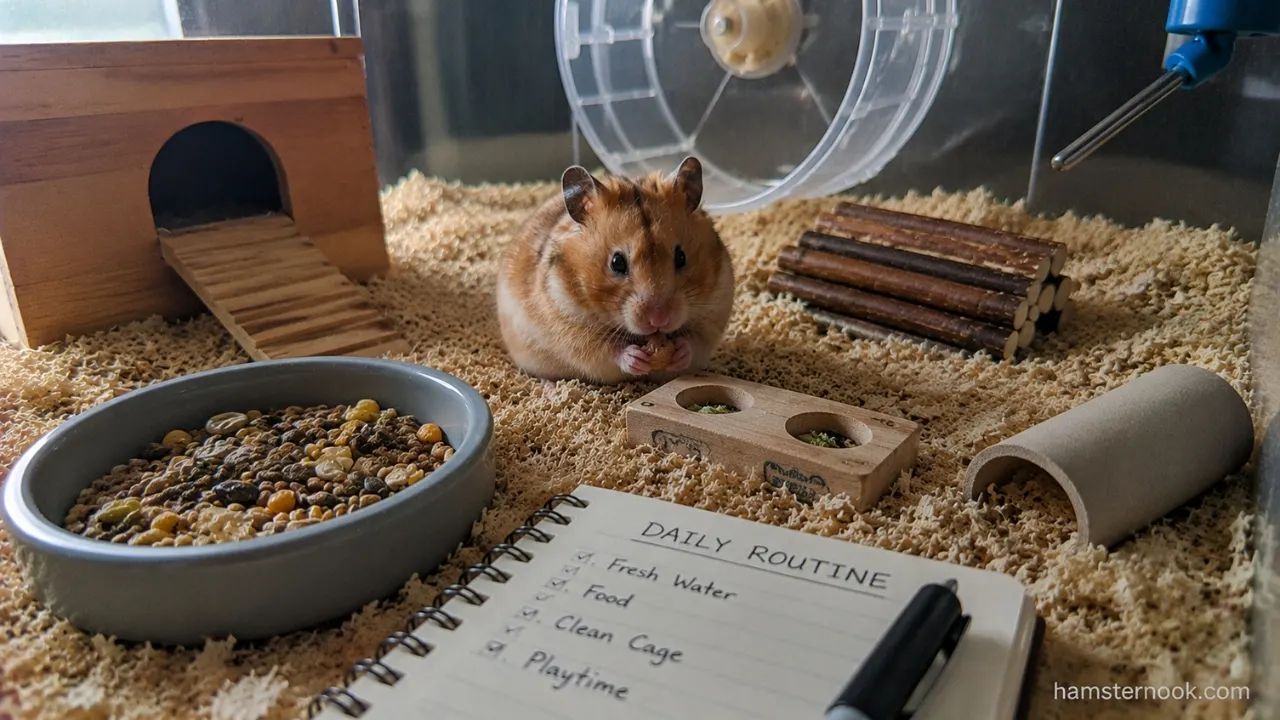
If several of these behaviors suddenly change at the same time, that’s much more significant.
Final Thoughts
So, why does your hamster yawn?
There isn’t enough hamster-specific evidence to give every yawn one definite explanation. A brief yawn around waking or relaxing can occur as part of normal behavior, and an isolated yawn in a healthy-looking hamster isn’t automatically a warning sign.
The important part is learning to distinguish a normal brief yawn from repeated mouth opening accompanied by signs of illness.
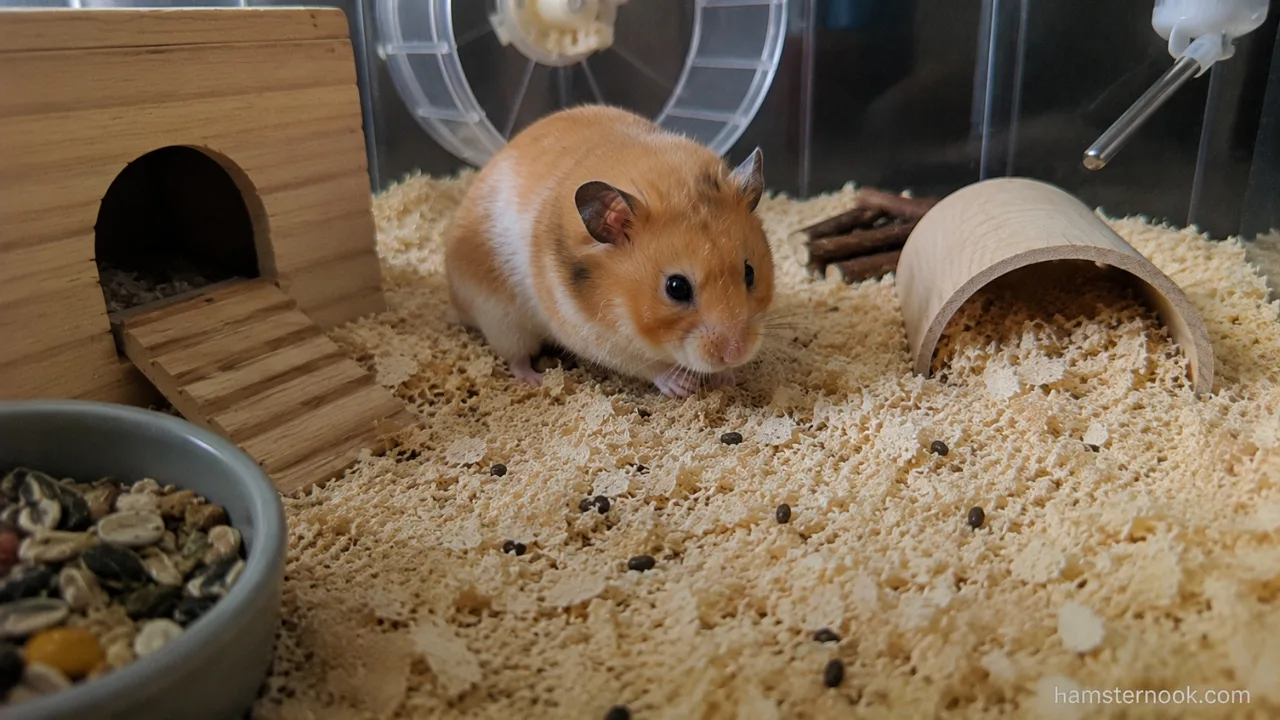
Pay attention to breathing, appetite, activity, posture, movement, and your hamster’s usual routine. If those remain normal, you can simply let your hamster carry on with its evening.
If the behavior comes with difficulty breathing, loss of appetite, unusual inactivity, discharge, dental problems, or another clear change, contact a veterinarian promptly. Because your hamster’s normal behavior gives you an important baseline, a clear change in breathing, appetite, activity, or movement should not be dismissed as yawning.
Frequently Asked Questions
Is it normal for a hamster to yawn?
Yes. An occasional yawn can occur in a healthy hamster, particularly around transitions between resting and activity. A yawn by itself does not establish that something is wrong.
Why does my hamster yawn when I wake it up?
Your hamster may yawn while transitioning from sleep to activity. However, you should not routinely wake your hamster just to observe this behavior. Hamsters need undisturbed rest during their normal sleeping period.
Do hamsters yawn when they are tired?
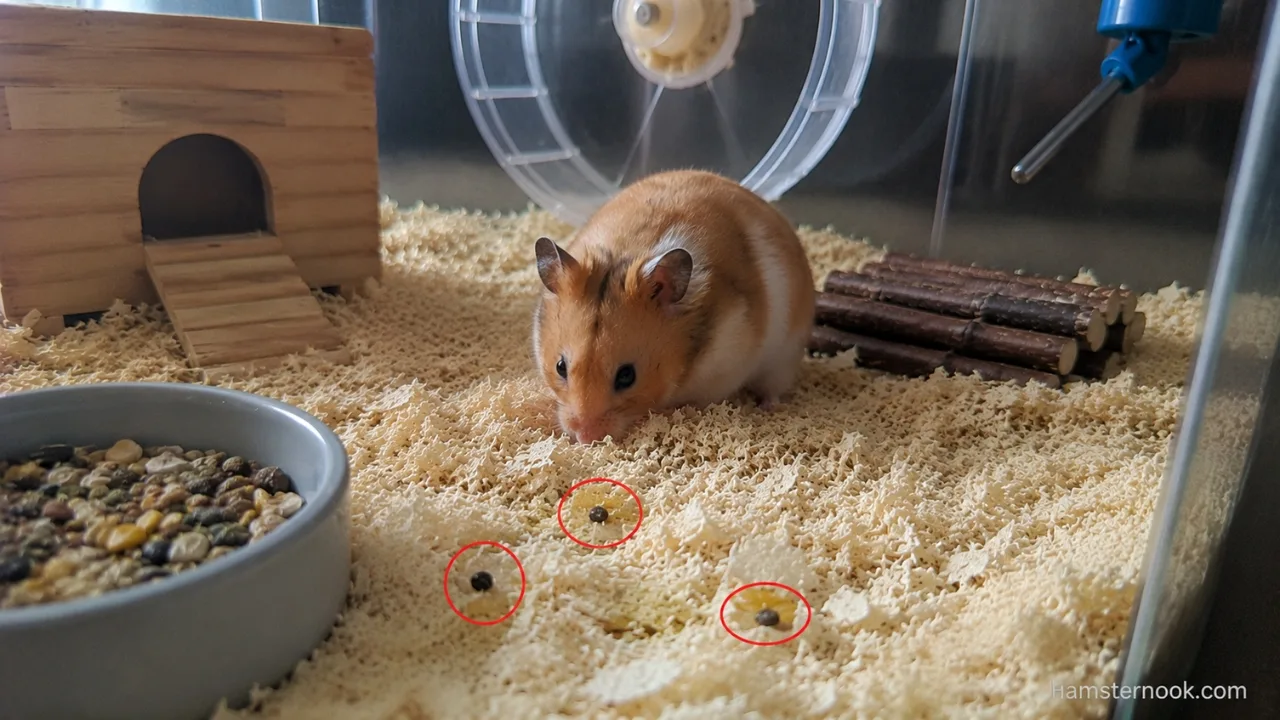
Yawning can occur around periods of rest and activity, but it isn’t reliable enough to use as a definite indicator of tiredness in hamsters.
Why does my hamster keep opening its mouth?
First consider what your hamster is doing. It may be yawning, eating, grooming, chewing, or managing food in its cheek pouches. If the mouth opening is repeated and accompanied by breathing difficulty, drooling, weakness, or loss of appetite, contact a veterinarian.
Is yawning a sign that my hamster is stressed?
Not necessarily. There isn’t sufficient hamster-specific evidence to say that yawning alone reliably indicates stress. Look for broader changes in behavior and environment instead.
Why does my hamster yawn and stretch at the same time?
A yawn may occur alongside stretching when a hamster is transitioning from rest to activity. If your hamster then behaves normally, this combination is not automatically concerning.
Should I wake my hamster if I haven’t seen it yawn?
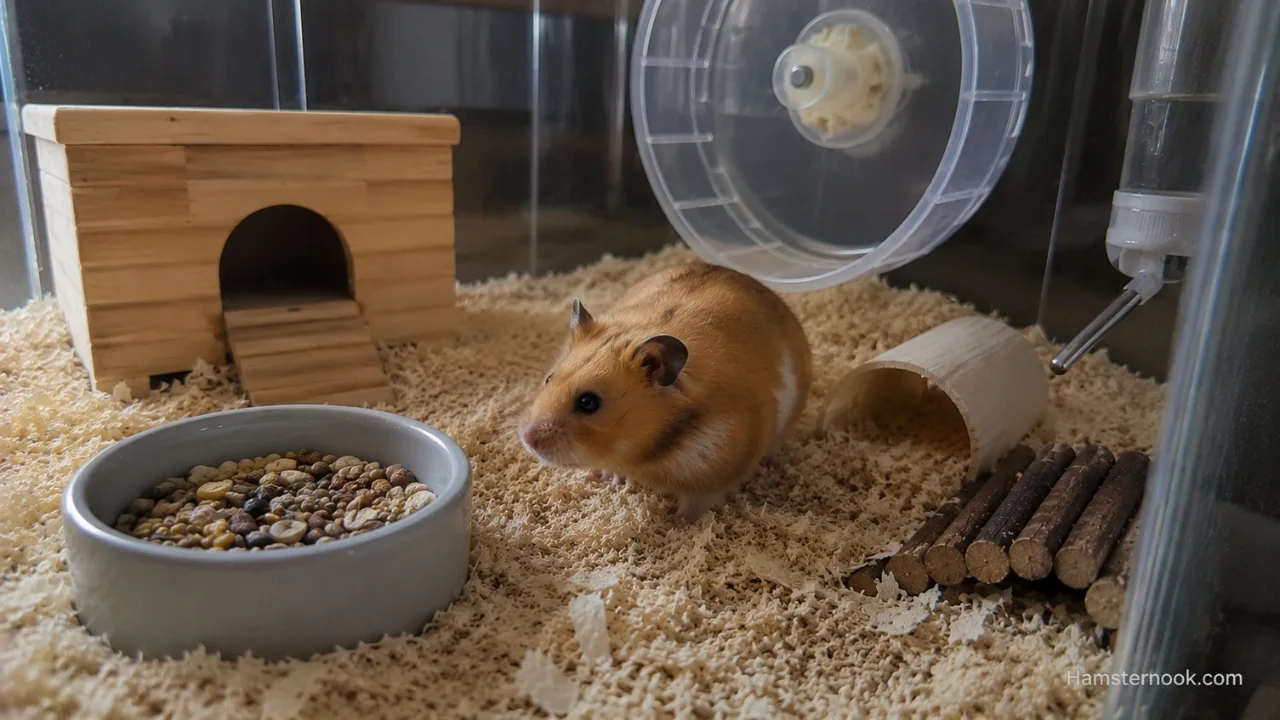
No. There is no reason to wake a sleeping hamster simply to observe its behavior. Let it wake naturally and monitor it during its normal active period.
When is hamster yawning a sign of illness?
Yawning itself isn’t a reliable sign of illness. Concern increases when mouth opening occurs alongside labored breathing, unusual respiratory sounds, nasal discharge, loss of appetite, marked inactivity, abnormal posture, or other changes from normal behavior.
Can dental problems make a hamster open its mouth?
Dental problems can affect eating and cause signs such as drooling or reduced appetite. Because hamster incisors continuously grow, abnormal teeth should be assessed by a veterinarian rather than assumed to be a simple yawn.
Should I take my hamster to a vet if it yawns several times?
Not necessarily based on the number of yawns alone. There is no established hamster-specific number of daily yawns that can be used as a diagnostic threshold. Consider the entire behavior and look for other signs of illness.
References
This guide is based on hamster health, behavior, welfare, and routine-care information from trusted veterinary and animal welfare resources, including:
- RSPCA – Hamster Health & Welfare Tips
- RSPCA – Understanding Hamster Behaviour
- RSPCA – Signs of Illness in Hamsters
- RSPCA – Checking Your Hamster
- MSD Veterinary Manual – Routine Health Care of Hamsters
- MSD Veterinary Manual – Disorders and Diseases of Hamsters
- MSD Veterinary Manual – Hamsters: Description and Physical Characteristics
Medical Disclaimer:
This article is for general educational purposes and does not replace veterinary examination or diagnosis. If your hamster shows difficulty breathing, stops eating or drinking, becomes unusually inactive, or develops another concerning change, seek veterinary care promptly.

Narayan Kumar is the founder and author of HamsterNook. He creates practical, research-based hamster care guides covering hamster behavior, nutrition, cage setup, enrichment, health, and everyday care. His goal is to help hamster owners make informed decisions and provide safer, healthier lives for their pets through clear, beginner-friendly information based on trusted animal care resources.