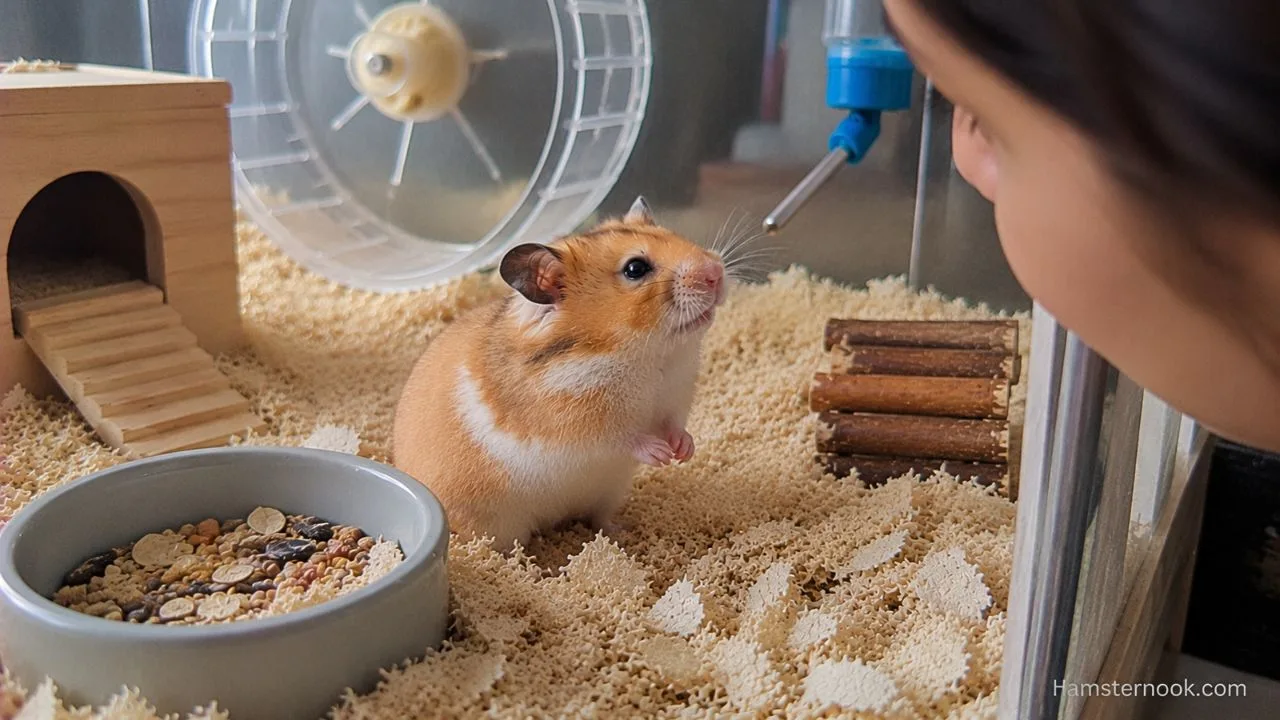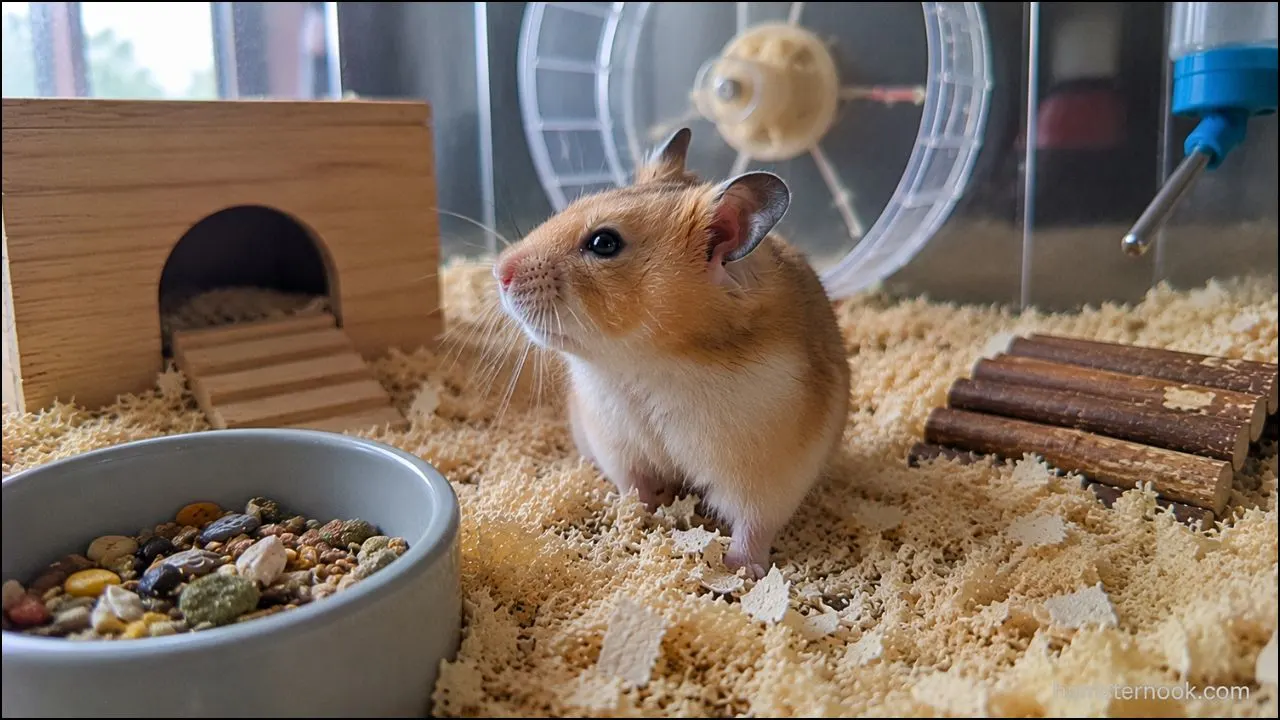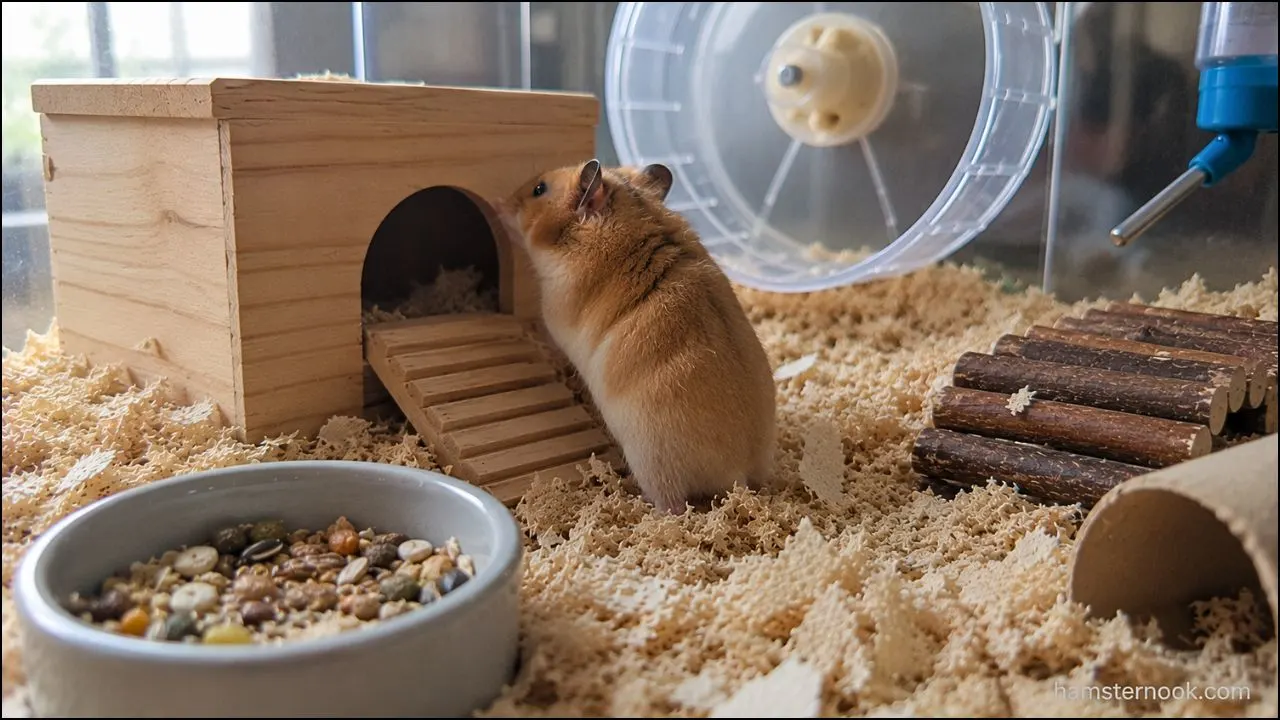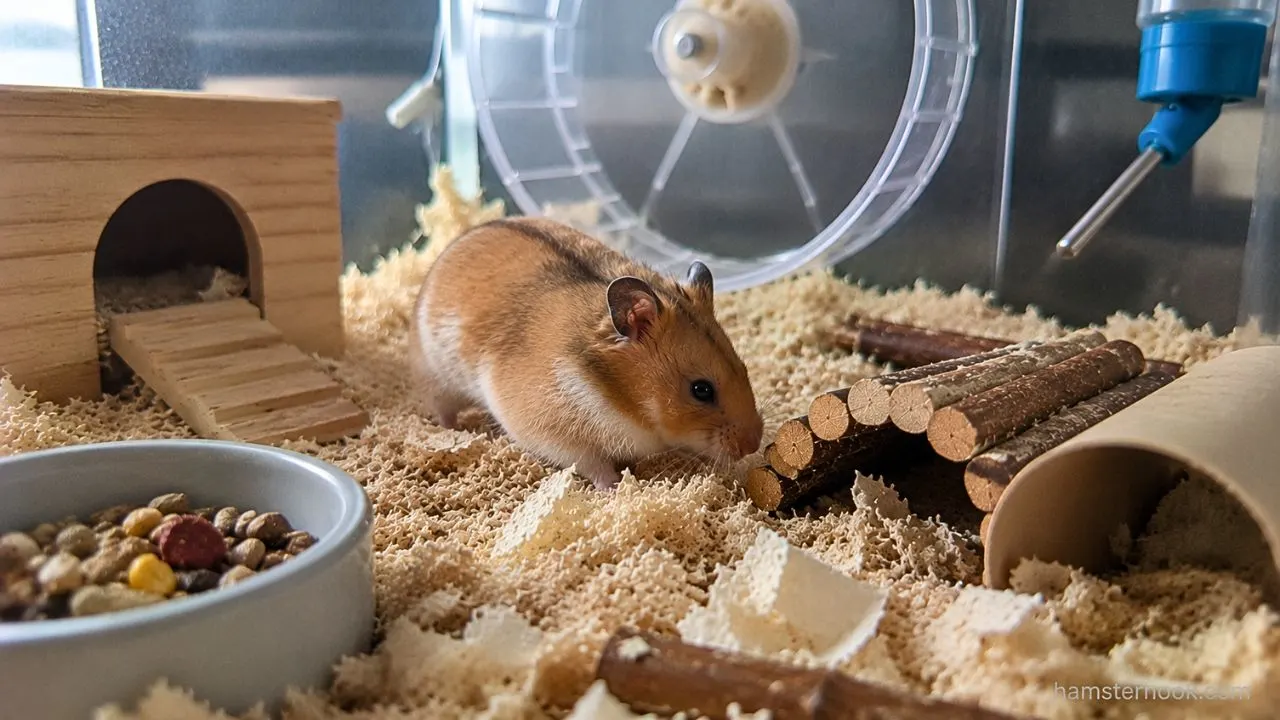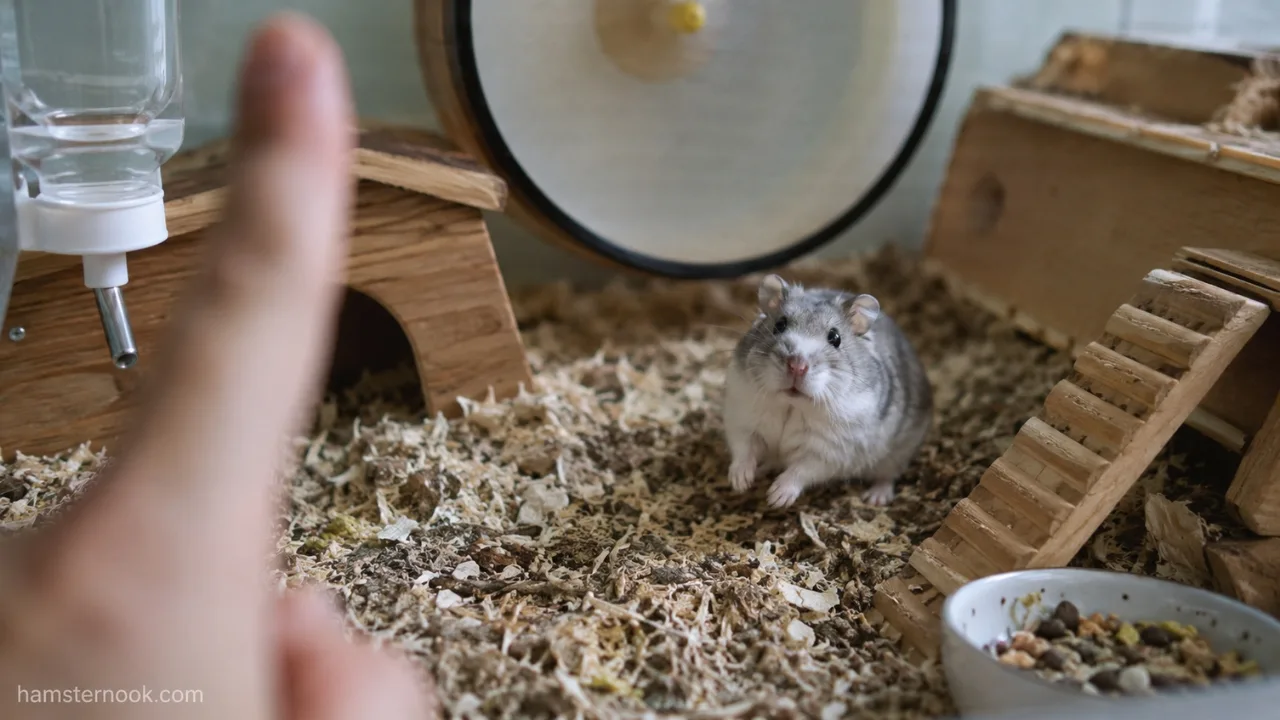
One of the most fascinating moments for hamster owners is noticing their pet watching them closely from across the cage. You walk past, and your hamster’s head turns. You move to another side of the room, and its eyes seem to follow you. After seeing this happen repeatedly, many owners start wondering: Does my hamster recognize me? Is it curious, or is something else going on?
The good news is that a hamster following you with its eyes is usually a normal and healthy behavior. In many cases, it reflects curiosity, awareness of movement, recognition of routines, or anticipation of food. However, context matters. Sometimes the same behavior can indicate caution, stress, or a desire to understand whether you’re a threat.
Understanding why your hamster pays so much attention to you can make its behavior much easier to interpret.
Quick Answer
If your hamster follows you with its eyes, it is usually tracking movement or responding to familiar routines, sounds, or feeding cues. This behavior alone does not prove affection or distress. A relaxed hamster that continues eating and exploring is usually fine, while freezing, hiding, or sudden changes in appetite or activity deserve closer attention.
Why Hamsters Pay Close Attention to Movement
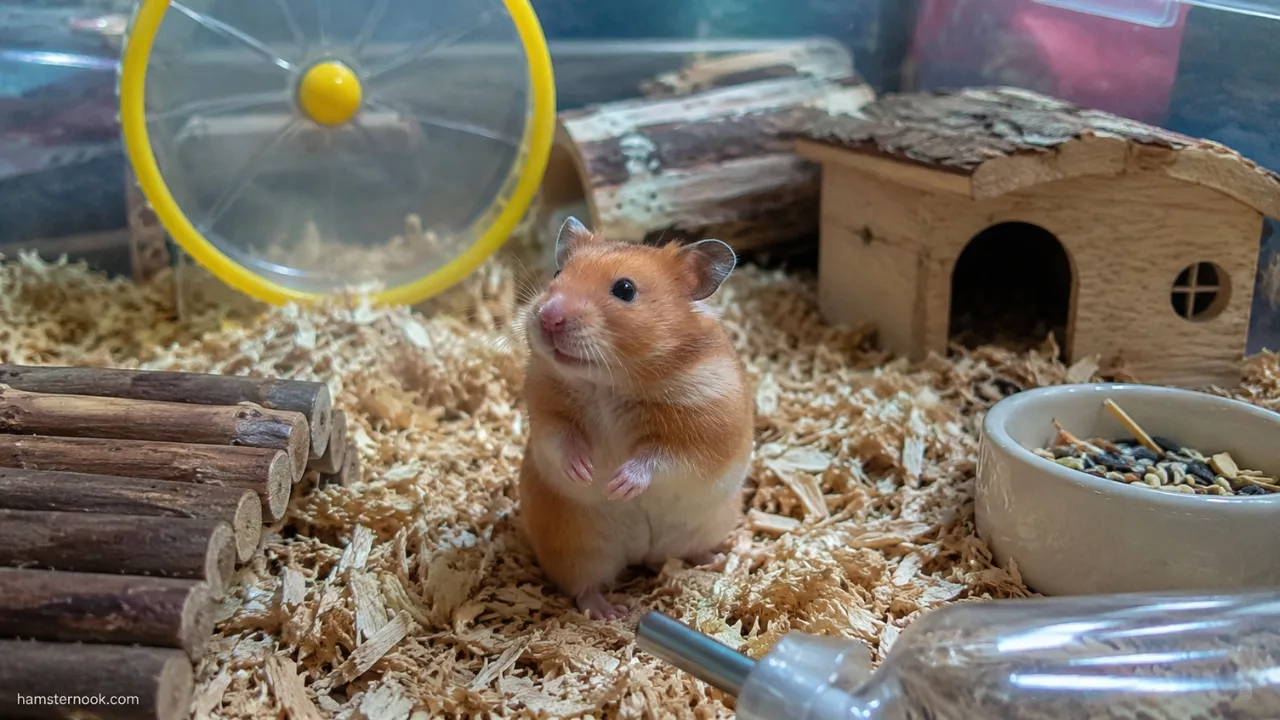
Hamsters are prey animals by nature. In the wild, survival depends on constantly monitoring their surroundings for predators, food sources, and environmental changes.
Because of this instinct, hamsters naturally pay close attention to movement.
Unlike humans, hamsters do not rely primarily on detailed vision. Their eyesight is relatively poor, especially over long distances. Instead, they combine movement detection with hearing and smell to understand what’s happening around them.
When you move around the room, your hamster often notices the motion first and then tries to determine whether it is important, dangerous, or potentially rewarding.
Is My Hamster Actually Recognizing Me?
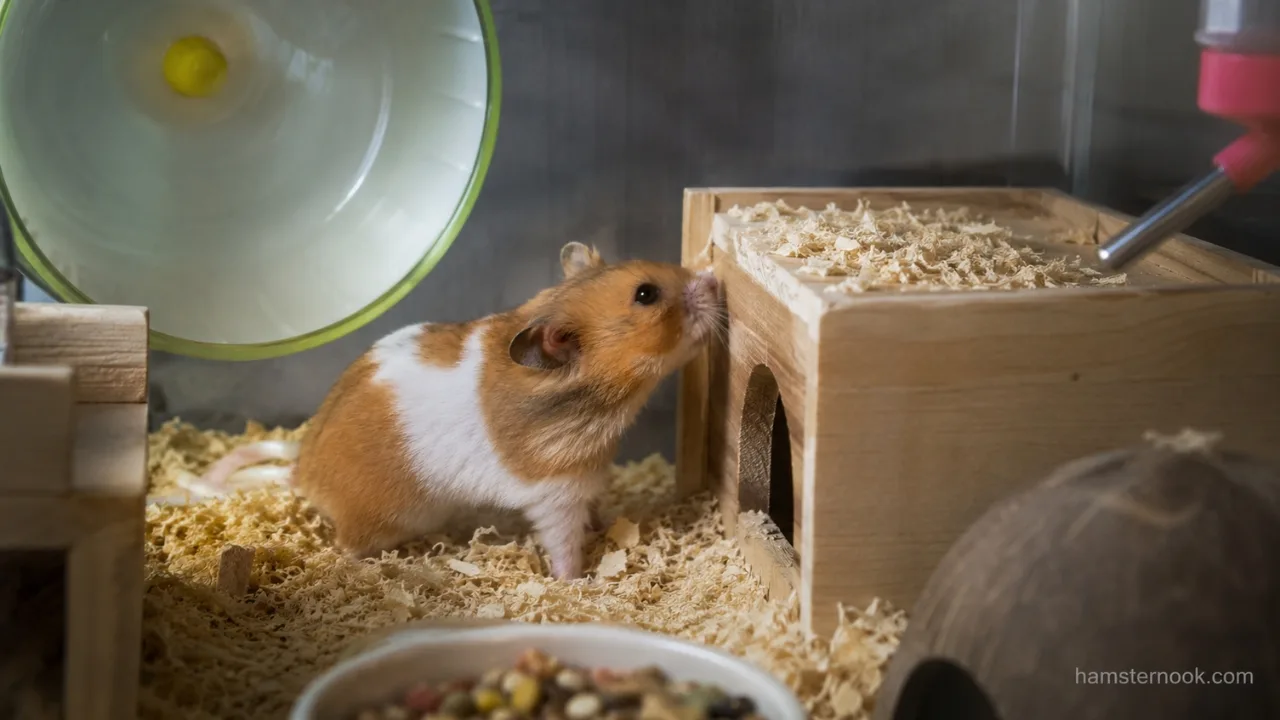
In many situations, yes. Hamsters can learn to recognize familiar people through repeated positive experiences.
Hamsters may not recognize people in the same way that dogs do, but they can learn to associate specific individuals with positive experiences.
Over time, your hamster may recognize:
- Your scent
- Your voice
- Your daily routine
- The sounds you make when approaching the cage
- Feeding schedules connected to your presence
This is one reason many owners notice their hamster becoming more attentive when they enter the room. Do Hamster Recognize Their Owners? How Hamsters Recognize You explains how hamsters may learn to associate familiar people with their scent, voice, and positive experiences.
Does Eye-Following Mean Your Hamster Likes You?
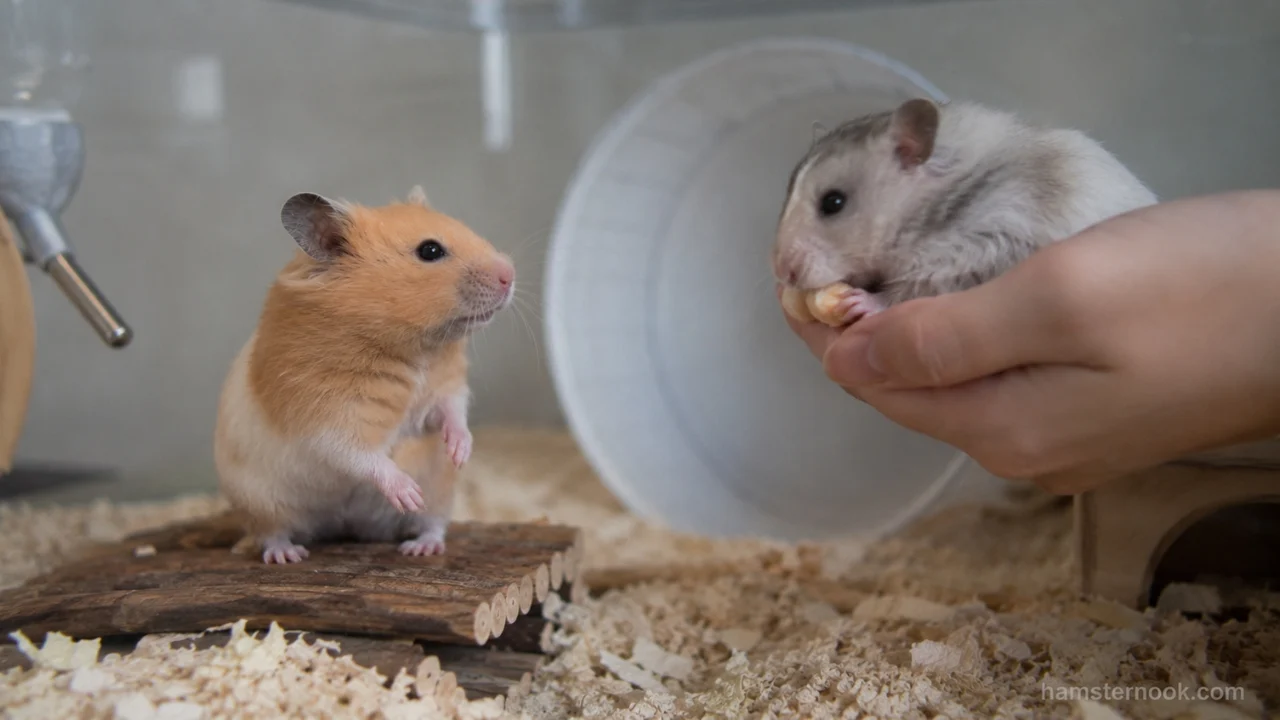
Not necessarily, but it is often a good sign.
Owners may notice other signs of familiarity too. Do Hamsters Get Excited to See You? Signs They Recognize & Trust You explains how to interpret these behaviors without assuming that every reaction means affection.
Common Reasons Your Hamster Follows You With Its Eyes
There are several reasons a hamster may keep watching its owner.
Curiosity About Its Environment
Curiosity is one of the strongest reasons hamsters pay attention to activity around them.
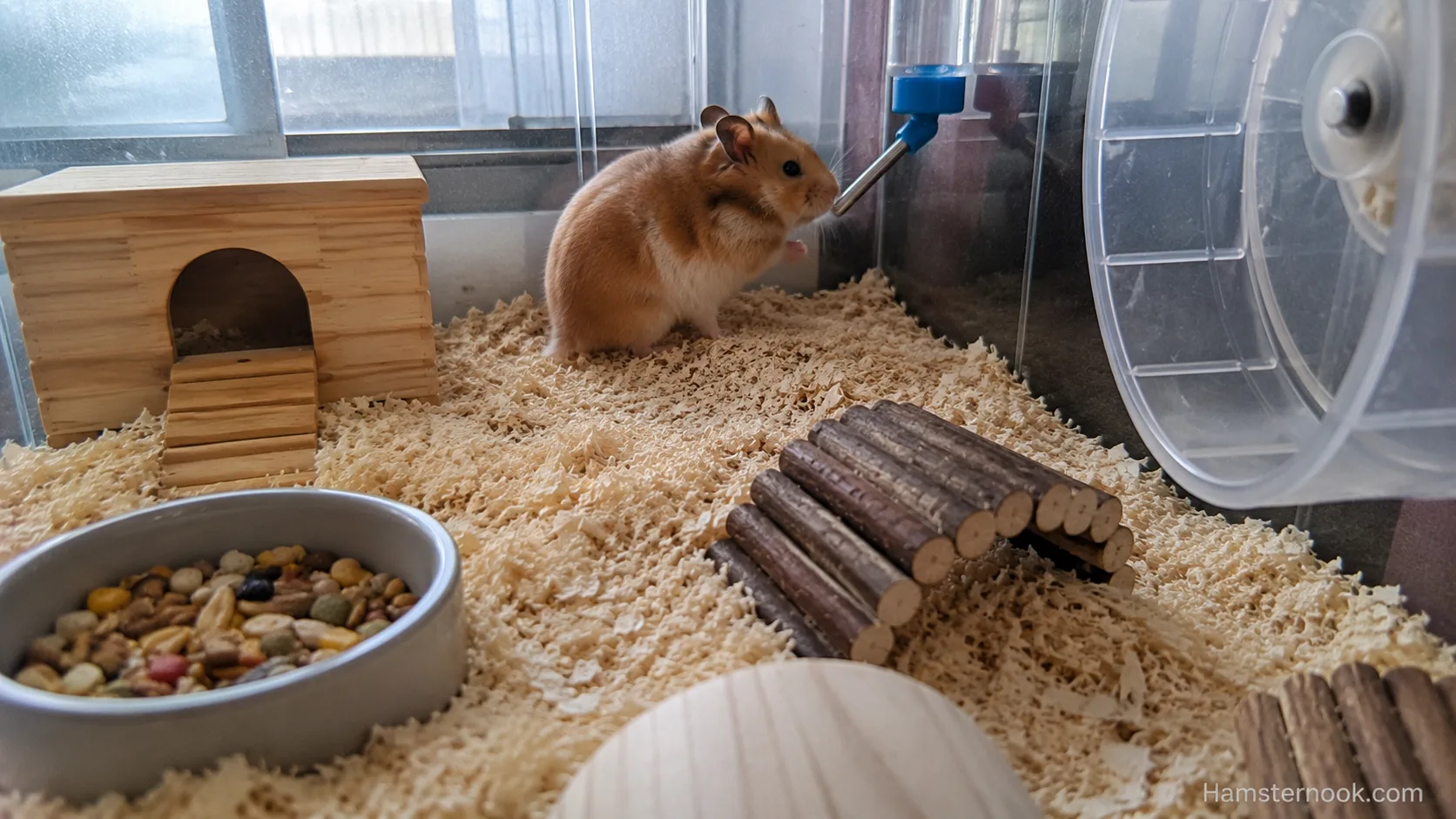
Anything that changes within their surroundings often captures their attention. If you’re walking around, cleaning, organizing, or simply moving nearby, your hamster may be observing to understand what is happening.
Curiosity is especially common in young and confident hamsters.
Anticipation of Food or Treats
Many hamsters quickly learn patterns.
If you frequently bring food, treats, or fresh vegetables, your hamster may associate your appearance with something positive.

The result is a hamster that immediately becomes alert whenever it sees you.
This behavior often becomes stronger if treats are offered consistently at similar times each day.
Food-motivated behavior is common in pet hamsters, which is also discussed in What Do Hamsters Eat? Complete Food List for Beginners.
Learning Your Daily Routine
Many owners underestimate how quickly hamsters learn household routines.
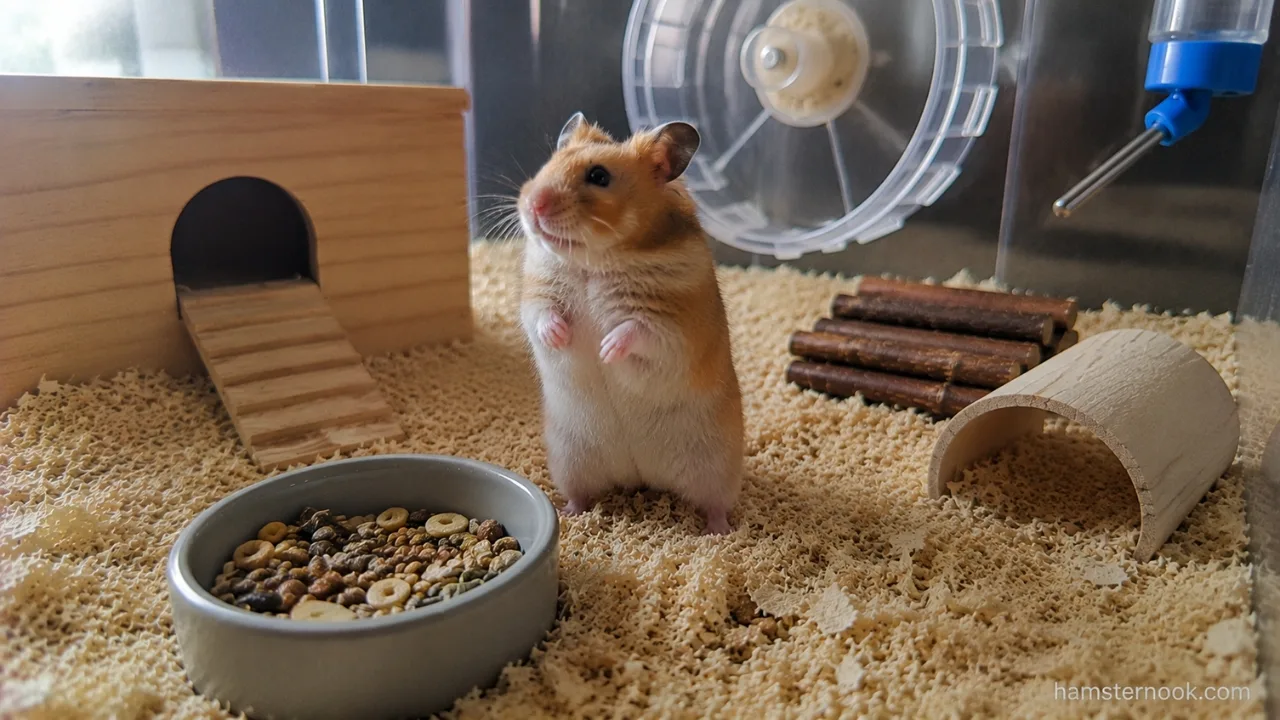
They often learn when lights turn on, when household activity begins, and when feeding typically occurs.
A hamster that watches you move around may simply be monitoring familiar daily events.
Building Trust
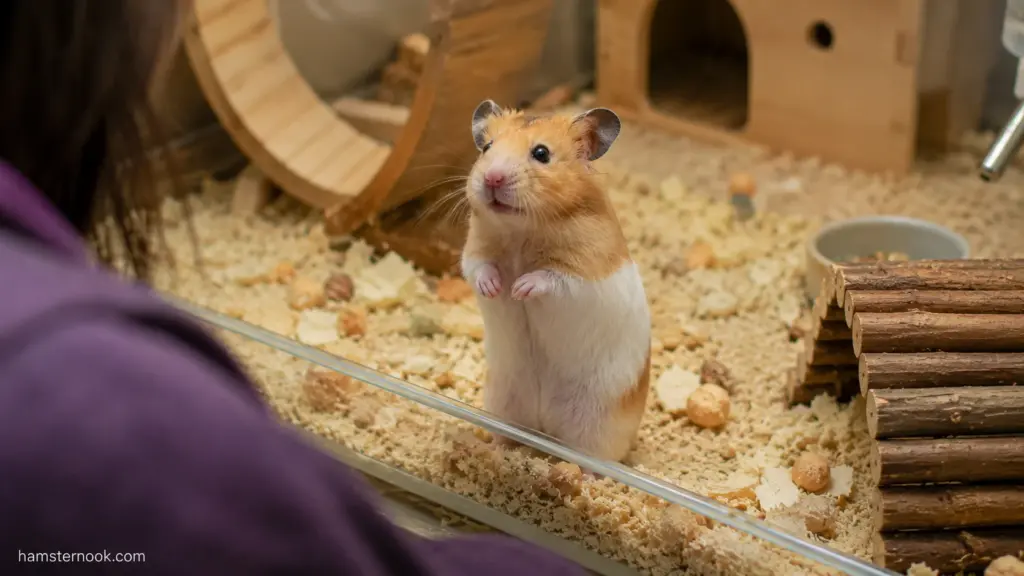
As trust develops, many hamsters become more interested in their owners.
Rather than hiding whenever someone approaches, they begin observing and engaging with activity outside the cage.
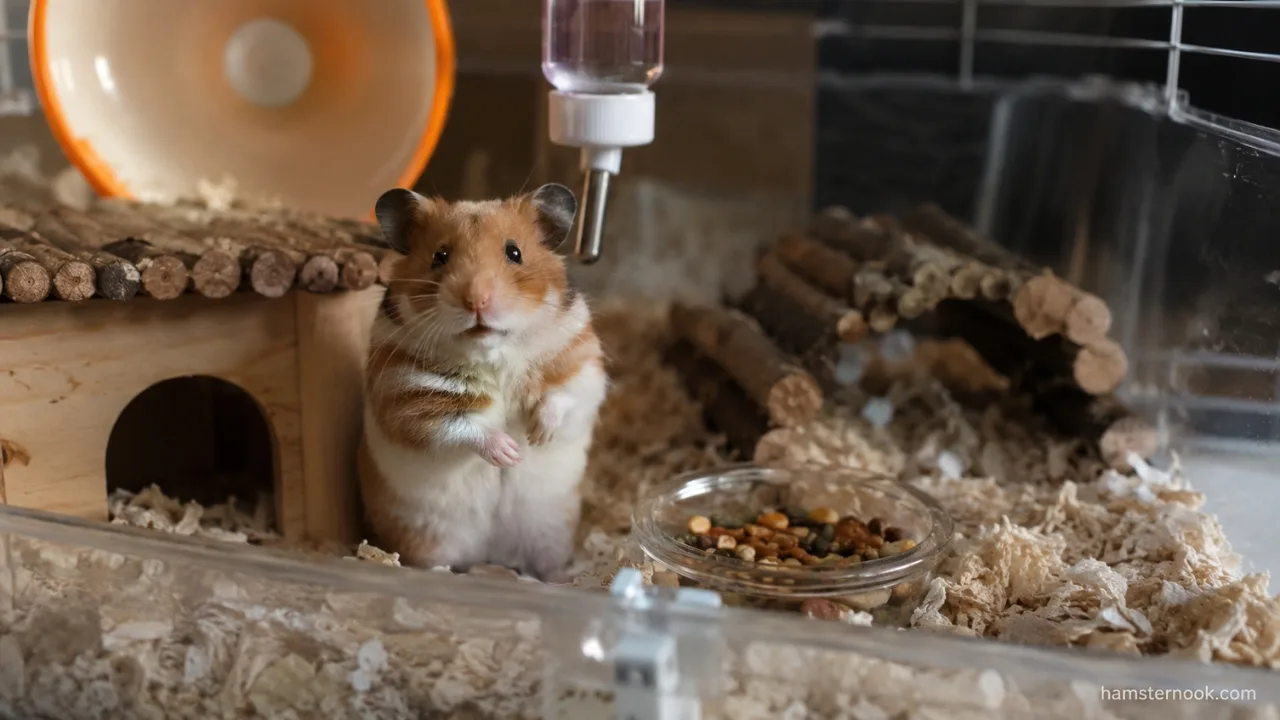
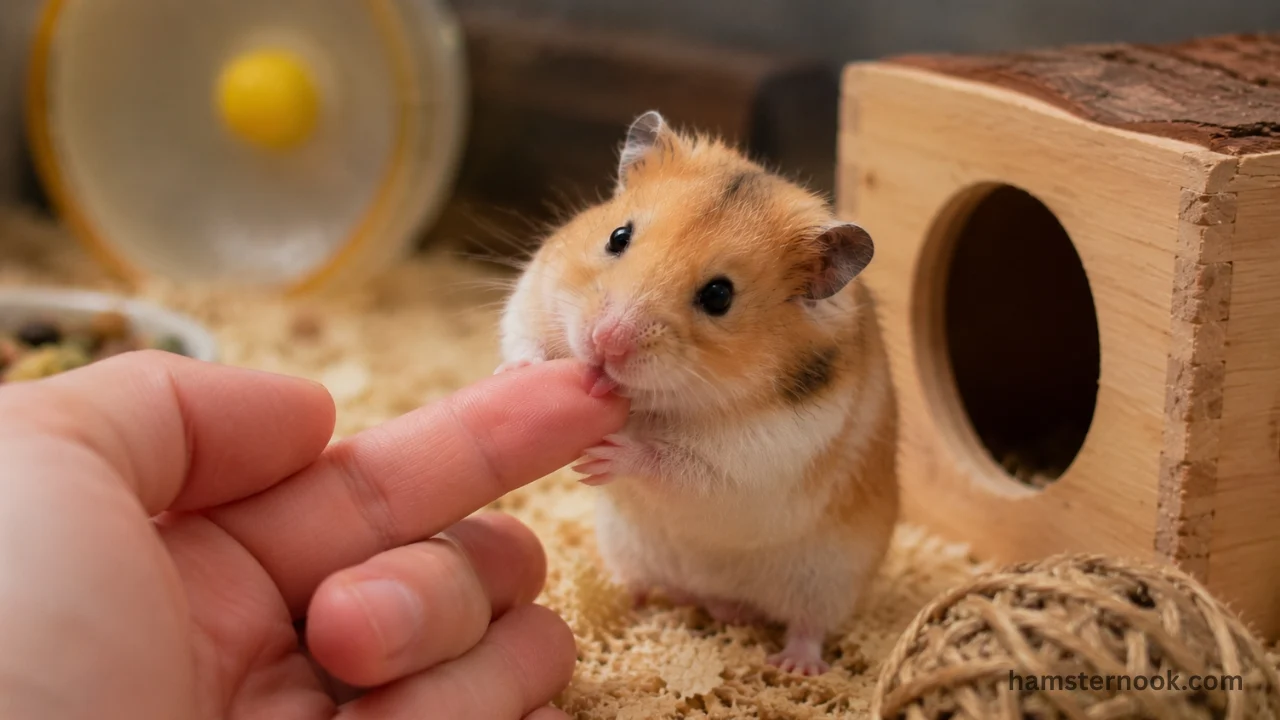
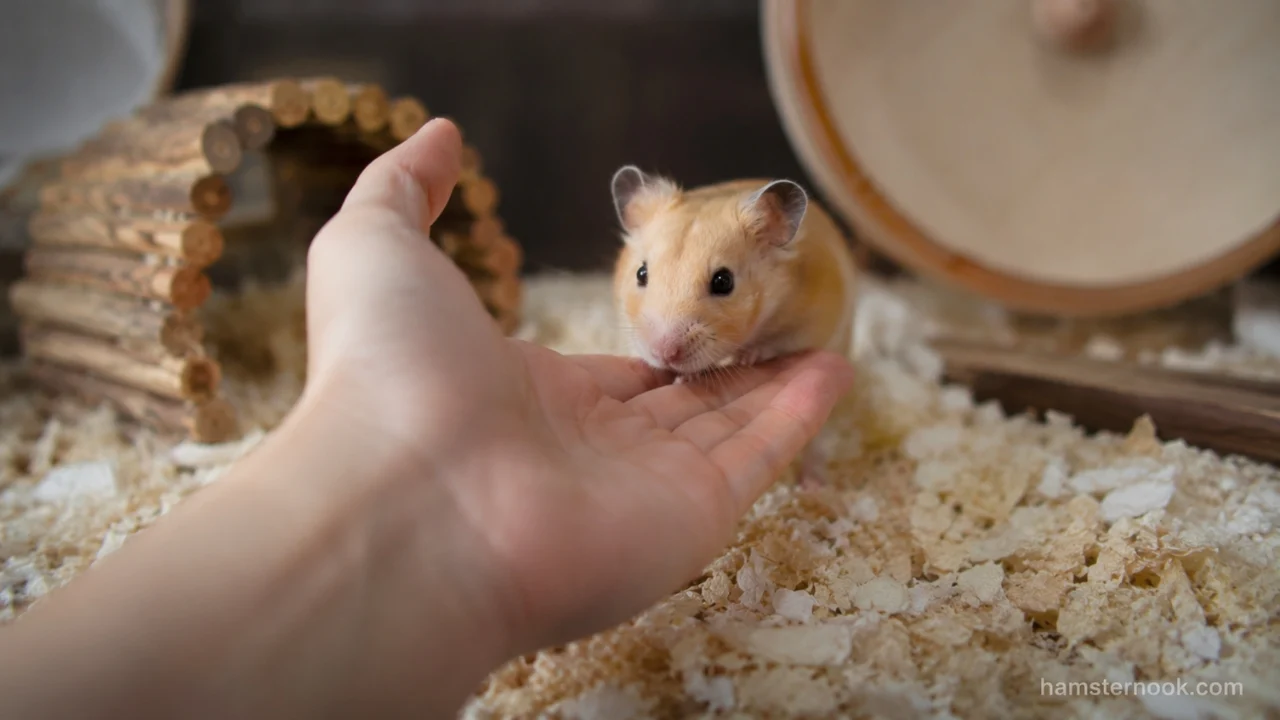
Owners working on taming and bonding often notice this stage before their hamster becomes comfortable taking treats by hand or climbing onto an open palm.
What Different Eye-Following Behaviors Can Mean
The context surrounding the behavior is often more important than the behavior itself.
| Behavior | Possible Meaning |
|---|---|
| Calmly watching you while grooming | Comfortable and relaxed |
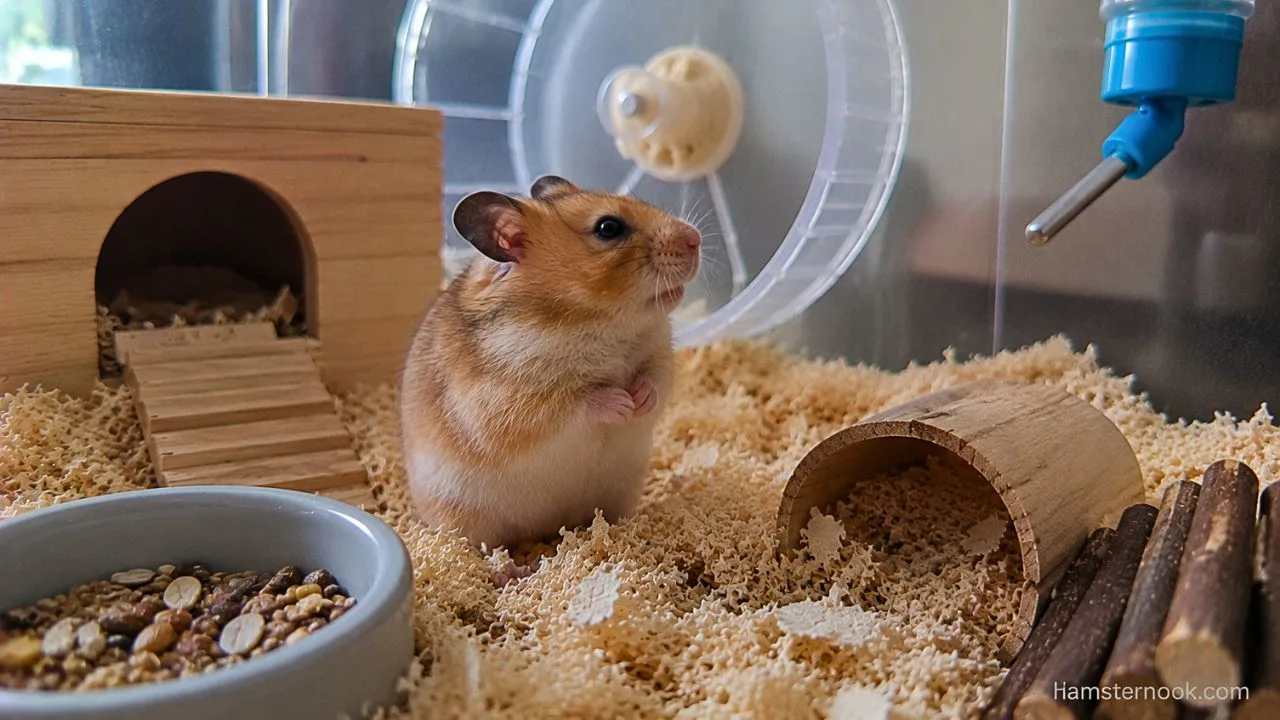
| Following your movement while standing upright | Curious and attentive |
| Watching from a hideout | Interested but still cautious |
| Running toward cage front when you appear | Anticipating food or interaction |
| Staring while frozen in place | Evaluating a potential threat |
| Watching while ears are flattened back | Nervous or stressed |
One behavior alone rarely explains exactly what a hamster is feeling. Looking at posture, movement, appetite, and confidence levels will usually provide a much clearer picture of what your hamster is feeling.
If your hamster freezes, flattens its ears, or retreats, pause and give it space instead of reaching into the enclosure. Hamster Body Language: Signs of Happiness, Stress, Fear & Illness explains how to interpret these signals alongside posture and movement.
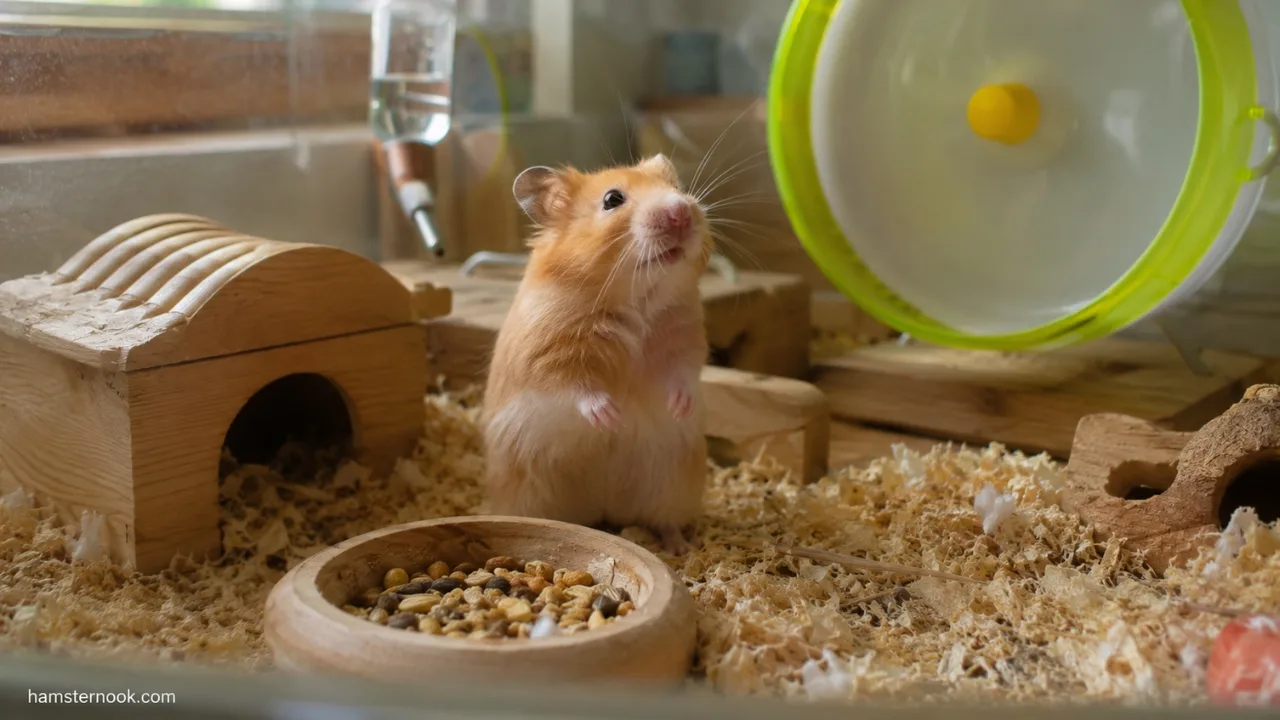
Signs Your Hamster Is Watching You Out of Curiosity
Curiosity generally comes with relaxed body language.
Common signs include:
- Grooming while watching
- Slowly approaching the cage front
- Sniffing the air
- Standing briefly on hind legs
- Exploring after observing you
These behaviors usually indicate a hamster that feels reasonably secure.
You may also notice similar curiosity if your hamster enjoys observing activity outside the cage. Owners often report this alongside behaviors discussed in Why Does My Hamster Sit and Stare at Me?

When Eye-Following May Indicate Caution or Fear
Not every hamster follows movement because it feels comfortable.
Newly adopted hamsters often monitor owners closely because they are still assessing potential threats.
A cautious hamster may:
- Freeze when you move
- Stay inside a hideout
- Avoid approaching the cage front
- Run away when hands enter the enclosure
This is especially common during the first week after adoption. If your hamster is new to your home, you may find The Biggest Mistake New Hamster Owners Make in the First Week helpful for understanding adjustment behavior.

Can Hamsters See Well Enough to Follow People?
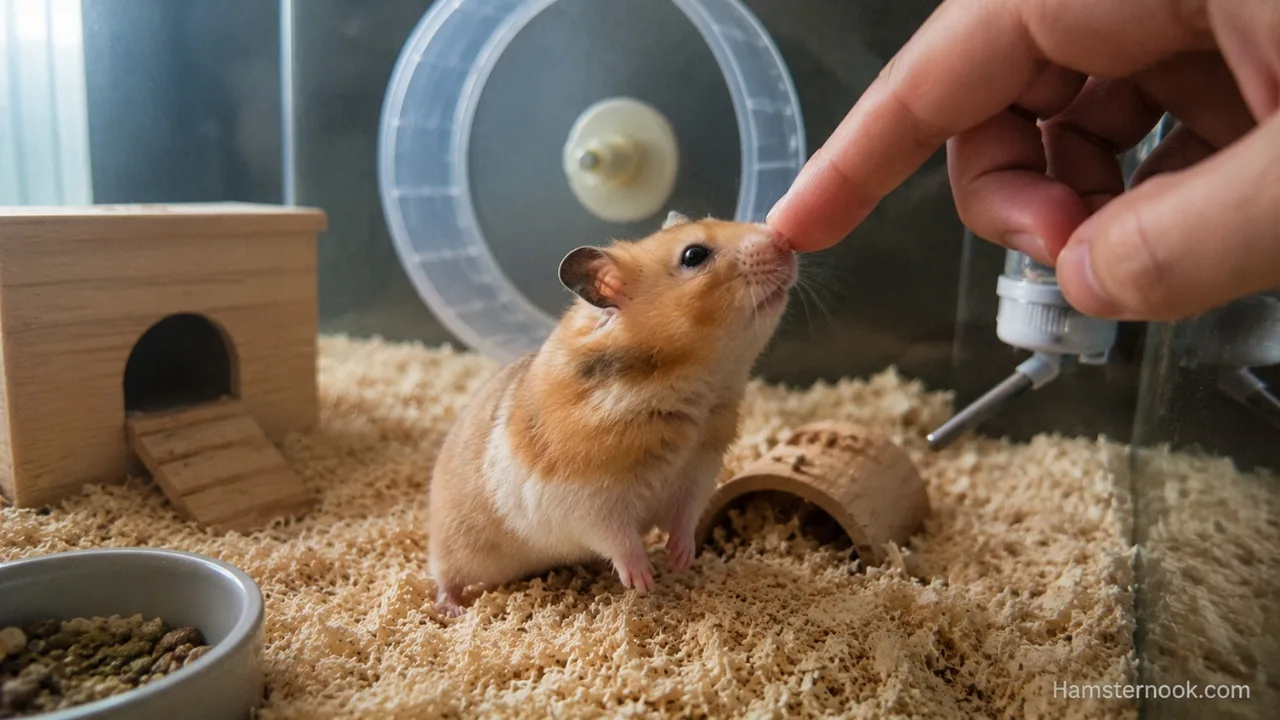
Although hamster eyesight is limited, they are very good at detecting motion. Even subtle movement across a room can attract their attention, especially when combined with familiar sounds or scents.
Hamster vision is not particularly sharp.
They generally see nearby movement better than fine details. Their eyesight works best when combined with other senses.
A hamster following you with its eyes is often using:
- Visual movement detection
- Smell recognition
- Hearing
- Familiar environmental cues
This means your hamster may recognize your approach before it can actually see you clearly.
Why Some Hamsters Follow Owners More Than Others
Individual hamsters can behave very differently from one another.
Some are naturally more social and observant, while others remain independent and reserved.
Several factors can influence how much attention a hamster pays to its owner.

| Factor | Potential Impact |
|---|---|
| Personality | Curious hamsters observe more |
| Age | Younger hamsters often explore more |
| Trust level | Comfortable hamsters engage more |
| Feeding habits | Food-motivated hamsters watch owners closely |
| Environment | Stimulating environments encourage observation |
A hamster that frequently watches you is not necessarily friendlier than one that doesn’t. Personal temperament plays a major role.
Common Mistakes Owners Make When They Notice This Behavior
Many owners misinterpret eye-following behavior and accidentally create stress.
Assuming the Hamster Wants Immediate Handling
Watching you does not always mean your hamster wants to be picked up.
Some hamsters are simply observing.
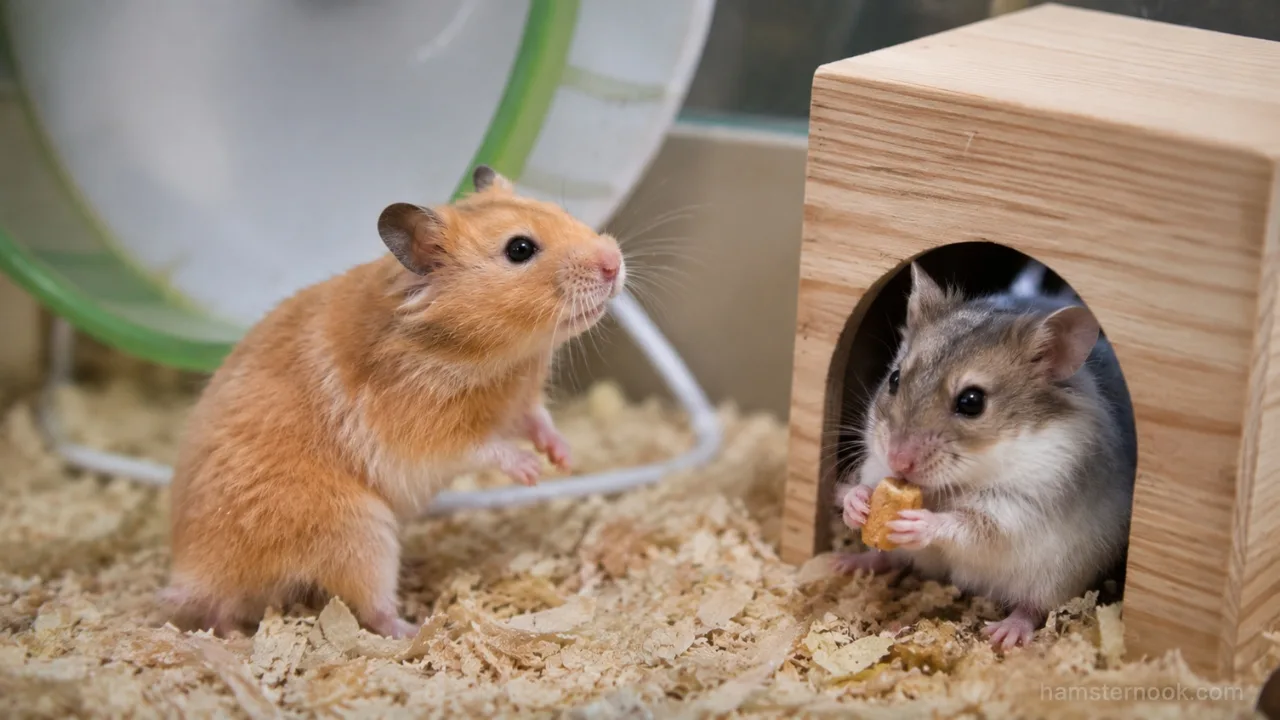
Allow interactions to happen gradually.
Offering Too Many Treats
Owners sometimes reward every instance of attention with food.
While treats can support bonding, excessive treats may contribute to obesity and poor nutrition.
Disturbing a Resting Hamster
If your hamster is quietly observing from a sleeping area, avoid waking or forcing interaction.
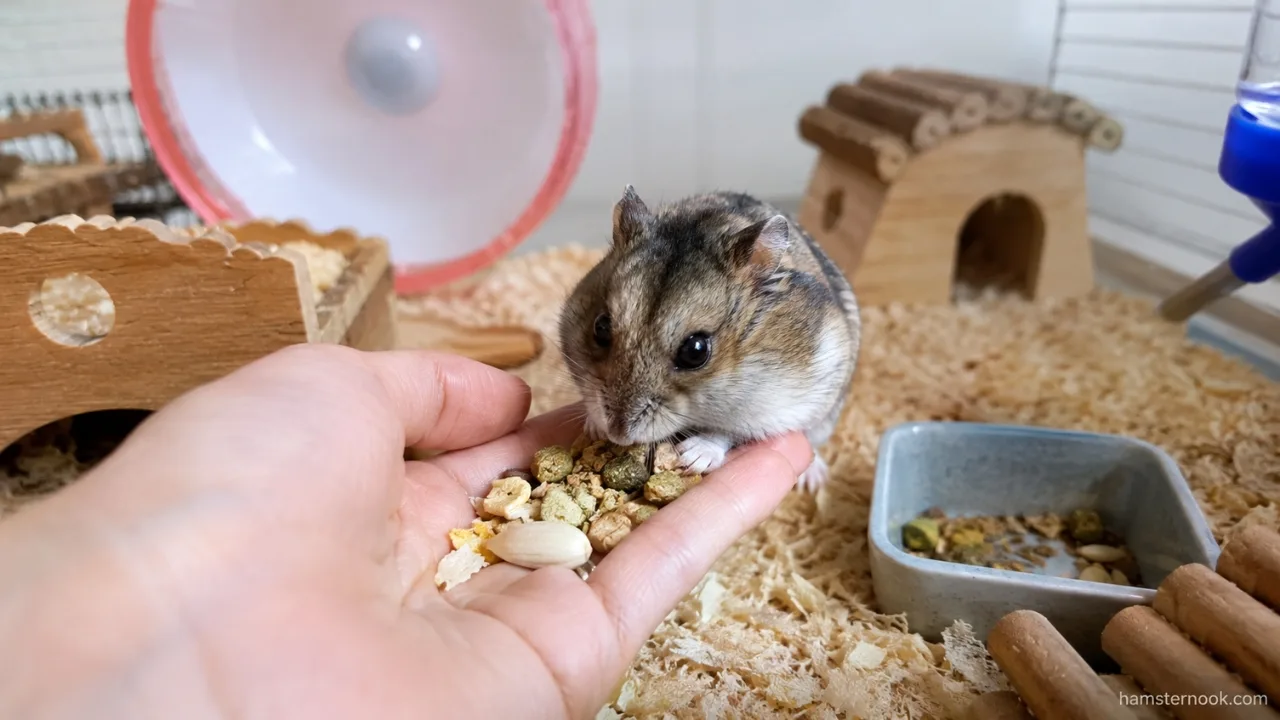
Respecting natural sleep schedules helps maintain trust.
Ignoring Other Body Language Signals
Eye contact alone does not tell the full story.
Always consider posture, movement, vocalizations, and activity level when interpreting behavior.
How to Encourage Positive Bonding When Your Hamster Watches You
If your hamster regularly watches you without showing signs of fear, it can be an excellent opportunity to strengthen trust gradually.
Owners working on trust-building may also find How to Get a Hamster to Trust You Faster Without Stressing It Out helpful.
Try these simple approaches:
Talk Softly Near the Cage
Regular exposure to your voice helps your hamster become familiar with your presence.
Offer Treats Occasionally
Use small healthy treats to create positive associations.
Allow Voluntary Interaction
Let your hamster approach rather than forcing contact.
Maintain a Consistent Routine
Predictable schedules help hamsters feel secure and confident.
As familiarity grows, many hamsters become noticeably more comfortable around the people they see every day.
When Watching Behavior Could Signal a Problem
Most of the time, eye-following is completely normal.
However, consult a veterinarian if you notice:
- Sudden behavioral changes
- Loss of appetite
- Head tilting
- Balance problems
- Cloudy eyes
- Reduced activity levels
In these situations, the behavior may be linked to an underlying health issue rather than normal curiosity.
Owners concerned about unusual behavioral changes may also want to read Why Does My Hamster Suddenly Act Different? and Why Is My Hamster Walking Weird?
When Watching You Is Completely Normal
In most healthy hamsters, watching owners is simply part of being aware of their surroundings. As long as your hamster is eating, drinking, exploring, and behaving normally, occasional eye-following is usually nothing to worry about.
Final Thoughts
If your hamster frequently watches you from across the cage, it is usually displaying normal awareness rather than a behavioral problem. In most cases, it simply means your pet is paying attention to its surroundings and has noticed your presence.
In most cases, the behavior simply reflects a hamster trying to understand what is happening around it and whether your presence is relevant to its routine. Watching behavior often becomes more noticeable as trust develops and the hamster grows comfortable in its environment.
The key is to look at the bigger picture. A relaxed hamster that watches you, explores normally, eats well, and shows curiosity is typically displaying healthy and natural behavior. By responding with patience and consistent care, you can continue building a positive relationship that encourages confidence and trust.
Key Takeaways
- Hamsters naturally monitor movement around them.
- Many hamsters learn to recognize their owner’s scent, voice, and routine.
- Curiosity and food anticipation are common reasons for eye-following.
- Body language helps determine whether the hamster is relaxed or cautious.
- Watching behavior is usually normal unless accompanied by other concerning symptoms.
Frequently Asked Questions
Why does my hamster turn its head and watch me walk around the room?
Hamsters naturally track movement to understand their surroundings. This behavior is usually driven by curiosity, routine recognition, or interest in potential food.
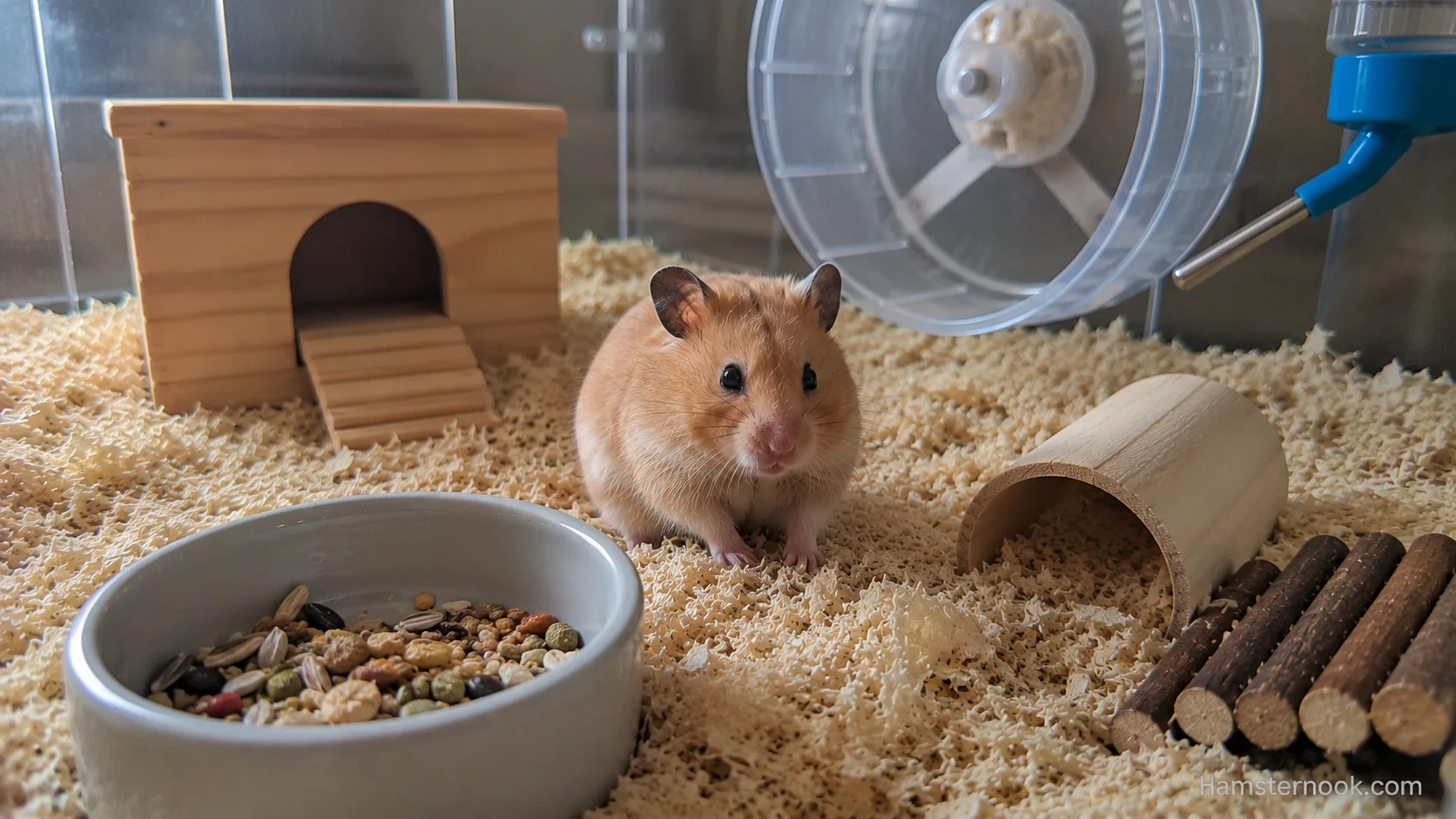
Does my hamster recognize me when it follows me with its eyes?
While their recognition differs from that of dogs or cats, they can associate specific people with safety and positive experiences.
Is it a good sign when my hamster watches me?
In most cases, yes. Calm observation often indicates curiosity and growing familiarity, especially when accompanied by relaxed body language.
Why does my hamster stare at me but run away when I open the cage?
This usually means the hamster is interested but not fully comfortable with direct interaction yet. Trust-building takes time, particularly with newer pets.
Should I pick up my hamster when it follows me with its eyes?
Not necessarily. Watching behavior does not automatically mean a hamster wants handling. Allow interaction to progress gradually based on the hamster’s comfort level.
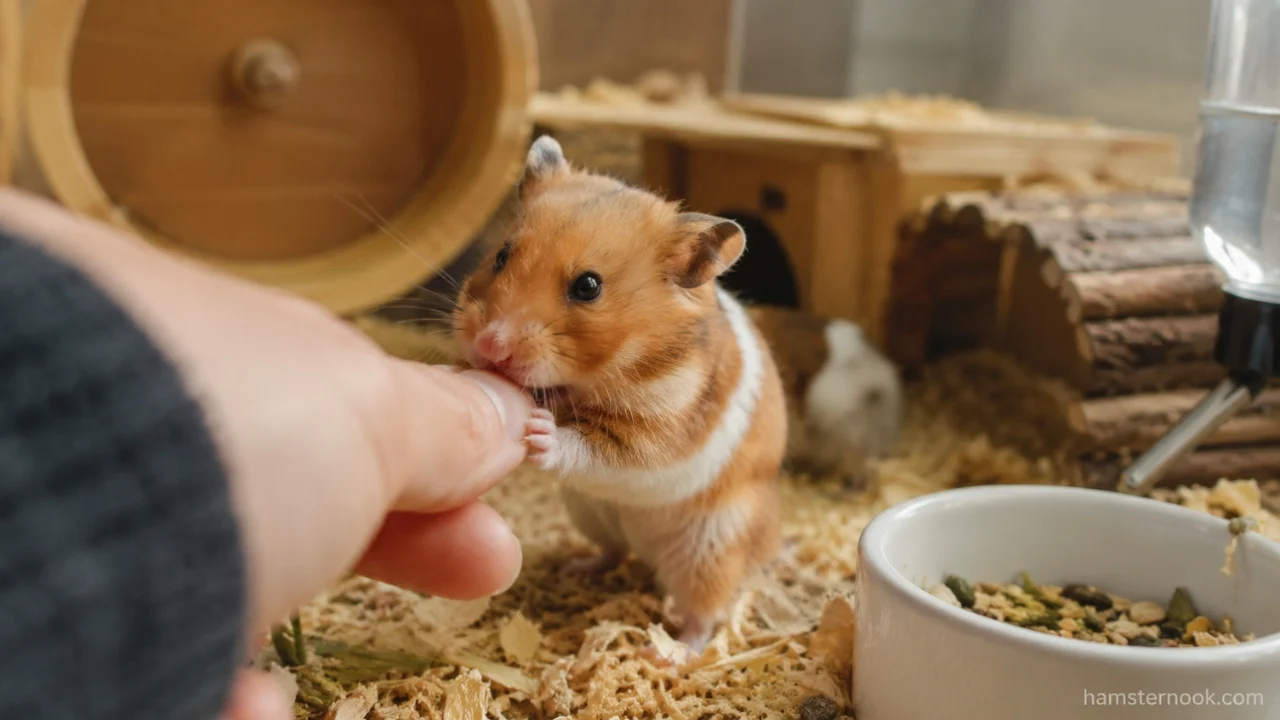
Why does my hamster only watch me during feeding time?
Many hamsters learn feeding schedules quickly. If your hamster mainly watches you when food is involved, it may have associated your appearance with treats or meals.
References
This guide is based on hamster behavior, sensory abilities, communication, handling, stress, bonding, and welfare guidance from trusted animal welfare and veterinary resources, including:
- RSPCA – Hamster Behaviour – Guidance on natural hamster behavior, communication, activity patterns, handling, and signs of stress or fear.
- RSPCA – Keeping Hamsters as Pets – General hamster care, behavior, handling, enrichment, housing, and welfare guidance.
- Blue Cross – Hamster Care Guide – Practical information on hamster behavior, handling, enrichment, housing, feeding, and building trust.
- MSD Veterinary Manual – Hamsters – Veterinary reference information covering hamster behavior, sensory and health considerations, husbandry, and conditions that may affect normal activity.
- NC3Rs – Housing and Husbandry: Hamster – Guidance on hamster housing, environmental needs, natural behaviors, enrichment, and welfare.
- NC3Rs – Choosing Appropriate Enrichment – Guidance on supporting natural behaviors through appropriate environmental enrichment and opportunities for exploration.

Narayan Kumar is the founder and author of HamsterNook. He creates practical, research-based hamster care guides covering hamster behavior, nutrition, cage setup, enrichment, health, and everyday care. His goal is to help hamster owners make informed decisions and provide safer, healthier lives for their pets through clear, beginner-friendly information based on trusted animal care resources.