Think your hamster might be pregnant? If she’s recently lived with a male, looks rounder than usual, or has started collecting bedding and building a nest, you may be wondering whether baby hamsters are on the way. Pregnancy can be difficult to recognize early because the visible changes often appear close to delivery. Knowing what to look for, how long pregnancy lasts, and how to prepare her enclosure can help you keep your hamster comfortable and protect her newborn pups.
Quick Answer: How Can You Tell If a Hamster Is Pregnant?
The strongest initial clue is recent contact with an intact male hamster, especially if the two were housed together. Physical signs such as an enlarging abdomen, increased food intake, and more intensive nest building can make pregnancy more likely, but none confirms it on its own.
Common signs include:
- A gradually enlarging, rounder abdomen, particularly later in pregnancy.
- Increased appetite and food hoarding.
- More frequent nest building.
- Prominent nipples or mammary glands.
- Restlessness shortly before delivery.
- Recent mating or possible exposure to a male.
Hamster pregnancy is short. Depending on the species, gestation generally lasts about 16–22 days, with Syrian hamsters usually giving birth after approximately 16–17 days.
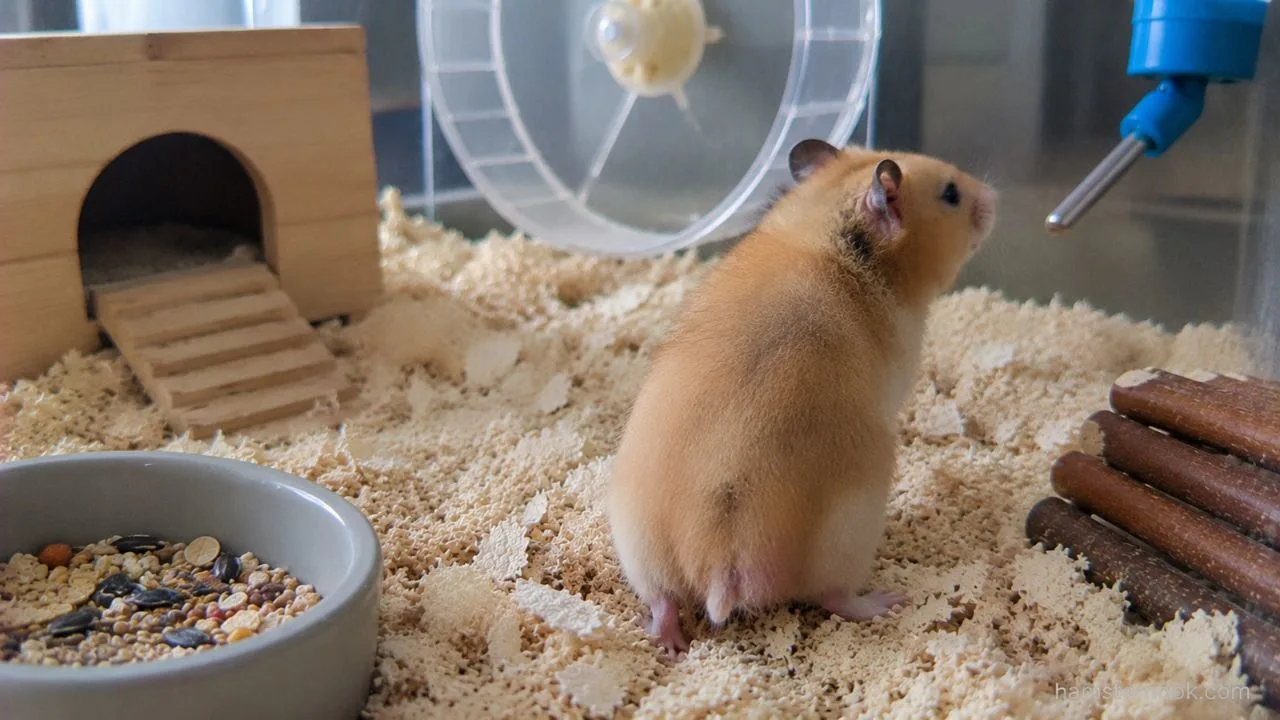
If pregnancy is possible, separate the female from any male, arrange veterinary advice, and prepare a quiet, safe enclosure before the pups arrive.
Early Signs of Hamster Pregnancy
Early pregnancy can be surprisingly easy to miss. A female hamster may look and behave normally for much of the gestation period, so her appearance alone isn’t a reliable way to determine whether she is expecting.
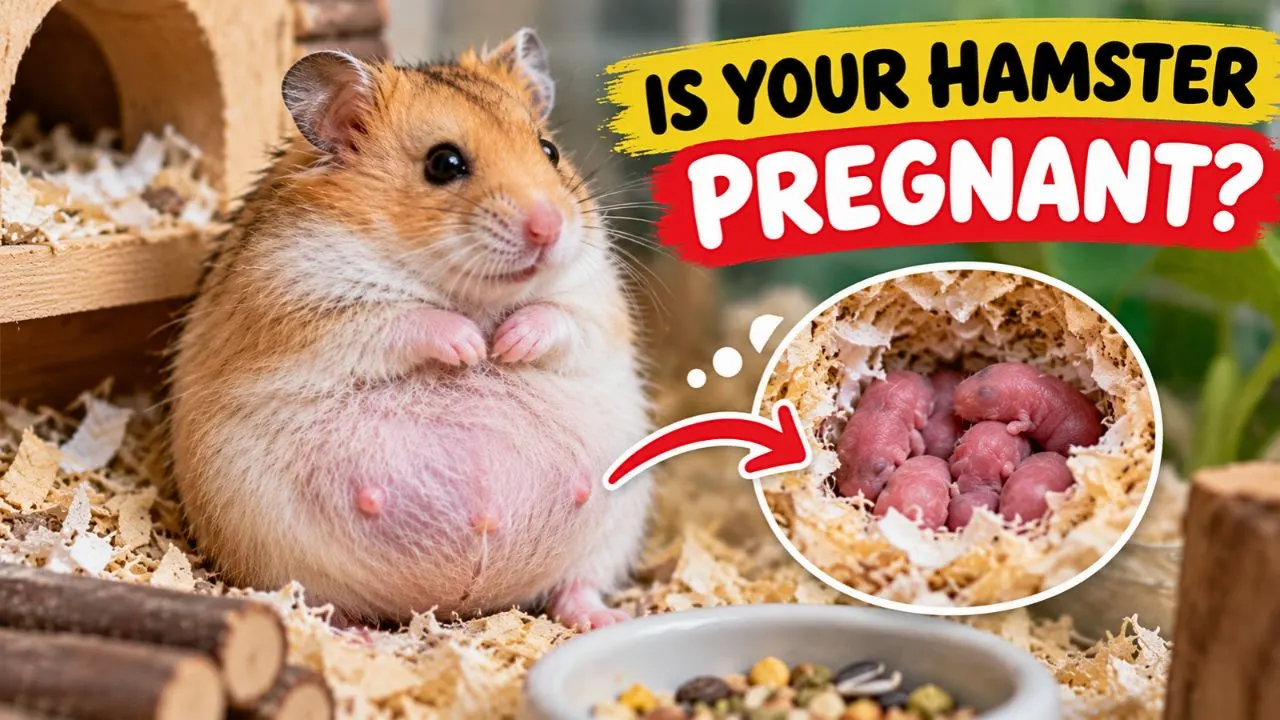
1. Her belly becomes larger and rounder
An expanding abdomen is one of the more noticeable signs during the later stages of pregnancy.
You might notice that your hamster looks fuller around her sides or that her body shape has changed compared with previous weeks. The change may become apparent only a few days before birth.
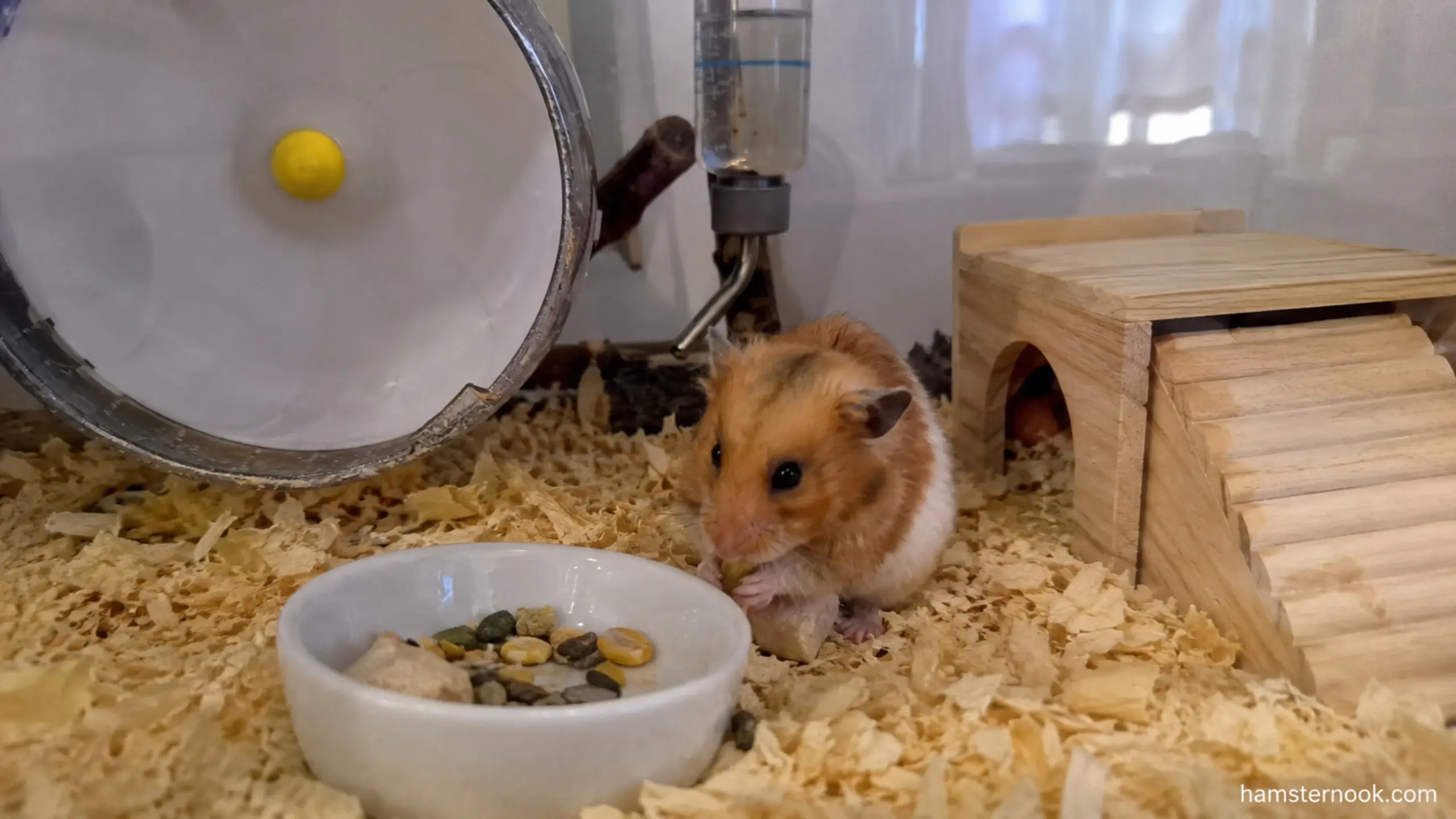
However, a swollen abdomen can also have other causes, including health problems. Don’t assume that a visibly enlarged belly means pregnancy.
2. She eats more and stores extra food
A pregnant hamster may spend more time eating and gathering food for her nest. Her nutritional needs increase during reproduction, and access to adequate food and water is essential.
Food hoarding alone isn’t proof of pregnancy, though. Hamsters naturally collect food, and this behavior can occur in females that aren’t pregnant.
Keep her usual balanced hamster food available and check that her water bottle or bowl is functioning properly.

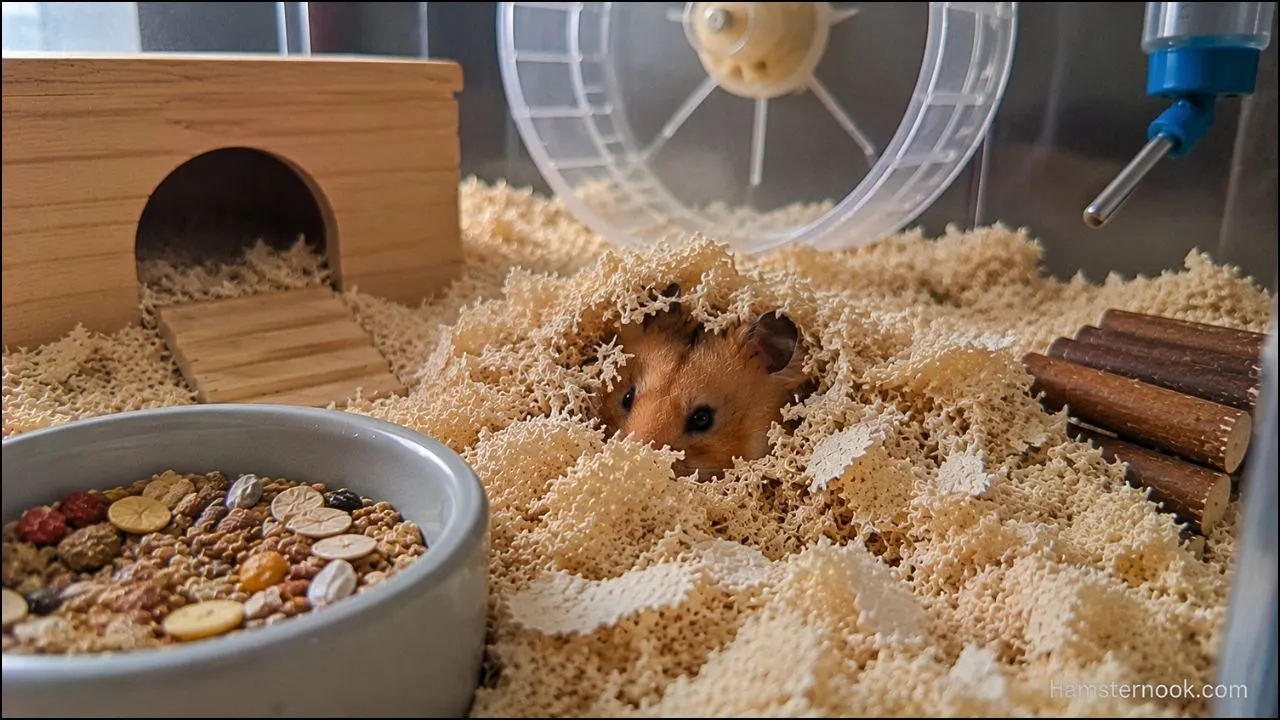
3. She builds a larger nest
A female approaching delivery may become more focused on gathering bedding and arranging a protected nesting area.
She may carry bedding into a hide, rearrange her existing nest, or spend more time preparing the space where she will give birth.
Nesting is a useful clue when combined with recent exposure to a male and physical changes. On its own, it is normal hamster behavior and doesn’t confirm pregnancy.
4. Her nipples may become more noticeable
As pregnancy progresses, the mammary glands develop in preparation for nursing. You may notice more prominent nipples or changes around the abdomen.
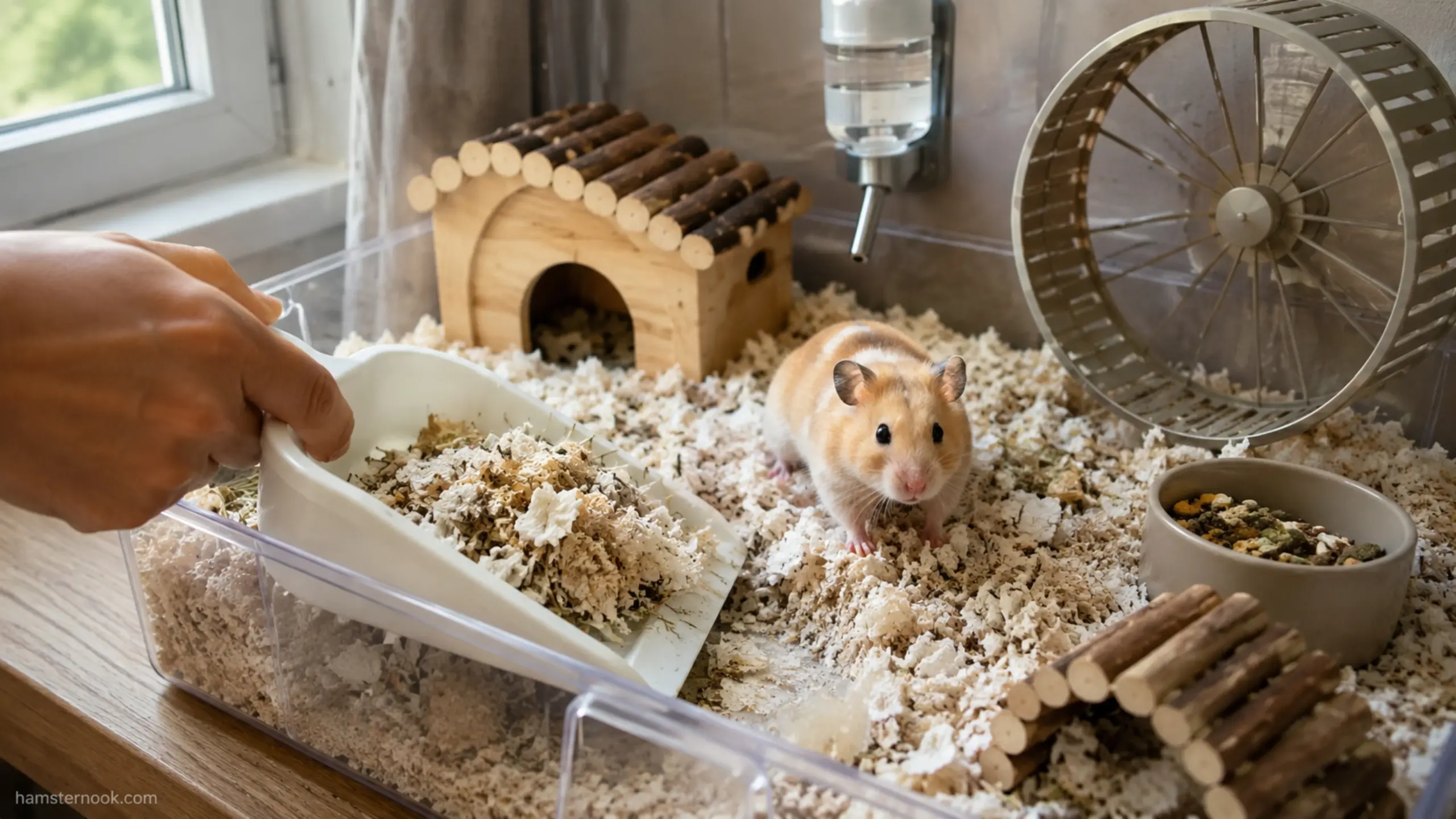
These changes can be subtle, especially if your hamster has thick fur. Don’t repeatedly turn her over or restrain her to inspect her belly. Doing so can cause unnecessary stress.
5. She becomes restless before giving birth
Close to delivery, a pregnant hamster may alternate between eating, grooming, moving bedding, and arranging her nest.
Some females appear more restless than usual shortly before labor begins. This is particularly relevant when pregnancy is already suspected from mating history and a changing abdomen.
Avoid handling her during this period. Give her space, keep the surroundings quiet, and make sure food and water are accessible.
Hamster Pregnancy Timeline: From Mating to Birth
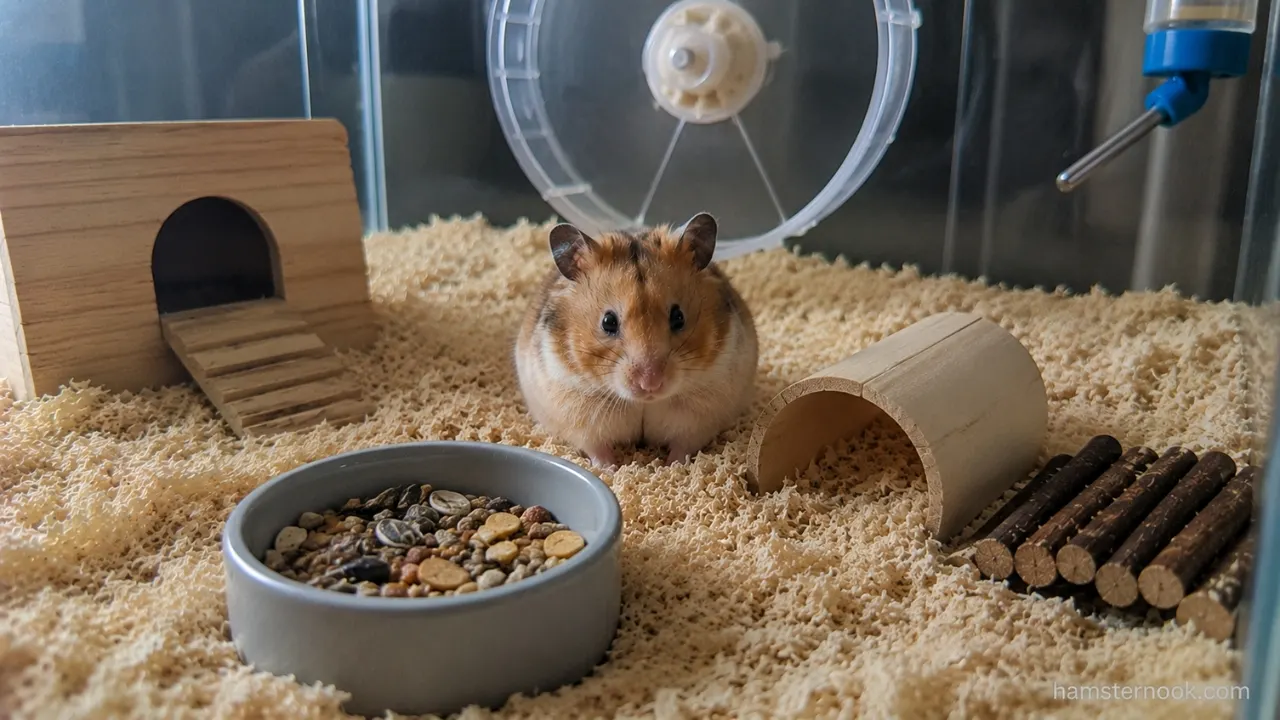
The gestation period varies by species. Because pregnancy is brief, an accidental mating can result in pups before an owner realizes what has happened.
| Stage | What you may notice | What to do |
|---|---|---|
| Early pregnancy | Few obvious physical changes; pregnancy may be difficult to identify | Review possible contact with a male and seek veterinary guidance |
| Middle of pregnancy | Gradual body changes may begin; food gathering may increase | Maintain a balanced diet, fresh water, and a calm environment |
| Final days | A fuller abdomen, more nest building, and possible restlessness | Prepare the enclosure and avoid unnecessary handling |
| Birth | Tiny, hairless pups are born with closed eyes and ears | Keep the nest undisturbed and provide food and water |
| First week after birth | The mother nurses and cares for the pups | Avoid handling the pups or disturbing the nest |
| Around 10 days onward | Pups begin exploring food as they develop | Provide accessible food as appropriate while minimizing disturbance |
| Around 3–4 weeks | Pups approach weaning age | Arrange appropriate separation by sex and prevent further breeding |
These are general stages, not a precise day-by-day prediction. Individual hamsters and species differ, and visible signs cannot reliably establish the exact day of pregnancy.
How long are hamsters pregnant?
Syrian hamsters typically have a gestation period of approximately 16–17 days. Other hamster species can have longer pregnancies, so the exact timing depends on the species.
If you know when mating occurred, mark the date and contact a veterinarian for advice about the expected delivery window. If the mating date is unknown, don’t rely on the size of her abdomen to calculate when she will give birth.

How to Care for a Pregnant Hamster
If you suspect pregnancy, the most helpful thing you can do is prepare her environment early. You don’t need to handle her more often or keep checking her abdomen. A quiet, secure enclosure with reliable access to food, water, and nesting material is a better starting point.
1. Separate her from male hamsters
If a male is still sharing her enclosure, separate them immediately into secure, appropriate individual housing.
This is particularly important for Syrian hamsters, which should be housed alone. Keeping a male with a female can lead to further mating and may create additional stress or conflict.
Don’t wait until the pups are born to address this.
2. Provide suitable nesting material
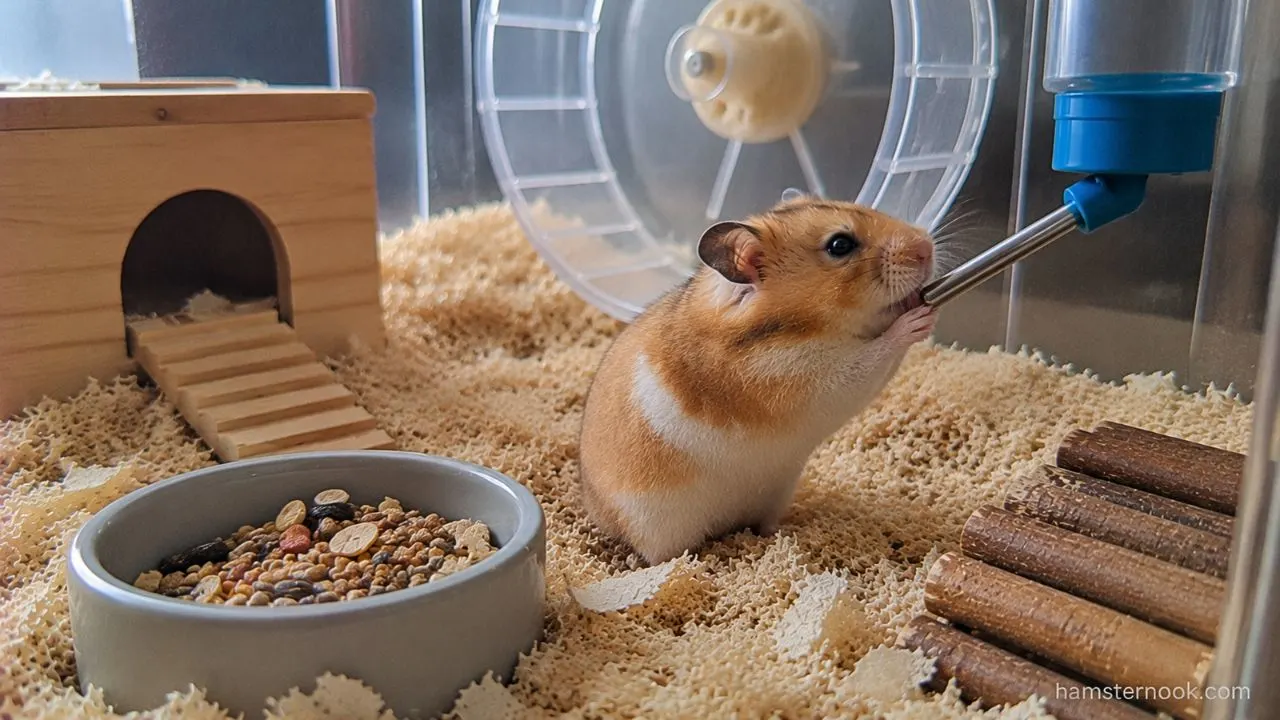
Give your hamster plenty of safe, unscented paper-based nesting material that she can shred and arrange herself.
Avoid cotton wool, fluffy nesting fibers, and materials that can wrap around tiny limbs or be accidentally swallowed. Don’t force bedding into her nest; allow her to arrange it naturally.
Provide a suitable hide where she can nest without feeling exposed.
3. Maintain a balanced diet and fresh water
Continue offering a complete hamster food formulated to meet her nutritional needs. Pregnancy and nursing increase the importance of adequate nutrition, so avoid restricting her food or replacing her staple diet with treats.

Make sure clean drinking water is always available. Check the water bottle or bowl daily to confirm that it is working correctly.
Don’t introduce major dietary changes or give supplements unless a veterinarian recommends them.
4. Keep the enclosure calm and secure
Avoid loud noises, frequent cage rearrangements, unnecessary handling, and repeated nest inspections.
If a routine cage clean is due and delivery may be close, ask your veterinarian how best to manage it. Prepare the enclosure in advance where possible so you don’t need to make major changes immediately before or after birth.
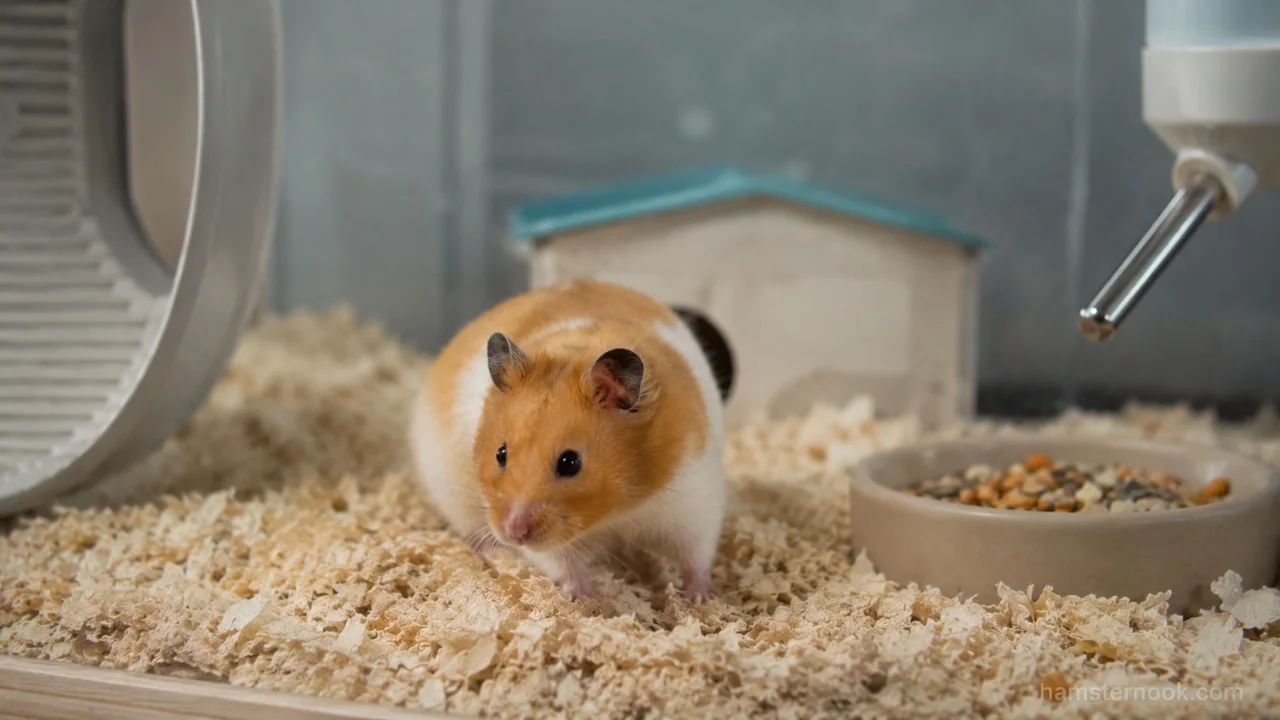
Keep the enclosure in a comfortable, stable environment away from direct sunlight, drafts, and other household pets.
5. Arrange a veterinary checkup
A veterinarian experienced with hamsters or exotic small mammals can assess your female, discuss the likelihood of pregnancy, and advise you on what to expect.
Don’t try to confirm pregnancy by pressing or squeezing her abdomen. A home examination cannot reliably establish pregnancy, and rough handling may injure her.
Veterinary assessment is particularly useful when the mating date is unknown, her abdomen looks unusually swollen, or you are unsure whether the changes you see are normal.

What Happens When a Hamster Gives Birth?
Hamster pups are born extremely small, hairless, and with their eyes and ears closed. They depend on their mother for warmth, milk, and care.
A first-time owner may be surprised by how little the pups move around the enclosure. Keep the environment quiet and resist the urge to lift the nest to count them.
Should you touch newborn hamster babies?
Avoid handling newborn pups or disturbing their nest during at least the first week after birth. The mother needs a calm environment to care for her litter, and unnecessary disturbance can increase stress.
For the first week:

- Observe quietly from outside the enclosure.
- Refill food and water carefully when needed.
- Avoid moving the nest or removing bedding around it.
- Keep children and other pets away from the enclosure.
- Don’t attempt to separate pups from their mother.
If a pup appears injured, is outside the nest and seems unable to return, or you suspect the mother is unwell, contact a veterinarian for advice rather than handling the litter unnecessarily.
When do baby hamsters start eating solid food?
Pups generally begin exploring or eating softened solid food at around 10 days old, although development varies. Weaning usually occurs at approximately 21–28 days.
As they grow, make suitable food and water accessible to them. Ask your veterinarian about appropriate feeding, weaning, and sex separation for your hamster species and litter.
Warning Signs: When to Worry About a Pregnant Hamster
Some changes, such as a gradually enlarging abdomen and increased nest building near delivery, can occur during normal pregnancy. Other signs should not be dismissed as routine.
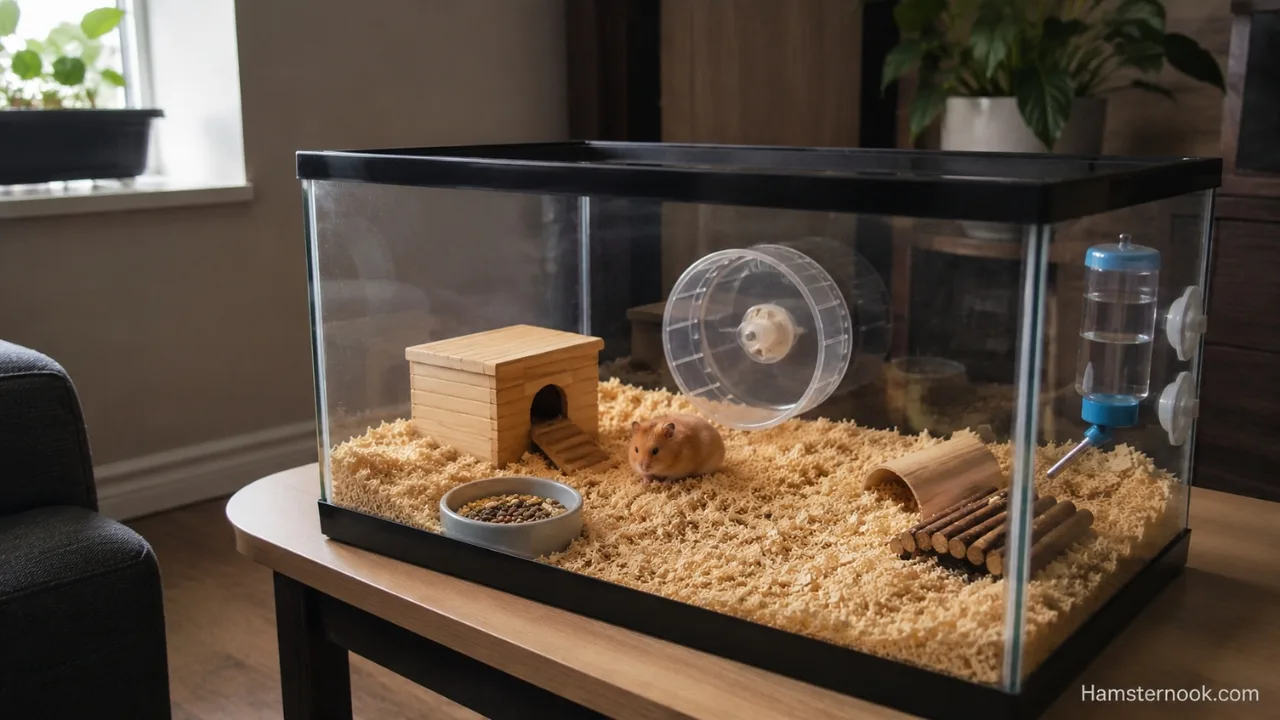
Contact a veterinarian promptly if you notice:
- Marked weakness or unusual lethargy.
- Refusal to eat or drink.
- An unusually swollen or painful-looking abdomen.
- Persistent or heavy vaginal bleeding.
- Foul-smelling vaginal discharge.
- Repeated straining without producing a pup.
- Difficulty breathing, collapse, or severe distress.
Difficulty breathing, collapse, severe bleeding, or obvious distress requires emergency veterinary attention. If you suspect that a pup is stuck or labor is not progressing normally, don’t pull on the pup or attempt to intervene internally.
A small amount of bleeding may occur near birth, but you cannot reliably distinguish normal delivery-related changes from a complication at home. Seek veterinary advice if you see blood, particularly if the amount is more than minimal or the hamster appears unwell.
Medical Disclaimer: This article provides general hamster-care information and does not replace veterinary diagnosis or treatment. Pregnancy and birth can involve complications. Contact a veterinarian experienced with small mammals if your hamster has concerning symptoms or you are unsure whether labor is progressing normally.
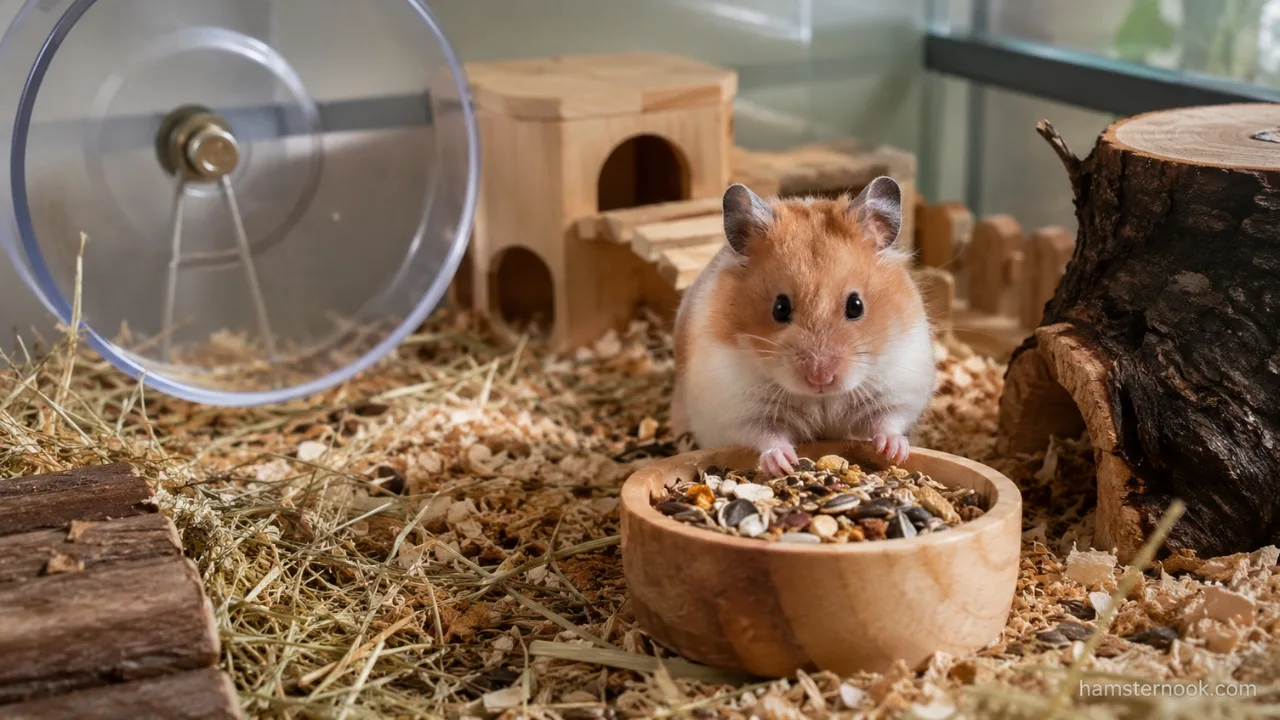
Common Mistakes to Avoid During Hamster Pregnancy
Even well-intentioned owners can unintentionally make this period more stressful.
- Checking her belly repeatedly: This won’t reliably confirm pregnancy and can cause unnecessary stress.
- Waiting until birth to separate the male: Another mating may occur before you realize the female is pregnant.
- Cleaning the entire enclosure immediately after birth: Disturbing the nest can disrupt maternal care.
- Handling pups to count them: Early handling is unnecessary for routine observation and should be avoided.
- Giving extra treats instead of balanced food: A complete hamster diet is more appropriate than relying on human foods or supplements.
- Assuming every large belly means pregnancy: Abdominal swelling can have medical causes and should be assessed when unusual.
- Ignoring the possibility of another pregnancy: Hamsters can reproduce at a young age. Keep the pups separated by sex at the appropriate developmental stage with veterinary guidance to prevent further litters.
What You Should Do If You Think Your Hamster Is Pregnant
Use this practical checklist to organize the next steps.
- Review her history. Has she lived with an intact male recently? When might mating have occurred?
- Look for changes without handling her. Observe her body shape, appetite, food hoarding, and nesting behavior.
- Separate any male immediately. House the animals securely and individually where appropriate.
- Prepare her enclosure. Provide safe nesting material, a suitable hide, adequate bedding, and a quiet environment.
- Maintain normal, balanced feeding. Ensure that food and clean water are always available.
- Contact a veterinarian. Ask about confirming pregnancy, the expected delivery window, and what to do if complications arise.
- Prepare for newborn care. Avoid disturbing the nest after delivery and plan for appropriate pup care and sex separation as they mature.
If you recently adopted a female hamster and don’t know whether she was housed with males, treat pregnancy as a possibility. Because gestation is short, arranging advice early is more useful than waiting for an obvious belly.
Final Thoughts
Learning how to tell if a hamster is pregnant comes down to combining the clues rather than relying on one symptom. Recent contact with a male is the most useful starting point, while a rounder abdomen, increased food gathering, prominent mammary glands, and more intensive nesting can provide additional clues as pregnancy progresses.
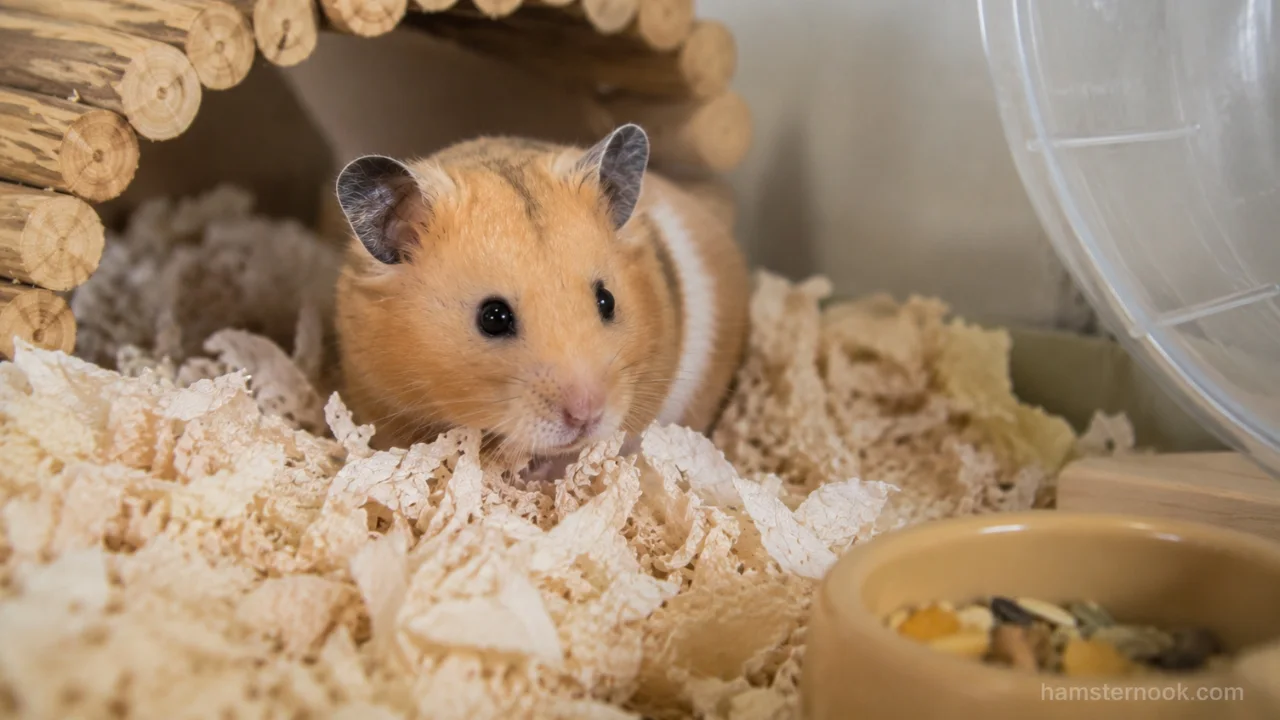
Hamster pregnancies move quickly, so prepare early. Separate the female from males, provide suitable nesting material, maintain balanced food and fresh water, and minimize disturbance around birth.
If you are uncertain whether your hamster is pregnant or notice signs of illness or difficult labor, seek advice from a veterinarian experienced with small mammals. A calm environment and timely veterinary guidance will help you give the mother and her pups the best possible start.
Frequently Asked Questions
How can I tell if my hamster is pregnant in the first week?
It can be difficult to identify pregnancy during the first week because visible physical changes may be minimal. Recent contact with an intact male is a more useful clue than behavior alone. A veterinarian can advise you on the appropriate way to assess the possibility of pregnancy.
Can a hamster be pregnant without a big belly?
Yes. A female may not develop an obvious abdominal enlargement until later in pregnancy. Body size, fur, and the stage of gestation can make changes difficult to notice.

How many babies does a hamster usually have?
Litter size varies by species and individual. The Merck Veterinary Manual describes six to eight pups as a typical litter, but a litter can be smaller or larger. Don’t estimate litter size from the mother’s appearance.
Can a hamster get pregnant at a young age?
Yes. Hamsters can reach sexual maturity surprisingly early, and the timing varies by species and individual. Keep young males and females separated before they can reproduce, and ask a veterinarian or knowledgeable rescue professional for guidance if their sex is uncertain.
Do pregnant hamsters need extra food?
Pregnancy and nursing make adequate nutrition particularly important. Provide a complete hamster food and continuous access to clean water rather than relying on treats or supplements. Ask your veterinarian whether any dietary adjustments are appropriate for your hamster.
Should I clean the cage before my hamster gives birth?
Prepare a clean, safe enclosure in advance, ideally before delivery is imminent. Once pups arrive, avoid disturbing the nest or performing unnecessary deep cleaning during the first week. If the enclosure becomes contaminated or there is a specific hygiene concern, consult a veterinarian about the safest approach.

Can I hold my hamster while she is pregnant?
Avoid unnecessary handling, particularly in the final days before delivery. If you need to move her for a genuine safety or veterinary reason, follow advice from a professional who can guide you on minimizing stress.
What if my hamster gives birth unexpectedly?
Keep the enclosure quiet, separate any male, and avoid touching the pups or disturbing the nest. Ensure the mother has food and water, then contact a veterinarian for advice about the litter and any concerns about the mother’s condition.
When can baby hamsters leave their mother?
Pups are generally weaned at around 21–28 days, depending on their development and species. They should not be separated prematurely. Seek guidance about weaning and separating males from females because hamsters can reproduce at a young age.
Can I tell whether my hamster is pregnant by looking at her nipples?
More prominent nipples or mammary glands can be a clue as pregnancy progresses, but this sign alone cannot confirm pregnancy. Avoid restraining your hamster for repeated examinations; a veterinary assessment is more appropriate if you need confirmation.
References
This guide is based on veterinary guidance on hamster reproduction, pregnancy, birth, newborn care, nutrition, and maternal welfare from trusted veterinary resources, including:
- Merck Veterinary Manual – Breeding and Reproduction of Hamsters – Veterinary guidance on hamster gestation, signs before birth, newborn care, and weaning.
- Merck Veterinary Manual – If Your Hamster Is Pregnant – Practical recommendations for nesting material, diet, water, veterinary checkups, and minimizing disturbance after birth.
- University of California, Davis, School of Veterinary Medicine – Hamster Care – Veterinary information on hamster species, gestation periods, housing, bedding, nutrition, and general care.
- MSD Veterinary Manual – Hamsters: Exotic and Laboratory Animals – Veterinary reference information on hamster biology, reproduction, and factors affecting maternal and newborn health.

Narayan Kumar is the founder and author of HamsterNook. He creates practical, research-based hamster care guides covering hamster behavior, nutrition, cage setup, enrichment, health, and everyday care. His goal is to help hamster owners make informed decisions and provide safer, healthier lives for their pets through clear, beginner-friendly information based on trusted animal care resources.