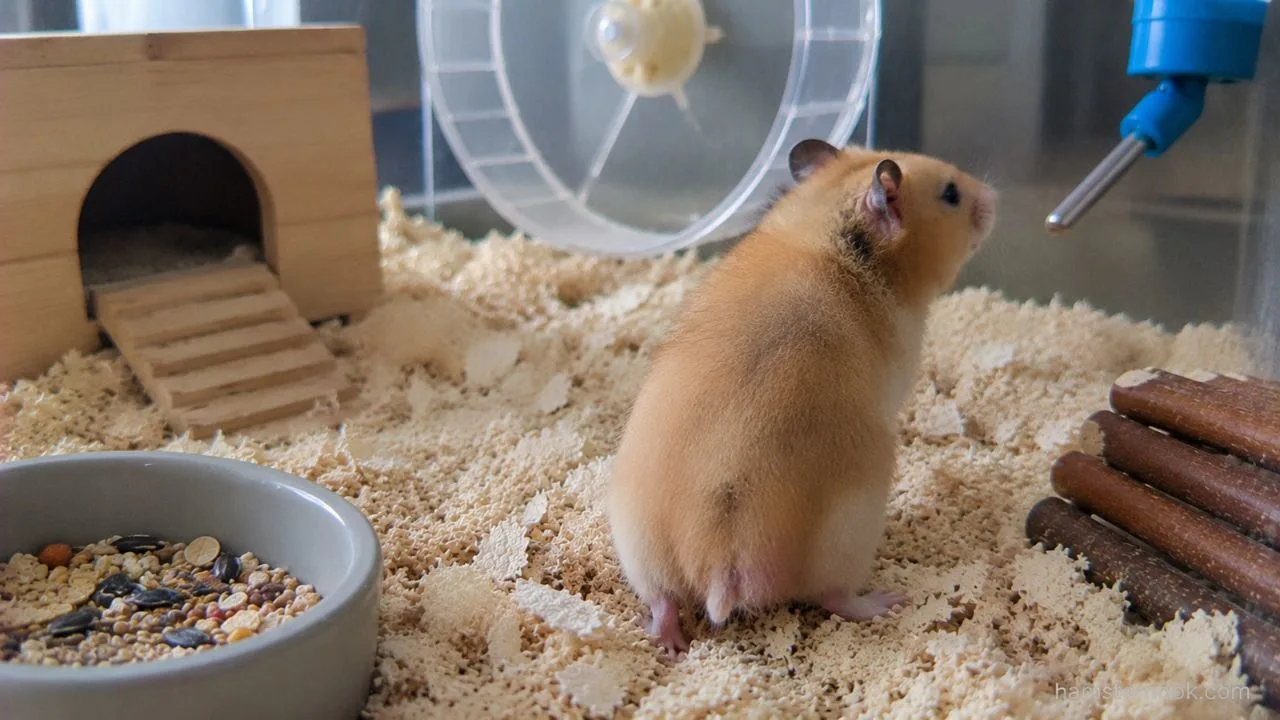
Not sure whether your hamster is a boy or a girl? You’re not alone. Male and female hamsters can look surprisingly similar, especially when they’re young or belong to a dwarf species. The good news is that you can often identify your hamster’s sex by checking a few physical features without causing unnecessary stress. The key is knowing what to look for, handling your hamster gently, and understanding when it’s better to ask a veterinarian for help.
Quick Answer: How Can You Tell If a Hamster Is Male or Female?
The most useful clue is the distance between the anus and the genital opening.
- Male hamster: The genital opening is noticeably farther from the anus. Mature males may also have visible testicles near the rear.
- Female hamster: The genital and anal openings are much closer together. Nipples may also be visible along the belly.
- Young hamsters: The differences can be subtle, making identification more difficult.
- Syrian and dwarf hamsters: The same basic anatomical clues apply, although small dwarf hamsters can be harder to examine.
Don’t rely on body size, personality, or behavior alone. If you’re unsure, keep the hamster housed separately from any potentially opposite-sex hamster and seek confirmation from a veterinarian experienced with small mammals.
Male vs. Female Hamster: Key Differences
Before examining your pet, it helps to understand the features you’re looking for. No single secondary clue is equally obvious in every hamster, so compare the anatomical features rather than making a decision based on appearance alone.

| Feature | Male hamster | Female hamster |
|---|---|---|
| Distance between openings | Usually more widely separated | Usually very close together |
| Testicles | May be visible in mature hamsters | Absent |
| Nipples | Not normally prominent | May be visible along the belly |
| Rear appearance | May look elongated or have prominent testicles | Usually lacks the prominent testicular bulges |
| Body size | Varies by species and individual | Varies by species and individual |
| Behavior | Not a reliable indicator | Not a reliable indicator |
The distance between the openings is generally the most useful feature for a beginner. Testicles and nipples provide supporting clues, but their visibility depends on age, fur, posture, and other factors.
How to Safely Check Your Hamster’s Sex
You don’t need special equipment to examine your hamster, but you do need to handle them carefully. A frightened hamster may wriggle, bite, or try to jump, so the goal is to get a brief, clear look without forcing your pet into an uncomfortable position.
If your hamster becomes defensive when handled, avoid forcing the examination or repeatedly trying to turn it over. Building comfort through gentle, voluntary interaction can make routine handling easier. See How to Tame a Hamster That Bites: Step-by-Step Guide to Build Trust for guidance on handling a cautious hamster.
Step 1: Choose the right time
Check your hamster when they’re naturally awake and reasonably calm. Hamsters are generally most active in the evening and at night, so avoid waking a sleeping hamster just to inspect their underside.

Wash and dry your hands before handling your pet.
Step 2: Move to a safe, low surface
Sit on the floor or work directly above a secure, soft surface. This reduces the risk of injury if your hamster slips out of your hands.
Keep other pets away and make sure there are no gaps through which your hamster could escape.
Step 3: Let your hamster settle in your hands
Gently scoop your hamster into cupped hands and allow them to move naturally. If they’re comfortable, you may briefly support them so you can see their underside.

A clear, secure container can also help you observe the underside without repeatedly picking your hamster up, provided you can see the relevant area clearly.
Never squeeze your hamster’s abdomen, pull their tail, or force them onto their back. If your hamster struggles, becomes distressed, or repeatedly tries to escape, stop and try another time or ask a professional for help.
Step 4: Compare the two openings
Look near the base of the tail, where the anus and genital area are located.
- If the openings are noticeably separated, your hamster is more likely to be male.
- If the openings sit very close together, your hamster is more likely to be female.
Don’t rush this step. Fur, movement, and the hamster’s age can make the openings difficult to distinguish.
Step 5: Look for supporting clues
If your hamster is comfortable and the view is clear, check for visible testicles or nipples. These can support your assessment, but they aren’t always easy to see.
If you still cannot identify the sex confidently, stop rather than repeatedly handling your hamster. A veterinarian familiar with small mammals can confirm it.
How to Tell If a Baby Hamster Is Male or Female
Sexing baby hamsters can be more difficult than identifying adults because their reproductive features are tiny and less developed.
The distance between the genital opening and the anus can help identify sex even in young hamsters, but the difference may be subtle to an inexperienced owner.

When can you identify a baby hamster’s sex?
There isn’t one age at which every beginner will be able to identify every hamster reliably. The animal’s development, species, and how clearly the anatomical features can be seen all matter.
For newborns, avoid unnecessary handling. A mother and her litter should generally be left undisturbed during the first week after birth, apart from essential care, because disturbance can create stress.
If you need to establish the sex of young hamsters to prevent accidental breeding, ask an experienced veterinarian or knowledgeable small-animal professional for guidance.
When should young hamsters be separated?
This is one of the most important reasons to identify sex correctly.

Hamsters can become sexually mature at a young age. The Blue Cross advises that they can become sexually mature as early as four weeks, while the MSD Veterinary Manual recommends separating males and females before eight weeks to prevent accidental litters.
Do not interpret the eight-week recommendation as a reason to leave a potentially mixed-sex group together until that age. If young hamsters’ sexes are uncertain, seek prompt help identifying them and arranging appropriate separation.
Can You Tell a Hamster’s Sex by Its Size or Behavior?
Not reliably. Some physical and behavioral differences may be noticeable, particularly in mature hamsters, but they are not dependable substitutes for examining the reproductive anatomy.
Body size and shape
A hamster’s size varies with species, age, genetics, and individual development. Even when males and females differ in average size within a particular species, their sizes can overlap.

A large hamster is not automatically male, and a small hamster is not automatically female.
Personality and temperament
Some owners assume that males are calmer while females are more active or aggressive. Individual temperament varies, however, and behavior alone cannot establish sex.
A hamster that bites, hides, explores constantly, or dislikes handling cannot be identified as male or female from those behaviors.
Smell and scent glands
Hamsters have scent glands that can differ in appearance between species and sexes. In Syrian hamsters, the flank scent glands are generally more prominent in males.

However, scent glands are not a universal shortcut for sexing every hamster. Their location and appearance vary by species, and a noticeable smell alone does not prove that a hamster is female.
Species differences can affect how easy a hamster is to examine, so avoid assuming that every hamster will look or behave the same way. If you need help understanding the differences between common pet hamsters, Syrian vs Dwarf Hamster: Size, Personality, Care & Which Is Better? provides a broader comparison.
Why It Matters to Know Your Hamster’s Sex
Identifying your hamster correctly is more than choosing a name or deciding which pronouns to use. It can directly affect housing decisions and help prevent unwanted litters.
Preventing accidental pregnancies
If you have two hamsters of potentially different sexes, do not assume they are both male or both female because they look similar.

Keep them in separate, secure enclosures until their sexes have been confirmed. If they have already shared an enclosure, contact a veterinarian for advice about the possibility of pregnancy.
Each enclosure should provide a secure, appropriate living space rather than simply separating the animals temporarily. If you need help reviewing the essential enclosure features, see Best Hamster Cage Setup for Beginners: Size, Bedding, Wheel & Essentials.
Choosing suitable housing
Syrian hamsters are generally solitary and should be housed individually. Dwarf hamster housing requirements also need careful consideration; keeping hamsters together can lead to conflict, and sex alone does not determine whether co-housing is appropriate.
Separate housing is the safest choice when sex is uncertain or there is a risk of fighting or breeding.

When deciding how to manage interactions between hamsters, remember that shared housing can involve territorial behavior as well as the risk of accidental breeding. Are Hamsters Territorial? Signs, Causes & Safe Ways to Respond explains this behavior and how owners can respond safely.
Making informed care decisions
Knowing your hamster’s sex helps you recognize the possibility of pregnancy and understand certain reproductive behaviors. It can also provide useful information for a veterinarian if your hamster needs an examination.
Common Mistakes When Sexing a Hamster
Avoid these common errors when checking your pet.
- Judging by size alone: Individual hamsters vary too much for size to be a dependable indicator.
- Assuming hidden testicles mean female: Male hamster testicles can retract and may not always be obvious.
- Relying on nipples alone: Nipples may be difficult to see, particularly when the hamster has thick fur.
- Waking a sleeping hamster: A startled animal may react defensively or attempt to escape.
- Holding the hamster too tightly: Forceful restraint can cause stress and risks injury.
- Waiting too long to separate uncertain sexes: Young hamsters can become sexually mature early, so uncertainty should be addressed promptly.
- Repeatedly turning the hamster over: Several stressful attempts are not worth the risk. Stop and seek assistance if you cannot get a clear view.
What You Should Do
If you’re still unsure whether your hamster is male or female, follow this practical checklist:

- Observe your hamster when they’re awake and calm.
- Use cupped hands or a secure container to obtain a clear view without forcing restraint.
- Compare the distance between the anus and genital opening.
- Look for supporting clues, such as visible testicles or nipples, without relying on them alone.
- If the result is uncertain, arrange confirmation with a veterinarian or an experienced small-animal professional.
- Keep potentially opposite-sex hamsters separately until their sexes are confirmed.
There is no benefit in rushing the process. A brief, calm examination is better than repeatedly handling a frightened hamster.
Final Thoughts
The easiest way to tell whether a hamster is male or female is to examine the distance between the anus and genital opening. Males generally have a larger gap, while females have openings positioned much closer together.
Visible testicles can provide additional confirmation in mature males, and nipples may help identify females. However, young hamsters and small dwarf species can be more difficult to examine, so uncertainty is normal.
Take your time, handle your hamster gently, and avoid relying on size or personality. If you cannot confidently identify the sex, ask a qualified professional rather than guessing. Most importantly, keep hamsters of uncertain sex housed separately to reduce the risk of accidental breeding.
Frequently Asked Questions
1. How can I tell if my hamster is a boy or a girl?
Look at the distance between the anus and genital opening. Males generally have a noticeable gap, while females have two openings that sit close together. Visible testicles in a mature hamster can provide additional confirmation.
2. Can you tell a hamster’s sex by looking at its bottom?
Yes. Examining the underside near the base of the tail is usually the most useful approach. Compare the distance between the anus and genital opening, and avoid forcing your hamster into an uncomfortable position.
3. Do male hamsters have visible testicles?
Mature male hamsters may have prominent testicles near the rear of the body. However, the testicles can retract and may not always be visible, so their absence does not automatically mean the hamster is female.
4. Do female hamsters have nipples?
Yes. Female hamsters have nipples along the underside of their bodies. They can be difficult to see because of fur, age, and the hamster’s position, so use this feature alongside other anatomical clues.
5. How early can you tell if a hamster is male or female?
Sex may be identifiable in very young hamsters, but distinguishing the sexes can be difficult for beginners. If you’re examining a newborn litter, avoid unnecessary disturbance and seek experienced help if early identification is necessary.
6. Are male or female hamsters friendlier?
Neither sex is automatically friendlier. Temperament varies between individual hamsters and is influenced by factors such as their experiences, handling, and environment. Choose a hamster based on individual behavior rather than sex alone.
7. Can two male hamsters live together?
It depends on the species and circumstances, but co-housing can carry a risk of fighting. Syrian hamsters should be housed individually. For dwarf hamsters, sex does not guarantee compatibility, and separate housing is the safer option when conflict or uncertainty exists.
8. What should I do if I cannot tell my hamster’s sex?
Avoid repeated handling or guessing. Keep the hamster separately housed if there is a possibility of contact with an opposite-sex hamster, and ask a veterinarian experienced with small mammals to confirm the sex.

9. Can a pet store tell me whether my hamster is male or female?
An experienced and knowledgeable staff member may be able to help. However, if the identification is uncertain, obtain confirmation from a veterinarian or another qualified small-animal professional before making housing or breeding decisions.
10. Why is it important to separate male and female hamsters?
Hamsters can reproduce at a young age, so housing males and females together can result in an unintended pregnancy. Correct identification and timely separation help prevent accidental litters and reduce the risks associated with unplanned breeding.
References
This guide is based on veterinary teaching resources and trusted animal welfare guidance covering hamster sex identification, reproductive development, safe handling, and responsible hamster care.
- University of Bristol – Clinical Skills: Handling a Hamster (Sexing a Hamster) – Veterinary teaching guidance on safe handling, anogenital distance, visible testicles, and the limitations of identifying sex by nipples.
- MSD Veterinary Manual – Breeding and Reproduction of Hamsters – Veterinary information on sexual maturity, pregnancy, preventing accidental litters, and newborn hamster care.
- Blue Cross – Hamster Care – Animal welfare guidance on early sexual maturity, separating males and females, and responsible hamster care.
- MSD Veterinary Manual – Hamsters: Exotic and Laboratory Animals – Veterinary reference information on hamster biology, species differences, scent glands, and reproductive characteristics.
Medical Disclaimer
This guide provides general animal-care information and cannot replace an individual veterinary assessment. If you suspect pregnancy, notice unusual swelling or discharge, or cannot safely identify your hamster’s sex, consult a veterinarian experienced with small mammals.

Narayan Kumar is the founder and author of HamsterNook. He creates practical, research-based hamster care guides covering hamster behavior, nutrition, cage setup, enrichment, health, and everyday care. His goal is to help hamster owners make informed decisions and provide safer, healthier lives for their pets through clear, beginner-friendly information based on trusted animal care resources.