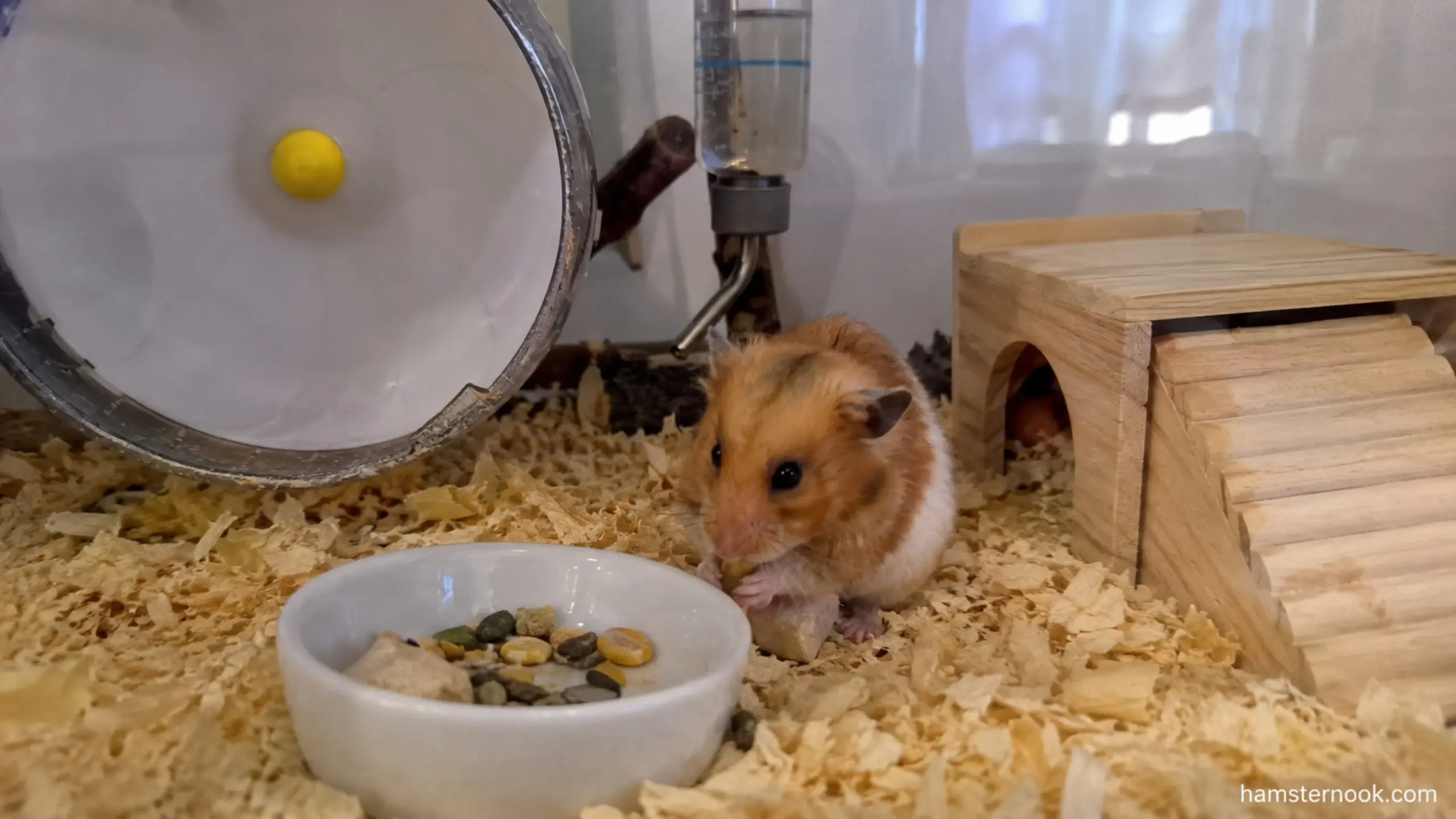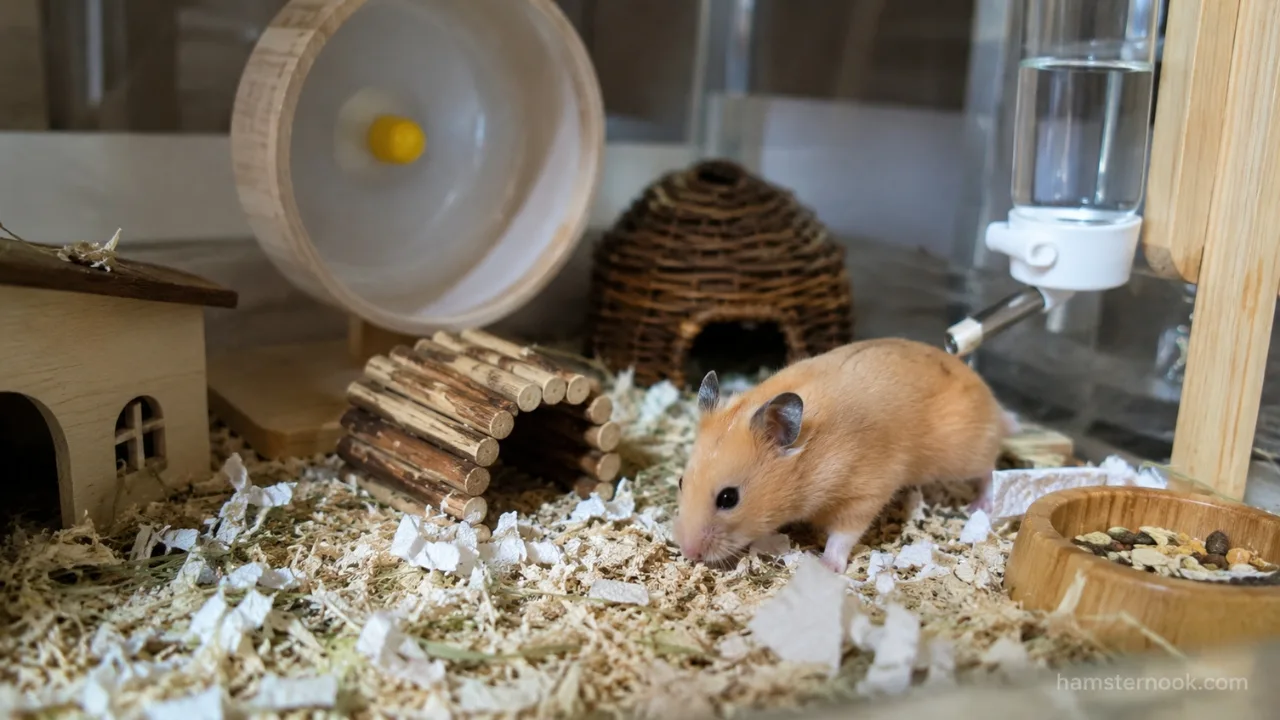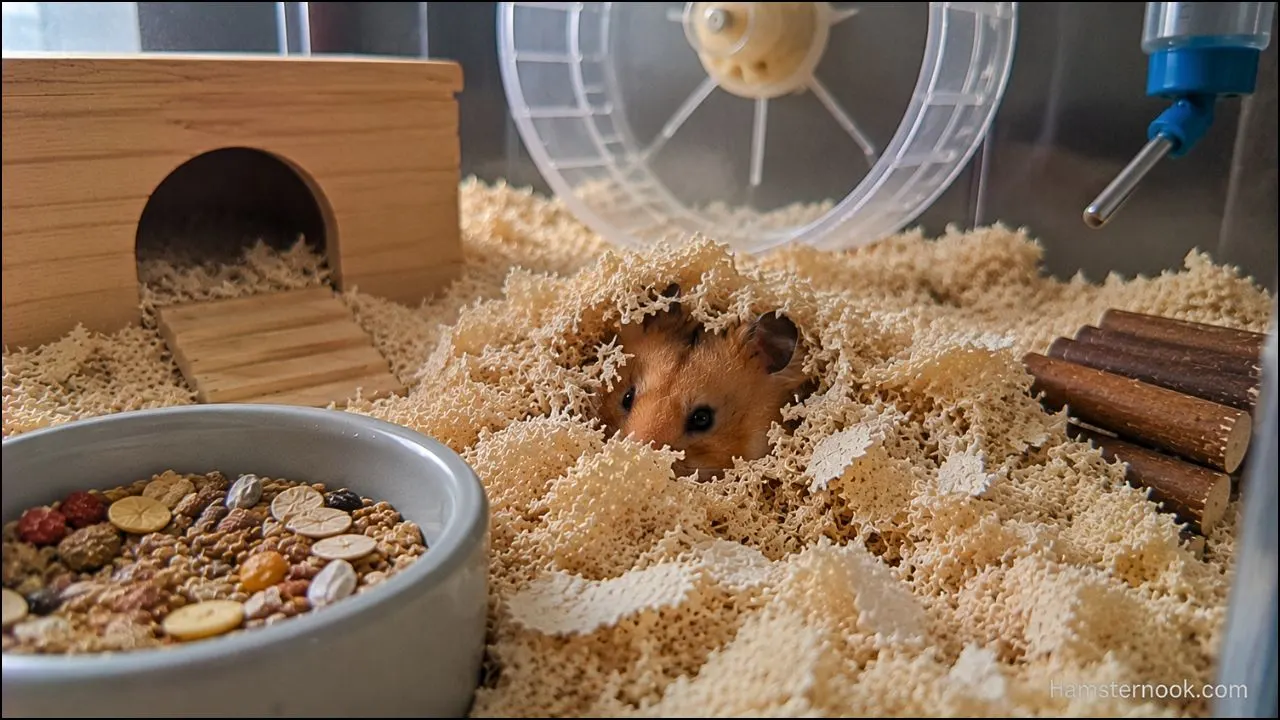
If you have ever watched your hamster disappear completely under a thick layer of bedding, you may have wondered how it can breathe down there. It is a common concern, especially for new hamster owners. The good news is that burrowing is a normal and important hamster behavior, and appropriate bedding can support it safely. The key is using suitable material, keeping it dry and well ventilated, and avoiding bedding that can collapse, become dusty, or form dangerous strands.
Quick Answer: Can Hamsters Breathe Under Bedding?
Yes. Hamsters can normally breathe while burrowing under suitable bedding.
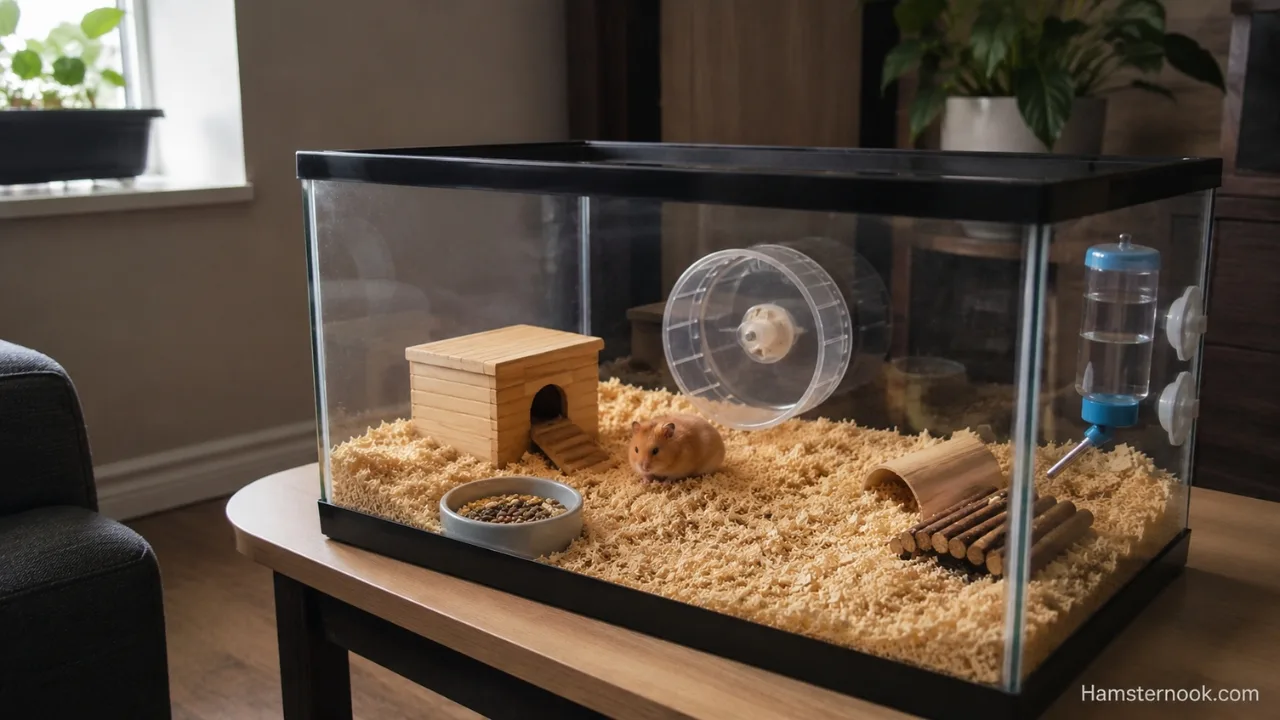
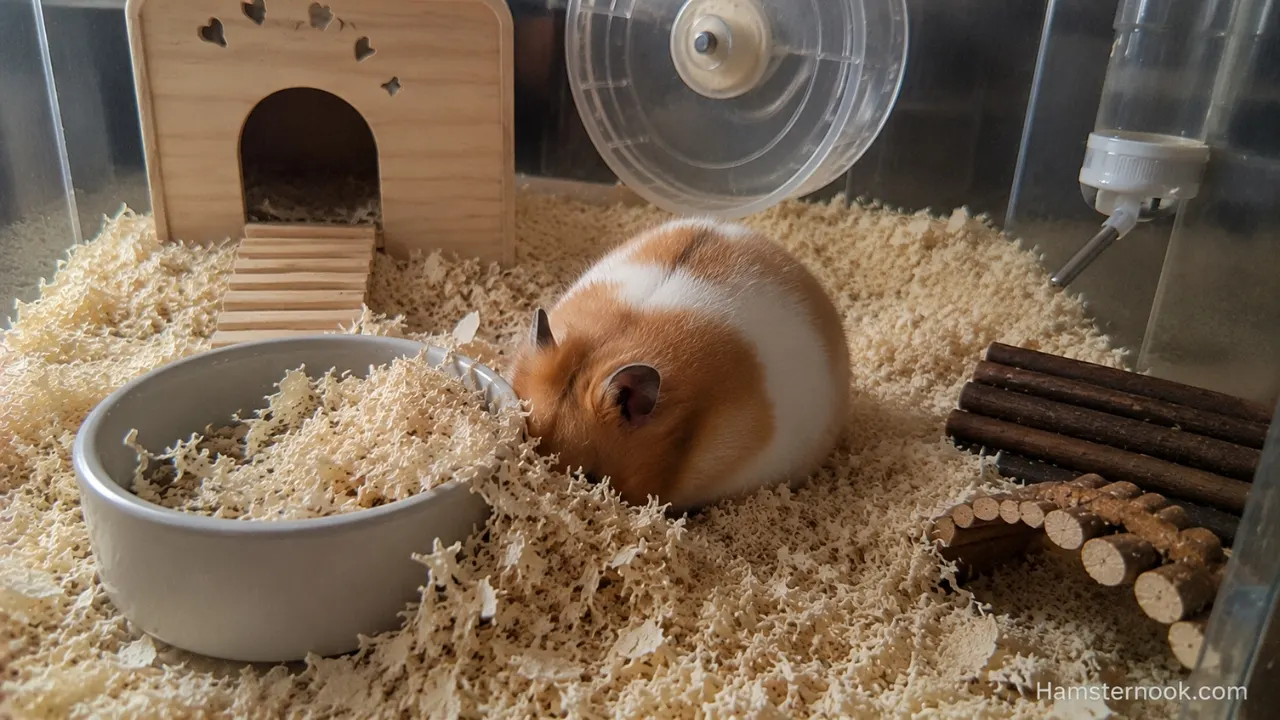
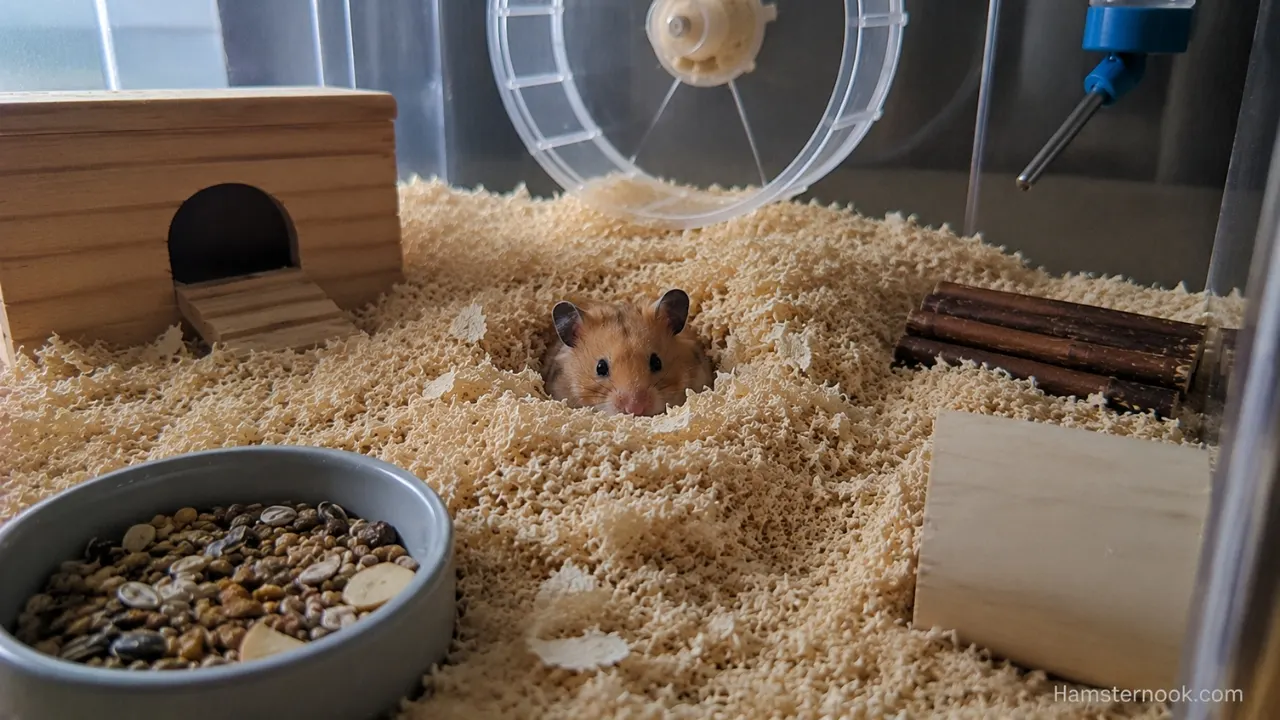
A hamster’s burrow is not simply a solid block of bedding packed around its body. As a hamster digs, pushes, and arranges the substrate, it creates spaces and tunnels around itself. Hamsters are naturally burrowing animals, and welfare guidance specifically recommends providing enough bedding for digging and nest building.
A hamster sleeping beneath bedding is therefore not automatically in danger of suffocation. In a properly set-up enclosure, burrowing is a behavior you should generally allow rather than prevent.
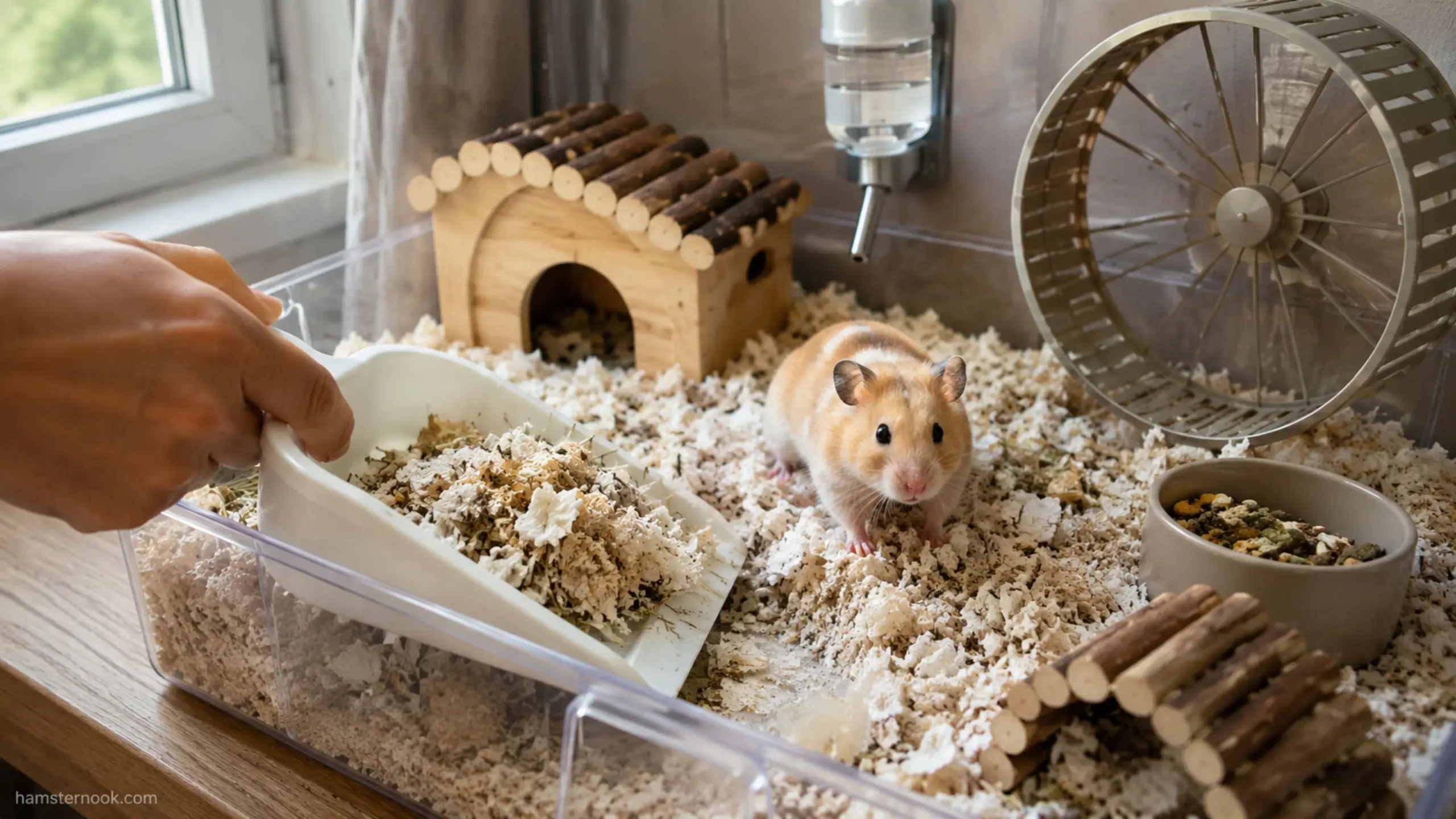
The concern changes when the bedding itself is unsuitable, extremely dusty, damp, tightly compacted, or made from materials that can create physical hazards.
Why Do Hamsters Burrow Under Bedding?
Burrowing is part of normal hamster behavior. In natural environments, hamsters live in burrows and build nests within them. The RSPCA describes hamsters as burrow-digging rodents and recommends providing a deep layer of appropriate bedding so they can dig and create burrows.
A burrow can provide several things a hamster needs from its environment:
- A sheltered place to sleep
- Darkness and privacy
- An opportunity to dig and explore
- A place to build a nest
- Separation between different areas of its enclosure
- A more complex environment in which to express natural behaviors
This is why a hamster disappearing beneath the bedding is not necessarily a sign that something is wrong. It may simply be doing exactly what its instincts encourage it to do.

Does Deep Bedding Block a Hamster’s Air?
Not when the bedding is appropriate and the enclosure is properly ventilated.
It is easy to imagine bedding working like a blanket placed over a person’s face, but that is not how a hamster’s burrow functions. The animal moves through the substrate and creates passages, spaces, and a nest rather than remaining trapped inside a completely solid mass.
NC3Rs guidance describes hamsters as burrow-digging, nest-building rodents and emphasizes the importance of bedding and nesting material for allowing these behaviors. It also notes that hamsters need enough nesting material to build nests that provide full coverage.
The important distinction is between deep bedding that a hamster can manipulate and bedding that becomes a dense, unstable mass around the animal.
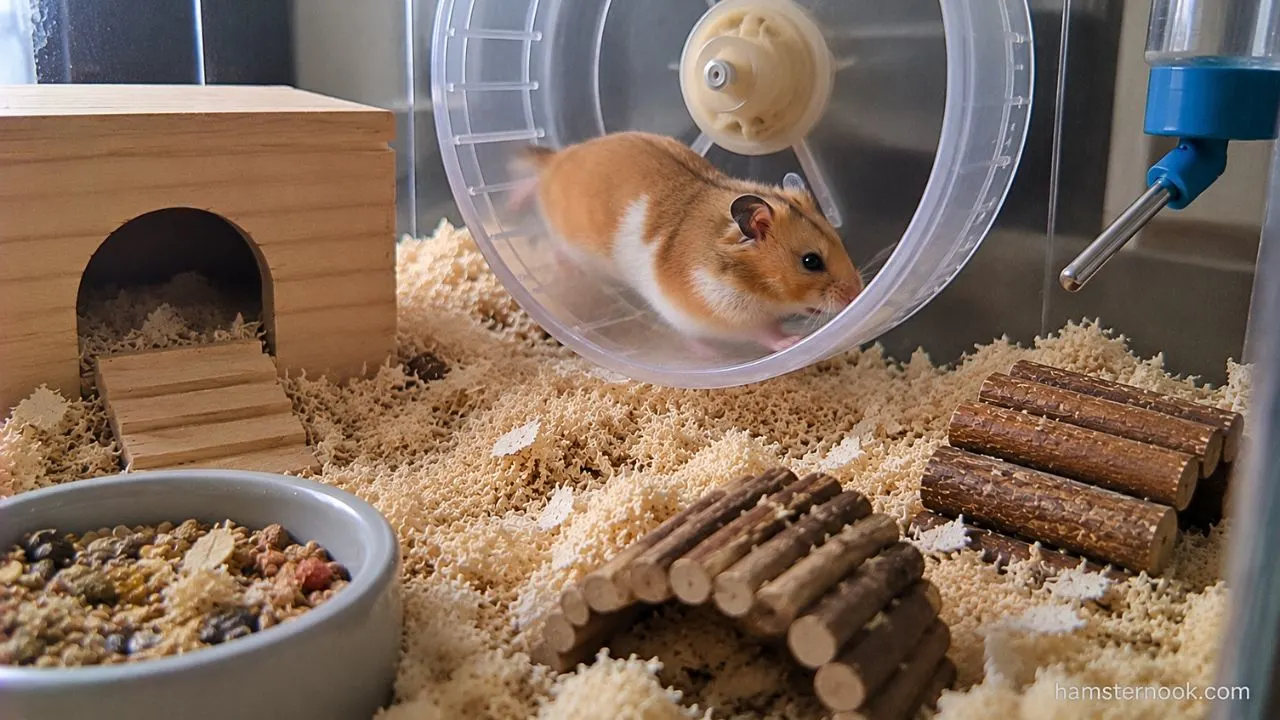
When bedding becomes a concern
Pay closer attention if the substrate:
- Becomes wet or heavily soiled
- Produces a lot of fine dust
- Contains long, thin fibers that can wrap around body parts
- Is packed so tightly that the hamster cannot dig through it normally
- Has been contaminated with mold or other obvious contaminants
- Is placed in an enclosure with poor ventilation
The goal is not to keep bedding shallow simply because you are worried about breathing. The goal is to provide an appropriate substrate that allows safe burrowing.
The type and condition of bedding matter just as much as how deep it is. Choosing a suitable substrate can support natural burrowing while reducing problems caused by dust, dampness, or unsafe materials. See Best Hamster Bedding: Safest Types, Depth & What to Avoid for a broader look at bedding choices.
How Deep Should Hamster Bedding Be?
There is no single depth that works perfectly for every enclosure, hamster, and bedding material.

The RSPCA recommends a thick layer of appropriate bedding and specifically says bedding should be deep enough to allow hamsters to dig and, where possible, to provide an area deep enough for burrowing.
NC3Rs guidance also recognizes that hamsters benefit from substantial bedding for burrowing, while noting that laboratory housing may not provide the same depth available in a more suitable home environment.
Rather than focusing only on one number, look at what the bedding allows your hamster to do.
| Bedding setup | What it means |
|---|---|
| Thin layer that barely allows digging | Limited opportunity for natural burrowing |
| Deeper, stable substrate | Better opportunity to dig and create tunnels |
| Deep but very dusty substrate | Potential respiratory and eye irritation concern |
| Deep, dry, suitable substrate | Supports normal digging and nesting |
| Fluffy, string-like nesting material | Physical entanglement risk |
| Damp or moldy bedding | Needs prompt replacement |
For many home setups, owners aim for a substantial depth rather than a thin covering. If you can provide a deeper digging area safely, that can give your hamster more opportunity to burrow and construct tunnels.

The exact depth should also be compatible with the enclosure itself. A very deep substrate is not useful if the enclosure cannot maintain good ventilation, stability, and safe access to food and water.
Safe burrowing also depends on how the entire enclosure is arranged, not just the bedding itself. Stable accessories, suitable space, and safe access to essential areas all matter when creating a hamster-friendly setup. The broader Best Hamster Cage Setup for Beginners: Size, Bedding, Wheel & Essentials guide covers these enclosure considerations.
What Type of Bedding Is Safest for Burrowing?
The material matters just as much as the depth.
The RSPCA recommends appropriate bedding such as dust-free wood shavings and other suitable substrates, provided they are free from harmful preservatives or chemicals. It also recommends nesting materials such as good-quality hay, wood wool, shredded paper, or cardboard.
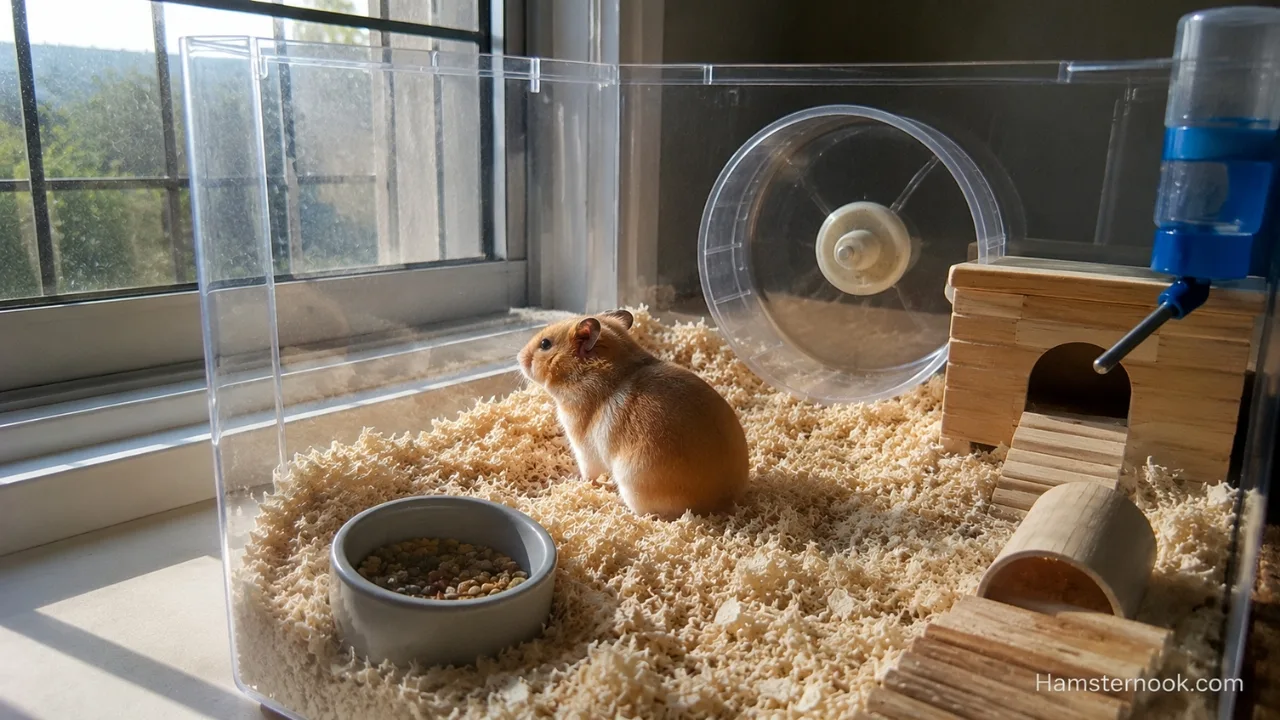
A practical hamster enclosure can contain both burrowing substrate and nesting material. They serve related but different purposes.
Bedding should allow your hamster to dig
A suitable substrate should be manageable enough for your hamster to push through and rearrange. It should not turn into clouds of fine dust every time your hamster digs.
Very fine dusty material is undesirable because airborne particles can irritate the respiratory tract. RSPCA guidance specifically recommends dust-free wood chips for hamster housing, while rodent-husbandry guidance notes that fine sawdust is unsuitable and that particles can cause respiratory and other problems.
Avoid fluffy cotton-like bedding
One of the most important bedding mistakes is assuming that soft-looking material is automatically safe.

The RSPCA warns against cotton wool and similar fluffy bedding because the thin strands can become difficult to break and may tangle around a hamster’s limbs. Such entanglement can restrict circulation and cause severe injury.
For nesting, shredded paper and other appropriate shreddable materials are preferable to long, string-like fibers.
Can a Hamster Get Stuck Under Bedding?
A healthy hamster that is actively digging through appropriate bedding should generally be able to move around its burrow.
However, owners should still inspect the enclosure for structural hazards.
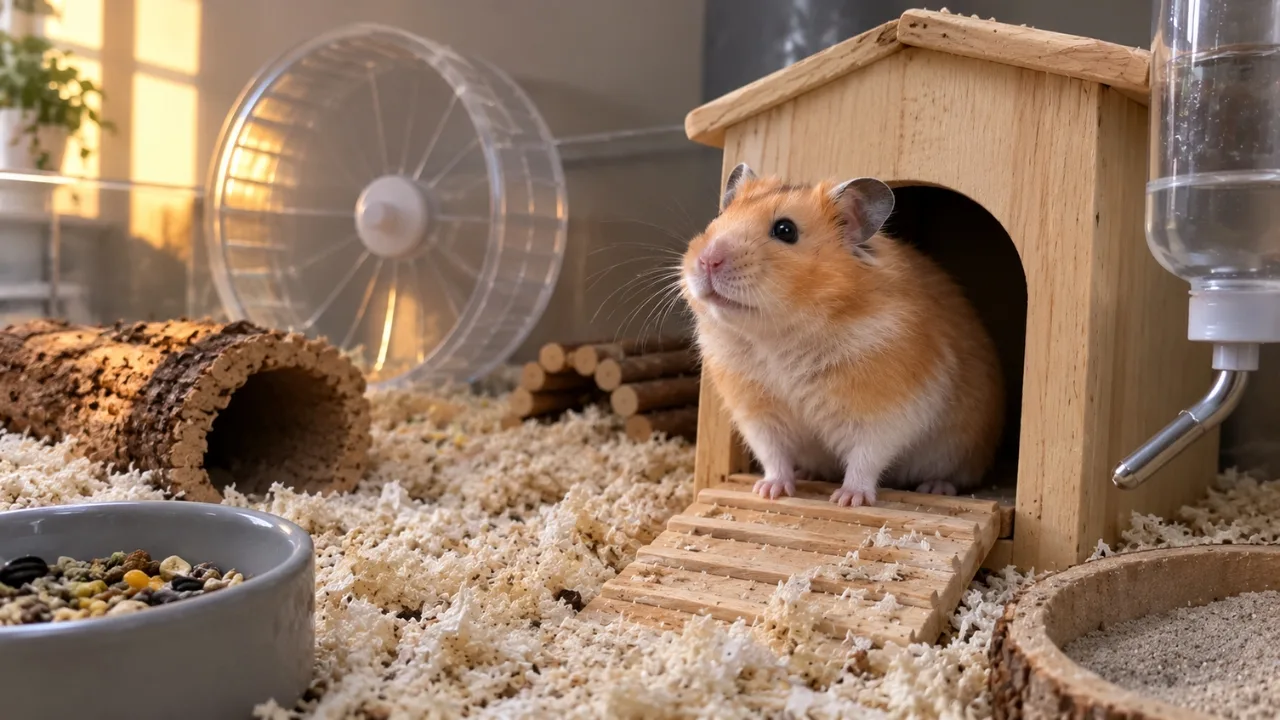
Avoid placing heavy objects directly on loose bedding where a hamster could dig underneath them and cause the object to shift or collapse. Heavy hides, platforms, or other structures should be stable and positioned so they cannot fall onto a burrowing hamster.
The same principle applies to tunnels and accessories. A hamster should have a safe route between its sleeping, feeding, and activity areas without being exposed to collapsing objects.
Does Bedding Cause Hamsters to Sneeze?
Bedding can contribute to nasal irritation when it is dusty or otherwise irritating, but sneezing does not automatically mean that bedding is the cause.
A sneeze is a protective reflex that can occur when particles or irritation affect the nasal passages. Veterinary guidance also recognizes sneezing as a nonspecific sign that can occur with several different respiratory or other conditions.
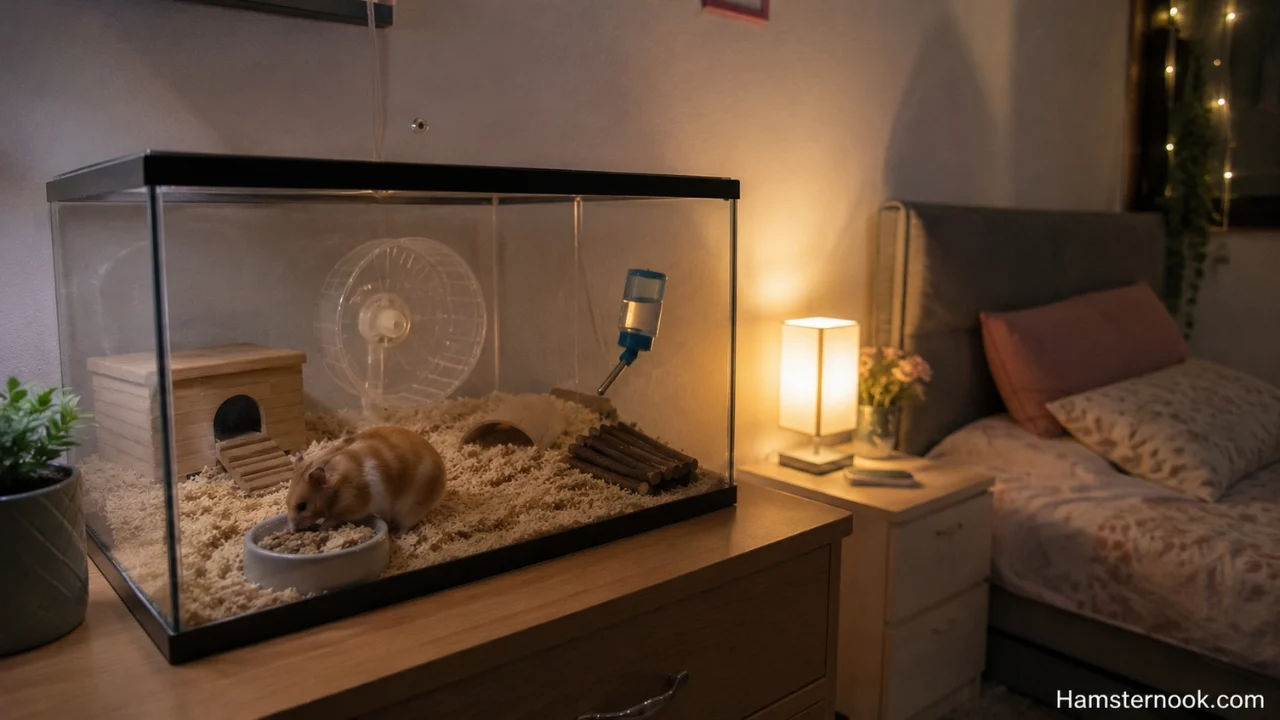
If your hamster occasionally sneezes after digging through bedding, look at the environment first rather than immediately assuming that it has an infection.
Sneezing can sometimes be noticed around dusty or irritating bedding, but it is important to look at the full pattern rather than assuming one cause. Persistent sneezing or other respiratory changes deserve closer attention, especially when they continue away from the suspected irritant. See Why Is My Hamster Sneezing? Causes, Warning Signs & When to See a Vet for more detail.
Check:
- Whether the bedding is visibly dusty.
- Whether dust rises when the bedding is moved.
- Whether the cage is located somewhere with smoke, sprays, strong fragrances, or other airborne irritants.
- Whether the bedding is damp or contaminated.
- Whether the sneezing continues when the hamster is away from the suspected irritant.
Persistent sneezing, nasal or eye discharge, reduced activity, loss of appetite, or breathing difficulty deserves more attention because these can occur with respiratory illness.
What You Should Do If Your Hamster Burrows Completely Under the Bedding
You usually do not need to uncover your hamster simply because you cannot see it.
Instead, check the environment.
1. Make sure the bedding is dry
Damp bedding should be removed. Wet substrate can become unpleasant and unsanitary and should not be allowed to remain around the sleeping area. The RSPCA recommends keeping bedding and nesting material clean and dry.
2. Check ventilation
The enclosure should have adequate ventilation while still protecting the hamster from drafts. NC3Rs recommends well-ventilated housing, and the RSPCA advises avoiding draughty or damp conditions.
Ventilation is only one part of creating a suitable environment for a hamster. Where the enclosure is positioned can also affect exposure to drafts and other room conditions, so placement should be considered alongside the bedding setup. The guide Hamster Cage Placement: Safe Locations, Room Conditions & What to Avoid covers the broader environmental considerations.
3. Check the substrate
Look for excessive dust, unusual smells, damp patches, mold, or unsuitable materials.
4. Leave the burrow intact when possible
Repeatedly destroying a hamster’s burrow just because it is hidden can unnecessarily disturb the animal. Hamsters use their environment for nesting and scent-related information, and welfare guidance recommends minimizing unnecessary disruption during cleaning.
Spot-cleaning soiled areas is generally preferable to constantly replacing all bedding.

Keeping the substrate clean without unnecessarily destroying the hamster’s burrow is an important part of enclosure maintenance. Regular spot cleaning can help you remove soiled areas while preserving suitable clean bedding and familiar nesting material. For the wider routine, see How Often Should You Clean a Hamster Cage? Daily, Weekly & Deep Cleaning Guide.
5. Monitor normal behavior
You should learn what is normal for your individual hamster. Regular observation makes it easier to notice meaningful changes in appetite, activity, appearance, or breathing. MSD Veterinary Manual specifically recommends observing hamsters regularly because changes from their normal behavior can be an early indication of illness.
Common Mistakes Hamster Owners Make
Keeping bedding too shallow because of fear of suffocation
A shallow layer may make the enclosure easier to clean, but it does not provide the same opportunity for natural digging and burrowing. Hamster welfare guidance supports providing deep bedding for these behaviors.
Using dusty bedding
Cheap or very fine bedding is not automatically safe. If it creates significant airborne dust, choose a more appropriate dust-free substrate.

Using cotton or fluffy nesting material
Soft-looking does not mean safe. Long fibers can create entanglement hazards, which is why the RSPCA advises against cotton wool and similar materials.
Removing the entire burrow during every cleaning
A hamster’s nest is part of its living environment. Excessive disturbance can create unnecessary stress, so spot cleaning and retaining some clean, familiar nesting material can be preferable.
Assuming every sneeze is caused by bedding
Bedding may be an irritant, but sneezing can have multiple causes. Persistent or accompanied-by-other-symptom sneezing should not simply be blamed on the substrate.
Warning Signs That Need Attention
Burrowing itself is not a warning sign. What matters is how your hamster behaves when it is awake and active.
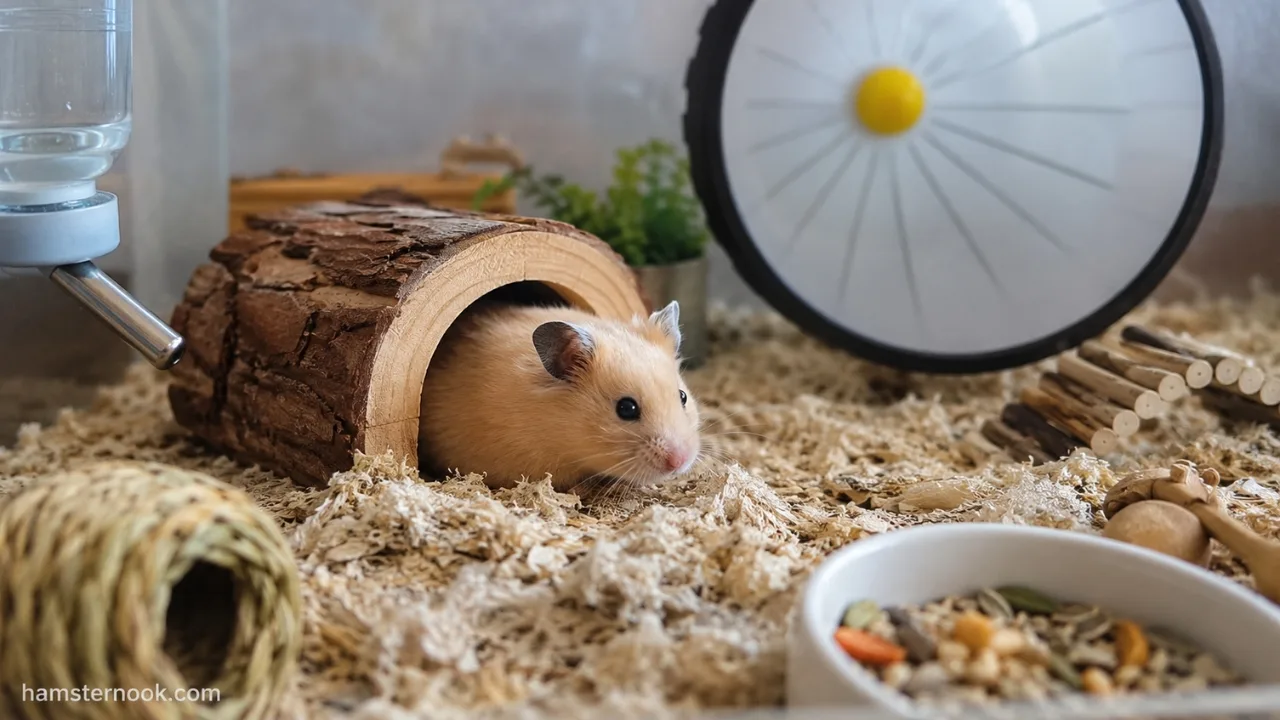
Contact a veterinarian if you notice concerning changes such as:
- Difficulty or visibly labored breathing
- Wheezing or abnormal breathing sounds
- Discharge from the nose or eyes
- Persistent respiratory symptoms
- Loss of appetite
- Marked inactivity or lethargy
- Weight loss
- A hunched posture
- A significant change from your hamster’s normal behavior
MSD Veterinary Manual lists breathing difficulty, nasal or eye secretions, inactivity, appetite or weight changes, and other behavioral or physical changes among signs that a hamster may be sick.
Breathing difficulty deserves particular attention because respiratory problems can become serious quickly in hamsters.
Changes in breathing are different from simply being hidden beneath bedding. If breathing looks unusually fast, heavy, or difficult when the hamster is active, that is a separate health concern that should not be explained only by burrowing. More warning signs are covered in Why Is My Hamster Breathing Fast or Heavy? Causes & Warning Signs.

When to Worry About a Hamster Under Bedding
You should not judge the situation solely by how deep the hamster has disappeared.
A hamster that is sleeping comfortably inside a self-made burrow and later comes out normally is very different from a hamster that remains unusually inactive, cannot breathe normally, or shows other signs of illness.
If you are concerned, do not dig aggressively through the burrow or repeatedly disturb the hamster. First observe its breathing and general behavior when it naturally becomes active. If something looks abnormal, veterinary advice is more appropriate than trying to diagnose the cause from the bedding alone.
A Simple Safe-Burrowing Checklist
Before leaving your hamster to enjoy its burrow, check:
- The bedding is dry.
- The substrate is appropriate for hamsters.
- The material is not excessively dusty.
- There are no long, dangerous fibers.
- Heavy objects cannot collapse into the burrow.
- The enclosure has adequate ventilation.
- Food and water remain accessible.
- The hamster can move around normally.
- Soiled areas are removed without unnecessarily destroying the entire nest.
- You regularly observe your hamster for changes in normal behavior.
If those basics are covered, there is generally no reason to prevent a hamster from burying itself under bedding simply because you cannot see it.
Final Thoughts
Hamsters are built for a life that includes digging, nesting, and spending time inside sheltered spaces. A hamster disappearing beneath its bedding can look alarming when you are new to hamster care, but burrowing itself is a normal behavior and an important part of providing an appropriate environment.
The safest approach is not to keep bedding shallow out of fear that your hamster will run out of air. Instead, focus on the quality and condition of the substrate, good ventilation, stable enclosure accessories, and appropriate nesting material.
Deep, clean, suitable bedding gives a hamster the opportunity to dig and create a burrow. Dusty, damp, contaminated, or string-like bedding creates very different concerns. And if your hamster develops persistent sneezing, nasal or eye discharge, wheezing, difficulty breathing, loss of appetite, or unusual inactivity, treat those as health concerns rather than assuming the burrow is responsible.
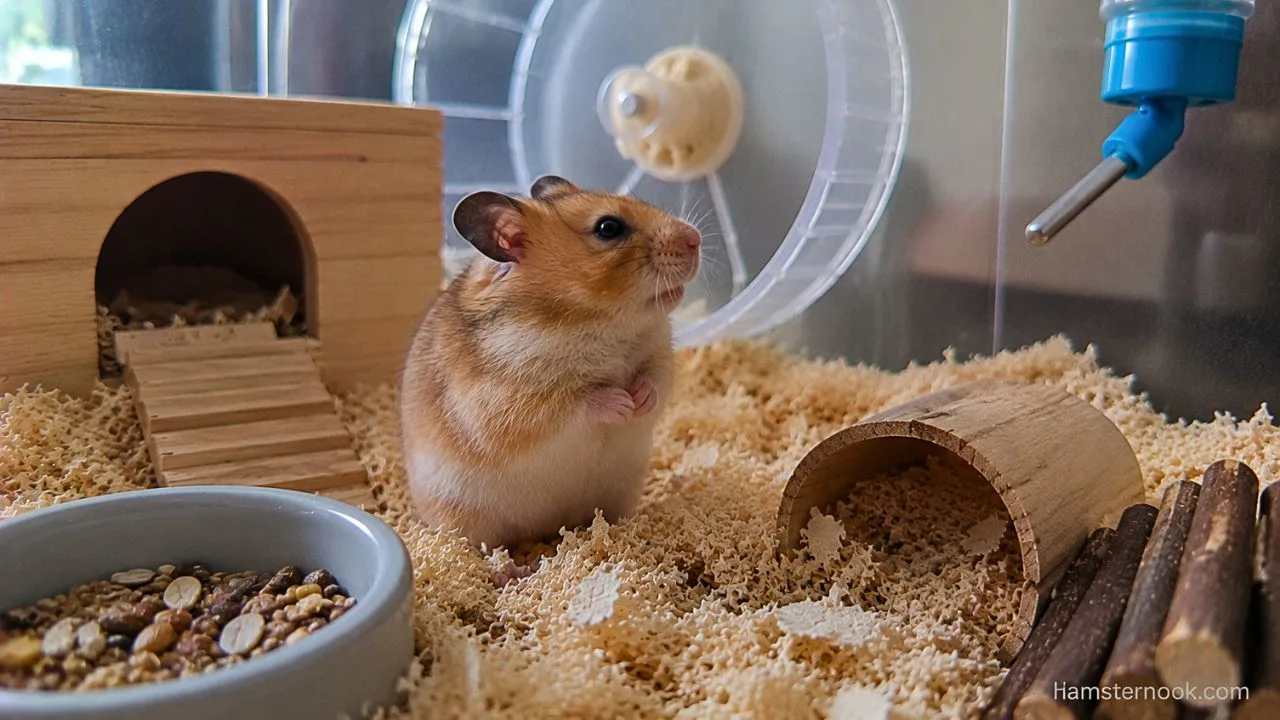
A good hamster enclosure does not just give your pet somewhere to sleep. It gives it room to behave like a hamster.
Frequently Asked Questions
Can hamsters breathe when they are completely covered by bedding?
Yes. Hamsters naturally burrow and build nests beneath substrate. Appropriate bedding allows them to create spaces and tunnels rather than being sealed inside a solid mass.
Is deep bedding dangerous for hamsters?
Deep bedding is not inherently dangerous. In fact, welfare guidance recommends a deep layer that allows hamsters to dig and construct burrows. Safety depends on using appropriate substrate, maintaining ventilation, and preventing unstable objects from collapsing into the burrow.
How deep should hamster bedding be?
There is no universal depth that is suitable for every enclosure. The important goal is to provide enough appropriate substrate for meaningful digging and burrow construction. A deeper digging area is preferable to a very thin layer when the enclosure can safely accommodate it.

Can bedding make a hamster sneeze?
Dusty or irritating bedding can contribute to nasal irritation, but sneezing has multiple possible causes. Persistent sneezing or sneezing accompanied by discharge or breathing difficulty should be discussed with a veterinarian.
Should I dig my hamster out if it buries itself?
Usually, no. If the hamster is behaving normally and the enclosure is safe, there is generally no need to disturb a self-made burrow simply because the hamster is hidden.
Can hamsters suffocate in their burrows?
A properly maintained burrow made from suitable bedding should allow normal movement and airflow. The greater concerns are inappropriate or excessively dusty substrate, damp conditions, poor ventilation, and physical hazards within the enclosure.
What bedding should I avoid for hamsters?
Avoid bedding that is excessively dusty, damp, contaminated, or made from long, thin fibers that can become tangled around the hamster. The RSPCA specifically warns against cotton wool and similar fluffy bedding materials.

Is it normal for my hamster to sleep completely underneath the bedding?
Yes. Sleeping inside a nest or burrow is consistent with normal hamster behavior. Hamsters naturally build nests and use burrows as sheltered areas.
Should I remove all the bedding during cage cleaning?
Not necessarily. Spot cleaning is generally preferable when possible, and retaining some clean, familiar nesting material can help reduce unnecessary disruption.
When should I call a vet about my hamster’s breathing?
Seek veterinary attention promptly if your hamster has difficulty breathing, wheezes, develops significant nasal or eye discharge, becomes unusually inactive, or stops eating. Respiratory problems can become serious quickly in hamsters.
References
This guide is based on hamster housing, behavior, health, husbandry, and welfare guidance from trusted animal welfare and veterinary resources, including:
- RSPCA – Creating a Good Home for Hamsters – Guidance on hamster housing, bedding, nesting, enclosure environment, and welfare.
- RSPCA – Hamster Behaviour – Information on natural hamster behavior, communication, activity, handling, and behavioral changes.
- RSPCA – Keeping Hamsters as Pets – General guidance on hamster care, housing, diet, behavior, and welfare.
- NC3Rs – Housing and Husbandry: Hamster – Guidance on appropriate hamster housing, husbandry, environmental conditions, and welfare.
- MSD Veterinary Manual – Disorders and Diseases of Hamsters – Veterinary information on common hamster diseases, symptoms, and health concerns.
- MSD Veterinary Manual – Routine Health Care of Hamsters – Veterinary guidance on routine health monitoring, preventive care, and recognizing changes in a hamster’s condition.
- MSD Veterinary Manual – Clinical Signs of Respiratory Disease in Animals – Veterinary reference information on respiratory signs and clinical changes that may require attention.
Medical Disclaimer
This article provides general hamster-care information and is not a diagnosis or substitute for veterinary care. Breathing problems in hamsters can become serious quickly. If your hamster is struggling to breathe, wheezing, showing significant nasal or eye discharge, becoming unusually inactive, or not eating, contact a veterinarian promptly.

Narayan Kumar is the founder and author of HamsterNook. He creates practical, research-based hamster care guides covering hamster behavior, nutrition, cage setup, enrichment, health, and everyday care. His goal is to help hamster owners make informed decisions and provide safer, healthier lives for their pets through clear, beginner-friendly information based on trusted animal care resources.