Hamster balls are still sold as a way to let pet hamsters “run around,” but that does not mean they are a safe form of exercise. In fact, major animal-welfare organizations advise against using them because the ball can restrict normal behavior, prevent access to food, water, and hiding places, and create risks of stress, exhaustion, and injury. Fortunately, there are much better ways to give a hamster exercise and exploration time.
Quick Answer: Are Hamster Balls Safe?
No. Hamster balls are not recommended for pet hamsters.
The RSPCA advises against hamster balls because being enclosed can be stressful and may interfere with a hamster’s ability to use its senses and perform natural behaviors. There is also potential for injuries involving the feet and legs, particularly around ventilation openings.
Blue Cross also recommends that hamster exercise balls must not be used, noting concerns about exhaustion, ventilation, and the hamster’s inability to escape or reach essential resources.
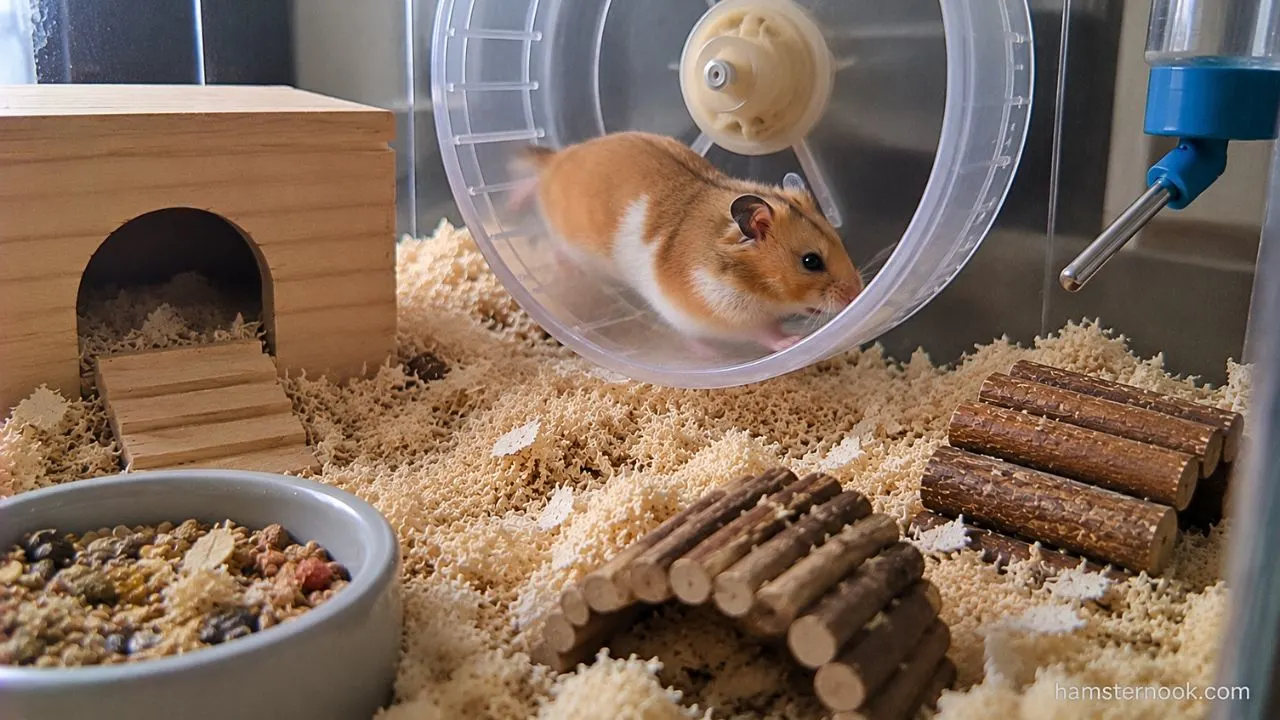
A properly sized solid-surface exercise wheel, a suitable enclosure, deep bedding for burrowing, and supervised exploration in a secure playpen are safer ways to provide exercise and enrichment.
Why Were Hamster Balls Made in the First Place?
A hamster ball is a transparent plastic ball with ventilation holes and an opening through which a hamster is placed inside. Once closed, the hamster moves the ball by running, causing it to roll across the floor.
The idea sounds reasonable: instead of allowing a small animal to disappear under furniture, the ball appears to provide controlled freedom while giving the hamster exercise.
The problem is that physical movement alone is not the same thing as good enrichment.

A hamster does not experience its surroundings simply by moving from one place to another. Hamsters rely heavily on smell, touch, hearing, and their whiskers to investigate their environment. Enclosing the animal inside a rolling plastic ball limits much of that interaction.
The RSPCA specifically notes that hamsters have poor eyesight and depend on other senses to explore their surroundings. Being enclosed in a ball can therefore interfere with how they gather information about their environment.
Because vision is only one part of how hamsters understand their surroundings, their other senses are especially important during exploration. Can Hamsters See in the Dark? The Truth About Hamster Vision explains how hamster vision works and why their sensory experience differs from ours.
Why Hamster Balls Can Be Stressful
1. Your hamster cannot choose where to go
Inside a ball, the hamster has very little control over its surroundings.
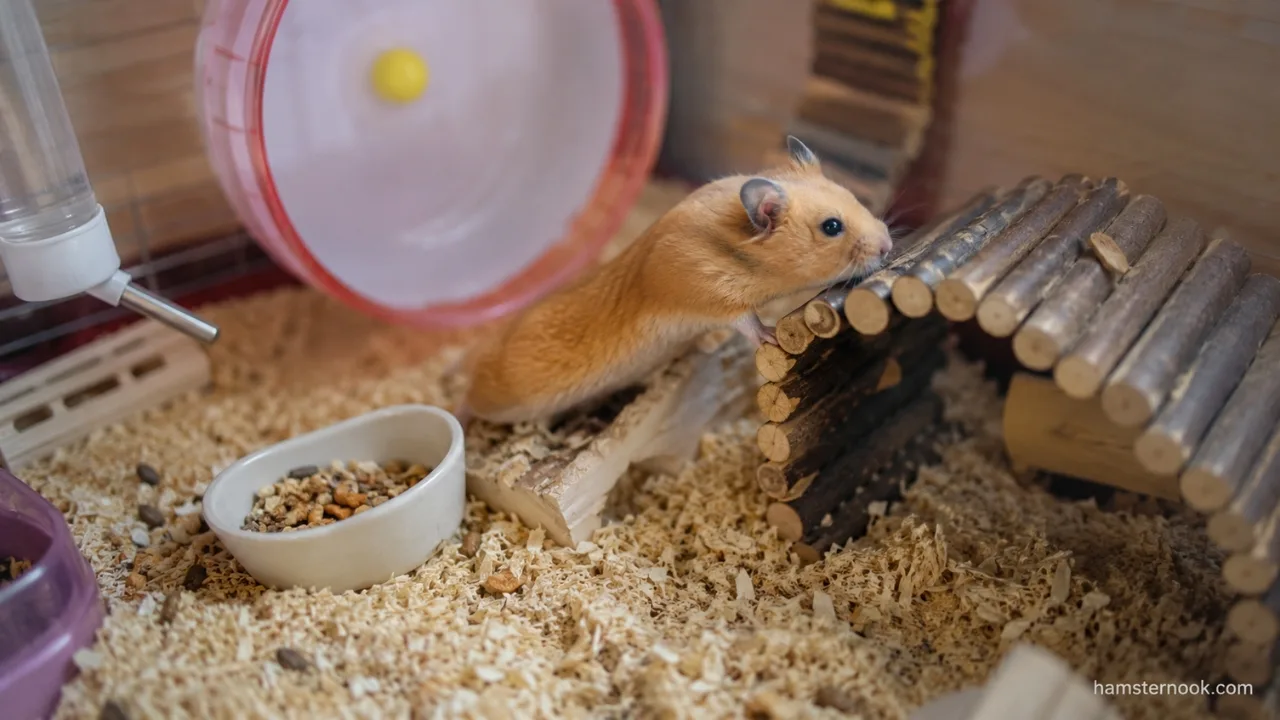
It cannot simply stop, walk out, hide somewhere comfortable, or investigate an interesting scent from outside the ball. It is essentially confined to a moving enclosure that the hamster itself makes roll.
This is very different from exploring a safe play area where the hamster can decide whether to run, stop, hide, climb, sniff, dig, or return to a shelter.
2. There is nowhere to hide
Hiding is a normal part of hamster behavior. A hamster may want to retreat when it encounters something unfamiliar, hears a noise, or simply needs a break.
That ability to retreat is important because a hamster’s environment can influence how comfortable and secure it feels. 7 Signs You’re Accidentally Stressing Your Hamster (Without Even Realizing It) explains the broader signs owners can watch for when environmental factors are causing stress.
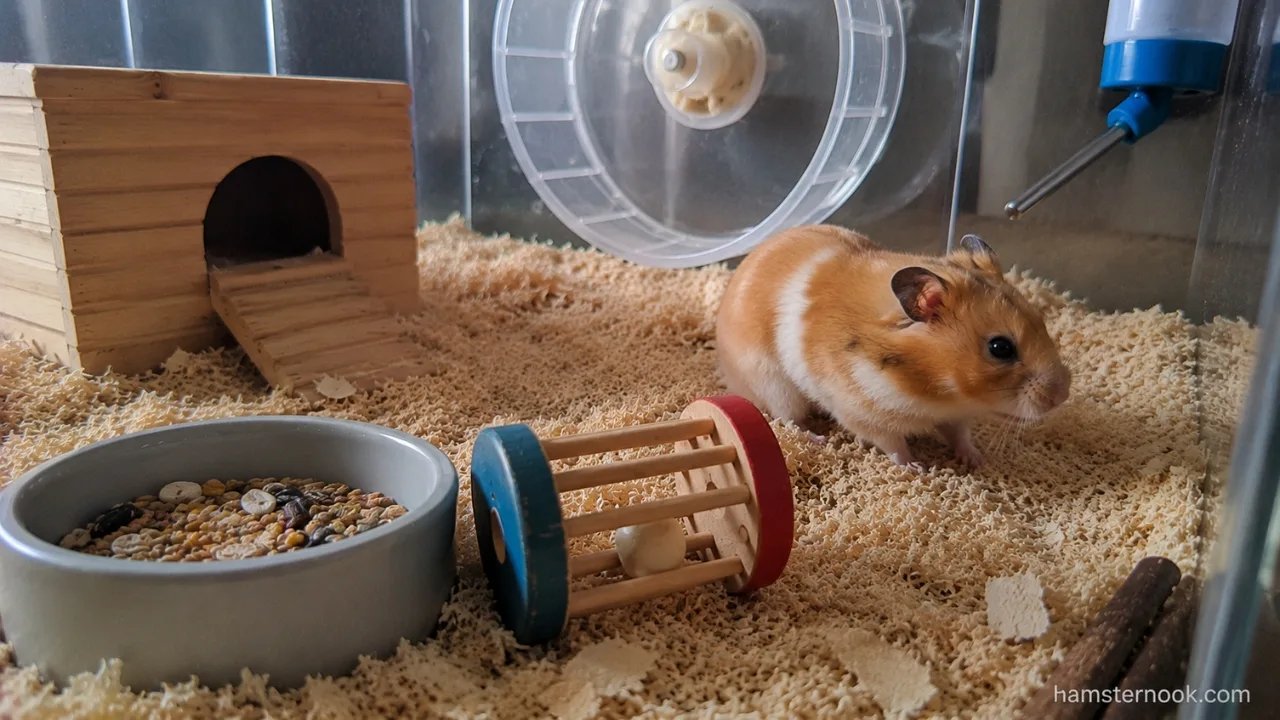
A ball does not provide a proper hiding place.
That matters because exercise should not force a hamster to remain exposed and active continuously. A secure playpen with tunnels, boxes, and shelters gives the hamster opportunities to move around while also allowing it to retreat.
3. Food and water are inaccessible
A hamster inside an exercise ball cannot simply return to its enclosure whenever it wants.
The RSPCA highlights that hamsters in balls cannot access important resources such as food, water, bedding, and their nest area.
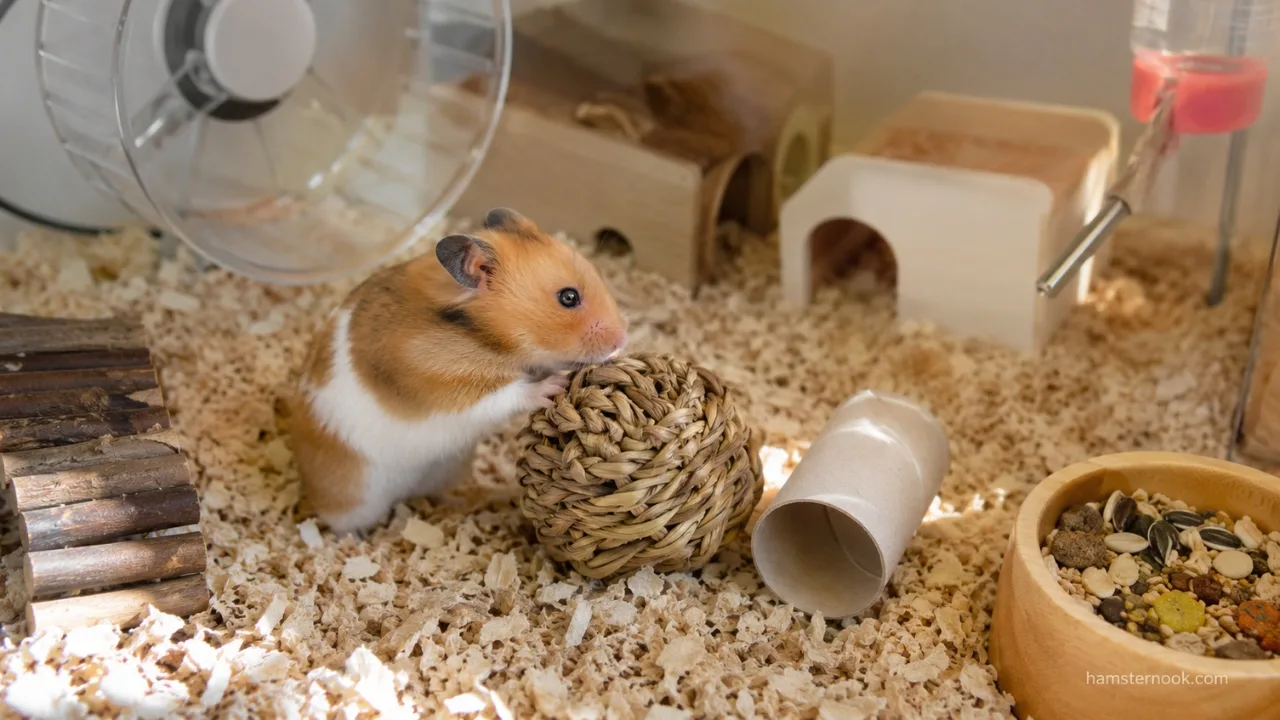
This is one reason the idea of keeping a hamster in a ball for a long period is particularly inappropriate. The animal is separated from the resources that are normally available inside its home.
4. Collisions can cause problems
A hamster ball can gather momentum as it rolls.
If it hits furniture, a wall, a door, another object, or an uneven surface, the hamster has no practical way to control the collision. The RSPCA identifies collisions with objects as a potential source of stress, and a hamster inside the ball has little control over where it rolls.
There is also a risk of the ball rolling into areas where the hamster could become trapped or where another household pet could reach it.
5. Feet and legs can be injured
The ventilation holes in some hamster balls create another concern.
The RSPCA identifies the possibility of hamster paws or legs becoming pinched or caught in the openings. Hamsters are small animals, so seemingly minor design problems can have serious consequences.
This is one reason simply buying a “larger” or supposedly improved ball does not solve the fundamental welfare concerns.
6. Ventilation is another concern
Although hamster balls have ventilation holes, they do not provide the same open airflow as a secure play area. Blue Cross specifically lists poor ventilation and exhaustion among its concerns with exercise balls.
Blue Cross specifically points to poor ventilation as one of its concerns and warns that hamsters can become exhausted while using exercise balls.
That makes the ball particularly unsuitable as a method of providing prolonged exercise.
What About a Hamster That Seems to Enjoy the Ball?
This is one of the easiest things for owners to misunderstand.
A hamster may run continuously once placed inside a ball. That does not necessarily prove that the hamster is comfortable or enjoying the experience.
Running is a normal hamster behavior, but the circumstances surrounding that running matter. A hamster can run because it is active and motivated to explore while simultaneously being unable to stop, hide, or return to its resources.
The safer approach is to provide exercise in an environment where the hamster has choice and control.
Instead of asking, “Does my hamster keep running in the ball?” ask:
- Can my hamster stop whenever it wants?
- Can it hide?
- Can it investigate smells and objects?
- Can it return to a safe area?
- Can it access food and water?
- Can it explore without being carried along by momentum?
A secure play area can provide these opportunities much better than a rolling ball.
Better Alternatives to a Hamster Ball
| Exercise option | Main benefit | What to look for |
|---|---|---|
| Solid exercise wheel | Allows natural running inside the enclosure | Correct size, solid running surface, stable construction |
| Secure playpen | Allows supervised exploration | Escape-proof sides, hiding places and enrichment |
| Deep bedding | Encourages digging and burrowing | Enough depth for natural digging behavior |
| Cardboard tunnels and boxes | Encourages exploration and hiding | Safe, appropriately sized openings |
| Foraging activities | Encourages searching and natural feeding behavior | Scatter appropriate food safely around the enclosure |
| Climbing and enrichment items | Adds variety and complexity | Stable, hamster-appropriate structures |
A Proper Exercise Wheel
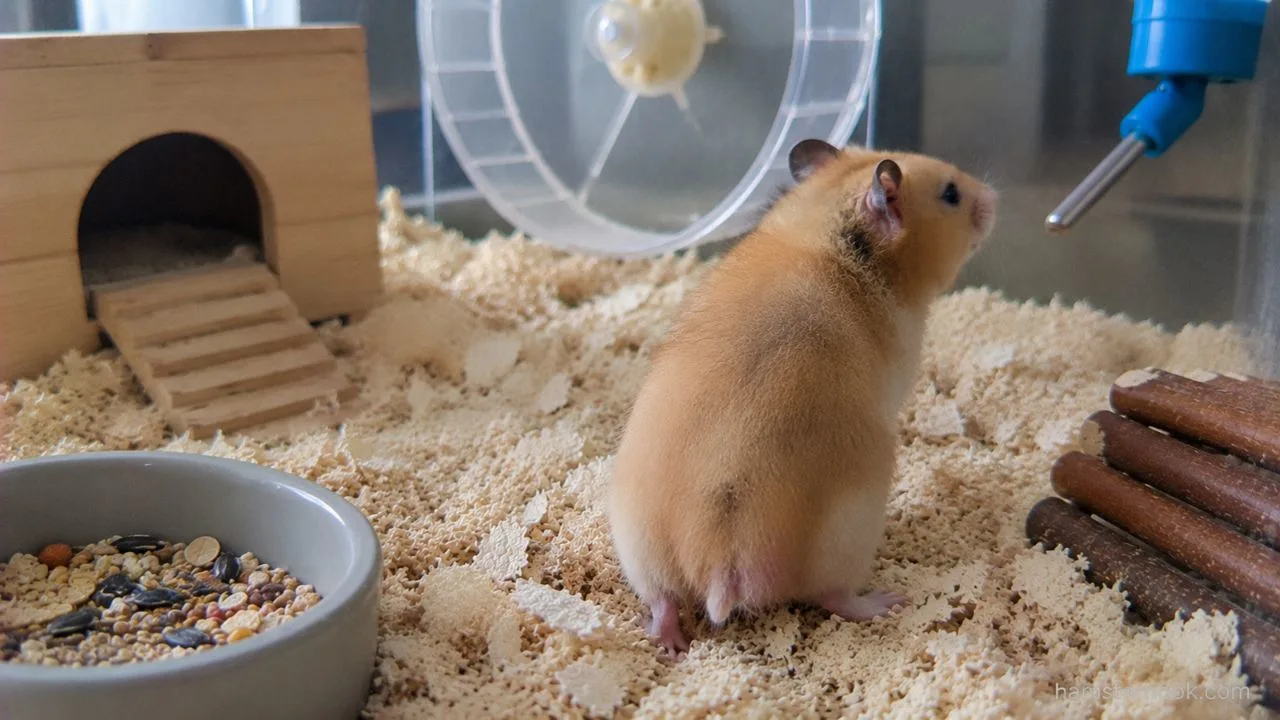
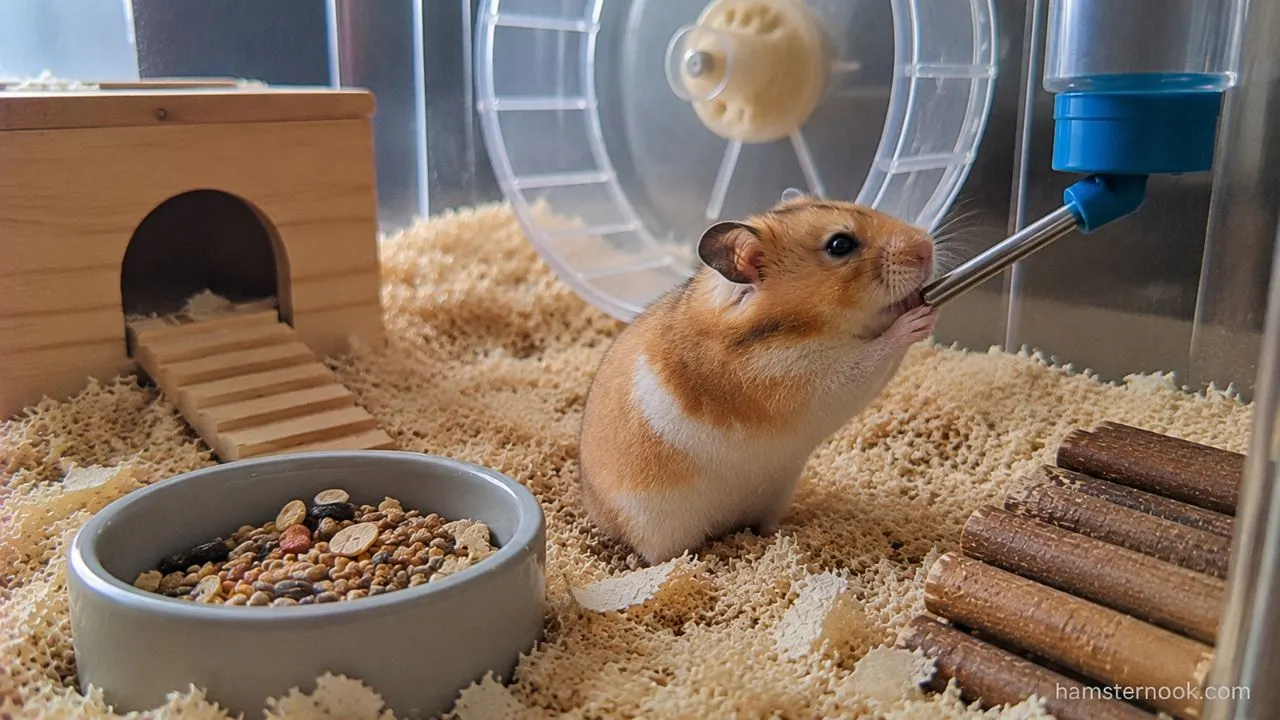
A properly designed exercise wheel is one of the best ways to let your hamster run naturally while staying in its familiar enclosure.
The RSPCA recommends a large, solid, axle-free wheel with a non-slip running surface. The wheel should allow the hamster to run without being forced into an awkward posture.
The MSD Veterinary Manual likewise recommends a solid running surface and says the wheel should be large enough for the hamster to move freely inside and enter and exit easily.
Avoid wheels with exposed spokes or unsuitable running surfaces that could create opportunities for feet or limbs to become caught.
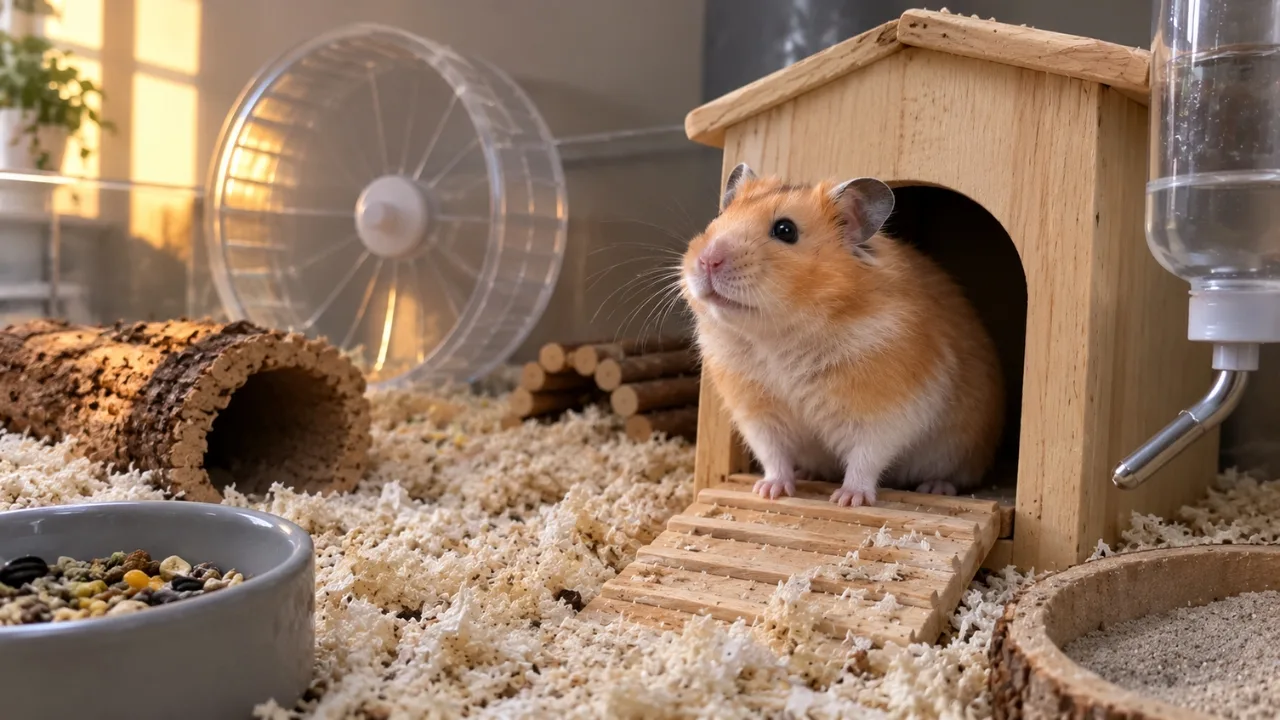
The correct size also depends on the hamster and the wheel design, so the important goal is that your hamster can run naturally rather than being cramped inside the wheel.
If a hamster’s wheel use changes noticeably, it is worth looking at the setup and the hamster’s behavior rather than assuming the change is meaningless. Why Does My Hamster Suddenly Stop Using Its Wheel? Common Causes Explained covers common reasons a hamster may stop using its wheel.
A Secure Playpen
A playpen is a much better option when you want your hamster to explore outside the enclosure.
The RSPCA recommends supervised opportunities to explore outside the cage and suggests using a secure rodent exercise pen. You can add objects such as:
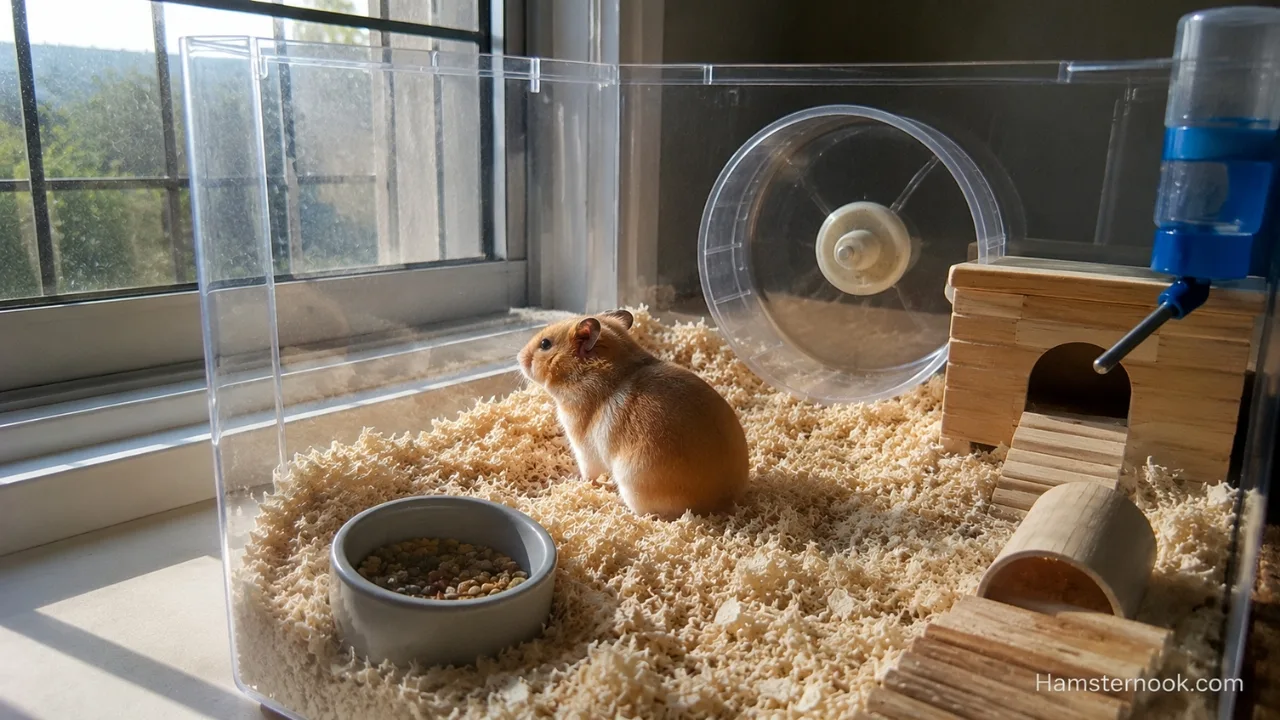
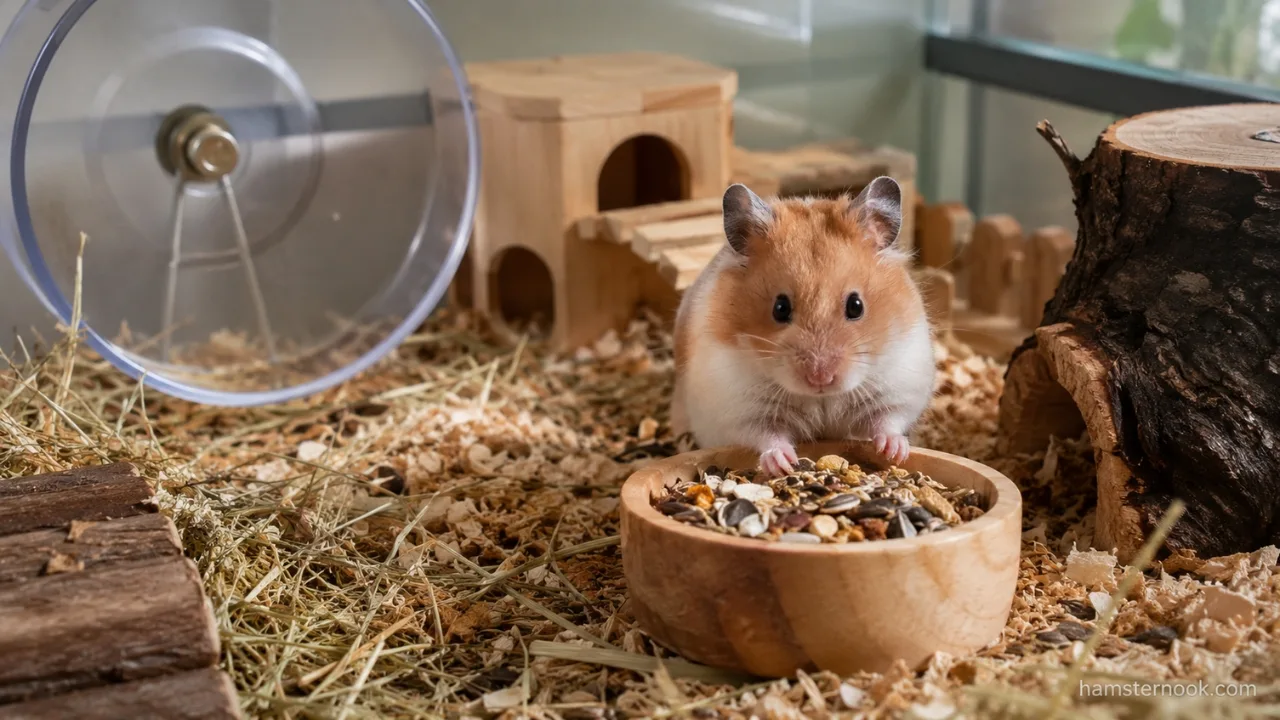
A playpen should be an open, supervised exploration area, not another place where the hamster is expected to keep moving. Give your hamster somewhere to hide and let it choose whether to walk, sniff, dig, forage, or rest.
- Cardboard boxes
- Tunnels
- Hides
- Safe chewable items
- Different areas to investigate
- Familiar-smelling nesting material
The hamster should always be supervised.

Keep dogs, cats, and other animals away from the play area, and make sure there are no gaps through which the hamster could escape.
Never leave a hamster outside its enclosure unattended or overnight.

Make the Main Enclosure Part of the Exercise Plan
Exercise should not depend entirely on taking your hamster out of its cage.
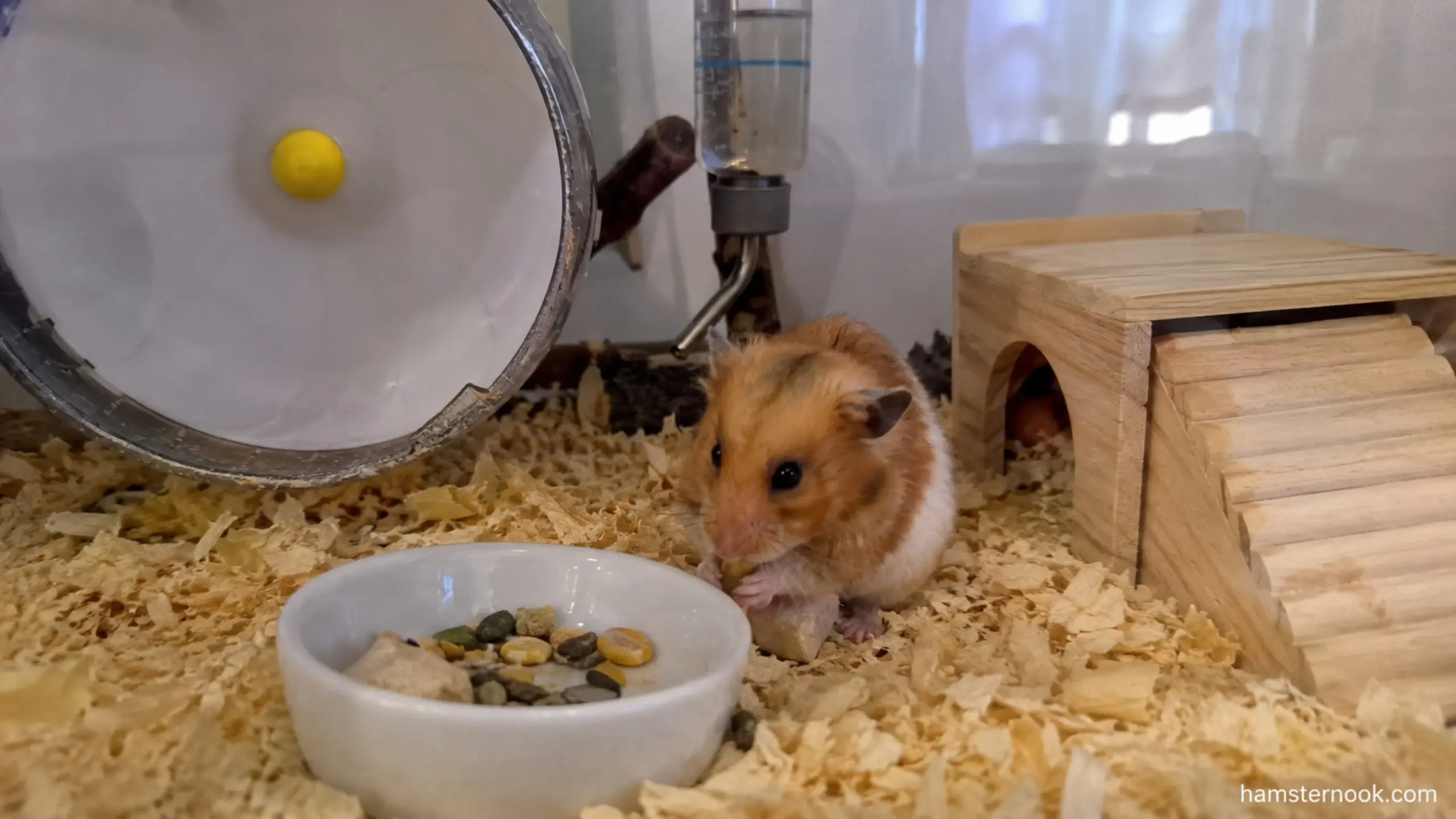
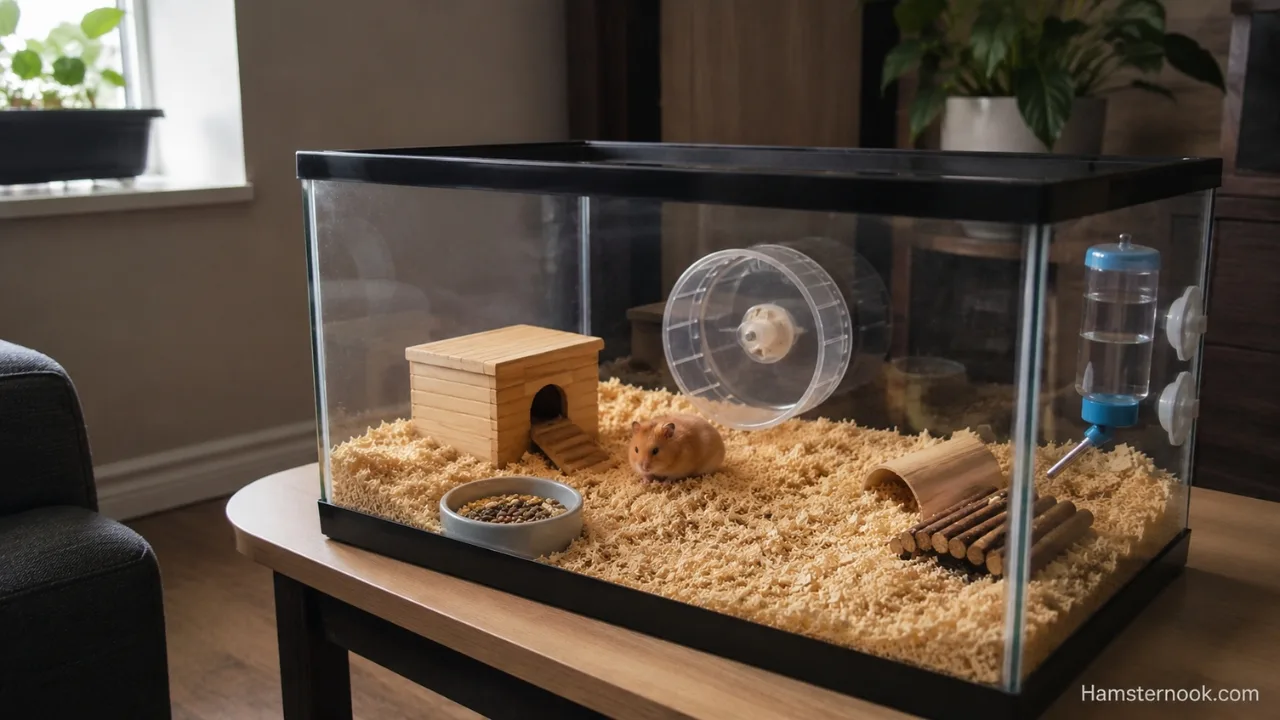
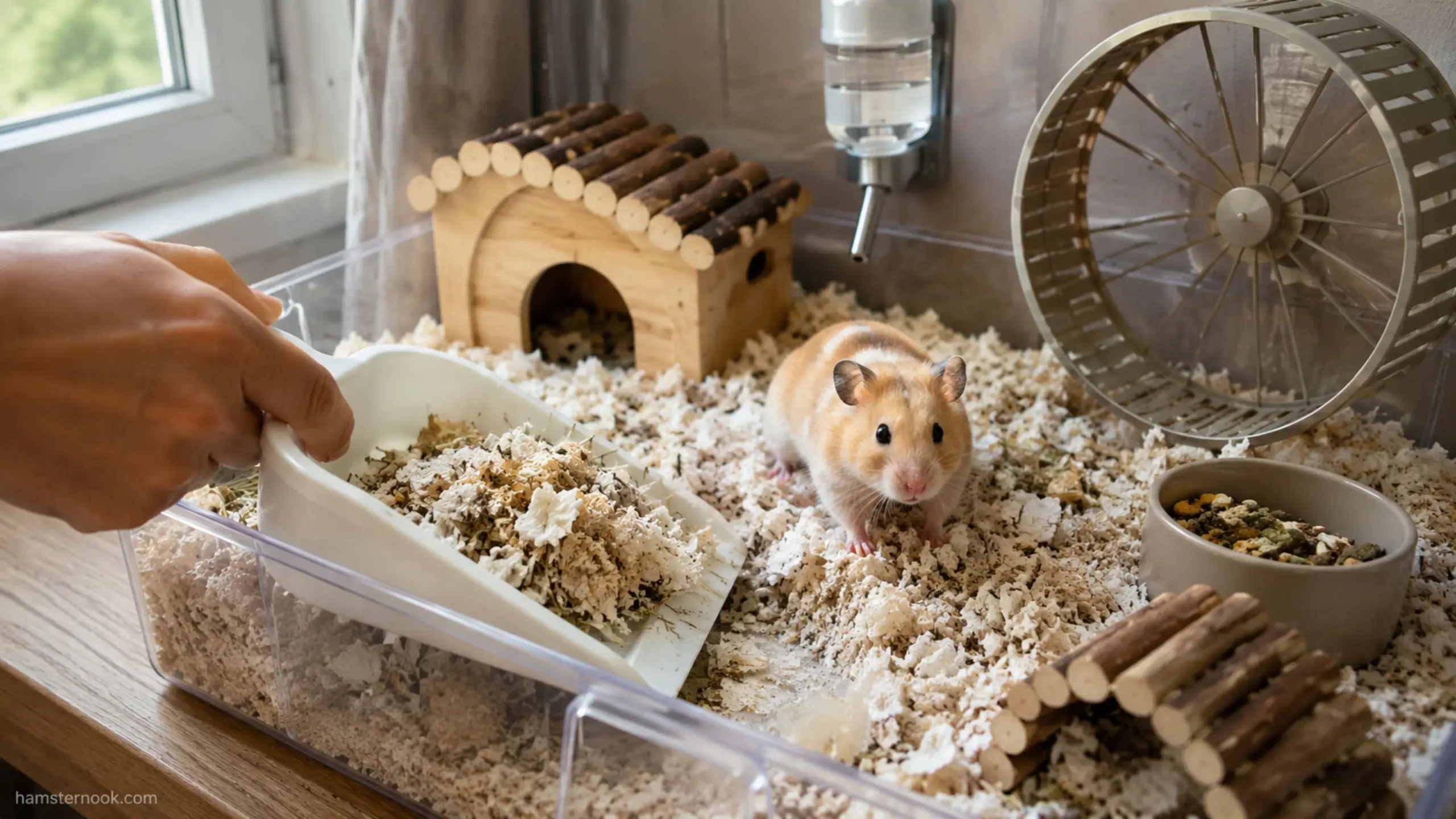
A well-designed enclosure gives your hamster reasons to move, explore, dig, forage, and run throughout its active period.
Hamsters naturally spend substantial periods of their active time exploring, foraging, digging, nesting, and running. The RSPCA recommends providing plenty of space for play and exercise at night, along with a suitable wheel and deep bedding.
Enrichment can include:

- Deep substrate for digging
- Nesting material
- Shelters
- Tunnels
- Cardboard structures
- Safe chew items
- Scatter feeding
- Foraging opportunities
- A suitable running wheel
NC3Rs guidance similarly emphasizes environmental complexity, nesting material, refuges, gnawing opportunities, and foraging as important elements of hamster enrichment.
This approach gives your hamster different ways to be active, rather than turning exercise into one repetitive activity.
Providing several forms of activity is an important part of making the enclosure more engaging. Hamster Cage Enrichment: 10 Ideas to Prevent Boredom gives practical ideas for adding variety without relying on a hamster ball.
Common Hamster Ball Mistakes
“I’ll only use it for five minutes.”
Using a ball for less time does not remove the basic welfare concerns. The RSPCA and Blue Cross recommend avoiding hamster exercise balls rather than trying to establish a safe number of minutes.

“My hamster runs voluntarily, so it must love it.”
Running alone is not enough to determine whether the experience is positive. The hamster cannot leave the ball while it is closed.
“A bigger ball makes it safe.”
Size may affect how comfortably a hamster fits, but it does not solve the problems of restricted exploration, lack of hiding places, inability to access resources, or collisions.
“The ball is safer than letting my hamster explore.”
A properly prepared, escape-proof playpen is a much better solution. Remove hazards, block escape routes, provide hiding places, and supervise the entire session.
Before allowing a hamster to explore outside its enclosure, the area needs to be prepared specifically for small-animal safety. Before You Let Your Hamster Out of the Cage, Read This First (Complete Safety Guide) covers the hazards and precautions to consider before supervised out-of-cage time.

“I can use the ball while cleaning the cage.”
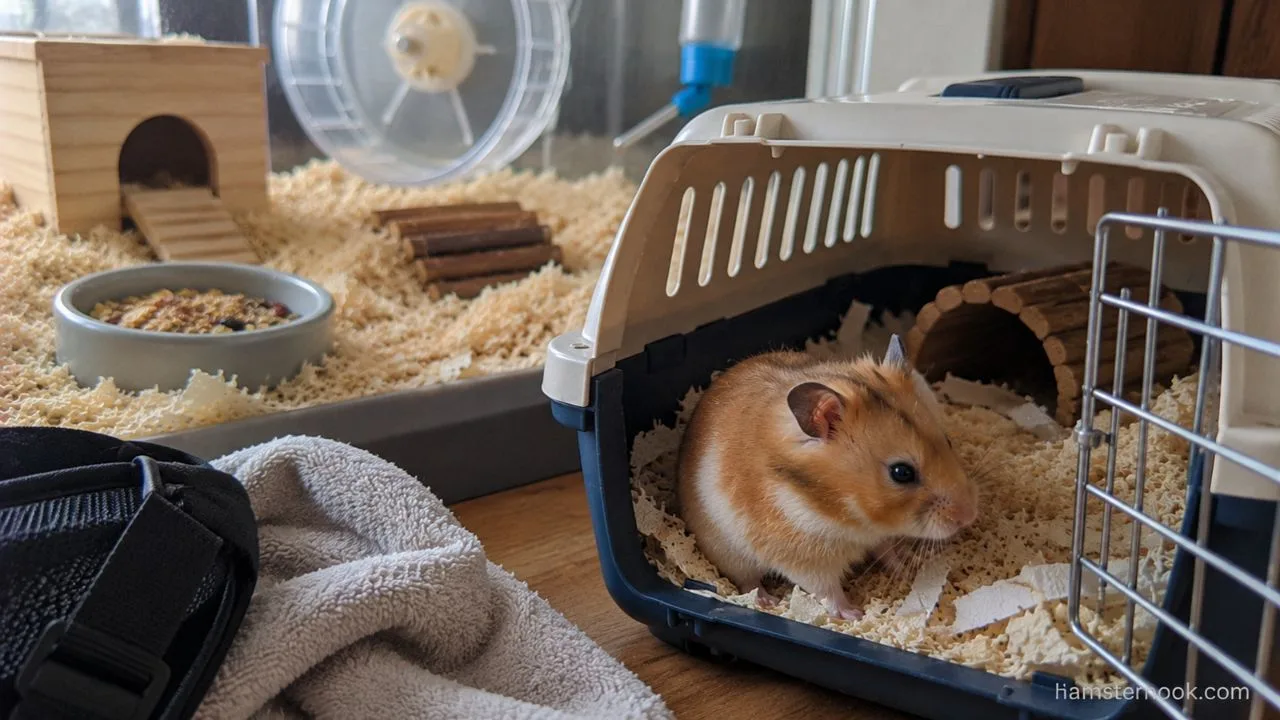
This is unnecessary. A secure temporary enclosure or playpen can provide a safer place for the hamster while its main enclosure is being cleaned.
What You Should Do Instead
If you currently own a hamster ball, the safest choice is not to use it for exercise.
Instead:
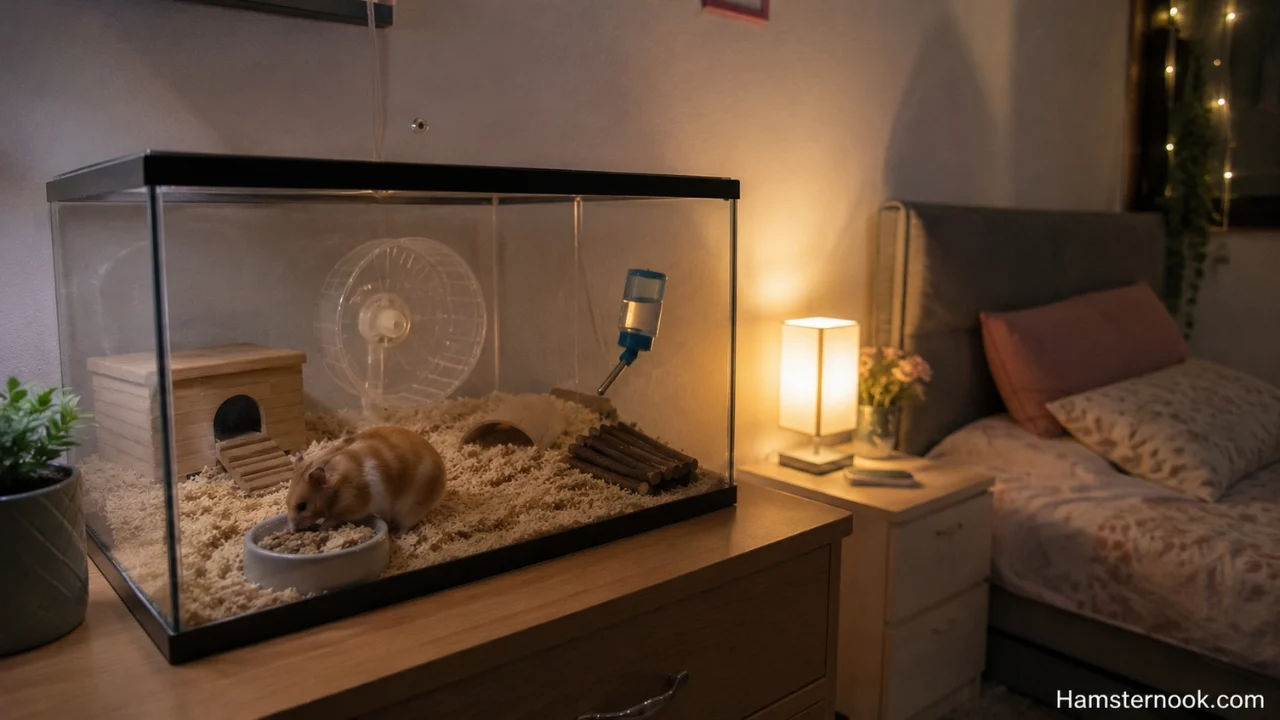
- Provide an appropriately sized solid exercise wheel.
- Make sure the hamster has plenty of space to move around its enclosure.
- Provide deep bedding and nesting material.
- Add tunnels, hides, cardboard and other suitable enrichment.
- Use scatter feeding or safe foraging activities to encourage exploration.
- If you want outside-the-cage exercise, use a secure playpen.
- Allow your hamster to explore at its own pace.
- Keep the area supervised and protected from other pets.
- Never wake a sleeping hamster simply to exercise it.
- Return the hamster to its familiar enclosure when the supervised exploration session is finished.
The goal is not to make your hamster exercise for a particular number of minutes. The goal is to create an environment where normal movement and natural behaviors are available throughout its active period.
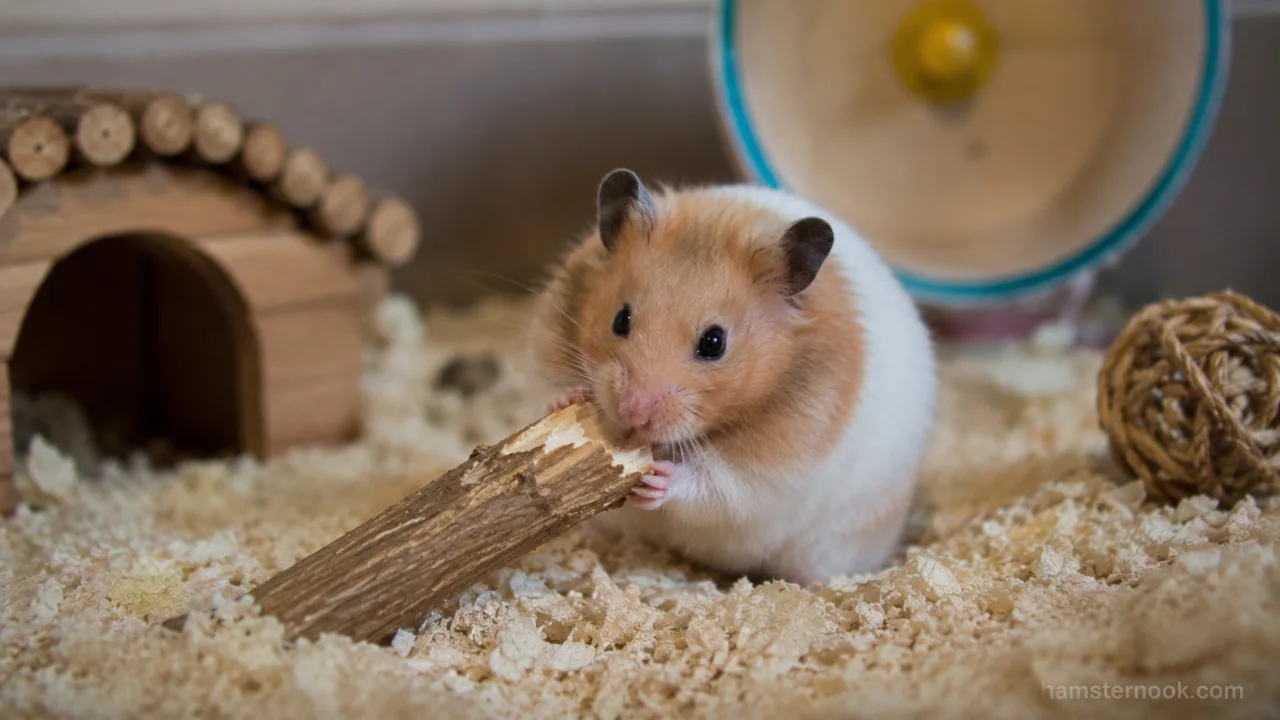
What If My Hamster Has Already Used a Ball?
Don’t panic.
If your hamster has used a ball in the past, that does not automatically mean it has been injured. The sensible step is simply to stop using the ball and switch to safer exercise options.
After any potentially stressful or physically risky activity, observe your hamster normally. If you notice an obvious injury, difficulty moving, unusual weakness, breathing difficulty, or another concerning change in health or behavior, contact a veterinarian rather than trying to diagnose the problem yourself.
RSPCA guidance advises owners to seek veterinary advice when they are concerned about a hamster’s health or behavior.
Final Thoughts
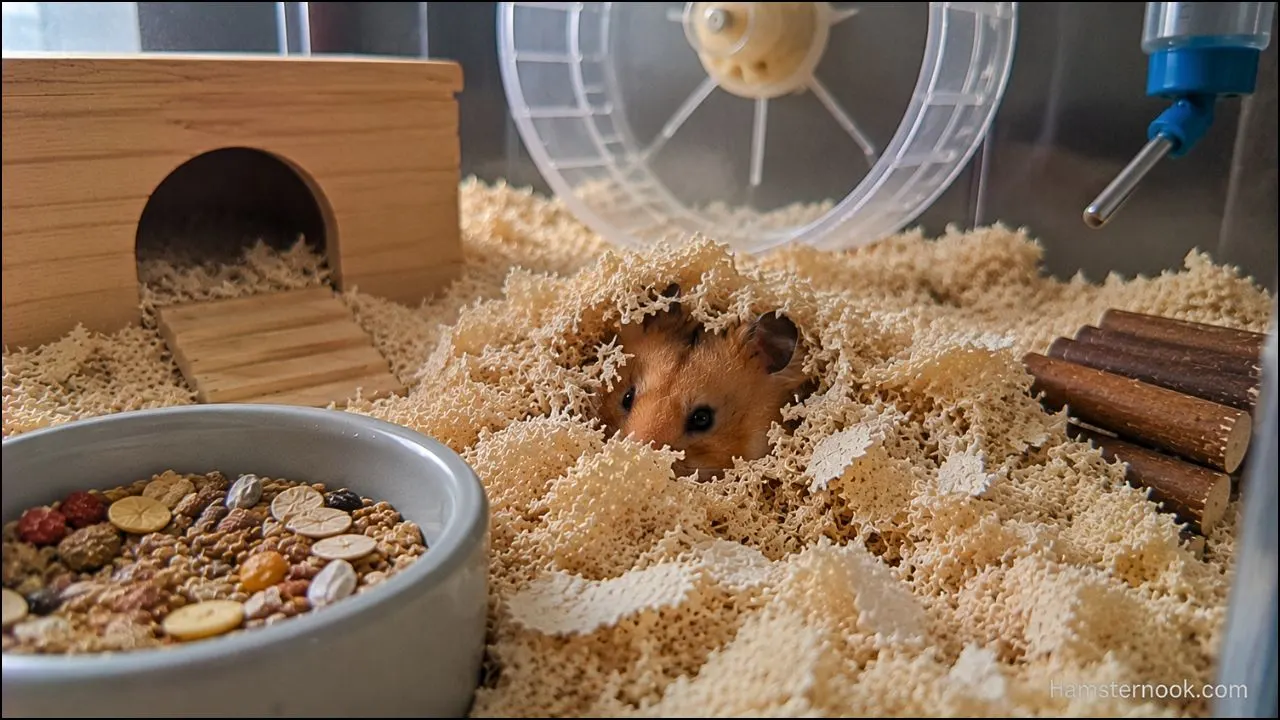
Hamster balls may look like a simple way to give a small pet more freedom, but the animal inside has very little control over that experience. Welfare concerns include restricted sensory exploration, inability to hide or reach essential resources, possible exhaustion, collisions, ventilation concerns, and potential injuries to the feet or legs.
A better setup gives your hamster choices: a suitable solid wheel for running, deep bedding for digging, tunnels and shelters for exploring and hiding, foraging opportunities, and supervised time in a secure playpen.
For hamster exercise, more freedom with more choice is far better than putting your hamster inside a rolling ball.
Frequently Asked Questions
Are hamster balls bad for hamsters?
Yes. Major animal-welfare organizations including the RSPCA and Blue Cross advise against hamster exercise balls because they can restrict natural behavior and create welfare and safety concerns.
Can hamsters get stressed in exercise balls?
Yes. Being enclosed in a ball can be stressful because the hamster cannot control its environment, access its normal resources, or retreat into a hiding place. The RSPCA specifically identifies stress as a concern with hamster balls.
Is a hamster wheel better than a hamster ball?
Yes. A properly sized solid-surface wheel allows a hamster to run while remaining inside its familiar environment and retaining access to food, water, bedding, and hiding places.
What is the safest way to exercise a hamster outside its cage?
Use a secure, supervised playpen with appropriate hides, tunnels and enrichment. Make sure the hamster cannot escape and that dogs, cats, and other pets cannot access the area.
How long should a hamster stay in a playpen?
There is no universal exercise duration that applies to every hamster. The important principle is supervised, voluntary exploration. Let your hamster move at its own pace and provide places where it can hide and rest rather than forcing continuous activity.
Can I let my hamster run around my room instead?
Only if the room can genuinely be made secure and the hamster is supervised continuously. A dedicated playpen is generally easier to control because it can provide a defined, escape-resistant area without exposing the hamster to as many household hazards.
Do hamster balls help with exercise?
They do make a hamster move, but movement by itself does not make an exercise method appropriate. The concerns surrounding balls include confinement, restricted access to resources, limited sensory exploration, exhaustion, collisions, and potential injury.
What should I buy instead of a hamster ball?
Prioritize a suitable solid exercise wheel, a spacious and enriching enclosure, deep bedding, hides and tunnels, and a secure playpen for supervised exploration outside the enclosure.
References
This guide is based on hamster exercise, behavior, housing, enrichment, and welfare guidance from trusted animal welfare and veterinary resources, including:
- RSPCA – Hamster Balls – Concerns about stress, restricted access to food and water, collisions, and possible paw or leg injuries, with supervised exercise in a secure pen recommended instead.
- Blue Cross – Hamster Care – Guidance on hamster exercise, including its recommendation not to use exercise balls, along with suitable bedding and enrichment.
- RSPCA – Understanding Hamster Behaviour – Information on activity patterns, exercise needs, suitable wheels, deep bedding, handling, and supervised time outside the enclosure.
- MSD Veterinary Manual – Providing a Home for a Hamster – Veterinary guidance on exercise, solid running surfaces, wheel sizing, enrichment, and safe handling.
- NC3Rs – Housing and Husbandry: Hamster – Evidence-based guidance on housing, nesting, environmental enrichment, foraging, exercise-related resources, and natural behaviors.
- RSPCA – Creating a Good Home for Hamsters – Guidance on suitable nesting material, shelters, and environmental needs.

Narayan Kumar is the founder and author of HamsterNook. He creates practical, research-based hamster care guides covering hamster behavior, nutrition, cage setup, enrichment, health, and everyday care. His goal is to help hamster owners make informed decisions and provide safer, healthier lives for their pets through clear, beginner-friendly information based on trusted animal care resources.