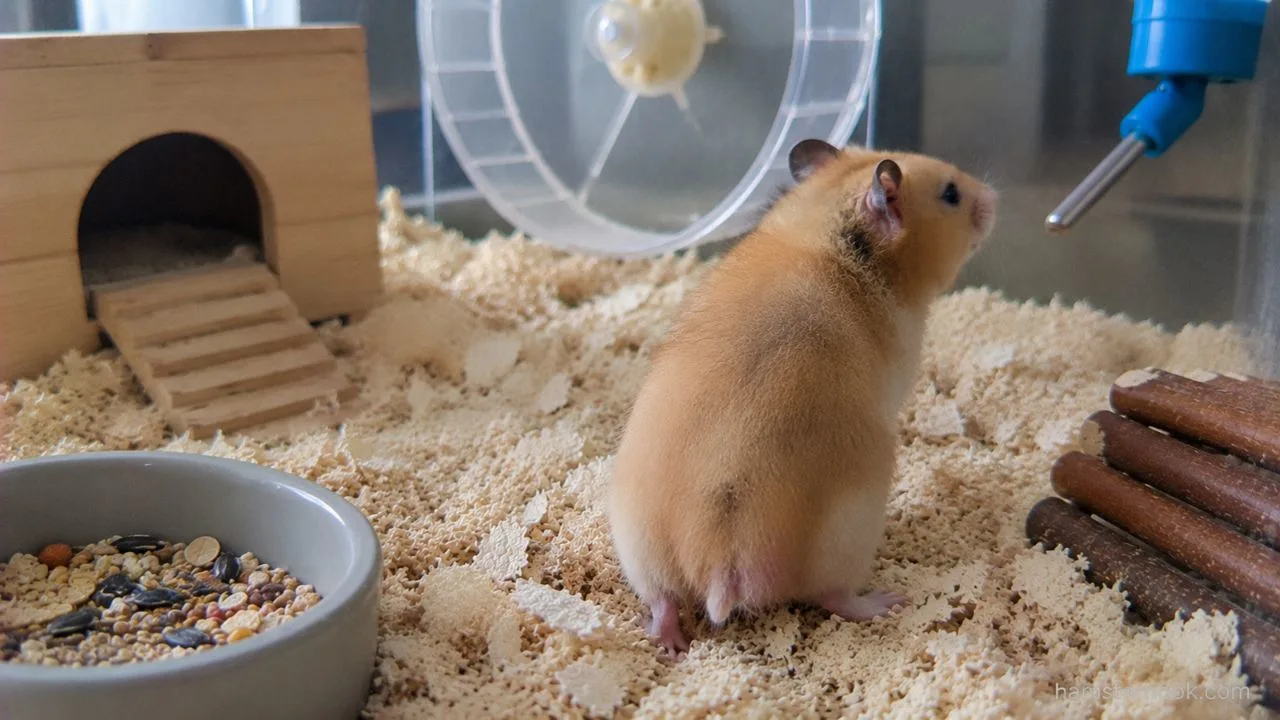
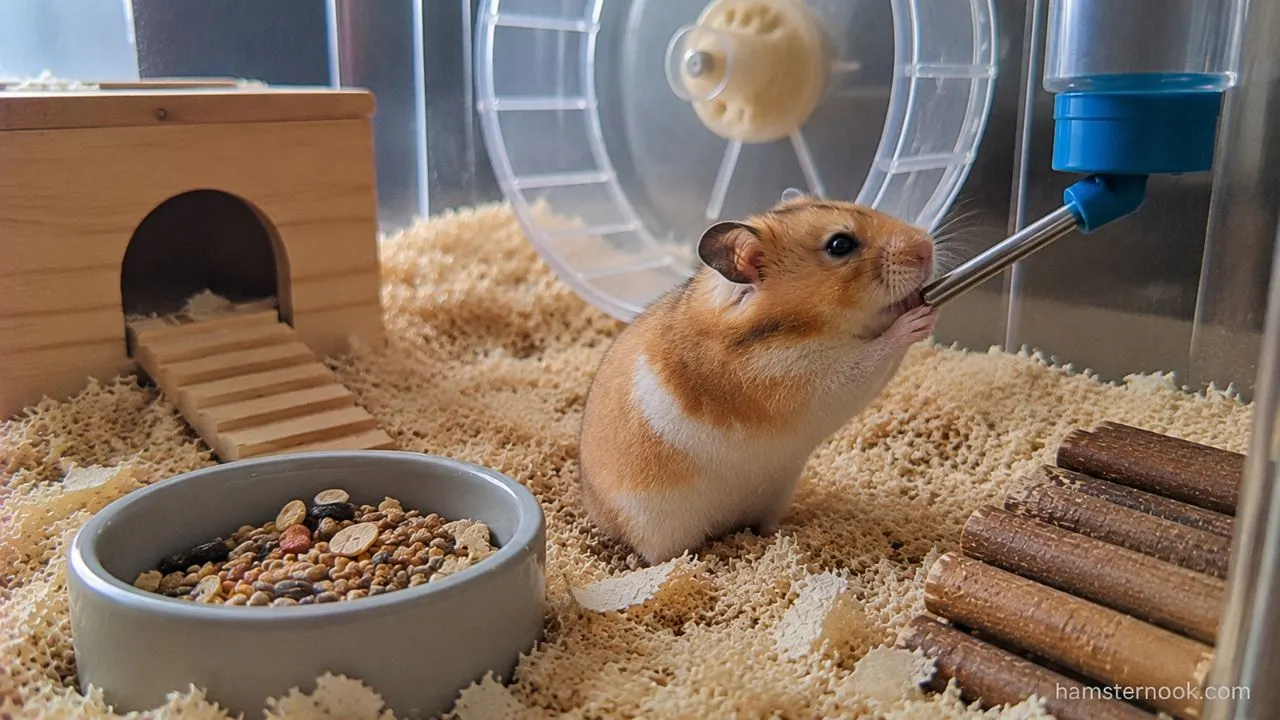
Hamster cage enrichment gives your pet opportunities to perform natural behaviors such as burrowing, foraging, chewing, nesting, hiding, and exploring. A wheel, food, water, and shelter are essential, but the enclosure should also provide safe ways for a hamster to interact with its environment.
Enrichment does not require filling the cage with expensive accessories. Deep bedding, scattered food, different textures, secure hides, tunnels, nesting material, and simple foraging activities can all make the enclosure more engaging.
This guide covers 10 practical hamster cage enrichment ideas and explains how to introduce them without overcrowding the enclosure or constantly disrupting familiar surroundings.
Quick Answer
Hamster cage enrichment can include deep bedding, scatter feeding, multiple hides, digging areas, safe chew items, tunnels, suitable wheels, foraging activities, and nesting materials. The goal is to provide different ways for a hamster to dig, search, hide, chew, explore, and build nests while keeping the enclosure safe and familiar.

Why Cage Enrichment Matters for Hamsters
Enrichment is anything that encourages natural behaviors and mental stimulation.
A well-enriched cage helps a hamster:
- Stay physically active
- Explore and investigate
- Use natural instincts
- Reduce stress
- Prevent boredom
- Build confidence
If you are specifically trying to tell whether your hamster may be bored, Do Hamsters Get Bored in Their Cage? 6 Signs & How to Prevent It looks at boredom signs and prevention separately from general enrichment ideas.
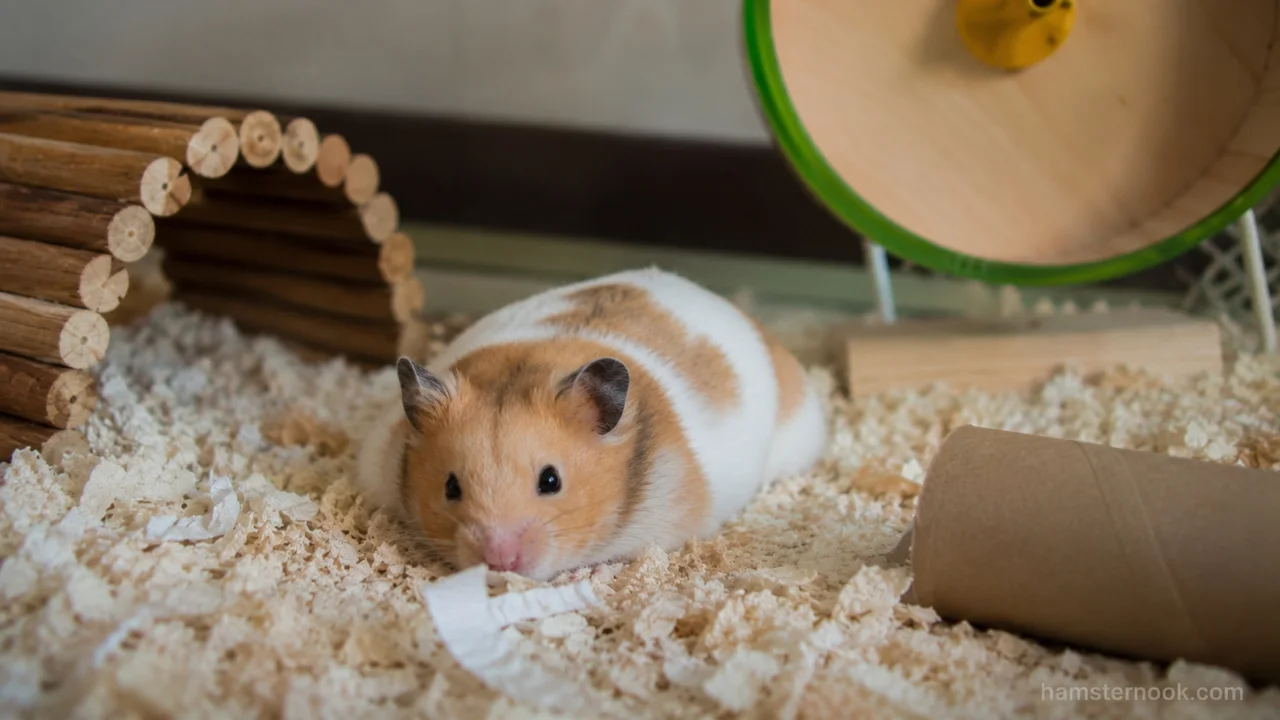
Signs Your Hamster May Need More Enrichment
Before improving enrichment, it’s useful to recognize potential warning signs.
| Possible Sign | What It May Indicate |
|---|---|
| Bar chewing | Repetitive behavior that may have several causes, including environmental frustration |
| Constant pacing | Possible stress, boredom, or another behavioral concern |
| Unusual inactivity during normal waking periods | Reduced engagement or a possible health or environmental issue |
| Repetitive digging in corners | Limited opportunities for normal digging behavior |
| Repetitive grooming | Stress, discomfort, or another behavioral concern |
| Lack of curiosity | A change in normal behavior or limited environmental stimulation |
Not every hamster will show these behaviors, but they can be clues that enrichment needs improvement.
These behaviors are not specific to boredom, and their meaning depends on the situation in which they occur. Our Hamster Behavior Guide covers common behaviors such as digging, hiding, chewing, grooming, and repetitive activity in broader context.
1. Provide Deep Bedding for Natural Burrowing
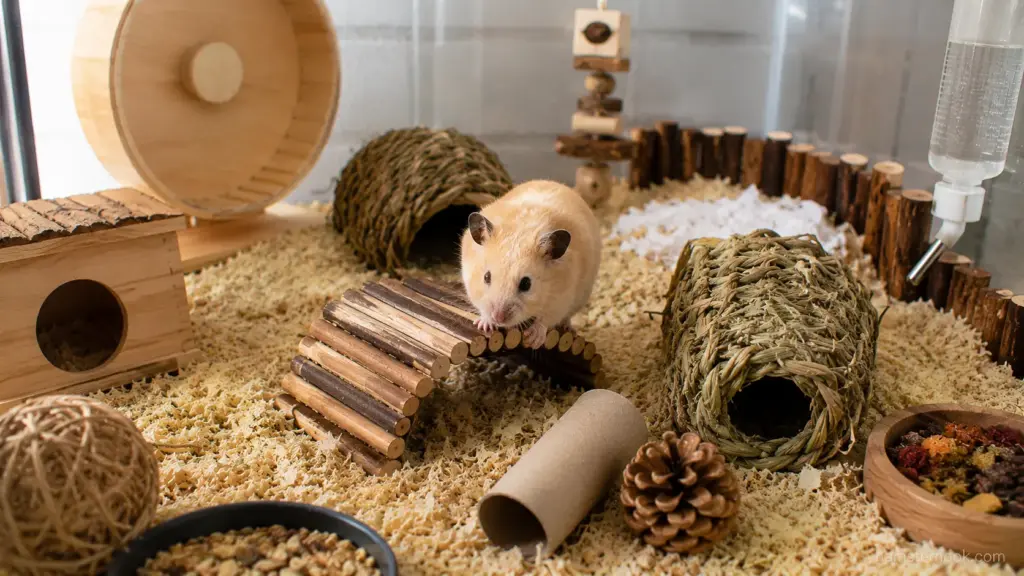
Burrowing is one of the most important natural hamster behaviors.
Many commercial cage setups provide only a shallow layer of bedding, which prevents hamsters from creating proper tunnels. Deep bedding allows them to build underground chambers, sleeping areas, and tunnel systems much like they would in nature.

For most hamster species, deeper bedding is generally better as long as tunnels remain stable and the bedding is safe.
Digging and tunnel building are normal hamster behaviors, and sufficient bedding gives them a practical way to express these instincts. Our Why Does My Hamster Suddenly Start Digging More Than Usual? guide explains the reasons hamsters dig and what different digging patterns may mean.
Bedding depth also affects whether tunnels can be created and maintained effectively. Our Hamster Bedding Depth Guide explains how bedding setup supports burrowing and nesting.
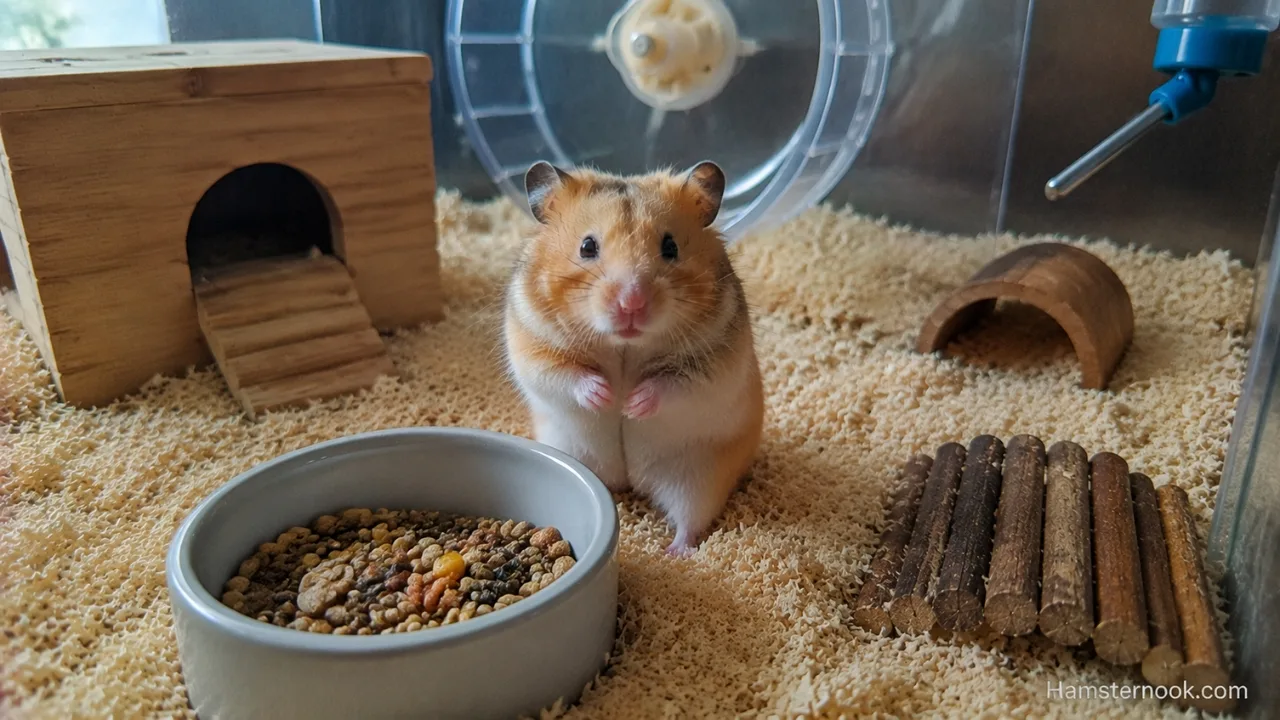
2. Scatter Feed Instead of Using Only a Food Bowl
Food bowls are convenient, but they remove an important part of a hamster’s daily routine.

Wild hamsters spend considerable time searching for food. Scatter feeding encourages similar foraging behavior.
Simply sprinkle part of the daily food portion around the enclosure rather than placing everything in one bowl.
Benefits include:
- Increased activity
- Mental stimulation
- Reduced boredom
- More natural feeding behavior
Scatter feeding can extend the feeding process by encouraging the hamster to search through different areas of the enclosure rather than collecting all of its food from one location.
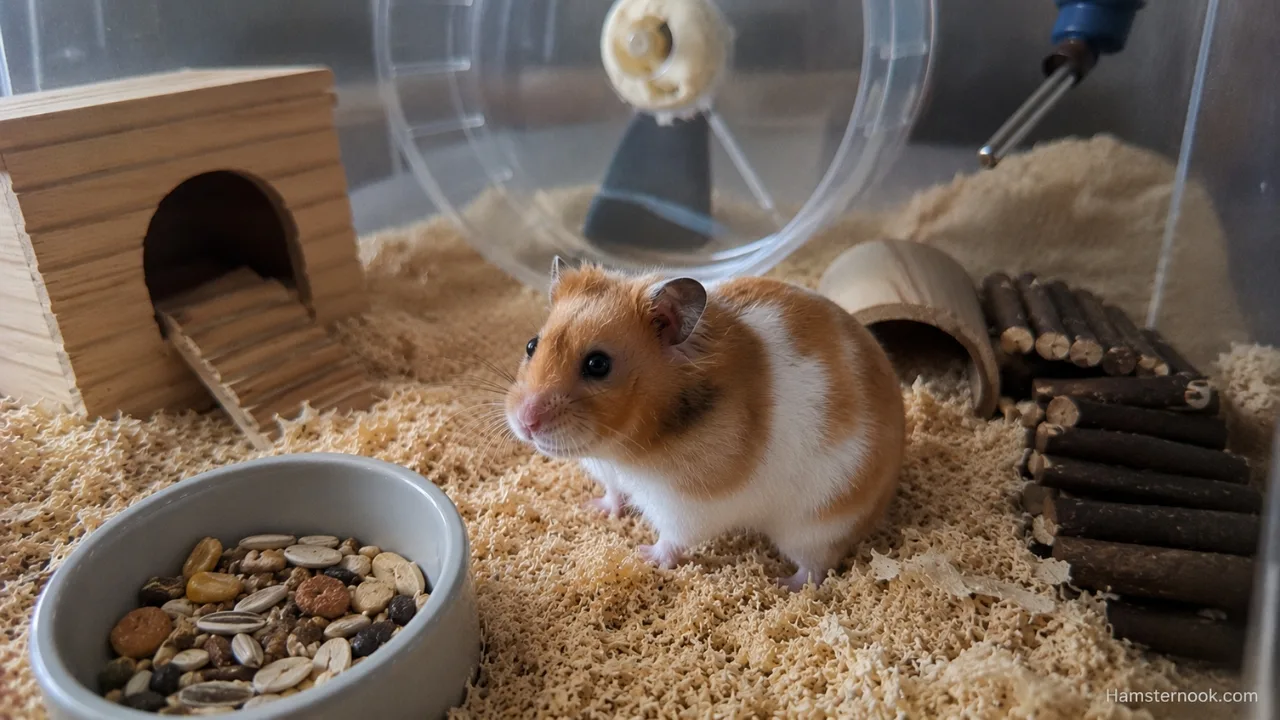
3. Add Multiple Hides and Safe Shelters
Most hamsters feel more secure when they have several places to retreat, rest, and explore throughout the enclosure.
Hamsters naturally move between different resting spots and hiding places. Multiple shelters create opportunities for exploration and help the enclosure feel more secure.
Useful hide options include:
- Wooden houses
- Cork tunnels
- Ceramic hides
- Cardboard shelters
- Coconut hides
Different hides can serve different purposes, including sleeping, nesting, retreating, and exploring. Our Best Hamster Hideouts and Sleeping Areas guide explains what to consider when choosing and positioning shelters.
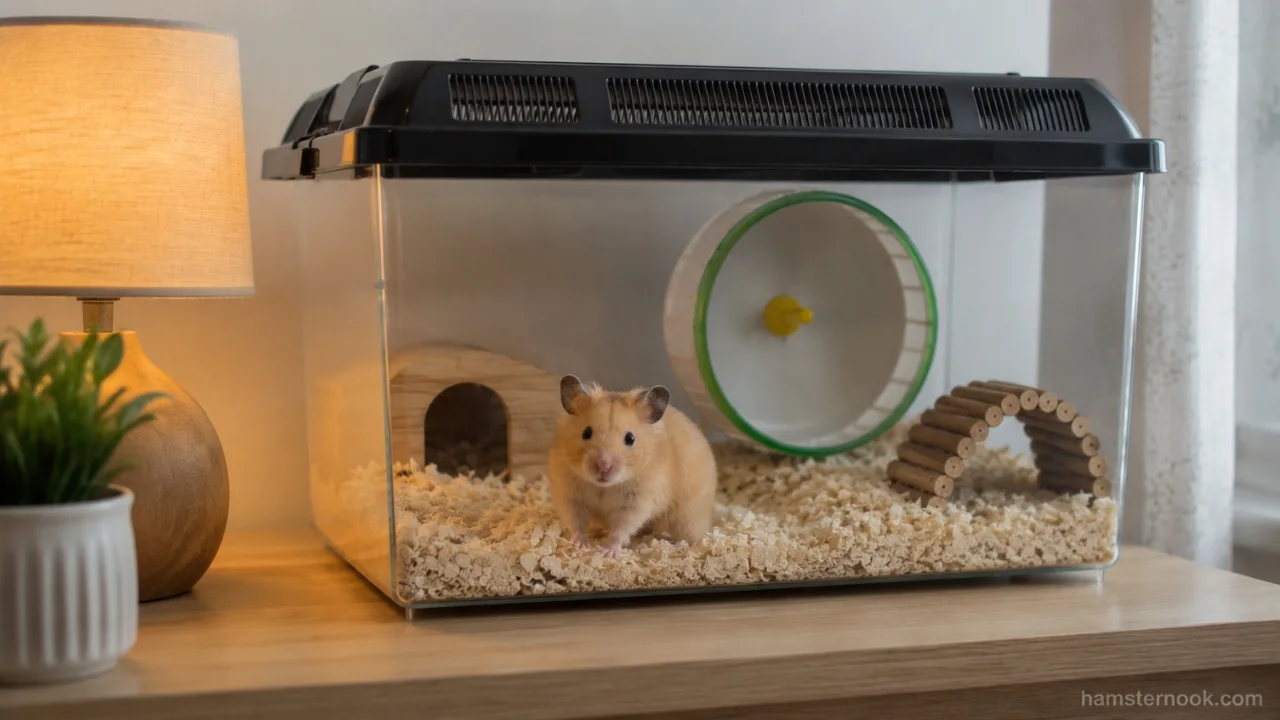
4. Create a Dig Box for Extra Exploration
Even when deep bedding is available, many hamsters enjoy dedicated digging areas.
A dig box provides a different texture and experience from regular bedding.
Suitable materials may include:
- Suitable additive-free digging substrate
- Coconut fiber prepared appropriately for pet use
- Paper-based bedding
- Aspen bedding intended for small animals
Check any digging substrate carefully before use and avoid materials containing fertilizers, pesticides, fragrances, sharp pieces, or other unsuitable additives.
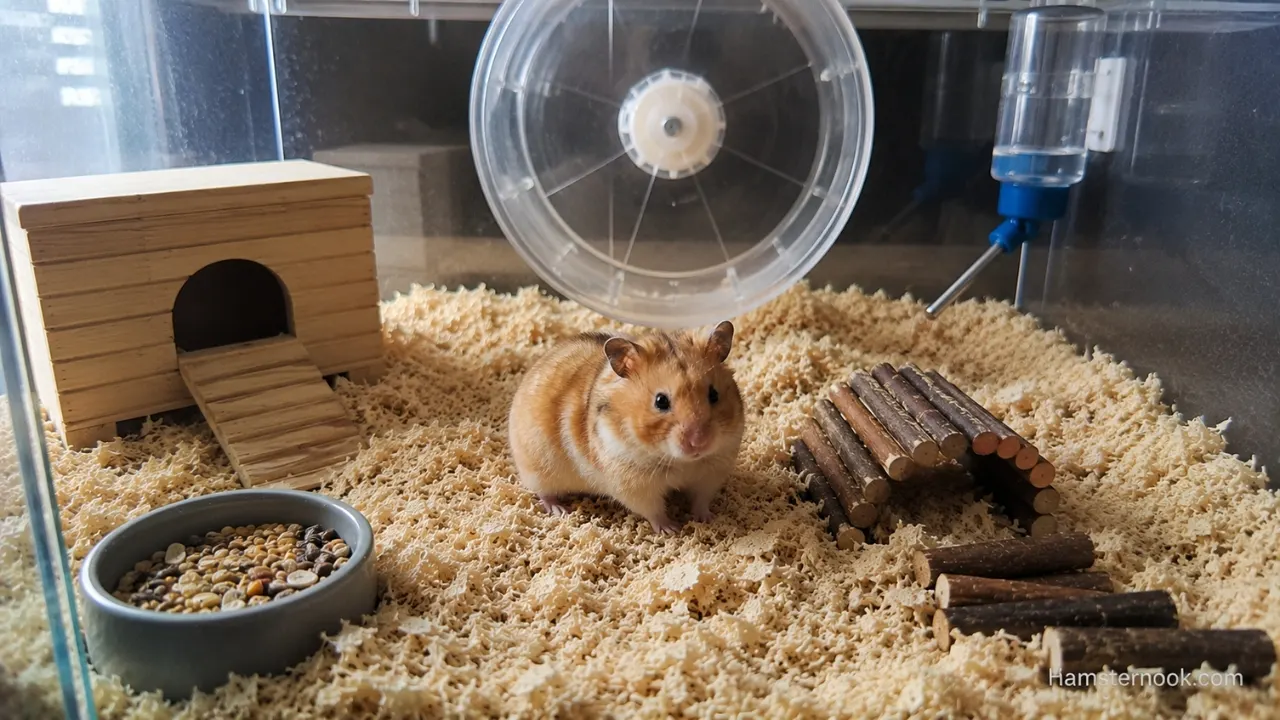
5. Rotate Cage Accessories Occasionally
One mistake many owners make is leaving the cage layout unchanged for months.
If the enclosure itself limits the hamster’s ability to explore, Do Hamsters Need a Bigger Cage? 10 Signs Your Cage Is Too Small explains the signs that more usable space may be needed.
A completely static environment may offer fewer opportunities for novelty, but enrichment should not mean repeatedly redesigning the entire cage. Hamsters also benefit from familiar scents, hiding places, and a predictable setup.
Occasionally introducing or rotating one familiar-safe enrichment item can create novelty without completely changing the hamster’s environment.

Good items to rotate include:
- Tunnels
- Chew toys
- Bridges
- Hideouts
- Foraging toys
Avoid changing the entire setup at once, as drastic changes may make some hamsters feel insecure.
6. Introduce Safe Chewing Opportunities
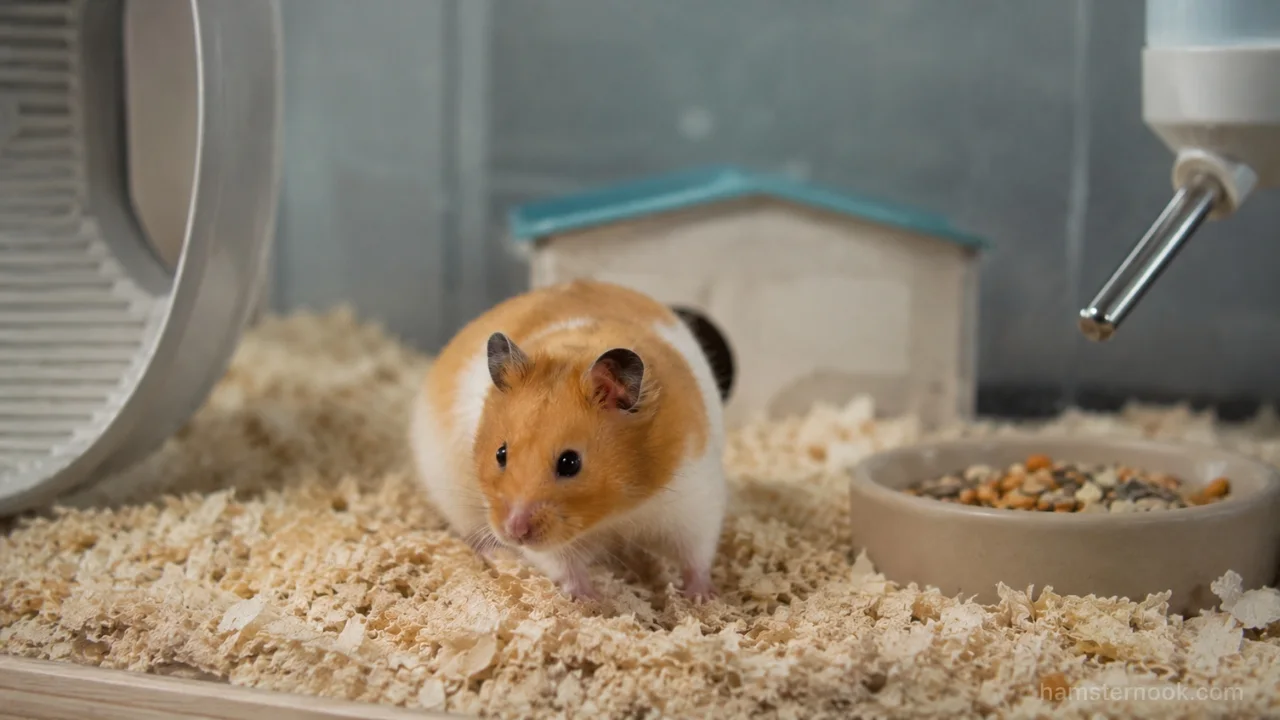
Hamsters naturally gnaw on suitable materials, making safe chewing opportunities a useful part of environmental enrichment. Chew items can provide different textures and activities alongside the hamster’s normal diet and habitat setup.
Popular options include:
| Safe Chew Item | Benefits |
|---|---|
| Apple wood sticks | Natural chewing surface |
| Willow balls | Encourages exploration |
| Untreated wooden toys | Long-lasting enrichment |
| Cardboard tubes | Easy and inexpensive |
| Loofah chews | Different texture experience |
Choose chew items made specifically from hamster-appropriate materials and remove anything that becomes sharp, heavily damaged, contaminated, or unsafe.
Hamsters vary in which textures and chew items they use. Our Best Hamster Chew Toys for Healthy Teeth guide covers different options and factors to consider when choosing them.
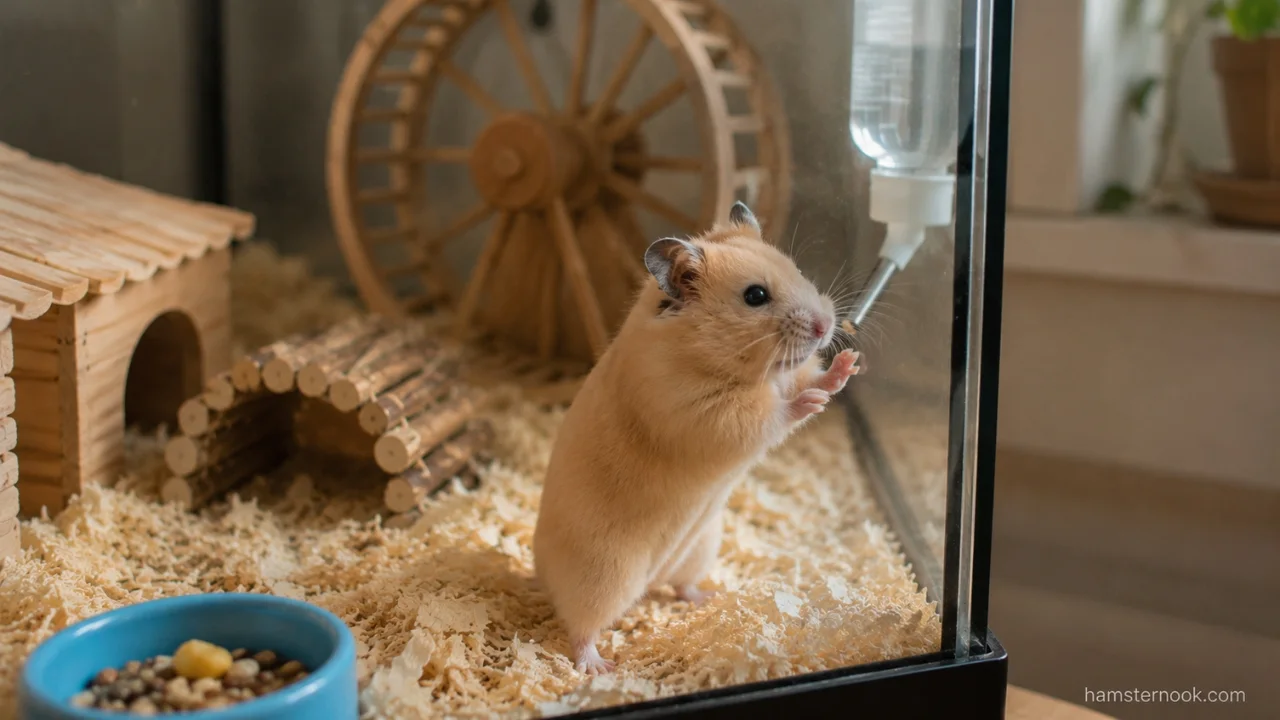
7. Upgrade the Wheel if Necessary
A wheel is often the most frequently used item in a hamster enclosure.
However, many commercially sold wheels are too small.
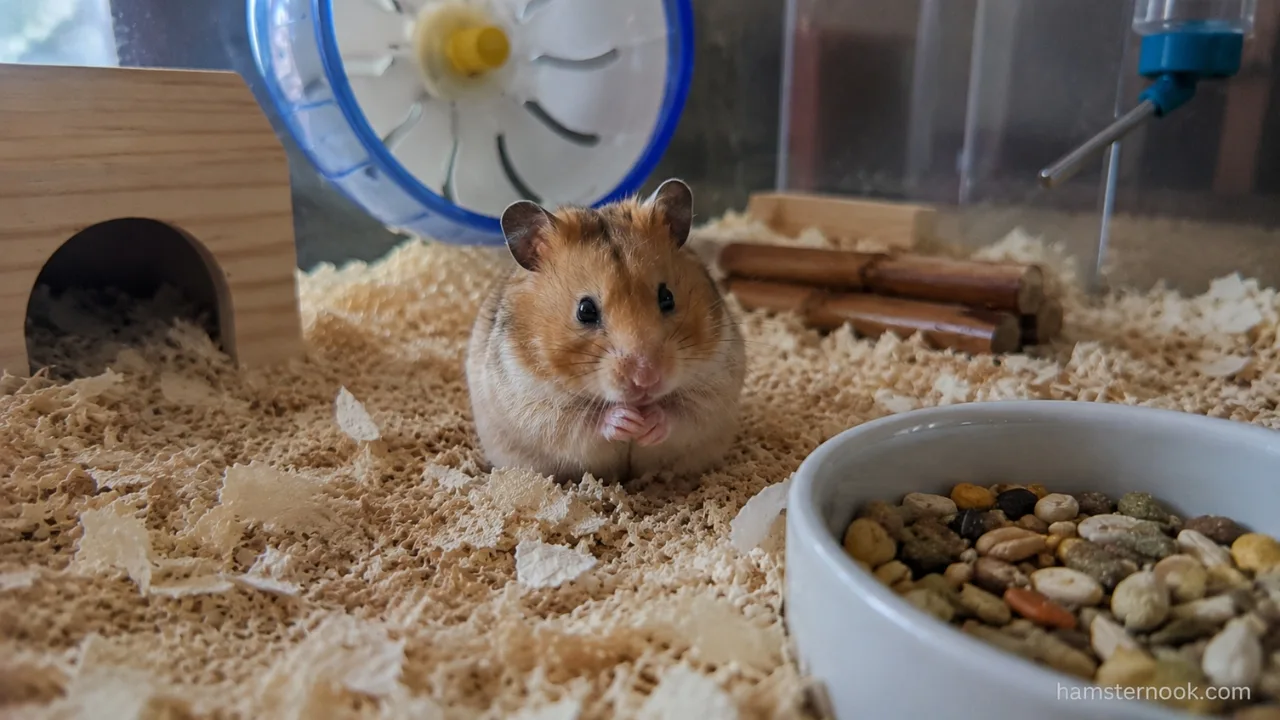
A properly sized wheel allows a hamster to run with a straight back rather than arching its spine.
Signs a wheel may be unsuitable include:
- Curved running posture
- Difficulty turning the wheel
- Reluctance to use it
A suitable wheel provides an important opportunity for voluntary running, but it should complement rather than replace other forms of enrichment.
Wheel size and design affect running posture and usability. Choosing an appropriately sized wheel can help support a more comfortable running position and make regular nighttime activity easier.

8. Add Tunnels and Multi-Level Exploration Areas
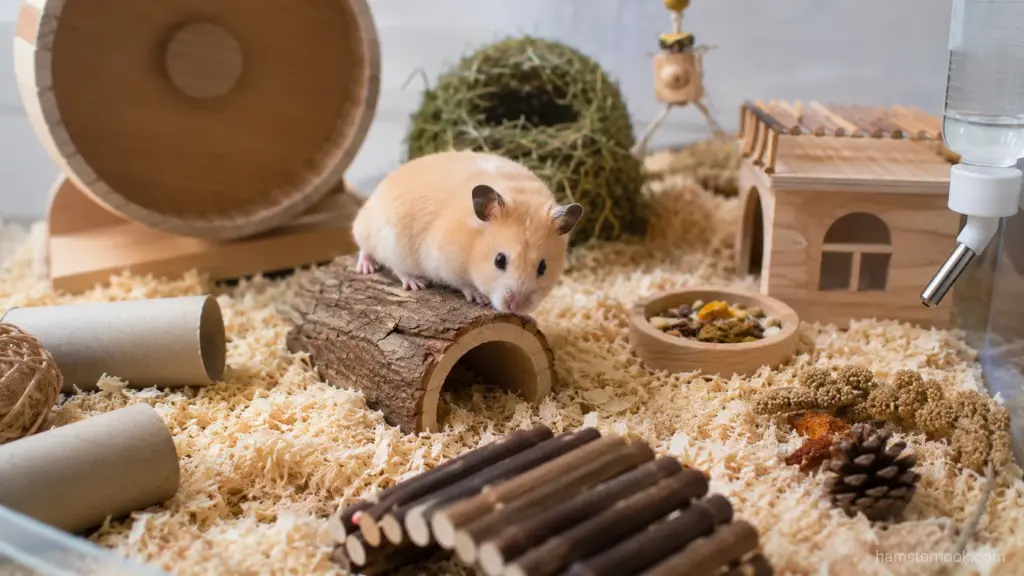
Tunnels and enclosed pathways give hamsters additional routes to investigate while connecting different parts of the enclosure. They can also add variation in texture, cover, and movement without requiring major changes to the entire layout.
Popular tunnel options include:
- Cork logs
- Cardboard tubes
- Wooden tunnels
- Bendable bridges
- Multi-chamber hides
Connecting different areas can encourage exploration, but every tunnel or pathway should remain stable, safe, and easy for the hamster to navigate.
9. Use Foraging Toys and Puzzle Feeders
Mental stimulation is just as important as physical activity.
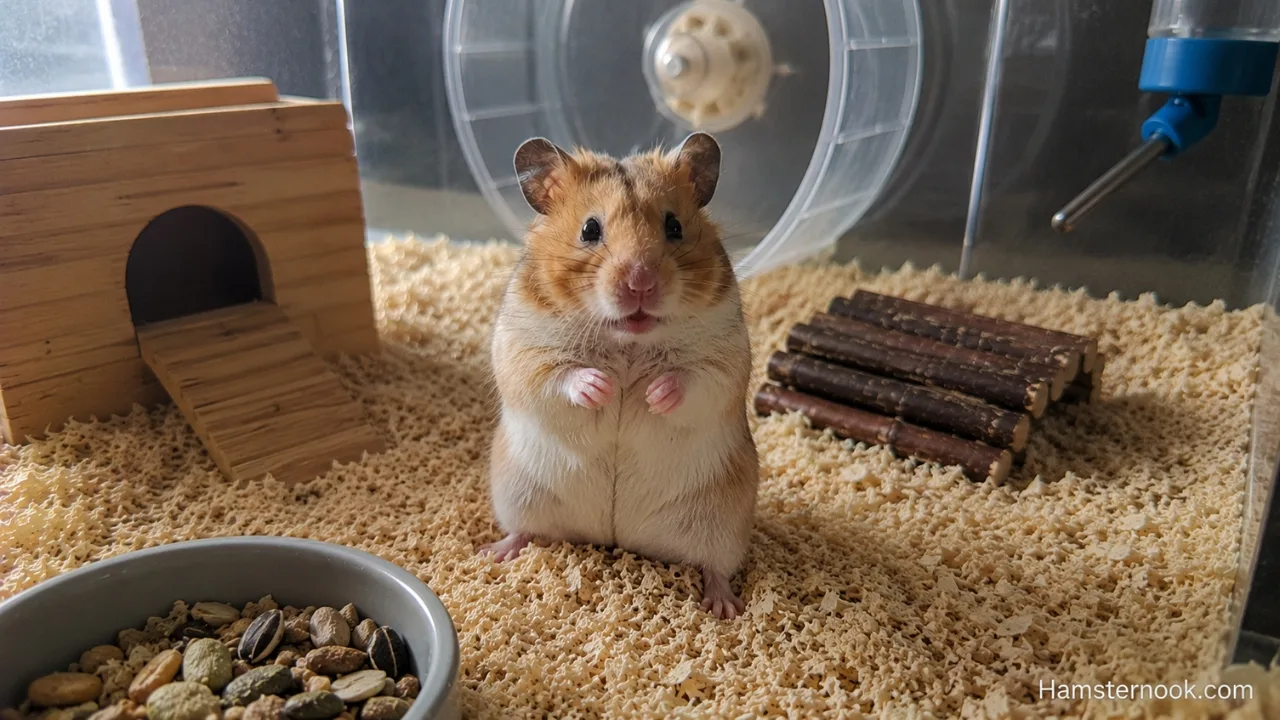
Foraging toys encourage problem-solving and exploration.
Examples include:
- Treat-filled cardboard tubes
- Folded paper food packets
- Hamster-safe puzzle feeders
- Hidden seed containers
These activities encourage searching and investigation, but the goal is not to keep a hamster occupied for a guaranteed amount of time. Use part of the normal food ration rather than adding excessive treats.
Foraging enrichment can be as simple as hiding part of the normal food ration in safe locations or using simple food-search activities. The goal is to encourage searching and investigation without adding excessive treats.

10. Offer New Nesting Materials
Hamsters spend a surprising amount of time building and organizing nests.
Providing suitable nesting material allows hamsters to collect, transport, arrange, and rebuild their sleeping area as part of normal nesting behavior.
Safe options include:
- Unscented toilet paper
- Plain facial tissue
- Paper nesting materials made for small pets
Avoid cotton wool-style nesting products, as they can pose safety risks.

Watching a hamster collect, transport, and arrange nesting materials is often one of the most enjoyable natural behaviors for owners to observe.
Which Enrichment Activities Do Hamsters Usually Enjoy Most?
Every hamster has individual preferences, but many show the strongest interest in:
- Digging and tunnel building
- Foraging for hidden food
- Exploring tunnels
- Rearranging nesting material
- Climbing over natural obstacles
- Investigating newly introduced textures
Observing which activities your hamster spends the most time doing can help you focus enrichment efforts more effectively.
How to Introduce New Enrichment Safely
Start with one change at a time and leave familiar essentials such as the main sleeping area, water source, and wheel accessible. Watch how your hamster responds before adding more. If a new item causes persistent avoidance or disrupts normal eating, sleeping, or movement, remove it and try a simpler form of enrichment later.

Basic Hamster Cage vs Enriched Hamster Cage
The difference between a basic setup and an enriched enclosure is often significant.
| Feature | Basic Cage | Enriched Cage |
|---|---|---|
| Bedding Depth | Minimal | Deep digging areas |
| Food Access | Bowl only | Bowl plus foraging opportunities |
| Hiding Places | One hide | Multiple shelters |
| Exploration | Limited | Tunnels and varied pathways |
| Enrichment Variety | Limited | Multiple opportunities |
| Natural Behavior Opportunities | Few | More varied |
An enriched enclosure gives hamsters more opportunities to dig, explore, forage, hide, and stay mentally engaged throughout the day.
Signs Your Enrichment Upgrades Are Working
Positive signs often include:
- More exploration
- Increased digging
- Greater curiosity
- More natural foraging behavior
- Better use of enclosure space
- Reduced repetitive behaviors
Increased use of enrichment can show that a hamster is engaging with the new opportunities, but activity levels and preferences vary between individuals. Reduced repetitive behavior is useful to observe alongside appetite, sleep, grooming, and overall health rather than as proof that enrichment alone solved the problem.
Enrichment Mistakes to Avoid
Not all enrichment is beneficial.
Enrichment should support normal behavior without creating unnecessary stress; 7 Signs You’re Accidentally Stressing Your Hamster (Without Even Realizing It) covers wider environmental stressors that can affect behavior.
Some common mistakes include:
Changing Everything at Once
Hamsters rely heavily on familiar scents and layouts. Completely redesigning the cage too frequently can create stress.
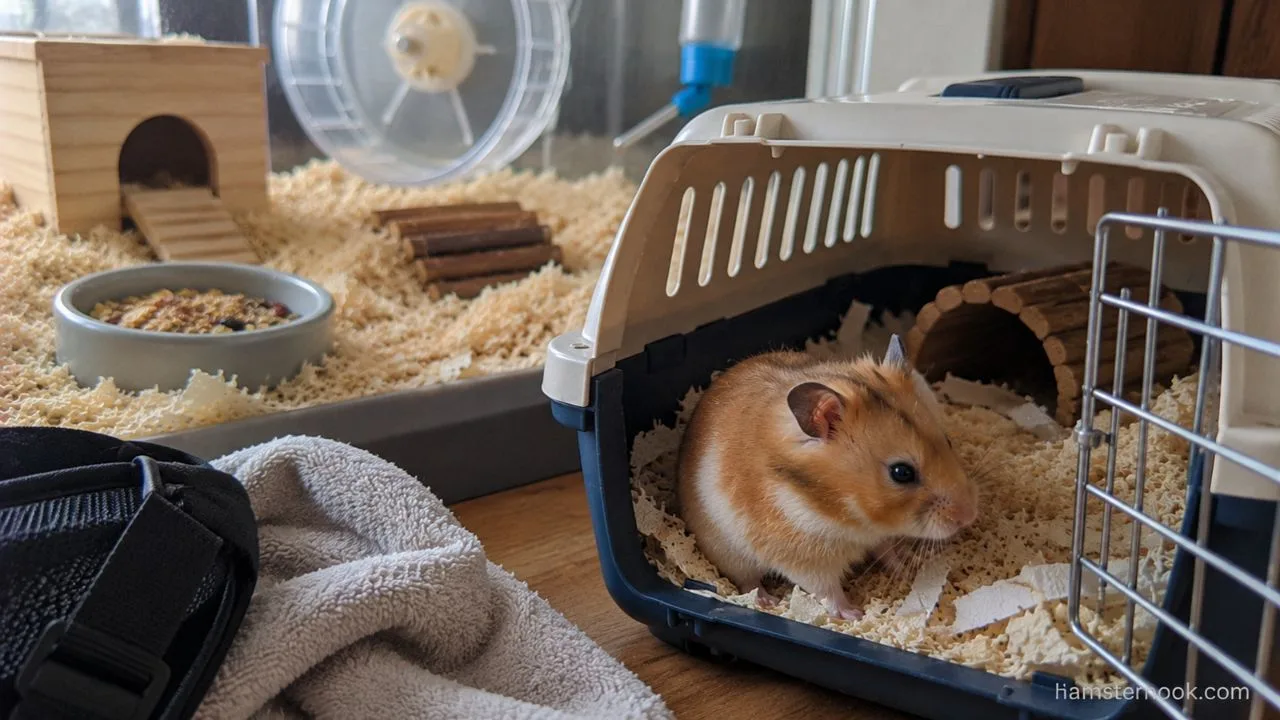
Adding Unsafe Materials
Always verify that wood, soil, plants, and accessories are safe for hamsters.
Overcrowding the Enclosure
More items do not automatically mean better enrichment.
Hamsters still need clear routes for movement and safe access to essential resources such as the wheel, food, water, hides, and burrowing areas.
Using Exercise Balls
Exercise balls do not allow the same direct interaction with the environment as a secure enclosure or controlled exploration area. If you provide out-of-enclosure activity, use a hamster-safe space where hazards, escape routes, other pets, and falls are controlled.
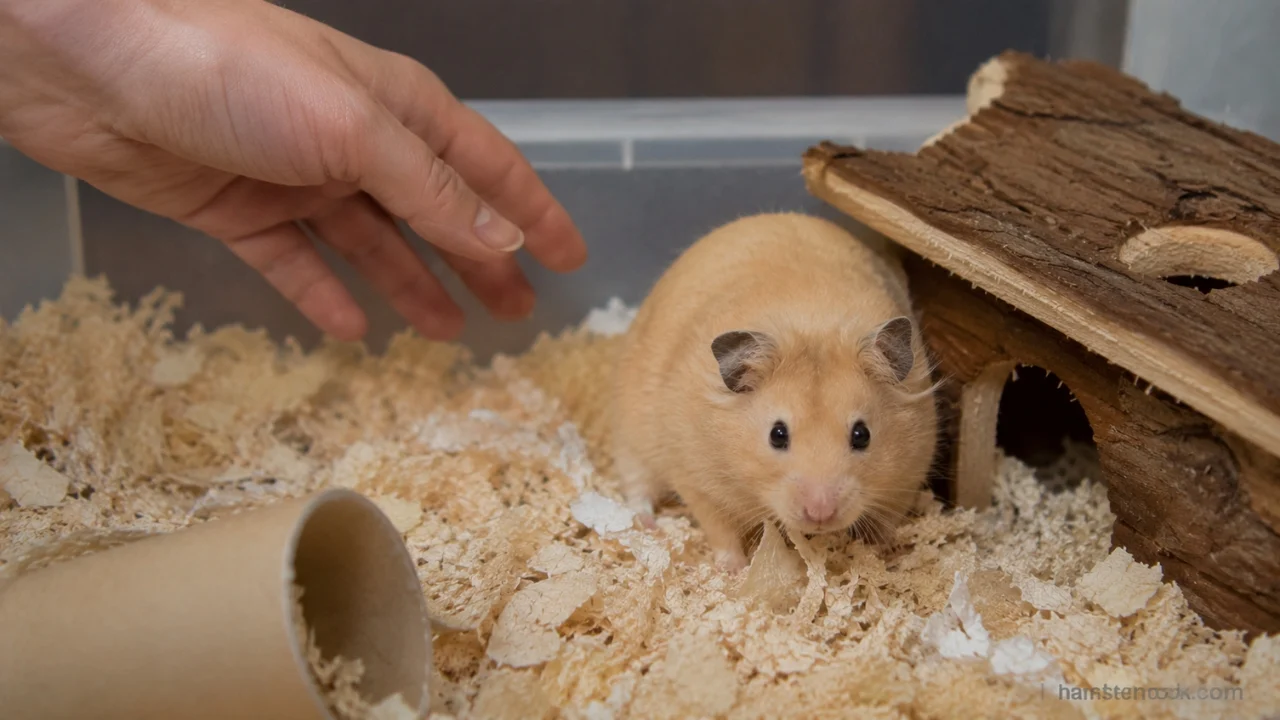
A hamster that repeatedly retreats from new objects or changes may need more time and a less disruptive introduction. Our Why Your New Hamster Seems Scared of Everything guide covers common reasons a hamster may behave cautiously or fearfully.
How Often Should You Add New Enrichment?
You do not need to buy something new every week.
Simple changes often work well, such as:
- Rearranging a tunnel
- Adding a cardboard tube
- Introducing fresh nesting material
- Creating a new foraging challenge
- Rotating a hideout
There is no need to follow a fixed enrichment schedule. Introduce changes based on your hamster’s behavior and existing setup, and avoid repeatedly removing familiar resources simply to create novelty.
Can Too Much Enrichment Overcrowd a Hamster Cage?
Yes. Enrichment should add useful behavioral opportunities without blocking access to the wheel, food, water, burrowing areas, hides, or safe movement routes. Filling every open area with accessories can reduce usable space and make routine movement more difficult.
Prioritize enrichment that serves a clear purpose—such as digging, hiding, foraging, chewing, nesting, or exploring—rather than adding objects simply to make the enclosure look busy.
Final Thoughts
Hamster cage enrichment works best when it creates opportunities for natural behaviors rather than simply adding more accessories. Deep bedding, secure hides, foraging opportunities, suitable chewing materials, tunnels, nesting material, and a properly designed wheel can each serve a different purpose.
Build enrichment around your hamster’s individual behavior and preferences. Introduce changes gradually, preserve familiar resources, avoid overcrowding, and observe which activities your hamster actually uses. A good enclosure should provide variety while still feeling secure and predictable.
Frequently Asked Questions
How do I know if my hamster is bored?
Common signs include bar chewing, pacing, repetitive behaviors, reduced curiosity, and excessive inactivity during normal waking hours.
What is the best enrichment for a hamster cage?
Deep bedding can provide valuable enrichment because digging and tunnel-building are natural hamster behaviors. The best enrichment setup depends on the individual hamster and should provide several different opportunities rather than relying on one item.
Can a hamster have too many toys?
Yes. Overcrowding a cage can reduce usable space and make movement more difficult. Balance is important.
How often should I change hamster enrichment items?
There is no universal schedule. Small changes can be introduced occasionally based on your hamster’s behavior, while major or frequent layout changes should generally be avoided when they unnecessarily disrupt familiar surroundings.
Are cardboard tubes safe for hamsters?
Plain, clean cardboard tubes can be used for enrichment when they do not contain unsuitable coatings, adhesives, sharp staples, or contaminated material. Replace them if they become heavily soiled or damaged.
Do hamsters need enrichment if they already have a wheel?
Yes. A wheel provides exercise, but hamsters also need opportunities for digging, hiding, foraging, nesting, and exploring to stay mentally stimulated.
References
This guide is based on hamster enrichment, housing, bedding, burrowing, foraging, nesting, exercise, and welfare guidance from trusted animal welfare and veterinary resources, including:
- RSPCA – Creating a Good Home for Hamsters – Guidance on enclosure space, bedding, burrowing, nesting, hiding places, enrichment, and creating a suitable hamster environment.
- RSPCA – Hamster Behaviour – Information on natural hamster behaviors, activity, exploration, digging, hiding, foraging, and behavioral welfare.
- RSPCA – Keeping Hamsters as Pets – General guidance on hamster care, housing, diet, enrichment, exercise, behavior, and welfare.
- Blue Cross – Hamster Care Guide – Practical advice on hamster housing, bedding, enrichment, nesting, exercise, handling, and wellbeing.
- MSD Veterinary Manual – Providing a Home for a Hamster – Veterinary guidance on hamster enclosure design, bedding, nesting, exercise equipment, and environmental needs.
- NC3Rs – Housing and Husbandry: Hamster – Guidance on appropriate hamster housing, bedding, enrichment, environmental conditions, and species-appropriate husbandry.
- NC3Rs – Choosing Appropriate Enrichment – Principles for selecting enrichment that encourages natural behaviors and supports hamster welfare.

Narayan Kumar is the founder and author of HamsterNook. He creates practical, research-based hamster care guides covering hamster behavior, nutrition, cage setup, enrichment, health, and everyday care. His goal is to help hamster owners make informed decisions and provide safer, healthier lives for their pets through clear, beginner-friendly information based on trusted animal care resources.