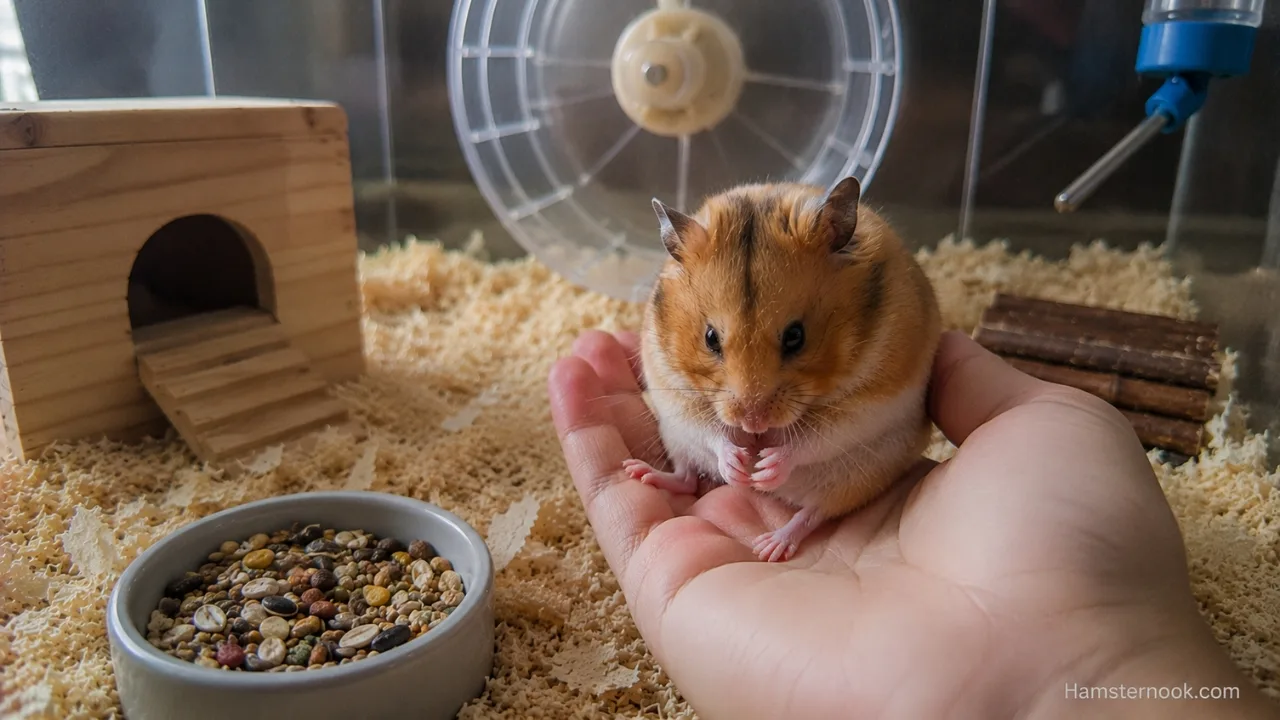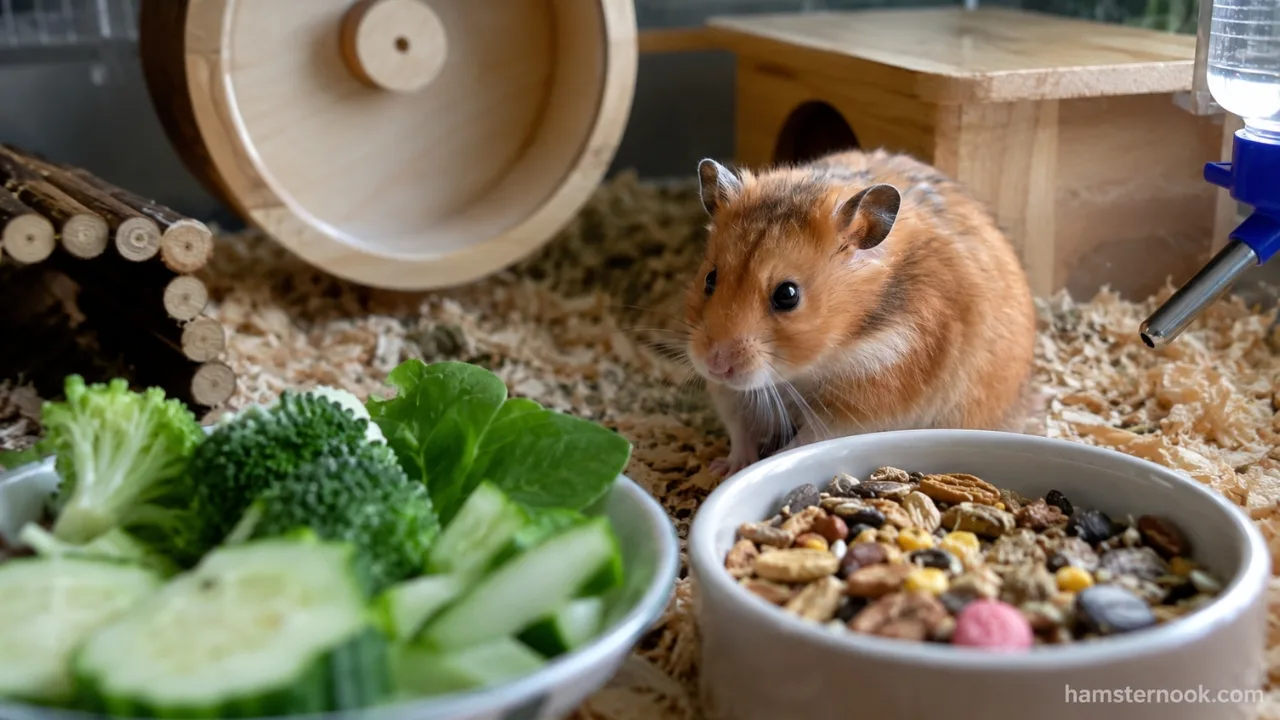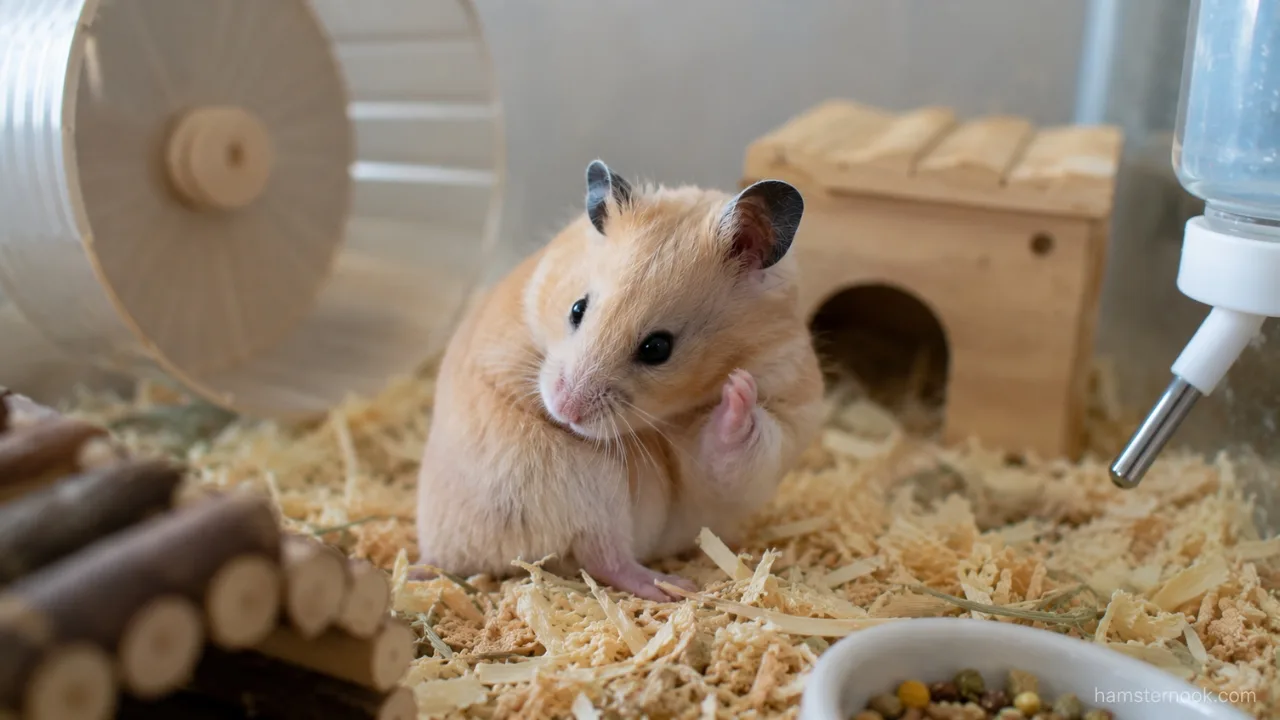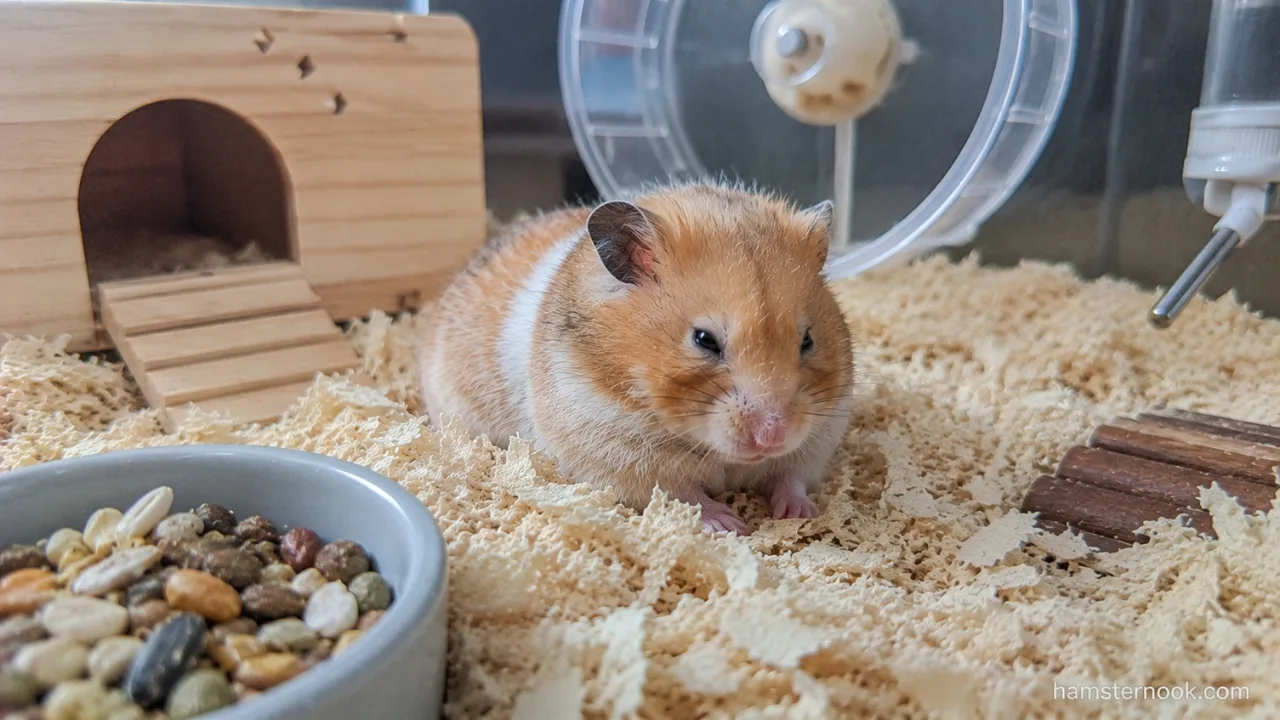
Watching a hamster grow older can bring subtle changes. A hamster that once raced around the enclosure may sleep longer, move more carefully, or need extra time to reach favorite spots.
Senior hamster care is less about changing everything and more about adapting the environment while paying closer attention to health, mobility, eating, and everyday comfort.
Those age-related adjustments work best when the fundamentals of everyday care remain strong. Our Complete Hamster Care Guide for Beginners (2026) covers the core housing, diet, enrichment, and welfare needs that continue throughout a hamster’s life.
Quick Answer
An older hamster still needs suitable housing, a balanced diet, fresh water, enrichment, gentle handling, and regular health monitoring. If mobility or strength declines, make food, water, hides, and other essentials easier to reach while preserving the familiar activities your hamster can still enjoy comfortably.
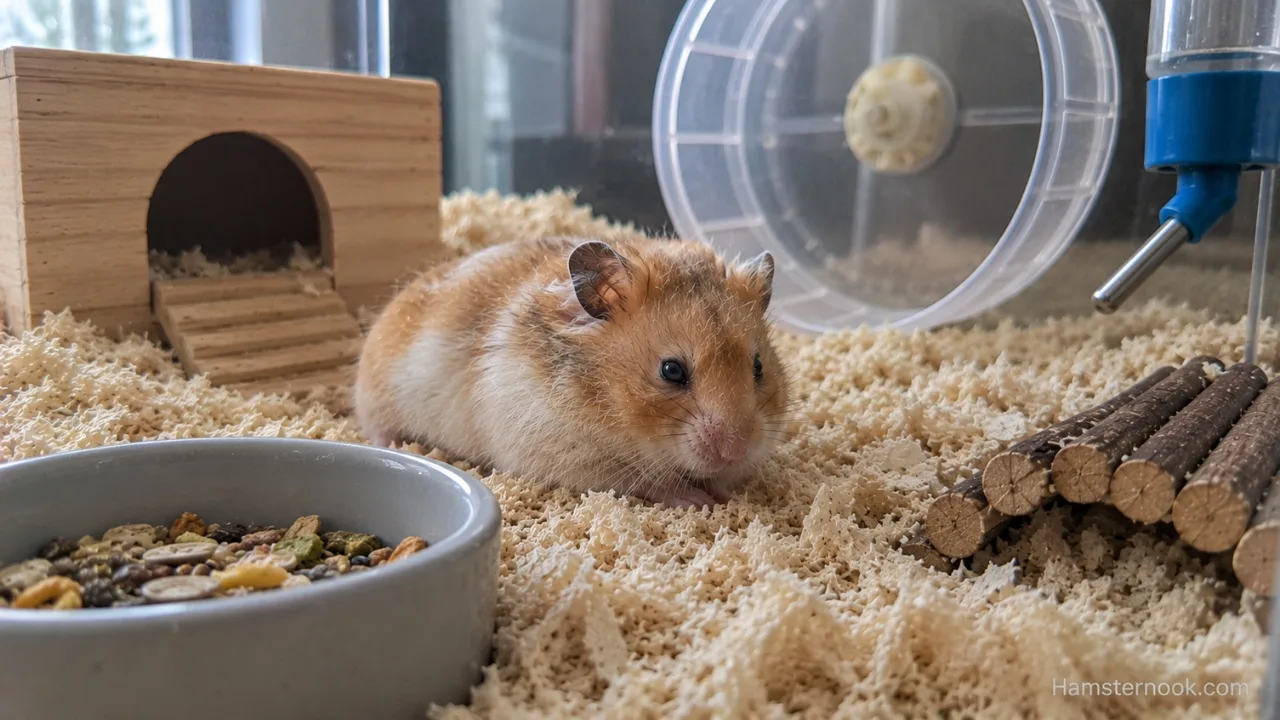
Age should not automatically be blamed for every change. Hamsters can hide signs of pain or illness, and veterinary guidance is appropriate when you notice unexplained weight loss, reduced eating, breathing changes, lumps, difficulty moving, or another significant change from your hamster’s normal behavior.
When Is a Hamster Considered Old?
There isn’t a single birthday when every hamster becomes “senior.” Species, genetics, health, and individual variation all affect aging.
UC Davis School of Veterinary Medicine lists typical longevity of about 1.5–3 years for Syrian hamsters and 1.5–2 years for dwarf hamsters. Lifespan varies between individuals, so these ranges should not be used as a fixed point for deciding when a hamster needs senior-care adjustments.
For owners, physical and behavioral changes are often more useful than choosing an exact age. An aging hamster may gradually become less energetic or less agile, but a sudden decline deserves more attention.
How Hamster Care Changes With Age
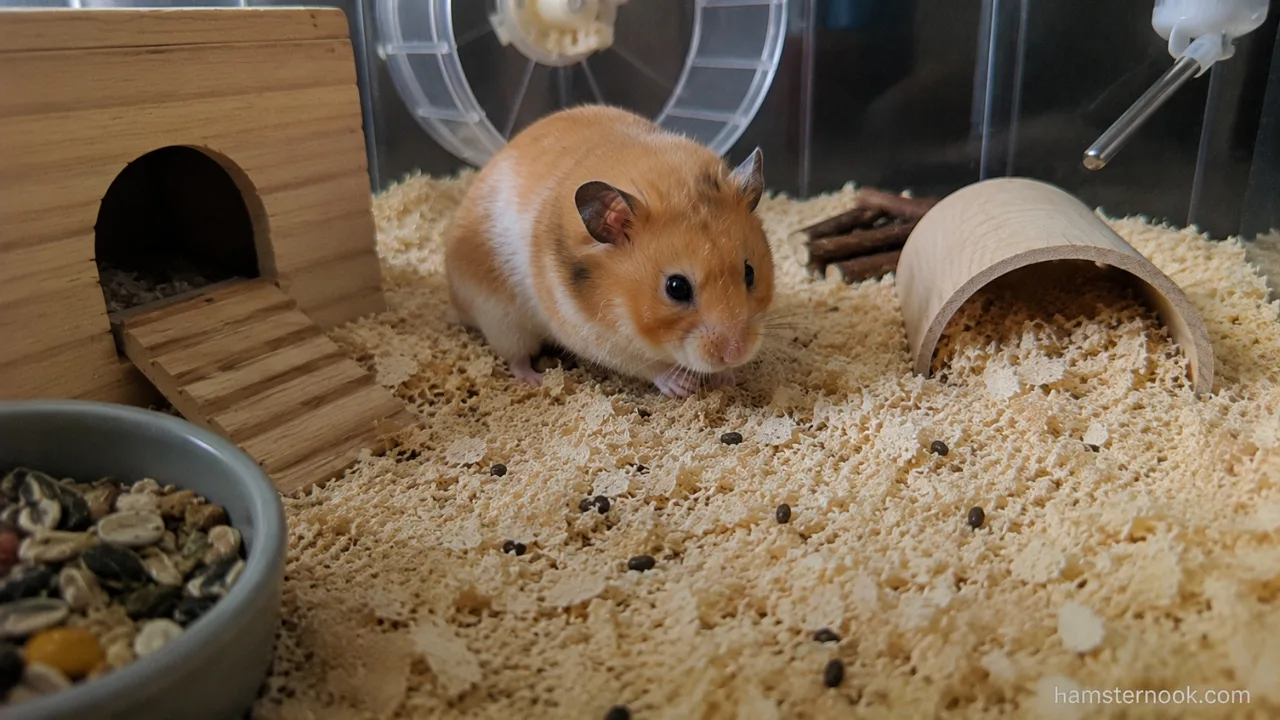
A young adult may climb over enclosure furniture without hesitation, dig extensively, and run for long periods. An older hamster may still enjoy those activities but approach them differently.
The goal is not to remove enrichment simply because your hamster is aging. Instead, make its existing environment easier and safer to use.
| Care Area | Healthy Adult | Older Hamster |
|---|---|---|
| Enclosure access | Usually handles normal layout easily | May benefit from simpler routes to essentials |
| Exercise | Often highly active | Allow voluntary activity without forcing it |
| Food and water | Normal setup may work well | Monitor access and intake more closely |
| Handling | Based on individual temperament | Keep handling especially gentle if mobility declines |
| Health monitoring | Regular observation | Pay closer attention to weight, movement, teeth, skin, eating, and drinking |
| Enrichment | Digging, hides, wheel, foraging | Continue enrichment while adapting difficult obstacles |
An older hamster shouldn’t automatically be treated as fragile. Adapt according to what your individual hamster can comfortably do.
Make the Enclosure Easier to Navigate
Accessibility becomes increasingly important if your hamster begins moving more slowly.
Keep Essential Resources Easy to Reach
Food, water, sleeping areas, and suitable enrichment shouldn’t require a difficult climb.
Watch your hamster during its active period. Can it reach its water comfortably? Can it enter its preferred hide without struggling? Does it have an uncomplicated route between its nest and food?
A setup your hamster previously used with ease may need small adjustments if you begin noticing hesitation, difficulty climbing, slipping, or trouble reaching essential resources.
Reduce Unnecessary Fall Risks
Hamsters can be injured by falls. MSD Veterinary Manual notes that broken bones, including spinal injuries, may occur when a hamster falls from a height.
For a hamster becoming less steady, reconsider high platforms, steep access routes, or arrangements where losing balance could result in a significant fall.
This doesn’t mean turning the enclosure into an empty box. Floor-level tunnels, hides, digging opportunities, nesting areas, and accessible enrichment can still provide plenty to do.
Don’t Remove Deep Bedding Just Because Your Hamster Is Older
Aging doesn’t erase normal hamster behavior.
A suitable enclosure should continue allowing hiding, nesting, digging, and other species-appropriate activities. Unless a veterinarian recommends otherwise for an individual medical problem, avoid stripping away enrichment simply because your hamster has reached an older age.
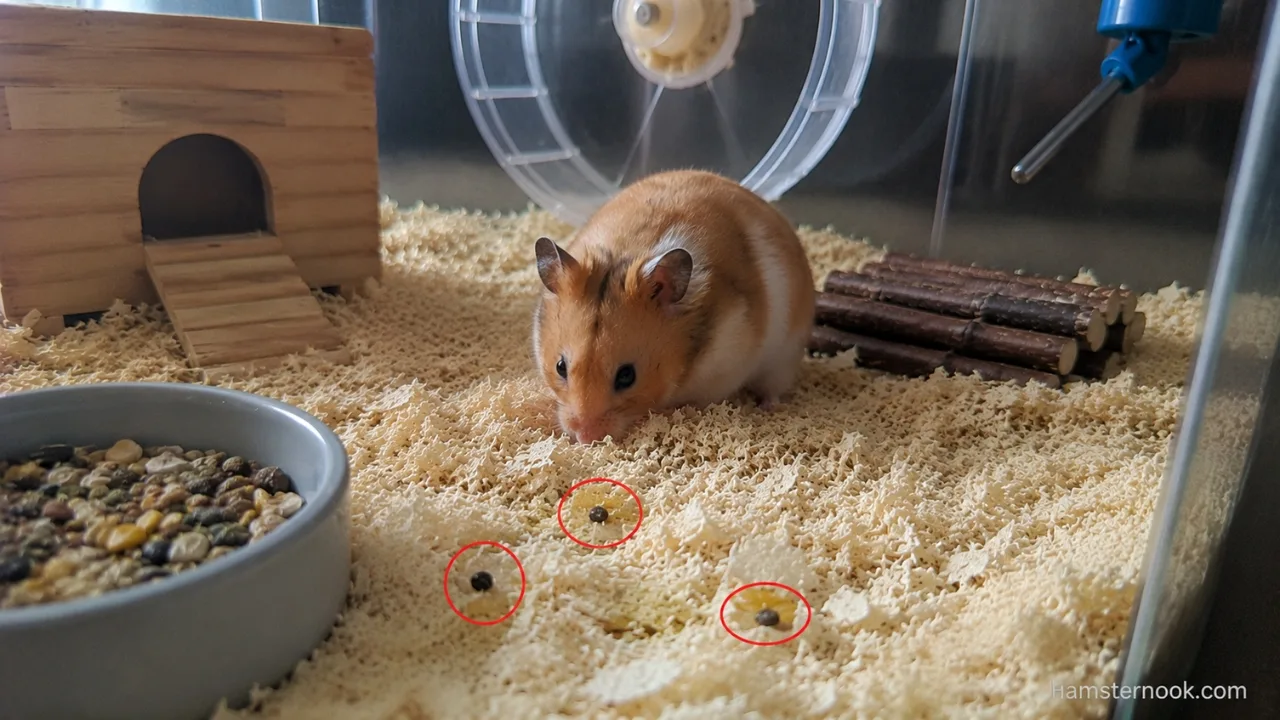
Instead, adjust anything the hamster genuinely struggles to use.
Keep Food and Water Accessible
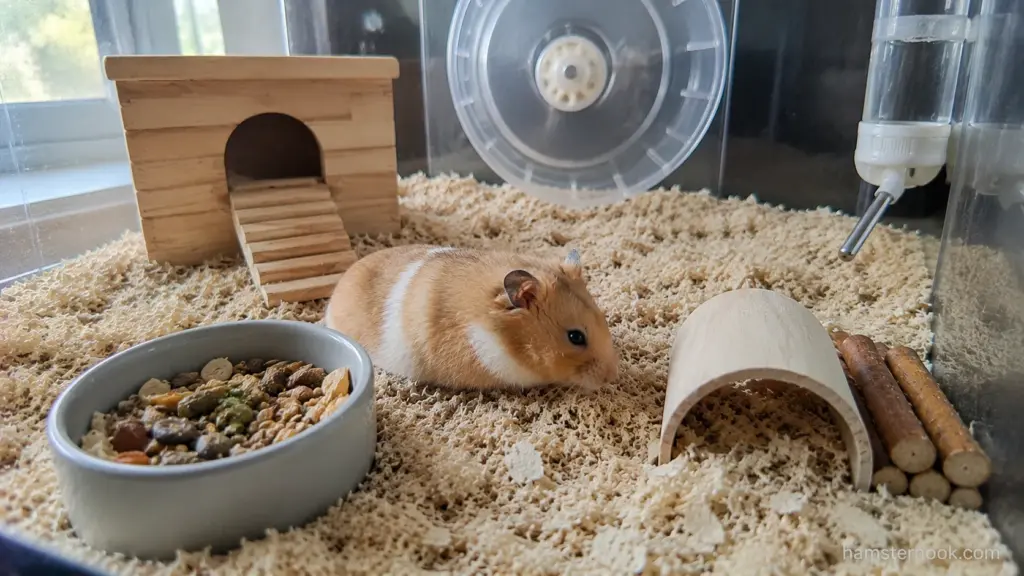
Dietary needs shouldn’t be changed casually because a hamster is old.
Continue providing an appropriate, balanced hamster diet unless your veterinarian recommends a modification for a health or dental problem. Avoid suddenly switching foods in an attempt to create a homemade “senior diet.”
RSPCA guidance advises owners to monitor how much their hamster eats and drinks and to avoid sudden dietary changes.
Check Water Access Every Day
Fresh drinking water should always be available.
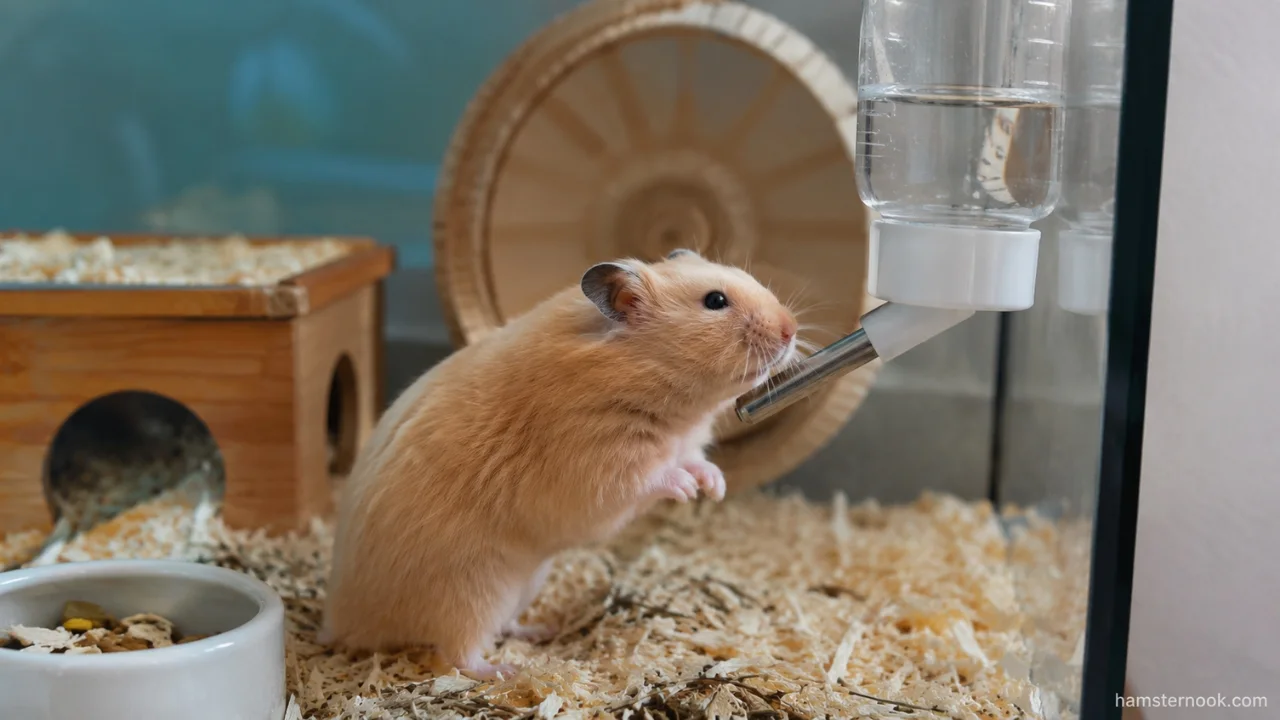
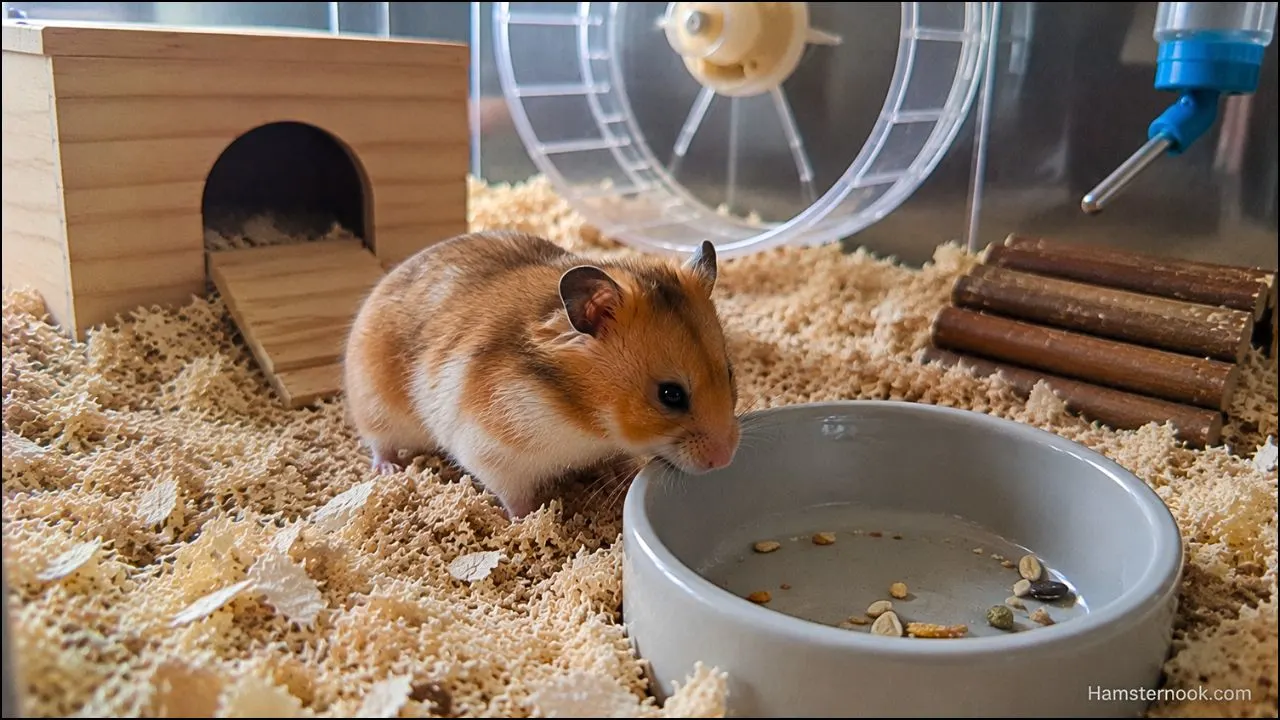
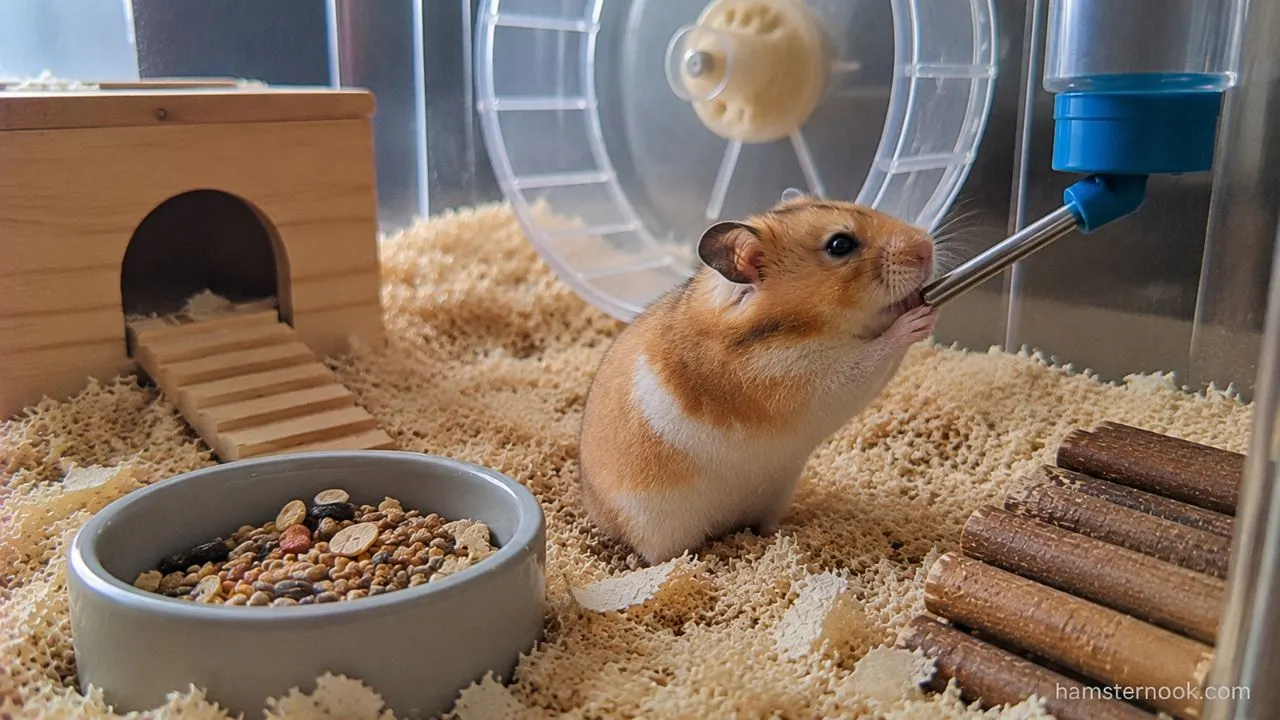
For older hamsters, accessibility deserves particular attention. The RSPCA notes that young, old, or sick hamsters may have difficulty with resistance from some traditional ball-valve sipper tubes. Water bottles should also be checked daily for leaks and blockages.
When adjusting the water source, position it at a height your hamster can reach comfortably without stretching upward or climbing onto another object.
If an older hamster unexpectedly stops drinking from a bottle it previously used normally, check the setup and pay attention to any accompanying changes. Why Does My Hamster Suddenly Stop Using Its Water Bottle? 8 Possible Reasons covers several factors that can affect this behavior.
Don’t Automatically Switch to Soft Food
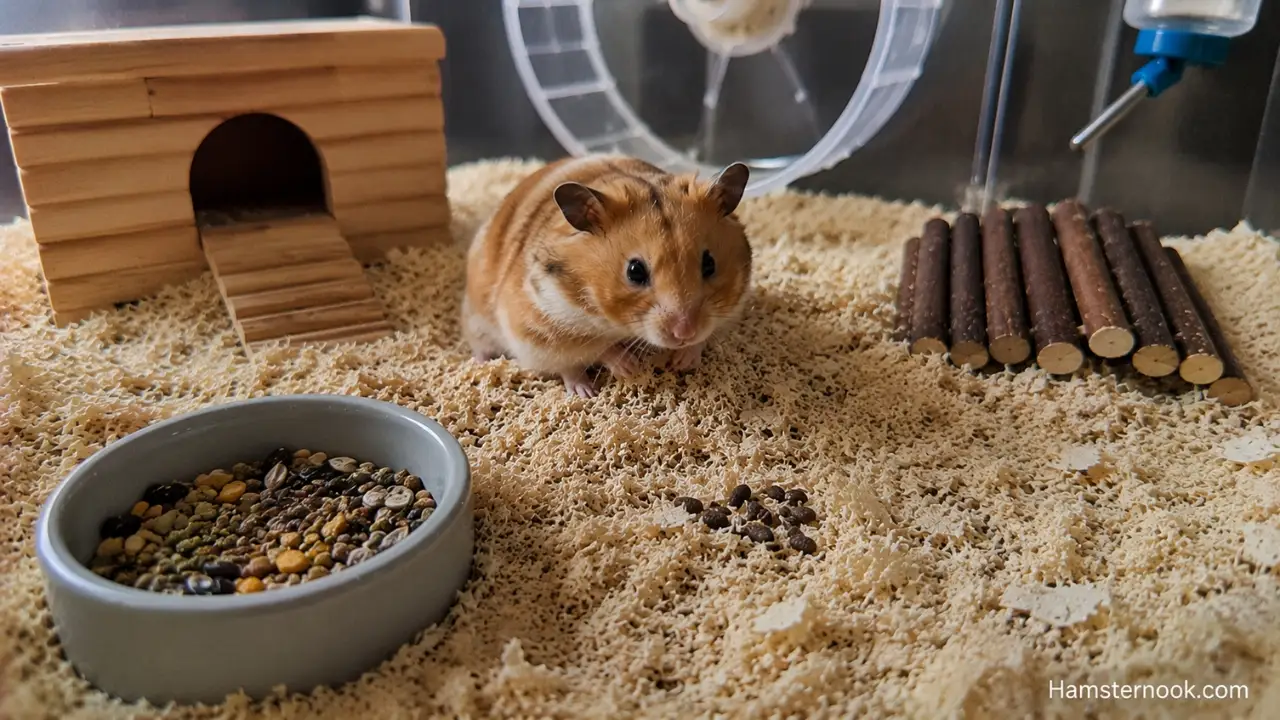
An older hamster does not need wet or powdered food simply because of age.
The RSPCA recommends giving wet or powdered food when advised by a veterinarian, such as in cases involving dental problems. Moist food also requires careful hygiene because it can spoil and support bacterial or mold growth.
If your hamster suddenly struggles with its regular food, the priority is finding out why rather than assuming softer food will solve the problem. Difficulty eating can be associated with dental or other health problems that need veterinary assessment.
Pay More Attention to Teeth
A hamster’s incisors continue growing throughout life, so dental problems can interfere with eating.
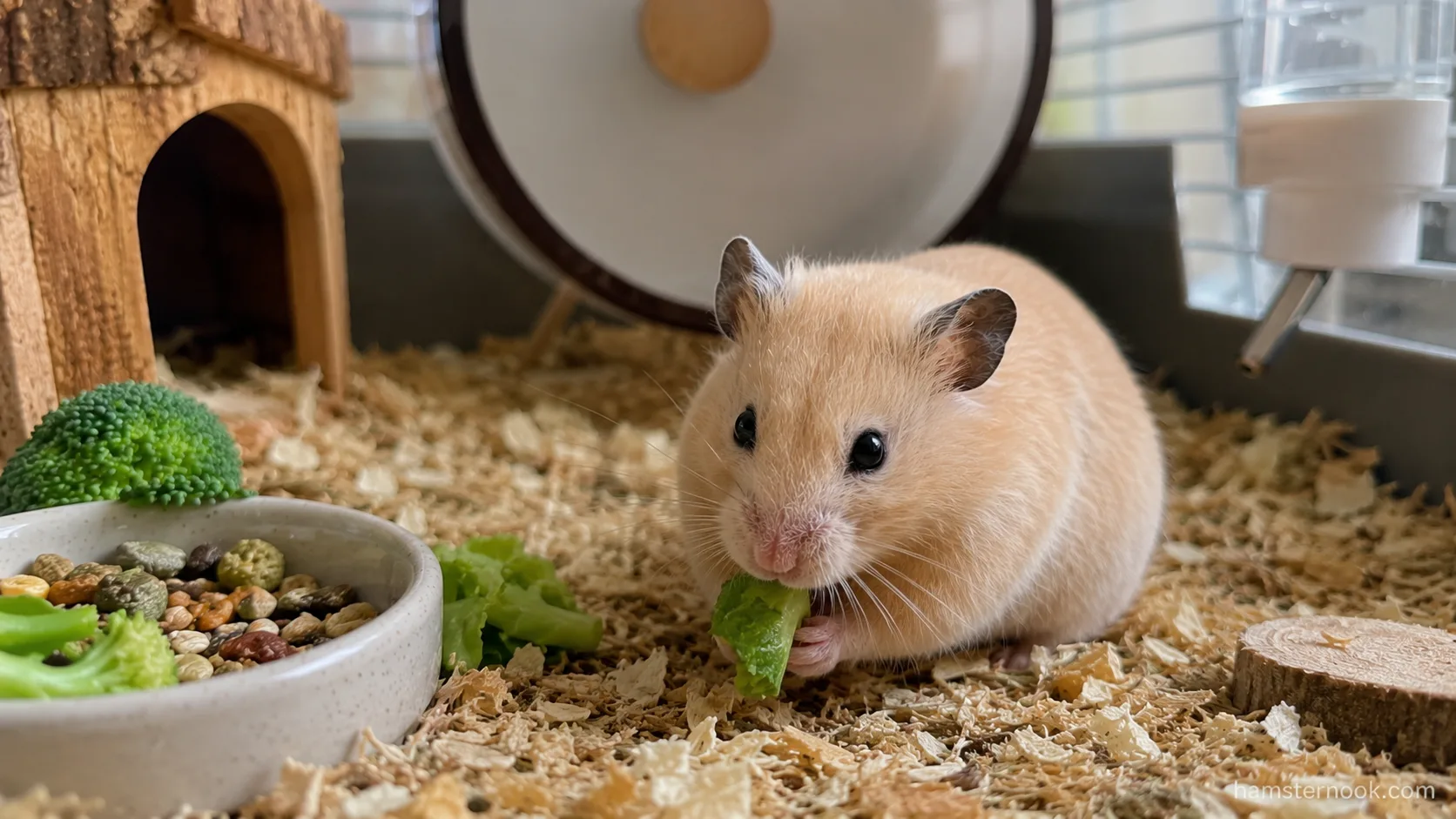
The RSPCA recommends checking the front teeth regularly. If an incisor is damaged, its opposing tooth may continue growing without normal wear and eventually interfere with eating. Overgrown teeth require veterinary attention.
Alongside regular dental checks, appropriate chewing opportunities help support the natural wear of continuously growing incisors. See Best Hamster Chew Toys for Healthy Teeth (Prevent Overgrown Teeth) for suitable enrichment focused on dental health.
Possible reasons to investigate include a hamster approaching food but failing to eat normally, dropping food, or showing an unexplained change in eating habits. These signs shouldn’t automatically be dismissed as old age.
Monitor Body Weight and Condition
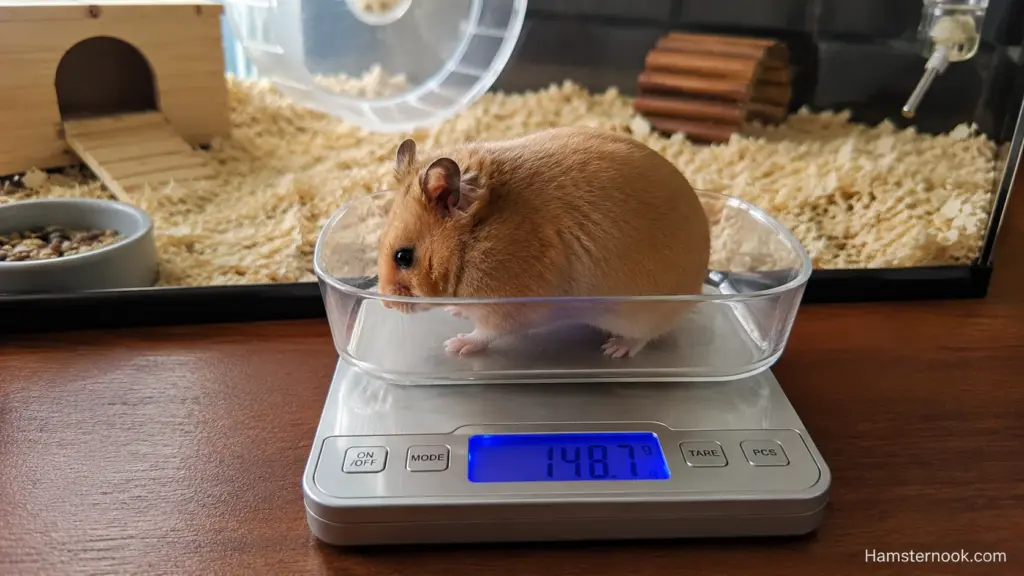
Knowing what’s normal for your own hamster is particularly valuable during its senior months.
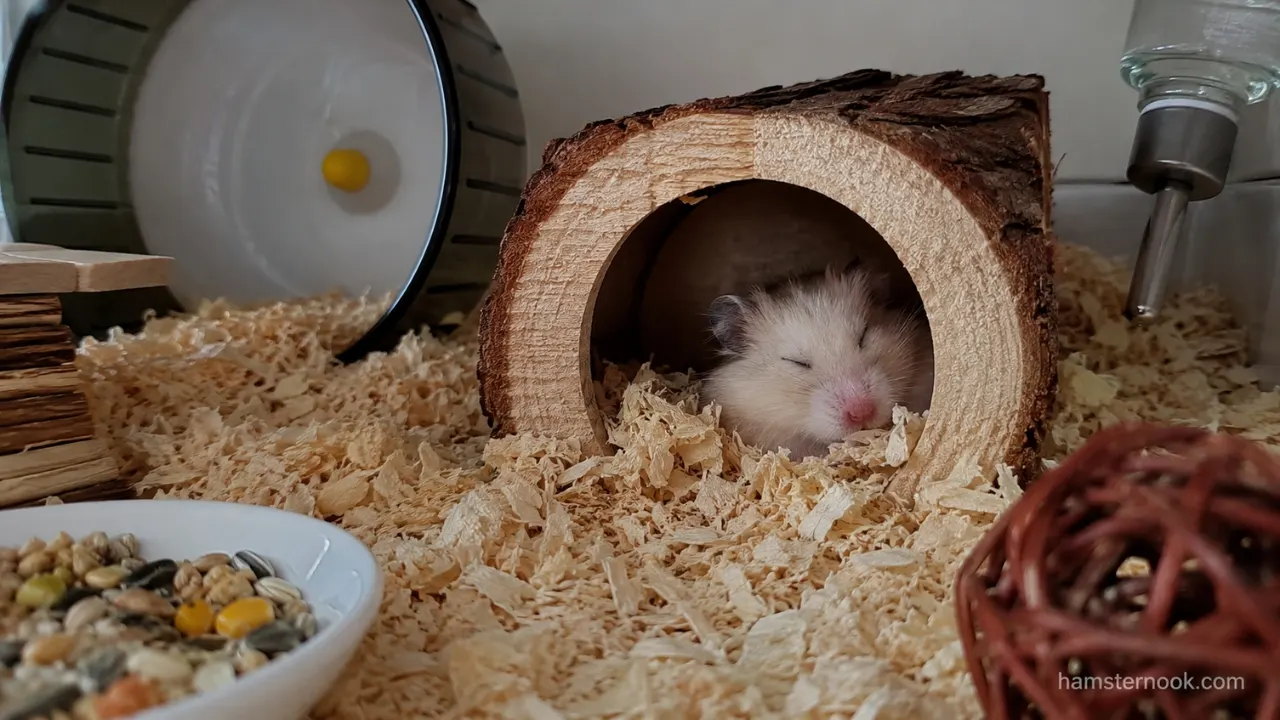
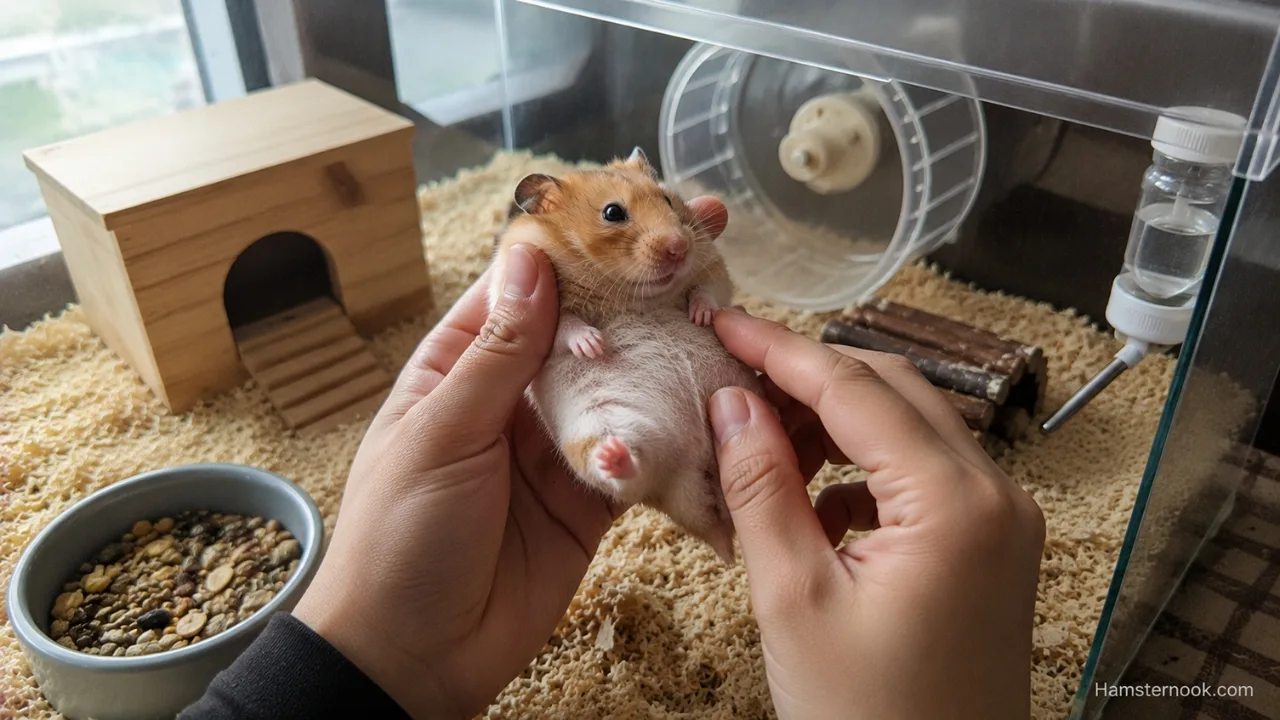
A small digital scale that measures in grams can help you track weight consistently. Try to weigh your hamster under similar conditions each time and keep the results in a simple dated record. The trend over time is more useful than comparing your hamster with a generic weight found online.
Weight loss deserves attention because it can accompany disease in older hamsters. MSD Veterinary Manual notes that weight loss can occur with several health problems affecting older hamsters, including kidney disease.
A single measurement also means less than a trend. What matters is recognizing a meaningful change from your hamster’s established baseline and discussing unexplained loss with a veterinarian.
If the scale shows a continuing downward trend, the change deserves attention rather than being assumed to be part of normal aging. Read Why Is My Hamster Suddenly Losing Weight? for a closer look at this warning sign.
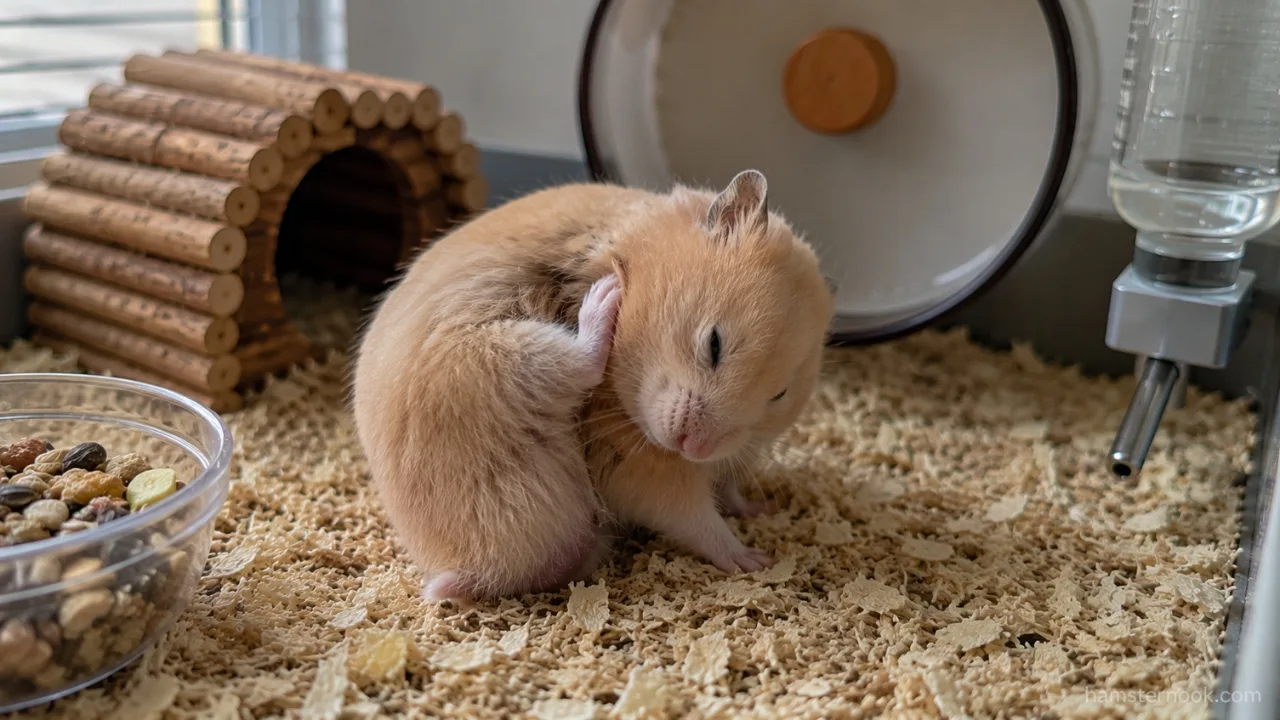
Keep Exercise Available, but Let Your Hamster Set the Pace
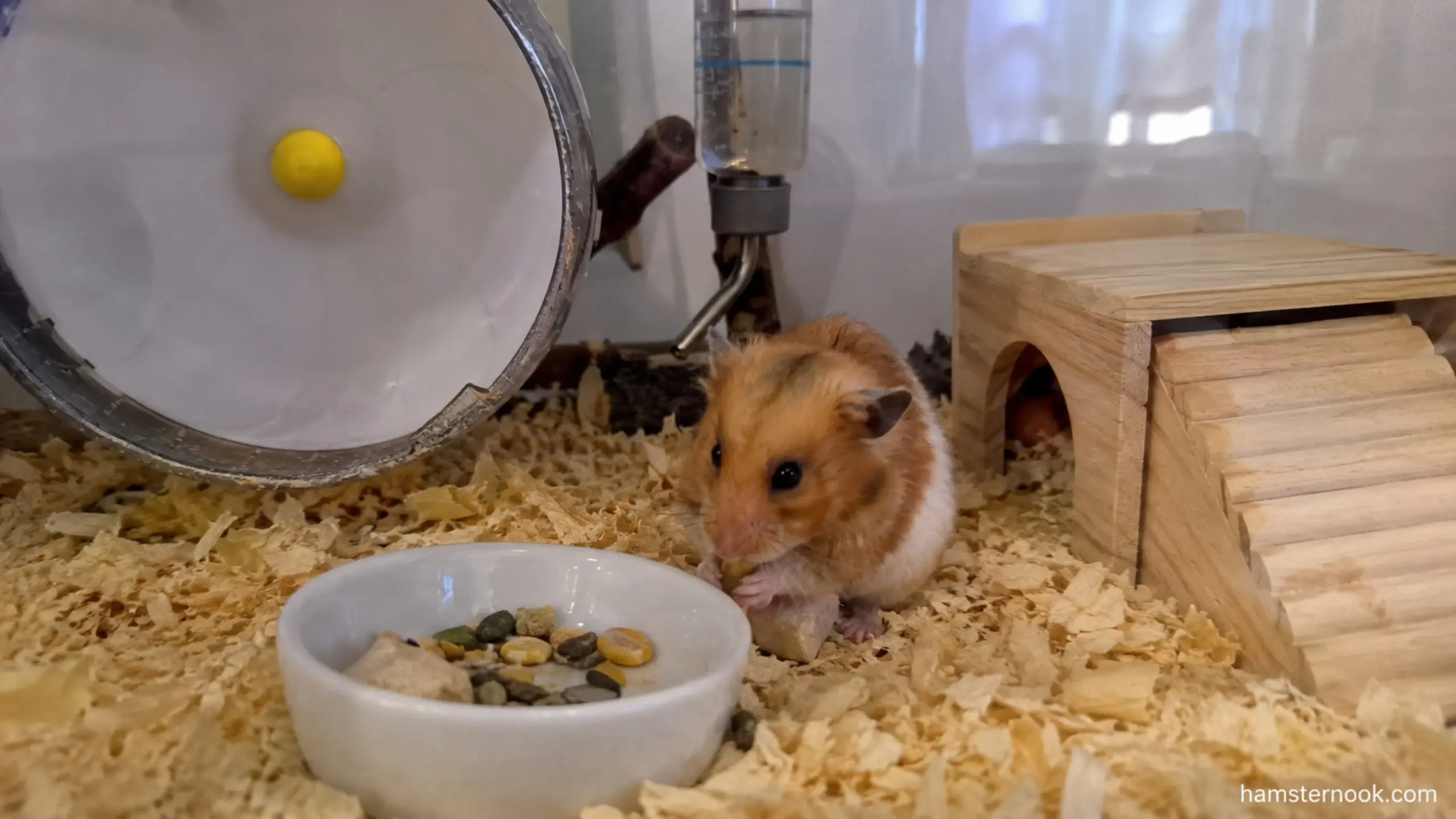
An older hamster may use its wheel less than it did when younger. That doesn’t automatically mean the wheel should disappear.
If your hamster can enter, run on, and leave the wheel comfortably, voluntary exercise remains a useful form of activity and choice. The wheel should have a safe running surface and be appropriately sized for the hamster.
Focus on whether your hamster can use the wheel comfortably rather than how long it spends running. Difficulty climbing into it, repeated slipping, falling, or obvious discomfort suggests that the setup or your hamster’s health needs reassessment.
A noticeable change in wheel use can also be useful when evaluating an older hamster’s mobility and overall routine. Read Why Does My Hamster Suddenly Stop Using Its Wheel? Common Causes Explained if a previously active hamster unexpectedly loses interest in its wheel.
Avoid forcing exercise because you think an older hamster needs to “stay active.” It should be able to rest when it chooses.
Adjust Handling to Your Hamster’s Abilities
Some senior hamsters remain comfortable with the same gentle interaction they’ve known for years. Others become slower or easier to startle.
The RSPCA notes that handling can be stressful for hamsters and recommends careful, considerate handling.
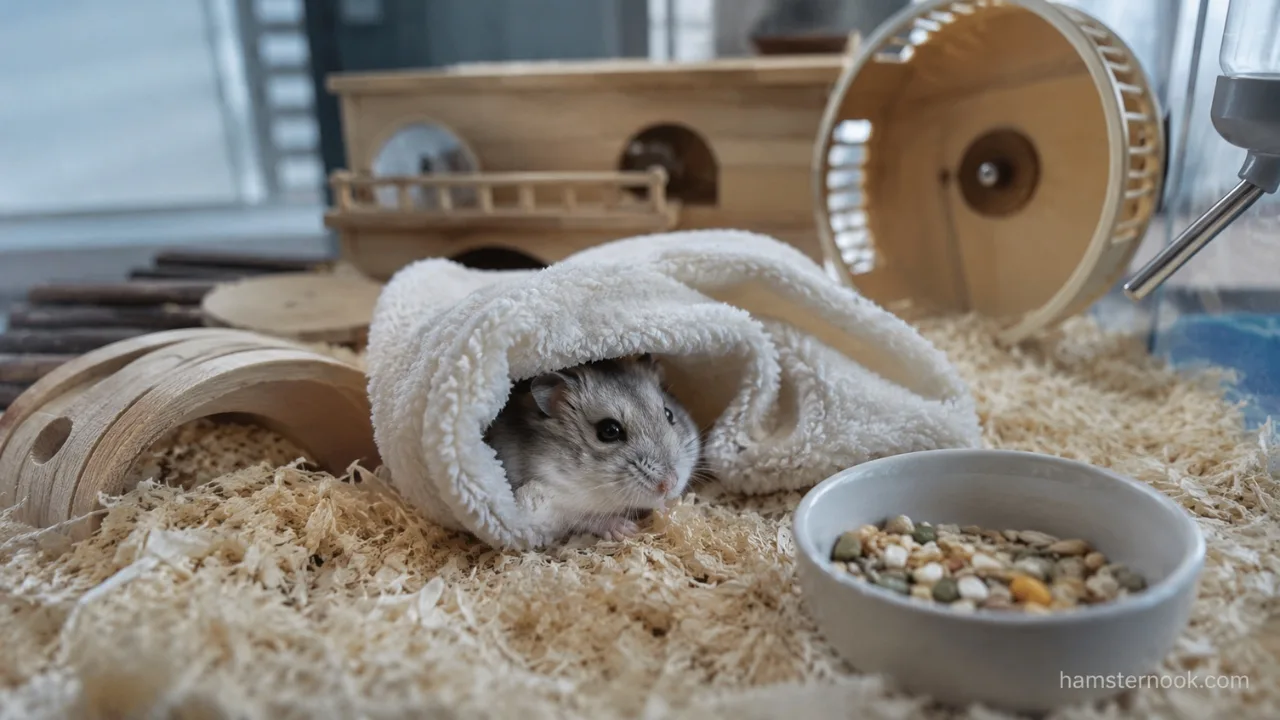
Allow your hamster to wake naturally before interaction. Support its body securely, keep handling close to a safe surface, and avoid expecting an aging hamster to tolerate long sessions simply because it did when younger.

Changes in handling tolerance can also provide useful information. A hamster that suddenly resists being touched in a particular area may be uncomfortable and should not simply be labeled “grumpy with age.”
Changes in behavior or handling tolerance can also be associated with stress, so our Hamster Stress: Common Causes, Warning Signs & How to Reduce It guide can help you recognize when behavior changes may need closer attention.
What Changes Are Normal With Aging?
Some gradual slowing can occur as a hamster gets older, but there is no reliable checklist that makes every change “normal aging.”
The distinction matters because hamsters can conceal illness. The RSPCA warns that hamsters may not show obvious signs of pain and can lose condition quickly when unwell.
A useful approach is to compare your hamster with its own established routine.
A gradual reduction in activity in an otherwise comfortable hamster is very different from suddenly becoming weak, refusing food, struggling to breathe, or losing weight.
Age-Related Health Problems Owners Should Know About
Closer health monitoring becomes particularly valuable as a hamster ages because new changes should not automatically be attributed to old age.
MSD Veterinary Manual describes age-associated conditions including heart disease and atrial thrombosis, degenerative kidney disease, and other disorders in aging Syrian hamsters. Some tumors can also occur in older hamsters.

This doesn’t mean your senior hamster will develop any of these conditions. It means new symptoms deserve attention rather than being automatically explained by age.
Looking at several symptoms together can help distinguish ordinary changes in routine from signs that deserve closer attention. Read Signs of a Sick Hamster: 10 Warning Symptoms Every Owner Should Know for the broader illness signs owners should recognize.
Lumps and Skin Changes
During normal interaction, gently look over your hamster’s skin and body for new lumps, swelling, wounds, hair loss, or other changes from its usual appearance.
The RSPCA notes that tumors aren’t uncommon in hamsters and recommends veterinary attention for signs of illness. MSD similarly advises prompt veterinary assessment when an unexpected lump is found.
Don’t attempt to diagnose a lump by appearance or squeeze it at home.
Changes in Drinking and Urination
Pay attention if your hamster begins drinking much more than usual or producing noticeably more urine.
MSD Veterinary Manual notes that progressive kidney inflammation is more common in older hamsters, particularly females, and affected animals may lose weight, urinate more, and become unusually thirsty. Those signs have multiple possible causes, so diagnosis belongs with a veterinarian.
Practical Example: Adapting an Older Hamster’s Setup
Suppose your Syrian hamster still eats normally and enjoys exploring but has started moving more carefully.

Its water bottle is mounted above a platform, and reaching a favorite hide requires crossing a steep bridge. Instead of rebuilding the entire enclosure, you could move the water source to an easily accessible position and reorganize the route to the hide so there is less fall risk.
The hamster keeps its familiar bedding, nesting area, scents, and enrichment while the difficult parts of the environment become easier to use.
That is the basic idea behind senior hamster care: adapt to the hamster in front of you rather than redesigning its life based on age alone.
Common Mistakes When Caring for a Senior Hamster
Caring for an older hamster often requires more observation, not more intervention. Some well-intentioned changes can make life harder if they remove familiar resources or overlook an underlying health problem.

Assuming Every Change Is Just Old Age
A hamster becoming slightly less active over time is different from suddenly losing weight, refusing food, struggling to walk, or developing abnormal breathing.
Hamsters can hide pain and illness, and the RSPCA notes that they may lose condition quickly once unwell. A noticeable change from your hamster’s usual behavior deserves attention rather than automatically being blamed on age.
Completely Simplifying the Enclosure
Making an enclosure accessible doesn’t mean removing everything your hamster enjoys.
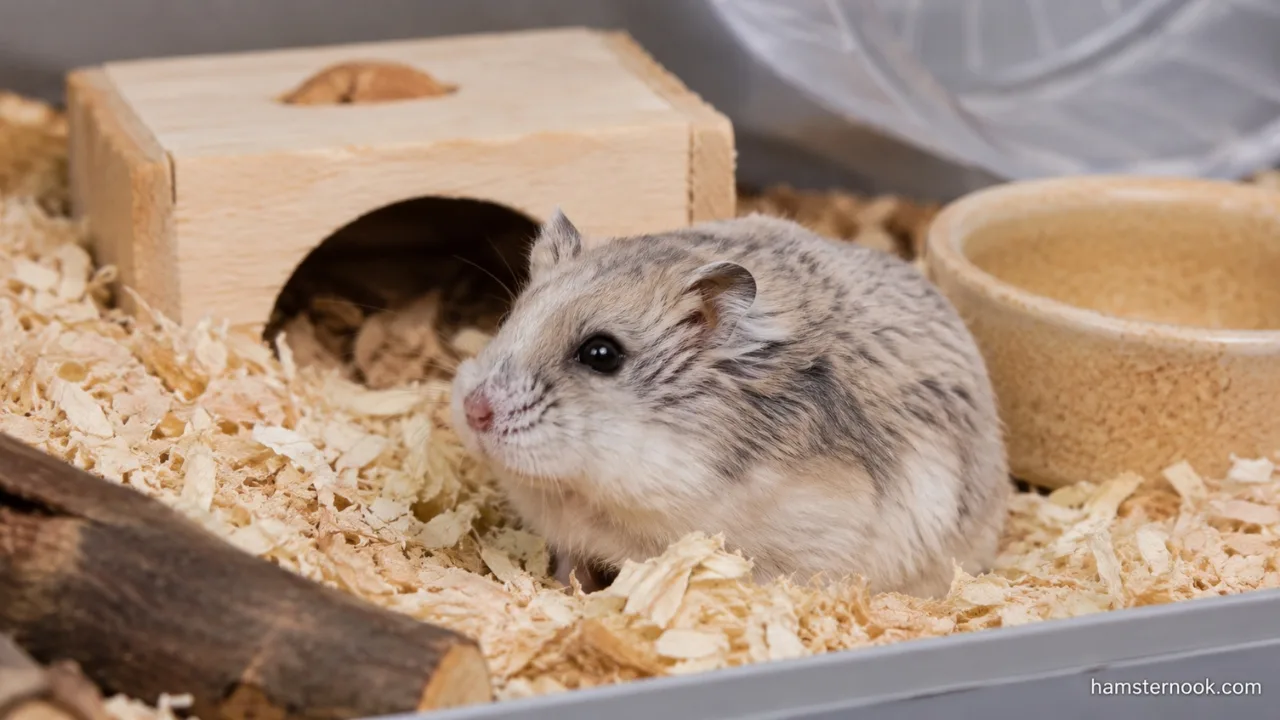
An older hamster still needs opportunities to hide, forage, nest, explore, and exercise according to its abilities. Modify features that have become difficult or unsafe while preserving familiar activities that your hamster can still use comfortably.
Changing the Diet Without a Reason
A senior hamster doesn’t automatically require a homemade soft-food diet.
Sudden dietary changes can cause problems, and difficulty eating may have an underlying cause such as dental disease. Overgrown or damaged incisors can eventually prevent normal eating, so a hamster that suddenly struggles with food needs assessment rather than simply having its regular diet replaced.
Rearranging Everything at Once
Aging hamsters may benefit from easier routes around their enclosure, but that doesn’t require a complete redesign.
Keep familiar hides, nesting areas, and other usable features where practical. Make targeted changes—such as lowering an essential resource or eliminating a risky climb—rather than changing the entire environment unnecessarily.

Handling a Senior Hamster Like a Younger Adult
A hamster that once confidently walked across your hands may become slower with age. Keep interactions gentle and allow the hamster to decide how much activity it wants.
Never wake an older hamster just to handle or exercise it.
Check Your Hamster Every Day
You don’t need to perform an elaborate examination each evening. Watch your hamster during its normal active period and notice:
- Whether it eats and drinks normally
- How easily it walks and climbs
- Changes in body condition or weight
- New lumps or swelling
- Changes in skin or coat
- Changes in breathing
- Unusual discharge
- Changes in urine or stool
- Significant differences in normal behavior
Regular observation helps you recognize changes because you know what is typical for your individual hamster.
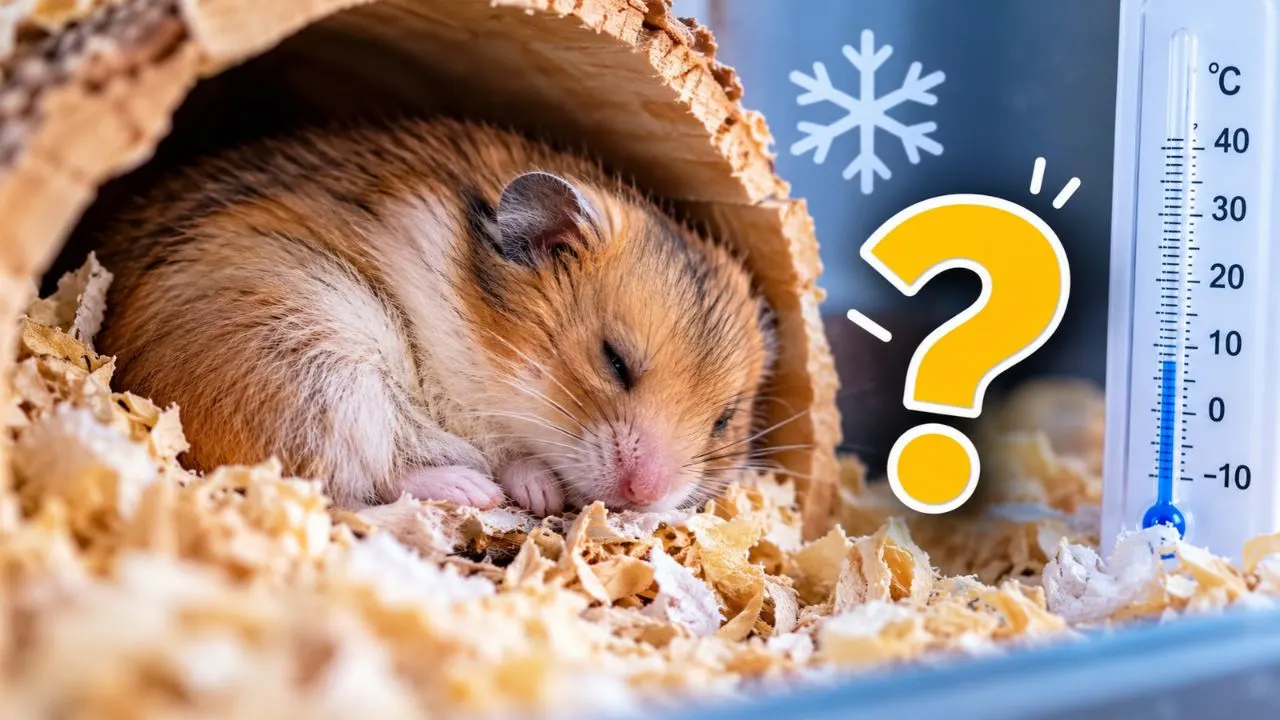
A consistent wellness routine can make subtle changes in weight, movement, teeth, coat, and bathroom habits easier to notice over time. Use How Often Should You Check Your Hamster’s Health? A Weekly Wellness Checklist as a practical guide for regular monitoring.
Keep a Simple Weight Record
Consider weighing your hamster regularly using the same digital gram scale and similar conditions each time.
The purpose isn’t to chase a particular number. Syrian and dwarf hamsters differ substantially in size, and individuals within the same species vary too. A personal baseline allows you to notice a downward trend that might otherwise be hidden by fur.
Make Essentials Accessible
Look at the enclosure from the perspective of a hamster with less agility.
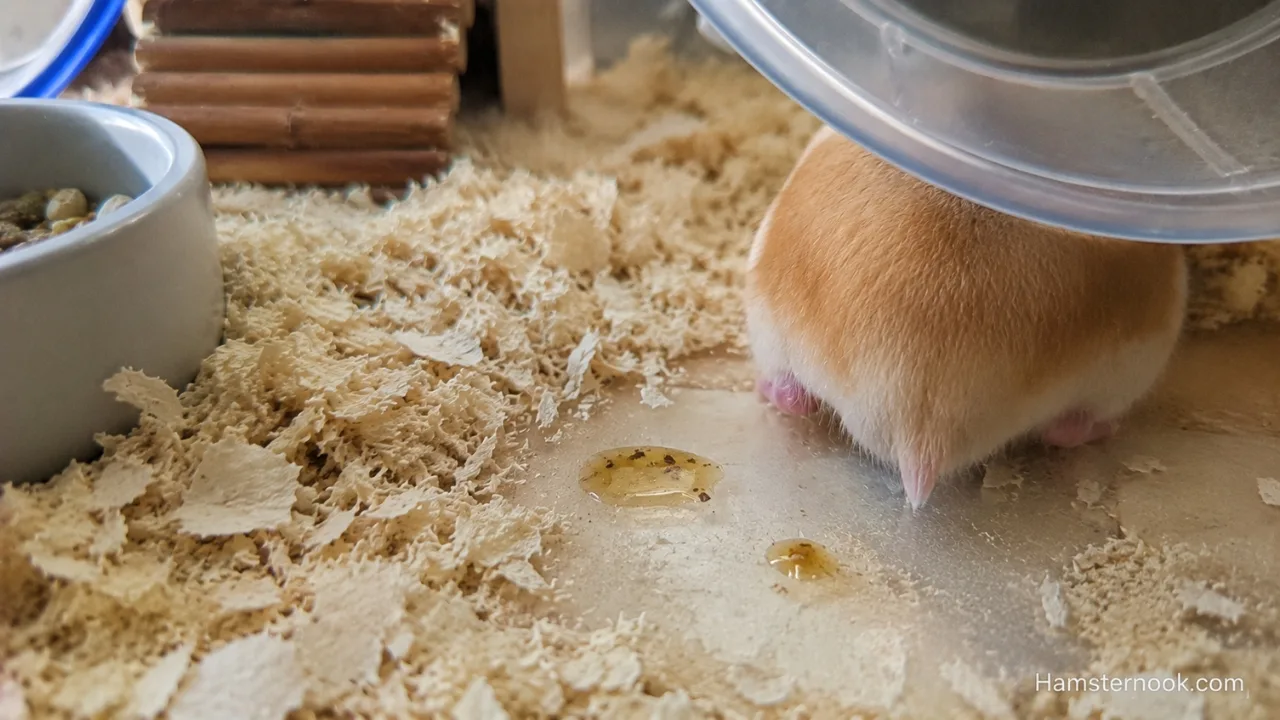
Food and water should be easy to reach. Check the water source daily to ensure it works properly. If an entrance, platform, or other feature has become difficult to navigate, adapt that specific area.
Keep the enclosure enriching rather than empty.
Keep Familiar Routines
Consistency can make daily care easier for an aging hamster. Avoid unnecessary major changes to food, enclosure layout, handling schedule, and surroundings.
When something does need modification, make the smallest practical change that solves the problem.

Continue Offering Appropriate Enrichment
Senior doesn’t mean inactive.
If your hamster still digs, forages, uses tunnels, explores, or runs on its wheel comfortably, allow those activities to continue. Adjust enrichment around physical ability instead of removing it based solely on age.
Warning Signs in a Senior Hamster
Older hamsters can develop medical problems, and several symptoms should never be dismissed as normal aging.
The RSPCA advises immediate veterinary attention for signs including not eating or drinking, weight changes, excessive drinking, diarrhea, labored breathing, discharge, difficulty walking, balance problems, injuries, and abnormal lumps.
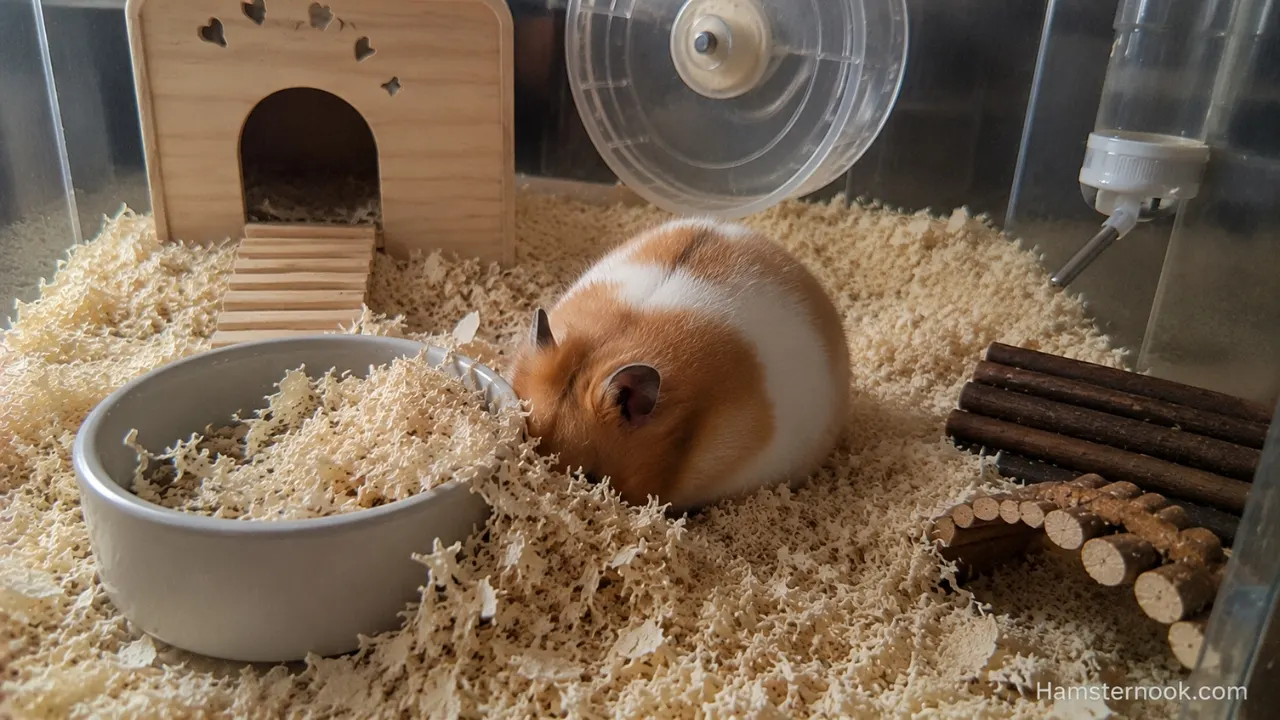
Pay particular attention to:
- Unexplained or continuing weight loss
- Refusing food or water
- Drinking substantially more than usual
- Increased urination
- Labored or unusually rapid breathing
- Difficulty walking or maintaining balance
- Not using a limb
- Diarrhea or a persistently soiled rear
- Eye, nose, or other abnormal discharge
- New lumps or swelling
- Hunched posture
- Marked inactivity during usual waking hours
These signs don’t identify a specific disease on their own. They indicate that veterinary assessment may be needed.
When to Worry
Some age-associated diseases are documented in hamsters, particularly Syrian hamsters.
MSD Veterinary Manual describes degenerative kidney disease as occurring more frequently in older Syrian hamsters, particularly females. Affected animals can lose weight, urinate more, and become unusually thirsty. It also describes heart disease and atrial thrombosis in aging Syrian hamsters, with signs that can include rapid breathing and bluish discoloration of the skin or gums.
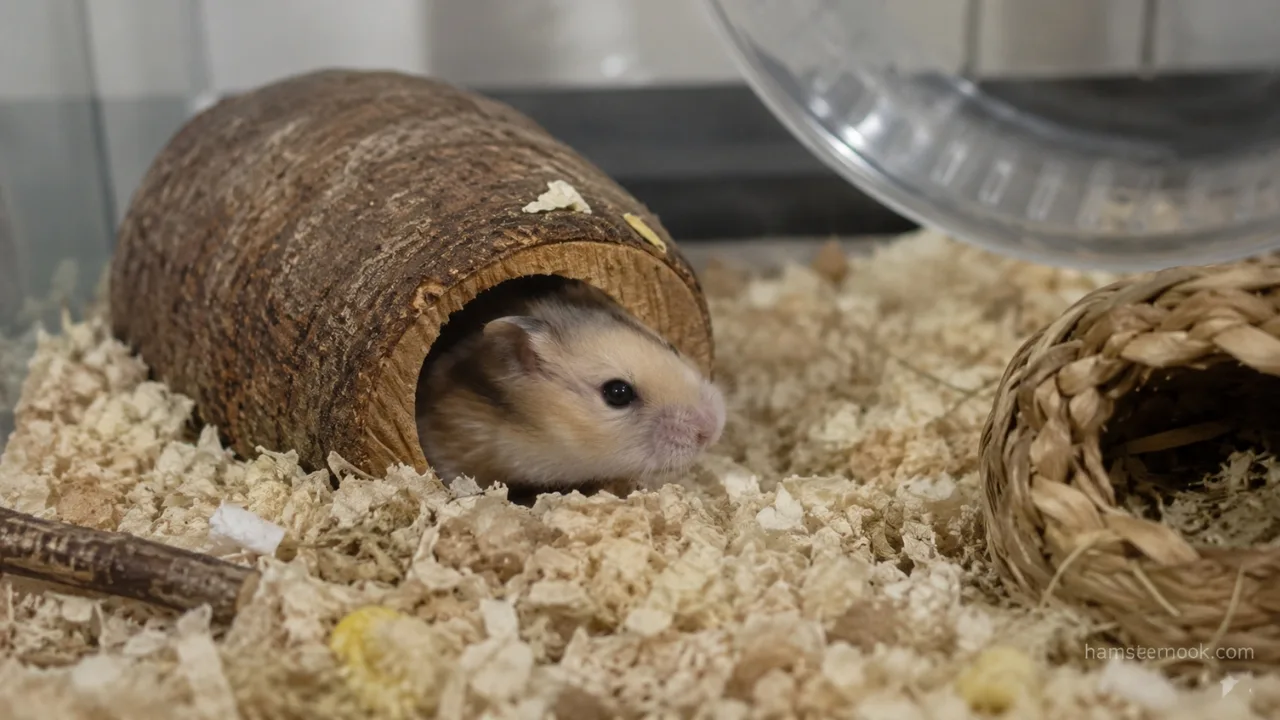
Tumors are another reason to investigate new changes. MSD advises having an unexpected lump examined promptly by a veterinarian, while the RSPCA also recommends veterinary attention for abnormal lumps or bumps.
Don’t wait for several symptoms to appear together. Hamsters are small animals that can deteriorate quickly when ill, so a significant or sudden departure from your hamster’s normal condition is enough reason to contact a veterinarian.
Helping a Senior Hamster Stay Comfortable
Comfort means preserving normal choices and familiar activities while adapting obstacles that have genuinely become difficult or unsafe.
A comfortable senior setup might still contain deep bedding, familiar hides, tunnels, nesting material, a suitable wheel, and opportunities to forage. The difference is that essential resources are positioned within easy reach and unnecessary fall risks have been addressed.
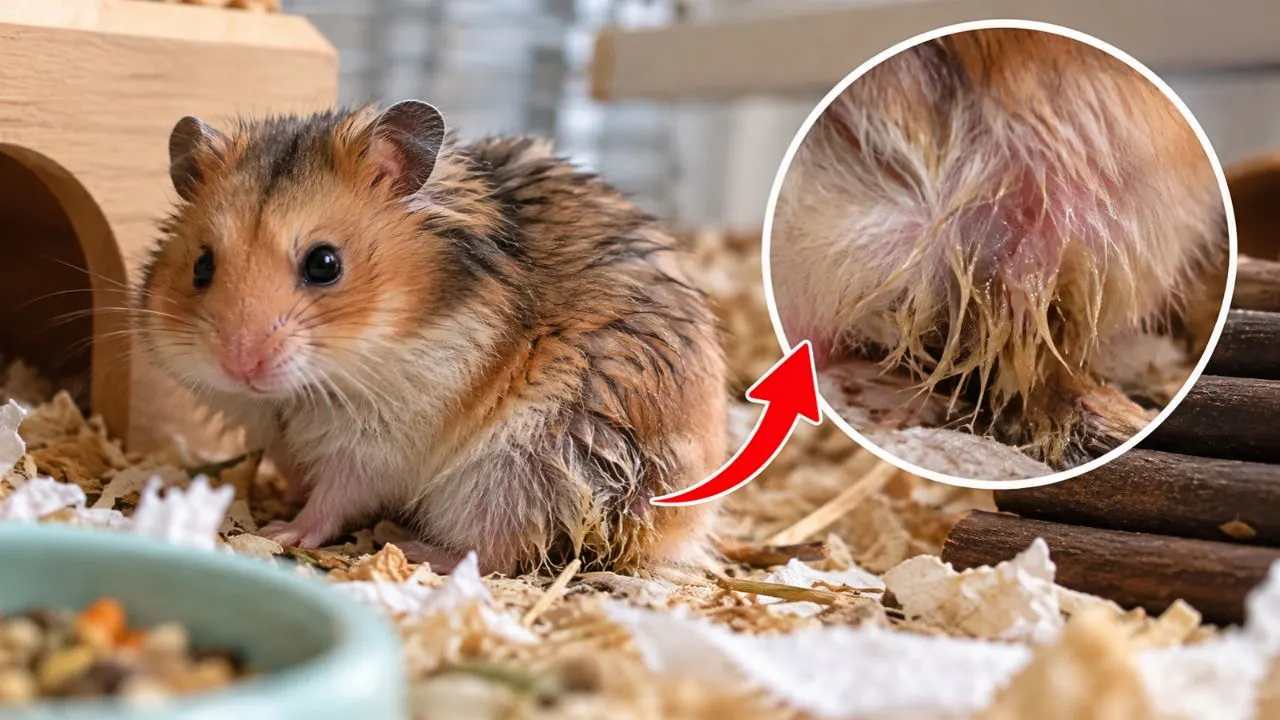
Use your hamster’s actual abilities and behavior to guide these adjustments.
If your hamster still enthusiastically digs through bedding, don’t stop it because it’s old. If it still uses its wheel comfortably, there is no reason to remove it simply because it has reached a certain age.
Your hamster’s abilities should guide the adjustments.
Quality of Life in an Aging Hamster
As a hamster reaches advanced age or develops chronic illness, everyday quality of life becomes especially important.
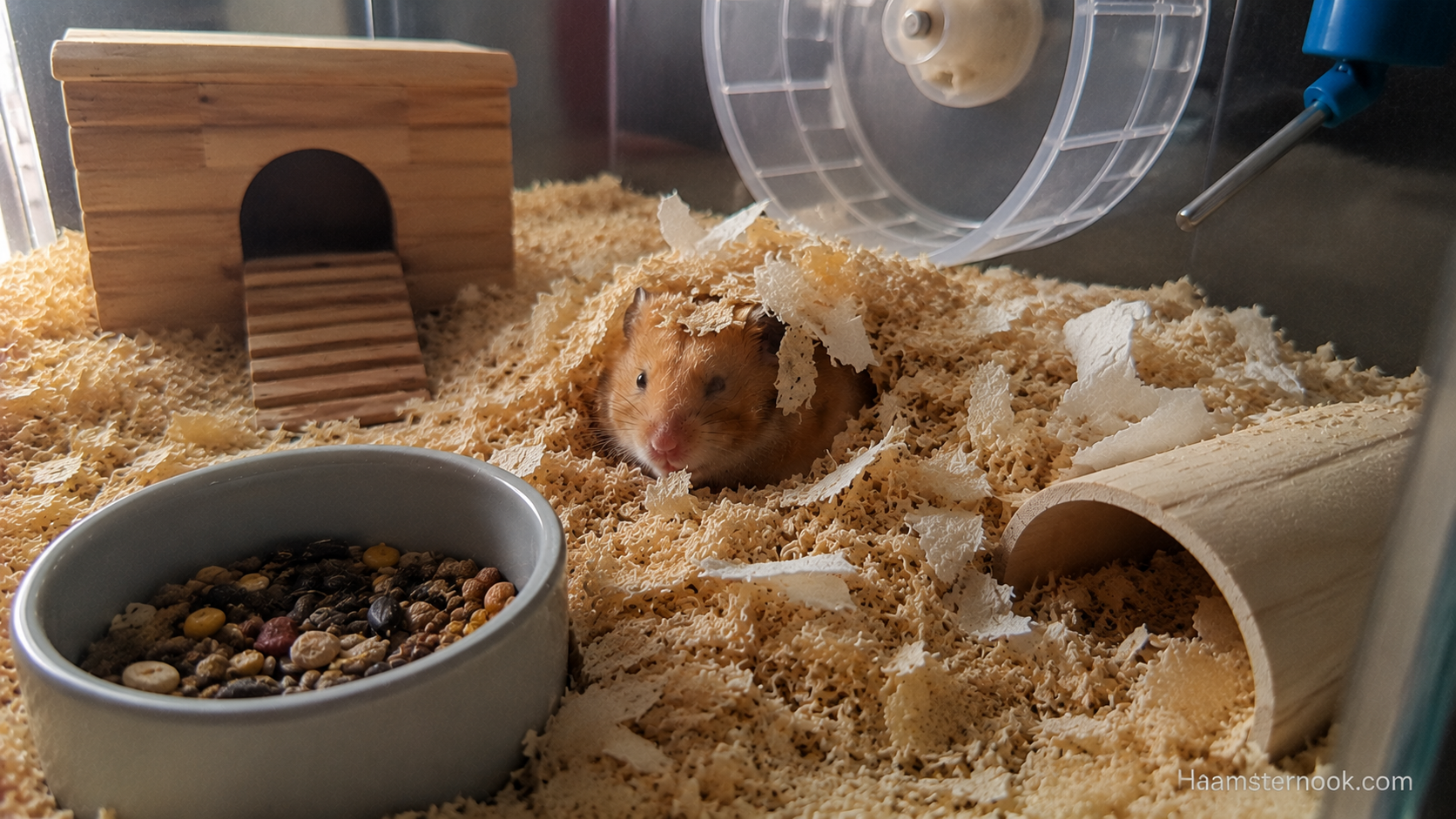
Look at the whole picture rather than one behavior.
Can your hamster eat and drink? Can it reach its nest and essential resources? Does it still show interest in activities it normally enjoys? Can it move without obvious difficulty? Can it rest comfortably?
A veterinarian can help assess pain, illness, treatment possibilities, and comfort when these questions become difficult to answer.
Never give human painkillers or medication prescribed for another animal. The RSPCA specifically warns that human and other animal medicines can be dangerous to hamsters and that medication should only be given when recommended for that hamster by a veterinarian.
Final Thoughts
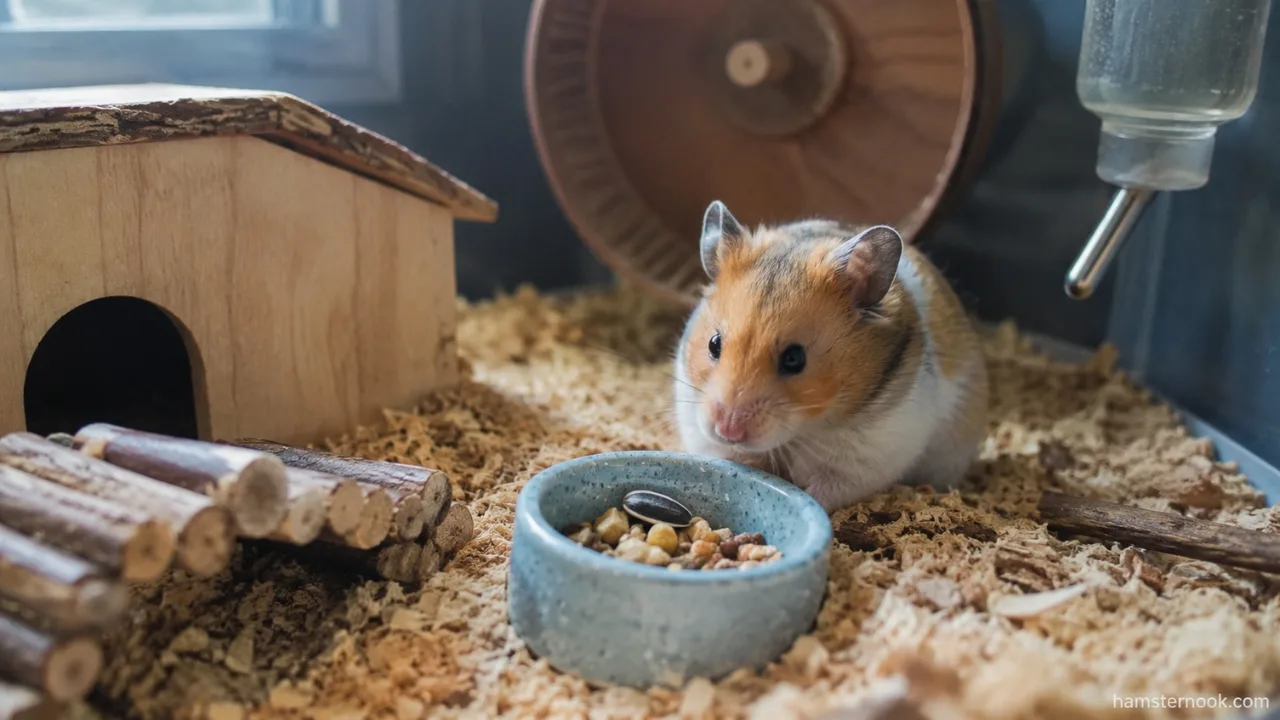
Senior hamster care isn’t about treating old age as a disease. It’s about noticing how your hamster’s needs change and making thoughtful adjustments while preserving the things that still make its environment interesting and familiar.
Keep food and water accessible, reduce genuine fall hazards, continue suitable enrichment, handle gently, and become familiar with your hamster’s normal weight, movement, eating, drinking, and behavior.
Most importantly, don’t explain every new problem with “he’s just getting old.” Older hamsters can develop health conditions that need veterinary attention, and their tendency to hide discomfort makes careful observation particularly valuable.
A senior hamster may move more slowly than it once did, but it can still benefit from choice, enrichment, familiar surroundings, and attentive care throughout its later life.
Frequently Asked Questions
At what age is a hamster considered senior?
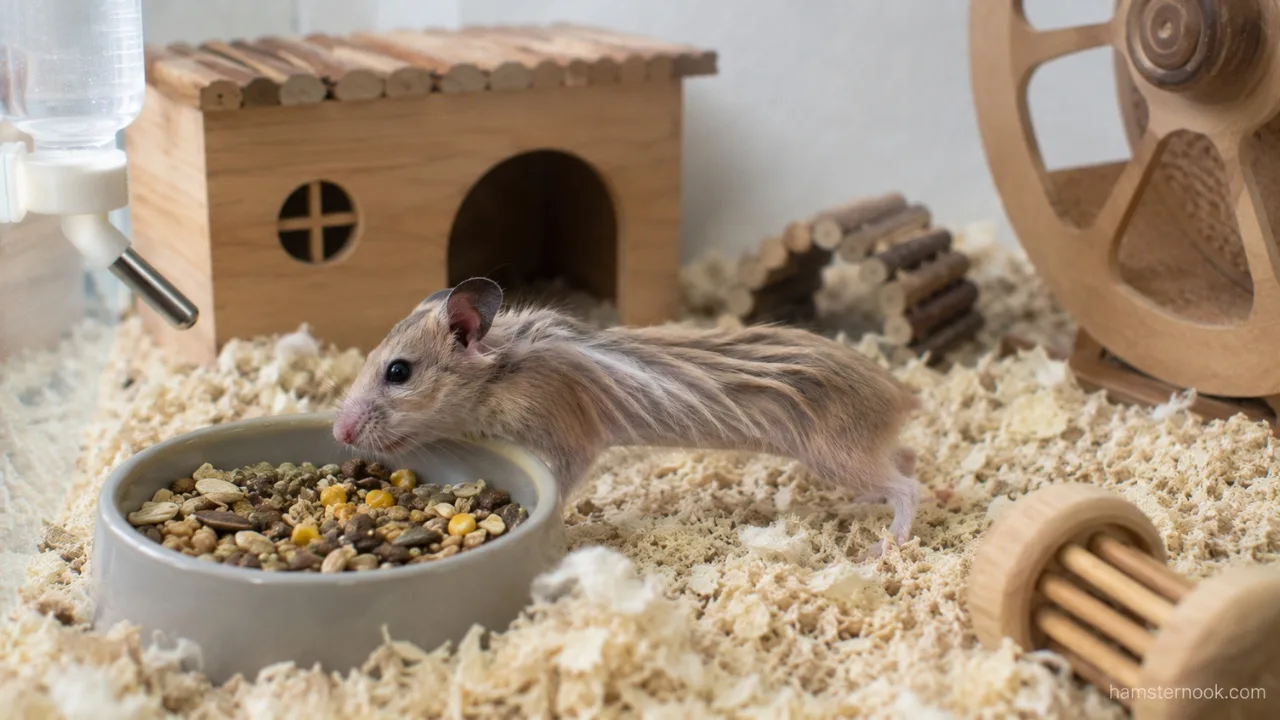
There is no universal age when every hamster becomes senior. Lifespan varies by species and individual. UC Davis lists typical longevity of approximately 1.5–3 years for Syrian hamsters and 1.5–2 years for dwarf hamsters. Your hamster’s physical condition and changing needs are more useful for care decisions than a fixed birthday.
Do older hamsters sleep more?
An individual hamster’s activity may change as it ages, but increased sleeping should be considered alongside its normal routine and overall health. A hamster that suddenly becomes unusually inactive, particularly during its normal waking period, should be monitored closely because reduced activity can also accompany illness.
Should I remove the wheel from an old hamster’s cage?
Not simply because the hamster is old. If your hamster can comfortably use a suitable wheel, it can remain an opportunity for voluntary exercise. Reassess the setup if your hamster struggles to enter it, slips, falls, or appears uncomfortable.
Should senior hamsters eat soft food?
Not automatically. Difficulty eating can have an underlying medical or dental cause. Hamster incisors grow continuously, and damaged or overgrown teeth can interfere with eating, so new difficulty eating warrants veterinary attention.
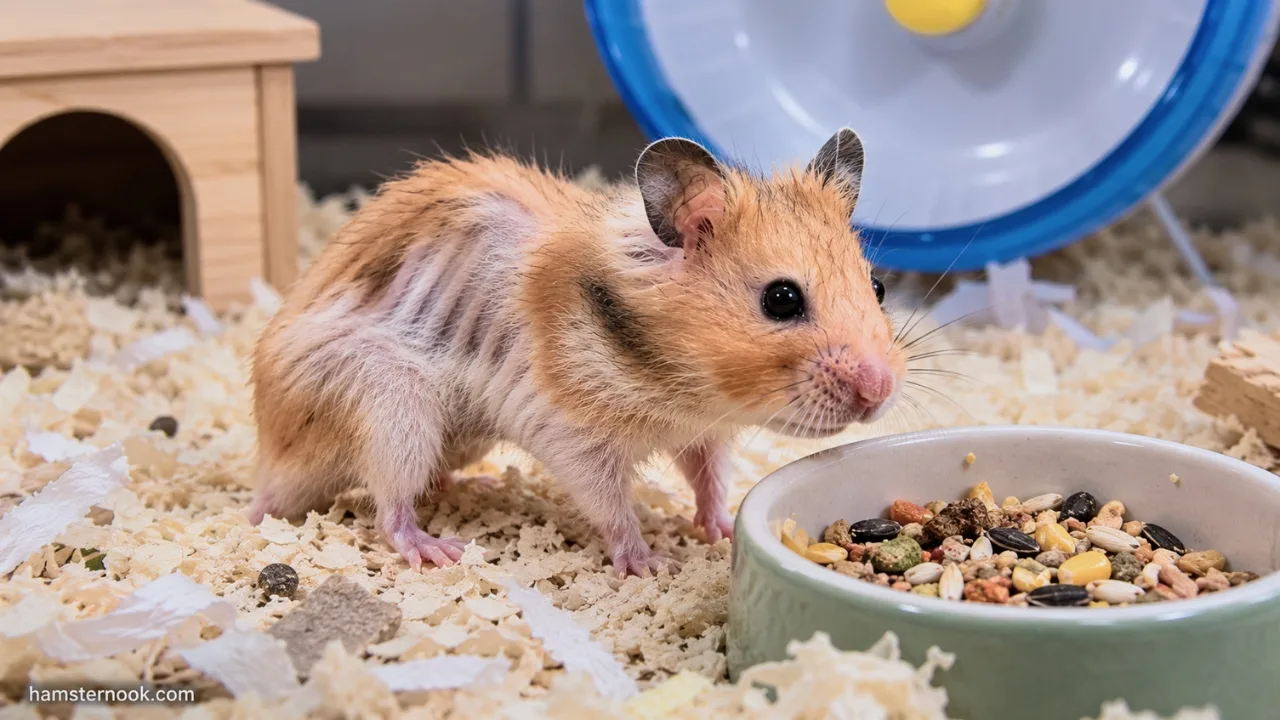
Why is my old hamster losing weight?
Weight loss can have several causes and shouldn’t automatically be considered normal aging. MSD Veterinary Manual documents weight loss in association with several disorders affecting older hamsters, including kidney disease and systemic conditions. Unexplained or continuing weight loss should be discussed with a veterinarian.
Why is my senior hamster drinking more water?
A noticeable increase in thirst deserves attention. MSD Veterinary Manual notes that degenerative kidney disease occurs more frequently in older Syrian hamsters, particularly females, and affected hamsters may drink more, urinate more, and lose weight. Increased drinking isn’t specific to kidney disease, so veterinary assessment is needed to determine the cause.
Should I change my senior hamster’s cage layout?
Only when the current layout has become difficult or unsafe. Make food, water, hides, and other essentials accessible and reduce genuine fall risks while preserving familiar enrichment and usable areas.
How can I tell if my old hamster is suffering?
Look for changes such as not eating or drinking, hunched posture, unexplained weight change, excessive drinking, labored breathing, difficulty walking, poor balance, diarrhea, discharge, injuries, or abnormal lumps. Hamsters may show subtle signs of pain or distress, so veterinary advice is appropriate when significant changes appear.
References
This guide is based on hamster health, aging, welfare, and husbandry information from trusted veterinary and animal welfare resources, including:
- RSPCA – Hamster Health and Welfare
- RSPCA – Signs of Illness in Hamsters
- MSD Veterinary Manual – Disorders and Diseases of Hamsters
- MSD Veterinary Manual – Hamsters: Professional Veterinary Reference
- UC Davis School of Veterinary Medicine – Hamster Care
Medical Disclaimer
This article provides general educational information about caring for aging hamsters and is not a substitute for veterinary diagnosis or treatment. Changes such as unexplained weight loss, breathing difficulty, reduced eating or drinking, weakness, abnormal movement, lumps, or other signs of illness should be discussed promptly with a veterinarian experienced in hamster or exotic-pet care.

Narayan Kumar is the founder and author of HamsterNook. He creates practical, research-based hamster care guides covering hamster behavior, nutrition, cage setup, enrichment, health, and everyday care. His goal is to help hamster owners make informed decisions and provide safer, healthier lives for their pets through clear, beginner-friendly information based on trusted animal care resources.