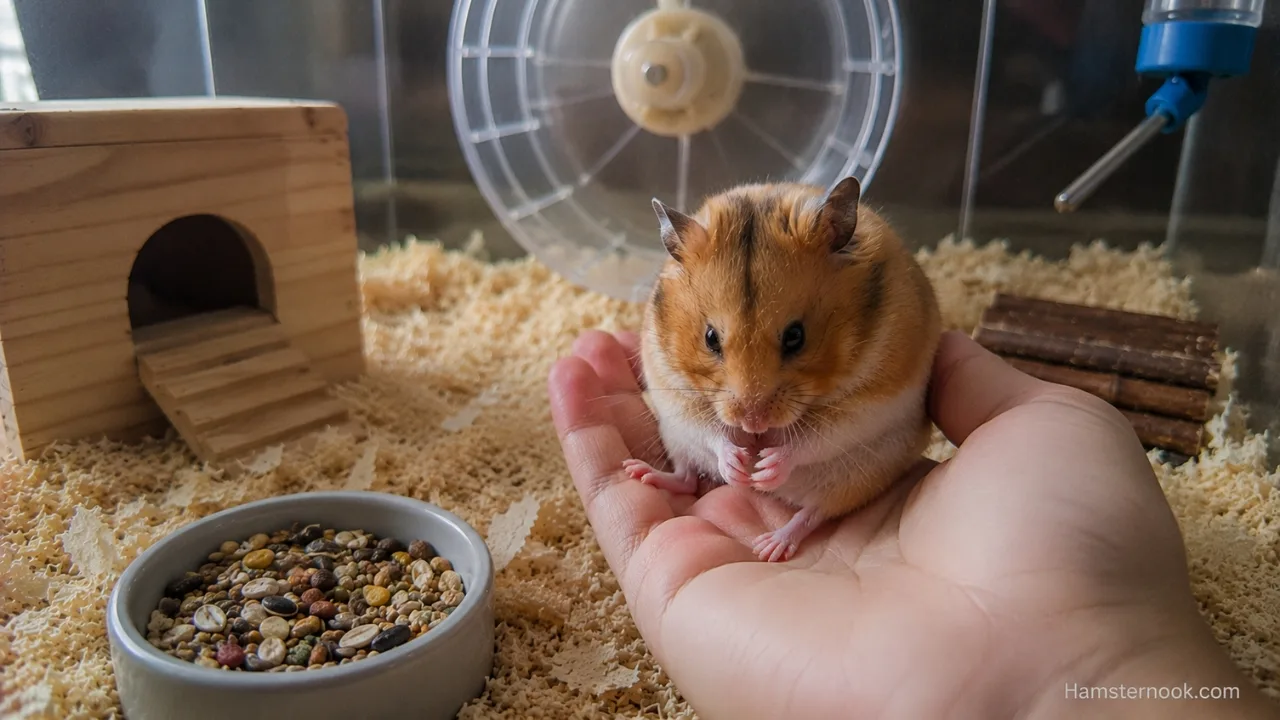
If your hamster suddenly stops using its water bottle, it’s easy to assume something is seriously wrong. In reality, many hamsters simply drink less because of changes in diet, temperature, or routine. However, if the change happens suddenly or is accompanied by other unusual symptoms, it’s important to investigate the cause rather than ignore it.
In this guide, you’ll learn why a hamster may suddenly stop using its water bottle, how to tell whether it’s a normal behavior or a warning sign, and what you can safely do before deciding if veterinary care is needed.
Quick Answer
A hamster may suddenly stop using its water bottle because the bottle is faulty, the water has become stale, the hamster has switched to another water source, its diet has changed, the weather is cooler, or it is experiencing stress or illness. The first step is to confirm whether your hamster has truly stopped drinking or is simply getting water in another way.
If you are new to hamster ownership, Ultimate Hamster Care Guide for Beginners (2026) explains the daily care routines that help you notice changes like this much earlier.
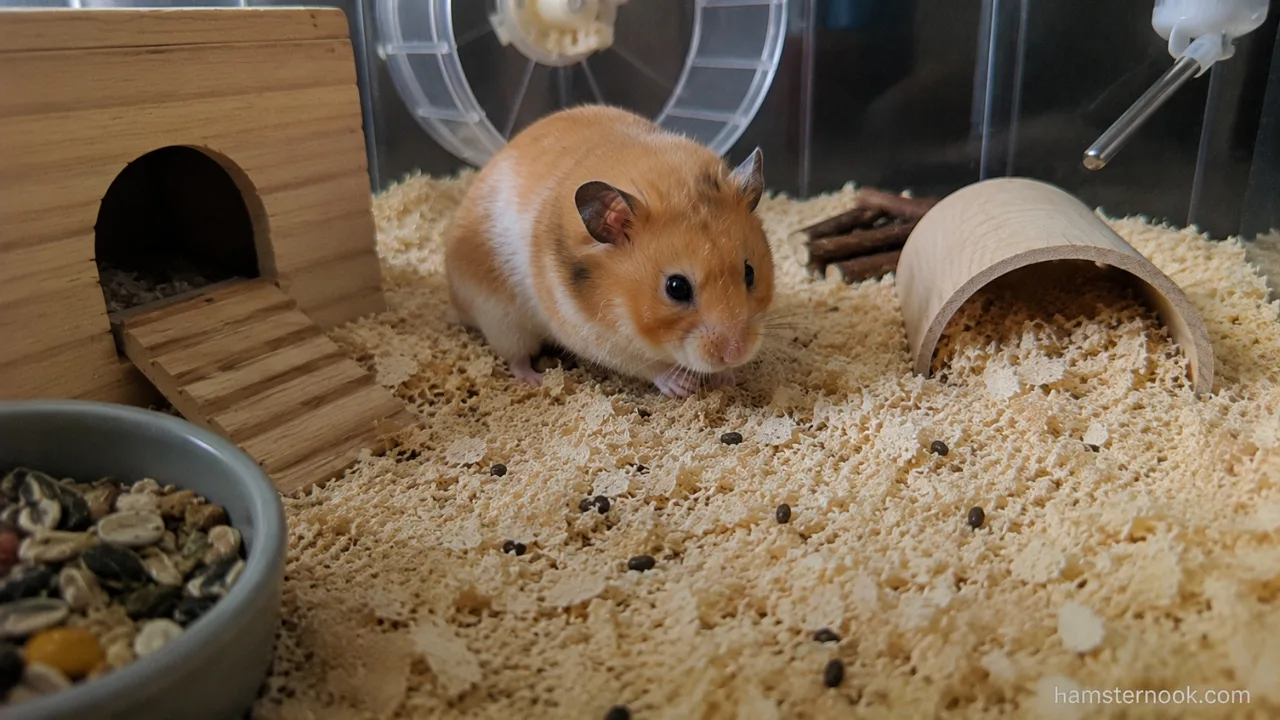
Check the Water Bottle Before Assuming the Worst
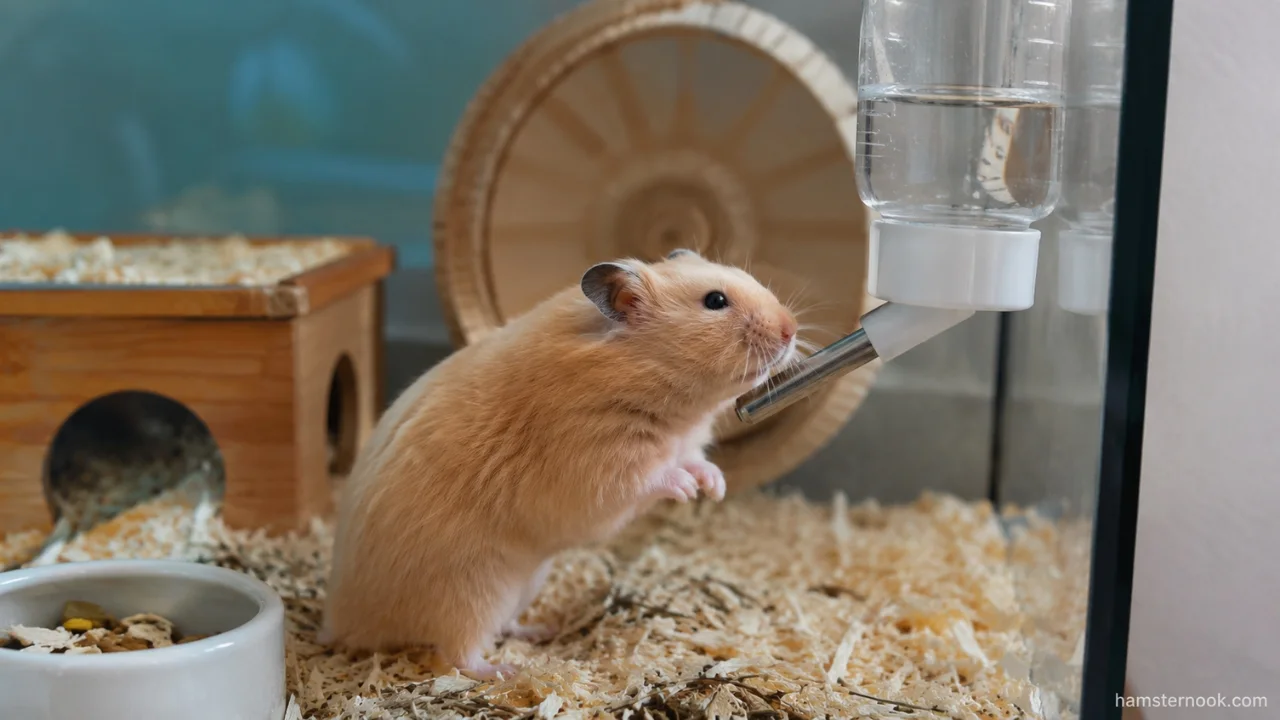
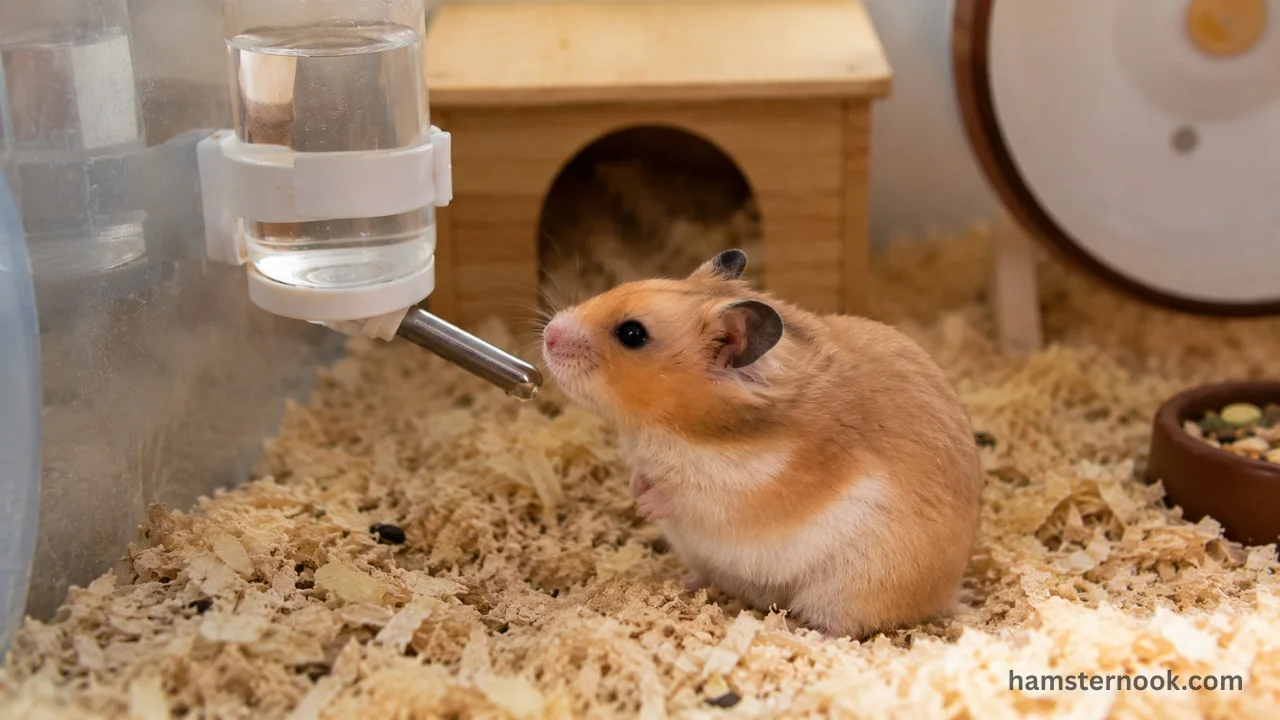
Before worrying about your hamster, always test the water bottle yourself. Press the metal ball with your finger to confirm that water flows easily. A blocked nozzle or faulty bottle is one of the most common reasons hamsters suddenly stop using their usual drinking source.
Is It Normal for a Hamster to Drink Less Sometimes?
Yes—small changes in water intake can be completely normal.
Unlike larger pets, hamsters drink relatively small amounts of water each day. Their water consumption naturally changes depending on:
- Room temperature
- Activity level
- Age
- Diet
- Fresh vegetables offered
- Overall health
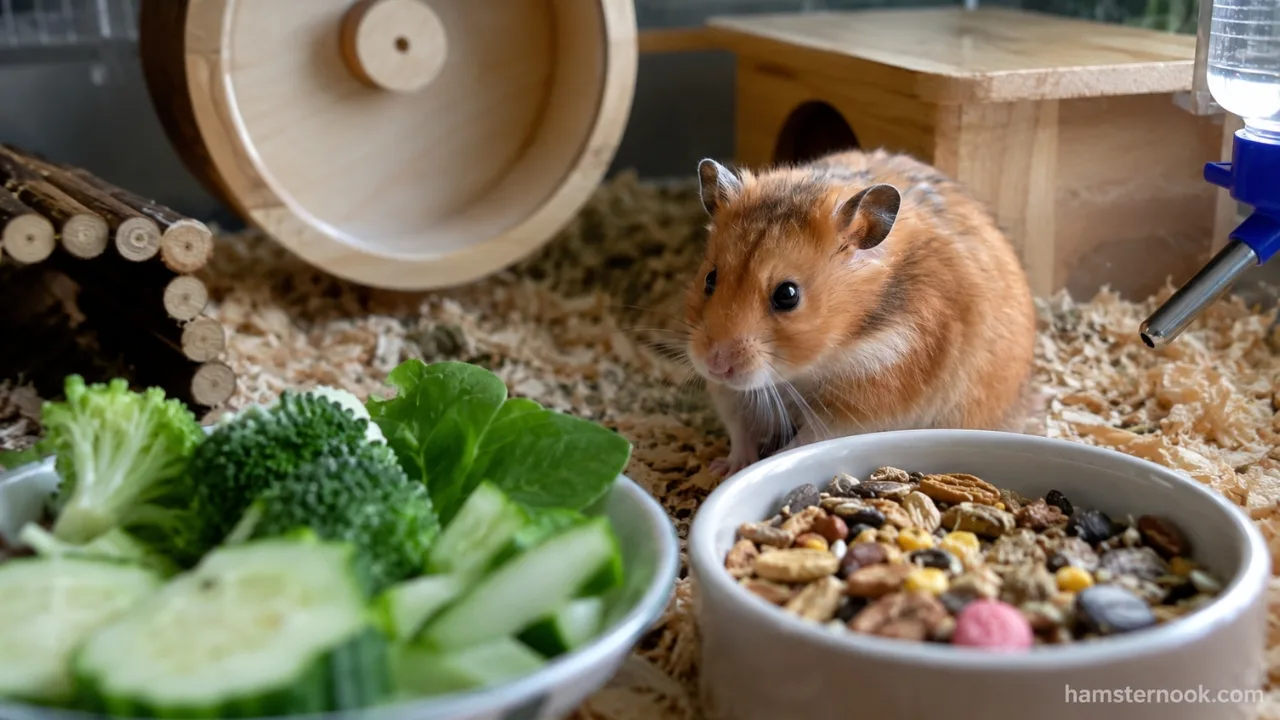
For example, a hamster that recently ate several pieces of cucumber or zucchini may not visit its water bottle as often because those foods contain a high amount of moisture.
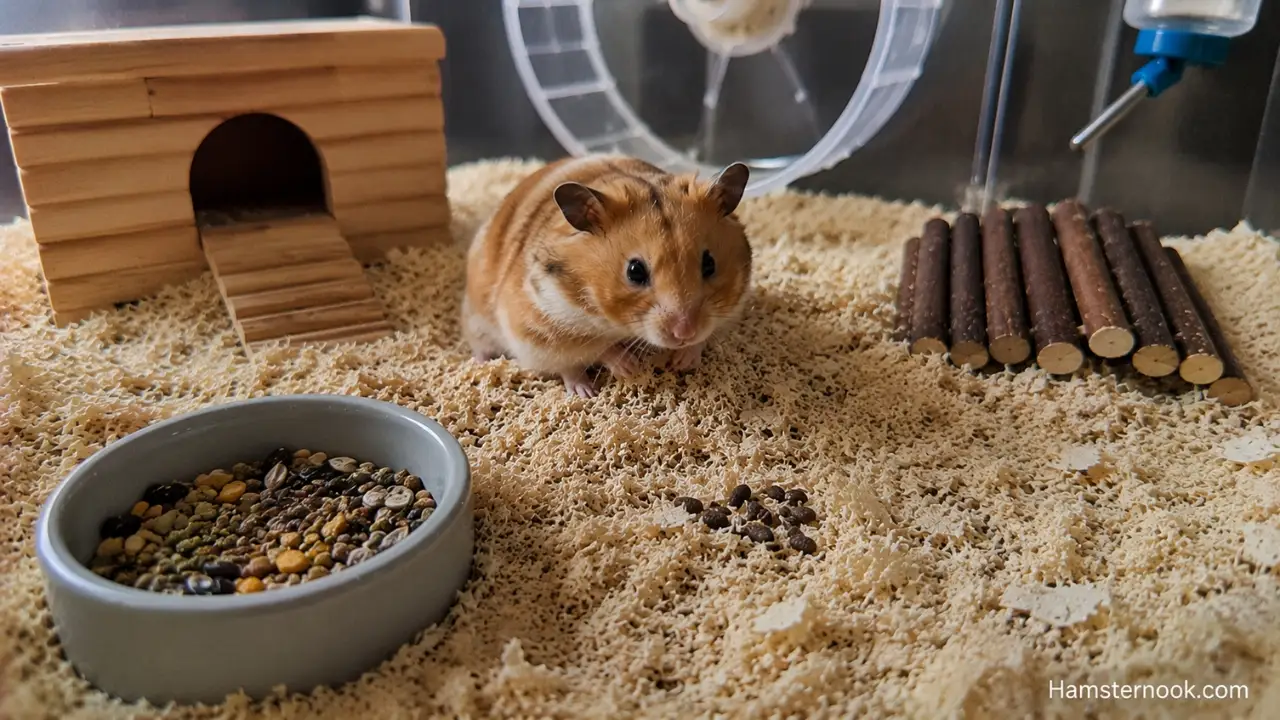
Likewise, during cooler weather, many hamsters naturally drink a little less than they do during hot summer months.
Rather than focusing only on the water bottle, look at your hamster’s overall behavior. A healthy hamster that is eating, moving around at night, maintaining its weight, and behaving normally may simply need less water. Drinking changes become concerning when they happen alongside other unusual symptoms.
If your hamster remains active, eats normally, maintains a healthy weight, and behaves as usual, a temporary reduction in bottle use is often not an emergency.
How to Tell Whether Your Hamster Has Actually Stopped Drinking
Many owners assume their hamster has stopped drinking simply because they never see it at the bottle.
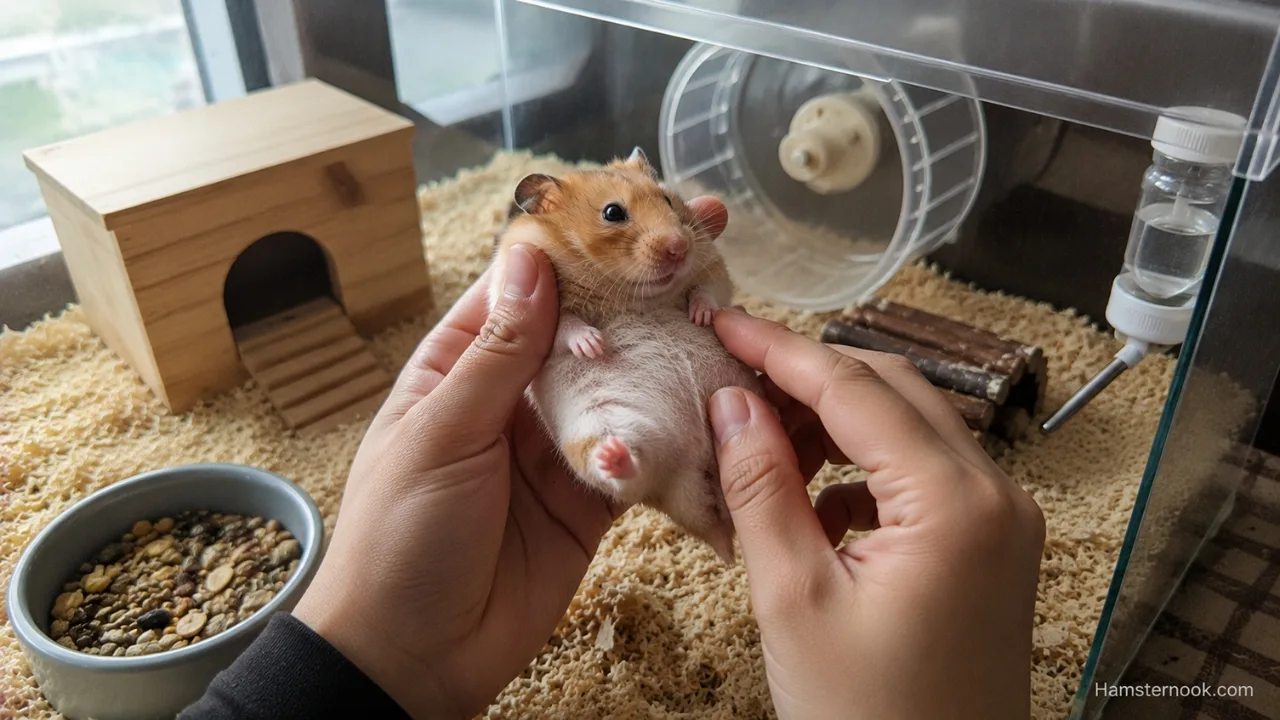
Remember that hamsters are primarily nocturnal. Most drinking happens during the evening or overnight while you’re asleep.
Before assuming something is wrong, check for these signs:
- Water level changes overnight
- Damp bedding near the bottle
- Fresh droppings
- Normal appetite
- Normal activity during waking hours
Another common mistake is overlooking hidden water sources.
For example, if your hamster receives fresh vegetables regularly, it may simply rely less on its bottle for hydration.
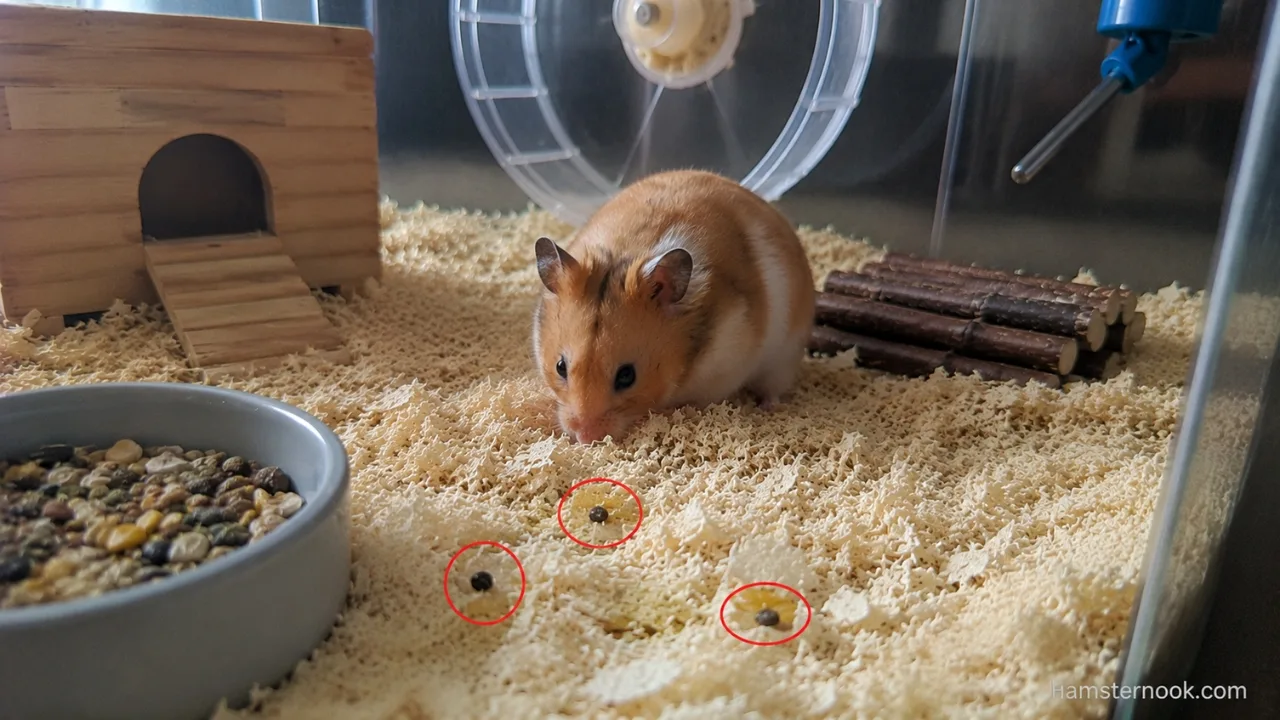
If you’ve recently increased fresh foods, Complete Hamster Diet Guide: Best Foods, Safe Treats & Toxic Foods explains how different foods can naturally affect hydration and water consumption.
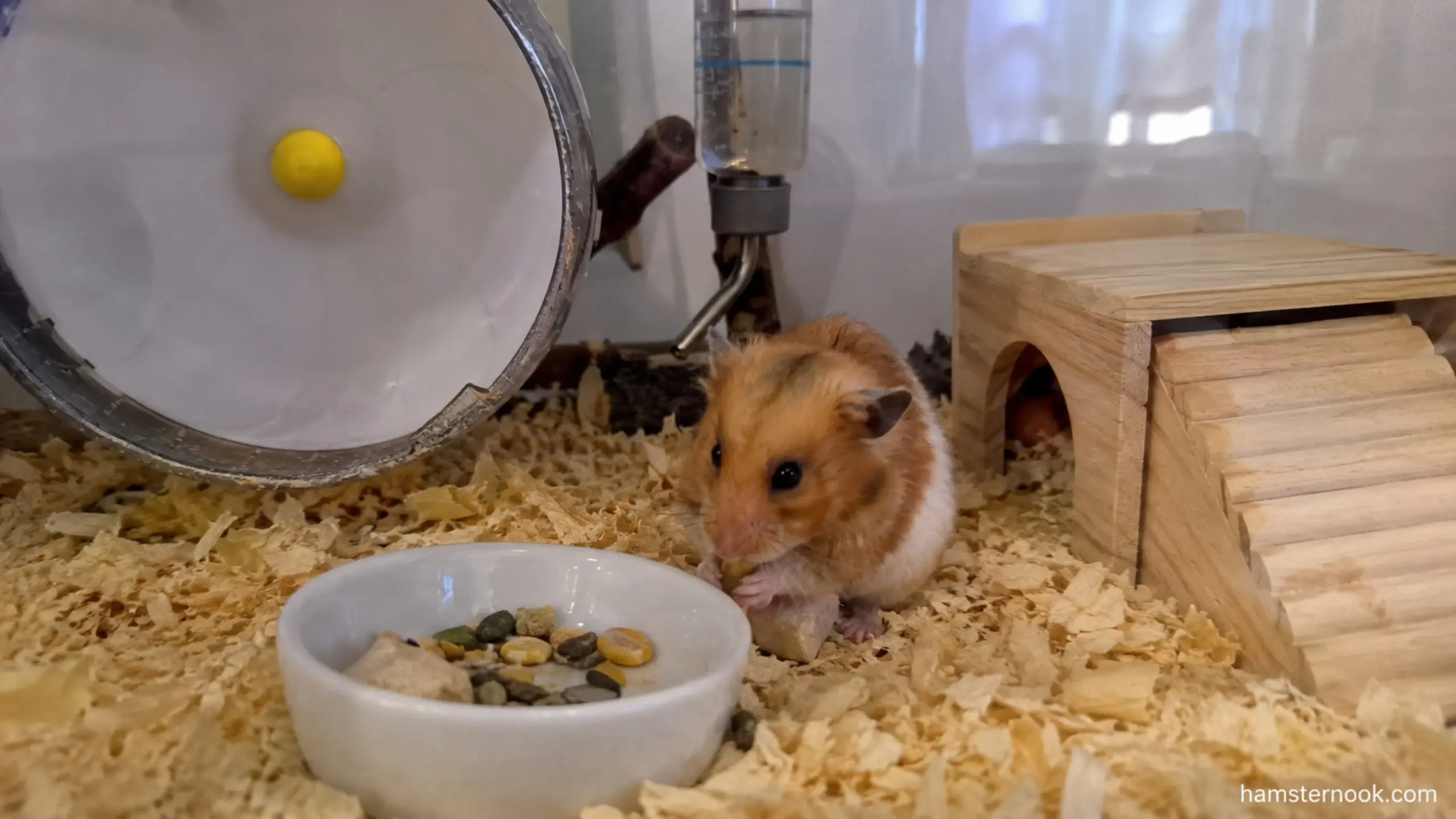
1. The Water Bottle May Not Be Working Properly
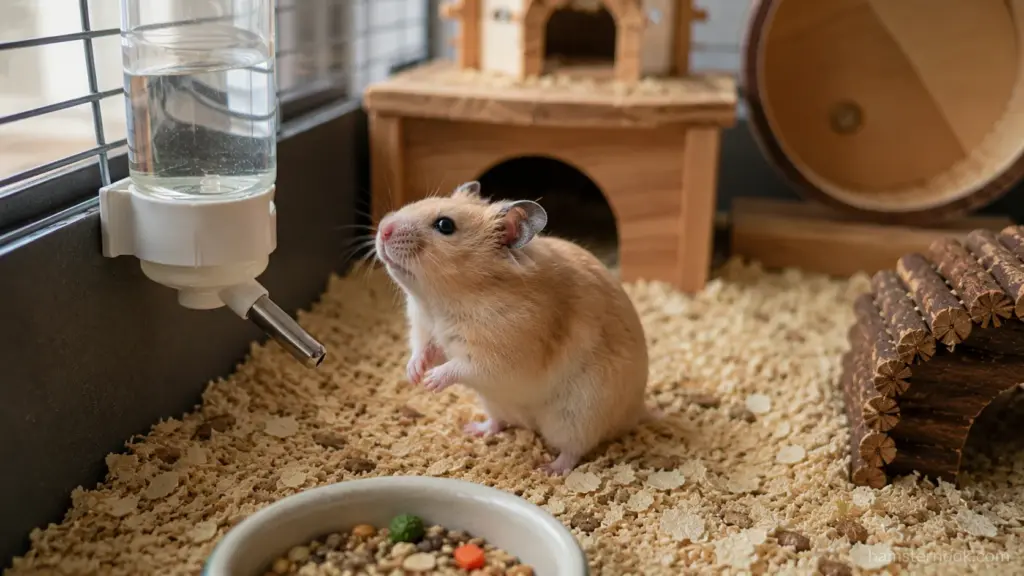
One of the most common explanations has nothing to do with your hamster at all.
Water bottles can develop problems such as:
- Blocked metal tubes
- Stuck ball bearings
- Airlocks
- Slow leaks
- Mineral buildup
From your hamster’s perspective, it may try to drink several times before giving up because no water comes out.
How to Check the Bottle
| Check | What to Look For |
|---|---|
| Ball bearing | Moves freely |
| Water flow | Small drops come out when pressed |
| Bottle position | Easily reachable |
| Leakage | No constant dripping |
| Cleanliness | No algae or debris inside |
Cleaning the bottle thoroughly and testing it before placing it back into the cage often solves the problem.
If the bottle is faulty, replacing it is usually the safest solution.
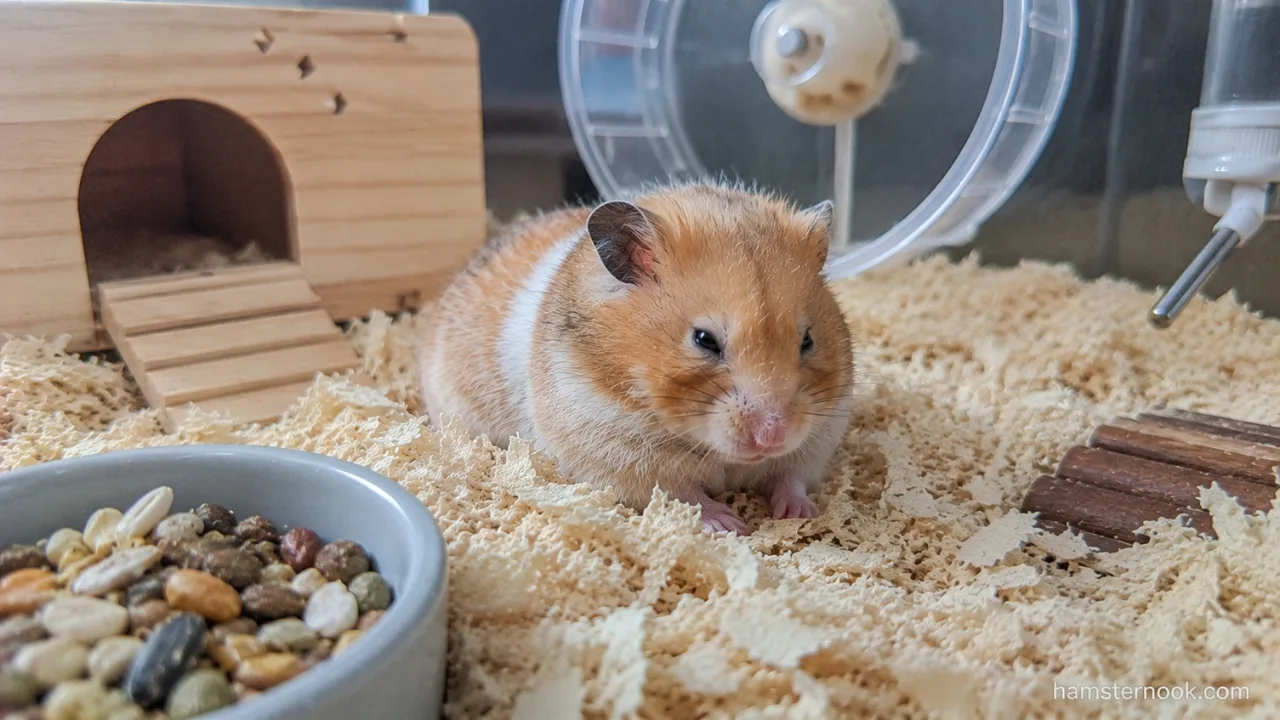
2. Your Hamster May Be Drinking From Another Water Source
Not every hamster depends entirely on a bottle.
Some owners provide:

- Water bowls
- Moist vegetables
- Fresh leafy greens
If these are available, your hamster may simply choose them instead.
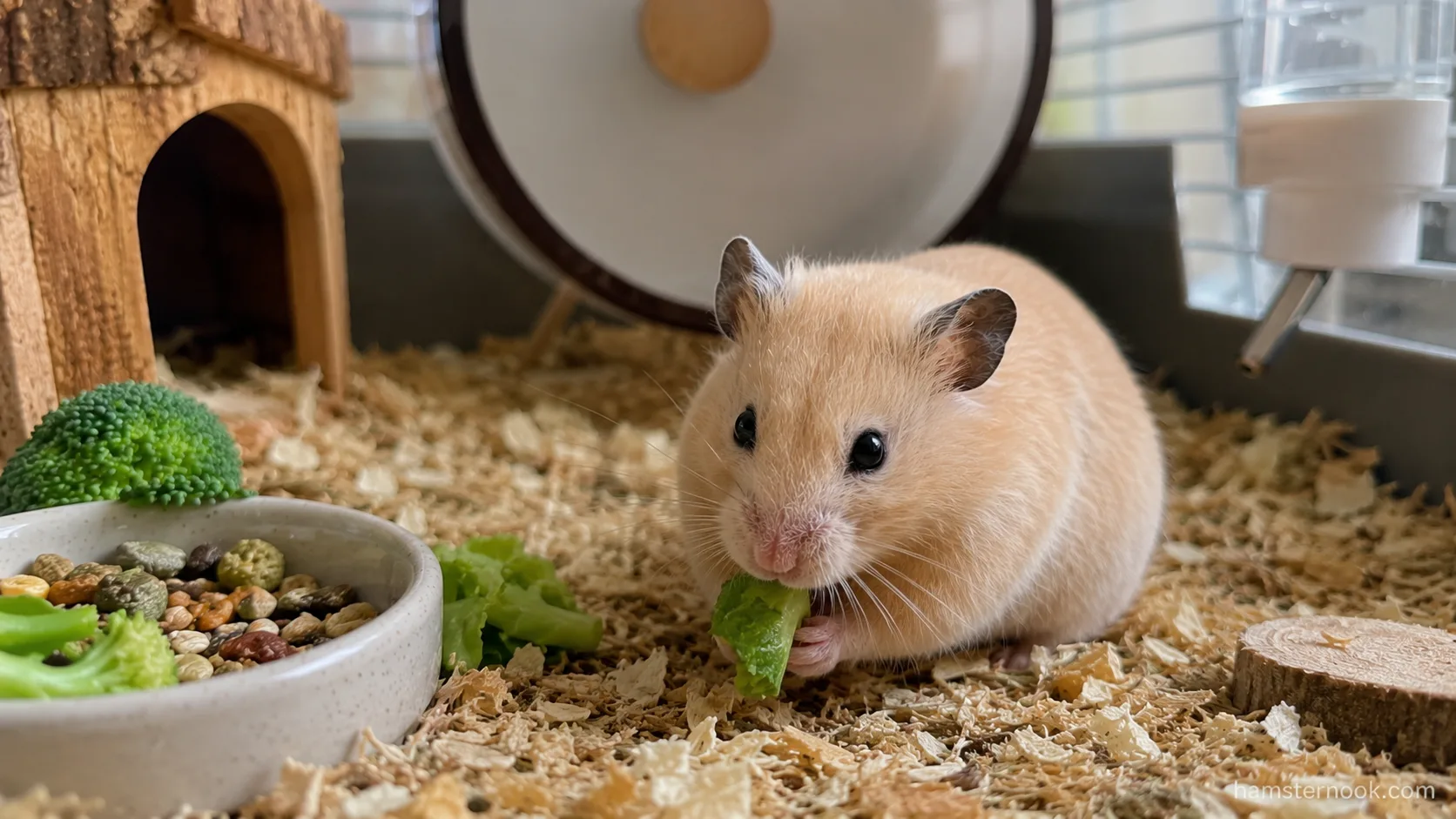
This is especially common when feeding vegetables with high water content.
Examples include:
- Cucumber
- Zucchini
- Romaine lettuce (in moderation)
These foods provide both enrichment and hydration.
However, fresh foods should never replace constant access to clean drinking water.
If you’re unsure which vegetables are appropriate, Best Fruits and Vegetables for Hamsters explains which options are considered safe and which should only be fed occasionally.
If you’re concerned that your hamster may be getting too little water overall, our How Long Can Hamsters Go Without Water? Risks, Warning Signs & What to Do guide explains the risks of reduced water intake and what warning signs deserve prompt attention.
Watch Your Hamster During the Evening
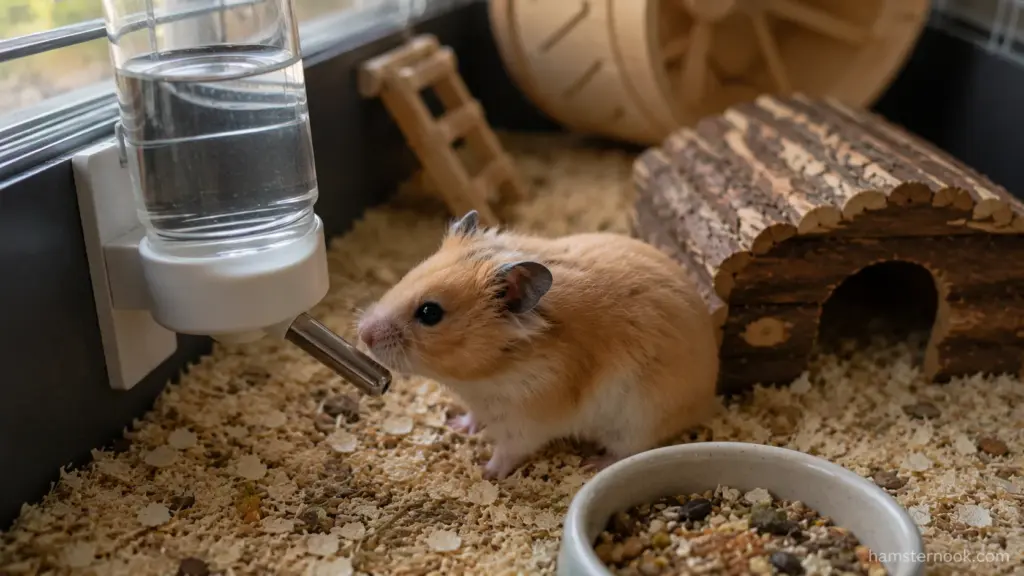
Because hamsters are most active after sunset, many owners never actually see them drinking. Spend a few minutes quietly watching your hamster during its normal active hours before assuming it has stopped drinking completely.
3. Cooler Temperatures Can Reduce Water Intake
Environmental temperature plays a surprisingly important role in hydration.
During warmer weather, hamsters naturally lose more moisture and often drink more frequently.
When temperatures become cooler, they may visit the bottle less often.
This change is usually gradual rather than sudden.
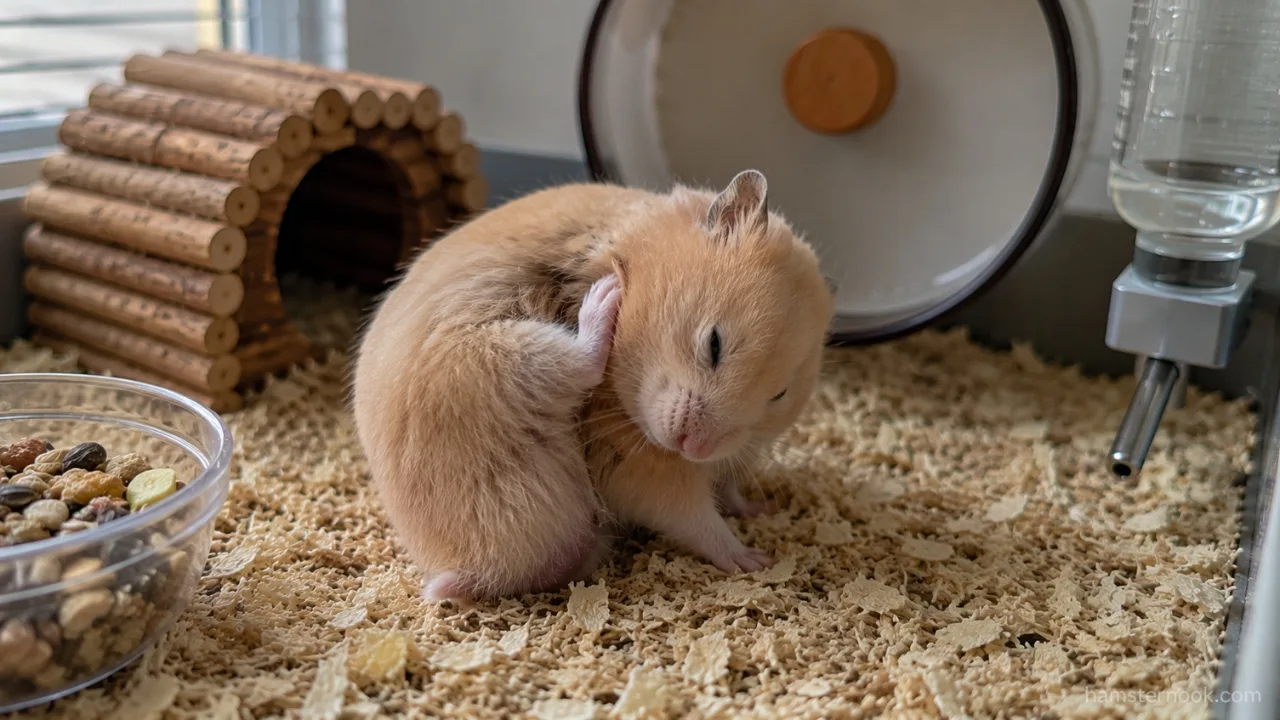
A healthy hamster living in a comfortable environment may simply need less water than it did a few weeks earlier.
Keep the cage away from:
- Direct sunlight
- Heating vents
- Air conditioners blowing directly on the enclosure
Providing a stable indoor environment helps maintain normal drinking habits.
If the room temperature has changed recently, our Hamster Temperature: Safe Range, Too Hot & Too Cold guide explains how temperature conditions can affect a hamster and what environmental changes to watch for.
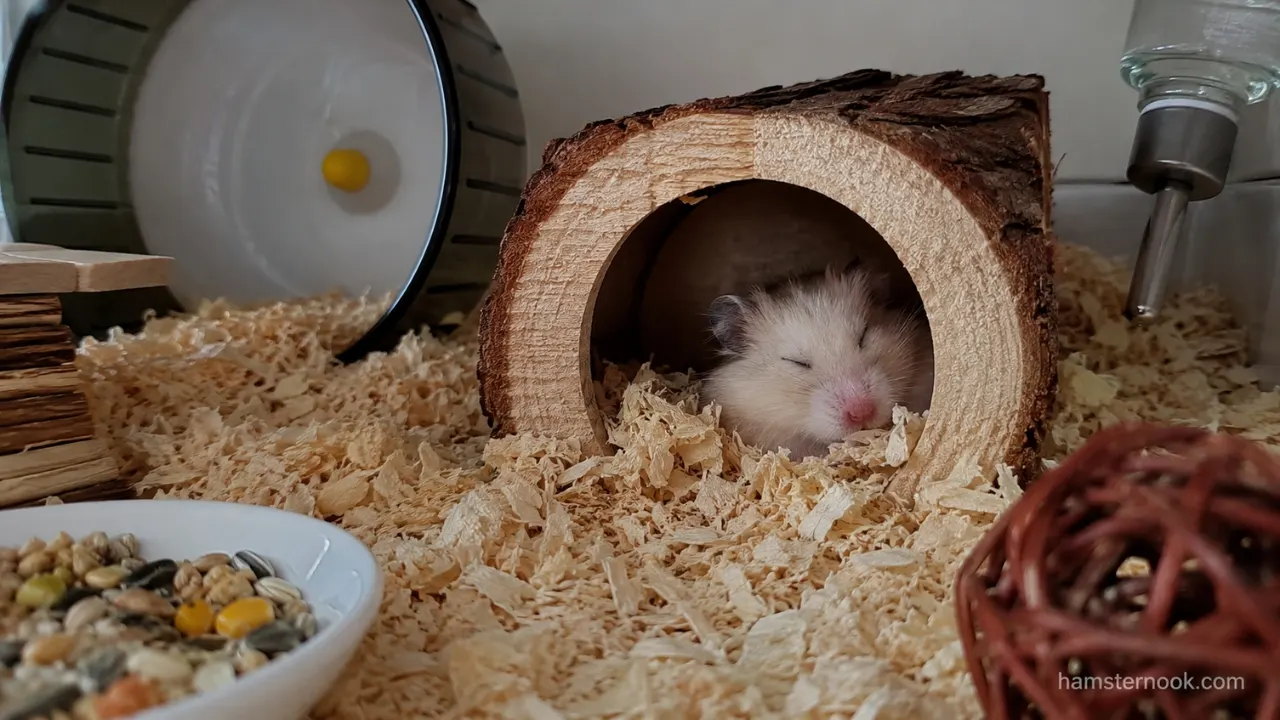
4. Stress Can Temporarily Change Drinking Behavior
Hamsters are creatures of habit.
Even small changes can make them behave differently for a short time.
Common stress triggers include:
- Moving to a new cage
- Rearranging the enclosure
- Loud noises
- Frequent handling
- New pets nearby
- Travel
- Major cleaning
A stressed hamster may temporarily:
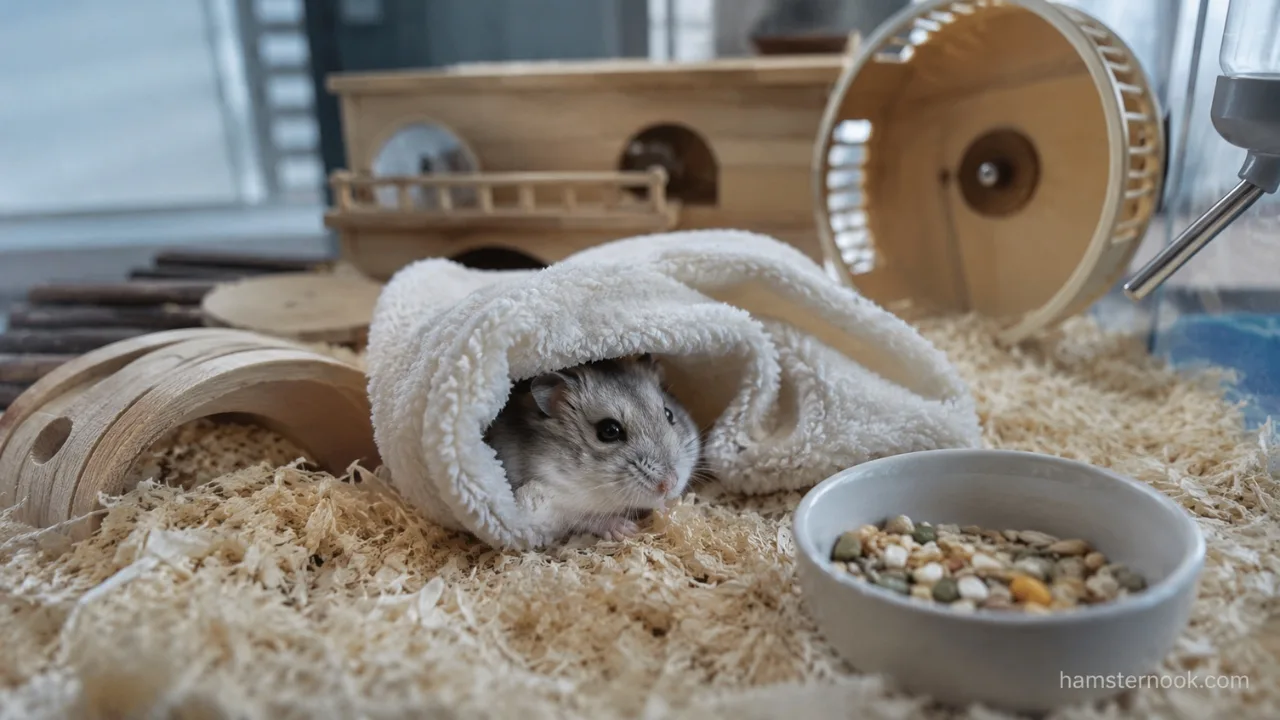
- Eat less
- Drink less
- Hide more often
- Sleep longer
- Avoid exploring
These behaviors often improve once the hamster begins feeling secure again.
If your hamster recently experienced a major environmental change, minimize unnecessary disturbances and observe its eating, drinking, activity, and behavior closely. If reduced drinking continues or other concerning symptoms appear, contact an experienced exotic animal veterinarian.
If reduced drinking is happening alongside hiding, avoiding exploration, or other behavior changes, our 7 Signs You’re Accidentally Stressing Your Hamster (Without Even Realizing It) guide can help you identify common environmental stressors.
5. Dental Problems Can Make Drinking Uncomfortable
A hamster’s teeth never stop growing throughout its life. If the front teeth become overgrown, damaged, or misaligned, even simple actions like gripping the water bottle nozzle can become painful.

Unlike obvious injuries, dental problems often develop gradually. Your hamster may still appear interested in food or water but struggle to eat or drink comfortably.
Common signs include:
- Approaching the water bottle but walking away without drinking
- Drooling or wet fur around the mouth
- Difficulty chewing hard foods
- Dropping food while eating
- Gradual weight loss
- Preferring softer foods
If you notice several of these signs together, dental disease should be considered.
Providing safe chew toys can help maintain healthy teeth, but never attempt to trim a hamster’s teeth yourself. Dental problems require examination by an experienced exotic animal veterinarian.

If your hamster is also eating less than usual, Why Does My Hamster Suddenly Stop Eating? explains how appetite changes and dental issues are often connected.
6. Illness May Be Affecting Your Hamster
A hamster that suddenly stops drinking can sometimes be showing one of the earliest signs of illness.
Because hamsters are prey animals, they naturally hide weakness for as long as possible. By the time owners notice obvious symptoms, the illness may already have progressed.
Watch for additional warning signs such as:
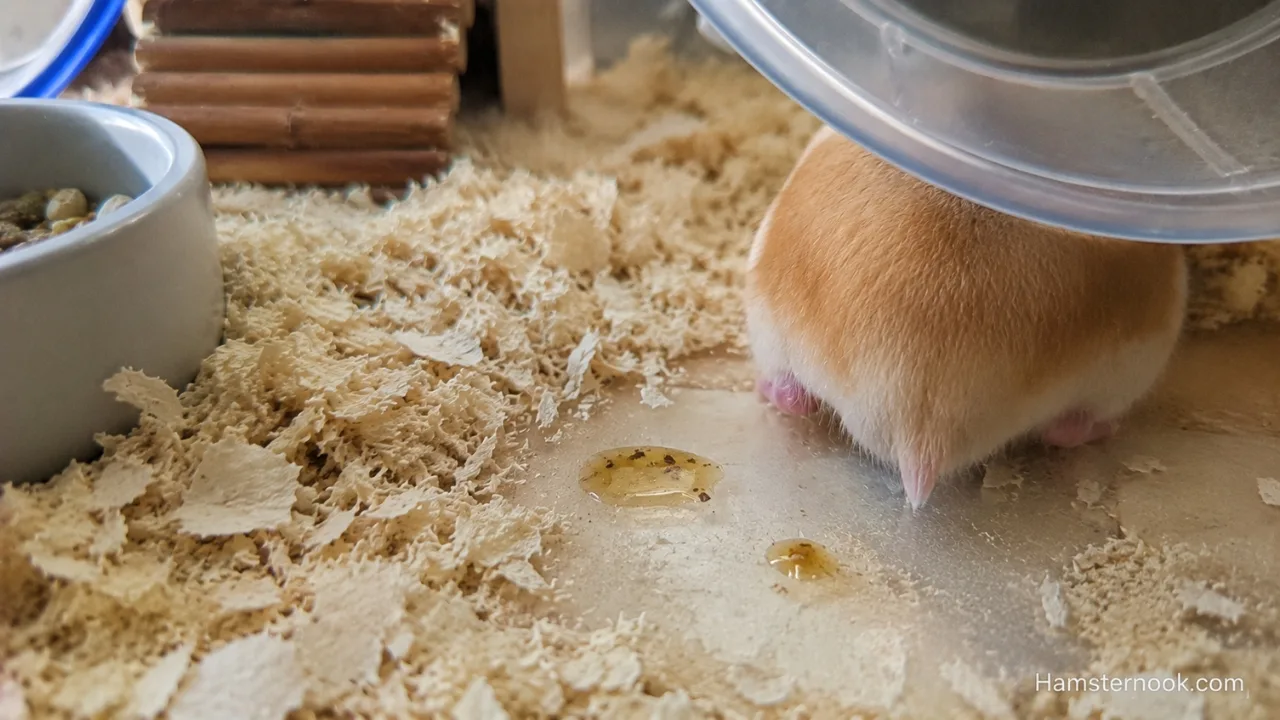
- Sleeping much more than usual
- Weakness
- Rapid breathing
- Loss of appetite
- Weight loss
- Hunched posture
- Dull or rough coat
- Discharge from the eyes or nose
A single symptom isn’t always enough to indicate a serious illness. However, when reduced drinking is combined with weakness, weight loss, breathing changes, or poor appetite, the risk of an underlying health problem becomes much higher.
If your hamster has stopped both eating and drinking, becomes unusually quiet, or seems weak, veterinary attention should not be delayed.
You may also find 7 Signs Your Hamster May Be Seriously Sick helpful for recognizing other early warning signs that owners commonly overlook.
7. Your Hamster May Simply Need Less Water Because of Its Diet
Not every decrease in bottle use is a problem.

Hamsters receiving more moisture from fresh foods often drink less from their bottle.
For example, foods like:
- Cucumber
- Zucchini
- Bell pepper
- Small amounts of romaine lettuce
contain a significant amount of water.
If these foods have recently become a regular part of your hamster’s diet, reduced bottle use may simply reflect increased hydration from food rather than dehydration.

The important thing is maintaining a balanced diet rather than relying heavily on watery vegetables.
8. Older Hamsters Often Change Their Drinking Habits
Senior hamsters sometimes drink differently than younger adults.
As hamsters age, they may:
- Move around less
- Visit the water bottle less frequently
- Sleep longer
- Eat smaller meals
- Become less active overall
These gradual changes are often part of normal aging.
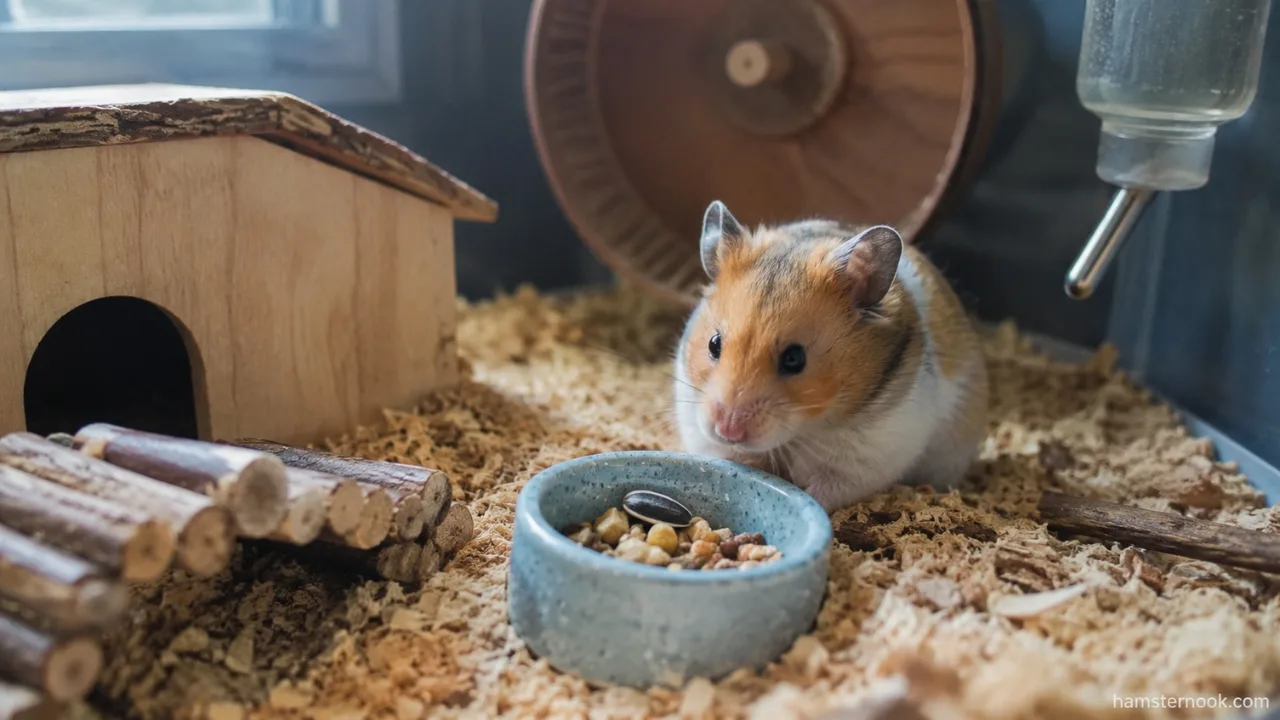
However, sudden refusal to drink should never be dismissed simply because a hamster is older.
Senior hamsters are also more likely to develop medical conditions that affect appetite, hydration, and mobility.
Monitoring body weight every week becomes increasingly important as hamsters age.
Warning Signs That Should Never Be Ignored
Sometimes a hamster avoiding its water bottle is harmless.
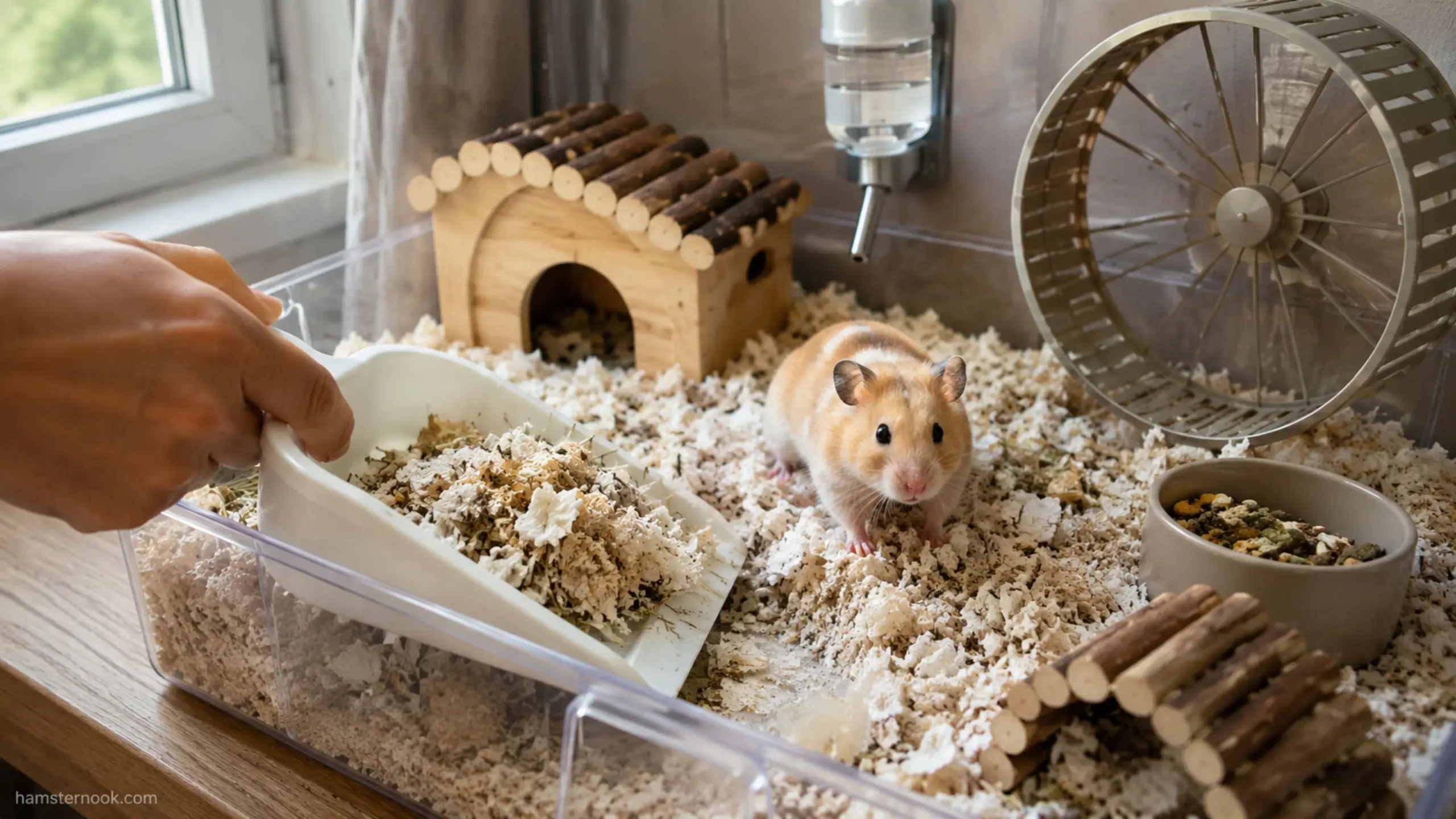
Other times, it can become an emergency.
Seek veterinary advice promptly if your hamster also shows:
| Warning Sign | Level of Concern |
|---|---|
| Refuses both food and water | High |
| Rapid weight loss | High |
| Weakness or difficulty moving | High |
| Heavy or labored breathing | High |
| Sunken eyes or dehydration | High |
| Diarrhea or wet tail area | High |
| Unable to reach the bottle | High |
| Obvious injury | High |
These symptoms suggest the problem may extend beyond simple changes in drinking behavior.
What You Should Do If Your Hamster Stops Using Its Water Bottle
Instead of panicking, work through a simple checklist.
Step 1
Test the bottle yourself.

Make sure water flows freely and the nozzle isn’t blocked.
Step 2
Check whether your hamster is drinking elsewhere.
Look for:
- Water bowls
- Fresh vegetables
- Hidden food stores
- Signs of normal hydration
Step 3
Observe eating habits.
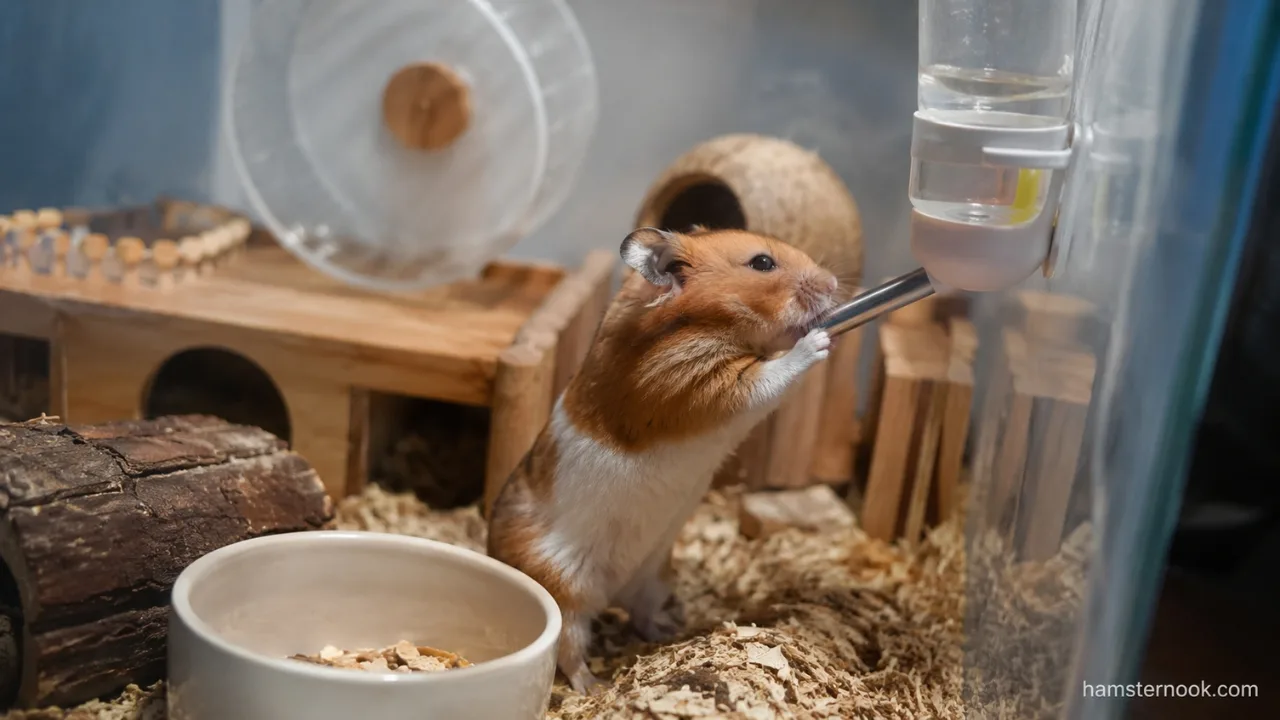
A hamster that stops eating and drinking at the same time needs much closer attention.
Step 4
Watch behavior overnight.
Since hamsters are nocturnal, much of their eating and drinking happens while owners are asleep.
Step 5
Monitor body weight.
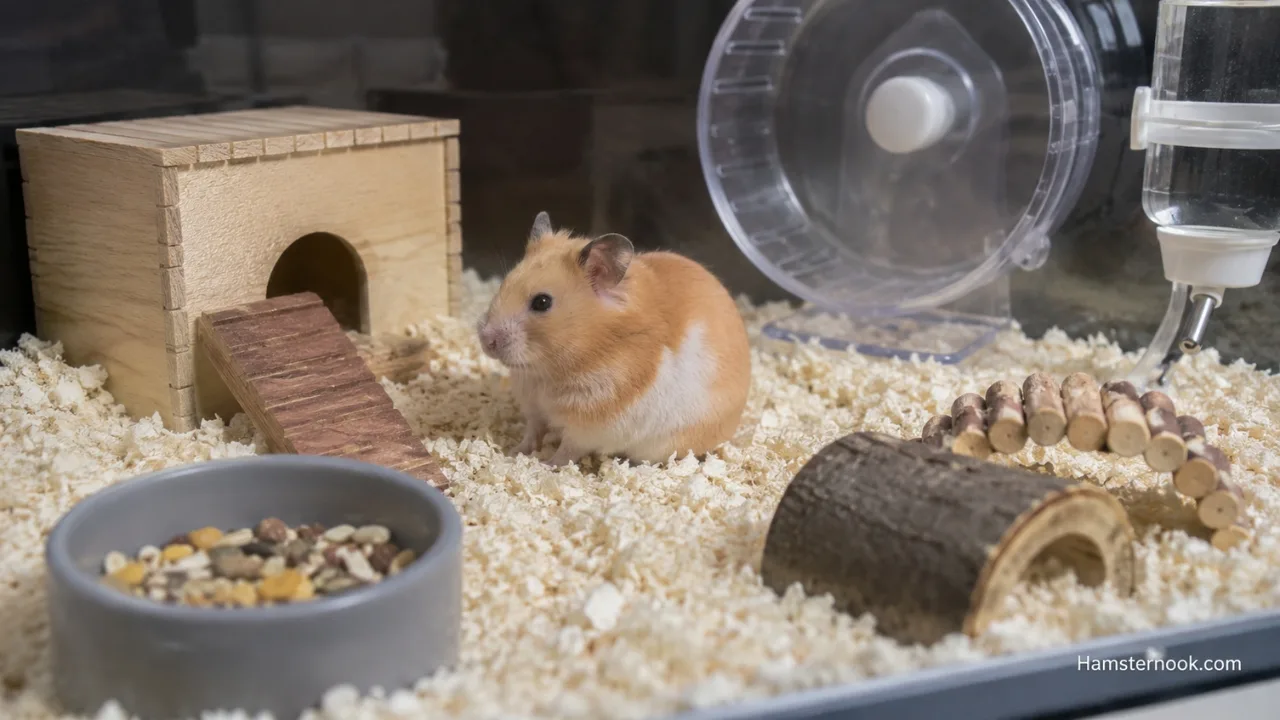
Even small weight changes can provide valuable clues about your hamster’s health.
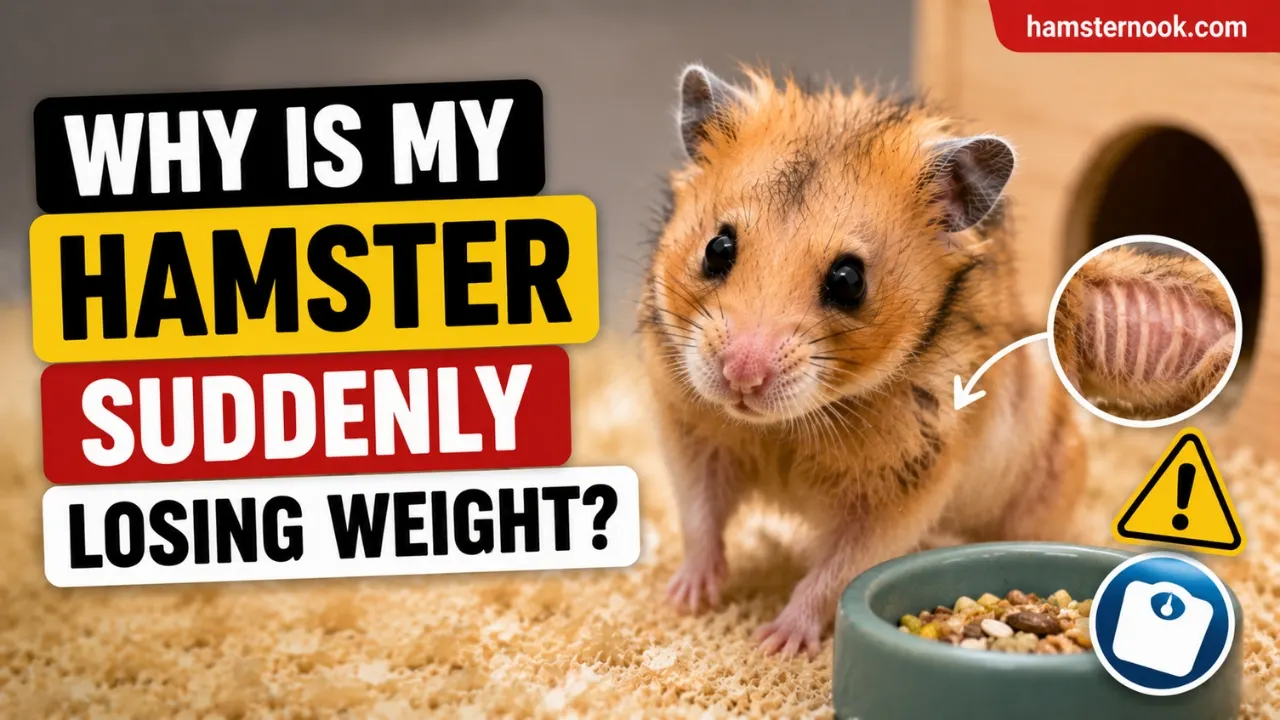
If you’re unsure how to recognize unhealthy weight loss, Why Is My Hamster Losing Weight? Causes Owners Should Never Ignore explains the warning signs and common causes in more detail.
How to Monitor Your Hamster’s Water Intake Safely
If your hamster is otherwise eating, active, and behaving normally, first confirm that the bottle works and look for signs that it may be drinking elsewhere. Check the water level during its normal active hours and continue watching appetite, activity, body weight, and other behavior.
Do not rely on a fixed waiting period if you cannot confirm that your hamster is drinking. If reduced drinking is accompanied by weakness, loss of appetite, weight loss, breathing difficulty, dehydration, diarrhea, or other unusual symptoms, contact an experienced exotic animal veterinarian promptly.
Common Mistakes Owners Make
It’s surprisingly common for owners to think their hamster has stopped drinking when it’s actually drinking at night or getting extra moisture from fresh foods. Taking a few simple checks before assuming illness can save unnecessary worry.
Avoid these common mistakes:
- Assuming daytime inactivity means the hamster isn’t drinking.
- Forgetting to test the water bottle after cleaning it.
- Offering too many watery vegetables while overlooking a balanced diet.
- Waiting several days before checking for additional symptoms.
- Replacing the entire cage setup immediately, which can create unnecessary stress.
A calm, systematic approach usually makes it easier to identify the real cause.
Is It Safe to Offer Water in a Bowl Instead?
Some owners temporarily provide both a bottle and a shallow water bowl while investigating the problem.
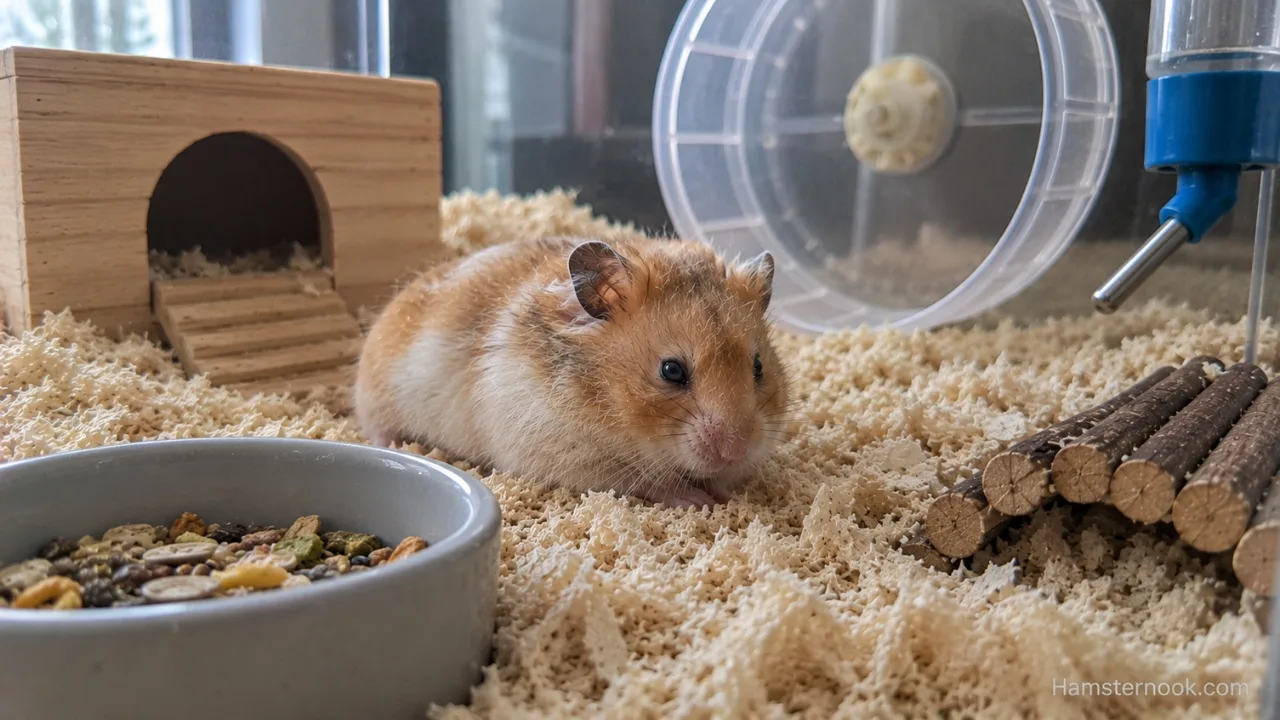
This can work well if:
- The bowl is stable.
- It stays clean.
- Bedding cannot easily contaminate the water.
Many hamsters quickly show which option they prefer.
However, regardless of the method you choose, fresh water should always be available.
If your hamster has recently become less active overall, Why Is My Hamster Moving Less Than Before? may also help determine whether reduced drinking is part of a larger behavioral change.
How to Help Prevent Water Bottle Problems
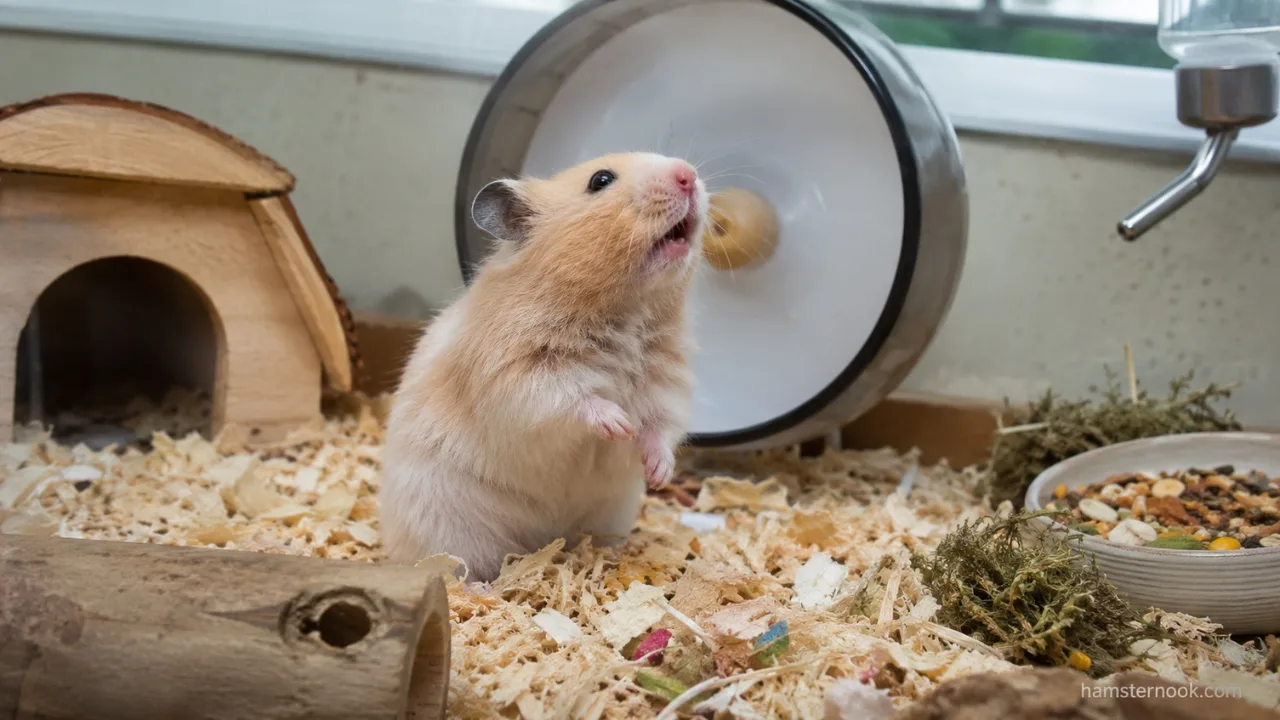
Many cases of reduced drinking can be avoided with a few simple daily habits. Regular observation is often more valuable than waiting until a problem becomes obvious.
To help keep your hamster properly hydrated:
- Check that the water bottle works every day.
- Replace the water with fresh, clean water daily.
- Clean the bottle regularly to prevent algae and mineral buildup.
- Position the bottle at a comfortable height for your hamster.
- Keep the cage in a room with a stable temperature.
- Feed a balanced diet instead of relying heavily on watery vegetables.
- Watch for gradual changes in eating, drinking, and activity rather than focusing on a single day.
Small daily checks only take a minute, but they can help you notice potential problems before they become serious.
When Is It Completely Normal?
Sometimes owners worry when nothing is actually wrong.
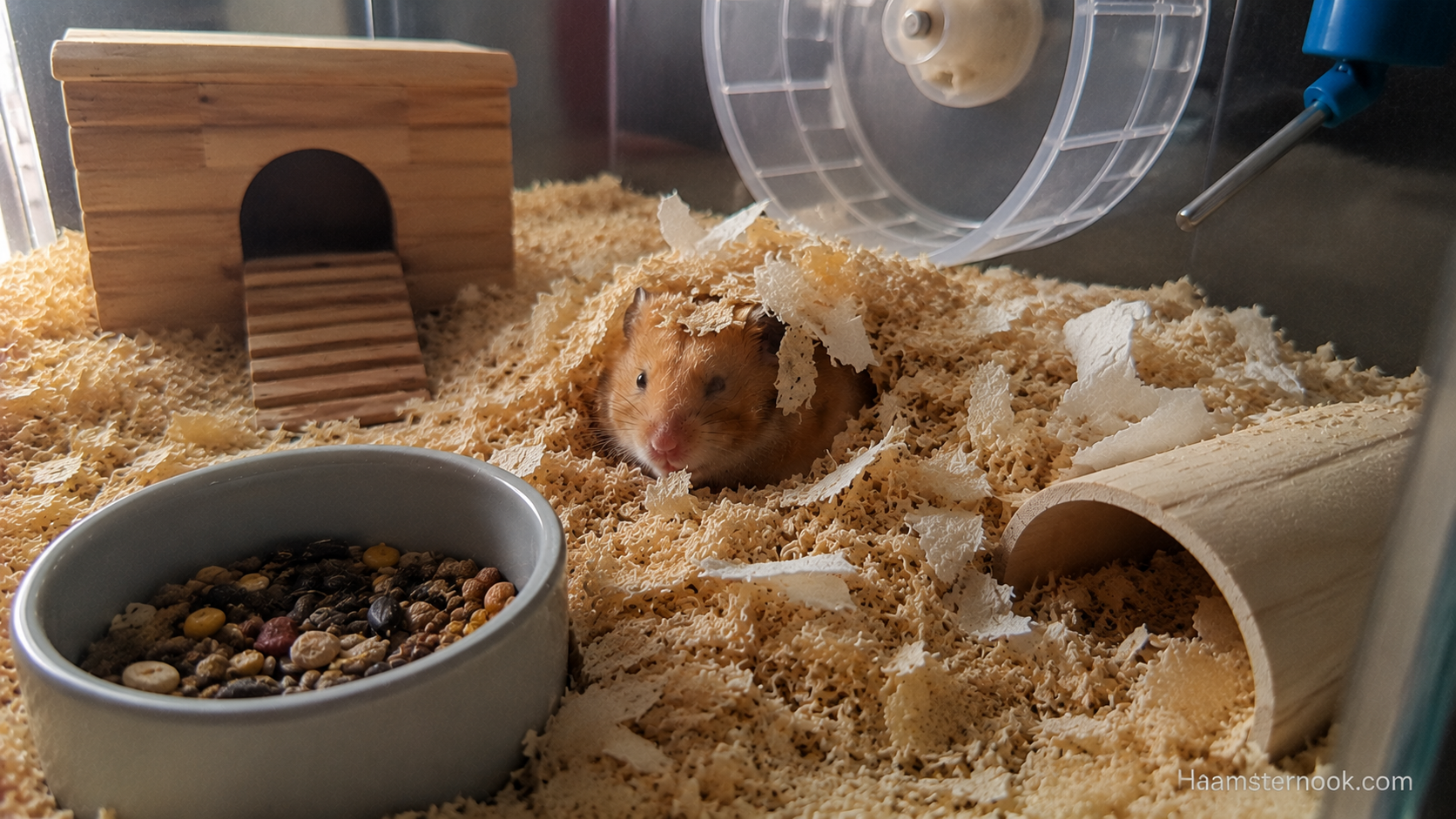
A hamster drinking less from its bottle may simply be behaving normally if:
- It recently ate moisture-rich vegetables.
- The room temperature is cooler than usual.
- It remains active during the night.
- Its appetite is normal.
- Its body weight remains stable.
- The water bottle is functioning properly.
- There are no other unusual symptoms.
In these situations, careful observation is usually all that’s needed.
When Should You Contact a Veterinarian?
Contact an experienced exotic animal veterinarian as soon as possible if your hamster:
- Has completely stopped drinking for an extended period.
- Refuses both food and water.
- Appears weak or collapses.
- Has difficulty breathing.
- Shows signs of dehydration.
- Experiences rapid weight loss.
- Has diarrhea or signs of wet tail.
- Cannot reach or use the water bottle because of injury or mobility problems.
Because hamsters are so small, they can become dehydrated much faster than many larger pets. Prompt veterinary care is important whenever drinking changes are accompanied by other concerning symptoms.
Quick Summary
If your hamster suddenly stops using its water bottle, don’t immediately assume the worst.
Start by checking the simplest possibilities first, such as a blocked bottle, dietary changes, cooler weather, or temporary stress. Continue monitoring your hamster’s appetite, weight, activity level, and overall behavior over the next day or two.
However, if reduced drinking is accompanied by weakness, weight loss, breathing problems, refusal to eat, or other signs of illness, don’t wait to see if the problem resolves on its own. Early veterinary attention offers the best chance of identifying and treating serious health issues before they become life-threatening.
Learning your hamster’s normal daily routine is one of the best ways to recognize when something truly isn’t right.
Keep Water Bottles Working Properly
A water bottle should be cleaned regularly to prevent algae, bacteria, mineral deposits, and blockages. Even a partially blocked drinking tube can discourage a hamster from drinking enough water. Testing the bottle during every refill only takes a few seconds and helps prevent avoidable hydration problems.
Frequently Asked Questions
Why did my hamster suddenly stop drinking from its water bottle?
The most common reasons include a faulty water bottle, recent dietary changes, cooler temperatures, stress, dental problems, aging, or an underlying illness. Always check the bottle first before assuming your hamster has stopped drinking completely.
Can a hamster drink from a bowl instead of a bottle?
Yes. Many owners successfully use a shallow water bowl, provided it stays clean and cannot easily become contaminated with bedding. Some owners even offer both a bottle and a bowl to see which their hamster prefers.
How long can a hamster go without drinking water?
Hamsters should always have access to fresh drinking water. Because they are small animals with fast metabolisms, dehydration can develop quickly, especially if they are also refusing food or are ill.
How can I tell if my hamster is dehydrated?
Possible signs include weakness, sunken eyes, reduced activity, loss of appetite, rapid weight loss, and dry-looking skin or mouth. If you suspect dehydration, seek veterinary advice promptly.
Should I worry if my hamster is eating but not drinking much?
Not always. If your hamster recently ate fresh vegetables or other moisture-rich foods, it may naturally visit the water bottle less often. Continue monitoring body weight, appetite, and overall behavior.
Can stress make a hamster stop drinking?
Yes. Changes such as moving to a new cage, loud noises, excessive handling, or a new environment can temporarily affect drinking habits. Most healthy hamsters return to normal once they feel safe again.
How often should I clean my hamster’s water bottle?
Fresh water should be provided every day, and the bottle should be cleaned regularly to prevent bacteria, algae, mineral deposits, and blockages that could reduce water flow.
Can I give my hamster water with a syringe?
Only under the guidance of an exotic animal veterinarian. Forcing water into a hamster’s mouth can cause choking or aspiration. If your hamster refuses to drink and appears weak or dehydrated, seek veterinary care rather than attempting to force fluids at home.
References
This guide is based on hamster hydration, nutrition, health, welfare, and husbandry guidance from trusted veterinary and animal care resources, including:
- RSPCA – Hamster Care and Welfare Guidance
- PDSA – Hamster Health and Care Guidance
- Blue Cross – Hamster Care and Feeding Advice
- Merck Veterinary Manual – Hamster Health, Nutrition and Husbandry
Medical Disclaimer: This article is intended for educational purposes only and should not replace professional veterinary advice, diagnosis, or treatment. A change in drinking behavior can sometimes indicate an underlying health problem, particularly when accompanied by weakness, weight loss, loss of appetite, breathing difficulties, diarrhea, or signs of dehydration. If your hamster shows concerning or persistent symptoms, consult a qualified exotic animal veterinarian as soon as possible.

Narayan Kumar is the founder and author of HamsterNook. He creates practical, research-based hamster care guides covering hamster behavior, nutrition, cage setup, enrichment, health, and everyday care. His goal is to help hamster owners make informed decisions and provide safer, healthier lives for their pets through clear, beginner-friendly information based on trusted animal care resources.