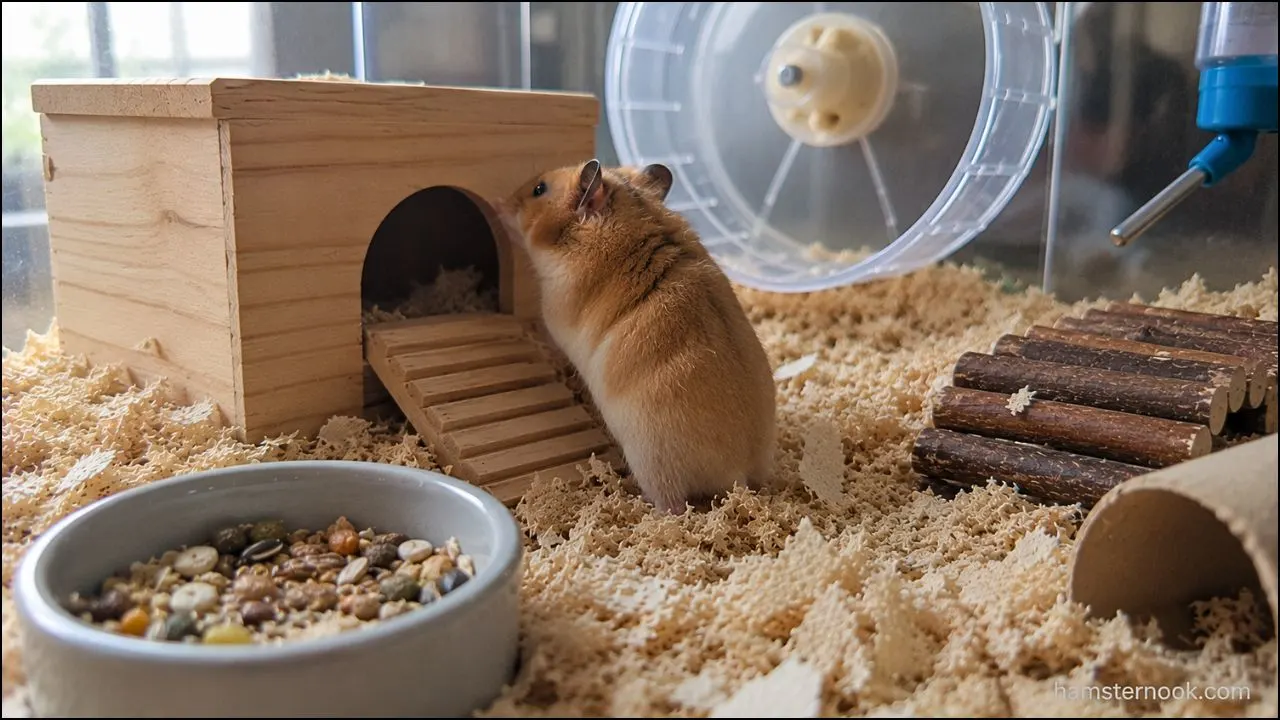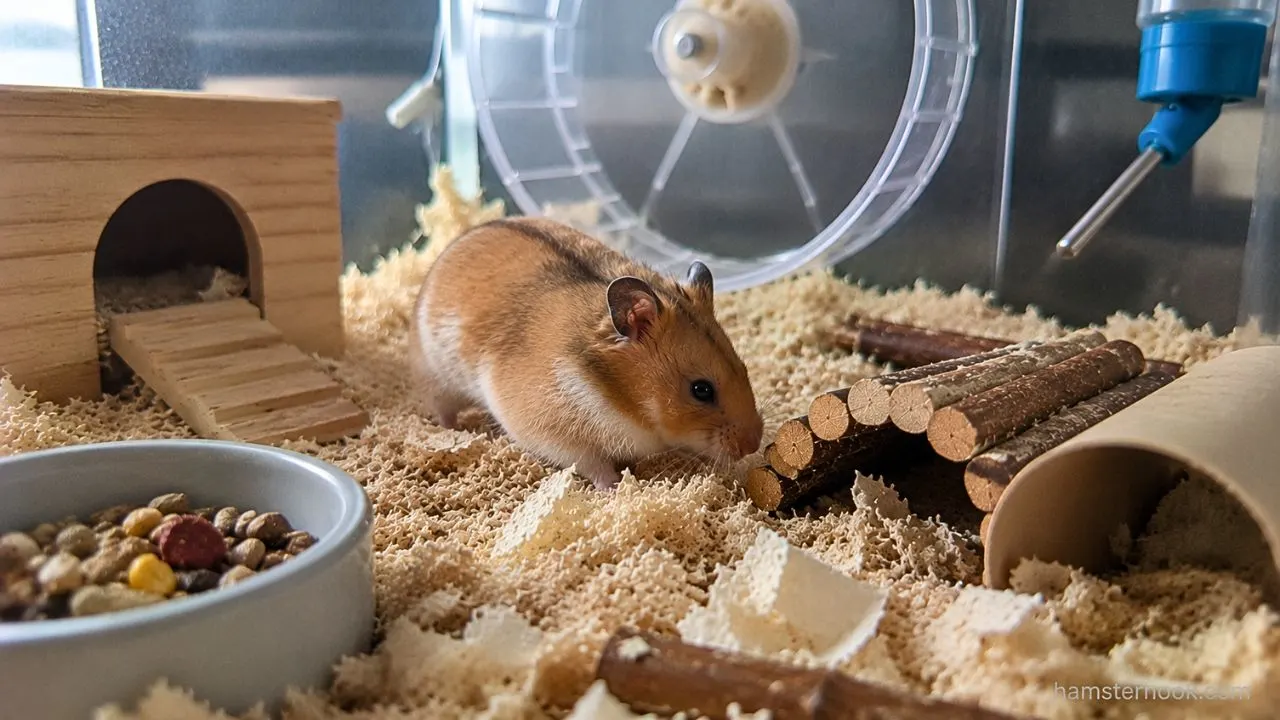
One day your hamster is running on its wheel, exploring its enclosure, and eagerly coming out for treats. Then suddenly, it seems to disappear. It spends most of its time inside a hideout, buried under bedding, or tucked away in a corner where you rarely see it.
For many hamster owners, this change can be worrying. Is your hamster sick? Is it stressed? Or is this completely normal behavior?
Hiding is one of the most natural behaviors a hamster can display, which is why increased hiding is not always a reason to panic. As prey animals, hamsters instinctively seek shelter to stay safe. However, a noticeable increase in hiding behavior can sometimes signal a problem that deserves attention.
Knowing when hiding is normal and when it signals a problem makes it much easier to decide whether your hamster simply needs time or needs closer attention. This guide explains the most common reasons hamsters hide, when the behavior is expected, and when it may be time to investigate further.

Quick Answer
Hamsters often hide because they are naturally cautious prey animals. Increased hiding can be caused by normal sleeping habits, adjusting to a new environment, seasonal changes, aging, stress, or a preference for a newly built nest. Concern is more justified when hiding occurs alongside weight loss, appetite changes, lethargy, or other signs of illness.
Is It Normal for Hamsters to Hide?
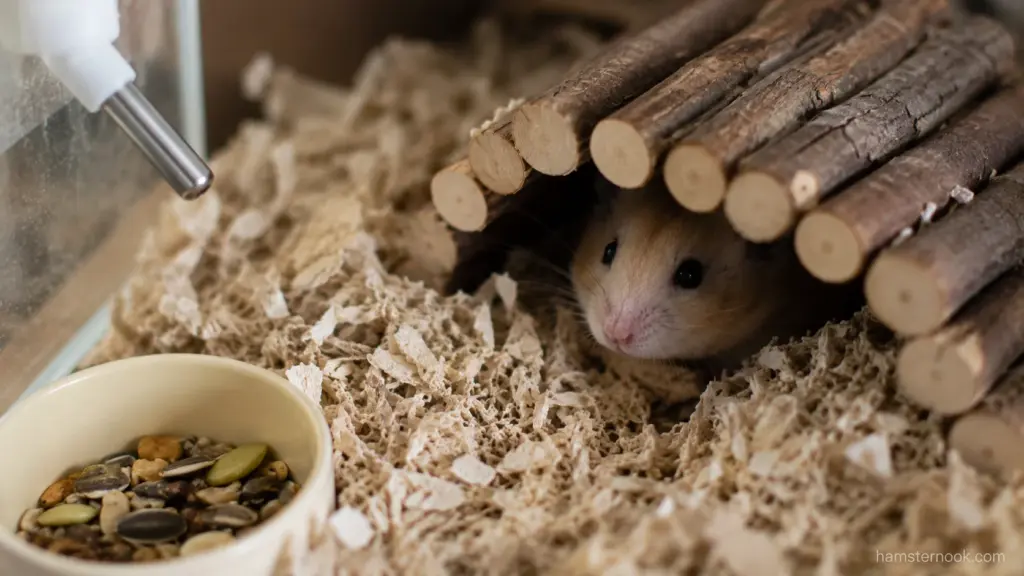
Yes, absolutely.
In the wild, hamsters spend much of their time underground in burrow systems that protect them from predators and harsh weather. Even domesticated hamsters retain these natural instincts.
Many owners mistakenly expect their hamster to be visible throughout the day. In reality, most hamsters prefer spending significant time:
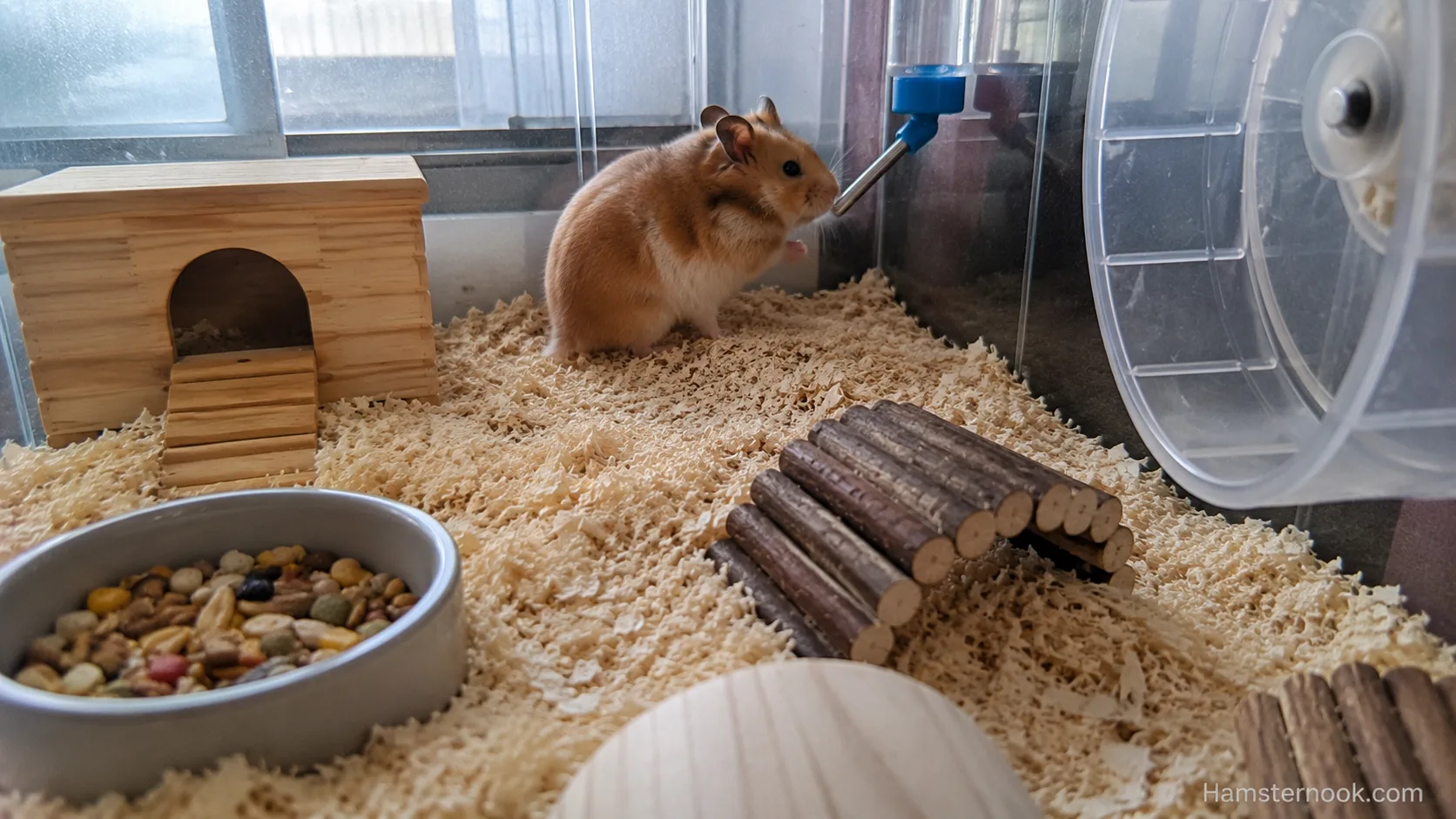
- Inside hideouts
- Beneath bedding
- In tunnels
- Inside burrows
- In nesting areas
If your hamster occasionally disappears for several hours, this is usually normal.
In fact, providing enough hiding places is considered an important part of good hamster care. Articles such as Signs Your Hamster Feels Safe explain why secure hiding spaces help hamsters feel safe and confident.
Why Hiding Is a Natural Survival Behavior
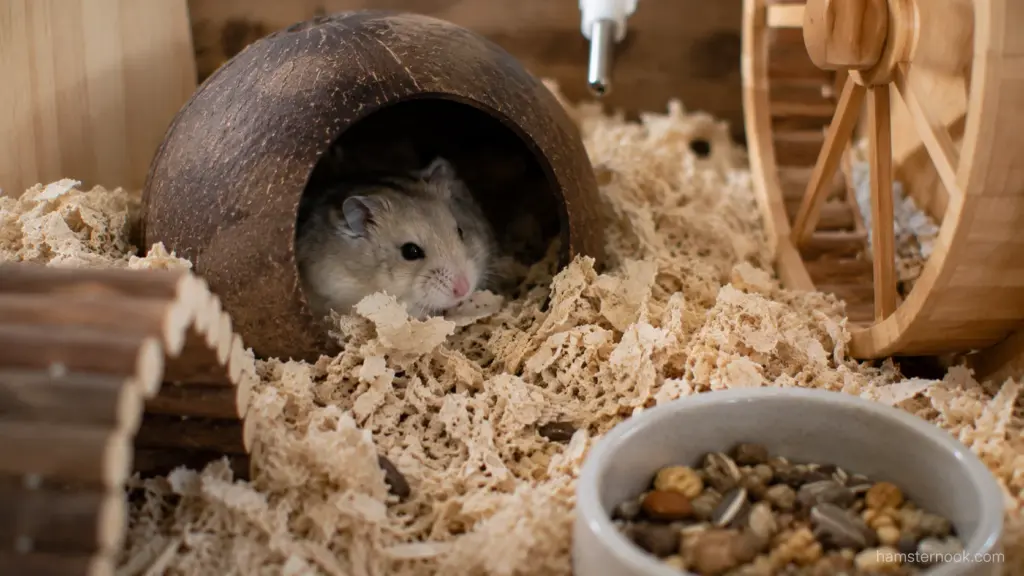
In the wild, hamsters avoid open areas whenever possible because exposed animals are more vulnerable to predators.
Even pet hamsters retain these instincts. A secure hideout, burrow, or nesting area allows them to rest and feel protected, which is why spending long periods out of sight is often completely normal.

Common Reasons Your Hamster May Be Hiding More Than Usual
When hiding behavior increases suddenly, there is usually a reason behind it.
Sometimes a hamster hides more because it has found a new favorite nesting spot. Other times, the behavior can be linked to stress, environmental changes, or an underlying health issue.
Your Hamster Is Adjusting to a New Environment
A newly adopted hamster often hides much more than expected.
Moving to a new home can be overwhelming. New sounds, smells, lighting, and surroundings can make even a healthy hamster feel vulnerable.

During the first few days or even weeks, increased hiding is often part of the adjustment process.
This is one reason many owners accidentally create problems by interacting too soon. If you’ve recently brought your hamster home, our The First 30 Days With a Hamster: Mistakes That Can Affect Trust and Health guide explains how early handling and environmental changes can affect adjustment and trust.
Your Hamster Is Sleeping More During the Day
Hamsters are naturally most active during the evening, nighttime, and early morning hours.
Many owners only see their pets during daytime hours and assume something is wrong when the hamster stays hidden.

A hamster that appears inactive during the day may simply be following its normal sleep schedule.
If you rarely see your hamster during the day, our Why Is My Hamster Sleeping So Much? Normal Sleep vs Warning Signs guide explains when increased sleep can be normal and when other changes deserve attention.
Seasonal Changes Can Affect Activity
Some hamsters may become less active when their environment is colder or when their light schedule changes.
Pet hamsters should be kept in a stable, suitable environment rather than exposed to cold conditions. If increased hiding occurs alongside unusual lethargy or other signs of illness, do not assume the change is simply seasonal.

Monitoring room temperature can help determine whether environmental changes are influencing behavior.
If temperature may be affecting your hamster’s activity, our Hamster Temperature: Safe Range, Too Hot & Too Cold guide explains how temperature changes can affect hamsters.
Your Hamster Has Found a Better Nesting Spot
Sometimes increased hiding isn’t a sign of a problem at all.
Hamsters constantly modify their sleeping and nesting areas. A hamster that suddenly disappears may have simply created a new burrow system under deep bedding where it feels more secure.

Owners using deeper bedding often notice this behavior because hamsters spend more time underground.
If you’re unsure whether your hamster has enough bedding for natural burrowing, our How Much Bedding Does a Hamster Need? Minimum Depth Guide for Healthy Burrowing guide explains the role of deep bedding.
Is Your Hamster Still Coming Out at Night?
Many owners become concerned because they rarely see their hamster during the day.
A useful test is to check for signs of activity overnight, such as:

- Food disappearing
- Water level changes
- Fresh wheel usage
- New digging activity
- Rearranged nesting material
Nighttime activity often provides a better picture of your hamster’s overall health than daytime visibility.
Normal Hiding vs Concerning Hiding
Not all hiding behavior carries the same meaning.
The table below can help identify when increased hiding is likely harmless and when it may deserve further investigation.
| Normal Hiding Behavior | Potentially Concerning Hiding Behavior |
|---|---|
| Hides during daylight hours but becomes active at its usual time | Remains unusually inactive during its normal waking hours |
| Comes out to eat and drink | Stops eating or drinking normally |
| Uses its wheel or explores at night | Shows a marked reduction in activity |
| Maintains normal body weight | Noticeable weight loss |
| Appears alert when awake | Appears weak, lethargic, or has difficulty moving |
| Grooms regularly | Unkempt fur alongside other signs of illness |
The most important thing to watch is what your hamster does when it finally emerges from hiding.

Signs Stress May Be Causing the Hiding
Stress is one of the most common reasons hamsters suddenly become more withdrawn.
Stress can be triggered by:
- Frequent handling
- Loud noises
- Cage rearrangements
- Other pets nearby
- Inadequate enclosure size
- Lack of hiding places
When a hamster feels unsafe or unsettled, spending more time hidden is often its way of avoiding what it perceives as potential danger.
Additional signs of stress may include:
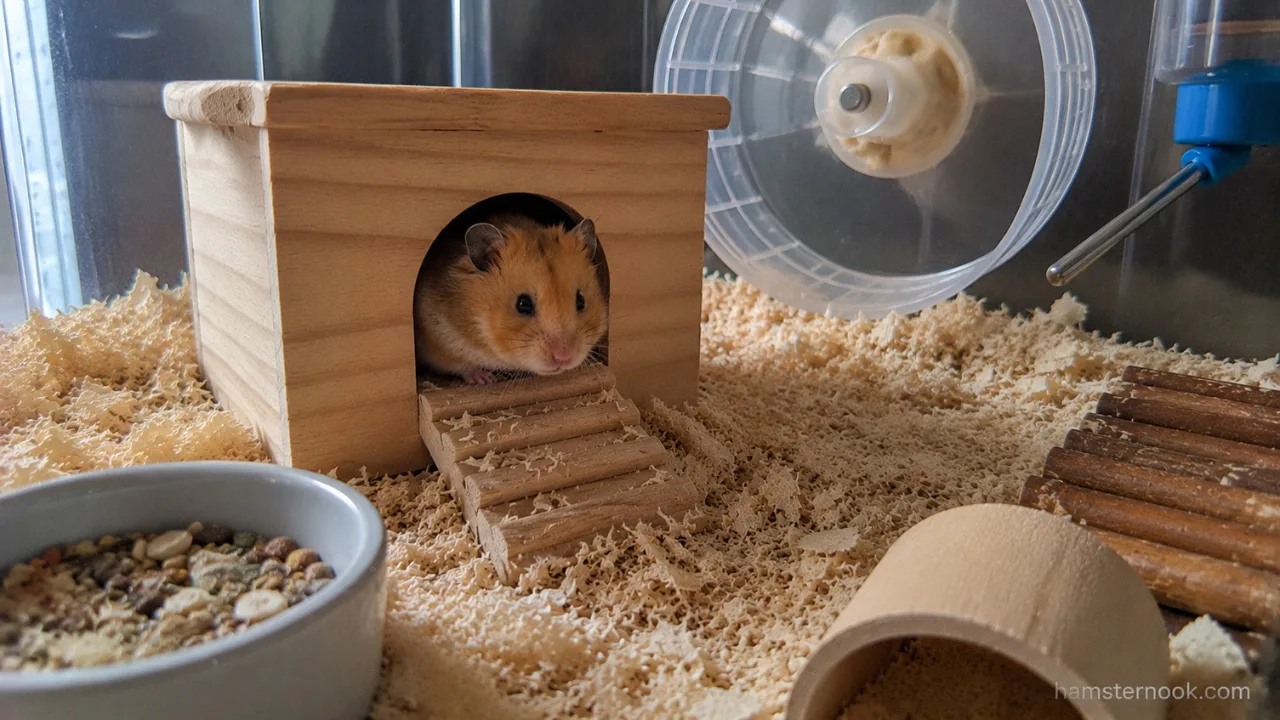
- Freezing when approached
- Excessive grooming
- Cage bar chewing
- Jumping at sudden sounds
- Avoiding interaction
Owners noticing multiple stress-related behaviors may also benefit from reading Signs Your Hamster Is Stressed and How to Fix It for a deeper look at environmental stressors.
Could Illness Be Making Your Hamster Hide?
Yes.
Hamsters often hide symptoms of illness surprisingly well. In the wild, showing weakness can attract predators, so sick hamsters instinctively conceal their condition.
If hiding is accompanied by other symptoms, health problems become more likely.

Watch for:
- Weight loss
- Poor appetite
- Diarrhea
- Wet tail area
- Labored breathing
- Discharge from eyes or nose
- Lack of grooming
- Difficulty moving
A hamster showing these signs should be evaluated by an experienced exotic animal veterinarian.
Because hamsters may show subtle signs when unwell, a noticeable change in behavior deserves attention. Our How to Tell If Your Hamster Is Sick: Signs, Symptoms & When to See a Vet guide explains additional warning signs owners should watch for.
Why Older Hamsters Sometimes Hide More
Aging hamsters often become less active than they were in their younger years.

As hamsters grow older, they may:
- Sleep longer
- Exercise less
- Spend more time nesting
- Move more slowly
This gradual change is usually normal if the hamster continues eating, drinking, and maintaining a healthy body condition.
If you’re unsure whether age or illness is responsible, keeping track of activity levels over several weeks can be helpful.
Could Your Hamster’s Enclosure Be Encouraging More Hiding?
Sometimes the enclosure itself contributes to excessive hiding.

Hamsters feel safest when their environment provides:
- Deep bedding
- Multiple hides
- Tunnels
- Quiet resting areas
- Adequate floor space
Ironically, a hamster with too few hiding places may become even more withdrawn because it never feels fully secure.
On the other hand, a hamster housed in a very small enclosure may display unusual inactivity because it lacks opportunities for natural exploration.
Deep bedding gives hamsters more opportunity to dig and build burrows; our How Much Bedding Does a Hamster Need? Minimum Depth Guide for Healthy Burrowing explains how bedding depth supports natural burrowing behavior.

Signs the Hiding Is Probably Normal
In most cases, hiding is not a problem if your hamster:
- Eats normally
- Drinks normally
- Maintains body weight
- Uses the wheel occasionally
- Grooms regularly
- Appears alert when awake
These signs are reassuring, but they do not completely rule out illness if increased hiding is a new or marked change in your hamster’s behavior.
Common Mistakes Owners Make When a Hamster Hides
When owners stop seeing their hamster regularly, they often react in ways that accidentally make the situation worse.
Waking the Hamster Repeatedly
Digging a hamster out of its nest may increase stress and damage trust.
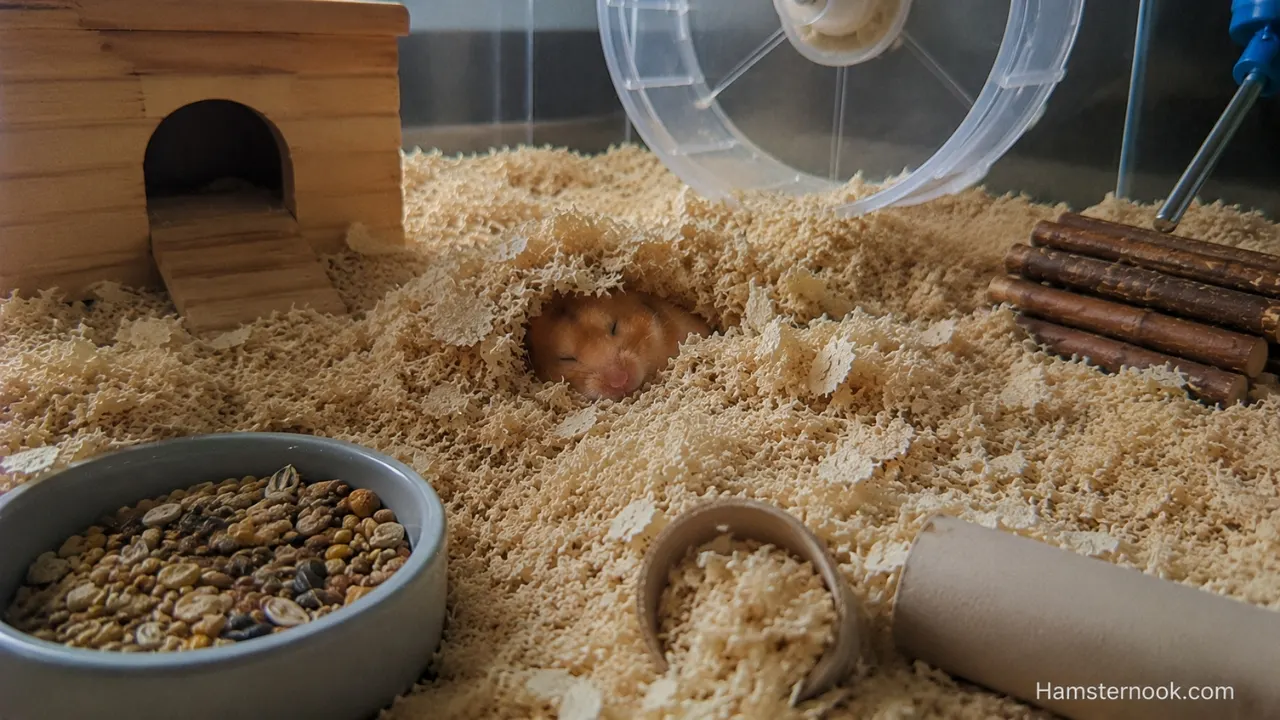
Allow your hamster to wake naturally whenever possible.
Removing Bedding to Check Constantly
Owners sometimes destroy carefully built burrows while searching for their hamster.
Frequent disruption can make the hamster feel less secure.
Rearranging the Entire Cage
Changing everything at once may create additional stress.

If adjustments are needed, make gradual changes rather than completely redesigning the enclosure overnight.
Assuming the Hamster Is Lonely
Hamsters are generally solitary animals.
Increased hiding is rarely caused by loneliness and usually has another explanation.
How to Encourage a Shy Hamster to Come Out More
The goal should not be forcing the hamster out but helping it feel safe enough to emerge naturally.

Helpful strategies include:
| Action | Why It Helps |
|---|---|
| Speak softly near the enclosure | Helps your hamster become familiar with your presence |
| Offer an occasional suitable treat | Can build positive associations without forcing interaction |
| Maintain a consistent routine | Reduces sudden changes and uncertainty |
| Avoid sudden movements | Helps prevent fear responses |
| Provide suitable enrichment and hiding places | Supports natural exploration and gives your hamster safe choices |
| Respect sleeping hours | Protects normal rest and reduces unnecessary disturbance |
As confidence grows, most hamsters gradually become more willing to explore and interact with their surroundings.
When Should You Contact a Veterinarian?
Consider seeking veterinary advice if hiding behavior is accompanied by:
- Significant weight loss
- Refusal to eat
- Refusal to drink
- Persistent lethargy
- Breathing difficulties
- Diarrhea
- Visible injuries
- Sudden personality changes
These signs suggest the problem may be more than simple shyness or normal hiding behavior.

If your hamster also seems unusually weak or lethargic, our Why Is My Hamster Suddenly Weak? 9 Causes, Warning Signs & What to Do guide explains related warning signs and when veterinary attention may be needed.
Because hamsters can become seriously ill quickly, prompt veterinary assessment is safer when increased hiding occurs alongside signs such as loss of appetite, weight loss, breathing difficulty, diarrhea, or marked lethargy.
Final Thoughts
A hamster that suddenly seems to disappear can worry even experienced owners, but increased hiding is often part of normal hamster behavior rather than an immediate sign of trouble. Hamsters are naturally cautious animals that spend much of their lives seeking shelter, resting in burrows, and avoiding perceived threats.
The most important question is not whether your hamster is hiding, but how it behaves when it does emerge. A hamster that continues eating, drinking, exploring, and showing curiosity is often simply following its natural instincts.

However, if increased hiding is paired with weight loss, lethargy, appetite changes, or other unusual symptoms, it may be time to look more closely at stress levels, environmental factors, or potential health concerns.
The more familiar you become with your hamster’s usual routine, the easier it becomes to spot when something genuinely seems off and needs attention.
Frequently Asked Questions
Why is my hamster suddenly hiding all day?
This may be due to stress, adjustment to a new environment, seasonal changes, aging, or simply a shift in sleeping patterns. Look for additional symptoms before assuming there is a problem.
Is it normal for a hamster to stay in its burrow for days?
Some hamsters spend extended periods in their burrows, especially if they have deep bedding. However, they should still come out periodically to eat and drink.

Should I wake my hamster if it keeps hiding?
No. Waking a sleeping hamster can increase stress and may lead to defensive behavior. Allow your hamster to follow its natural schedule.
How can I tell if my hamster is sick or just hiding?
A sick hamster often shows additional symptoms such as weight loss, poor appetite, lethargy, breathing problems, or changes in grooming habits.
Why does my hamster hide after I clean the cage?
Cleaning removes familiar scents that help hamsters feel secure. Some temporary hiding behavior is common after cage cleaning.
Do hamsters hide more as they get older?
Older hamsters may naturally become less active and spend more time resting or nesting. However, a new or marked increase in hiding should not automatically be attributed to age, especially if it occurs alongside changes in appetite, weight, grooming, breathing, or activity.
References
This guide is based on hamster behavior, hiding habits, environmental needs, stress, health monitoring, and welfare guidance from trusted animal welfare and veterinary resources, including:
- RSPCA – Hamster Behaviour – Guidance on natural hiding behavior, activity patterns, environmental needs, and signs of stress.
- RSPCA – Creating a Good Home for Hamsters – Information on secure hiding places, bedding, burrowing, enclosure setup, and environmental comfort.
- RSPCA – Hamster Health – Guidance on recognizing changes in behavior, monitoring health, and identifying signs that may require veterinary attention.
- Blue Cross – Hamster Care Guide – Practical advice on hamster housing, bedding, sleeping habits, handling, enrichment, and general wellbeing.
- MSD Veterinary Manual – Providing a Home for a Hamster – Veterinary guidance on enclosure design, bedding, burrowing, hiding places, and suitable environmental conditions.
- MSD Veterinary Manual – Disorders and Diseases of Hamsters – Veterinary information on common hamster health problems and symptoms that may require professional assessment.
- NC3Rs – Housing and Husbandry: Hamster – Guidance on appropriate housing, bedding, burrowing opportunities, and hamster welfare.
Medical Disclaimer
This article is intended for educational purposes only and should not be considered veterinary advice. Hiding is a natural hamster behavior, but a sudden or persistent change may sometimes indicate stress, illness, or another health concern. If your hamster shows additional symptoms such as weight loss, loss of appetite, diarrhea, breathing difficulties, unusual weakness, or marked lethargy, consult a qualified exotic animal veterinarian promptly.

Narayan Kumar is the founder and author of HamsterNook. He creates practical, research-based hamster care guides covering hamster behavior, nutrition, cage setup, enrichment, health, and everyday care. His goal is to help hamster owners make informed decisions and provide safer, healthier lives for their pets through clear, beginner-friendly information based on trusted animal care resources.