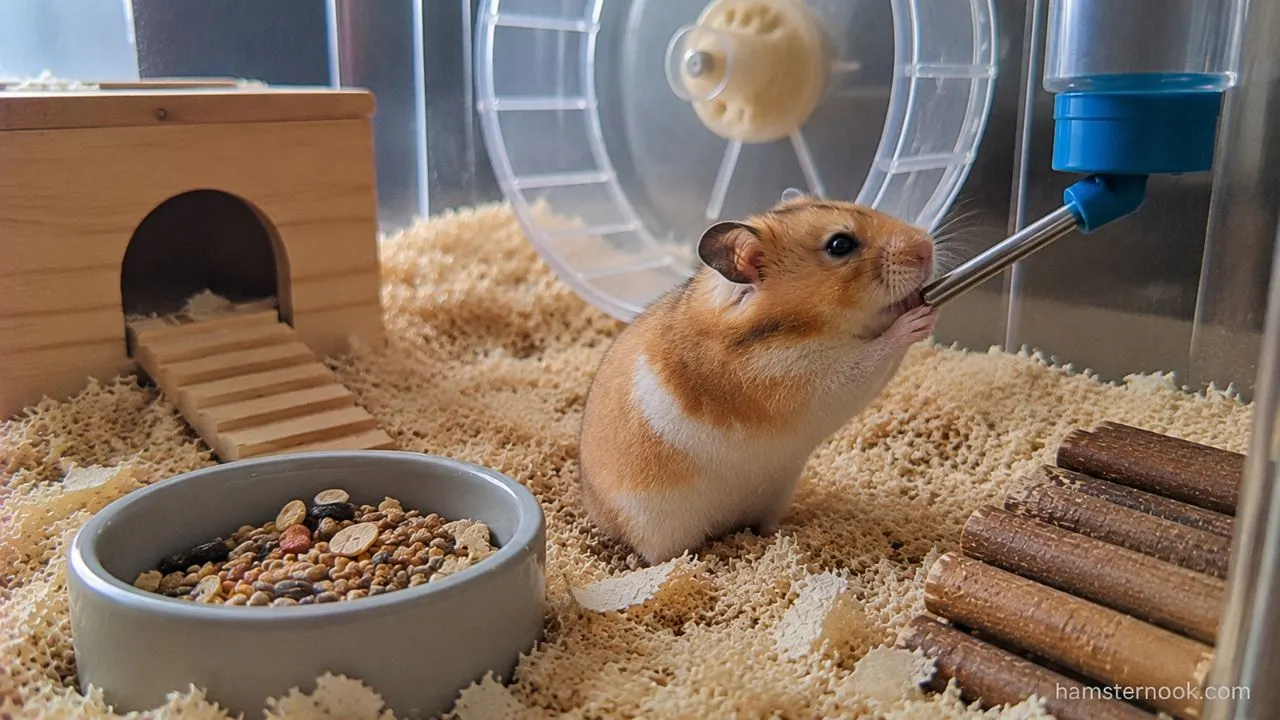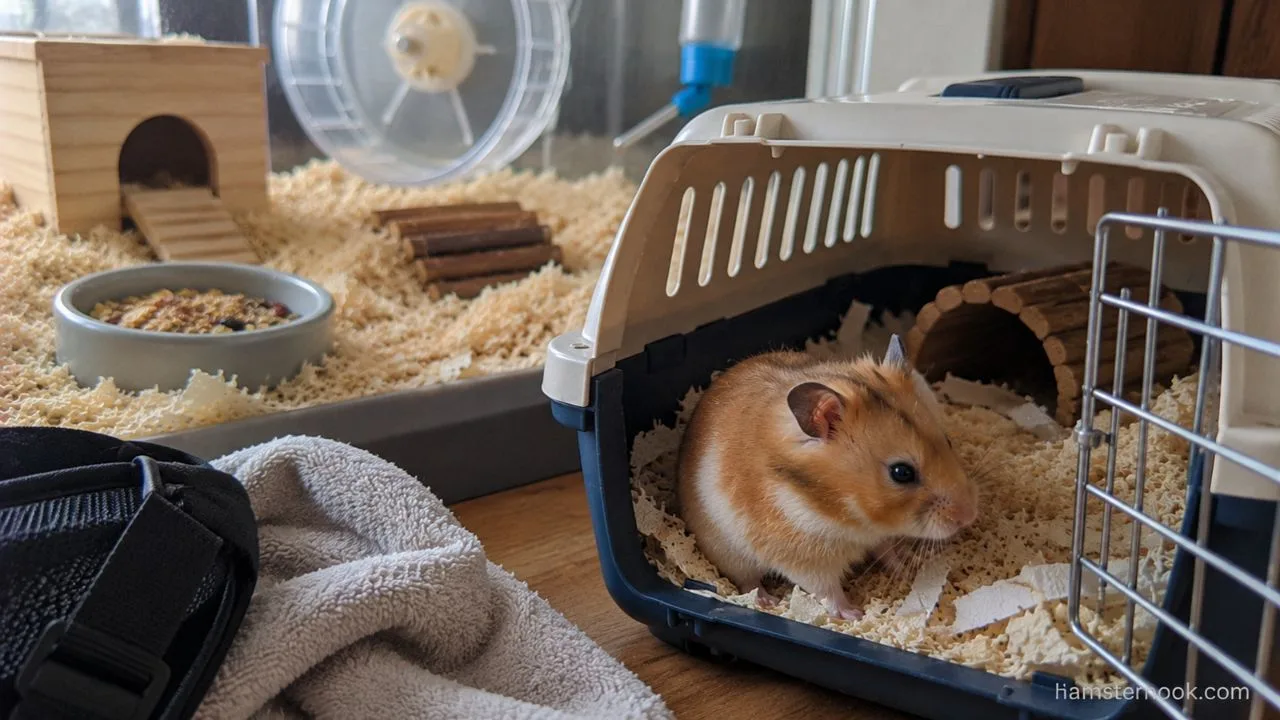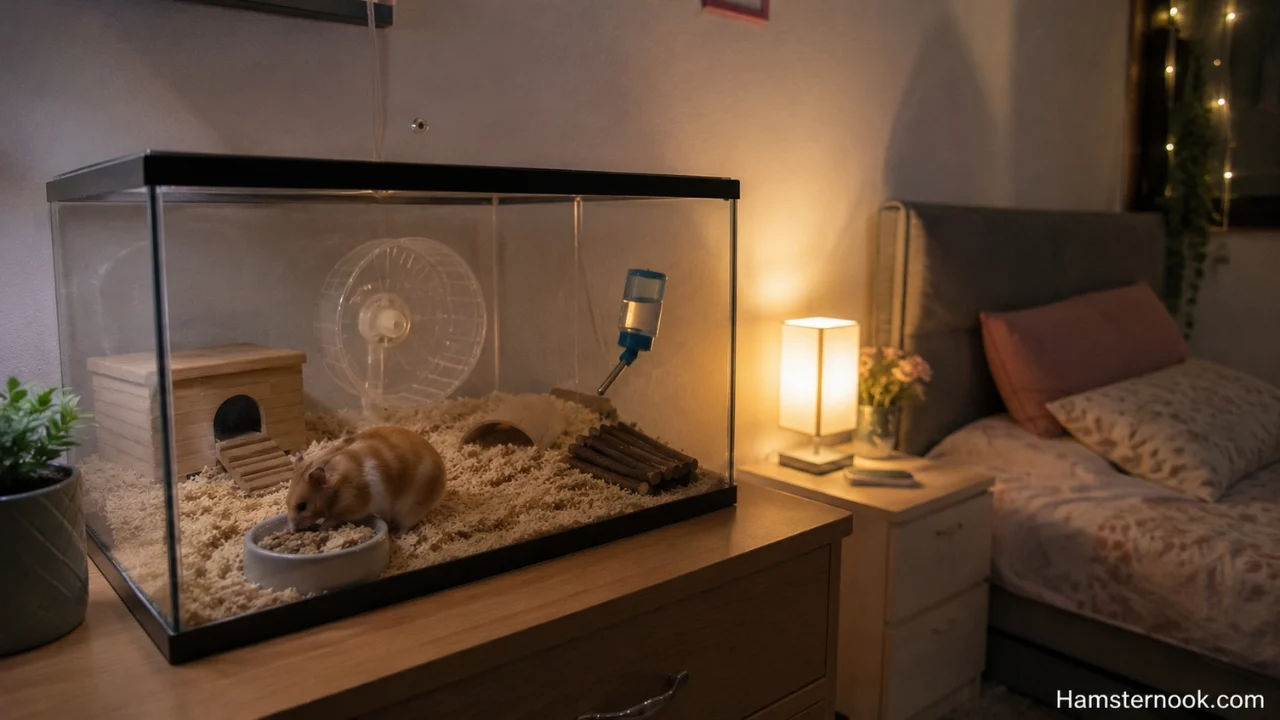
Many first-time hamster owners place their hamster’s enclosure in a bedroom because it’s convenient, easy to monitor, and often one of the quieter rooms in the house. But is a bedroom actually a good place for a hamster cage?
The answer depends on the room’s environment, your daily habits, and whether the setup can support your hamster’s welfare without creating ongoing disruptions for either you or your pet.
Quick Answer
A hamster cage can be kept in a bedroom, but a bedroom is not automatically the best choice. The room should be quiet during the hamster’s daytime rest, well-ventilated, protected from drafts and direct sunlight, and kept on a predictable light-dark schedule. Nighttime wheel running, digging, chewing, and other activity can also disturb your sleep. If those sounds are likely to cause you to disturb the hamster, another suitable room may be better.
Why Bedroom Placement Is So Common
For many owners, the bedroom is the most practical option.
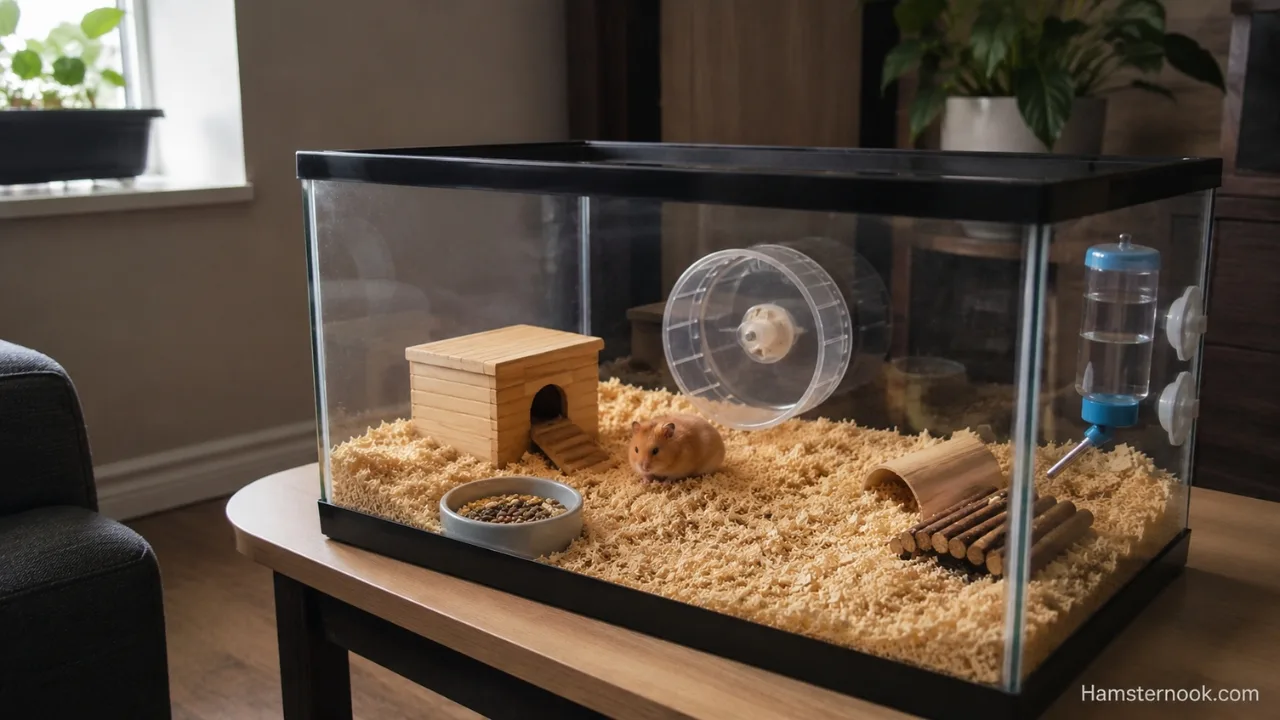
Unlike busy living rooms, bedrooms often have:
- More predictable noise levels
- Less foot traffic
- Better control over lighting
- Easier daily observation
- Fewer disturbances from visitors
These factors can create a calmer environment than heavily used household areas.
Animal welfare guidance emphasizes providing a secure environment where hamsters can rest undisturbed during daylight hours and carry out natural behaviors during their active periods. A quiet bedroom can often support those needs when managed properly.
Understanding a Hamster’s Natural Schedule
Before deciding where to place a cage, it helps to understand how hamsters naturally behave.
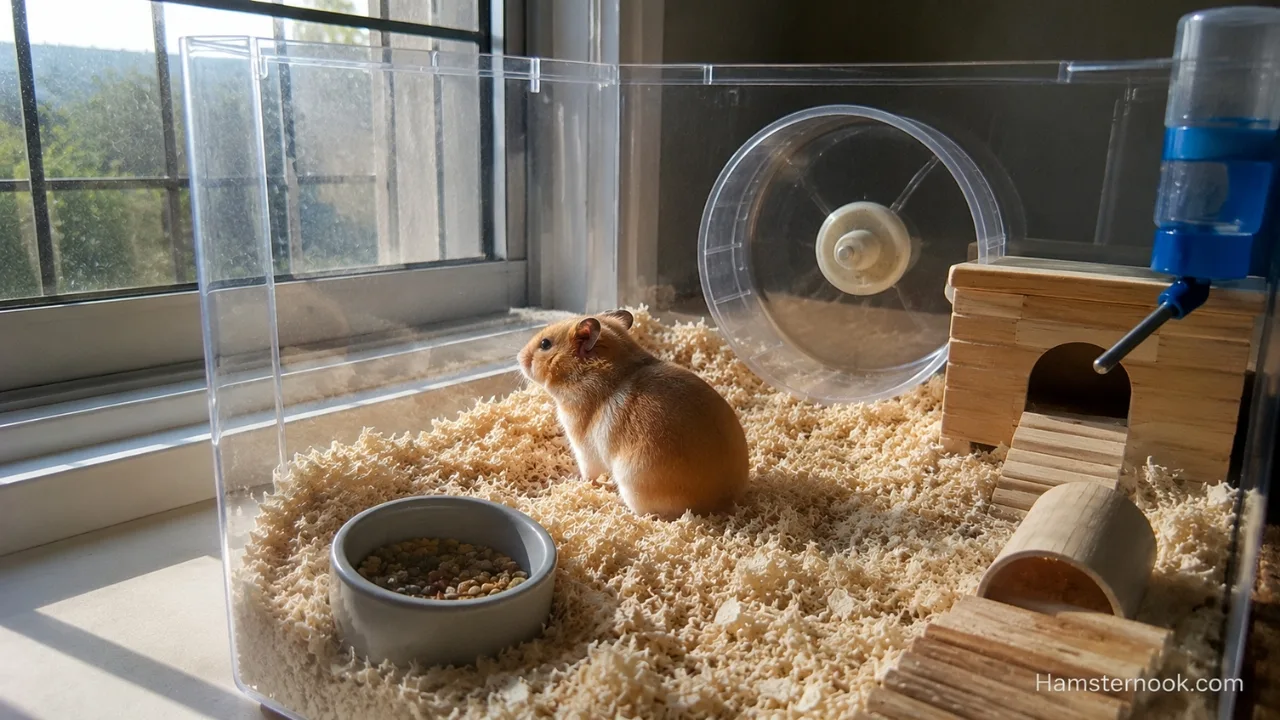
Hamsters are generally most active during the evening, nighttime, and early morning hours. While individual schedules vary, most pet hamsters sleep for much of the day and become active after sunset.
This creates a potential challenge for bedroom housing.
When you’re trying to sleep, your hamster may be:
- Running on its wheel
- Digging tunnels
- Rearranging bedding
- Carrying food
- Climbing enrichment items
- Exploring the enclosure
Many new owners underestimate how active and surprisingly noisy a healthy hamster can be overnight.

Pros and Cons of Keeping a Hamster Cage in a Bedroom
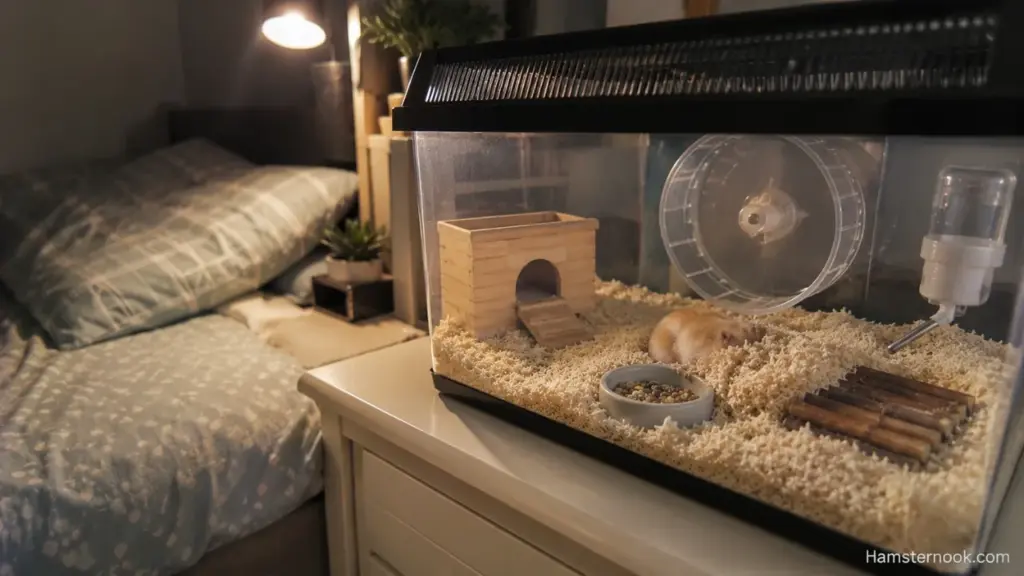
| Pros | Cons |
|---|---|
| Easier to monitor your hamster daily | Nighttime activity may disturb sleep |
| Often quieter than shared living areas | Wheel noise can become noticeable |
| Better control over room temperature | Late-night digging and chewing sounds |
| Reduced risk of visitors disturbing the cage | Bedroom lights may interfere with active periods if used late |
| Convenient for feeding and spot cleaning | Strong odors become more noticeable if cleaning is neglected |
The right choice depends on both your hamster’s needs and your own tolerance for nighttime sounds.
Benefits of Keeping a Hamster Cage in a Bedroom
Easier Health and Behavior Monitoring
One advantage of bedroom housing is that you see your hamster more often.
Small changes in behavior can be easier to notice, such as:
- Reduced activity
- Changes in eating habits
- Unusual sleeping patterns
- Increased hiding
- Altered wheel usage
Early observation helps owners respond quickly when something seems unusual.

More Consistent Environmental Conditions
Bedrooms often maintain a more stable environment than kitchens, garages, or hallways.
Even within the same room, conditions can vary significantly depending on proximity to windows, heaters, vents, and exterior walls.
Hamsters generally do best in areas that avoid:
- Drafts
- Direct sunlight
- Rapid temperature fluctuations
- Constant noise
A well-regulated bedroom can provide those conditions.
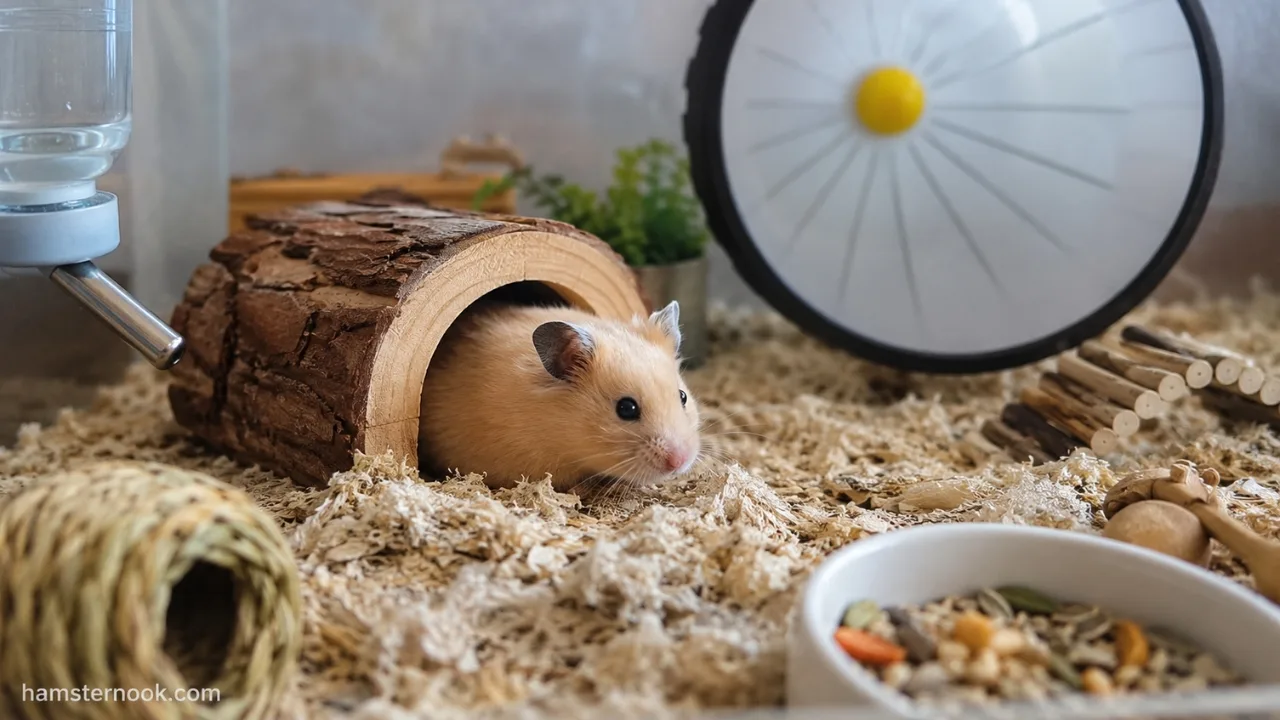
Room choice can have a major impact on your hamster’s comfort and daily routine. Read Where Should You Put a Hamster Cage? Best & Worst Places Explained for a detailed guide to choosing the right location.
Less Daytime Disturbance
In many homes, bedrooms remain relatively quiet during the day.
This can benefit hamsters because uninterrupted daytime sleep is an important part of their normal routine. Frequent interruptions during rest periods can cause unnecessary stress.
Better Bonding Opportunities
Owners who keep their hamster nearby often spend more time observing normal behaviors.
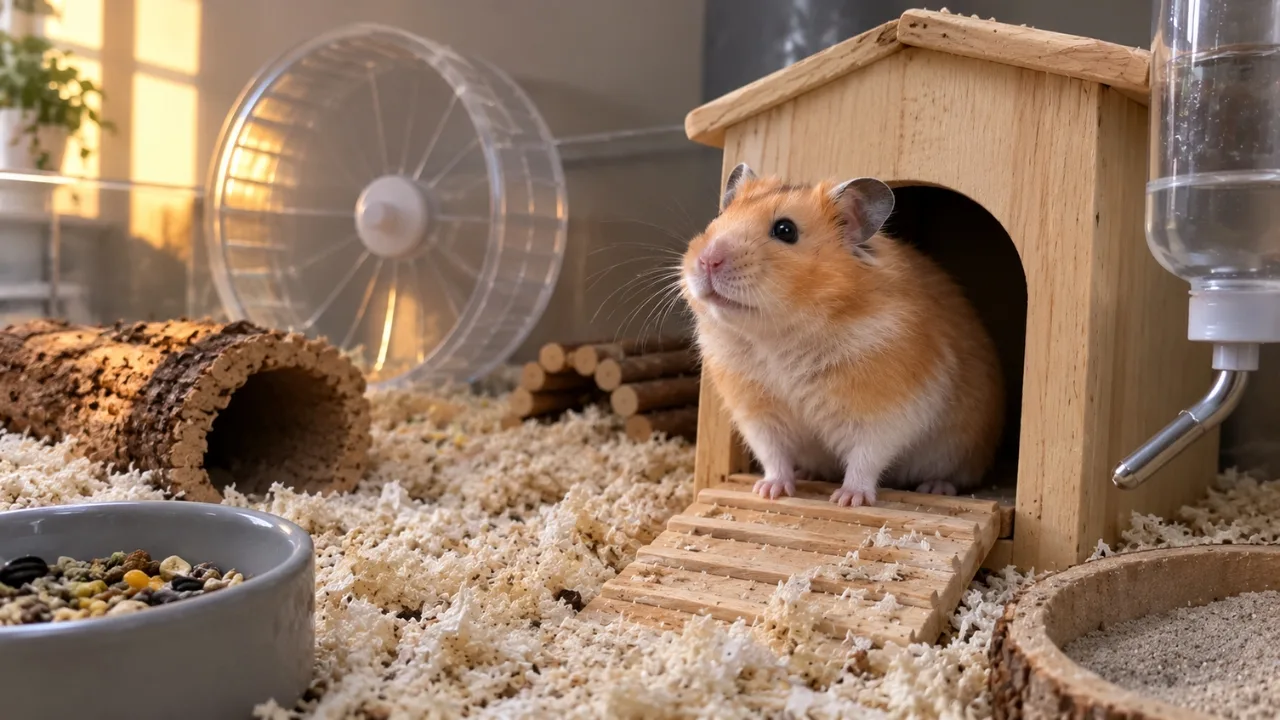
Watching your hamster forage, tunnel, groom, and explore can help you better understand its personality and routine.
Potential Drawbacks of Bedroom Housing
Nighttime Noise
This is the most common issue owners encounter.
Even with a high-quality wheel, you may hear:
- Running
- Digging
- Bedding movement
- Food storage activity
- Chewing noises
Some people adapt quickly. Others find even quiet enclosure sounds disruptive.

If possible, spend a few nights listening to the enclosure before committing to a permanent bedroom setup, especially if you are a light sleeper.
The hamster isn’t being unusually active—it’s simply following its natural schedule.
Late-Night Lighting
Many people use bedrooms long after sunset.
Bright lights, televisions, gaming setups, and computer monitors may increase light exposure during the hamster’s normal active period.
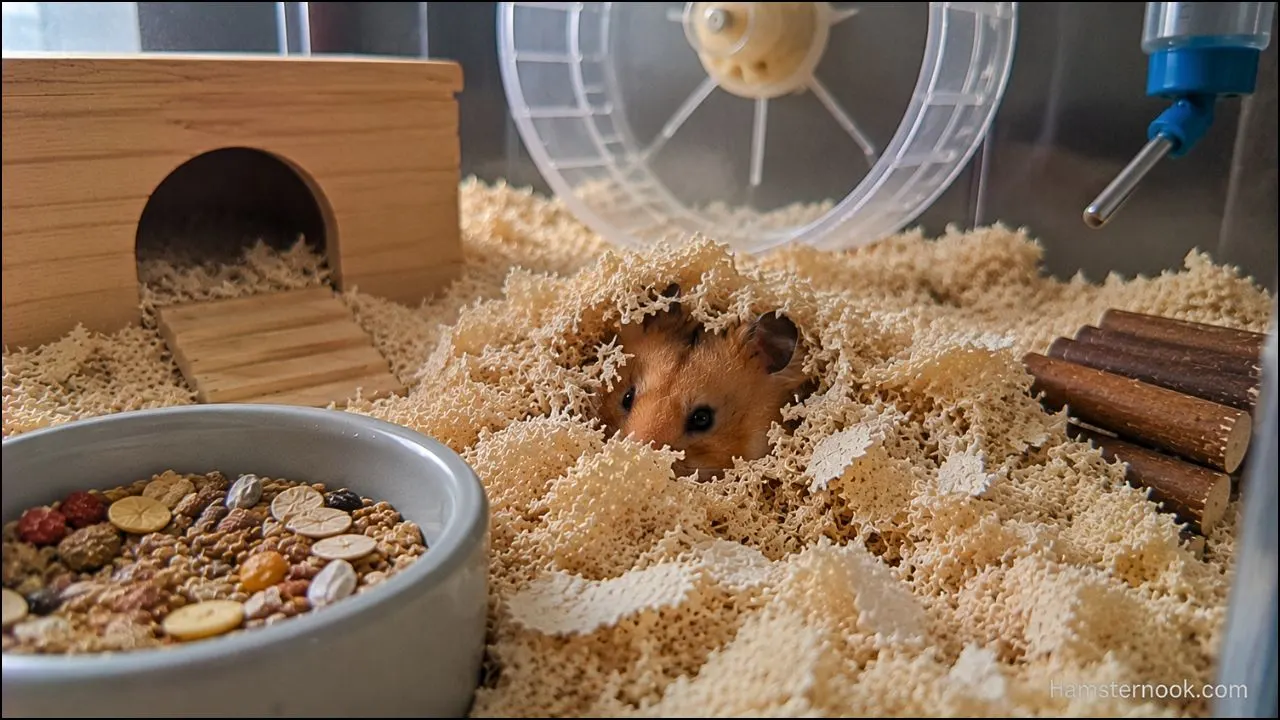
Hamsters benefit from a predictable light-dark routine. If bedroom lights, screens, or other activity remain on late every night, consider whether the enclosure can be positioned in a darker, quieter part of the room or whether another suitable room would provide a more consistent environment.
Lighting plays an important role in regulating activity patterns. Our Do Hamsters Need Light? Daylight, Darkness & Night Lights Explained guide covers how lighting and darkness affect a hamster’s routine.
Limited Space
Some bedrooms simply don’t have enough room for an appropriately sized enclosure.
Modern welfare recommendations generally favor larger enclosures that allow space for:

- Deep bedding
- A suitable wheel
- Multiple hides
- Enrichment opportunities
- Natural behaviors such as burrowing and foraging
If placing the cage in a bedroom means choosing a smaller enclosure, another room may be the better option.
What Makes a Bedroom Safe for a Hamster?
Not every bedroom provides an ideal environment.
Several conditions should be met before placing a hamster cage there.
Stable Temperature
Hamsters are sensitive to temperature extremes.

The enclosure should not be positioned:
- Next to radiators
- Near air-conditioning vents
- Beside drafty windows
- In direct sunlight
A stable room temperature is generally safer than areas that heat up or cool down rapidly.
Good Ventilation
Fresh air circulation is important, but strong drafts are not.
A room with poor airflow can become uncomfortable and may make it harder to maintain a fresh, comfortable environment.
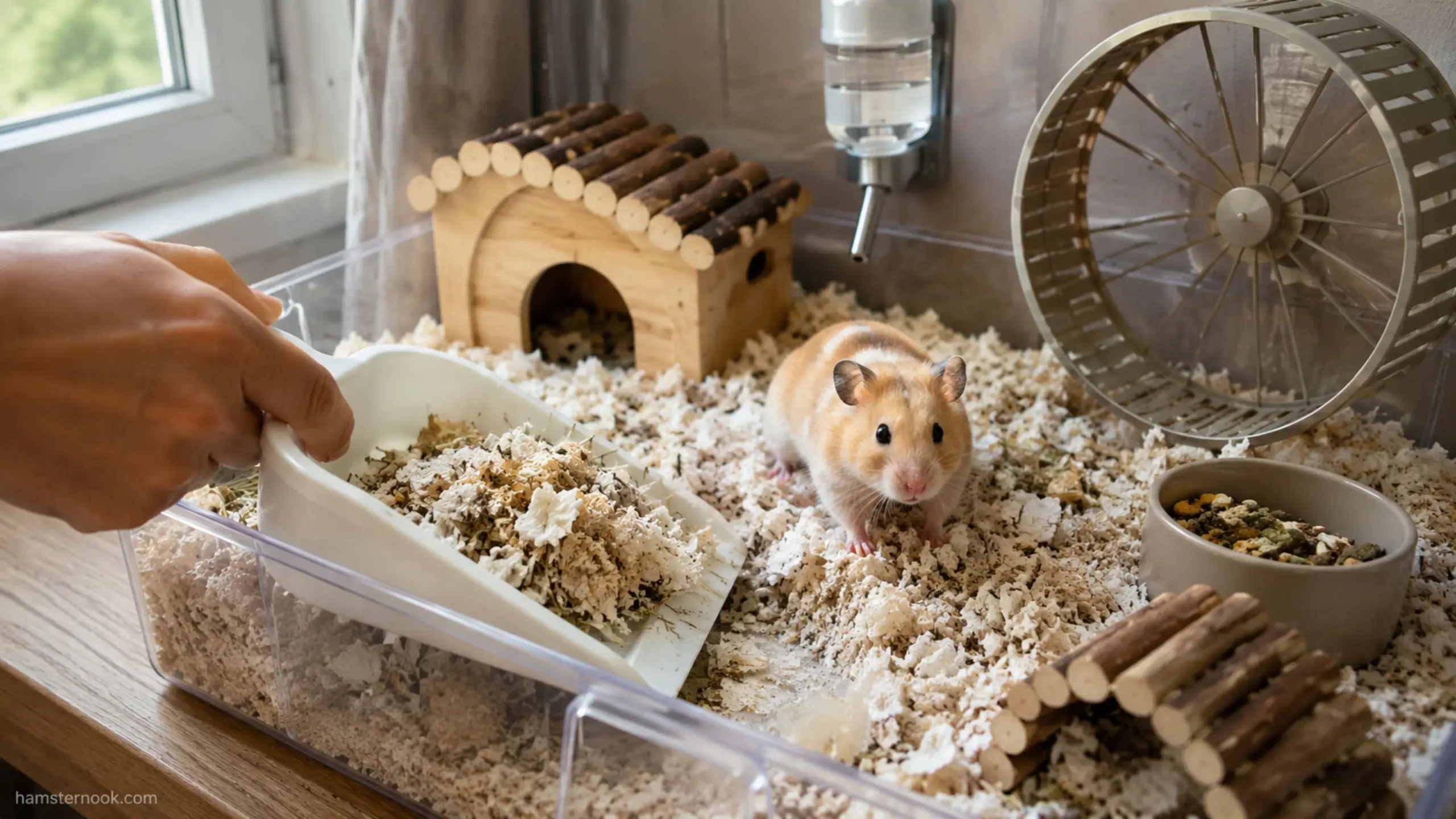
Quiet During Daytime Rest
Remember that your hamster’s main sleeping period occurs when you’re awake.
Bedrooms that remain relatively calm during the day are often more suitable than rooms with constant activity.
Safe Distance From Other Pets
If cats or dogs have access to the bedroom, the enclosure should be placed where the hamster cannot be disturbed, stared at constantly, or physically reached.
Even when no contact occurs, the presence of predators can be stressful for some small animals.
Can Hamsters Sleep in the Same Room as Humans?
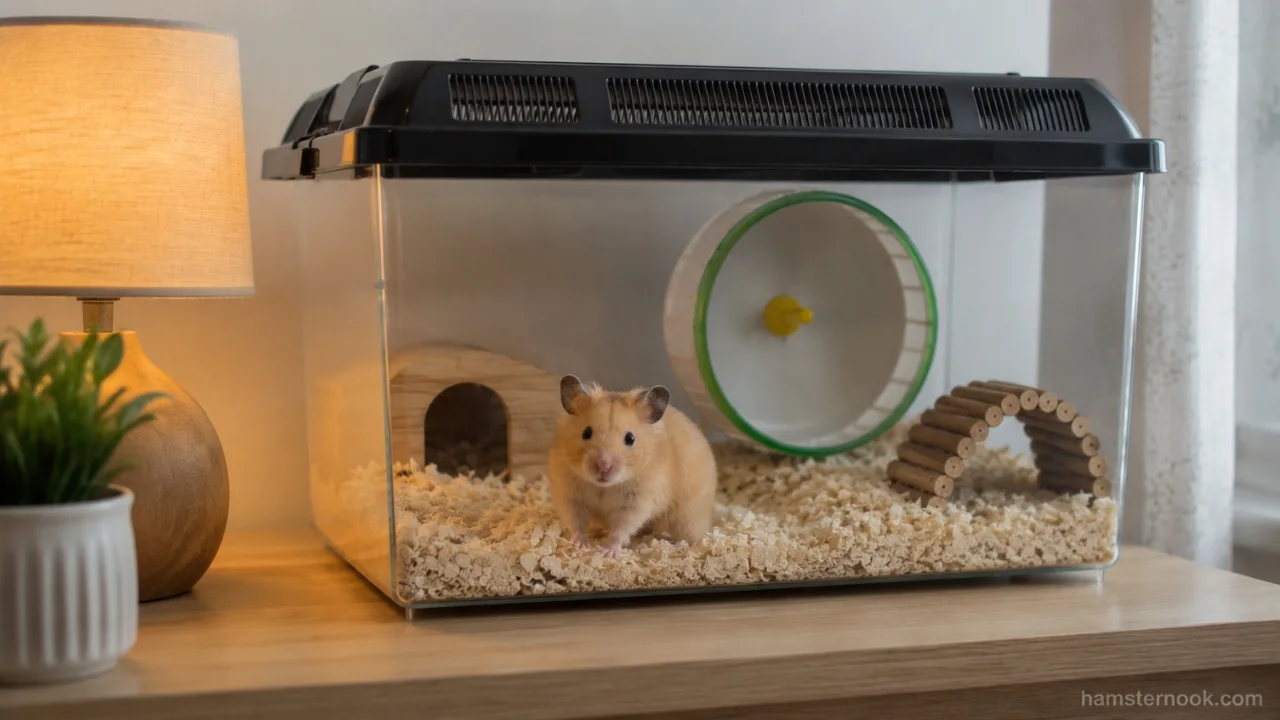
A hamster can share a bedroom with a human, but that does not mean a bedroom is always the ideal location. RSPCA guidance specifically notes that hamsters are active when people are sleeping and advises against placing a hamster in a bedroom if nighttime activity is likely to disturb sleep. PDSA also recommends keeping a hamster’s home in a quiet, calm location away from noisy household equipment.
If a bedroom is the only practical option, the setup should still protect the hamster’s daytime rest, provide stable environmental conditions, and allow you to sleep without repeatedly disturbing the enclosure.
Practical Examples
Example 1: Quiet Adult Bedroom
A bedroom used mainly for sleeping, with stable temperatures and minimal daytime disturbance, can be a suitable location for a hamster enclosure.
Example 2: Gaming Room and Bedroom Combined
A room with bright screens, loud audio, and activity late into the night may be less ideal if those conditions occur every evening.
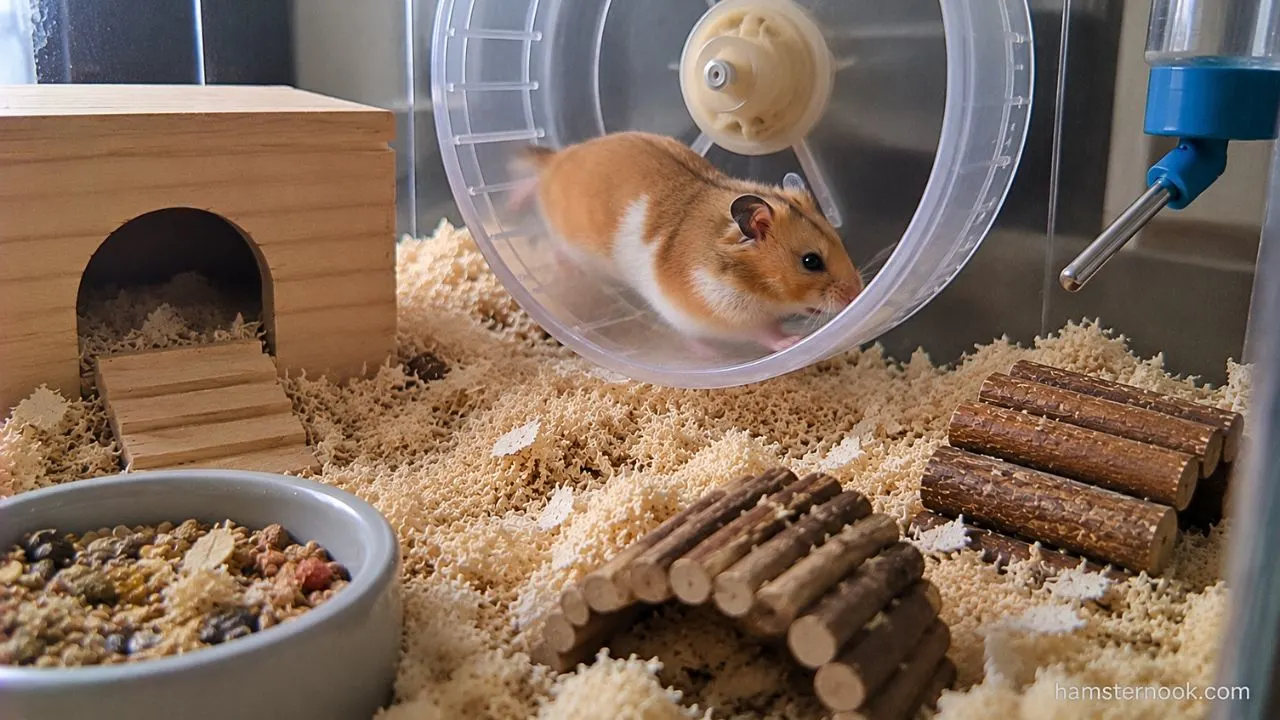
Example 3: Small Bedroom Near a Sunny Window
Even if the room itself seems suitable, direct sunlight hitting the enclosure can create temperature problems and should be avoided.
Window placement can affect temperature stability, sunlight exposure, and overall comfort. Read Should a Hamster Cage Be Near a Window?.
Does Cage Placement Within the Bedroom Matter?
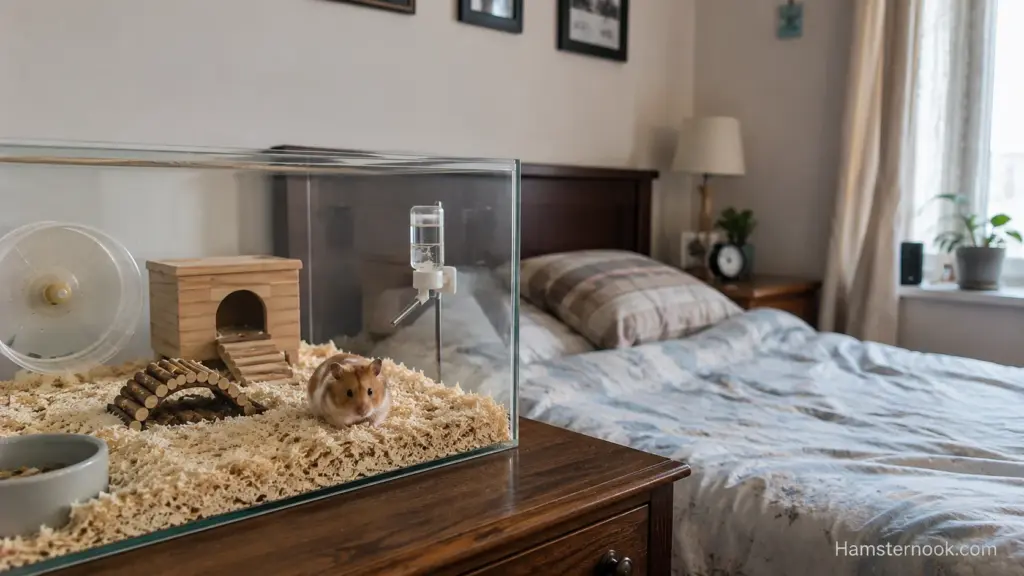
Absolutely.
Where you place the enclosure inside the room can make a significant difference.
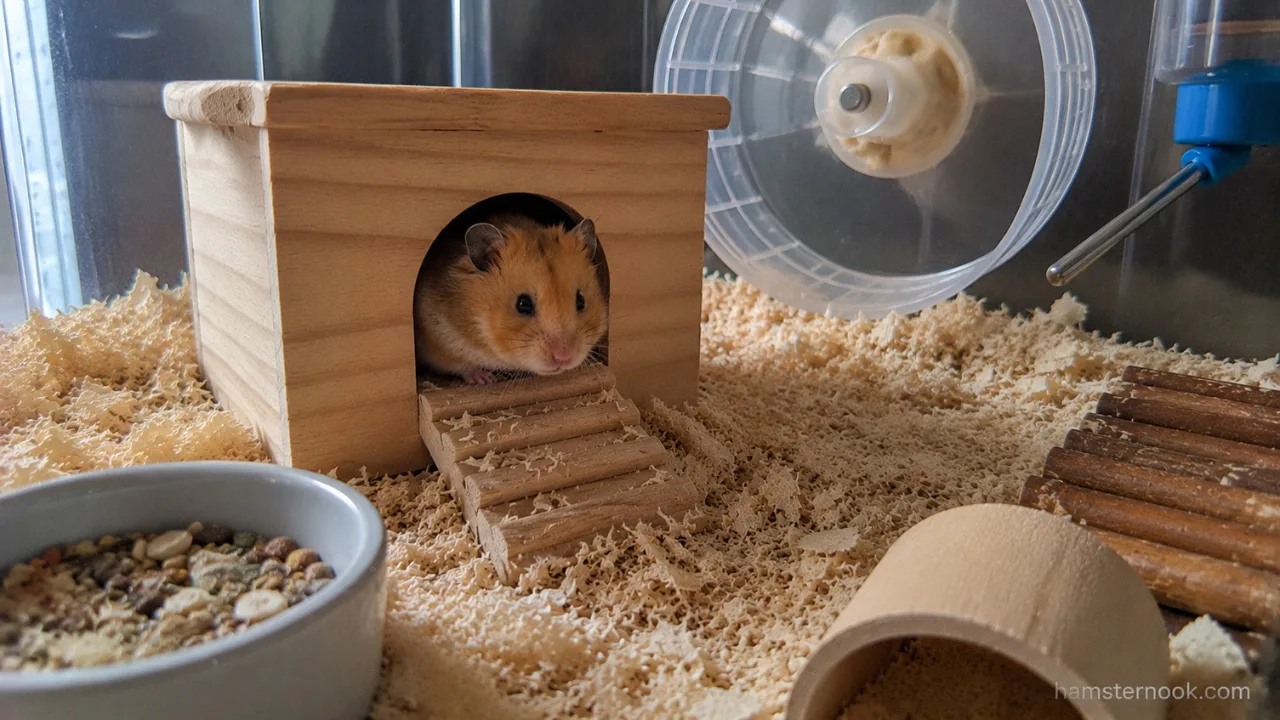
Good locations often include:
- Against an interior wall
- Away from direct sunlight
- Away from radiators and vents
- In a low-traffic corner
- On a stable stand or furniture surface
Poor locations include:
- Directly beside a speaker
- Under a window with intense sunlight
- Next to a frequently used door
- Close to heating equipment
A hamster benefits most from consistency and predictability in its environment.
Once you find a suitable location, it is usually best to keep the enclosure in the same place rather than moving it frequently around the room.

Common Mistakes Owners Make
Bedroom placement can work very well, but a few common mistakes can make the environment less comfortable for both the hamster and the owner.
Choosing the Bedroom Only for Convenience
Some owners place the cage in their bedroom simply because it is the easiest location available. The better approach is to evaluate whether the room actually meets the hamster’s needs for space, temperature stability, ventilation, and daytime quiet.
Ignoring Nighttime Noise
Many people don’t realize how active hamsters become after dark.
A hamster running on a wheel, digging through deep bedding, carrying food, and rearranging its nest is behaving normally. Expecting complete silence often leads to frustration later.

Placing the Cage Near a Window
Windows can create temperature fluctuations throughout the day and night.
Direct sunlight may also warm part of the enclosure more than expected. Animal welfare organizations generally recommend avoiding direct sunlight and maintaining a stable environment.
Using Loud Electronics Nearby
Speakers, televisions, gaming systems, and other electronics can create repeated disturbances.
Occasional noise is part of normal household life, but constant loud sound near the enclosure may interfere with rest and natural behavior.

Noise affects some hamsters more than owners realize, especially during rest periods. Learn more in Can Loud Noises Stress a Hamster?.
Frequently Moving the Cage
Hamsters benefit from environmental consistency.
Moving the enclosure between rooms or regularly changing its location can be stressful because hamsters rely heavily on familiar scents and surroundings.
What You Should Do
If you’re considering keeping a hamster cage in your bedroom, focus on creating a setup that works for both you and your pet.

A few practical steps can make a big difference:
- Place the enclosure away from direct sunlight.
- Keep it clear of radiators, heaters, and air-conditioning vents.
- Use a stable stand or sturdy furniture.
- Choose a quiet area of the room.
- Provide adequate bedding depth for burrowing.
- Use a properly sized, smooth-running wheel.
- Maintain regular cleaning and spot-cleaning routines.
- Keep daytime disturbances to a minimum.
Deep bedding allows hamsters to create secure tunnels and sleeping areas that help them feel safe and comfortable. Read How Much Bedding Does a Hamster Need? Minimum Depth Guide for Healthy Burrowing.
It can also help to spend a few evenings observing your hamster’s activity pattern before deciding whether the bedroom remains the best location.
Warning Signs That the Bedroom May Not Be Suitable
A hamster that feels comfortable in its environment typically follows a predictable routine of sleeping, eating, grooming, foraging, burrowing, and exercising.

Pay attention if you notice:
- Frequent startle responses
- Persistent attempts to escape
- Excessive bar chewing
- Repeated pacing behaviors
- Difficulty settling during daytime rest
- Constant disturbance from people or other pets
These signs don’t automatically mean the bedroom is the problem, but they do suggest the environment should be evaluated carefully.
Environmental issues can show up through changes in behavior, so our 7 Signs You’re Accidentally Stressing Your Hamster (Without Even Realizing It) guide can help you recognize common environmental stressors.
When to Worry
Most hamsters adapt well to bedroom housing when their enclosure meets proper welfare standards.
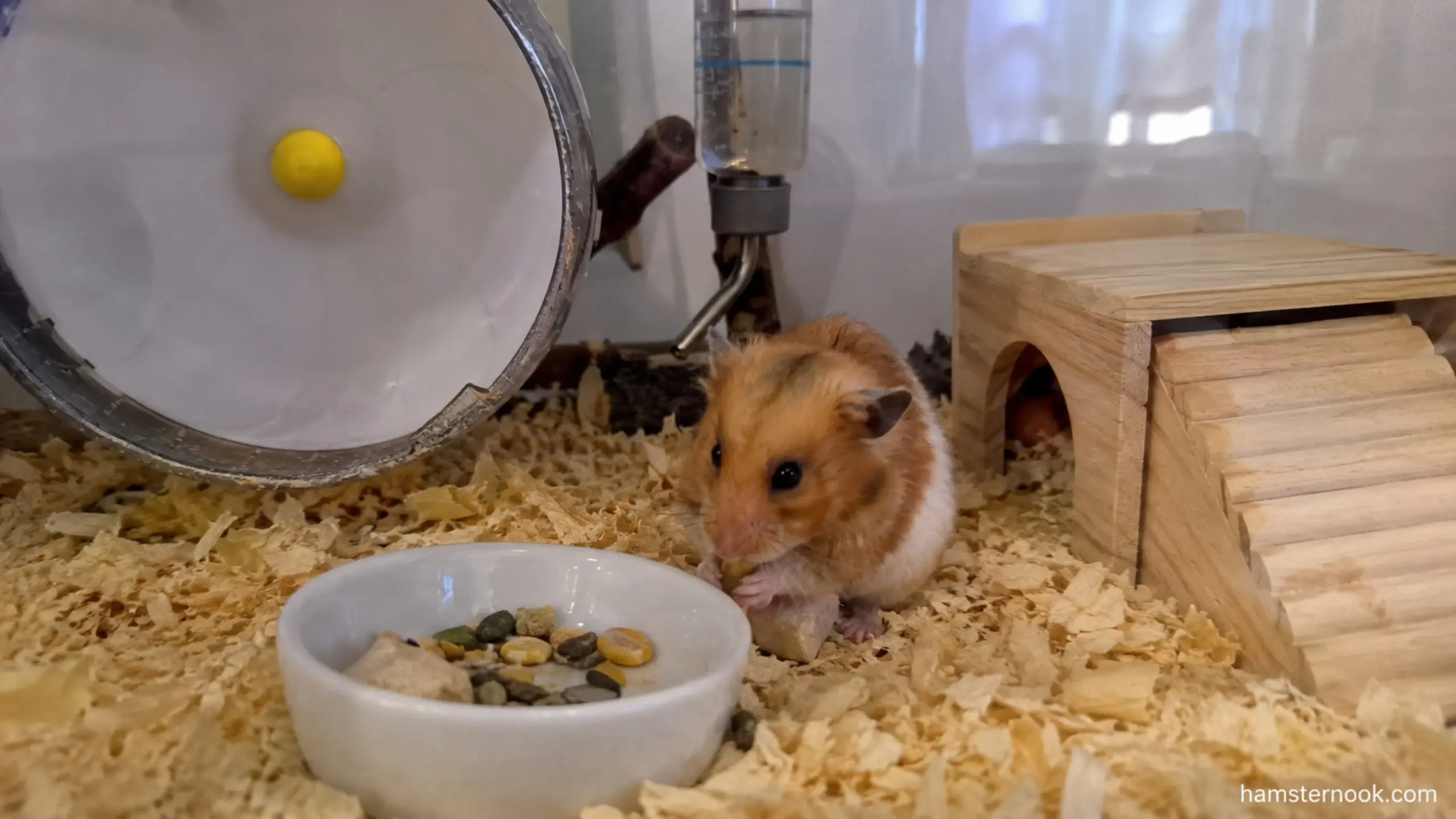
However, it may be time to reconsider the cage location if:
- The room regularly becomes too hot or too cold.
- Bright lights remain on for most of the night.
- Other pets repeatedly disturb the enclosure.
- The hamster shows ongoing signs of stress.
- The enclosure cannot be placed in a safe, quiet location.
- Sleep disruption causes you to frequently disturb the hamster during its active hours.
Looking at your hamster’s overall condition can help you determine whether a behavior change is environment-related or part of a larger issue. Read How to Tell If Your Hamster Is Happy, Healthy, Stressed, or Sick: Complete Owner’s Guide (2026).
A suitable room should support both the hamster’s welfare and the owner’s ability to maintain a consistent routine.
Final Thoughts
A hamster cage can work in a bedroom when the room provides a quiet, stable environment and the owner can comfortably manage the hamster’s nighttime activity. However, a bedroom should not be chosen only because it is convenient.
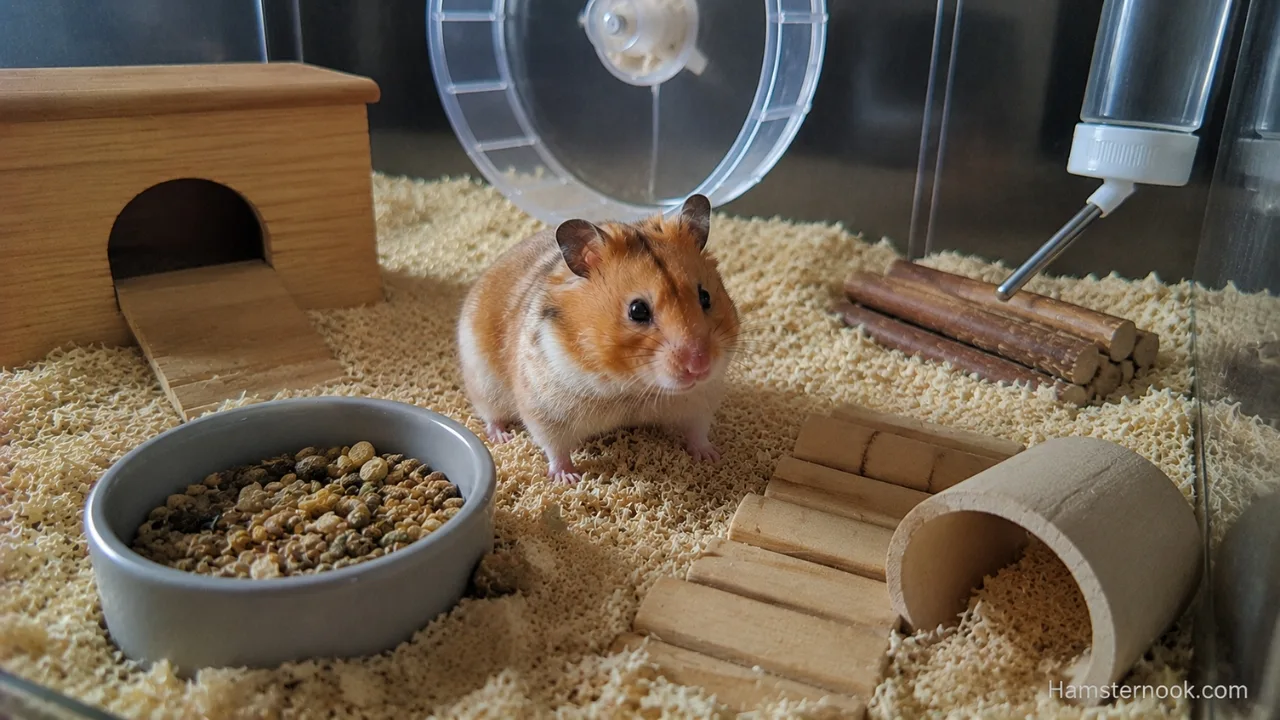
The best location is the room that allows the hamster to rest undisturbed during the day, follow a predictable light-dark routine, avoid excessive noise and temperature changes, and live in an appropriately sized enclosure.
If nighttime activity regularly disrupts your sleep or causes you to disturb the hamster, another suitable room may be the better choice.
Frequently Asked Questions
Is it safe to keep a hamster cage in a bedroom?
Yes. A bedroom can be a safe location if it maintains stable temperatures, good ventilation, and a quiet environment that allows the hamster to rest during the day.
Will my hamster keep me awake at night?
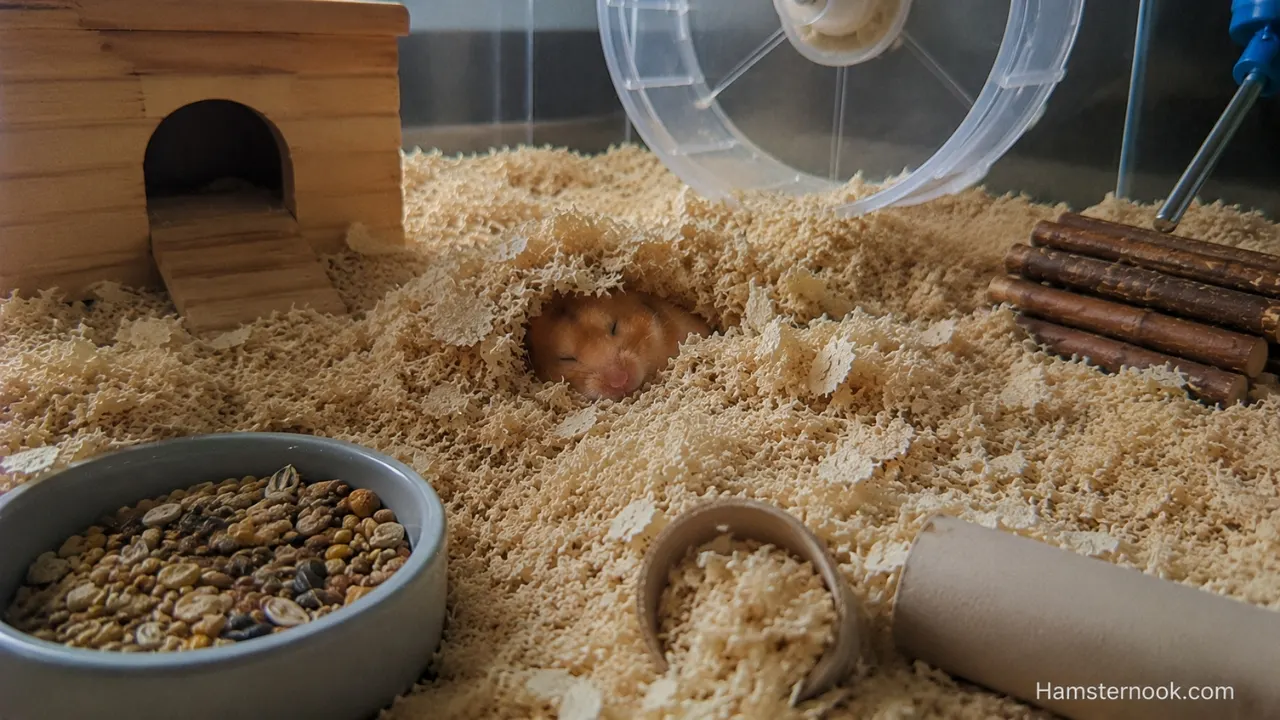
Possibly. Hamsters are naturally active during the evening and nighttime hours, so wheel running, digging, and foraging sounds are common.
Can a hamster sleep in the same room as me?
Yes. Healthy pet hamsters are commonly housed in bedrooms. The main consideration is whether the nighttime activity affects your sleep.
Should I cover my hamster’s cage at night?
Generally, no. Hamsters benefit from proper airflow and a natural light-dark cycle. Covering the enclosure can interfere with ventilation.
Is a bedroom better than a living room for a hamster?
It depends on the household. A quiet bedroom is often preferable to a busy living room with constant activity, loud sounds, and frequent disturbances.
Where should I place a hamster cage inside a bedroom?
A stable location away from windows, direct sunlight, heaters, air-conditioning vents, and heavy foot traffic is usually best.
References
This guide is based on hamster housing, cage placement, environmental conditions, behavior, and welfare guidance from trusted animal welfare and veterinary resources, including:
- RSPCA – Creating a Good Home for Hamsters – Guidance on suitable housing environments, temperature, ventilation, bedding, lighting, noise, and protecting hamsters from environmental stressors.
- RSPCA – Hamster Behaviour – Information on natural activity patterns, sleeping behavior, handling, environmental changes, and factors that can affect hamster behavior.
- RSPCA – Keeping Hamsters as Pets – General guidance on hamster care, housing, daily routines, behavior, and welfare.
- PDSA – Hamsters as Pets – Advice on suitable hamster housing, activity, handling, environmental needs, and keeping hamsters in a calm location.
- Blue Cross – Hamster Care Guide – Practical information on hamster housing, bedding, enrichment, exercise, handling, and wellbeing.
- MSD Veterinary Manual – Providing a Home for a Hamster – Veterinary guidance on hamster enclosure setup, environmental conditions, bedding, exercise, and housing requirements.
- NC3Rs – Housing and Husbandry: Hamster – Guidance on hamster housing, environmental conditions, bedding, enrichment, and species-appropriate husbandry.

Narayan Kumar is the founder and author of HamsterNook. He creates practical, research-based hamster care guides covering hamster behavior, nutrition, cage setup, enrichment, health, and everyday care. His goal is to help hamster owners make informed decisions and provide safer, healthier lives for their pets through clear, beginner-friendly information based on trusted animal care resources.