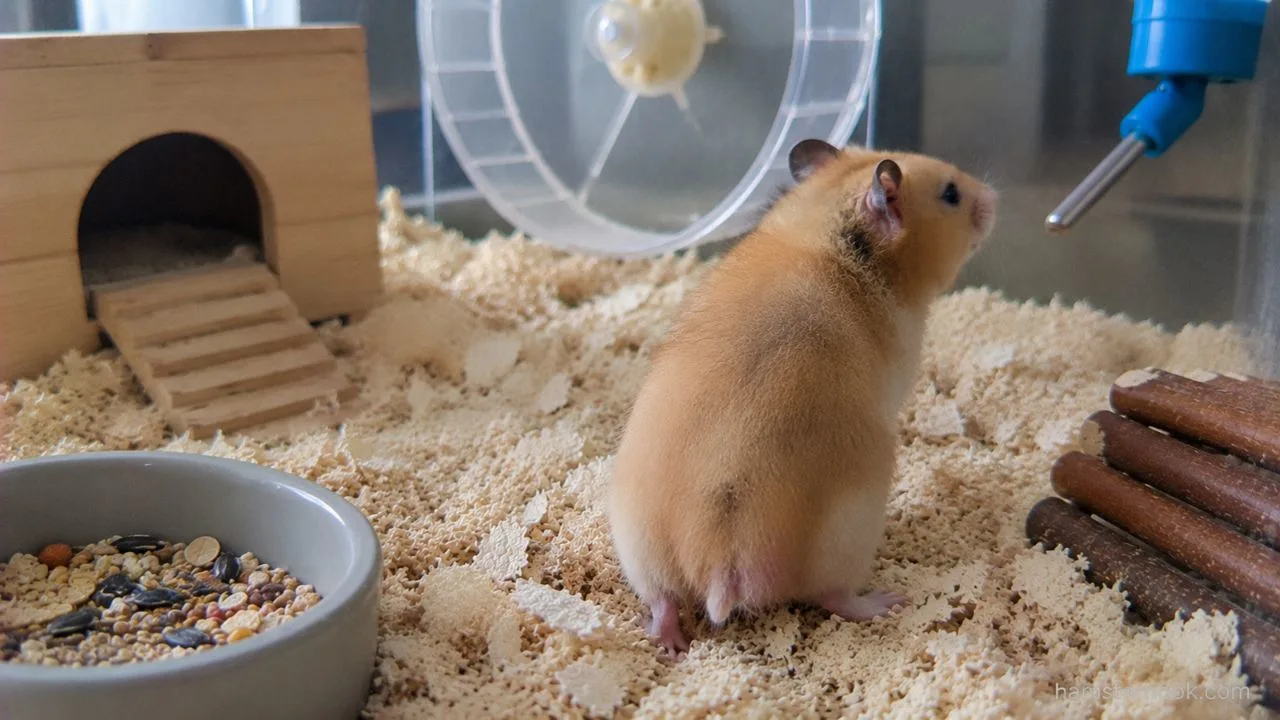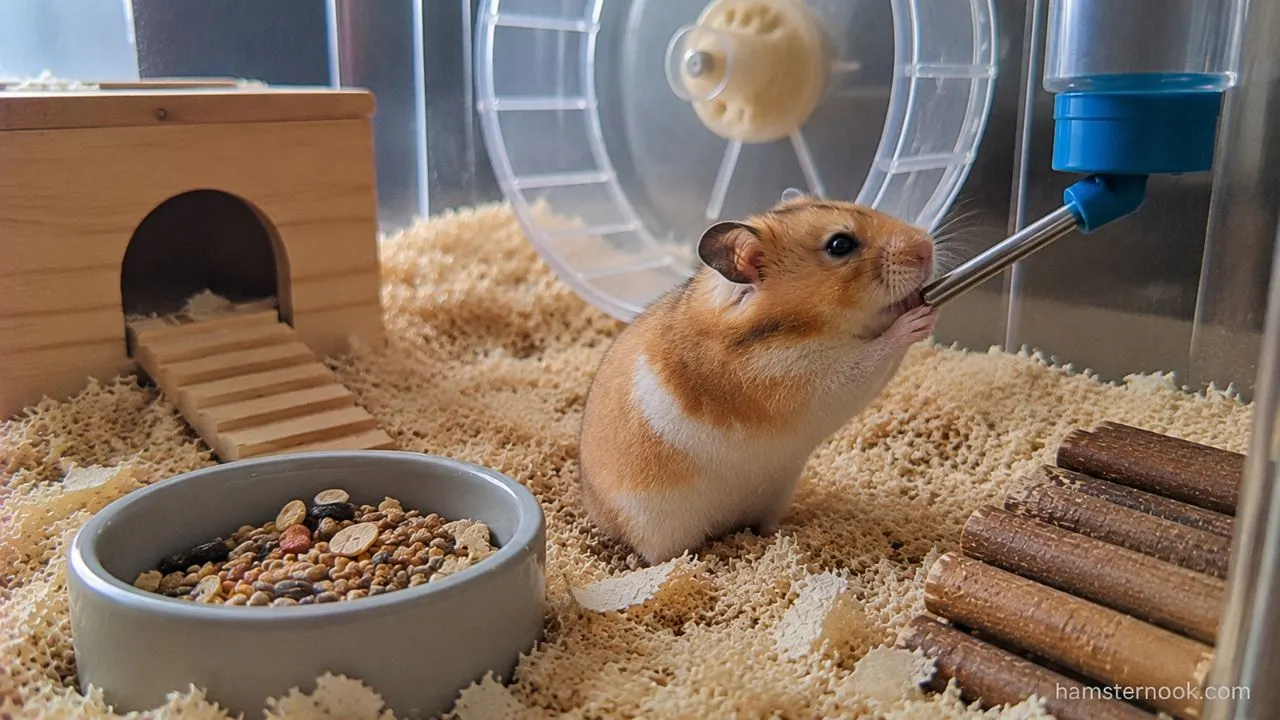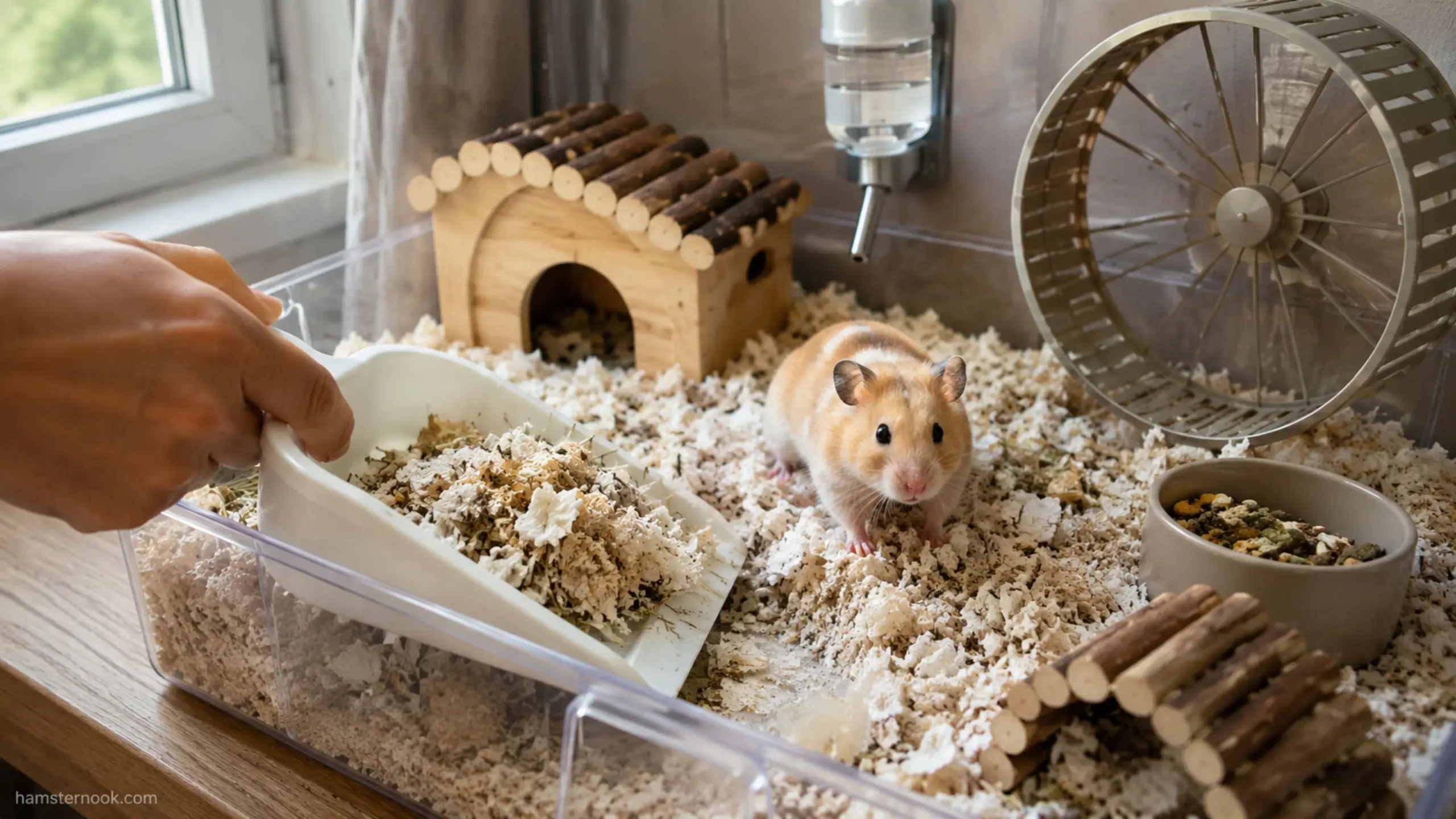
Many new hamster owners assume the entire cage should be cleaned every few days to keep it fresh. While that sounds like the right thing to do, completely replacing all of your hamster’s bedding too often can actually cause unnecessary stress. Hamsters rely heavily on familiar scents to feel safe, and removing every trace of their scent can make them anxious and unsettled. The goal is to keep the enclosure hygienic while preserving the familiar scents that help your hamster feel secure.
In this guide, you’ll learn how often hamster bedding should really be changed, when spot cleaning is enough, what affects cleaning frequency, and how to keep your hamster’s enclosure clean without causing unnecessary stress.
Quick Answer
For most healthy hamsters, spot clean wet or soiled areas every few days or as soon as they become dirty, then replace only the bedding that actually needs changing. A larger clean may be needed when the enclosure has widespread soiling, persistent moisture or odor, spoiled food, contamination, or veterinary-directed sanitation. Keep clean, dry bedding in place whenever practical so familiar scents remain.
If you’re still setting up your hamster’s home, Best Hamster Cage Setup for Beginners explains how proper enclosure size and bedding depth make cleaning much easier.
Why Bedding Changes Matter
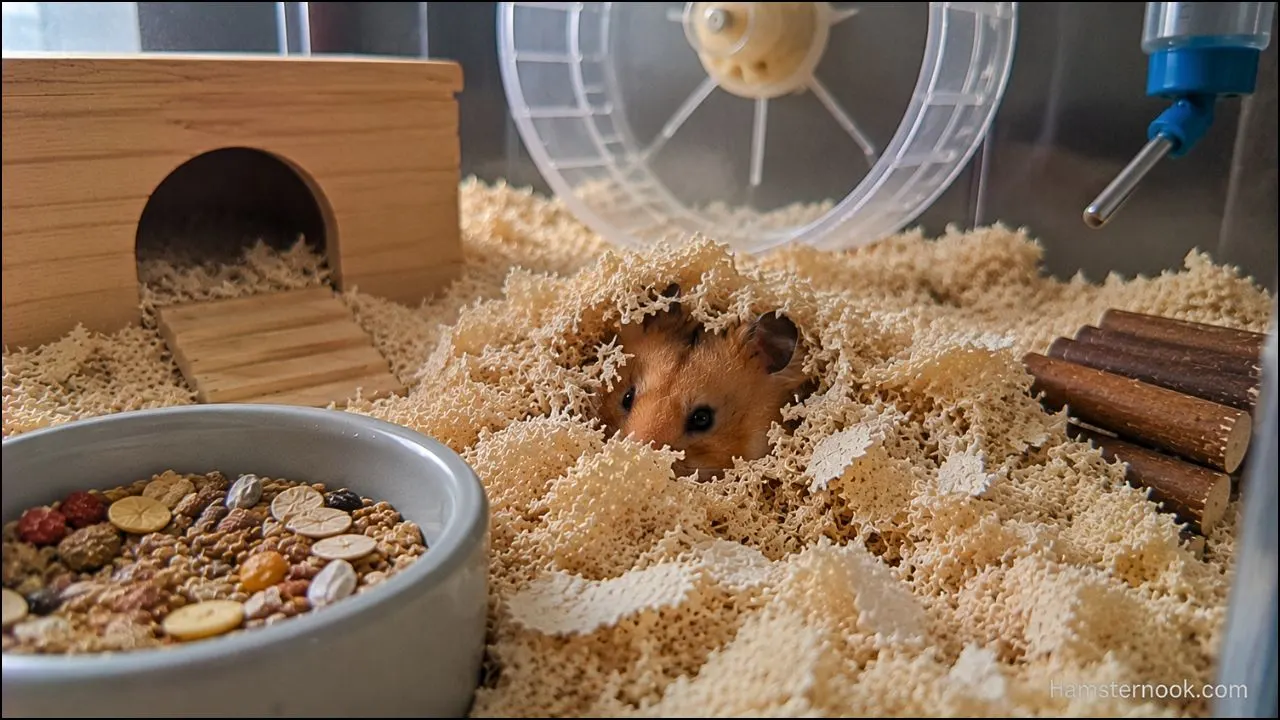
A hamster spends almost its entire life inside its enclosure. The bedding isn’t just there to absorb waste—it also serves as a burrowing material, nesting material, and an important part of the hamster’s environment.
Healthy bedding helps:
- Absorb moisture
- Reduce odors
- Support natural burrowing behavior
- Keep the enclosure comfortable
- Reduce stress through familiar scents
Dirty bedding, on the other hand, may allow bacteria, mold, or excessive ammonia from urine to build up over time, making regular maintenance important.
The goal isn’t to keep the cage smelling like nothing—it’s to keep it hygienic while allowing your hamster to feel secure.

Important: If your hamster is being treated for a contagious illness, parasites, or another condition that requires extra sanitation, always follow your veterinarian’s cleaning instructions, even if they differ from the routine recommendations in this guide.
Spot Cleaning vs. Full Bedding Changes
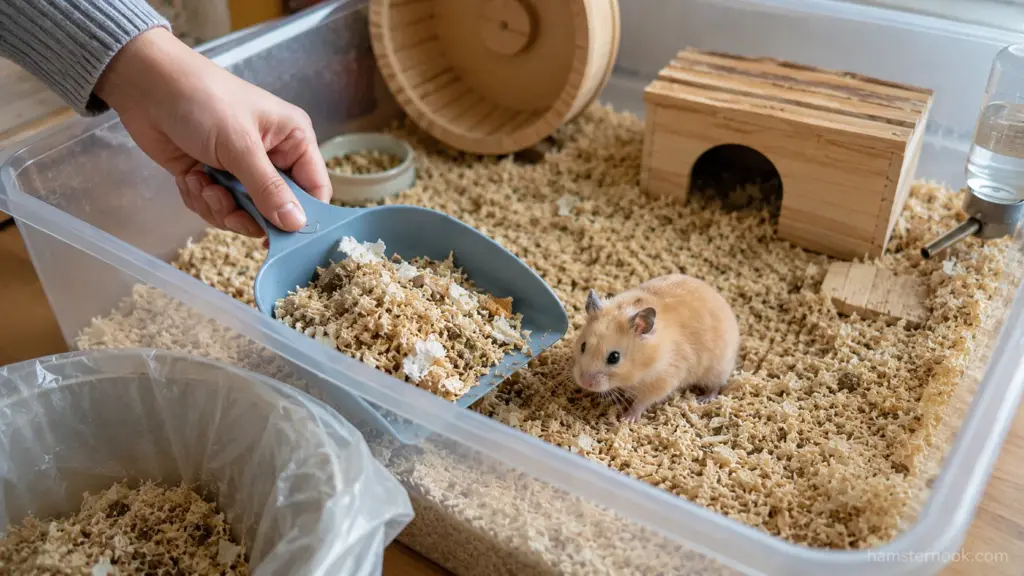
One of the biggest beginner mistakes is treating every cage cleaning like a complete reset.
In reality, spot cleaning and full bedding replacement serve different purposes.
| Cleaning Method | Recommended Frequency | Purpose |
|---|---|---|
| Spot cleaning | Every few days or as needed | Remove wet bedding, soiled nesting material, and uneaten fresh food |
| Partial bedding replacement | Every few weeks | Refresh dirty areas while keeping much of the familiar bedding |
| Complete bedding replacement | Only when genuinely necessary | Deep cleaning after illness, contamination, or other exceptional situations |
Most healthy hamsters benefit from regular spot cleaning combined with occasional partial bedding replacement rather than frequent full cage clean-outs.
Factors That Affect How Often Bedding Should Be Changed
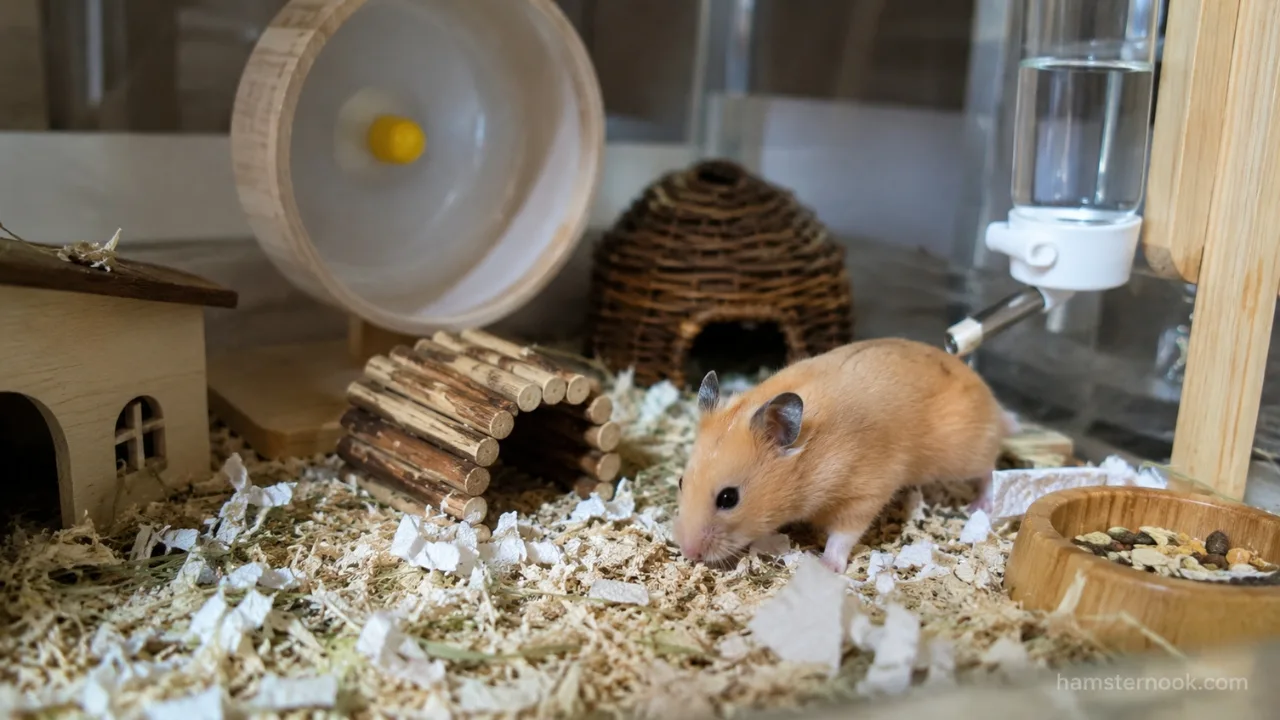
There isn’t one cleaning schedule that works for every hamster.
Several factors influence how quickly bedding becomes dirty.
Cage Size
A larger enclosure usually stays cleaner for longer because waste is spread across a greater area.
Small cages often require more frequent cleaning because moisture and odors build up faster.

If you’re unsure whether your enclosure provides enough space, Do Hamsters Need a Bigger Cage? explains why cage size affects both cleanliness and your hamster’s overall wellbeing.
Bedding Depth
Deep bedding offers more than just comfortable burrowing.
It also helps absorb moisture more effectively and reduces the need for frequent complete bedding changes.
Many modern hamster care recommendations suggest providing enough bedding for natural tunnel building whenever possible.
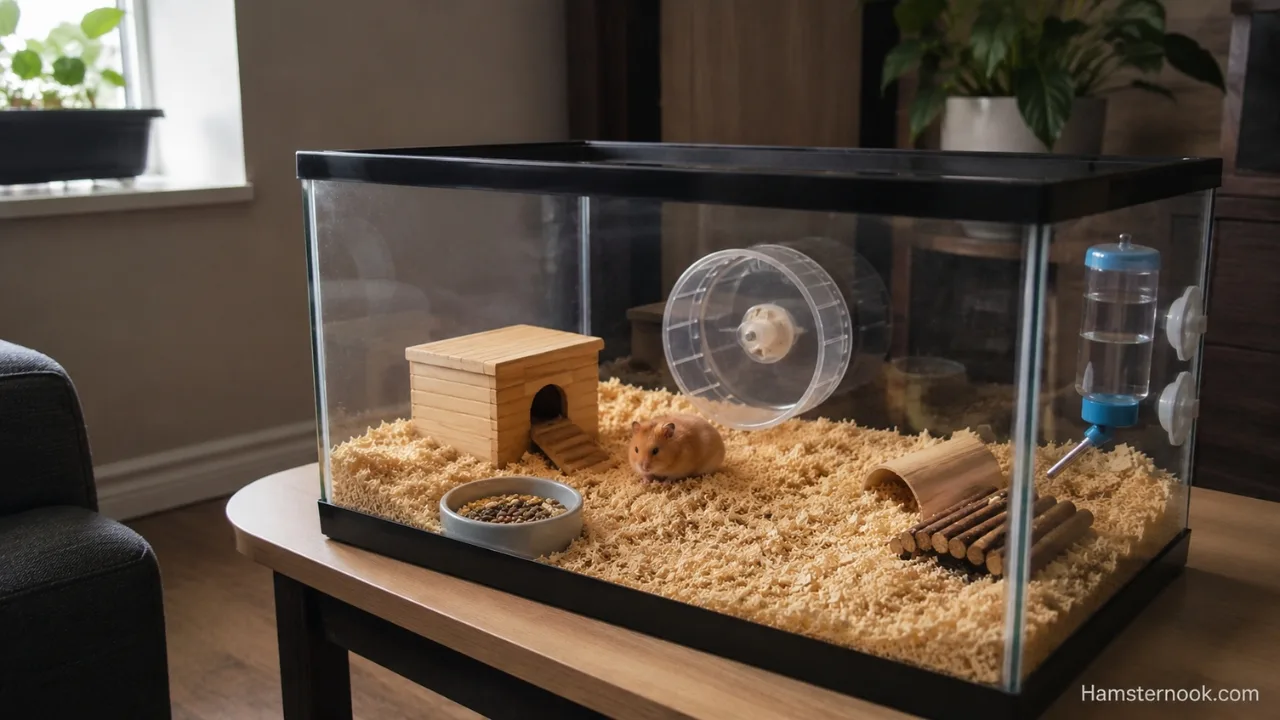
Hamsters allowed to burrow deeply often stay cleaner because waste tends to remain concentrated in specific areas rather than spreading throughout the enclosure.
Your Hamster’s Toilet Habits
Many hamsters naturally choose one corner of the cage as their toilet area.
Once you identify that location, cleaning becomes much easier.
Instead of replacing large amounts of bedding, you can simply remove the damp bedding from that area and replace it with fresh material.
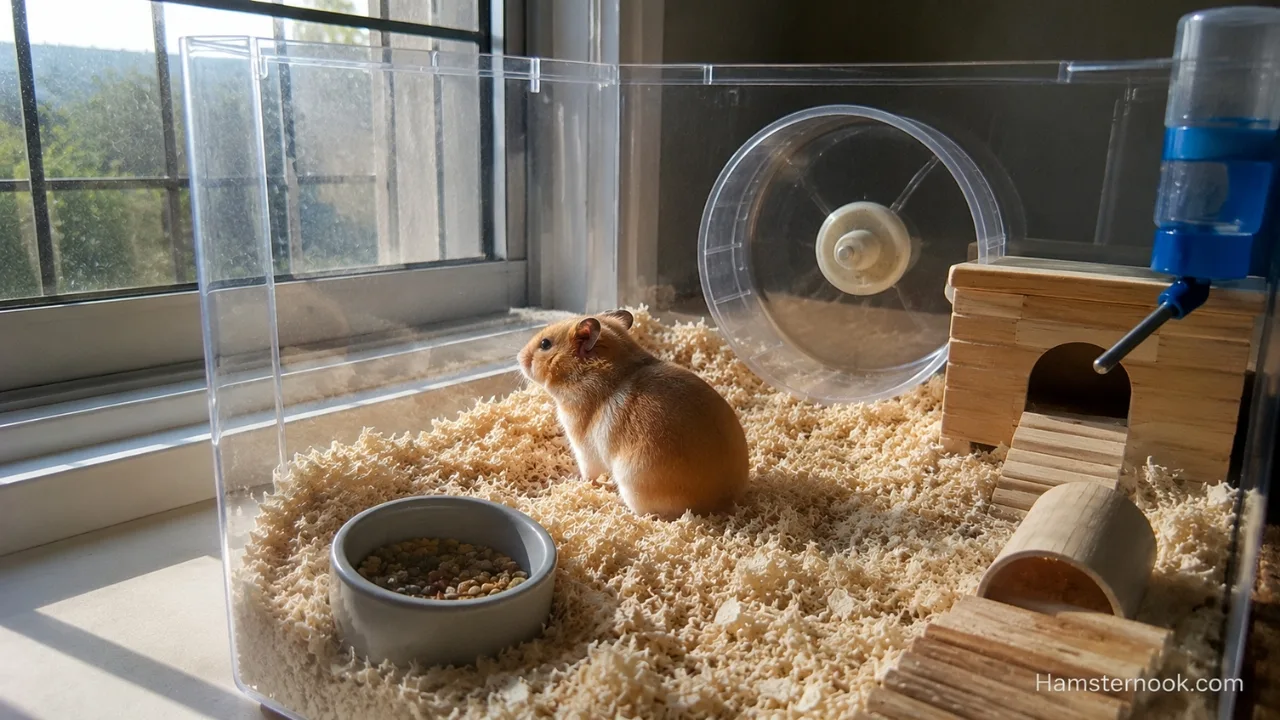
Regularly checking this corner every few days often keeps the entire enclosure much cleaner for longer.
If you notice sudden changes in bathroom habits, Why Does My Hamster Suddenly Act Different? Common Reasons Behind Behavior Changes may help explain some of the behavioral changes that can occur when a hamster is stressed or unwell.
The Type of Bedding You Use Matters
Not all bedding performs equally.
Some materials absorb moisture better than others, while some hold burrows more effectively.

Generally, good hamster bedding should be:
- Low in dust
- Highly absorbent
- Safe for burrowing
- Free from added fragrances
- Comfortable for nesting
Using unsuitable bedding can mean cleaning more often while also reducing your hamster’s comfort.
If you’re unsure which bedding materials are safest, Best Bedding for Hamsters explains which options support burrowing, absorb moisture well, and which materials should be avoided.
How Fresh Food Can Affect Bedding Cleanliness
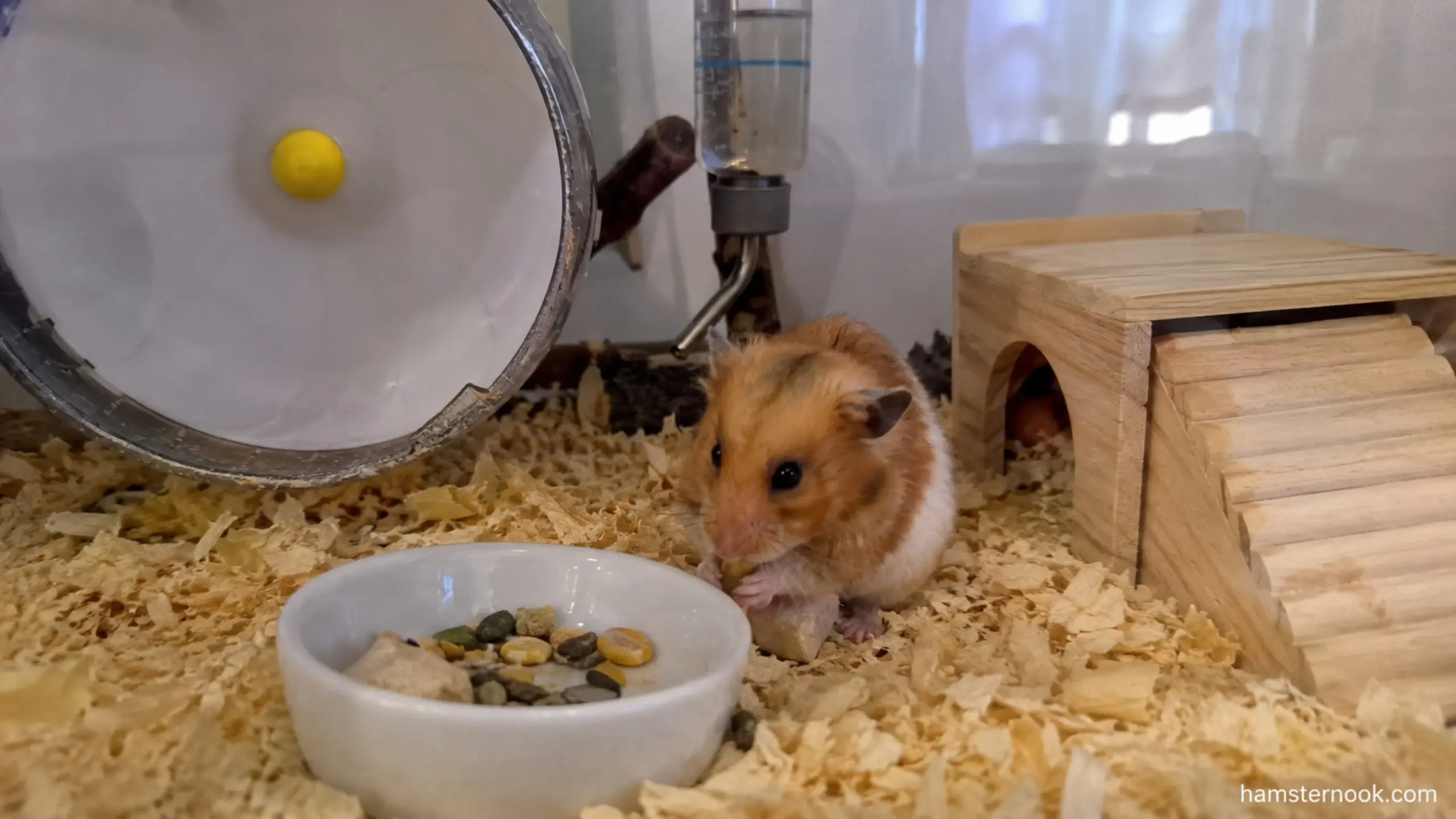
Fresh vegetables are an excellent addition to many hamsters’ diets, but they can also make bedding dirty more quickly if leftovers remain in the cage.

Hamsters often hide food inside their nest or tunnels for later.
If fresh foods aren’t removed promptly after they’ve spoiled, they can introduce moisture and unpleasant odors into the bedding.
For that reason:
- Remove uneaten fresh foods during regular daily checks, especially if they have become wet, spoiled, or contaminated.
- Check food storage areas during spot cleaning.
- Replace damp bedding if fresh produce has leaked moisture into the nest.
If you’re unsure which fresh foods are appropriate, Complete Hamster Diet Guide: Best Foods, Safe Treats & Toxic Foods provides a balanced feeding guide, while Best Fruits and Vegetables for Hamsters explains which fresh foods are safest for regular feeding.
Signs Your Hamster’s Bedding Needs Attention
Rather than following a strict calendar, pay attention to the enclosure itself.
Cleaning may be needed sooner if you notice:
- Damp patches of bedding
- Strong ammonia-like odors
- Moldy food stores
- Wet nesting material
- Excessive food waste
- Visible contamination around the toilet area
These signs indicate that part of the bedding should be replaced, even if your usual cleaning day hasn’t arrived yet.
A Sample Cleaning Schedule for Most Hamsters
Instead of asking, “How often should I clean the cage?” it’s more helpful to divide cleaning into small routine tasks.

A simple maintenance schedule like the one below works well for many healthy hamsters.
| Task | Suggested Frequency |
|---|---|
| Check water bottle and food | Daily |
| Remove spoiled fresh food | Daily |
| Spot clean wet bedding | Every 2–3 days (or as needed) |
| Check toilet corner | Every few days |
| Replace dirty bedding in affected areas | Every few weeks, depending on cage condition |
| Deep clean the enclosure | Only when genuinely necessary |
Use this schedule as a guideline rather than a strict rule, since every hamster and enclosure is different. A larger enclosure with deep bedding may stay clean much longer than a smaller enclosure with shallow bedding.
Why Completely Replacing All Bedding Can Be Stressful
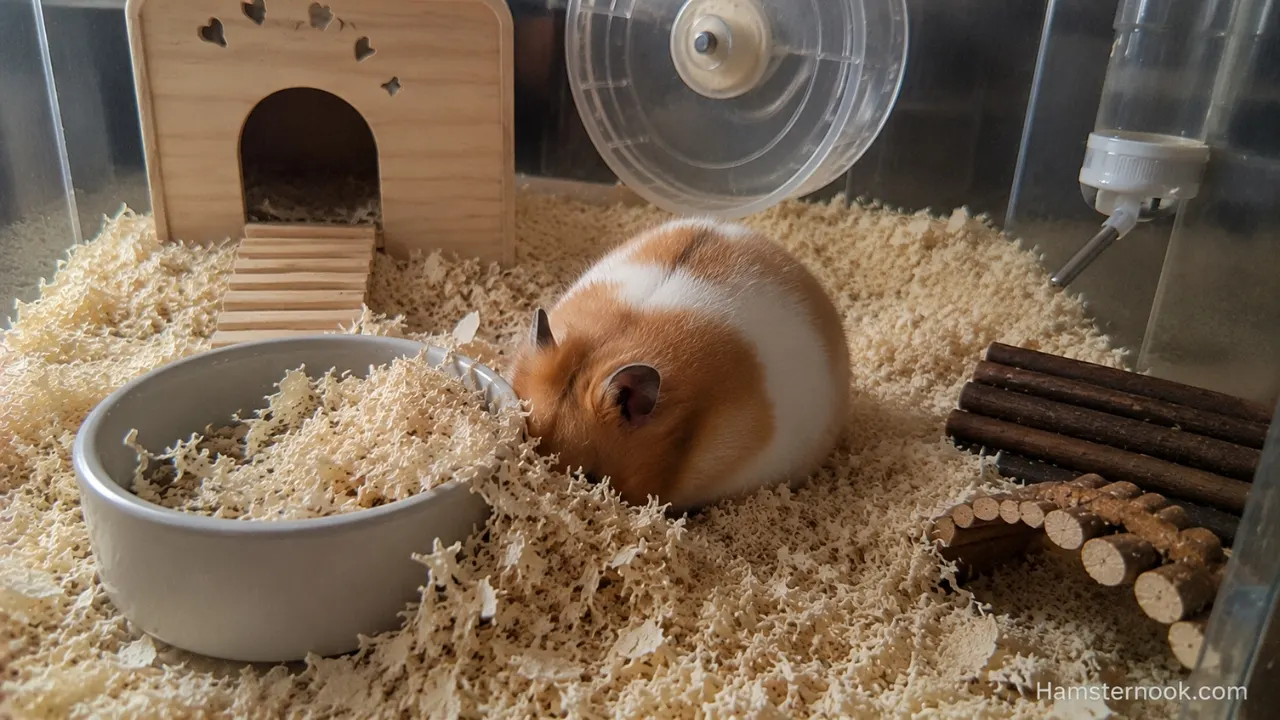
Hamsters rely heavily on scent to recognize their surroundings.
Their bedding contains familiar smells that help them feel secure inside their territory.

If every piece of bedding is removed at once, your hamster may suddenly lose all of those familiar scent markers.
This can lead to temporary behaviors such as:
- Increased hiding
- Excessive scent marking
- Digging more than usual
- Rearranging the cage
- Increased stress
Whenever possible, replace only the bedding that is wet or heavily soiled while leaving clean, dry bedding in place to preserve familiar scents.
This helps maintain a comfortable environment while still keeping the enclosure hygienic.
If your hamster seems unusually unsettled after cleaning, Is My Hamster Stressed? 5 Warning Signs & How to Help explains which behavior changes are worth watching.
What If the Cage Starts Smelling Bad?
A healthy hamster enclosure should not produce a strong odor if it is cleaned appropriately.
If you notice persistent unpleasant smells, the cause is often one of the following:
- The toilet area hasn’t been cleaned regularly.
- The enclosure is too small.
- Bedding depth is insufficient.
- Wet food has spoiled.
- Poor ventilation.
- Bedding isn’t very absorbent.
Rather than cleaning the entire cage more frequently, first identify why odors are developing.
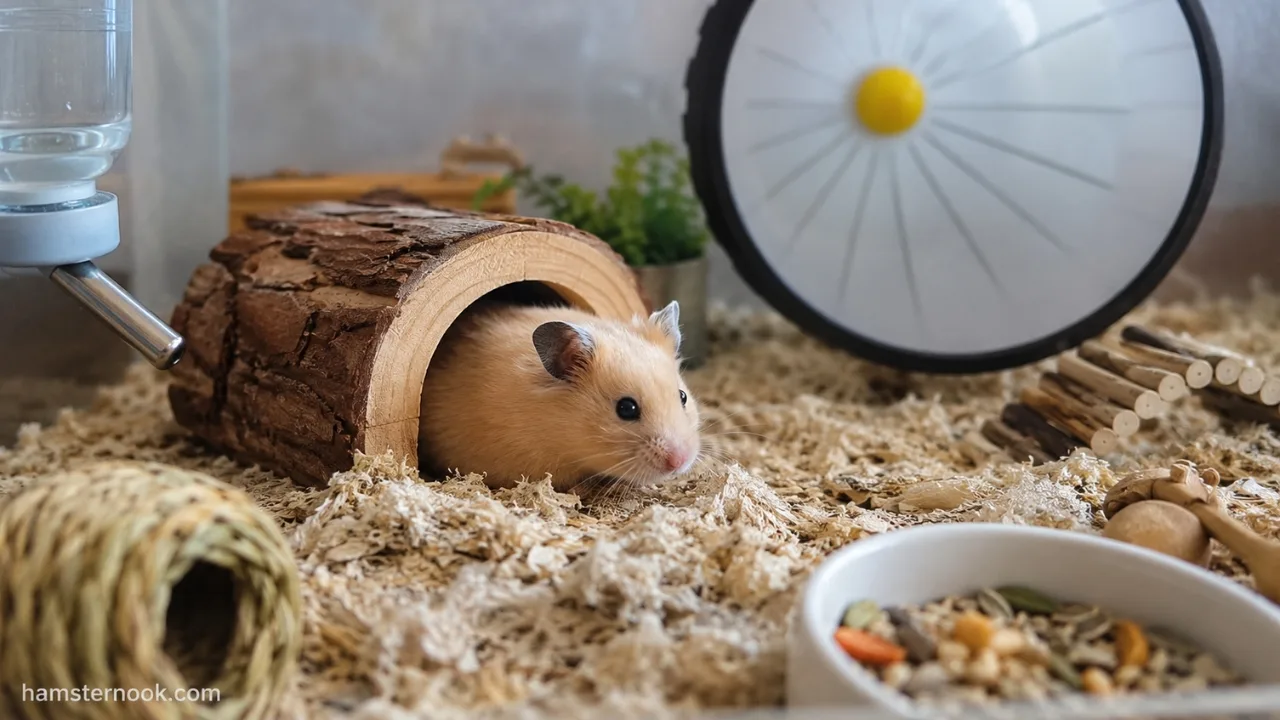
Many owners discover that improving cage size, bedding depth, or spot-cleaning habits solves the problem.
Should You Remove All of the Nesting Material?
Usually, no.
The nest is where your hamster feels safest.
Unless the nesting material is:

- Wet
- Moldy
- Heavily soiled
- Contaminated
it’s often better to leave most of it undisturbed.
If cleaning becomes necessary, replacing only the dirty portion while leaving some clean nesting material behind helps reduce unnecessary stress.
What If Your Hamster Hides Food in the Bedding?
Food hoarding is completely normal hamster behavior.
Many hamsters create hidden food stores inside tunnels or sleeping areas.

During routine spot cleaning:
- Check hidden food stores.
- Remove spoiled fresh foods.
- Leave dry seed mixes or pellets alone if they remain clean and dry.
Throwing away an entire food cache every time you clean can encourage your hamster to spend extra energy rebuilding it repeatedly.
If you’re curious why hamsters hide food in the first place, Why Does My Hamster Keep Hiding Food? explains this natural survival instinct in more detail.
Common Bedding Cleaning Mistakes
Many beginner owners accidentally create more work—and more stress for their hamster—by following outdated cleaning advice.

Avoid these common mistakes:
- Replacing every bit of bedding every week.
- Using strongly scented cleaning products.
- Throwing away the entire nest unnecessarily.
- Cleaning during your hamster’s normal sleeping hours.
- Leaving spoiled vegetables hidden inside the bedding.
- Using bedding that produces excessive dust.
Small changes in your cleaning routine can make a significant difference to both hygiene and your hamster’s wellbeing.
When Should You Clean the Cage Immediately?
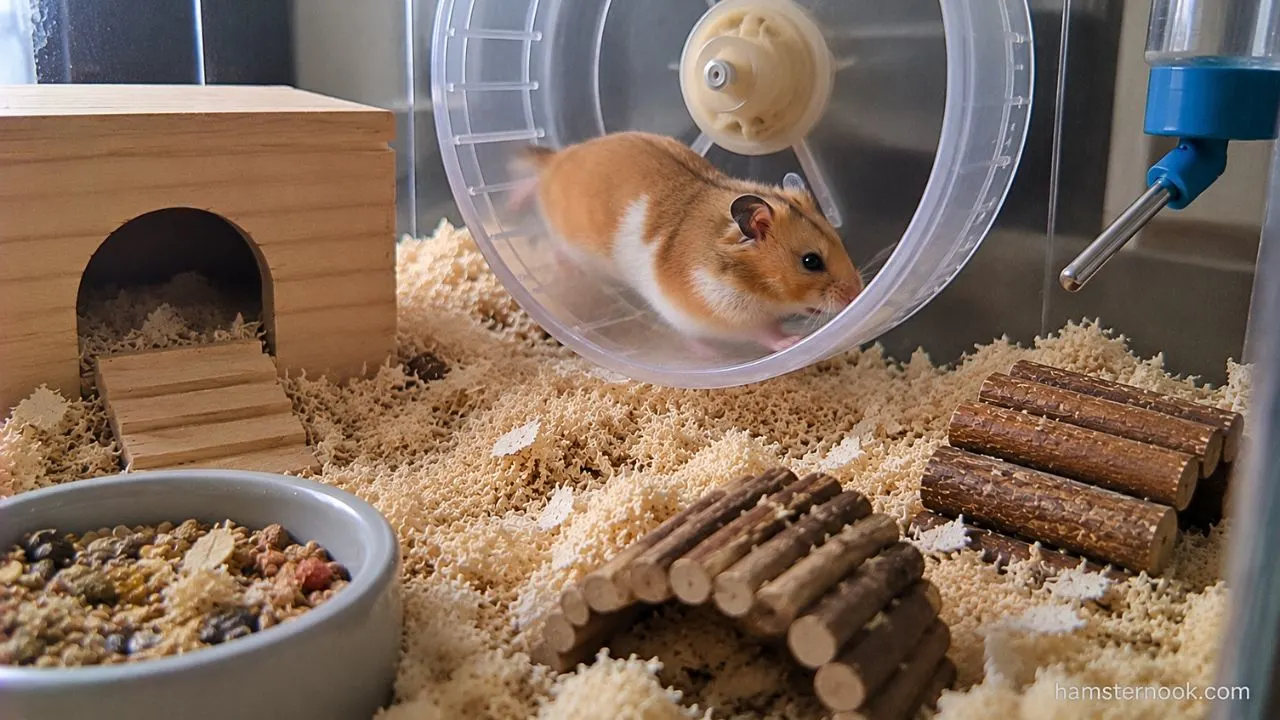
Although routine maintenance is usually enough, there are situations where a more thorough cleaning becomes appropriate.
These include:
- Large amounts of moldy food.
- Flooding from a leaking water bottle.
- Heavy contamination with urine or feces.
- Parasite infestations.
- Veterinary instructions following illness.
In these situations, follow your veterinarian’s advice regarding cleaning and disinfection before returning your hamster to the enclosure.
What You Should Do Before Every Cleaning
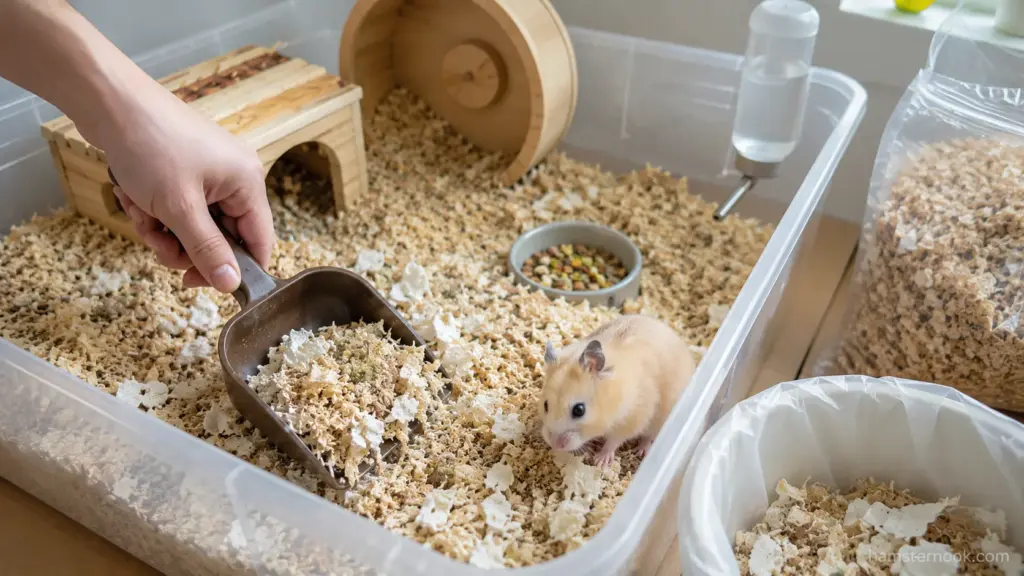
Before removing any bedding:
- Prepare the fresh bedding before you start.
- If your hamster needs to be removed, place them in a secure carrier or temporary enclosure.
- Remove only wet, heavily soiled, or contaminated bedding during routine cleaning.
- If a deeper clean is needed, clean the enclosure and accessories appropriately, then rinse and dry everything fully.
- Mix some clean, dry familiar bedding back into the enclosure when practical.
- Return hides, wheels, and other familiar items to roughly their usual positions.
Maintaining a familiar layout helps many hamsters settle back into their enclosure much more quickly after cleaning.
Bedding changes are only one part of enclosure maintenance; How Often Should You Clean a Hamster Cage? Safe Cleaning Schedule covers the wider cleaning routine, including spot cleaning and deeper cage maintenance.

Does Bedding Type Change the Cleaning Schedule?
Yes.
Different bedding materials absorb moisture differently.
Highly absorbent paper bedding often stays usable longer than materials that flatten quickly or fail to control moisture effectively.
Regardless of bedding type, regular observation remains more reliable than following a strict calendar.
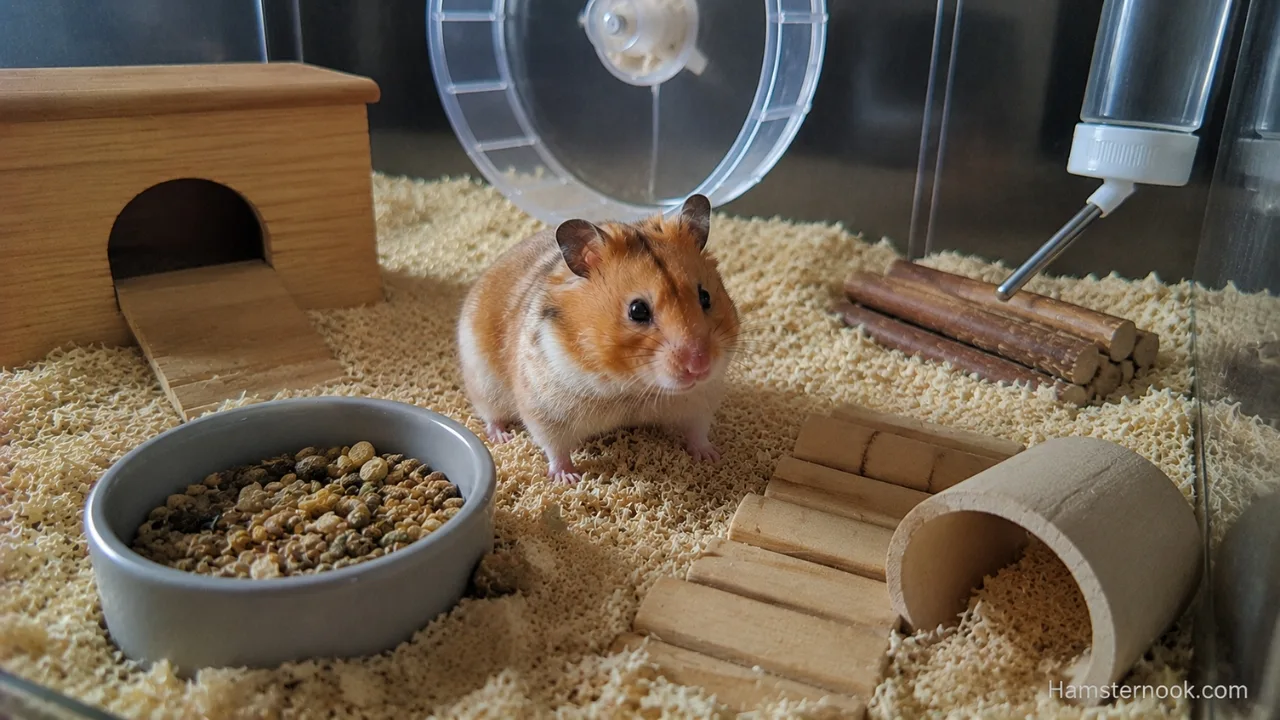
A clean cage doesn’t always need a full bedding replacement—it simply needs consistent maintenance.
When to Worry About Bedding Conditions
A routine bedding change is usually enough for a healthy hamster. However, some situations require closer attention because they may indicate a health issue rather than a cleaning problem.
Monitor your hamster carefully if you notice:
- A sudden increase in urine output.
- Bedding that becomes wet much faster than usual.
- Strong urine odor despite regular spot cleaning.
- Blood stains on the bedding.
- Persistent diarrhea or wet bedding around the sleeping area.
- Your hamster avoiding its nest completely.
These changes don’t necessarily mean the bedding is the problem—they may suggest your hamster needs a health check.
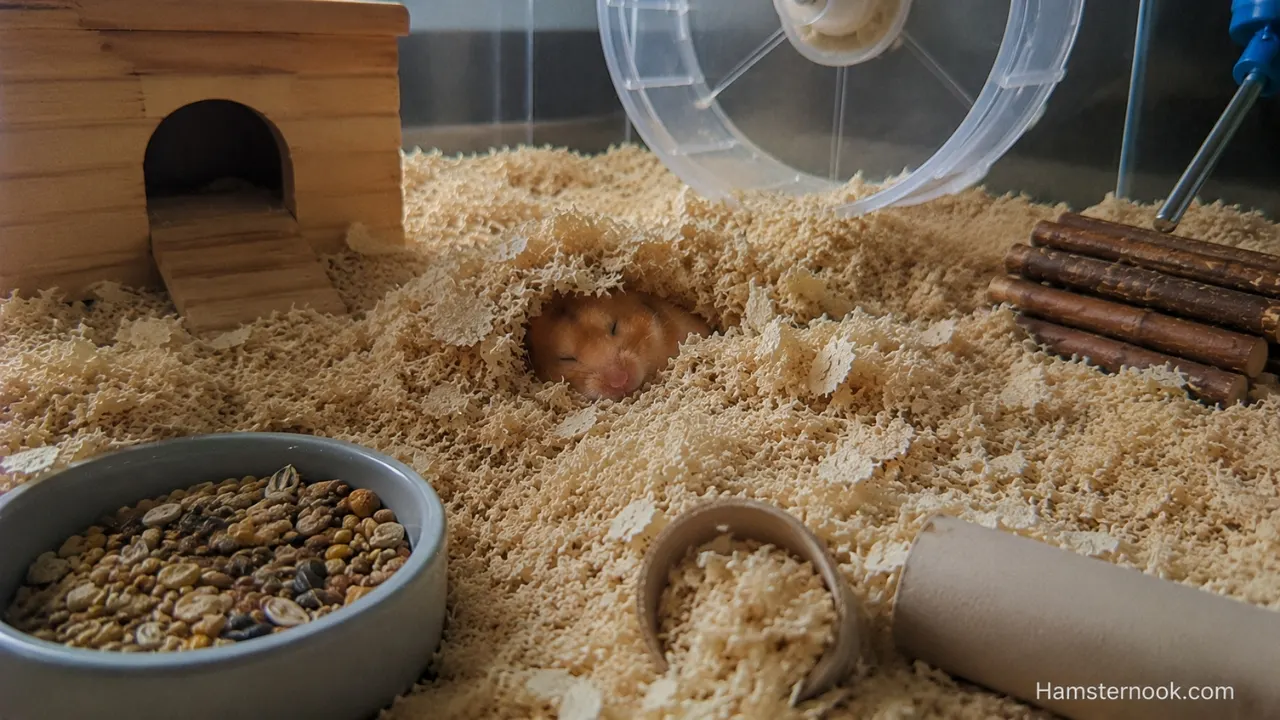
If your hamster suddenly starts drinking much more or much less than usual, Why Does My Hamster Suddenly Drink So Much Water? can help you understand whether changes in hydration might also be affecting cage cleanliness.
How to Make Cleaning Less Stressful for Your Hamster
With a calm, predictable routine, most hamsters adjust well to regular cage cleaning.
A few simple habits can help your hamster adjust much more comfortably:
- Clean when your hamster is naturally awake and active rather than waking it during sleep.
- Work calmly and avoid loud noises.
- Keep some clean, familiar bedding whenever appropriate.
- Return hideouts, wheels, and food bowls to roughly the same locations.
- Allow your hamster time to explore the cleaned enclosure at its own pace.
Many hamsters spend the first few hours rechecking their tunnels and rearranging bedding after cleaning. This is completely normal and usually doesn’t require intervention.

Quick Cleaning Checklist
Before finishing each cleaning session, ask yourself:
- Is the water bottle working properly?
- Is fresh food removed?
- Is the toilet corner clean?
- Is the bedding dry?
- Does the nest remain mostly undisturbed?
- Is there any mold or spoiled food?
- Is the enclosure free from strong odors?
- Does everything look safe before returning your hamster?
This quick check only takes a minute and helps prevent many common husbandry problems.
Final Thoughts
There isn’t one perfect bedding replacement schedule that suits every hamster.
Instead of replacing all bedding on a fixed timetable, focus on regular observation and routine maintenance. Spot cleaning damp or dirty areas, removing spoiled food, and replacing bedding only where necessary usually provides a cleaner and less stressful environment than frequent full cage clean-outs.
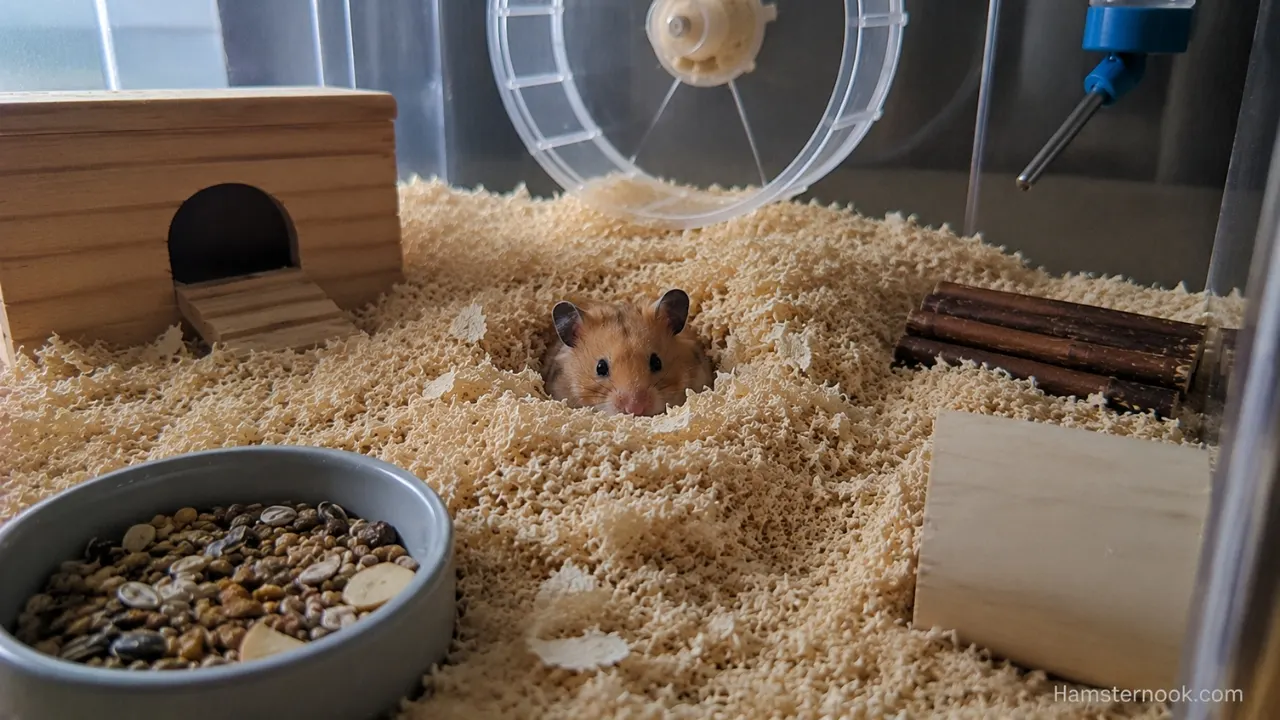
Learning your own hamster’s habits will help you recognize when the enclosure genuinely needs attention instead of relying only on the calendar.
With a thoughtful cleaning routine, you can keep your hamster’s home hygienic without disrupting the environment it depends on every day.
Frequently Asked Questions
How often should hamster bedding be changed?
Most owners should spot clean every few days and replace dirty bedding as needed. A partial bedding refresh every few weeks is usually sufficient for a healthy hamster living in a properly sized enclosure with deep bedding.
Is it bad to replace all of my hamster’s bedding at once?
In many situations, yes. Removing every bit of bedding also removes familiar scent markers, which can temporarily increase stress. Unless the bedding is heavily contaminated or your veterinarian recommends otherwise, partial replacement is often a better approach.
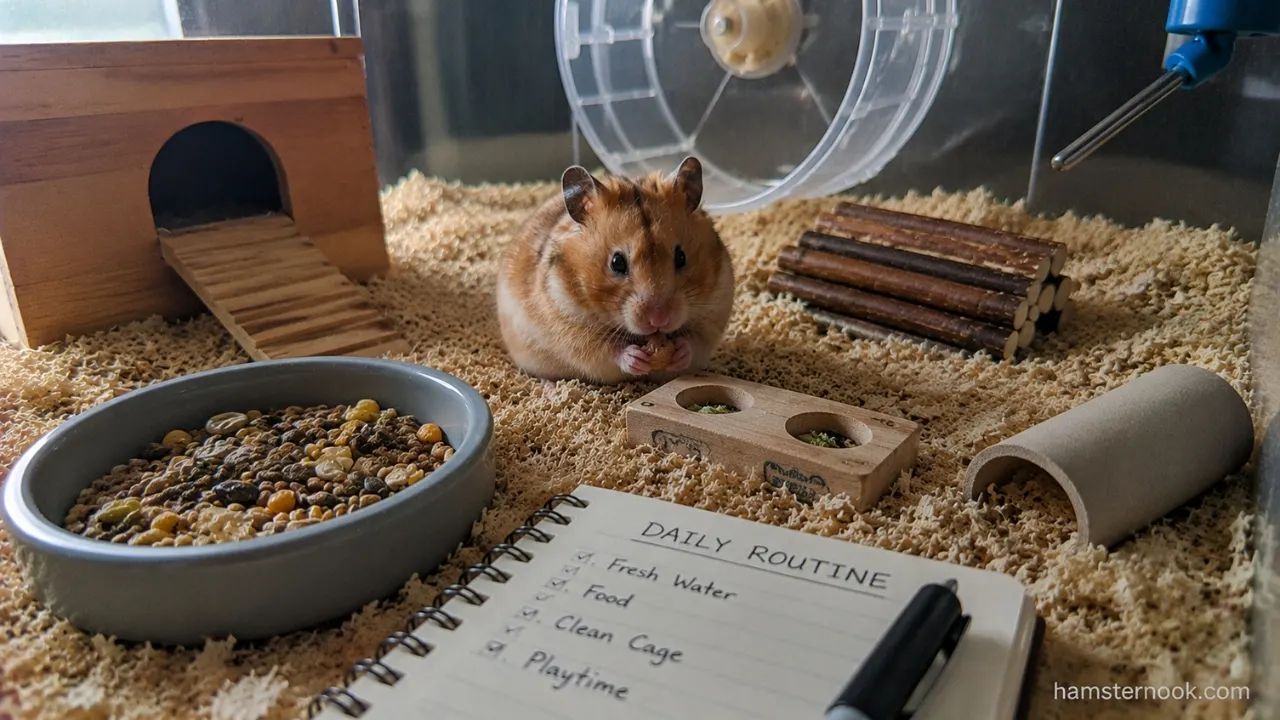
How often should I spot clean a hamster cage?
Check the enclosure every few days and remove wet bedding, spoiled food, and heavily soiled nesting material whenever necessary.
Why does my hamster rearrange the bedding after I clean the cage?
This is completely normal. Hamsters naturally reorganize their environment by rebuilding tunnels, moving bedding, and restoring familiar scent trails.
What if my hamster’s cage still smells after cleaning?
Persistent odors often indicate that the toilet area needs more frequent spot cleaning, the enclosure is too small, the bedding isn’t absorbent enough, or spoiled food has been missed.
Can I reuse some old bedding after cleaning?
If it is clean and dry, keeping a small amount of familiar bedding can help your hamster feel more secure after routine cleaning.

Does deep bedding reduce how often I need to clean?
Yes. Deep, absorbent bedding generally manages moisture better and supports natural burrowing, which often reduces the need for frequent large bedding changes.
References
This guide is based on hamster housing, bedding, cleaning, hygiene, enrichment, and welfare guidance from trusted animal welfare and veterinary resources, including:
- RSPCA – Creating a Good Home for Hamsters – Guidance on bedding, nesting, enclosure hygiene, cleaning, and maintaining a suitable hamster environment.
- RSPCA – Keeping Hamsters as Pets – General hamster care, housing, bedding, behavior, and welfare guidance.
- Blue Cross – Hamster Care Guide – Practical guidance on hamster housing, bedding, cleaning, enrichment, and wellbeing.
- MSD Veterinary Manual – Providing a Home for a Hamster – Veterinary guidance on hamster housing, bedding, sanitation, ventilation, and environmental management.
- NC3Rs – Housing and Husbandry: Hamster – Guidance on appropriate bedding, housing, husbandry practices, and environmental welfare for hamsters.

Narayan Kumar is the founder and author of HamsterNook. He creates practical, research-based hamster care guides covering hamster behavior, nutrition, cage setup, enrichment, health, and everyday care. His goal is to help hamster owners make informed decisions and provide safer, healthier lives for their pets through clear, beginner-friendly information based on trusted animal care resources.