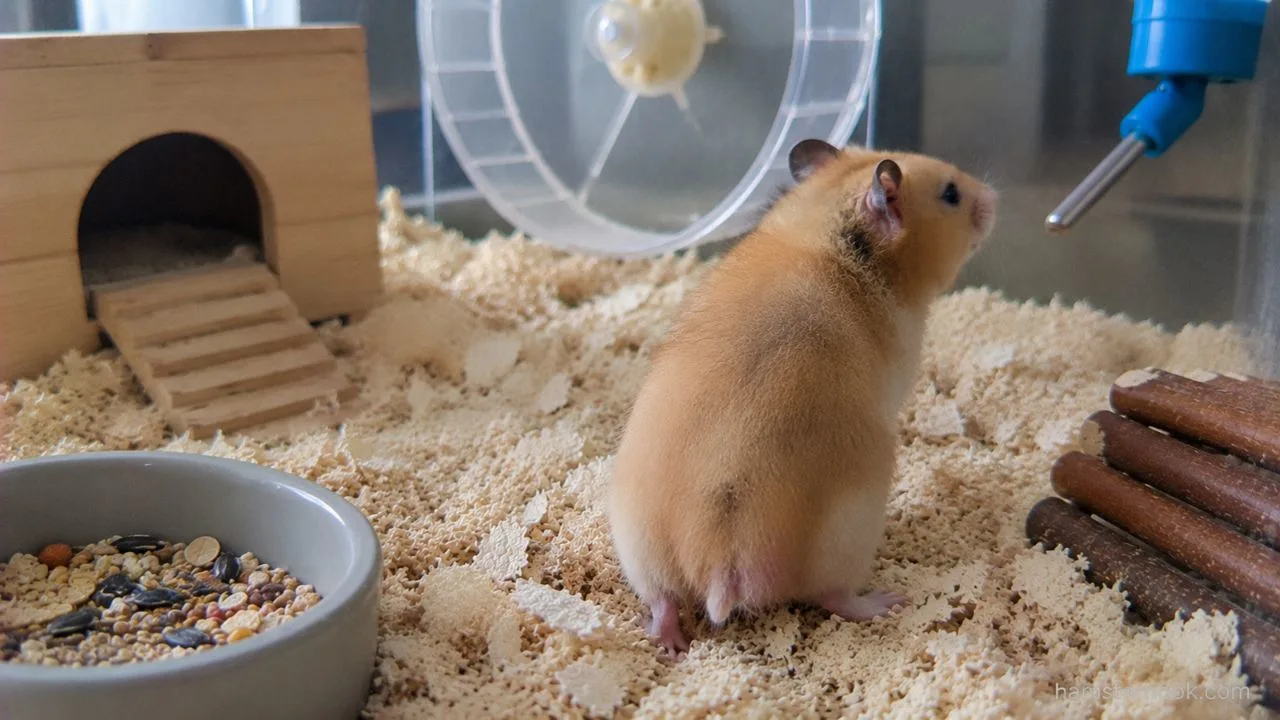
Choosing the right bedding for your hamster is more important than many beginners realize. Bedding is not just something that makes the cage look nice—it affects your hamster’s breathing, comfort, burrowing behavior, cleanliness, and overall health.
Many new hamster owners accidentally buy unsafe bedding because some products marketed for small animals may still cause respiratory irritation or other health problems. The good news is that once you understand which materials are safe and which should be avoided, choosing the right bedding becomes much easier.
This guide explains the safest hamster bedding options, which bedding types to avoid, how deep bedding should be, and what works best for burrowing, odor control, and your hamster’s long-term wellbeing.
Why Bedding Matters for Hamsters
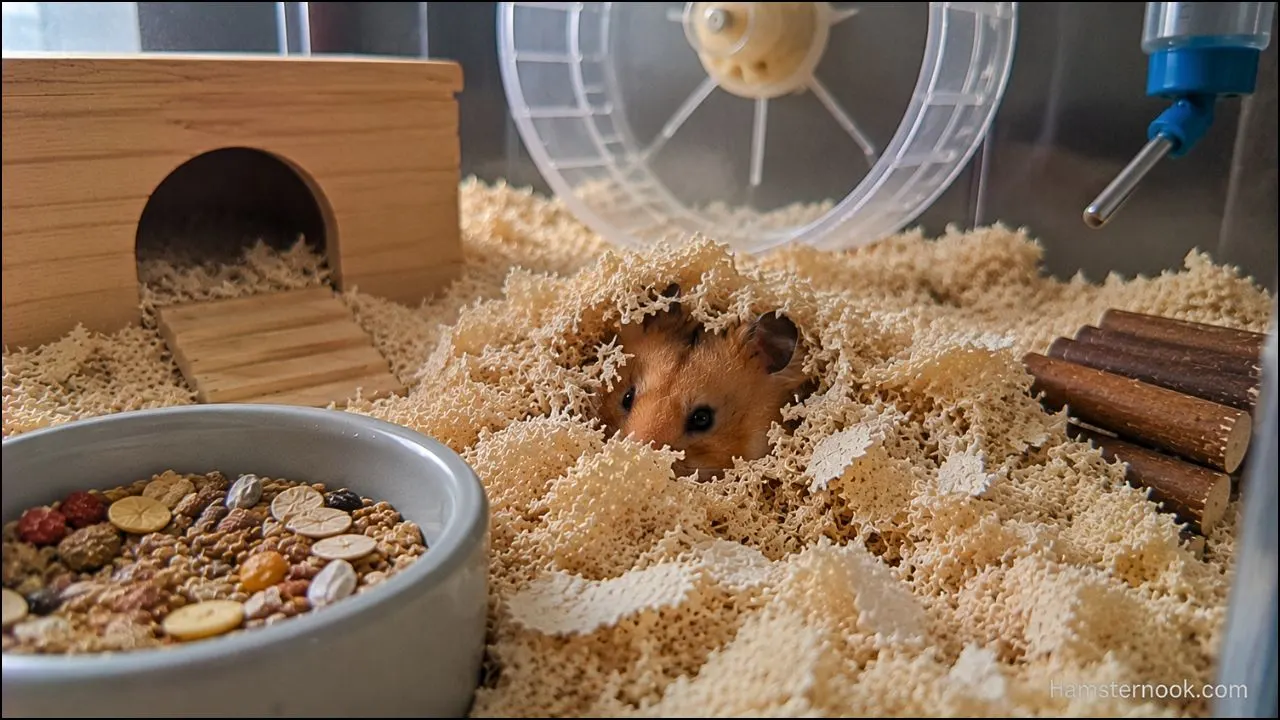
Hamsters naturally dig tunnels and create underground nests in the wild. Proper bedding allows them to express these natural instincts safely.
Good hamster bedding should:
- Be low-dust or nearly dust-free
- Hold tunnels and burrows well
- Be safe if accidentally chewed
- Control odor without strong perfumes
- Feel soft and comfortable
- Avoid harmful chemicals or oils
Poor bedding can lead to respiratory irritation, eye problems, stress, or injuries. Some unsafe wood beddings may even release aromatic oils that experts warn can irritate small animals.
Safe vs Unsafe Hamster Bedding (Quick Comparison)
| Bedding Type | Safe or Unsafe | Good for Burrowing | Dust Level | Notes |
|---|---|---|---|---|
| Paper-based bedding | Generally suitable | Excellent | Low | Soft, absorbent and a strong main bedding choice |
| Aspen shavings | Generally suitable | Moderate | Low to moderate | Choose a low-dust, untreated product |
| Hemp bedding | Generally suitable | Moderate | Low | Can be used as an additional substrate |
| Unscented toilet paper | Suitable for nesting | Good nesting material | Low | Use as nesting material rather than the main bedding |
| Cedar shavings | Avoid | Poor | Moderate | Aromatic compounds can irritate small animals |
| Pine shavings | Avoid | Poor | Moderate | Fresh pine materials and ordinary pine shavings are best avoided |
| Scented bedding | Avoid | Varies | Varies | Fragrances may irritate sensitive respiratory systems |
| Sawdust | Avoid | Poor | Very high | Fine dust can irritate the nose, eyes and respiratory system |
| Corn cob bedding | Use only if appropriate | Poor | Moderate | RSPCA lists dust-free, chemical-free corn-cob as an option |
Best Paper Bedding for Hamsters
Why Paper Bedding Is Usually the Best Choice
Paper bedding is widely considered one of the safest and most beginner-friendly options for hamsters because it is soft, absorbent, and excellent for burrowing.
High-quality paper bedding can:
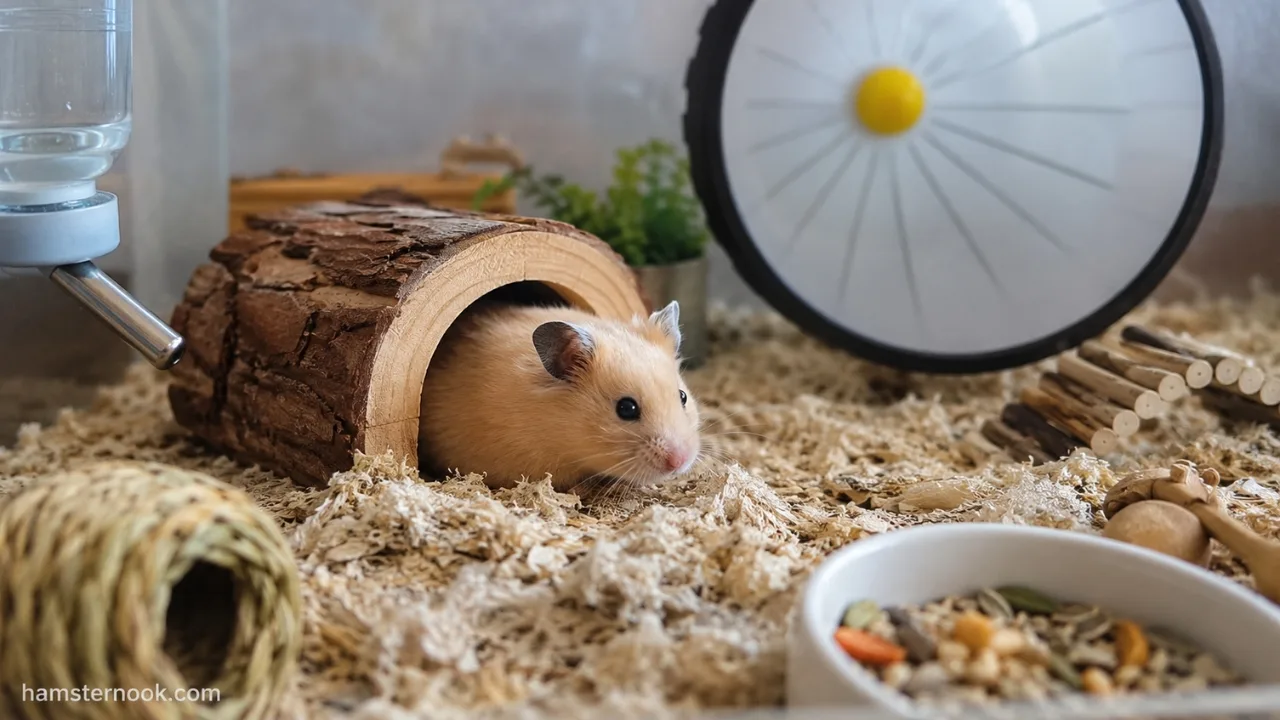
- Hold tunnel shapes well
- Reduce dust exposure
- Keep nests warm
- Absorb urine effectively
- Support natural digging behavior
Paper bedding is especially useful for Syrian hamsters and dwarf hamsters that love deep burrows.
Best Bedding for Syrian Hamsters
For Syrian hamsters, deep unscented paper bedding is a strong beginner-friendly choice because it supports burrowing while keeping dust low. Aspen or hemp can also be used as additional substrate, but the bedding should still provide enough depth and stable burrows.
The most important factors are depth, low dust, safe materials, and good burrow support rather than choosing a completely different bedding material just because a hamster is Syrian.
Even with high-quality paper bedding, gently fluffing compacted areas during spot cleaning can help maintain good airflow while still allowing your hamster to keep its tunnels and nests intact.
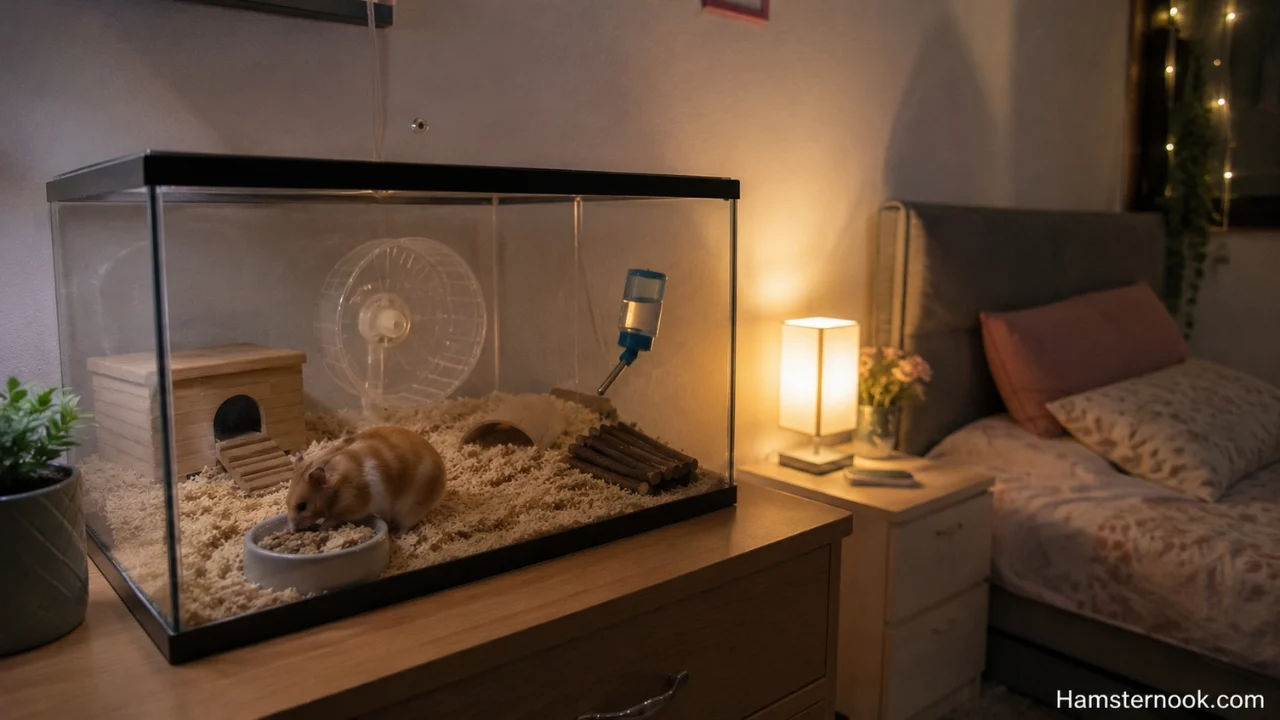
Look for bedding labeled:
- Unscented
- Dust-free or low dust
- Paper-based
- Safe for small animals
Avoid brightly scented paper bedding or products with added perfumes.
Experts and hamster welfare communities commonly recommend paper bedding as one of the safest options available.
Is Aspen Bedding Safe for Hamsters?
Yes, aspen is generally considered one of the safer wood-based beddings for hamsters.

Unlike cedar and pine, aspen is a hardwood and does not contain the same strong aromatic oils linked to respiratory concerns.
Pros of Aspen Bedding
- Better odor control than some paper beddings
- Usually lower dust than softwood shavings
- More affordable in some areas
- Adds texture variety to the enclosure
Cons of Aspen Bedding
- Does not hold burrows as well as paper bedding
- Some brands can still be dusty
- Long-haired Syrians may get shavings stuck in fur
Many hamster owners mix aspen with paper bedding to improve odor control while still allowing strong burrows. Hamster welfare sources also note that aspen alone may not support stable tunnels as well as paper bedding.
Is Hemp Bedding Safe for Hamsters?
Hemp bedding is another safe option commonly used by hamster owners.
It is usually:
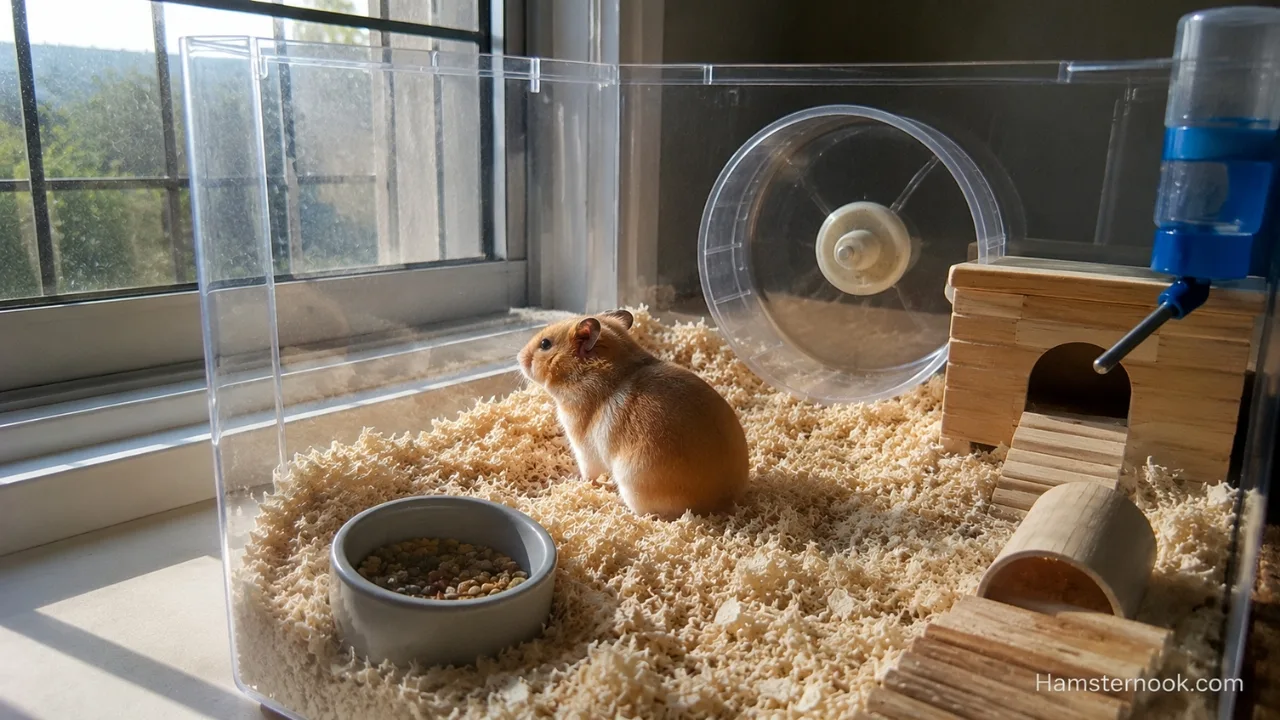
- Low dust
- Absorbent
- Natural
- Good for odor control
However, hemp bedding does not hold burrows especially well by itself. Many owners use it as a layer or mix it with paper bedding.
Hamster welfare sources often list hemp as a safe alternative substrate.
Paper vs Aspen vs Hemp: Which Is Best?
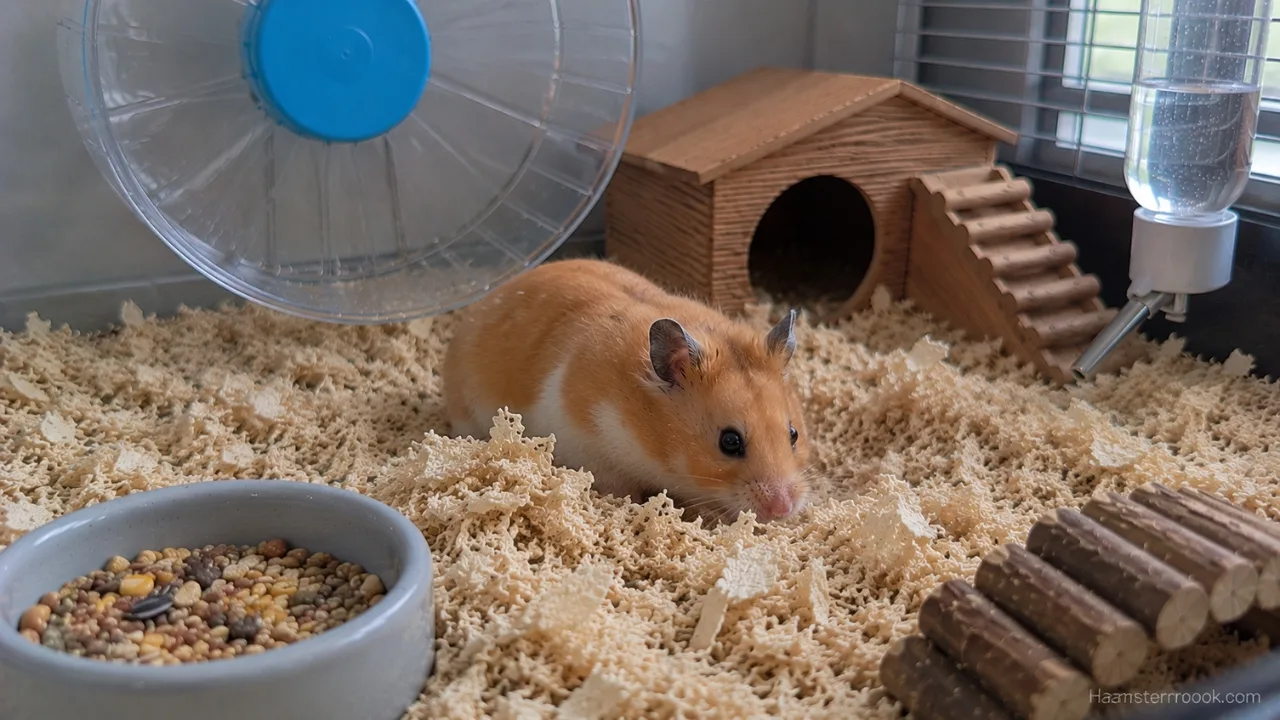
For most hamsters, unscented low-dust paper bedding is the simplest choice for the main bedding because it is absorbent and supports burrowing well. Aspen can be useful when you want more substrate variety, while hemp can also be used as an additional substrate. If you choose wood-based bedding, look for a product that is dust-extracted or dust-free and untreated.
There is no need to use several bedding types just to make the enclosure safe. A good setup can use one suitable main bedding with optional substrate variety where practical.
Unsafe Bedding for Hamsters
Cedar Bedding
Cedar bedding should be avoided for hamsters.
Cedar contains strong aromatic oils that may irritate the respiratory system and skin of small animals. Multiple veterinary and pet care sources warn against using cedar shavings for hamsters and other small pets.
Pine Bedding
Fresh pine materials and pine shavings are best avoided for hamsters because of concerns about aromatic compounds and respiratory irritation. Some products may be processed differently, but the safest beginner approach is to choose a clearly recommended low-dust bedding such as paper-based bedding or aspen rather than relying on ordinary pine shavings.
Sawdust
Sawdust is generally considered unsuitable for hamster bedding because of its high dust levels.

Fine dust particles can irritate a hamster’s lungs, nose, and eyes. Dusty environments may increase respiratory problems in small animals.
Scented Bedding
Fragranced bedding is another common mistake.
Artificial scents may seem useful for controlling odor, but they can irritate a hamster’s sensitive respiratory system. Hamsters rely heavily on scent for communication and comfort, so strong artificial smells can also create stress.
How Deep Should Hamster Bedding Be?
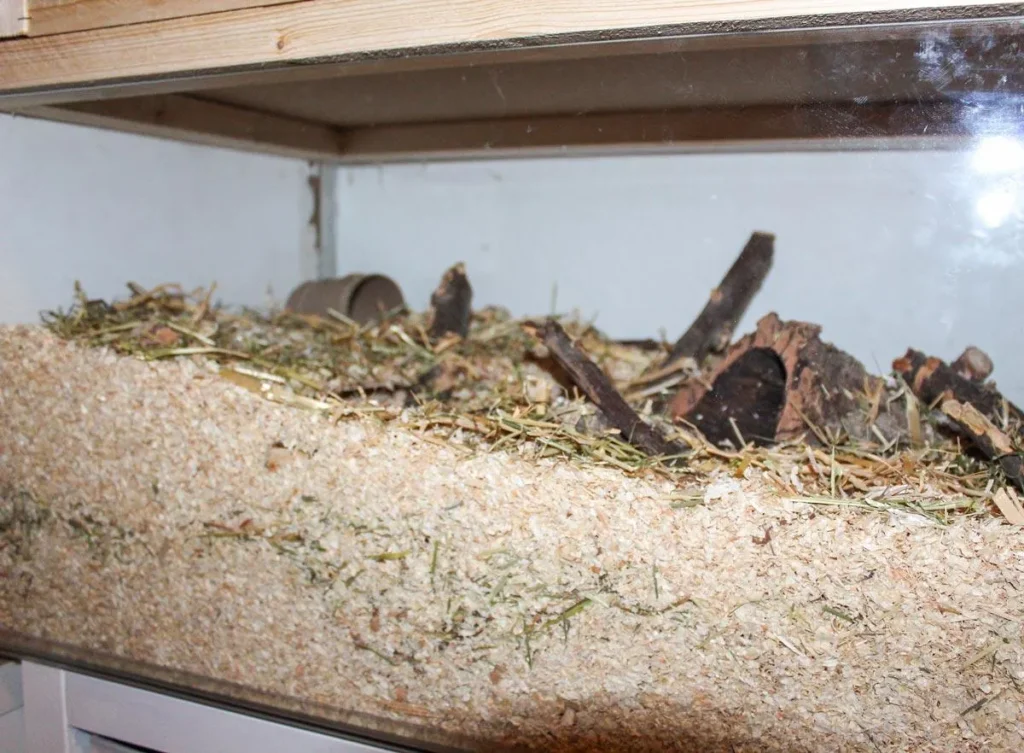
Deep bedding is extremely important for hamster welfare.
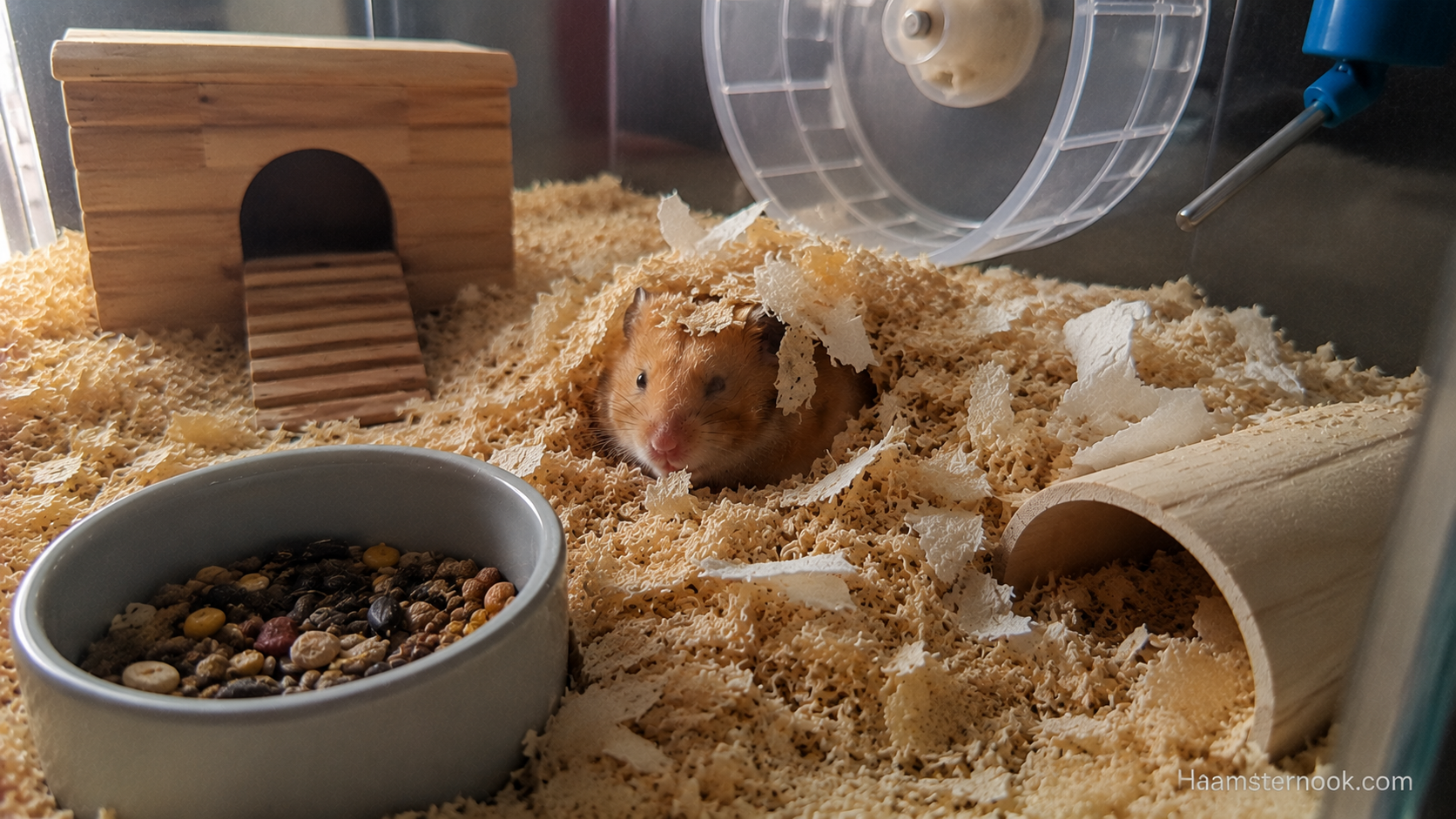
Most modern hamster care recommendations suggest providing enough depth for natural burrowing behavior.
A practical beginner target is:
- At least 10 inches (25 cm) of bedding is a practical minimum target for burrowing.
- Deeper bedding is beneficial when the enclosure allows it, especially for hamsters that build extensive burrows.
For Syrian hamsters, veterinary guidance supports substantially deeper bedding areas, with 15–30 inches (40–80 cm) recommended where practical to support burrowing behavior.
Deep bedding helps hamsters:
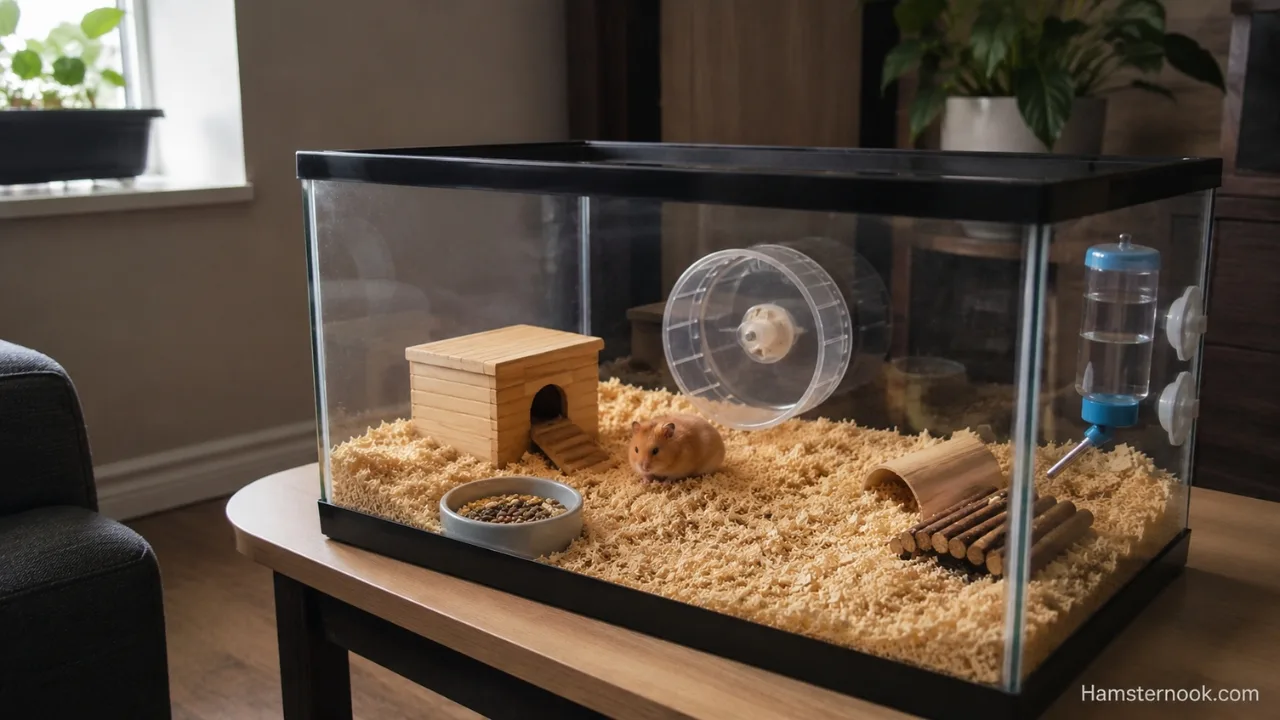
- Feel secure
- Build tunnels
- Create sleeping chambers
- Reduce boredom and stress
If you’re concerned about a lack of stimulation, read Is My Hamster Bored? 8 Signs of Boredom and What to Do
Paper bedding generally works best for maintaining stable burrows.
If you are unsure how deep your bedding should be, our How Much Bedding Does a Hamster Need? Minimum Depth Guide for Healthy Burrowing guide gives a dedicated breakdown of bedding depth and burrowing needs.
The right bedding depth also depends on the enclosure itself. Our Best Hamster Cage Setup for Beginners: Size, Bedding, Wheel & Essentials guide explains how cage size, usable floor space, bedding depth and essential habitat features work together.
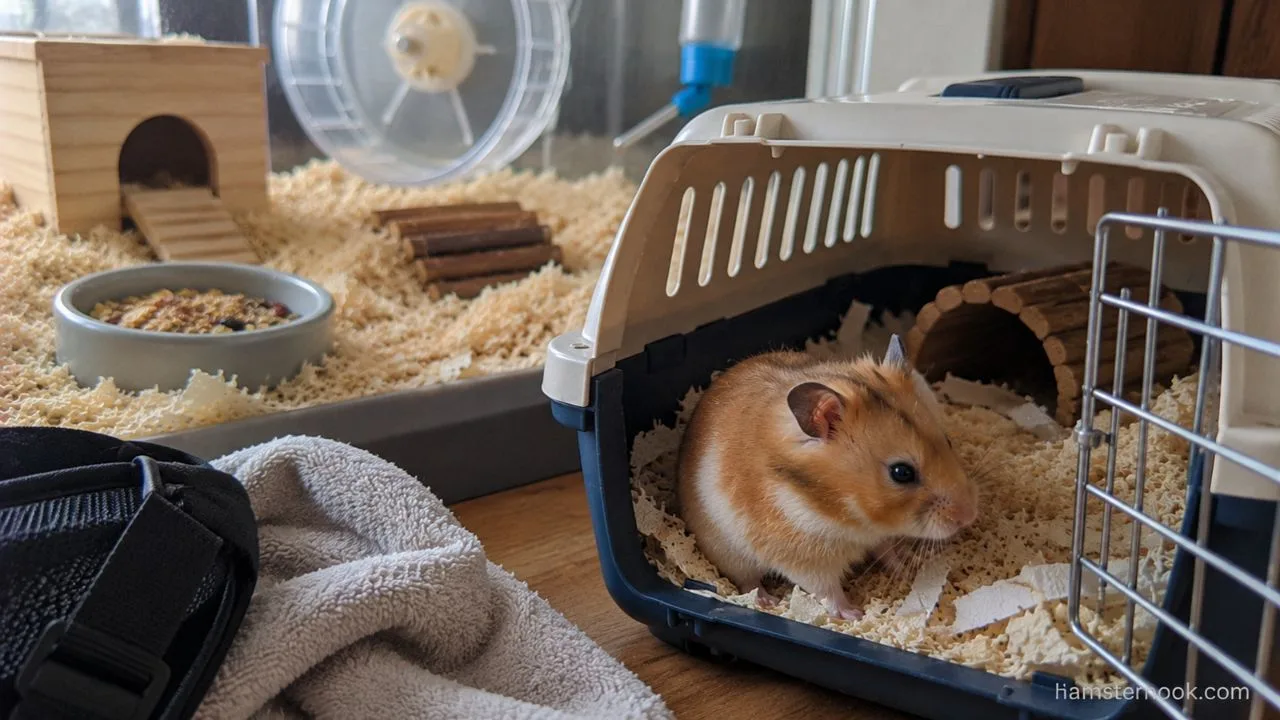
Can Hamsters Breathe Under Deep Bedding?
Yes. Hamsters naturally burrow and sleep under deep bedding, and properly chosen low-dust bedding should still allow normal breathing. The important points are to use bedding that is as dust-free as possible, avoid heavily scented or dusty materials, and keep the enclosure well ventilated.
If your hamster shows wheezing, difficulty breathing, or other unusual respiratory symptoms while using deep bedding, do not assume the bedding is the only cause. Remove any obviously dusty material and seek veterinary advice if breathing problems continue.
Can Hamsters Be Allergic to Bedding?
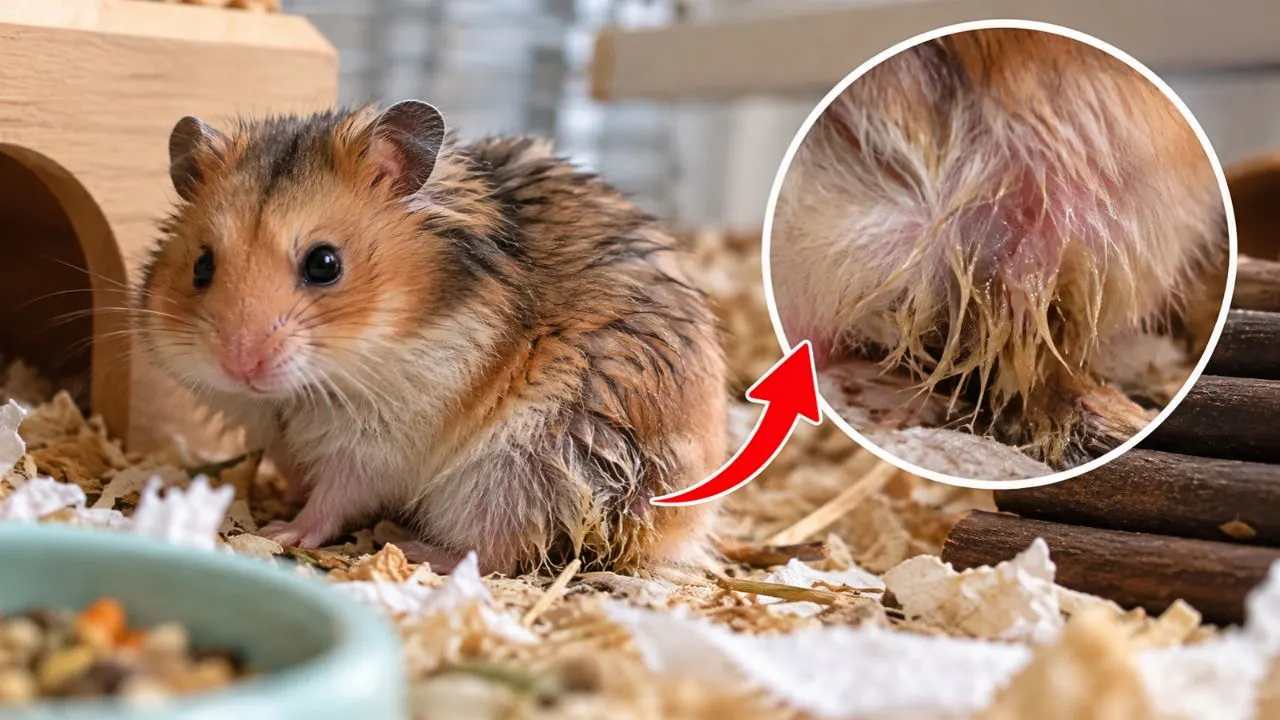
Yes, some hamsters may react poorly to certain bedding materials, especially dusty, scented, or low-quality products. Signs of bedding irritation can include sneezing, watery eyes, excessive scratching, red skin, or unusual respiratory sounds.
If symptoms begin after a bedding change, switching away from dusty or scented bedding may remove a possible irritant, but improvement alone does not confirm a true allergy. If sneezing, watery eyes, skin irritation, or unusual respiratory sounds continue after changing the bedding, consult an exotic veterinarian.
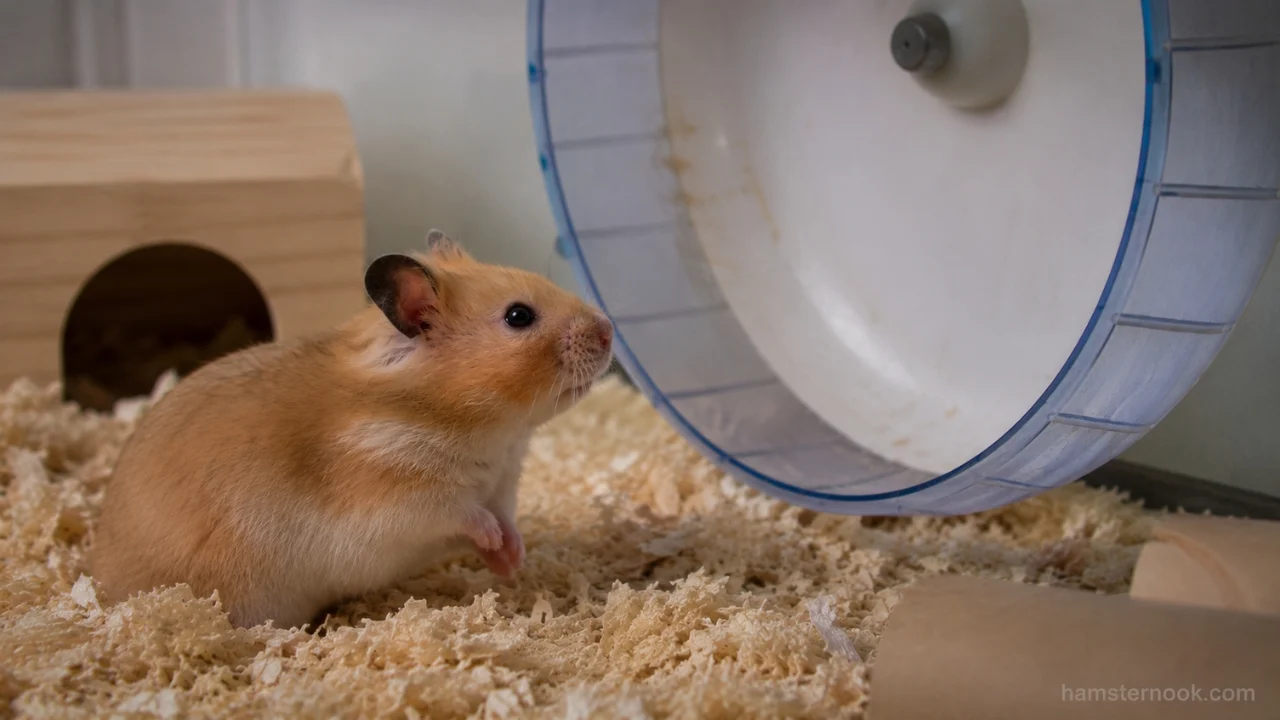
If symptoms continue after changing bedding, consult an exotic veterinarian to rule out illness or infection.
Best Bedding Setup for Burrowing
A simple setup that works well for most hamsters:
- Main layer: Unscented paper bedding
- Optional mix: Aspen or hemp for texture and odor control
- Nesting material: Plain unscented toilet paper
Compressed bedding also holds tunnels better than loosely scattered bedding.
Avoid placing heavy ceramic hides directly on deep loose bedding unless they are supported properly underneath.
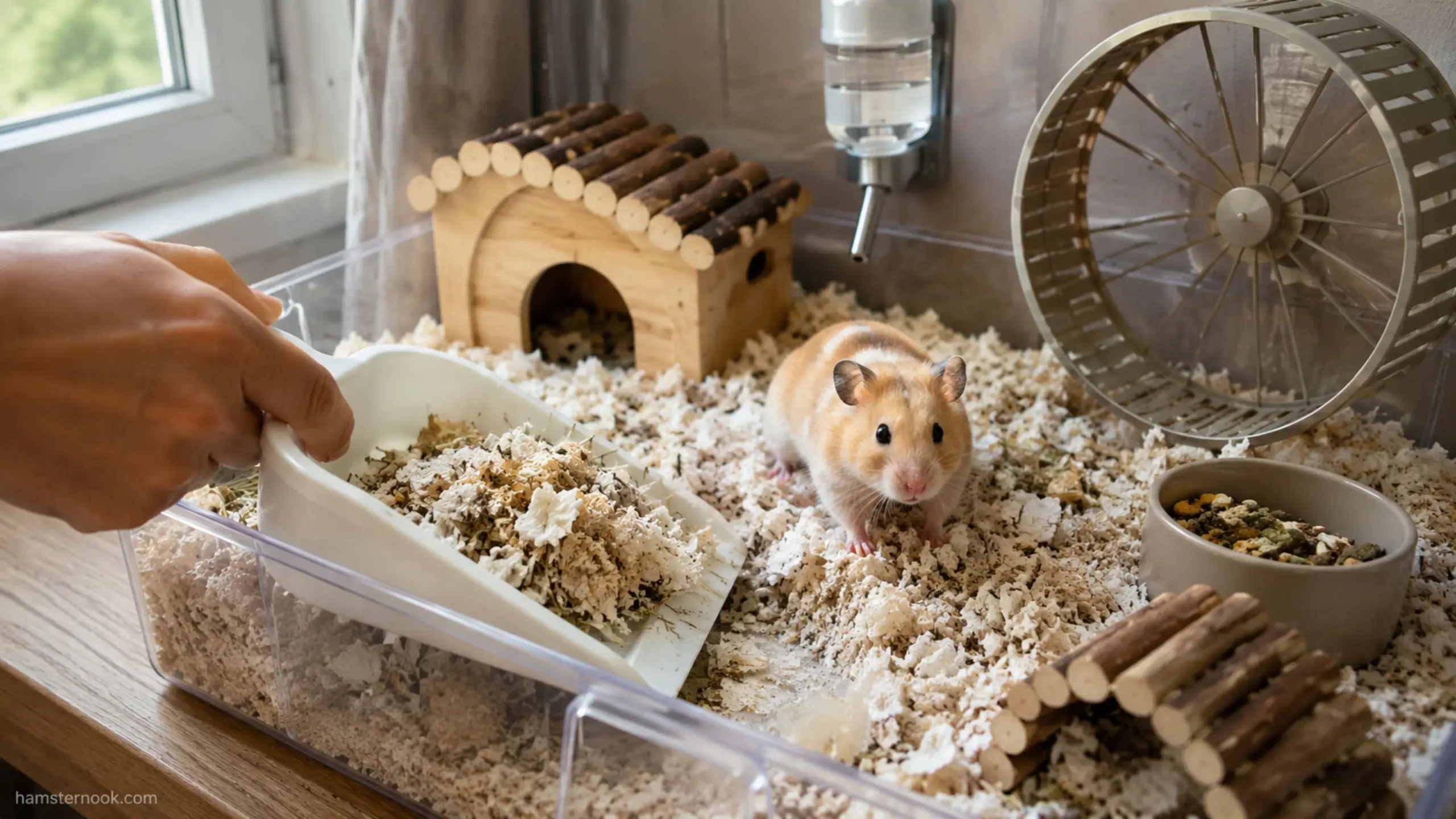
What Is the Best Bedding for Hamsters?
For most hamsters, unscented, low-dust paper bedding is the simplest overall choice. It provides good burrow support, absorbs moisture, and can be used as the main bedding. Aspen and hemp can be useful additions when you want more texture or substrate variety.
There is no single bedding material that is perfect for every enclosure. The best setup combines safe materials, sufficient depth, low dust, and good tunnel stability.
How Often Should You Change Hamster Bedding?
One of the biggest beginner mistakes is replacing all bedding too often.
Hamsters become stressed if their entire scent environment disappears suddenly.
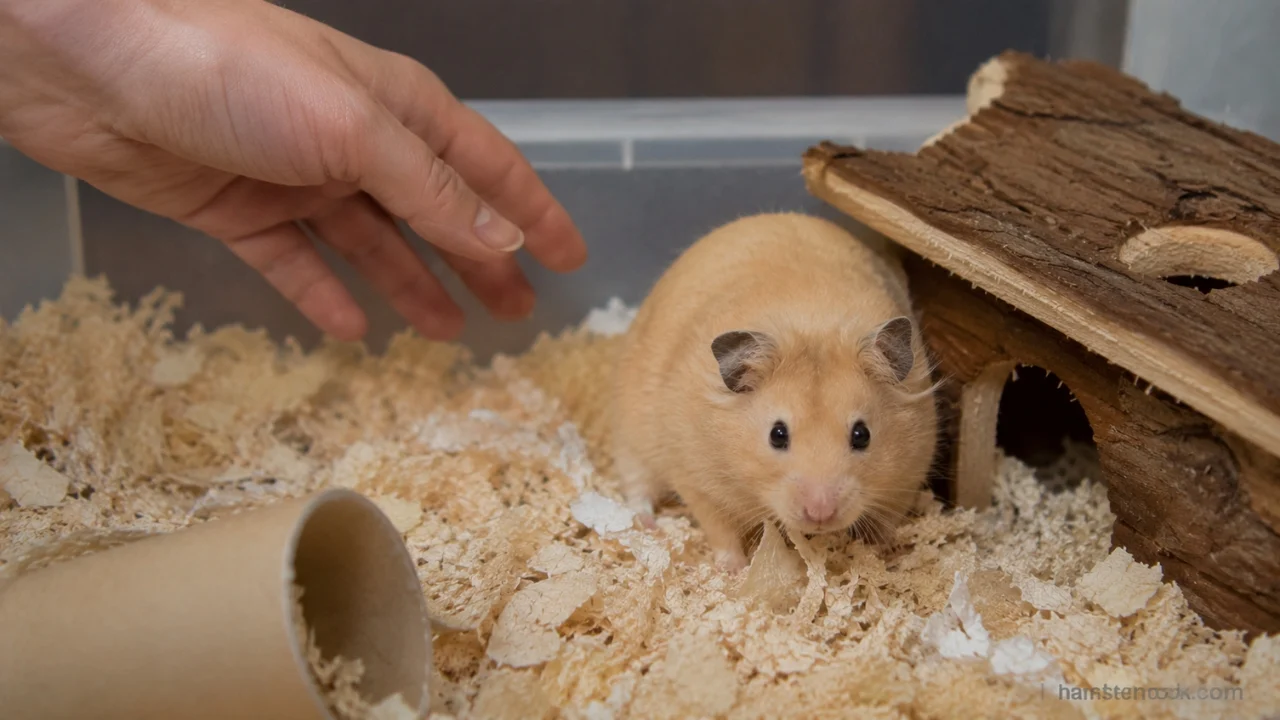
Instead:
Spot Clean Regularly
- Remove wet patches
- Remove soiled bedding
- Clean sand bath areas if used
Partial Bedding Changes
Replace only dirty sections while keeping most clean bedding intact.
Full Cleanouts
Full bedding replacements should usually happen less frequently in large properly maintained enclosures.
Keeping bedding clean without repeatedly removing the entire burrow system is important for a stable enclosure routine. Our How Often Should You Clean a Hamster Cage? Daily, Weekly & Deep Cleaning Guide guide explains how to balance spot cleaning with deeper cage cleaning.
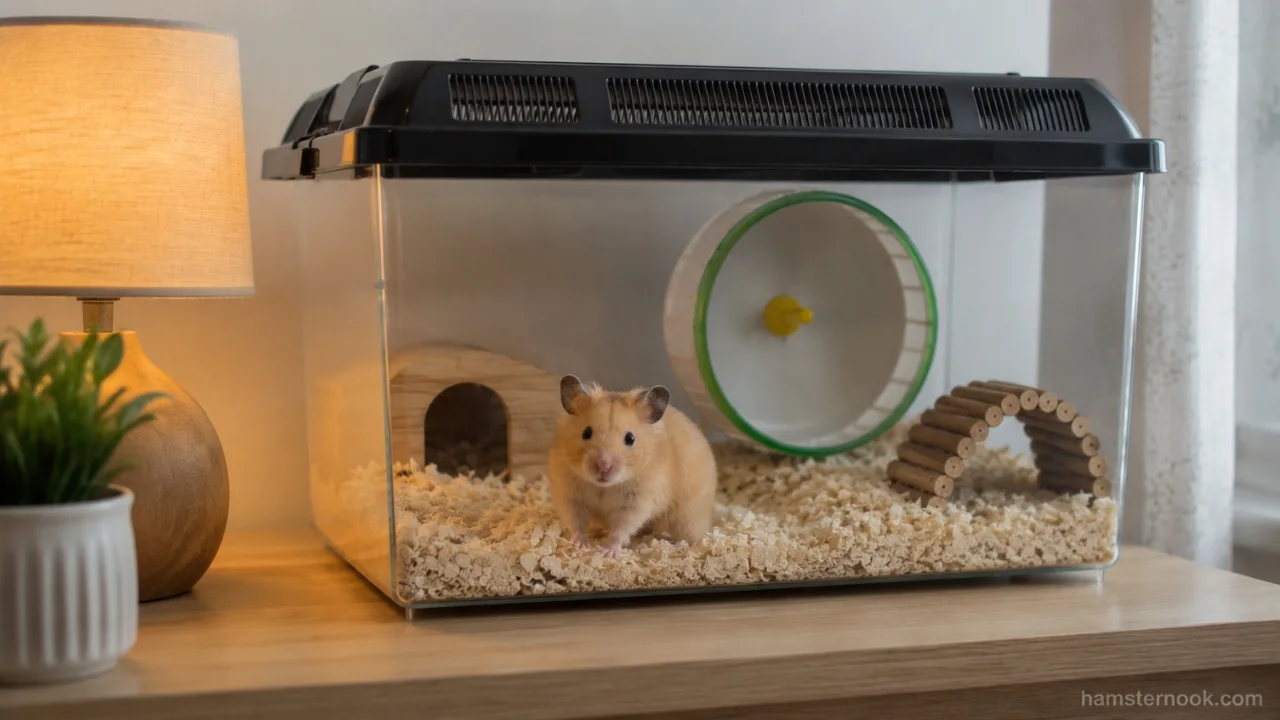
Deep bedding setups often stay cleaner longer because waste becomes concentrated in certain areas.
Try not to replace every hideout or nesting area during the same cleaning session. Leaving part of your hamster’s familiar nest untouched can help reduce stress after routine maintenance.
Signs Your Hamster Bedding May Be Causing Problems
Watch for:
- Sneezing
- Wheezing
- Watery eyes
- Excess scratching
- Red irritated skin
- Strong dusty smell
- Constant coughing-like sounds
If symptoms appear after changing bedding, remove the bedding immediately and switch to a safer low-dust option.
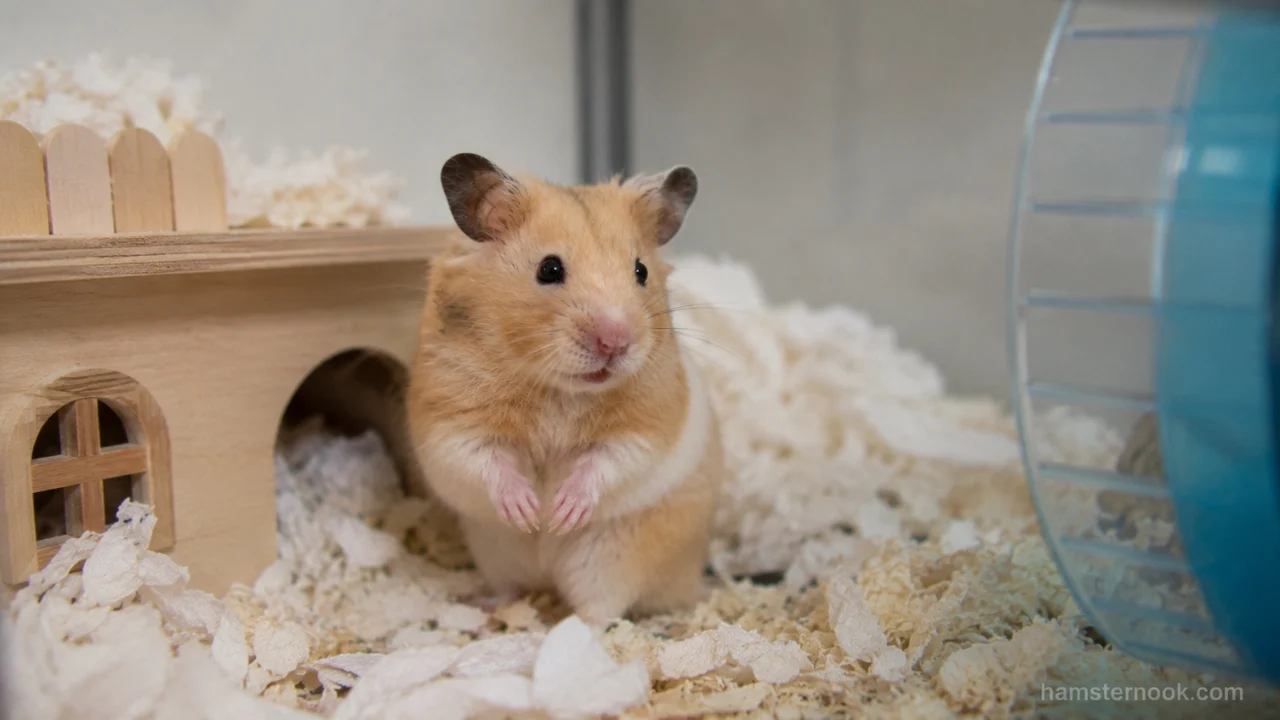
Persistent respiratory symptoms should always be checked by an exotic veterinarian.
Breathing problems, lethargy, or unusual behavior can sometimes signal illness in hamsters. Learn the most common warning signs in our hamster health guide.
If breathing problems, lethargy, or other unusual symptoms continue after changing the bedding, How to Tell If Your Hamster Is Sick: Signs, Symptoms & When to See a Vet explains when veterinary care may be needed.
Common Beginner Bedding Mistakes
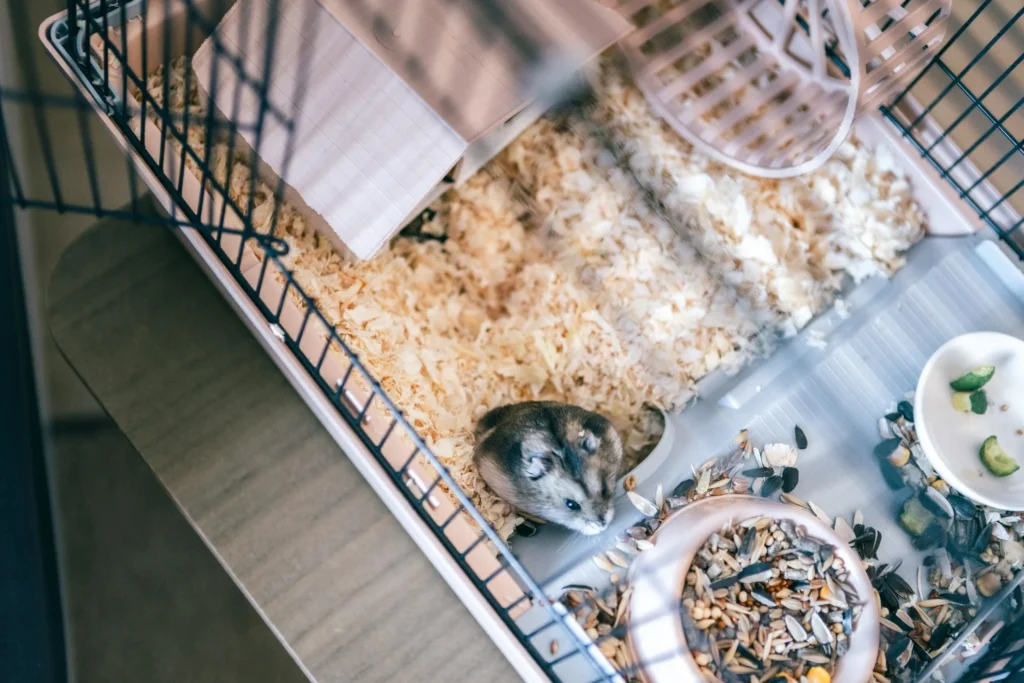
Using Too Little Bedding
Thin bedding layers prevent natural burrowing behavior.
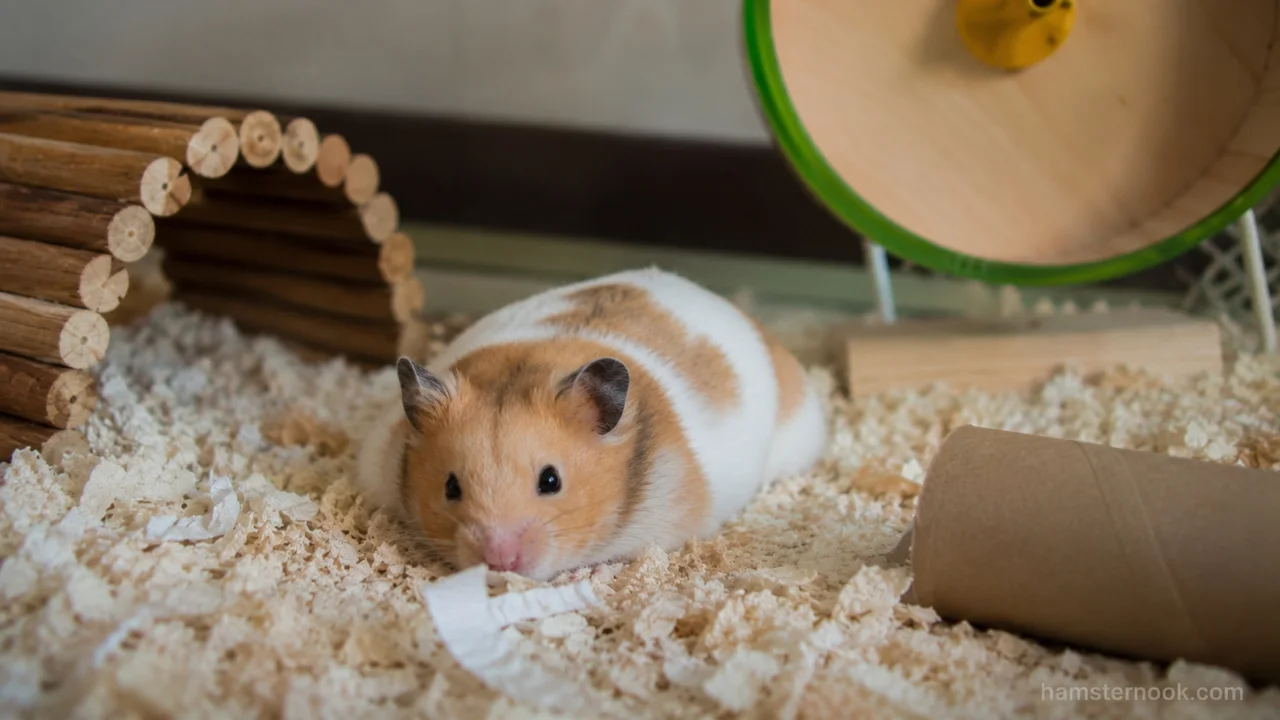
Choosing Bedding Based on Smell
Strong-smelling bedding is often unsafe for hamsters.
Buying the Cheapest Wood Shavings
Cheap softwood shavings may contain excessive dust or irritating aromatic compounds.
Replacing All Bedding Weekly
Over-cleaning can stress hamsters unnecessarily.
Ignoring Dust Levels
Even safe bedding becomes problematic if extremely dusty.
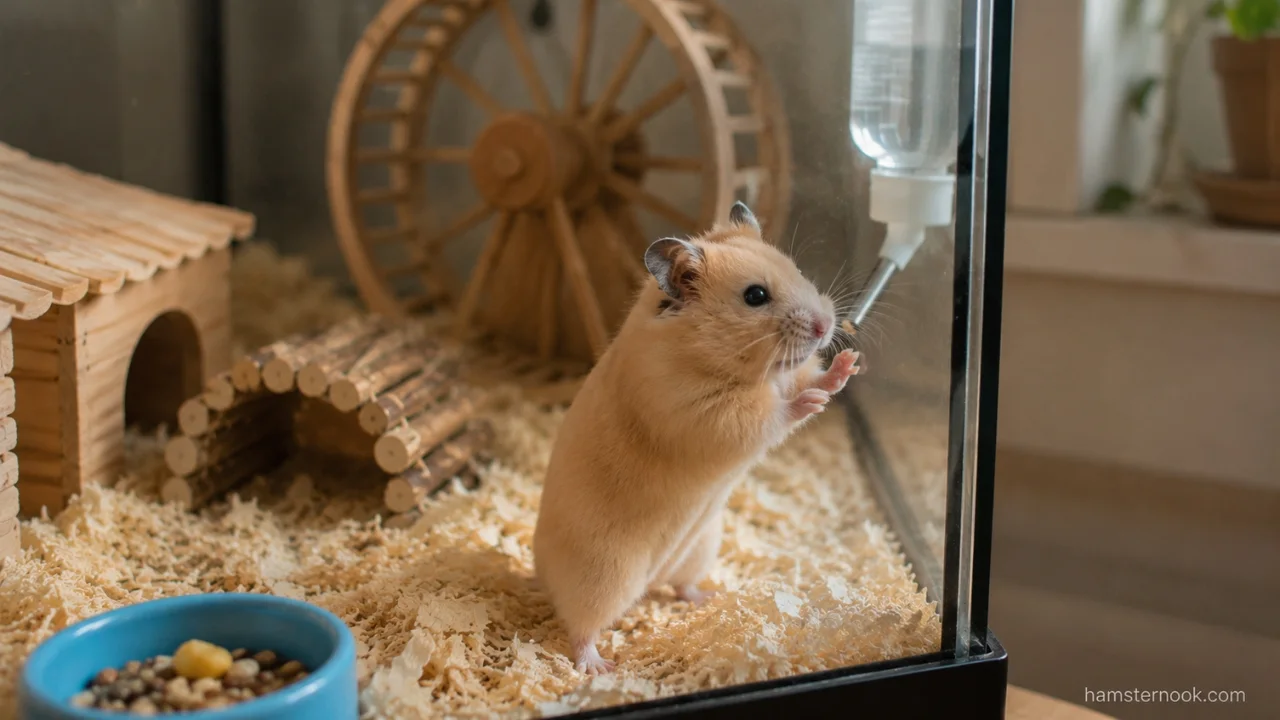
What Bedding Do Experienced Hamster Owners Usually Prefer?
Among experienced hamster keepers, paper bedding is one of the most commonly recommended choices because it balances:
- Safety
- Burrow support
- Comfort
- Accessibility
- Ease of use
Many owners also combine multiple substrates for enrichment, such as:
Combining paper bedding, aspen sections, hemp areas, and sand baths can create a more natural and enriching enclosure that encourages exploration and natural behaviors.
Different substrate areas can also add variety to the enclosure. Our Hamster Cage Enrichment: 10 Safe Ideas for Boredom & Natural Behavior guide covers additional ways to support exploration and natural behavior.

- Paper bedding
- Aspen sections
- Hemp areas
- Sand baths
This creates a more natural and stimulating enclosure.
Final Thoughts
The best hamster bedding is safe, low dust, comfortable, and able to support natural burrowing behavior. For most owners, unscented paper bedding is the easiest and safest choice, while aspen and hemp can work well as additional textures or mixed substrates.
Avoid cedar, heavily scented bedding, and dusty softwood shavings whenever possible. A deep, clean, low-dust bedding setup can significantly improve your hamster’s comfort, stress levels, and long-term health.
When choosing bedding, prioritize low-dust materials that support natural burrowing and keep your hamster comfortable. A safe, well-maintained bedding setup is one of the simplest ways to improve your hamster’s long-term health and wellbeing.
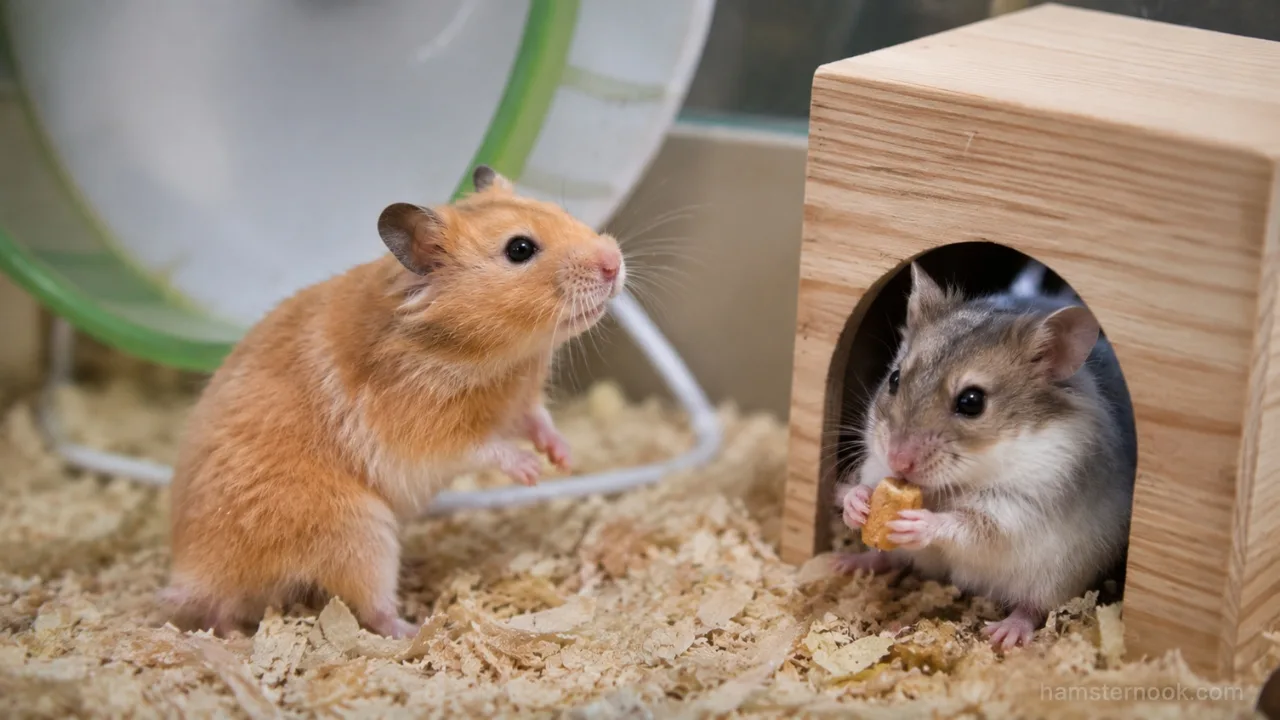
FAQ About Hamster Bedding
What is the safest bedding for hamsters?
Unscented paper bedding is generally considered one of the safest and most beginner-friendly options because it is soft, low dust, and excellent for burrowing.
Can Hamsters Sleep Under Their Bedding?
Yes. Hamsters naturally burrow and often create sleeping chambers beneath deep bedding. This behavior is completely normal and helps them feel secure. A hamster sleeping underground is usually a sign that the enclosure provides enough bedding depth for natural behavior.
Can hamsters use pine bedding?
Many hamster experts recommend avoiding pine bedding because of aromatic oils and respiratory concerns. Safer alternatives include paper bedding and aspen.
Why is cedar bedding not recommended for hamsters?
Cedar bedding is widely discouraged because its aromatic oils may irritate a hamster’s respiratory system and skin.
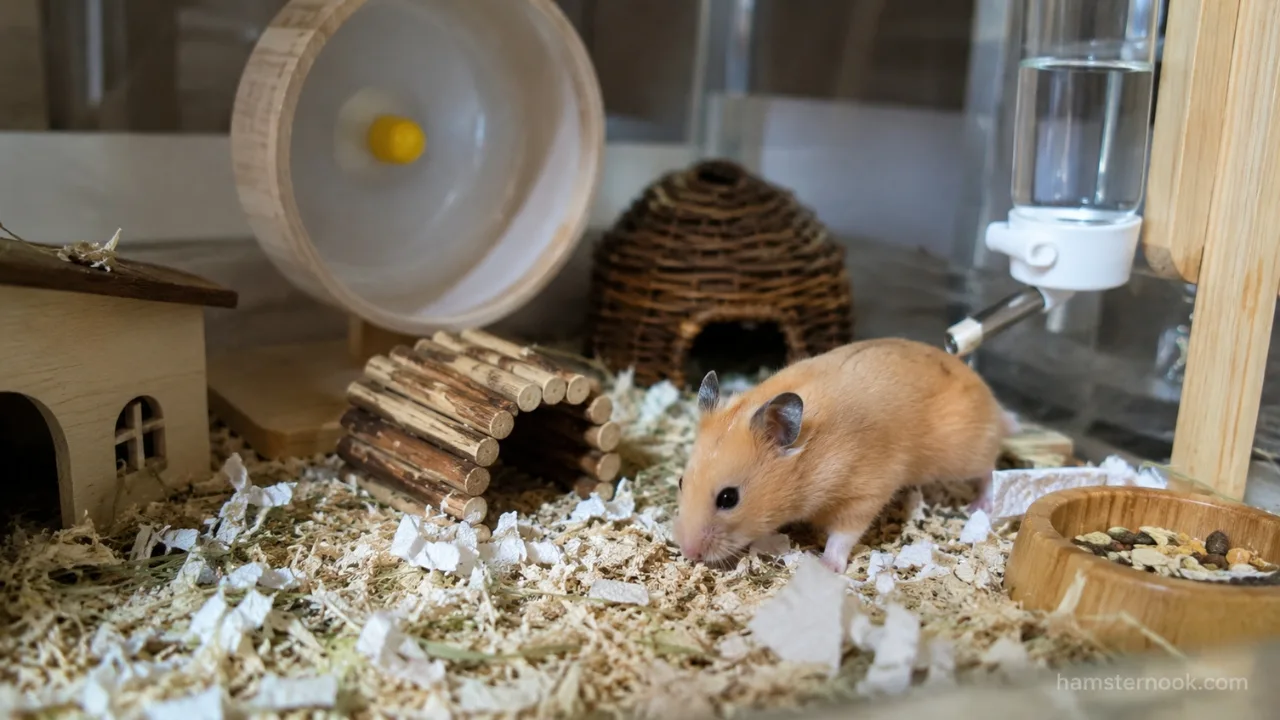
How much bedding does a hamster need?
A practical target is at least 10 inches (25 cm) of bedding for burrowing, with deeper bedding where the enclosure allows it. For Syrian hamsters, 15–30 inches (40–80 cm) can provide substantially more burrowing space where practical.
Can I use toilet paper for hamster bedding?
Plain unscented toilet paper is safe as nesting material, but it should not usually replace the main bedding entirely.
Is dusty bedding bad for hamsters?
Yes. Dust can irritate the lungs, nose, and eyes of hamsters and may contribute to respiratory problems.
Should hamster bedding be scented?
No. Unscented bedding is the safer option because fragrances may irritate a hamster’s respiratory system.
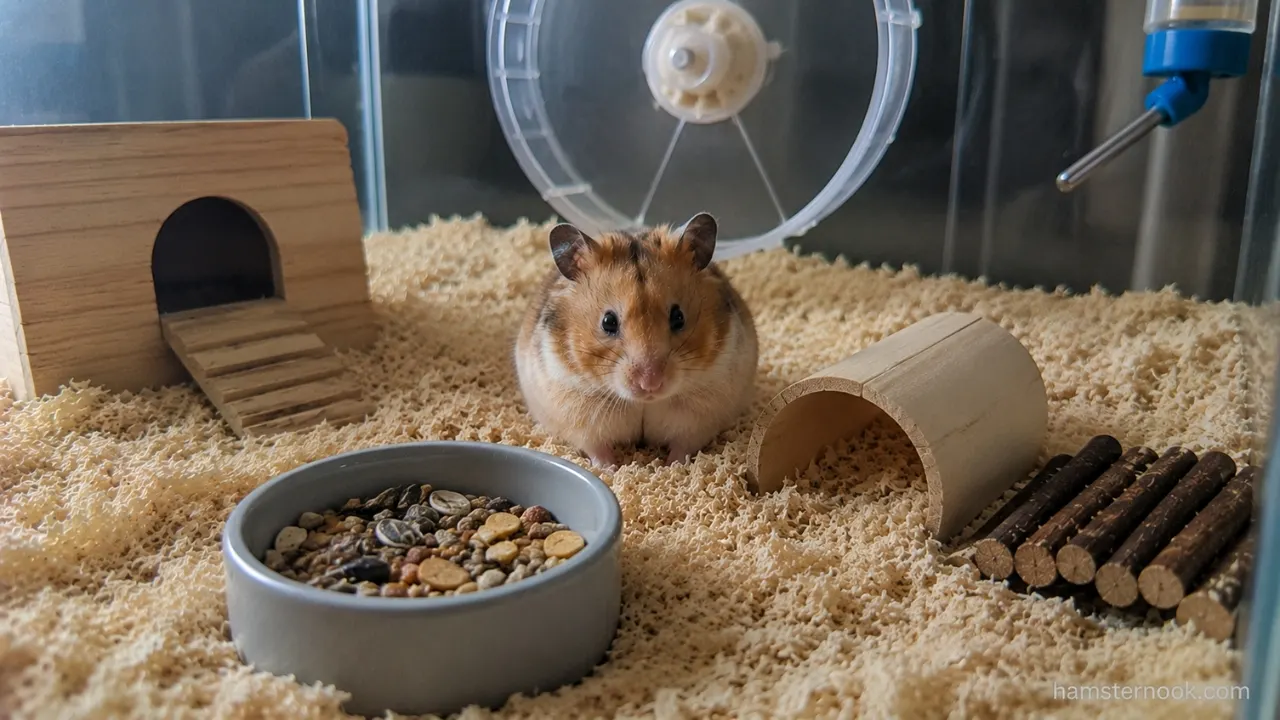
References
This guide is based on hamster bedding, housing, burrowing, substrate safety, respiratory health, and welfare guidance from trusted animal welfare and veterinary resources, including:
- RSPCA – Creating a Good Home for Hamsters – Guidance on suitable bedding, burrowing opportunities, enclosure setup, nesting materials, and environmental welfare.
- RSPCA – Keeping Hamsters as Pets – General hamster care, housing, bedding, enrichment, diet, and welfare guidance.
- Blue Cross – Hamster Care Guide – Practical information on hamster bedding, housing, burrowing, enrichment, cleaning, and general wellbeing.
- MSD Veterinary Manual – Providing a Home for a Hamster – Veterinary guidance on hamster housing, bedding, ventilation, nesting, and environmental requirements.
- MSD Veterinary Manual – Disorders and Diseases of Hamsters – Veterinary information on respiratory and other health problems that may affect hamsters.
- NC3Rs – Housing and Husbandry: Hamster – Guidance on hamster housing, bedding depth, burrowing, environmental conditions, and species-appropriate husbandry.
- NC3Rs – Choosing Appropriate Enrichment – Guidance on providing suitable substrates and enrichment that support natural burrowing and exploratory behavior.
Medical Disclaimer
The information provided in this article is for educational and informational purposes only and should not be considered veterinary advice, diagnosis, or treatment. Bedding-related symptoms such as persistent sneezing, wheezing, breathing difficulty, watery eyes, skin irritation, or unusual behavior may have causes other than the bedding itself. If your hamster shows persistent or concerning symptoms, respiratory problems, injury, or other signs of illness, consult a qualified exotic animal veterinarian for proper evaluation and treatment.

Narayan Kumar is the founder and author of HamsterNook. He creates practical, research-based hamster care guides covering hamster behavior, nutrition, cage setup, enrichment, health, and everyday care. His goal is to help hamster owners make informed decisions and provide safer, healthier lives for their pets through clear, beginner-friendly information based on trusted animal care resources.