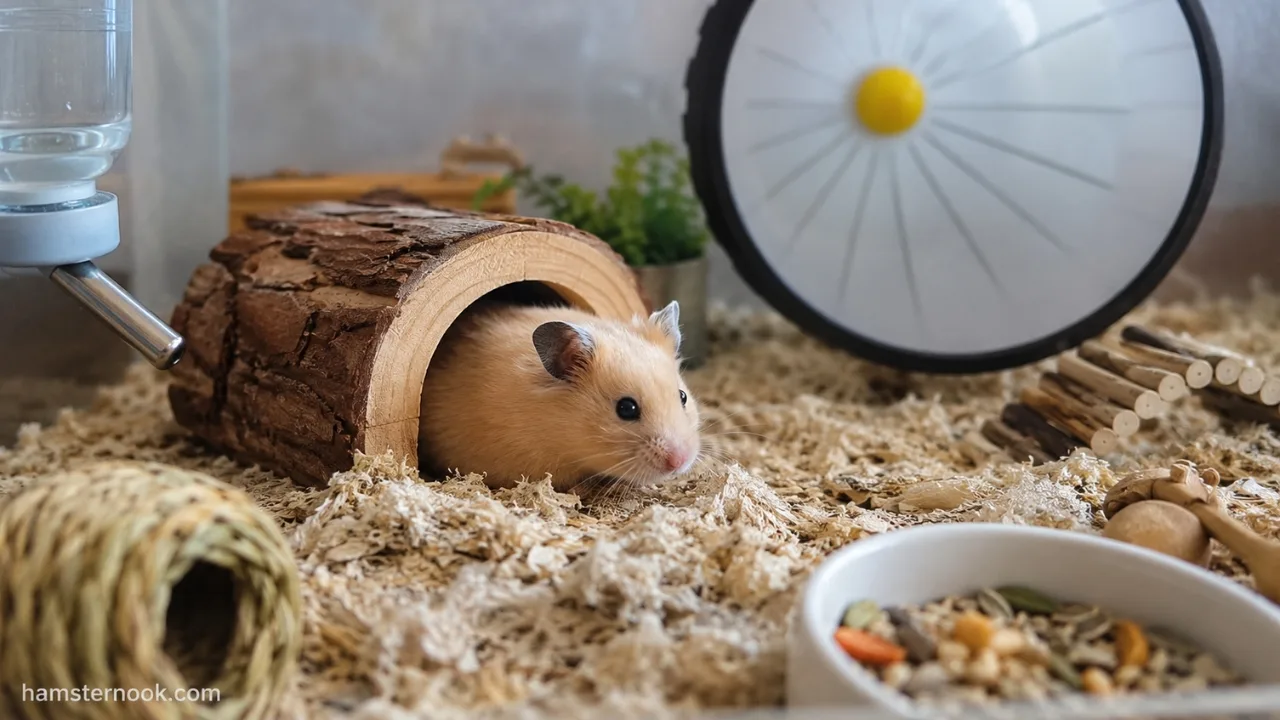
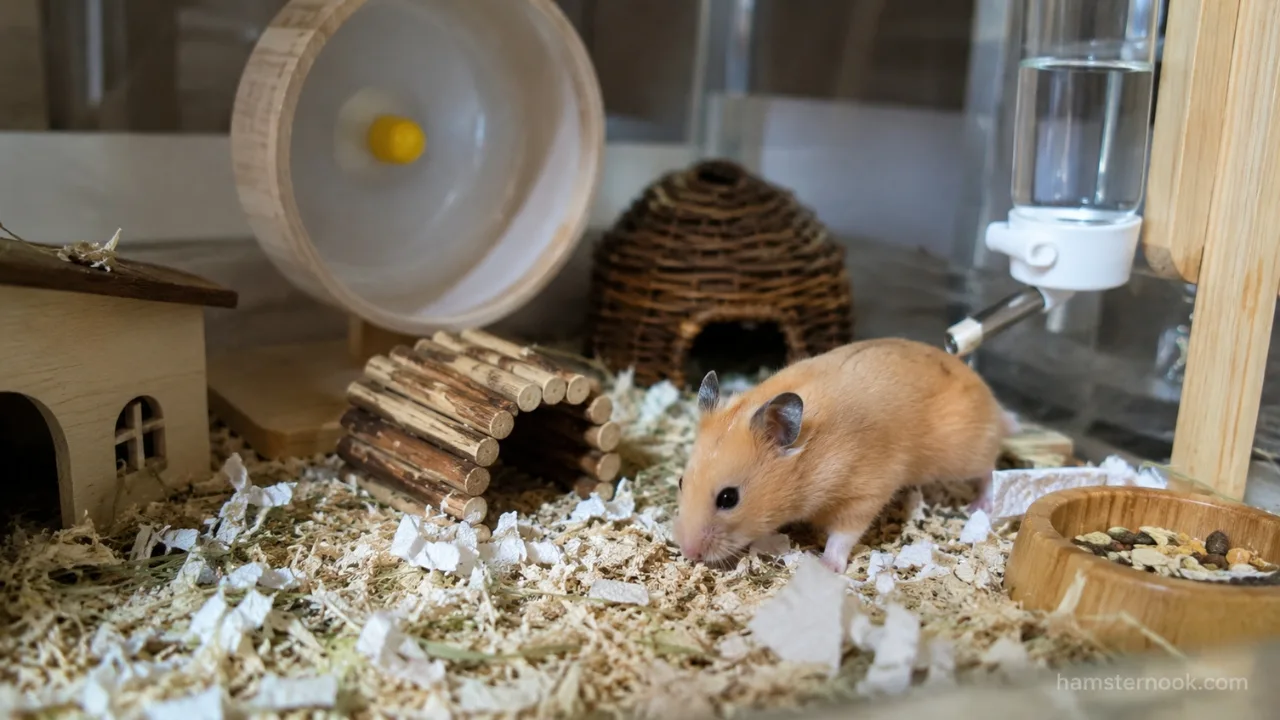
Keeping a hamster cage near the kitchen can seem convenient, especially if that is where you spend much of your time. But kitchens have several environmental factors that are not ideal for a hamster, including cooking activity, sudden noise, heat, strong smells, and household chemicals. The question isn’t simply whether a hamster can physically live near a kitchen. It’s whether that particular location provides the quiet, stable, clean environment a hamster needs.
Quick Answer
A hamster cage is better kept away from the kitchen whenever possible. A kitchen can expose a hamster to frequent noise, temperature changes, cooking fumes, strong odors, smoke, water, and cleaning products. Hamsters are sensitive to unfamiliar sounds and smells and need a quiet place where they can rest undisturbed.
That doesn’t mean every home with a kitchen is automatically unsuitable. If the enclosure is well away from the cooking area, protected from direct heat and fumes, and kept in a quiet, stable part of the room, the risks are lower. Still, if another suitable quiet room is available, that is generally the better choice.
Why the Kitchen Can Be a Poor Location for a Hamster Cage
The biggest issue isn’t one particular kitchen appliance. It’s the combination of several things happening in the same space.

Hamsters have well-developed senses of smell and hearing, and they can be sensitive to new sights, sounds, and smells. The RSPCA recommends keeping hamsters in a quiet environment where they can rest undisturbed and away from household sources of high-frequency sound.
A busy kitchen can make that difficult.
Cooking also creates an environment that changes throughout the day. The room may be quiet in the afternoon and suddenly become bright, noisy, hot, and busy when someone starts preparing dinner. For an animal that spends much of the day sleeping and becomes active around dusk and nighttime, that repeated disturbance can interfere with the calm environment it needs.
The Main Kitchen Safety Risks

Cooking Fumes and Smoke
A hamster should not be exposed directly to smoke or irritating airborne substances.
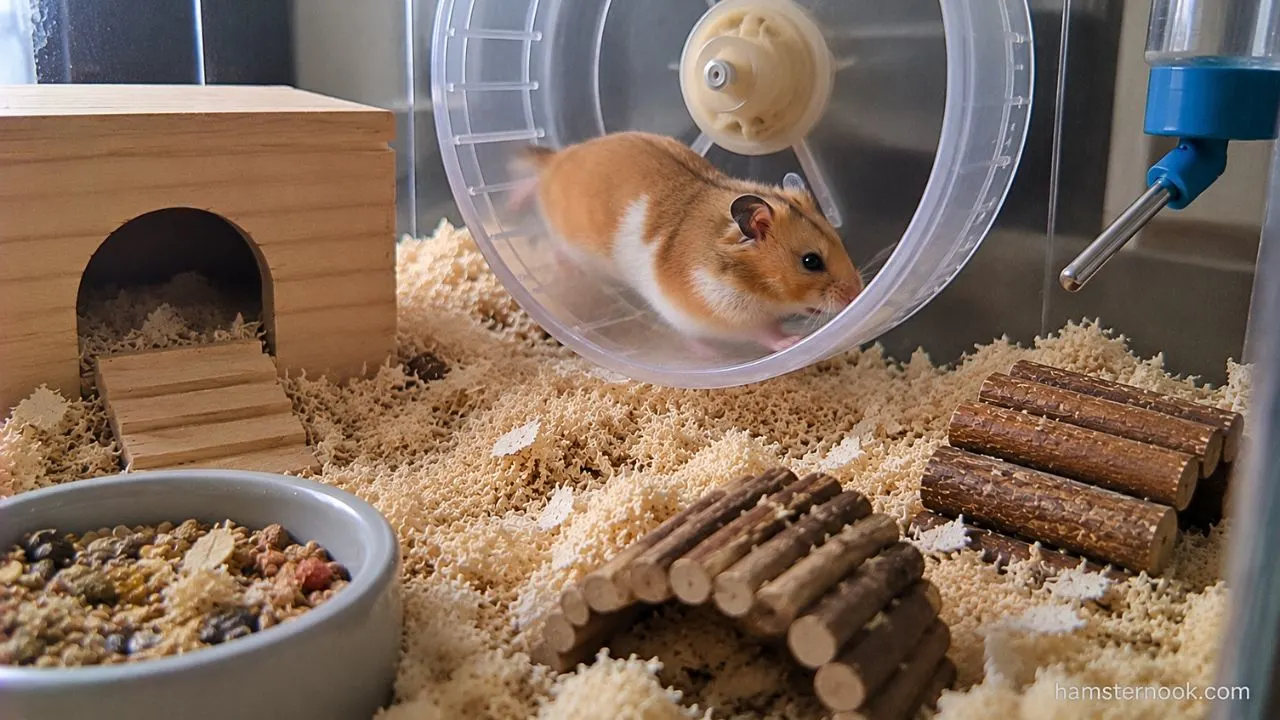
Cooking can produce smoke, fumes, and airborne particles, particularly when food is fried or burned. Keeping the enclosure away from the immediate cooking area reduces the hamster’s exposure to these byproducts. The safest approach is to keep the hamster away from the immediate cooking area rather than relying on the cage being several feet from the stove.
Smoke from cigarettes is an especially clear concern. PDSA specifically identifies hamsters and other pets living indoors as vulnerable to second-hand smoke and advises keeping pets away from tobacco smoke.
The same principle makes a kitchen a less desirable location when cooking regularly produces noticeable smoke or strong airborne odors.
Heat and Sudden Temperature Changes
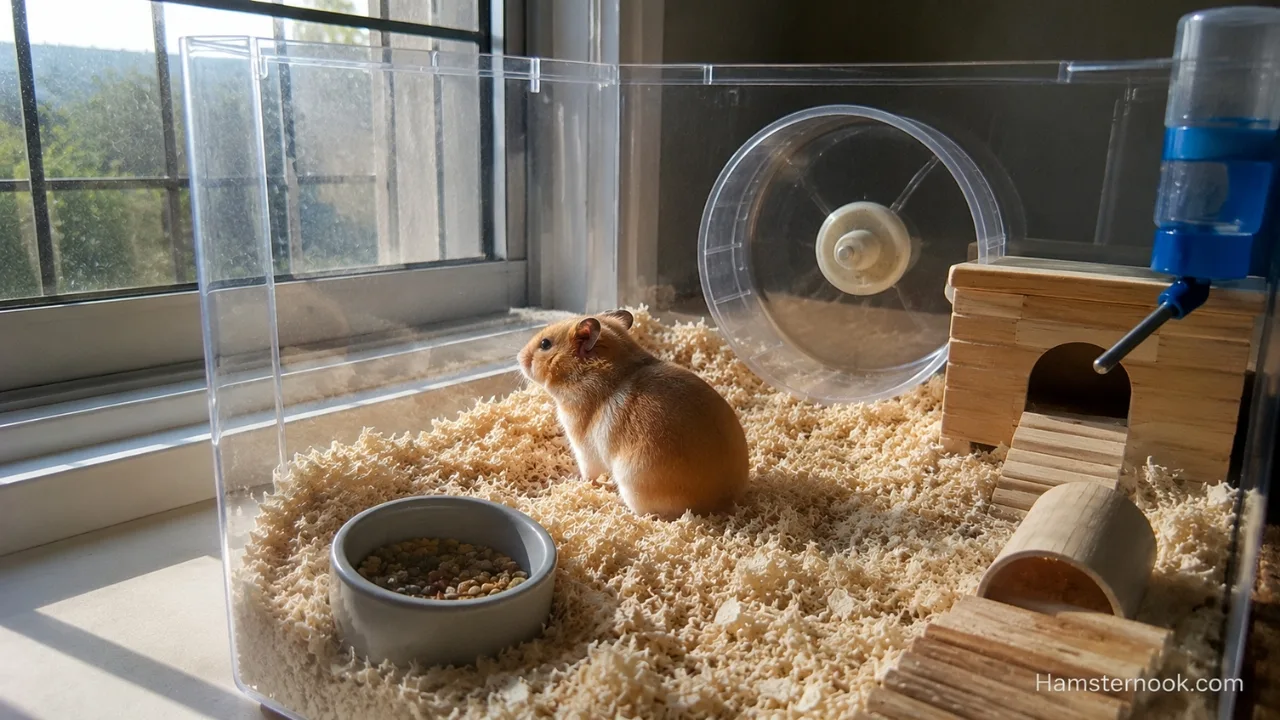
A hamster’s enclosure should be kept in a comfortable, dry environment away from extremes and drafts. The RSPCA specifically recommends a dry, comfortable, draft-free location and advises protecting hamsters from direct sunlight.

A cage beside an oven, stove, radiator, or other heat source can therefore be a poor choice.
The concern isn’t simply whether the room feels warm to you. A cooking area can experience localized heat that makes the environment less stable than the rest of the room.
Because cooking can create localized temperature changes, it’s important to keep the enclosure in an area where conditions remain reasonably stable. Safe Temperature for Hamsters: How Hot or Cold Is Too Much? explains the temperature conditions that help keep a hamster comfortable and safe.
Keep the enclosure away from:
- Stoves and ovens
- Direct sunlight
- Heating appliances
- Strong drafts
- Areas that become unusually hot during cooking
Loud and Sudden Noise
Kitchens can be surprisingly noisy.
Blenders, food processors, exhaust fans, running water, dishes, cabinet doors, and other household activity can produce sudden sounds. Hamsters are sensitive to noise, and the RSPCA recommends keeping them somewhere quiet and calm.
The problem is not that a hamster can never hear a normal household sound. What matters is repeated or unpredictable disturbance, particularly when the hamster is trying to sleep.
This is especially relevant when kitchen appliances create sudden or repeated sounds during the hamster’s normal rest period. Can Loud Noises Stress a Hamster? Signs and Prevention Tips explains how owners can recognize and reduce the impact of recurring household noise.

A cage directly beside a blender or sink is therefore very different from one placed in a quiet part of the home where the hamster is not repeatedly exposed to those disturbances.
Running Water and the Kitchen Sink
The sink creates another practical problem.
Hamsters should be kept away from places where water can reach the enclosure, and the RSPCA specifically advises positioning hamster cages away from running water.
A water splash might seem harmless, but damp bedding is not appropriate for a hamster enclosure. Bedding should remain clean and dry, and the cage itself should be protected from household hazards.
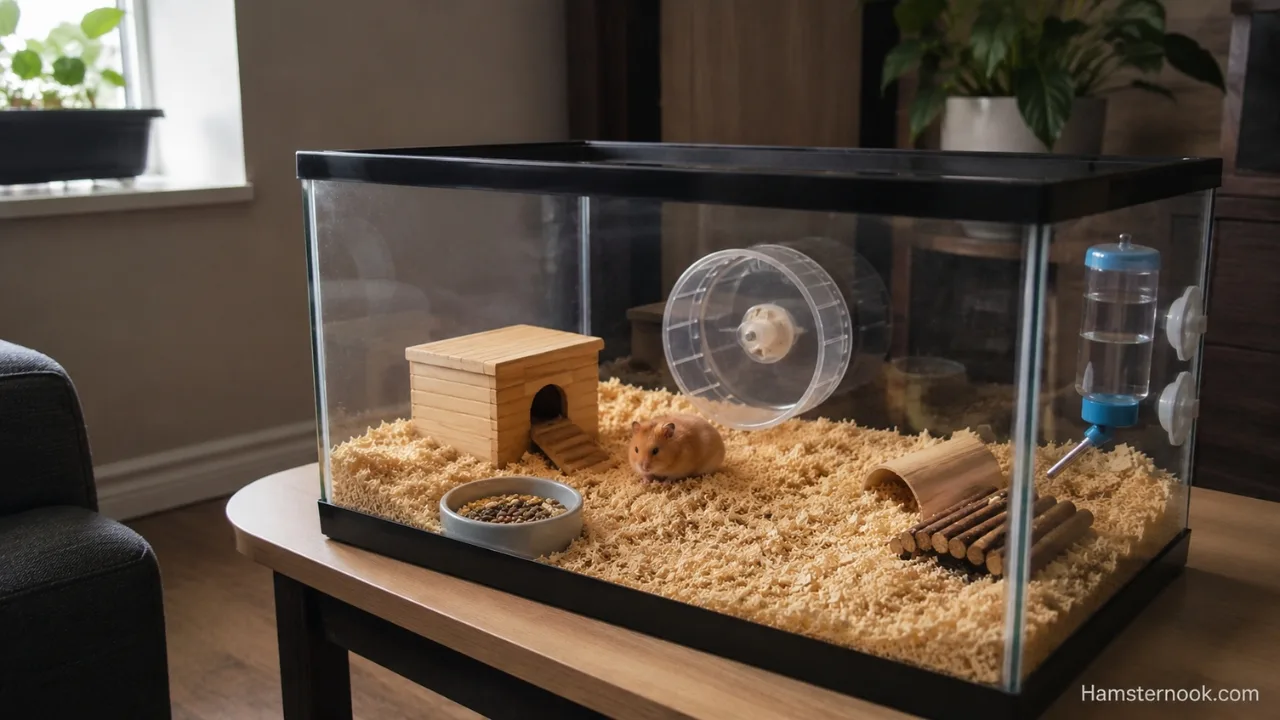
For that reason, placing a cage directly beside a kitchen sink is a poor setup even if the area seems convenient.
Kitchen Location vs. Better Room
| Location | Suitability | Main Concern |
|---|---|---|
| Directly beside stove or oven | Poor | Heat, cooking fumes and activity |
| Beside kitchen sink | Poor | Water, noise and frequent disturbance |
| On a kitchen counter | Poor | Cooking activity, falls and contamination risks |
| Quiet corner far from cooking area | Better, but not ideal | Depends on noise, airflow and daily activity |
| Quiet nearby room separated from kitchen | Better | Easier to control noise and environmental changes |
| Quiet bedroom or living area away from disturbances | Often preferable | Must still provide suitable lighting, temperature and routine |
The room name matters less than the conditions around the enclosure. A quiet, stable corner can be a better choice than a busy location simply because it happens to be farther from the kitchen.
Where you place the cage is only one part of creating a suitable home. If you’re still working out the basics of hamster care, our Complete Hamster Care Guide for Beginners (2026) covers housing, feeding, cleaning, enrichment, and everyday care.
What About Kitchen Smells?
An ordinary food smell by itself does not prove that a hamster has been harmed. The more important concern is whether the enclosure is exposed to smoke, irritating fumes, or other environmental hazards.

The more practical concern is the overall environment.
Strong or persistent household odors are another factor to consider when choosing a cage location. Can Strong Household Smells Stress a Hamster? Signs to Watch For explains what owners should watch for when unusual smells are part of the hamster’s environment.
Hamsters have a strong sense of smell, and scent is important to how they interact with their surroundings. The RSPCA notes that smell is particularly important to hamsters and recommends preserving some clean, familiar bedding during cage cleaning.
That means you don’t need to panic because your hamster can smell dinner from another room. The goal is to prevent the cage from being surrounded by persistent smoke, irritating fumes, heavy odors, or other environmental hazards.
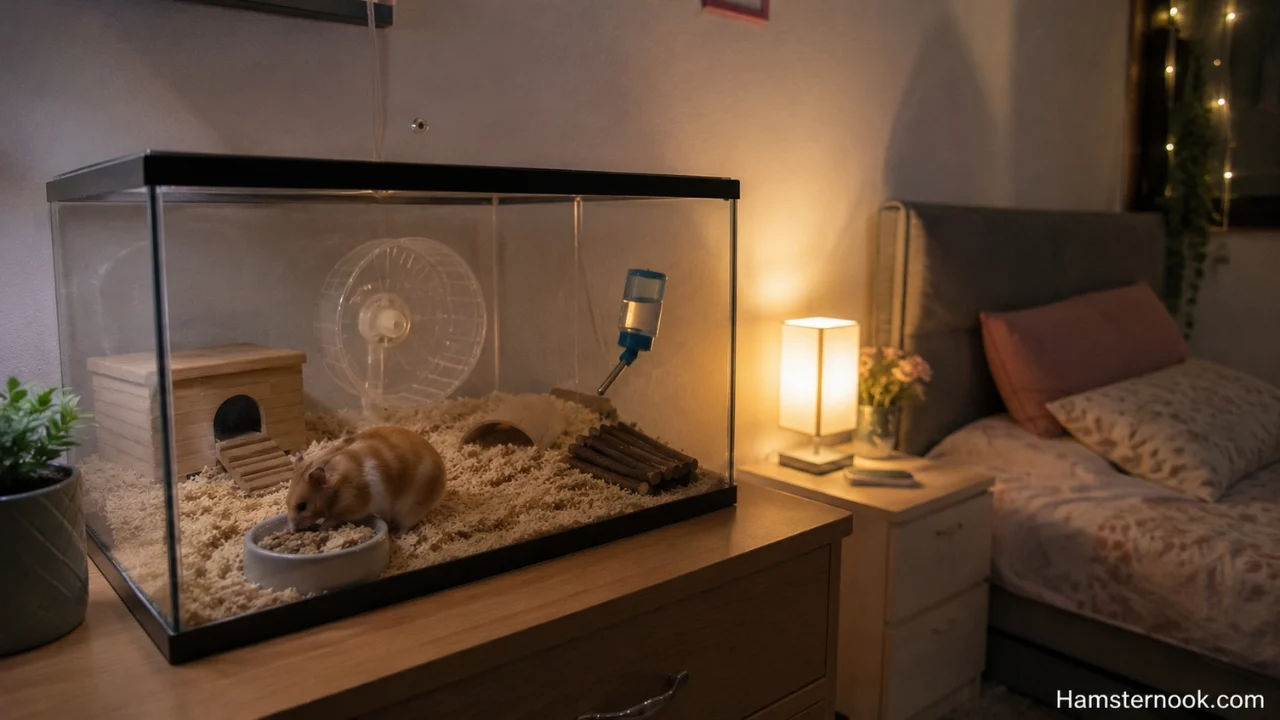
The location of the enclosure can make a major difference to how easily these environmental risks are controlled. Should a Hamster Cage Be Near a Window? Risks Every Owner Should Know explains how surrounding conditions such as drafts, sunlight, and airflow can affect cage placement.
A Practical Example
Imagine a hamster cage sitting on a shelf about 10 feet from the stove.
The cage isn’t directly beside the cooking surface, but every evening the kitchen becomes busy. The blender runs, pans become hot, the exhaust fan starts, people move around the cage, and the lights stay on late.
Compare that with a quiet corner of the living room where the hamster has a stable light routine, deep bedding, hiding places, and little nighttime disturbance.
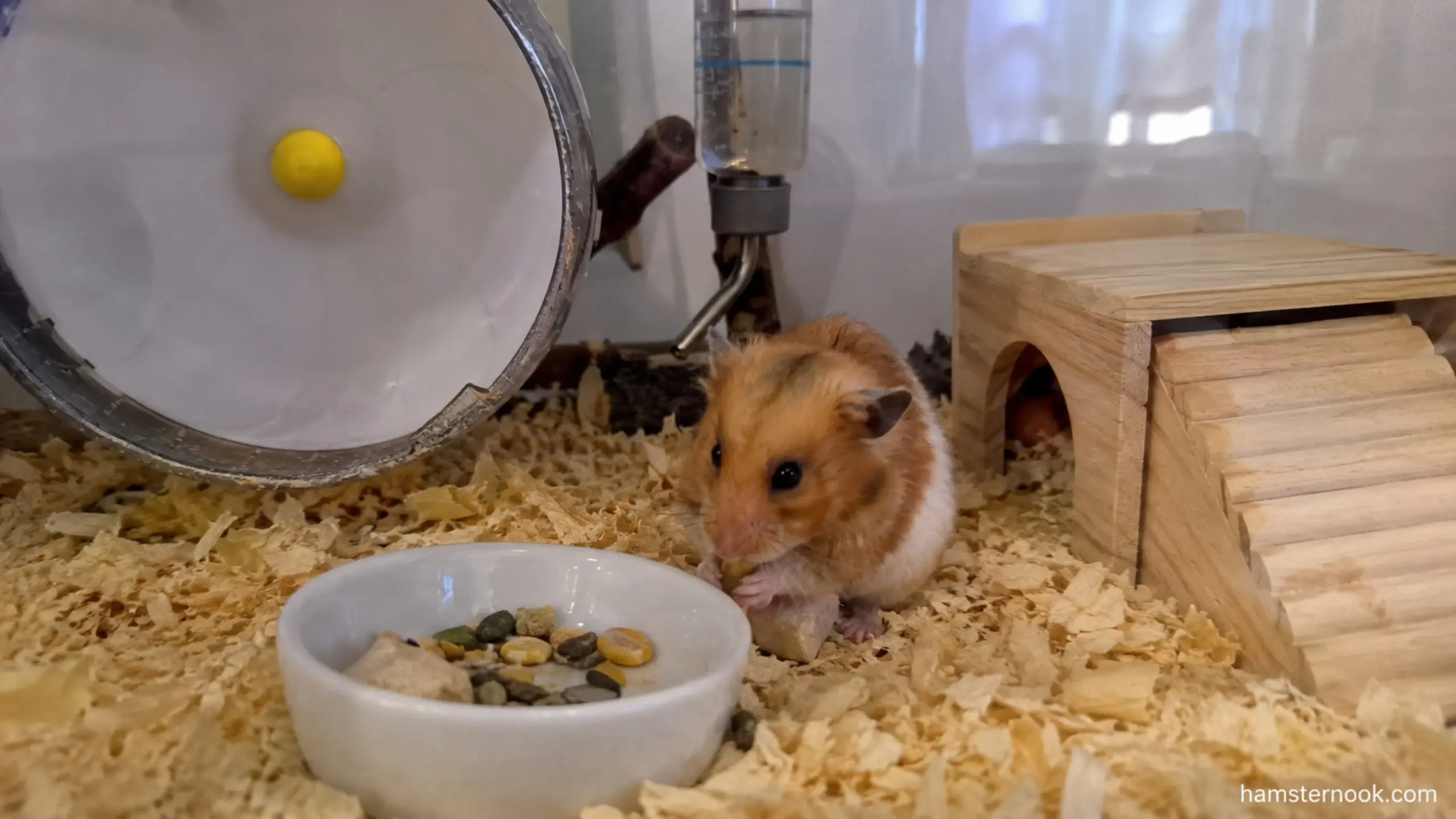
The second environment is much closer to the type of setting welfare guidance recommends: a quiet, dry, predictable place where the hamster can rest undisturbed.
Common Mistakes to Avoid
A kitchen isn’t automatically dangerous simply because it’s a kitchen. The problem comes from placing the hamster in an environment where several avoidable risks happen repeatedly.
Putting the Cage Beside the Stove
This is one of the easiest mistakes to avoid. Heat from cooking equipment can make the area around the cage warmer than the rest of the room, while cooking activity can also create sudden noise and airborne particles.
A hamster’s environment should remain stable and comfortable rather than changing significantly whenever someone prepares a meal. PDSA recommends keeping hamster cages at a steady temperature and away from direct sunlight and drafts.
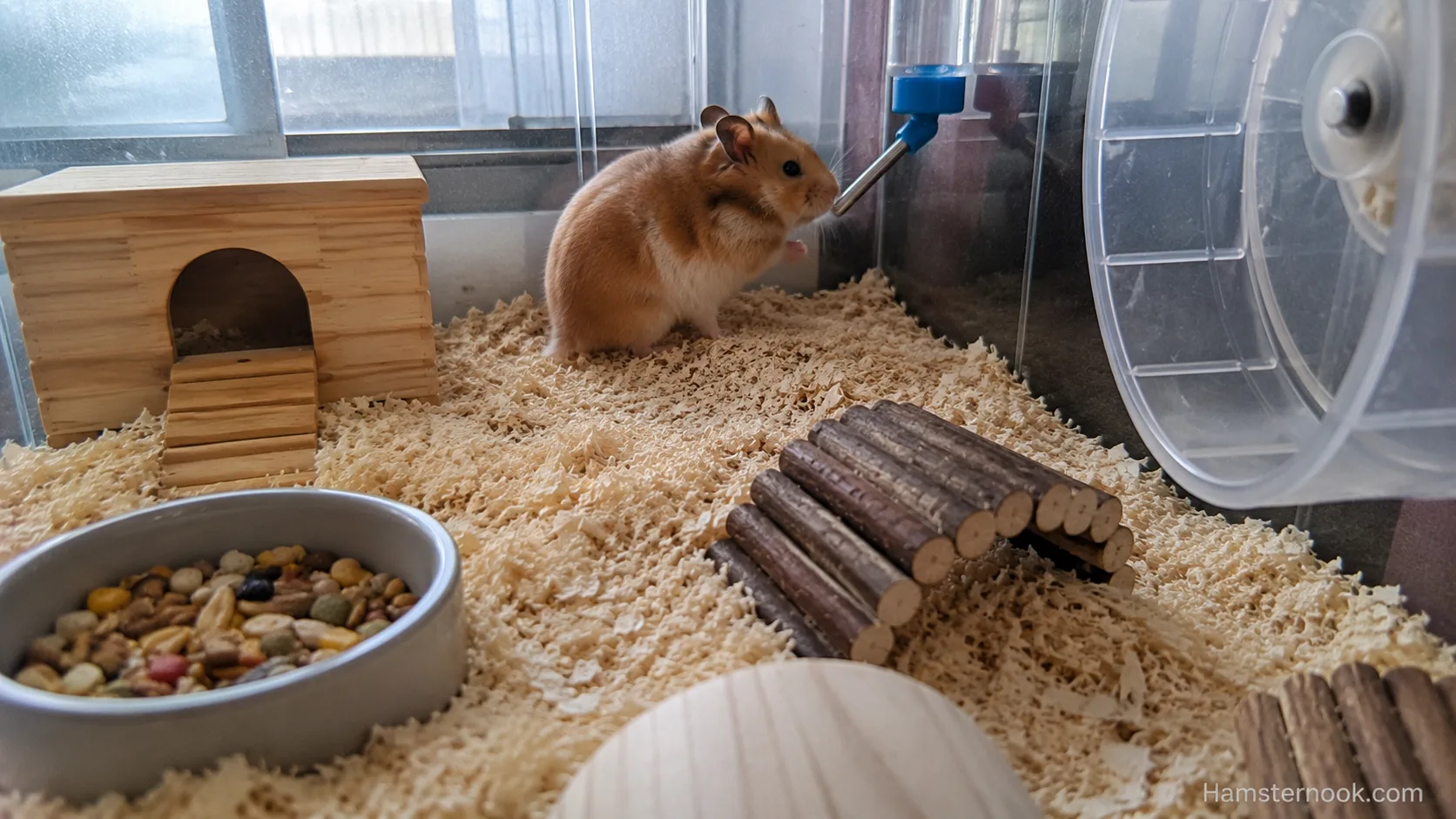
Predictability matters because repeated changes in noise, activity, and the surrounding environment can make it harder for a hamster to settle. 7 Signs You’re Accidentally Stressing Your Hamster (Without Even Realizing It) explains the broader behavioral signs owners should watch for.
Placing the Cage Beside the Sink
A sink may seem harmless, but running water can create noise and splashes. RSPCA guidance specifically recommends keeping hamster housing away from household objects that can generate high-frequency sounds, including sources of running water.
A leaking bottle or accidental splash can also leave bedding damp, which is something you want to prevent.
Using Strong Cleaning Products Around the Cage
Kitchen cleaning often involves sprays, disinfectants, degreasers, and other products.
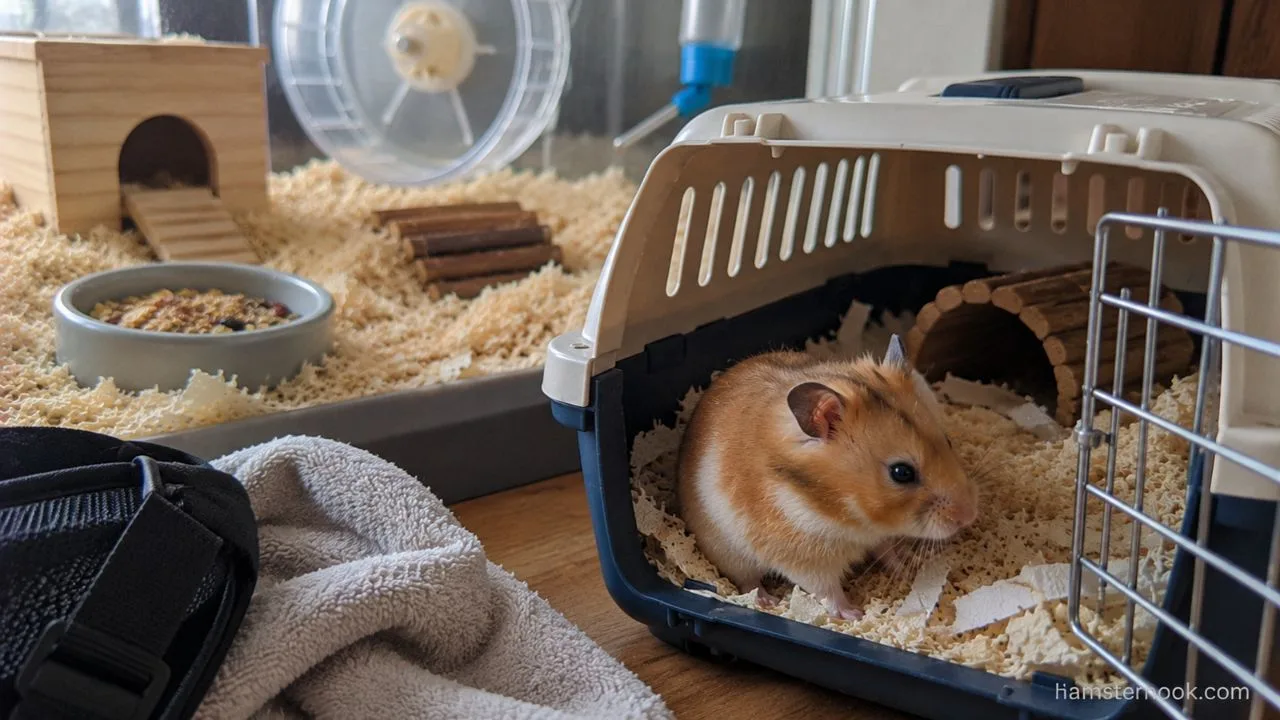
Don’t spray these products near an open hamster enclosure. Keep the cage away from areas where cleaning chemicals are routinely used, and never allow wet or chemically contaminated surfaces to come into contact with your hamster or its bedding.
If the kitchen needs to be cleaned thoroughly, keep the hamster in a separate, secure room until the cleaning products have been used safely and the area is no longer being actively cleaned.
For cleaning-related risks, Can Household Cleaning Sprays Affect Hamsters? What Owners Should Avoid covers safer ways to handle household cleaning products around hamsters.
Assuming an Exhaust Fan Solves Everything
A range hood can help remove cooking pollutants from the kitchen, but it shouldn’t be treated as a guarantee that a hamster cage is safe beside the cooking area.
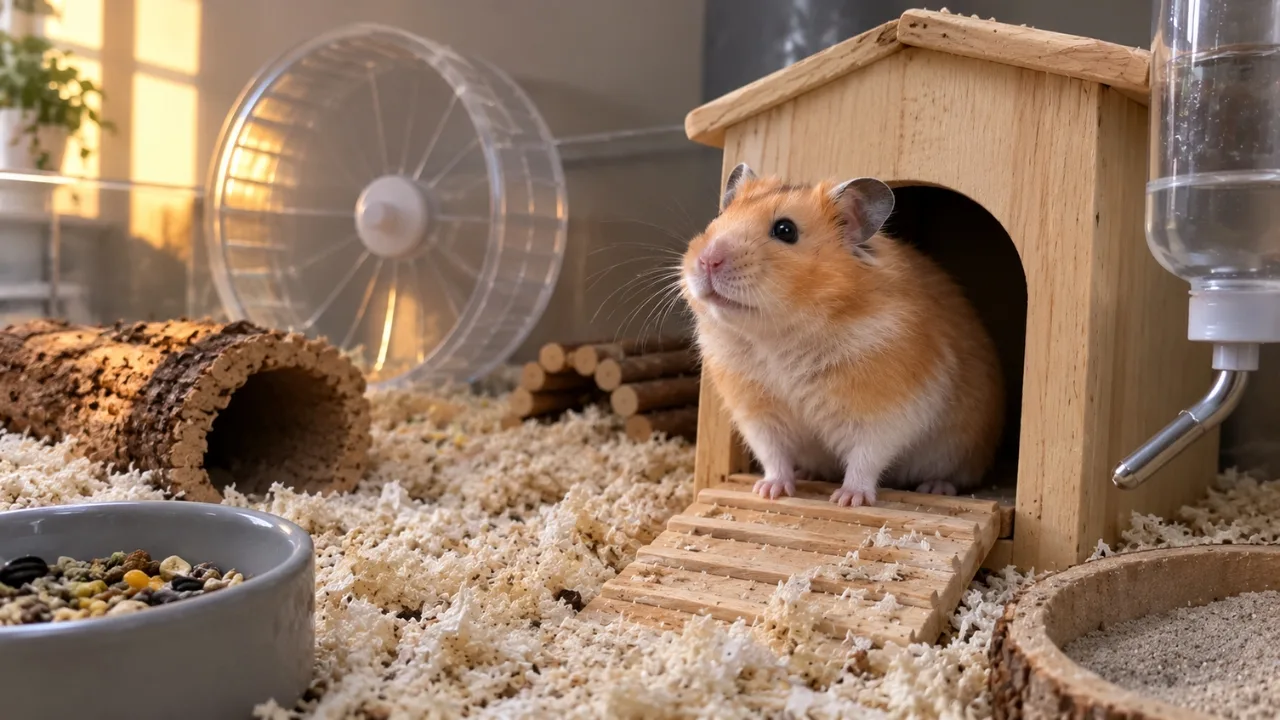
The better solution is to reduce the hamster’s exposure in the first place by placing the enclosure away from the stove and the busiest part of the kitchen.
Keeping the Cage on a Counter
A kitchen counter is usually a poor location for a hamster enclosure.
Apart from cooking and cleaning hazards, counters are active work surfaces. Objects can fall, doors and drawers can be opened nearby, and the cage can be bumped accidentally.
A secure, stable surface in a quiet room is a much better choice.

Once you’ve found a quieter part of the home, the next step is making sure the enclosure itself is arranged securely and comfortably. Best Hamster Cage Setup for Beginners (Safe, Comfortable & Stress-Free) covers the main elements of a practical hamster enclosure.
What You Should Do If Your Hamster’s Cage Is Already Near the Kitchen
You don’t need to panic or immediately move the cage simply because you’ve realized the location isn’t ideal.
First, look at the actual environment around the enclosure.
Check:

- How close is it to the stove?
- Is it beside the sink?
- Does cooking smoke ever reach the cage?
- Does the room become noticeably hotter during cooking?
- Are blenders or other noisy appliances used nearby?
- Is the cage exposed to direct sunlight?
- Does the hamster get uninterrupted periods of quiet?
- Is the bedding consistently clean and dry?
- Are cleaning sprays used close to the enclosure?
If several answers raise concerns, relocating the cage to a quieter room is sensible.
If moving the cage is necessary, choose the new location before disturbing the enclosure. Look for a quiet, dry area with stable conditions, away from direct sunlight, drafts, cooking activity, running water, and loud appliances. Once you have chosen the spot, move the enclosure carefully and keep some clean, familiar nesting material with your hamster’s existing setup.
Move the enclosure carefully and avoid unnecessary disruption to the hamster’s established nest and familiar scents. Hamsters rely heavily on scent cues, and welfare guidance recommends retaining some clean, familiar nesting material when a full cage clean or move is necessary.
Choosing a Better Location

A good hamster location doesn’t have to be complicated.

Look for a part of your home that is:
- Quiet
- Dry
- Away from drafts
- Away from direct sunlight
- Away from cooking and smoke
- Protected from household chemicals
- Away from loud appliances
- Stable in temperature
- Easy to keep clean
- Secure from other pets and children
RSPCA guidance describes a suitable hamster home as a comfortable, dry and clean place where the animal can rest undisturbed.
PDSA similarly recommends a quiet, calm location away from noisy household equipment, with a steady temperature and protection from drafts and direct sunlight.
Does a Hamster Need to Be Completely Isolated?
No.

You don’t need to put your hamster in a completely silent room where nobody ever enters.
Normal household sounds are unavoidable, and a hamster can live successfully in a home with people moving around. The goal is to avoid placing the enclosure directly beside persistent or sudden sources of noise.
A quiet living room corner, for example, can be perfectly reasonable if the hamster has a sheltered sleeping area and isn’t constantly disturbed.
A suitable room also needs a consistent lighting routine so the hamster can maintain its normal day-and-night pattern. How Much Light Does a Hamster Need? Day, Night, and Room Lighting Explained explains how room lighting can affect a hamster’s daily environment.
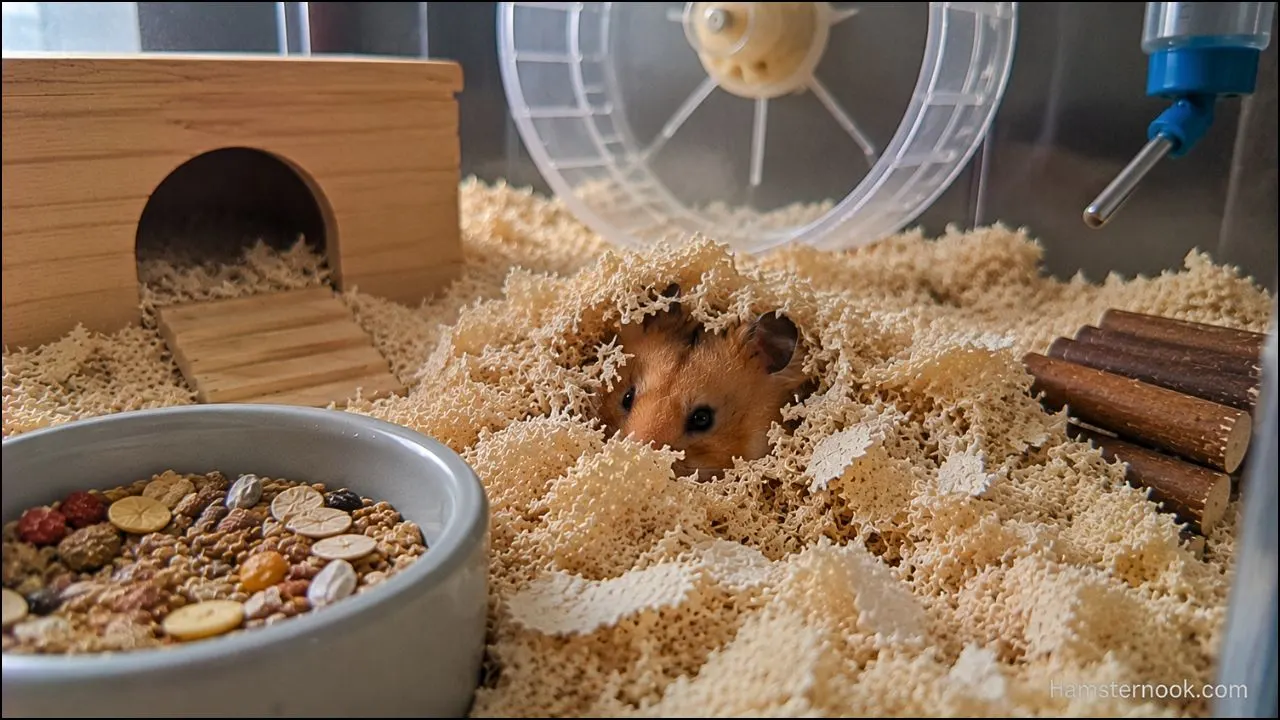
NC3Rs guidance notes that hamsters can be startled by sudden loud noises and recommends minimizing unnecessary noise disturbance.
What About an Open-Plan Kitchen and Living Room?
This is more complicated.
If your home has one large open-plan room, you may not have a separate room available. In that situation, choose the quietest part of the space rather than automatically deciding that the hamster cannot live there.
Keep the enclosure as far as practical from:
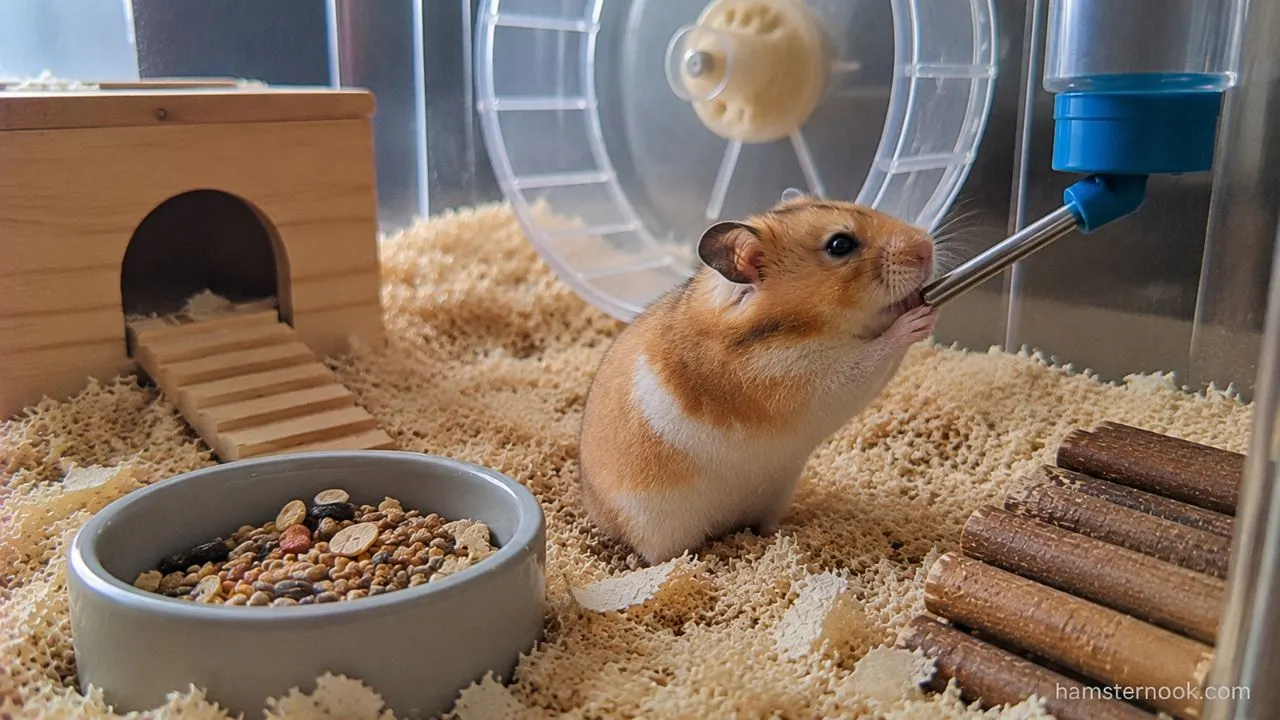
- The stove
- Oven
- Sink
- Dishwasher
- Blender
- Food processor
- High-traffic walkways
- Direct sunlight
- Heating or cooling vents
A solid, stable location with good ventilation and a consistent daily routine is preferable to placing the cage in the center of kitchen activity.
A Simple Kitchen Safety Check
Before deciding where to keep the cage, use this quick test:
| Question | Safer Setup |
|---|---|
| Is the cage away from cooking equipment? | Yes |
| Can smoke or heavy cooking fumes reach it? | No |
| Is it away from running water? | Yes |
| Is the temperature reasonably stable? | Yes |
| Does the hamster have a quiet place to sleep? | Yes |
| Is it away from direct sunlight? | Yes |
| Are cleaning chemicals kept away? | Yes |
| Are loud appliances used far from the cage? | Yes |
| Is the cage secure and stable? | Yes |
If the answer to most of these questions is yes, the environment is much more suitable.
Warning Signs That the Environment May Be a Problem
There isn’t one specific behavior that proves a kitchen location is harming a hamster. Instead, pay attention to persistent changes in normal behavior.

For example, if your hamster repeatedly becomes disturbed whenever the kitchen becomes busy, hides for unusually long periods during its normal active time, or reacts strongly to recurring noises, consider whether the environment can be made quieter.
Behavior alone cannot tell you exactly what is causing a problem. A change in behavior can have many possible explanations, so avoid assuming that the kitchen is automatically responsible.
If your hamster appears unwell, has difficulty breathing, becomes unusually weak, stops eating or drinking, or shows another concerning physical change, contact a veterinarian rather than trying to solve the issue by changing the cage location alone.
When to Worry
A hamster simply living near a kitchen isn’t, by itself, an emergency.
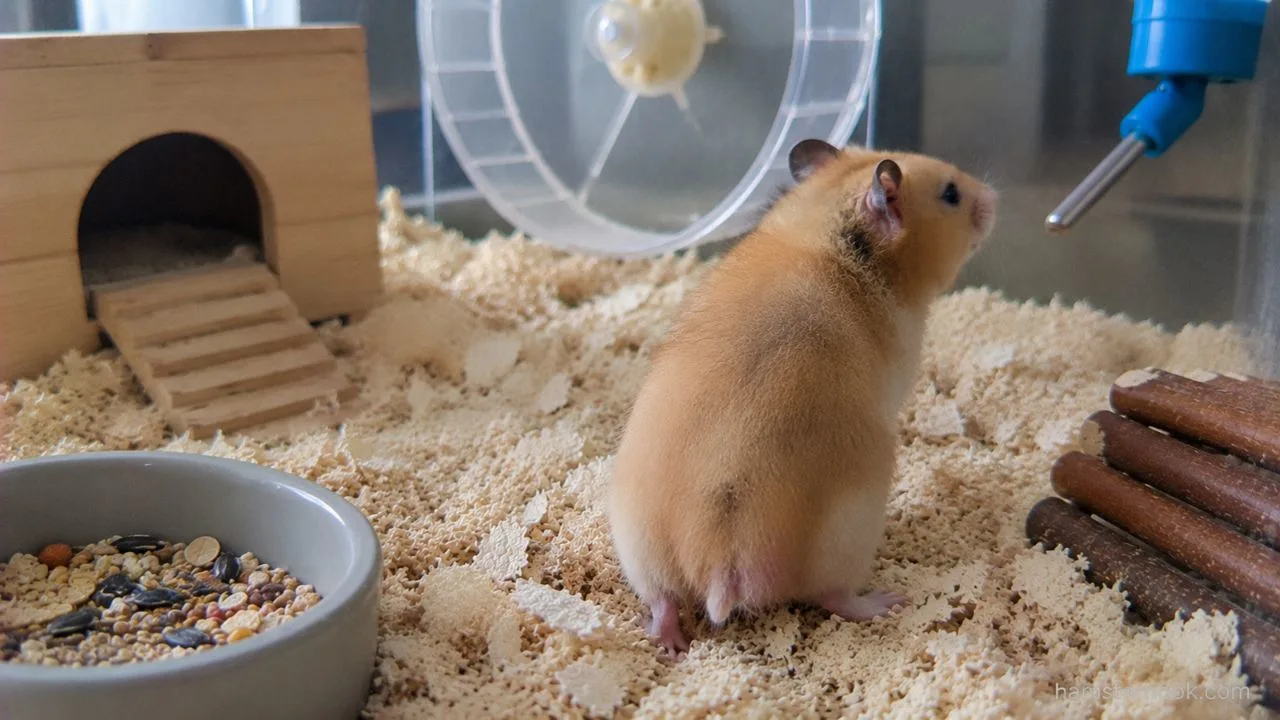
The situation becomes more concerning when there has been direct exposure to a significant hazard, such as smoke, chemical products, extreme heat, or another potentially harmful substance.
If you think your hamster has been directly exposed to something potentially toxic or is showing concerning physical symptoms, seek veterinary advice promptly.
For ordinary housing decisions, however, prevention is much easier than dealing with an exposure later. If you have another suitable quiet room, moving the cage away from the kitchen is a straightforward way to reduce several environmental risks at once.
Final Thoughts
A hamster cage can sometimes be positioned in a home with an open-plan kitchen, but the kitchen itself is rarely the best place to keep one. Cooking heat, smoke, strong odors, running water, household chemicals, and sudden noise can all make the environment less suitable.
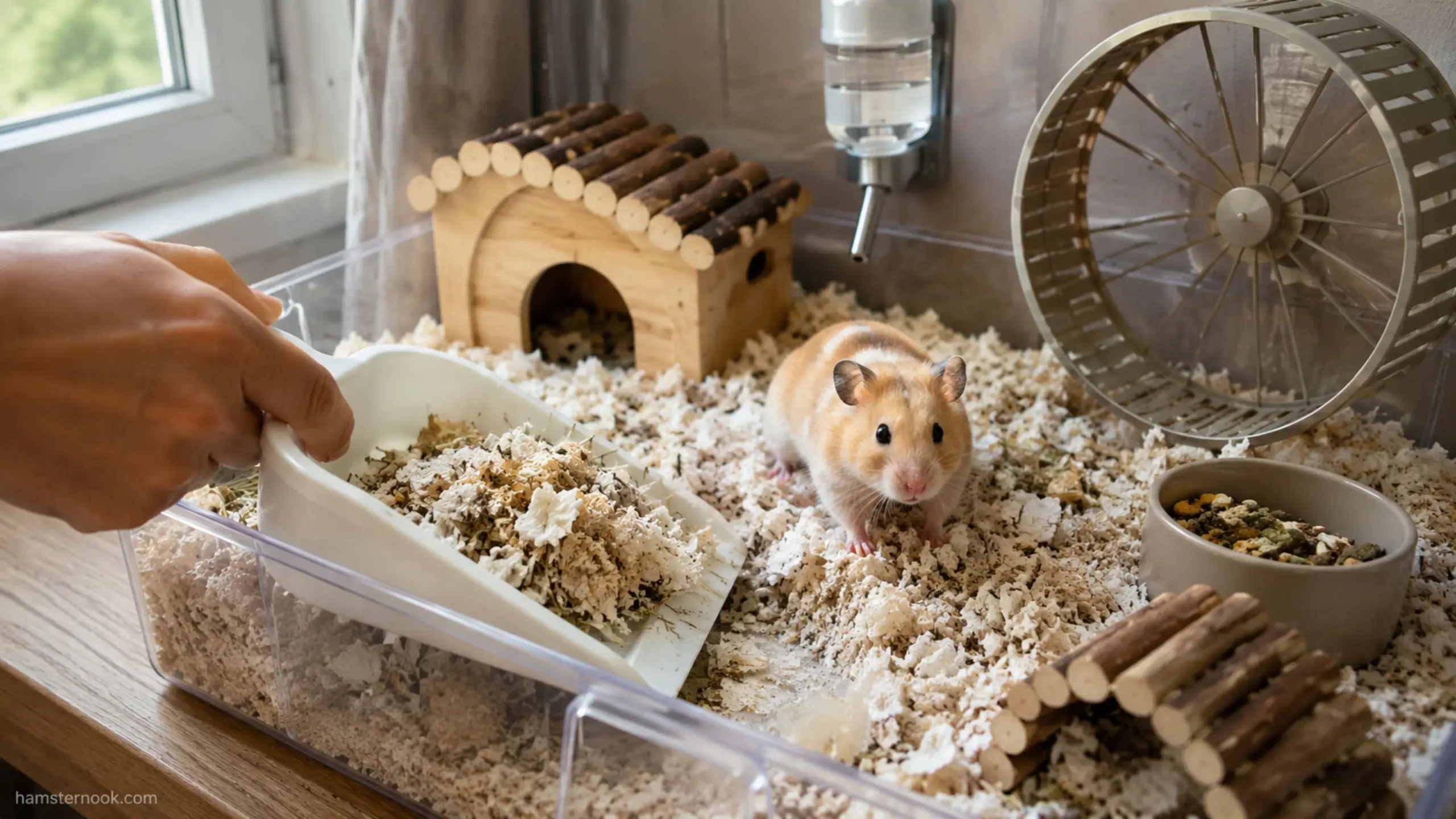
The safest choice is a quiet, dry, stable area away from cooking equipment and heavy household activity. If your home doesn’t have a completely separate room, focus on creating the calmest possible corner away from the stove, sink, direct sunlight, drafts, and noisy appliances.
Frequently Asked Questions
How far should a hamster cage be from the stove?
There isn’t a reliable hamster-specific distance that makes a cage “safe” beside a stove. Instead of relying on a particular number of feet, keep the enclosure well away from direct heat and cooking activity.
Can cooking smells hurt my hamster?
An ordinary food smell does not automatically mean your hamster has been harmed. The larger concern is exposure to smoke, irritating fumes, or a poorly ventilated cooking environment. Keeping the cage away from the cooking area is the safer approach.
Can a hamster cage be near a refrigerator?
A refrigerator is generally a different situation from a stove or sink. What matters is whether the location is quiet, stable, dry, away from direct sunlight and drafts, and free from other hazards.
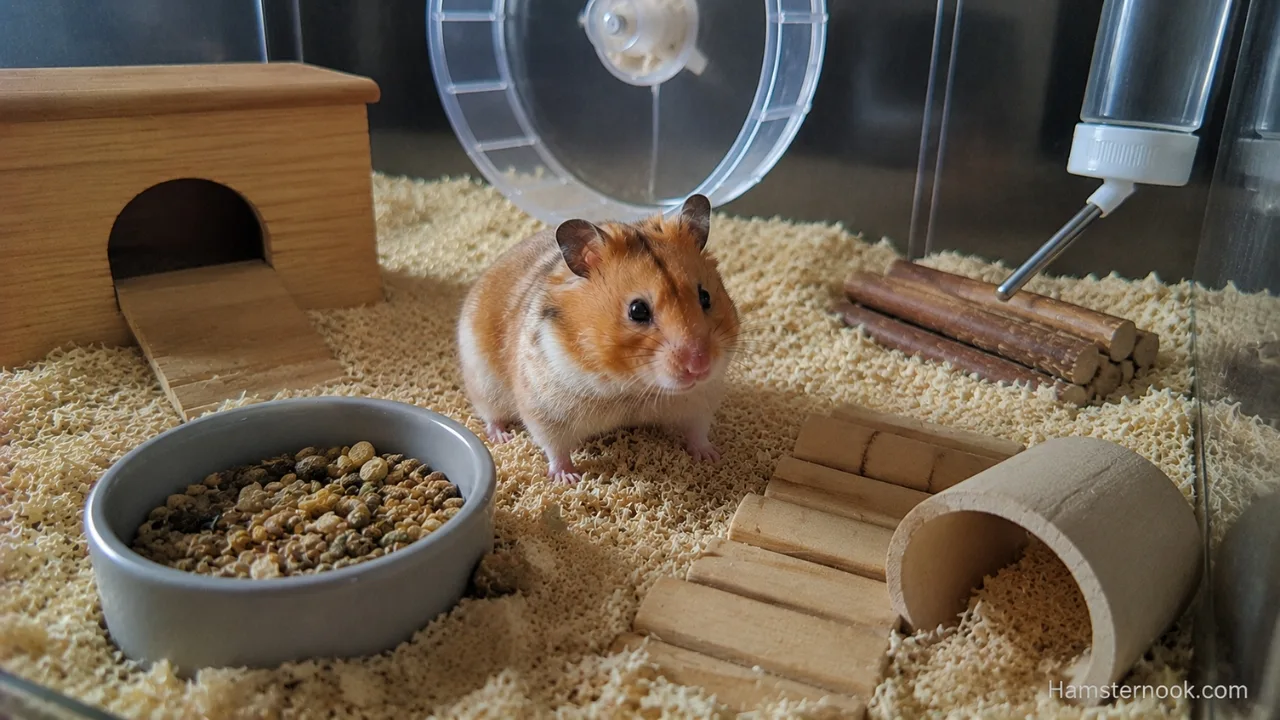
Can I keep my hamster in an open-plan kitchen and living room?
Potentially, if you can place the enclosure in a quiet area well away from cooking activity, running water, direct heat, and heavy foot traffic. A separate quiet room is preferable when available.
Should I move my hamster cage if it is currently beside the stove?
Yes, if you have another suitable location. Moving the cage to a quieter and more stable area reduces exposure to heat, cooking activity, fumes, and sudden noise.
Can kitchen noise stress a hamster?
Repeated or sudden loud noises can be stressful or startling for hamsters. Welfare guidance recommends keeping them in a quiet environment and minimizing unnecessary noise disturbance.
Is a kitchen counter safe for a hamster cage?
A kitchen counter is generally not a good location because it is close to cooking, cleaning, water, and frequent human activity. A secure surface in a quieter area is a better choice.
References
This guide is based on hamster housing, environmental safety, noise, temperature, ventilation, and welfare guidance from trusted animal welfare and veterinary resources, including:
- RSPCA – Creating a Good Home for Hamsters – Guidance on suitable cage locations, temperature, drafts, direct sunlight, noise, water sources, and creating a comfortable environment.
- RSPCA – Keeping Hamsters as Pets – General hamster housing, environmental care, behavior, and welfare guidance.
- PDSA – Hamsters as Pets – Guidance on hamster housing, temperature, noise, household hazards, and protecting small pets from environmental risks.
- Blue Cross – Hamster Care Guide – Practical advice on hamster housing, cage placement, environmental conditions, handling, and wellbeing.
- MSD Veterinary Manual – Providing a Home for a Hamster – Veterinary guidance on hamster housing, ventilation, bedding, environmental conditions, and minimizing potential respiratory irritants.
- NC3Rs – Housing and Husbandry: Hamster – Guidance on appropriate hamster housing, environmental conditions, noise, husbandry, and welfare.

Narayan Kumar is the founder and author of HamsterNook. He creates practical, research-based hamster care guides covering hamster behavior, nutrition, cage setup, enrichment, health, and everyday care. His goal is to help hamster owners make informed decisions and provide safer, healthier lives for their pets through clear, beginner-friendly information based on trusted animal care resources.