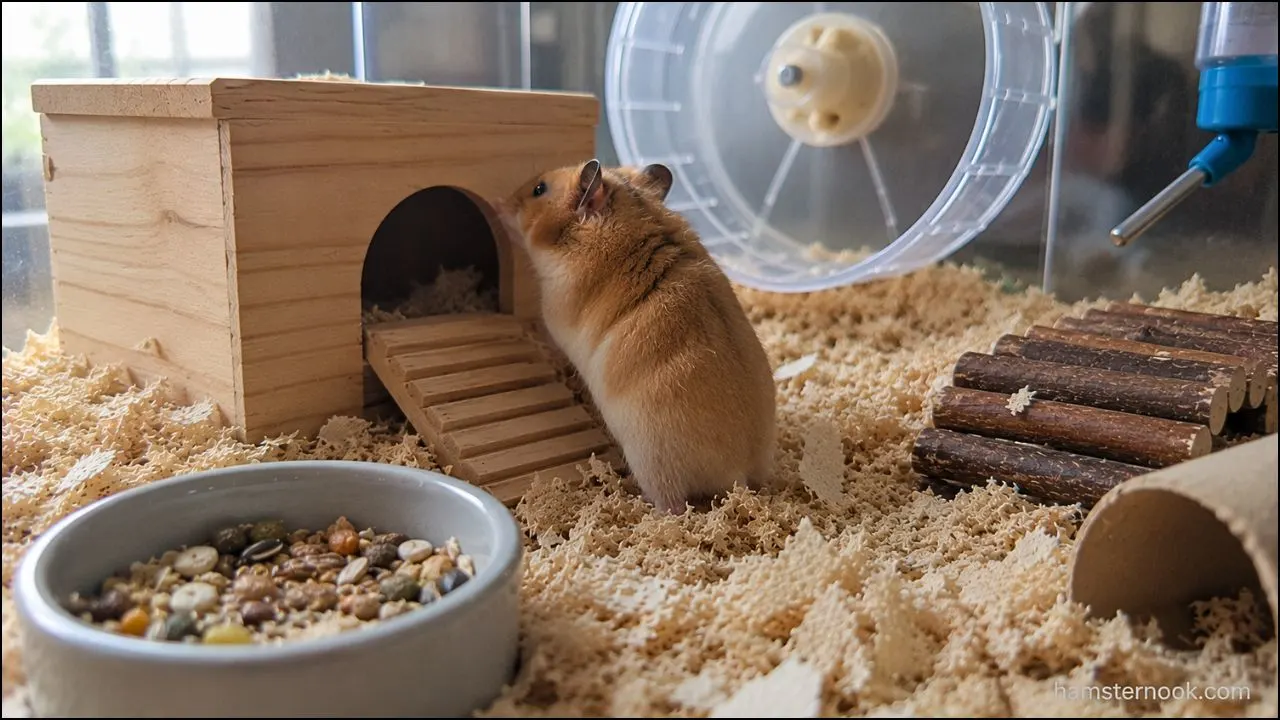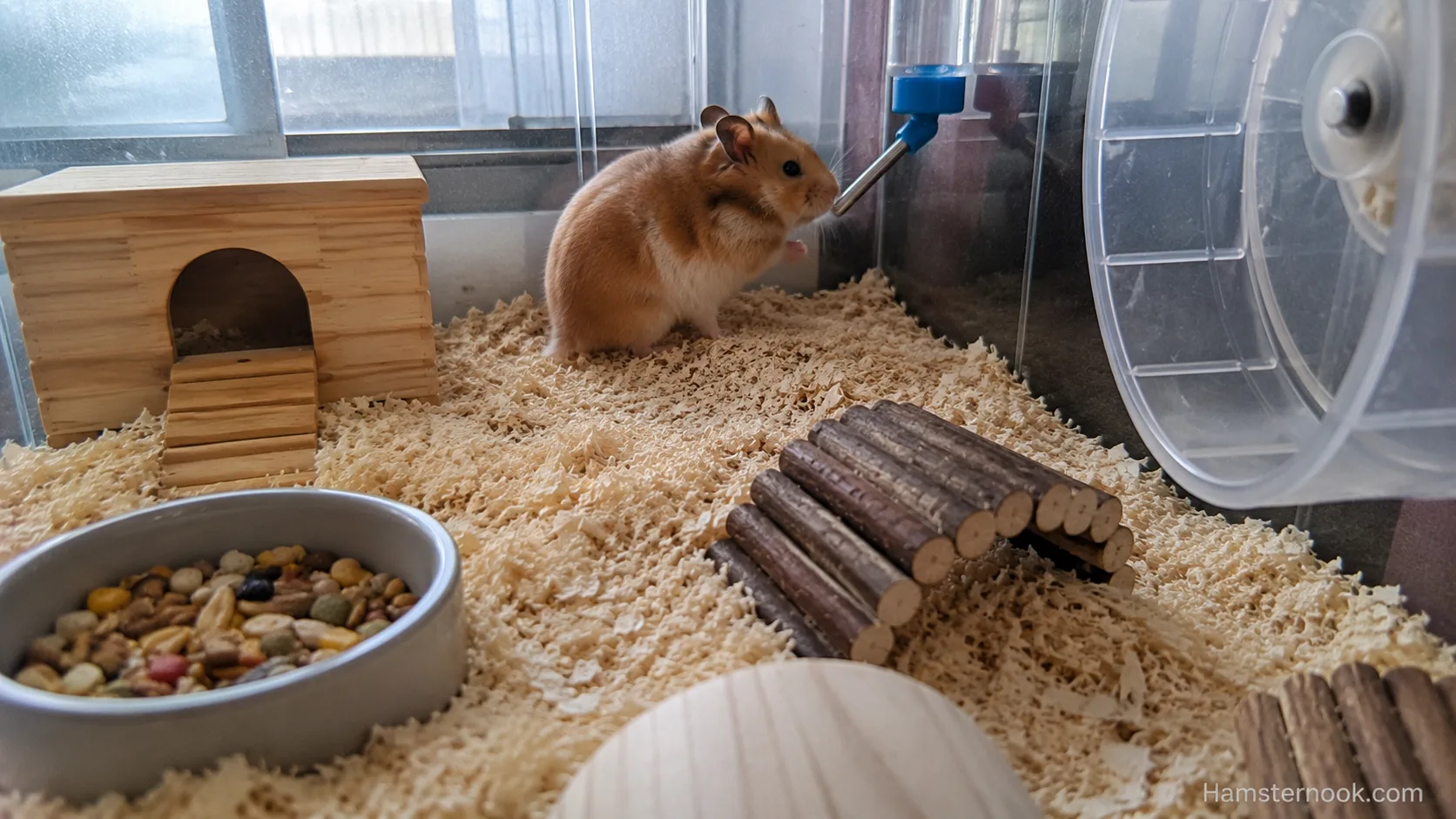
Have you noticed your hamster sitting in one corner of the cage and chasing you away whenever your hand gets close? Or perhaps it spends most of its active time protecting the same spot as if it owns it. While this behavior can look unusual, it’s often part of a hamster’s natural instincts rather than a sign of aggression. Understanding why your hamster guards one corner can help you respond in a way that builds trust instead of stress.
Quick Answer
Yes, it is fairly common for hamsters to become protective of one area of their enclosure. They may choose a particular corner because it contains their nest, food stash, favorite hiding place, or simply because it feels safest. In most cases, this behavior is normal. However, if guarding is accompanied by extreme aggression, illness, or sudden behavioral changes, it deserves a closer look.
A hamster sitting in one corner may be resting, nesting, storing food, or choosing a spot where it feels safe. If it stays there during its usual active hours, seems unable to move normally, or shows changes in eating, drinking, or energy, look beyond the location itself and assess its overall behavior.
If you’re new to hamster ownership, our Complete Hamster Care Guide for Beginners (2026) provides a solid overview of housing, feeding, and daily care that complements this topic.

Why Do Hamsters Guard Certain Areas?
If your hamster has recently become much more defensive or protective than usual, our Hamster Stress Signs: How to Tell If Your Hamster Is Stressed guide explains the warning signs to watch for and how to reduce common stress triggers.
In captivity, that “territory” is usually a section of the enclosure rather than an entire home range.
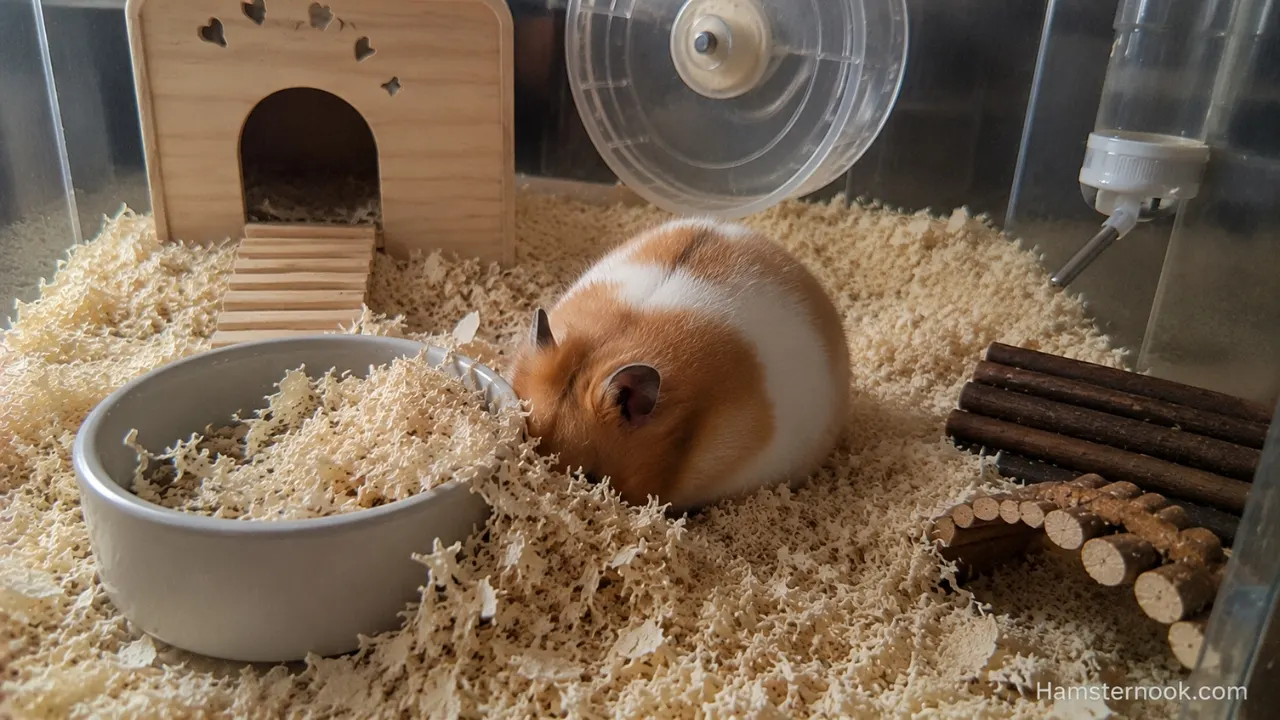
If your hamster repeatedly stays in one corner, it has probably decided that this area is the safest place in its habitat.
Common reasons include:

- A favorite sleeping spot
- A food storage area
- A quiet corner with little disturbance
- A hideout or tunnel entrance
- A location with familiar scents
This behavior is especially noticeable after the hamster has fully settled into its enclosure.
A hamster may also return to the same corner because its own scent is strongest there. Familiar scents help many hamsters feel secure, so repeatedly choosing one location is often part of normal territorial behavior rather than a sign that something is wrong.
Learn more in our How Do Hamsters Communicate? A Complete Guide to Body Language, Sounds & Scents to better understand the signals your hamster may be giving.
Is Guarding One Corner Normal?
In most situations, yes.
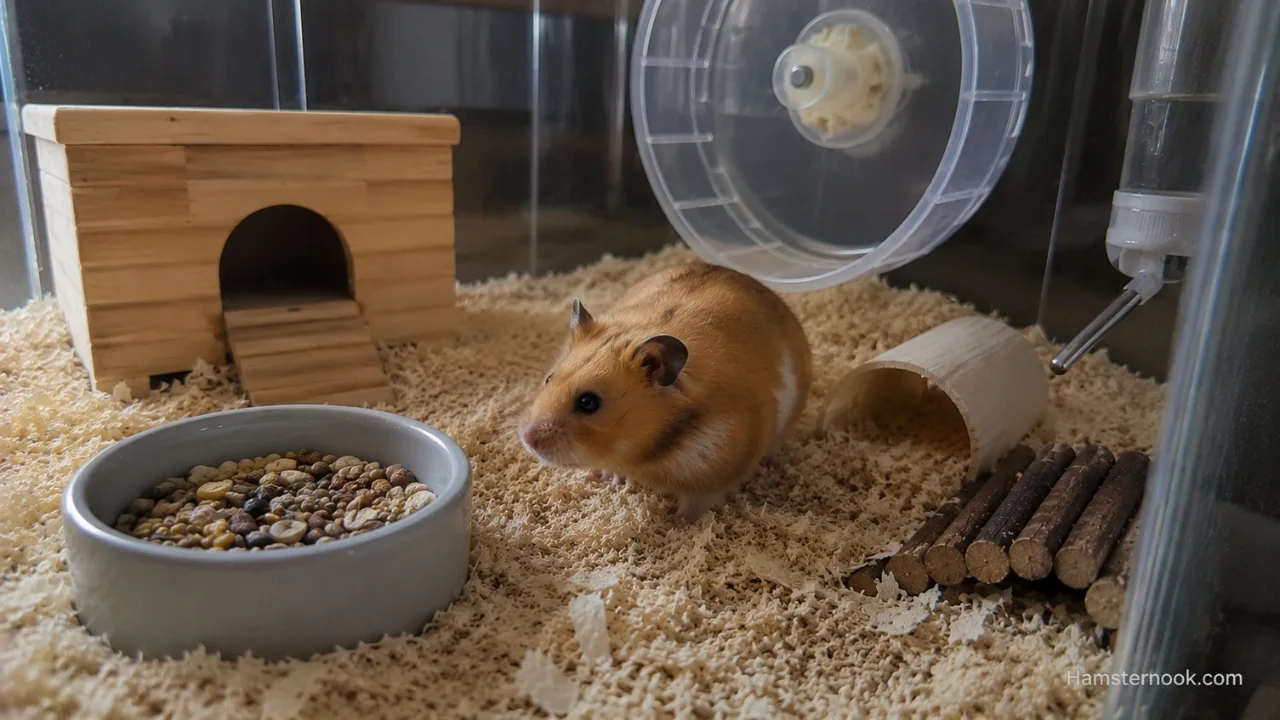
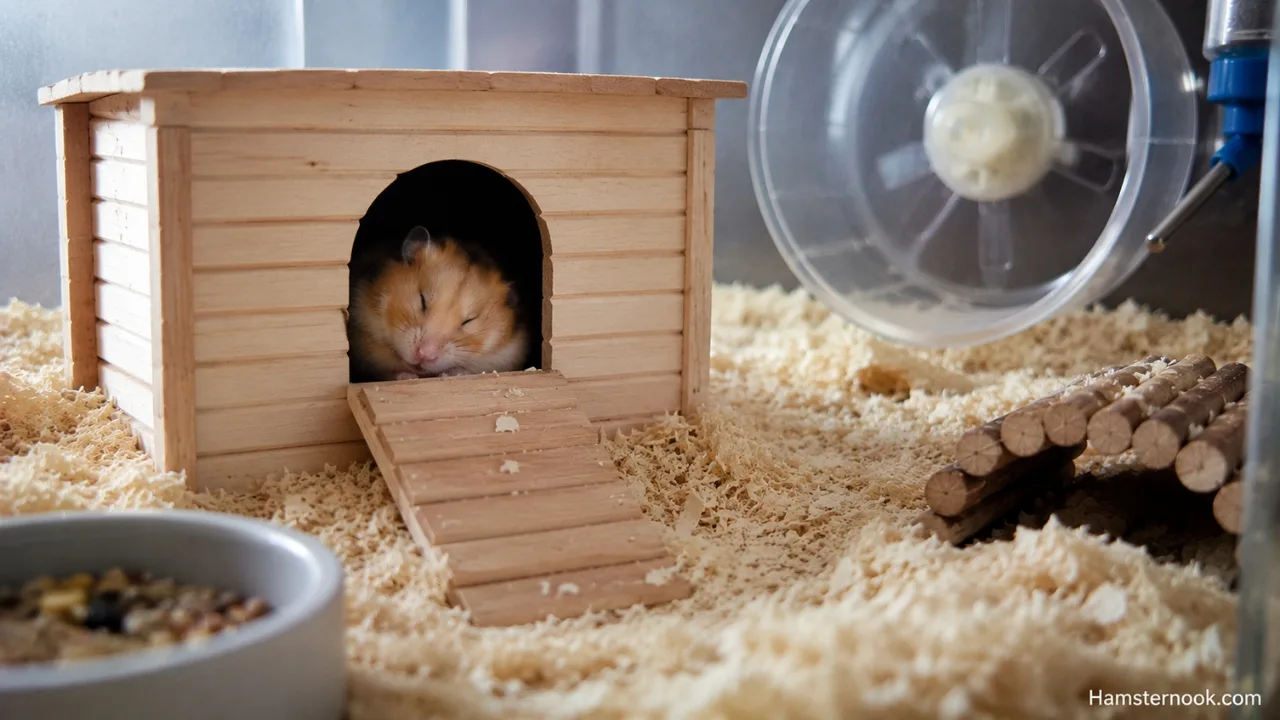
Many hamsters become attached to one part of their enclosure because it provides security. They may sleep there during the day, build a nest underneath the bedding, or hide their food nearby.
Normal territorial behavior usually includes:
| Usually Normal | When to Look Closer |
|---|---|
| Returning to a favorite corner after exploring | Remaining inactive during usual waking hours |
| Sleeping or building a nest in one spot | Difficulty moving or appearing unusually weak |
| Carrying food into the corner | Not eating or drinking normally |
| Briefly protecting a nest when disturbed | Sudden aggression alongside other behavioral or health changes |
| Watching activity from a familiar hiding place | Persistent hiding with lethargy, weight loss, or signs of illness |
Simply having a favorite corner is rarely a problem by itself.
6 Common Reasons Your Hamster Guards One Corner

1. It Has Built Its Nest There
The simplest explanation is also the one owners see most often.

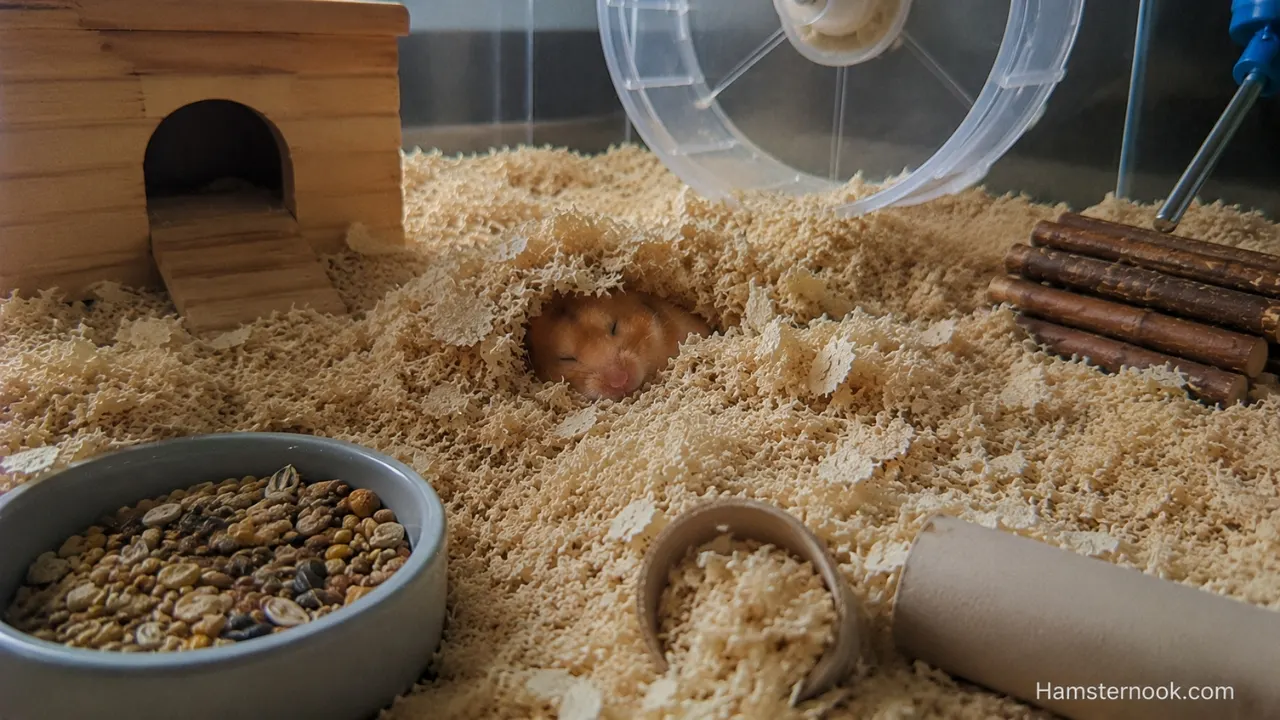
Hamsters carefully choose nesting areas that feel quiet, dark, and secure. Once a nest is established, many hamsters become protective of it.
This behavior is completely natural because, in the wild, protecting the nest helps keep them safe.
For more practical tips, see our Best Hamster Hideouts and Sleeping Areas: What Hamsters Actually Prefer.
2. That’s Where It Stores Food
Hamsters naturally collect and store food for later.
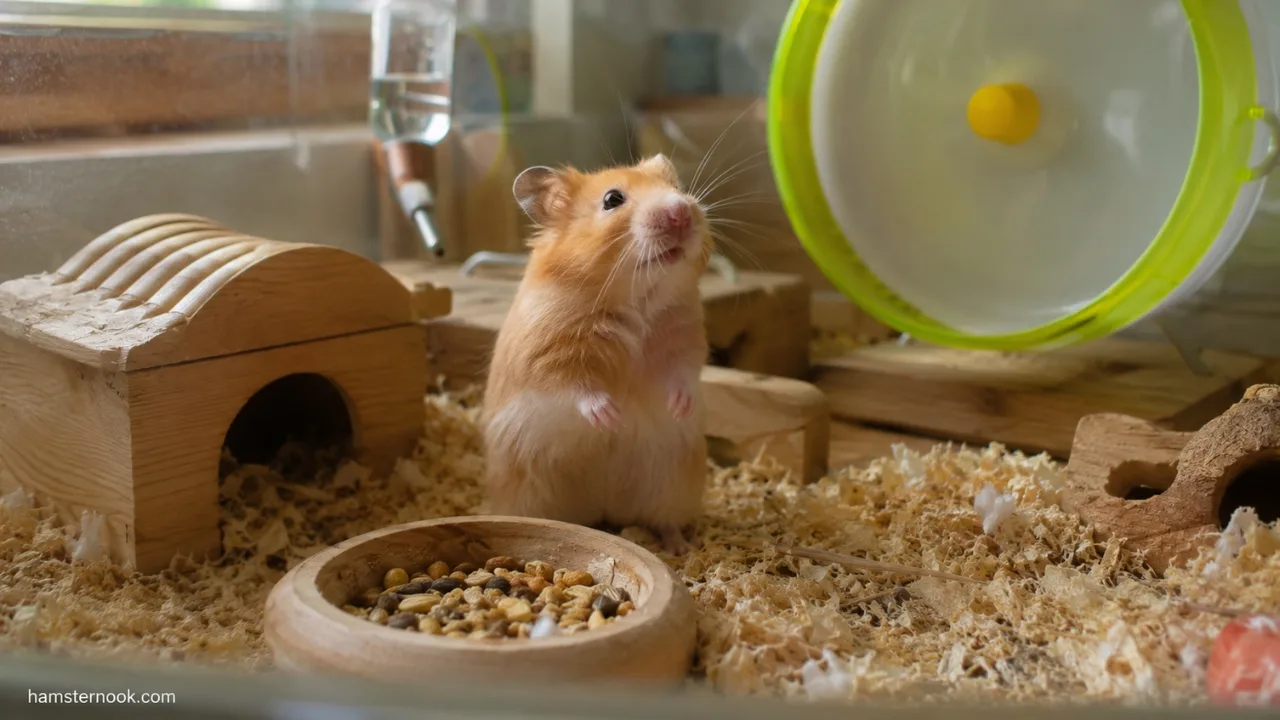
If you’ve noticed your hamster carrying food into one corner before becoming protective of that area, it may simply be guarding its food stash.
Avoid removing stored food unless it has become wet, moldy, or spoiled. Constantly disturbing food stores can make some hamsters feel less secure.
3. The Corner Feels Safest
From your hamster’s point of view, some areas naturally feel safer than others.
A corner that is away from household activity, bright lights, or frequent movement often becomes a preferred resting place.

If your hamster spends much of its time resting in one place, its sleeping posture may provide additional context. Our What Your Hamster Sleeping Position Says About Their Health (Normal vs Warning Signs) guide explains common sleeping positions and when other changes deserve attention.
If the enclosure is located in a busy room, your hamster may naturally choose the quietest section as its safe zone.
Our guide on Hamster Body Language Explained: Signs of Stress, Fear & Happiness explains these behaviors in more detail.
4. Your Hamster Is Feeling Stressed
Stress doesn’t always cause corner guarding, but it can make territorial behavior more noticeable.
Some common stressors include:
- Frequent cage rearrangements
- Loud noises
- Being woken during the day
- Excessive handling
- Lack of hiding places
When stressed, a hamster may spend more time protecting the area where it feels safest.
If you’d like to explore stress-related behavior further, read our 5 Warning Signs Your Hamster Is Stressed (And How to Help).
5. It Has Recently Moved Into a New Cage
A new enclosure introduces unfamiliar sights, scents, and hiding places, so it’s normal for a hamster to stick to one safe area at first.
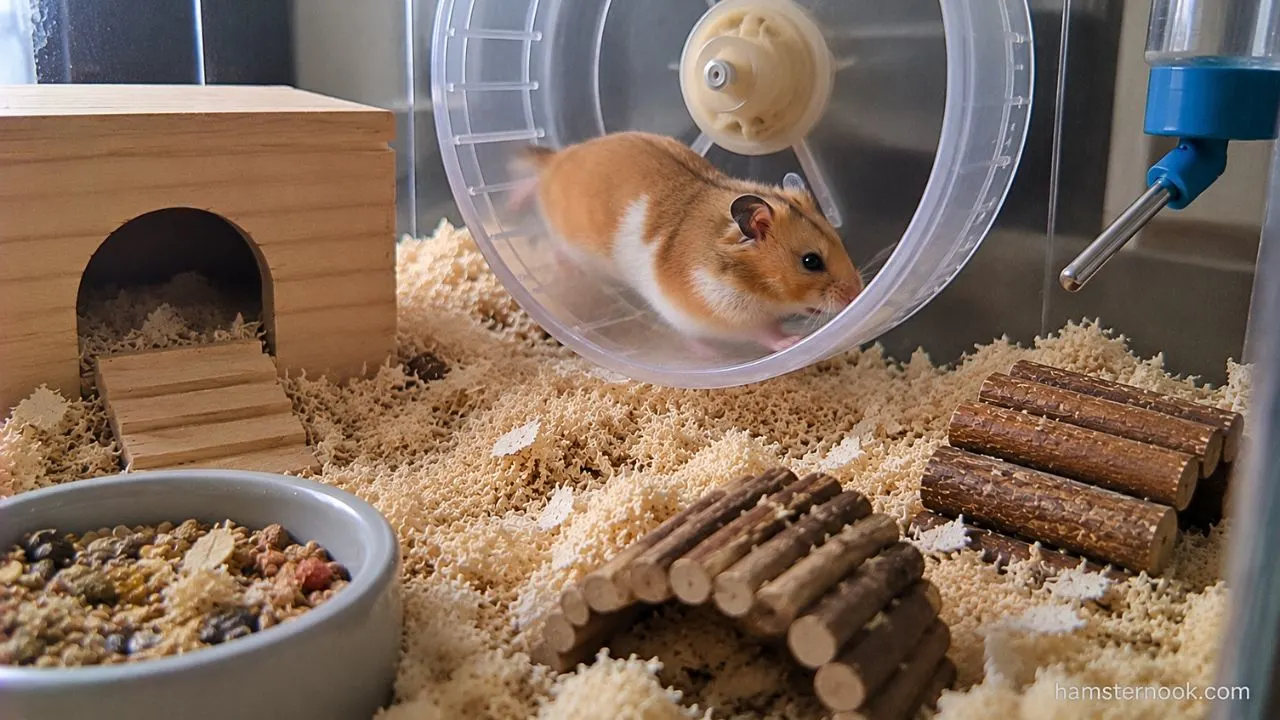
During the first several days or even weeks, many hamsters choose one location as a temporary “home base.” They may repeatedly return to this area until they become familiar with the rest of the enclosure.
This usually becomes less noticeable as the hamster gains confidence.
You may also find this helpful: The First 30 Days With a Hamster: Mistakes That Can Affect Trust and Health.
6. Your Hamster Has a Naturally Territorial Personality
Just like people, every hamster has its own personality.
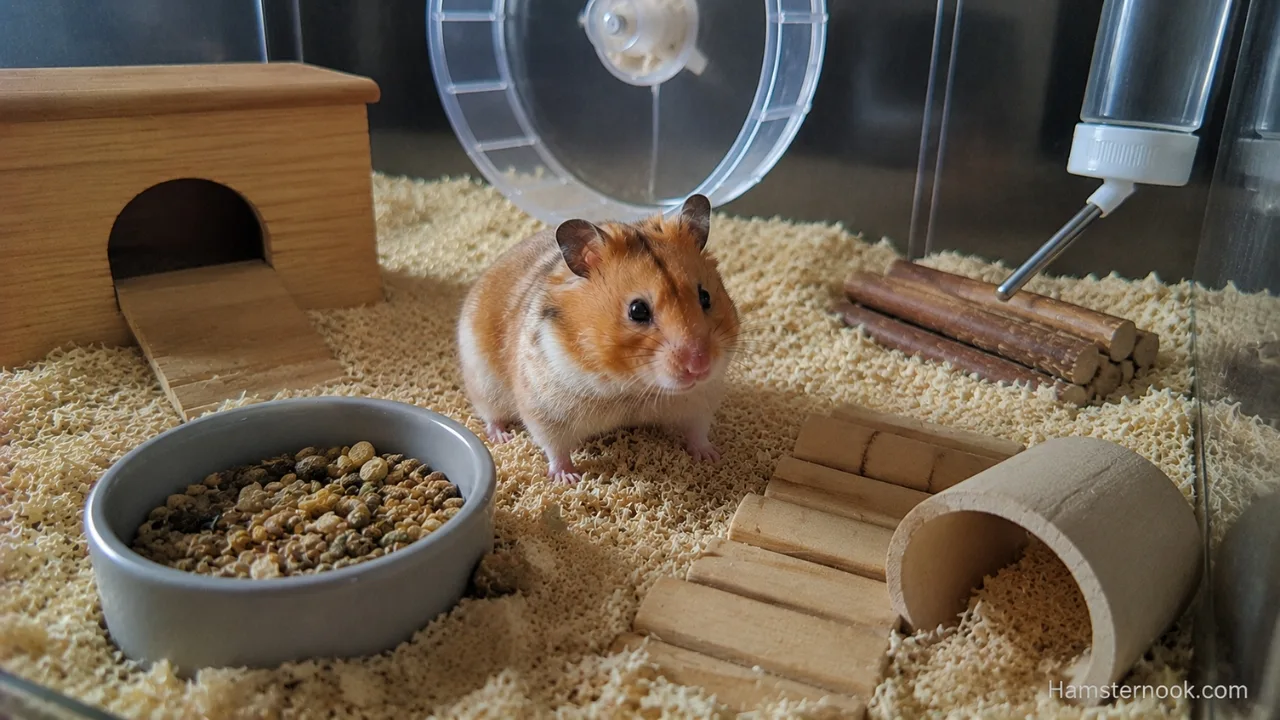
Some are naturally curious and explore constantly, while others prefer sticking close to familiar places.
A more territorial hamster may:
- Return to the same corner repeatedly.
- Watch activity from that location.
- Briefly stand upright when approached.
- Move back into its hide after investigating.
As long as your hamster is eating, exercising, grooming, and behaving normally, this preference is usually nothing to worry about.
This related guide covers enrichment in greater depth: Do Hamsters Get Bored? 10 Signs Your Hamster Needs More Enrichment.
What Should You Do if Your Hamster Guards One Corner?
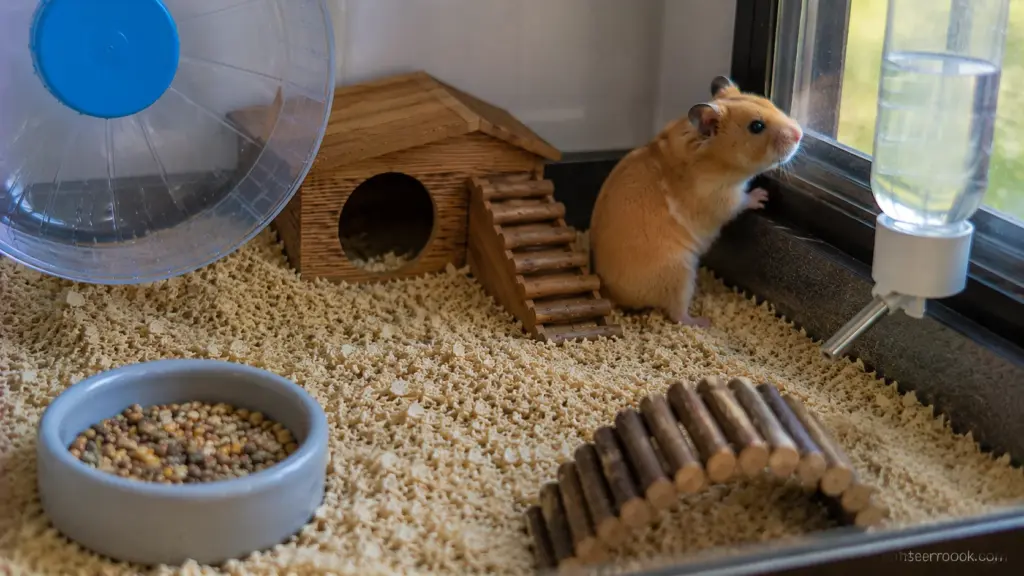
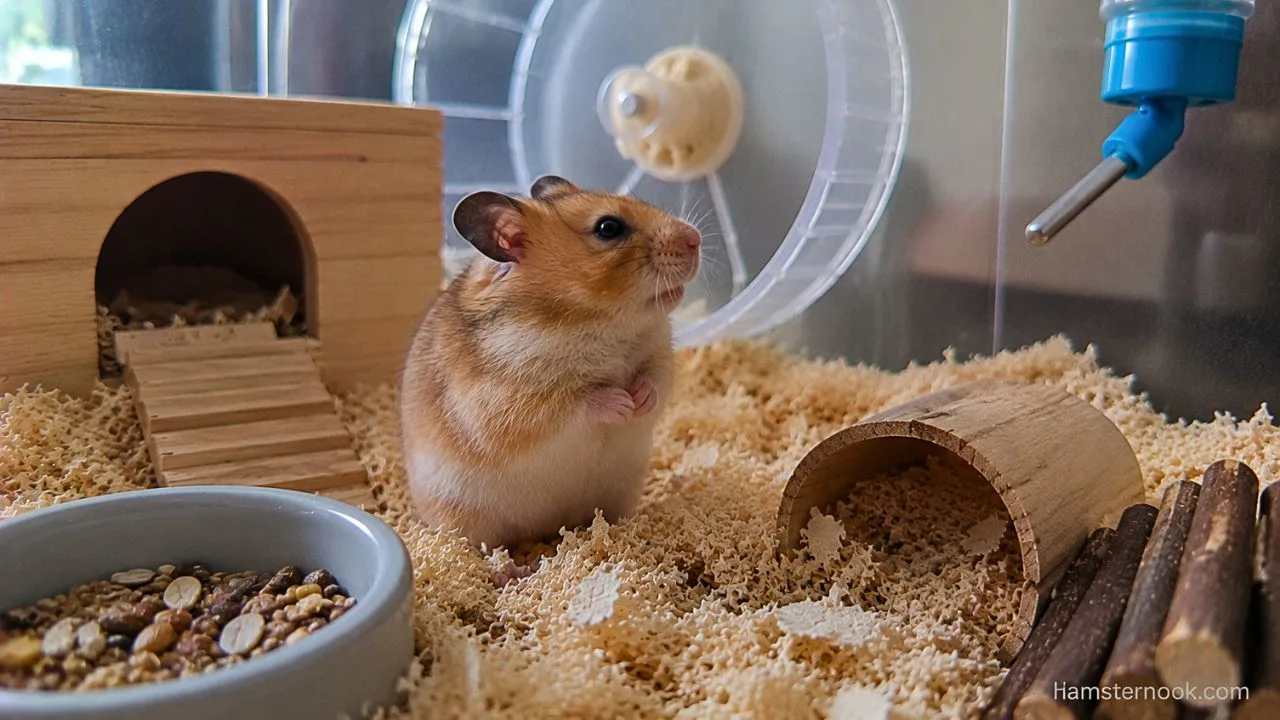
In most cases, allowing your hamster to feel secure is far more effective than trying to stop the behavior right away.
Here are a few simple steps that can help:
- Respect your hamster’s chosen nesting area.
- Avoid disturbing the corner unnecessarily.
- Handle your hamster during its normal waking hours.
- Make sure the enclosure provides enough space, bedding, and hideouts.
- Allow your hamster to explore at its own pace instead of forcing interaction.
Remember that trust develops gradually. Giving your hamster a consistent routine and avoiding unnecessary disturbances usually reduces defensive behavior more effectively than frequent handling or cage changes.
Many hamsters become less defensive as they grow more comfortable with their environment and learn that their routine is predictable.
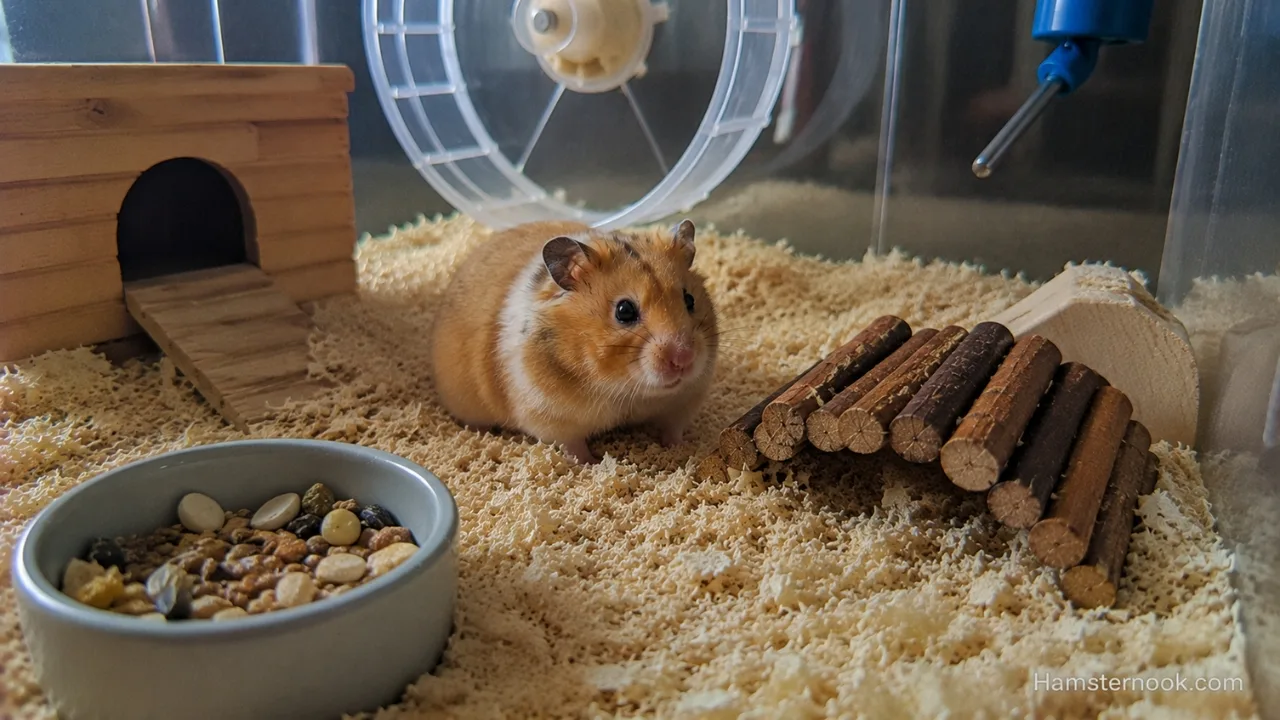
See our guide on How to Get a Hamster to Trust You Faster Without Stressing It Out for additional trust-building techniques.
Common Mistakes Owners Make
Owners sometimes make territorial behavior worse by trying to correct something that’s actually a normal instinct.
Avoid these common mistakes:
- Removing the nest every time you clean the cage.
- Rearranging the entire enclosure too frequently.
- Waking your hamster during the day.
- Reaching directly into its favorite corner without warning.
- Forcing handling when your hamster is clearly trying to retreat.
- Taking away healthy food stores simply because they look messy.
Giving your hamster a stable, predictable environment usually works much better than making frequent changes.

When Could Corner Guarding Be a Problem?
Although guarding one corner is usually normal, there are situations where it deserves closer attention.
Watch for behaviors such as:
- Refusing to leave the corner even at night.
- Not eating or drinking normally.
- Sudden aggression that wasn’t present before.
- Weight loss.
- Difficulty moving.
- Visible injury or swelling.
- Extreme lethargy.
- Rapid breathing or other signs of illness.
Territorial behavior alone is rarely a medical concern, but changes in your hamster’s overall health should never be ignored.
Could Cage Size Affect This Behavior?
Yes, in some situations it can.
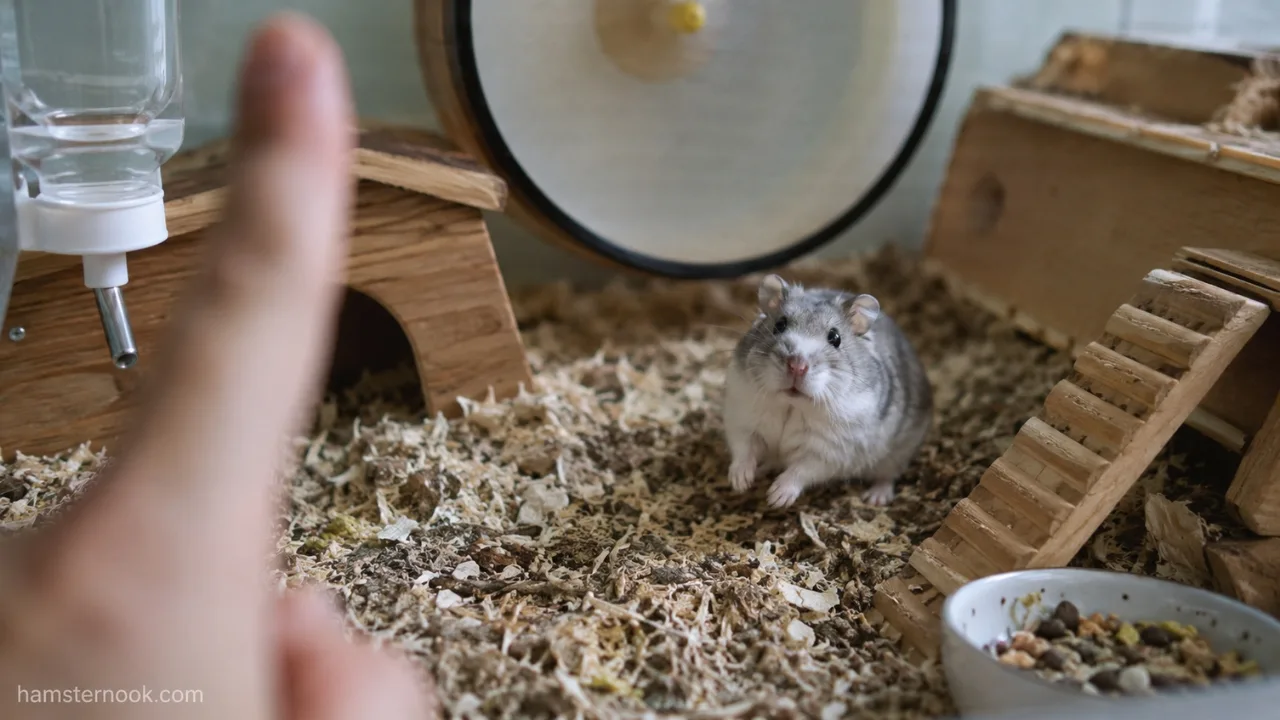
A very small enclosure offers fewer places to explore and hide, which may encourage a hamster to spend most of its time defending a single location.
Providing an enclosure with sufficient floor space, multiple hideouts, tunnels, deep bedding, and opportunities to forage encourages more natural movement throughout the habitat.
That doesn’t mean your hamster will stop using its favorite corner—it simply has more choices available.
Should You Move the Nest?
In most situations, it’s best to leave the nest where your hamster built it.

Your hamster has likely spent considerable time building its nest and arranging bedding exactly the way it prefers.
Moving the nest without a good reason can increase stress and reduce your hamster’s sense of security.
Only disturb the nesting area when necessary for health or hygiene, such as removing wet bedding or spoiled food.
If your hamster has always preferred one corner but continues to eat well, drink normally, use its wheel, and explore during its active hours, there’s usually no need to intervene. Focus on changes in behavior rather than the favorite corner itself.
When Should You Contact a Veterinarian?
Arrange a veterinary examination if guarding behavior is accompanied by:
- Loss of appetite
- Noticeable weight loss
- Persistent hiding with very little activity
- Difficulty walking
- Swelling or injury
- Bleeding
- Signs of pain
- Other unusual behavioral changes
These symptoms may indicate an underlying health issue rather than simple territorial behavior.
Conclusion
Guarding one corner of the cage is usually a normal expression of a hamster’s natural territorial instincts. Many hamsters choose a favorite area for sleeping, storing food, or simply feeling secure.
Rather than trying to stop the behavior, focus on creating a safe, enriching environment where your hamster has plenty of opportunities to dig, explore, and rest without unnecessary disturbances.
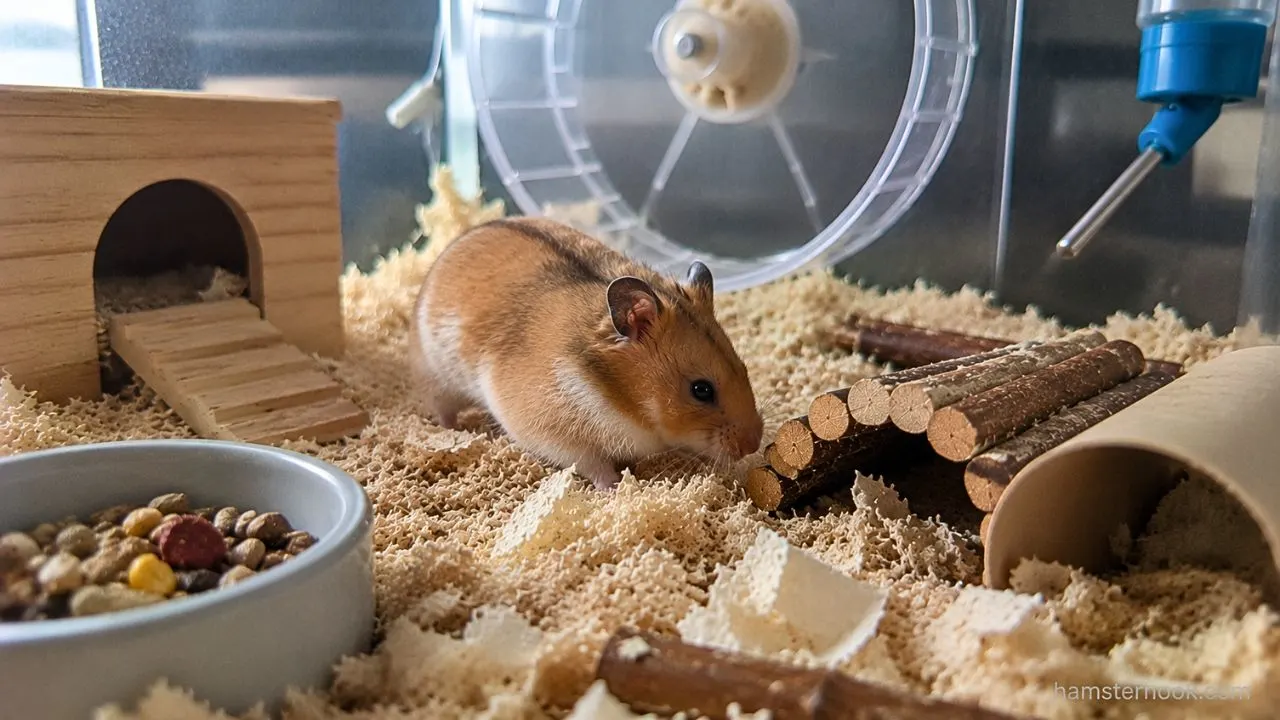
If your hamster spends most of its time staying in one place instead of exploring, our Hamster Hiding Behavior: What It Means and When to Worry guide explains how to tell a normal favorite hiding spot from behavior that may need closer attention.
Pay attention to your hamster’s overall health and behavior. If it continues eating, exercising, grooming, and behaving normally, there’s usually no reason for concern. However, if corner guarding appears alongside signs of illness or sudden behavioral changes, a visit to an experienced exotic animal veterinarian is the safest course of action.
If you’re curious about how hamsters recognize people, our guide on Can Hamsters Smell Their Owners? How Powerful Is a Hamster’s Sense of Smell? explains it in more detail.
Frequently Asked Questions
Why does my hamster stay in one corner all day?
If your hamster is sleeping during daylight hours, this is usually normal because hamsters are naturally most active in the evening and at night. If it never becomes active during its usual waking hours, you should monitor it for other signs of illness.
Is my hamster being aggressive by guarding one corner?
Not necessarily. Many hamsters briefly defend their nest or food storage area without being generally aggressive. Context and overall behavior are important.
Should I stop my hamster from storing food in one corner?
No. Food hoarding is a natural instinct. Only remove food that has become spoiled, moldy, or unsafe.
Can changing the cage too often make my hamster more territorial?
Yes. Frequent major changes can disrupt your hamster’s familiar scent markings and nesting area, making it feel less secure.
Will my hamster eventually stop guarding its favorite corner?
Some hamsters become less protective as they gain confidence, while others continue using the same favorite area throughout their lives. Both can be completely normal.
References
The information in this guide is based on trusted veterinary and animal welfare resources, including:
- RSPCA – How to Look After Hamsters – General hamster welfare and care.
- Blue Cross – Hamster Care – Housing, nesting, handling, and wellbeing.
- MSD Veterinary Manual – Providing a Home for a Hamster – Veterinary guidance on housing and environmental needs.
- NC3Rs – Housing and Husbandry: Hamster – Husbandry, nesting, scent cues, and environmental needs.

Narayan Kumar is the founder and author of HamsterNook. He creates practical, research-based hamster care guides covering hamster behavior, nutrition, cage setup, enrichment, health, and everyday care. His goal is to help hamster owners make informed decisions and provide safer, healthier lives for their pets through clear, beginner-friendly information based on trusted animal care resources.