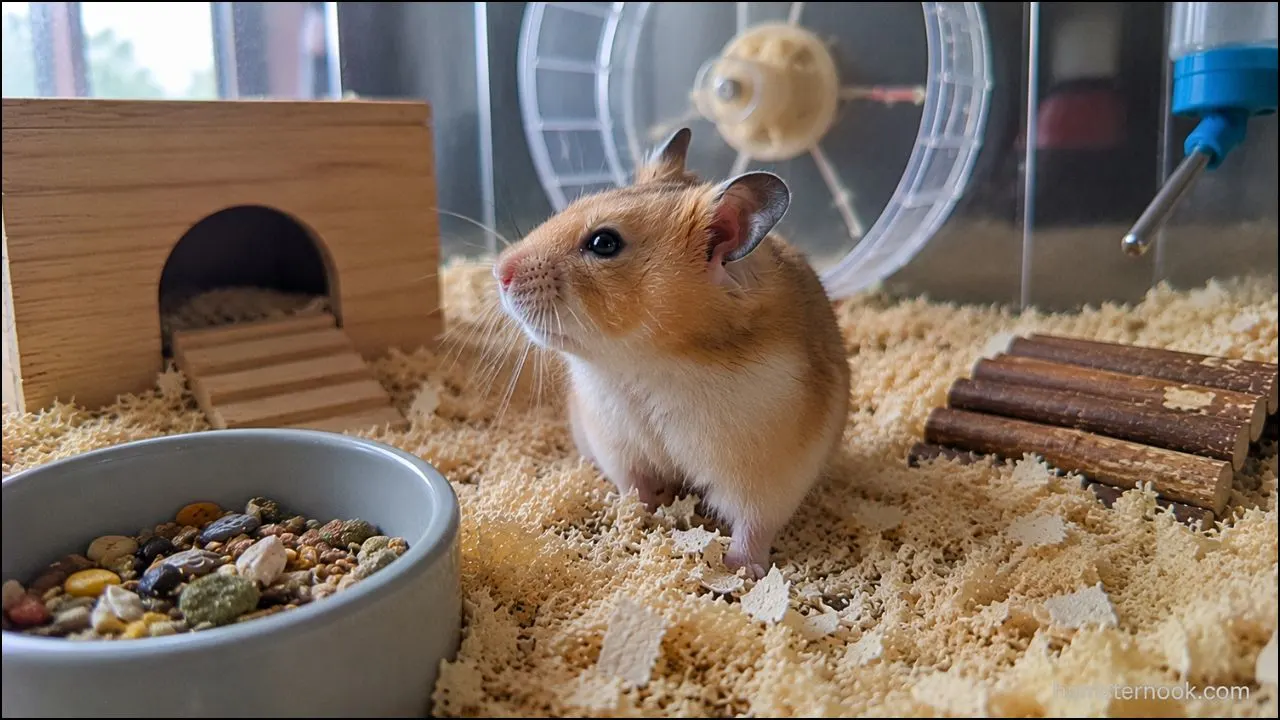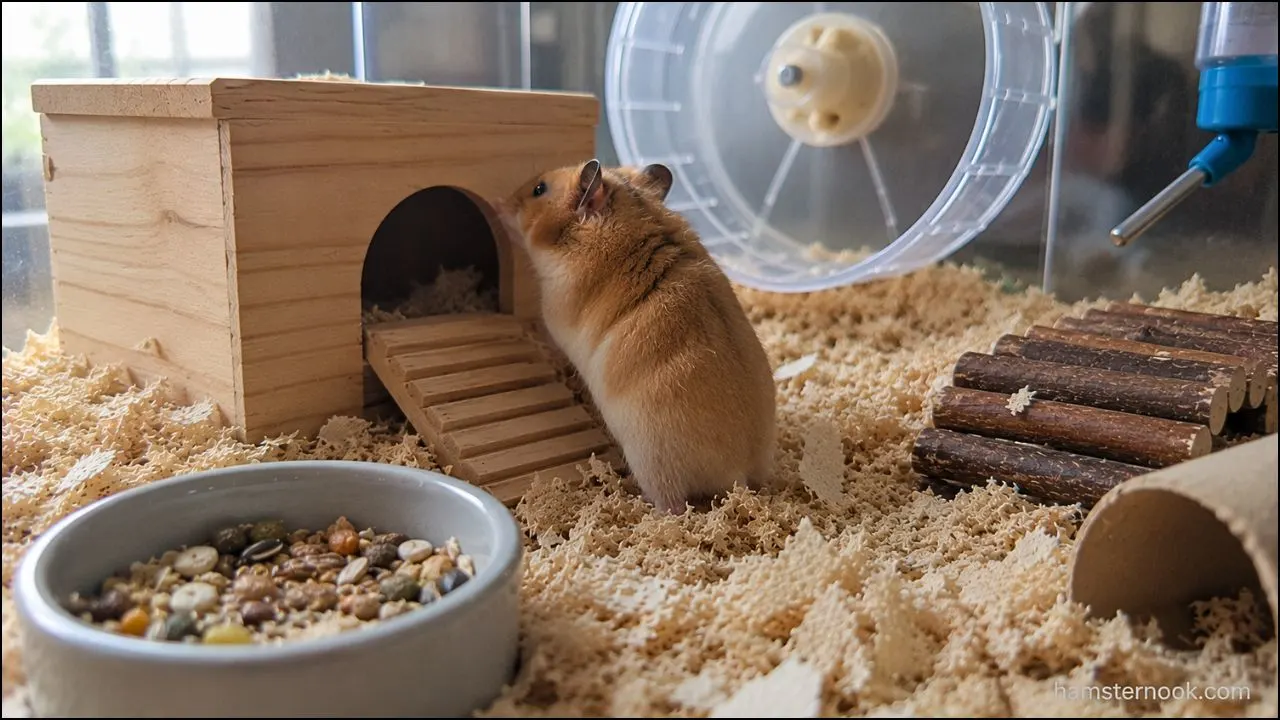
If your hamster seems to remember where you keep treats, recognizes your routine, or quickly finds its favorite hiding place, you may wonder how much it actually remembers. Hamsters are small, but their brains are capable of learning and remembering useful information. Their memory is not measured in simple terms such as “three days” or “one week,” though. What a hamster remembers depends on what it learned, how important that information is, and the circumstances in which it learned it.
Quick Answer: Do Hamster Have a Good Memory?
Yes. Hamsters can learn and remember information, particularly information connected with food, familiar places, routines, handling, and their environment.
Research has demonstrated that Syrian hamsters can use spatial memory while foraging. In one study, hamsters learned which locations contained food and generally avoided returning to locations they had already emptied, suggesting that they remembered where food had been found.
Animal welfare guidance also describes hamsters as intelligent animals that can learn relatively quickly. The RSPCA notes that hamsters can learn to come when food is presented and can be trained to perform simple behaviors.
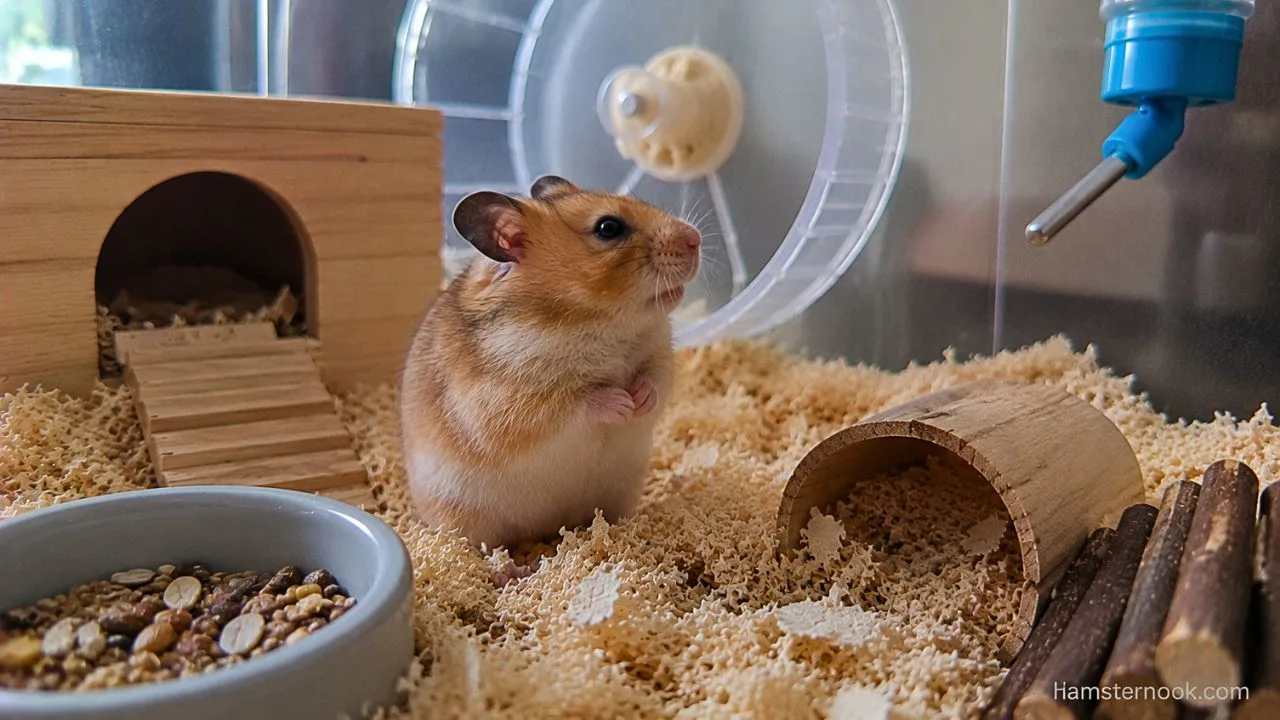
However, there is no reliable universal number for how many days, weeks, or months a pet hamster can remember something. Memory depends on the type of information and the circumstances surrounding learning.
What Kind of Things Can Hamsters Remember?
A hamster’s memory is particularly useful for navigating its surroundings and finding resources.
1. Familiar Places
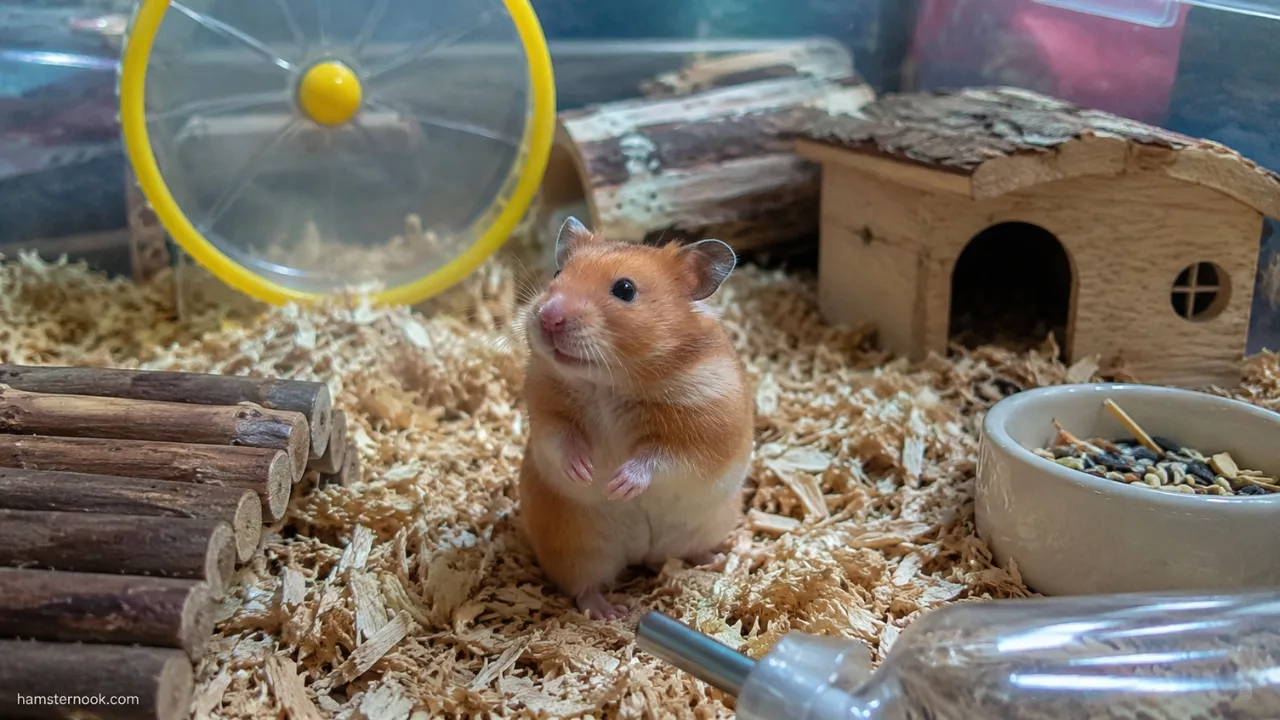
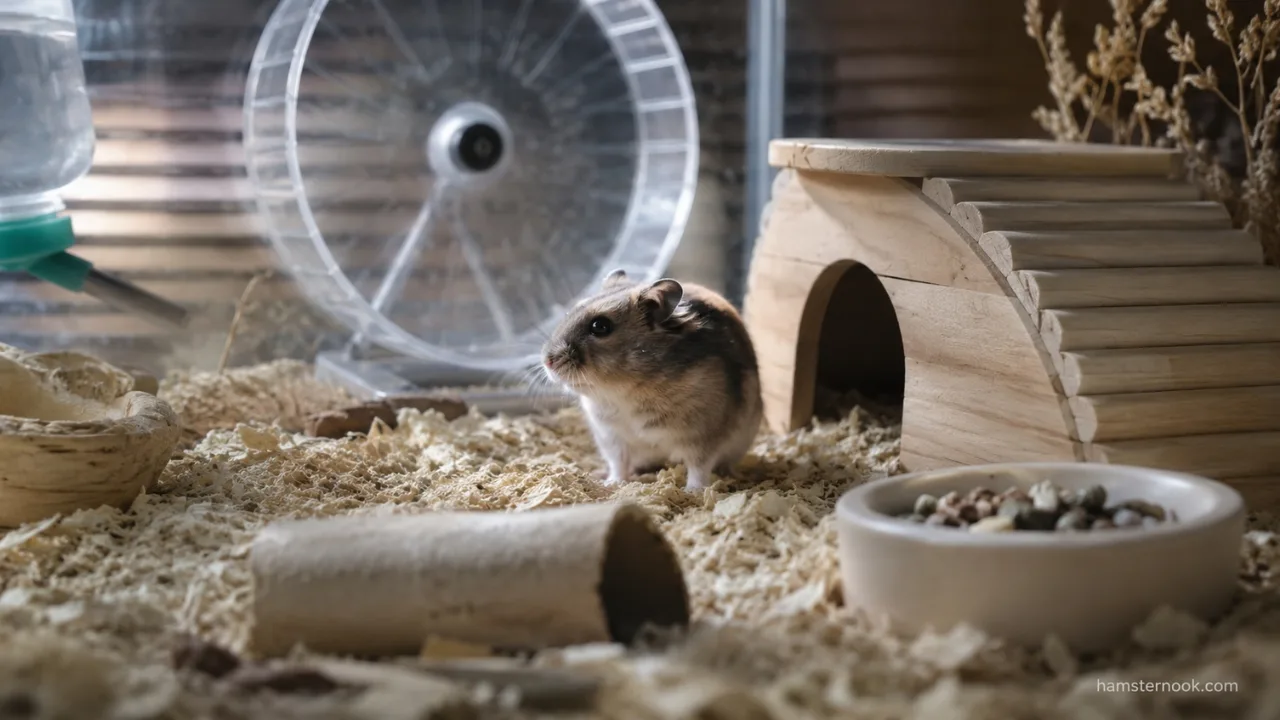
Hamsters can remember important features of their environment. This is especially relevant because they naturally explore, forage, burrow, and store food.
A hamster may become familiar with:
- Where its nest is located
- Where food is usually available
- Where water is located
- Familiar tunnels and shelters
- Frequently used paths through its enclosure
- Places where food has previously been found
- Areas where it feels secure
Spatial memory is particularly relevant to hamsters because food-hoarding and foraging require them to keep track of locations.
In research involving Syrian hamsters, animals were able to use information about the location of food and showed fewer visits to locations where food had already been depleted.
This does not mean your hamster has a mental map identical to a human’s. It means that its behavior provides evidence that it can retain and use information about its surroundings.
2. Food Locations
Food is one of the clearest examples of memory in hamsters.
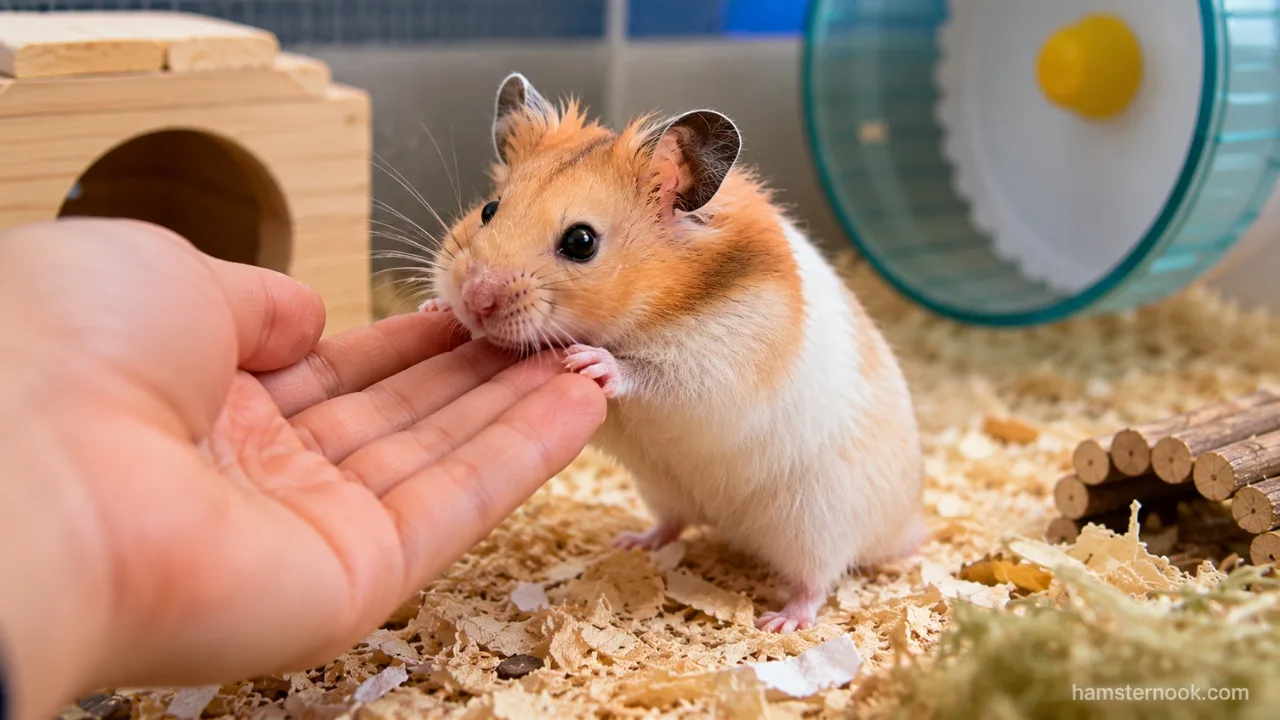
Hamsters naturally collect and store food. Their cheek pouches allow them to carry food away from feeding areas, and they can store food for later use.
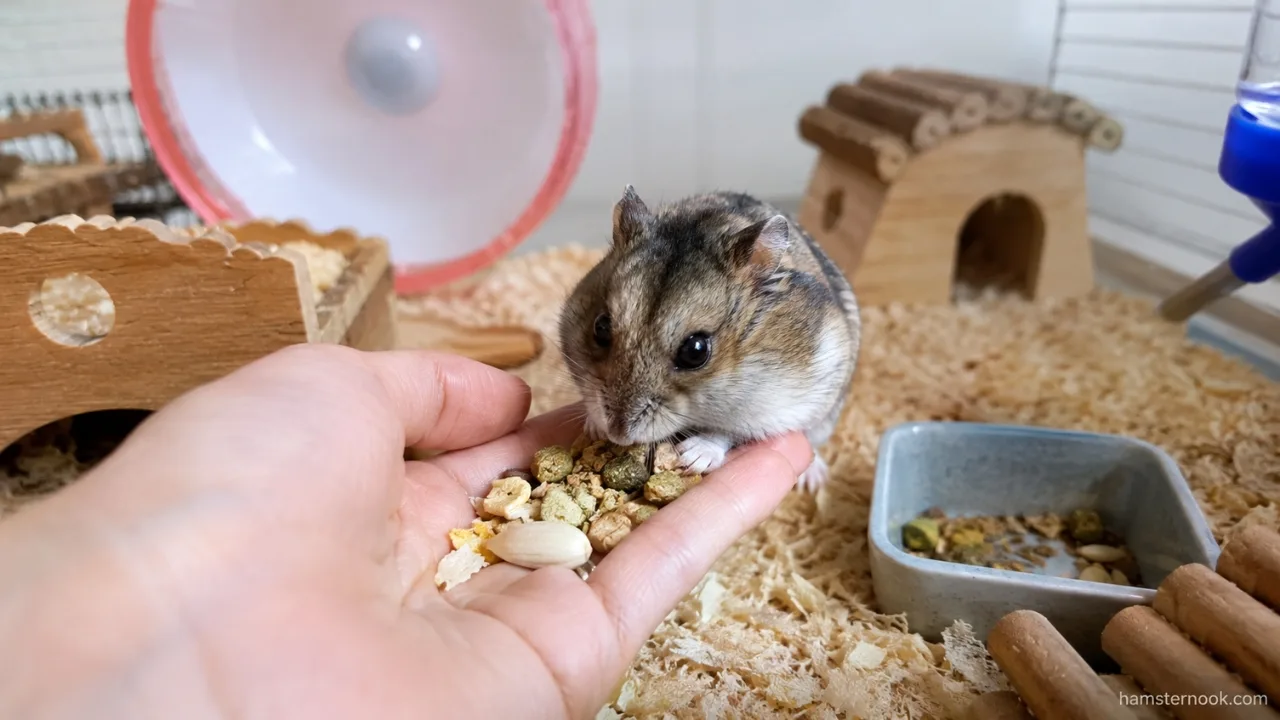
If you regularly scatter-feed your hamster, you may notice it checking particular areas or returning to locations where it has previously found food.
That behavior isn’t necessarily random. For a species that naturally forages and hoards food, remembering useful locations can be valuable.
This is also why scatter feeding and appropriate foraging opportunities can provide useful enrichment. NC3Rs recommends enrichment that allows hamsters to express natural behaviors such as foraging and hoarding.
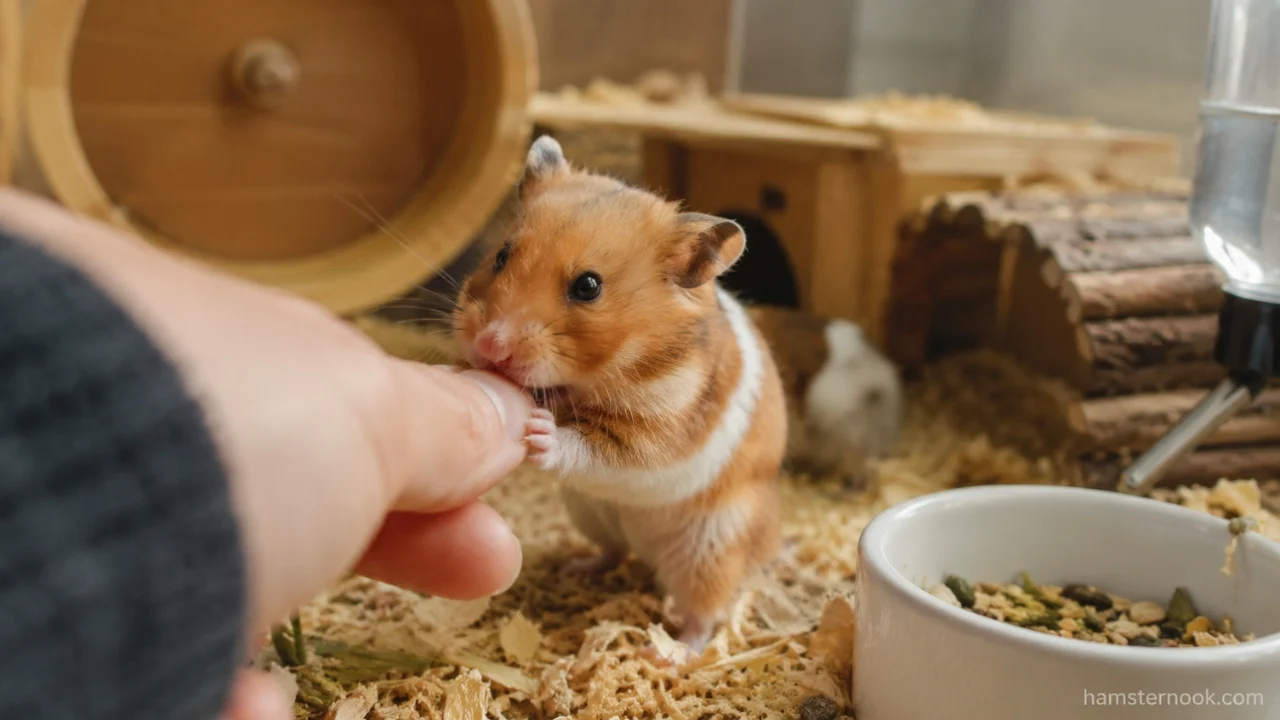
3. Familiar Routines
Hamsters can become accustomed to predictable routines.
For example, your hamster may become active around a familiar part of the evening, particularly if the household follows a relatively consistent light-dark routine. Hamsters are naturally most active during the evening and night, and welfare guidance recommends predictable lighting and allowing them to sleep undisturbed during the day.
A hamster may also learn that certain events tend to happen together, such as hearing you approach the enclosure shortly before food is provided.
That doesn’t necessarily mean the hamster understands the clock or knows that “7 PM means dinner.” Instead, it can learn associations between environmental cues and events.
Can Hamsters Remember Their Owners?
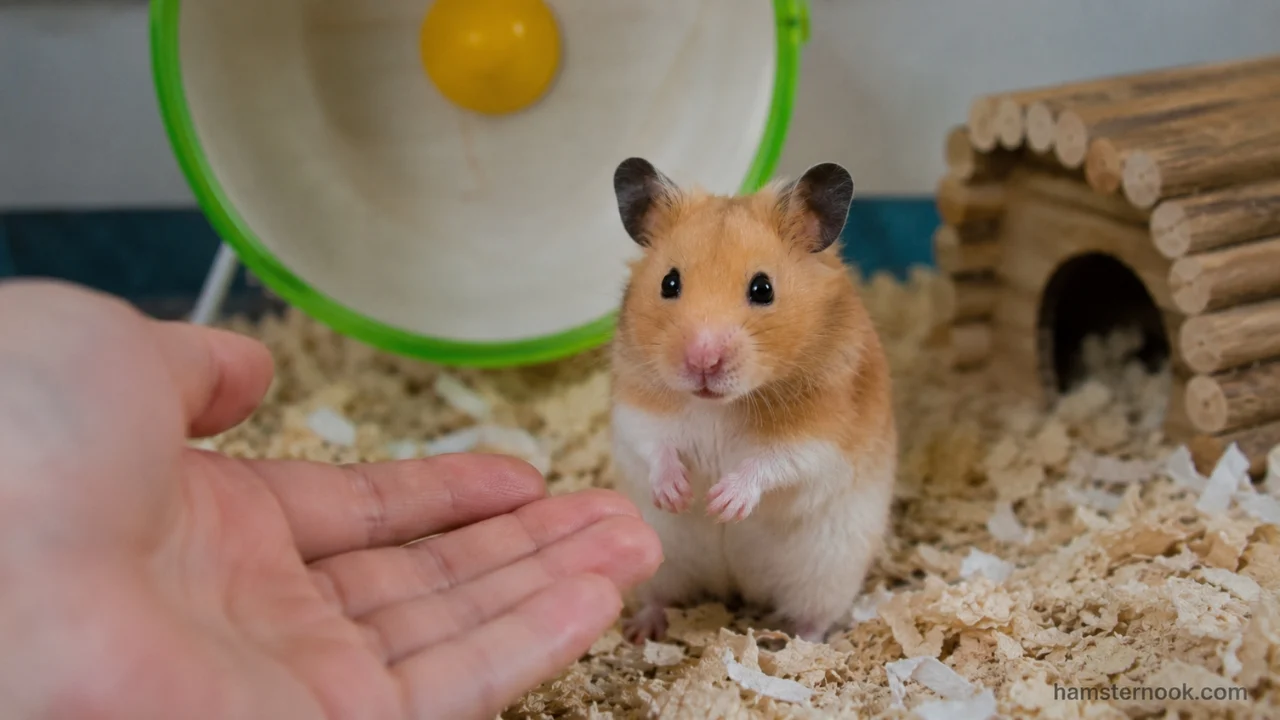
A hamster can become familiar with a person’s presence, scent, voice, handling style, and routine. However, it is difficult to translate this into a human concept such as “my hamster knows that I am its owner.”
This broader question is explored in Do Hamsters Recognize Their Owners? How They Know You & Remember You.
What you can observe is whether the hamster becomes more comfortable with your presence over time.
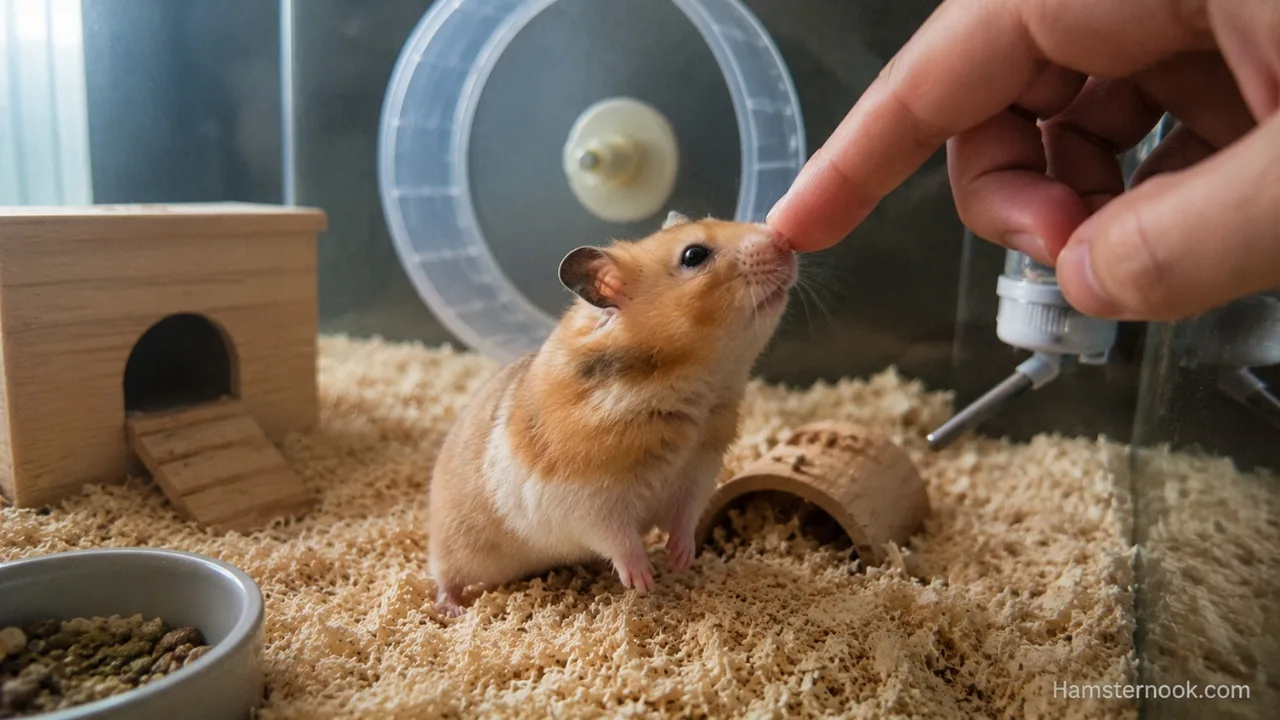
A hamster that has become accustomed to gentle handling may be less startled when you approach and may willingly investigate your hands. The RSPCA recommends allowing hamsters to become comfortable with handling gradually, including letting them sniff your hands before gently cupping them.
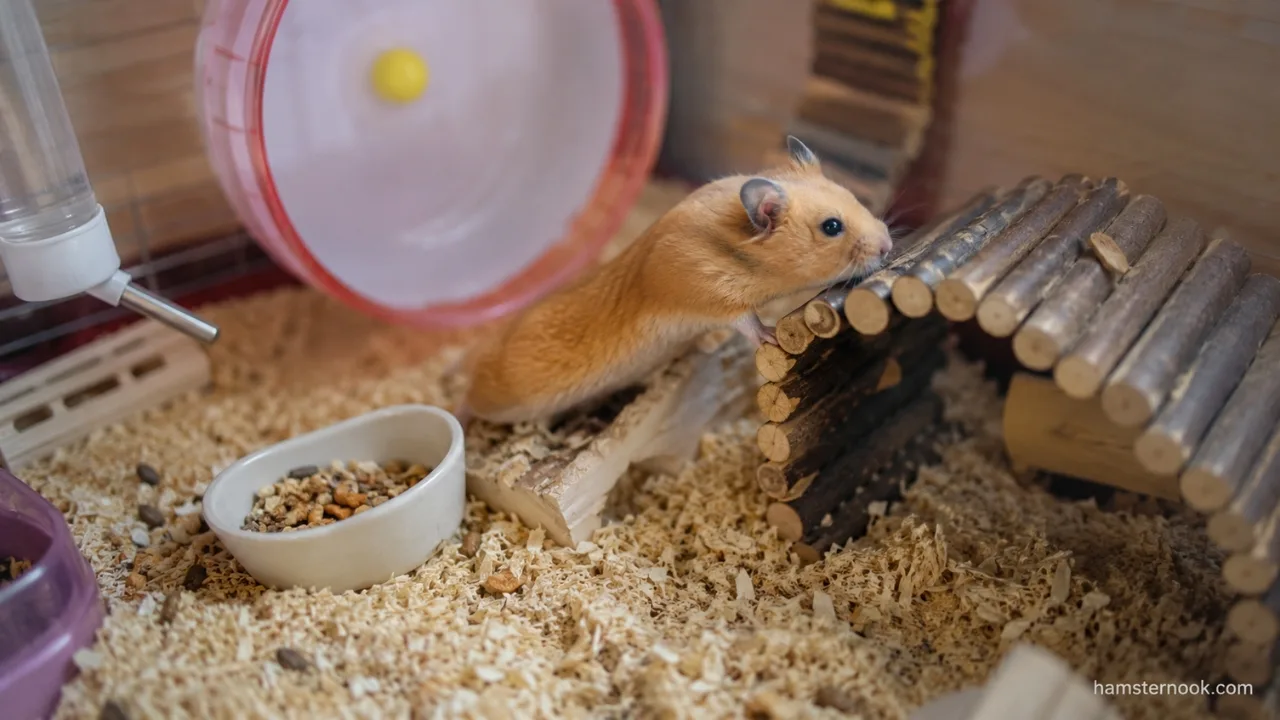
NC3Rs similarly recommends regular, gentle handling to habituate hamsters to human contact, preferably when they are naturally active.
Does Your Hamster Remember Your Scent?
Scent is likely to be important in hamster behavior, but it would be too strong to claim that every hamster consciously “recognizes its owner by smell” in the same way a person recognizes a face.
A safer way to think about it is that hamsters live in a strongly sensory environment and can become accustomed to familiar smells, surroundings, and routines.
This is one reason unnecessary disruption of their familiar environment can be stressful.
How Long Can a Hamster Remember Something?
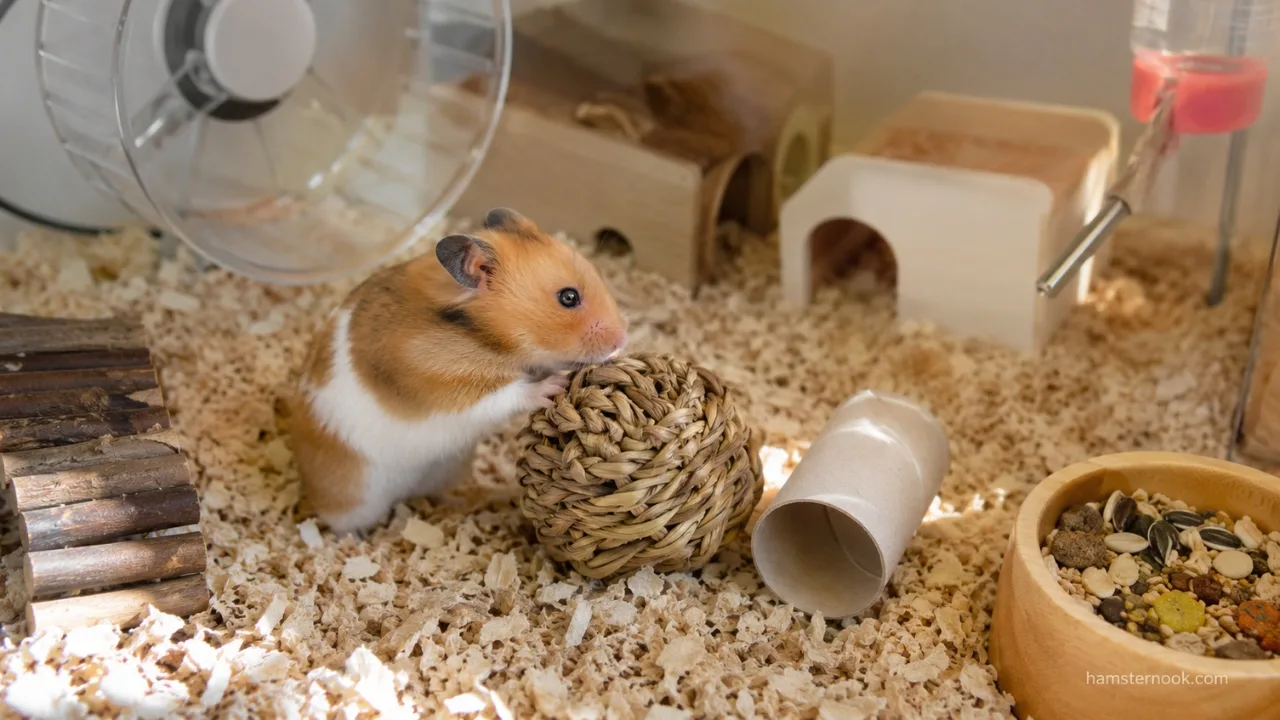
There isn’t a scientifically established answer such as “a hamster remembers for 30 days.”
Different types of memory last for different periods, and research has examined particular forms of learning rather than establishing one fixed memory duration for all hamsters.
For example, laboratory research in Djungarian hamsters has examined recognition and spatial memory. One study found that sleep deprivation after learning impaired some aspects of object and spatial information retrieval.
That finding is useful because it shows that memory in hamsters is more complicated than simply asking whether they “remember” or “forget.” Learning, memory consolidation, sleep, context, and the difficulty of the task can all affect performance.
A Simple Way to Understand Hamster Memory
| What the hamster learns | What you may observe |
|---|---|
| Food location | Returns to familiar feeding or foraging areas |
| Safe hiding place | Regularly uses a familiar shelter or nest |
| Familiar environment | Navigates frequently used areas |
| Handling routine | Becomes more comfortable with familiar handling |
| Food-related cue | Approaches when it associates a cue with food |
| New object | Investigates or responds differently to something unfamiliar |
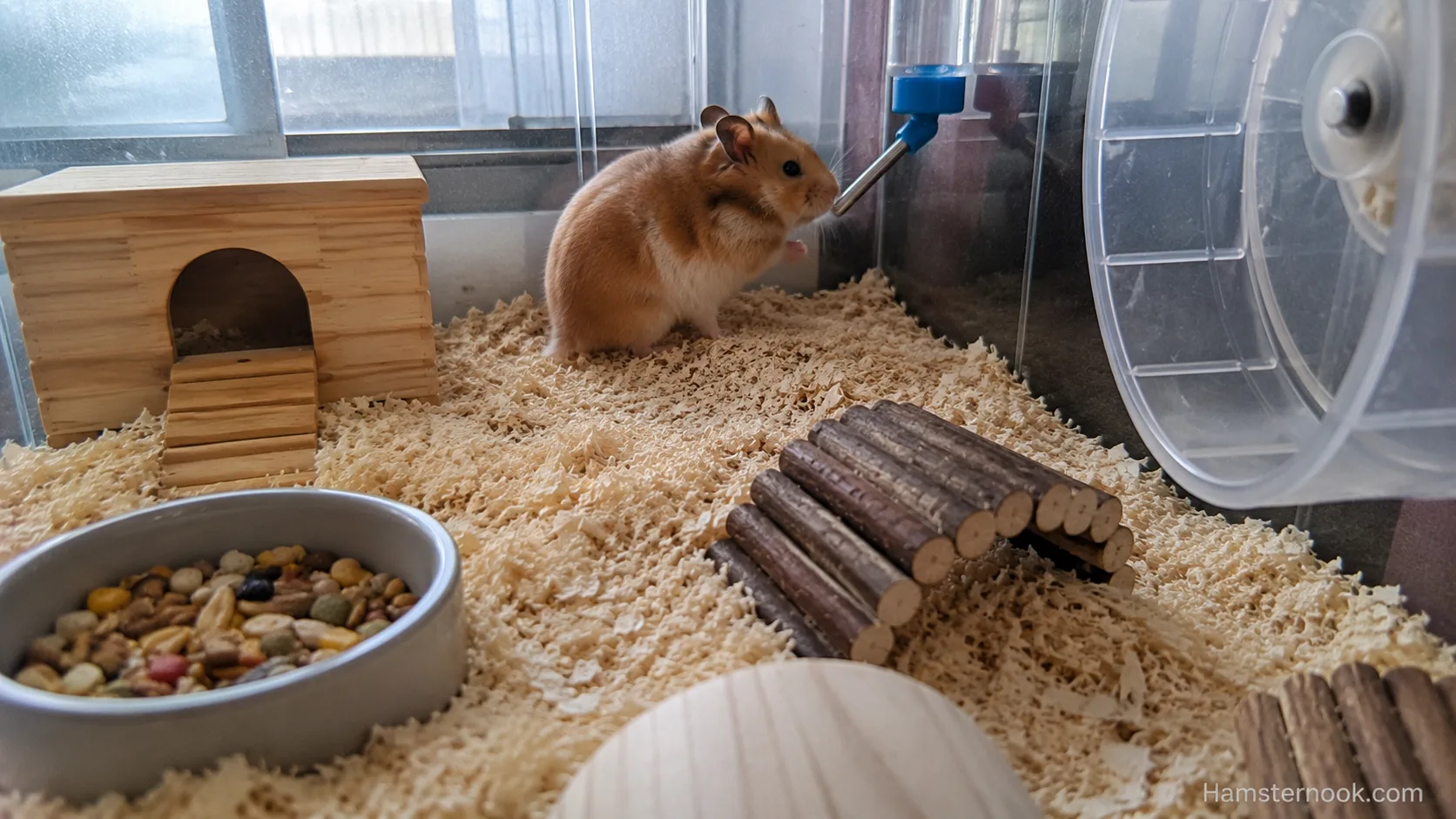
These observations demonstrate learning or familiarity, but they should not be interpreted as proof that a hamster remembers something for a specific number of days.
Can Hamsters Forget Things?
Yes. Like other animals, hamsters do not retain every piece of information equally well.
Something that is useful, repeated, or strongly associated with an important outcome may be more behaviorally significant than something encountered only once.
A hamster may also behave differently when the surrounding context changes. For example, a familiar object placed somewhere completely different may not produce exactly the same response as when it is in its usual location.
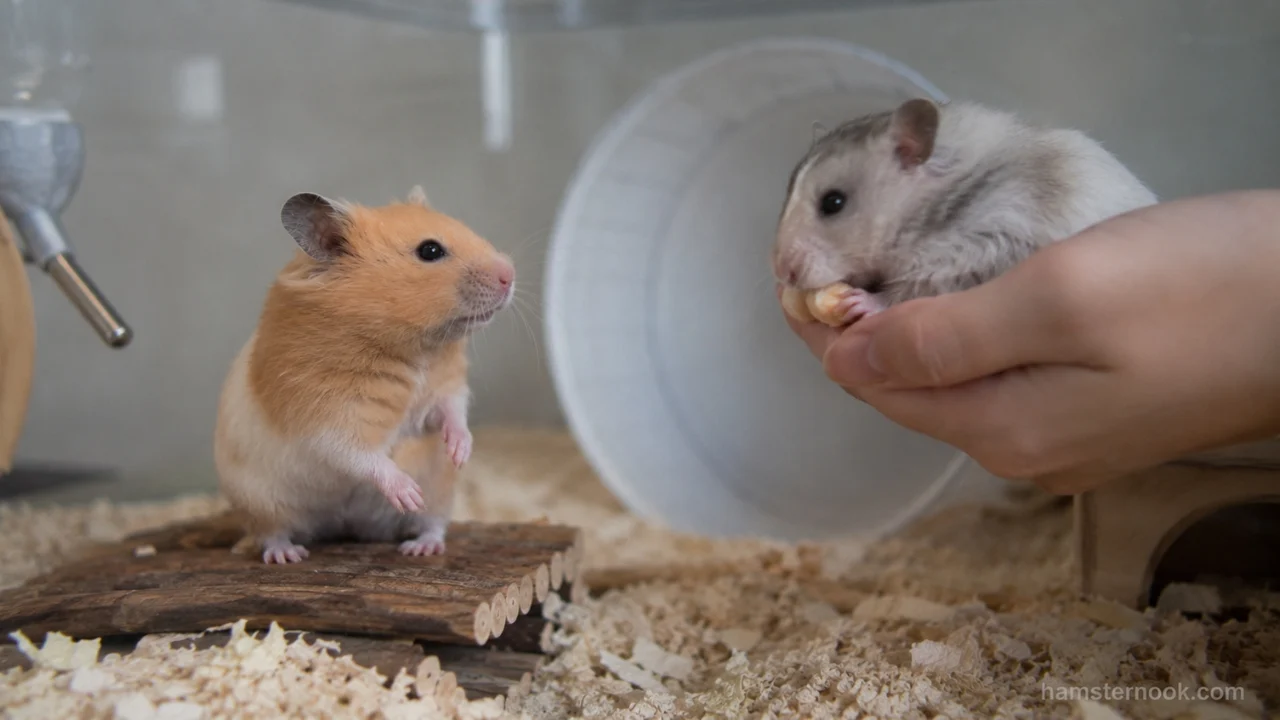
This is one reason you shouldn’t assume that a hamster has “forgotten you” simply because it behaves differently after a change in environment.
Moving the enclosure, changing its surroundings, introducing unfamiliar objects, or disrupting its routine can alter behavior without necessarily meaning that the animal has lost all previous learning.
Can a Hamster Remember Its Name?
Your hamster may learn to respond to a particular sound, including its name, but there is an important distinction.
It is not known that hamsters understand names as humans do. Instead, repeated pairing of a sound with something meaningful—such as food, attention, or another consistent event—could allow the hamster to learn an association.
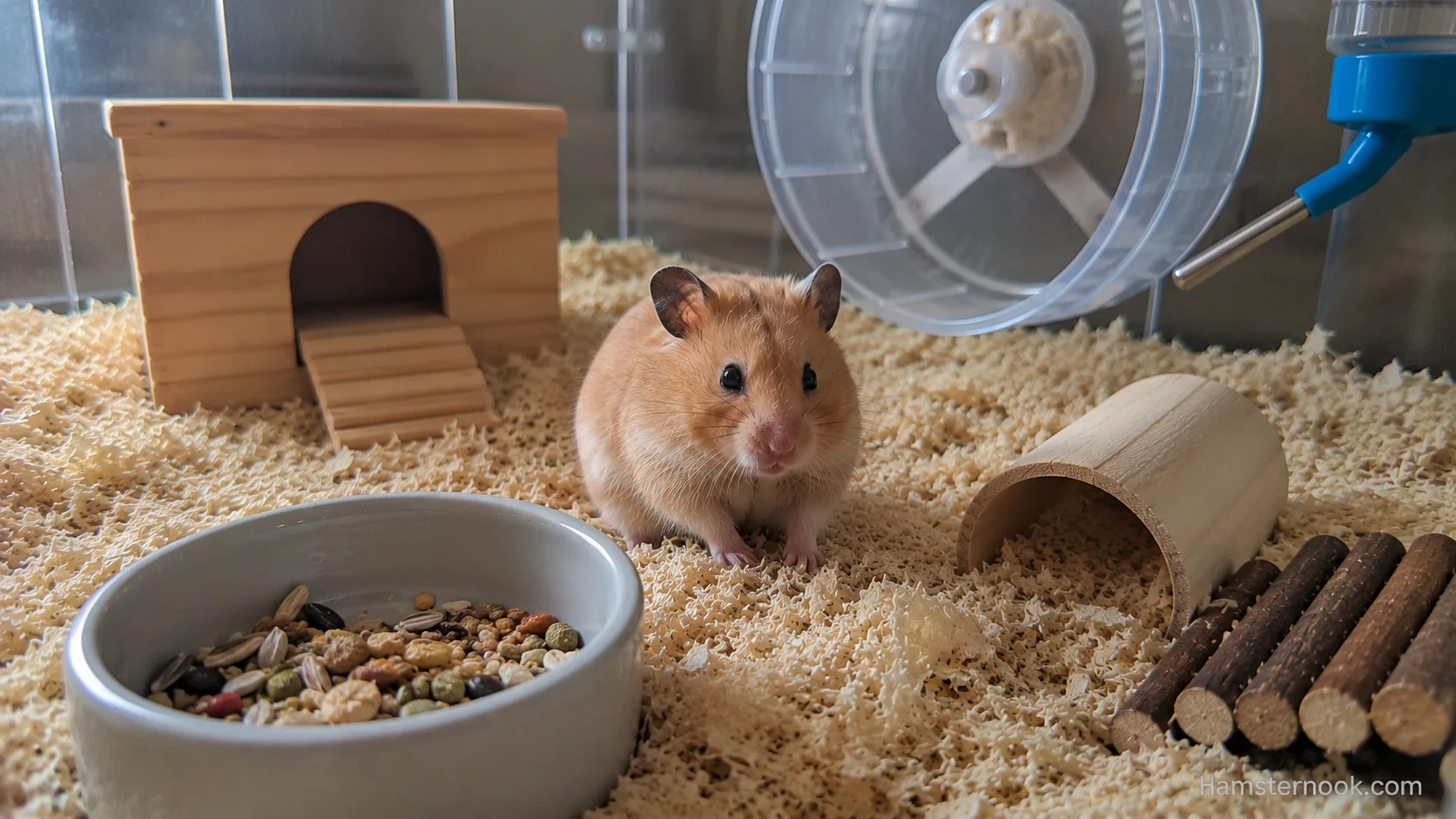
For example, if you calmly say the same name before offering a favorite food over many sessions, your hamster may eventually react to that sound.
The useful goal is therefore not to test whether your hamster “knows its name,” but to build a consistent association between a sound and a positive event.
For a more specific look at this type of learned sound association, see Do Hamsters Know Their Names? The Surprising Truth About How They Recognize You.
Can You Train a Hamster?
Yes. Hamsters can learn simple behaviors.
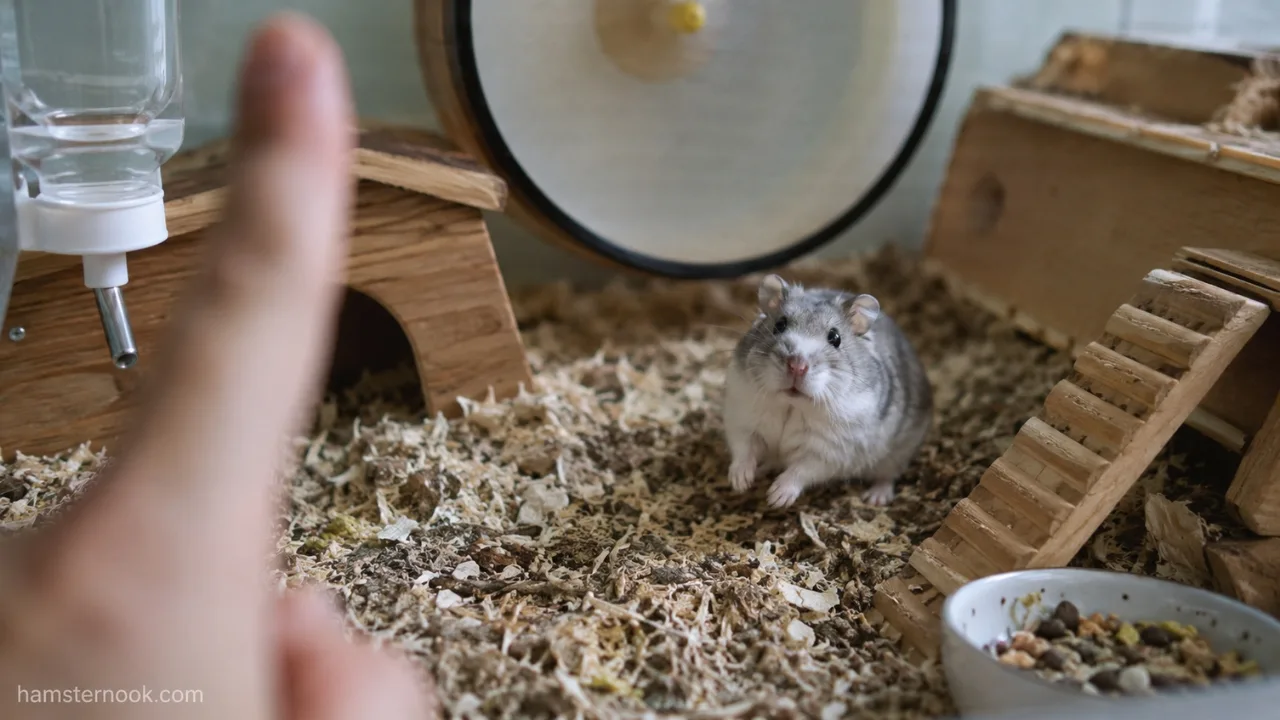
The RSPCA specifically notes that hamsters can learn to come when food is presented and can perform simple tricks.
Training should be gentle and based on appropriate rewards rather than force.
A simple approach is:
- Choose one consistent sound or cue.
- Use it when your hamster is naturally awake and alert.
- Pair the cue with a small, appropriate food reward.
- Repeat the process consistently.
- Stop if the hamster becomes frightened, frustrated, or uninterested.
- Keep sessions short rather than repeatedly disturbing the animal.
Never wake a sleeping hamster simply to train it. Hamsters need undisturbed daytime sleep, and handling is generally better when they are naturally active.
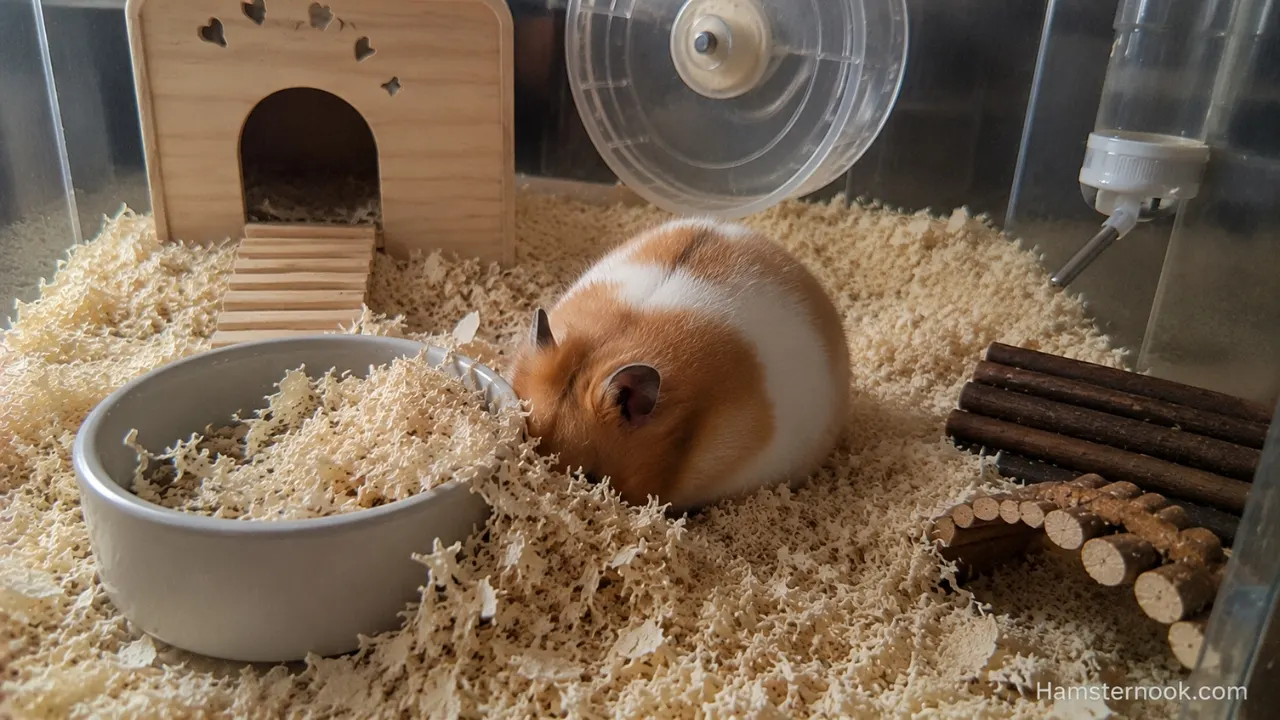
Do Hamsters Remember Bad Experiences?
A hamster can learn associations between an experience and the circumstances surrounding it. This is one reason handling should be calm and predictable.
For example, repeatedly grabbing a hamster suddenly from above may make future handling more difficult. Hamsters have relatively poor eyesight and can be startled by unexpected approaches, so welfare guidance recommends approaching carefully and handling them with cupped hands.
The sensory side of this behavior is explained further in Can Hamsters See in the Dark? The Truth About Hamster Vision.
This does not mean that every nervous reaction proves a hamster is remembering a specific traumatic event. Behavior has many possible causes, and individual circumstances matter.
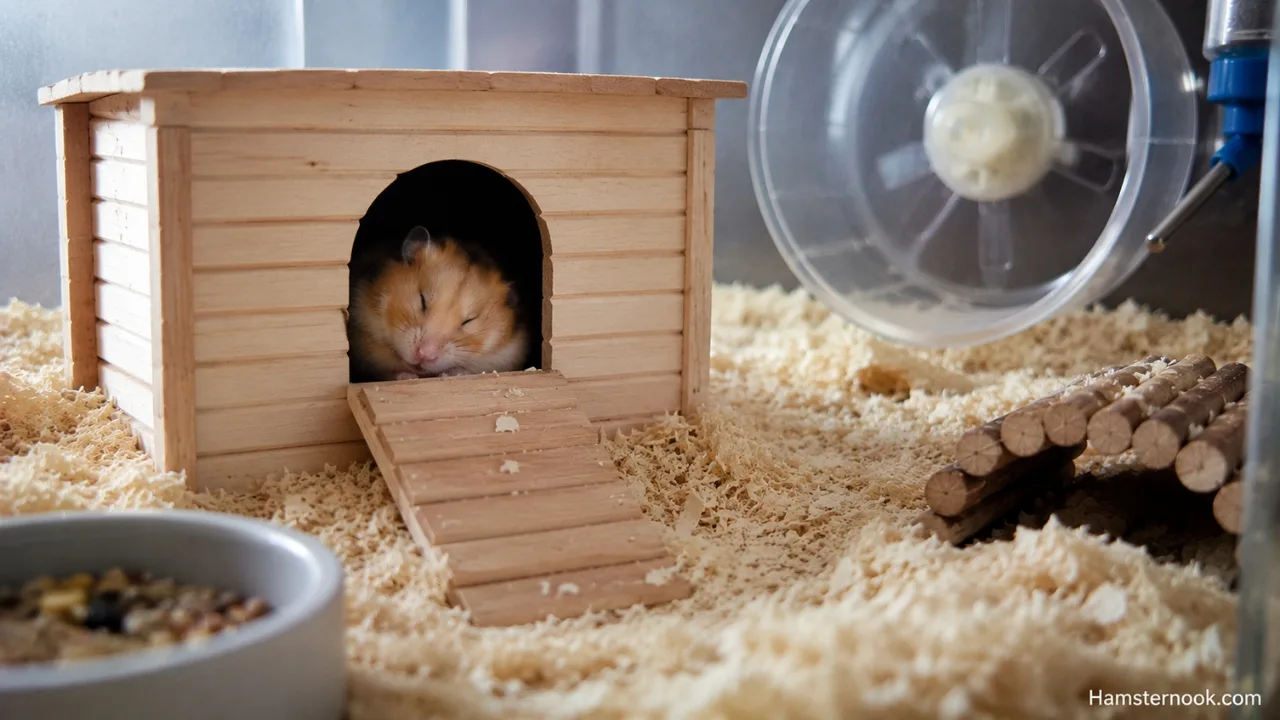
The practical lesson is simple: avoid creating unnecessary fear and give your hamster opportunities to become comfortable with predictable, gentle interactions.
Does Changing the Cage Make a Hamster Forget Its Environment?
No. A cage clean or rearrangement does not mean your hamster suddenly loses its memory.
However, major environmental changes can remove familiar smells, landmarks, nesting areas, and pathways that help the hamster feel oriented.
NC3Rs recommends transferring some nesting material during cage cleaning to help maintain familiar odors and minimize stress.

This is closely related to the behavioral changes discussed in Can Hamsters Get Confused After a Cage Rearrangement?.
This is different from saying that a hamster has a human-like memory of its “room.” It simply recognizes that familiar sensory information can matter to the animal.
When cleaning or rearranging, avoid unnecessarily destroying every familiar element at once.
Can Enrichment Help a Hamster’s Memory and Learning?
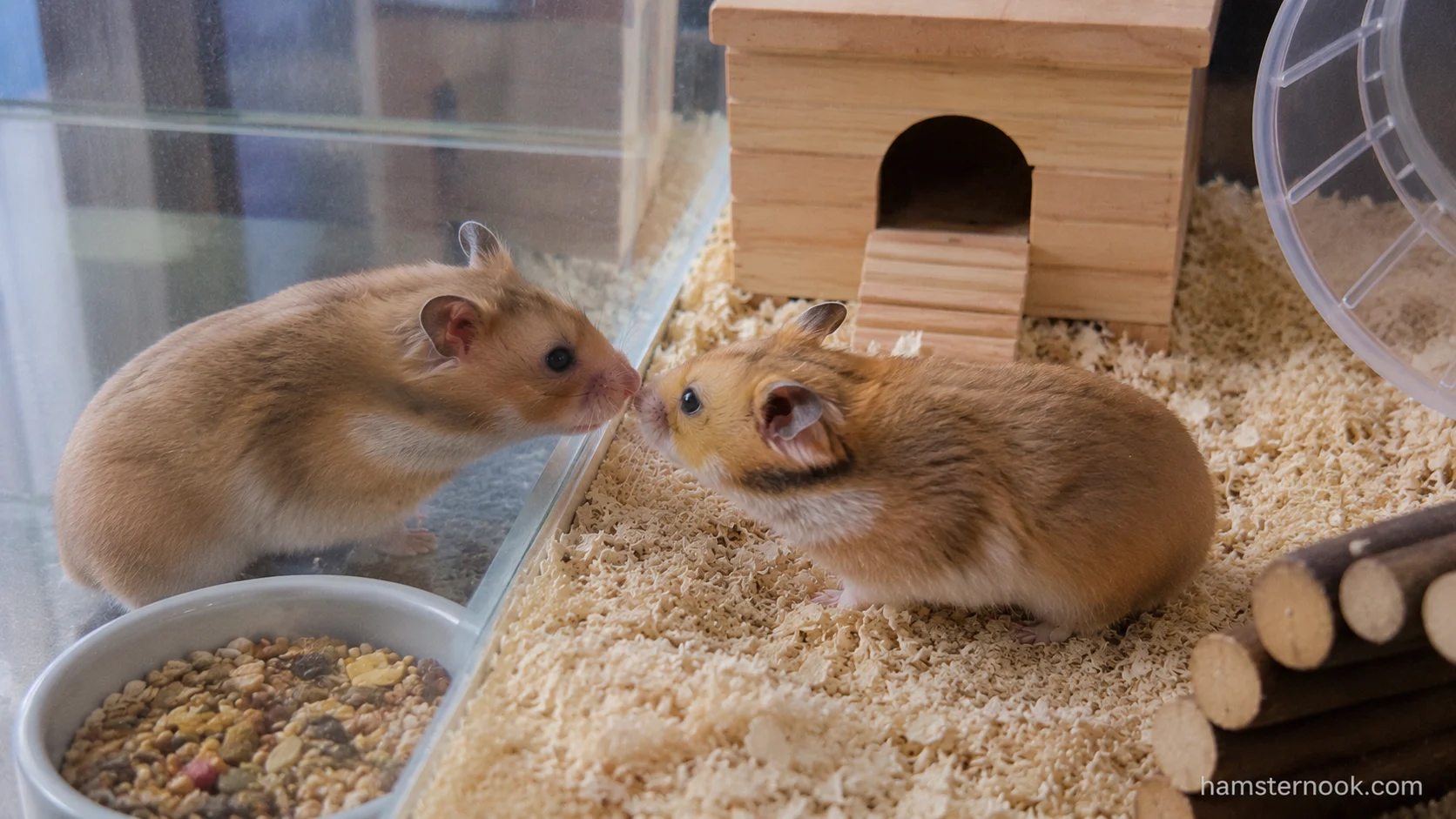
Good enrichment gives a hamster opportunities to explore, forage, make choices, and interact with a more complex environment.
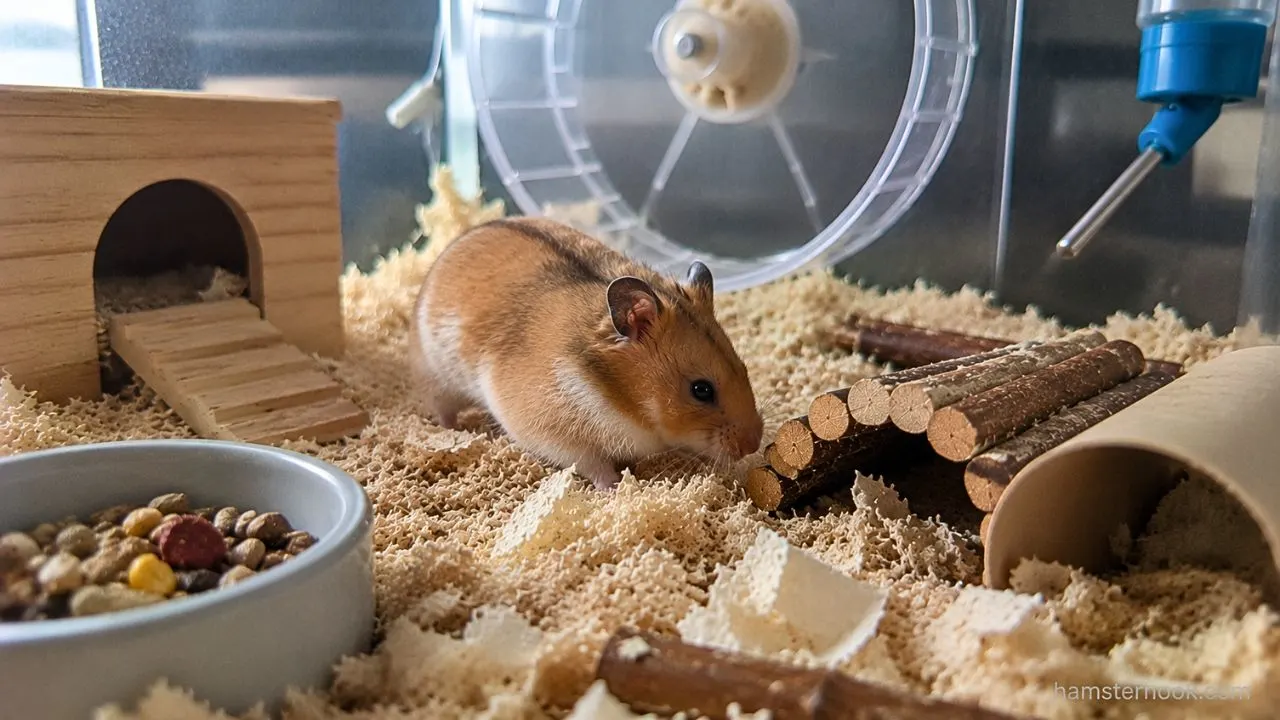
NC3Rs describes environmental enrichment as providing physical, mental, or social stimulation and opportunities for natural behaviors and cognitive challenges. For hamsters, suitable enrichment can include nesting material, shelters, tunnels, gnawing materials, and opportunities to forage.
For practical ways to provide this kind of environment, see Hamster Cage Enrichment: 10 Safe Ideas for Boredom & Natural Behavior.
You can make everyday enrichment more mentally engaging without turning the enclosure into a complicated puzzle.
Try:
- Scatter-feeding appropriate food
- Providing safe tunnels and shelters
- Offering suitable nesting material
- Changing enrichment thoughtfully rather than constantly
- Giving opportunities to explore
- Using safe objects that encourage natural investigation
- Allowing the hamster to choose where it spends time
The goal isn’t to “make your hamster smarter.” The goal is to provide an environment in which it can perform normal behaviors and make choices.
Common Mistakes Owners Make About Hamster Memory
Assuming Every Behavior Is Proof of Recognition
If your hamster runs toward you, it may be responding to your presence, movement, scent, routine, or the expectation of food. Avoid assigning a human interpretation to every behavior.
For a broader explanation of how these behaviors can be interpreted, see Hamster Behavior Guide: Body Language, Habits & What They Mean.
Expecting a Fixed Memory Duration
There is no reliable rule saying hamsters remember something for exactly a particular number of days or weeks.
Waking a Hamster to Interact
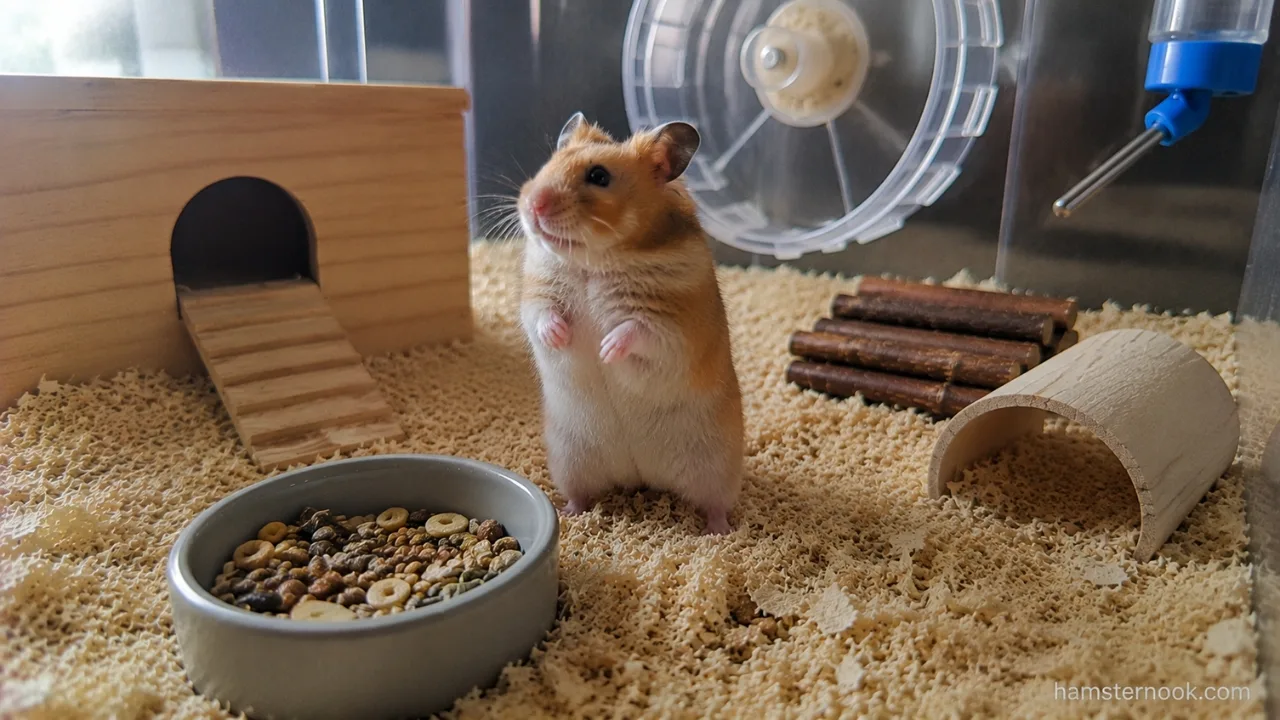
A hamster may seem less responsive when disturbed during its normal sleeping period. That does not automatically mean it has forgotten you or is less intelligent.
Constantly Changing the Environment
Enrichment is useful, but constant unnecessary disruption can interfere with familiarity and predictability. Provide variety while still allowing the hamster to maintain a secure, familiar home environment.
Using Punishment During Training
Punishment can create fear rather than teaching the behavior you want. Gentle, consistent interactions are more appropriate for building familiarity and cooperation.
What You Should Do
If you want to help your hamster learn and retain useful associations, focus on consistency rather than trying to test its memory.
Keep these habits:
- Approach calmly and predictably.
- Interact when your hamster is naturally awake.
- Use consistent sounds or cues when training.
- Reward desired behaviors appropriately.
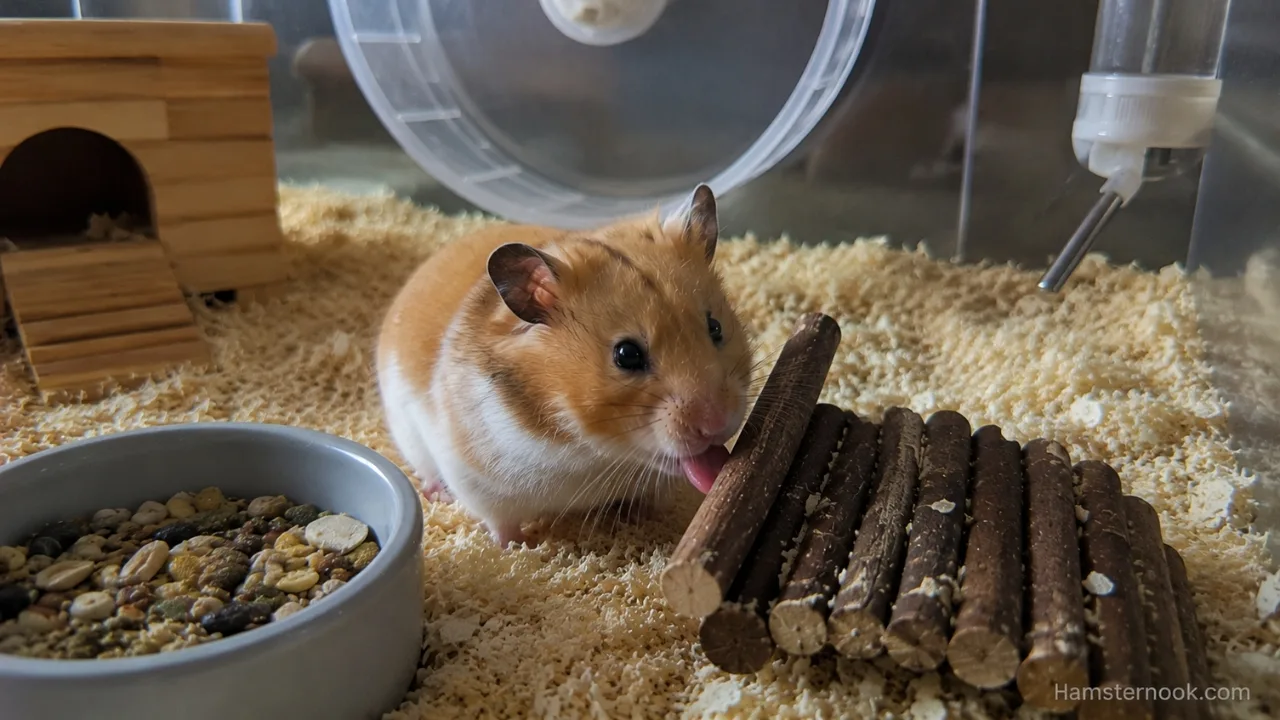
- Provide opportunities for natural foraging and exploration.
- Give your hamster adequate nesting material and hiding places.
- Avoid unnecessary disruption of its familiar environment.
- Let the hamster investigate new things at its own pace.
- Pay attention to changes in normal behavior rather than assuming what the change means.
A good enclosure should give your hamster both familiarity and opportunities to explore. That balance is more useful than repeatedly rearranging everything to “challenge” its brain.
When to Worry About a Change in Memory or Behavior
Memory itself is difficult for an owner to measure at home. If a hamster suddenly behaves very differently, it is better to look at the overall change rather than trying to diagnose “memory loss.”
A sudden change in behavior can have many possible explanations. Veterinary guidance notes that illness can be associated with changes such as reduced exploration, lethargy, weight loss, hunched posture, rough fur, or labored breathing.
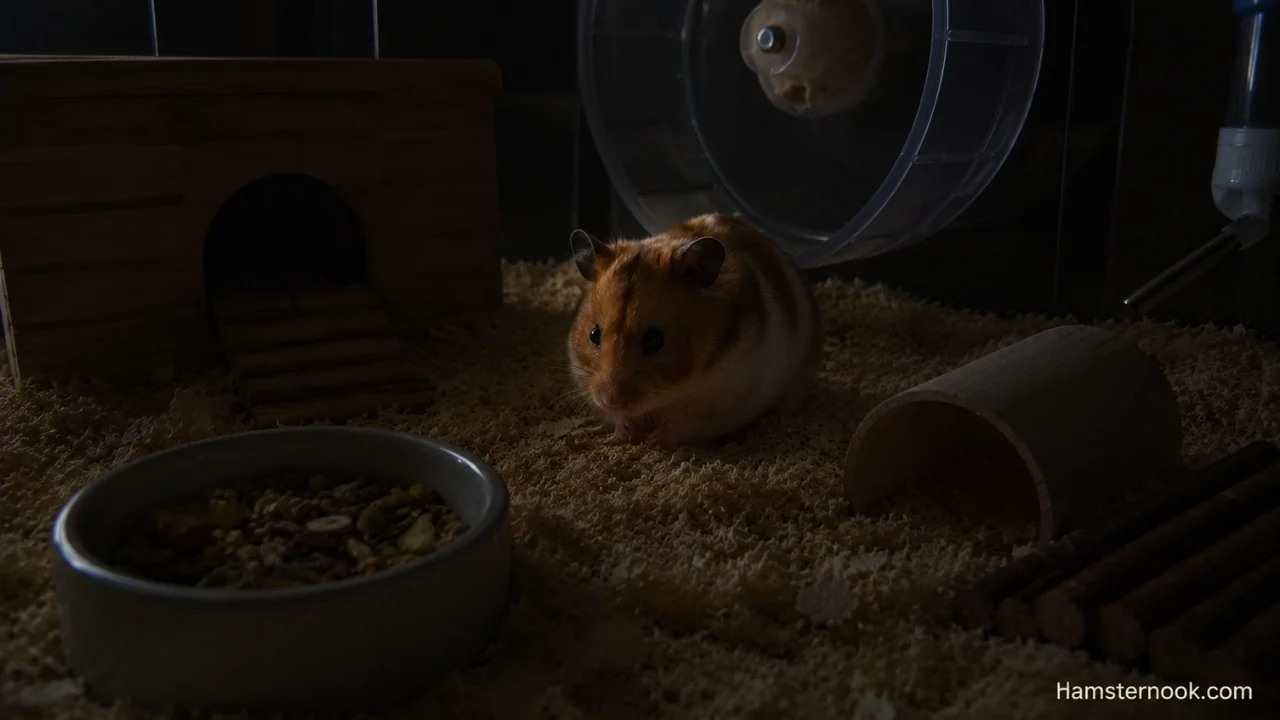
If your hamster shows a significant or persistent change in its normal behavior, particularly alongside physical signs of illness, contact a veterinarian rather than assuming the animal has simply forgotten something.
Final Thoughts
Hamsters do have memory, and their ability to learn is more impressive than their small size might suggest. They can use spatial information while foraging, learn simple behaviors, become accustomed to handling, and develop familiarity with their surroundings and routines.
There is no scientifically supported “hamster memory span” that applies to every situation. Instead, memory depends on what was learned, how meaningful the information was, the surrounding context, and other factors affecting learning and recall.
For a pet hamster, the most useful approach is not to test how long it can remember you. Give it a stable, enriching environment, interact gently and consistently, and allow it to learn at its own pace.
Frequently Asked Questions
Do hamsters have a short memory?
Hamsters are capable of learning and retaining information, so describing their memory as simply “short” is misleading. Research demonstrates spatial memory in Syrian hamsters, including memory of locations associated with food.
How long can a hamster remember its owner?
There is no reliable scientific timeframe showing that a hamster remembers an owner for a specific number of days, weeks, or months. A hamster can become accustomed to a person’s presence, handling, scent, and routines, but the exact duration of such familiarity cannot be reduced to one number.
Will my hamster remember me after a vacation?
It is possible that your hamster will still be familiar with you and your usual interactions after an absence, but there is no reliable evidence supporting a precise memory duration for individual owners. Give the hamster time to investigate you again rather than immediately picking it up.
Can hamsters recognize their names?
A hamster may learn an association between a repeated sound and an event such as food. However, this does not establish that it understands its name in the same conceptual way a human does.
Can hamsters remember where they hide food?
Yes. Research on Syrian hamsters has provided evidence that they use spatial memory during food foraging and can remember locations where food has already been found.
Do hamsters remember being scared?
Hamsters can learn associations between experiences and environmental cues, but it is not appropriate to assume that every fearful reaction proves a specific remembered event. If a hamster becomes nervous around handling, use calm, gradual interactions rather than forcing contact.
Can I train my hamster?
Yes. Hamsters can learn simple behaviors, and the RSPCA notes that they can be trained to come when food is presented and perform simple tricks.
Does enrichment improve a hamster’s intelligence?
Enrichment should not be viewed as an intelligence test. Its purpose is to provide opportunities for natural behaviors, exploration, choice, foraging, and cognitive challenges. These opportunities can improve the quality of the animal’s environment.
Does a hamster remember its cage?
A hamster can become familiar with its environment and use spatial information within it. Familiar smells, nesting material, shelters, and pathways may also be important. This is one reason welfare guidance recommends maintaining familiar nesting odors when appropriate during cleaning.
References
This guide is based on hamster behavior, learning, memory, sleep, husbandry, and welfare information from trusted animal welfare, veterinary, and scientific research sources, including:
- RSPCA – Keeping Hamsters as Pets – Information on hamster intelligence, learning, handling, behavior, and general welfare.
- RSPCA – Understanding Hamster Behaviour – Guidance on hamster activity, sleep, environmental needs, and natural behavior.
- NC3Rs – Housing and Husbandry: Hamster – Evidence-based guidance on hamster handling, nesting, enrichment, foraging, environmental familiarity, and welfare.
- MSD Veterinary Manual – Hamsters – Veterinary information covering hamster biology, husbandry, physical examination, and behavioral changes associated with illness.
- Jones, McGhee & Wilkie – Hamsters Use Spatial Memory in Foraging for Food to Hoard – Research examining spatial memory in Syrian golden hamsters.
- Sleep Deprivation and Daily Torpor Impair Object Recognition in Djungarian Hamsters – Research examining object recognition and spatial information retrieval in Djungarian hamsters.

Narayan Kumar is the founder and author of HamsterNook. He creates practical, research-based hamster care guides covering hamster behavior, nutrition, cage setup, enrichment, health, and everyday care. His goal is to help hamster owners make informed decisions and provide safer, healthier lives for their pets through clear, beginner-friendly information based on trusted animal care resources.