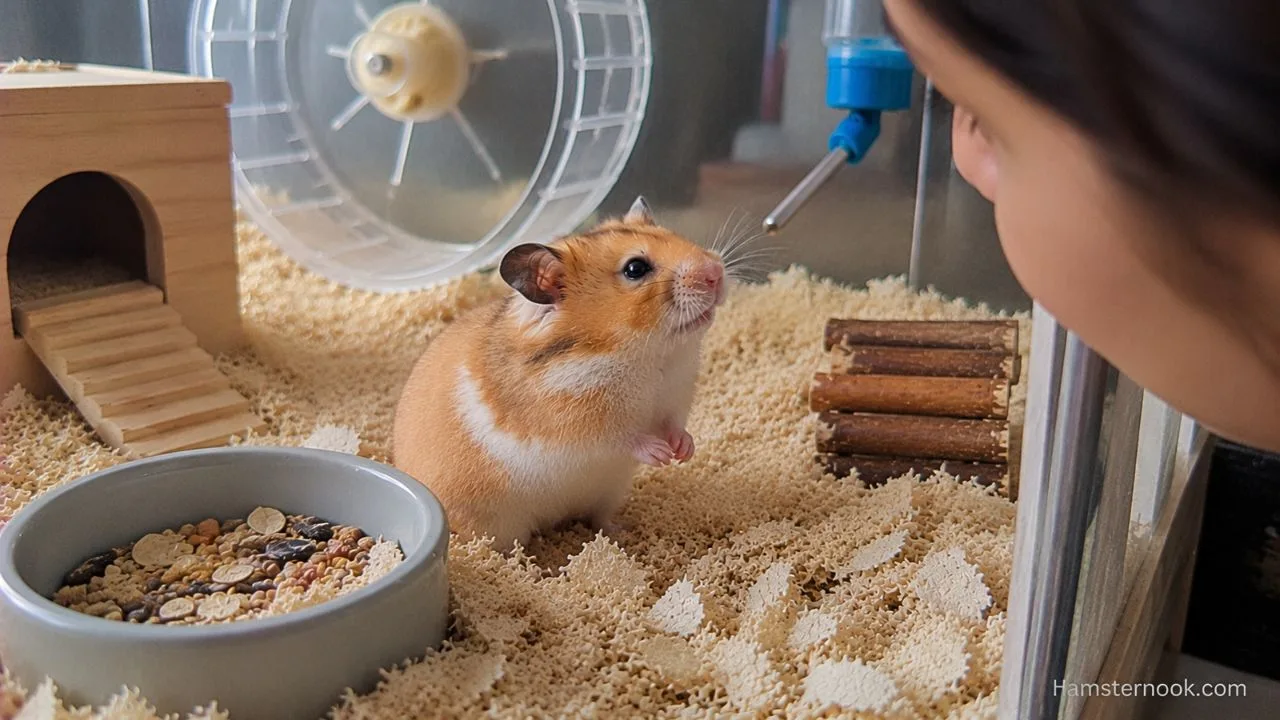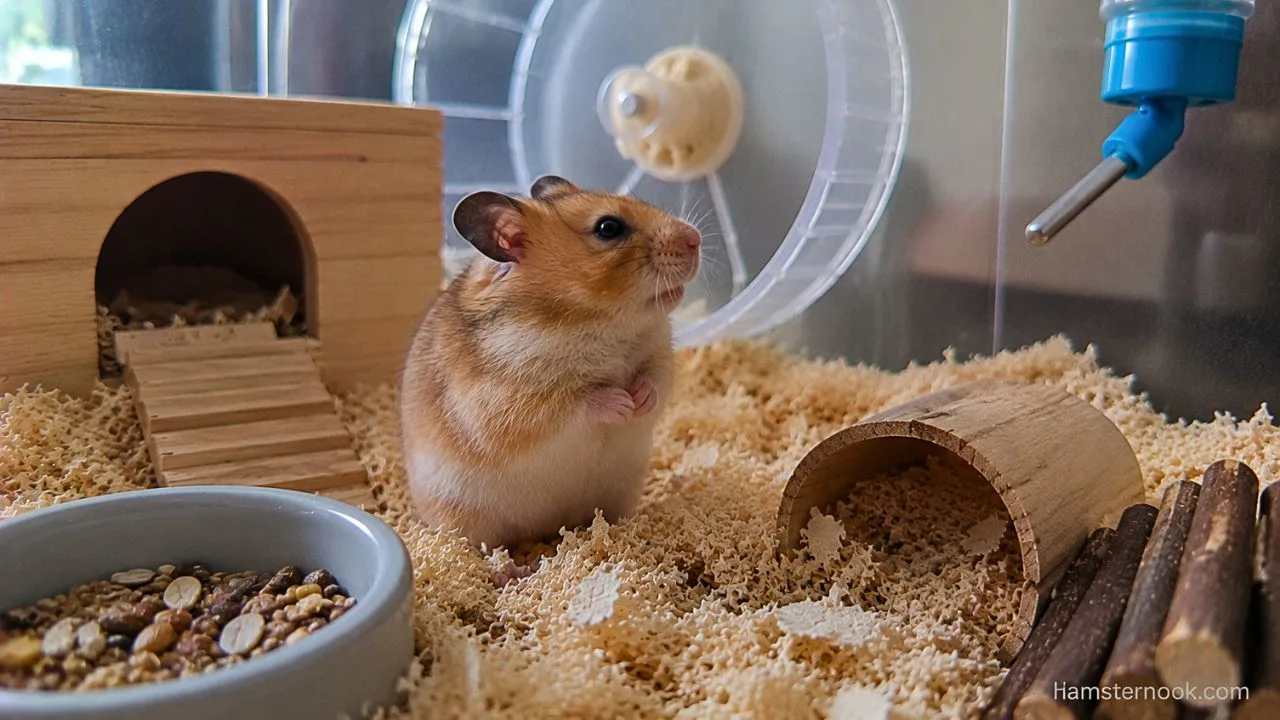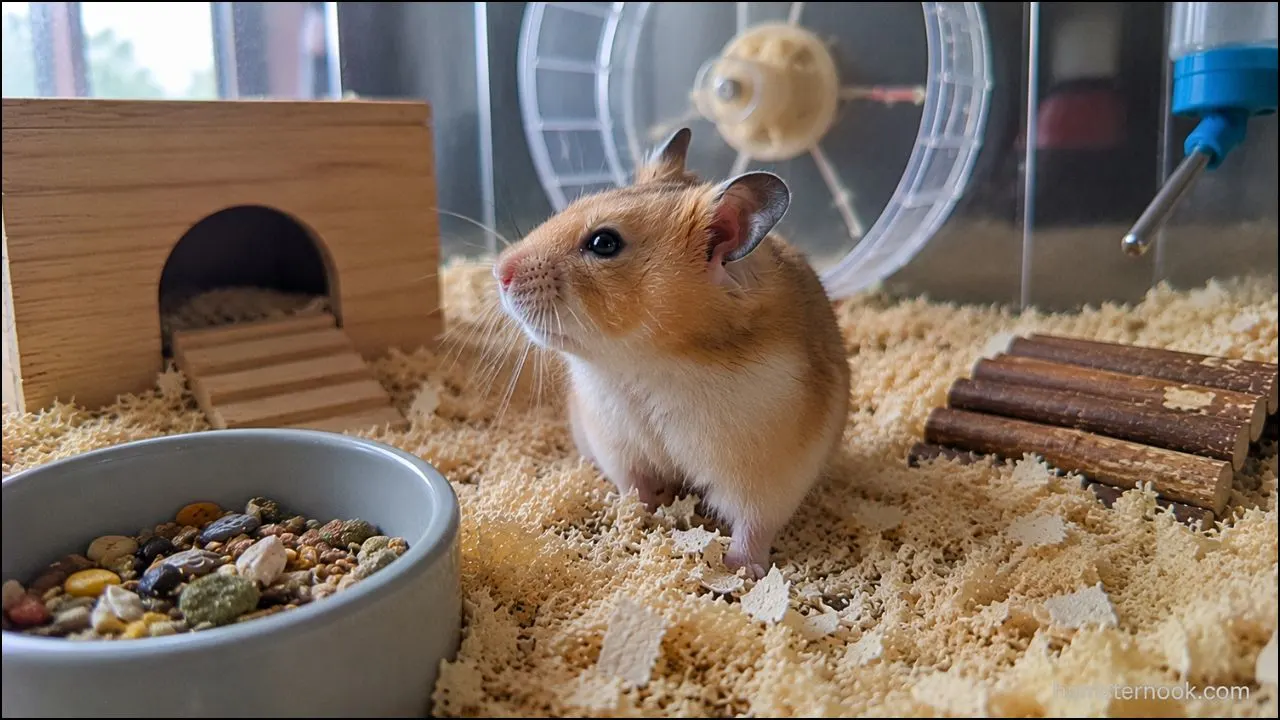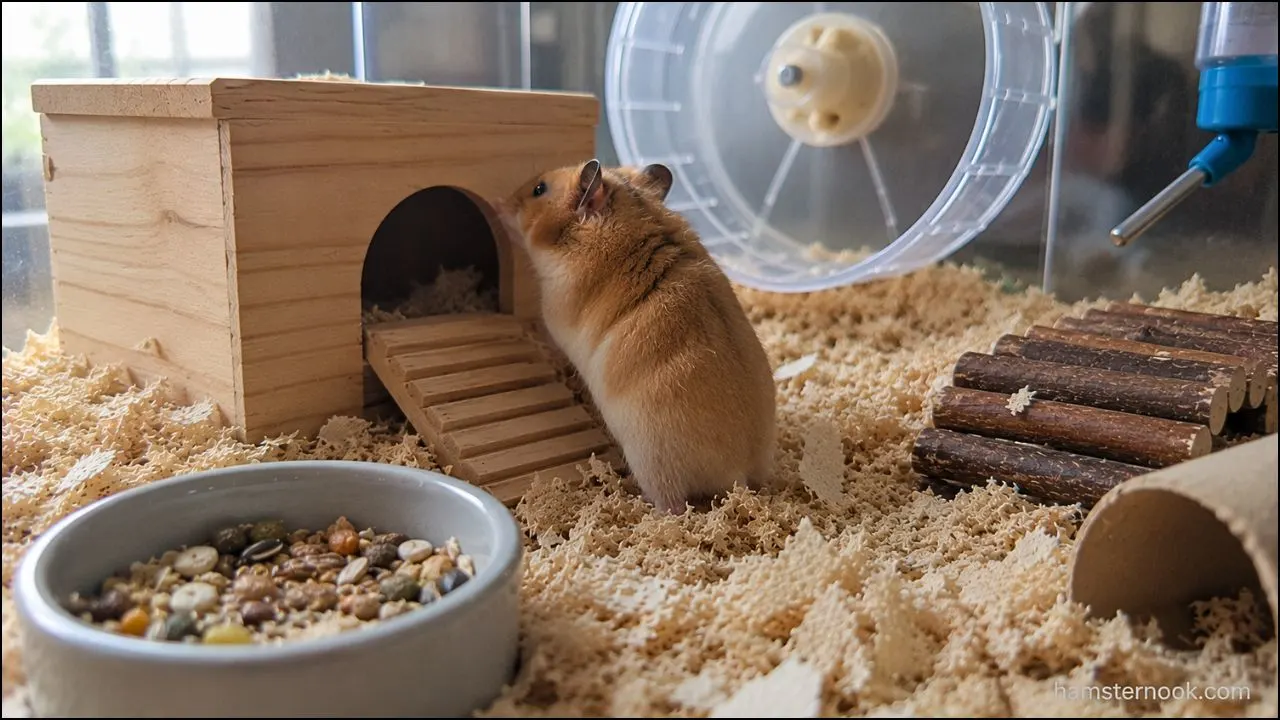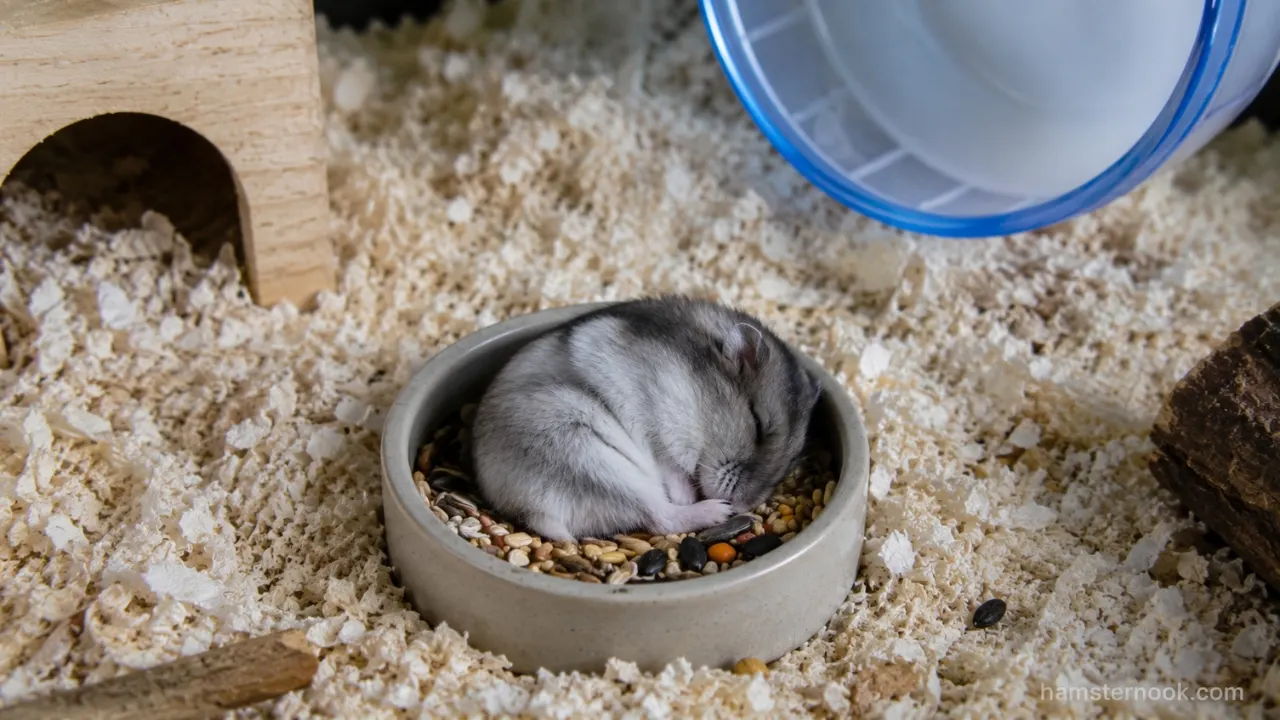
You spend time setting up a cozy hideout, adding soft bedding, and creating a comfortable sleeping area for your hamster. Then one day, you find your pet curled up inside its food bowl instead. It’s an unusual sight that leaves many owners wondering whether it’s normal, funny, or a sign that something is wrong.
In most cases, a hamster sleeping in its food bowl is not an emergency. However, the behavior can reveal important clues about your hamster’s comfort, cage setup, preferences, or overall environment. Knowing what usually causes this behavior makes it easier to tell the difference between a harmless habit and a cage setup issue that needs attention.
Let’s look at the most common reasons hamsters choose their food bowl as a sleeping spot and when owners should pay closer attention.
Is It Normal for a Hamster to Sleep in Its Food Bowl?
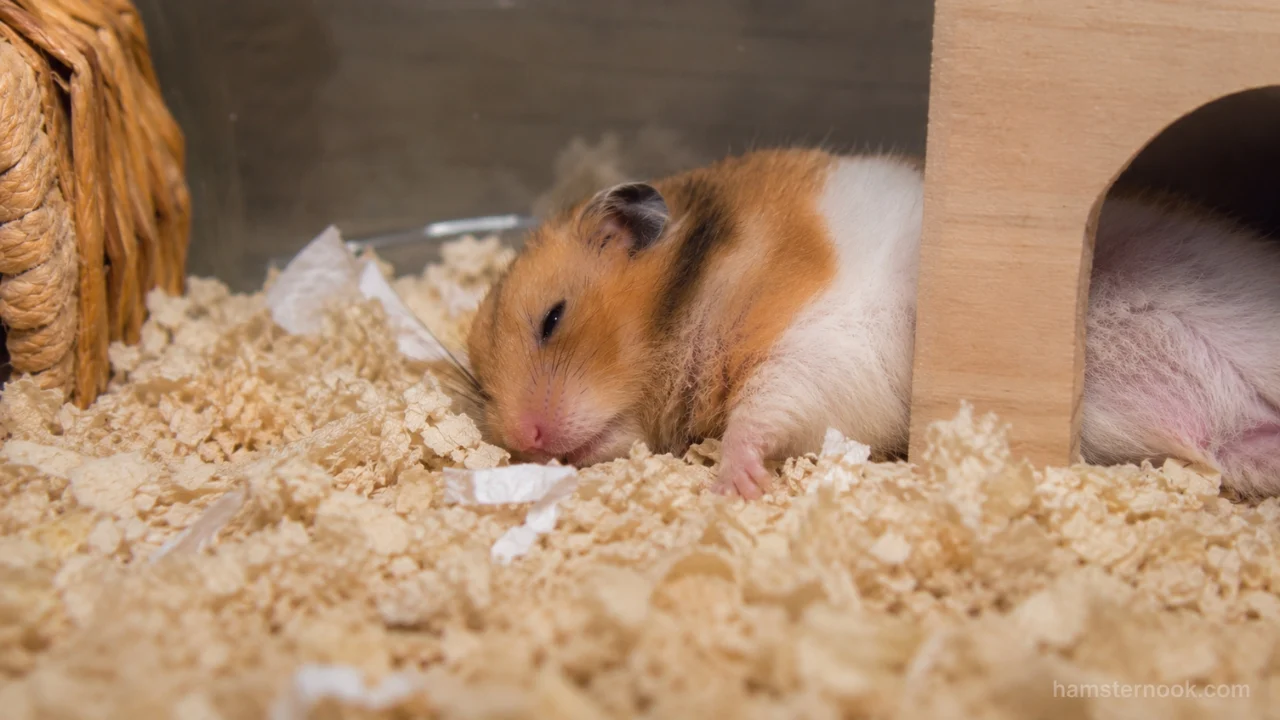
While the behavior often looks unusual, many hamster owners notice it at least once. In most cases, a hamster sleeping in its food bowl is simply choosing a spot that feels safe, comfortable, or convenient rather than showing signs of a serious problem.
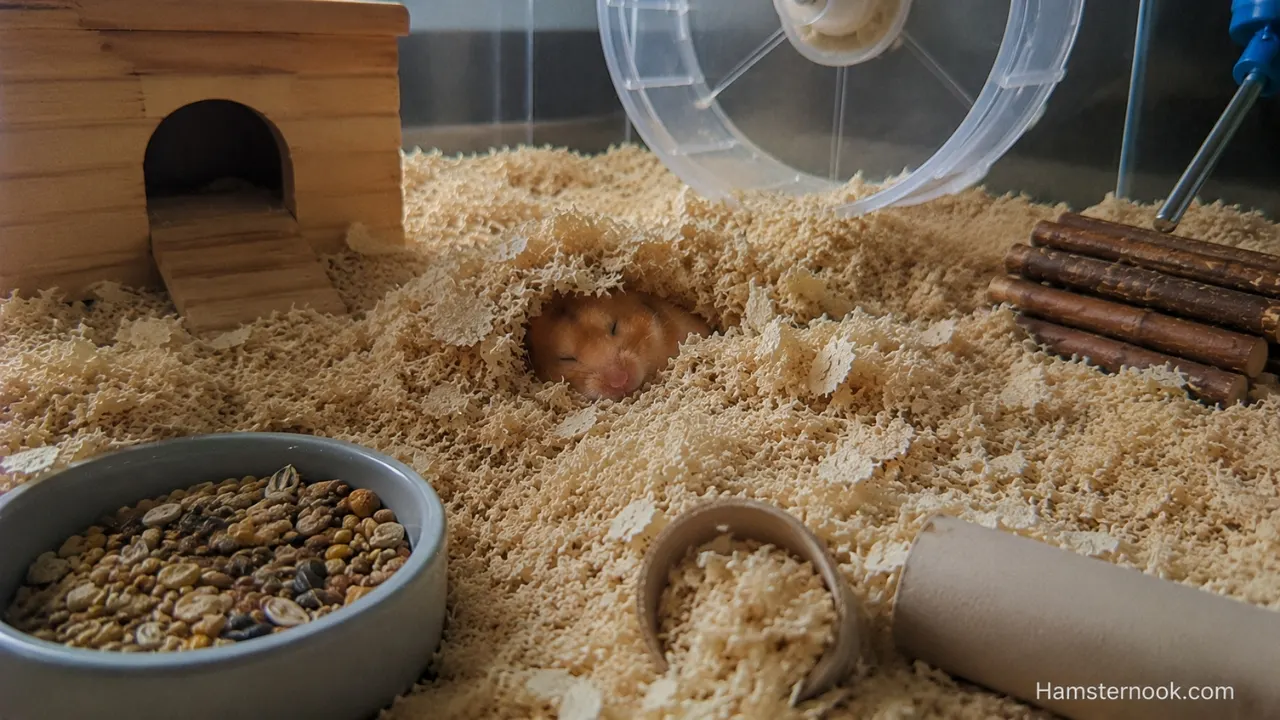
Yes, it can be completely normal.
Hamsters often make surprising decisions about where they sleep. Some prefer tunnels, others choose corners, and some may occasionally nap in a food bowl. As long as your hamster appears healthy, active, and comfortable, sleeping in the food bowl is often just a personal preference.
If the behavior appears together with other unusual changes, it’s worth taking a closer look at what might have triggered it.
Quick Overview: What Your Hamster May Be Trying to Tell You
| Possible Reason | Common Signs | Cause for Concern? |
|---|---|---|
| Food Bowl Feels Safe | Relaxed sleeping posture | Usually No |
| Hideout Is Uncomfortable | Avoiding sleeping house | Sometimes |
| Temperature Issues | Seeking cooler or warmer spots | Depends |
| Territory Preference | Hoarding food nearby | Usually No |
| Bedding Problems | Sleeping away from nest | Sometimes |
| Cage Stress | Frequent sleeping location changes | Possible |
| Health Issues | Lethargy or behavior changes | Yes |
Reason #1: The Food Bowl Feels Safe and Secure
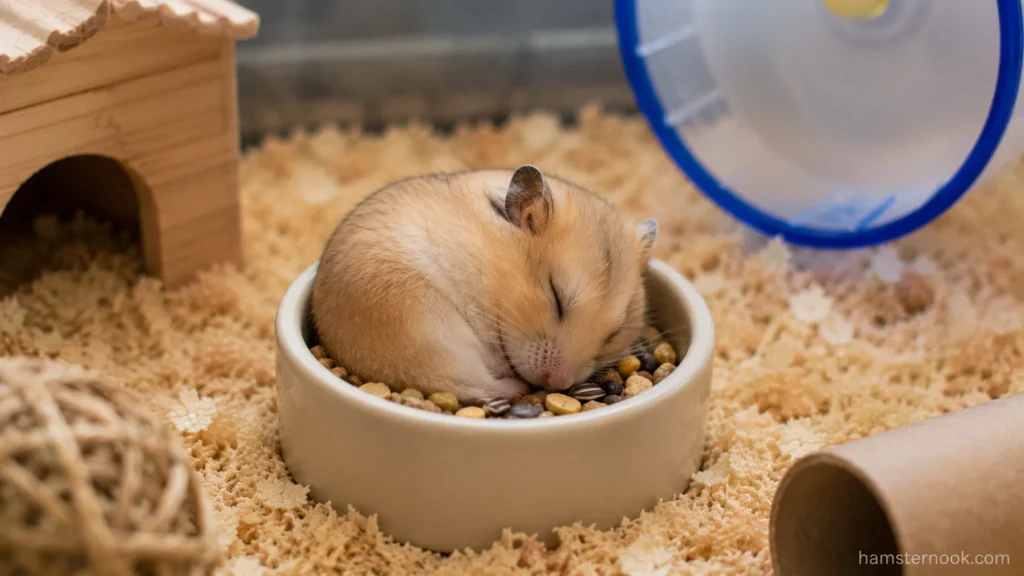
Like their wild counterparts, pet hamsters instinctively look for sheltered places where they feel hidden from potential threats and can rest without disturbance.
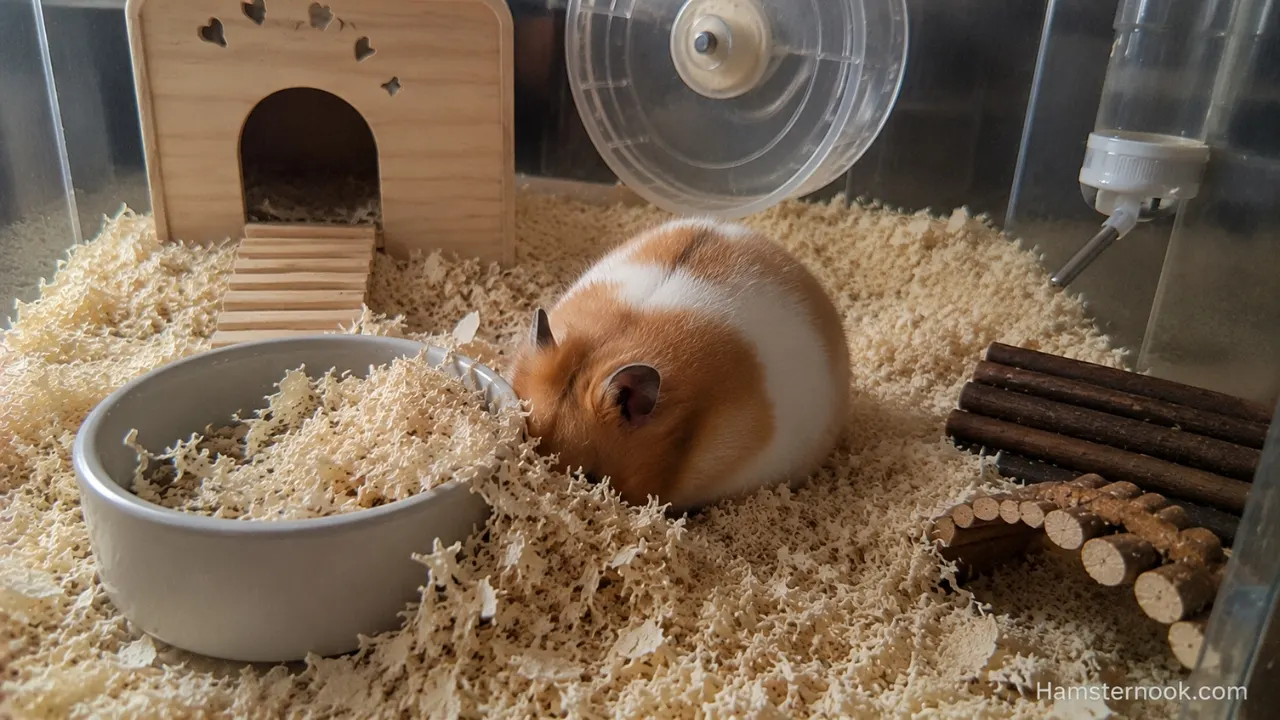
Some food bowls, especially ceramic or deeper dishes, create a small sheltered space that makes a hamster feel secure. If the bowl sits in a quiet corner, it may simply become your hamster’s preferred sleeping area.
This is especially common in:
- Young hamsters
- Newly adopted hamsters
- Naturally cautious individuals
If your hamster seems relaxed and healthy, this behavior is usually harmless.
Reason #2: The Hideout May Not Be Comfortable
A hamster that ignores its sleeping house could be telling you that the hideout isn’t meeting its needs.
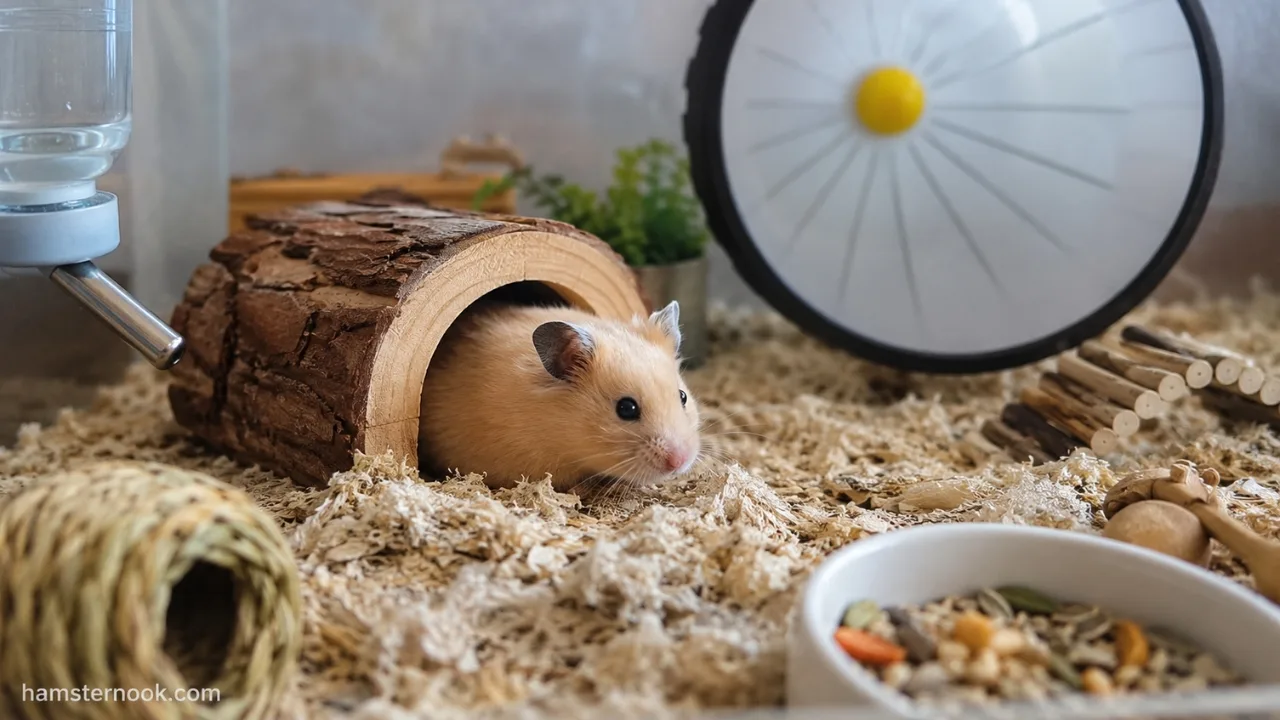
Several factors can make a hideout less appealing:
| Hideout Problem | Possible Effect |
|---|---|
| Too Small | Feels cramped |
| Poor Ventilation | Becomes stuffy |
| Bright Interior | Less secure feeling |
| Rough Surface | Reduced comfort |
| Frequent Disturbance | Hamster avoids area |
If your hamster consistently chooses the food bowl over its hideout, consider evaluating the sleeping area.
Reason #3: Your Hamster Likes Sleeping Near Stored Food
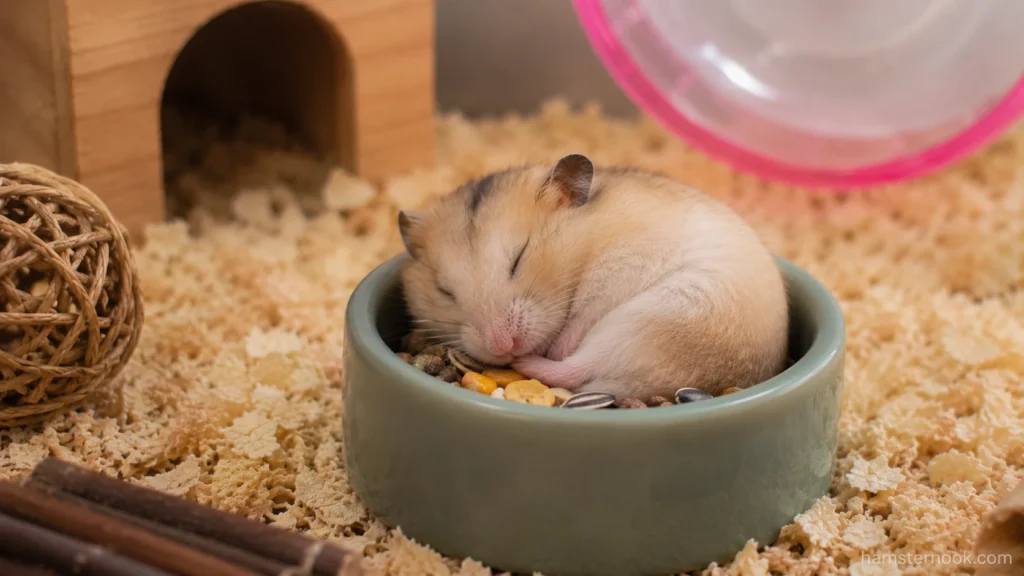
Wild hamsters often create food caches inside their burrows.
This natural instinct remains strong in pet hamsters. Some individuals feel comfortable sleeping close to food because it mimics natural behavior.
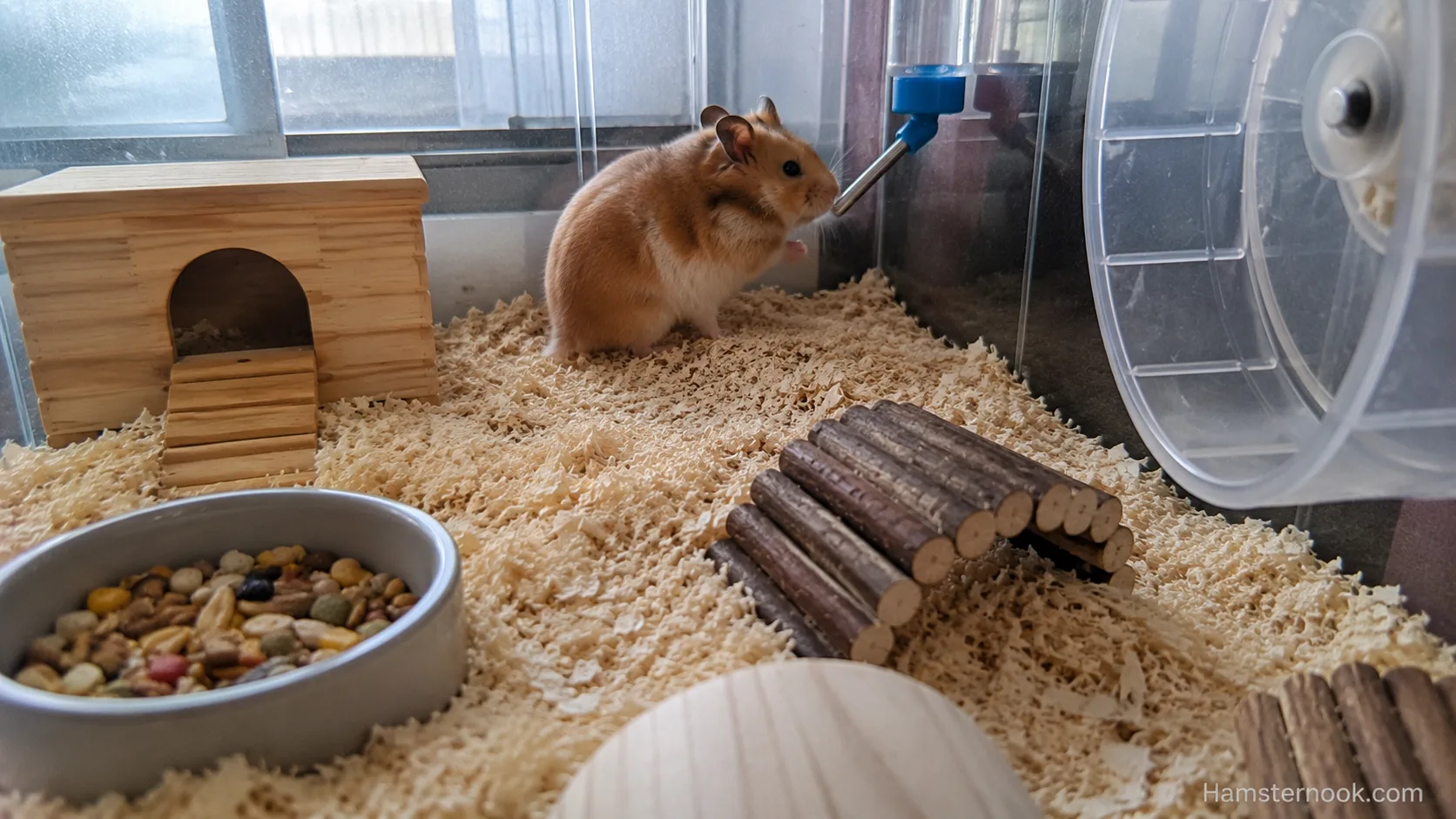
You may notice:
- Food stored inside the bowl
- Food hidden beneath bedding nearby
- Sleeping directly on top of food piles
This behavior is generally normal and reflects natural hoarding instincts commonly seen in hamsters that create food storage areas. Learn more in Why Do Hamsters Hide Food Everywhere?
Reason #4: The Cage Temperature May Not Be Ideal
Hamsters sometimes move sleeping locations to regulate comfort.
A ceramic food bowl may feel cooler during warm weather, while a bowl surrounded by bedding may feel warmer during cooler conditions.
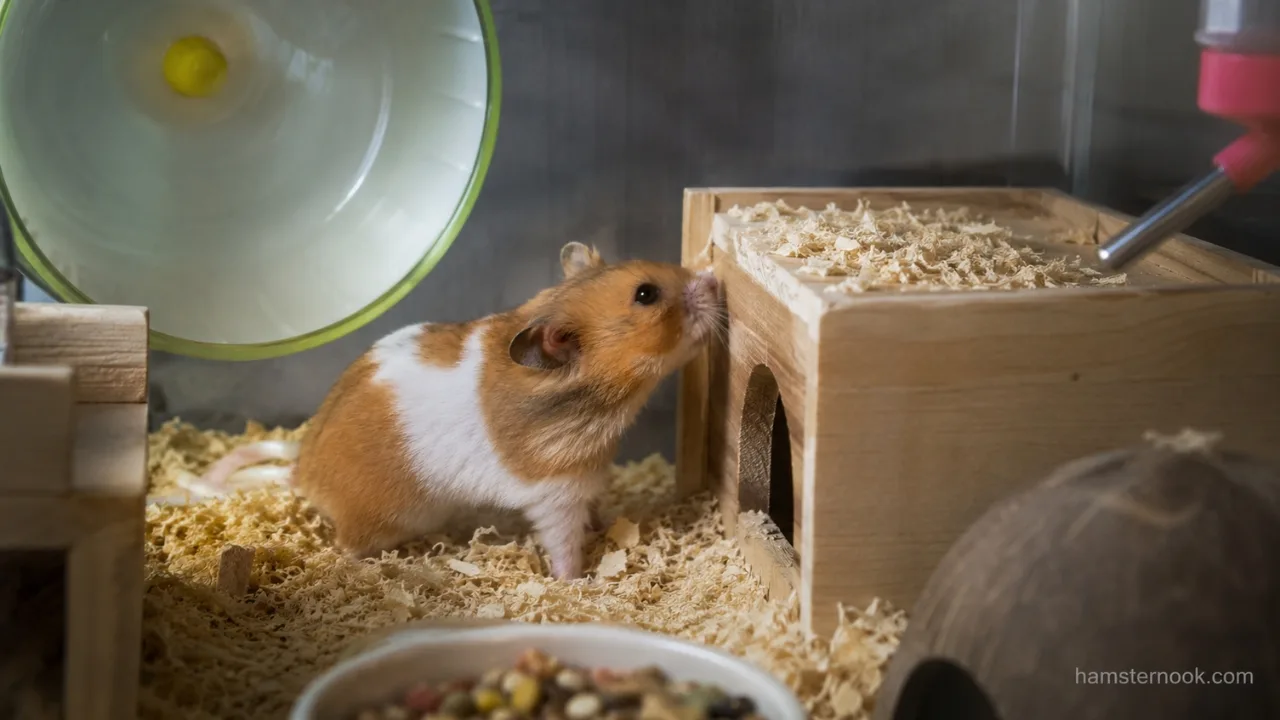
Watch for seasonal patterns.
| Environmental Condition | Possible Hamster Response |
|---|---|
| Warm Room | Sleeping in cooler surfaces |
| Cold Room | Nesting deeper in bedding |
| Direct Sunlight | Relocating to shaded areas |
| Drafty Cage Area | Choosing protected locations |
If temperature appears to influence the behavior, adjusting the room environment may help.
Reason #5: Bedding Depth May Be Insufficient
One of the most common cage setup problems is inadequate bedding depth.
If you’re unsure how much bedding is enough, see How Deep Should Hamster Bedding Be?
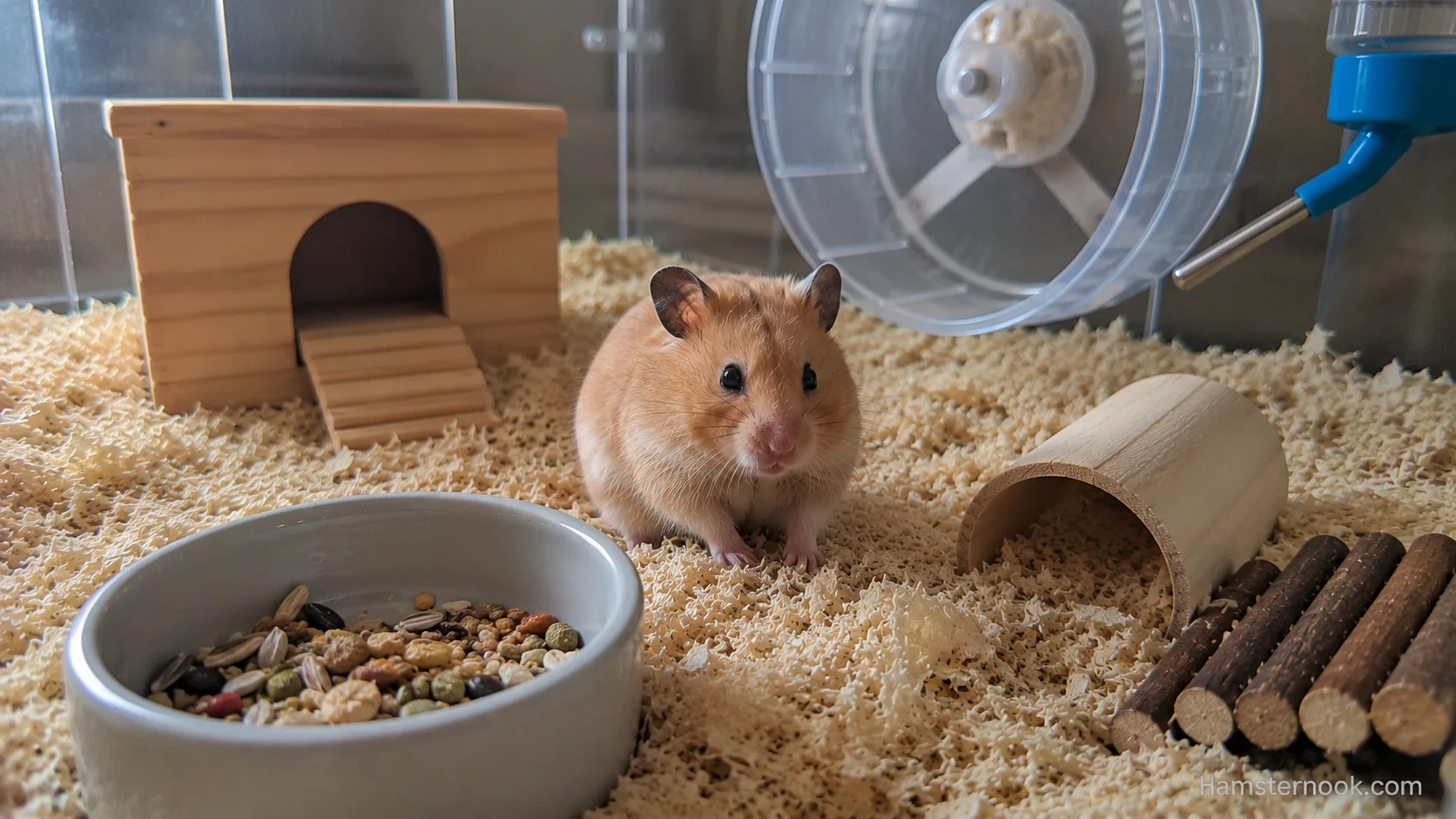
Hamsters naturally enjoy digging and creating underground nests. When bedding is too shallow, they may search for alternative places to sleep.
A hamster that cannot build a proper burrow may choose:
- Food bowls
- Sand baths
- Cage corners
- Under wheels
- Behind accessories
Most hamster species benefit from deep bedding that supports natural burrowing behavior.
Reason #6: Your Hamster Is Rearranging Its Territory
Many hamsters regularly rearrange how they use different areas of their enclosure, creating separate zones for sleeping, eating, hoarding food, and grooming.
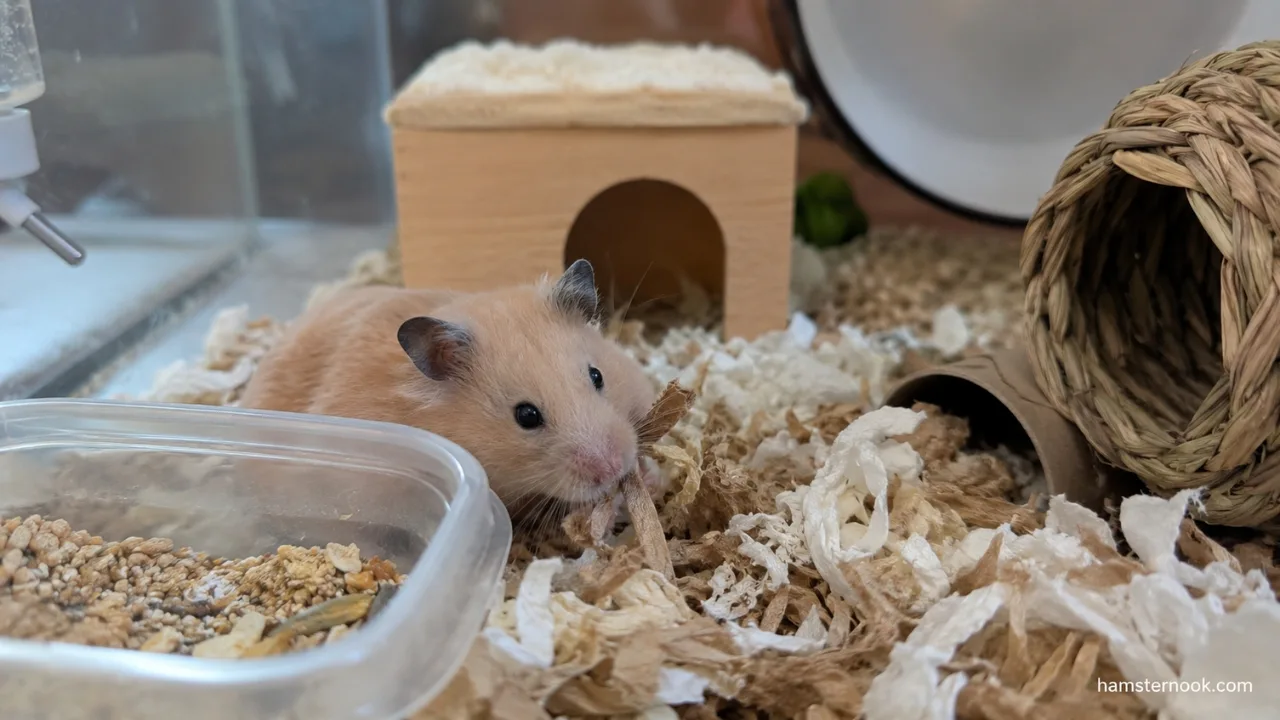
Many create separate zones for:
- Sleeping
- Eating
- Hoarding food
- Grooming
- Bathroom activities
Sometimes owners assume a hamster is sleeping in the food bowl permanently when it’s actually adjusting cage organization.
You may see your hamster alternate between multiple sleeping locations over several days.
This kind of rearranging is completely normal for many hamsters.
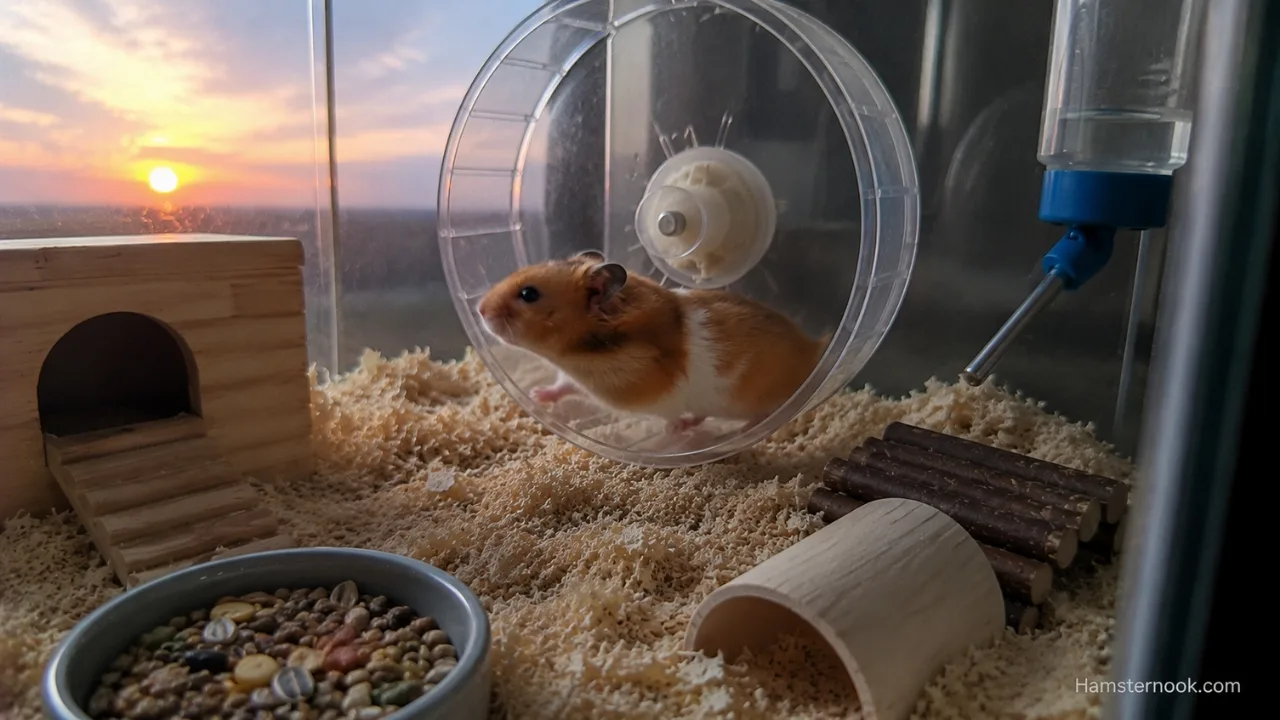
Similar territory-marking behaviors are also discussed in Why Does My Hamster Move Things Around Its Cage?
Reason #7: Stress or Health Changes Could Be Involved
Although sleeping in a food bowl is usually harmless, sudden changes in sleeping habits can occasionally signal a problem.
Pay attention if the behavior appears alongside:
- Reduced appetite
- Weight loss
- Lethargy
- Hunched posture
- Difficulty moving
- Changes in grooming
- Unusual sleeping patterns
A hamster that suddenly abandons its normal nest and begins sleeping in unusual places may be reacting to stress, discomfort, or illness.
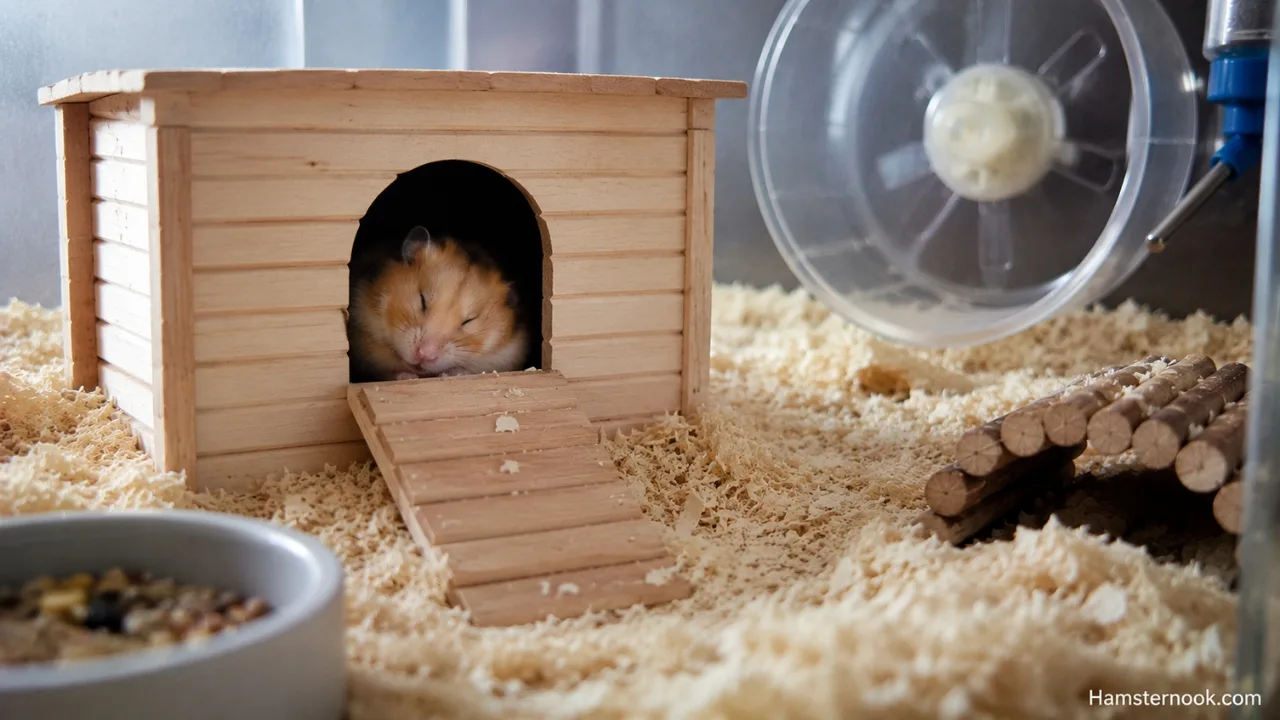
Owners noticing multiple unusual behaviors at once may also benefit from reviewing the common warning signs covered in 5 Warning Signs Your Hamster May Be Stressed.
In most cases, the change in behavior matters more than the place where your hamster chooses to sleep.
How to Tell Whether the Behavior Is Normal or a Problem
Instead of focusing on one behavior, look at your hamster’s overall condition and daily routine.
| Observation | Usually Normal | May Need Attention |
|---|---|---|
| Hamster sleeps in food bowl occasionally | Yes | No |
| Active during waking hours | Yes | No |
| Eating normally | Yes | No |
| Hoarding food nearby | Yes | No |
| Sudden behavior change | Sometimes | Yes |
| Weight loss present | No | Yes |
| Appears weak or lethargic | No | Yes |
| Avoids all nesting areas | Sometimes | Yes |
A healthy hamster that occasionally chooses the food bowl as a sleeping spot is rarely a cause for concern.
Should You Stop Your Hamster From Sleeping in Its Food Bowl?
Generally, no.
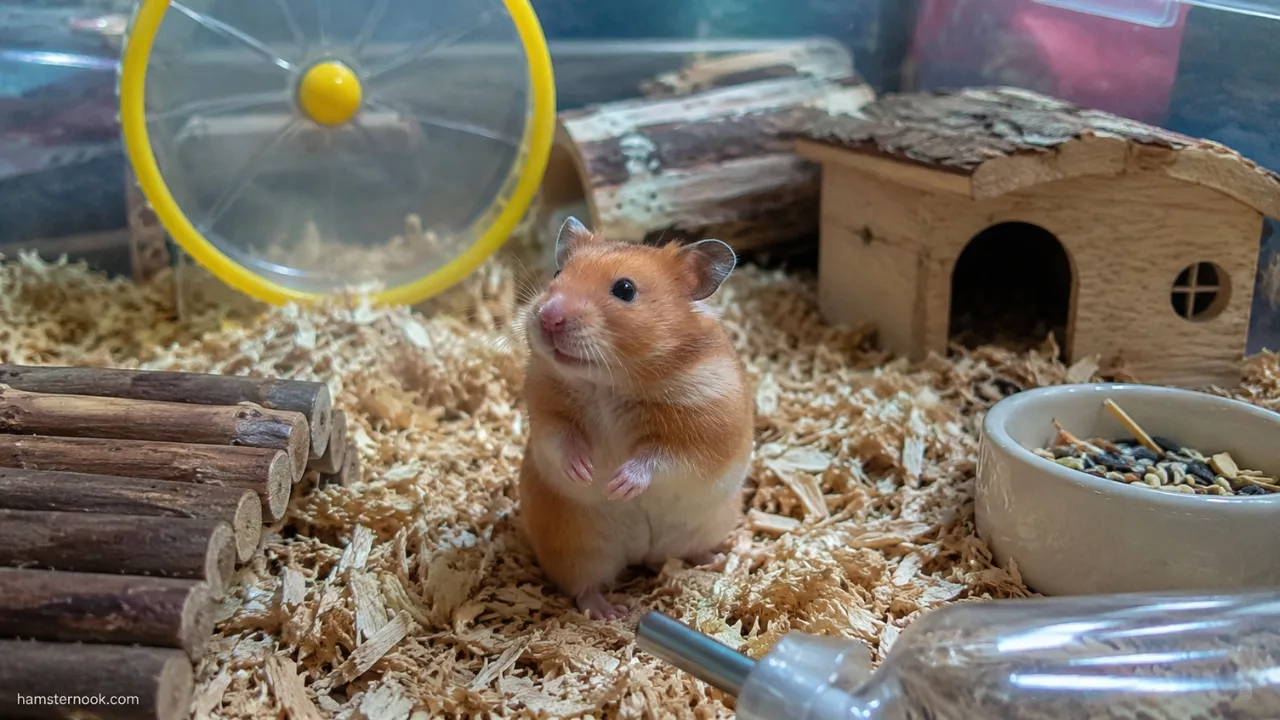
Forcing a hamster to sleep elsewhere often creates unnecessary stress. Instead of moving your hamster, focus on making sure its enclosure offers several comfortable sleeping options.
Provide:
- Deep bedding
- A secure hideout
- Quiet sleeping areas
- Proper cage size
- Stable temperatures
Many hamsters eventually switch sleeping locations on their own.
How to Encourage Better Nesting Habits
If you want your hamster to use a traditional nest more often, improving the cage setup usually works better than direct intervention.
Consider these improvements:
| Cage Upgrade | Potential Benefit |
|---|---|
| Deeper Bedding | Encourages burrowing |
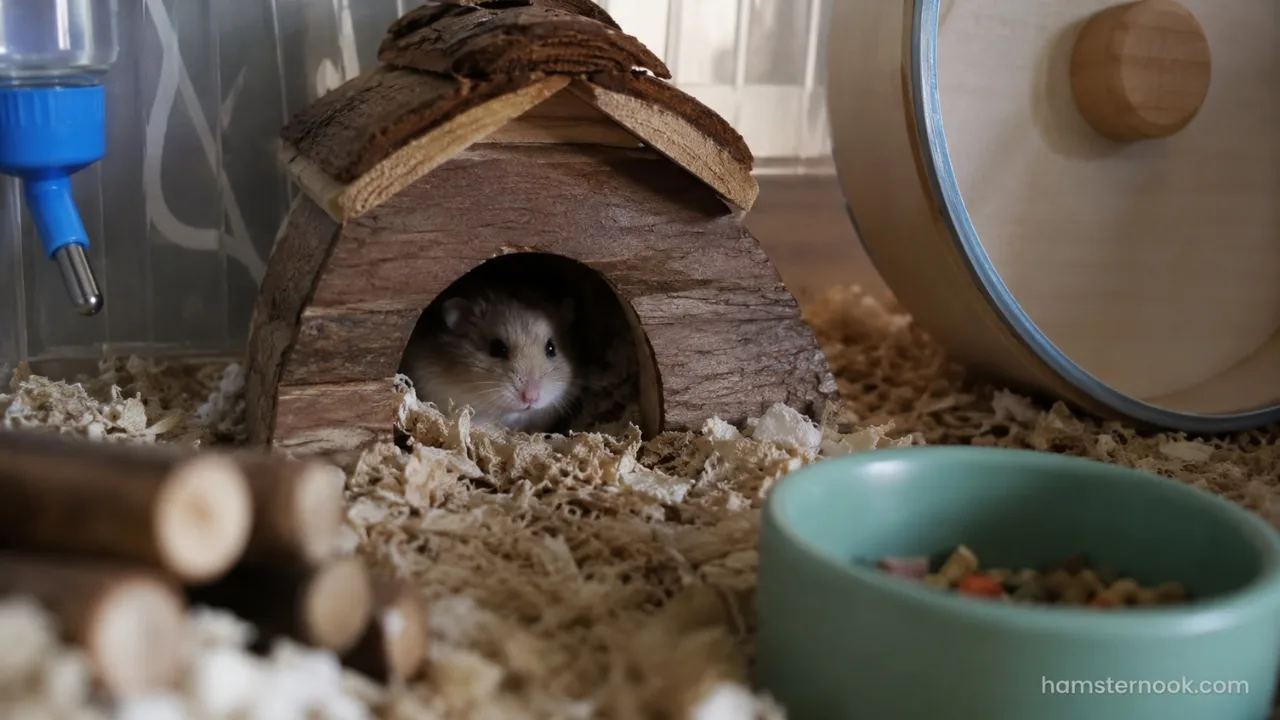
| Larger Hideout | Increases comfort |
| Multi-Chamber House | Mimics natural burrows |
| Additional Nesting Material | Supports nest building |
| Reduced Disturbance | Improves security |
These changes often encourage more natural sleeping behavior without forcing the issue.
Contact a veterinarian if sleeping in the food bowl is accompanied by weight loss, reduced eating, difficulty walking, breathing problems, persistent lethargy, or any sudden personality changes. These symptoms are more important than the sleeping location itself and may indicate an underlying health issue.
Final Thoughts
Finding your hamster asleep in its food bowl can seem strange at first, but it’s often a harmless and temporary behavior. Some hamsters simply find the bowl comfortable, secure, or conveniently located near their food stash.
The key is to look beyond the sleeping location itself. A healthy hamster that remains active, eats normally, and shows no signs of distress is usually just expressing individual preferences. However, if sleeping in the food bowl is accompanied by lethargy, appetite changes, or other unusual symptoms, it’s worth investigating further.
By providing deep bedding, a secure hideout, and a well-designed enclosure, you give your hamster plenty of comfortable options and allow natural behaviors to thrive.
Medical Disclaimer
The information provided in this article is for educational and informational purposes only and should not be considered veterinary advice, diagnosis, or treatment. If your hamster is showing signs of illness, injury, or unusual behavior, consult a qualified veterinarian as soon as possible.

Sources
- RSPCA – Hamster Care Guidance
- PDSA – Hamster Health Information
- Veterinary Partner – Small Animal Health Resources
- Blue Cross – Small Pet Care Resources
Frequently Asked Questions
My hamster suddenly started sleeping in its food bowl. Should I worry?
Not necessarily. Many hamsters occasionally change sleeping locations. However, if the change is accompanied by lethargy, weight loss, or reduced appetite, closer observation is recommended.
Why does my hamster sleep on top of its food?
Hamsters naturally hoard food and often feel secure near their food stores. This behavior can mimic natural nesting habits seen in the wild.
Can a food bowl replace a hamster hideout?
No. A food bowl should not be considered a substitute for a proper hideout. Hamsters still need a secure nesting area and deep bedding.
Does sleeping in a food bowl mean my hamster is stressed?
Not always. While stress can contribute to unusual sleeping habits, many healthy hamsters simply prefer certain locations within their enclosure.
Should I move the food bowl if my hamster sleeps in it?
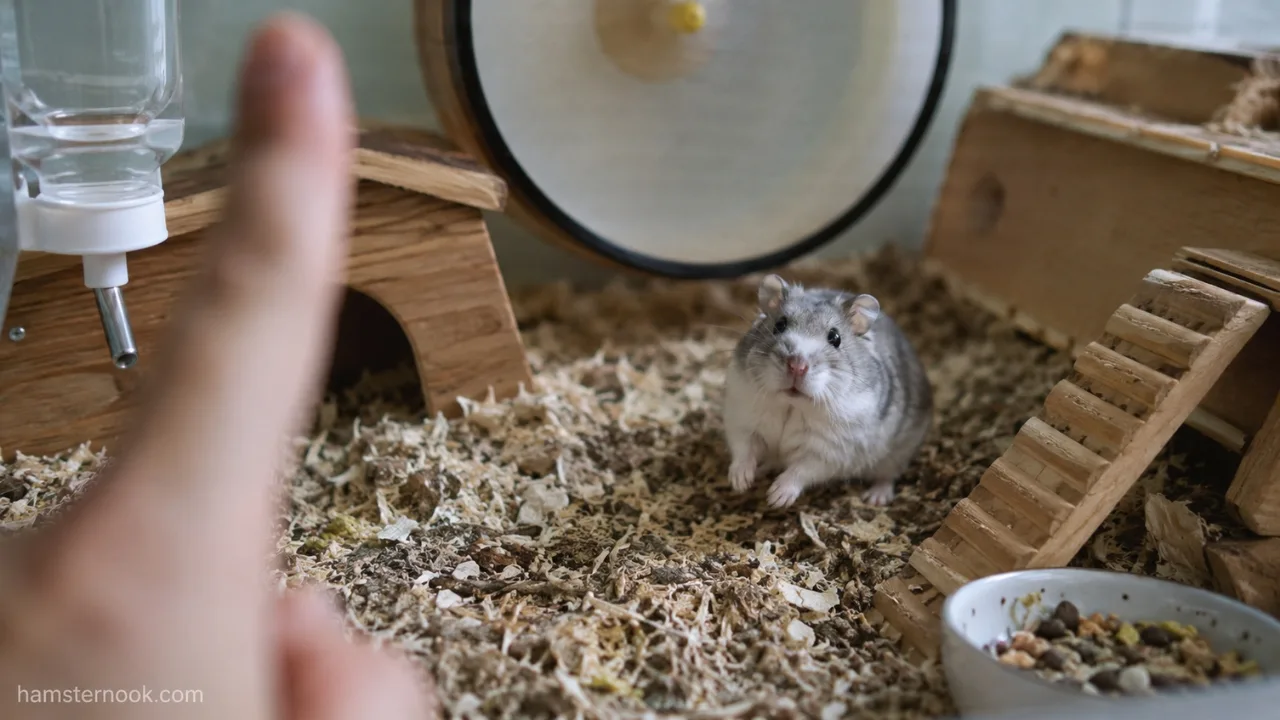
Usually no. If your hamster appears healthy and comfortable, there is generally no need to interfere.
For a detailed enclosure setup guide, see our Best Hamster Cage Setup for Beginners guide.
What type of sleeping area do hamsters prefer most?
Most hamsters prefer dark, enclosed spaces with plenty of nesting material where they can feel hidden and secure while resting.

Narayan Kumar is the founder and author of HamsterNook. He creates practical, research-based hamster care guides covering hamster behavior, nutrition, cage setup, enrichment, health, and everyday care. His goal is to help hamster owners make informed decisions and provide safer, healthier lives for their pets through clear, beginner-friendly information based on trusted animal care resources.