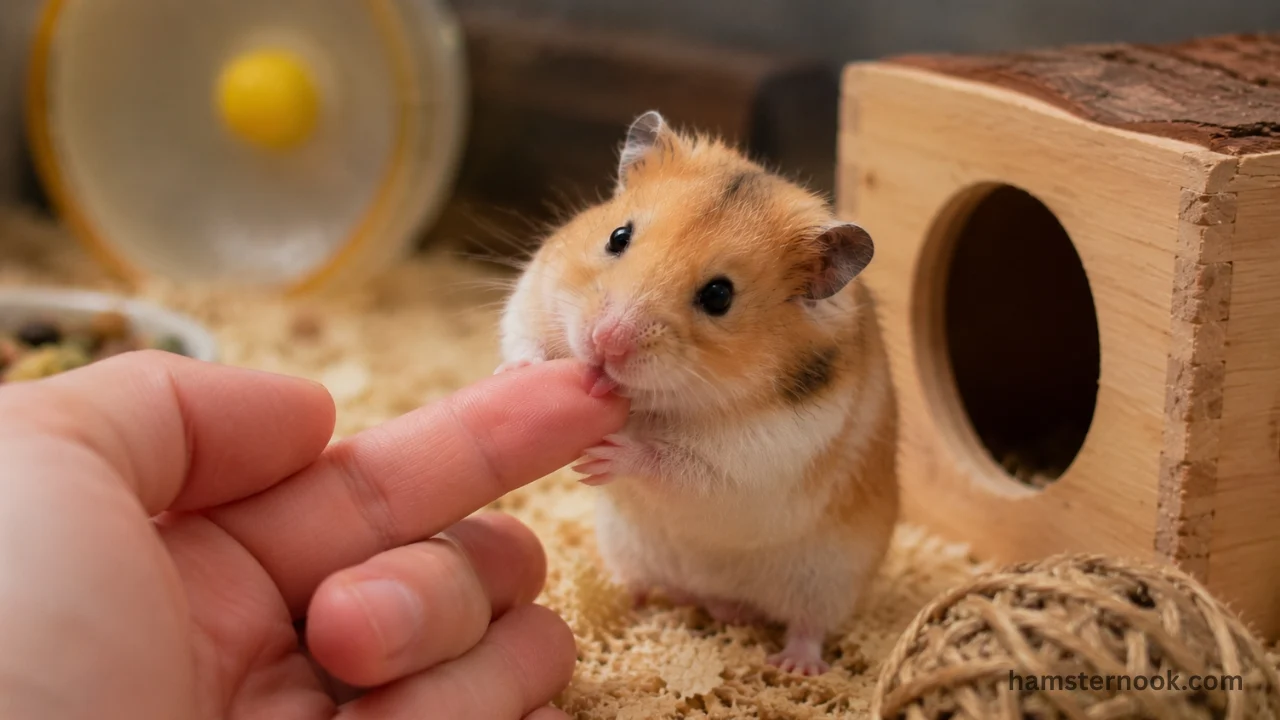
The first time a hamster licks your hand, it can be both surprising and confusing. Many owners immediately wonder whether their pet is showing affection, tasting their skin, or trying to communicate something important.
Hamster licking doesn’t always have a single explanation. The meaning often depends on what was happening right before the behavior started. In most cases, licking is completely normal and not a cause for concern. It may be related to curiosity, scent investigation, grooming behavior, salt on your skin, or growing trust between you and your hamster.
Knowing why your hamster licks can make it easier to understand what the behavior is actually telling you. While licking is often harmless, the context surrounding the behavior can provide valuable clues about what your hamster is trying to communicate.
Why Do Hamsters Lick People?
Hamsters rely heavily on their senses to understand the world around them. Unlike humans, they gather a significant amount of information through smell, taste, and touch.
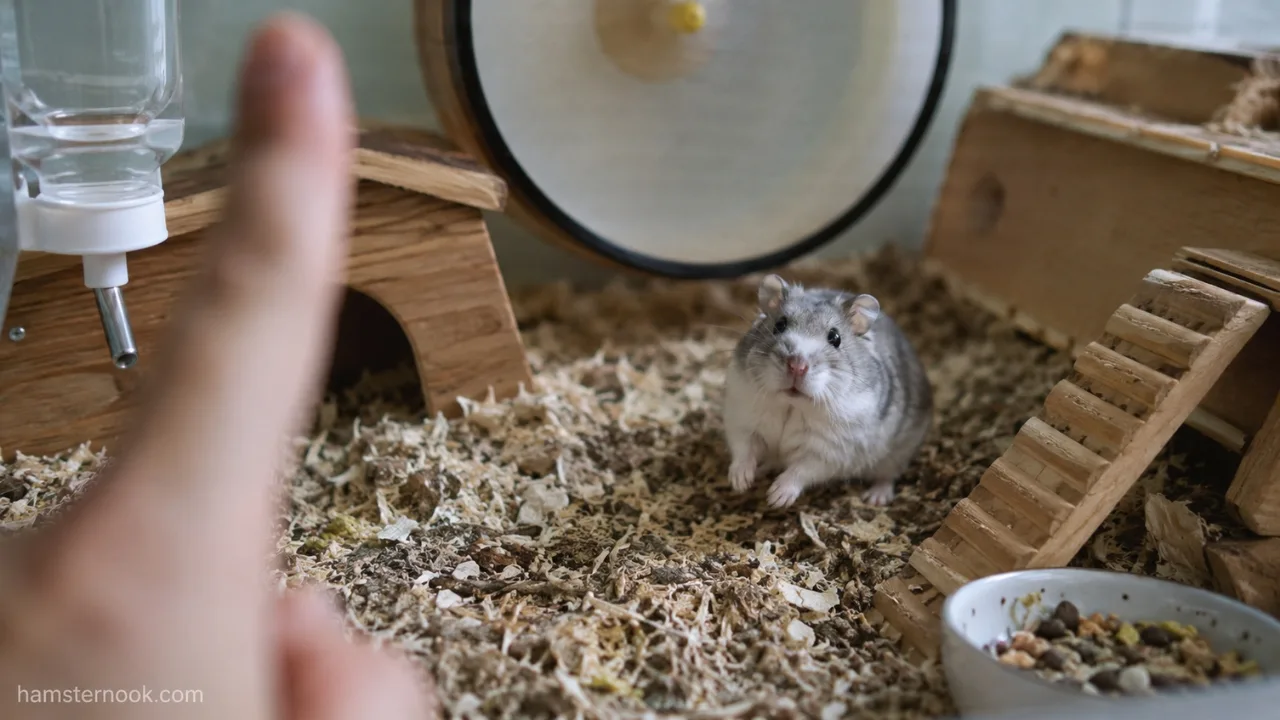
When a hamster licks your skin, it is often part of its natural way of investigating something unfamiliar or interesting.
A quick lick, repeated licking, and licking followed by nibbling can all mean different things. The reason can vary depending on your hamster’s personality, environment, and comfort level with handling.
Common Reasons Hamsters Lick Their Owners
The table below summarizes the most common explanations.
| Behavior | Possible Meaning | Usually Normal? |
|---|---|---|
| Gentle licking | Exploring scent or taste | Yes |
| Repeated licking | Salt on skin | Yes |
| Licking followed by grooming | Comfort and familiarity | Yes |
| Quick lick before nibbling | Investigating food smells | Yes |
| Excessive licking with stress signs | Anxiety or discomfort | Sometimes |
| Licking wounds or irritated skin | Attraction to scent or moisture | Should be discouraged |
In most situations, occasional licking is a normal hamster behavior.
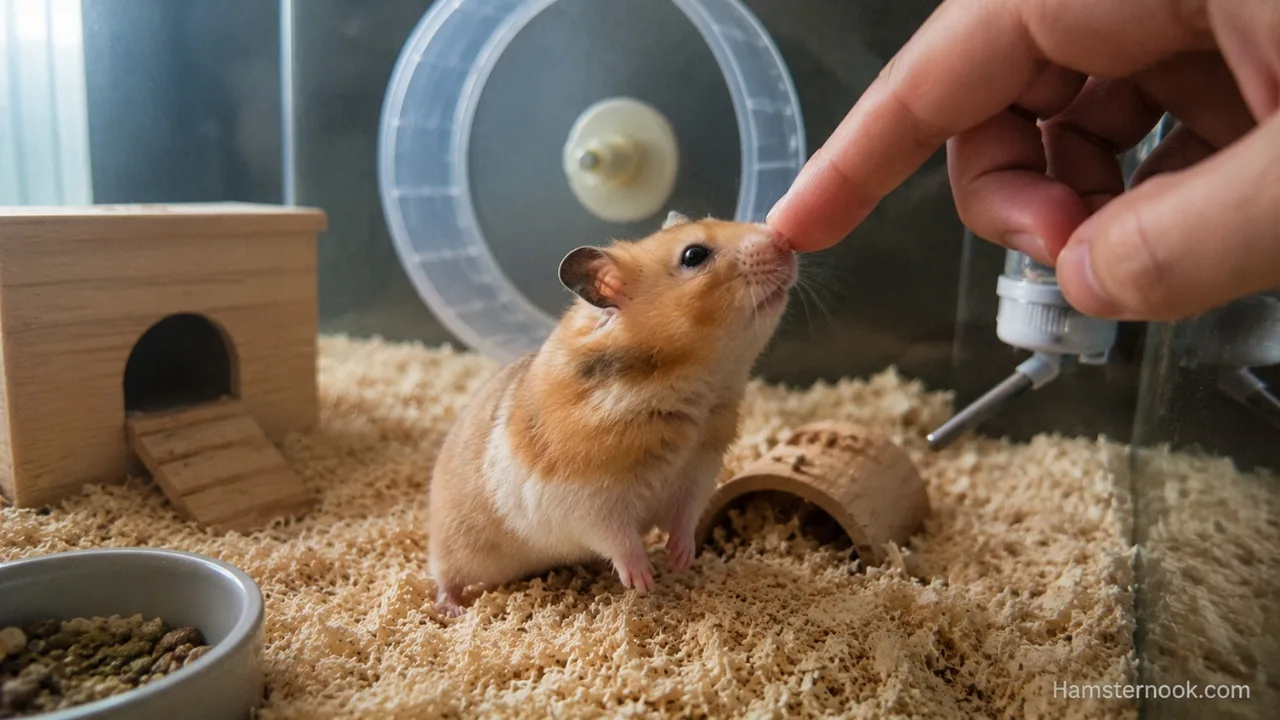
Your Hamster May Be Exploring Your Scent
In many cases, a hamster licks simply because it is curious about something new in its environment.
Hamsters have an excellent sense of smell and frequently investigate new scents in their environment. Your hands carry countless odors from food, household items, other pets, and daily activities.
A hamster may lick your skin while trying to gather additional information about those scents.
This type of licking is often accompanied by:
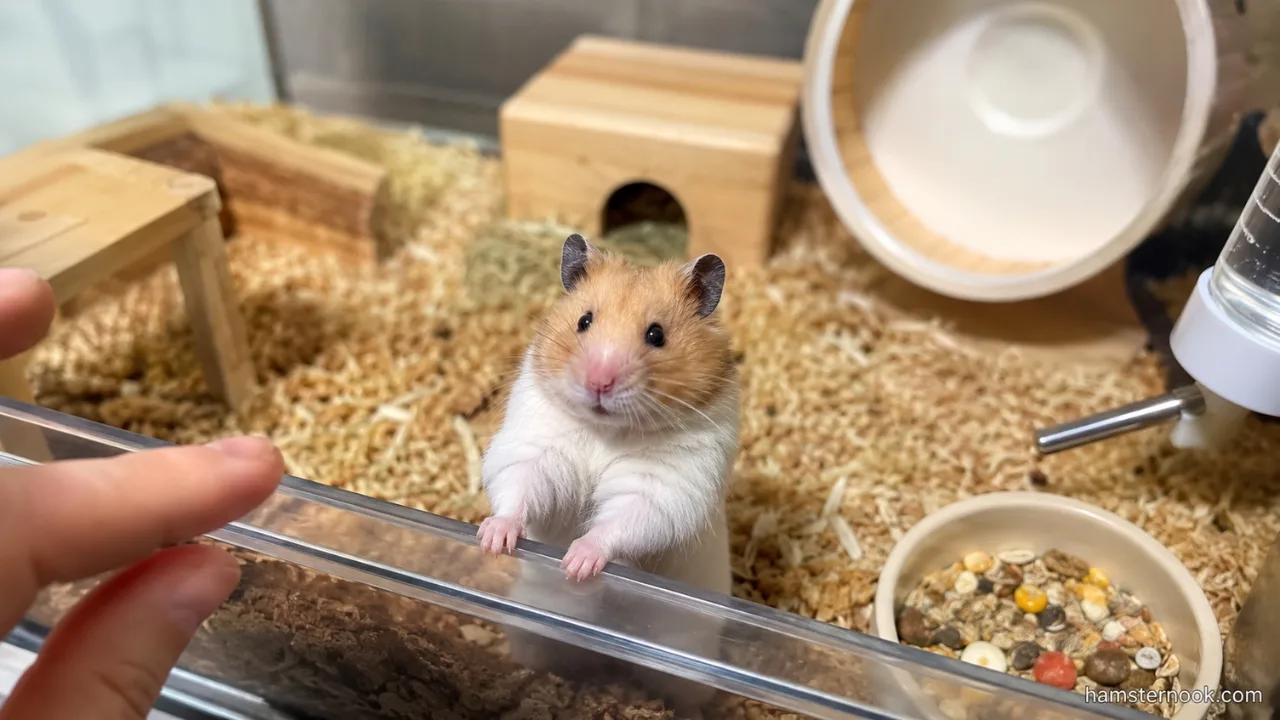
- Sniffing
- Gentle whisker movements
- Calm body language
- Slow exploration
If your hamster appears relaxed while licking, curiosity is usually the most likely explanation.
Hamsters often rely heavily on scent when recognizing familiar people, which is one reason some owners wonder Why Does My Hamster Ignore Me?
Salt on Your Skin Can Attract Hamsters
Human skin naturally contains small amounts of salt from sweat.
If you’ve recently applied hand cream, sunscreen, or scented lotion, wash your hands before handling your hamster. Many skincare products contain ingredients that aren’t meant to be licked by small pets.
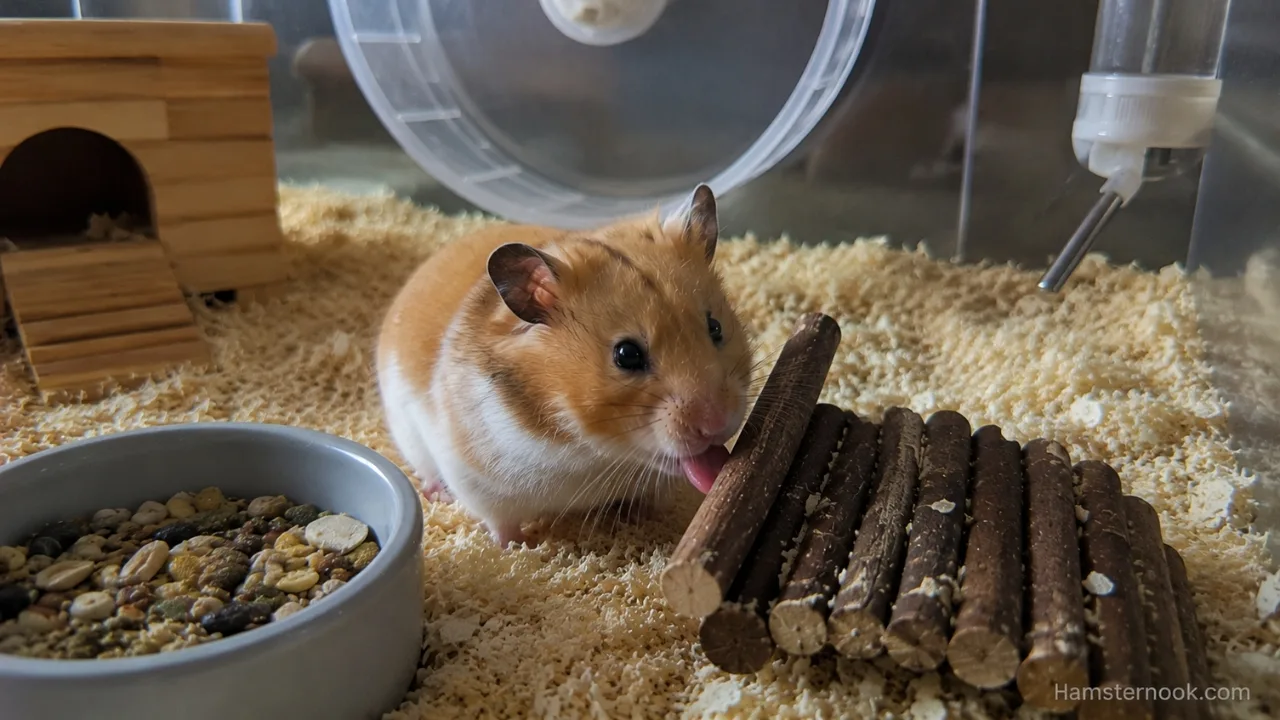
Many hamster owners notice that their pets are more likely to lick their fingers, palms, or wrists after physical activity or during warmer weather.
The hamster may simply be tasting the salt residue left on your skin.
This behavior is generally harmless as long as the licking remains occasional and your skin is clean and free from lotions, perfumes, or potentially harmful substances. If you have recently applied lotion, sunscreen, perfume, hand sanitizer, or another product to your hands, wash them thoroughly before allowing your hamster to lick your skin.
Licking Can Be Part of Social Grooming Behavior
In the animal world, grooming often serves social purposes.
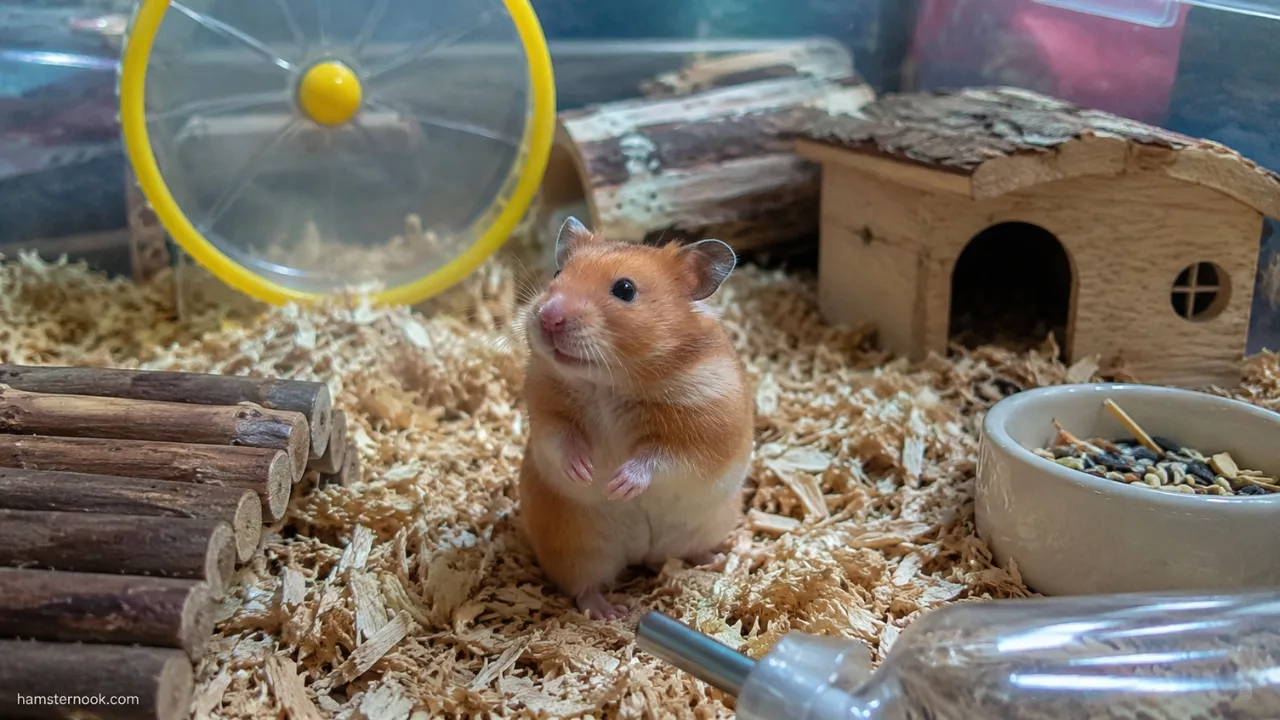
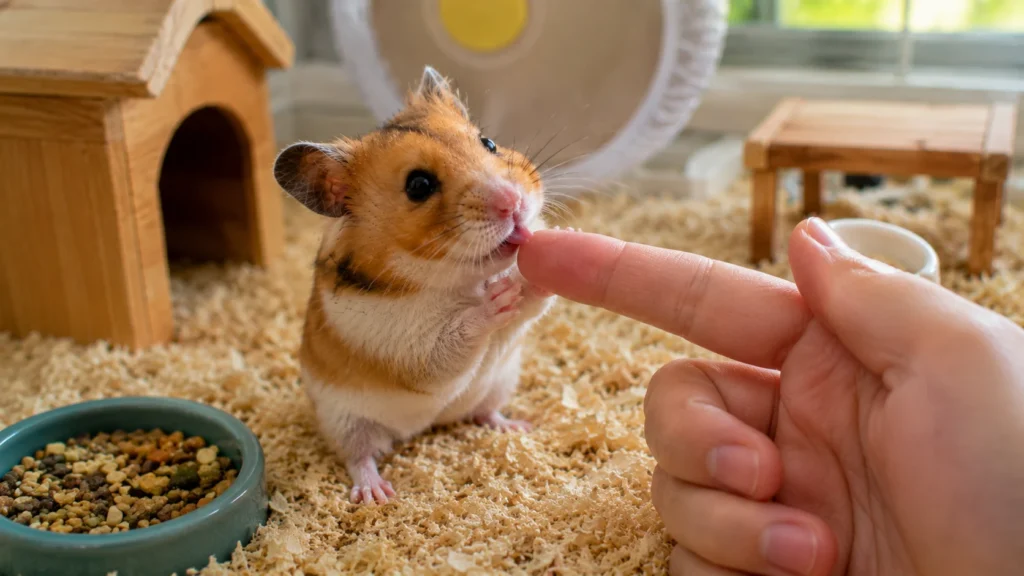
A hamster that feels comfortable around you may occasionally combine licking with other relaxed behaviors.
This is more likely to occur when:
- The hamster trusts you
- Handling sessions are calm
- The hamster feels secure
- There are no obvious signs of fear
While it should not automatically be interpreted as affection in the human sense, it can indicate that your hamster feels relatively relaxed in your presence.
Sometimes Your Hamster Thinks You Smell Like Food
A surprisingly common reason for licking is food residue.

If you recently handled fruits, vegetables, treats, seeds, or other foods, your hamster may detect those scents long after you think your hands are clean.
The hamster may:
- Sniff intensely
- Lick repeatedly
- Attempt gentle nibbles
This is why washing your hands before handling your hamster is always recommended.
Food smells on your hands can be especially tempting if your hamster is already interested in the snacks featured in our Healthy Treats for Hamsters guide.
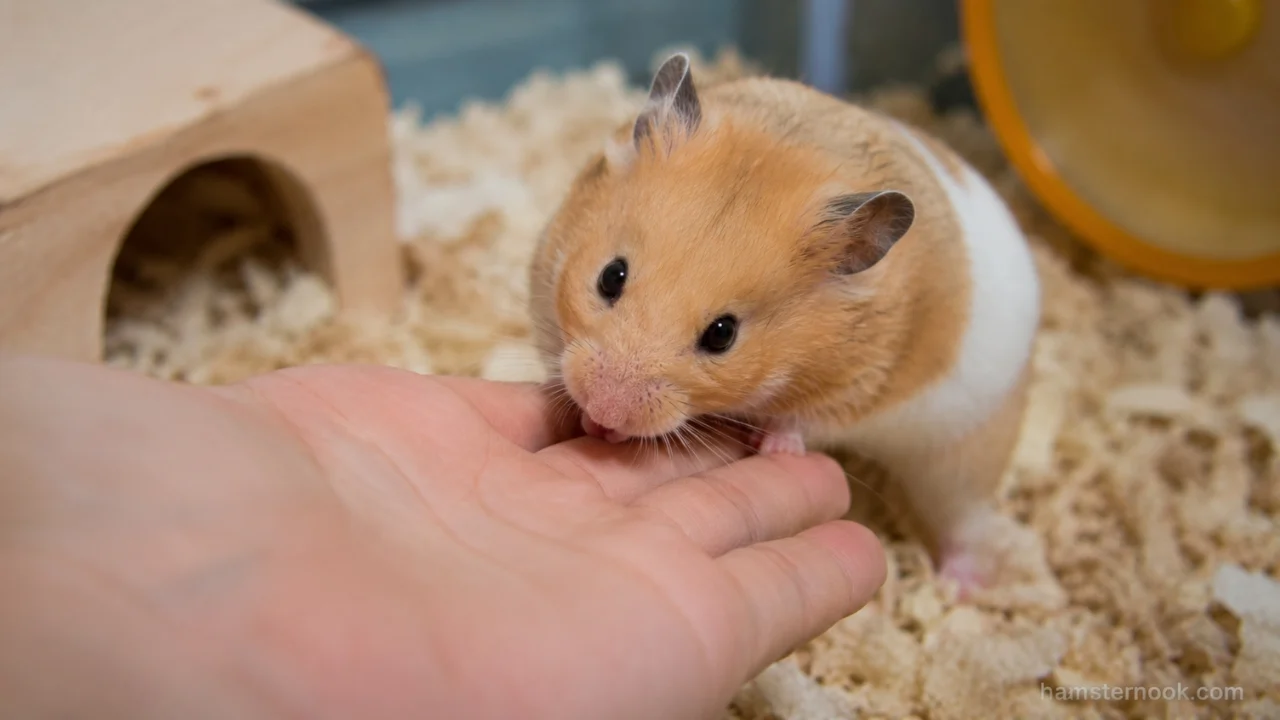
What If Licking Turns Into Nibbling?
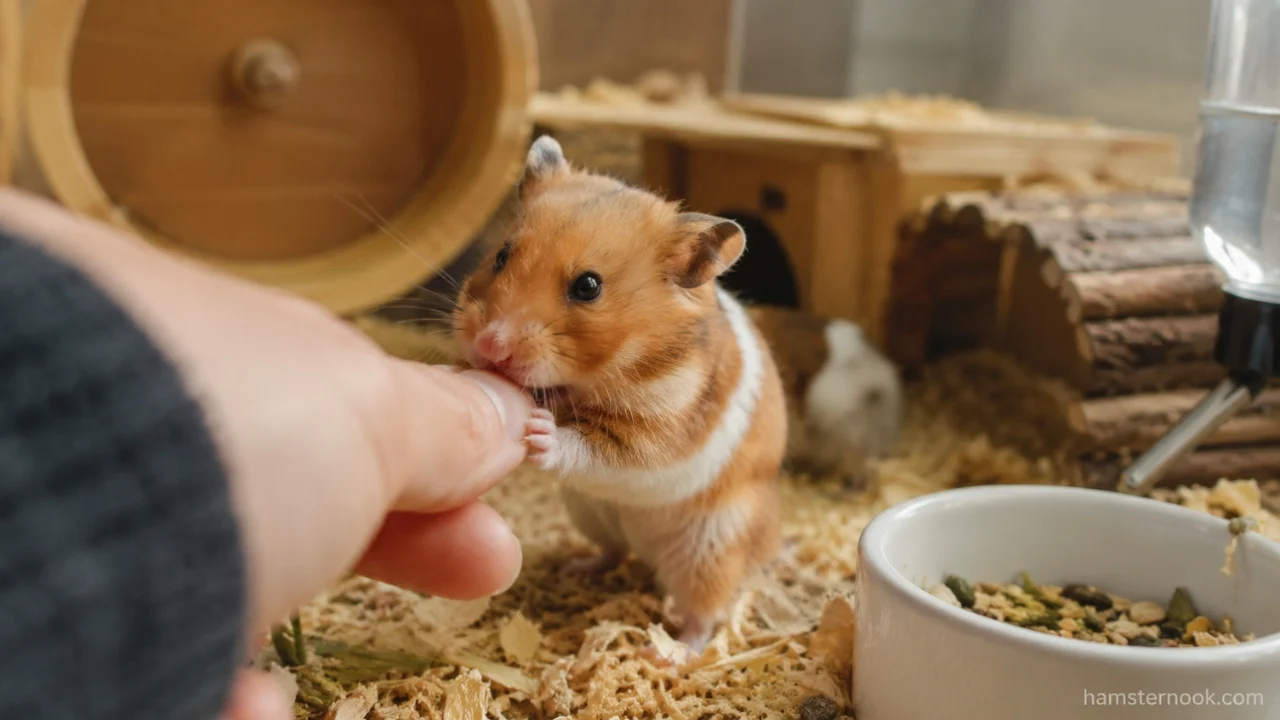
Many owners worry when licking is followed by a small bite.
In some cases, the hamster is not trying to be aggressive. Instead, it may simply be investigating further.
The difference between exploratory nibbling and defensive biting is important.
| Behavior | Likely Meaning |
|---|---|
| Gentle nibble after licking | Investigating scent or taste |
| Light testing bite | Curiosity |
| Sudden hard bite | Fear, stress, or discomfort |
| Repeated aggressive biting | Defensive behavior |
If a hamster believes your fingers smell like food, it may test the scent with a gentle nibble.

A painful bite is usually a different issue and often indicates fear or stress rather than affection.
If biting becomes frequent or your hamster repeatedly reacts defensively when your hand approaches, do not assume it is simply part of licking. Give your hamster space and look at the handling situation, recent changes, and other body-language signals before trying to interact again.
If licking regularly turns into biting, our Why Does My Hamster Lick My Hand Then Bite Me? What It Means & What to Do guide explains the difference between exploratory nibbles and defensive biting.
Does Licking Mean Your Hamster Loves You?
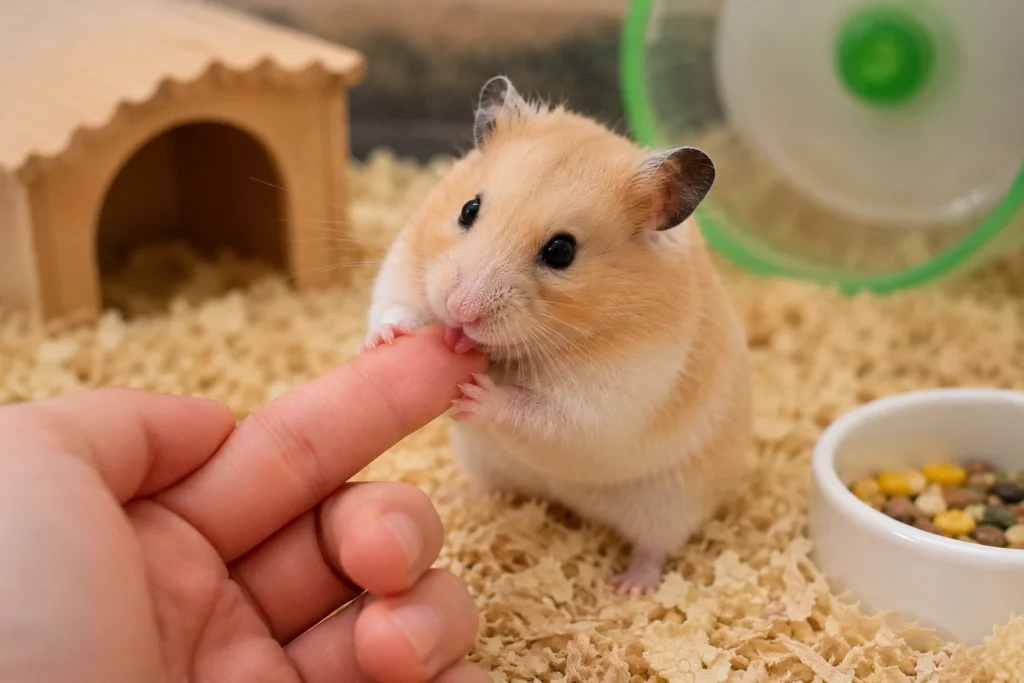
Many owners hope licking is a sign of love.
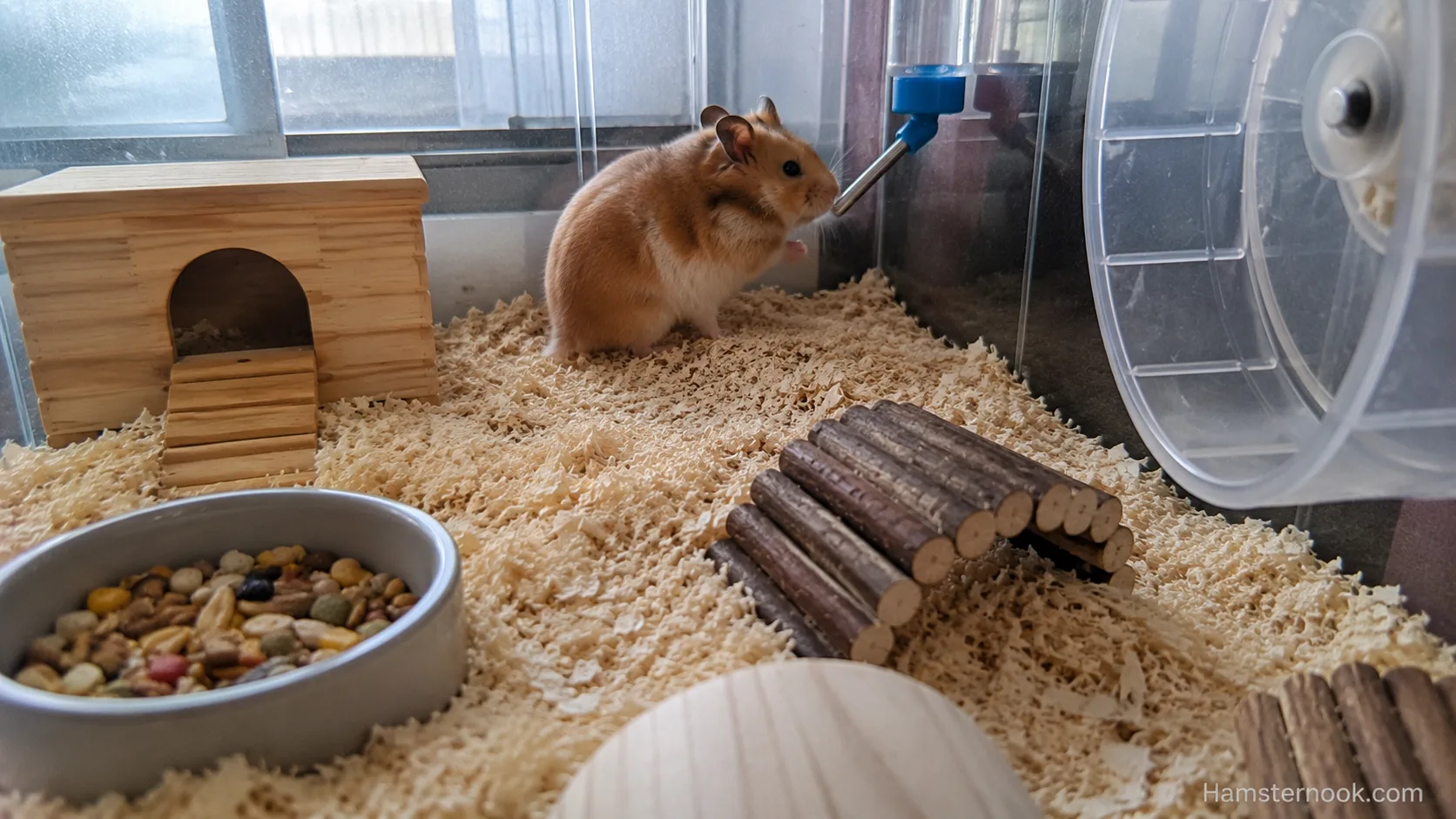
The answer is a little more complicated than a simple yes or no.
Hamsters do not express affection in the same ways that highly social animals like dogs do. However, a hamster that voluntarily approaches, remains calm during handling, and occasionally licks your hand may be showing comfort and familiarity.
Rather than viewing licking as a direct sign of love, it is more accurate to see it as a sign that your hamster feels safe enough to interact with you.
Trust develops gradually through repeated positive experiences. A hamster that voluntarily approaches your hand, remains relaxed during interaction, and shows curiosity instead of avoidance is often becoming more comfortable with your presence.

Trust is often a better word than affection when describing hamster-human relationships.
For more signs that show growing comfort and trust, see our 10 Signs Your Hamster Trusts You guide.
Signs Your Hamster Is Comfortable Around You
Licking becomes more meaningful when combined with other positive behaviors.
| Positive Behavior | What It May Indicate |
|---|---|
| Approaching your hand willingly | Curiosity and confidence |
| Taking treats calmly | Growing trust |
| Remaining relaxed when held | Comfort |
| Grooming in your presence | Feeling secure |
| Exploring your hands without fear | Familiarity |
Looking at overall body language provides a much clearer picture than licking alone.
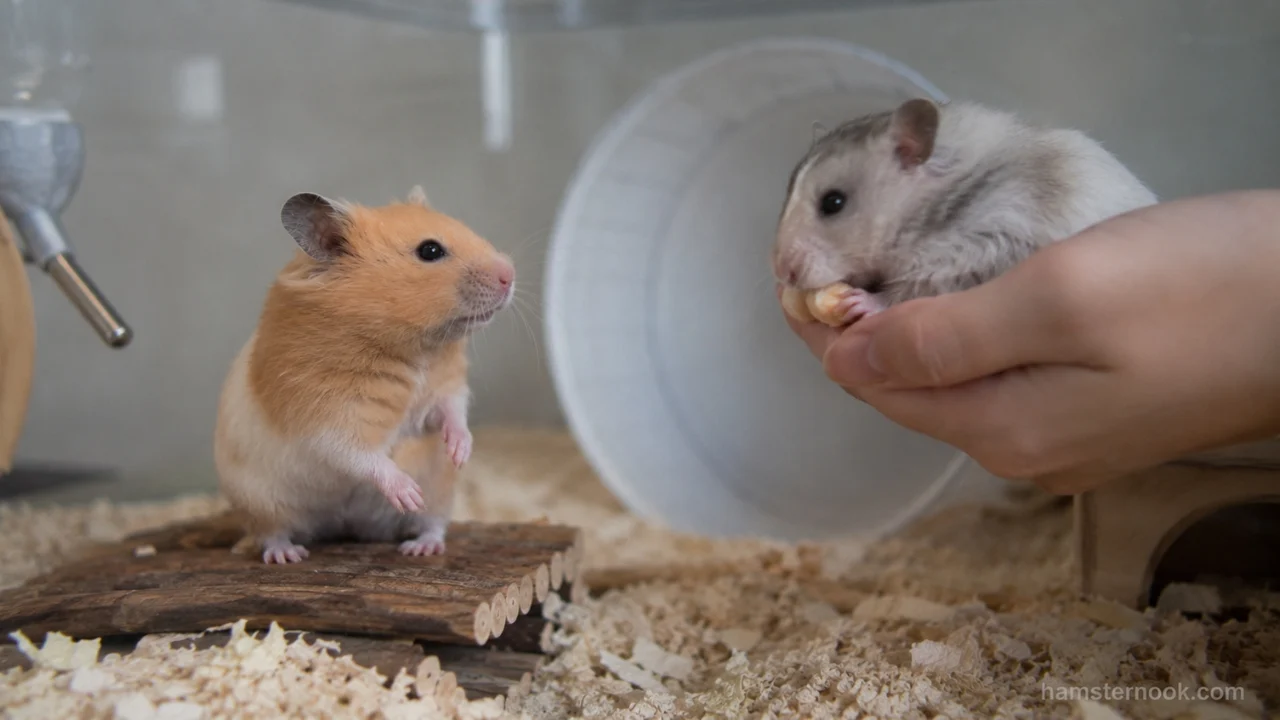
A single behavior rarely tells the whole story. Looking at posture, activity levels, vocalizations, appetite, and willingness to interact often provides a more accurate picture of how a hamster feels.
A hamster that willingly approaches your hand often shows several of the same trust-building behaviors discussed in How to Tame a Hamster Without Getting Bitten.
When Licking Could Signal Stress
Although licking is usually harmless, there are situations where unusual licking may be connected to stress.
Watch for additional signs such as:

- Flattened ears
- Hiding excessively
- Trembling
- Sudden aggression
- Refusing food
- Frantic cage behavior
If these behaviors occur alongside excessive licking, it may be worth evaluating your hamster’s environment and overall well-being. Pay particular attention to whether the licking becomes repetitive or appears together with hiding, aggression, appetite changes, or frantic activity. These combined signs can be more useful than licking alone when deciding whether your hamster may be experiencing stress.
If you are seeing several of these behaviors together, our Hamster stress signs guide can help you compare the behavior with other common signs of stress.
Should You Let Your Hamster Lick You?
In most cases, occasional licking is perfectly fine.
However, there are a few precautions worth taking.

| Situation | Recommendation |
|---|---|
| Clean hands | Usually safe |
| Hands covered in lotion | Avoid handling |
| Strong perfume or chemicals present | Wash hands first |
| Open cuts or wounds | Avoid allowing licking |
| After handling food | Wash hands thoroughly |
Good hygiene protects both you and your hamster.
How to Encourage Positive Interaction
If you want your hamster to become more comfortable with you, focus on building trust gradually.
Helpful approaches include:
- Offering treats by hand
- Speaking softly
- Avoiding sudden movements
- Respecting sleeping times
- Allowing the hamster to approach voluntarily
- Creating consistent handling routines
Most hamsters become comfortable gradually, so trying to speed up the process rarely helps.

A hamster that feels safe is more likely to interact naturally, whether that includes licking, climbing onto your hand, or calmly exploring around you.
Common Myths About Hamster Licking
Several misconceptions often circulate among hamster owners.
| Myth | Reality |
|---|---|
| Licking always means love | It can also mean curiosity or taste exploration |
| Hamsters lick because they are hungry | Hunger is only one possible explanation |
| Every lick is a grooming behavior | Many licks are simply investigative |
| Licking guarantees trust | Body language provides a more complete picture |
| Hamsters never show affection | They can demonstrate comfort and familiarity in their own ways |
Knowing the difference between these behaviors can make it much easier to understand what your hamster is actually trying to communicate.
If licking appears alongside appetite changes, lethargy, unusual posture, or other health concerns, our Signs of a Sick Hamster: Warning Symptoms Every Owner Should Know guide explains the symptoms owners should never ignore.
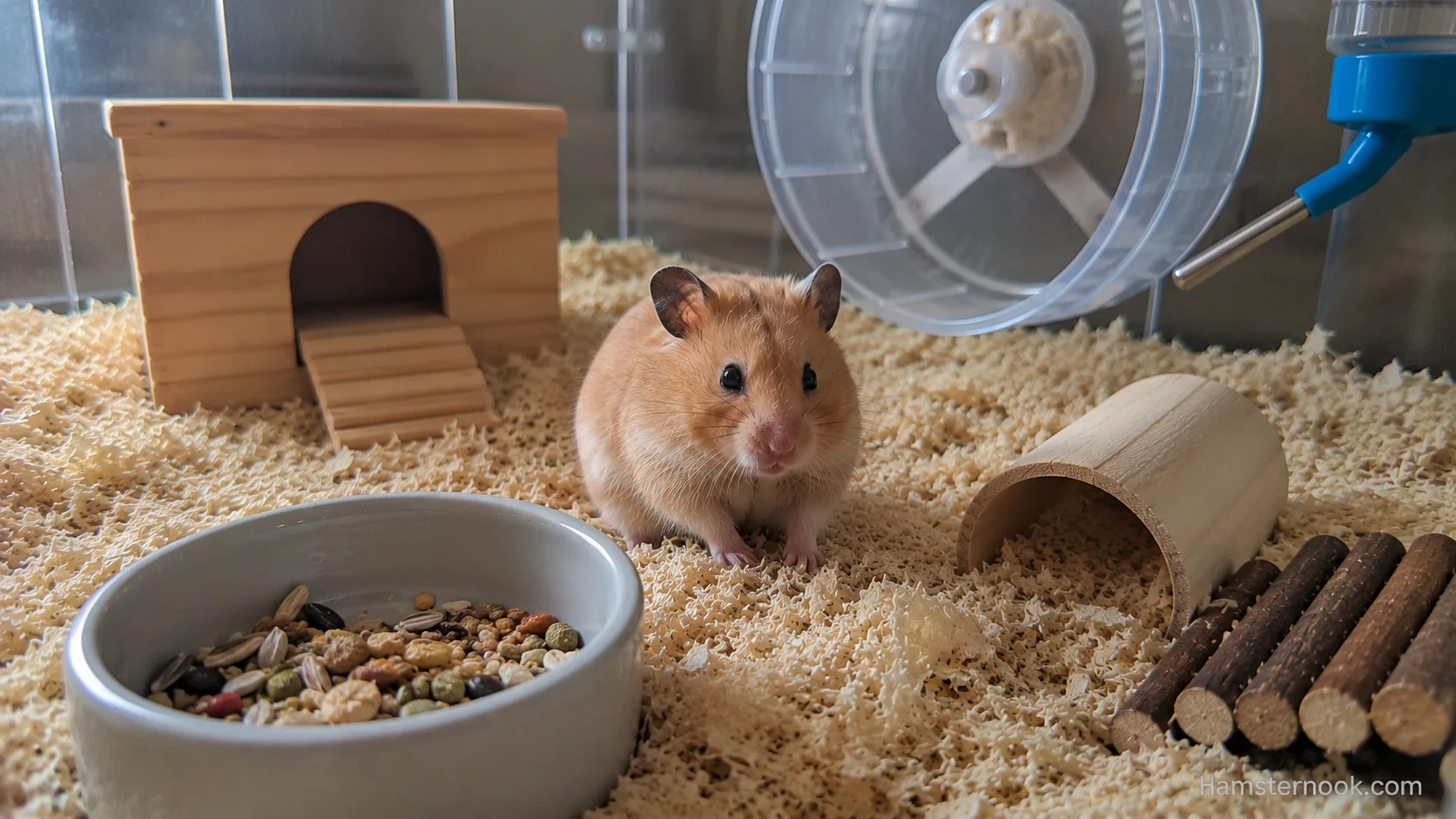
Paying attention to the behaviors that happen before and after licking is often more helpful than focusing on the licking itself. Looking at your hamster’s overall body language gives you a much clearer understanding of how it feels during handling.
Conclusion
When a hamster licks you, it is usually a normal and harmless behavior. Most often, your pet is exploring your scent, tasting salt on your skin, investigating food smells, or interacting with you in a way that feels natural and safe.
While licking alone should not automatically be viewed as affection, it can be a positive sign when paired with relaxed body language and calm interactions. The key is to consider the entire situation rather than focusing on the licking itself.
By observing your hamster’s overall behavior and maintaining gentle, consistent handling, you can better understand what your pet is trying to communicate and continue building a trusting relationship.
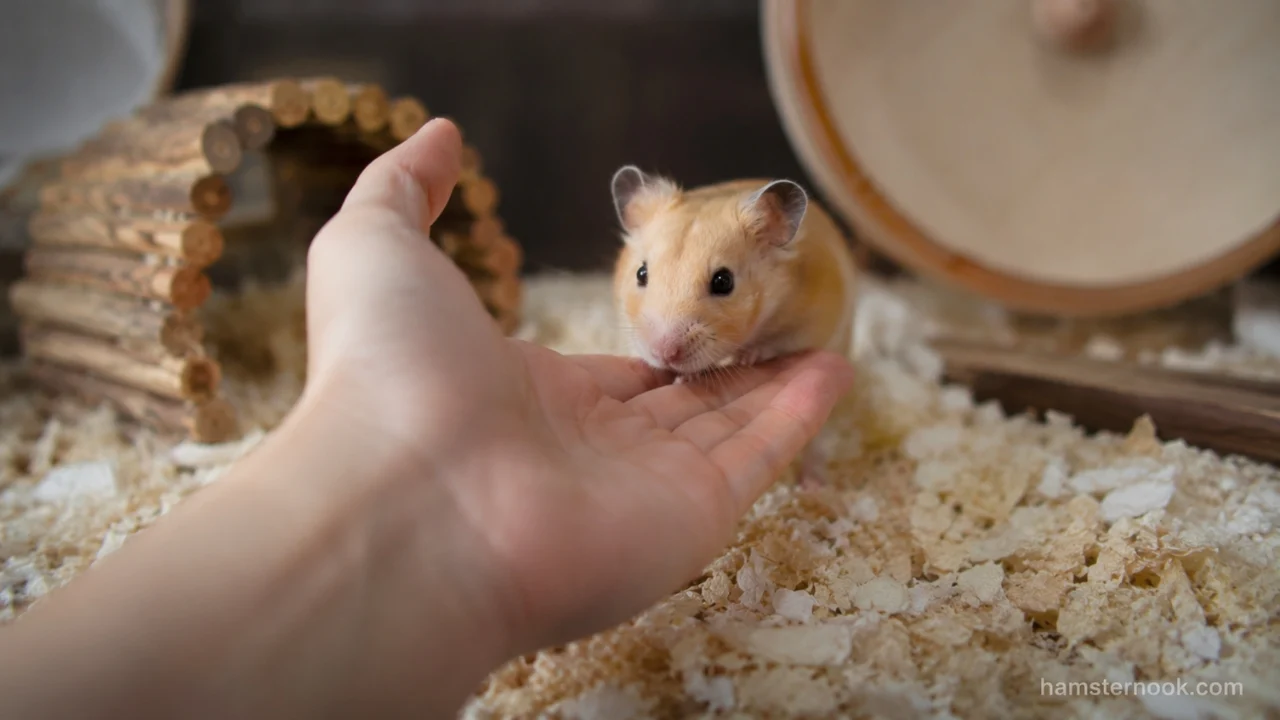
Frequently Asked Questions
Why does my hamster lick my fingers so much?
Your hamster may be attracted to salt, food scents, or simply exploring your scent and skin through taste.
Is it normal for a hamster to lick and then bite?
Yes, a gentle nibble after licking is often part of exploration. A hard bite is more likely related to fear, stress, or mistaken identity if your hand smells like food.
Do hamsters lick people they trust?
Sometimes. A hamster that feels comfortable around you may be more likely to interact through licking, but licking alone is not a guaranteed sign of trust.
Should I stop my hamster from licking me?
Occasional licking is generally harmless. Just make sure your hands are clean and free of lotions, perfumes, or chemicals.
Why does my hamster only lick me after I hold treats?
Food scent is a common trigger. Your hamster may still smell traces of treats on your skin even after the food is gone.
Can hamster licking spread diseases?
The risk is generally low for healthy pet hamsters, but good hygiene is important. Always wash your hands before and after handling your pet.
Why does my hamster lick me and then walk away?
This is usually normal exploratory behavior. Many hamsters briefly investigate scents or tastes before moving on to other activities.
References
This guide is based on hamster behavior, communication, handling, social interaction, stress, and welfare guidance from trusted animal welfare and veterinary resources, including:
- RSPCA – Hamster Behaviour – Guidance on natural hamster behavior, communication, handling, activity, body language, and signs of stress.
- RSPCA – Keeping Hamsters as Pets – General hamster care, behavior, handling, welfare, and understanding natural hamster needs.
- Blue Cross – Hamster Care Guide – Practical guidance on hamster handling, behavior, enrichment, housing, and wellbeing.
- MSD Veterinary Manual – Hamsters – Veterinary reference information covering hamster behavior, health, husbandry, and conditions that may affect normal behavior.
- NC3Rs – Housing and Husbandry: Hamster – Guidance on hamster housing, environmental needs, natural behaviors, enrichment, and welfare.
- NC3Rs – Choosing Appropriate Enrichment – Guidance on supporting natural hamster behaviors through appropriate enrichment and environmental opportunities.
Medical Disclaimer
This article is intended for educational purposes only and should not be considered veterinary advice. Occasional licking is generally a normal hamster behavior, but unusual licking accompanied by signs of illness, injury, pain, or distress may require veterinary attention. If your hamster develops persistent or concerning changes in behavior, appetite, movement, or overall condition, consult a qualified exotic animal veterinarian for proper evaluation.

Narayan Kumar is the founder and author of HamsterNook. He creates practical, research-based hamster care guides covering hamster behavior, nutrition, cage setup, enrichment, health, and everyday care. His goal is to help hamster owners make informed decisions and provide safer, healthier lives for their pets through clear, beginner-friendly information based on trusted animal care resources.