
A hamster may lick then bite your hand while investigating its scent, taste, or texture, but the meaning depends on how the bite happens. A gentle nibble can be part of exploration, while a hard or sudden bite may indicate fear, discomfort, territorial behavior, or an attempt to escape an interaction.
Food smells, sweat on the skin, unfamiliar scents, incomplete trust, and sudden movements can all affect how a hamster responds to your hand. Looking at the hamster’s body language and the situation surrounding the bite can help distinguish normal investigation from defensive behavior.
Quick Answer
If your hamster licks your hand and then bites, it may be investigating your scent or taste, reacting to food residue, or becoming uncomfortable during the interaction. Gentle nibbles are often exploratory, while a hard bite—especially with defensive body language—can indicate fear, discomfort, territorial behavior, or feeling threatened.
The safest way to interpret the behavior is to look at what happens around the bite. Food smells, sudden movements, forced handling, sleep disturbance, and approaching a valued area can all change how a hamster reacts.

Is It Normal for a Hamster to Lick Then Bite?

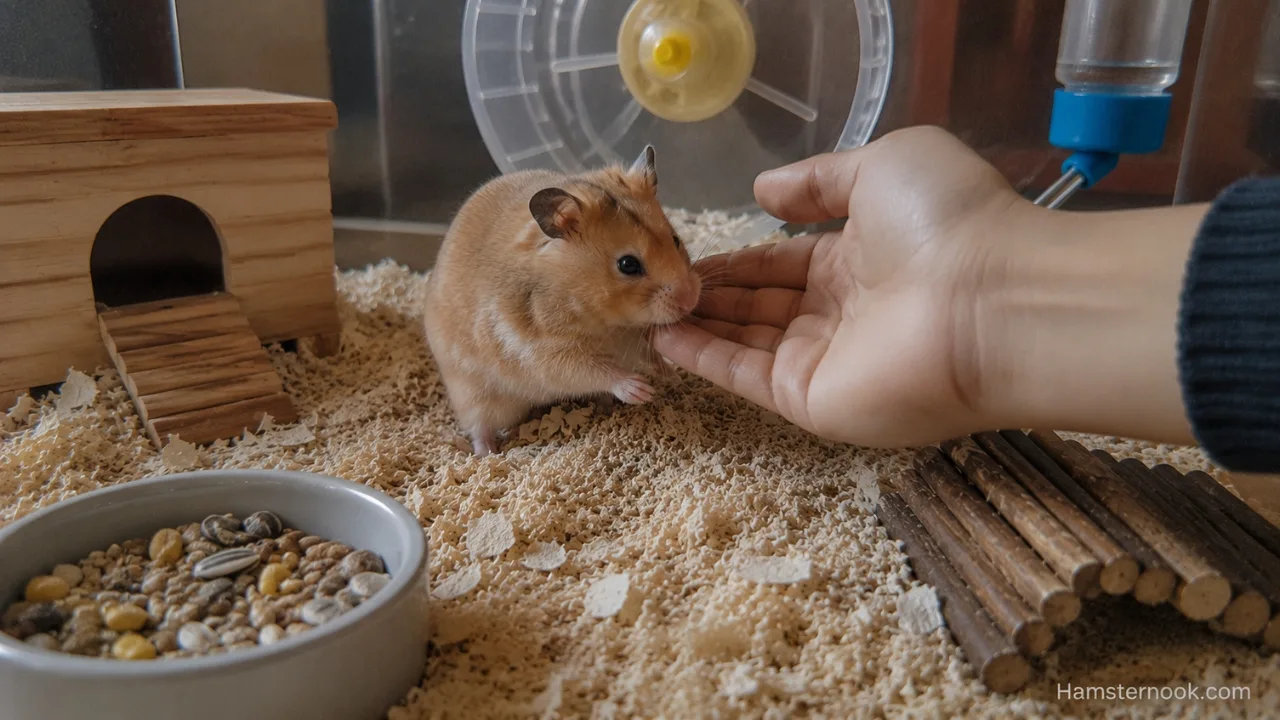
Licking followed by gentle nibbling can occur during normal exploration, particularly when a hamster is investigating an unfamiliar hand or scent.
Licking and nibbling are both ways hamsters gather information about their surroundings. Since their eyesight is relatively poor, they rely heavily on smell, touch, and taste. Your hand is simply another object they are trying to understand.
The important detail is the type of bite. A gentle nibble is very different from a hard defensive bite.
| Behavior | What It May Mean |
|---|---|
| Gentle licking | Exploring scent or taste |
| Light nibbling | Investigating an object |
| Quick small bite | Investigating scent, taste, or texture |
| Hard bite with force | Fear, stress, discomfort, or self-defense |
| Repeated hard biting | Fear, discomfort, territorial behavior, or another underlying cause |
Learning to recognize these differences can help you respond appropriately.

Your Hand Might Smell Like a Snack
One of the most common explanations is surprisingly simple: your hamster thinks your hand might be food.
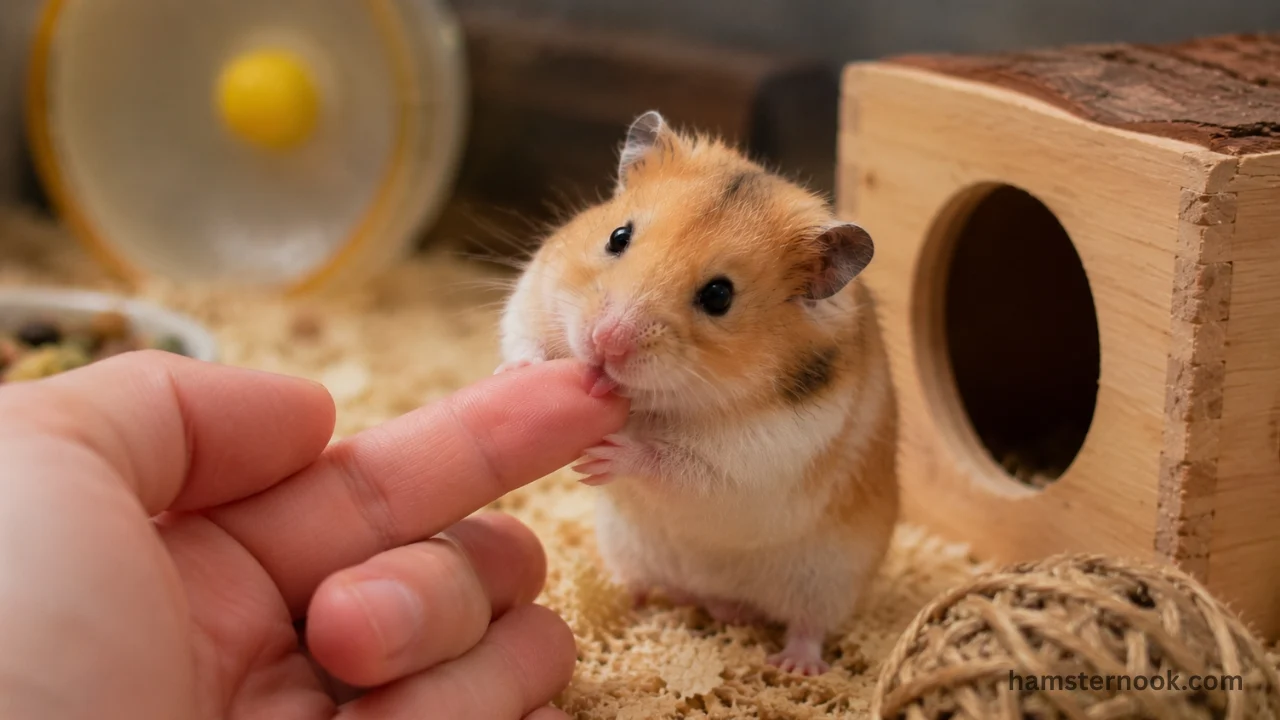
If you recently touched fruit, vegetables, treats, pet food, or even scented lotions, your hamster may detect those smells. A few licks help them investigate the scent, and a small bite is sometimes their way of figuring out whether the object is actually something they can eat.
Hamsters have an excellent sense of smell and can detect scents that humans barely notice.
Before handling, make sure your hands are clean and free from food residue or strong fragrances. This removes scents that could make your fingers more interesting to investigate.
Your Hamster Is Exploring You
Hamsters are naturally curious animals.
They also use their mouths to gather information. A lick followed by a small nibble may simply be your hamster trying to learn more about you.
This behavior is especially common when:
- Your hamster is new to the home
- You recently changed soaps or lotions
- The hamster is becoming more comfortable with you
- The hamster encounters your hand in a new environment
Exploration bites are usually gentle and brief.

Your Hamster Likes the Salt on Your Skin
Human skin naturally contains small amounts of salt from sweat.
Sweat and other scents on human skin may give a hamster additional smells and tastes to investigate. Licking followed by a gentle nibble may simply be part of that exploration.
Licking or gentle nibbling in this situation does not by itself mean your hamster is being aggressive.
If the behavior becomes frequent, washing your hands before handling may help reduce interest.
Your Hamster May Be Investigating With Its Mouth
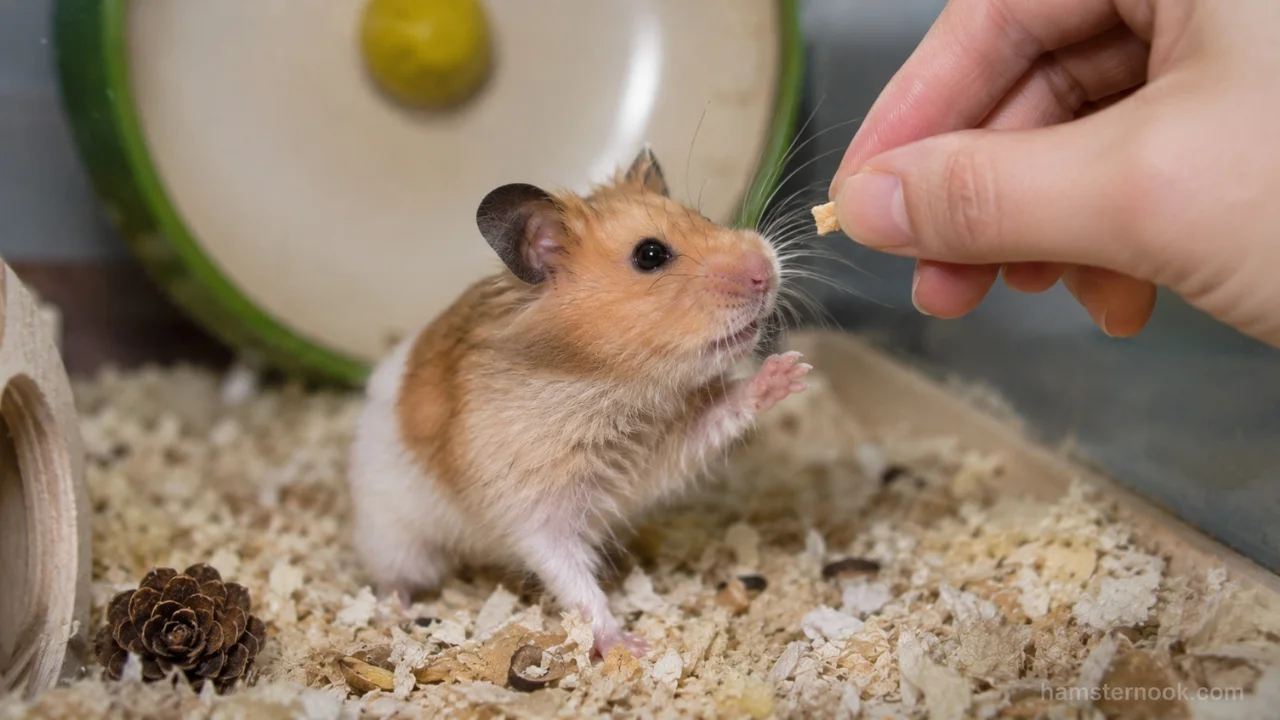
Hamsters use their mouths alongside smell, whiskers, and touch when investigating objects. A brief, gentle nibble can therefore occur without being a defensive bite.
Pay attention to what happens immediately before and after the nibble. A hamster that remains relaxed and continues exploring is behaving differently from one that freezes, retreats, vocalizes, or delivers a forceful bite.
Fear Can Turn Licking Into Biting
Sometimes a hamster begins calmly but becomes nervous during the interaction.
For example, your hamster may initially approach your hand out of curiosity. If you suddenly move, pick them up too quickly, or block their escape route, they may feel trapped and respond with a bite.
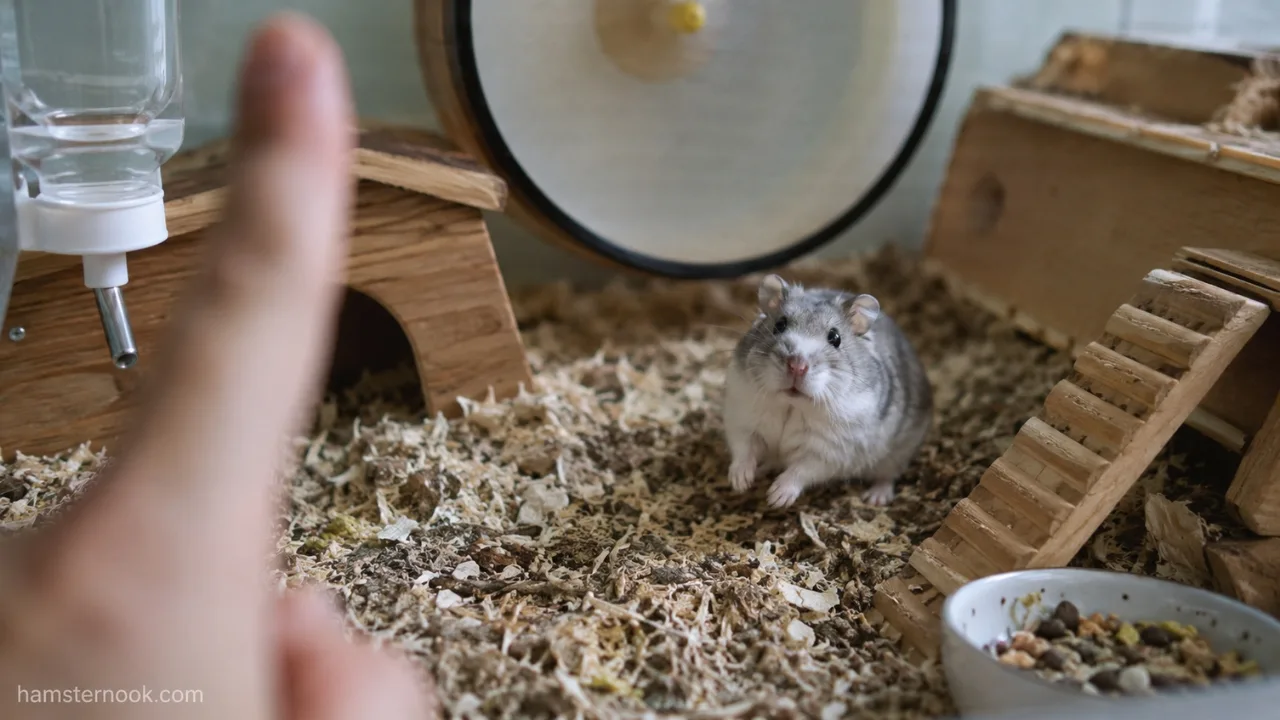
Fear-related bites are usually stronger and more sudden than exploratory nibbles.
Handling, sleep disturbance, sudden movement, noise, and other environmental factors can contribute to defensive responses. Our 7 Signs You’re Accidentally Stressing Your Hamster guide explains common stress triggers and behavioral signs in more detail.
Common stress triggers include:
| Trigger | Why It Causes Stress |
|---|---|
| Sudden movements | Feels threatening |
| Loud noises | Startles the hamster |
| Being awakened | Interrupts sleep cycle |
| Strong scents | Can be overwhelming |
| Forced handling | Reduces sense of control |
Understanding these triggers can help prevent future bites.
Your Hamster May Not Fully Trust You Yet
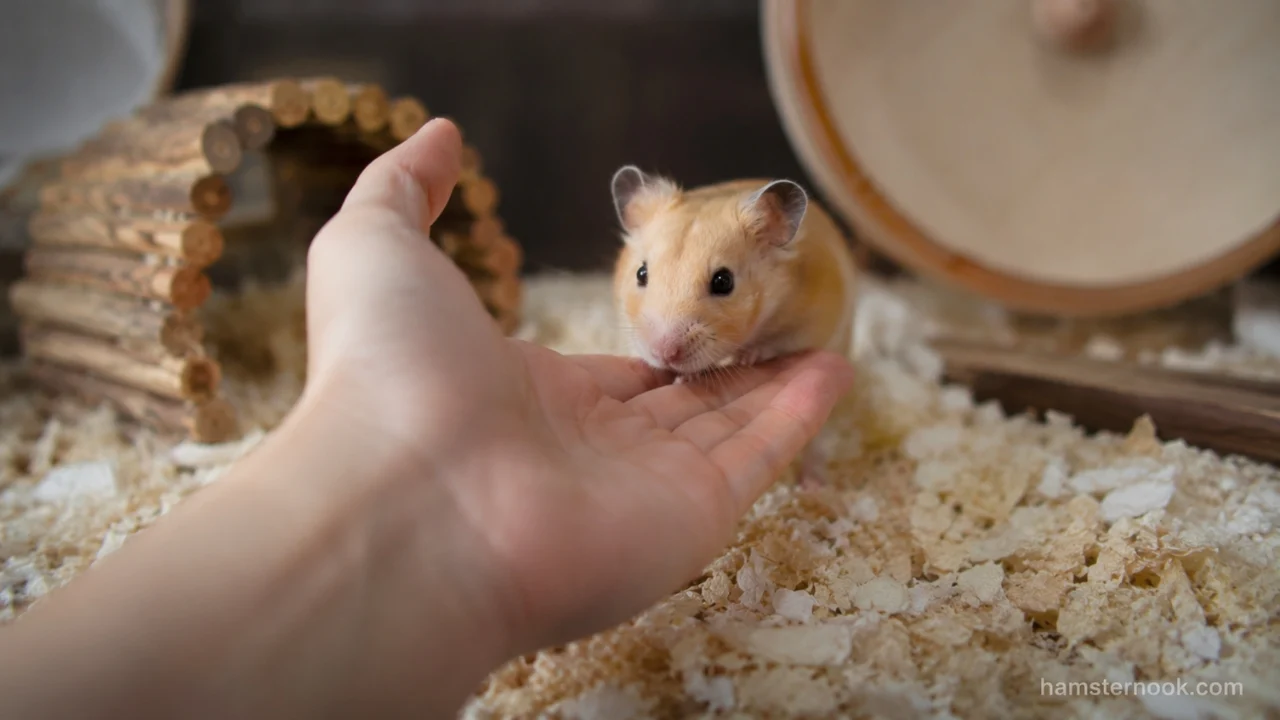
Many owners notice this behavior during the first few weeks after bringing a hamster home. The hamster may be curious enough to approach and lick your hand but still unsure whether you are completely safe. That uncertainty can sometimes lead to a quick test bite.
Trust takes time, especially with prey animals like hamsters.
Even friendly hamsters may bite occasionally while learning that your hands are safe. If your hamster licks and then bites, it could mean they are still deciding whether you are trustworthy.
Building trust usually involves:

- Speaking softly
- Offering treats from your hand
- Allowing voluntary interaction
- Avoiding forced handling
- Respecting their sleep schedule
Most hamsters become more comfortable with consistent, gentle handling.
Trust usually develops through repeated interactions in which the hamster can approach, investigate, and retreat without being forced. Our 10 Signs Your Hamster Trusts You guide explains behaviors that may indicate growing comfort around an owner.
Licking by itself can have several explanations beyond a lick-and-bite interaction. Our Why Does My Hamster Lick Me? guide covers scent investigation, grooming-related behavior, taste, and other possible reasons hamsters lick their owners.
Territorial Behavior Can Play a Role
Territorial or defensive behavior can occur when a hamster feels that a nesting area, food stash, hideout, or other part of its enclosure is being disturbed.

This behavior is often called cage aggression or cage defensiveness.
Watch whether biting happens specifically when your hand approaches a nest, food cache, hideout, or another valued area. A location-specific pattern can provide more useful information than assuming the hamster will always behave differently inside and outside the enclosure.
If cage defensiveness is the issue, allow your hamster to walk onto your hand voluntarily rather than reaching directly into their nest area.
Pain or Illness May Cause Unexpected Biting
A hamster that suddenly starts biting after previously being comfortable with handling may be reacting to fear, stress, a change in its environment, or possible discomfort.
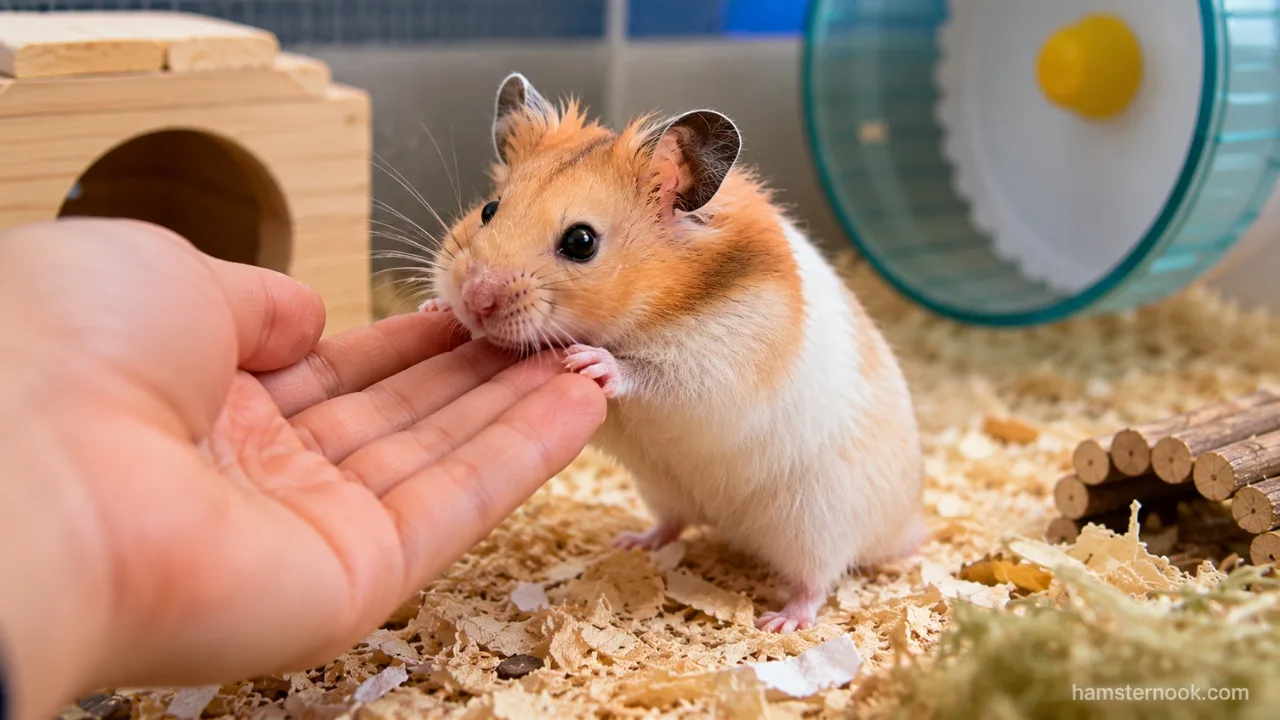
Pain can make even gentle pets more defensive.
Watch for other signs such as:
- Reduced activity
- Weight loss
- Changes in eating habits
- Poor grooming
- Hunched posture
- Visible injuries
If a sudden behavior change persists, especially when it occurs alongside changes in appetite, activity, grooming, posture, weight, or other physical signs, contact a veterinarian experienced with small animals.
A sudden change from previously calm handling to repeated biting deserves attention because discomfort is one possible explanation. Our Why Your Hamster Suddenly Started Biting You guide covers behavioral, environmental, and health-related causes of new biting behavior.

Is Licking Before Biting a Sign of Affection?
Not necessarily.
Many owners assume licking is the hamster equivalent of a kiss, but hamsters usually lick because they are exploring scents, tasting salt, or investigating something interesting. While a relaxed hamster that licks your hand may feel comfortable around you, licking alone should not automatically be interpreted as affection.
How to Tell the Difference Between a Nibble and a Real Bite
Many new owners mistake gentle investigation for aggression.
The following comparison can help.
| Nibble | True Bite |
|---|---|
| Gentle pressure | Strong pressure |
| Brief contact | Longer contact |
| No obvious fear signs | Often accompanied by defensive body language |
| Usually painless | Often painful |
| Curiosity-driven | Fear or stress-driven |
A gentle nibble during relaxed exploration is different from a forceful bite accompanied by fear or defensive behavior. Consider the pressure, body language, location, and events immediately before the bite rather than judging the behavior from the bite alone.
Posture and movement can provide important context when interpreting a bite. Our Hamster Body Language Explained: Signs of Stress, Fear, Happiness & Trust guide explains signs associated with fear, stress, relaxation, curiosity, and defensive behavior.
How to Reduce Licking and Biting During Handling

When biting is related to food scents, fear, handling, or unfamiliarity, changing how interactions happen may reduce the behavior.
Wash Your Hands Before Handling
Removing food scents is one of the easiest ways to prevent accidental bites.
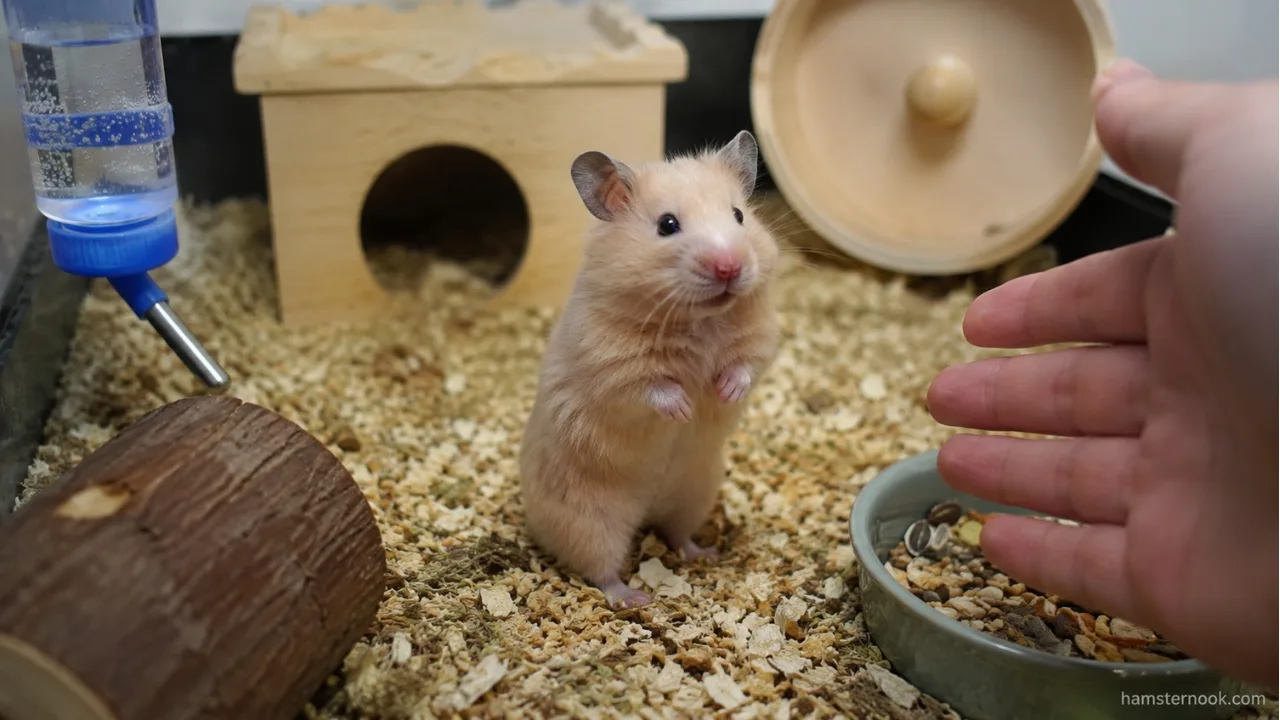
Let Your Hamster Approach First
Allow your hamster to choose interaction rather than forcing contact.
Avoid Waking a Sleeping Hamster
Hamsters can become startled and defensive when suddenly awakened.
Choosing interaction times that match the hamster’s natural waking periods can reduce unnecessary sleep disturbance. Our Are Hamsters Nocturnal? guide explains when hamsters typically sleep and become active.
Use Positive Reinforcement
Offer healthy treats when your hamster approaches calmly.

Stay Still During Interactions
Quick movements can trigger fear responses.
Build Trust Gradually
Keep early interactions calm and end them before the hamster becomes noticeably uncomfortable or tries repeatedly to escape.
Mistakes That Often Lead to Biting
Some owner habits accidentally encourage biting behavior.
Avoid:

- Grabbing your hamster from above
- Interrupting sleep
- Handling immediately after cleaning the cage
- Wearing strong perfumes or lotions
- Chasing the hamster around the enclosure
- Ignoring signs of stress
In many cases, a few simple changes are enough to make handling sessions go much more smoothly.
When Should You Be Concerned?
Occasional licking and nibbling are usually normal.
However, repeated hard bites may indicate a problem.
Consider investigating further if your hamster:

- Suddenly becomes aggressive
- Bites frequently without warning
- Shows signs of illness
- Appears fearful all the time
- Stops interacting normally
Repeated biting should be considered alongside appetite, activity, grooming, posture, breathing, weight, and other changes in normal behavior. Our Signs of a Sick Hamster guide covers broader warning signs that may indicate a health problem rather than a handling issue alone.
What Should You Do If Your Hamster Bites You?
Move your hand away calmly and give the hamster space rather than immediately trying to continue the interaction. Avoid punishing, tapping, shouting at, or chasing the hamster, as this does not address the reason for the bite and may make future handling more difficult.
If the bite breaks your skin, wash the wound promptly with soap and running water and follow appropriate wound-care advice. Seek medical attention for a deep wound, uncontrolled bleeding, signs of infection, or other concerns about the injury.
Final Thoughts
A hamster that licks and then bites your hand may be investigating scent or taste, responding to food residue, or becoming uncomfortable during the interaction. The bite itself matters: gentle exploratory nibbling should be interpreted differently from a forceful defensive bite.

Look at the surrounding context, including body language, location, handling method, sleep disturbance, and whether the behavior appeared suddenly. Clean hands, voluntary interaction, gradual trust building, and respect for retreat signals can reduce avoidable biting while helping you identify when fear, territorial behavior, or discomfort may be involved.
Frequently Asked Questions
Why does my hamster lick me before biting?
In many cases, your hamster is investigating your scent or taste before deciding whether the object is food or safe to interact with.
Does licking mean my hamster likes me?
Not always. Licking can be part of curiosity, scent or taste investigation, or general exploration rather than a clear sign of affection.
Why does my hamster gently nibble my fingers?
Gentle nibbling is usually exploratory behavior. Hamsters often use their mouths to learn about unfamiliar objects.

Should I pull my hand away when my hamster bites?
Move your hand away calmly and give the hamster space. Avoid jerking toward the hamster, chasing it, or immediately attempting another interaction.
Can food smells cause hamster bites?
Yes. Food scents on your hands are one of the most common reasons hamsters lick and then bite.
Will my hamster stop biting as trust improves?
Familiarity with your scent, voice, routine, and handling can influence how comfortable a hamster feels around you. Our Do Hamsters Recognize Their Owners? guide explains how hamsters may identify familiar people and why recognition involves more than eyesight alone.
Why does my hamster lick me but not bite other people?
Your hamster may be reacting to scents on your skin, such as food residue, soap, lotion, or sweat. Different smells can lead to different reactions.

Do hamsters lick people they trust?
Sometimes, but licking is usually linked to exploration rather than affection. A hamster that trusts you is more likely to approach calmly, accept treats, and interact without showing signs of fear.
Health Note: Sudden or persistent biting can sometimes occur alongside pain or illness. Behavioral information cannot diagnose a medical problem; seek veterinary advice when biting is accompanied by physical symptoms or a significant change in normal behavior.
References
This guide is based on hamster behavior, communication, handling, stress, trust, and welfare guidance from trusted animal welfare and veterinary resources, including:
- RSPCA – Hamster Behaviour – Guidance on hamster body language, natural behavior, handling, fear responses, stress, and interactions with owners.
- RSPCA – Keeping Hamsters as Pets – General hamster care, behavior, handling, welfare, and environmental guidance.
- Blue Cross – Hamster Care Guide – Practical information on hamster handling, behavior, enrichment, housing, and wellbeing.
- MSD Veterinary Manual – Hamsters – Veterinary reference information on hamster behavior, health, husbandry, and conditions that may affect normal behavior.
- NC3Rs – Housing and Husbandry: Hamster – Guidance on hamster environmental needs, natural behaviors, housing, enrichment, and welfare.
- NC3Rs – Choosing Appropriate Enrichment – Information on supporting natural behaviors and reducing stress through appropriate environmental enrichment.

Narayan Kumar is the founder and author of HamsterNook. He creates practical, research-based hamster care guides covering hamster behavior, nutrition, cage setup, enrichment, health, and everyday care. His goal is to help hamster owners make informed decisions and provide safer, healthier lives for their pets through clear, beginner-friendly information based on trusted animal care resources.