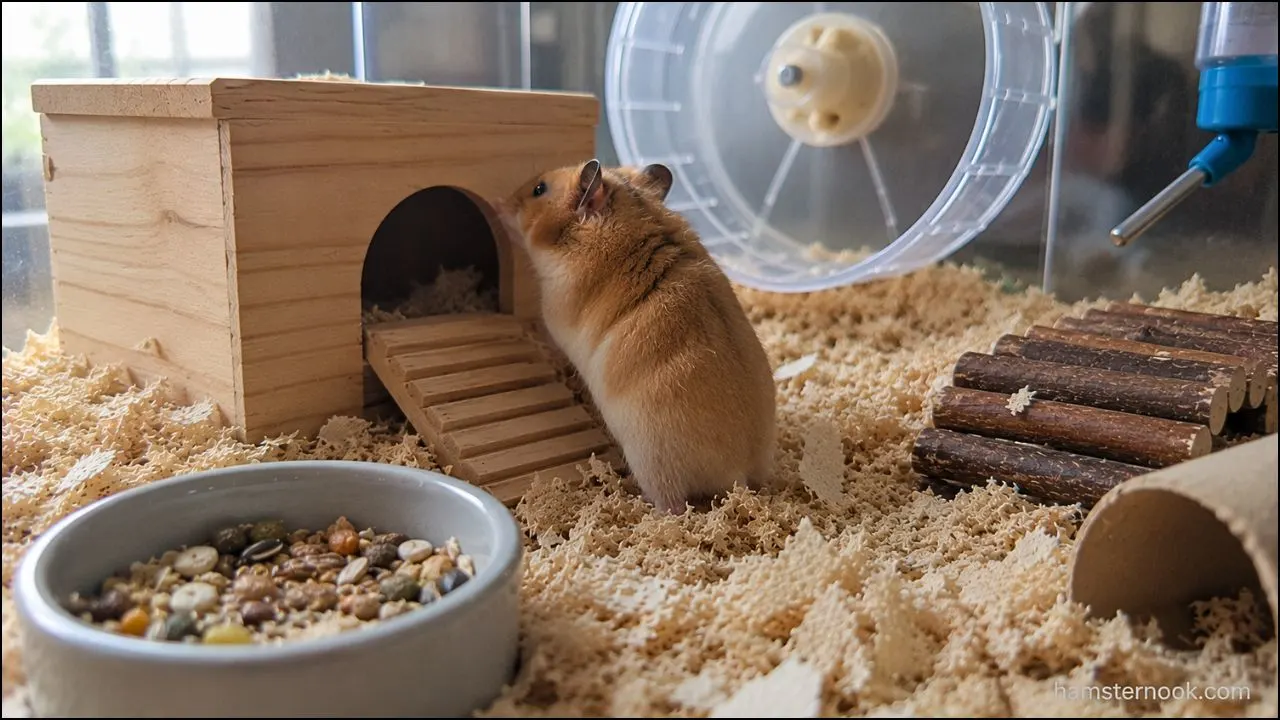
If your hamster frequently rises onto its back legs, it can be both adorable and puzzling. Many owners wonder whether this behavior means their pet wants food, is trying to escape, or has been startled. In most cases, standing on two legs is completely normal. Hamsters naturally rear up to investigate their surroundings, using their excellent sense of smell and hearing to gather information before deciding what to do next.
Quick Answer
Yes, it’s usually normal for a hamster to stand on its hind legs. Hamsters often “rear up” to investigate their surroundings, sniff the air, listen for sounds, or inspect something that has caught their attention. This behavior is usually part of normal exploration. However, if standing upright is accompanied by fear, prolonged freezing, repeated escape attempts, difficulty walking, or other unusual changes, it’s worth looking more closely at what may be causing the behavior.
Why Do Hamsters Stand on Their Back Legs?
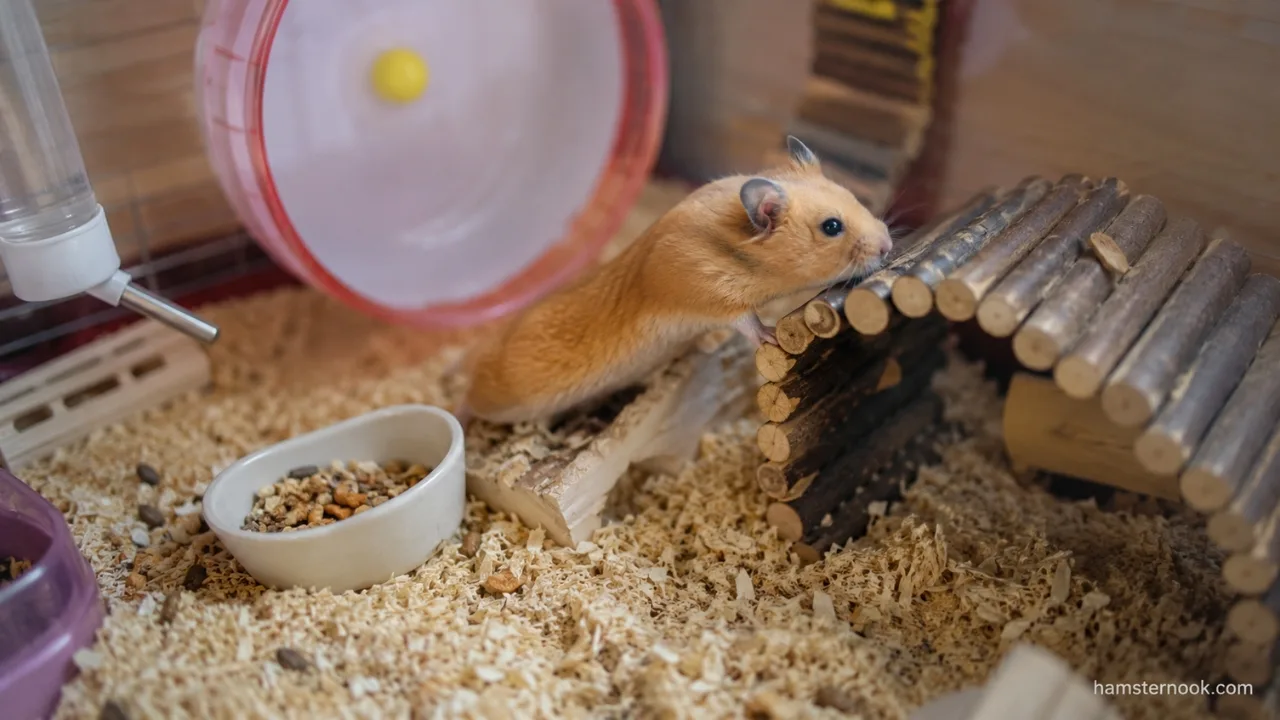
Standing on two legs—often called rearing—is a common exploratory behavior in hamsters. Although their eyesight isn’t particularly strong, they have an excellent sense of smell and sensitive hearing. Rising onto their hind legs gives them a better position to sample scents in the air and detect sounds from around the room.
Wild hamsters regularly use this posture while foraging and checking their surroundings for food, shelter, or potential danger. Pet hamsters retain the same instinct, even in the safety of a home enclosure.
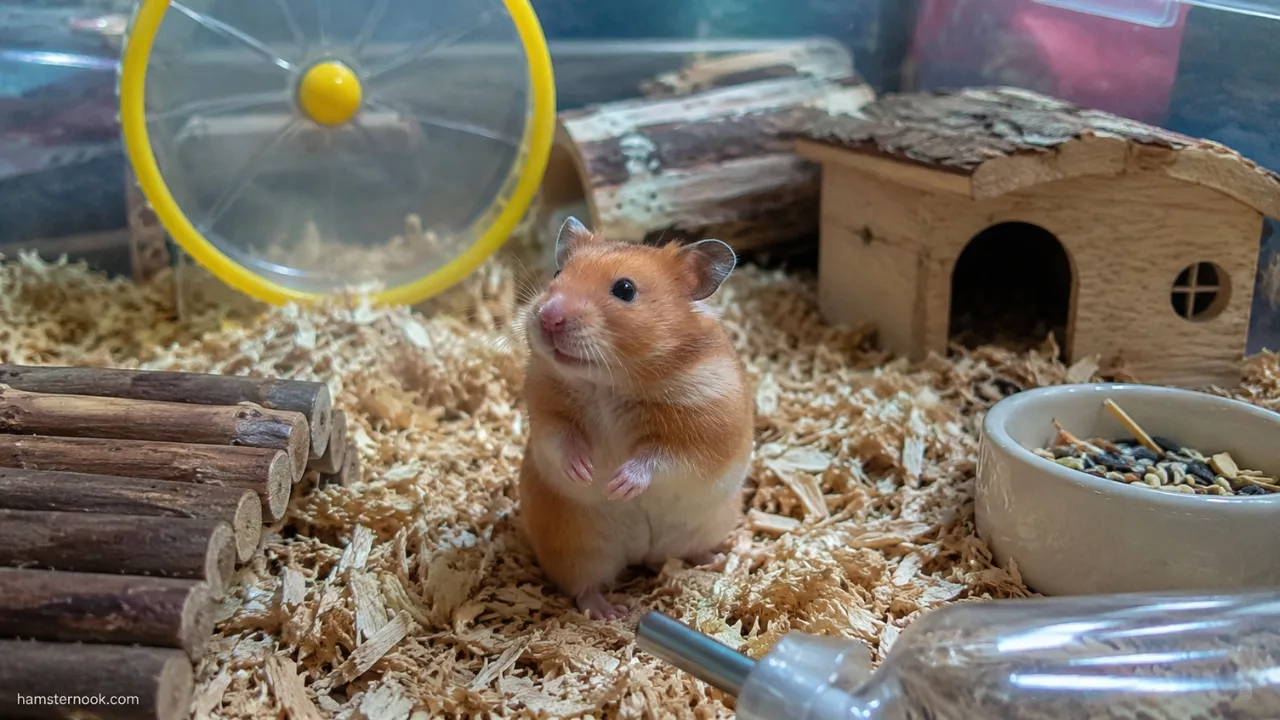
If your hamster briefly stands upright and then returns to normal exploring, eating, grooming, or other usual activities, the posture is generally part of normal behavior. The more important clue is whether it appears relaxed or is showing other unusual changes at the same time.
If you’d like to understand this behavior in the context of your hamster’s overall habits, read our Hamster Behavior Guide: What Common Hamster Behaviors Mean.
Common Reasons Your Hamster Stands Upright
Curiosity About Something New
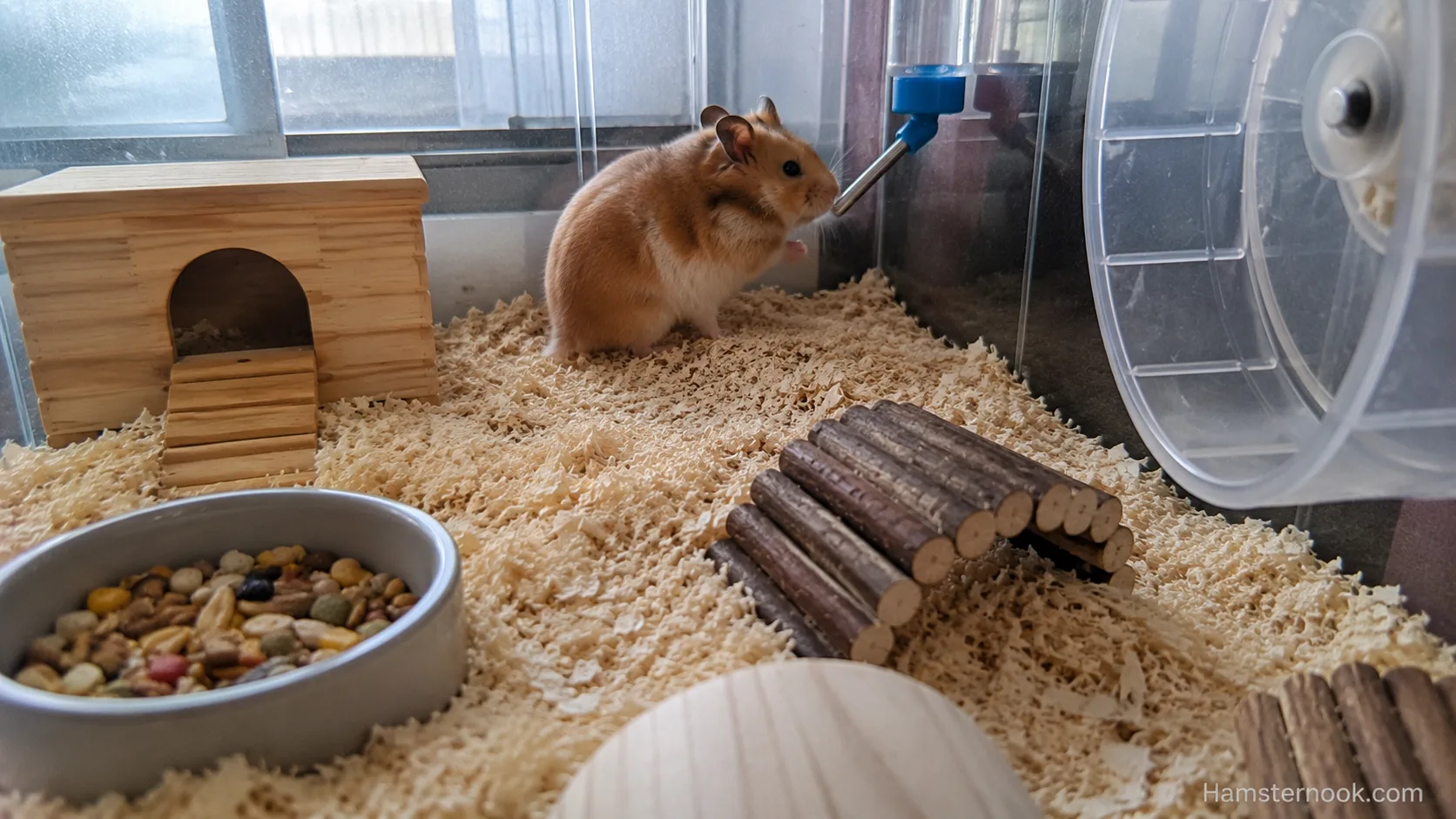
Curiosity is one common reason a hamster may rear up, especially when something in its surroundings has changed.
A hamster may suddenly stand upright after noticing:
- A new toy or tunnel
- Fresh bedding
- Rearranged cage accessories
- A different scent on your hands
- Movement outside the enclosure
- An unfamiliar sound
Instead of immediately approaching the object, many hamsters pause, stand up, sniff the air, and decide whether it’s safe to investigate.
Once they’ve gathered enough information, most hamsters quickly return to whatever they were doing, whether that’s exploring, digging, eating, or running on the wheel.
Exploring Its Environment
Hamsters naturally explore by combining movement with frequent pauses.
During an active evening, you may notice a pattern like this:

- Walk a short distance
- Stand upright
- Sniff the air
- Listen
- Continue exploring
This helps the hamster build a familiar picture of its surroundings by combining scent, sound, and repeated exploration rather than relying mainly on vision.
Trying to Identify a Sound
Hamsters have sensitive hearing that helps them notice noises humans barely pay attention to.
A hamster may stand on two legs after hearing:
- Footsteps
- Doors opening
- Another pet moving nearby
- Plastic bags rustling
- Food containers opening
They’re not necessarily frightened—they’re simply checking whether the sound is relevant.
Smelling Food
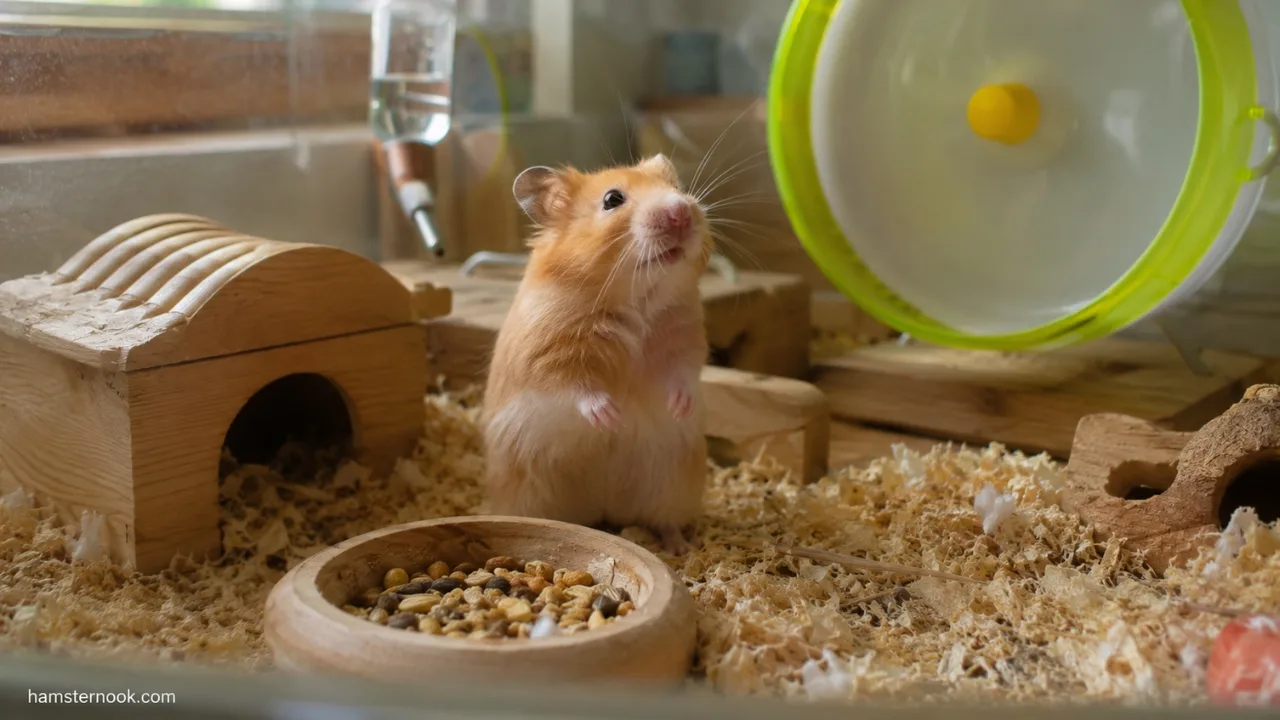
Anyone who has opened a treat container near a hamster has probably seen this behavior.
Hamsters often stand upright to catch food scents drifting through the air before deciding where they’re coming from.
If your hamster immediately walks toward you afterward, it has probably identified the source.
Greeting a Familiar Person
Many well-socialized hamsters learn to recognize their owner’s scent and daily routine over time.

If your hamster regularly stands up when you approach the enclosure, it may simply be checking whether you’re bringing food, treats, or time outside the cage.
Many owners also wonder how their pets recognize familiar people. Our guide Do Hamsters Recognize Their Owners? How They Remember You & Build Trust explains the science behind this behavior.
This behavior usually appears relaxed and curious rather than fearful.
When Standing on Two Legs Can Mean Fear
Although rearing is usually normal, body language matters.

A frightened hamster may also stand upright, but its posture often looks different.
Watch for additional signs such as:
- Frozen body posture
- Flattened ears
- Wide, alert eyes
- Sudden retreat into a hide
- Loud squeaking
- Defensive posture if approached
Fear-related standing is generally short-lived and occurs immediately after something startling, such as a loud noise or sudden movement.
If the hamster relaxes within a few moments and resumes normal activity, occasional startle responses are not unusual.

If your hamster frequently freezes after sudden sounds or movement, you may also find Why Does My Hamster Freeze and Stay Still? When You Should Worry helpful.
Curious vs. Scared: How to Tell the Difference

| Curious Hamster | Scared Hamster |
|---|---|
| Briefly stands to sniff the air | Freezes in place while standing |
| Continues exploring afterward | Runs to a hide immediately afterward |
| Relaxed ears and posture | Tense body posture |
| Moves naturally around the enclosure | Avoids open areas |
| Shows interest in new objects | Appears startled by sounds or movement |
Looking at the hamster’s overall body language is much more helpful than focusing on the standing behavior alone.
This related guide explains how to recognize different postures and expressions in more detail: Hamster Body Language Explained: Signs of Stress, Fear, Happiness & Trust.
Does Breed Make a Difference?
All commonly kept pet hamster species can stand on their hind legs.

However, you may notice small differences in how often they do it.
Why Is My Dwarf Hamster Standing on Two Legs?
Dwarf hamsters can naturally stand upright just like other pet hamsters. A dwarf hamster may rear up to investigate a sound, smell food, inspect something new, or check its surroundings. The behavior is usually normal when your hamster quickly returns to walking, exploring, eating, or other usual activities.
Syrian Hamsters
Syrian hamsters are generally larger, making the behavior especially noticeable. Many confidently rear up whenever they hear their owner nearby or discover something new.
Dwarf Hamsters
Campbell’s, Winter White, Roborovski, and Chinese hamsters also stand upright regularly, although Roborovskis often do it very quickly before darting off again due to their naturally active personalities.

These differences are based more on individual temperament than strict species rules.
Practical Examples
Example 1: You Just Entered the Room
Your hamster wakes up, hears footsteps, stands upright for a few seconds, sniffs the air, then begins running on its wheel.
This is normal curiosity.
Example 2: You Added a New Cork Tunnel
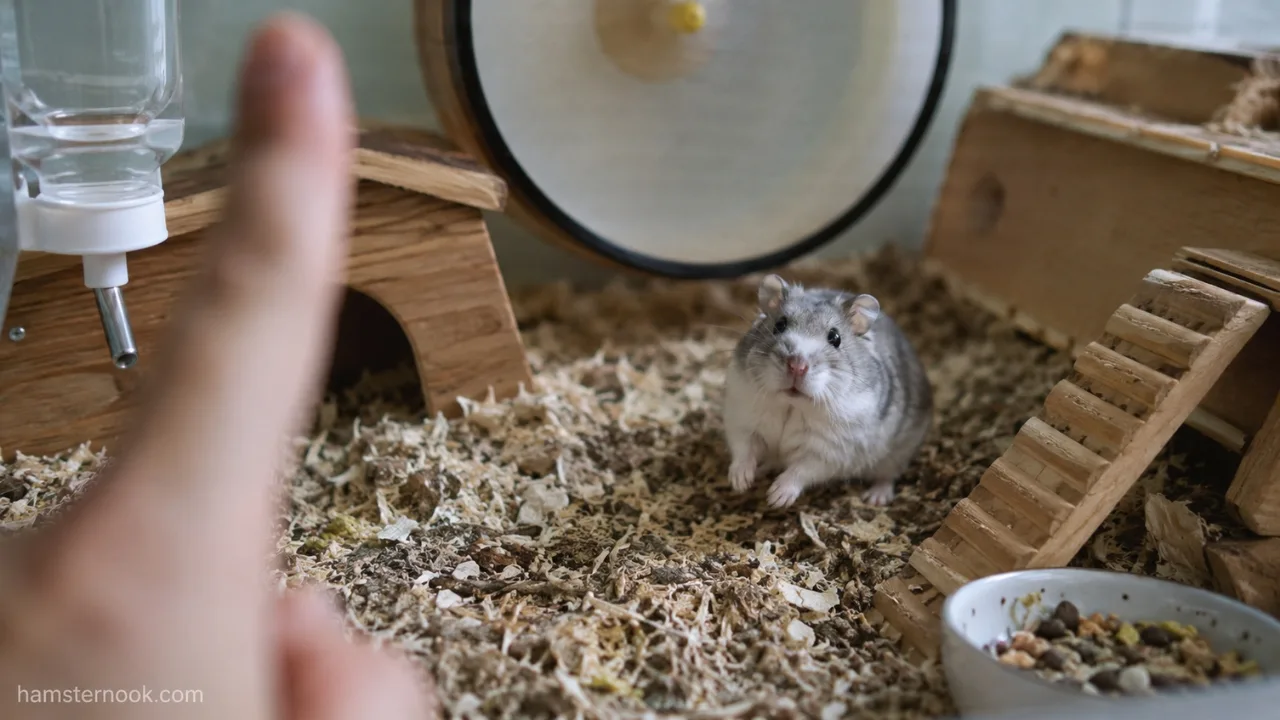
Instead of immediately entering it, your hamster circles the tunnel several times, repeatedly standing on its back legs before finally investigating.
Again, this is normal exploratory behavior.
Example 3: You Open a Treat Bag
Your hamster suddenly stands upright and faces your direction before walking toward the front of the enclosure.
It has likely recognized a familiar smell associated with food.
Does Standing Mean My Hamster Wants to Be Picked Up?
Not necessarily.

Some owners assume a hamster standing at the front of the enclosure is asking to come out.
In reality, the hamster may simply be:
- Checking who’s nearby
- Smelling something interesting
- Looking for food
- Investigating movement in the room
Rather than lifting your hamster immediately, watch what it does next.
A relaxed hamster may willingly climb into your hand or onto a scoop if it’s comfortable with handling, while a cautious hamster may simply return to exploring its enclosure.

Can Hamsters Stand for Long Periods?
Hamsters often stand upright briefly before returning to walking or exploring. If your hamster remains upright unusually long, repeatedly loses balance, or seems unable to return comfortably to all four feet, the behavior should be considered alongside other signs rather than assumed to be normal rearing.
Long periods of remaining upright without exploring are less common and should be interpreted alongside the hamster’s overall behavior. For example, a hamster that repeatedly freezes after loud noises may simply be remaining alert until it feels safe again.
If your hamster appears comfortable, active, eats normally, and behaves as it usually does, occasional standing is simply another part of its natural behavior.
Common Mistakes Owners Make
It’s easy to misread a hamster’s body language, especially if you’re new to keeping these small pets. Standing on two legs is often interpreted as a request for attention or a sign that something is wrong, when it’s usually neither.

Assuming Every Upright Posture Means Fear
A hamster that briefly stands up, sniffs the air, and then continues exploring is behaving normally. Fear-related postures are usually accompanied by other signs, such as freezing, flattened ears, hiding, or sudden attempts to escape.
Offering Treats Every Time It Stands Up
If you immediately hand your hamster a treat whenever it stands at the front of the enclosure, it may begin associating that location with food rather than simply investigating its surroundings. Treats should remain occasional rewards rather than a response to every upright posture.
Waking a Sleeping Hamster
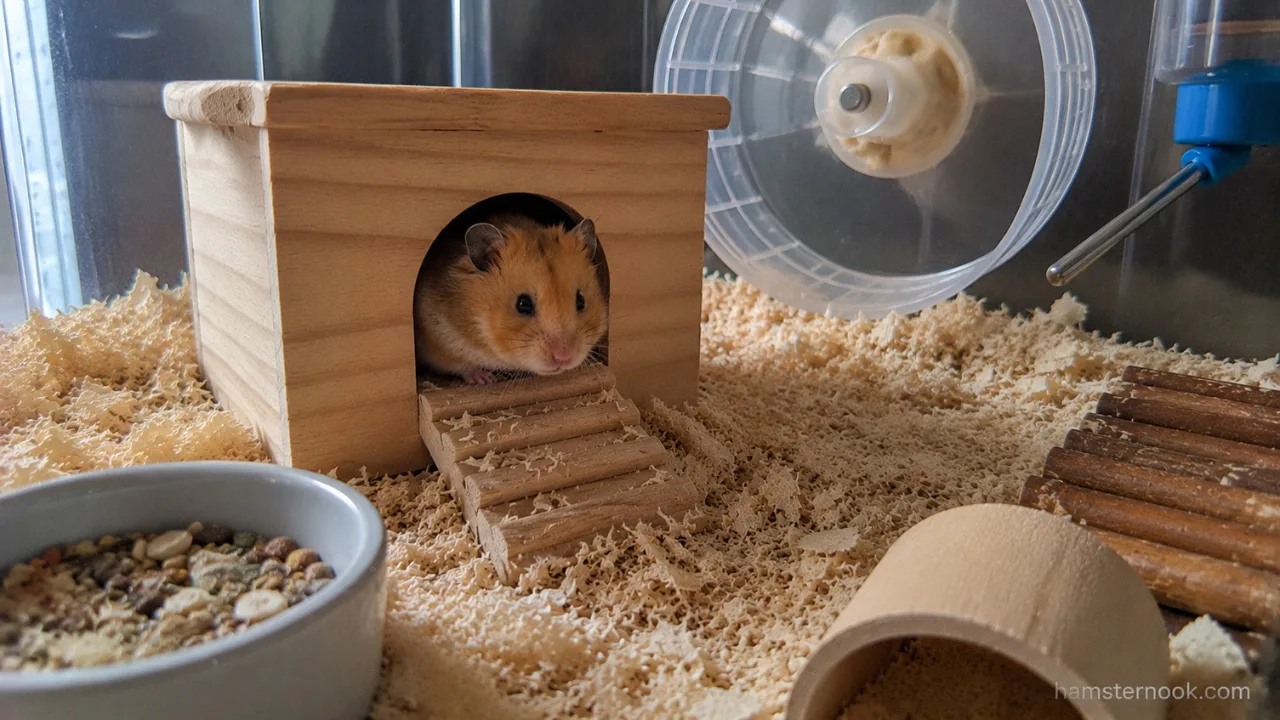
Owners sometimes try to encourage cute behaviors by waking their hamster during the day. Hamsters are naturally crepuscular, becoming most active around dusk and during the night. Interrupting their daytime rest can cause unnecessary stress and may lead to defensive behavior.
Mistaking Exploration for a Problem
Hamsters spend much of their active time collecting information about their environment. Standing upright, sniffing, and listening are all part of that process. Not every unusual-looking posture requires intervention.
What You Should Do
If your hamster frequently stands on two legs but otherwise appears healthy and active, the best approach is simply to observe.
For broader guidance on normal hamster behavior and body language, see our Complete Hamster Care Guide for Beginners.
Pay attention to what happens immediately before and after the behavior.
Ask yourself:
- Did your hamster hear a sound?
- Has something in the enclosure changed?
- Did you enter the room?
- Is there a new scent nearby?
- Is it simply exploring during its normal active hours?
Most of the time, you’ll find an obvious explanation.
Watching for a pattern over several days is often more helpful than focusing on a single moment, as healthy hamsters commonly repeat this behavior during their normal active periods.
You can also help your hamster feel secure by:
- Keeping a consistent daily routine.
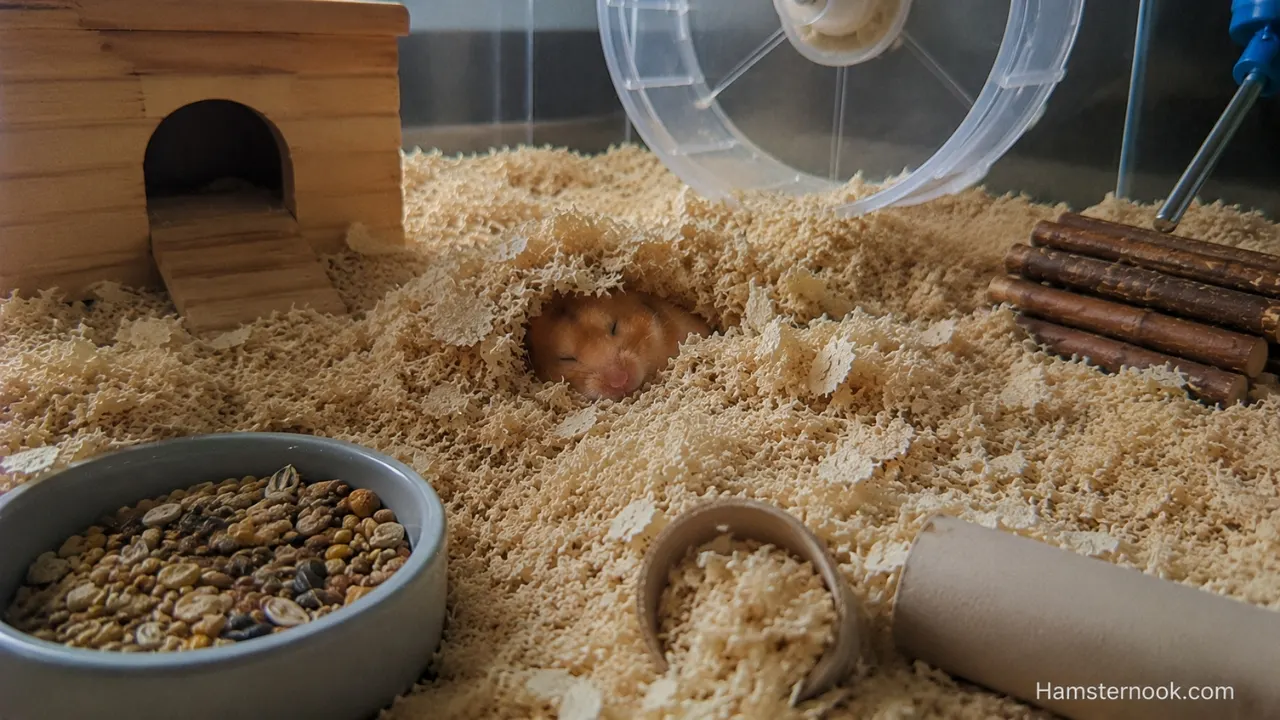
- Providing plenty of bedding for burrowing.
- Including several hides and tunnels.
- Offering safe enrichment that encourages natural exploration.
- Avoiding sudden loud noises around the enclosure.
- Allowing your hamster to investigate new items at its own pace.
Providing enough mental stimulation is just as important. Learn more in Do Hamsters Get Bored? 10 Signs Your Hamster Needs More Enrichment.

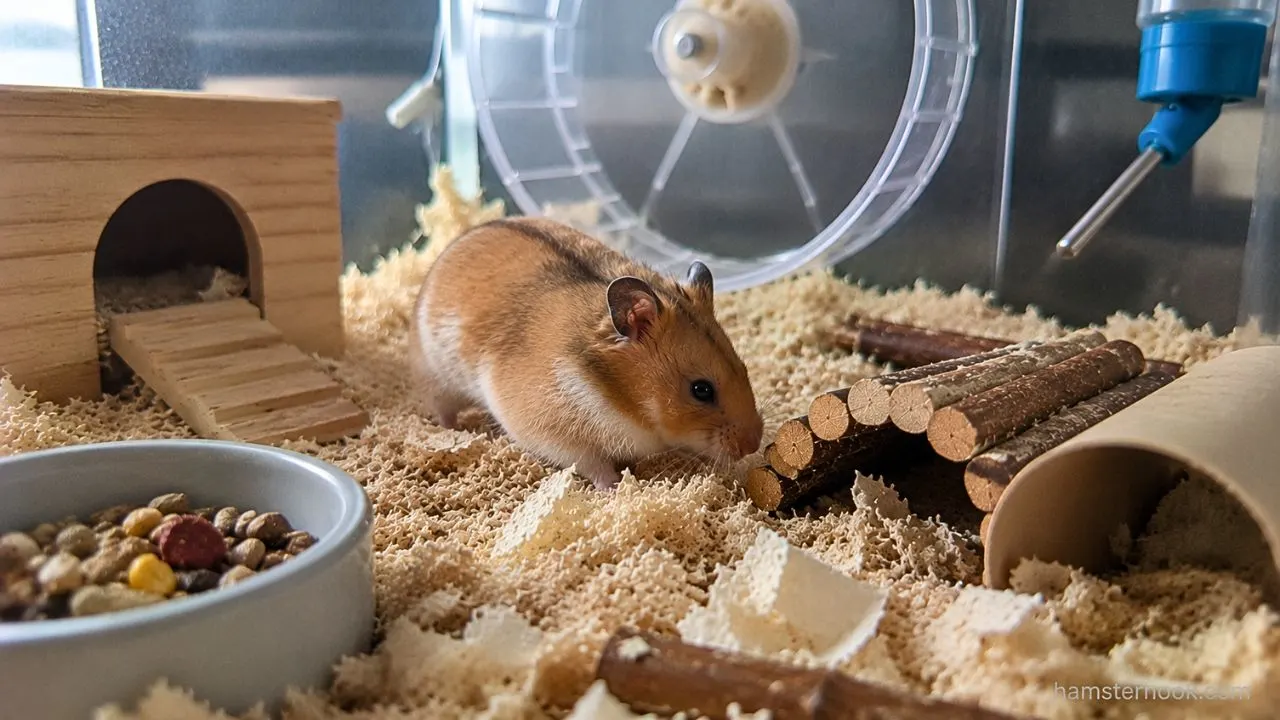
A confident hamster often alternates between digging, climbing, foraging, running, and briefly standing upright to inspect its surroundings.
Warning Signs to Watch For
Standing on two legs alone is rarely a cause for concern. However, it’s worth paying closer attention if it’s accompanied by other unusual behaviors.
Watch for signs such as:
- Persistent freezing that lasts several minutes.
- Frequent attempts to escape the enclosure.
- Refusing to eat or drink.
- Unusual aggression in a previously calm hamster.
- Constant hiding during normal active hours.
- Difficulty walking or balancing after returning to all four feet.
- Repeated falling over or stumbling.
These behaviors suggest the issue may be something other than simple curiosity and deserve further observation.
A sudden combination of several unusual signs is generally more meaningful than standing on two legs by itself.
If difficulty walking or balance problems are also present, our Why Is My Hamster Walking Weird? Causes & When to See a Vet guide covers other signs that may need veterinary attention.
When to Worry
However, you should seek advice from an experienced exotic animal veterinarian if your hamster:
- Cannot support its weight properly.
- Appears weak or unsteady.
- Stops eating or drinking.
- Shows a sudden change in normal behavior that lasts more than a day.
- Develops additional symptoms such as lethargy, labored breathing, or obvious injury.
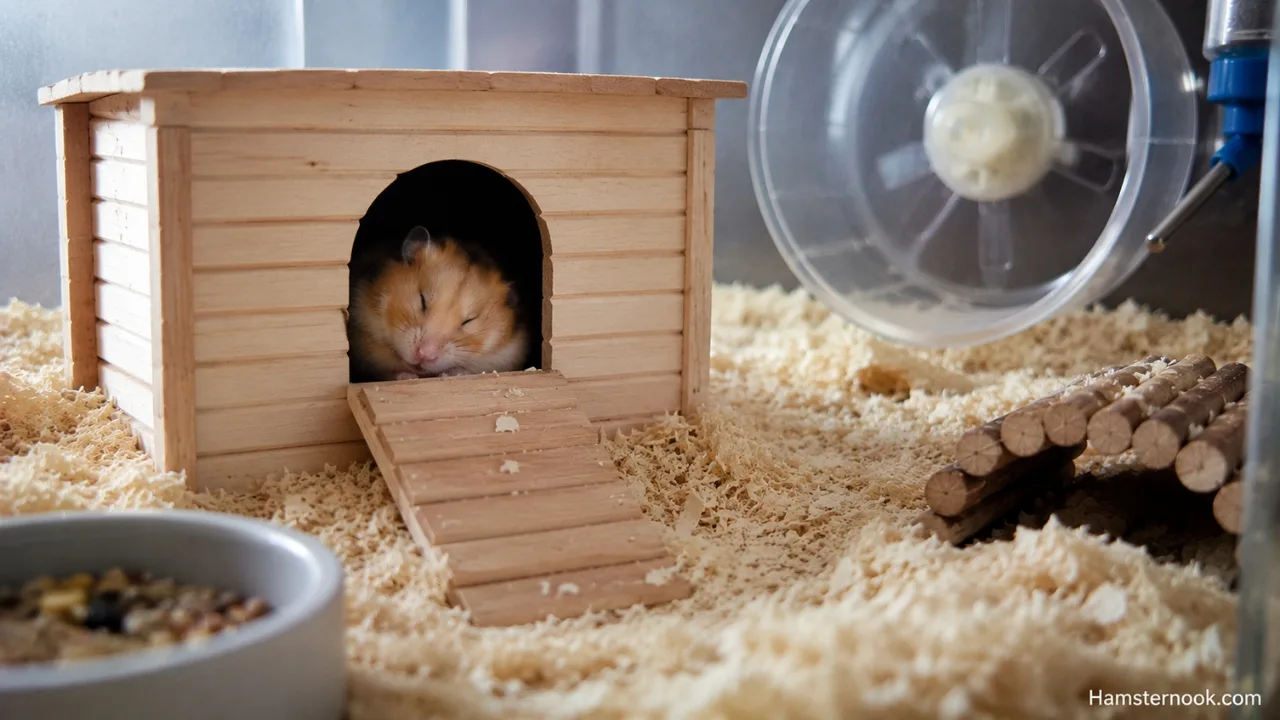
Standing upright is a normal behavior. The concern lies in the accompanying signs—not the posture itself.
Final Thoughts
Watching a hamster stand on its back legs is one of the most familiar sights for owners, and in the vast majority of cases, it’s simply part of normal exploration. By rising onto its hind legs, your hamster can better smell the air, listen for sounds, and investigate anything new in its environment.
Rather than focusing on the posture alone, look at your hamster’s overall body language. A relaxed animal that quickly returns to exploring, digging, eating, or running on its wheel is behaving exactly as you would expect. If the upright posture is paired with persistent fear, difficulty moving, or other unusual changes, that’s when it deserves closer attention.
Understanding these small behaviors makes it easier to tell the difference between normal curiosity and genuine warning signs, helping you respond appropriately without worrying about harmless everyday behavior.
Frequently Asked Questions
Why does my hamster suddenly stand up when I walk into the room?
Your hamster has likely recognized movement, sound, or your scent. Many hamsters briefly stand upright to investigate before deciding whether to approach.
Is standing on two legs a sign that my hamster is happy?
Not by itself. Standing upright usually indicates curiosity or investigation rather than a specific emotion. Look at your hamster’s overall body language to understand how it feels.
Why does my hamster stand up and sniff the air?
Hamsters rely heavily on their sense of smell. Standing upright helps them detect scents carried through the air that may not be noticeable from ground level.
Do all hamster species stand on their back legs?
Yes. Syrian, Campbell’s, Winter White, Roborovski, and Chinese hamsters all display this natural exploratory behavior.
Should I worry if my hamster stands on two legs every day?
Standing on two legs every day can be normal, particularly during active periods when a hamster is exploring or checking its surroundings. What matters more is whether the behavior is consistent with your hamster’s usual activity and body language.

Can a hamster stand on two legs because it’s begging for food?
It may have learned to associate your presence with feeding time, but the standing itself is still a natural investigative behavior rather than true begging.
References
This guide is based on hamster behavior, body language, environmental needs, enrichment, and welfare guidance from trusted animal welfare and veterinary resources, including:
- RSPCA – Hamster Behaviour – Guidance on natural hamster behaviors, body language, activity patterns, handling, and signs of stress or fear.
- RSPCA – Creating a Good Home for Hamsters – Information on environmental conditions, hiding places, bedding, enrichment, and creating a secure hamster habitat.
- RSPCA – Keeping Hamsters as Pets – General guidance on hamster care, natural behavior, housing, diet, enrichment, and welfare.
- Blue Cross – Hamster Care Guide – Practical advice on hamster behavior, handling, enrichment, housing, and wellbeing.
- MSD Veterinary Manual – Providing a Home for a Hamster – Veterinary guidance on hamster environmental needs, housing, exercise, and suitable enclosure conditions.
- NC3Rs – Choosing Appropriate Enrichment – Guidance on enrichment that supports natural behaviors, exploration, and hamster welfare.

Narayan Kumar is the founder and author of HamsterNook. He creates practical, research-based hamster care guides covering hamster behavior, nutrition, cage setup, enrichment, health, and everyday care. His goal is to help hamster owners make informed decisions and provide safer, healthier lives for their pets through clear, beginner-friendly information based on trusted animal care resources.