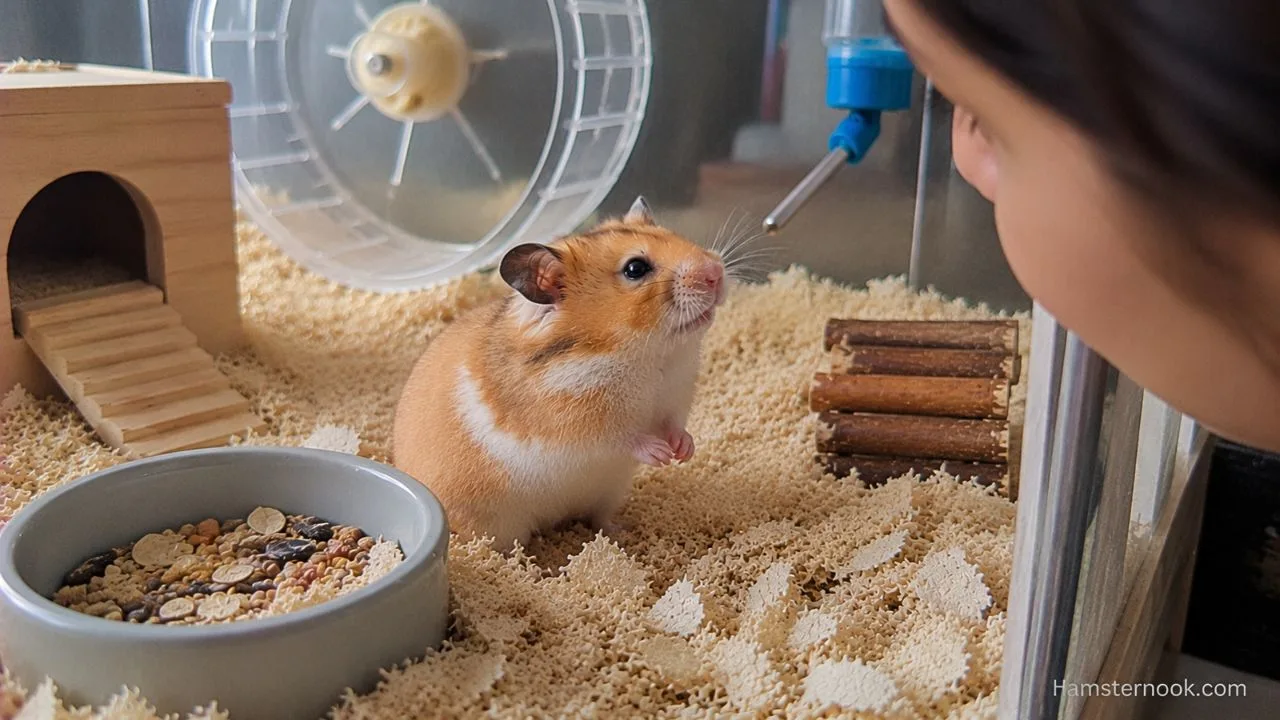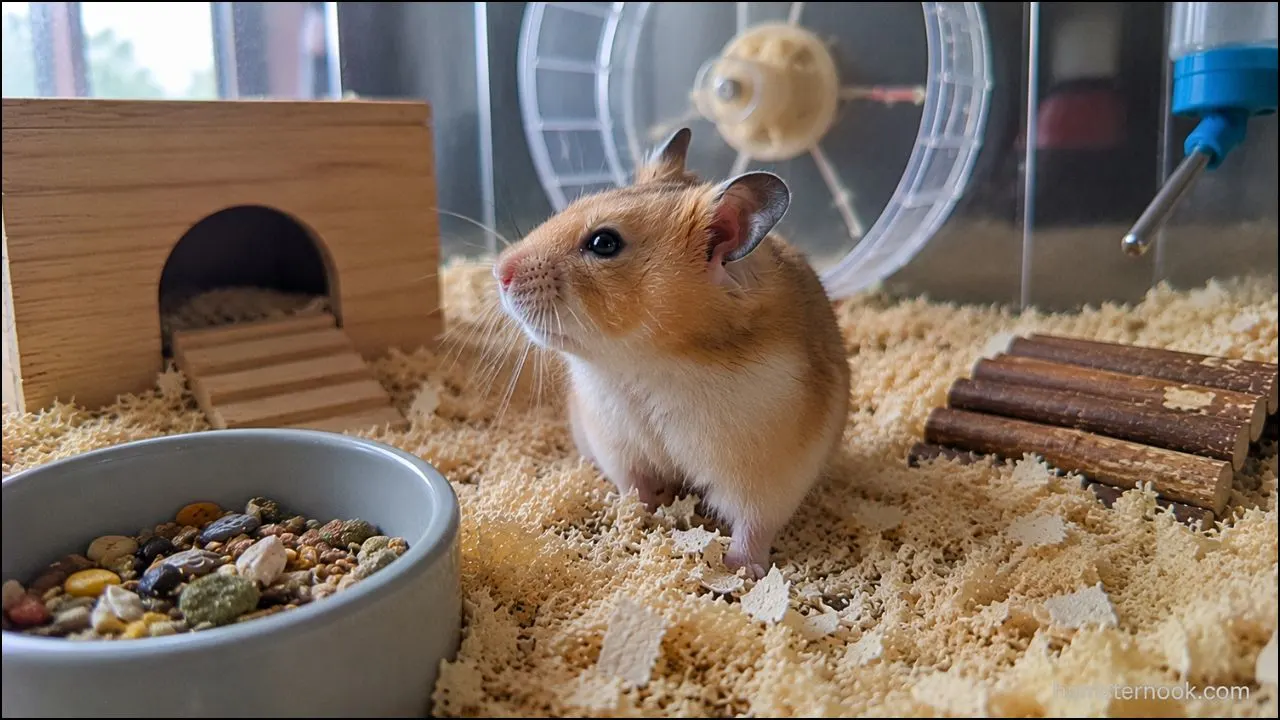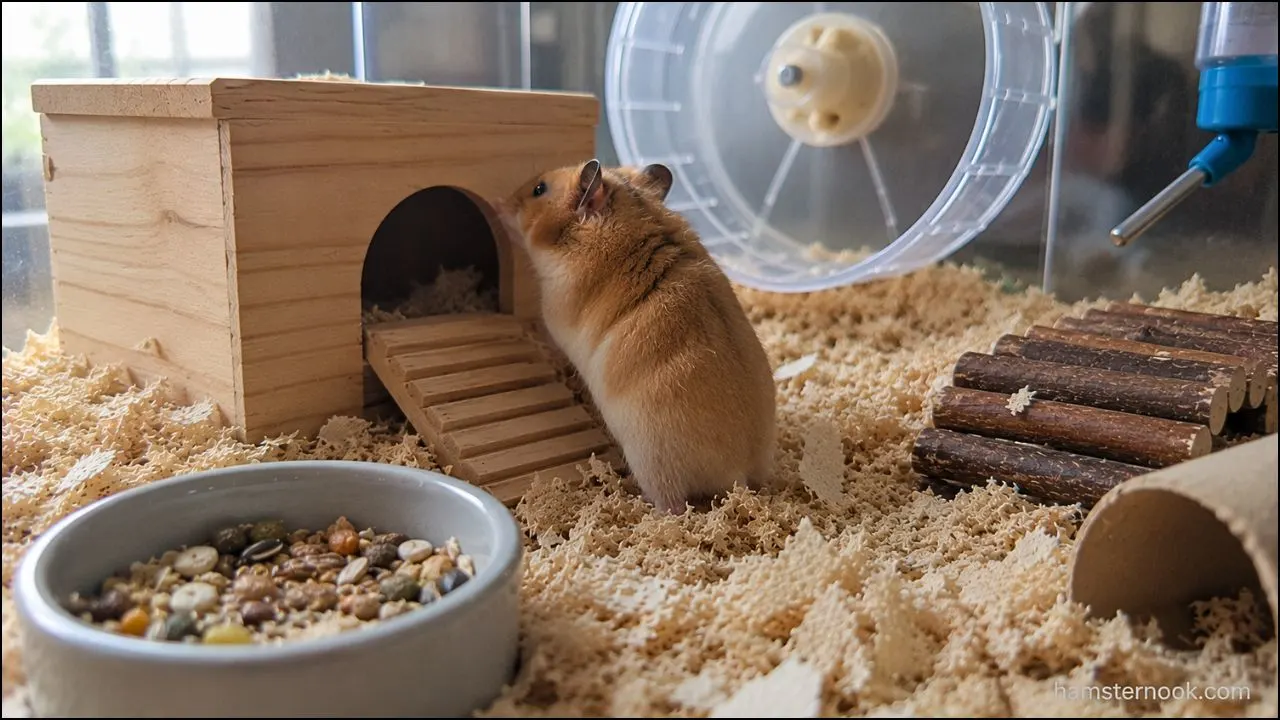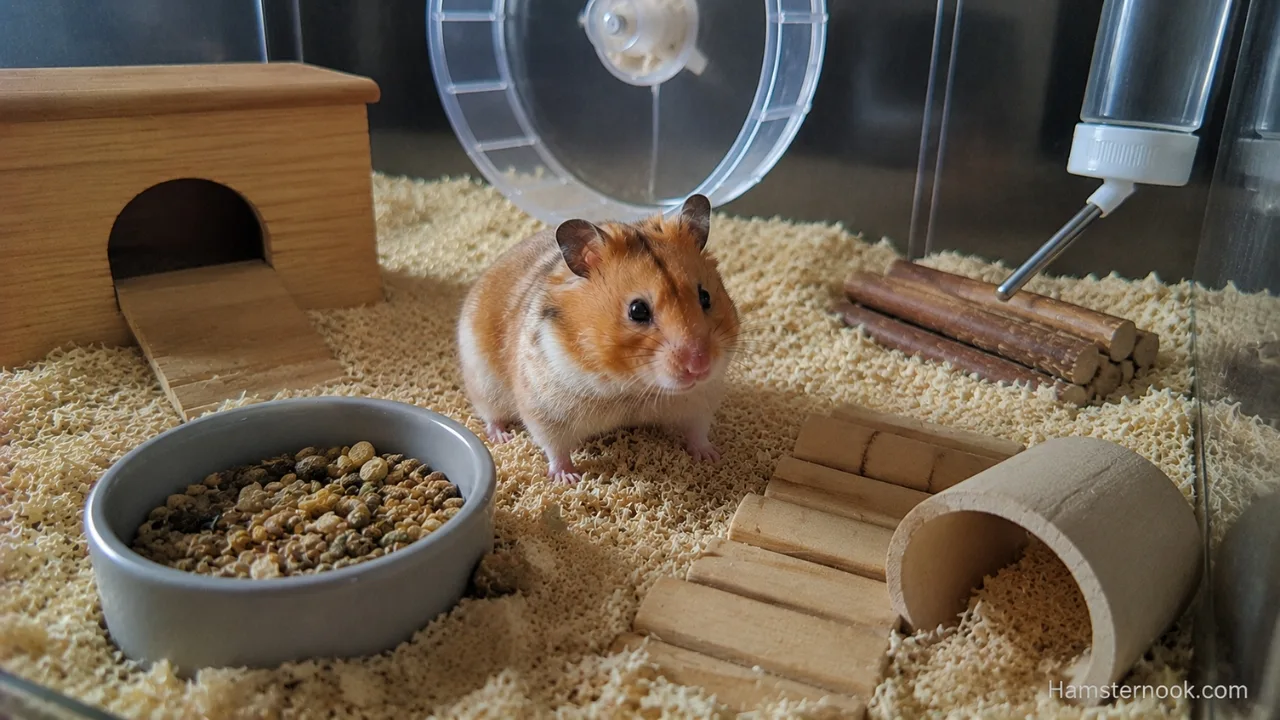
If your hamster seems hesitant, spends extra time sniffing around, or appears to have forgotten where everything is after you’ve changed its enclosure, you’re not imagining it. Hamsters rely heavily on familiar scents and the layout of their environment to navigate, so a cage rearrangement can temporarily leave them searching and exploring more than usual. In most cases, this adjustment is short-lived, especially when changes are made gradually.
Quick Answer
Yes, hamsters can become temporarily confused after a cage rearrangement. They depend more on smell than eyesight, using scent markings and familiar pathways to find food, water, sleeping areas, and hiding spots. A major change to the enclosure can disrupt those cues, causing your hamster to spend time exploring and reorienting itself. Many hamsters settle after they have had time to explore and rebuild familiar routines, but the adjustment period can vary between individuals.
If you’d like a broader understanding of creating the right environment for your pet, read our Complete Hamster Care Guide for Beginners (2026).
Why Cage Rearrangements Affect Hamsters
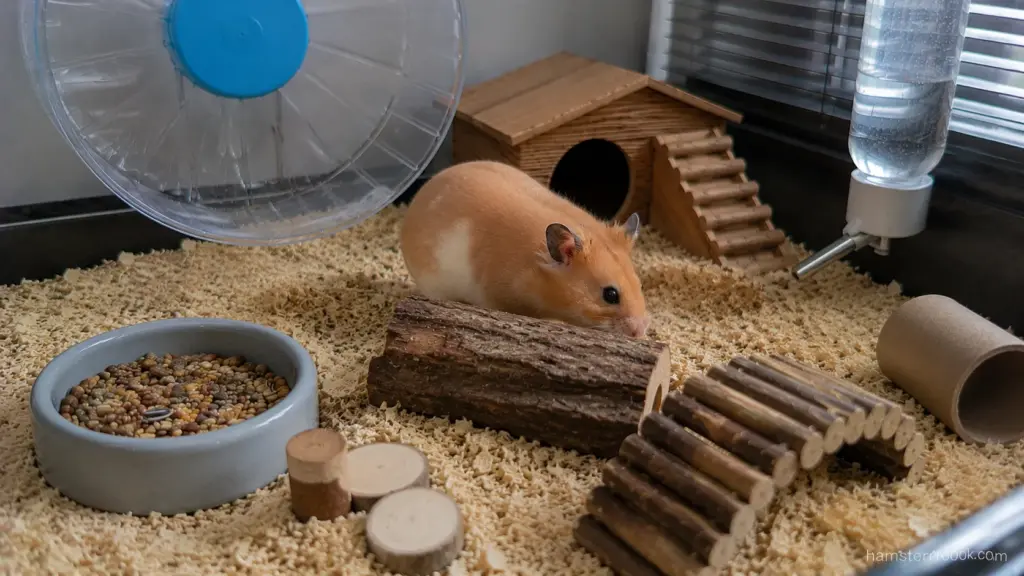
Unlike humans, hamsters don’t build a mental map primarily through vision. Their sense of smell is one of their most important tools for understanding their surroundings.

For a deeper look at how hamsters communicate through scent and other natural behaviors, our Hamster Behavior Guide: Understanding Every Common Hamster Behavior (2026) explains these instincts in greater detail.
As hamsters move around their enclosure, they leave scent marks from specialized glands and through contact with bedding and nesting material. These scent cues help them identify safe routes, locate resources, and recognize their territory. Removing or relocating everything at once means many of those familiar cues disappear.
That doesn’t mean your hamster has forgotten its home. Instead, it’s learning where everything is again.
You may notice your hamster:

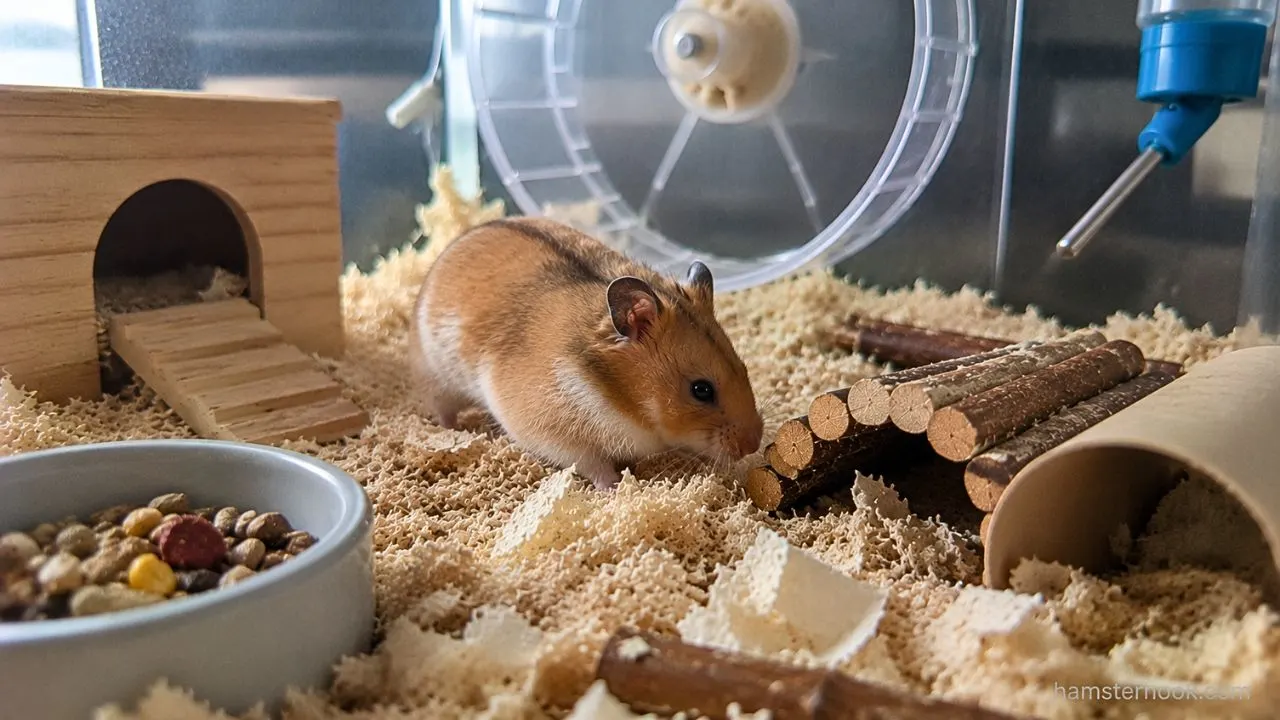
- Sniffing every corner of the enclosure
- Walking more slowly than usual
- Visiting familiar areas repeatedly
- Spending extra time checking tunnels and hides
- Rearranging nesting material on its own
These behaviors can reflect exploratory behavior as your hamster investigates changed scent and layout cues; they are more concerning when other signs of stress appear or the behavior persists.
Normal Adjustment vs. Signs of Stress
| Normal Adjustment | Possible Stress |
|---|---|
| Exploring the cage repeatedly | Hiding constantly for several days |
| Sniffing new objects | Repeated bar chewing or escape attempts |
| Rebuilding the nest | Persistent pacing or repetitive behaviors |
| Moving food stash | Refusing to leave the nest for extended periods |
| Taking longer to find favorite spots | Remaining unusually fearful after several days |
If you’re unsure whether your hamster is simply adjusting or experiencing genuine stress, our Hamster Body Language Explained: Signs of Stress, Fear, Happiness & Trust guide can help you recognize the difference.
Many hamsters investigate every change before settling back into their usual routine. Stress becomes more concerning when behavior changes persist instead of gradually improving. Stressed hamsters may also develop repetitive behaviors if their environment does not meet their welfare needs.
How Long Does the Confusion Last?
For most hamsters, the adjustment period is relatively short.
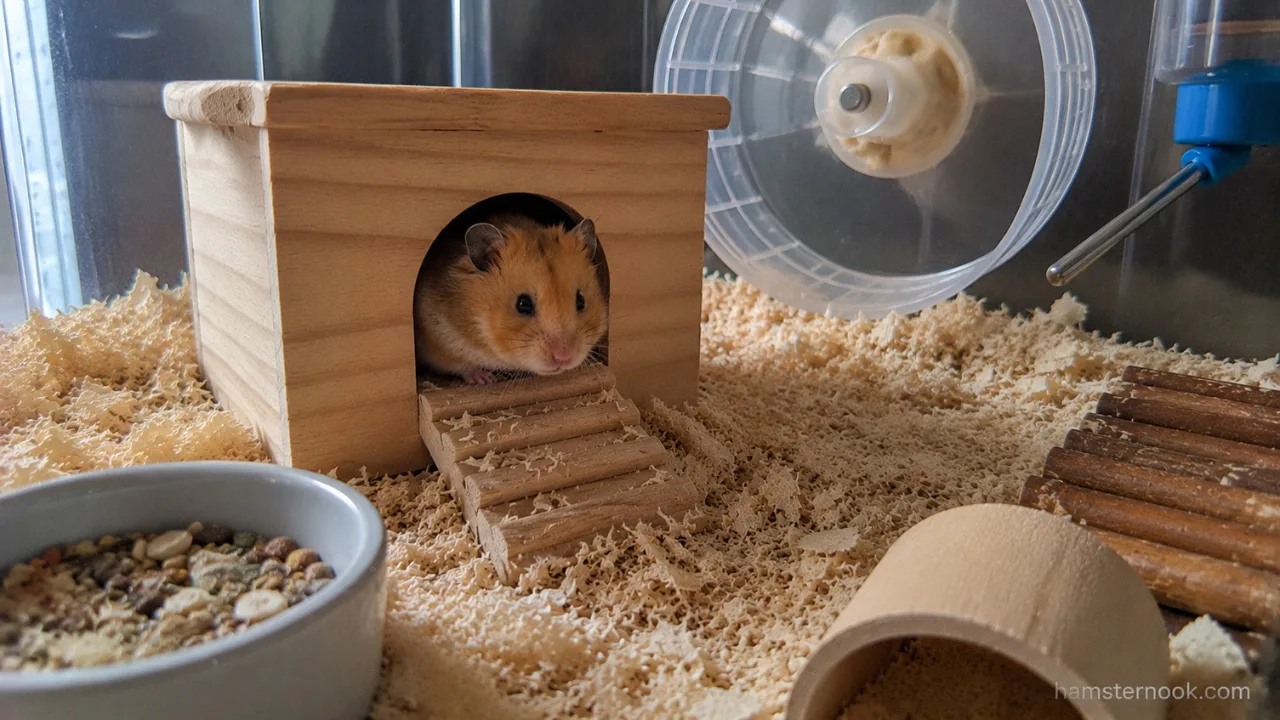
A hamster may spend its next active period carefully exploring every corner before resuming normal activities like:
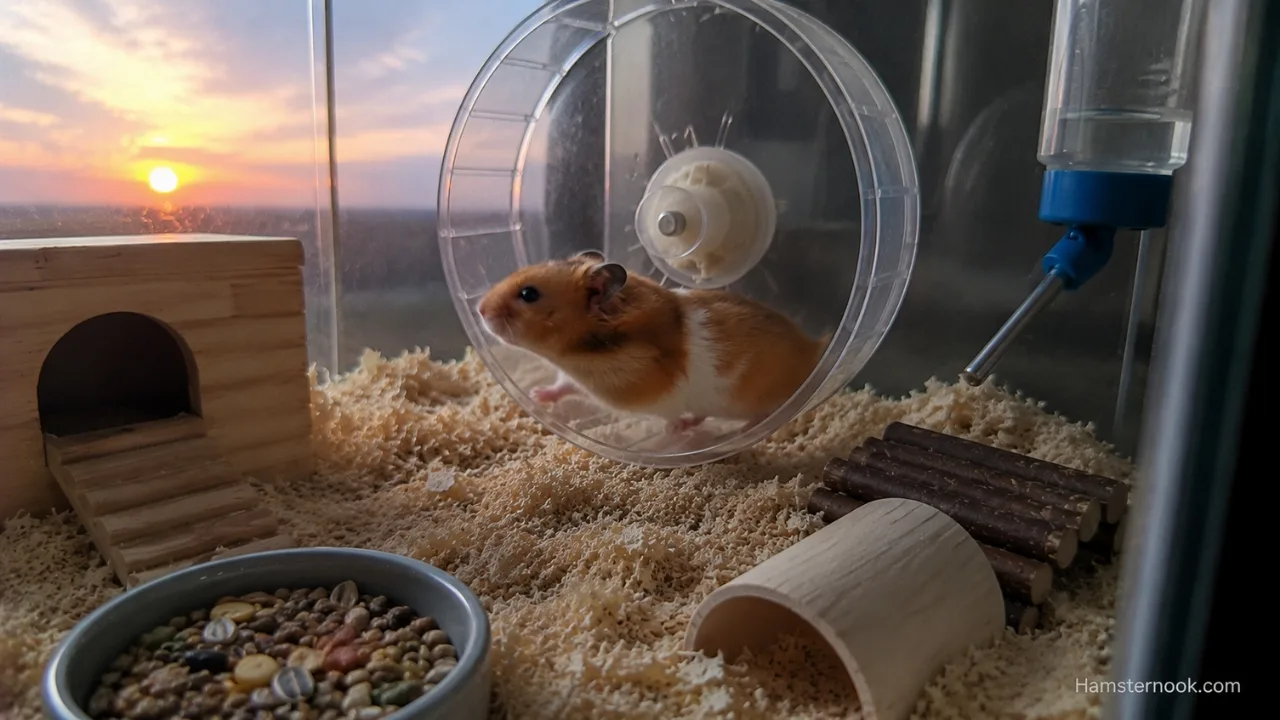
- Running on the wheel
- Collecting food
- Digging tunnels
- Sleeping in its preferred hide
Some hamsters settle during their next active period, while others may take longer to return to their usual routine. There is no reliable one-size-fits-all timeline.
During this adjustment period, it’s common to see your hamster pause frequently to sniff objects or revisit the same areas several times before settling back into its normal routine.
The amount of change matters more than the cleaning itself. Moving one hide or adding a new enrichment toy usually causes very little disruption, while completely redesigning the enclosure may require a longer adjustment period.
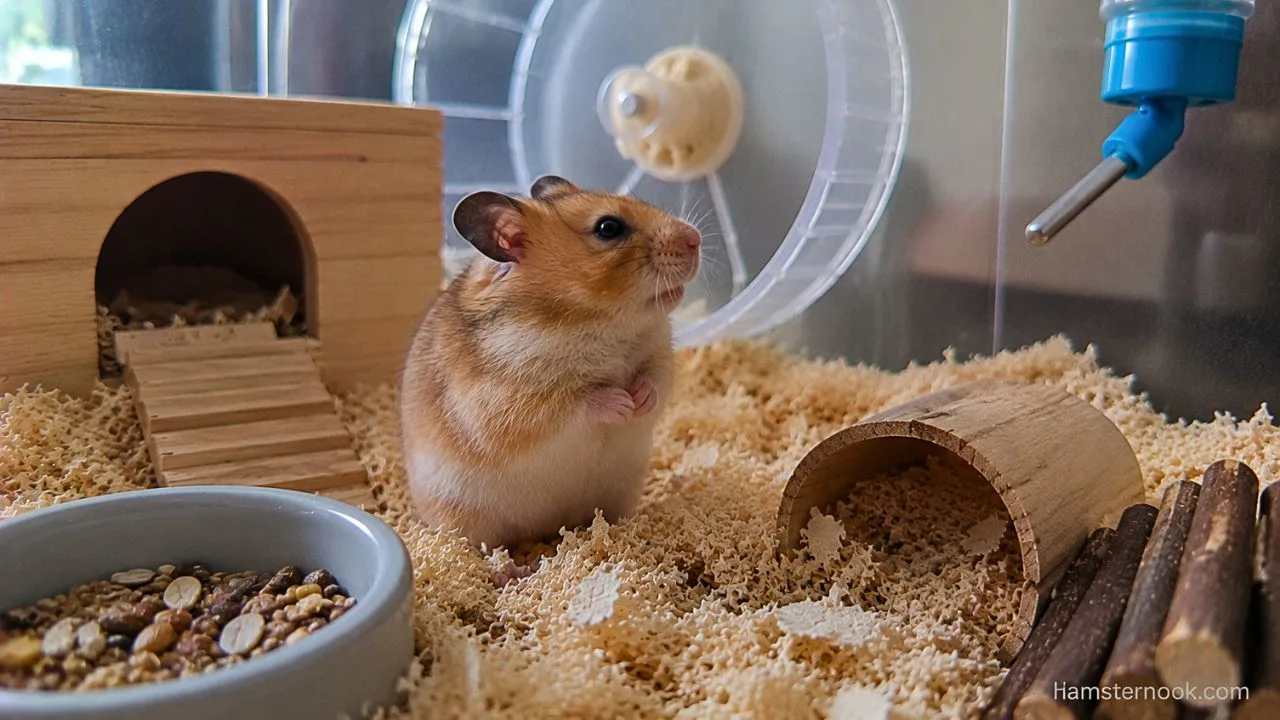
Does Every Hamster React the Same Way?
No. Personality plays a surprisingly large role.
Some hamsters appear naturally curious and quickly investigate anything new.
Others prefer routine and become cautious whenever something changes.
Factors that influence how a hamster responds include:
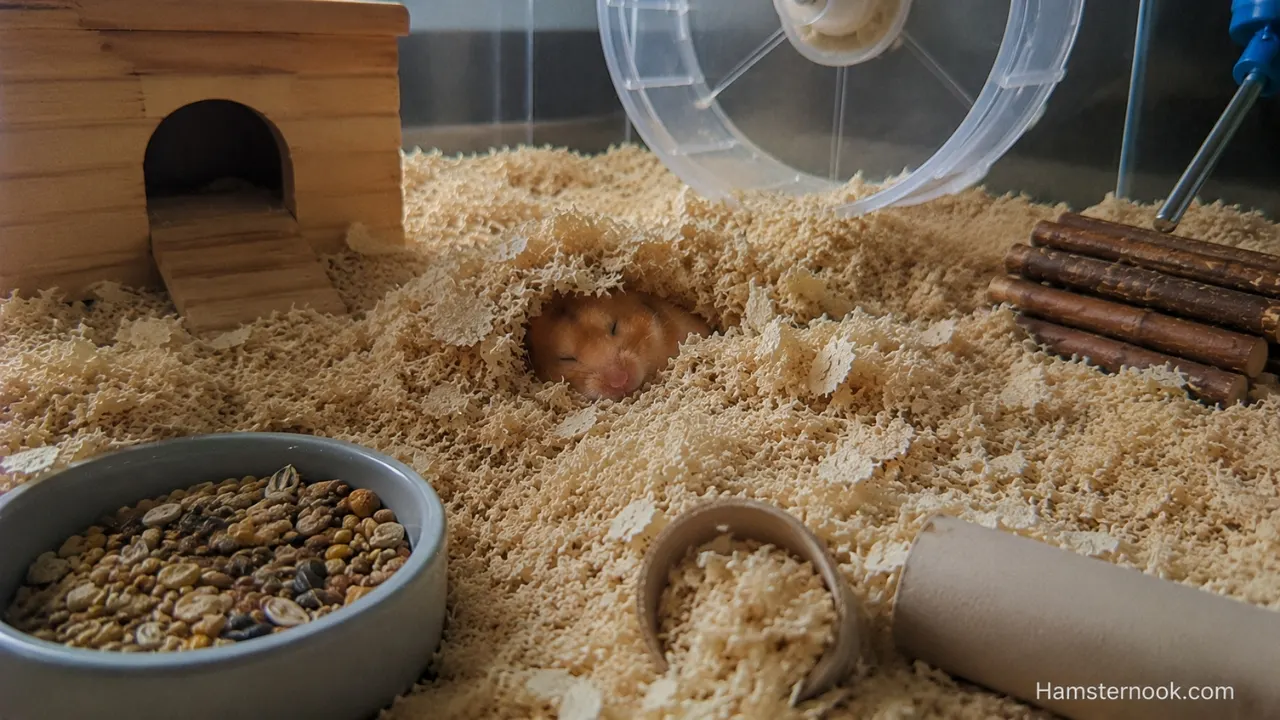
Age
Older hamsters often appreciate consistency and may take longer to adjust than younger adults.
Temperament
Bold hamsters tend to investigate immediately, while timid individuals may stay hidden until they feel secure again.
Previous Experiences
Hamsters that have experienced frequent moves, poor housing, or repeated disruptions may react more cautiously than animals that have lived in a stable environment.
Is It Safe to Rearrange the Cage?
Yes—when done for a good reason and not too often.
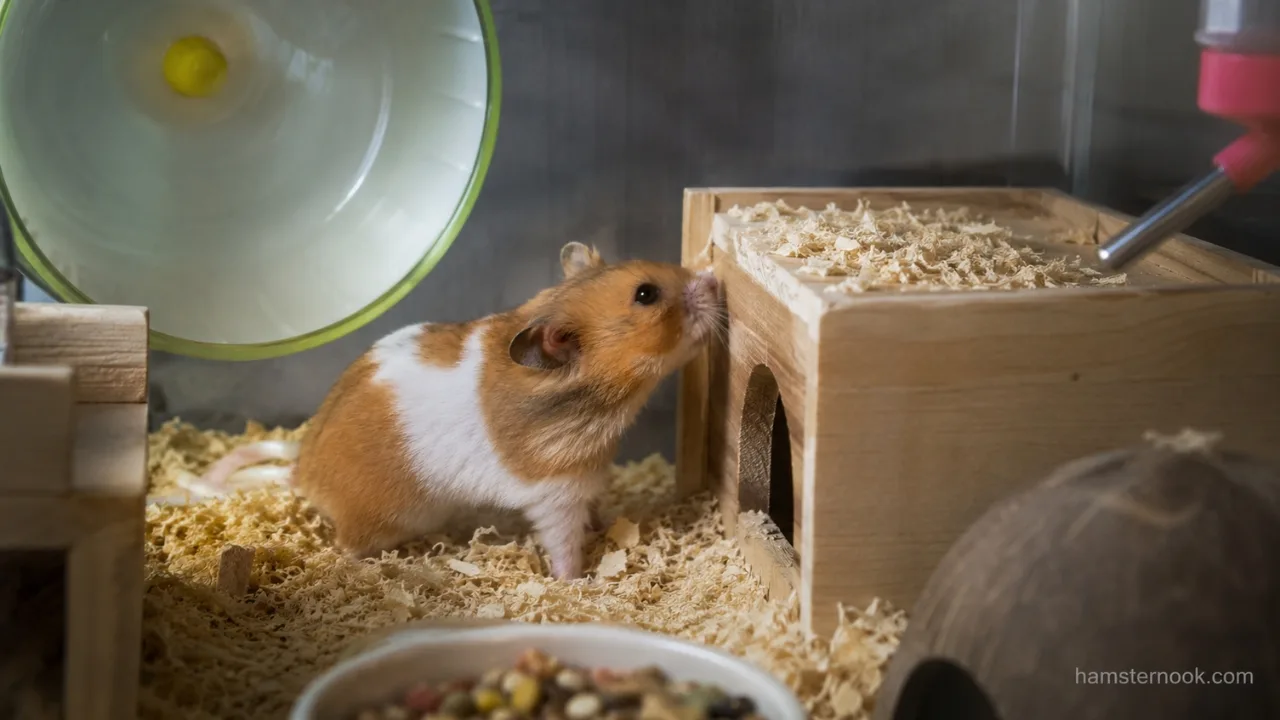
Rearranging can provide environmental enrichment by encouraging exploration and preventing the enclosure from becoming overly predictable. However, major redesigns every week usually provide little benefit and may repeatedly disrupt your hamster’s established scent map.
Many owners also find our Do Hamsters Get Bored? 10 Signs Your Hamster Needs More Enrichment guide helpful when deciding how much novelty to introduce without causing unnecessary stress.
A better approach is to make gradual improvements instead of complete overhauls.
Examples include:
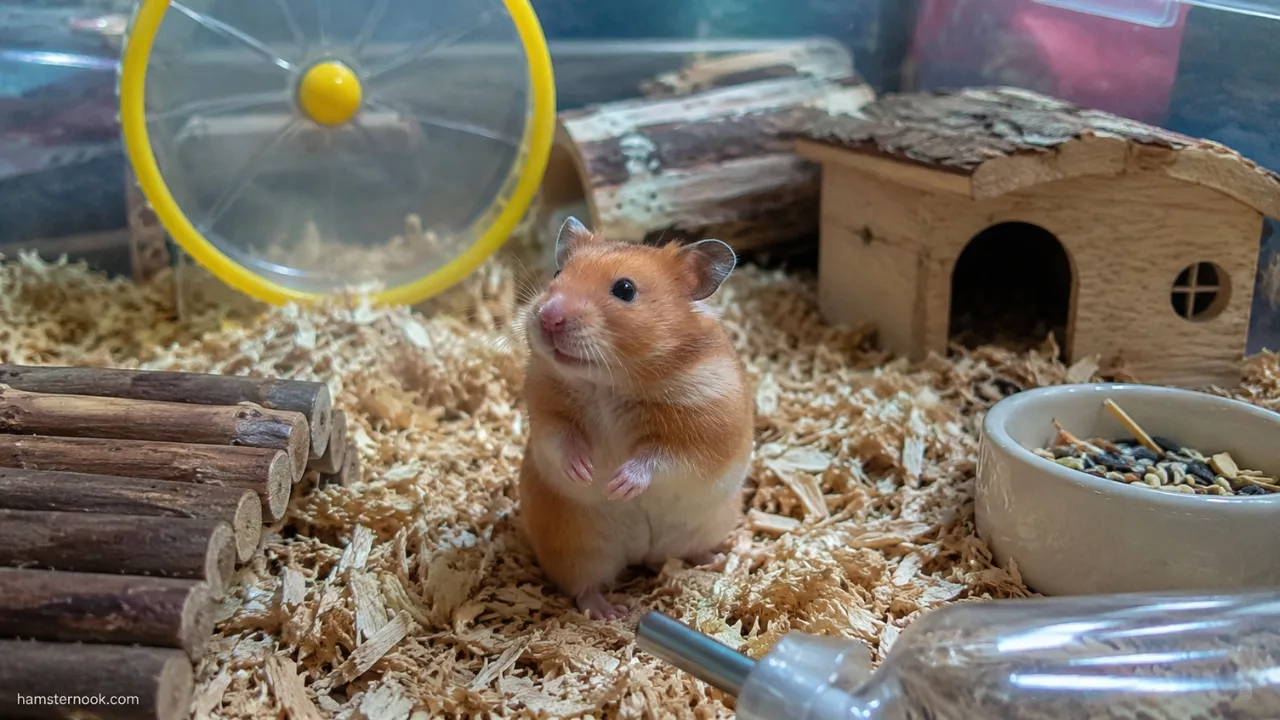
- Adding a new cork tunnel
- Rotating one chew toy
- Moving a hide to a nearby location
- Introducing a different forage area
Small changes provide novelty without forcing your hamster to relearn the entire enclosure.
Introducing only one or two changes at a time also makes it easier to see how your hamster responds before making additional adjustments.
Deep Cleaning and Rearranging Are Different
Many owners unintentionally combine two major changes during the same cleaning session.
During a deep clean, the enclosure is already changing because bedding and scent markings are removed. If every accessory is also moved to a new location, the hamster loses both familiar smells and its familiar layout at the same time.
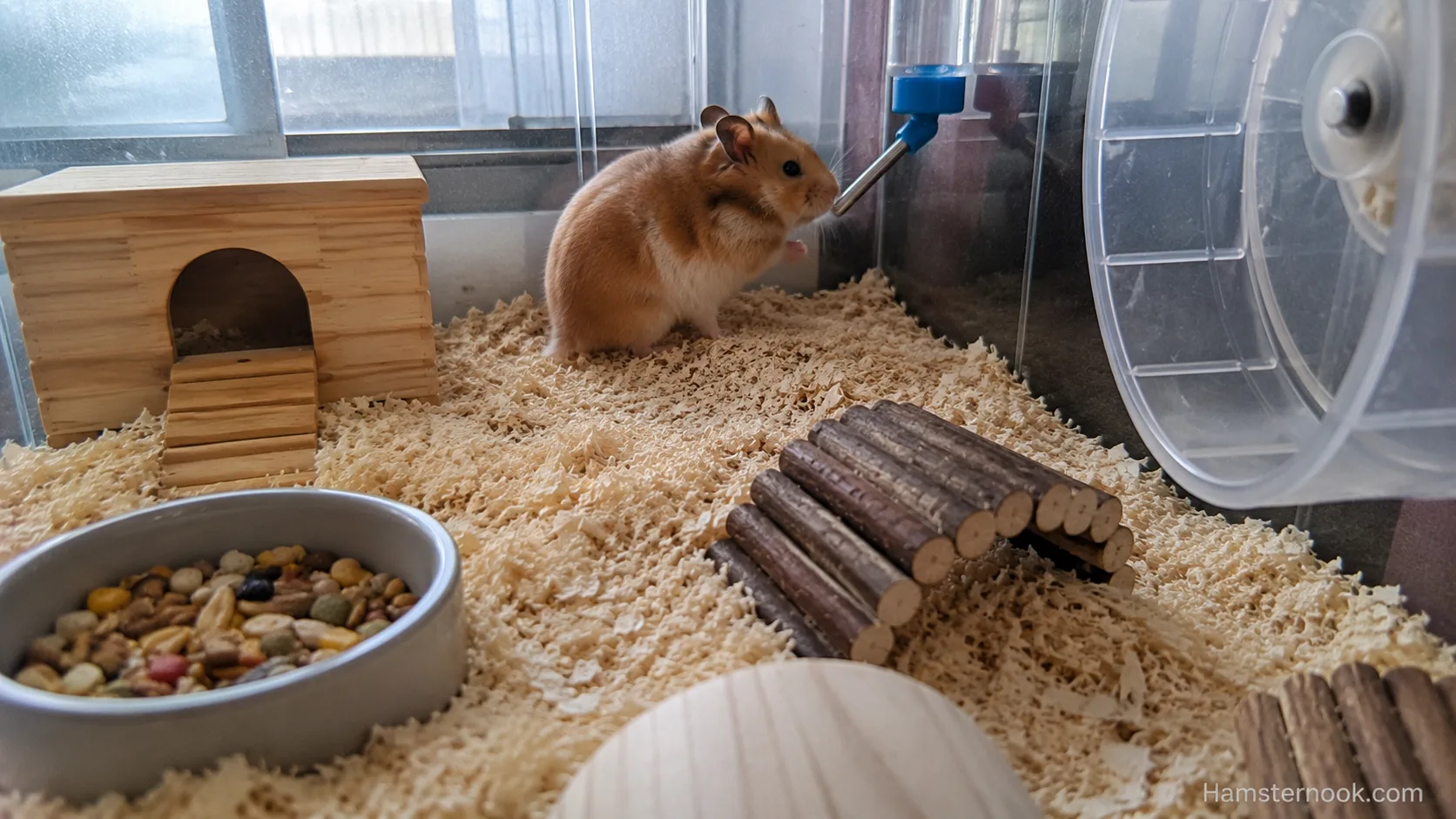
Animal welfare guidance recommends avoiding unnecessary removal of all scent cues. Spot cleaning is generally preferred whenever possible, and if a full clean is necessary, retaining some clean nesting material can help preserve familiar scents.
If you’re unsure how often a full clean is actually necessary, read How Often Should You Clean a Hamster Cage? Complete Cleaning Guide for a practical cleaning routine.
Practical Example
Imagine your hamster always sleeps in a wooden hide placed in the back-left corner of the enclosure.
During cleaning, you:
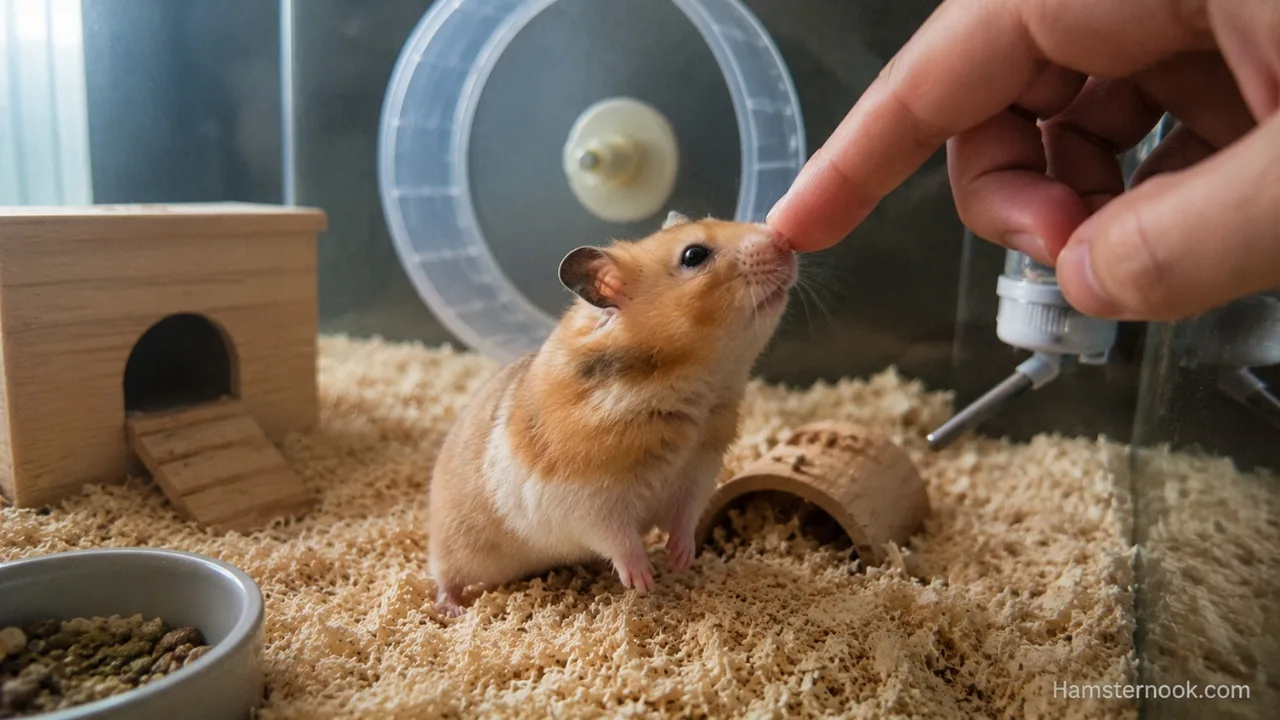
- Replace all bedding
- Move the hide to the front-right corner
- Relocate the wheel
- Add several new decorations
- Change the sand bath location
When your hamster wakes up, almost every familiar cue has changed.
Instead of heading straight to its sleeping area or food stash, it may spend the first hour carefully exploring before deciding where to rebuild its nest.
This behavior is expected and doesn’t necessarily mean the hamster is unhappy.
Common Mistakes Owners Make
Rearranging Too Frequently
Changing the enclosure every week may never allow the hamster to establish a stable territory.
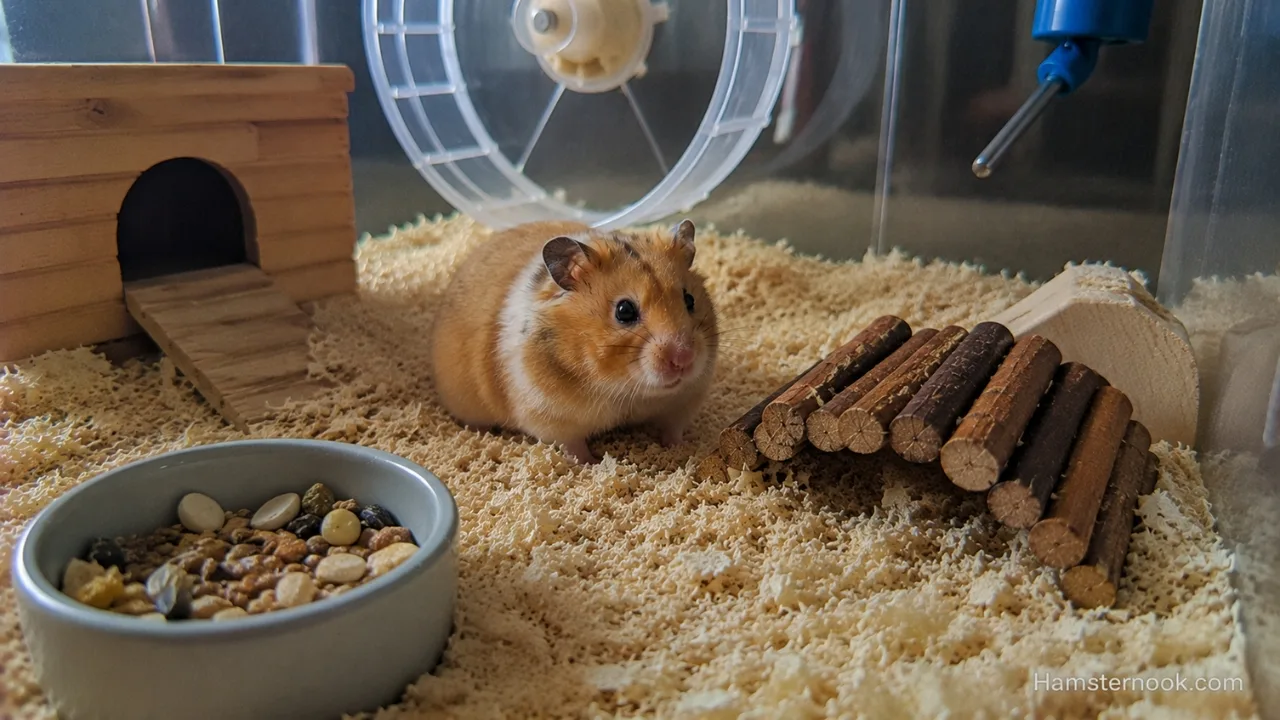
Throwing Away All Nesting Material
Discarding everything removes important scent cues that help the hamster recognize its home. Keeping a portion of clean nesting material can make the transition easier.
Keeping enough bedding is equally important. Our How Much Bedding Does a Hamster Need? Minimum Depth Guide for Healthy Burrowing explains the recommended depth for healthy tunneling and nest building.
Moving Every Essential Item
If the wheel, water bottle, food area, hide, and sand bath all move at once, the hamster has much more to relearn.
Disturbing the Hamster During the Day
Hamsters are naturally active during the evening and night. Rearranging their enclosure while they are sleeping can add unnecessary stress. A quiet, predictable environment supports their welfare.
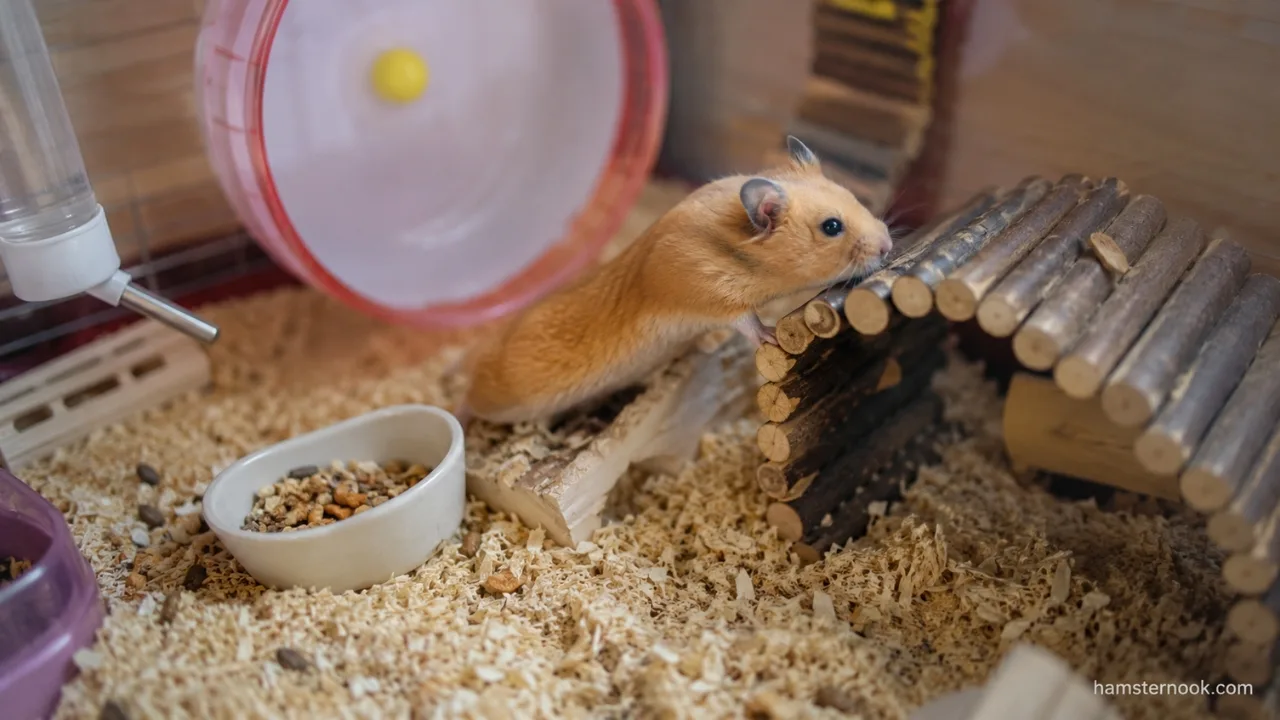
Mistaking Exploration for Fear
A hamster carefully inspecting every object is often gathering information rather than showing distress.
What You Should Do
If you’ve already rearranged the cage, the best approach is usually to leave it alone for a while.
Allow your hamster to:
- Explore at its own pace
- Rebuild its nest
- Move food stores where it prefers
- Create new pathways through the bedding
Avoid making additional changes while it’s still adjusting.
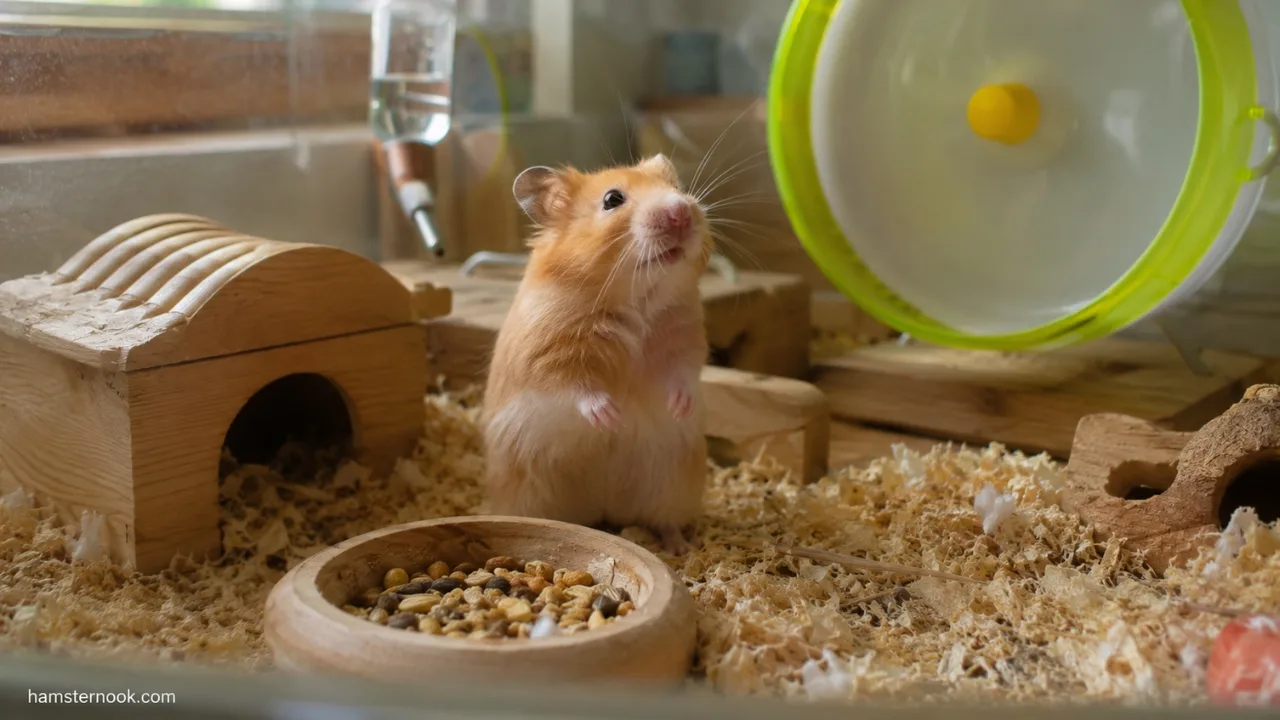
For future cleaning sessions:
- Spot clean regularly instead of replacing all bedding whenever possible.
- Keep a small amount of clean nesting material.
- Make gradual layout changes instead of complete redesigns.
- Leave key resources, such as the water bottle and primary hide, in familiar locations when practical.
- Observe your hamster over the next couple of active periods before deciding whether further adjustments are needed.
If your hamster resumes eating, wheel running, grooming, and nest building as usual, it has most likely adapted successfully to the new layout.
When Should You Worry?
Temporary exploration after a rearrangement is normal.
However, consider looking more closely if your hamster:
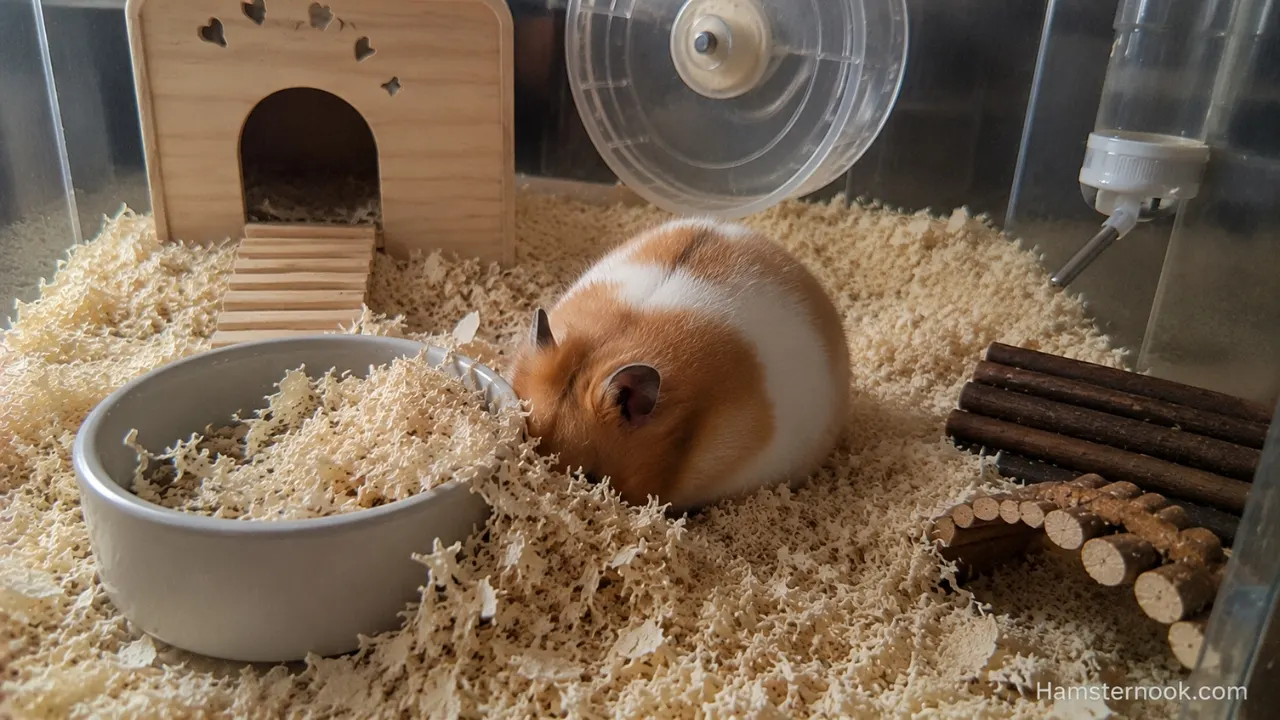
- Stops eating or drinking
- Remains unusually inactive beyond its normal daytime sleep
- Shows persistent repetitive behaviors such as constant bar chewing or pacing
- Continues hiding without emerging during its usual active hours
- Appears unable to locate food or water after an extended period
These behaviors are not caused by cage rearrangement alone and may indicate an unrelated health or welfare concern that deserves closer attention.
If the behavior continues or you notice repeated stress behaviors, our 7 Signs You’re Accidentally Stressing Your Hamster (Without Even Realizing It) guide can help you identify patterns that deserve closer attention.
If your hamster stops eating or drinking, appears weak, has difficulty breathing, or shows a sudden major change in normal behavior, contact a veterinarian rather than assuming the rearrangement is the cause.
This makes the health boundary clearer; RSPCA guidance notes that hamsters can lose condition quickly when unwell and recommends veterinary attention for signs of illness.
Final Thoughts
A cage rearrangement can temporarily confuse a hamster because it disrupts the scent-based map the animal relies on every day. Fortunately, most healthy hamsters adapt quickly by exploring, remarking their territory, and rebuilding familiar routines.
The goal isn’t to keep the enclosure exactly the same forever but to balance enrichment with stability. Small, gradual changes allow your hamster to explore and adapt without repeatedly disrupting the familiar scents and pathways that help it feel secure.
Frequently Asked Questions
Can I rearrange my hamster’s cage every time I clean it?
Minor adjustments are generally less disruptive than completely redesigning the enclosure each time. Frequent major changes can repeatedly remove familiar cues.
Will my hamster forget where its food is?
Probably not for long. Hamsters usually locate food, water, and shelters by exploring and using their excellent sense of smell.
Should I move my hamster’s nest during cleaning?
Only if necessary. If the nesting material is clean and dry, keeping some of it helps preserve familiar scents and may reduce stress after cleaning.
Why is my hamster sniffing everything after I changed the cage?
This is normal exploratory behavior. Your hamster is collecting new scent information and rebuilding its mental map of the enclosure.
Is it better to leave the cage layout unchanged forever?
Not necessarily. Occasional, gradual improvements can provide enrichment, but dramatic and frequent rearrangements are usually unnecessary.
References
This guide is based on hamster behavior, environmental enrichment, housing, scent-related behavior, and welfare guidance from trusted animal welfare and veterinary resources, including:
- RSPCA – Hamster Behaviour – Guidance on natural hamster behavior, activity patterns, environmental changes, handling, and signs of stress.
- RSPCA – Creating a Good Home for Hamsters – Guidance on suitable housing, bedding, nesting areas, environmental stability, and reducing unnecessary disturbance.
- RSPCA – Keeping Hamsters as Pets – General hamster care, behavior, housing, enrichment, and welfare information.
- Blue Cross – Hamster Care Guide – Practical guidance on hamster behavior, handling, housing, enrichment, bedding, and wellbeing.
- MSD Veterinary Manual – Providing a Home for a Hamster – Veterinary guidance on hamster housing, bedding, nesting, exercise, environmental needs, and minimizing stressors.
- NC3Rs – Housing and Husbandry: Hamster – Guidance on hamster housing, husbandry, environmental conditions, and supporting species-appropriate behavior.
- NC3Rs – Choosing Appropriate Enrichment – Guidance on providing appropriate environmental enrichment while supporting natural behaviors and animal welfare.

Narayan Kumar is the founder and author of HamsterNook. He creates practical, research-based hamster care guides covering hamster behavior, nutrition, cage setup, enrichment, health, and everyday care. His goal is to help hamster owners make informed decisions and provide safer, healthier lives for their pets through clear, beginner-friendly information based on trusted animal care resources.