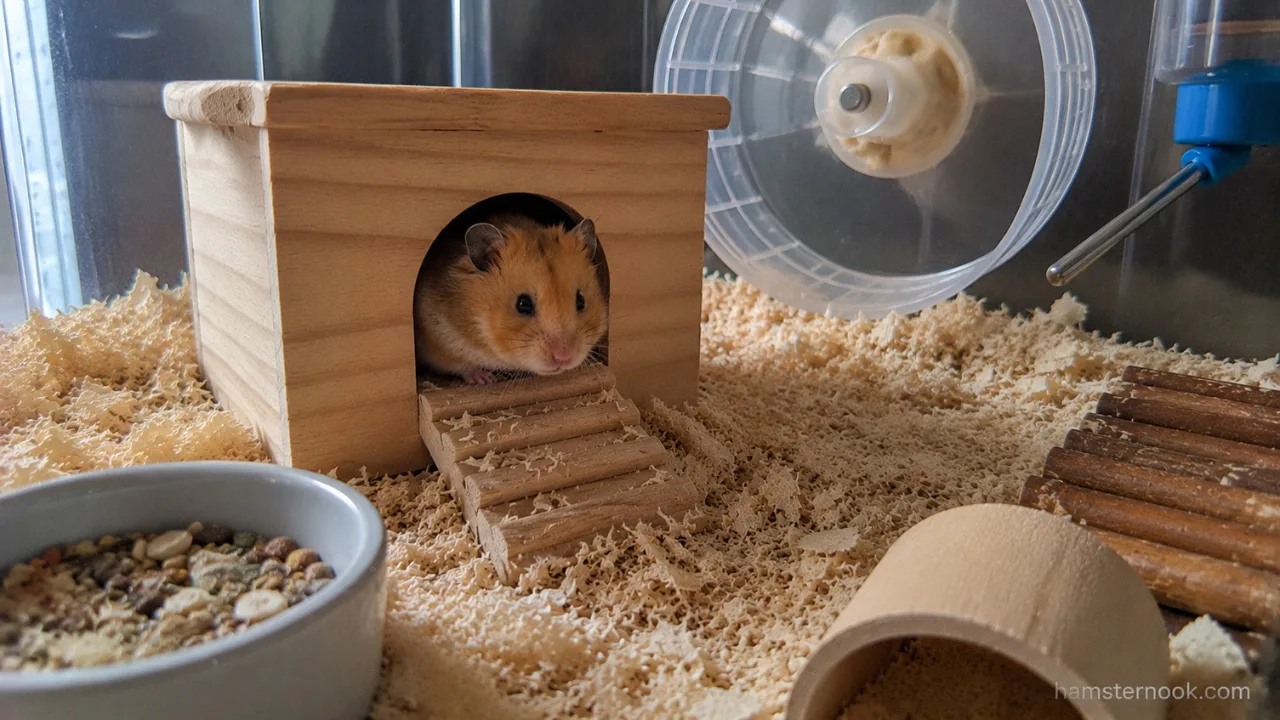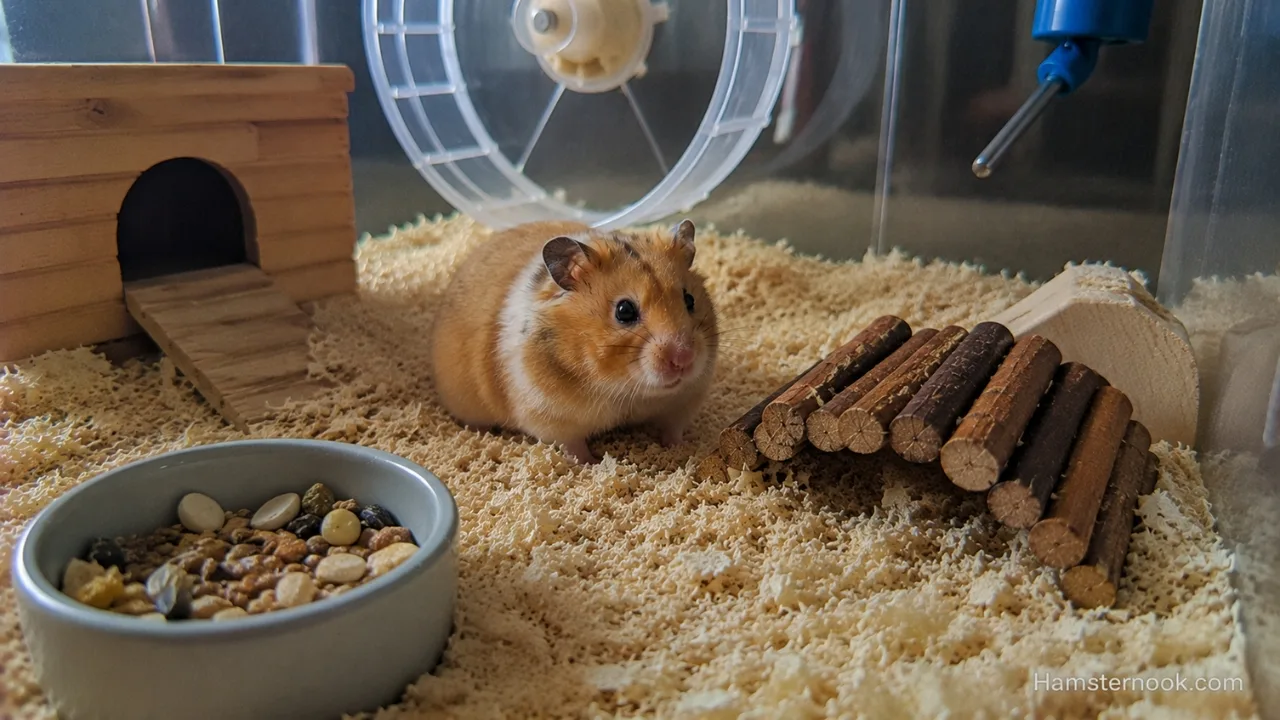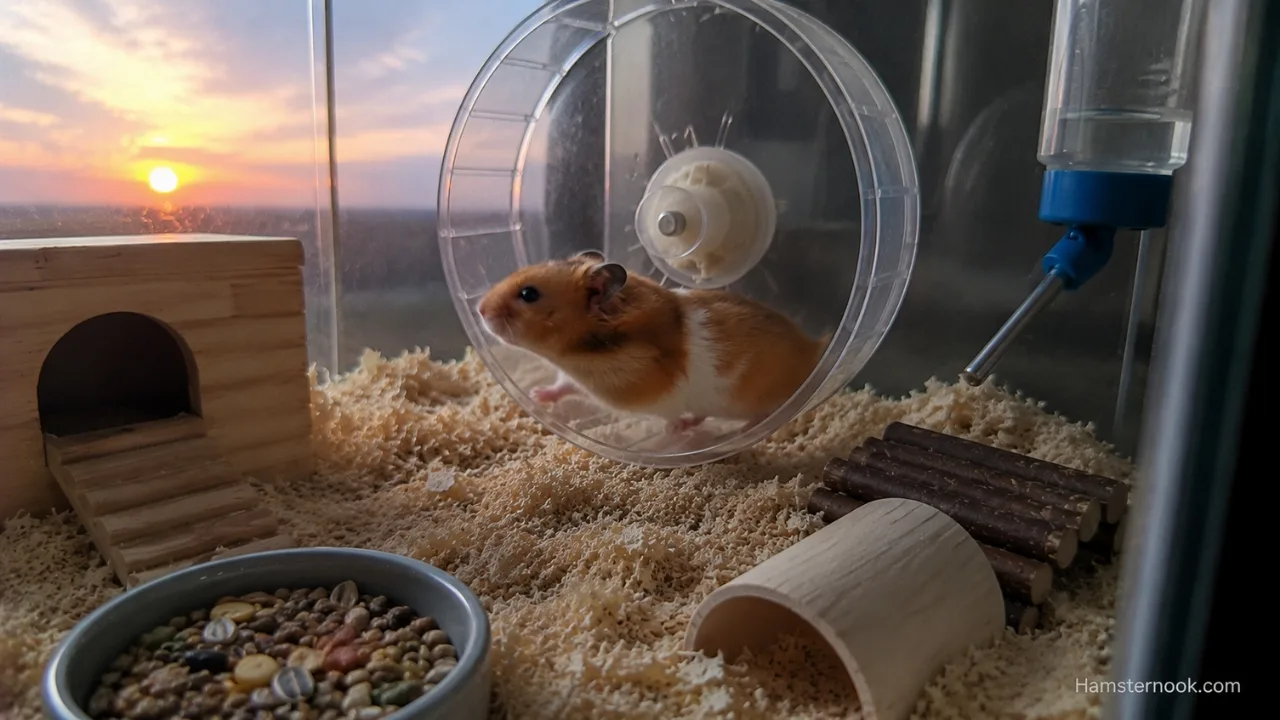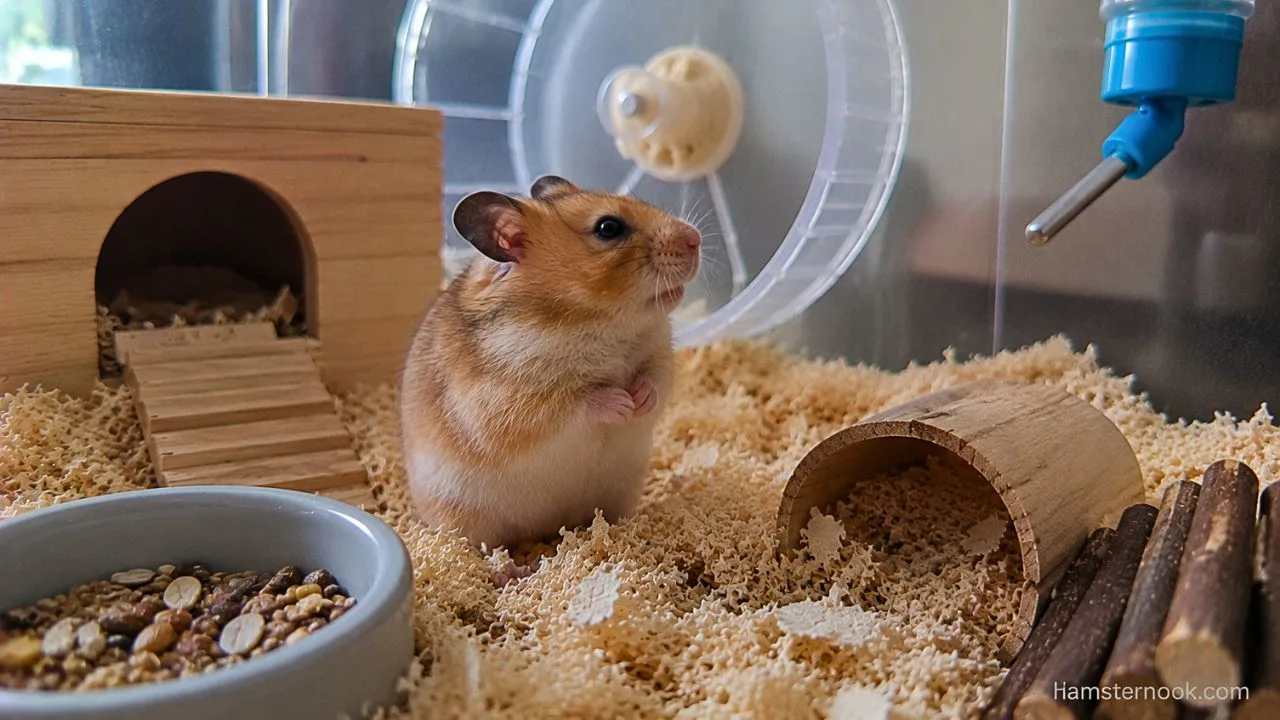
Have you ever watched your hamster stop in the middle of the enclosure, sniff the air, explore a tunnel, or carry food back to its nest and wondered what is going on inside that little head? Hamsters cannot tell us what they are thinking, so we have to learn from their senses, behavior, learning abilities, and natural instincts. While we cannot know their private thoughts exactly, research and hamster welfare guidance give us some useful clues.
Quick Answer: What Do Hamster Think About?
We cannot know exactly what a hamster is thinking because animals cannot describe their experiences to us. However, their behavior shows that hamsters actively respond to information around them, learn from experience, remember locations, investigate unfamiliar things, search for food, build nests, and make choices based on their surroundings.
A hamster’s mental world is probably very different from a human’s. Rather than imagining that your hamster is sitting in its enclosure thinking about yesterday or planning next week’s activities, it is more accurate to focus on what we can observe: exploration, food seeking, environmental awareness, safety, nesting, movement, and learned associations.
Research has demonstrated spatial learning and memory in Syrian hamsters, including remembering where food has been found.
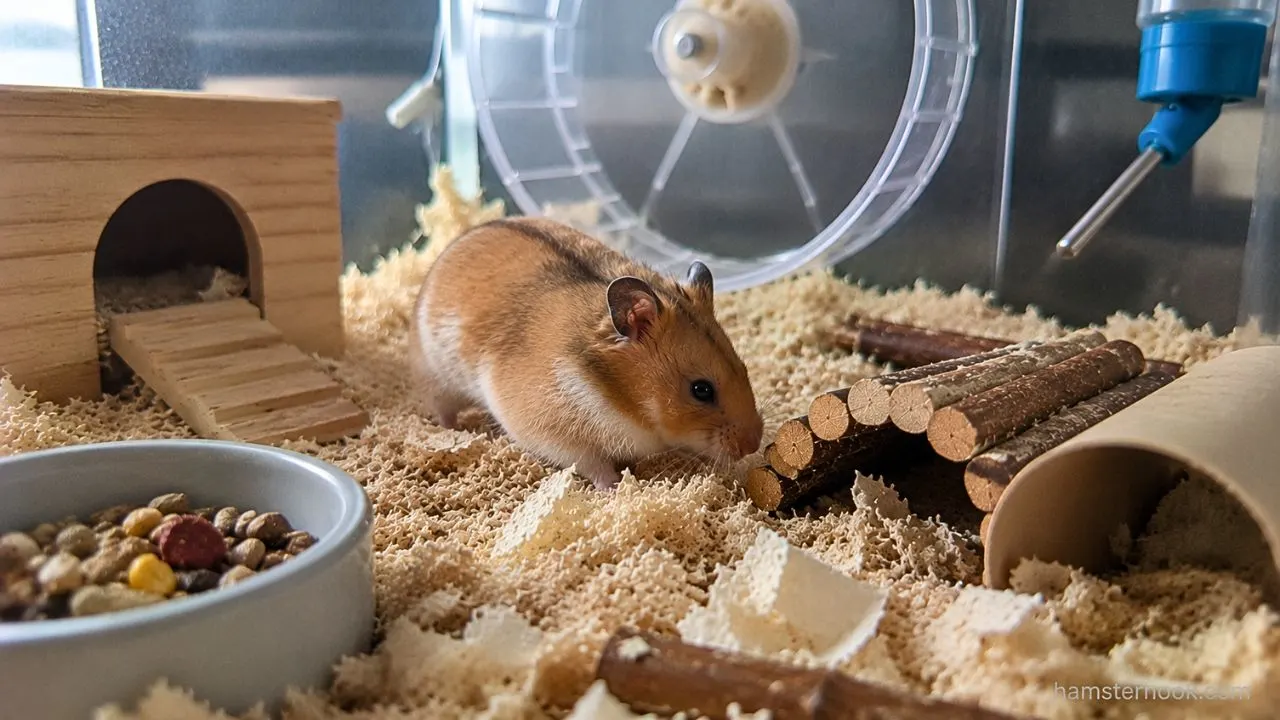
What Is Going Through a Hamster’s Mind?
There is no scientific way to translate a hamster’s thoughts into human sentences. We should therefore be careful with statements such as “your hamster is thinking this exact thing.”
What we can do is interpret behavior based on what is known about hamster biology.
A hamster living in a suitable environment spends much of its active time doing things that have clear biological value:
- Searching for and collecting food
- Exploring its surroundings
- Finding safe places to hide
- Building and maintaining a nest
- Digging and creating burrows
- Storing food
- Investigating smells
- Running and moving around
- Chewing and manipulating objects
- Responding to changes in its environment
These aren’t random activities. Hamsters are burrowing rodents with strong sensory and behavioral adaptations for finding food, navigating their surroundings, and creating protected resting areas.
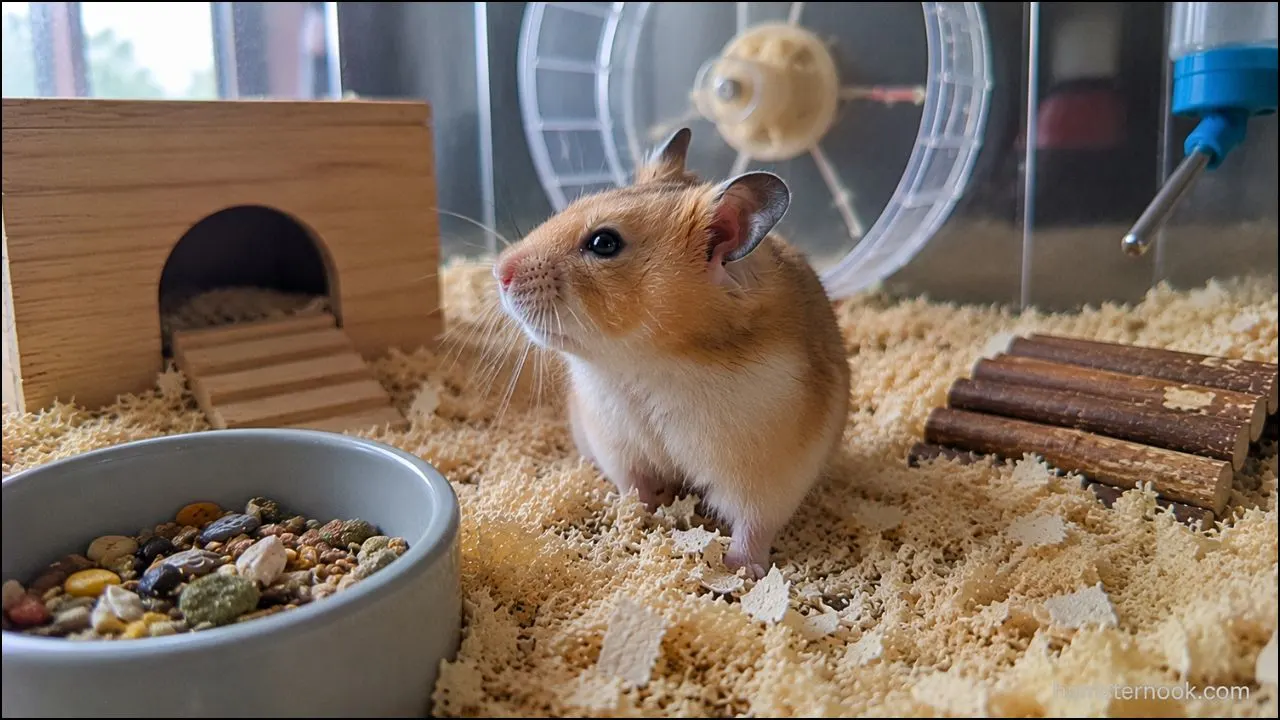
So when your hamster spends several minutes sniffing around a new cardboard tube, for example, it is reasonable to interpret this as investigation and information gathering rather than simply “playing.”
Do Hamsters Have Thoughts and Feelings?
Yes, hamsters clearly process information and show flexible behavior, but scientists cannot directly observe the private experience behind that behavior.
This distinction matters.
We can confidently say that hamsters learn, remember, respond to their surroundings, and change their behavior according to circumstances. Studies of Syrian hamsters have demonstrated spatial memory during food-foraging tasks. Researchers have also found that hamsters can learn to use different environmental cues for navigation and can adjust their strategies based on experience.
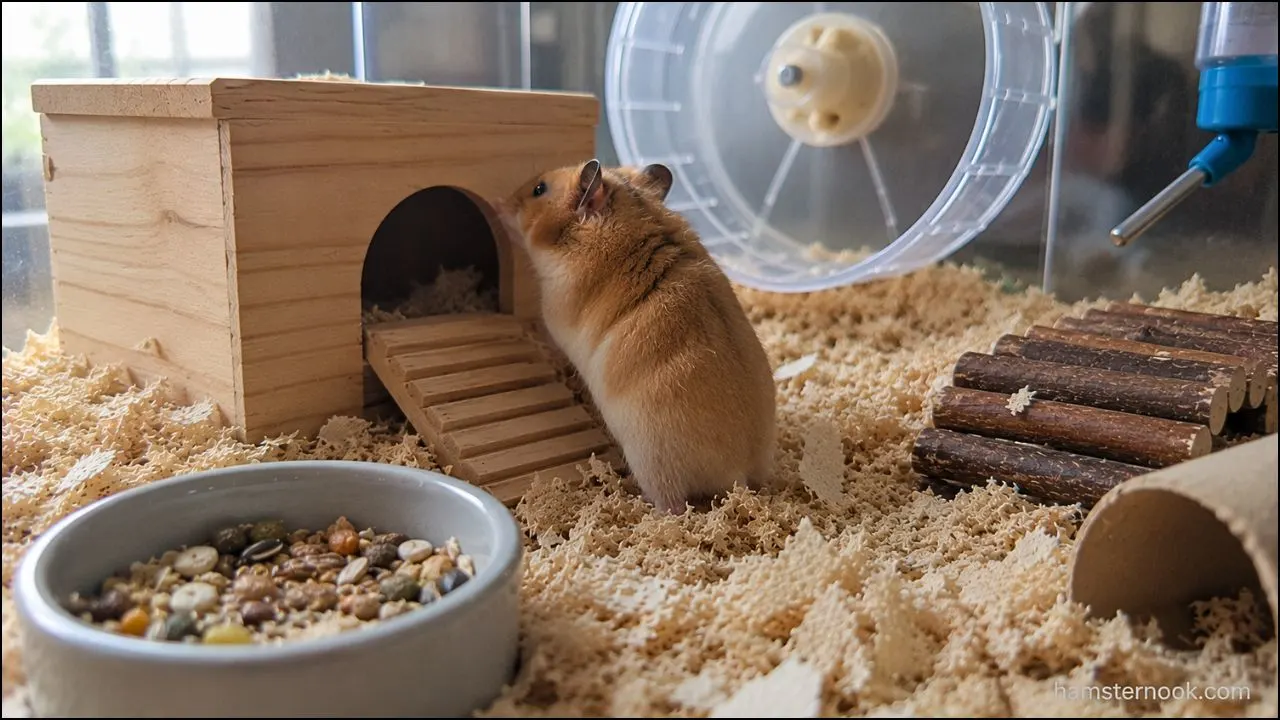
It is much harder to say exactly what a hamster feels while doing those things.
For example, if your hamster chooses to hide after hearing a sudden noise, the behavior tells us that the animal has detected something and responded to it. We should not automatically translate that into a complicated human thought such as, “I don’t trust that person anymore.”
The safest approach is to observe what your hamster does without pretending we can read its mind.
What Does a Hamster Think About During the Night?
Most pet hamsters become active during the evening and nighttime hours, although individual activity patterns can vary. Their natural behavior includes exploring, digging, foraging, nesting, and moving through their environment.
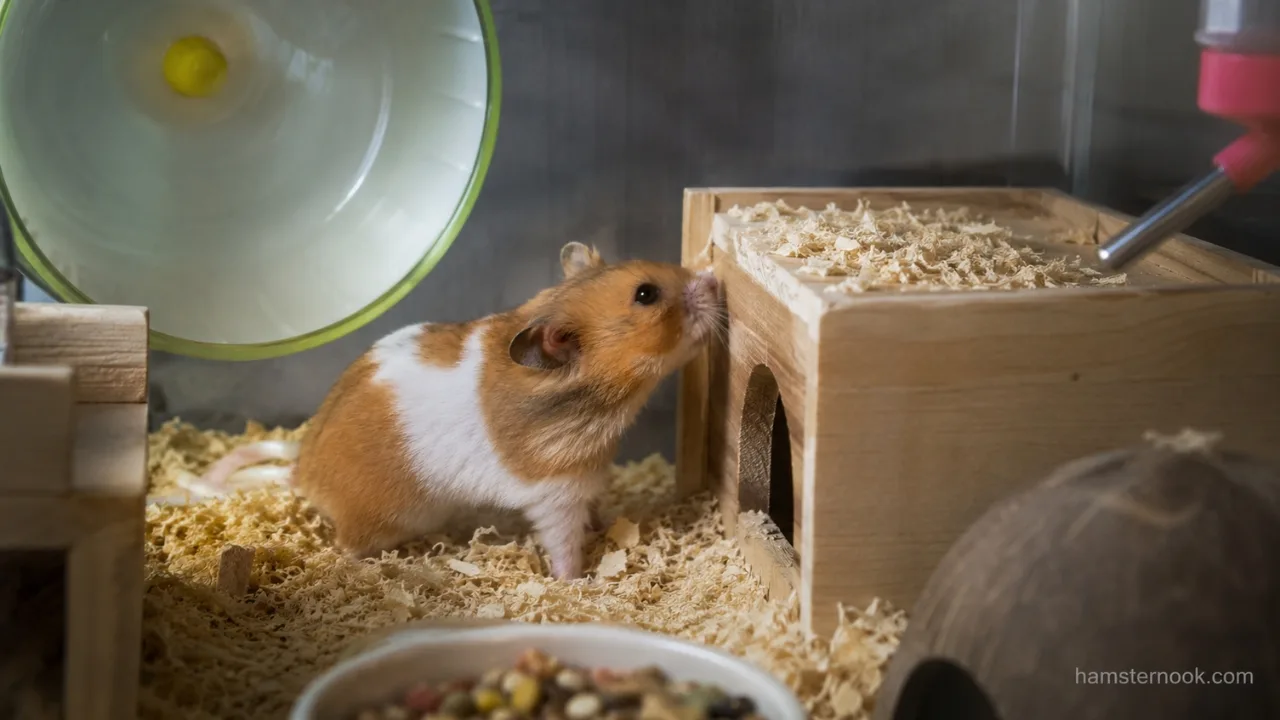
During an active period, your hamster may appear to have a surprisingly busy schedule.
It might leave its nest, investigate several areas, search for food, carry food back to a storage location, dig for a while, groom itself, run on its wheel, and then return to another part of the enclosure.
This can look chaotic to a human observer, but there is a pattern behind much of it.
A hamster’s environment provides information through smell, touch, hearing, vision, and spatial cues. Their whiskers also help them gather information about objects nearby.
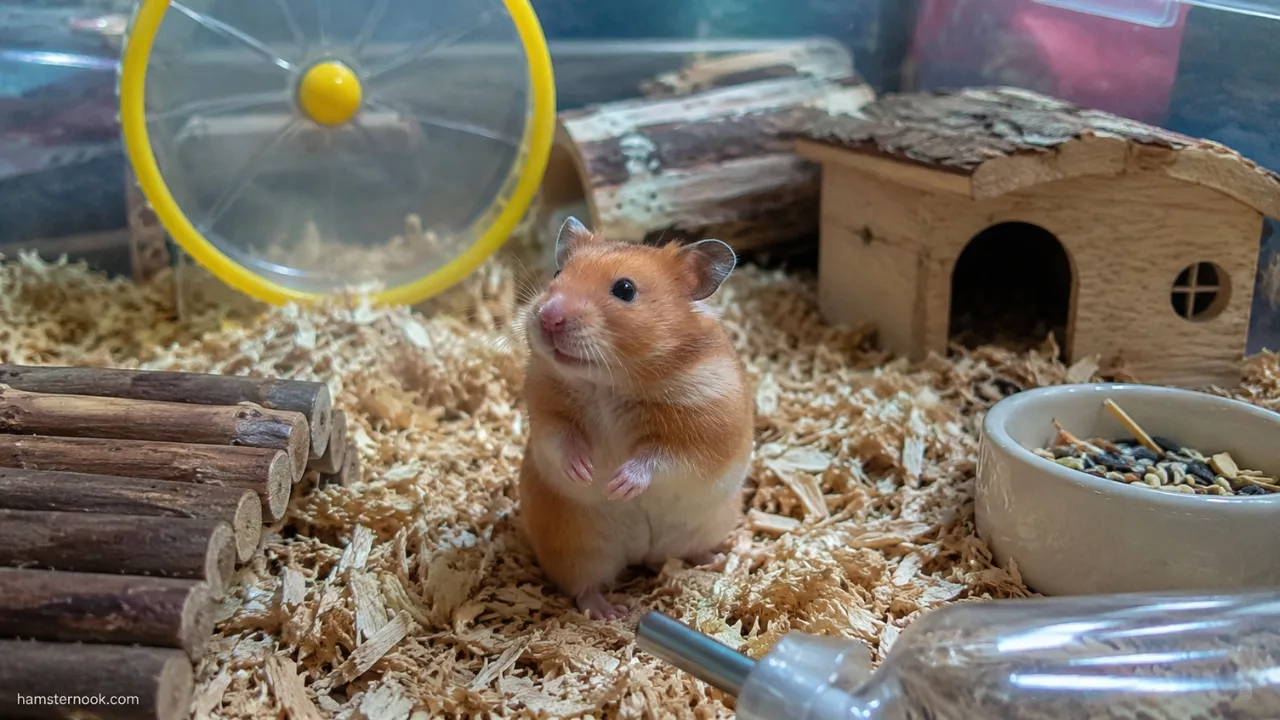
That means your hamster is constantly receiving information about its surroundings.
Do Hamsters Remember Things?
Yes. There is evidence that hamsters can remember information about their environment.
One study found that Syrian hamsters used spatial memory while foraging. After finding food in particular locations, they generally avoided repeatedly returning to places where the food had already been collected.
Another study tested spatial memory in Syrian hamsters and found that their choices could be explained by memory for spatial locations rather than simply following an odor trail.
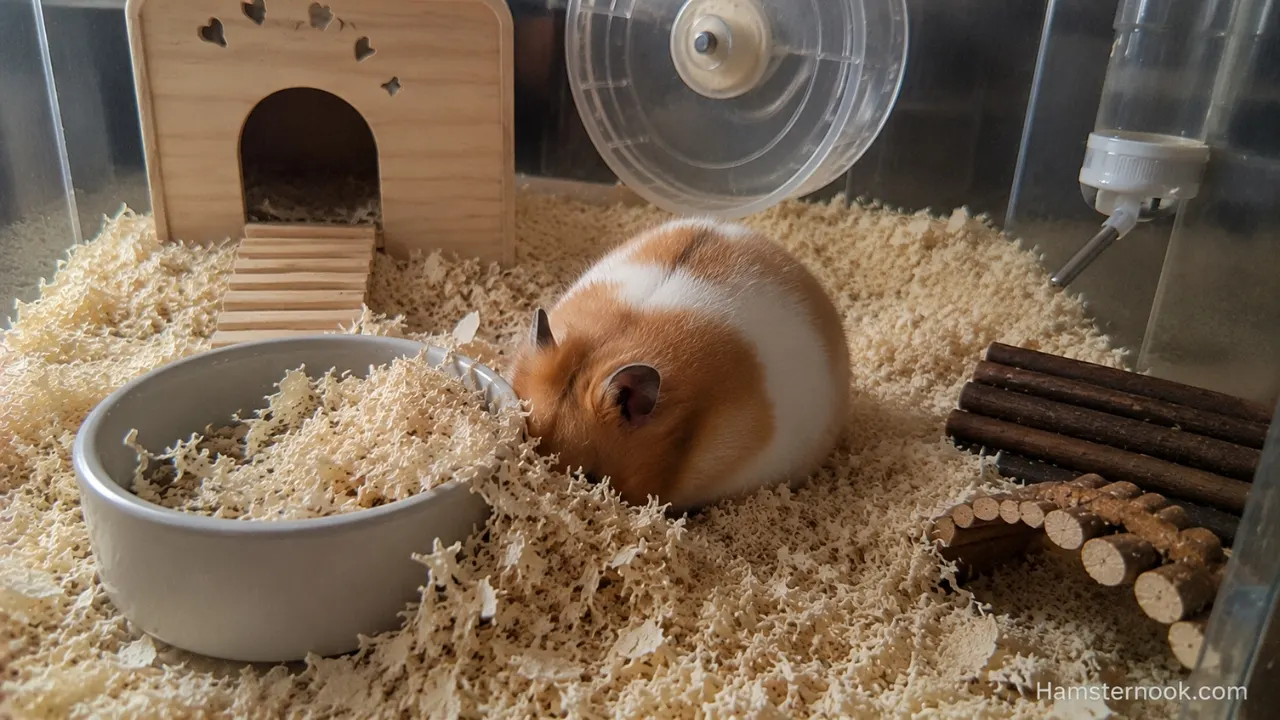
This helps explain why your hamster can become familiar with its enclosure.
You may notice that it repeatedly uses particular routes, returns to a favorite hiding area, or checks the same places for food. That does not prove that it is thinking about those locations in exactly the same way a human would, but it is consistent with the hamster learning about its environment.
Can a Hamster Remember Its Owner?
Your hamster can learn to recognize familiar cues associated with you, but it is difficult to say that it understands the concept of an “owner” in the human sense.
Your hamster may become familiar with your:
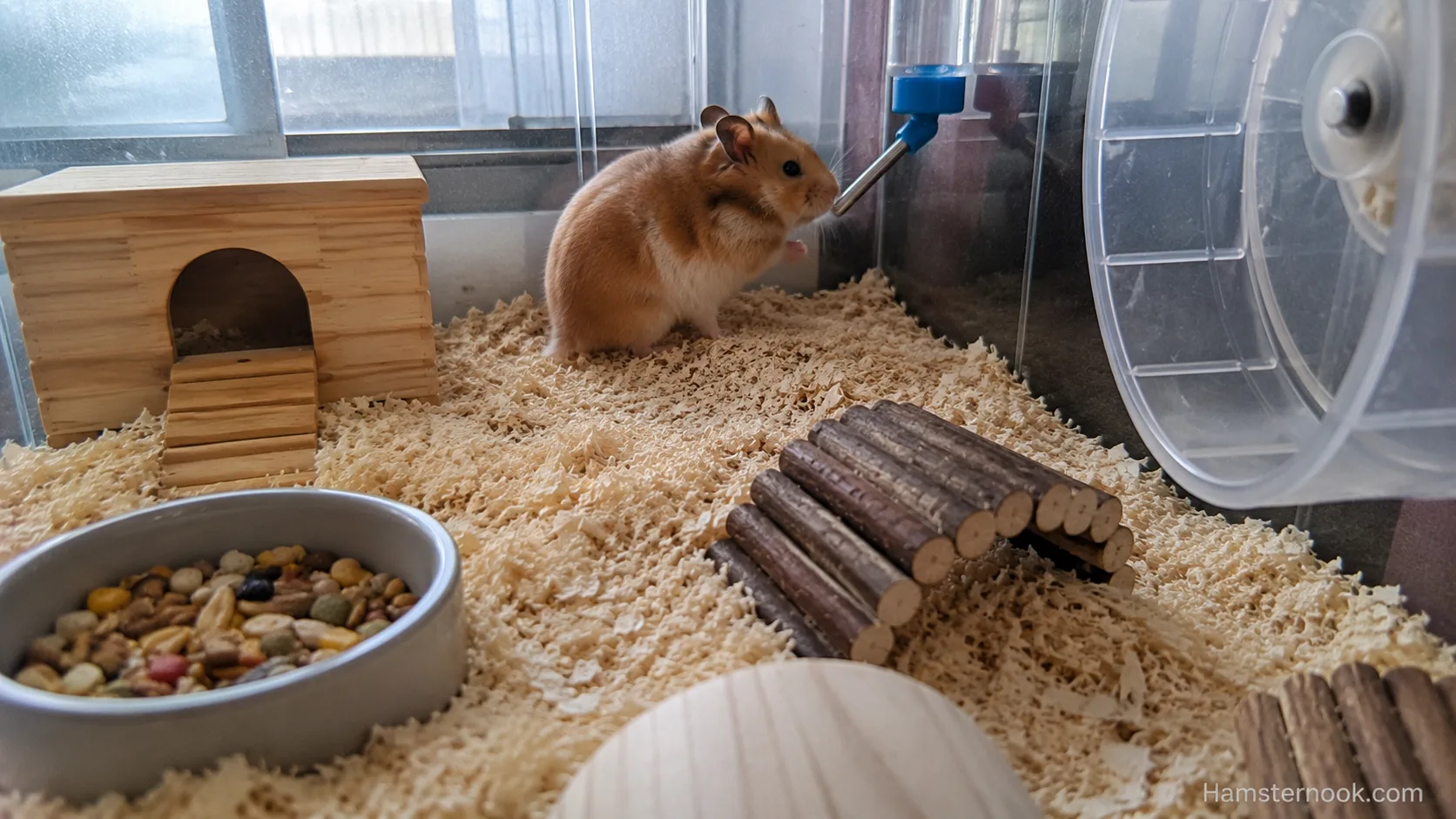
- Smell
- Voice or other sounds
- Handling routine
- Presence
- Feeding routine
- Typical approach to the enclosure
Over time, these repeated experiences can become familiar.
These familiar cues can become part of how a hamster responds to a person over time, even though we cannot know exactly how it represents that relationship. The distinction between familiarity and human-style recognition is explored in Do Hamsters Recognize Their Owners? How They Know You & Remember You.
That is one reason gentle, predictable interaction is preferable to suddenly grabbing or waking a hamster. Hamsters are prey animals and can be startled by unfamiliar sights, sounds, and smells.
Do Hamsters Think About Food?
Food is clearly an important part of hamster behavior.
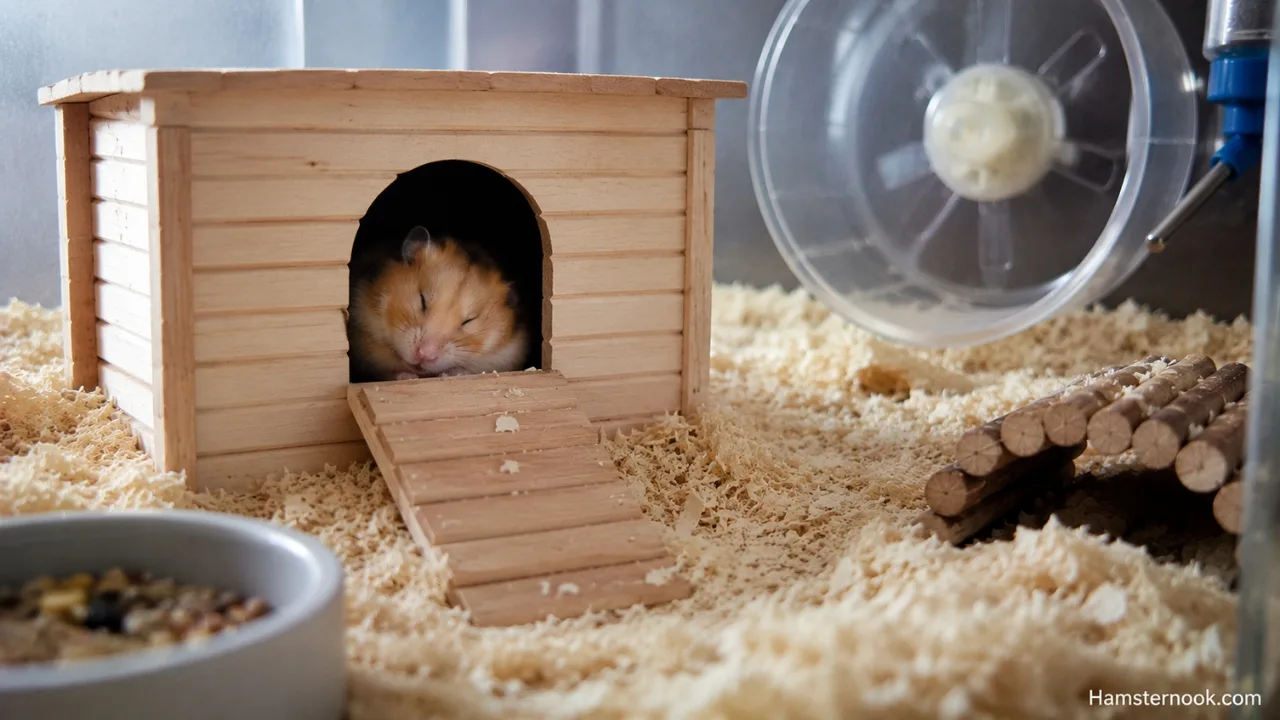
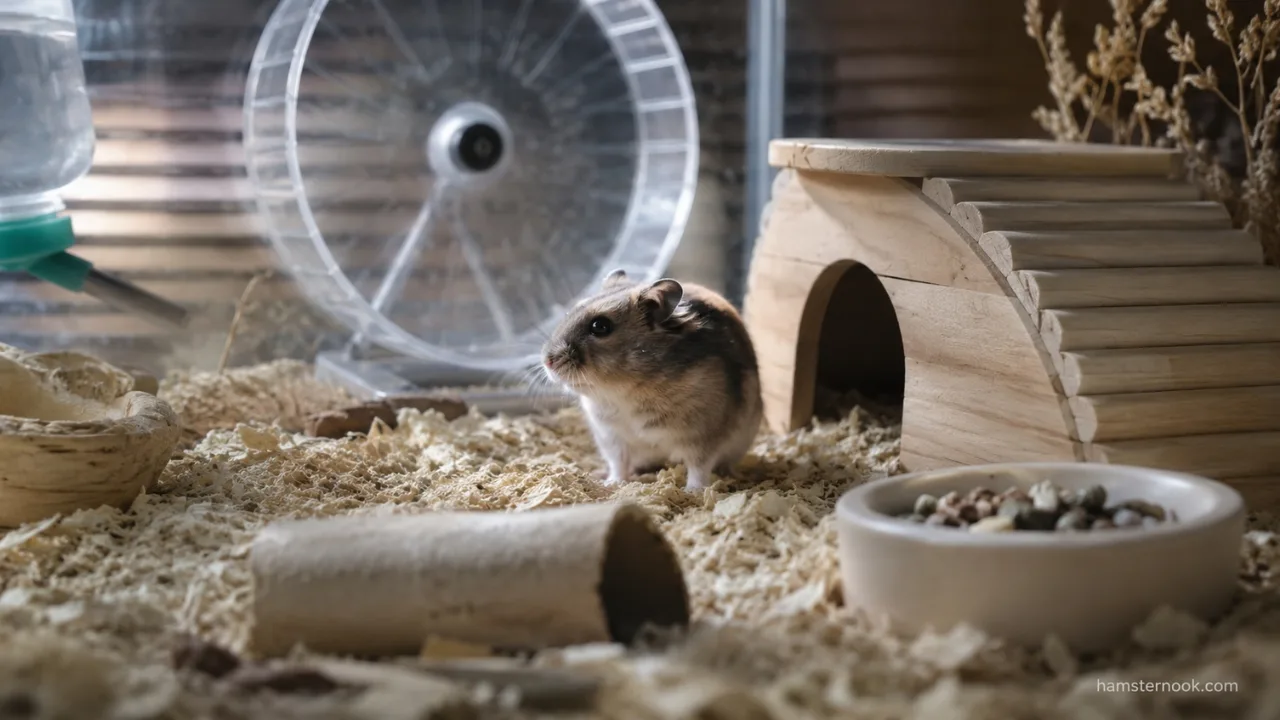
Hamsters naturally collect and store food. Syrian hamsters can carry food in their expandable cheek pouches and transport it to a nest or storage location.
Their behavior suggests that finding food is not simply a matter of immediately eating whatever is available.
A hamster may:
- Search through its environment.
- Locate food.
- Pick it up or place it in its cheek pouches.
- Transport it somewhere else.
- Store or consume it later.
This is one reason scatter feeding can be useful enrichment. Rather than putting every piece of food in one obvious bowl, appropriately scattering food encourages natural searching and foraging behavior.
Why Does My Hamster Hide Food?
Because food hoarding is normal hamster behavior.
If your hamster carries food into its nest, that does not automatically mean it is starving or that something is wrong with its diet.
Food hoarding is therefore better understood as part of normal hamster behavior rather than automatically treating every hidden food stash as a problem. If you want to understand this behavior in more detail, see Why Does My Hamster Keep Hiding Food? Explained Simply.
However, owners should still make sure the hamster receives a balanced diet and should monitor stored fresh foods so that spoiled food does not remain hidden in the enclosure.

Do Hamsters Get Bored?
It is better to think about this in terms of whether the environment allows normal, motivated behaviors.
Hamsters naturally dig, build nests, forage, hoard food, explore, chew, and use shelters. Welfare guidance recommends providing opportunities for these behaviors rather than expecting a hamster to spend its life in a simple enclosure with only food and a wheel.
Giving a hamster opportunities to perform these behaviors also makes the environment more engaging without requiring complicated training. Practical examples of activities and setup choices are covered in Hamster Cage Enrichment: 10 Safe Ideas for Boredom & Natural Behavior.
Useful enrichment can include:
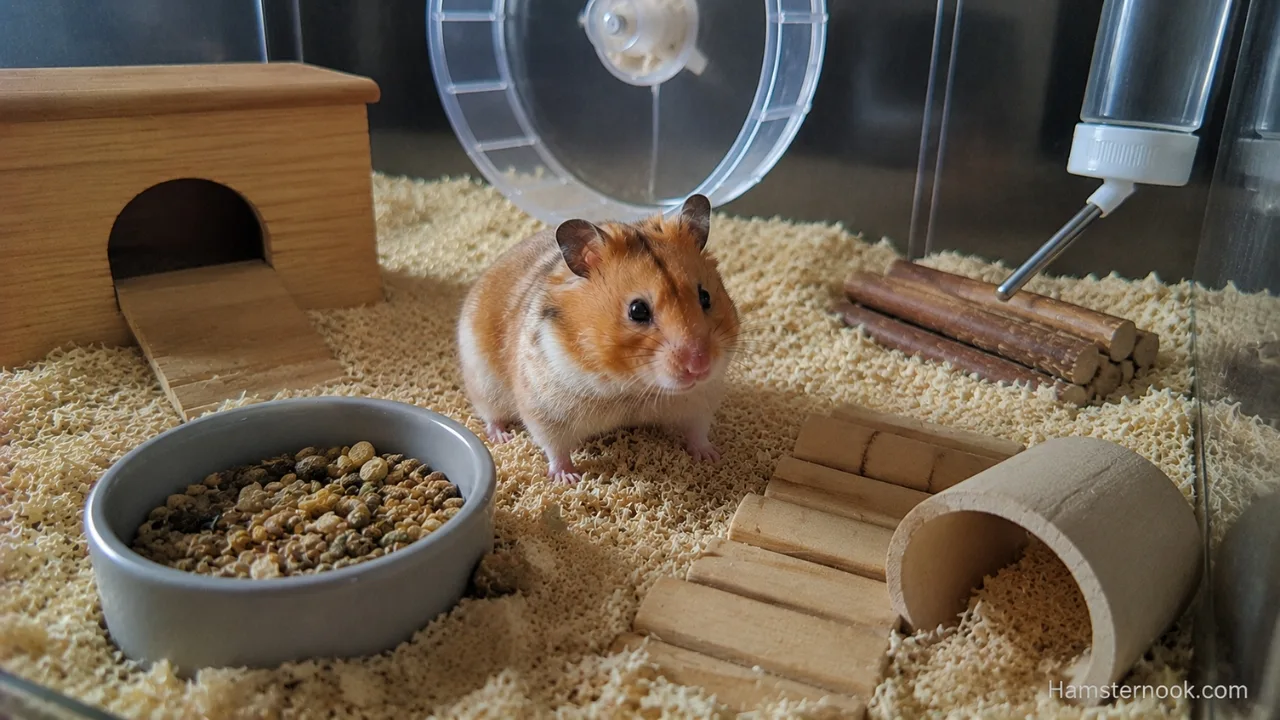
- Deep, suitable bedding for digging
- Appropriate nesting material
- Hides and tunnels
- Safe objects to chew
- Scatter feeding
- Opportunities to search for food
- A suitable running wheel
- A varied enclosure layout that allows exploration
NC3Rs guidance specifically identifies nesting material, shelters, gnawing opportunities, and scattered food as forms of enrichment for hamsters and other rodents.
Why Does My Hamster Keep Digging?
Digging is not simply something your hamster does because it has nothing else to do.
Hamsters are naturally burrow-digging animals. In natural settings, burrows provide protected spaces for nesting and other activities.
When a hamster digs through its bedding, it is performing a behavior that fits its natural biology.
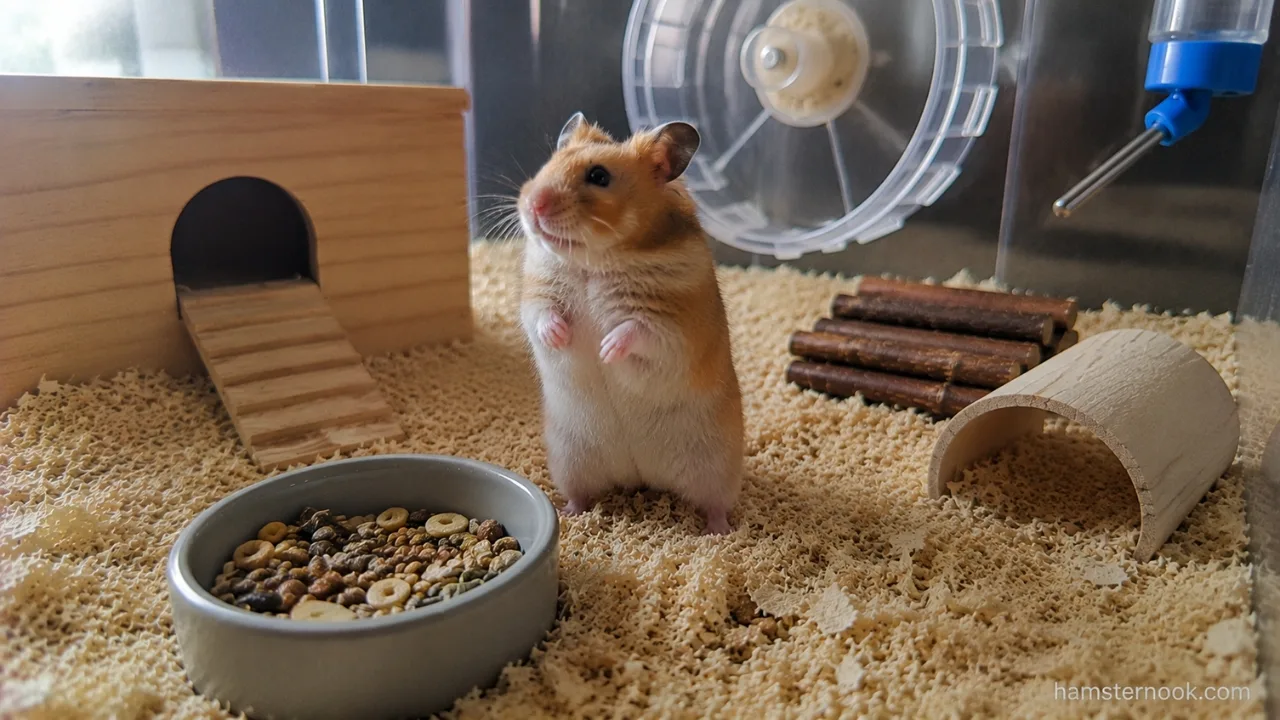
That is why an enclosure with enough suitable bedding to dig and construct tunnels can provide much more behavioral opportunity than a setup where the hamster has only a shallow layer of substrate.
The amount of bedding matters because digging and tunnel-building depend on having enough material to work with. If you are setting up the enclosure around this natural behavior, How Much Bedding Does a Hamster Need? Minimum Depth Guide for Healthy Burrowing explains the practical depth considerations.
Do Hamsters Think About Their Environment?
Very likely, in the sense that they actively process information from it.
Their behavior demonstrates that they can use spatial information and environmental cues. Research has shown that Syrian hamsters can learn routes and use different cues when navigating.
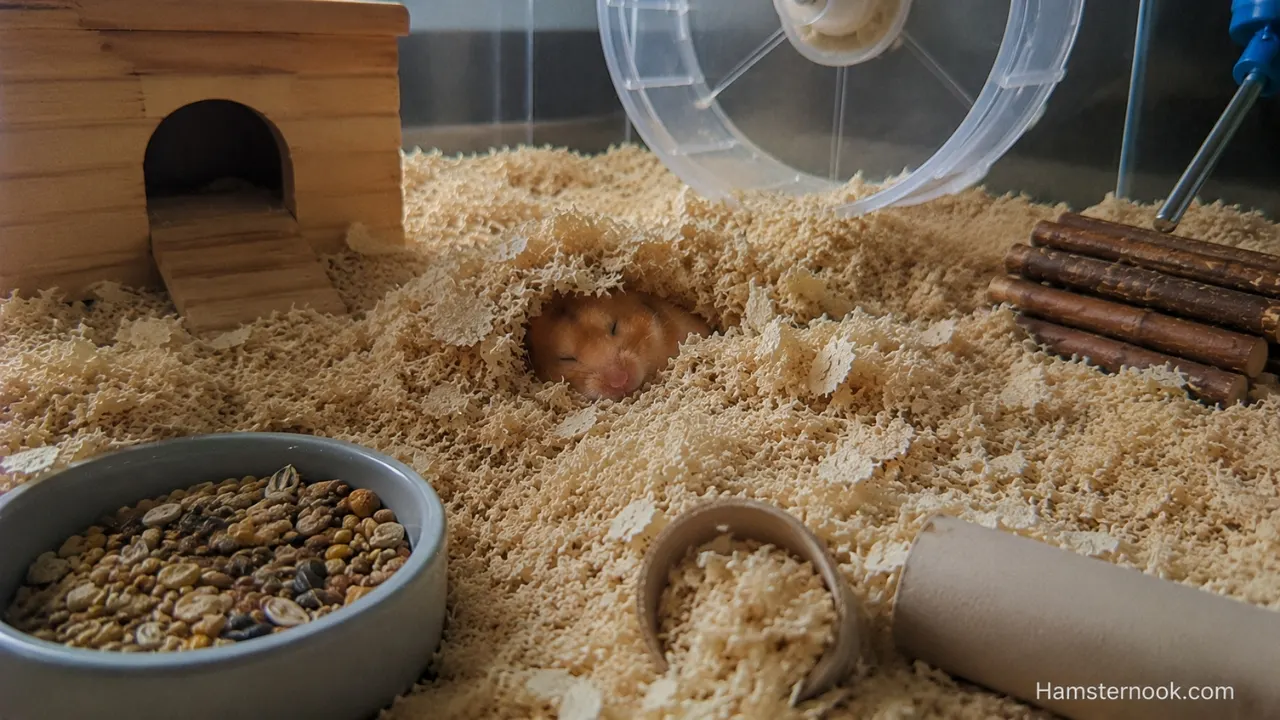
This means changes to the enclosure can matter.
Moving everything around during every cleaning may create a completely different environment from the hamster’s perspective. Maintaining some familiar nesting material and familiar scents during cleaning can help reduce unnecessary disruption. NC3Rs specifically recommends transferring nesting material to a clean enclosure to maintain familiar odors and minimize stress.
For a hamster, cleaning is therefore not only about making the enclosure look fresh; it can also change the familiar layout and sensory cues it uses every day. This is why understanding Why Does My Hamster Keep Rearranging Its Cage? Reasons & When to Worry can help put these environmental behaviors into context.
Do Hamsters Recognize Familiar Places?
Their demonstrated spatial learning makes familiarity with locations a reasonable interpretation of their behavior.
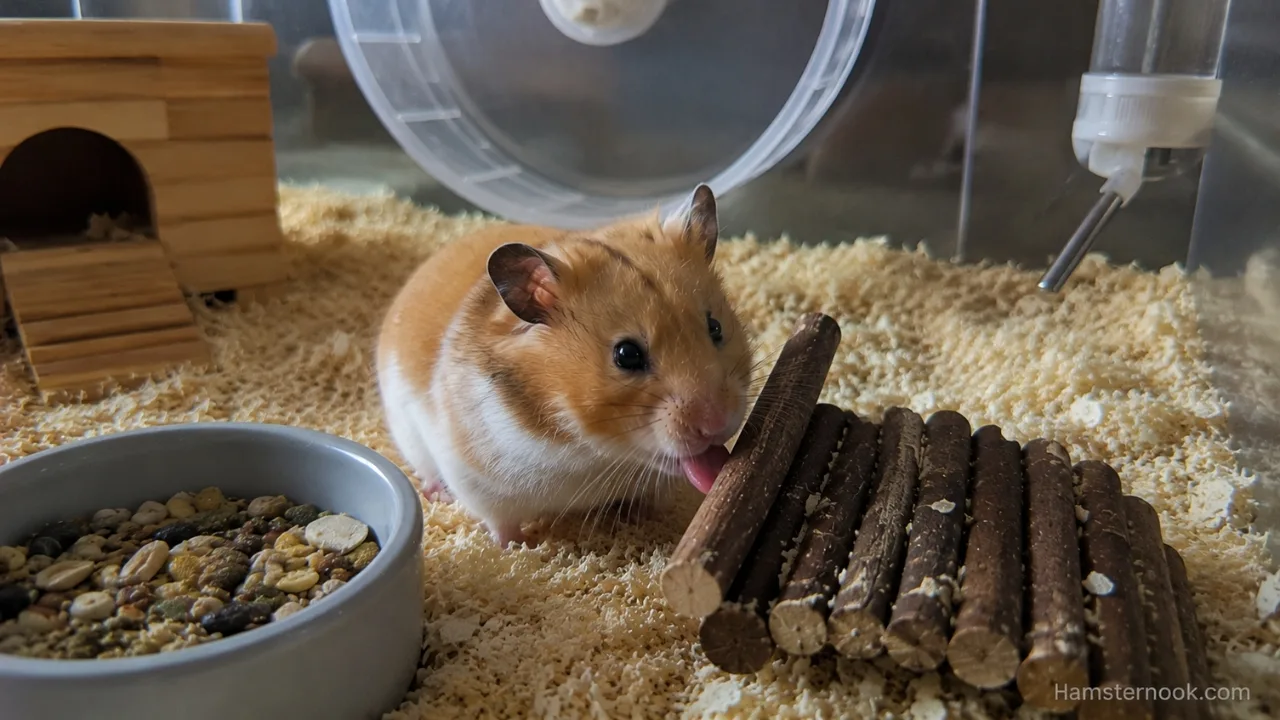
A hamster may learn where its nest is, where food tends to appear, where a tunnel leads, and which areas provide shelter.
This is another reason not to underestimate a hamster simply because it is small.
Small size does not mean a simple behavioral system.
What About Their Sense of Smell?
Smell is extremely important to hamsters.
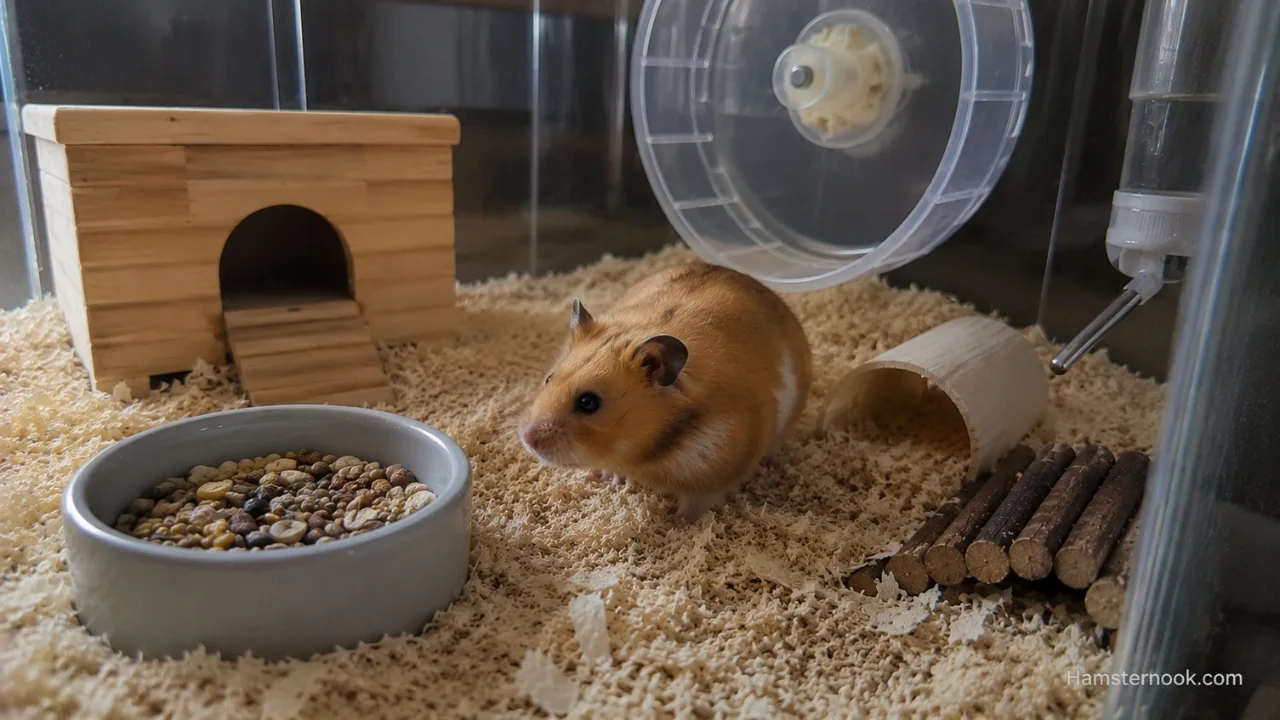
Hamsters have well-developed senses of smell and hearing, and scent plays an important role in communication and environmental awareness.
For your hamster, a familiar enclosure is therefore not just a collection of objects that look familiar.
It also contains a collection of smells.
Those familiar smells can provide information about the environment that is not obvious to us as humans. Because scent is such an important part of how hamsters interact with their surroundings, Do Hamster Have a Good Sense of Smell? How Their Nose Helps Them Navigate looks more closely at this sense.
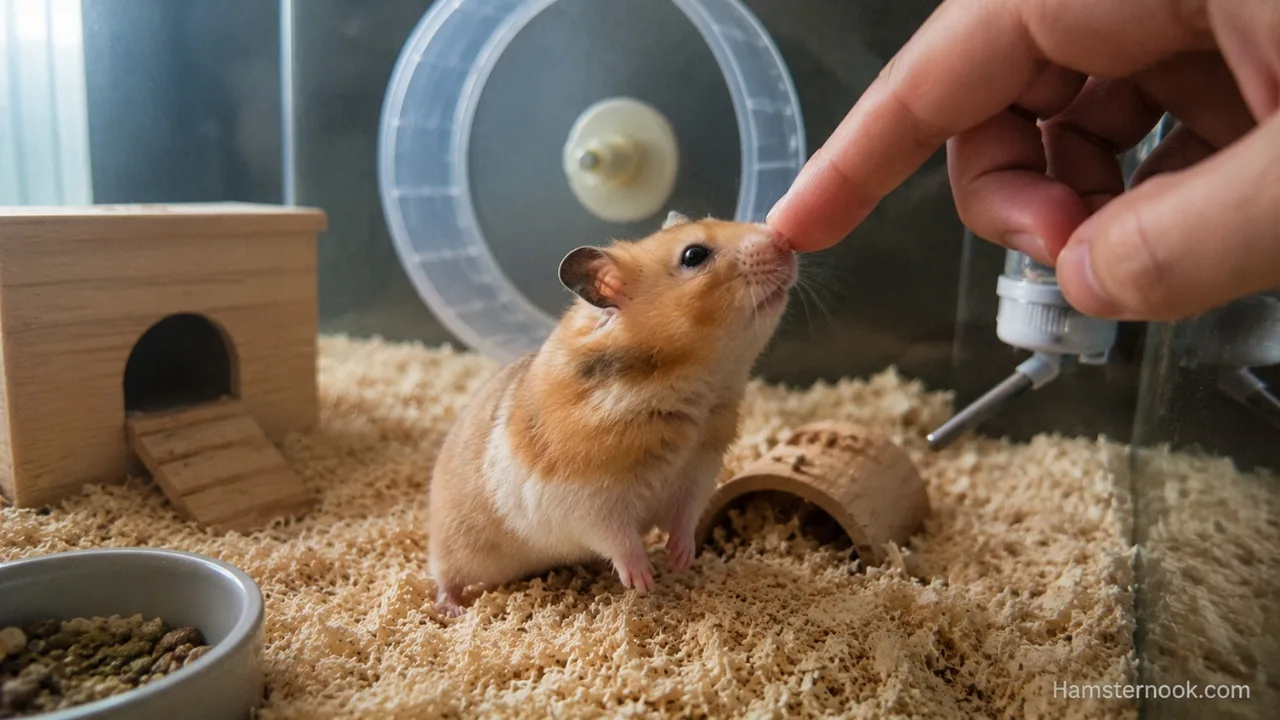
This helps explain why completely stripping an enclosure and removing all familiar nesting material during cleaning may be more disruptive than an owner expects.
What Should You Do to Support a Healthy Hamster Mind?
You don’t need to “teach” your hamster complicated tricks to provide mental stimulation.
Instead, build an environment where normal hamster behaviors are possible.
Give Your Hamster Opportunities to Forage
Scatter appropriate portions of its normal food around the enclosure instead of making every meal immediately available in one place. This encourages searching and foraging.
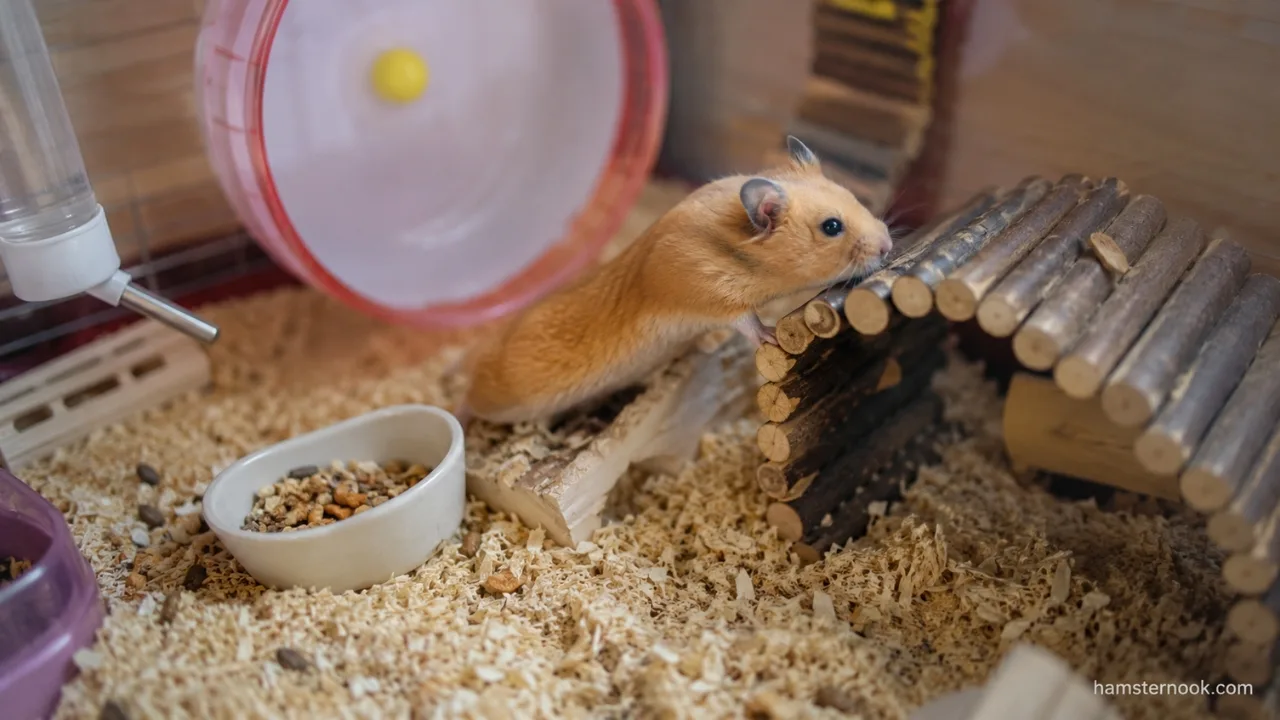
Provide Deep Bedding and Nesting Material
Allow your hamster to dig, create tunnels, and build a nest. These are important natural behaviors, not unnecessary extras.
Keep a Safe, Predictable Routine
Hamsters can be startled when suddenly awakened or handled. Whenever possible, interact with your hamster when it is naturally awake and active, and approach calmly.
Let the Hamster Choose
A good enclosure gives the hamster options.
It should be able to decide where to sleep, where to explore, where to forage, and where to retreat.

That freedom to make choices is an important part of providing meaningful enrichment.
Common Mistakes Owners Make
Assuming Every Behavior Has a Human Meaning
A hamster staring at you does not necessarily mean it is asking for something. A hamster running on its wheel does not necessarily mean it is trying to “escape.” Avoid turning every behavior into a human-style thought.
Waking a Hamster for Interaction
Daytime is commonly a resting period for hamsters. Repeatedly disturbing a sleeping hamster can be stressful.
Removing Everything During Cleaning
A completely unfamiliar enclosure can remove many familiar smells and locations. Keeping some clean, usable nesting material can help maintain familiar scent cues.
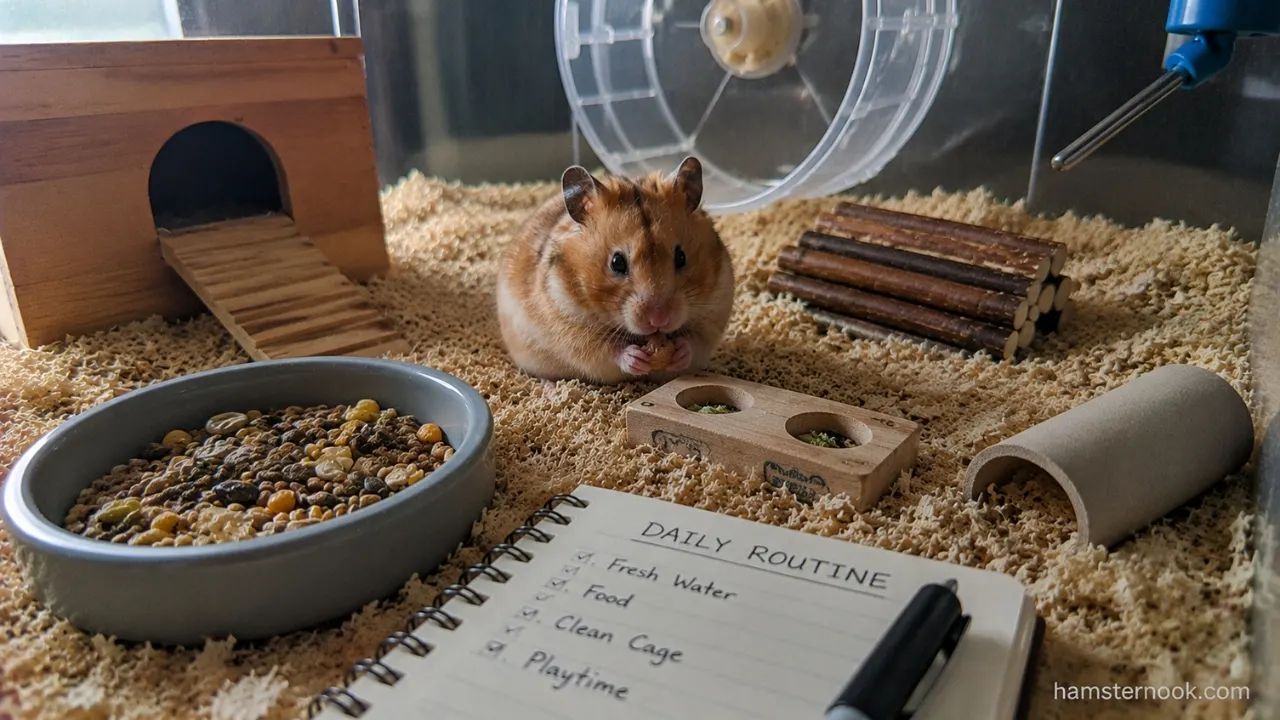
Providing Toys but Not Natural Behaviors
A large collection of plastic toys does not automatically create a stimulating environment.
Digging, nesting, foraging, chewing, exploring, and hiding are more meaningful starting points because they correspond to behaviors hamsters are naturally motivated to perform.
When a Change in Behavior Deserves Attention
Understanding normal behavior makes it easier to notice when something genuinely changes.
Your hamster’s normal routine is individual. Pay attention if you notice a persistent and unusual change in activity, appetite, exploration, interaction, or other familiar behavior.
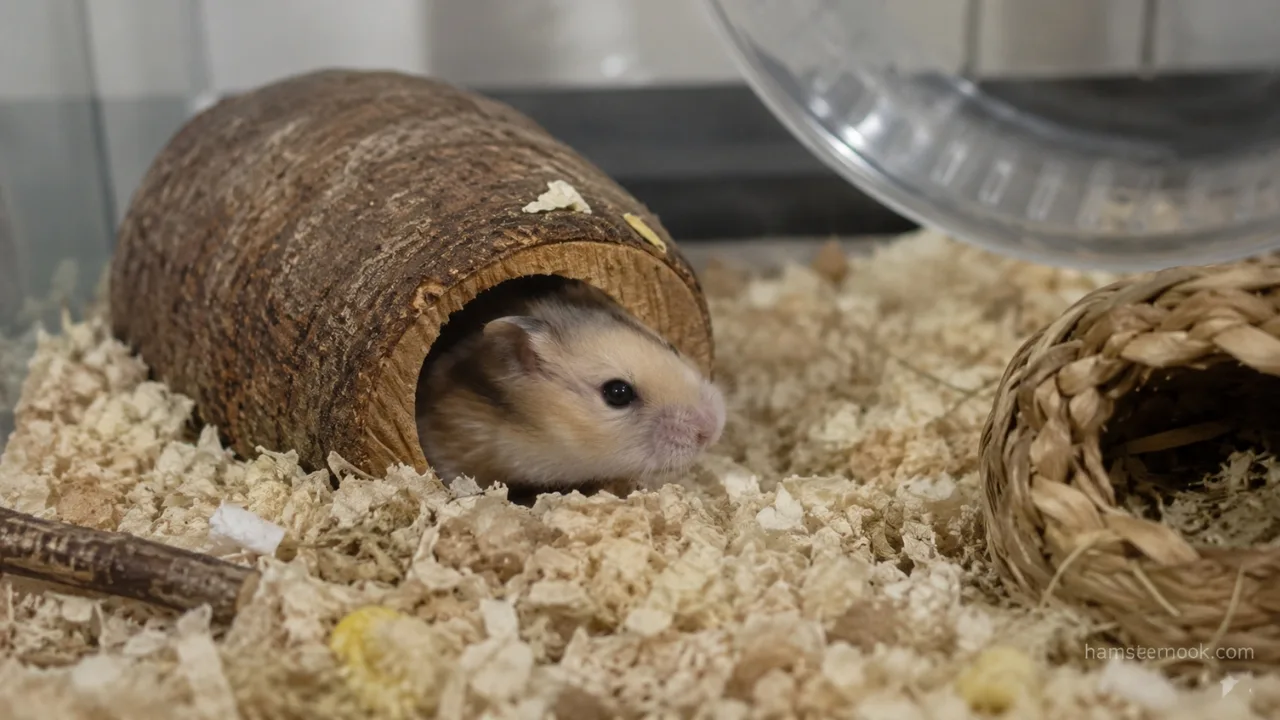
MSD Veterinary Manual notes that signs such as inactivity, loss of appetite or weight, unusual secretions, hunched posture, abnormal movement, rough fur, and breathing difficulty can indicate illness.
The key point is not to diagnose a problem from one unusual moment. Look for a meaningful change from what is normal for your individual hamster, particularly when several concerning signs occur together.
Final Thoughts
We cannot know exactly what a hamster is thinking, and it would be misleading to describe its inner world as though we could read its thoughts.
What we do know is fascinating enough.
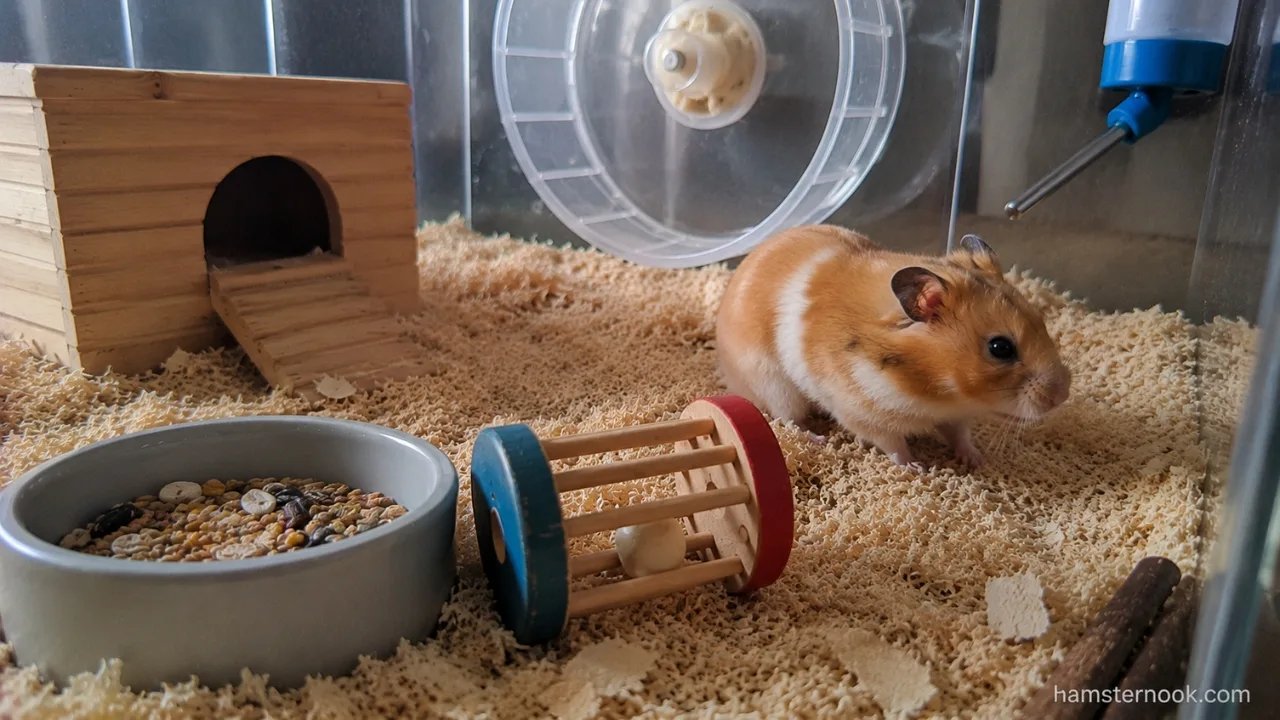
Hamsters can learn, remember locations, respond to environmental information, use their senses to investigate the world, and perform complex natural behaviors such as foraging, hoarding, digging, and nest building. Research on Syrian hamsters provides evidence for spatial memory and flexible navigation, while animal-welfare guidance emphasizes giving hamsters opportunities to perform these natural behaviors.
So the next time your hamster disappears into a tunnel, carries food across the enclosure, pauses to sniff something new, or spends half the night rearranging its bedding, you don’t need to imagine a human conversation happening inside its head.
Instead, look at what the behavior tells you: your hamster is sensing, learning, exploring, choosing, and responding to the world around it.
Frequently Asked Questions
Do hamsters have thoughts?
Hamsters clearly process information, learn, remember, and respond to their surroundings. However, science cannot tell us exactly what their subjective thoughts are like, so human-style descriptions of their private thoughts should be treated as interpretations rather than facts.
Do hamsters have good memory?
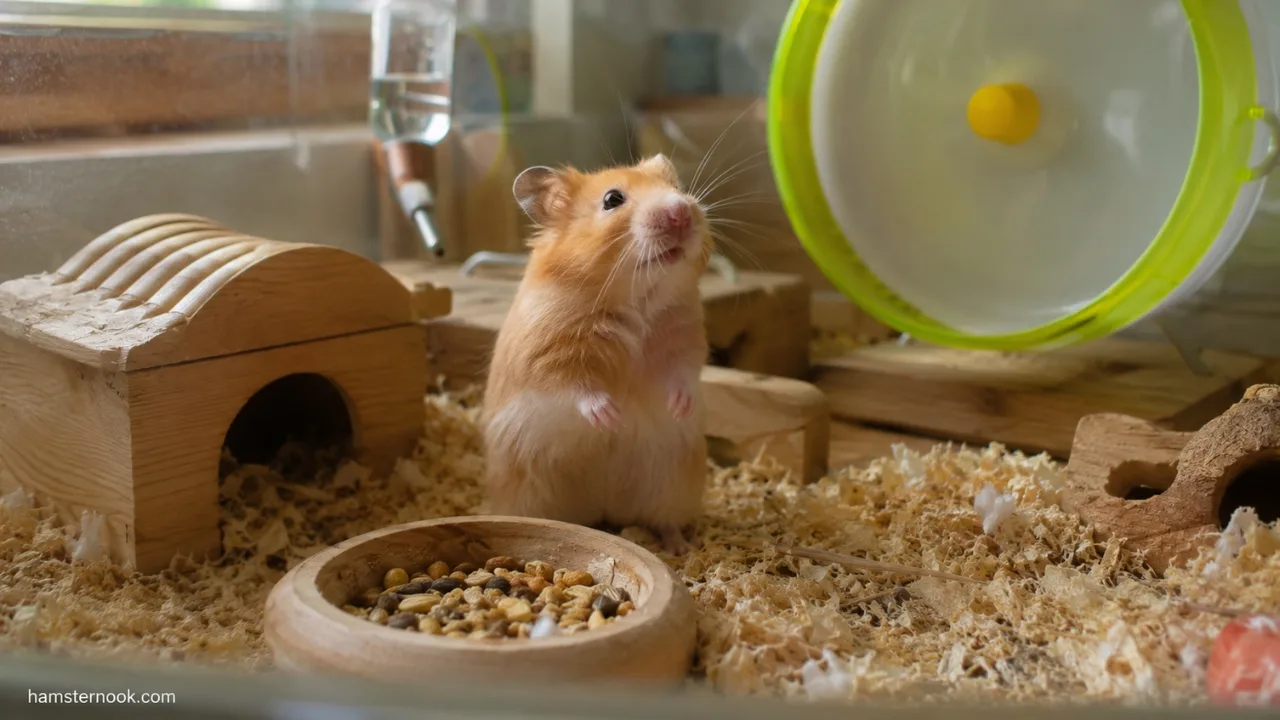
Research has demonstrated spatial memory in Syrian hamsters. In experimental food-foraging tasks, hamsters were able to remember locations and generally avoid repeatedly searching places where food had already been collected.
Does my hamster know who I am?
A hamster can become familiar with repeated sensory cues associated with a person, including smell, sounds, handling, and routines. It is difficult to establish that a hamster understands human identity in the same conceptual way people do.
What makes a hamster happy?
Instead of trying to identify a single “happy” activity, provide opportunities for normal behaviors such as digging, nesting, foraging, exploring, hiding, chewing, and exercising. Appropriate enrichment allows hamsters to make choices and use their natural behavioral abilities.
Why does my hamster hide food?
Food hoarding is a natural hamster behavior. Hamsters collect food in their cheek pouches and transport it to storage areas, often around their nest.

Does my hamster get bored in a small enclosure?
An enclosure that prevents normal behaviors can limit opportunities for exploration, digging, nesting, and foraging. Welfare guidance recommends providing appropriate space, bedding, nesting material, hiding places, and enrichment that allows hamsters to perform these behaviors.
Can hamsters learn tricks?
Hamsters are capable of learning. The RSPCA notes that hamsters can be trained to come when food is presented and to perform simple tricks.
Do hamsters recognize their surroundings?
Evidence from spatial-learning research indicates that Syrian hamsters can learn and use information about locations and environmental cues. Their behavior therefore suggests that they build useful knowledge about their surroundings.
References
This guide is based on hamster behavior, welfare, housing, enrichment, learning, memory, and spatial navigation research from trusted animal welfare, veterinary, and scientific resources, including:
- RSPCA – Understanding Hamster Behaviour – Guidance on natural hamster behavior, activity, social interaction, and behavioral needs.
- RSPCA – Keeping Hamsters as Pets – General hamster care, welfare, housing, behavior, and daily husbandry guidance.
- RSPCA – Creating a Good Home for Hamsters – Guidance on enclosure setup, bedding, nesting, environmental conditions, and hamster welfare.
- NC3Rs – Housing and Husbandry: Hamster – Guidance on hamster housing, husbandry, environmental needs, and species-appropriate care.
- NC3Rs – Choosing Appropriate Enrichment – Information on selecting enrichment that supports natural behaviors and animal welfare.
- MSD Veterinary Manual – Hamsters – Veterinary reference information on hamster care, behavior, health, and husbandry.
- Tonneau, F., Cabrera, F., & Corujo, A. – Hamsters’ (Mesocricetus auratus) Memory in a Radial Maze Analog – Scientific research examining memory performance in Syrian hamsters.
- Jones, C. H., McGhee, R., & Wilkie, D. M. – Hamsters (Mesocricetus auratus) Use Spatial Memory in Foraging for Food to Hoard – Research examining spatial memory and food-hoarding behavior in Syrian hamsters.
- Betsuyaku, T., Nakamura, N., Kuroshima, H., & Fujita, K. – Preference or Flexibility? Spatial Navigation by Syrian Hamsters in a Multiple-Cue Environment – Research examining spatial navigation and cue use in Syrian hamsters.

Narayan Kumar is the founder and author of HamsterNook. He creates practical, research-based hamster care guides covering hamster behavior, nutrition, cage setup, enrichment, health, and everyday care. His goal is to help hamster owners make informed decisions and provide safer, healthier lives for their pets through clear, beginner-friendly information based on trusted animal care resources.