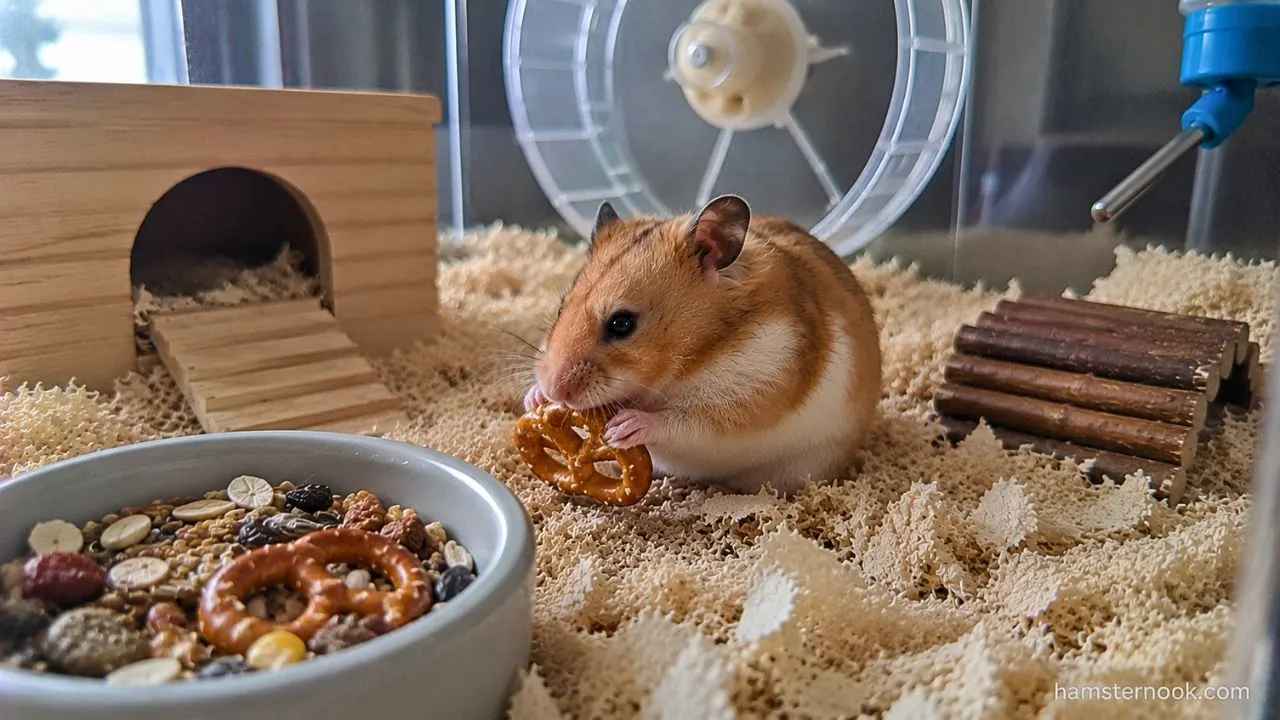
If your hamster grabbed a tiny piece of pretzel, you may be wondering whether it is safe or whether you should be concerned. Pretzels are not a suitable hamster treat because they are processed, salty human food and offer little nutritional value for a hamster. A tiny accidental nibble is different from regularly feeding pretzels, but they should not become part of your hamster’s diet.
Quick Answer: Can Hamster Eat Pretzels?
Hamsters should not be fed pretzels intentionally.
A plain pretzel is not considered a recommended hamster food. The main concern is that pretzels are typically made with refined flour and contain added salt, while a hamster’s regular diet should be based on nutritionally balanced hamster food, with small amounts of suitable fresh foods and occasional appropriate treats.
Veterinary guidance also recognizes that excessive salt intake can cause serious electrolyte problems in animals, particularly when adequate water is not available. That does not mean a tiny crumb of pretzel will automatically poison a hamster, but it is another reason not to offer salty snack foods deliberately.
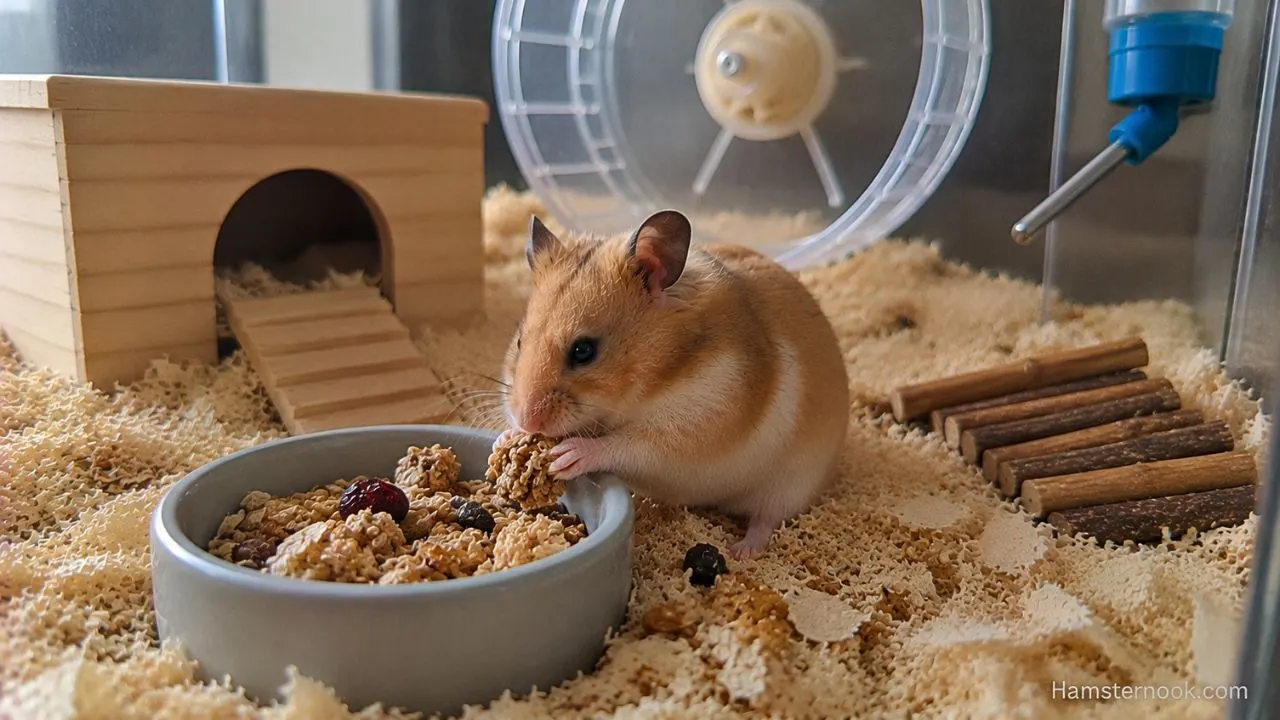
Why Aren’t Pretzels a Good Treat for Hamsters?
Pretzels are designed as a human snack, not as a nutritionally balanced food for small rodents.
A hamster needs a diet that provides appropriate nutrients rather than simply calories. The RSPCA recommends a good-quality, balanced hamster diet supplemented with small quantities of suitable vegetables, greens, and fruit. PDSA similarly recommends a nutritionally appropriate hamster diet with small portions of fresh foods and occasional treats.
Pretzels are therefore best judged against what a hamster actually needs from its everyday diet, rather than simply whether the snack is small enough to share. A balanced diet provides the foundation, while fresh foods and treats should only play a supporting role. The broader feeding approach is explained in Complete Hamster Diet Guide: What to Feed, How Much & How Often.
Pretzels have several characteristics that make them a poor choice:

- They are usually high in added salt.
- They are processed human food rather than hamster-formulated food.
- They provide little nutritional benefit compared with appropriate hamster treats.
- They can encourage owners to substitute human snacks for healthier foods.
- Flavored pretzels may contain additional ingredients that are unsuitable for hamsters.
The problem is not simply that a pretzel is “human food.” Some human foods, such as certain vegetables and small portions of some fruits, can be appropriate for hamsters. The difference is nutritional suitability and portion size.
This distinction is useful when deciding whether other foods from the human kitchen belong in a hamster’s diet. Some foods can be suitable in small portions, while others should be avoided because of their ingredients or nutritional profile. For a broader safety guide, see What Foods Should Hamsters Never Eat? Toxic & Unsafe Foods to Avoid.
What About the Salt in Pretzels?
Salt is the biggest reason to avoid making pretzels a regular hamster treat.
Animals require sodium as part of normal body function, but excessive sodium intake can become dangerous. The MSD Veterinary Manual explains that excessive sodium chloride intake can result in salt toxicosis, with possible gastrointestinal and neurological signs. The risk is influenced by the amount consumed and access to fresh water.

That does not mean you need to panic if your hamster has eaten one tiny pretzel crumb.
A much more sensible approach is to distinguish between:
| Situation | What to do |
|---|---|
| Hamster sniffed a pretzel | No concern |
| Hamster took one tiny crumb | Remove the rest and provide normal food and water |
| Hamster ate a noticeable piece | Monitor closely and contact a veterinarian if you are concerned |
| Hamster ate a large amount of salty food | Contact a veterinarian promptly for advice |
| Hamster develops concerning symptoms after eating salty food | Seek veterinary care |
There is no reliable universal “safe pretzel amount” that can be given for every hamster. Hamsters vary in size, and the amount of salt in different pretzels also varies.
What If My Hamster Already Ate a Pretzel?
If your hamster has already eaten a small piece, do not panic and do not try to make your hamster vomit.

Instead:
- Remove the remaining pretzel.
- Make sure fresh drinking water is available.
- Return to the hamster’s normal diet.
- Observe your hamster rather than giving additional treats.
- Contact a veterinarian if your hamster ate a substantial amount or begins showing unusual signs.
Do not attempt home treatments such as giving salt, forcing water, or using human medicines. Veterinary guidance from the RSPCA specifically warns that human and other-animal medicines can be dangerous to hamsters.
Don’t Try to “Cancel Out” the Salt
One common mistake is thinking that if a hamster eats something salty, the owner should give extra food, milk, treats, or another home remedy.
There is no reason to do this.

The safest approach after a small accidental exposure is generally to remove the inappropriate food, ensure normal access to fresh water, and return to the hamster’s usual diet. If the exposure was significant or the hamster appears unwell, veterinary advice is more appropriate than experimenting with home remedies.
Are Plain Pretzels Safer Than Flavored Pretzels?
Plain pretzels are preferable to heavily seasoned pretzels only in the sense that they may contain fewer additional ingredients, but that does not make them a recommended hamster treat.
Flavored varieties can contain additional seasonings, coatings, sweeteners, or other ingredients that make them even less appropriate.
Avoid offering varieties such as:

- Cheese-flavored pretzels
- Chocolate-covered pretzels
- Yogurt- or candy-coated pretzels
- Honey-coated pretzels
- Cinnamon-sugar pretzels
- Garlic- or onion-seasoned pretzels
- Spicy pretzels
- Pretzel pieces covered with dips or sauces
The safest choice is simply not to use pretzels as a hamster snack.
Can Hamsters Eat Pretzel Sticks?
Pretzel sticks should also be avoided as a deliberate treat.
Their shape does not make them nutritionally different enough to change the basic answer. Whether the pretzel is a stick, twist, nugget, rod, or small bite, it remains a processed, salty snack intended for people.
A hamster may happily chew one because hamsters naturally investigate and gnaw food, but enjoying a food does not mean that food belongs in their regular diet.

What Should Hamsters Eat Instead?
A much better treat is something that fits naturally into a balanced hamster diet.
Choosing treats this way makes it easier to avoid processed snacks while still giving your hamster occasional variety. The best options are small, appropriate foods that complement the normal diet rather than replacing it. For more ideas, see Best Hamster Treats: 10 Healthy & Safe Treats They Love.
The RSPCA recommends a quality balanced hamster food along with small quantities of suitable greens, vegetables, and fruit. PDSA also recommends small amounts of fresh fruit, vegetables, and herbs, while noting that treats such as nuts, boiled egg, and mealworms can be given occasionally.
Fresh foods can add variety when they are chosen and portioned appropriately, but they should still fit around the hamster’s main diet. If you want a practical list of suitable options, What Fruits and Vegetables Can Hamsters Eat? Safe List & Portions covers the choices and portion considerations in more detail.

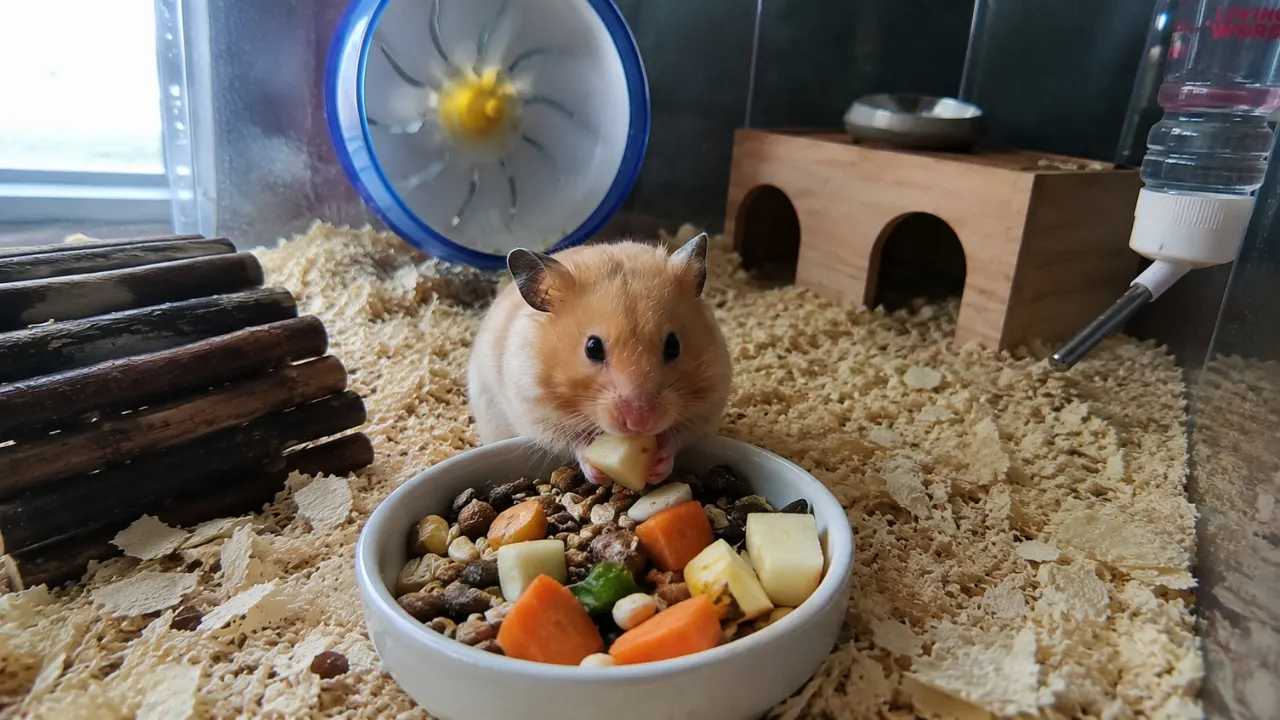
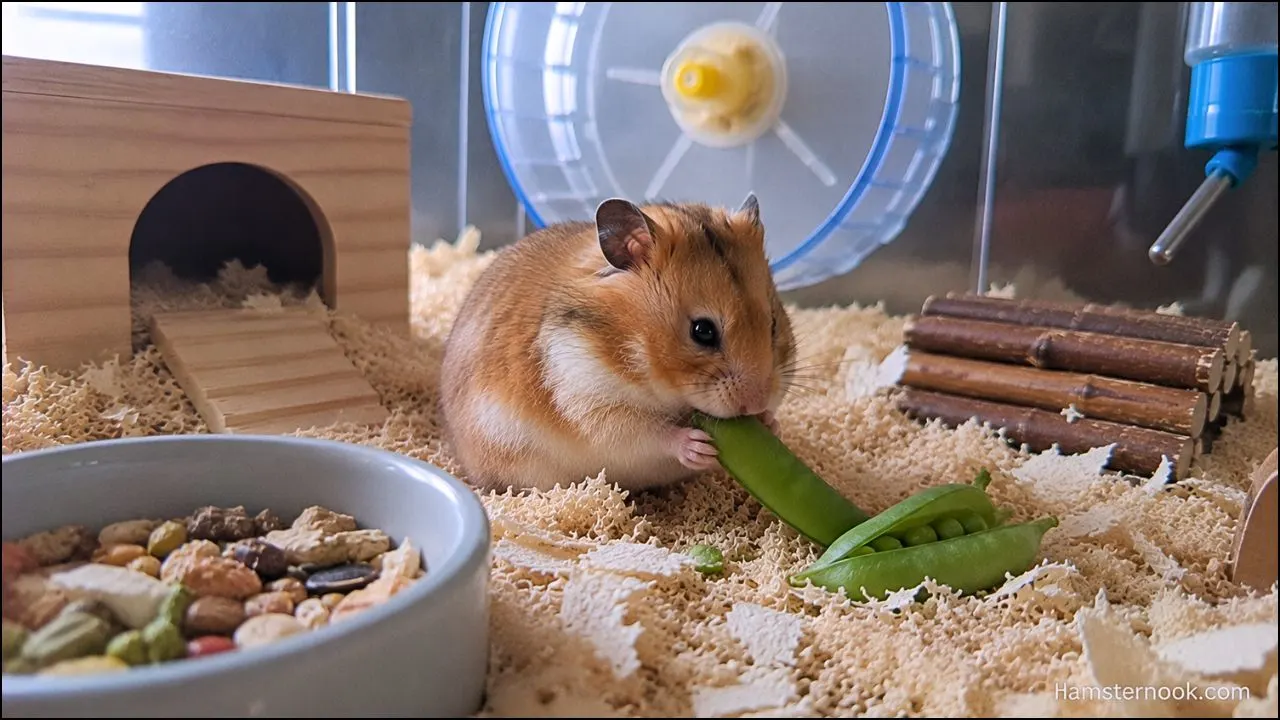
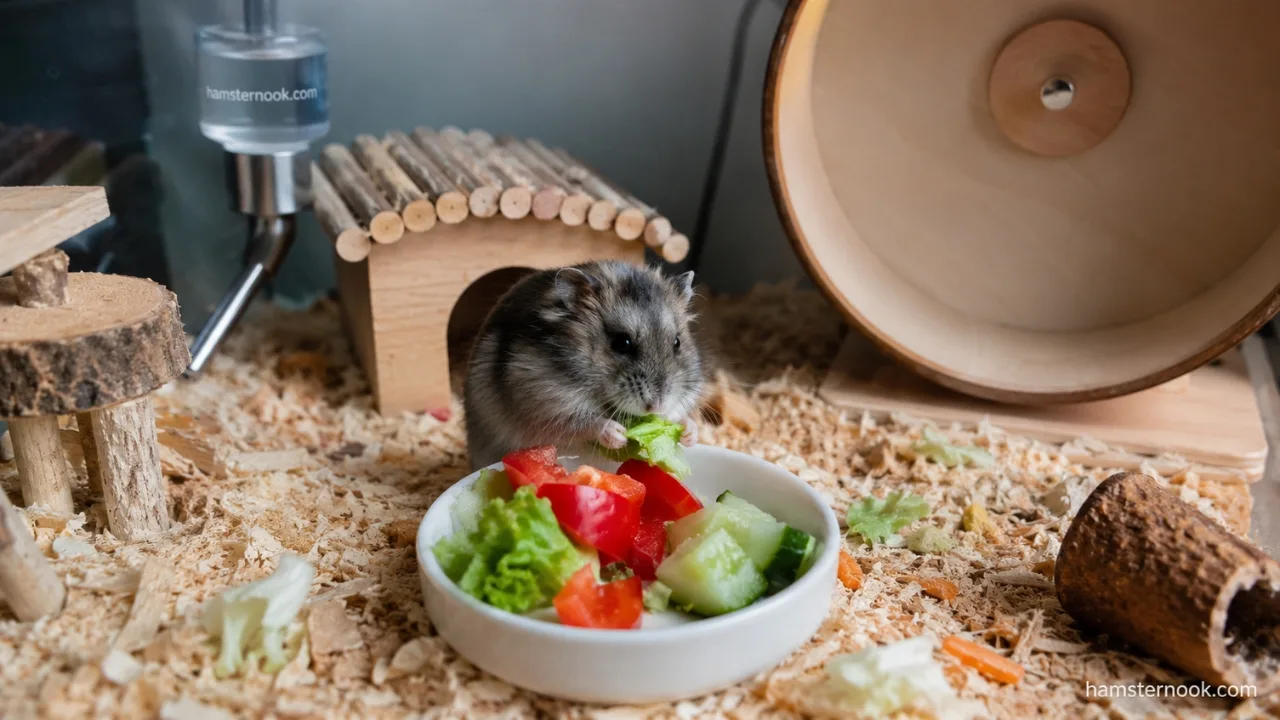
Depending on your hamster’s normal diet and individual needs, examples of more appropriate foods include small portions of suitable:
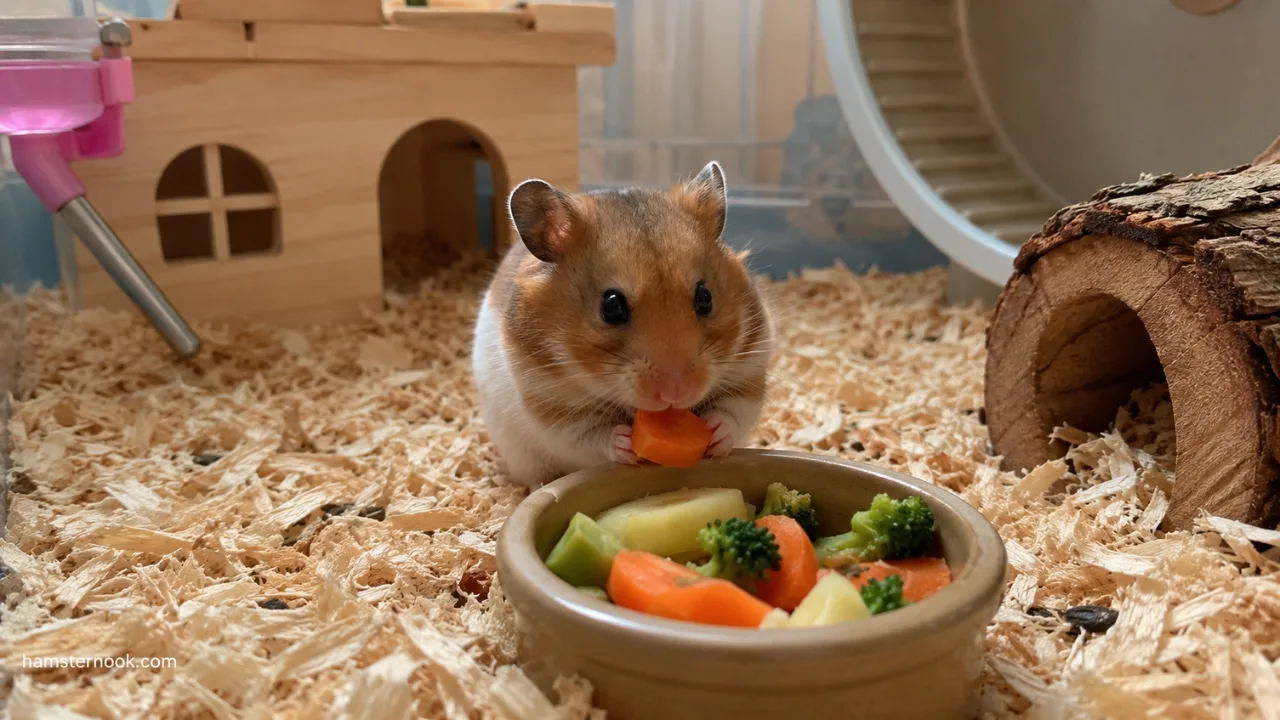
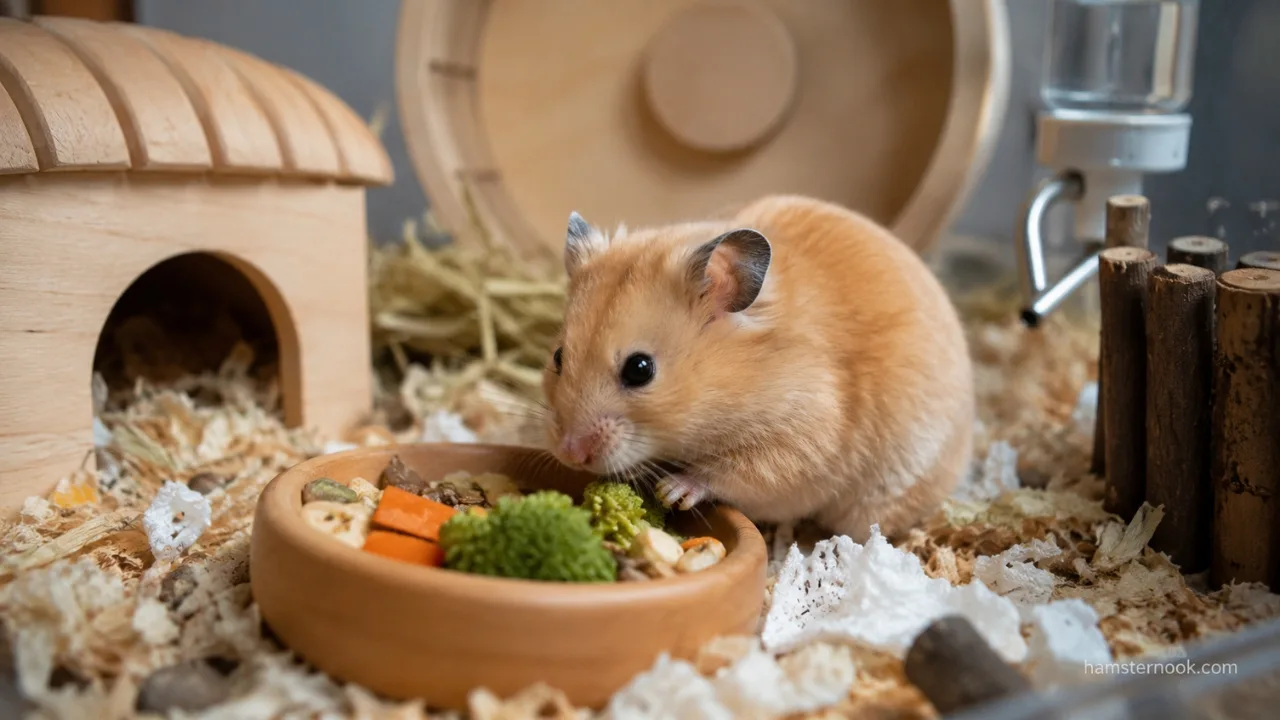
- Broccoli
- Bell pepper
- Cucumber
- Cabbage
- Cauliflower
- Pumpkin
- Apple with the seeds removed
- Small portions of suitable herbs
- Plain cooked egg in a tiny amount
- Appropriate hamster-safe nuts in moderation
- Mealworms as an occasional protein-rich treat
Fresh foods should be introduced gradually and in small portions rather than suddenly giving your hamster a large amount.
Going slowly also makes it easier to notice how your hamster responds when something new is added to the diet. This is especially useful when moving away from occasional human snacks and toward more appropriate fresh foods. The step-by-step approach is covered in How to Introduce New Foods to a Hamster Safely: Step-by-Step Guide.
Blue Cross recommends keeping fresh-food portions very small and warns against excessive sugary or fatty treats because hamsters can gain weight easily.
What Makes a Good Hamster Treat?
A good treat should complement the hamster’s normal diet rather than replace it.
Think about three things:
1. Nutritional value
The treat should provide something useful or at least fit appropriately into the hamster’s overall diet.
2. Small portion size
Hamsters are tiny animals. A snack that looks small to a person can represent a much larger proportion of a hamster’s daily food intake.
3. Suitable ingredients
Avoid unnecessary salt, heavy seasoning, excessive sugar, and highly processed ingredients.
The MSD Veterinary Manual advises that treats should make up no more than 10% of a hamster’s diet.
This is why an occasional treat should remain a small part of the overall feeding routine rather than becoming a regular source of calories. Keeping the main diet balanced helps put treats into the right perspective, even when the treat itself is considered appropriate. For a practical everyday feeding framework, see What Should Hamsters Eat Every Day? Daily Diet, Portions & Safe Foods.
Common Mistakes Owners Make With Pretzels
“It’s only one bite, so I can give it regularly.”
A tiny accidental bite is not the same as making something a routine treat. Regularly feeding an unsuitable food can gradually displace better-quality nutrition.

“My hamster likes it, so it must be safe.”
Hamsters are curious foragers and may eagerly investigate foods that are not appropriate for them. Interest is not a safety test.
“I’ll give a flavored pretzel because it has more taste.”
Extra flavor usually means extra ingredients. For a hamster, there is no nutritional reason to add seasoning to a treat.
“I’ll give more water to flush the salt out.”
Do not force your hamster to drink large amounts of water. Simply make sure normal fresh water is available. If a substantial salt exposure occurred, ask a veterinarian for specific advice.
“Human snacks are okay if they’re only given occasionally.”
Occasional feeding does not automatically make an unsuitable food appropriate. Treats should still be selected with the hamster’s nutritional needs in mind.

What You Should Do
If you are considering giving your hamster a pretzel, skip it and choose a hamster-appropriate treat instead.
If your hamster has already eaten a tiny piece:
- Remove the remaining pretzel.
- Check that fresh water is available.
- Continue the normal diet.
- Avoid giving additional human snacks.
- Keep an eye on your hamster’s normal behavior and eating.
If your hamster consumed a large amount of salty food, you should contact a veterinarian rather than trying to calculate the risk yourself.
Warning Signs After Eating Salty Food
A small accidental bite is very different from a significant exposure. After a larger ingestion, watch for unusual changes such as:

- Marked weakness
- Loss of coordination
- Tremors
- Seizure-like activity
- Significant gastrointestinal upset
- Abnormal behavior
- Reduced responsiveness
Salt toxicosis can produce neurological and gastrointestinal signs in animals, and severe cases require veterinary treatment.
These signs should not be assumed to be caused by the pretzel alone, because hamsters can become ill for many different reasons.
When to Worry
Contact a veterinarian promptly if your hamster ate a substantial quantity of salty food or develops significant neurological, gastrointestinal, or behavioral changes afterward.
Do not wait for severe symptoms if you know that your hamster consumed a potentially dangerous amount of something inappropriate. Because hamsters are very small, judging exposure based only on what looks like a “small amount” to a person can be misleading.

If your hamster is already showing signs of illness, avoid giving human medications or attempting an at-home treatment. The RSPCA recommends veterinary assessment for hamsters showing signs of illness or poisoning and warns against using human or other-animal medicines.
Can Hamsters Eat Pretzels? Final Thoughts
Pretzels are not a recommended food for hamsters. Their high-salt, processed nature makes them a poor choice compared with the foods that belong in a balanced hamster diet.
If your hamster stole a tiny crumb, there is no reason to assume the worst. Remove the remaining snack, provide normal access to fresh water, return to the usual diet, and observe your pet. A larger ingestion or concerning symptoms are different situations and warrant veterinary advice.
For regular treats, stick with small portions of foods known to be appropriate for hamsters rather than sharing salty human snacks. A good hamster treat does not need to be exciting to us—it needs to be suitable for the animal eating it.

Frequently Asked Questions
Can hamsters eat pretzels at all?
Pretzels should not be intentionally fed to hamsters. They are processed, salty human snacks and do not provide a useful reason to include them in a hamster’s diet.
What if my hamster ate one pretzel crumb?
If it was only a tiny crumb, remove the remaining pretzel and make sure your hamster has normal access to fresh water. Continue the regular diet and observe your hamster.
Can hamsters eat unsalted pretzels?
An unsalted pretzel removes one concern, but it is still a processed human snack with limited nutritional value for a hamster. There are better treat choices available, so it is best not to make pretzels part of the diet.
Can dwarf hamsters eat pretzels?
Dwarf hamsters should also not be intentionally given pretzels. Their smaller body size makes portion control particularly important, and there is no nutritional advantage to feeding them this snack.
Can Syrian hamsters eat pretzels?
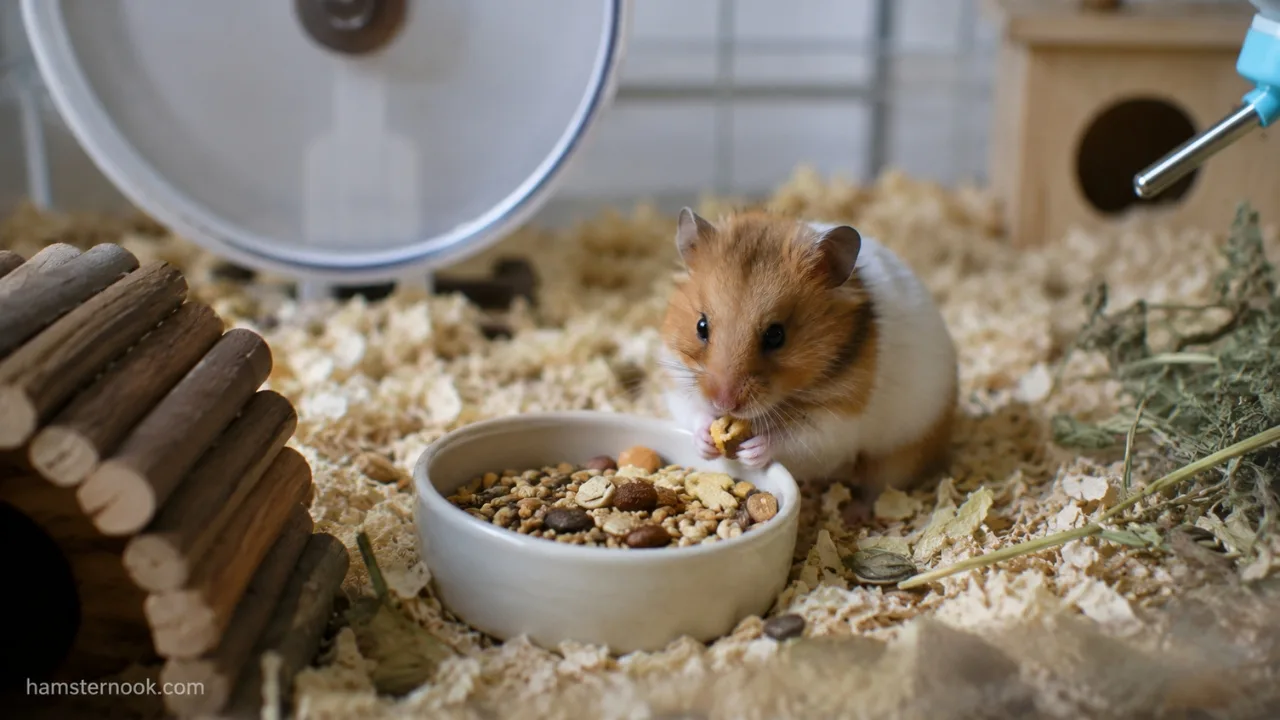
Syrian hamsters should not be given pretzels as a regular or intentional treat either. A balanced hamster food plus appropriate small portions of fresh foods and occasional suitable treats is a better approach.
Can hamsters eat pretzel sticks?
Pretzel sticks are not recommended for hamsters. Their shape does not make them a nutritionally appropriate treat.
What should I give my hamster instead of pretzels?
Small portions of suitable vegetables, certain fruits, herbs, or appropriate occasional treats such as mealworms, nuts, or cooked egg can be used depending on the hamster’s overall diet. Fresh foods should be given in appropriate portions rather than replacing the main balanced diet.
Can salt be dangerous to hamsters?
Excessive salt intake can cause salt toxicosis in animals, particularly when water intake is inadequate. Severe cases can involve neurological and gastrointestinal signs.
Should I give my hamster extra water after eating a pretzel?
Do not force extra water. Make sure clean, fresh drinking water is normally available. If your hamster consumed a significant amount of salty food, contact a veterinarian for specific guidance.
Are flavored pretzels safe for hamsters?
They are not recommended. Flavored pretzels can contain additional seasonings, coatings, sweeteners, or other ingredients, making them an even poorer choice than a plain pretzel.
References
This guide is based on trusted veterinary and animal welfare resources covering hamster nutrition, feeding practices, treats, fresh foods, drinking water, and sodium-related health risks, including:
- RSPCA – What To Feed a Pet Hamster – Guidance on balanced hamster diets, fresh foods, treats, feeding practices, and fresh drinking water.
- PDSA – Hamsters as Pets – Veterinary guidance covering hamster nutrition, appropriate treats, fresh foods, water, and general care.
- MSD Veterinary Manual – Providing a Home for a Hamster – Veterinary reference covering hamster diet, treats, water, and nutritional management.
- Blue Cross – Hamster Care – Animal welfare guidance covering hamster food, treats, portion sizes, water, and feeding practices.
- Merck Veterinary Manual – Salt Toxicosis in Animals – Veterinary toxicology reference describing the risks and clinical signs associated with excessive sodium chloride ingestion.

Narayan Kumar is the founder and author of HamsterNook. He creates practical, research-based hamster care guides covering hamster behavior, nutrition, cage setup, enrichment, health, and everyday care. His goal is to help hamster owners make informed decisions and provide safer, healthier lives for their pets through clear, beginner-friendly information based on trusted animal care resources.