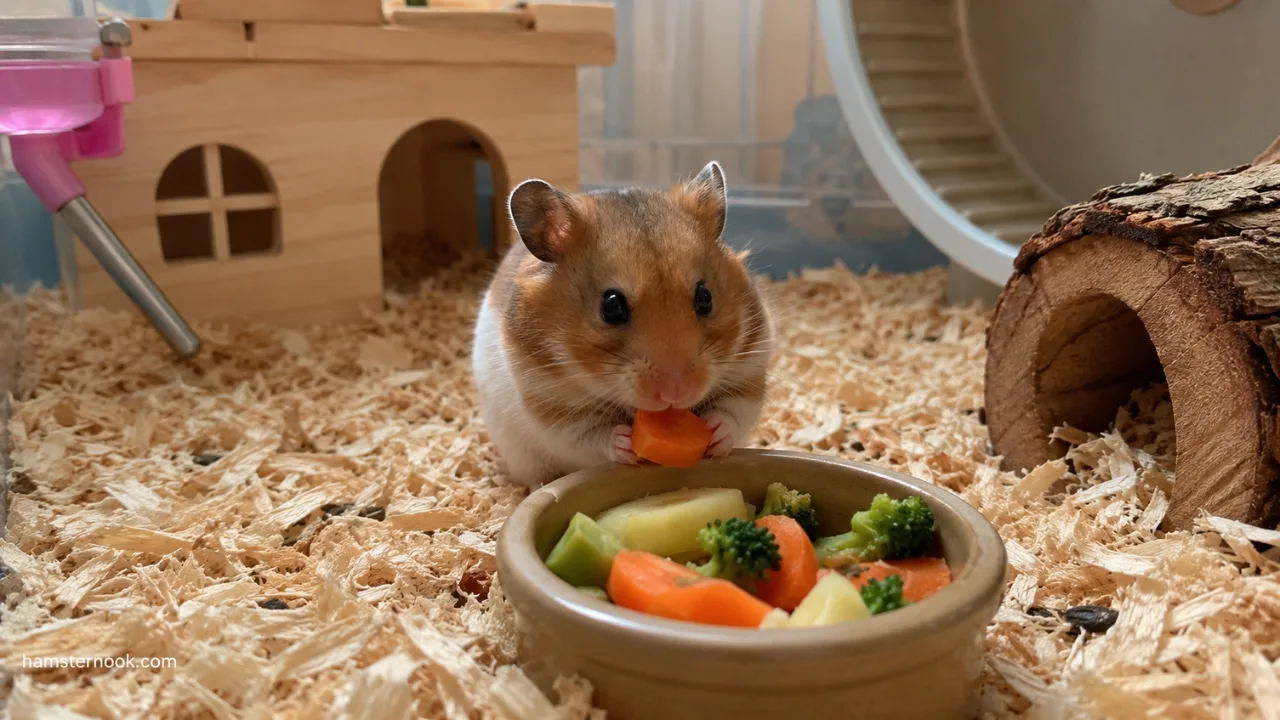
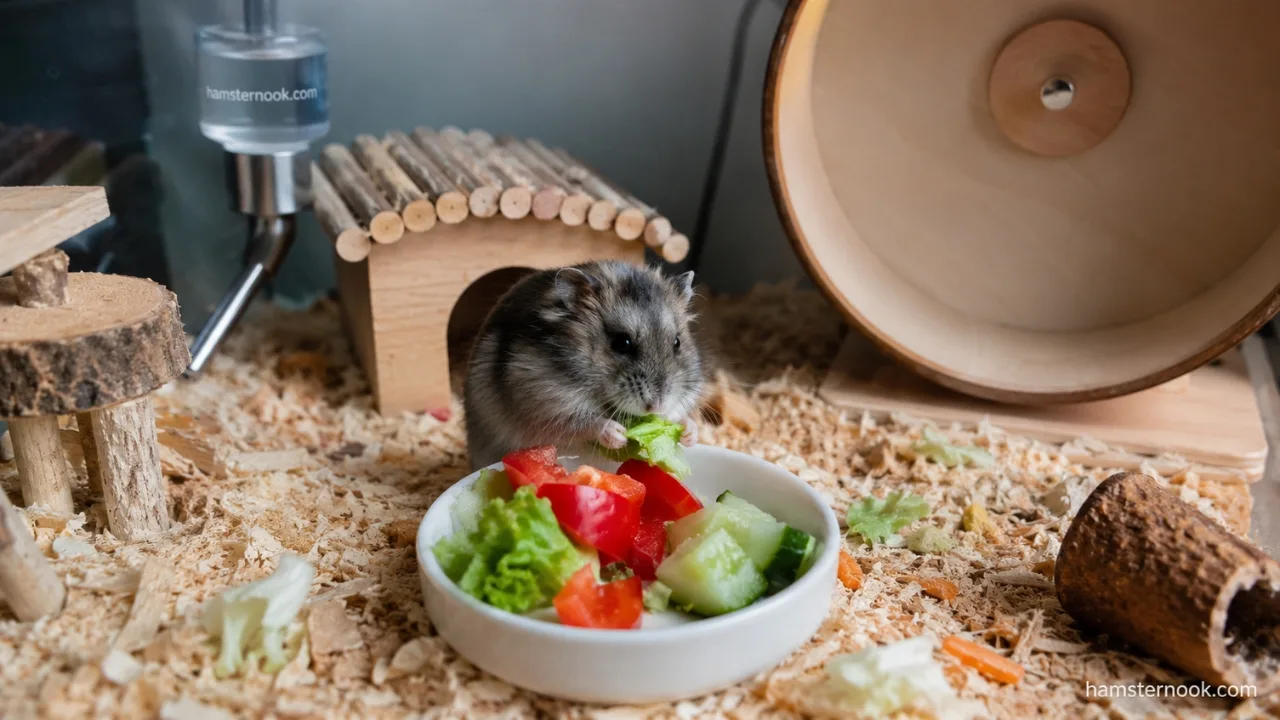
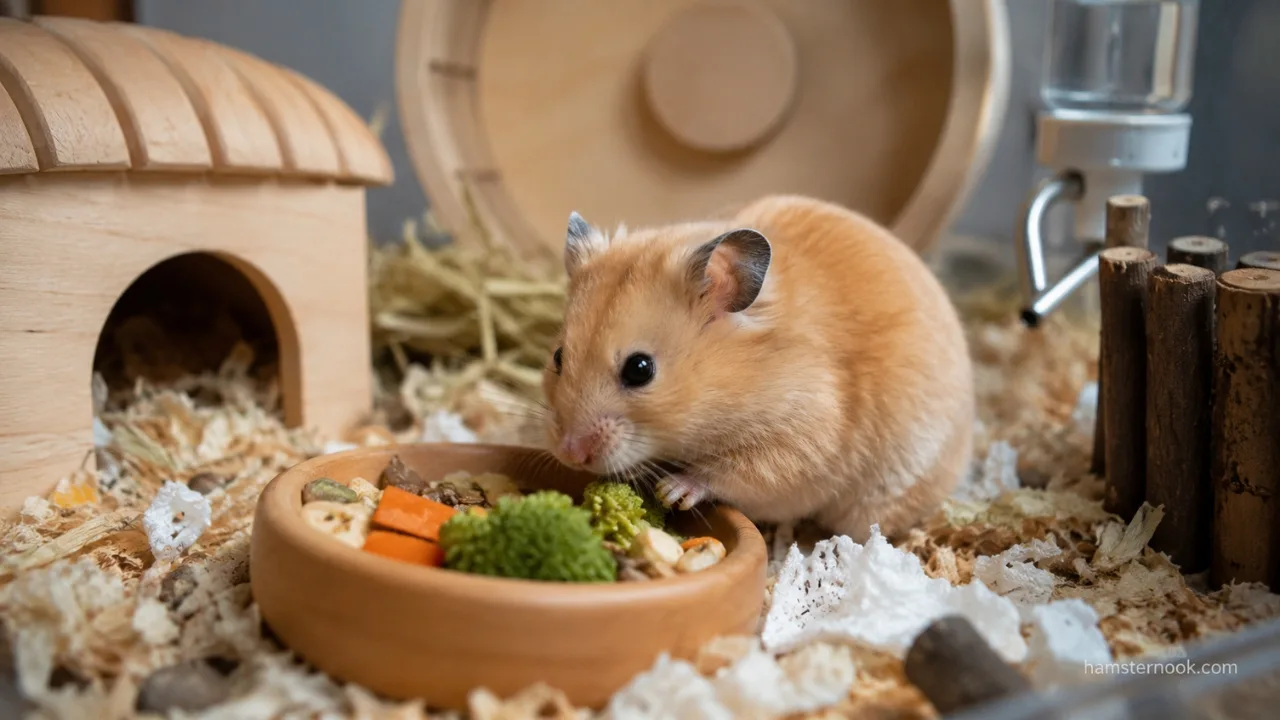
If your hamster gives you those hopeful little eyes while you are eating a pear, it is natural to wonder whether sharing is safe. Yes, hamsters can eat pear, but it should be an occasional treat rather than a regular part of their diet. The safest approach is to offer a small amount of fresh pear, remove the seeds and core, wash it well, and take away leftovers before they spoil.
Quick Answer: Can Hamsters Eat Pears?
Yes, hamsters can eat pear in moderation. Pear is included among suitable fruits for hamsters by PDSA, while the RSPCA also recommends small quantities of fruit as a supplement to a balanced hamster diet.
The important part is portion control. Pear contains naturally occurring sugars and is not nutritionally complete enough to replace a hamster’s main food. A hamster’s staple diet should remain a nutritionally balanced food formulated for hamsters, with fresh produce used as a small supplement or treat.
For a simple rule:

- Give fresh, plain pear only.
- Wash it before serving.
- Remove the seeds and tough core.
- Cut it into a very small, bite-sized piece.
- Offer it occasionally rather than making it an everyday fruit.
- Remove uneaten pear before it becomes spoiled.
Why Can Hamsters Eat Pear?
Hamsters are omnivores and can naturally consume a mixture of plant and animal foods. Fresh fruits and vegetables can provide variety alongside a nutritionally complete staple diet.
PDSA specifically lists pear as a suitable fruit for hamsters, provided fruits are washed and offered in moderation.
That does not mean pear should become a major part of the diet. Fruits are naturally higher in readily available carbohydrates than many staple hamster foods, so feeding large amounts can displace more appropriate foods and contribute to excessive calorie intake. Veterinary guidance therefore treats fruit as a limited addition rather than a dietary foundation.
Pear should therefore stay a small addition rather than becoming a major part of daily feeding. Complete Hamster Diet Guide: What to Feed, How Much & How Often explains how to keep treats and fresh foods balanced with a hamster’s main diet.

How Much Pear Can a Hamster Eat?
There is no single established pear portion that applies to every hamster. The appropriate amount depends on the hamster’s size, species, overall diet, and how it responds to new foods.
A useful conservative approach is to start with a very small piece. Think of pear as a taste-sized treat rather than a serving of fruit for a human.
PDSA recommends only a small daily amount of fresh fruit, vegetables and herbs overall, giving about 1–2 teaspoons of fresh produce per day as a general guide. PetMD’s hamster care guidance gives a more conservative fruit-specific example of about a teaspoon of fruit one to three times per week.
Because these recommendations cover fresh produce generally rather than pear alone, you should not interpret them as a reason to feed a hamster a teaspoon of pear every day.

A practical pear-feeding approach
| Hamster | Sensible approach |
|---|---|
| Syrian hamster | Start with a small bite of pear and keep fruit occasional |
| Dwarf hamster | Use an especially small piece because of the hamster’s smaller body size |
| First time trying pear | Offer only a tiny amount and observe how your hamster responds |
| Regular treat | Rotate pear with other suitable fresh foods rather than relying on one fruit |

If your hamster already receives other fresh foods that day, reduce the amount of pear accordingly.
Should You Remove Pear Seeds?
Yes. Remove all pear seeds before giving pear to your hamster.
It is best not to intentionally feed fruit seeds or the tough central core. Veterinary guidance for hamsters recommends avoiding fruit seeds and pits, and PetMD specifically advises removing seeds and pits from fruit before feeding.
There is also a broader toxicology reason for being cautious with fruit seeds. Some plant seeds contain cyanogenic compounds that can release cyanide when the plant material is chewed or otherwise broken down. The fleshy portion of fruit generally has much lower cyanogenic potential than seeds or leaves.
That does not mean a hamster will automatically become poisoned from accidentally swallowing one seed. It does mean there is no good reason to deliberately include seeds when preparing pear for such a small animal.
What about the pear skin?
Pear skin does not need to be treated like the seeds. The important preparation step is to wash the pear thoroughly before offering it.
If you are uncertain about the cleanliness or surface treatment of a particular pear, peeling it is a simple way to reduce what remains on the outside. Either way, the fruit should be fresh and free from visible spoilage.
How to Prepare Pear for Your Hamster
Preparing pear safely is simple.

1. Wash the pear
Rinse the fruit thoroughly before cutting it.
2. Remove the seeds and core
Cut the pear open and remove the seeds, stem and tough central core. Do not give your hamster the hard core simply because it is attached to otherwise edible fruit.
3. Cut a small piece
Use a small, bite-sized piece rather than giving your hamster a large wedge.
4. Serve it plain
The pear should be plain and fresh. Do not add sugar, honey, syrup, seasoning, chocolate, yogurt coating or other human-food ingredients.
5. Remove leftovers
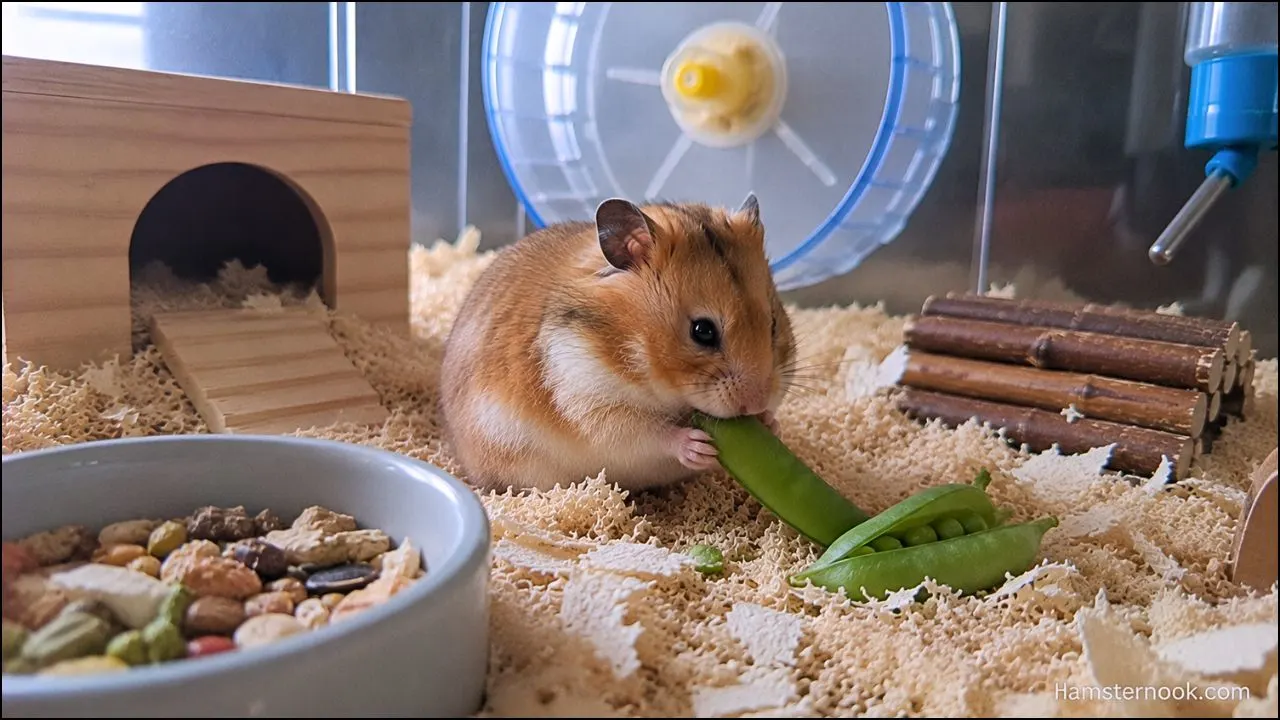
This step matters particularly with hamsters because they naturally carry food away and hide it. Fresh produce can spoil if it is left sitting in the enclosure. The RSPCA advises removing uneaten fresh foods before they become spoiled, while veterinary guidance also warns that fresh produce can deteriorate in a hamster’s enclosure.
If your hamster carries the pear into a nest or food stash, check the hiding places rather than assuming it was eaten immediately.

Can Hamsters Eat Pear Every Day?
It is better not to make pear an everyday treat.
A balanced hamster diet should provide the majority of the animal’s nutrition. Fruits and vegetables are additions, not replacements for a complete hamster food.

Pear is only one possible fresh-food option, so variety can come from other suitable fruits as well. Can Hamsters Eat Watermelon? Safe Amount, Seeds & Rind Explained explains how another fruit can be offered while keeping portions appropriate.
Even though pear is considered a suitable fruit, feeding it frequently can mean your hamster is receiving more fruit than necessary. It is more sensible to rotate small amounts of appropriate fresh foods.
Pear is therefore best treated as one option within a wider fresh-food rotation. Healthy Treats for Hamsters: 10 Safe Treats They Actually Love covers other suitable treat choices that can add variety while keeping portions limited.
This also prevents your hamster from learning to ignore its normal food while waiting for sweeter treats.

Can Dwarf Hamsters Eat Pear?
Yes, dwarf hamsters can eat pear, but the portion should be particularly small.
Dwarf hamsters do not need to be excluded from suitable fruits simply because they are smaller. The bigger concern is how much food they receive relative to their body size and overall diet.
If you have a dwarf hamster, avoid using a Syrian-hamster-sized piece as your default portion. A tiny taste is enough, particularly when pear is being introduced for the first time.
This is also a good reason not to measure treats by “one slice.” A slice that looks small to a person can represent a substantial amount of food for a tiny hamster.
Can Hamsters Eat Canned, Cooked or Flavored Pear?
Fresh, plain pear is the safest choice.
Avoid giving your hamster pear prepared with:
- Added sugar
- Syrup
- Honey
- Artificial sweeteners
- Spices
- Chocolate
- Cream or dairy toppings
- Preservatives or flavored coatings
There is no benefit to turning pear into a human dessert before giving it to a hamster. Plain fresh fruit is simpler and lets you control exactly what your hamster is eating.
Common Pear-Feeding Mistakes
Giving too much at once
A hamster does not need a large piece of fruit to enjoy the treat. Large portions provide unnecessary sugar and can also leave more food available to hide and spoil.

Leaving the pear in the cage
Hamsters naturally hoard food, so fresh pear can disappear into a nest or storage area. Check where your hamster carries fresh food and remove leftovers before they spoil.
Leaving the seeds attached
There is no reason to take the risk. Remove the seeds and core before serving.
Replacing normal food with fruit
Pear is a treat. It should not replace a nutritionally complete hamster diet. Veterinary sources recommend a balanced staple food as the foundation of the diet.
Introducing a large amount immediately
Sudden dietary changes can upset a hamster’s digestive system. The RSPCA specifically recommends introducing dietary changes gradually and monitoring eating and droppings.

That gradual approach is especially useful when pear is completely new to your hamster. How to Introduce New Foods to a Hamster Safely: Step-by-Step Guide explains how to make dietary changes gradually while watching for digestive problems.
What You Should Do
If you want to give your hamster pear, keep the routine simple:
- Choose fresh pear that is not spoiled.
- Wash it thoroughly.
- Remove the seeds, stem and tough core.
- Cut off a very small piece.
- Offer it plain.
- Watch how your hamster responds.
- Remove any leftover fresh pear before it spoils.
- Keep pear as an occasional treat rather than a staple food.
Your hamster’s normal balanced food and fresh drinking water should remain the priorities.
Warning Signs After Eating Pear
Do not assume that every digestive change is caused by pear. Hamsters can become unwell for many reasons, so pay attention to changes from your hamster’s normal eating, activity, and droppings.
After introducing pear or another new food, watch for:
- Eating noticeably less
- Moist or abnormal droppings
- A soiled rear end
- Marked lethargy or unusual behavior
- Repeated digestive problems
- Significant changes in drinking or activity
If your hamster develops persistent or severe symptoms, appears seriously unwell, or you believe it has eaten a potentially toxic ingredient or a large amount of an unsafe food, contact a veterinarian experienced with small or exotic pets. Do not try human medication or home remedies.
Final Thoughts
Hamsters can eat pears, and pear can be a perfectly reasonable occasional treat when prepared properly. The safest version is simple: wash it, remove the seeds and core, offer a small piece of plain pear, and remove leftovers before they spoil.
What matters most is the overall diet. Your hamster’s nutritionally appropriate staple food should provide the foundation, while fresh foods such as pear are only small additions for variety.

Pear is only one of many fresh foods that can be used for variety in small amounts. Best Fruits and Vegetables for Hamsters: Safe Foods, Portion Sizes & Feeding Tips gives a broader guide to suitable fresh foods and practical portions.
The same principle applies when owners consider other foods as occasional extras: familiar human foods should not automatically replace a hamster’s balanced diet. Can Hamsters Eat Bread? Safe Types, Portions & What to Avoid explains how bread fits into hamster feeding and what owners should consider before offering it.
If your hamster enjoys pear, there is no need to make the portion large. A tiny piece is enough to provide the experience without turning a sweet fruit into a major part of the diet.
Frequently Asked Questions
Can hamsters eat pear?
Yes. PDSA lists pear among fruits suitable for hamsters when offered washed and in moderation.

Can hamsters eat pear seeds?
It is best to remove pear seeds before feeding. Veterinary hamster-care guidance recommends avoiding fruit seeds and pits, so serve only the prepared fruit flesh.
How much pear can a hamster eat?
Start with a very small piece. Pear should be an occasional treat rather than a large serving. PDSA recommends only small overall amounts of fresh fruit, vegetables and herbs, while PetMD gives about a teaspoon of fruit one to three times weekly as a general hamster-care example.
Can dwarf hamsters eat pear?
Yes, but give a particularly small portion because dwarf hamsters are much smaller than Syrian hamsters. A tiny taste is sufficient.
Can Syrian hamsters eat pear?
Yes. Syrian hamsters can have pear as an occasional fresh-fruit treat, provided it is washed, prepared without seeds or core and offered in moderation.

Can hamsters eat pear skin?
Pear skin is not the main concern when the fruit is properly washed. If you prefer, you can peel it, but always remove the seeds and tough core.
Can hamsters eat canned pears?
Fresh plain pear is preferable. Avoid canned pears packed in syrup or containing added sugar and other ingredients.
Can hamsters eat pear every day?
It is better to keep pear occasional rather than feeding it every day. Fruits should remain a small part of a balanced hamster diet.
Can hamsters eat cooked pear?
There is no need to cook pear for a hamster. Plain fresh pear is the simpler choice. Avoid cooked pear containing sugar, syrup, spices or other added ingredients.

What should I do if my hamster hides the pear?
Check the hamster’s food-storage areas later and remove any uneaten fresh pear before it spoils. Hamsters naturally carry and hide food, so fresh produce should not be left indefinitely in their nest.
References
This guide is based on hamster nutrition, feeding, and safety information from trusted veterinary and animal welfare resources, including:
- RSPCA – What To Feed a Pet Hamster – Guidance on balanced hamster diets, small quantities of fruit and vegetables, monitoring food intake, and removing spoiled food.
- PDSA – Hamsters as Pets – Guidance on hamster nutrition, moderation of fresh foods, and suitable fruits including pear.
- MSD Veterinary Manual – Hamsters: Exotic and Laboratory Animals – Veterinary information on hamster biology, diet, and husbandry.
- MSD Veterinary Manual – Cyanide Poisoning in Animals – Veterinary toxicology information concerning cyanogenic compounds in plants and seeds.
- PetMD – Dwarf Hamster Care Sheet – Veterinary-reviewed guidance covering fruit portions, suitable fruits including pears, and removal of fruit seeds and pits.
Medical Disclaimer:
This article provides general hamster-care information and is not a substitute for veterinary examination or individualized veterinary advice. If your hamster becomes unwell after eating something, contact a veterinarian for appropriate guidance.

Narayan Kumar is the founder and author of HamsterNook. He creates practical, research-based hamster care guides covering hamster behavior, nutrition, cage setup, enrichment, health, and everyday care. His goal is to help hamster owners make informed decisions and provide safer, healthier lives for their pets through clear, beginner-friendly information based on trusted animal care resources.