
foods hamsters should never eat: Hamsters may be tiny, but what they eat has a huge impact on their health. Many beginners assume that if a food is safe for humans, it must also be safe for hamsters, but that’s not always the case. Some common foods can cause serious digestive issues, toxicity risks, and dangerous health complications in hamsters.
If you want your hamster to live a long, healthy life, knowing what NOT to feed is just as important as knowing what to feed.
Quick Answer: What Foods Should Hamsters Never Eat?
Hamsters should not be given chocolate, grapes, rhubarb, alcohol, caffeine, raw yeast dough, raw or green potatoes, or sticky foods that can cause cheek-pouch problems. Some foods, such as citrus, are best avoided because current hamster-care guidance remains cautious. When a food is known or suspected to be unsafe, remove access to it and contact an exotic-pet veterinarian rather than waiting for symptoms.
Why Some Foods Are Dangerous for Hamsters
Hamsters have a very sensitive digestive system. Certain foods can:

- Disrupt gut bacteria
- Cause bloating or diarrhea
- Damage organs like the liver or kidneys
- Be outright toxic (even in small amounts)
Many foods that seem harmless can still be unsuitable for hamsters because of their size, metabolism, and specific nutritional requirements. Even small amounts of certain foods can sometimes create problems.
Also, hamsters store food in their cheek pouches, which means harmful foods can sit there longer and increase risk of infection or poisoning.
This is one reason why accidentally offering an unsafe food can be more concerning in hamsters than in some other pets. A food item may remain stored for some time before it is eaten or removed.
Toxic Foods Hamsters Should Never Eat
These foods are strictly unsafe and should be completely avoided:

1. Chocolate & Sugary Foods
- Contains theobromine, which is toxic to small animals
- Can cause seizures, heart problems, or death
Avoid: chocolate, candies, desserts, sugary snacks
2. Onion, Garlic, and Chives
Hamster-specific guidance on onion is not completely consistent. PDSA’s current hamster guide lists onion among suitable vegetables, while broader veterinary sources document Allium toxicity in several other animal species. Because the hamster-specific evidence does not establish onion as a definite toxin, this article should not describe onion as unquestionably toxic to hamsters. Garlic and chives should also not be presented as proven hamster-safe foods without hamster-specific evidence.
3. Citrus Fruits (Orange, Lemon, Lime)
- Hamster-care guidance remains cautious about citrus because of its acidity
- RSPCA/PDSA guidance recommends avoiding citrus for now rather than treating it as an established safe fruit
Avoid oranges, lemons, limes, and similar citrus fruits.
4. Raw Beans & Raw Potatoes
- Raw beans can contain harmful compounds
- Raw, green, or sprouting potatoes can contain harmful compounds and should be avoided
Never feed raw beans or raw, green, or sprouting potatoes. Plain cooked potato is a different food and can be offered only in a small amount.

5. Almonds (Bitter Almonds Especially)
- Bitter almonds contain cyanide compounds
- Bitter almonds should always be avoided, while sweet almonds are best limited due to their high fat content.
6. Apple Seeds & Fruit Pits
Apple and other fruit seeds can contain cyanogenic compounds, but severe toxicity from commercially available fruit seeds is uncommon unless larger amounts are consumed. The safer practice is still to remove seeds and pits before giving fruit to a hamster.
7. Junk Food & Processed Snacks
- High in salt, sugar, and unhealthy fats
- Leads to obesity and organ stress
Avoid chips, biscuits, fast food
8. Alcohol & Caffeine
- Extremely toxic
- Can affect nervous system and heart
Never give tea, coffee, or alcohol
9. Sticky or Chewy Foods
- Can get stuck in cheek pouches
- May cause infections or choking
Avoid peanut butter (in large amounts), sticky sweets

10. Avocado
- Contains persin, a compound associated with toxicity in susceptible animals
- Avocado is also very high in fat and is best avoided completely for hamsters
11. Grapes & Rhubarb
- RSPCA advises that grapes and rhubarb can be poisonous to hamsters
- Do not offer them as treats or fresh food
Avoid grapes, raisins, and rhubarb rather than treating them as ordinary high-sugar or high-acid foods.
If you want a food-specific explanation, our Can Hamsters Eat Grapes? Safety Risks & Why to Avoid Them guide covers the risks of grapes in more detail.
Avoid the flesh, skin, pit, leaves, and other parts of the avocado plant.
Unsafe vs Safe Foods (Quick Comparison Table)
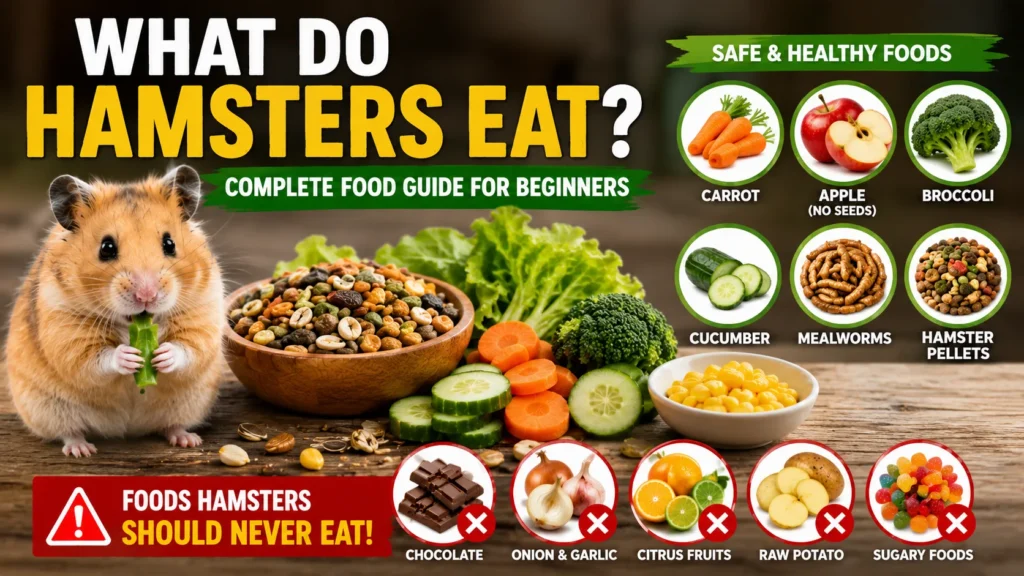
| Food | Status | Guidance |
|---|---|---|
| Chocolate | Unsafe | Theobromine is poisonous to rodents; avoid completely |
| Grapes & Rhubarb | Avoid | RSPCA says these can be poisonous to hamsters/rodents |
| Raw, Green or Sprouting Potatoes | Avoid | These can contain harmful compounds |
| Citrus Fruits | Avoid for now | PDSA says current guidance remains unsettled |
| Apple | Safe when prepared correctly | Remove the seeds before feeding |
| Carrots | Safe in moderation | Offer small portions as part of a varied diet |
| Raw Yeast Dough | Unsafe | Can expand and produce ethanol after ingestion |
| Sticky Foods | Avoid | Can stick to cheek pouches and create mechanical problems |
Foods That Are Not Toxic but Still Risky
Some foods are not considered toxic but may still be unsuitable as regular parts of a hamster’s diet.
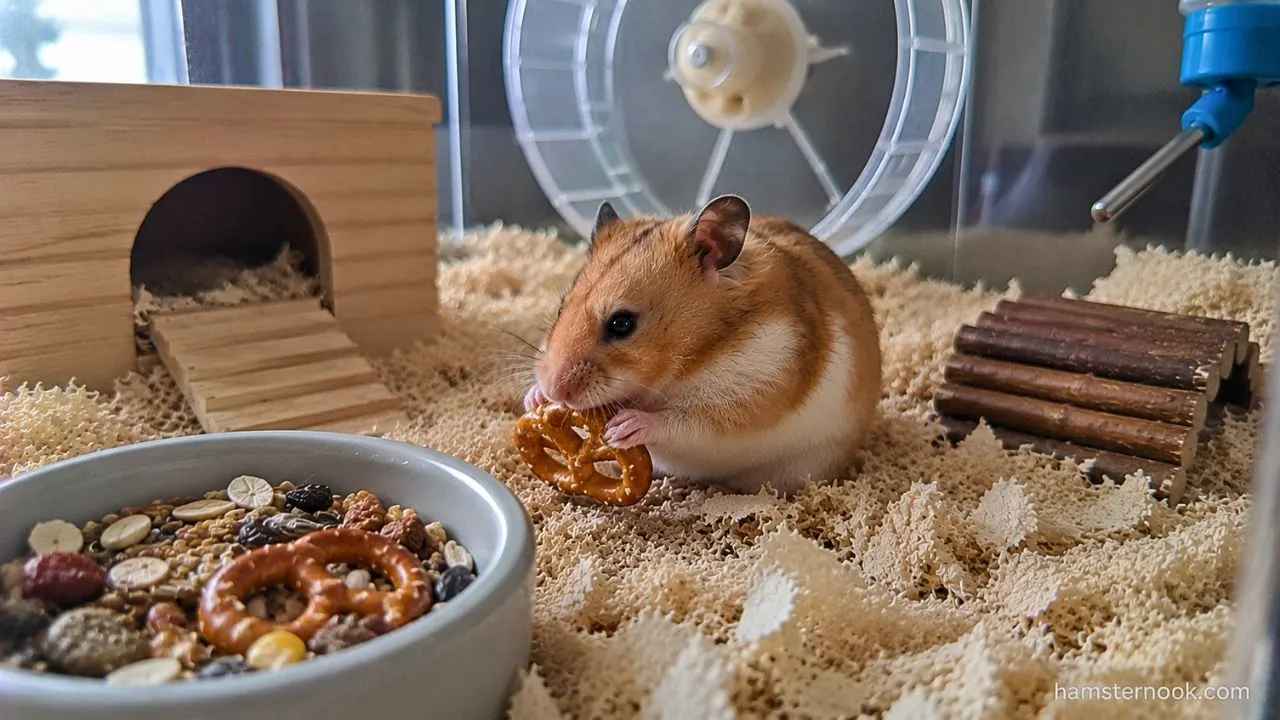
1. High-Sugar Fruits
- Banana, mango, and similar sweet fruits
- Should be offered only occasionally because excess sugary foods can contribute to obesity and other diet-related health problems
Grapes are different: they should be avoided rather than treated as an ordinary high-sugar fruit because hamster-care guidance warns that grapes can be poisonous.
2. High-Fat Foods
- Cheese, nuts (in excess)
- Leads to weight gain and liver problems
3. Dairy Products
- Some hamsters are lactose intolerant
- May cause diarrhea
4. Bread & Processed Grains
Plain bread is not a necessary part of a hamster’s diet and should only be an occasional small food if offered. Raw yeast-containing bread dough is different: yeast can make the dough expand in the stomach and produce ethanol, creating a potentially serious poisoning risk. If a hamster eats raw yeast dough, contact an exotic-pet veterinarian promptly.
Why Food Safety Matters for Hamsters
Because hamsters are small animals, even small amounts of certain toxic foods may have a greater impact than owners expect. Understanding food safety helps prevent emergencies and supports long-term health.
Signs Your Hamster Ate Something Unsafe
If your hamster accidentally eats a toxic food, watch for:
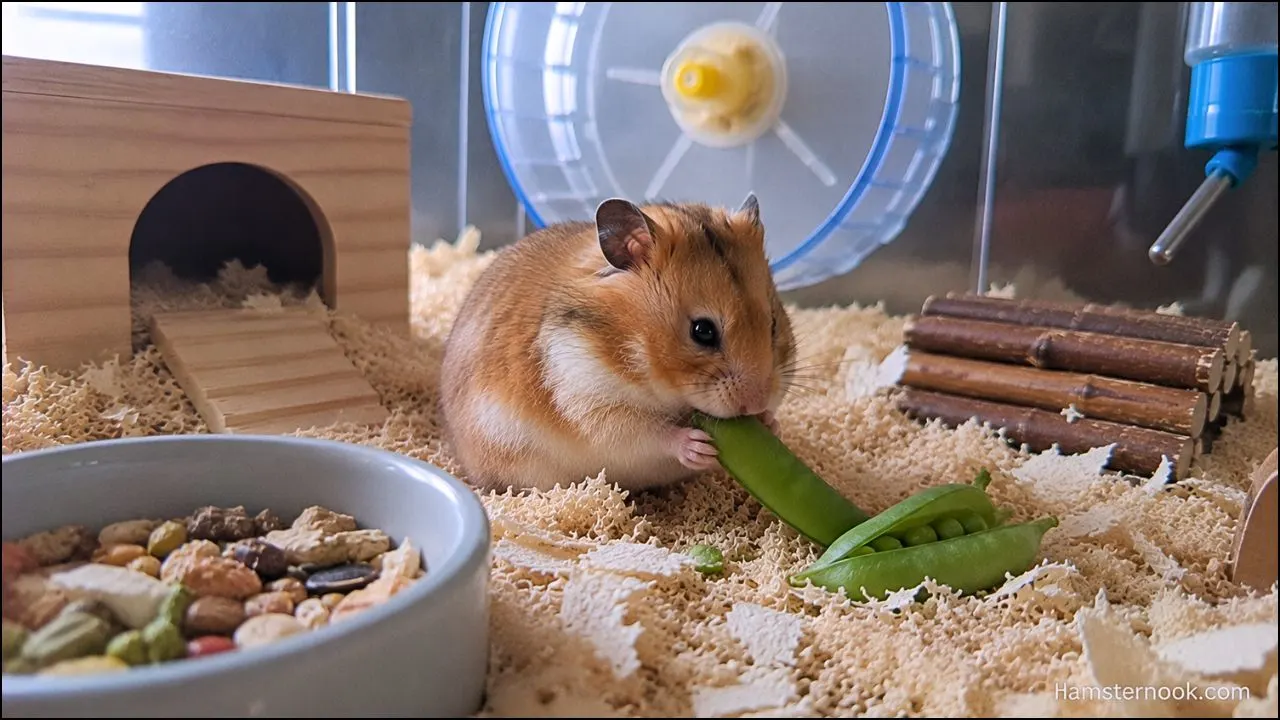
- Lethargy or weakness
- Loss of appetite
- Diarrhea or bloating
- Rapid breathing
- Tremors or seizures
If you notice appetite loss, lethargy, diarrhea, breathing difficulties, or other unusual symptoms after your hamster eats something unsafe, our Signs of a Sick Hamster: Symptoms, Warning Signs & When to See a Vet guide explains the warning signs that require attention.
Immediate action:
Remove access to the food and contact an exotic pet veterinarian promptly if your hamster has eaten a known toxic food. Do not wait for symptoms to appear before asking for veterinary advice.
If possible, identify what was eaten, approximately how much was consumed, and when it happened. This information can help the veterinarian assess the exposure.
For food-specific safety questions, our Can Hamsters Eat Bread? Safe Types, Portions & What to Avoid guide explains the difference between ordinary bread and higher-risk bread products such as raw dough.

What You Should Feed Instead
To keep your hamster healthy, focus on:
- High-quality hamster pellet mix
- Fresh vegetables (carrot, cucumber, broccoli)
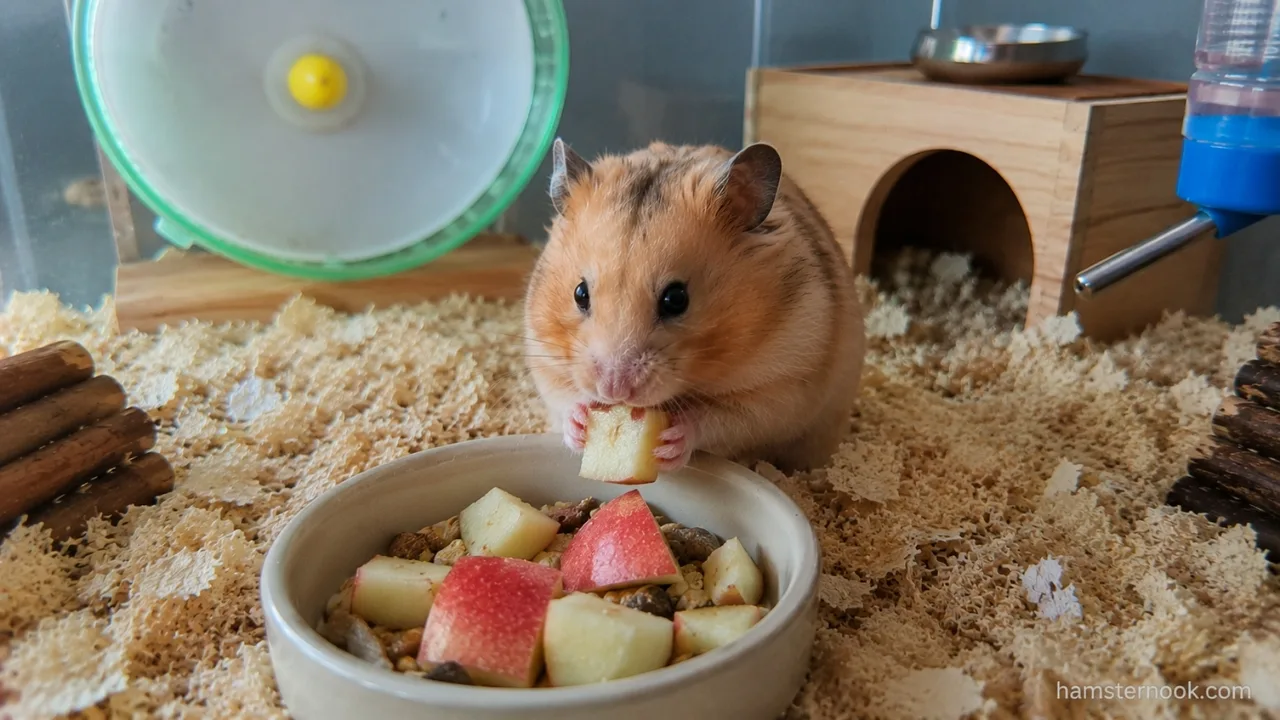
- Small portions of fruits (apple, pear — seedless)
- Occasional protein (boiled egg, mealworms)
For a broader breakdown of the main diet, safe foods, treats, and foods to avoid, see our Complete Hamster Diet Guide.
Feeding Tips for Beginners
- Always introduce new foods slowly
- Give treats in tiny portions
- Remove uneaten fresh food within 24 hours
- Provide fresh, clean water daily
- Stick to a balanced diet (not just treats)
A healthy hamster diet should be based primarily on a complete hamster food mix or pellet rather than treats, fruits, or human foods.
Introducing too many new foods at once can make it difficult to identify the cause of digestive upset. Gradual dietary changes are usually easier on a hamster’s sensitive digestive system.
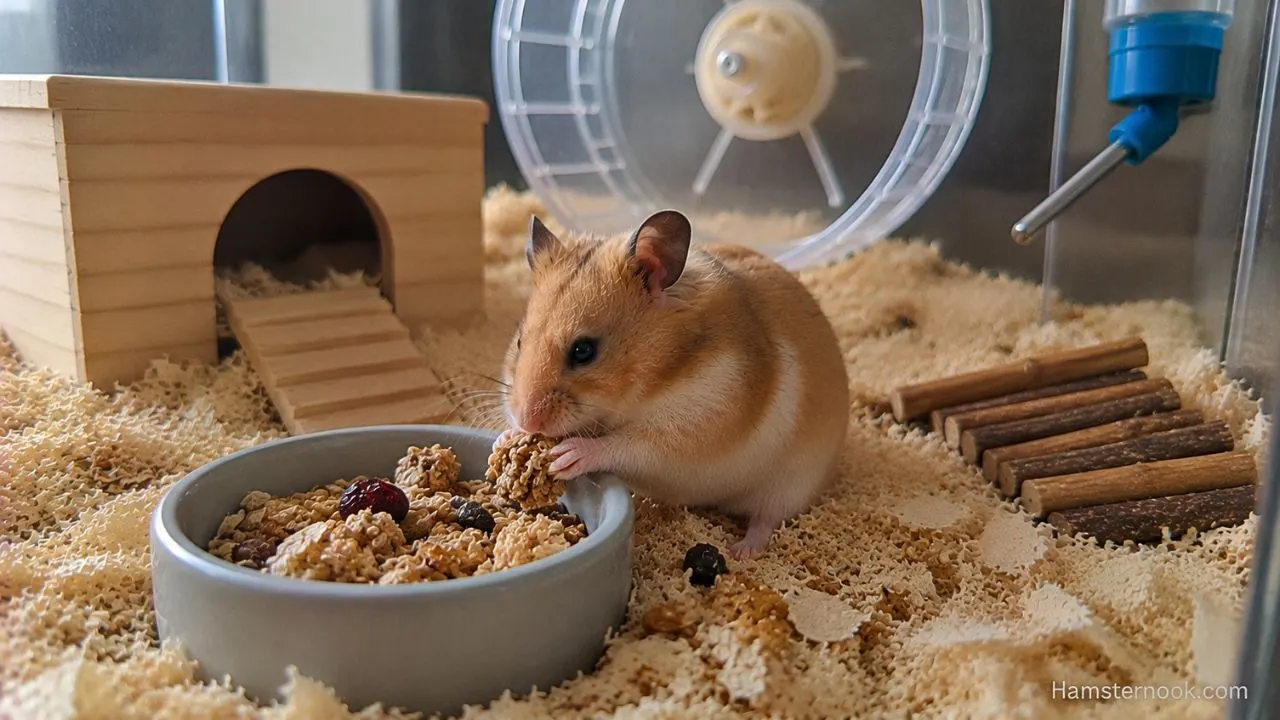
Common Feeding Mistakes Beginners Make
Many new owners accidentally offer too many treats, too many sugary foods, or introduce several new foods at the same time. Sticking to a balanced diet and offering treats in moderation helps reduce many common nutrition-related problems.
Final Thoughts
Choosing the right foods is one of the simplest ways to protect your hamster’s health. While many foods seem harmless, some can cause digestive problems, nutritional imbalances, or even serious health risks when fed regularly.
A good rule of thumb is to offer only foods that are known to be safe for hamsters and introduce new items gradually. When in doubt, research the food first rather than taking a chance.
By focusing on a balanced diet, limiting treats, and avoiding toxic foods, you can help your hamster stay healthy, active, and comfortable throughout its life.
FAQ – Foods Hamsters Should Never Eat
Can hamsters eat bread?
Yes, but only plain bread in very small amounts. It has little nutritional value and should not be regular food.
Are bananas safe for hamsters?
Yes, but only occasionally. Bananas are high in sugar and can lead to obesity or diabetes.
Can hamsters eat cheese?
In tiny amounts, yes. But too much can cause digestive issues due to lactose.
What happens if a hamster eats chocolate?
Chocolate is toxic and can cause serious health issues like seizures and other serious health complications. Immediate veterinary care is needed.

Are all nuts unsafe?
Not all, but they should be given rarely due to high fat content. Bitter almonds should always be avoided.
Can hamsters eat human snacks?
No. Most human snacks are high in salt, sugar, or additives that are harmful to hamsters.
What should I do if my hamster eats a toxic food?
Remove access to the food immediately and monitor your hamster closely for unusual symptoms such as lethargy, diarrhea, appetite loss, breathing difficulties, or weakness. Contact an exotic pet veterinarian if symptoms develop or if the food is known to be toxic.
For a broader look at everyday safe foods, portions, and foods to avoid, see our What Do Hamsters Eat? Safe Foods, Daily Diet & Foods to Avoid guide.

References
This guide is based on hamster nutrition, feeding safety, toxic food risks, and dietary welfare guidance from trusted veterinary and animal welfare resources, including:
- RSPCA – What to Feed a Pet Hamster – Guidance on hamster diets, safe foods, feeding practices, treats, fresh foods, and foods that may be harmful.
- PDSA – Hamsters as Pets – Practical guidance on hamster nutrition, suitable foods, feeding amounts, treats, and general welfare.
- Blue Cross – Hamster Care Guide – Guidance on hamster diet, feeding, safe food choices, treats, and everyday husbandry.
- MSD Veterinary Manual – Hamsters – Veterinary reference information covering hamster nutrition, digestive health, diseases, and health problems associated with inappropriate foods.
- MSD Veterinary Manual – Disorders and Diseases of Hamsters – Veterinary information on digestive, respiratory, and other health problems that may require professional attention.
- RSPCA – Keeping Hamsters as Pets – General hamster care, nutrition, welfare, and health guidance for pet owners.
Medical Disclaimer
This article is intended for educational purposes only and should not be considered veterinary advice. If your hamster has eaten a potentially toxic or unsafe food, remove access to the food and contact a qualified exotic animal veterinarian for guidance. Seek veterinary attention promptly if your hamster develops symptoms such as loss of appetite, lethargy, diarrhea, breathing difficulties, weakness, tremors, seizures, or other unusual changes.

Narayan Kumar is the founder and author of HamsterNook. He creates practical, research-based hamster care guides covering hamster behavior, nutrition, cage setup, enrichment, health, and everyday care. His goal is to help hamster owners make informed decisions and provide safer, healthier lives for their pets through clear, beginner-friendly information based on trusted animal care resources.


