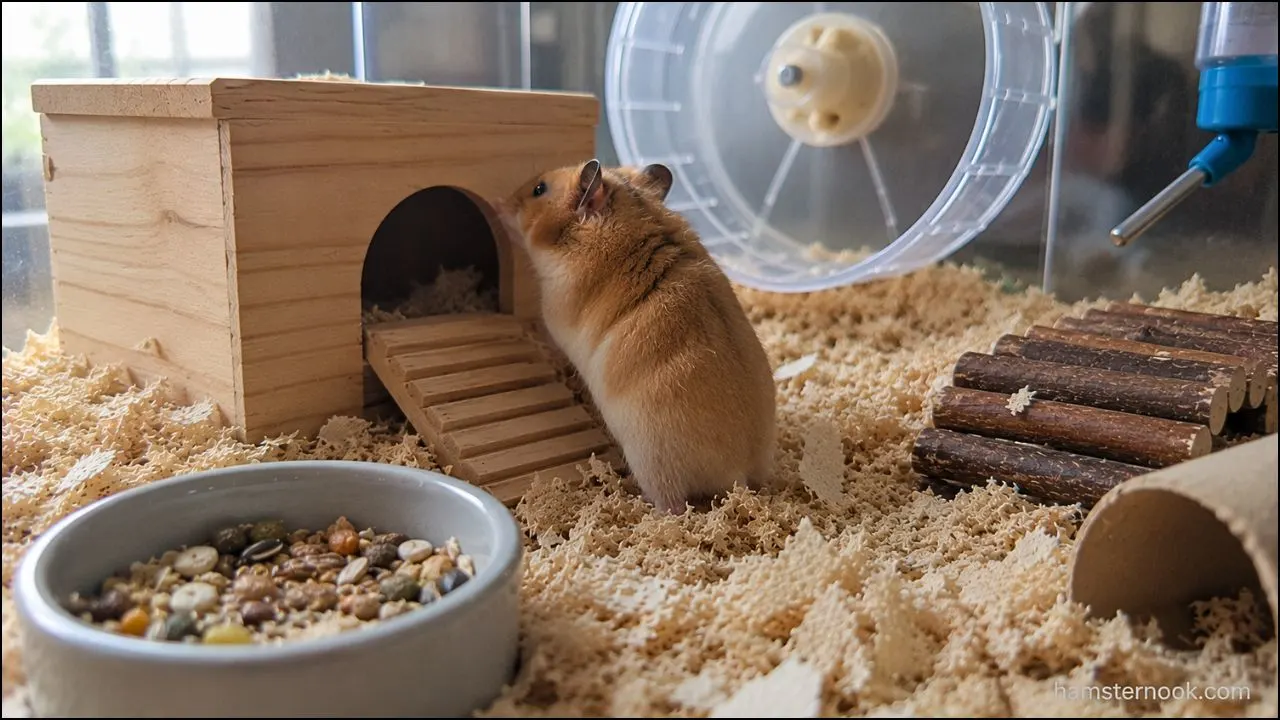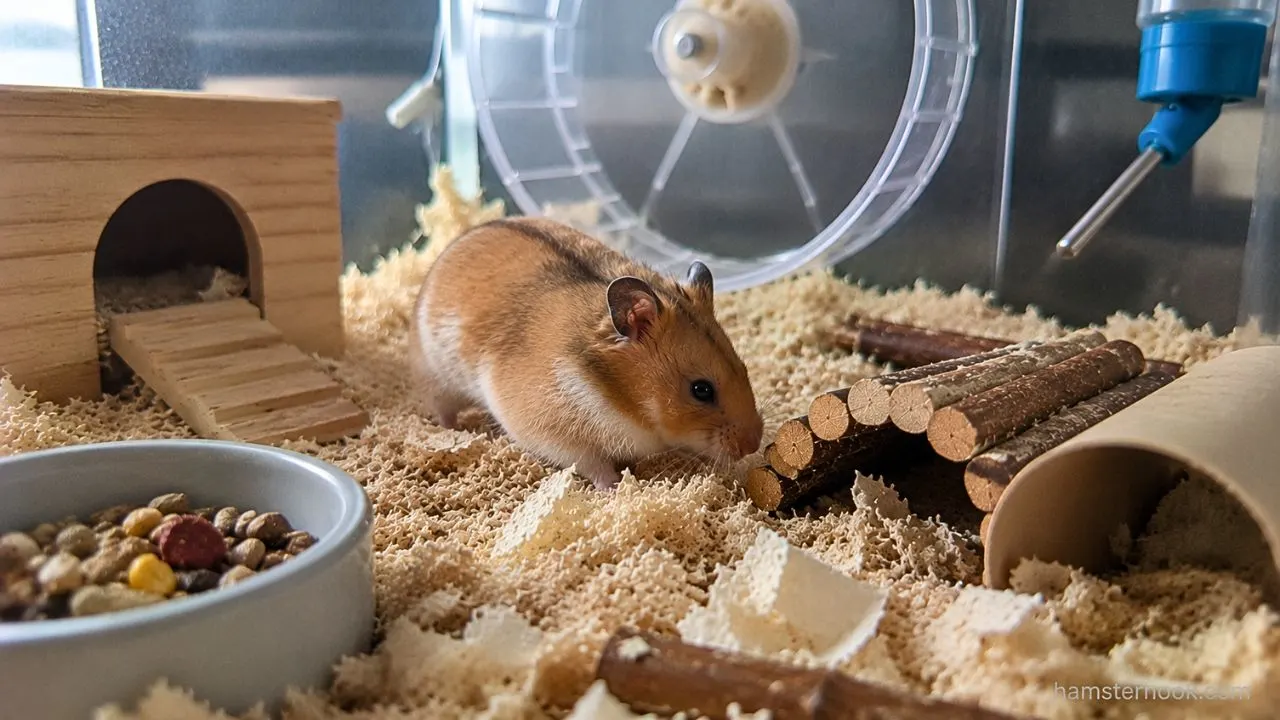
If your hamster stops to sniff a new object, follows a scent around the enclosure, or seems to know exactly where its favorite food is hidden, it is not just being curious. Hamsters have a well-developed sense of smell, and their noses play an important role in how they understand their surroundings. Smell helps them recognize familiar places and animals, investigate food, communicate, and respond to potential threats.
Quick Answer: Do Hamster Have a Good Sense of Smell?
Yes. Hamsters have a highly developed sense of smell, and olfaction is an important part of their everyday behavior.
The RSPCA specifically notes that hamsters have well-developed senses of smell and hearing and that smell is important for social communication. Research on golden hamsters has also demonstrated their ability to distinguish and remember different odors.
Their sense of smell does not work alone, though. Hamsters combine scent with other information from their environment, including spatial memory, hearing, touch, and vision. Research on nest-finding and food-searching behavior shows that hamsters can use spatial information rather than simply following an odor trail.
How Strong Is a Hamster’s Sense of Smell?
A hamster’s sense of smell is well developed enough to detect and distinguish between odors that matter to its behavior.
This is particularly useful for a small animal that spends much of its life exploring enclosed spaces, underground burrows, and areas where visibility can be limited. Smell provides information that a hamster cannot always obtain from sight alone.
Scientific studies in golden hamsters have found that odors can influence social recognition, scent marking, food-related behavior, and reproductive behavior. In one study, male golden hamsters were able to distinguish odors associated with different females, even when the odors were diluted.
That does not mean a hamster can identify every smell from a great distance or use its nose like a tracking dog. The strength and usefulness of an odor depend on the substance, airflow, distance, and surrounding environment.
Why Do Hamsters Rely So Much on Smell?
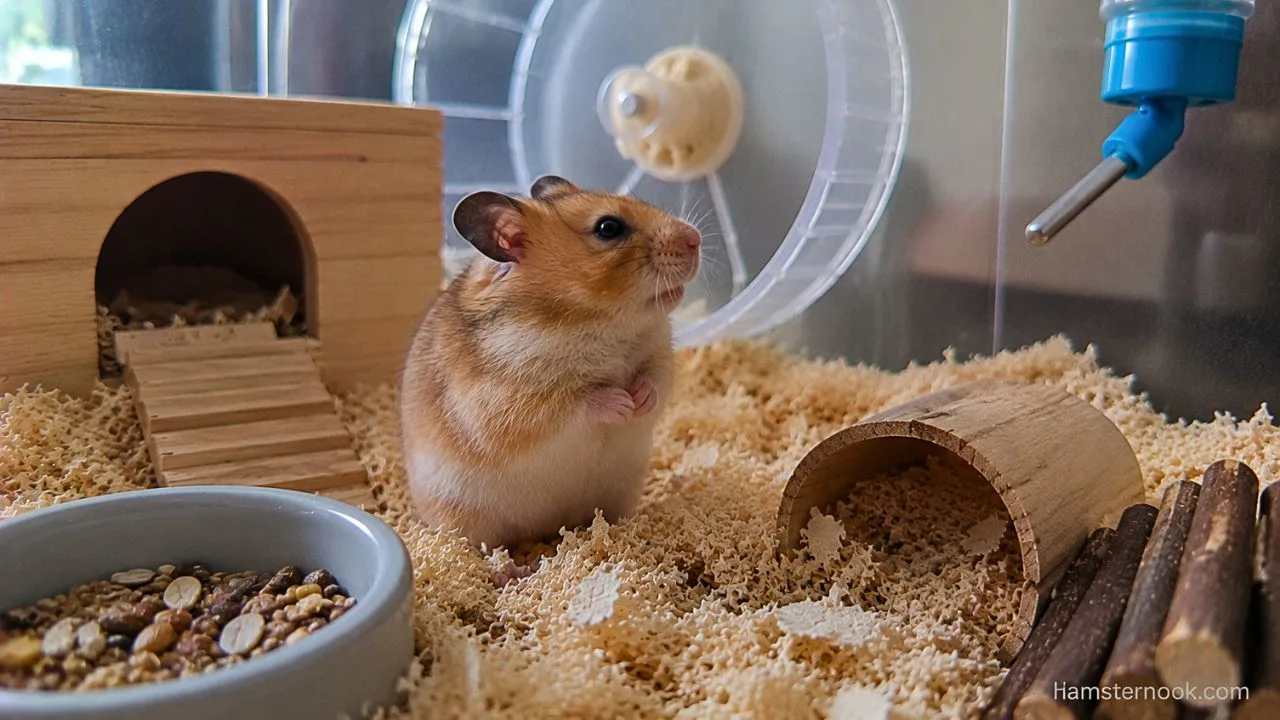
For a hamster, scent is more than a way to locate food. It is part of how the animal builds an understanding of its surroundings.
Finding and recognizing important places
A hamster’s enclosure contains many familiar smells: its sleeping area, nesting material, food storage areas, favorite routes, and objects it regularly investigates.
This familiar scent environment can provide useful information when the hamster is moving around, particularly when visual information is limited.
Research on golden hamsters has shown that they can return to a nest site using orientation abilities that cannot simply be explained by following an odor trail. This is an important distinction: smell matters, but navigation is not necessarily controlled by smell alone.
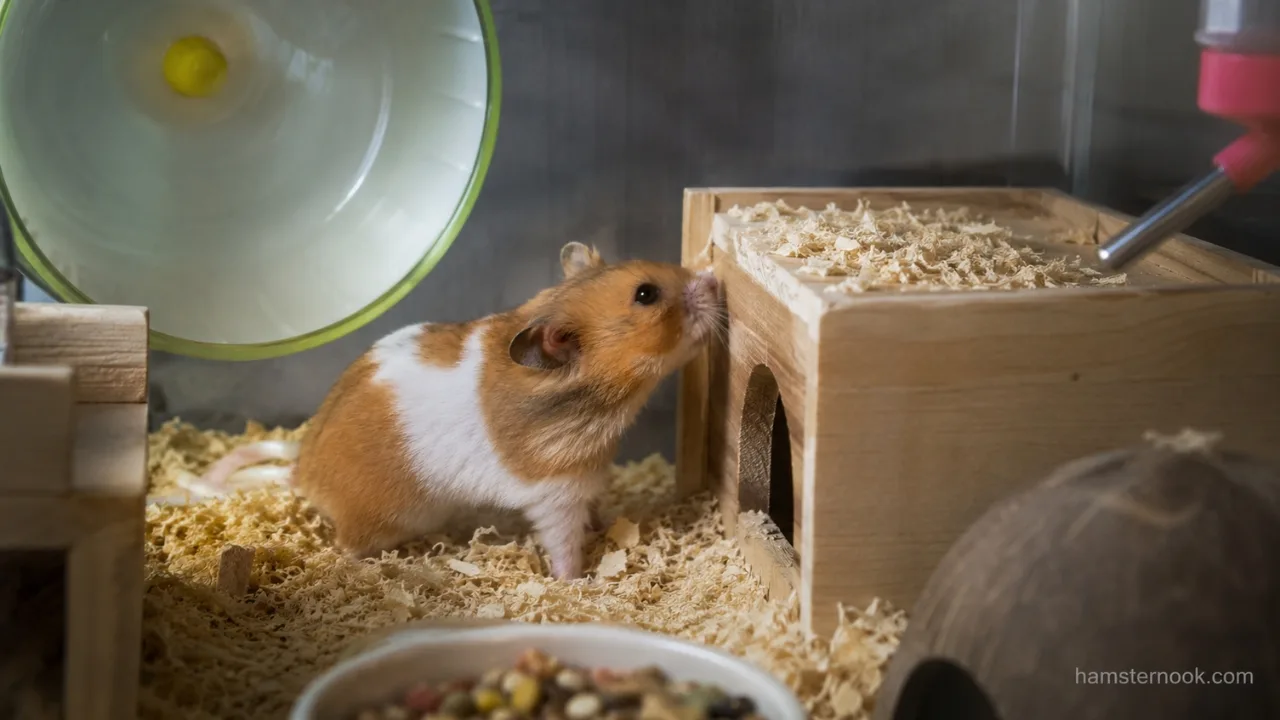
Investigating food
Hamsters are naturally motivated to search for and store food. Smell can help them investigate potential food sources and distinguish between different odors.
Their food-searching behavior is more sophisticated than simply following the strongest smell. Experiments examining spatial memory in golden hamsters found that successful searching could be explained by spatial memory without assuming that the animals were simply following olfactory traces.
This helps explain why a hamster may appear to “remember” where food was placed even after the food itself has been moved.
Recognizing other hamsters
Scent is also important in hamster communication.
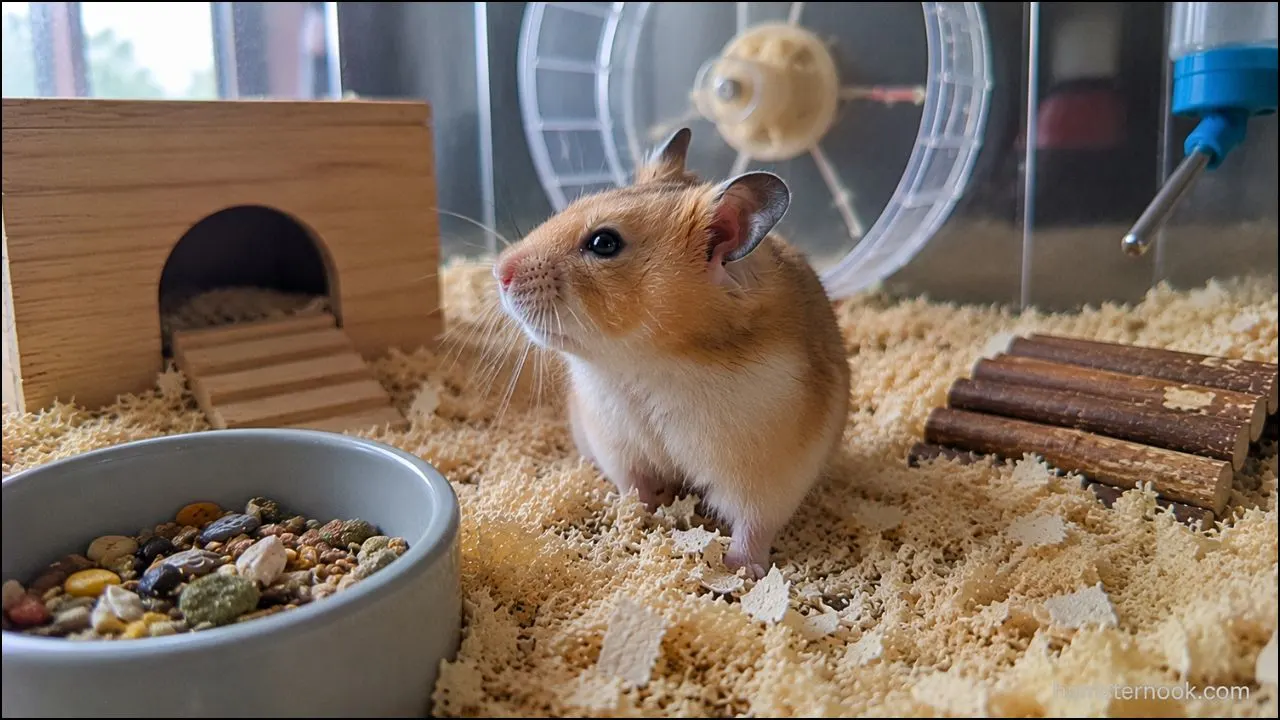
To understand the wider role of scent in hamster communication, see How Do Hamster Communicate? Body Language, Sounds & Scent Marking Explained.
Hamsters can respond differently to odors from other individuals, and scent marking has been studied extensively in golden hamsters. Research has found that the main olfactory system plays a major role in scent-marking behavior.
For pet owners, this is one reason a hamster’s familiar scent environment matters. Removing every trace of familiar bedding during a cage clean can change a large part of the animal’s sensory environment at once.
The RSPCA recommends transferring some clean, previously used bedding and nesting material during cage cleaning so the hamster retains familiar smells.
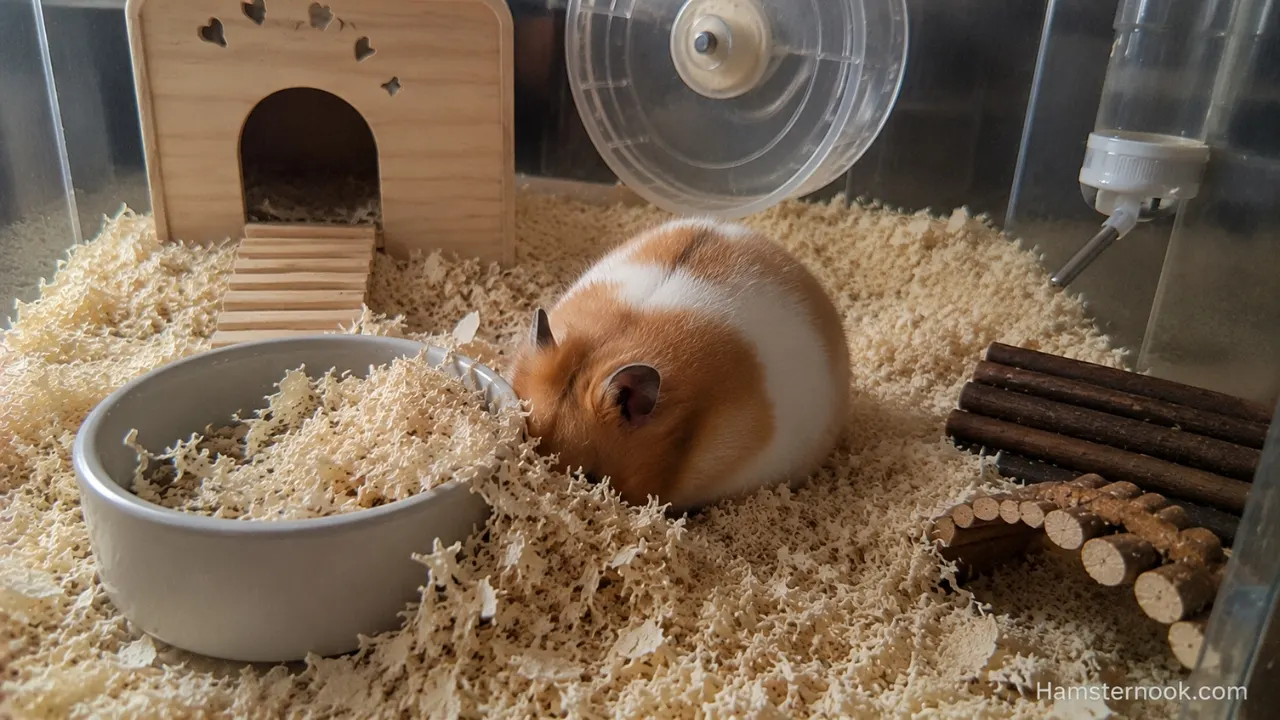
For a complete cleaning routine that takes your hamster’s needs into account, see How Often Should You Clean a Hamster Cage? Safe & Stress-Free Cleaning Guide.
Can Hamsters Smell Their Owners?
Yes, your hamster can learn and respond to familiar human scents.
For a more focused look at this behavior, see Can Hamsters Smell Their Owners? How They Recognize Your Scent.
Over time, the smell of your hands, clothing, and normal surroundings can become part of what your hamster associates with familiar interactions.
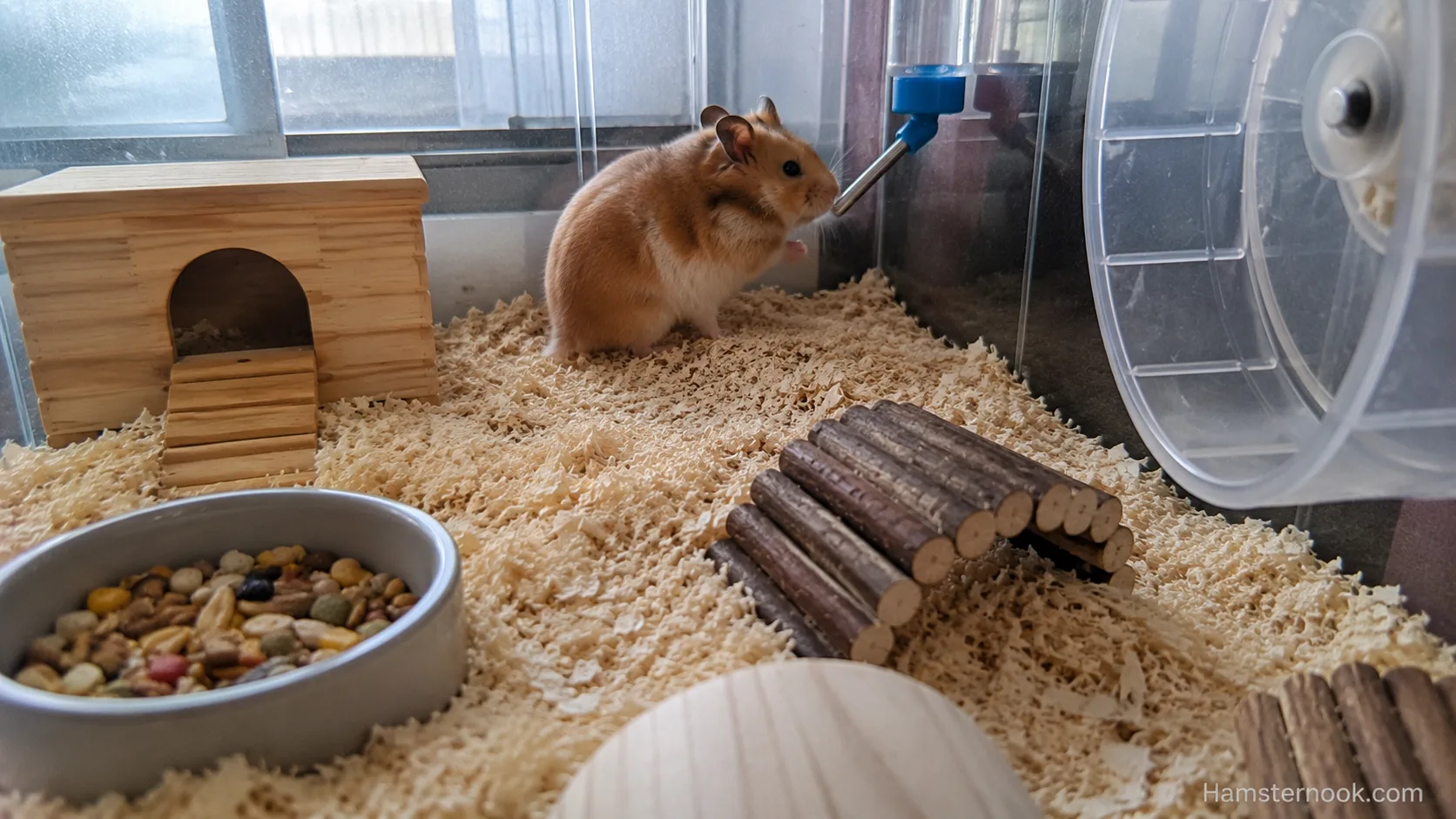
This is also why suddenly presenting a hamster with a strong unfamiliar smell can be unsettling. Hamsters are prey animals and can be cautious around unfamiliar sights, sounds, and smells.
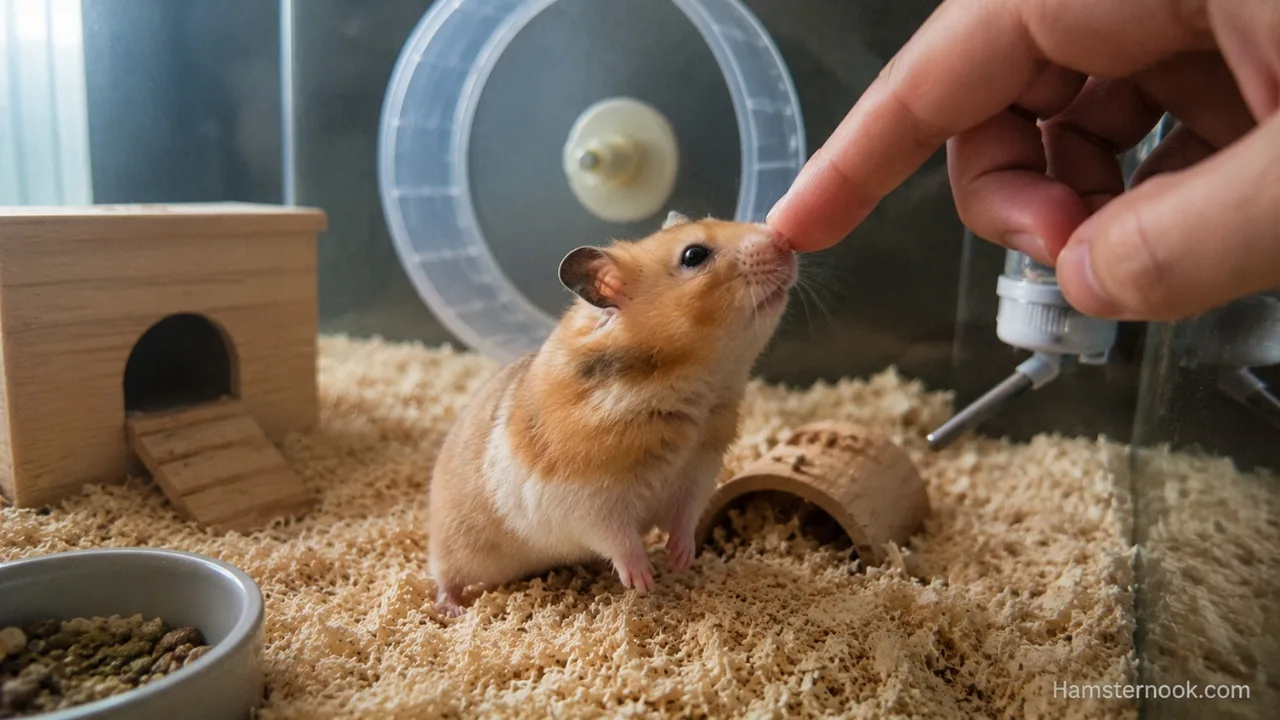
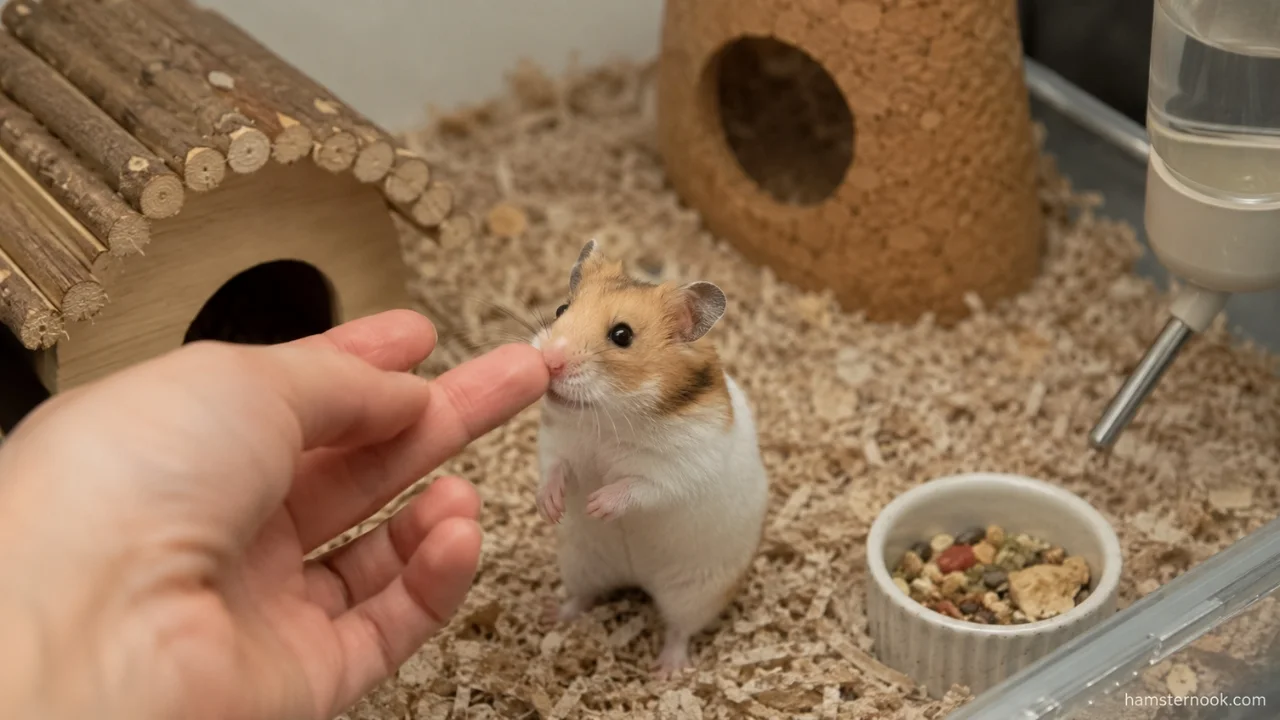
A hamster that sniffs your hand before approaching is gathering information. It is not necessarily being afraid of you.
How Does Smell Help a Hamster Navigate?
Smell can contribute to navigation in several different ways, but it is a mistake to imagine that a hamster simply follows a continuous scent line everywhere it goes.
1. Familiar smells provide environmental information
A hamster repeatedly moving through the same enclosure encounters a relatively consistent collection of scents.
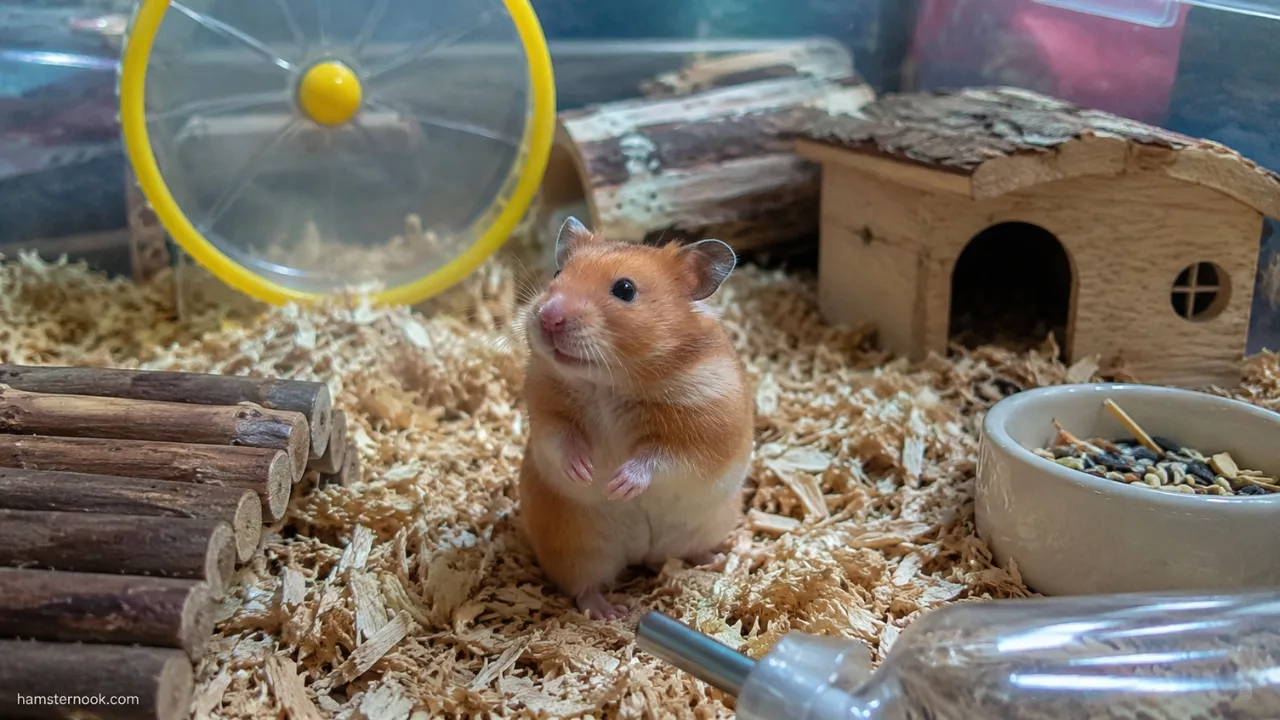
Its nest smells different from its food-storage area, and familiar objects carry odors associated with the hamster’s own environment.
Those sensory differences can help the animal distinguish locations.
2. New smells signal something worth investigating
A sudden unfamiliar odor can attract a hamster’s attention.
This could come from a new object, food, bedding, another animal, or a change in the surrounding environment.
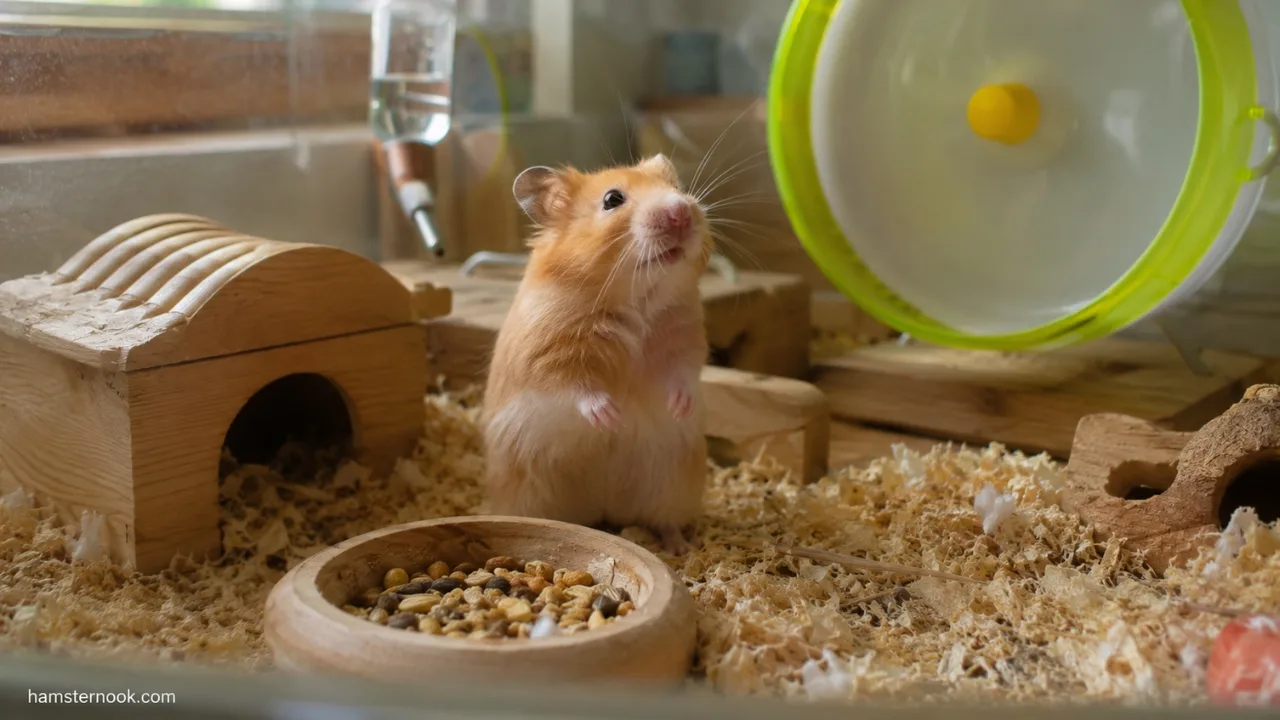
Sniffing is therefore an important part of exploration. The hamster is gathering chemical information about something it has encountered.
3. Odors can carry information about other animals
Smell can tell a hamster that another animal has been nearby.
This is particularly relevant to social and territorial behavior. Research has demonstrated that golden hamsters can process complex scent information, including information associated with overlapping scent marks.
4. Smell works alongside spatial memory
Navigation is not a single-sense activity.
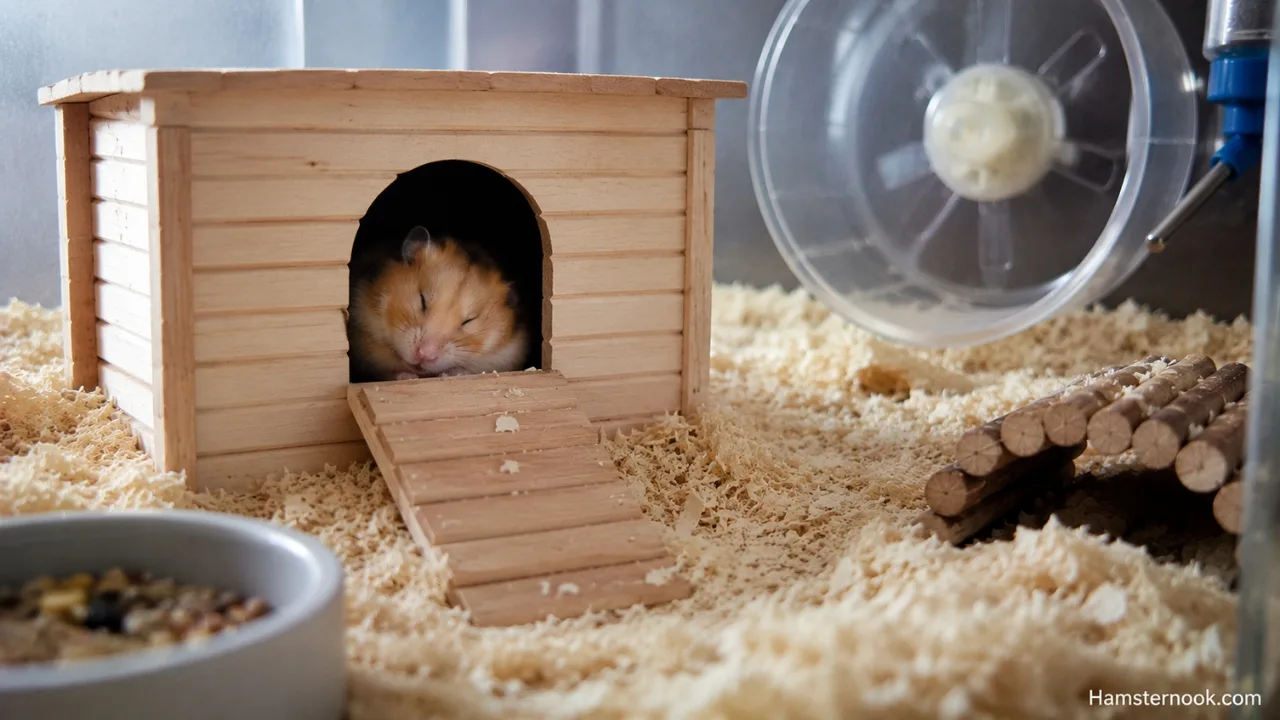
A hamster can learn the layout of an environment and remember where important resources are located. Studies of golden hamsters have demonstrated spatial learning and memory that cannot simply be reduced to following odor cues.
This is useful to remember when watching your own hamster explore. If it repeatedly takes the same route to its nest or food stash, that behavior does not prove it is following a smell trail.
What Your Hamster’s Sniffing Can Tell You
Sniffing is normal hamster behavior, especially when the animal is exploring.
You may notice your hamster:

- Sniffing your hand before climbing onto it
- Investigating a newly introduced object
- Sniffing bedding or nesting material
- Searching around a food-storage area
- Pausing frequently while exploring
- Spending extra time investigating an unfamiliar smell
- Returning repeatedly to familiar areas
These behaviors generally fit with normal exploration and sensory investigation.
The important thing is to look at the entire behavior rather than interpreting one sniff as proof of a particular emotion or health condition.
Why Familiar Smells Matter During Cage Cleaning
A clean enclosure does not need to smell completely new after every cleaning.
For people, a fresh-smelling cage may seem cleaner. For a hamster, however, removing all familiar scent information at once can make the environment substantially less familiar.
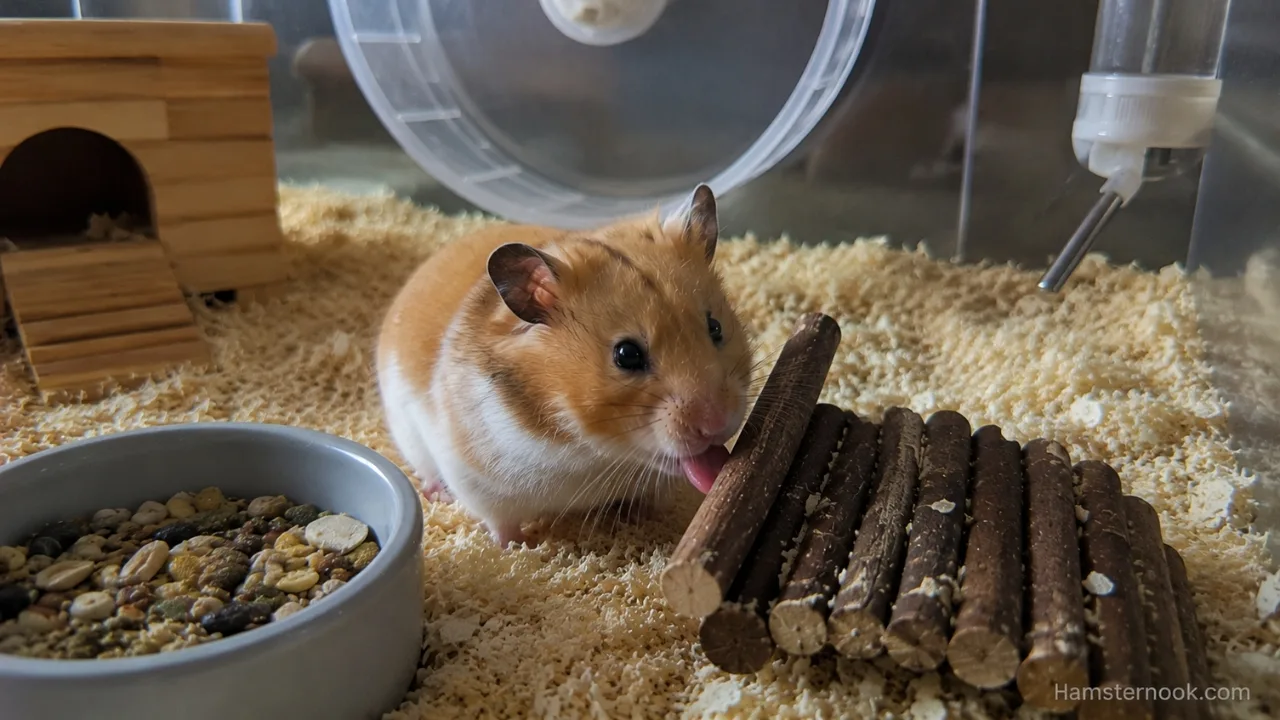
The RSPCA recommends spot-cleaning soiled areas regularly while avoiding unnecessary disturbance and preserving some clean, familiar bedding and nesting material during larger cleans.
A practical approach is:
- Remove wet or heavily soiled bedding.
- Remove uneaten food that has spoiled or needs to be discarded.
- Clean dirty enclosure items as appropriate.
- Keep some clean, familiar nesting material.
- Mix retained familiar bedding into the cleaned enclosure.
- Avoid making unnecessary changes to the entire layout at the same time.
For more guidance on providing enough bedding for natural burrowing and nesting, see How Much Bedding Does a Hamster Need? Minimum Depth Guide for Healthy Burrowing.
The goal is not to leave a dirty enclosure. It is to maintain hygiene without unnecessarily erasing all of the sensory information your hamster knows.
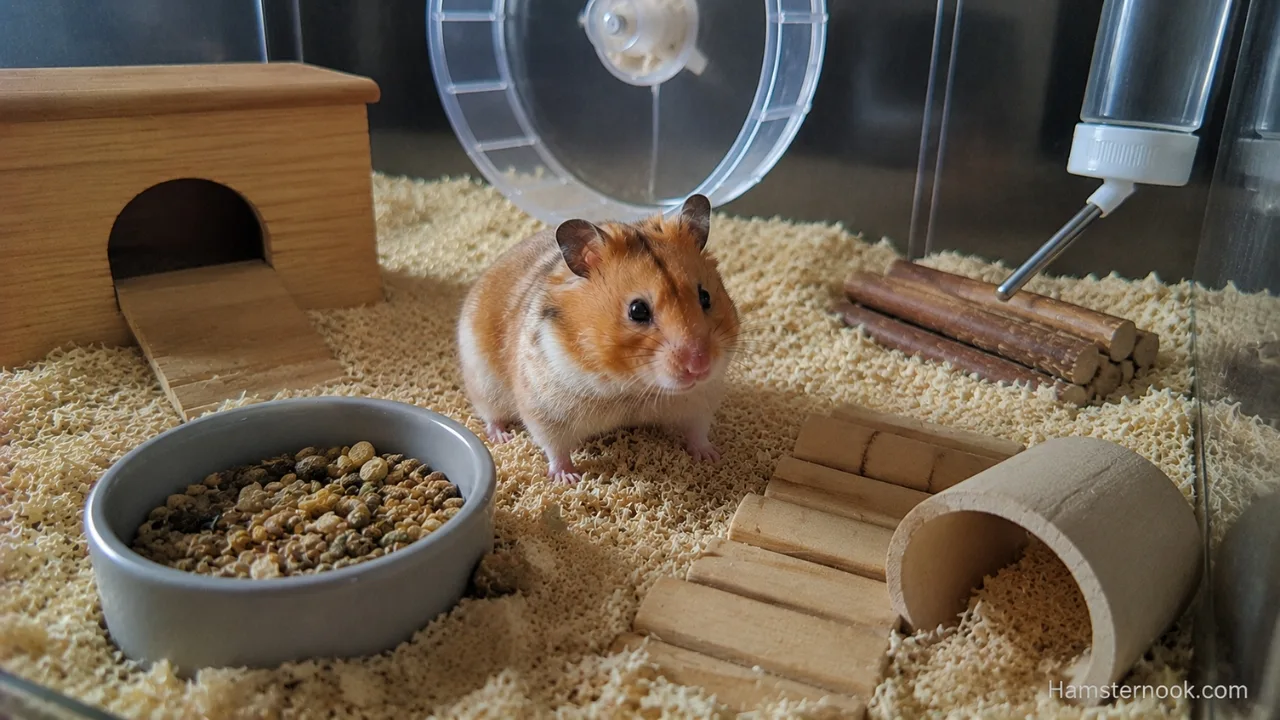
Strong Smells Around Your Hamster: What Should You Avoid?
Because smell is so important to hamsters, their enclosure should not be surrounded by unnecessary strong odors.
Avoid deliberately exposing your hamster to things such as:
- Perfume sprayed near the enclosure
- Air fresheners
- Strongly scented household products
- Smoke
- Other intense airborne odors
- Cleaning products that have not been properly used or allowed to dry as directed
You do not need to make your home completely odor-free. Normal household smells are part of the environment.
For more detail on potentially problematic household odors, see Can Strong Household Smells Stress a Hamster? Signs to Watch For.
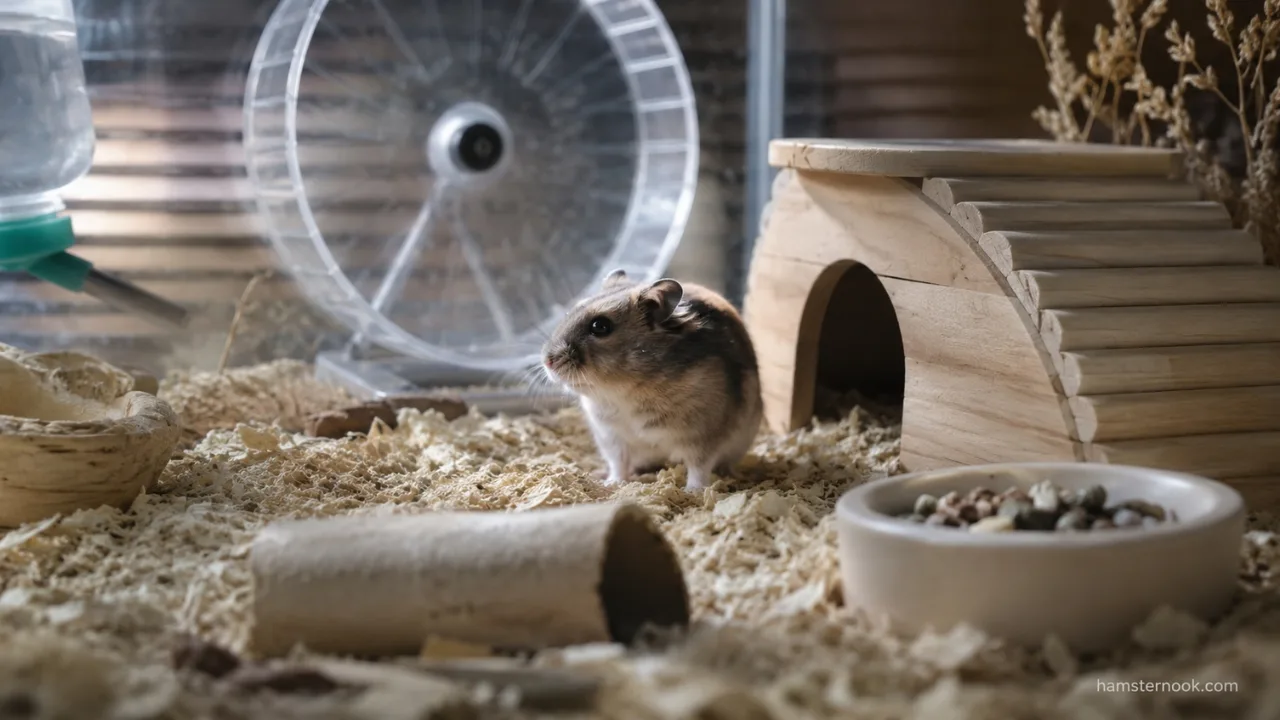
The practical goal is simply to avoid introducing unnecessary, intense scents directly around the hamster’s living space.
For specific examples of fragrances that should be kept away from hamsters, see Can Perfume, Incense, or Scented Candles Harm Hamsters?.
Does a Hamster Use Smell More Than Sight?
It is difficult to rank hamster senses with a simple “smell is number one” answer.
Different senses provide different kinds of information.
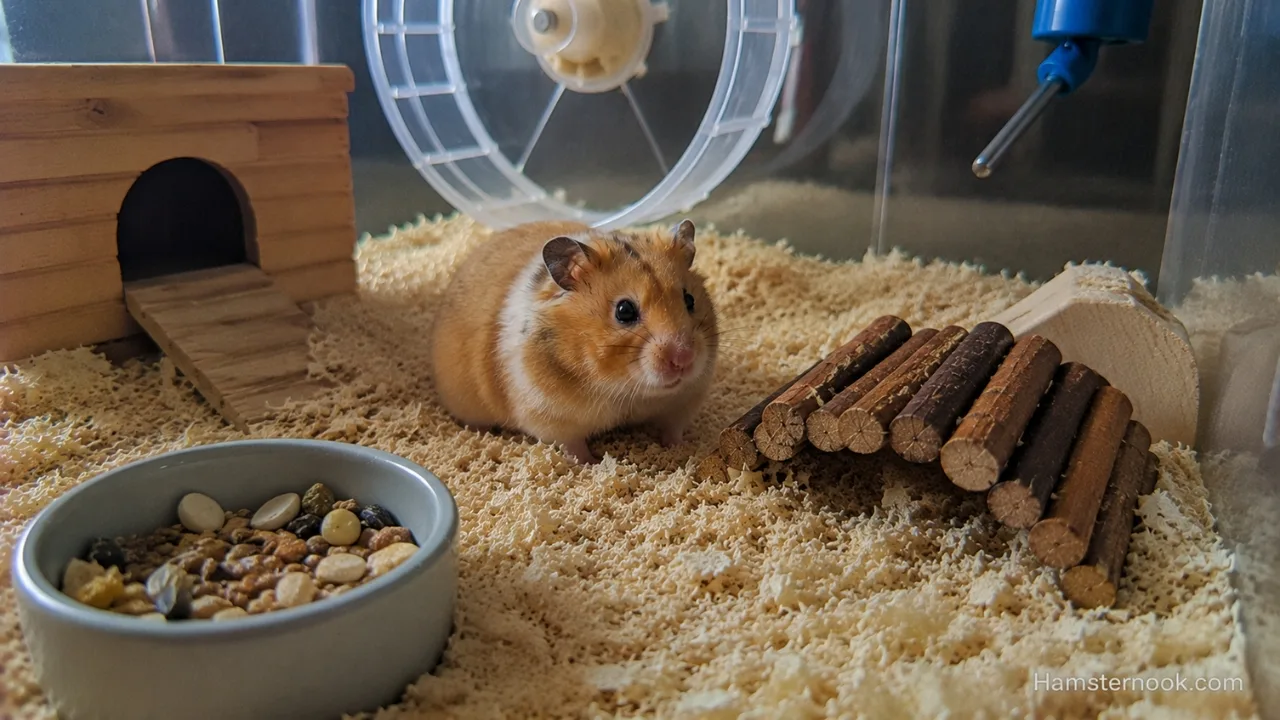
Smell is especially useful for chemical information, social cues, and investigating the environment. Vision, hearing, touch, and spatial memory also contribute to how a hamster moves through its surroundings.
To explore another important hamster sense, see Can Hamsters See in the Dark? The Truth About Hamster Vision.
For example, research into prey localization found that vision, hearing, and olfaction could all contribute to finding prey, with vision playing the dominant role under the conditions tested.
So it is better to think of your hamster as using several sensory systems together rather than relying on its nose for everything.
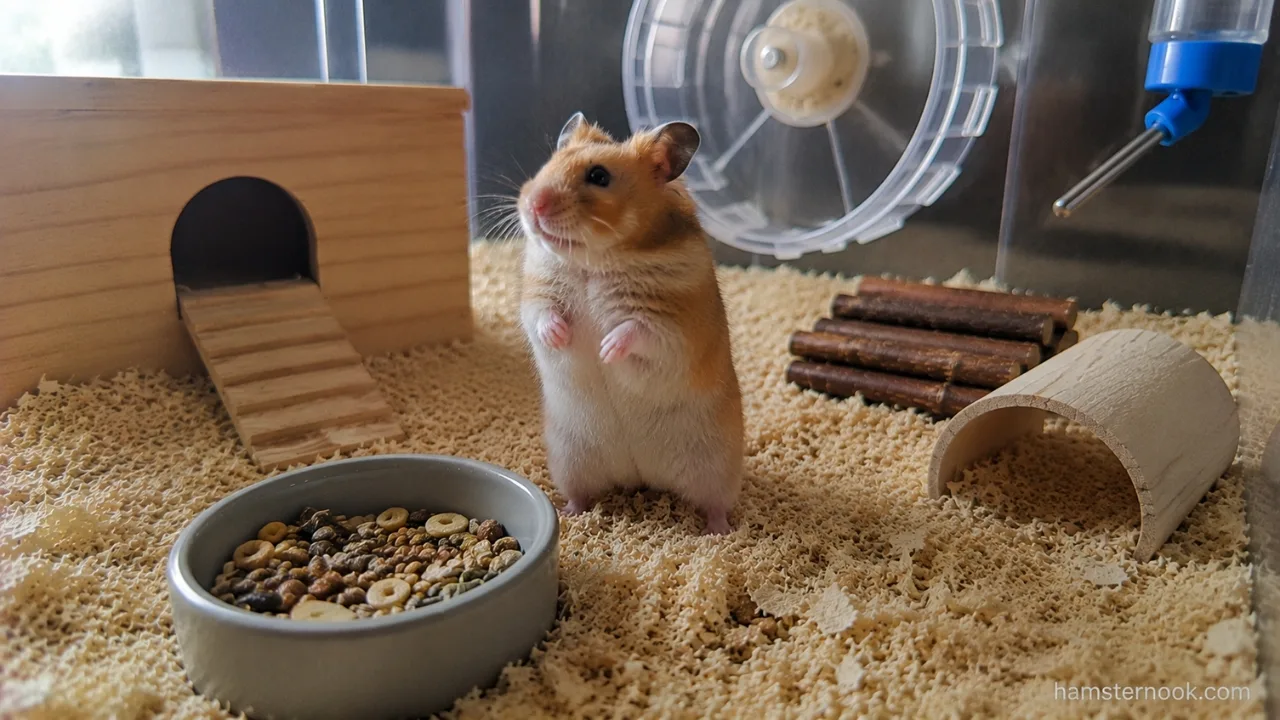
Can a Hamster Find Food by Smell Alone?
Not necessarily.
A hamster may certainly investigate food using smell, but finding food does not mean it is following a simple odor trail from beginning to end.
Research on golden hamsters found evidence for spatial memory in food-searching tasks and showed that their choices could be explained without assuming that olfactory cues alone guided the search.
This matters because owners sometimes assume that a hamster can always locate hidden food just because it has a strong sense of smell.
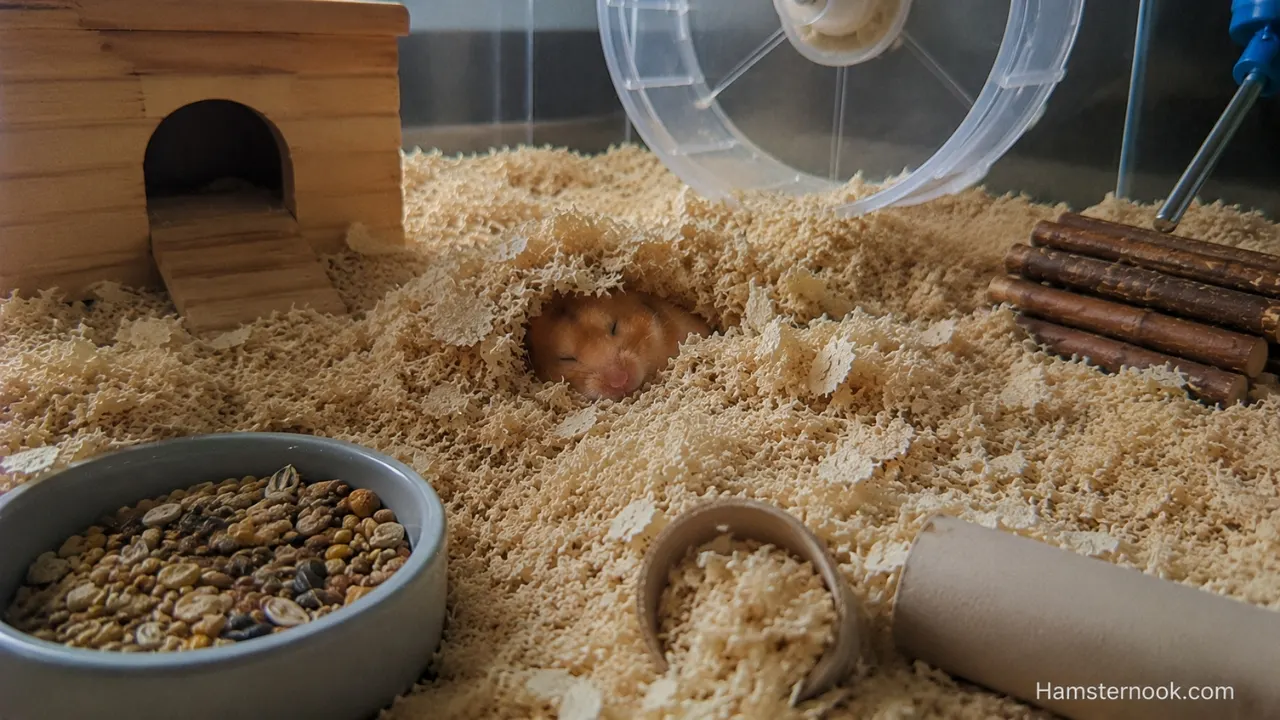
A hidden treat can still be missed, particularly if it is inaccessible, surrounded by competing odors, or located somewhere the hamster does not expect.
What You Should Do
You do not need to train or strengthen your hamster’s sense of smell. It is already an important part of its normal sensory system.
Instead, support natural scent-based exploration by providing a stable, interesting environment.
Good practices include:
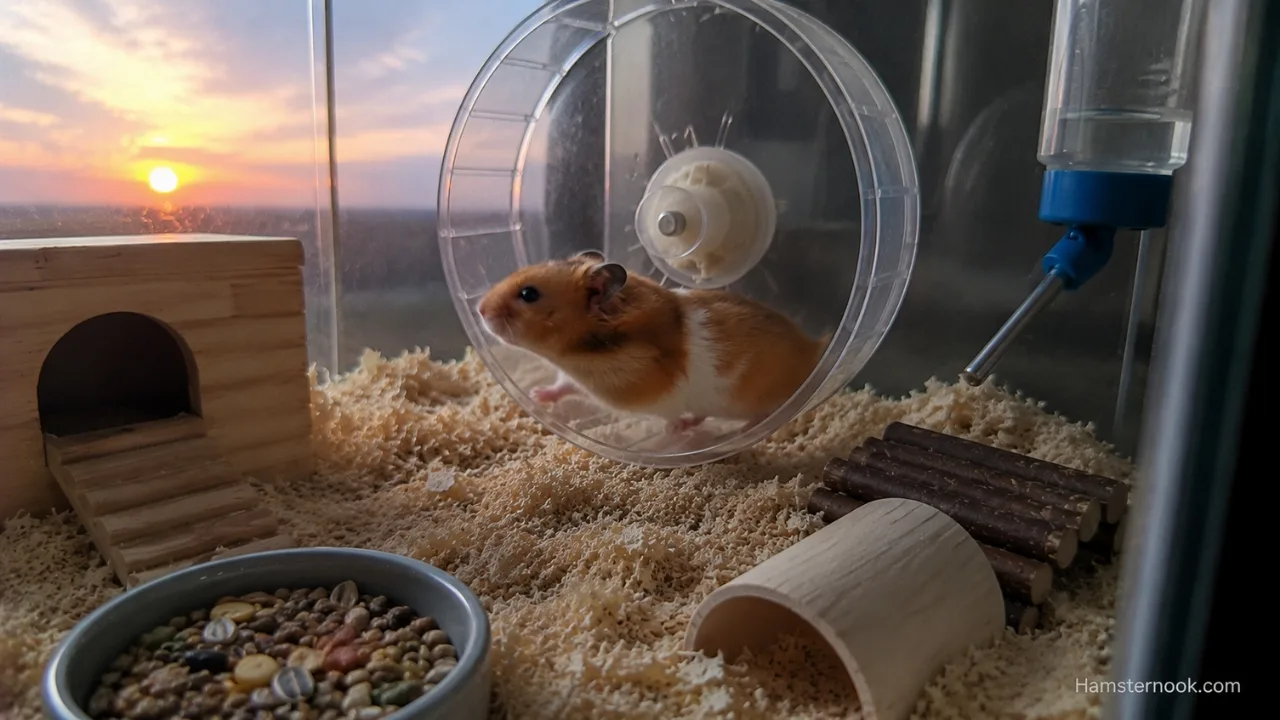
- Keep the enclosure clean without unnecessarily removing all familiar bedding.
- Allow your hamster to investigate safe new objects at its own pace.
- Avoid unnecessary strong fragrances around the enclosure.
- Keep food fresh and remove spoiled food.
- Let your hamster explore and sniff rather than constantly interrupting it.
- Maintain a predictable enclosure layout when possible.
- Give your hamster safe opportunities to forage and investigate its surroundings.
These practices support normal exploration without requiring complicated scent games or artificial fragrances.
Common Mistakes Owners Make
Assuming every sniff means your hamster is hungry
Sniffing is a general sensory behavior. Your hamster may be investigating an object, another scent, its surroundings, or something new.
Removing all old bedding during every deep clean
This can unnecessarily remove familiar scent information. Retaining some clean, familiar nesting material is recommended by the RSPCA.
Using fragrance to make the enclosure smell “fresh”
A pleasant smell to a person is not automatically useful to a hamster. There is little reason to deliberately add strong fragrances to its environment.
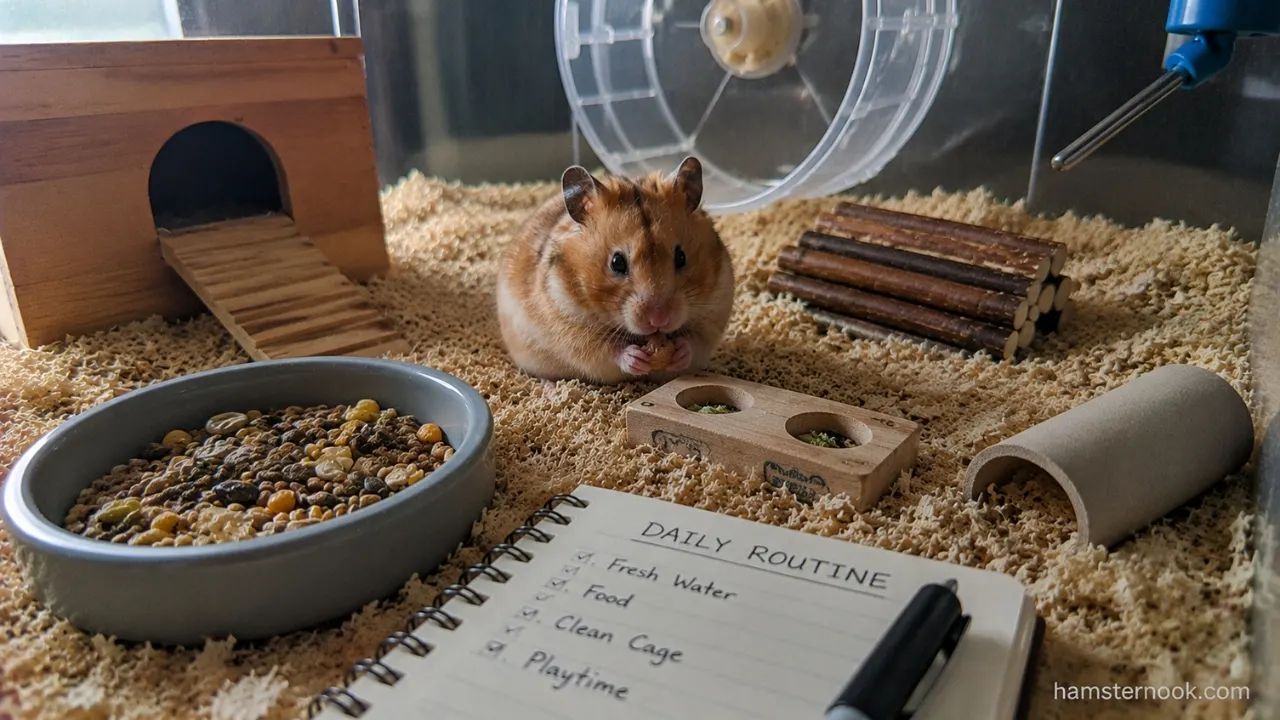
Assuming smell explains every navigation behavior
Hamsters have spatial memory and use multiple senses. A hamster returning to the same location does not prove that it is simply following its nose.
When to Worry About a Change in Smell-Related Behavior
A change in how your hamster investigates its environment is not, by itself, enough to diagnose a health problem.
However, if a hamster develops a persistent change in normal behavior, especially when it occurs together with other concerning signs, it is worth paying attention and contacting a veterinarian for appropriate advice.
Do not try to test your hamster’s sense of smell by exposing it to irritating substances or deliberately placing strong chemicals near its nose.
If you are concerned that your hamster is having difficulty breathing, has unusual nasal discharge, or otherwise appears unwell, veterinary assessment is more appropriate than trying to determine whether its sense of smell has changed at home.
Final Thoughts
Hamsters really do have a good sense of smell, and their noses are an important part of how they experience the world. Smell helps them investigate unfamiliar things, recognize familiar environments, communicate through scent, and gather information about food and other animals.
But smell is only one piece of the puzzle. Hamsters also use spatial memory and other senses to navigate, which is why their behavior can be more sophisticated than simply following an odor trail.
For owners, the biggest takeaway is simple: your hamster’s familiar scent environment matters. Keep the enclosure clean, avoid unnecessary strong fragrances, preserve some clean familiar bedding during cage cleaning, and give your hamster time to sniff and investigate its surroundings.
Frequently Asked Questions
Do hamsters have a better sense of smell than humans?
Hamsters have a well-developed sense of smell that is highly important to their behavior. It is not useful to reduce this to a simple comparison such as “X times better than humans,” because sensory abilities depend on the particular odor and the task being performed.
Can hamsters smell food from far away?
They can detect odors associated with food, but there is no reliable distance that applies to every food or situation. Air movement, the strength of the odor, competing smells, and the surrounding environment all affect how an odor is detected.
Can hamsters recognize their owners by smell?
A hamster can become familiar with the scent of people and its surroundings. Your scent can become one of the familiar cues associated with you, but recognition should not be interpreted as being based on smell alone.
Why does my hamster sniff everything?
Sniffing is an important way for hamsters to investigate their environment. New objects, unfamiliar scents, food, bedding, and changes in their surroundings can all provide information worth investigating.
Should I use scented bedding to give my hamster interesting smells?
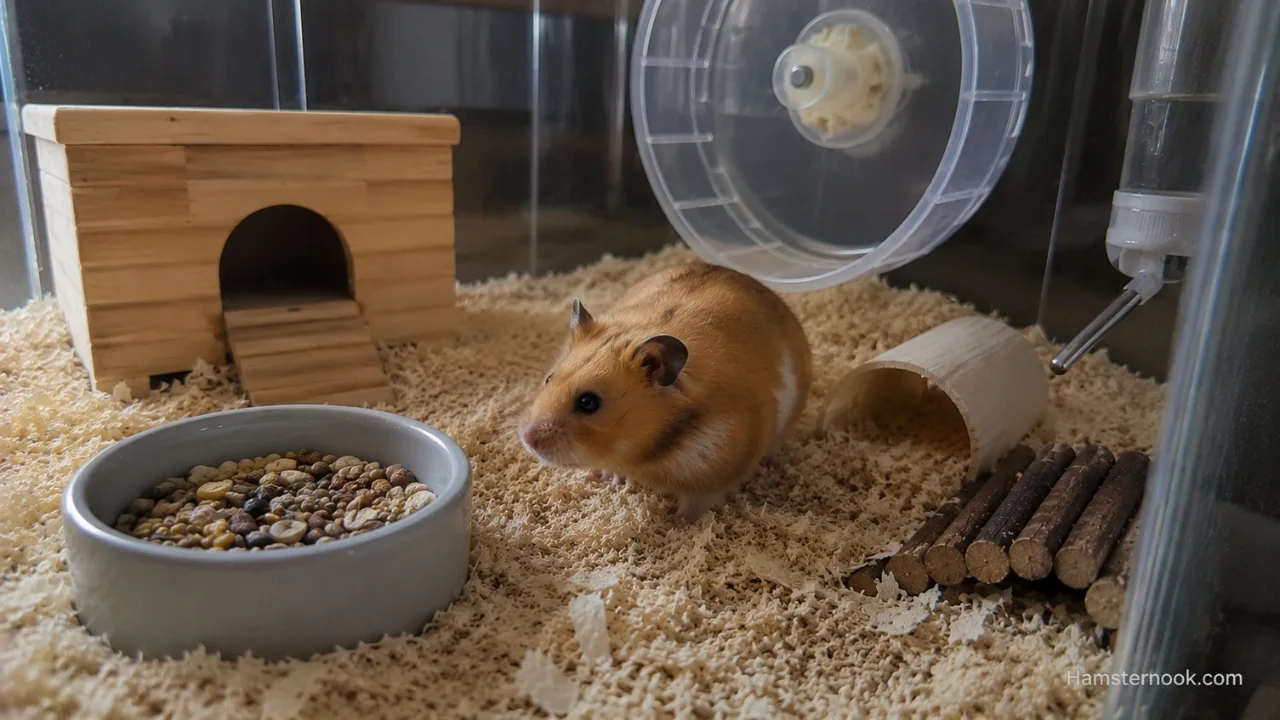
There is no need to add artificial fragrances for this purpose. A hamster already receives plenty of natural sensory information from its bedding, food, enclosure, and surroundings. Keeping the environment clean and avoiding unnecessary strong scents is the better approach.
Should I remove all the old bedding when cleaning the cage?
No. Heavily soiled bedding should be removed, but keeping some clean, familiar nesting material can help preserve familiar scent information. The RSPCA specifically recommends transferring some old, unsoiled bedding and nesting material during cage cleaning.
Can hamsters navigate without using smell?
Yes. Research has shown that golden hamsters can use spatial information to navigate and remember locations, and their navigation cannot be explained solely by olfactory cues.
Does a hamster’s sense of smell help it communicate?
Yes. Smell plays an important role in hamster social communication, and research has demonstrated olfactory involvement in scent marking and recognition.
References
This guide is based on hamster behavior, scent communication, memory, housing, welfare, and veterinary guidance from trusted animal welfare and scientific resources, including:
- RSPCA – Keeping Hamsters as Pets – General hamster care, behavior, housing, enrichment, and welfare guidance.
- RSPCA – Creating a Good Home for Hamsters – Guidance on hamster housing, bedding, nesting, environmental conditions, and creating a secure enclosure.
- PubMed – Perception of Scent Over-Marks by Golden Hamsters – Research on how golden hamsters perceive and respond to scent markings.
- PubMed – The Orientation of the Golden Hamster to Its Nest-Site After Elimination of Sensory Cues – Research examining the sensory cues golden hamsters use when orienting toward their nest site.
- PubMed – Hamsters’ Memory in a Radial Maze Analog: The Role of Spatial Versus Olfactory Cues – Research examining spatial and olfactory cues in hamster memory and navigation.
- PubMed – Olfactory but Not Vomeronasal Mediation of Scent Marking by Male Golden Hamsters – Research on olfactory mechanisms involved in scent-marking behavior in golden hamsters.
- PubMed – Olfactory Discrimination of Estrous Condition by the Male Golden Hamster – Research on olfactory discrimination and scent-based recognition in golden hamsters.
- MSD Veterinary Manual – The Respiratory System in Animals – Veterinary reference information on respiratory health and respiratory disease in animals.

Narayan Kumar is the founder and author of HamsterNook. He creates practical, research-based hamster care guides covering hamster behavior, nutrition, cage setup, enrichment, health, and everyday care. His goal is to help hamster owners make informed decisions and provide safer, healthier lives for their pets through clear, beginner-friendly information based on trusted animal care resources.