Many hamster owners enjoy watching TV, listening to music, or playing games in the same room as their pet. It’s natural to wonder whether those everyday sounds affect a hamster’s well-being. While hamsters can become accustomed to normal household noise, they have much more sensitive hearing than humans. Loud, sudden, or constant noise can disturb their natural behavior and may contribute to stress if it happens frequently.
Quick Answer
Yes, loud TV, music, or other household noise can stress a hamster, especially if the sounds are sudden, prolonged, or accompanied by vibrations. Hamsters rely heavily on their hearing to detect potential danger, and they are naturally adapted to relatively quiet environments. Normal conversation or a television playing at a moderate volume across the room is often tolerated, but consistently high noise levels should be avoided to help your hamster feel secure.
Why Hamsters Are Sensitive to Noise
Hamsters are prey animals. In the wild, surviving depends on detecting predators long before they become visible. Their hearing is significantly more sensitive than ours, allowing them to notice subtle sounds that people may never hear.
Unlike humans, hamsters cannot recognize that the sound from a television or speaker poses no real danger. Instead, they simply recognize unfamiliar sounds entering their environment. When those sounds are loud or unpredictable, the hamster may respond cautiously until it determines there is no immediate threat.
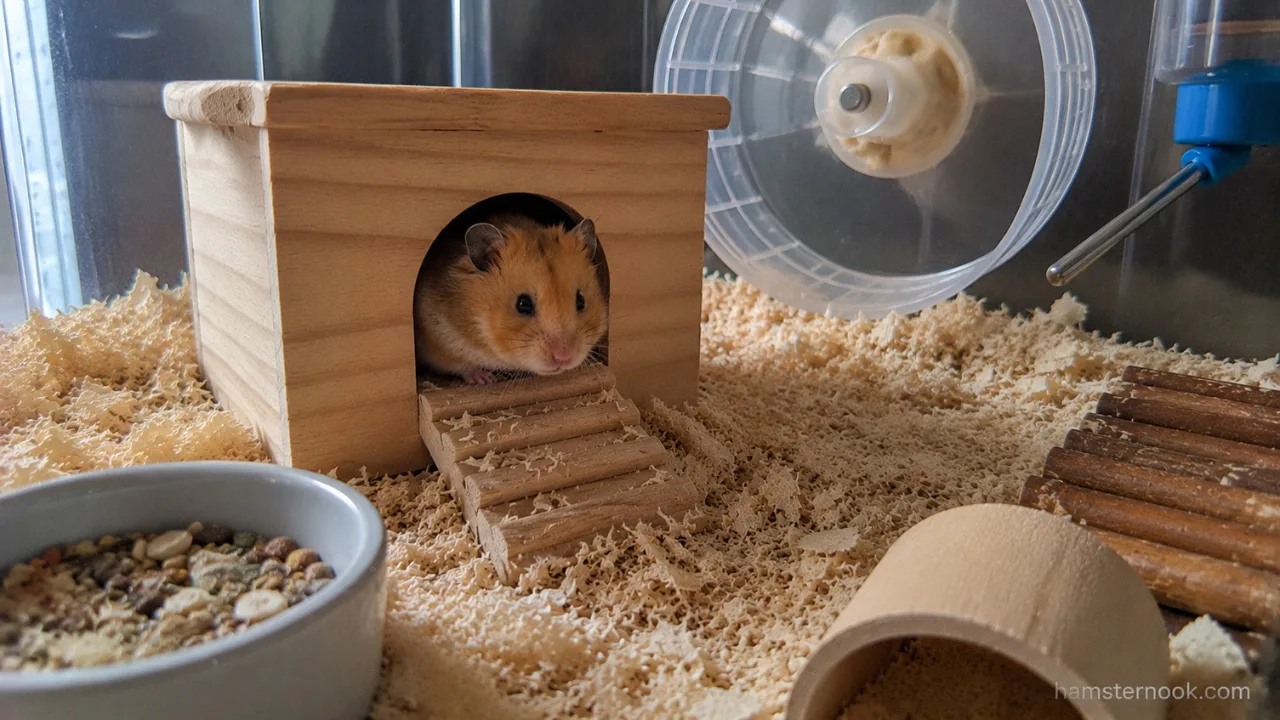
Animal welfare organizations recommend housing hamsters in a calm environment where they can rest without frequent disturbances. Continuous loud noise is considered an unnecessary stressor because it may interfere with normal resting and behavioral patterns. (RSPCA; PDSA)
Can Hamsters Hear Better Than Humans?
Yes.
Research has shown that hamsters can detect higher-frequency sounds than humans, making their hearing especially well suited for noticing environmental changes. Although televisions and music mainly produce sounds within the human hearing range, they also create vibrations and sudden changes in volume that hamsters can detect.
This means a sound that feels comfortable to you may seem much more noticeable to your pet.

Because every hamster has a slightly different personality, some individuals may appear less bothered by everyday sounds than others. Watching your hamster’s overall behaviour over several days provides a better indication than reacting to a single startled response.
Does TV Stress Hamsters?
The television itself is not usually the problem.
Several factors determine whether a TV becomes stressful:
Volume
A television playing quietly across the room is much less likely to bother a hamster than one placed beside the enclosure with the volume turned up.
Sudden Sound Effects
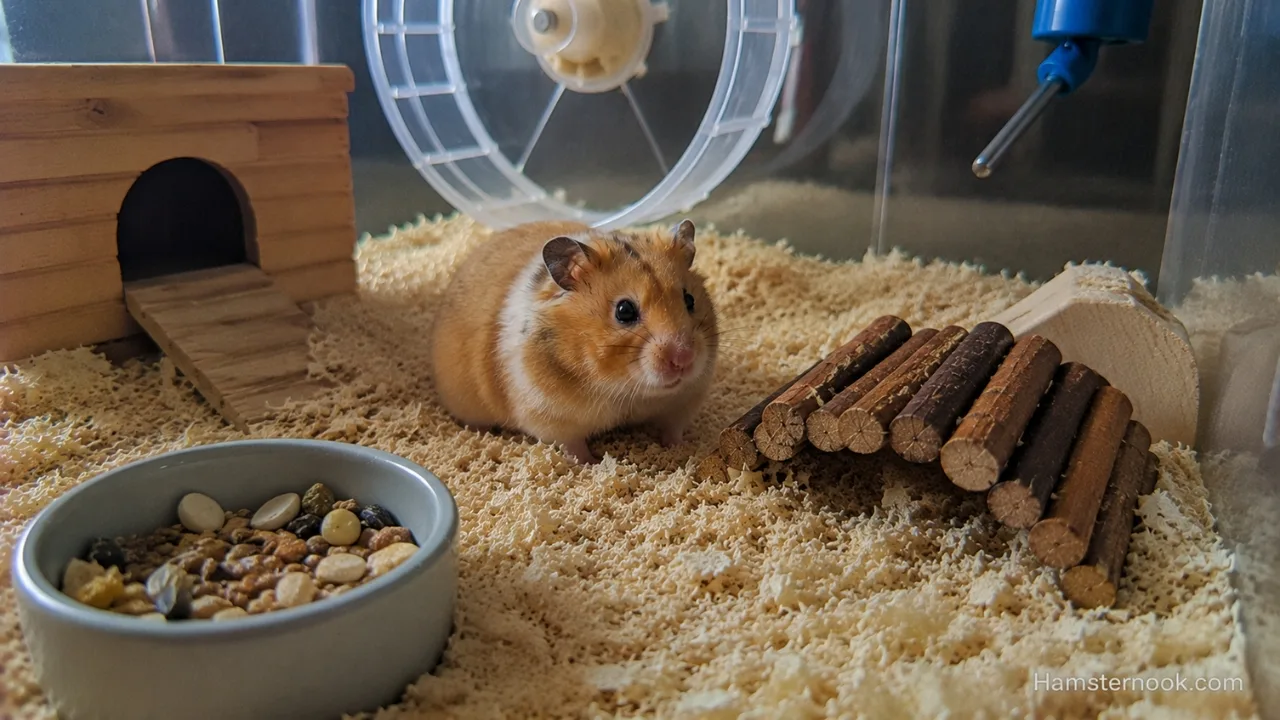
Action movies, sports broadcasts, explosions, cheering crowds, and dramatic music can create abrupt bursts of sound that may startle a hamster, especially while it’s awake.
Constant Background Noise
A TV that remains on all day may prevent some hamsters from enjoying long periods of uninterrupted rest, particularly if the enclosure is nearby.
Vibrations
Large speakers or entertainment systems can produce vibrations that travel through furniture or flooring. Hamsters may notice these vibrations even if the sound itself doesn’t seem excessively loud.
What About Music?
Music affects hamsters differently depending on its volume and style.

Gentle background music at a low volume is unlikely to bother many hamsters if they have quiet places to retreat. However, loud music played through powerful speakers can become stressful, especially if bass vibrations are strong.
Music with rapid changes in volume may also trigger brief alert responses because prey animals naturally react to unexpected sounds.
At present, there is little direct research comparing different music genres in pet hamsters. Claims that specific genres such as classical music always calm hamsters or rock music always frightens them are not supported by strong scientific evidence.
Instead, the overall loudness, consistency, and duration appear to matter more than the style of music itself.

Signs Your Hamster May Be Disturbed by Noise
Not every hamster reacts the same way, but common behavioral responses include:
- Freezing suddenly during activity
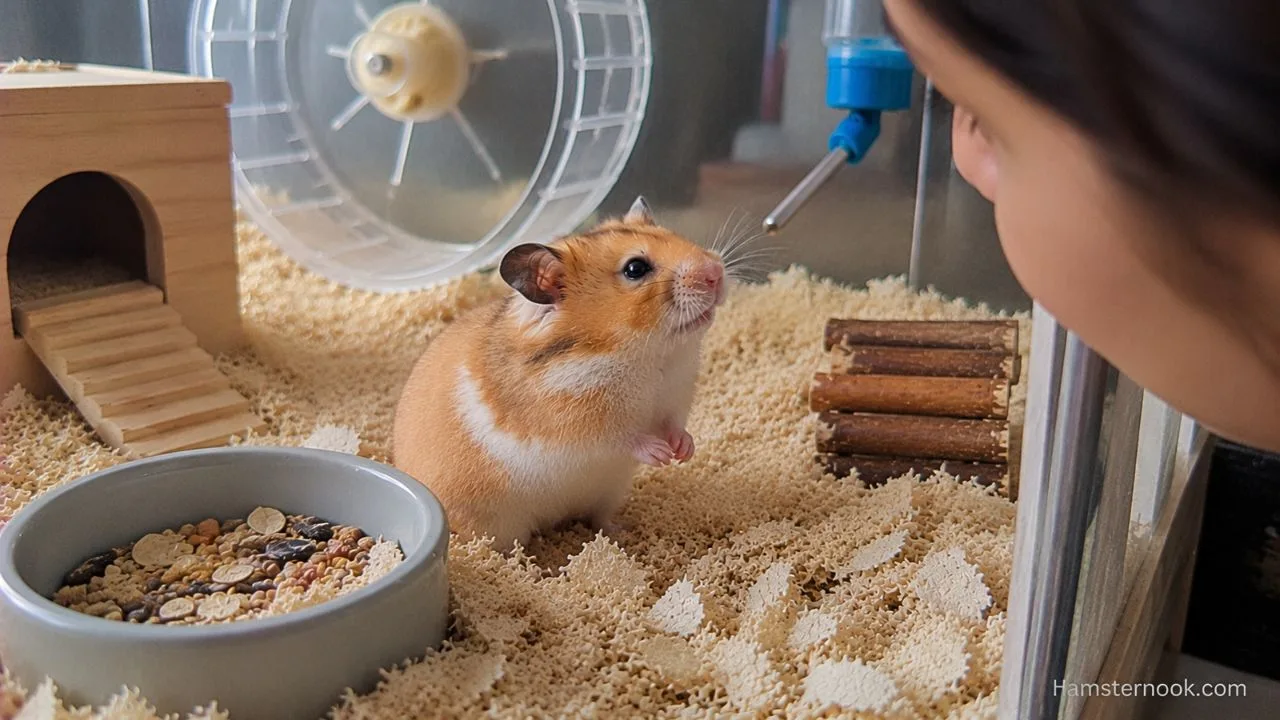
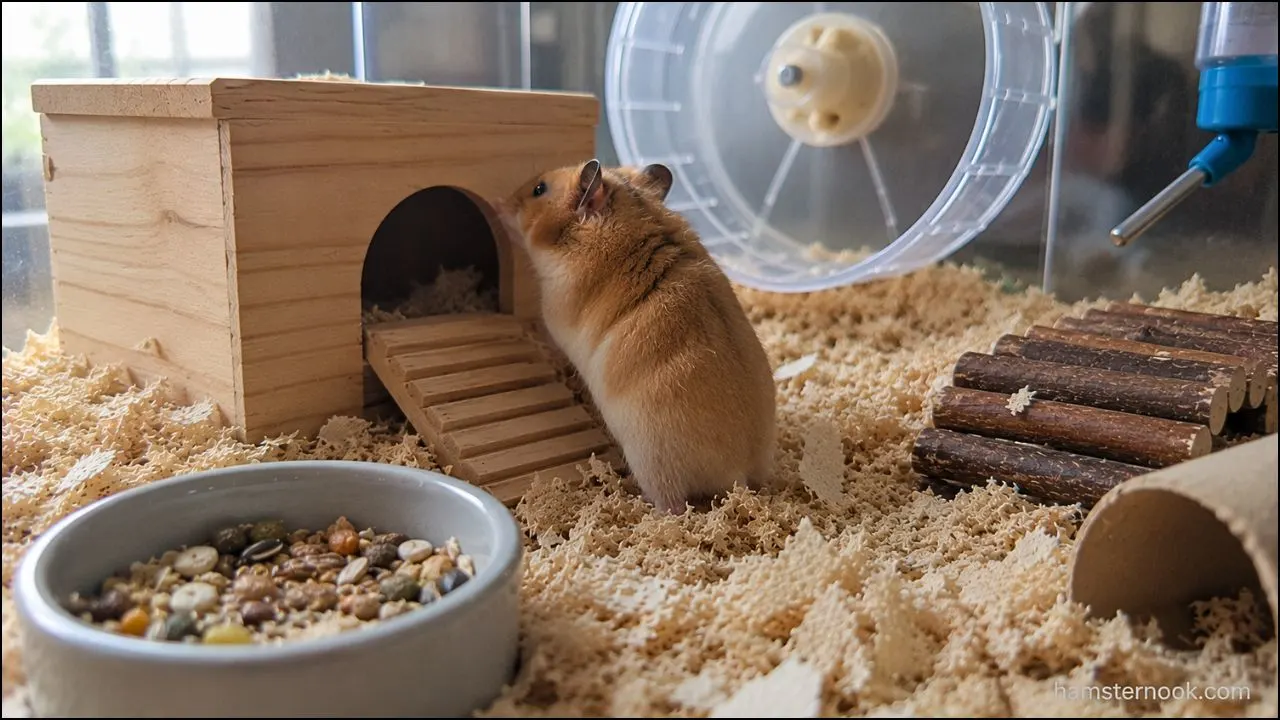
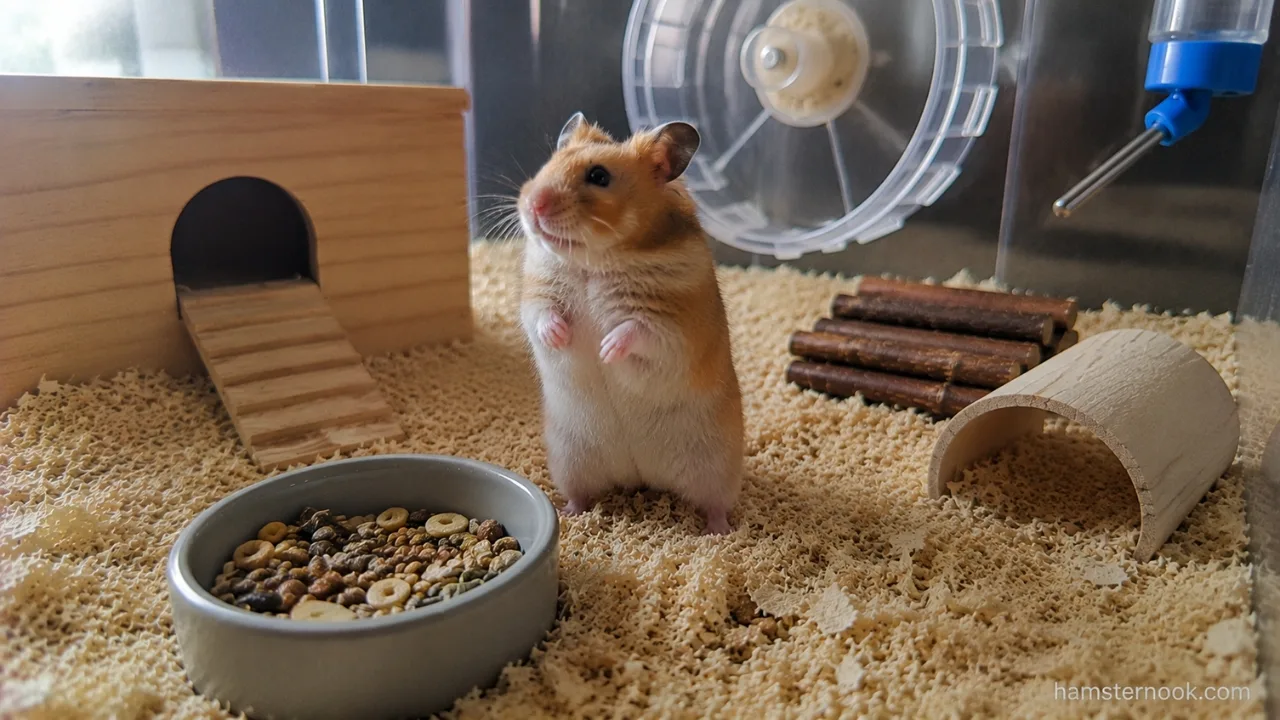
- Standing upright to investigate sounds
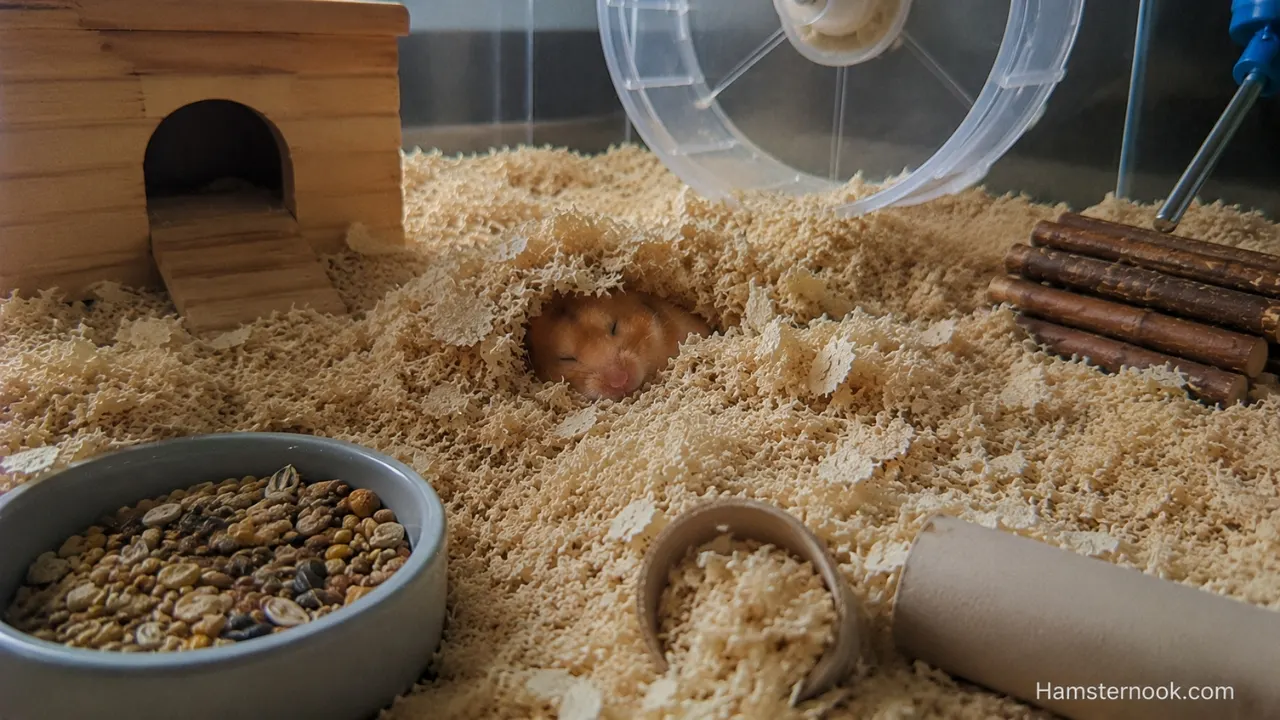
- Running back into a hide
- Delaying exploration
- Remaining unusually alert
- Postponing eating or foraging until the room becomes quieter
A brief reaction to an unexpected noise is completely normal. Wild hamsters use the same behavior to check for danger before continuing their activities.
If your hamster quickly returns to its usual activity after the sound stops, a brief startle response alone is generally less concerning than repeated or prolonged changes in behavior.
Normal Curiosity vs. Noise-Related Stress
| Normal Response | Possible Stress Response |
|---|---|
| Briefly pauses and listens | Frequently hides whenever noise occurs |
| Stands upright for a few seconds | Remains tense for long periods |
| Quickly resumes exploring | Avoids leaving its nest during noisy periods |
| Investigates the environment normally | Repeated startle responses throughout the evening |
| Continues eating and grooming | Reduced normal activity during active hours |
Looking at the overall pattern is much more useful than judging a single reaction.
Do Some Hamsters Adapt to Household Noise?
Yes.
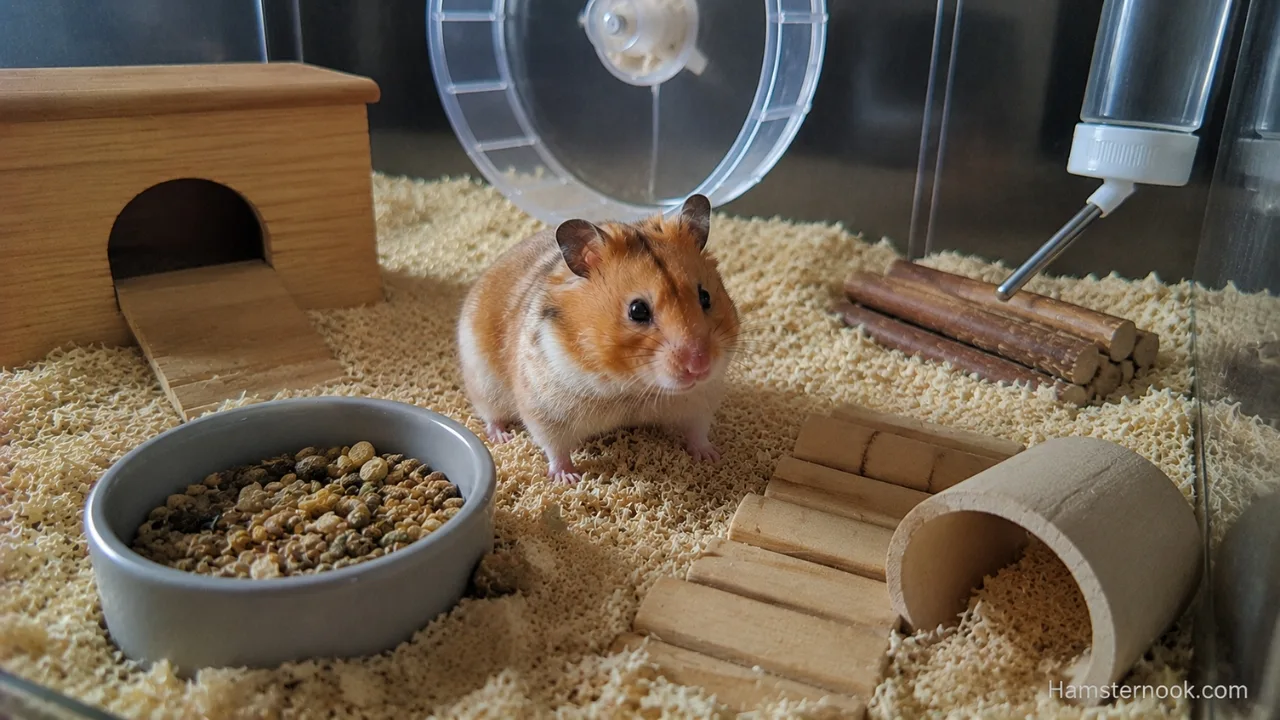
Many pet hamsters gradually become accustomed to predictable household sounds.
For example, a hamster that hears the television every evening at a moderate volume may eventually ignore it because it learns that nothing threatening follows.
This process is often called habituation, where repeated exposure to a harmless stimulus leads to a reduced behavioral response.
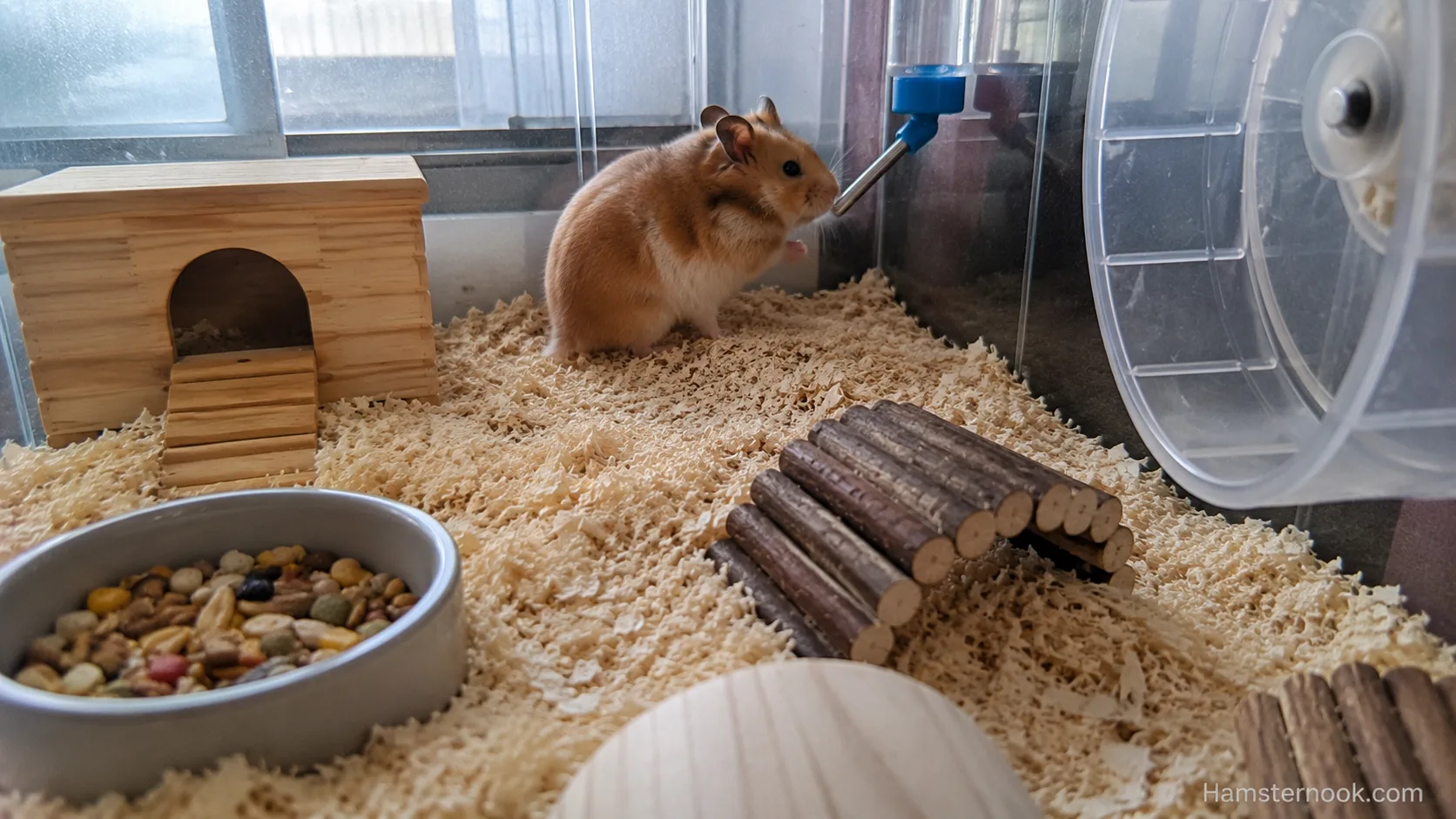
However, habituation has limits.
Sudden shouting, loud parties, fireworks, dropped objects, or powerful speakers can still startle even a hamster that normally ignores everyday background noise.
Practical Examples
Example 1: Evening Television
You watch a one-hour TV program with the volume kept moderate while your hamster wakes up.
The hamster briefly stands upright after a loud advertisement, then continues foraging a minute later.
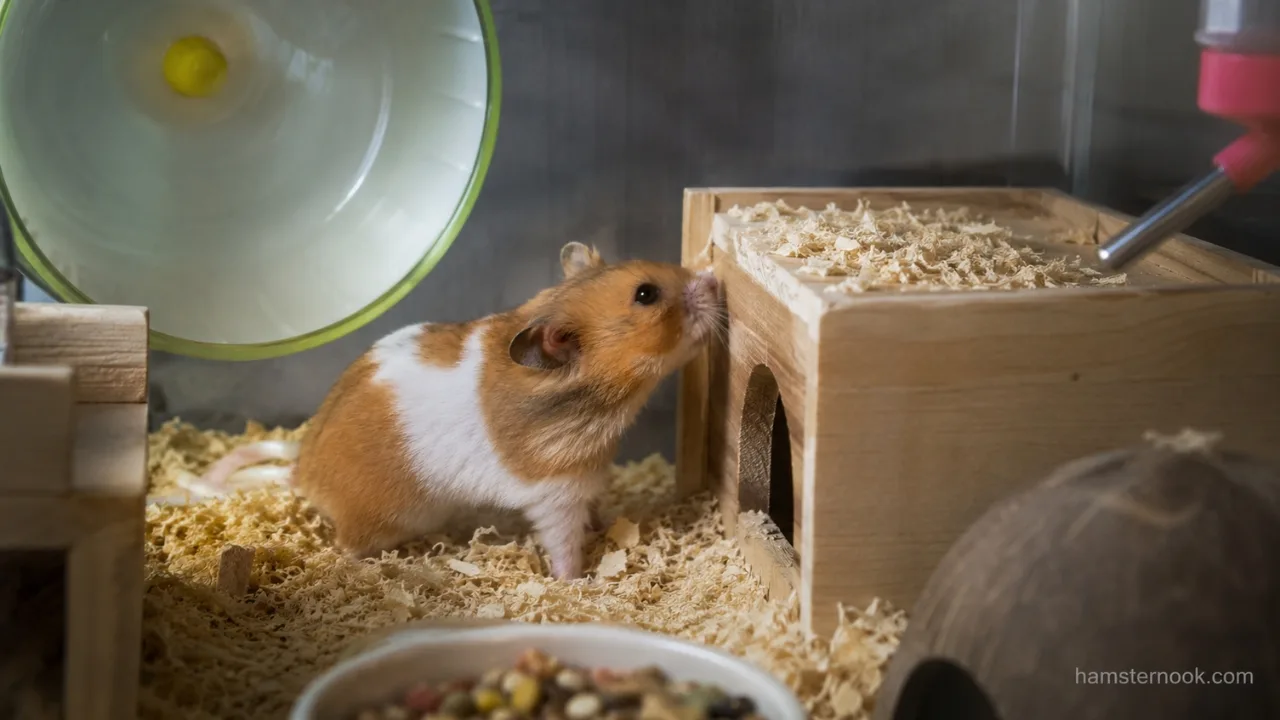
This is a normal reaction.
Example 2: Loud Party
Several people are talking loudly, music is playing, and furniture vibrates from speakers.
Instead of exploring, your hamster stays hidden for most of the evening.
This suggests the environment may be overwhelming.
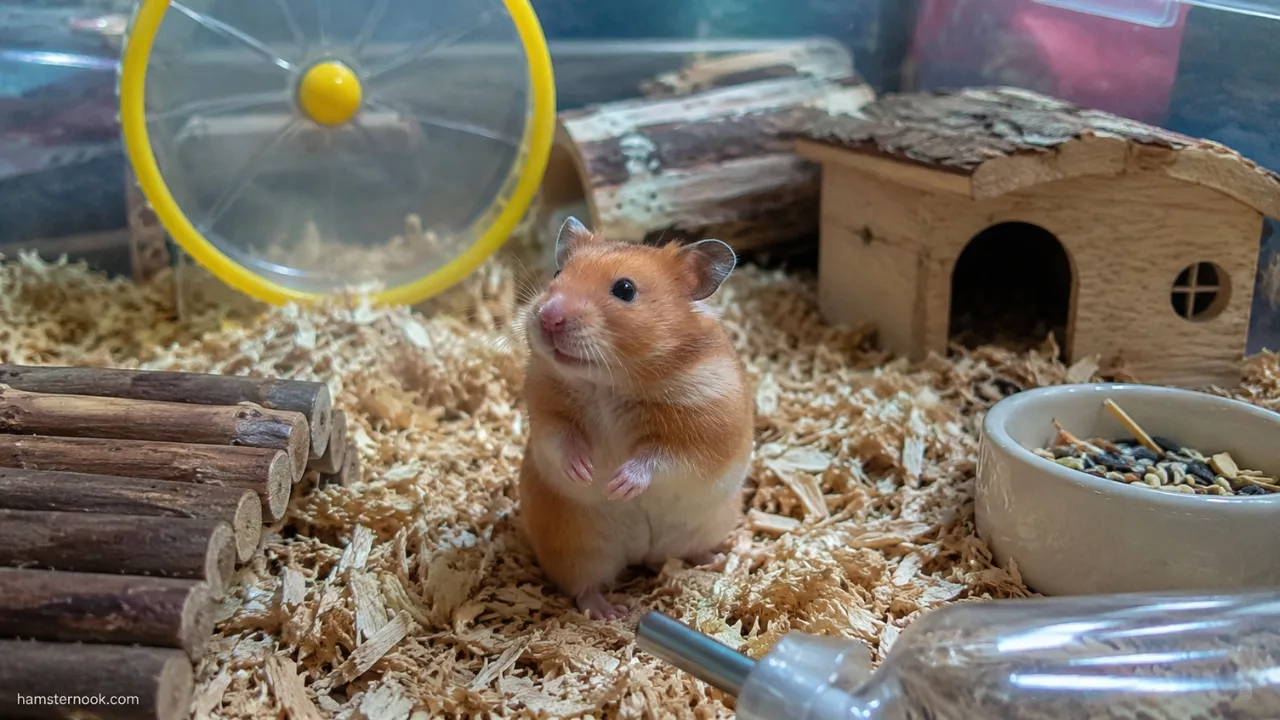
Example 3: Gaming Setup
Your hamster’s enclosure sits beside a desk where speakers produce sudden explosions and loud effects during gaming sessions.
Repeated startle responses throughout the evening indicate that moving either the enclosure or the speakers may help create a calmer environment.
Where You Place the Cage Matters
Noise intensity changes dramatically depending on distance.
An enclosure placed:
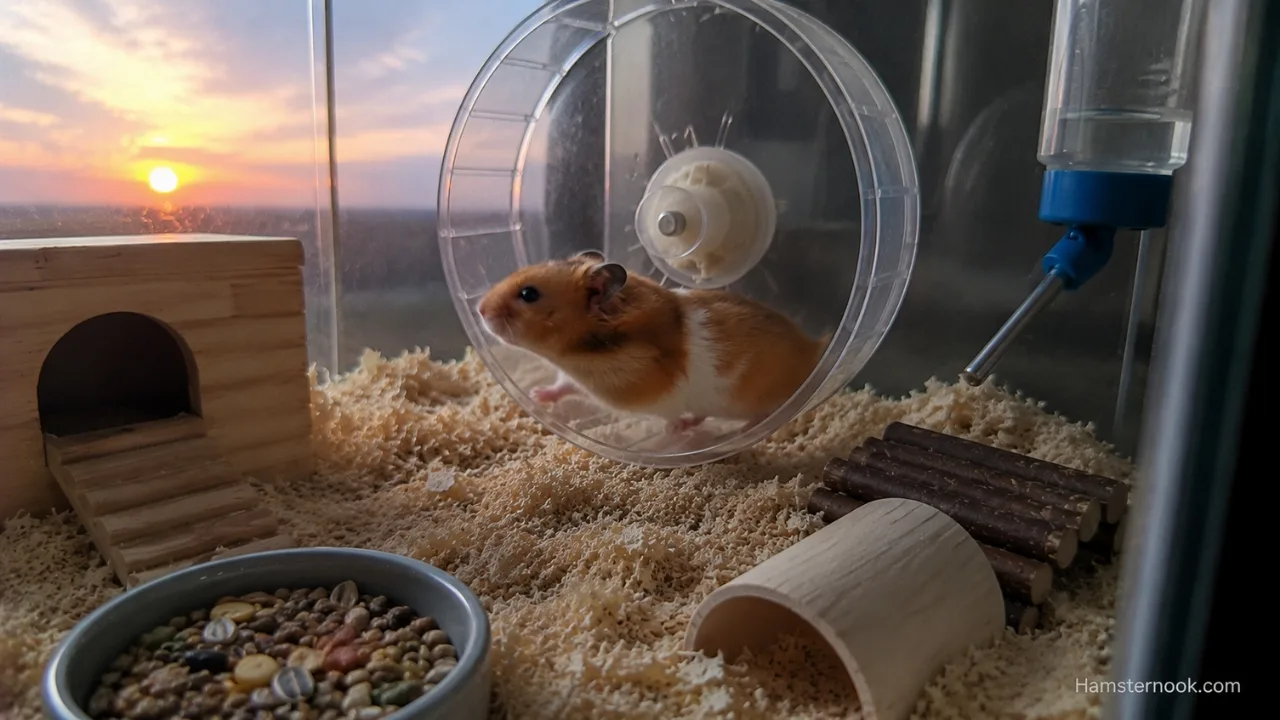
- Beside a television
- Next to surround-sound speakers
- Against a subwoofer cabinet
- Near a constantly running appliance
will expose a hamster to much more sound and vibration than one located several feet away in a quieter part of the room.
Choosing a calm location is often more beneficial than trying to eliminate every household sound.
The position of the enclosure can make a significant difference because greater distance from speakers and other noise sources can reduce the sound and vibration reaching the cage. Our Hamster Cage Placement: Safe Locations, Room Conditions & What to Avoid guide covers suitable locations and common placement problems.
Can Noise Affect Daytime Sleep?
Although hamsters are most active during the evening and night, they still need quality sleep during the day.
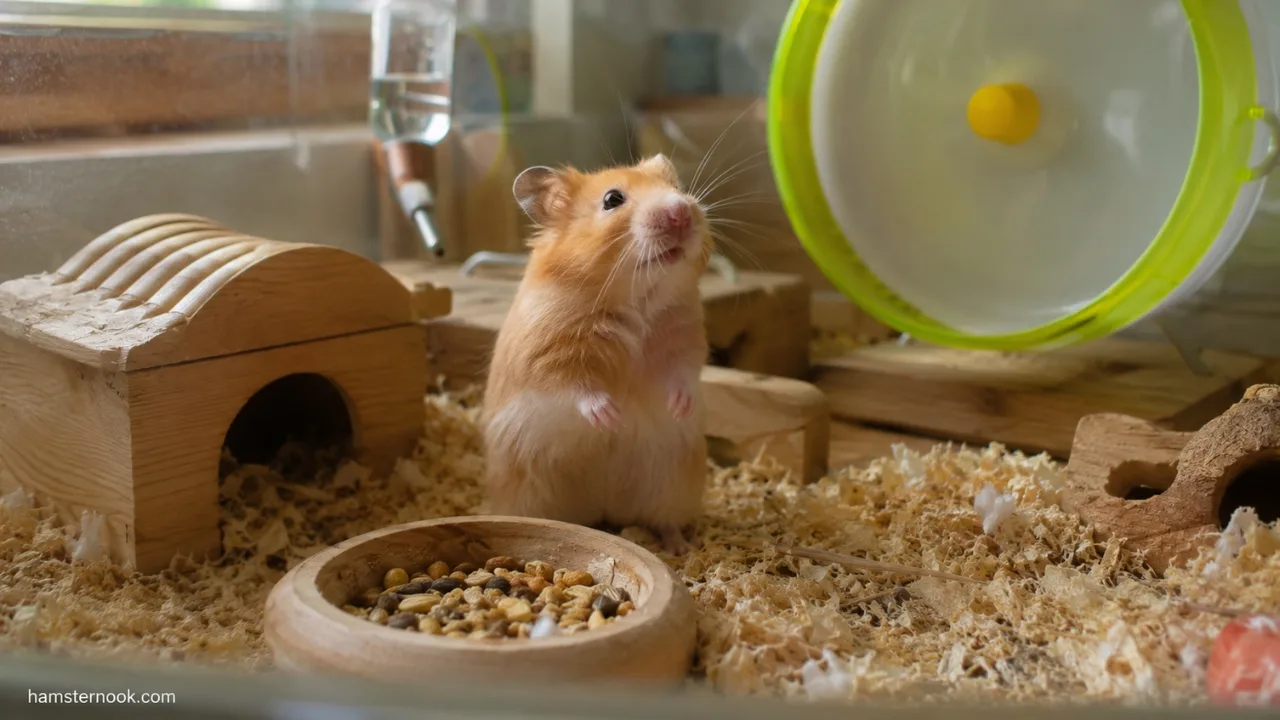
Frequent loud sounds while they’re resting may interrupt sleep, causing them to wake repeatedly or leave their nest to investigate disturbances.
Providing a quiet sleeping environment supports normal behavior and overall welfare, even if occasional household activity is unavoidable.
Common Mistakes Owners Make
Many owners worry the moment their hamster reacts to a sound, while others assume their pet will simply “get used to anything.” The truth usually falls somewhere in the middle.
Keeping the Cage Next to the TV
One of the most common mistakes is placing the enclosure directly beside a television or entertainment system. Even if the volume doesn’t seem especially loud, the hamster is exposed to continuous sound and, in some cases, vibrations from speakers.
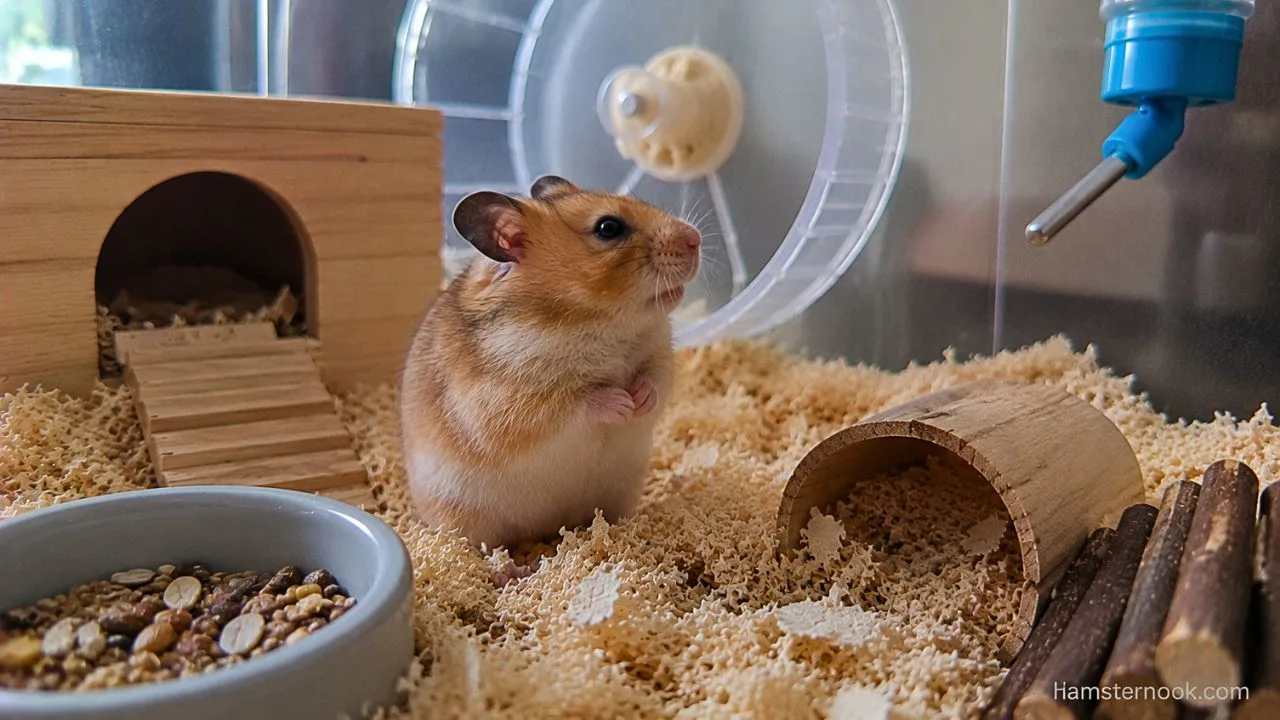
Playing Music Too Loud
Music doesn’t have to be silent, but turning up the volume enough to fill the room can become overwhelming for a small prey animal with sensitive hearing.
Assuming No Reaction Means No Stress
Some hamsters don’t visibly panic when exposed to noise. Instead, they may quietly remain in their hide, postpone foraging, or wait until the room becomes quieter before becoming active.
Looking at your hamster’s entire evening routine gives a better picture than focusing on one moment.
Frequently Moving the Cage
Owners sometimes relocate the enclosure every time they watch TV or host visitors. Constantly moving the cage can be stressful on its own because hamsters rely on familiar surroundings. Instead, choose a naturally quiet location where the enclosure can remain permanently.
Ignoring Vibrations
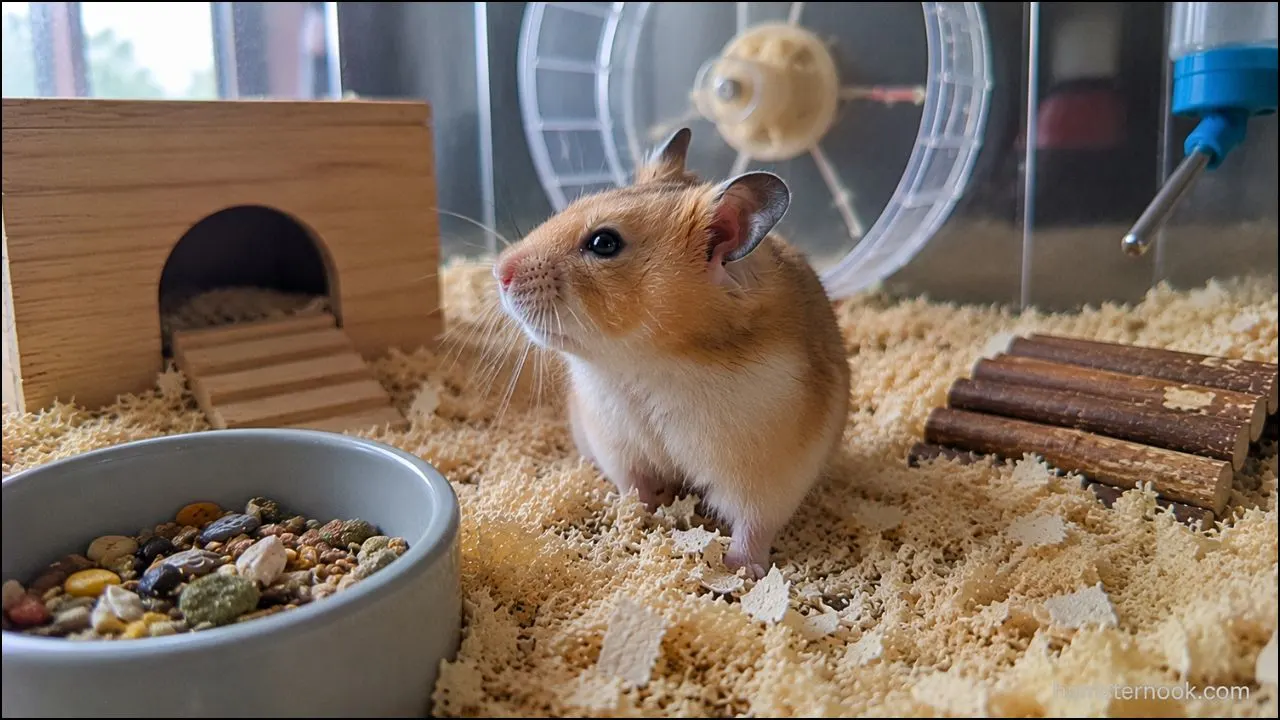
Large speakers, subwoofers, or furniture that vibrates with music may affect a hamster even if the sound itself doesn’t seem excessive. Keeping the enclosure away from vibration sources is just as important as controlling the volume.
What You Should Do
Your hamster doesn’t need complete silence, but it does benefit from a calm and predictable environment.
To reduce unnecessary noise-related stress:
- Place the enclosure in a quieter part of the room, away from televisions and speakers.
- Keep TV and music at a comfortable, moderate volume.
- Avoid placing subwoofers or large speakers on the same furniture as the cage.
- Give your hamster several enclosed hides where it can retreat if it feels uncertain.
- Avoid sudden shouting, banging, or loud celebrations near the enclosure.
- Observe your hamster’s normal behavior rather than reacting to every brief startle response.

Secure hideouts allow hamsters to withdraw naturally whenever they feel startled instead of remaining exposed. Best Hamster Hideouts and Sleeping Areas: What Hamsters Prefer explains which types of hides provide the greatest sense of security.

Most healthy hamsters adapt well to ordinary household life when they have a secure enclosure and enough opportunities to rest without repeated disturbance.
Warning Signs
Occasional alert behavior is normal. However, repeated reactions to noise may indicate that the environment is too stimulating.
Looking for the overall pattern is far more useful than judging one startled reaction in isolation. 5 Warning Signs Your Hamster Is Stressed (And How to Help) explains the broader behavioural changes owners should monitor.
Watch for signs such as:

- Hiding throughout most of the normal active period.
- Repeated freezing after everyday household sounds.
- Frequent attempts to escape immediately after loud noises.
- Noticeably reduced exploration compared with previous evenings.
- Persistent pacing or repetitive behaviors when the room is noisy.
- Interrupted sleep caused by regular daytime disturbances.
If these behaviors improve after moving the enclosure to a quieter location, excessive noise may have been contributing to the problem.
When to Worry
Most hamsters tolerate ordinary household sounds without lasting problems.
You should look more closely if your hamster:
- Suddenly becomes unusually fearful despite no obvious environmental changes.
- Stops eating or drinking.
- Shows prolonged inactivity during its normal waking hours.
- Develops repetitive stress-related behaviors that continue even in a quiet environment.
- Appears unwell or shows other physical signs unrelated to noise.
These changes are not specific to television or music and could indicate another welfare or health issue. If unusual behavior persists despite providing a calm environment, consult an experienced exotic animal veterinarian.
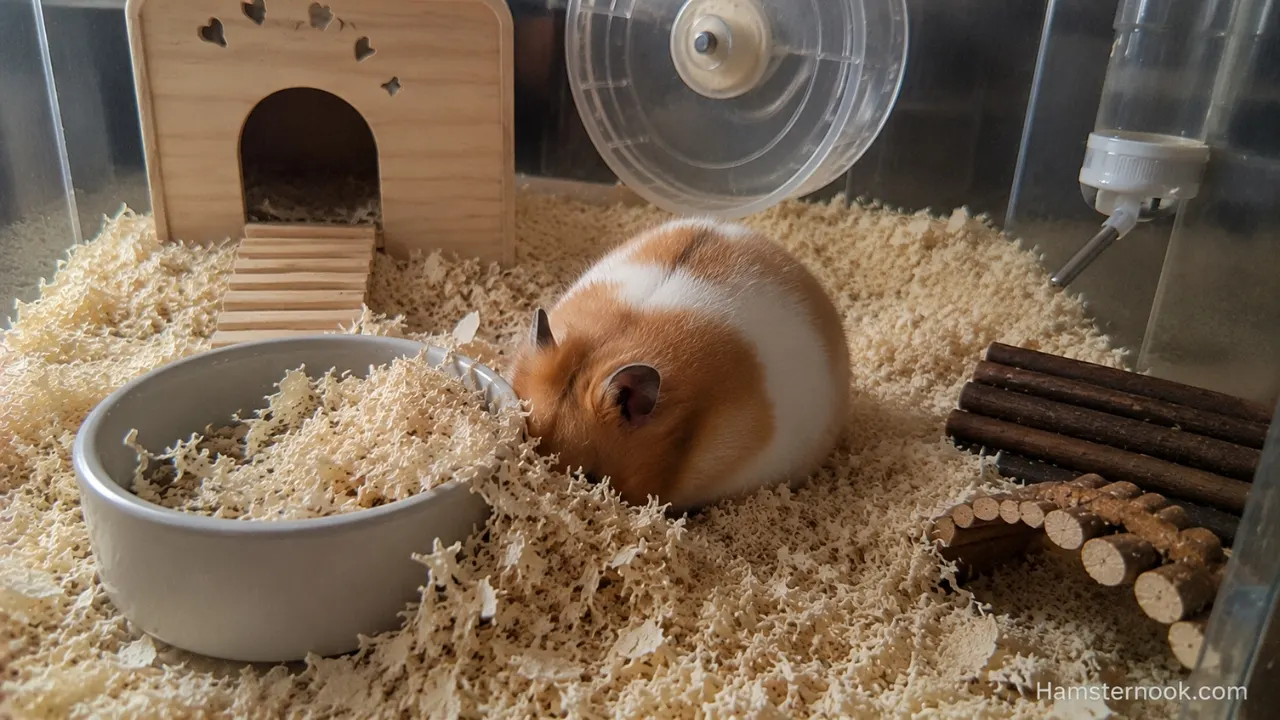
Changes in appetite, activity, posture, and behaviour should always be assessed together rather than blaming a single environmental factor. How to Tell If Your Hamster Is Happy, Healthy, Stressed, or Sick: Complete Owner’s Guide (2026) helps you interpret those signs more accurately.
Final Thoughts
Televisions and music aren’t automatically harmful to hamsters. In many homes, pet hamsters successfully adapt to everyday background sounds without difficulty. What matters most is the intensity, duration, and predictability of the noise.
A television playing at a moderate volume across the room is very different from powerful speakers placed beside the enclosure or repeated bursts of loud sound. By providing a quiet sleeping area, limiting excessive noise, and watching your hamster’s overall behavior, you can create an environment where it feels secure while still enjoying normal household life.
Every hamster has its own personality, so paying attention to how your individual pet responds is the best guide.
Frequently Asked Questions
Can a hamster sleep with the TV on?
It depends on the volume and the cage’s location. A television playing quietly in another part of the room is less likely to cause disturbance than one placed directly beside the enclosure.
Is loud music harmful to hamsters?
Repeated exposure to loud music and strong vibrations can be stressful for hamsters. Keeping music at a moderate volume and away from the cage is the safer approach.
Can hamsters get used to household noise?
Yes. Many hamsters gradually become accustomed to predictable everyday sounds, although sudden loud noises may still startle them.
Should I move my hamster to another room when watching TV?
Usually not. If the television is kept at a reasonable volume and the enclosure is positioned away from speakers, moving the cage is often unnecessary.
Why does my hamster freeze when it hears a loud sound?
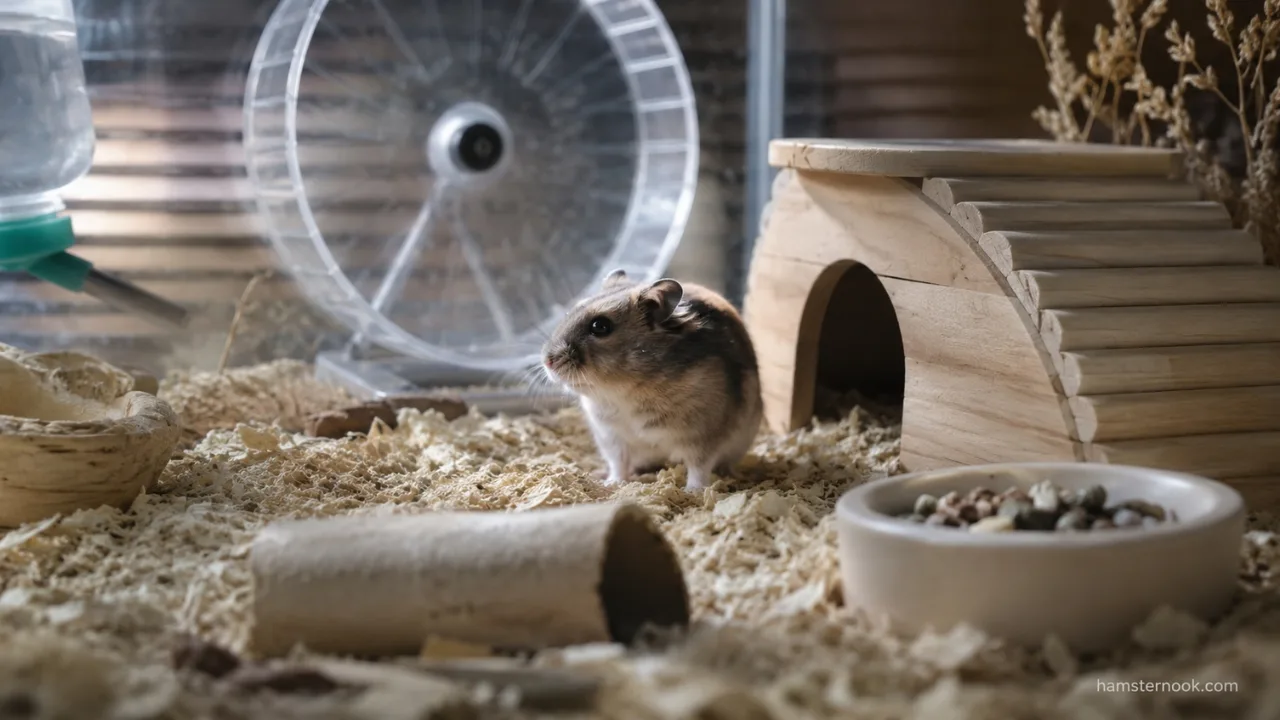
Freezing is a natural defensive behavior. Hamsters briefly stop moving to assess whether a sound could signal danger before deciding whether it’s safe to continue exploring.
A brief freeze response is usually a normal survival instinct while a hamster decides whether the environment is safe again. Why Does My Hamster Freeze After Hearing Loud Noises? explains why this behaviour happens and when it may indicate ongoing stress.
Are vibrations from speakers a problem?
They can be. Hamsters are sensitive to environmental vibrations, so it’s best not to place the enclosure on the same furniture as large speakers or subwoofers.
References
This guide is based on hamster behavior, environmental care, housing, stress reduction, and welfare guidance from trusted animal welfare and veterinary resources, including:
- RSPCA – Hamster Behaviour – Guidance on natural hamster behavior, activity patterns, environmental changes, handling, and factors that may contribute to stress.
- RSPCA – Creating a Good Home for Hamsters – Guidance on suitable cage placement, environmental conditions, bedding, resting areas, and creating a calm home environment.
- RSPCA – Keeping Hamsters as Pets – General hamster care, housing, behavior, enrichment, and welfare guidance.
- PDSA – Hamsters as Pets – Advice on hamster welfare, housing, behavior, handling, exercise, and providing an appropriate home environment.
- Blue Cross – Hamster Care Guide – Practical guidance on hamster housing, daily care, enrichment, handling, and wellbeing.
- MSD Veterinary Manual – Providing a Home for a Hamster – Veterinary guidance on hamster housing, environmental conditions, bedding, exercise, and creating a suitable enclosure.
- NC3Rs – Housing and Husbandry: Hamster – Guidance on appropriate hamster housing, environmental conditions, husbandry, and welfare.

Narayan Kumar is the founder and author of HamsterNook. He creates practical, research-based hamster care guides covering hamster behavior, nutrition, cage setup, enrichment, health, and everyday care. His goal is to help hamster owners make informed decisions and provide safer, healthier lives for their pets through clear, beginner-friendly information based on trusted animal care resources.