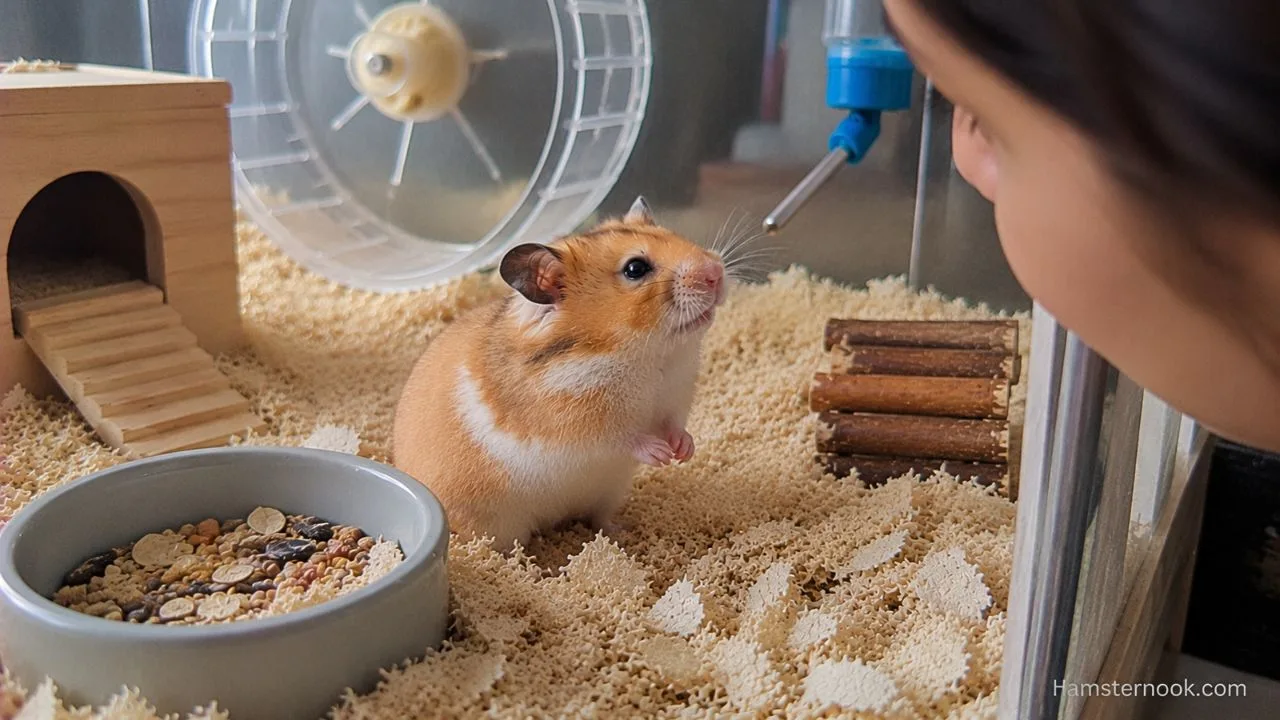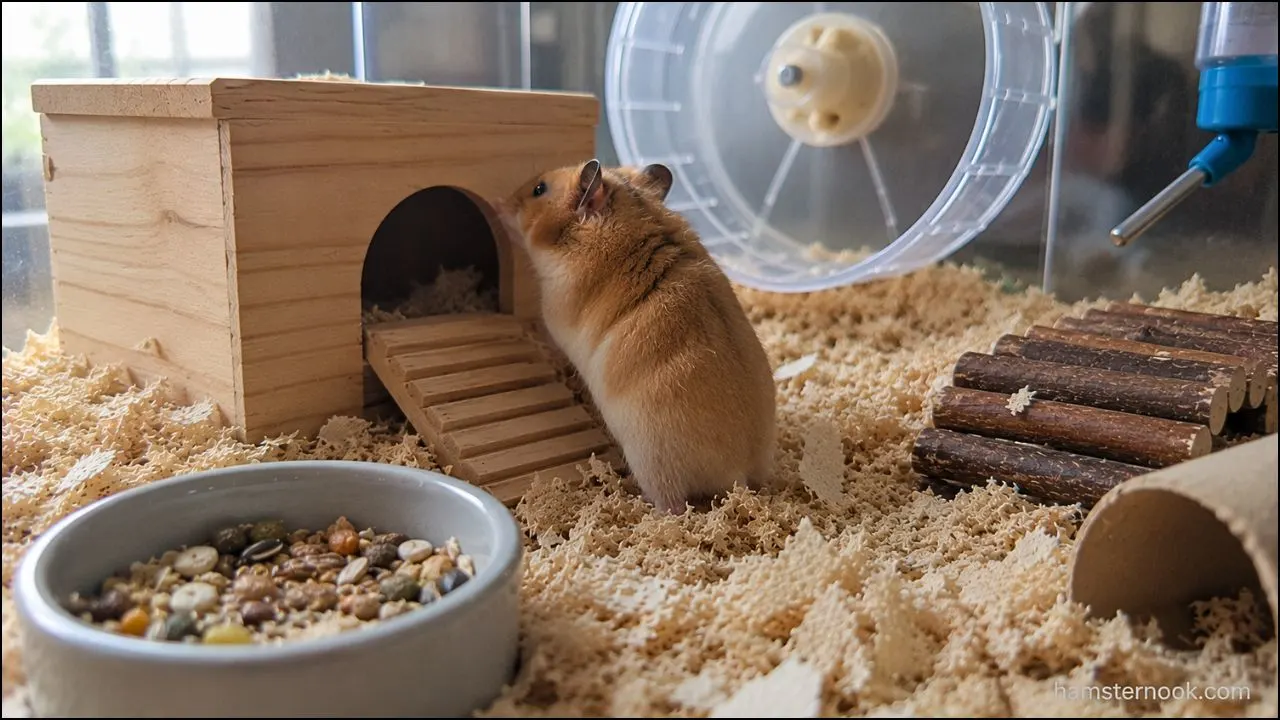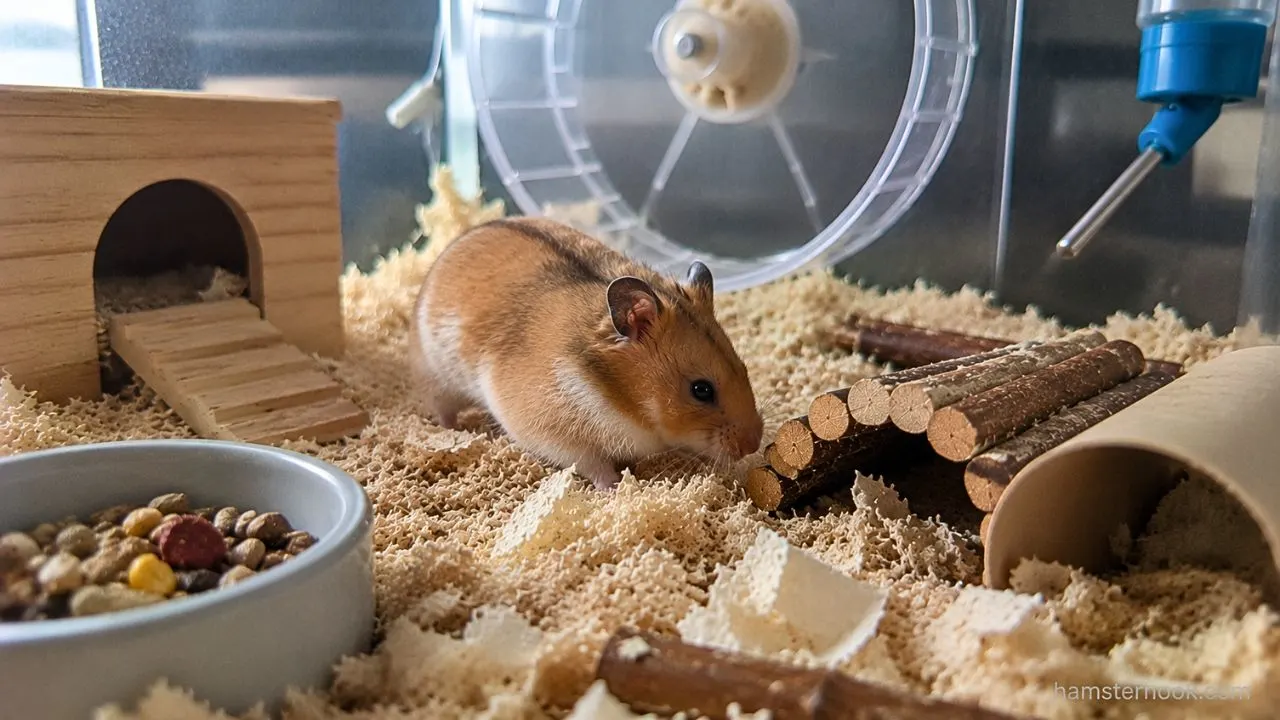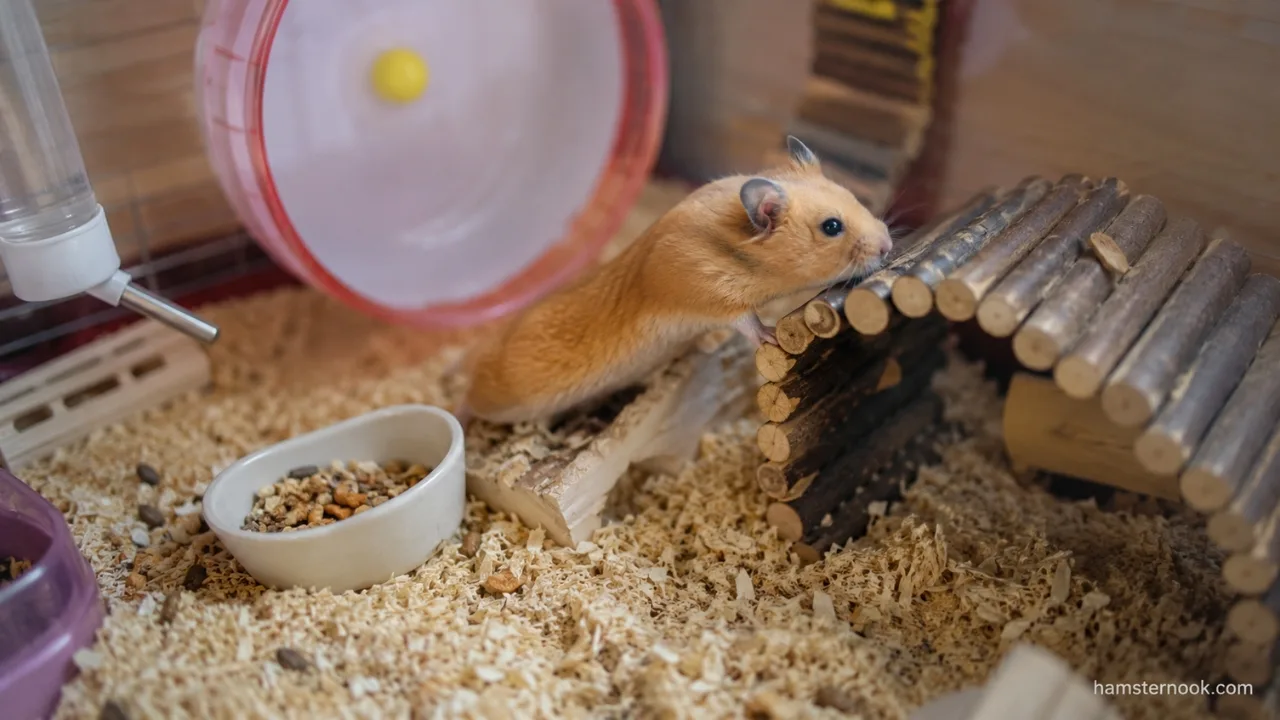
Many new hamster owners believe that a food bowl, water bottle, and exercise wheel are enough to keep a hamster happy. While these essentials are important, they don’t fully satisfy a hamster’s natural instincts. In the wild, hamsters spend much of their active time digging, foraging, exploring, and investigating new scents. Without opportunities to express those behaviors, some hamsters may gradually become less engaged with their environment.
Understanding the signs of boredom helps you improve your hamster’s quality of life before stress-related behaviors become long-term habits. This guide explains how to recognize boredom, why enrichment matters, and simple ways to create a more engaging habitat.
Quick Answer
Yes, hamsters can become bored if they have little opportunity to explore, dig, chew, climb, forage, or investigate new scents and textures. Boredom doesn’t always lead to obvious behavioral problems, but providing regular enrichment supports both physical activity and natural behaviors.
A varied, well-designed enclosure with appropriate hideouts, deep bedding, a suitable wheel, safe chew items, and opportunities to forage is generally more stimulating than a basic setup with only the essentials.
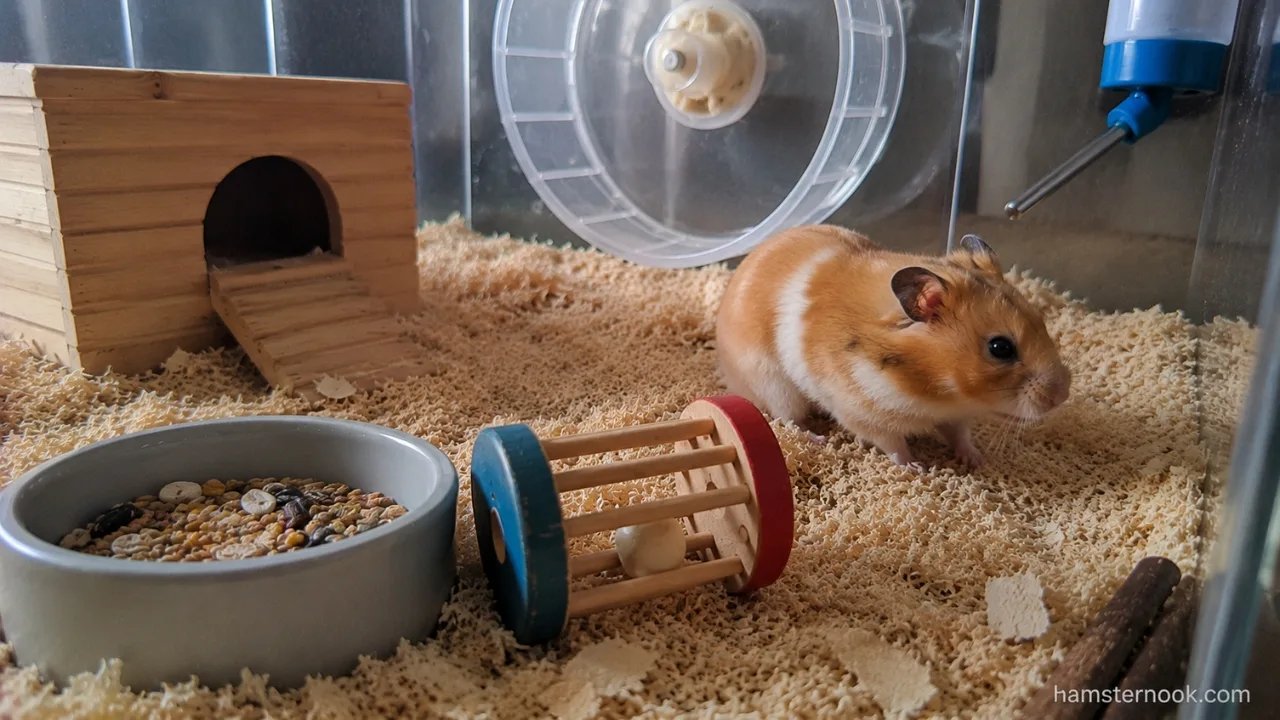
Why Enrichment Matters
Hamsters are naturally active, especially during the evening and nighttime. In the wild, they spend hours moving through tunnels, collecting food, exploring new areas, and avoiding predators.
Although pet hamsters live in a safe environment, those natural instincts don’t disappear.
Enrichment gives your hamster opportunities to:
- Explore safely
- Search for food
- Dig and burrow
- Chew appropriate materials
- Investigate new objects
- Exercise naturally
The goal isn’t to keep your hamster constantly occupied. Instead, it’s to provide opportunities for natural behaviors that keep both the mind and body active in healthy ways.
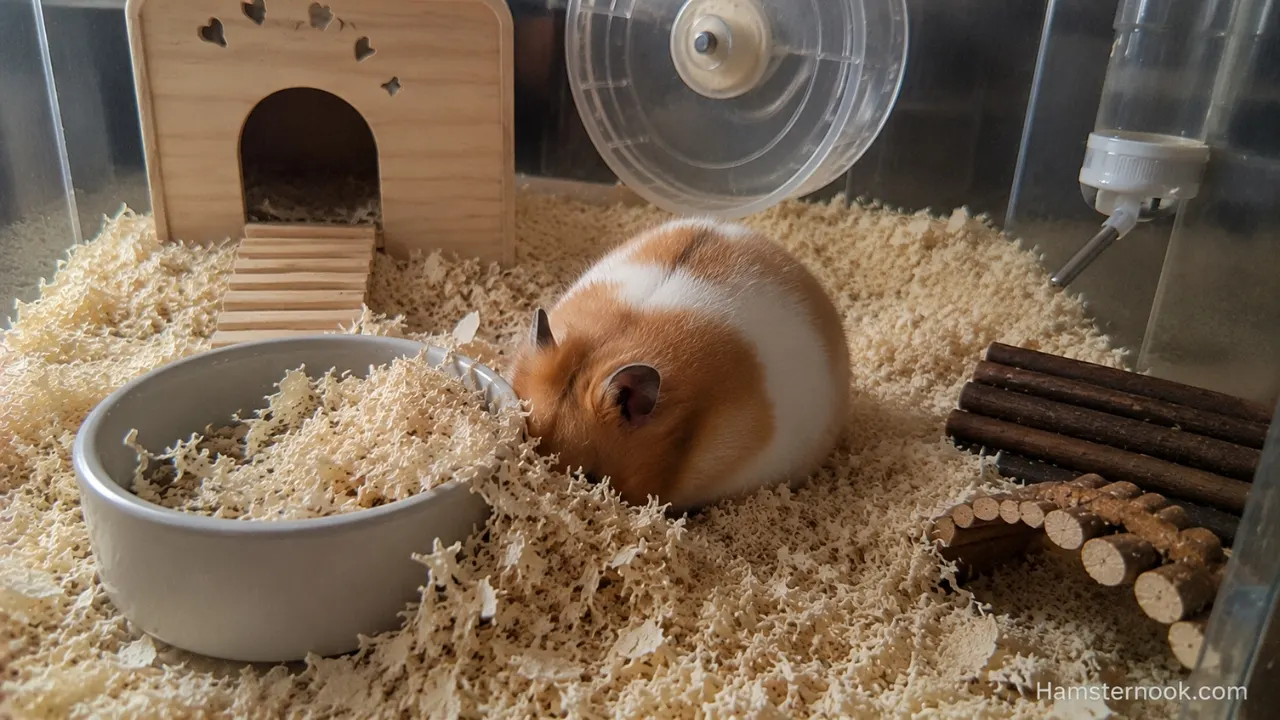
Boredom Usually Develops Gradually
Most hamsters don’t become bored overnight. Instead, boredom tends to develop gradually when the enclosure offers the same experiences every day with few opportunities to explore, forage, or investigate anything new. Making small changes over time is usually more beneficial than completely redesigning the habitat at once.
Normal Resting vs. Boredom
Because hamsters sleep for much of the day, owners sometimes mistake normal daytime rest for boredom.
| Normal Behavior | Possible Boredom |
|---|---|
| Sleeps during the day | Repetitive behaviors while awake |
| Explores after waking | Little interest in the enclosure |
| Uses tunnels and hideouts | Paces the same route repeatedly |
| Regular grooming | Repetitive or unusual behavior while awake |
| Uses enrichment items | Little interest in an unstimulating environment |
If your hamster becomes active after waking and spends time exploring, foraging, digging, or using its wheel, that’s usually a positive sign.
Readers who want to better understand normal sleep patterns should also read our Are Hamsters Nocturnal? Understanding Their Sleep Schedule, where we explain the subject in greater detail with practical tips and beginner-friendly guidance.

10 Signs Your Hamster May Need More Enrichment
1. Repetitive Cage Bar Chewing
Chewing cage bars repeatedly is one of the most commonly discussed behaviors associated with insufficient environmental enrichment, particularly in wire cages.
While bar chewing may have several contributing factors—including enclosure size, habitat design, and individual behavior—it often suggests your hamster would benefit from a more engaging environment.
Providing additional digging opportunities, chew toys, hideouts, and foraging activities may help reduce this behavior.
Readers experiencing this issue should also read our Why Is My Hamster Biting the Cage? Causes & Easy Solutions, where we explain the subject in greater detail with practical tips and beginner-friendly guidance.
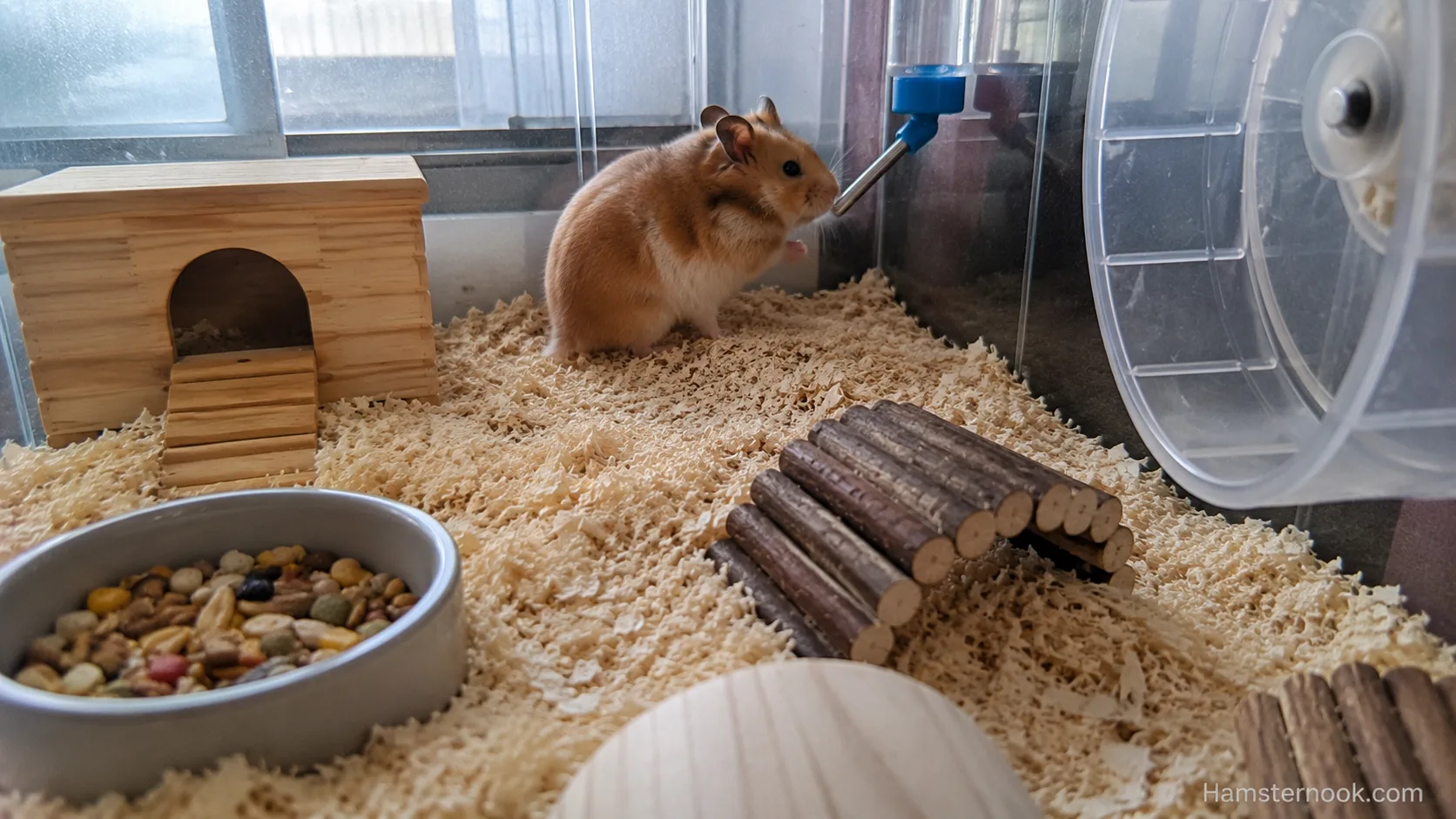
2. Constantly Pacing the Same Route
Some hamsters repeatedly walk the same path around the enclosure without stopping to investigate anything else.
Occasional pacing isn’t unusual, especially after cleaning the cage or introducing a new habitat.
However, if your hamster spends much of its active time following the exact same route despite having suitable enrichment, it’s worth evaluating whether the enclosure offers enough opportunities for exploration.
Adding tunnels, cork logs, bridges, different substrate depths, and safe obstacles can encourage more varied movement.
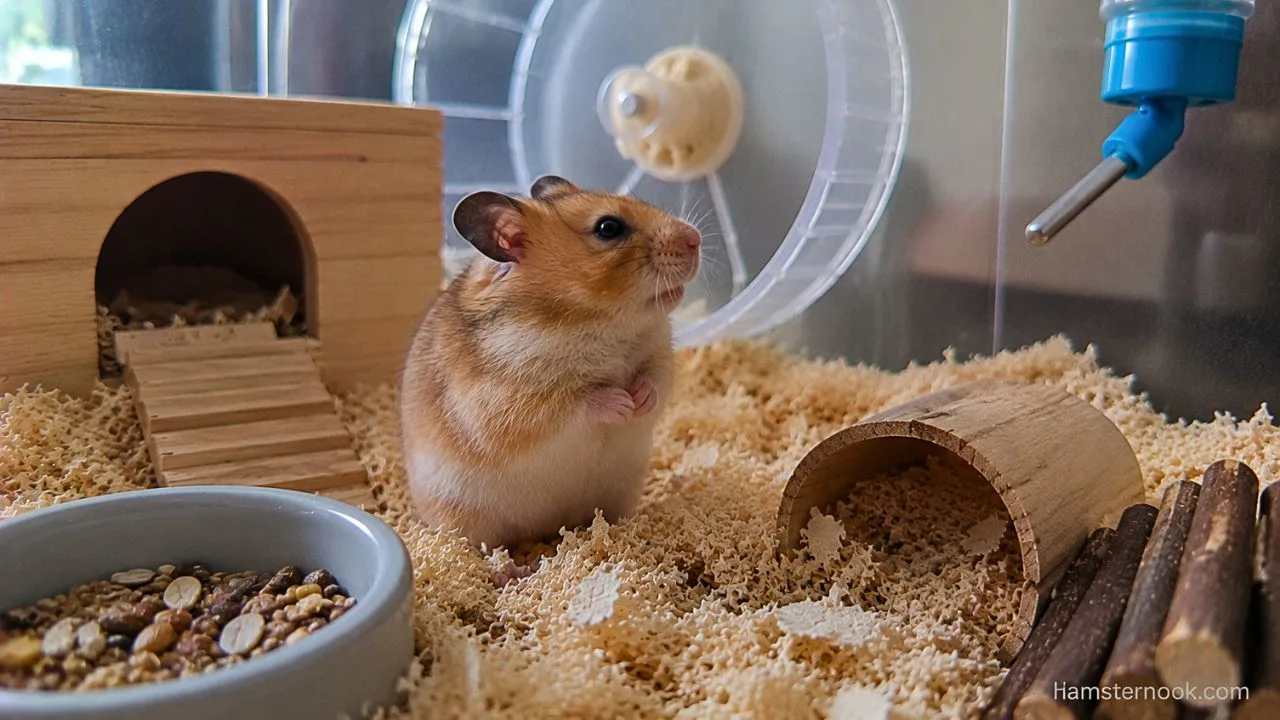
3. Ignoring Toys and the Environment
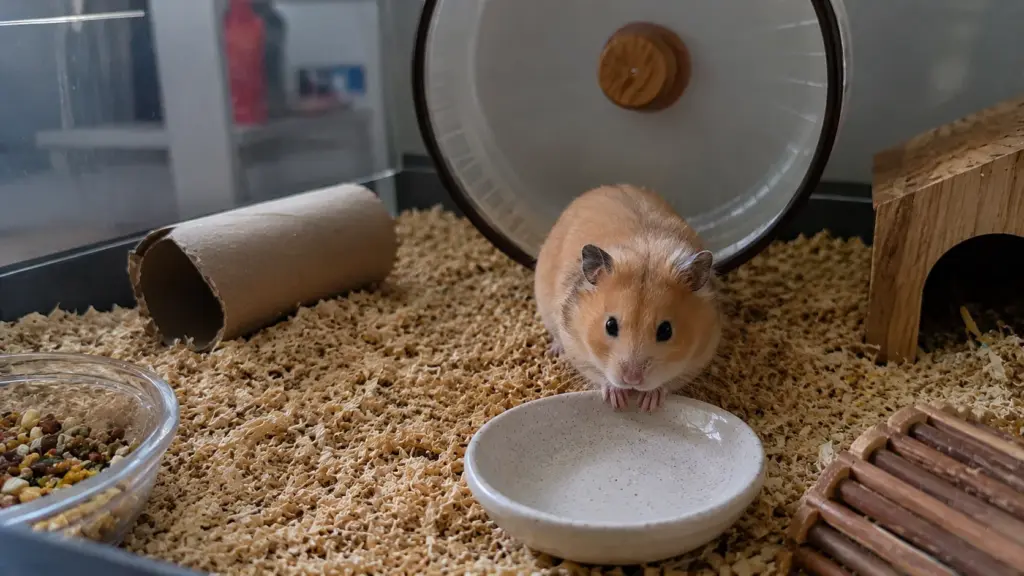
A healthy hamster is naturally curious.
If your hamster rarely investigates new objects, ignores hideouts, and spends most of its waking hours sitting in one place despite appearing otherwise healthy, the enclosure may not be providing enough variety.
Introducing enrichment gradually often works better than filling the enclosure with many unfamiliar objects at once.
4. Excessive Wheel Running Without Exploring Anything Else
Running on a wheel is a normal and healthy behavior.
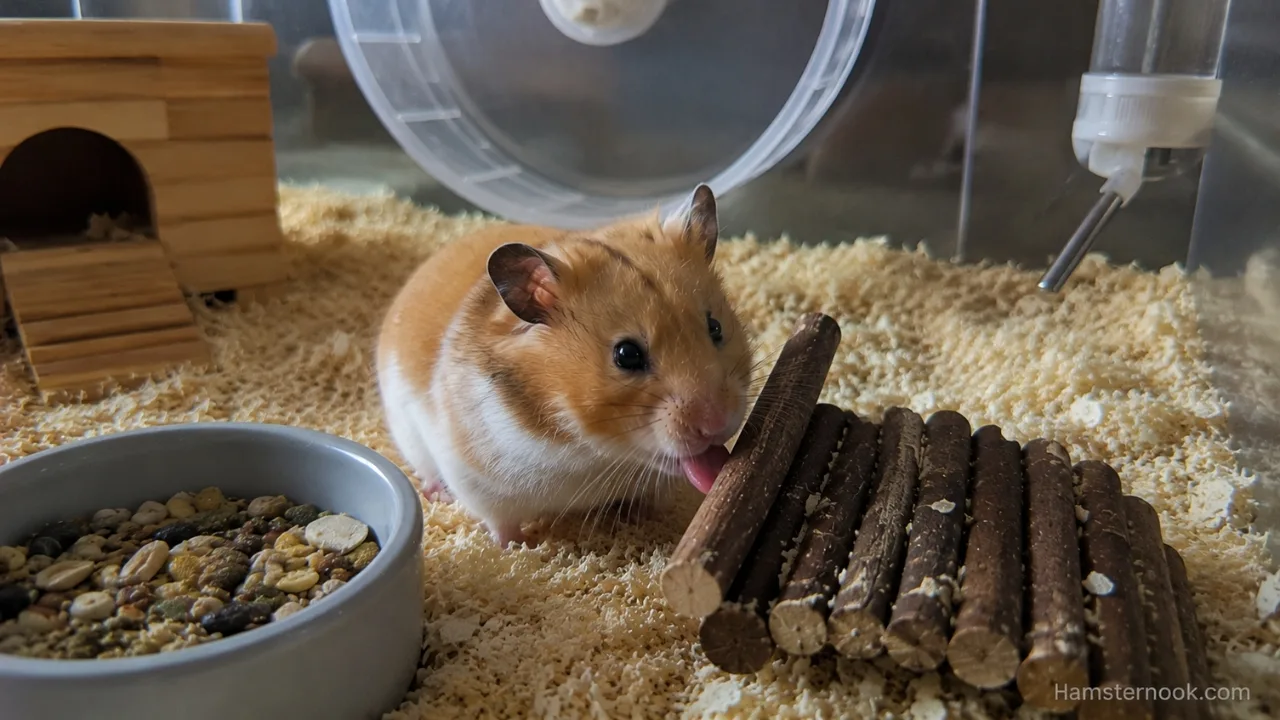
Many hamsters naturally spend long periods exercising each night.
However, if wheel running becomes the only activity your hamster shows interest in, it’s worth asking whether there are enough alternative opportunities to dig, forage, climb, and explore.
The wheel should be one part of an enriching habitat rather than the entire source of activity.
If wheel running seems to dominate your hamster’s activity, our Why Is My Hamster Running on the Wheel So Much? What’s Normal and When to Worry guide explains when heavy wheel use can still be normal.
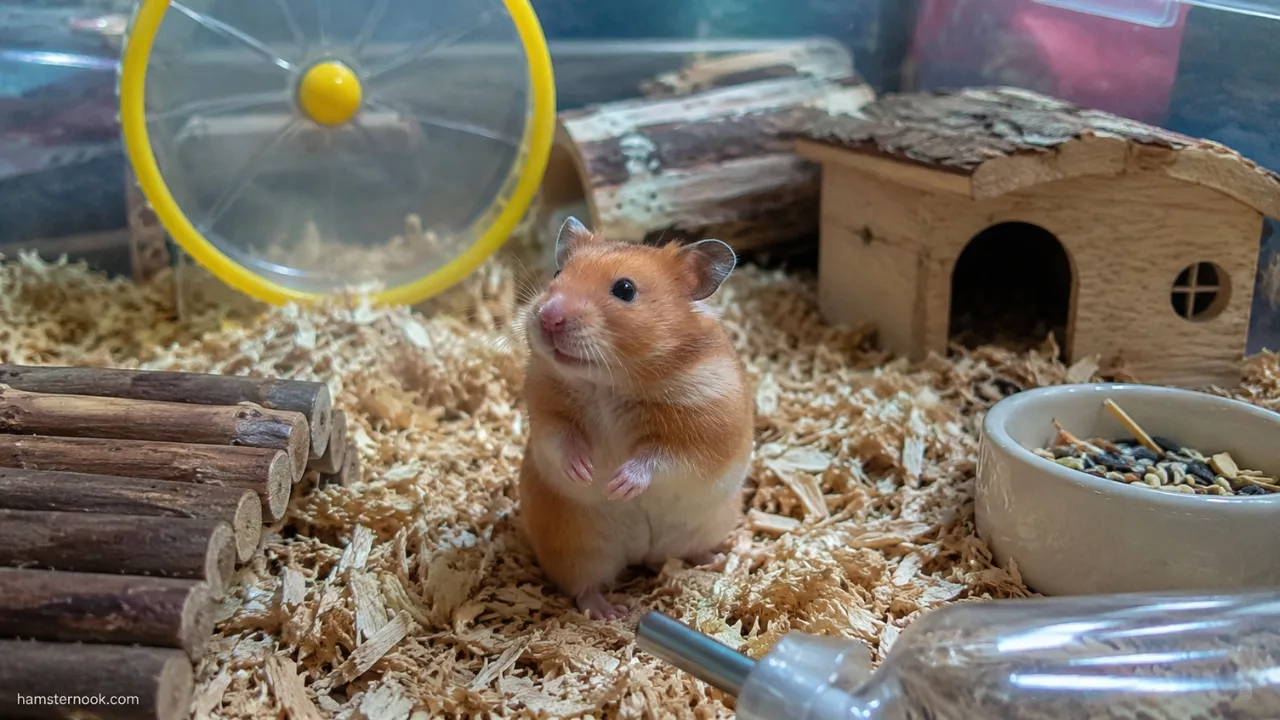
Readers wondering whether their hamster’s wheel use is normal should also read our Why Is My Hamster Running on the Wheel So Much?, where we explain the subject in greater detail with practical tips and beginner-friendly guidance.
5. Increased Signs of Stress
Boredom and stress are not the same thing, but they can sometimes occur together.
A hamster living in an unstimulating environment may also show signs that suggest it is feeling less secure or comfortable.
Possible behaviors include:
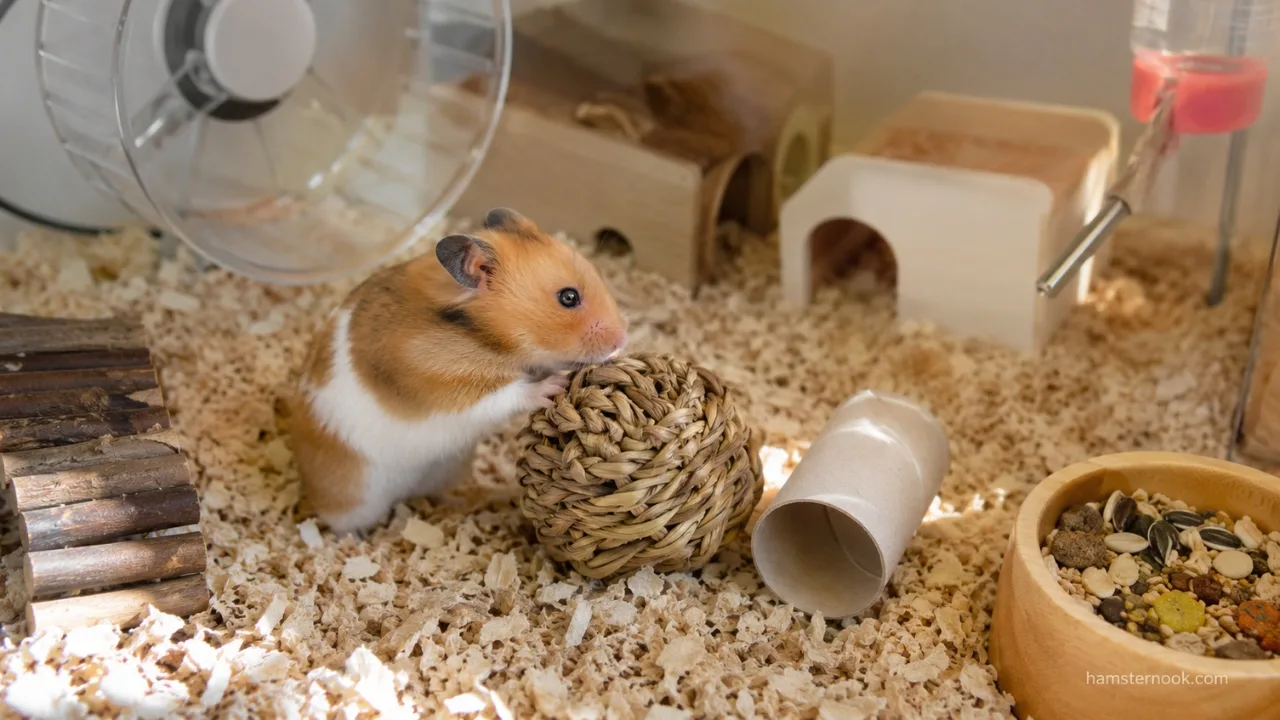
- Frequent freezing
- Startling easily
- Hiding excessively while awake
- Restlessness
- Reduced curiosity
These behaviors can also have other causes, so it’s important to consider the overall environment rather than assuming boredom alone is responsible.
If these behaviors are becoming frequent or are accompanied by other changes, it is useful to consider stress as well as enrichment. Our 7 Signs You’re Accidentally Stressing Your Hamster (Without Even Realizing It) guide covers common environmental stressors and signs to watch for.
6. Digging Very Little or Not at All
Digging is one of the most natural behaviors a hamster can display. In the wild, hamsters spend much of their time creating tunnels, expanding burrows, and searching for food beneath the ground.
A pet hamster that never digs may simply not have enough bedding depth to do so comfortably.

Providing a deep layer of suitable bedding allows your hamster to burrow naturally, which can be far more enriching than adding extra toys alone.
Deep bedding is especially important if your hamster rarely digs or burrows. Our How Much Bedding Does a Hamster Need? Minimum Depth Guide for Healthy Burrowing guide explains how bedding depth supports natural burrowing behavior.
7. Little Interest in Foraging
Foraging does not require expensive toys. Part of the hamster’s normal daily food allowance can be safely scattered through suitable areas of the enclosure, giving it an opportunity to search rather than simply eating from one fixed bowl.
Finding food is an important part of a hamster’s natural routine.
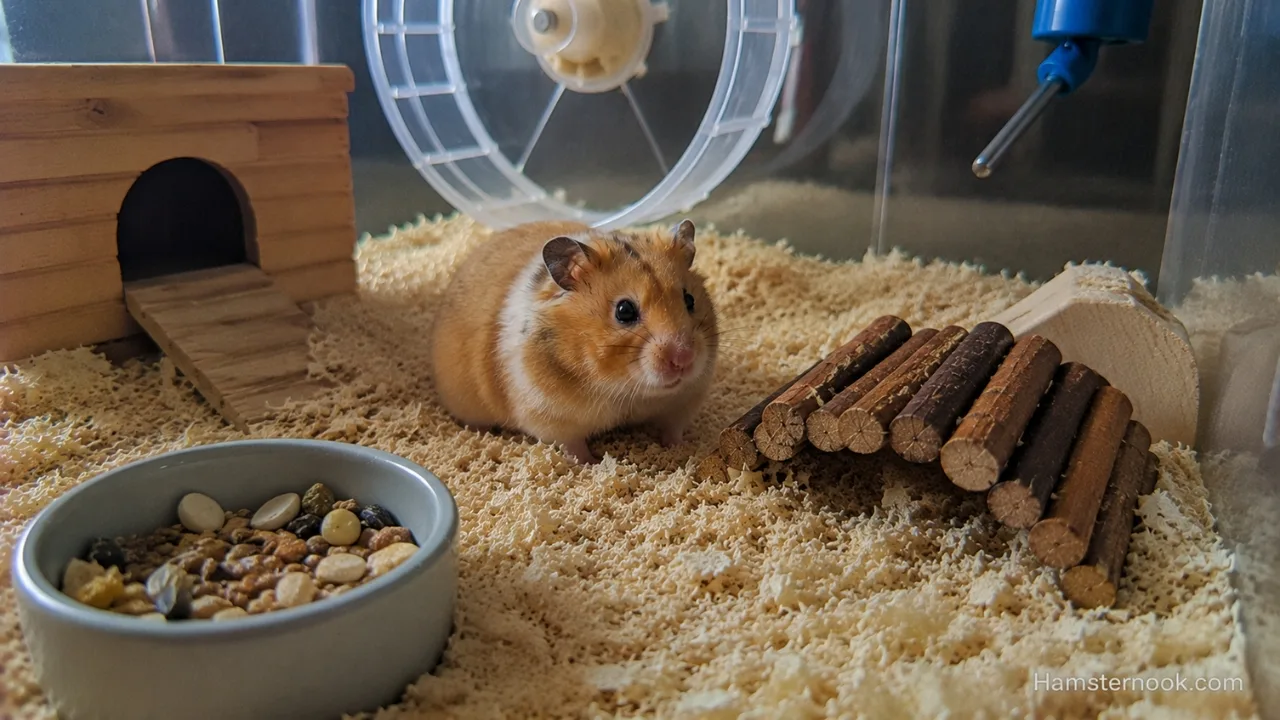
If food is always available in exactly the same bowl, your hamster has very little opportunity to explore or search for it.
Instead of relying entirely on a food dish, many owners safely increase enrichment by scattering part of the daily food allowance throughout the enclosure or hiding it inside forage-safe toys.
This encourages natural searching behavior without changing the hamster’s diet.
8. Chewing Unsuitable Objects
Hamsters naturally need to chew to help wear down their continuously growing teeth.
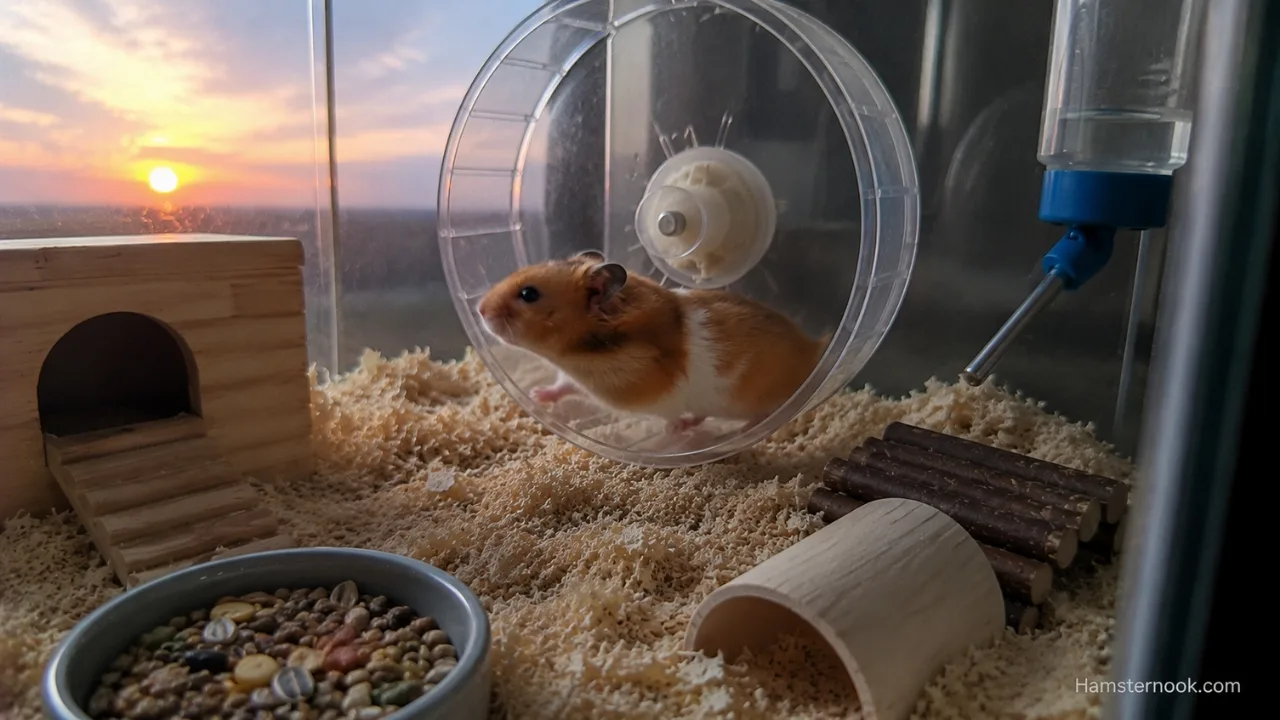
If appropriate chew items aren’t available, some hamsters begin chewing plastic accessories, cage corners, or other unsuitable objects.
Providing hamster-safe wooden chews, natural cork, apple wood, or similar safe chewing materials offers a more appropriate outlet.
Readers who want to understand chewing behavior should also read our Why Does My Hamster Chew Everything?, where we explain the subject in greater detail with practical tips and beginner-friendly guidance.
9. Losing Interest in Exploring
A curious hamster usually investigates changes within its environment.
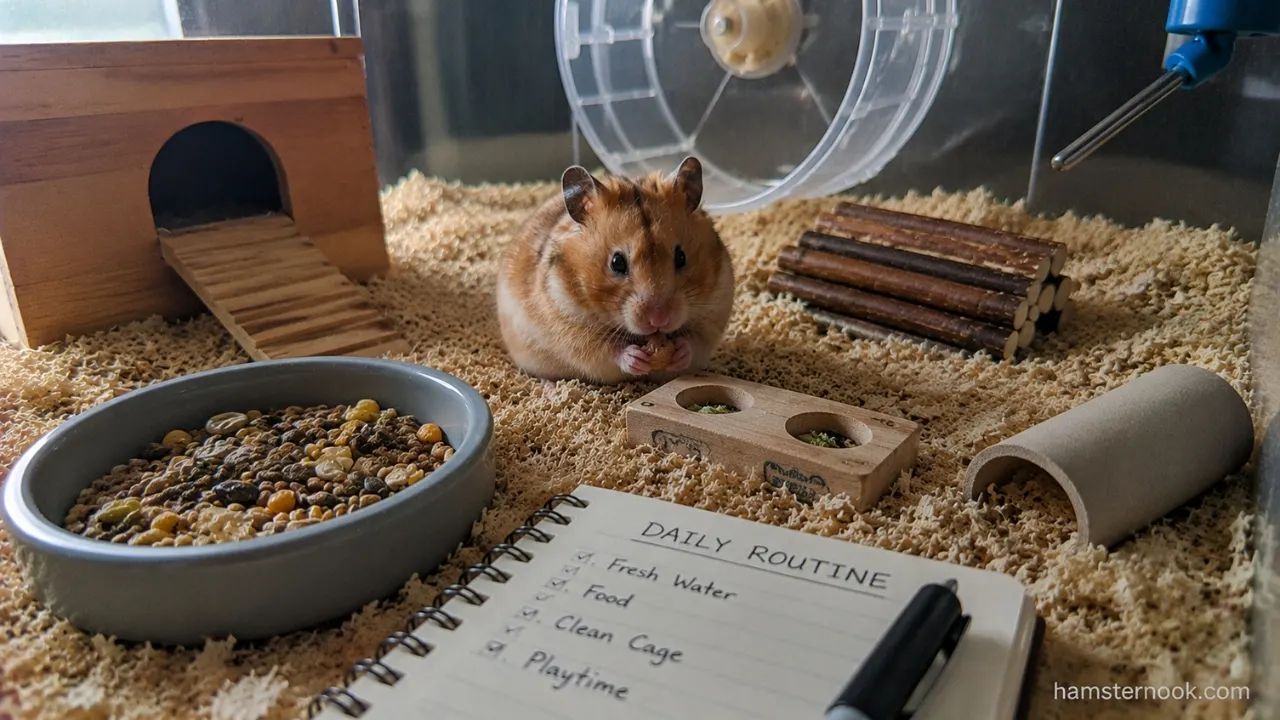
If your hamster immediately returns to the same corner every night and ignores tunnels, hides, bridges, and other accessories, the enclosure may have become too predictable.
Rotating a few enrichment items occasionally—not replacing the entire setup—can help create novelty while still allowing your hamster to recognize its home.
Avoid rearranging the habitat too often, as frequent major changes may cause unnecessary stress.
10. Becoming Less Active Overall
A hamster that suddenly becomes much less active should never automatically be assumed to be bored.

Reduced activity may be related to age, stress, environmental conditions, or illness.
If decreased activity occurs alongside poor appetite, weight loss, breathing changes, or other unusual symptoms, veterinary advice is recommended.
However, if your hamster is healthy and simply lacks opportunities to interact with its environment, improving enrichment may encourage more natural activity.
Boredom or Illness? Look at the Whole Picture
A hamster that simply has too little enrichment may still eat normally, maintain its weight, breathe normally, and show interest in its surroundings at other times. A sudden or persistent drop in activity is different, especially when it occurs with poor appetite, weight loss, breathing changes, difficulty walking, or other physical symptoms.
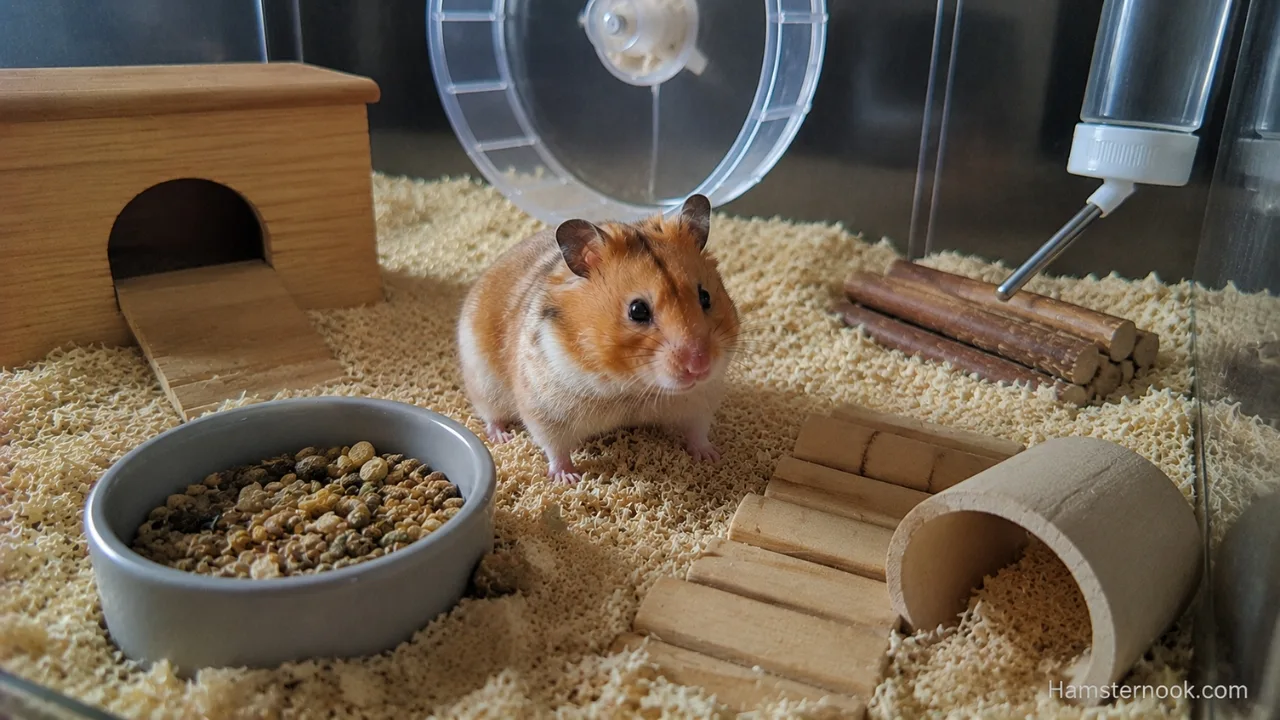
Easy Ways to Add More Enrichment
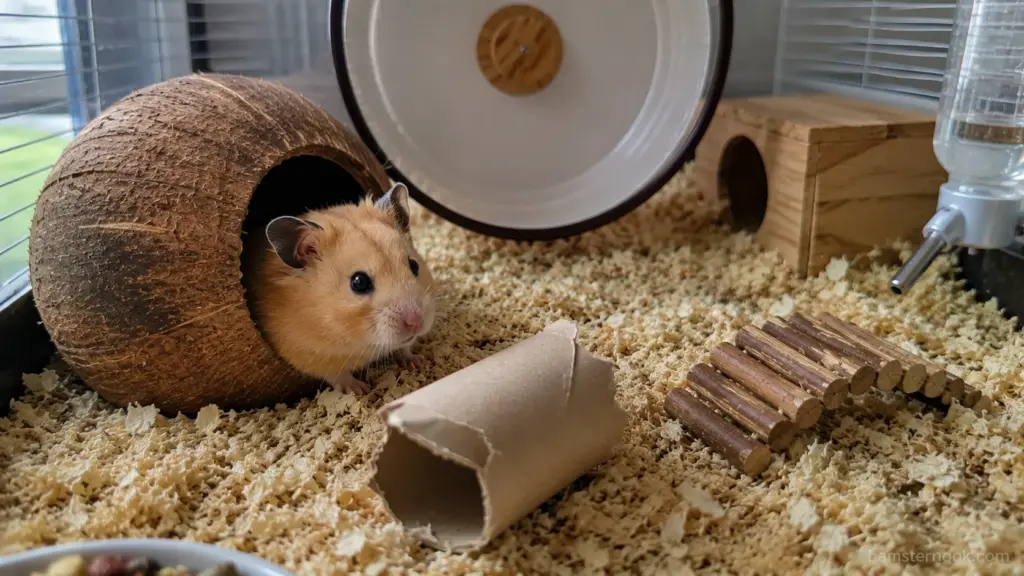
You don’t need expensive accessories to make your hamster’s enclosure more interesting.
Simple enrichment ideas include:
- Scatter part of the daily food for foraging.
- Provide deep bedding for burrowing.
- Add cork tunnels or cardboard tubes.
- Rotate chew toys occasionally.
- Offer multiple hideouts.
- Create different substrate textures where appropriate.
- Rearrange a small section of the enclosure occasionally instead of changing everything at once.
- Introduce safe branches or climbing structures suitable for your hamster species.
Small, thoughtful changes that encourage natural behaviors are usually more valuable than filling the enclosure with numerous new accessories.
Readers looking for more activity ideas should also read our Best Hamster Toys for Mental Stimulation & Exercise, where we explain the subject in greater detail with practical tips and beginner-friendly guidance.
Not Every Quiet Hamster Is Bored
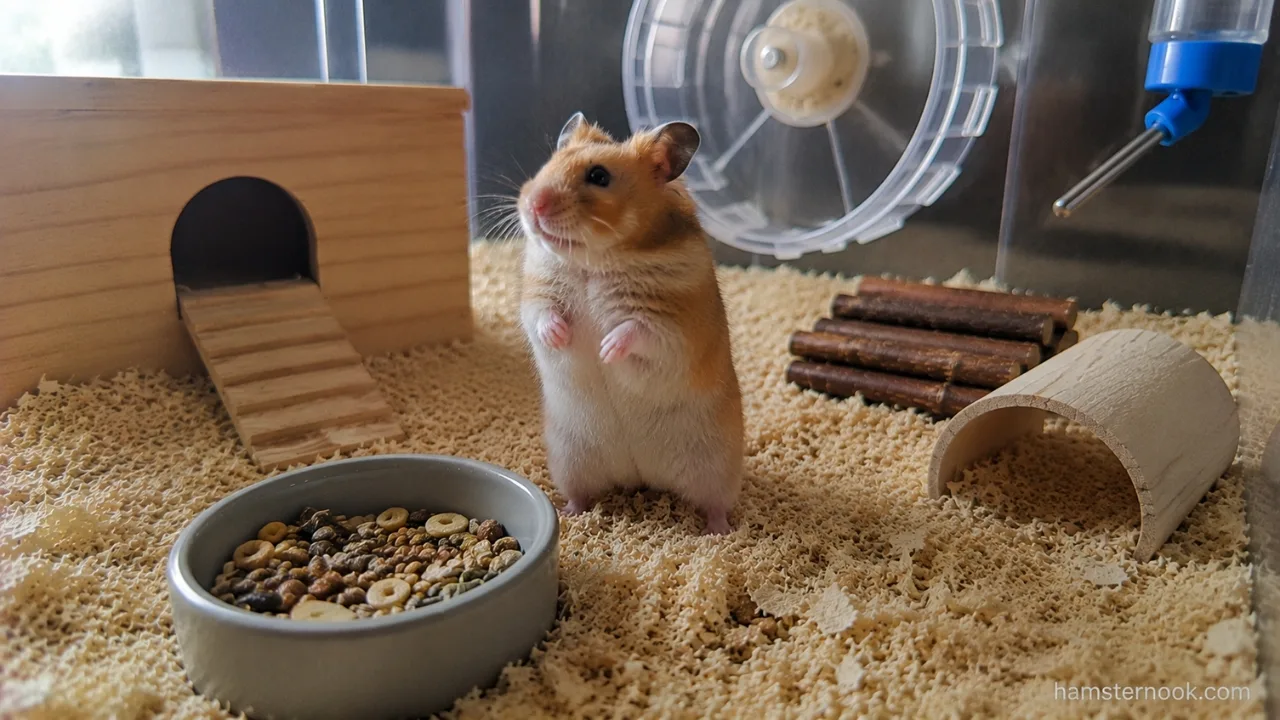
Some hamsters naturally spend more time resting inside their burrows than others. Personality, age, and species all influence activity levels. Rather than comparing your hamster with videos or photos online, focus on whether it remains curious and active during its normal waking hours.
Common Mistakes Owners Make
When trying to prevent boredom, owners sometimes create new problems.
Avoid these common mistakes:
- Rearranging the entire cage every week
- Buying too many toys without enough floor space
- Using unsafe DIY materials
- Removing familiar nesting areas
- Assuming every unusual behavior is caused by boredom
- Forgetting that digging and foraging are often more valuable than decorative accessories
The best enrichment encourages natural behaviors rather than simply adding more objects. Changes should also be introduced thoughtfully, because repeatedly redesigning the entire enclosure can create unnecessary stress rather than useful stimulation.
What You Should Do
If you think your hamster is becoming bored:
- Check that the enclosure is large enough.
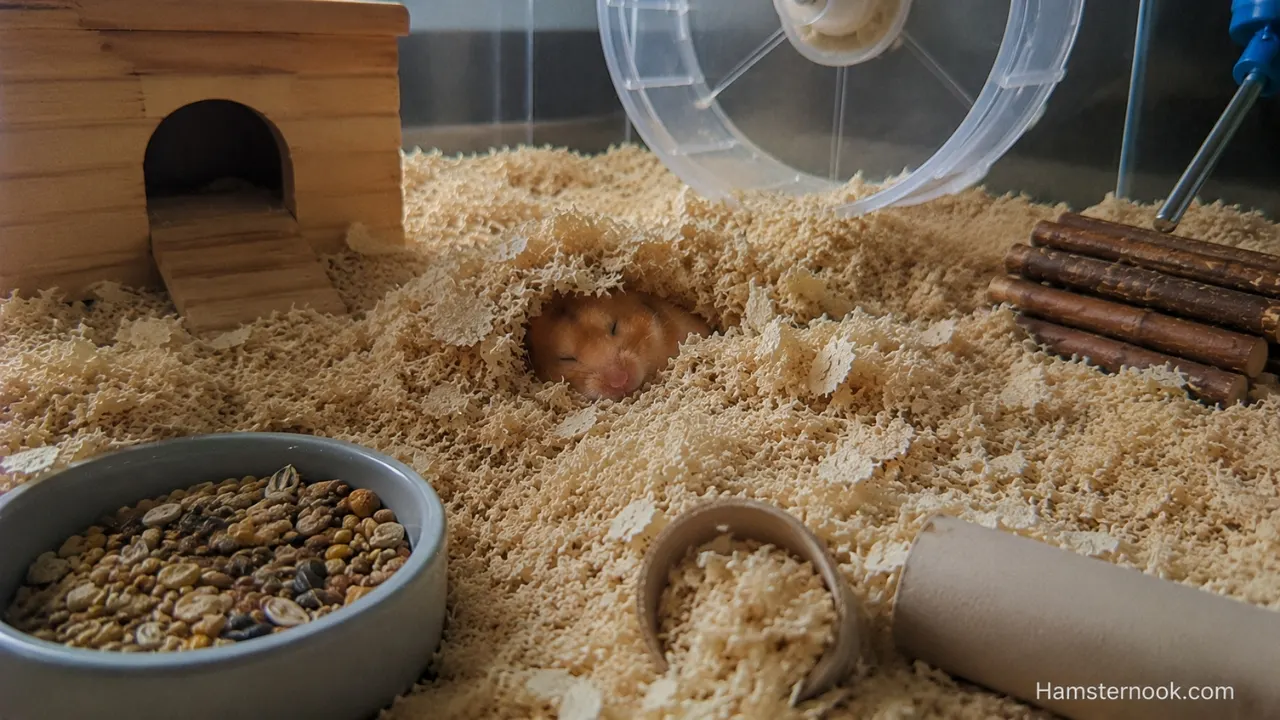
- Make sure bedding is deep enough for burrowing.
- Provide a properly sized exercise wheel.
- Offer safe chew toys.
- Introduce simple foraging opportunities.
- Add tunnels and hideouts.
- Observe how your hamster responds over the following days.
Remember that every hamster has its own personality. Some enjoy exploring constantly, while others prefer spending more time inside their burrows.
Give New Enrichment Time
Don’t expect your hamster to use every new toy or hideout immediately. Many hamsters prefer to inspect unfamiliar objects carefully before interacting with them. Leaving safe enrichment items in place for several days often produces better results than replacing them too quickly.
When Should You Be Concerned?
Boredom itself is not considered a medical condition.
However, if unusual behavior is accompanied by:
- Weight loss
- Poor appetite
- Hair loss
- Persistent scratching
- Breathing problems
- Difficulty walking
- Unusual swelling
- Bleeding
- Sudden lethargy
your hamster should be examined by an experienced exotic animal veterinarian.
Changes in behavior are important, but they should always be considered alongside your hamster’s appetite, activity level, breathing, and overall physical condition.
Conclusion
Hamsters are naturally curious animals that thrive when they can dig, forage, chew, explore, and investigate their surroundings. While an exercise wheel is an important part of their habitat, it shouldn’t be the only source of stimulation.
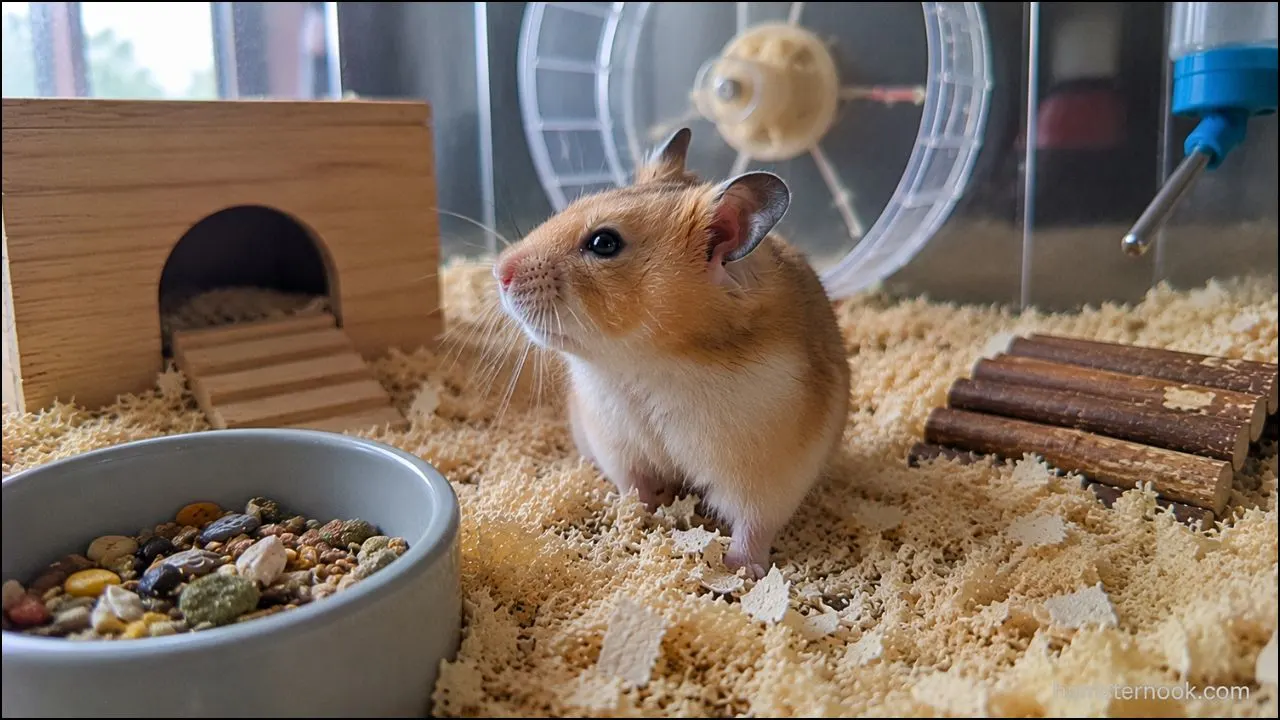
Paying attention to your hamster’s daily habits makes it easier to notice when something in the environment needs to change. Simple enrichment that encourages digging, exploring, chewing, and foraging can make everyday life more interesting while supporting your hamster’s overall well-being.
The goal isn’t to keep your hamster constantly entertained—it’s to create an environment where it can behave like a hamster.
Frequently Asked Questions
Do hamsters really get bored?
Yes. Hamsters benefit from environments that allow them to dig, forage, chew, explore, and exercise. A lack of opportunities for these natural behaviors may lead to repetitive or less varied behavior.
Is running on a wheel all night a sign of boredom?
Not necessarily. Hamsters are naturally active at night, and long periods of wheel running are often completely normal. Consider the overall variety of your hamster’s behavior rather than wheel use alone.

How often should I change my hamster’s toys?
Instead of replacing everything at once, rotate a few enrichment items occasionally while keeping familiar nesting and hiding areas intact.
What’s the best enrichment for a hamster?
Deep bedding for burrowing, safe chew toys, foraging opportunities, tunnels, hideouts, and a properly sized exercise wheel all encourage natural behaviors.
Can boredom make a hamster aggressive?
Some hamsters may become frustrated in an unstimulating environment, but aggression can also result from fear, territorial behavior, pain, illness, or improper handling. It’s important to consider the overall situation rather than assuming boredom is the sole cause.
References
The information in this guide is based on trusted veterinary and animal welfare resources, including:
- RSPCA – Keeping Hamsters as Pets
- Blue Cross – Hamster Care Guide
- MSD Veterinary Manual – Providing a Home for a Hamster
- MSD Veterinary Manual – Routine Health Care of Hamsters
- NC3Rs – Housing and Husbandry: Hamster

Narayan Kumar is the founder and author of HamsterNook. He creates practical, research-based hamster care guides covering hamster behavior, nutrition, cage setup, enrichment, health, and everyday care. His goal is to help hamster owners make informed decisions and provide safer, healthier lives for their pets through clear, beginner-friendly information based on trusted animal care resources.