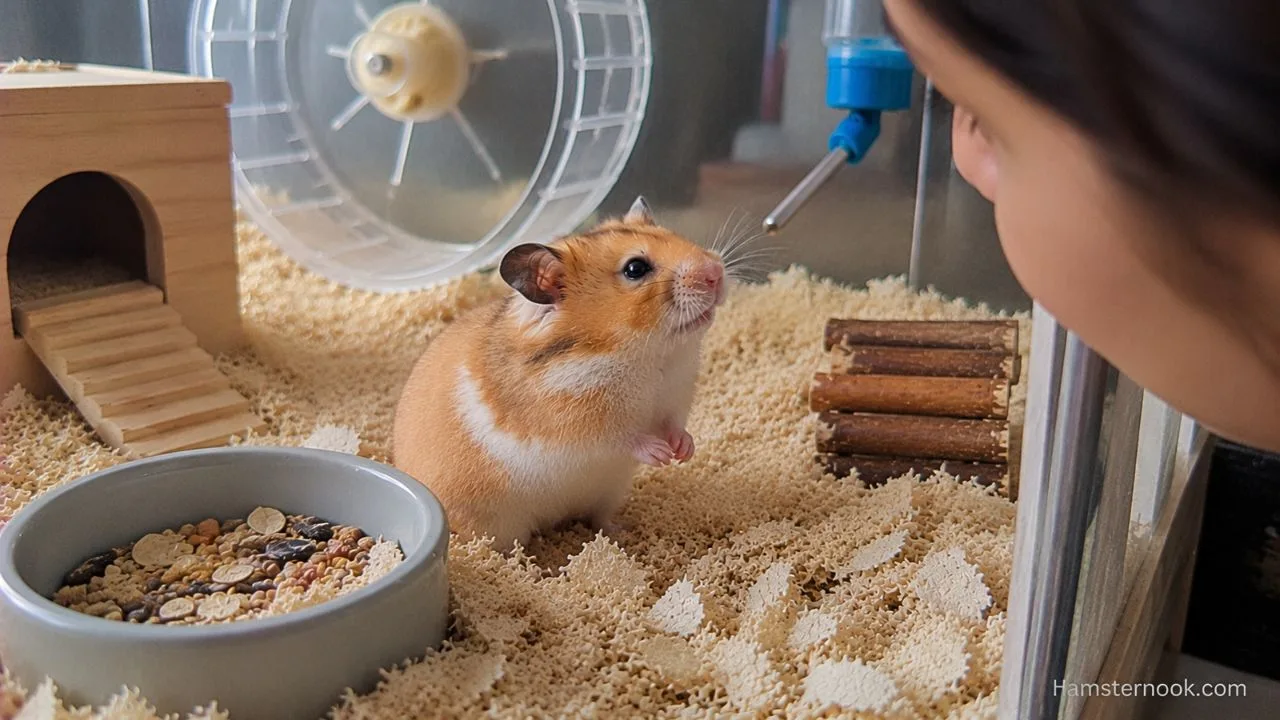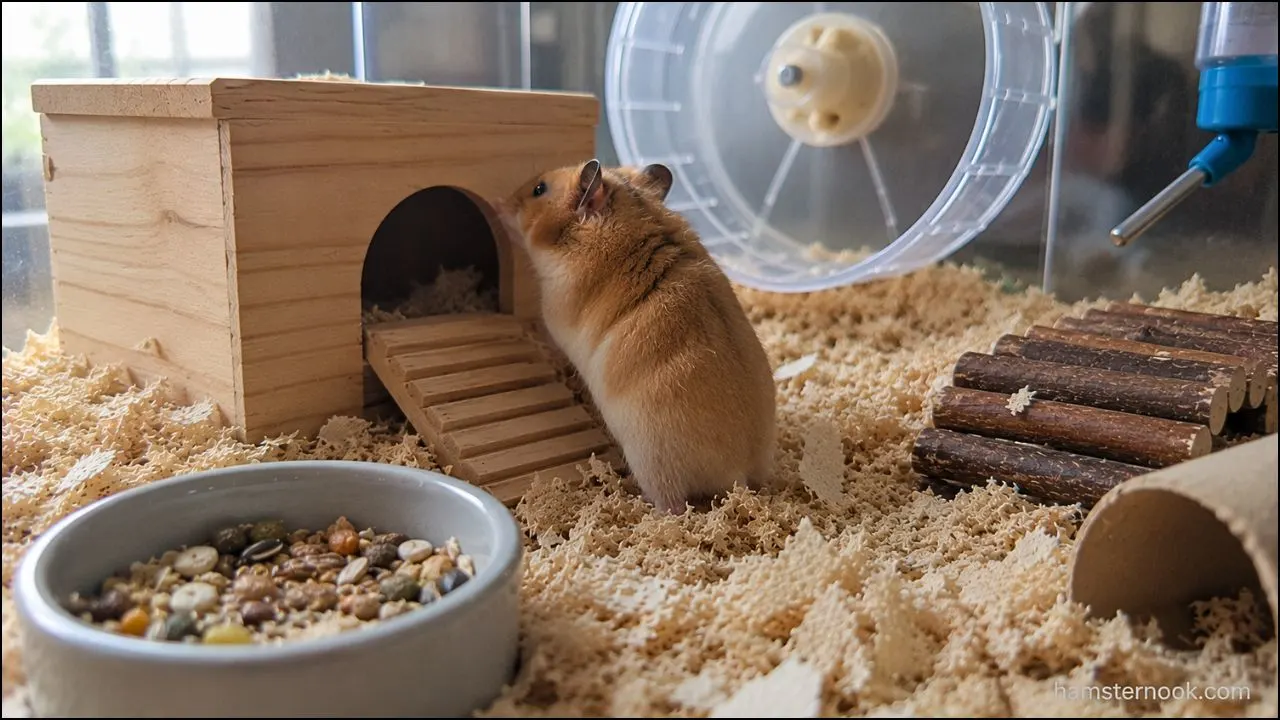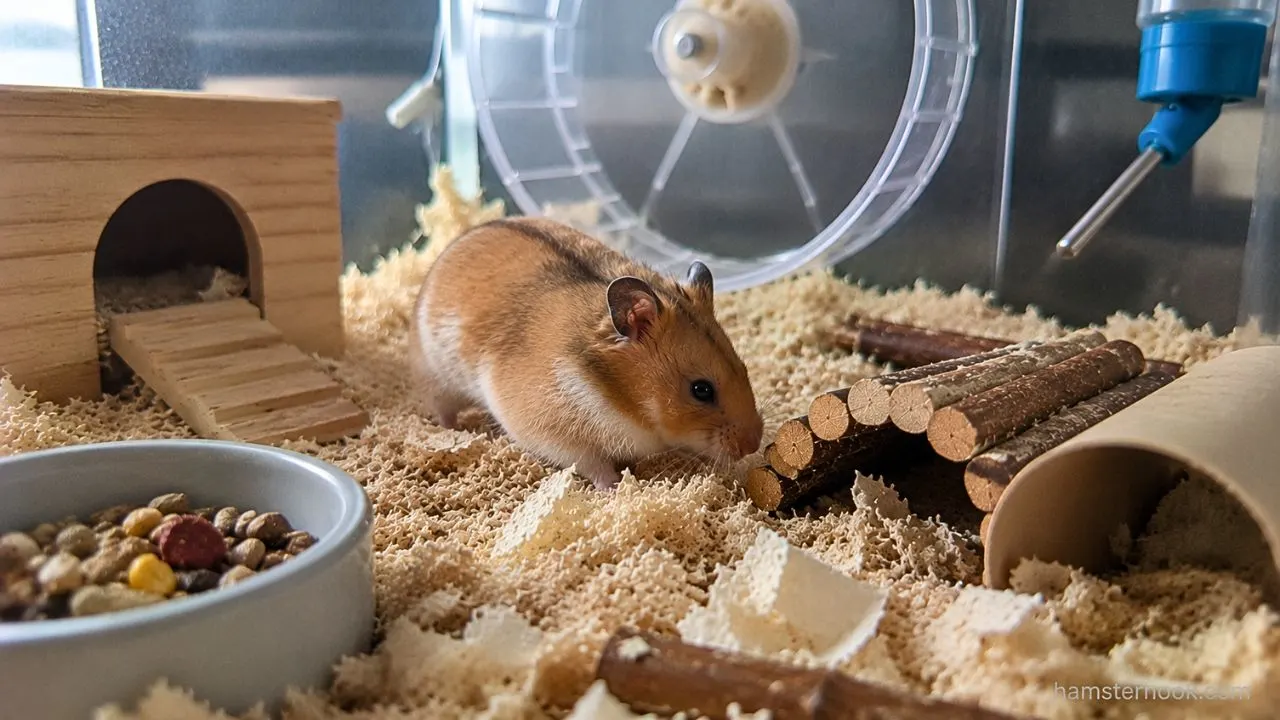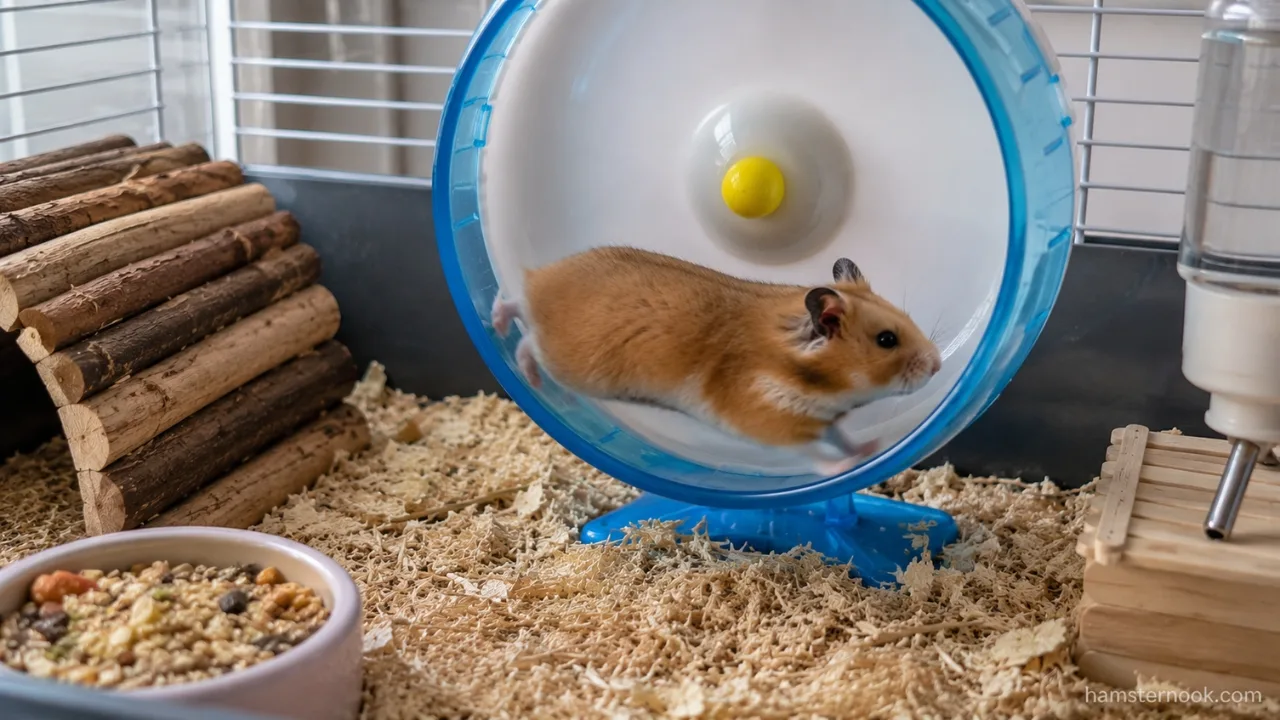
Many hamster owners are surprised by just how much their pet uses its wheel. What sounds like endless running at 2 a.m. can seem excessive, especially if you’re new to hamster care. In reality, most hamsters are naturally active animals that spend a large part of the night exploring and exercising.
The challenge is knowing the difference between healthy activity and behavior that may signal boredom, stress, or an unsuitable enclosure. For many first-time owners, this behavior can seem confusing, excessive, or even unhealthy.
The truth is that heavy wheel running is usually completely normal for hamsters. In fact, wild hamsters naturally travel long distances every night while searching for food, exploring territory, and staying active. A wheel gives pet hamsters a safe way to release that instinct indoors.
However, there are times when constant wheel running may signal boredom, stress, improper cage setup, or other issues that owners should not ignore.
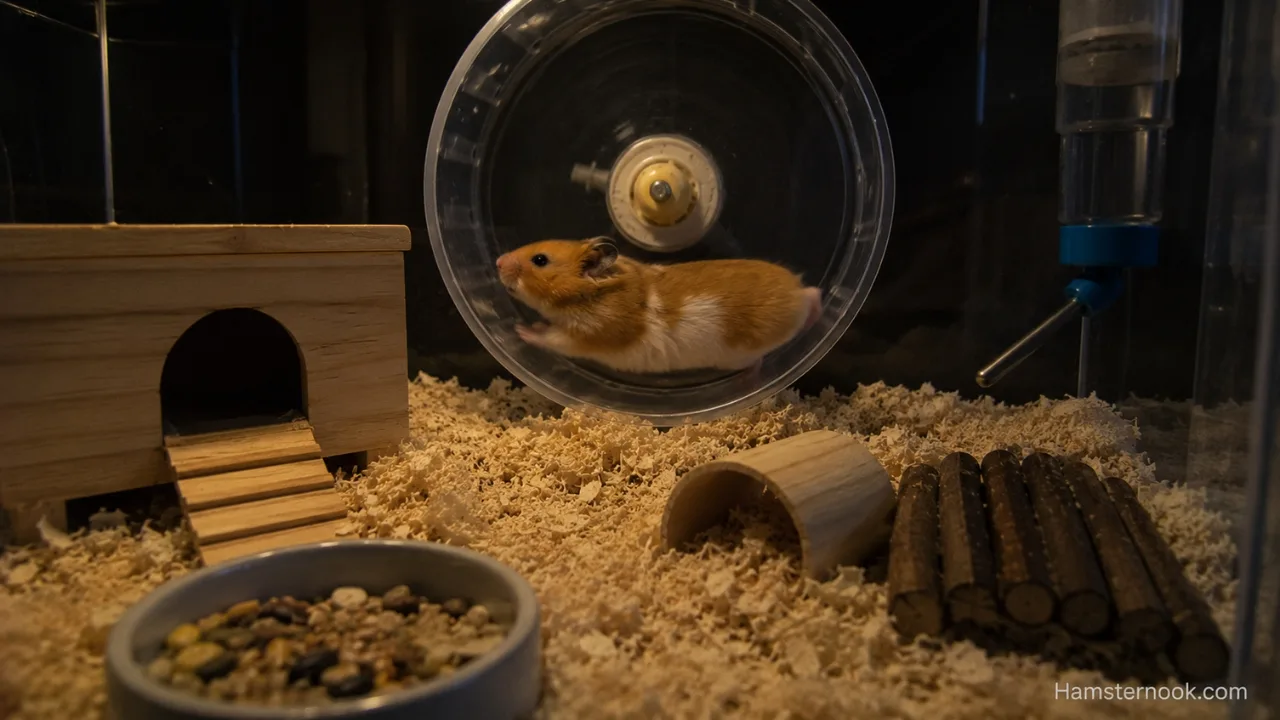
This guide explains why hamsters run so much, how to tell normal behavior from unhealthy behavior, and what you can do to keep your hamster physically and mentally healthy.
Why Do Hamsters Love Running Wheels So Much?
Hamsters are naturally active animals, especially during the evening and nighttime hours.
In the wild, hamsters may travel several miles in a single night while looking for food and exploring their surroundings. Pet hamsters still carry these same instincts even though they live in cages.
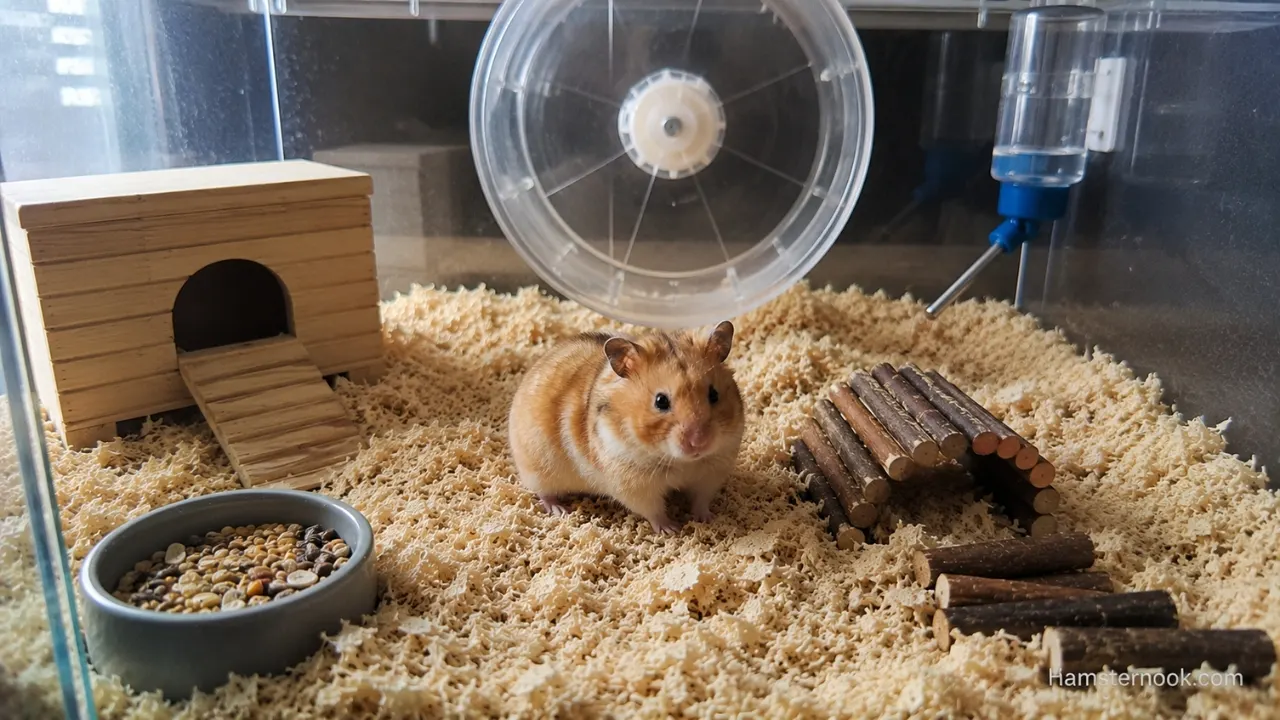
A hamster wheel gives pet hamsters a safe outlet for their natural nighttime energy and instincts:
- Exercise
- Mental stimulation
- Natural exploration instincts
- Stress relief
- Energy release
For most healthy hamsters, wheel running is simply part of normal daily behavior.

How Much Wheel Running Is Normal for a Hamster?
Many owners underestimate how active hamsters actually are.
Healthy hamsters often run for several hours throughout the night. Some may stop and start repeatedly, while others run in long sessions.
Why Some Hamsters Barely Use Their Wheel
Not every hamster becomes a marathon runner.

Some hamsters naturally prefer digging, foraging, climbing, or exploring over long wheel sessions. Age, personality, species, health, and cage enrichment can all influence wheel use.
A hamster that uses its wheel occasionally but remains active, alert, and healthy is not necessarily a cause for concern.
Wheel use can also change from one hamster to another and from one period to another. If your hamster suddenly stops using a wheel it previously used regularly, that change is worth paying attention to. Our Why Did My Hamster Stop Using the Wheel? guide explains common reasons for a sudden change in wheel use.
Some hamsters also become more active after small changes to their enclosure, such as adding deeper bedding, new tunnels, or extra hiding places. Looking at your hamster’s overall routine is much more helpful than judging its health by wheel use alone.

If your hamster has suddenly become much less active than usual, compare its behavior with the warning signs covered in Sick Hamster Signs Every Owner Should Know.
Owners should focus on overall behavior rather than comparing their hamster to others.
Average Wheel Activity by Hamster Type
| Hamster Breed | Typical Activity Level | Common Wheel Habits |
|---|---|---|
| Syrian Hamster | Moderate to high | Long nighttime running sessions |
| Roborovski Hamster | Extremely high | Fast, frequent running |
| Campbell’s Dwarf | High | Short bursts throughout the night |
| Winter White | Moderate | Active mostly during evening hours |
| Chinese Hamster | Moderate | Steady but less frantic running |
Roborovski hamsters are especially known for intense wheel activity due to their naturally energetic personalities.
Wheel activity varies based on age, cage size, enrichment, personality, and overall hamster health.
Signs Your Hamster’s Wheel Running Is Completely Normal
In most cases, frequent wheel use is actually a good sign.
Healthy wheel behavior usually includes:
- Running mostly at night
- Taking breaks for eating or grooming
- Maintaining a healthy weight
- Showing curiosity and normal behavior
- Using other cage enrichment too
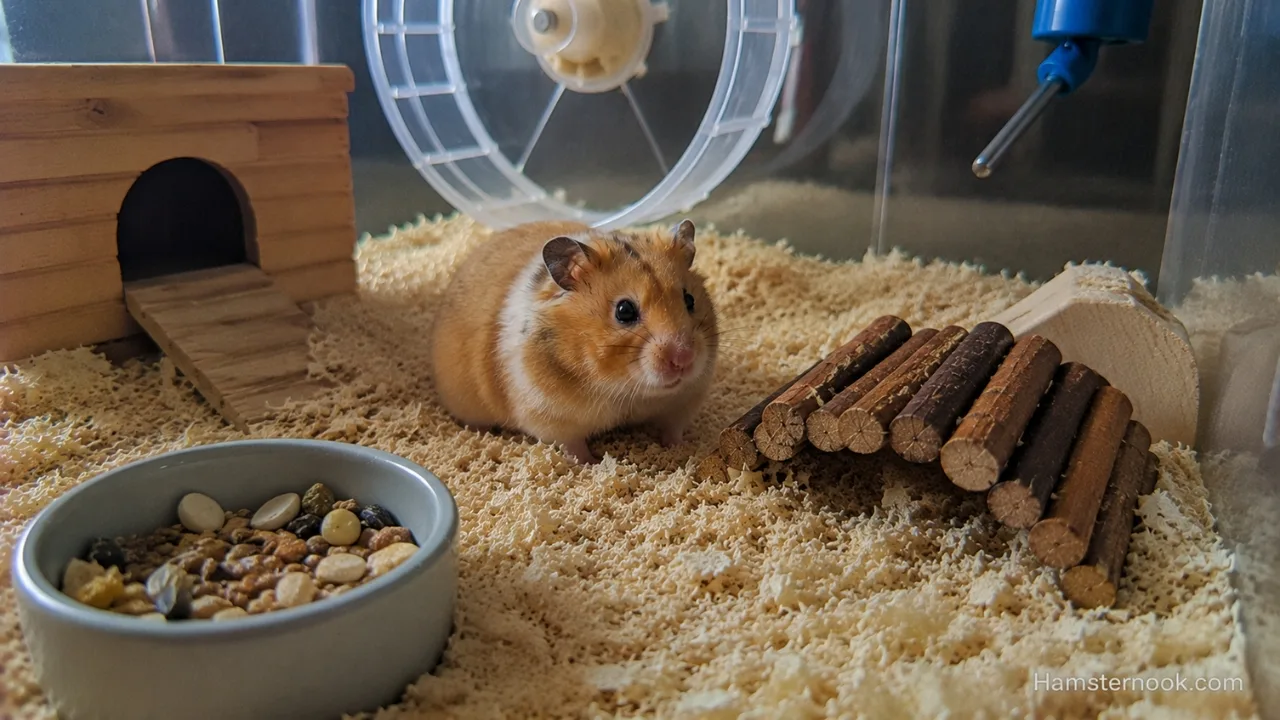
A hamster that runs often but still eats, sleeps, explores, and behaves normally is usually healthy.
When Excessive Wheel Running May Become a Problem
Although wheel running is natural, nonstop or obsessive behavior can sometimes indicate an issue.
Owners should pay attention to behavior patterns rather than focusing only on total running time.
A better way to judge whether wheel running is excessive is to look at the whole pattern rather than a specific number of hours. Running for several hours can be normal if your hamster also eats, drinks, grooms, explores, sleeps normally, and uses other parts of the enclosure. Concern is greater when the running becomes frantic or repetitive and happens alongside weight loss, injuries, reduced exploration, or other sudden behavior changes.
Boredom Can Trigger Obsessive Wheel Running
Hamsters living in small or poorly enriched cages may rely too heavily on wheel running for stimulation.
Hamsters need more than just food and a wheel. Without enough enrichment, they may develop repetitive behaviors. A poor cage setup can increase stress-related behaviors in hamsters.

Common boredom signs include:
- Constant wheel running
- Bar biting
- Climbing repeatedly
- Digging at corners
- Restlessness
Adding tunnels, hides, chew toys, and deep bedding often helps reduce unhealthy repetitive activity.
If your hamster spends most of its time running and very little time exploring, our guide to Best Hamster Cage Setup for Beginners can help you create a more enriching environment.
Scatter feeding, cardboard enrichment, and rotating cage accessories can also provide mental stimulation that encourages a wider range of natural behaviors beyond wheel use.
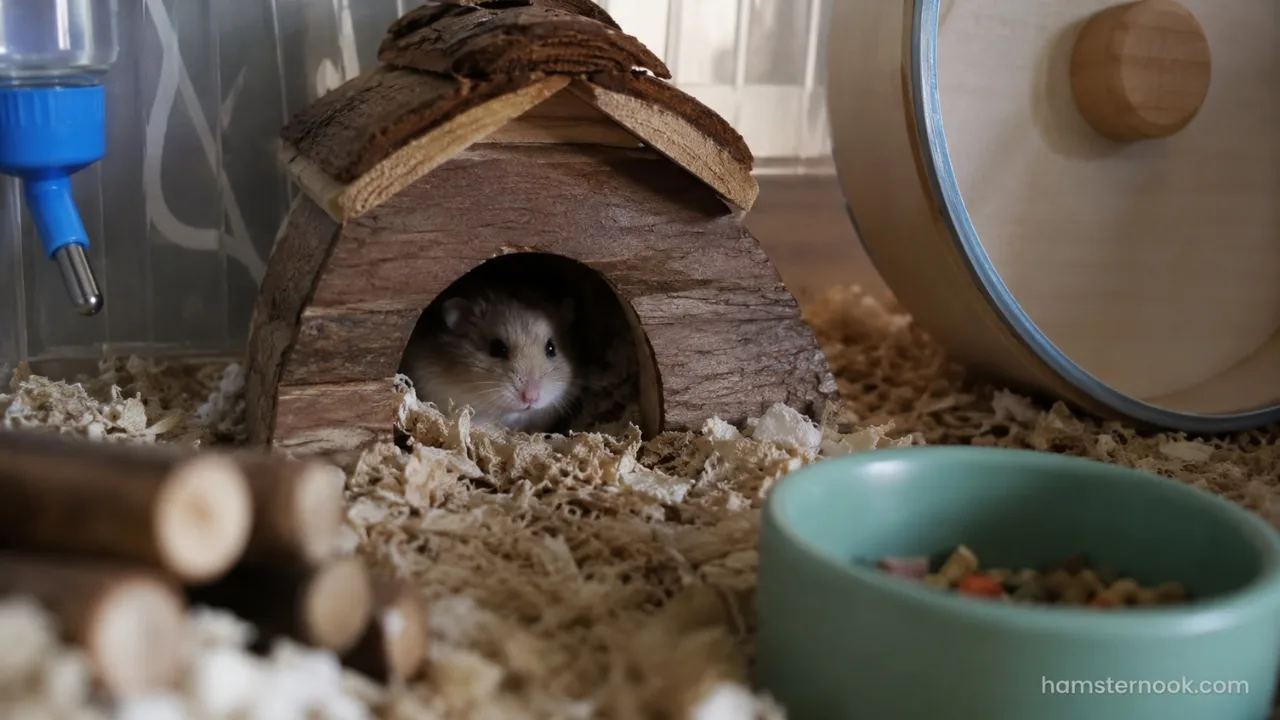
Stress and Anxiety May Increase Running
Stress can sometimes cause frantic or compulsive wheel use.
Possible stress triggers include:
- Loud noises
- Bright lights at night
- Small cages
- Lack of hiding spaces
- Frequent handling
- Other pets nearby
Hamsters feel safest in quiet environments with proper hiding spots and minimal stress.
If your hamster’s wheel running has become frantic or repetitive, 5 Warning Signs Your Hamster May Be Stressed explains the behavioral changes that may indicate stress rather than healthy exercise.
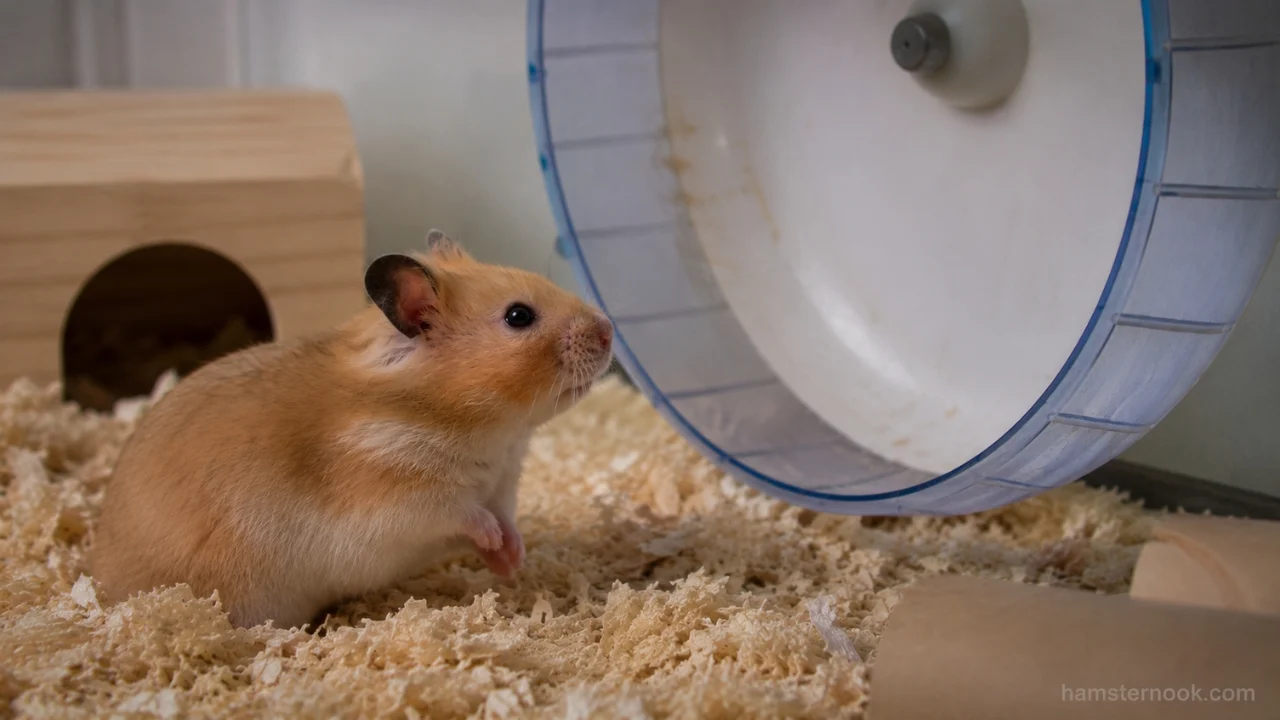
Incorrect Wheel Size Can Cause Problems
A wheel that is too small may force the hamster’s back into an unnatural curve.
Over time, this can lead to discomfort or spinal stress.
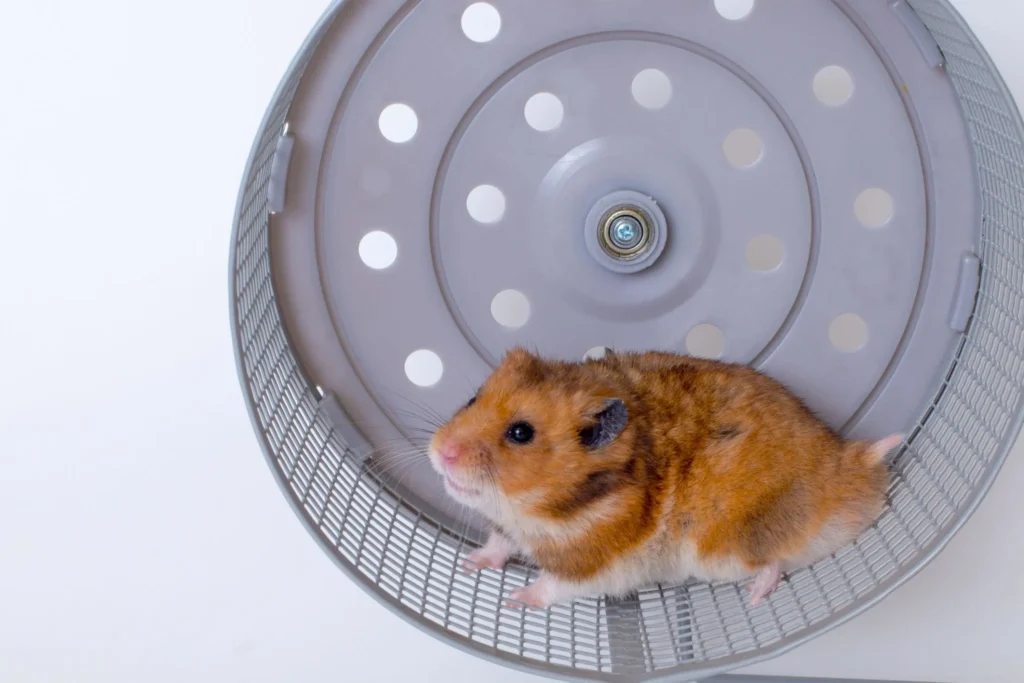
When checking the wheel, watch your hamster while it is actually running rather than judging the size only by looking at the wheel. Your hamster should be able to run without its back noticeably bending into a strong curve, and the wheel should remain stable and spin smoothly without catching or wobbling.
Check Your Hamster’s Feet Regularly
While wheels are generally very safe when sized correctly, owners should occasionally inspect their hamster’s feet.
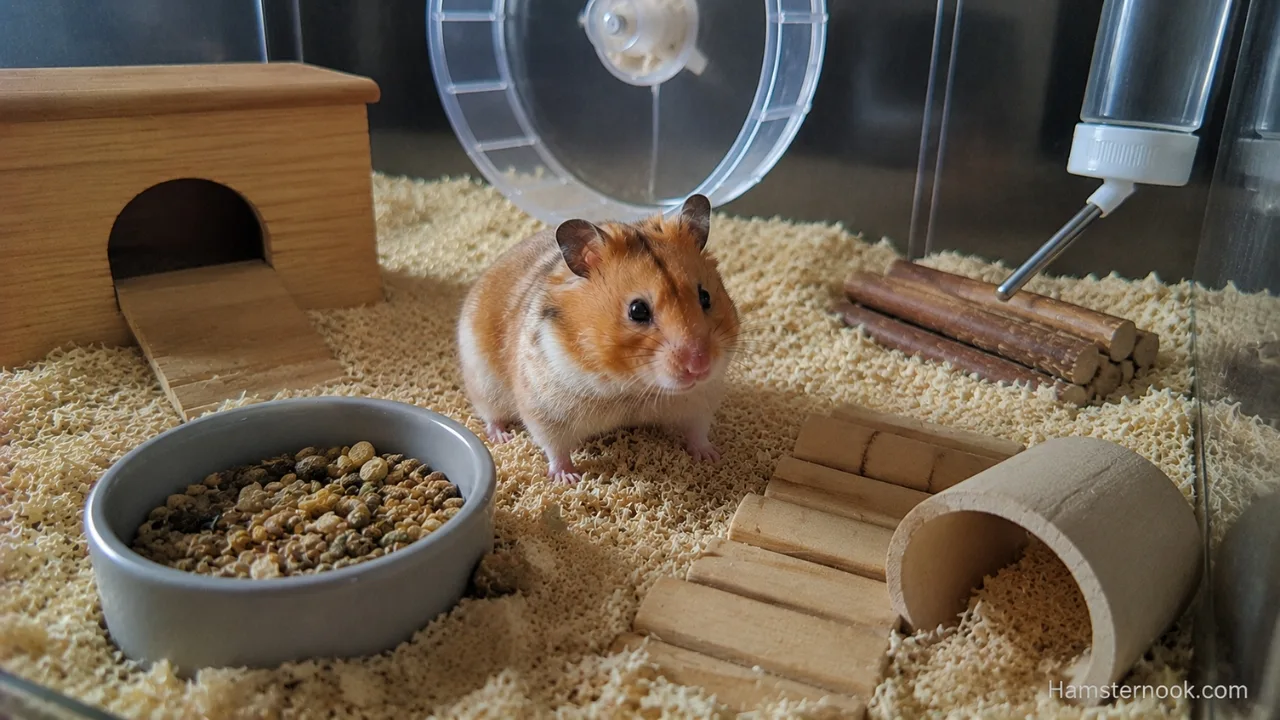
Watch for:
- Redness
- Swelling
- Small cuts
- Limping
- Reluctance to use the wheel
Foot irritation is more likely when wheels have rough surfaces, gaps, sharp edges, or poor construction.
A solid, smooth running surface is usually the safest choice.
Safe vs Unsafe Hamster Wheels
| Feature | Safe Wheel | Unsafe Wheel |
|---|---|---|
| Surface | Solid running surface | Wire or mesh surface |
| Size for Syrian | 10–12 inches | Under 8 inches |
| Size for Dwarf | 8–10 inches | Under 6 inches |
| Back Position | Straight while running | Curved or bent |
| Noise Level | Quiet and smooth | Loud or shaky |
Wire wheels are especially risky because tiny feet can become trapped and injured.
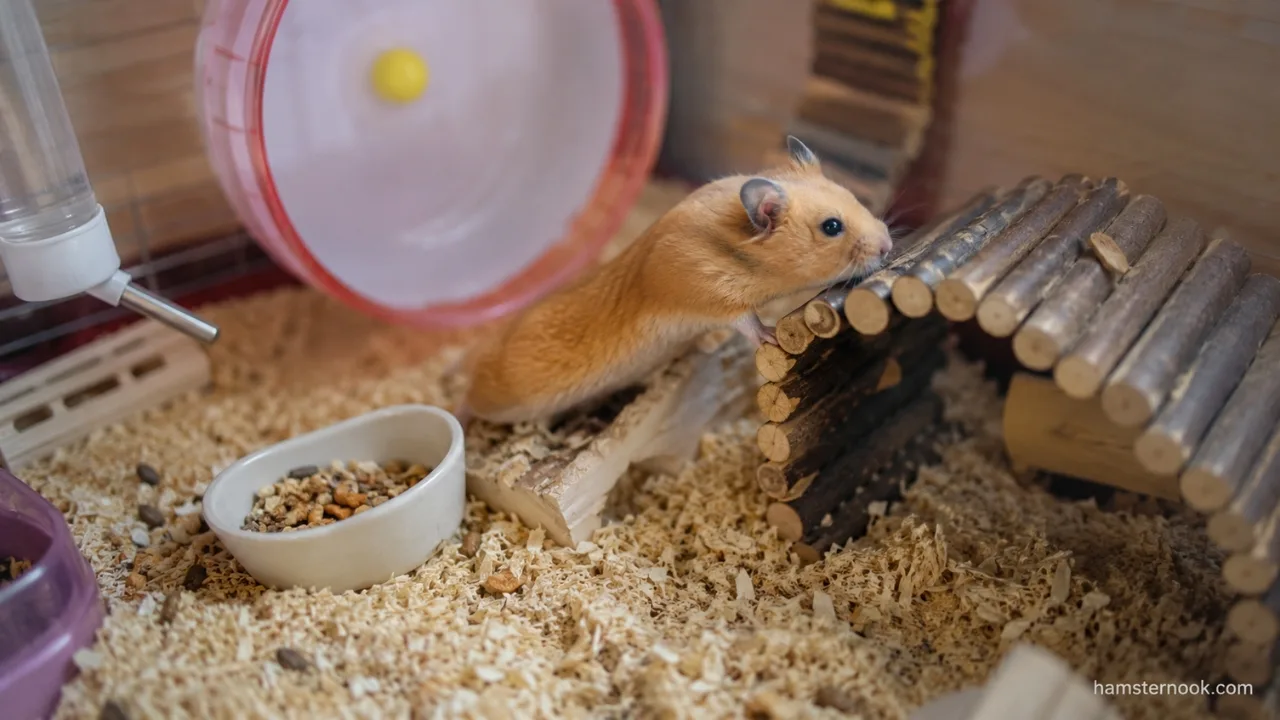
Why Some Hamsters Run for Hours Without Stopping
Hamsters have incredible endurance compared to their body size.
Owners who are surprised by how active their hamster is may also benefit from understanding Are Hamsters Nocturnal?
In nature, running long distances helps them:
- Search for food
- Avoid predators
- Explore territory
- Stay physically fit
Pet hamsters do not lose these instincts simply because food is available in a bowl.
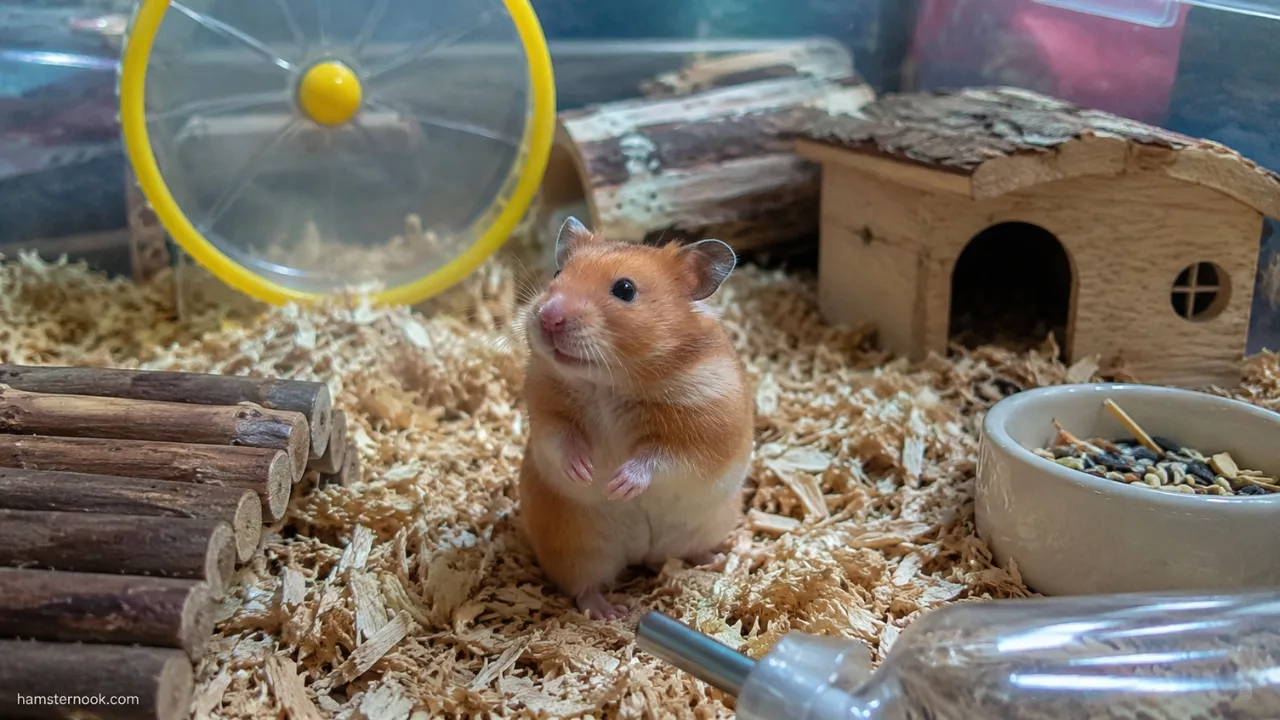
Exercise wheels help indoor hamsters safely express natural survival and exploration instincts.
Can Wheel Running Become an Addiction?
Very repetitive wheel use can sometimes be part of a broader pattern of stereotypic or stress-related behavior, particularly when a hamster has limited opportunities for digging, foraging, hiding, and exploring. Wheel running itself is not automatically harmful simply because it is frequent.
However, wheel use itself is not considered harmful when the hamster:
- Maintains healthy body condition
- Uses the cage normally
- Eats and drinks properly
- Sleeps regularly
- Shows no injuries
The key is balance.
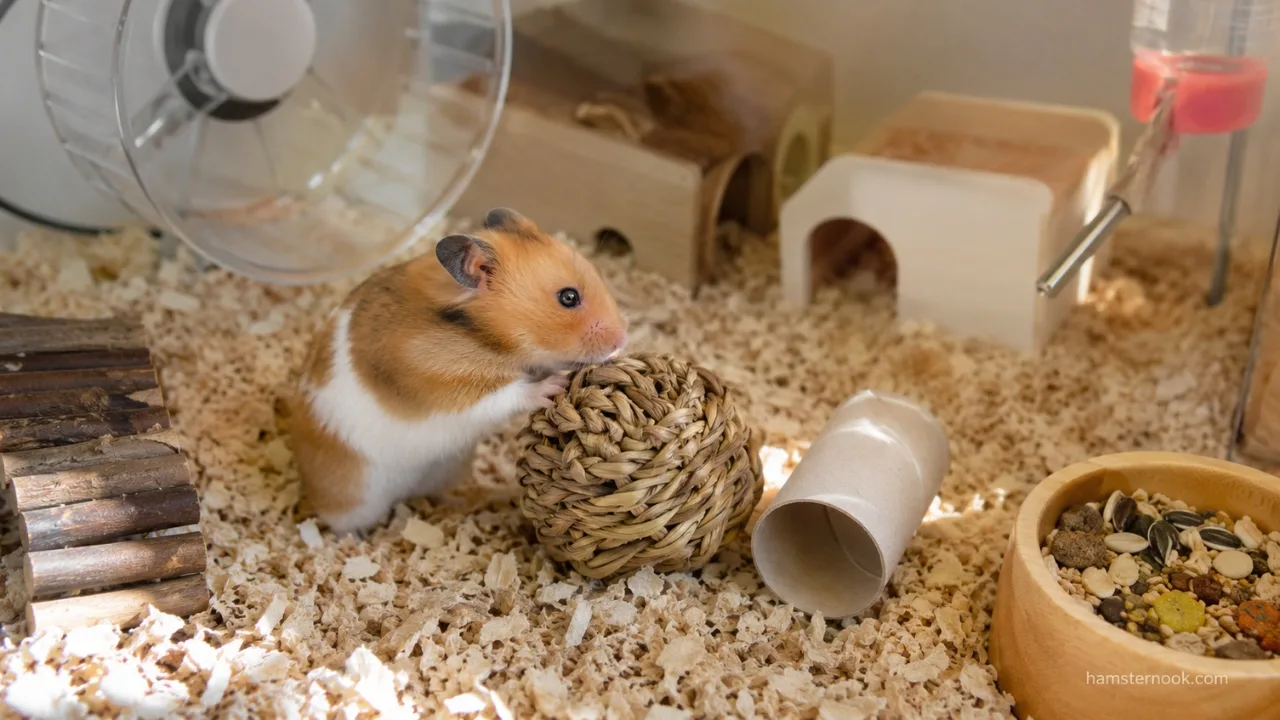
If you are unsure whether your hamster is simply active or becoming overly focused on the wheel, observe its routine for several nights. Check whether it takes normal breaks to eat, drink, groom, explore, and rest. Also inspect the wheel and enclosure for anything that could be causing discomfort or limiting other natural activities.
Wheel Placement Matters More Than Most Owners Realize
A poorly placed wheel can affect how often a hamster uses it.
For best results:
- Keep the wheel stable on a flat surface
- Avoid placing it directly beside food bowls
- Ensure there is enough space around it for easy access
- Check regularly for wobbling or obstruction from bedding
A wheel that rocks, sticks, or becomes buried in bedding may discourage normal exercise.
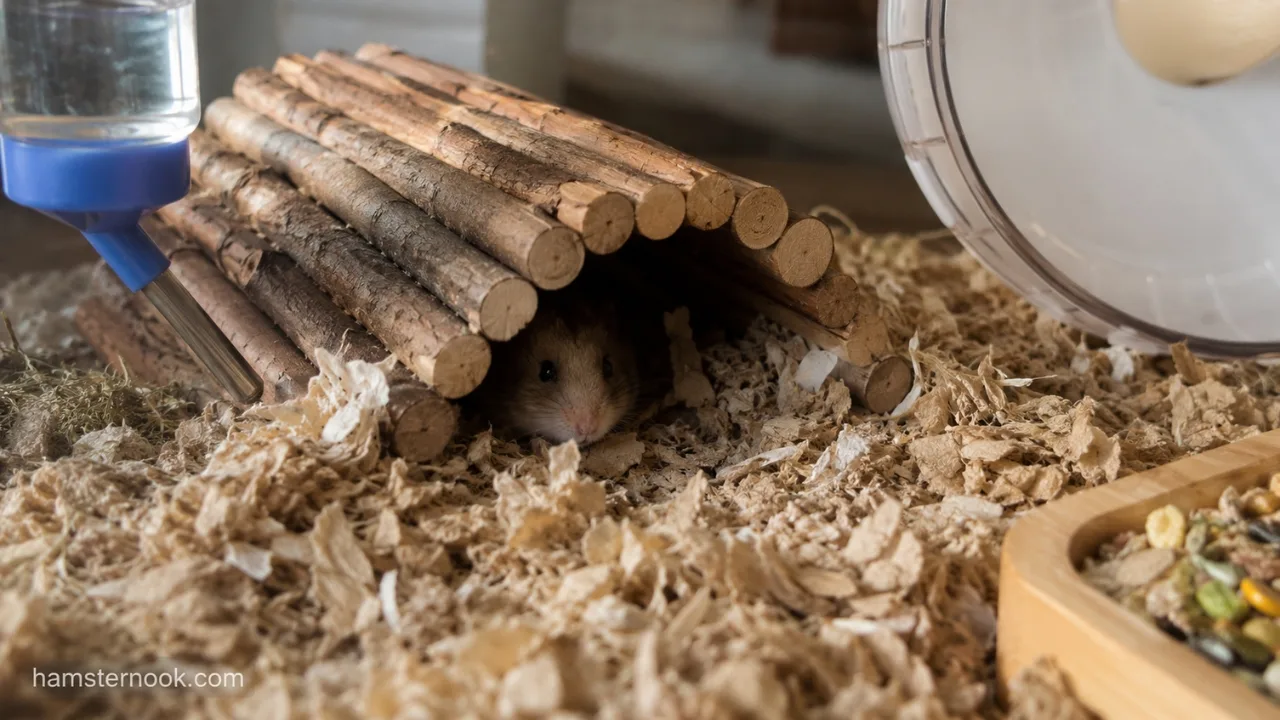
It’s also worth checking that the wheel can spin freely every few days. Bedding, food, or loose substrate can gradually build up around the base and reduce smooth movement without owners noticing.
Choosing an appropriate bedding depth also helps active hamsters express natural digging behavior instead of relying entirely on wheel exercise. Learn more in our guide to the Best Bedding for Hamsters.
Infographic: Common Reasons Hamsters Run on Wheels
| Reason | Healthy or Concerning? | What Owners Should Do |
|---|---|---|
| Natural exercise | Healthy | Allow normal activity |
| Energy release | Healthy | Provide proper wheel size |
| Boredom | Concerning | Add enrichment and space |
| Stress or anxiety | Concerning | Reduce environmental stress |
| Small cage frustration | Concerning | Upgrade enclosure |
| Nighttime instinct | Healthy | Completely normal behavior |
| Lack of enrichment variety | Concerning | Add tunnels, foraging opportunities, and hideouts |
How Cage Size Affects Wheel Running Behavior
Cage size has a major impact on hamster behavior.
Hamsters kept in cramped cages often become more frantic and repetitive because they cannot explore naturally.
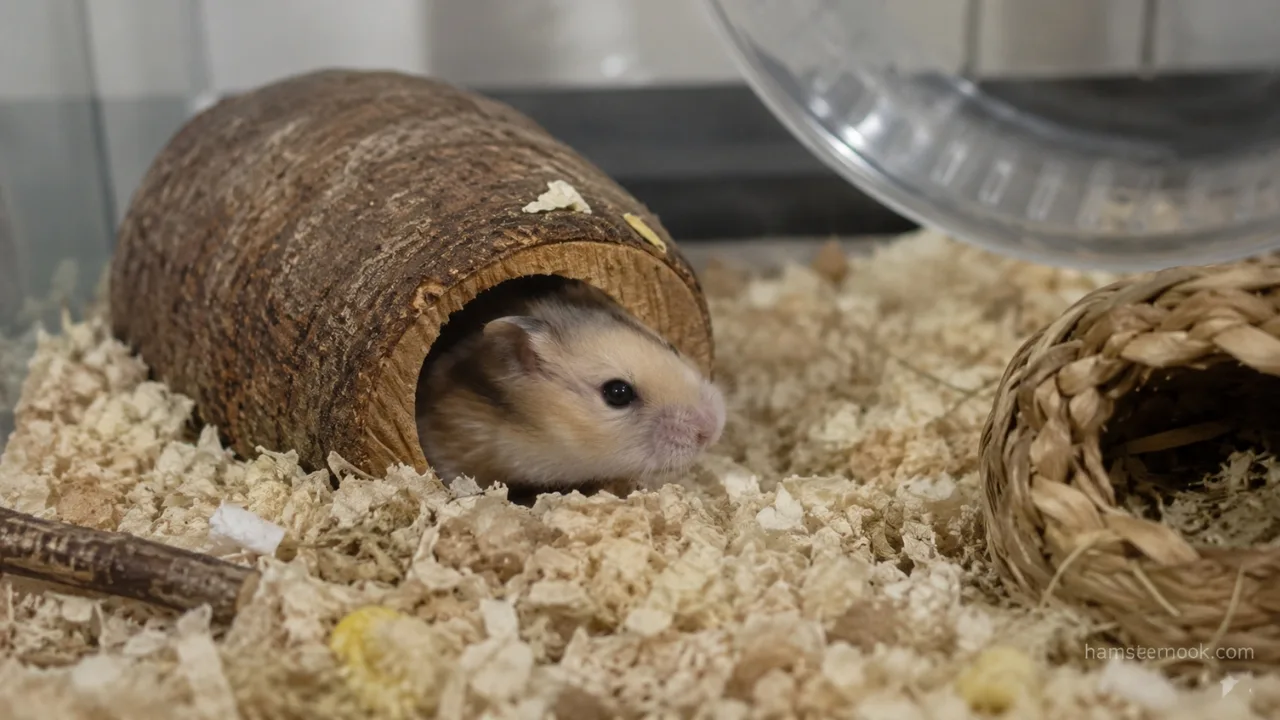
A larger enclosure allows:
- Digging
- Climbing
- Exploring
- Nest building
- Foraging
When hamsters have more enrichment options, wheel use often becomes healthier and more balanced.
Best Cage Setup for Active Hamsters
Highly active hamsters usually thrive with:
- Large floor space
- Deep bedding
- Multiple hideouts
- Tunnels
- Chew toys
- Sand baths
- Safe climbing items
- Proper wheel size
Enrichment helps prevent boredom-related stress behaviors.

Common Mistakes Owners Make
Many wheel-related problems are caused by enclosure setup rather than the wheel itself.
Common mistakes include:
- Buying a wheel that is too small
- Using wire or mesh wheels
- Removing the wheel at night
- Assuming all wheel running is unhealthy
- Providing a wheel but very little enrichment
- Ignoring signs of stress elsewhere in the enclosure
Looking at the hamster’s overall behavior usually provides a more accurate picture than focusing only on wheel use.
Should I Stop My Hamster From Running So Much?
Usually, no.
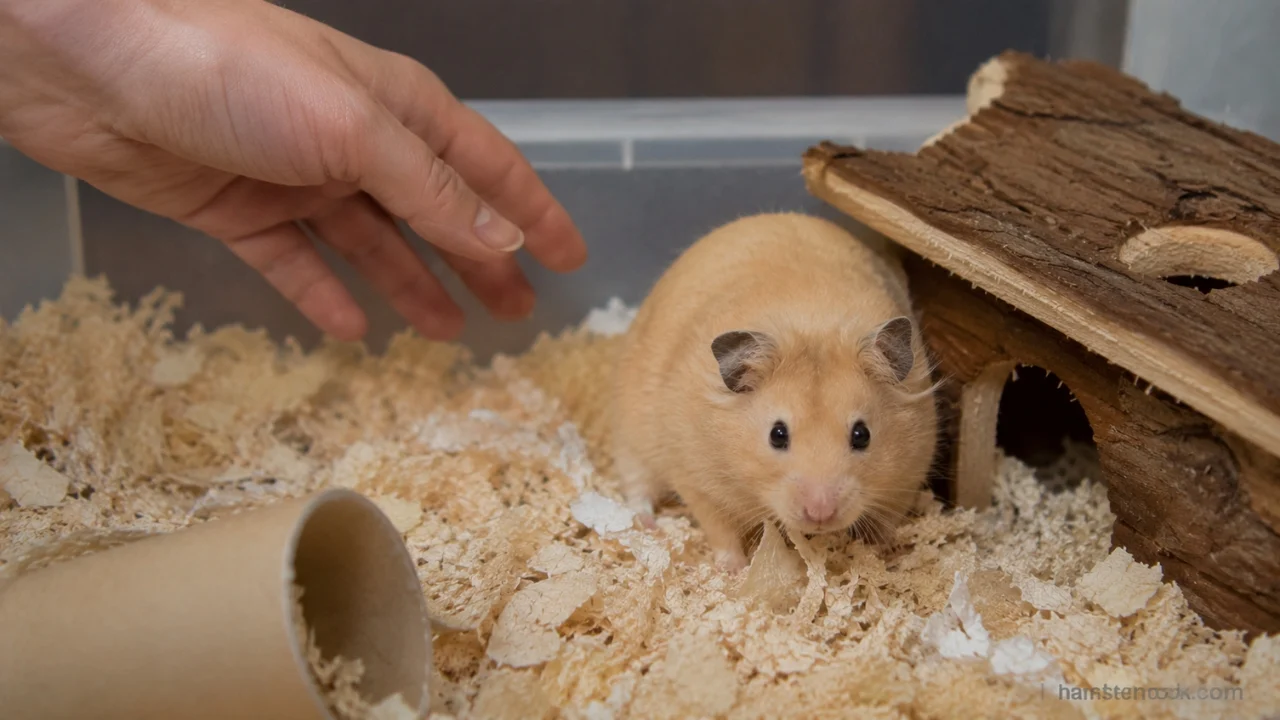
Normal wheel running is healthy exercise and should not be discouraged unless it becomes clearly harmful.
Do not remove the wheel simply because your hamster uses it heavily. Removing exercise outlets may actually increase stress.
Instead, focus on improving the overall environment if behavior seems obsessive.
Signs Wheel Running May Require Veterinary Attention
Sometimes excessive activity may accompany medical issues.

If excessive wheel running is accompanied by weight loss, limping, or other unusual symptoms, Signs of a Sick Hamster explains the warning signs that require prompt veterinary attention.
Contact an exotic veterinarian if you notice:
- Sudden behavior changes
- Weight loss
- Injured feet
- Limping
- Bald spots
- Refusing to leave the wheel
- Severe exhaustion
- Drinking excessively
Behavior changes that appear suddenly should never be ignored.
Do Young Hamsters Run More Than Older Hamsters?
Yes, younger hamsters are usually much more energetic.

As hamsters age, wheel activity often decreases naturally. Older hamsters may still enjoy running, but usually for shorter periods.
A sudden drop in activity in a young hamster, however, may indicate illness or stress.
Are Silent Wheels Better for Hamsters?
Silent wheels are usually better for both owners and hamsters.
A high-quality silent wheel:

- Spins smoothly
- Reduces stress
- Encourages safer movement
- Prevents nighttime noise problems
Cheap wheels that wobble or squeak may discourage healthy activity.
Final Thoughts
Heavy wheel use is usually a sign that a hamster is expressing normal exercise and exploration instincts. For most healthy hamsters, spending hours on a wheel each night is completely expected and does not indicate a problem on its own.
The key is making sure wheel use is part of a balanced environment that also includes digging, foraging, hiding, and exploration opportunities.
The important thing is understanding the difference between natural exercise and stress-driven repetitive behavior.

If you’re still learning how to create a healthy environment, our Hamster Care Guide for Beginners covers housing, diet, enrichment, handling, and other essentials every owner should know.
A hamster with a large cage, proper enrichment, a safe wheel, and normal overall behavior is usually perfectly healthy, even if it spends hours running every night.
By focusing on proper cage setup and enrichment instead of simply limiting wheel access, owners can help their hamsters stay active, stimulated, and happy.
Medical Disclaimer
This article provides general hamster-care information and is not a substitute for veterinary diagnosis or treatment. If your hamster develops sudden behavior changes, weight loss, limping, injuries, difficulty moving, or other concerning symptoms, contact an exotic-pet veterinarian.
References
This guide is based on hamster care, welfare, and husbandry guidance from trusted veterinary and animal care organizations, including:
Frequently Asked Questions
Why does my hamster run immediately after waking up?
Many hamsters begin exercising shortly after leaving their nest because wheel running is a natural way to release energy and start their active period.
Why does my hamster run and then suddenly stop?
This is normal behavior. Hamsters often alternate between running, grooming, eating, exploring, and resting throughout the night.
Is it normal for a hamster to ignore a new wheel?
Yes. Some hamsters need time to investigate unfamiliar objects before using them regularly. Make sure the wheel is appropriately sized and spins smoothly.

Is it normal for my hamster to run all night?
Yes. Hamsters are nocturnal or crepuscular animals and naturally become most active during the evening and nighttime hours.
Can a hamster run too much on a wheel?
Excessive running may become concerning if paired with stress behaviors, weight loss, injuries, or obsessive activity patterns.
Should I remove the wheel at night?
No. Removing the wheel may increase frustration and stress because hamsters rely on exercise outlets.
Why does my hamster suddenly run faster than usual?
Increased energy, excitement, stress, or environmental changes can temporarily increase wheel activity.

Can wheel running hurt a hamster’s back?
Yes, if the wheel is too small. A hamster’s back should stay straight while running.
What type of wheel is safest for hamsters?
A solid-surface wheel with the correct size for the hamster breed is considered the safest option.

Narayan Kumar is the founder and author of HamsterNook. He creates practical, research-based hamster care guides covering hamster behavior, nutrition, cage setup, enrichment, health, and everyday care. His goal is to help hamster owners make informed decisions and provide safer, healthier lives for their pets through clear, beginner-friendly information based on trusted animal care resources.