A hamster that suddenly starts biting can catch owners completely off guard. One day it seems comfortable taking treats and climbing onto your hand, and the next it reacts with a painful nip. While this behavior can feel personal, biting is usually a form of communication rather than aggression.
Understanding what changed in your hamster’s environment, health, or routine is often the key to solving the problem, especially if your hamster used to be gentle.
The good news is that hamsters rarely bite “for no reason.” In most cases, biting is your hamster’s way of communicating fear, stress, discomfort, confusion, or pain. Once you understand the cause, you can usually rebuild trust and reduce the behavior with patience and the right handling approach.
In most cases, there is a specific trigger behind the behavior, even if it is not immediately obvious to the owner.

This guide explains the most common reasons hamsters suddenly start biting, how to tell what your pet is trying to communicate, and the safest ways to stop the behavior without making your hamster more stressed.
Common Reasons Your Hamster Suddenly Started Biting
Hamsters are prey animals. Their natural instinct is to protect themselves when they feel unsafe. A bite is usually defensive rather than aggressive.
Here are the most common causes behind sudden biting behavior.
How to Work Out Why the Biting Started Suddenly
Start with the situation in which the bite happens rather than assuming your hamster has become aggressive. Biting only when you reach into the cage can point toward fear or territorial behavior, while biting after being woken may be a startle response. If the biting started alongside changes in appetite, activity, grooming, posture, or other physical signs, illness or pain should also be considered.

First Ask: What Changed Recently?
When a hamster suddenly starts biting after previously being calm, it helps to think about recent changes.
Ask yourself:
- Has the cage been moved?
- Was there a recent deep clean?
- Did you switch bedding brands?
- Has another pet started approaching the enclosure?
- Have handling routines changed?
- Has your hamster recently recovered from illness?
Sometimes the trigger is not obvious until you review what changed in the days leading up to the biting behavior.
Your Hamster Is Scared or Startled
Fear is one of the biggest reasons hamsters bite unexpectedly.
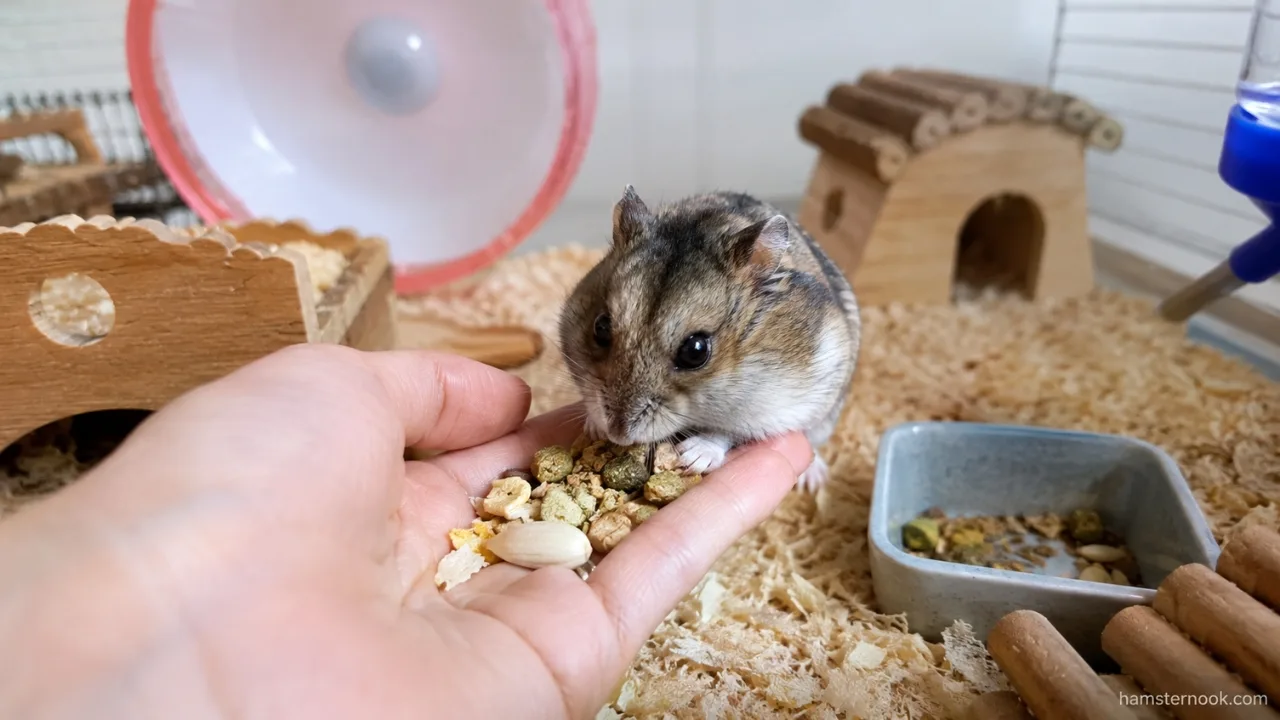
If your hamster has recently become nervous around people, our Why Is My Hamster Suddenly Scared of Me? Causes & How to Rebuild Trust guide explains common fear triggers and trust-building techniques.
Hamsters have poor eyesight and rely heavily on sound, smell, and movement. If you suddenly reach into the cage, grab from above, or wake your hamster unexpectedly, it may react instantly with a bite.
This is especially common when:
- You move too quickly
- You try to pick them up while sleeping
- Loud noises happen nearby
- Children handle them roughly
- The hamster is still new to your home
Many owners accidentally scare their hamster by reaching into the cage from above. To a hamster, a hand descending from above can resemble the approach of a predator, which may trigger an instinctive defensive response.

Signs Fear Is Causing the Biting
| Behavior | What It Usually Means |
|---|---|
| Running away when approached | Nervous or insecure |
| Freezing suddenly | Feeling threatened |
| Lunging or quick nips | Defensive fear |
| Flattened posture | Stress or discomfort |
| Biting only during handling | Fear of being picked up |
Biting can have several causes, including fear, being startled, territorial behavior, scent confusion, or discomfort. The situation in which the bite occurs is often more useful than the bite itself when working out what changed.
Your Hands Smell Like Food

Sometimes a hamster bites simply because it thinks your finger is food.
Hamsters depend strongly on scent. If your hands smell like snacks, fruit, peanut butter, or treats, your hamster may quickly nip before realizing it is your skin.
This type of bite is usually:

- Fast and exploratory
- Not repeated aggressively
- More common during feeding time
Washing your hands before handling may help reduce food-scent confusion, especially if the biting happens mainly around feeding time.
Your Hamster Is Territorial
Some hamsters become protective of their cage space, especially Syrian hamsters.
A hamster may feel safe and calm outside the enclosure but become more defensive when a hand enters its territory. This behavior is instinctive because wild hamsters naturally defend burrows and food storage areas.
Territorial biting often happens:
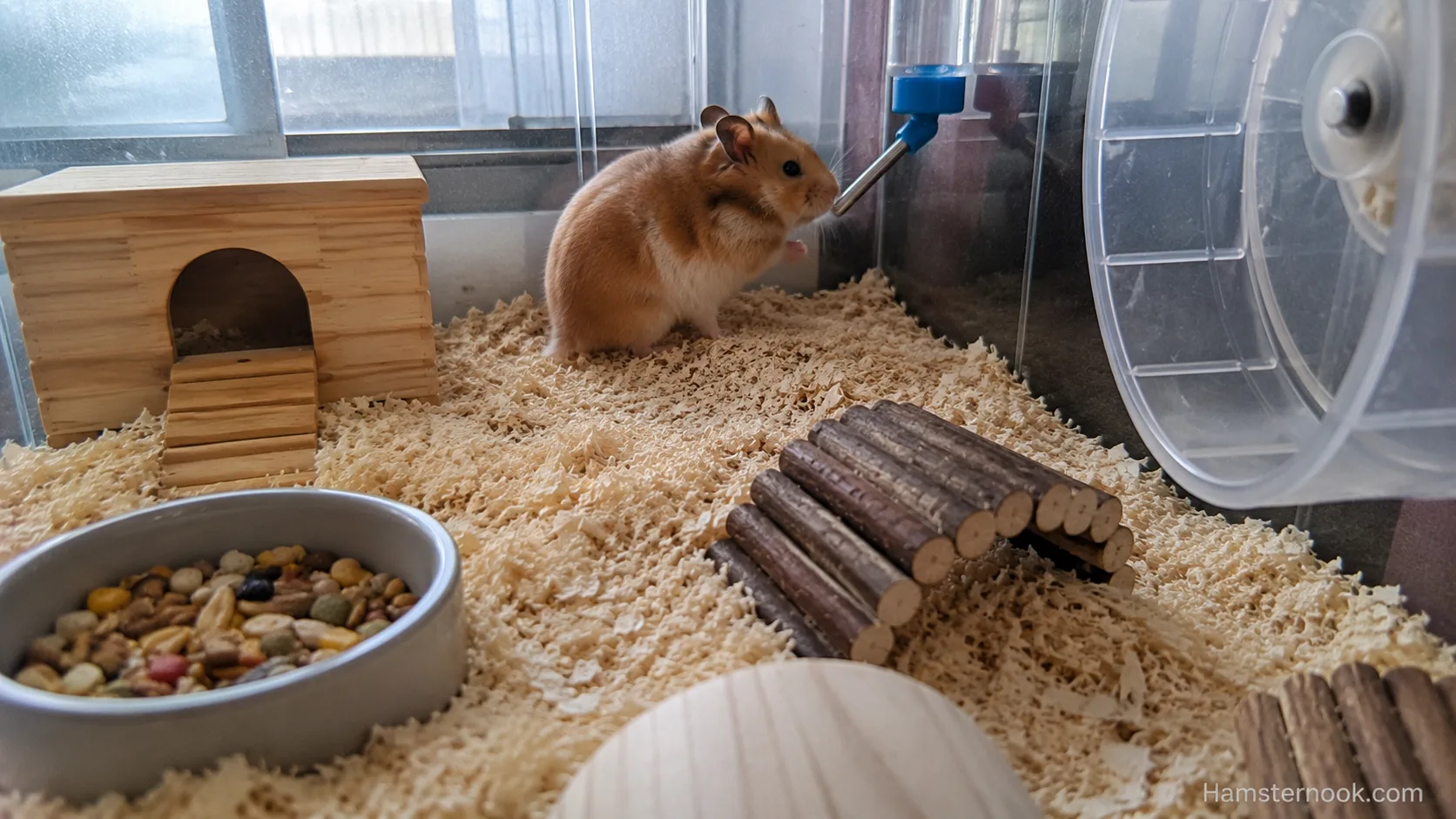
- During cage cleaning
- When reaching into nesting areas
- Near food storage corners
- When disturbing hideouts
Experts note that territorial behavior is particularly common in Syrian hamsters.
Helpful Tip
Instead of grabbing your hamster directly from the cage, encourage it to walk into:
- A small cup
- A tunnel
- Your open hand
This feels less threatening and reduces defensive reactions.
Scent Changes Can Confuse Hamsters
Hamsters rely heavily on scent to recognize familiar people and surroundings.

A hamster may react differently if:
- You recently used a new soap or lotion
- Another animal’s scent is on your clothing
- You handled a different hamster beforehand
- Strong fragrances remain on your hands
Allowing your hamster to sniff your hand before interaction can help reduce confusion and build confidence.
Your Hamster Is Stressed

Stress can quickly change hamster behavior.
Even friendly hamsters may start biting if their environment becomes overwhelming. Stress can change a hamster’s behavior and may make defensive reactions more likely.
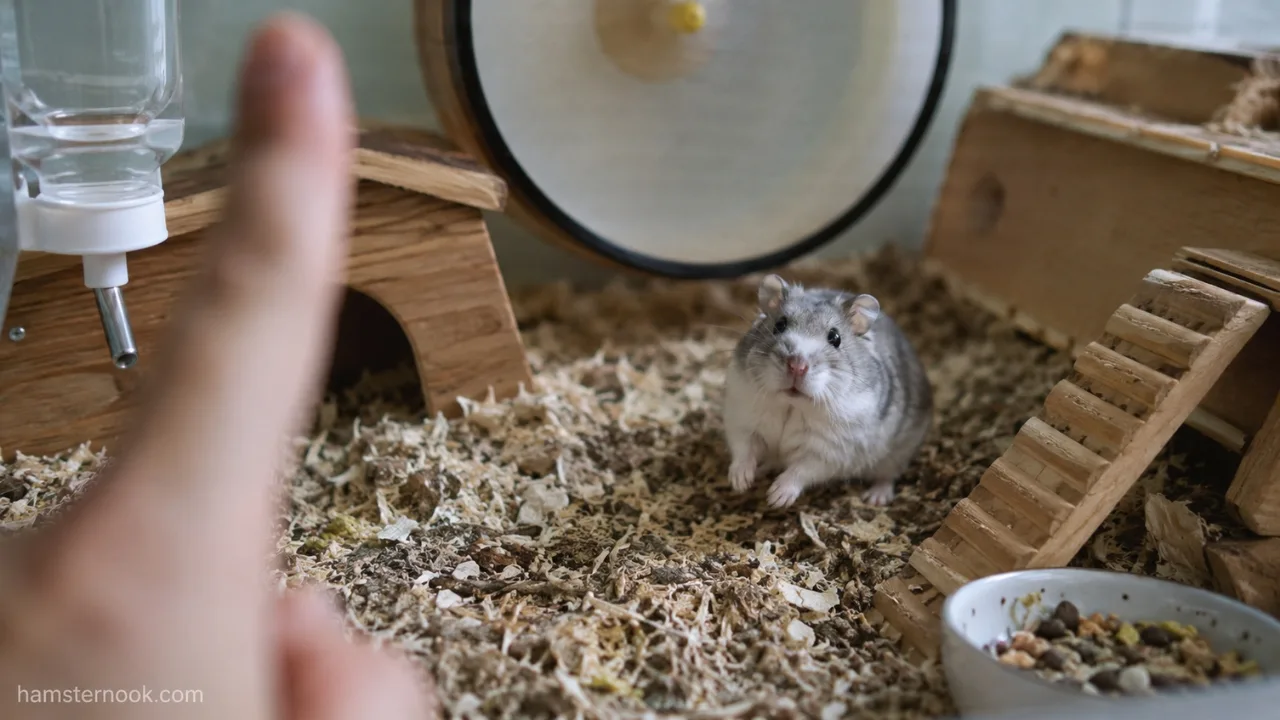
Stress-related behaviors like bar chewing, hiding, and defensive biting are often linked to poor enclosure conditions. Learn the most common causes in our detailed cage behavior guide.
Stress can contribute to defensive behavior, so 7 Signs You’re Accidentally Stressing Your Hamster (Without Even Realizing It) can help you identify common environmental and handling triggers.
Sometimes Biting Happens During Adolescence
Young hamsters occasionally go through a phase where they become more independent, energetic, or defensive than usual.
This does not happen with every hamster, but temporary changes in confidence and behavior can occur as a hamster matures.

Consistent handling, patience, and routine usually help maintain trust during this period.
Common Stress Triggers
| Stress Factor | Why It Causes Problems |
|---|---|
| Small cage | Limits natural movement |
| Lack of hiding spots | Makes hamster feel unsafe |
| Loud environment | Prevents relaxation |
| Too much handling | Causes exhaustion |
| Bright lights | Disrupts natural rhythm |
| Other pets nearby | Creates constant fear |
| Sudden habitat changes | Removes familiarity |
Hamsters need quiet, predictable environments. Constant disturbances can lead to defensive biting over time.
Owners who notice cage chewing, pacing, or other repetitive behaviors alongside biting may find it helpful to read our guide on Why Do Hamsters Bite Cage Bars? Causes and Fixes.
Your Hamster May Be Sick or in Pain
If your normally friendly hamster suddenly becomes aggressive, illness or pain should always be considered.

Animals often hide discomfort until they can no longer tolerate handling. A hamster with pain may bite because touching certain areas hurts.
Veterinary sources recommend checking for health problems when biting behavior appears suddenly.
A hamster that becomes defensive despite previously enjoying handling should always be observed carefully for other changes in appetite, activity level, grooming habits, or posture.
Possible Medical Causes
- Overgrown teeth
- Injuries
- Skin irritation or mites
- Arthritis in older hamsters
- Respiratory illness
- Wet tail or digestive illness
Warning Signs That Need Veterinary Attention
| Symptom | Possible Concern |
|---|---|
| Sudden personality change | Pain or illness |
| Wet tail area | Digestive disease |
| Weight loss | Underlying health issue |
| Lethargy | Infection or stress |
| Fur loss | Skin condition or mites |
| Hunched posture | Pain or sickness |
| Refusing food | Dental or internal problems |
If your hamster suddenly bites and also shows any physical symptoms, contact an exotic or small-animal veterinarian.

Our Signs of a Sick Hamster: Warning Symptoms Every Owner Should Know guide explains the early health changes that often appear before a hamster becomes seriously ill.
You Woke Your Hamster Up
Hamsters are nocturnal or crepuscular animals, meaning they are naturally more active during the evening and night.
A sleeping hamster that is suddenly touched may bite automatically before fully waking up.
A startle bite does not necessarily mean your hamster dislikes you. A hamster that is suddenly awakened or touched while resting may react defensively.

Hamsters naturally sleep during most daylight hours and may react defensively if disturbed suddenly. Learn more about hamster sleep behavior in our detailed sleep guide.
Best Practice
Always wait until your hamster:
- Leaves the nest on its own
- Is fully awake
- Is moving around naturally
Avoid forcing daytime interaction.
Your Hamster Has Lost Trust
A stressful handling experience can make a hamster more cautious about future interactions.

If your hamster was:
- Dropped accidentally
- Grabbed roughly
- Chased around the cage
- Handled too often
- Frightened by loud events
…it may begin associating hands with danger.
Trust rebuilding takes time, especially with nervous hamsters.
If biting continues despite calmer handling, focus on identifying the specific trigger rather than repeatedly trying to handle your hamster.

How to Stop Your Hamster From Biting
The solution depends on the reason behind the biting. Punishment usually increases fear and stress, making biting behavior more difficult to overcome.
Instead, focus on creating safety and trust.
Use Slow Trust-Building Techniques
Building trust through calm, predictable interactions can help reduce fear-related biting over time.
Daily Trust Routine
- Sit quietly near the cage
- Speak softly so your hamster learns your voice
- Place your hand inside the enclosure without grabbing
- Offer treats gently
- Let your hamster approach voluntarily
Short daily sessions work much better than forcing long interactions.

Handle Your Hamster Correctly
Proper handling can significantly improve trust and comfort.
Safe Handling Tips
| Good Handling Habits | Habits to Avoid |
|---|---|
| Scoop gently from underneath | Grabbing from above |
| Support the whole body | Squeezing tightly |
| Move slowly | Fast sudden movements |
| Handle close to soft surfaces | Holding high above ground |
| Let hamster climb onto you | Forcing contact |
Veterinary behavior experts recommend allowing hamsters to approach hands voluntarily whenever possible.
Improve the Habitat Setup
A stressed hamster is far more likely to bite.
A Better Habitat Should Include
- Deep bedding for burrowing
- Multiple hideouts
- Quiet cage placement
- Proper wheel size
- Enrichment toys
- Adequate floor space
- Consistent routine
Deep bedding is especially important because burrowing helps many hamsters feel secure. Our guide to Best Bedding for Hamsters explains which materials support natural digging behavior safely.

When hamsters feel secure in their environment, defensive behaviors often decrease naturally.
A properly designed hamster enclosure with enough space, bedding, and enrichment can significantly reduce stress and defensive behavior.
Give Your Hamster More Choice and Control
Many hamsters become more comfortable when they feel they can choose whether to interact.
Helpful approaches include:

- Letting the hamster approach your hand voluntarily
- Offering treats without immediately attempting to pick it up
- Allowing exploration in a secure play area
- Ending interactions before the hamster becomes overwhelmed
Trust often develops faster when the hamster feels in control of the interaction.
Never Punish a Hamster for Biting
Do not:
- Hit the cage
- Flick the nose
- Yell
- Shake your hand violently
- Blow harshly in the hamster’s face
Punishment teaches your hamster that humans are dangerous.
Instead:

- Stay calm
- Gently place the hamster down
- End the interaction briefly
- Try again later more slowly
Common Mistakes Owners Make After a Bite
A bite can be surprising, but reacting incorrectly may make the situation worse.
Avoid:
- Pulling your hand away suddenly if possible
- Chasing the hamster afterward
- Forcing handling immediately after a bite
- Assuming the hamster is being aggressive on purpose
- Making repeated handling attempts when the hamster is clearly stressed
Remaining calm helps prevent future negative associations.
How Long Does It Take to Stop Biting?
Every hamster is different.

The time needed to improve varies between individual hamsters. A nervous hamster may need more gradual interaction, while another may become comfortable sooner.
Consistency matters more than speed.
Many hamsters respond best to short, positive interactions repeated daily rather than occasional long handling sessions.
When Biting Is More Common in Certain Hamster Species
Different hamster species can have different temperaments.

Different hamster species and individual hamsters can have different temperaments, so breed alone cannot predict whether a hamster will bite. If you’re comparing hamsters specifically because of biting concerns, Which Hamster Is Least Likely to Bite? 5 Breeds Compared for Beginners looks at the differences more directly.
Personality still varies between individual hamsters.
Final Thoughts
Sudden biting is usually a symptom of an underlying issue rather than a personality change. Fear, stress, territorial instincts, scent confusion, illness, and handling mistakes can all cause a hamster to react defensively even if it was previously friendly.
In most cases, the problem improves when you:

- Handle more gently
- Respect your hamster’s sleep schedule
- Reduce stress
- Build trust slowly
- Rule out illness or pain
Patience is the key. Once your hamster feels safe around you again, biting often becomes much less common, and your hamster will usually become calmer and more comfortable around handling over time.
FAQs About Hamster Biting
Why does my hamster bite me but not other people?
Some hamsters react differently to specific scents, handling styles, or previous experiences. A hamster may feel more comfortable with one person’s movements or scent than another’s.
Can a hamster suddenly become territorial?
Yes. Territorial behavior can appear or become stronger as a hamster matures, especially inside the enclosure where it feels responsible for protecting its space.
Should I stop handling my hamster after a bite?
Not completely. Taking a short break may help, but long-term trust usually improves through calm, gradual interaction rather than complete avoidance.
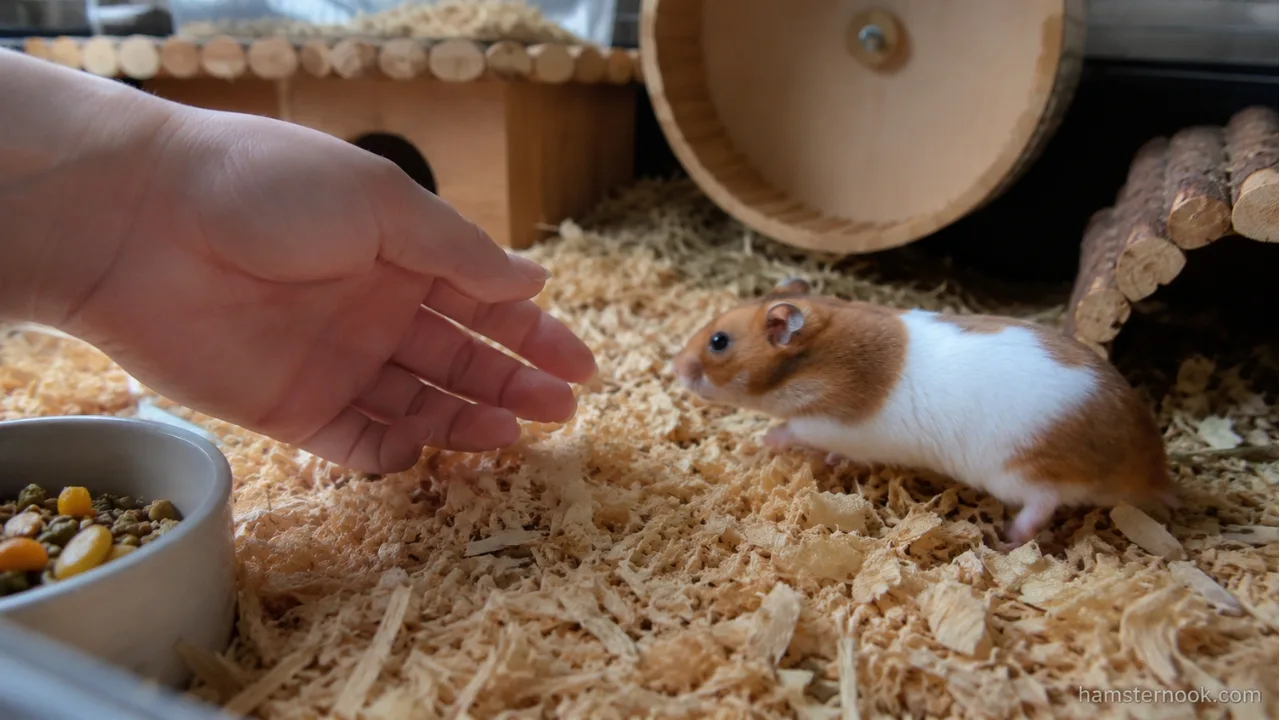
Why did my hamster suddenly start biting me?
Sudden biting usually happens because of fear, stress, territorial behavior, scent confusion, or illness. If the behavior appears suddenly alongside physical symptoms, a veterinary check is important.
Can hamsters bite even if they like you?
Yes. Even tame hamsters may bite if startled, frightened, in pain, or awakened suddenly.
Do hamster bites hurt?
Hamster bites can be painful because their front teeth are sharp. Wash the area with soap and water immediately after a bite.
Should I wear gloves while taming my hamster?
Gloves may protect your hands temporarily, but hamsters learn trust partly through scent recognition. Thick gloves can slow the bonding process.

Why does my hamster only bite inside the cage?
This is usually territorial behavior. Some hamsters defend their enclosure but remain calm outside it.
Can stress make hamsters aggressive?
Yes. Chronic stress can increase defensive behaviors, including biting and lunging.
Why did my hamster start biting me after being friendly for months?
Sudden biting often happens after a stressful event, habitat change, illness, pain, scent change, or a negative handling experience. Looking for recent changes is usually the best starting point.
References
This guide is based on hamster behavior, welfare, and handling guidance from trusted animal care organizations and veterinary resources, including:
- RSPCA – Hamster Care Advice
- PDSA – Small Pet Welfare Guidance
- Blue Cross – Hamster Care Resources
- Veterinary Partner – Small Animal Behavior Resources
Medical Disclaimer
This article is for educational purposes only and should not replace veterinary advice. Sudden biting accompanied by illness symptoms, pain, weight loss, lethargy, or appetite changes should be evaluated by a qualified exotic pet veterinarian.

Narayan Kumar is the founder and author of HamsterNook. He creates practical, research-based hamster care guides covering hamster behavior, nutrition, cage setup, enrichment, health, and everyday care. His goal is to help hamster owners make informed decisions and provide safer, healthier lives for their pets through clear, beginner-friendly information based on trusted animal care resources.