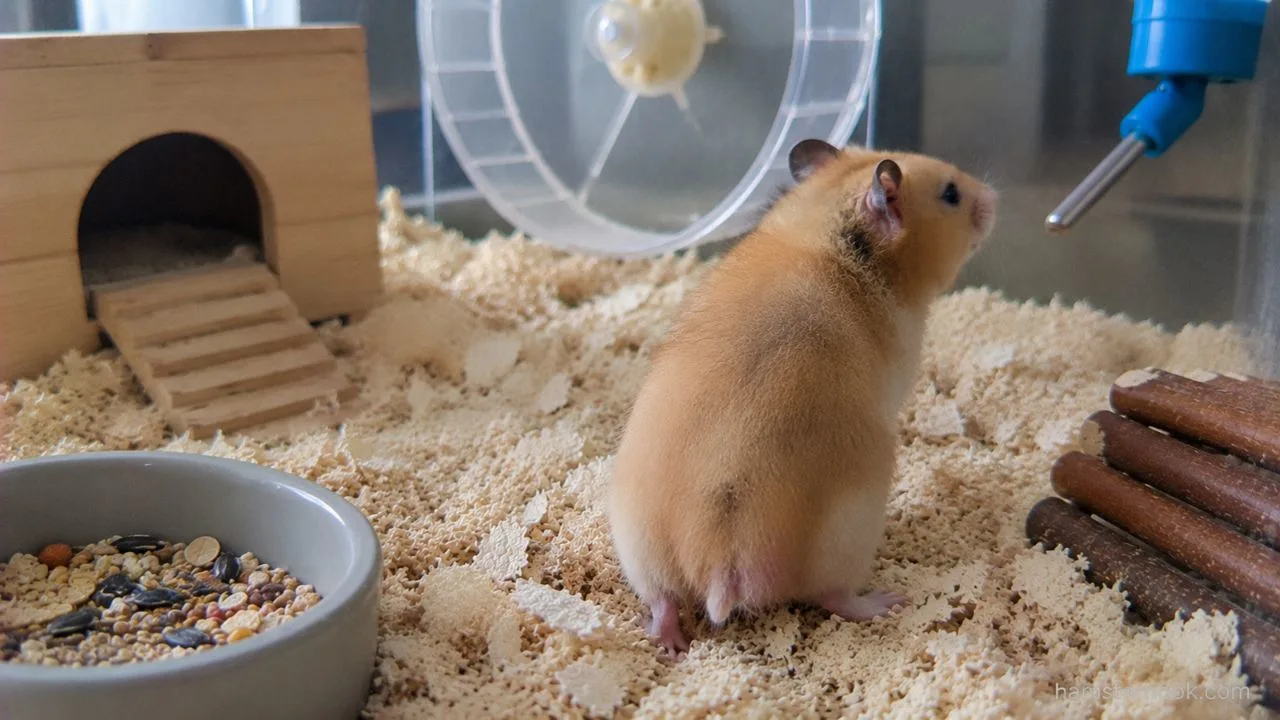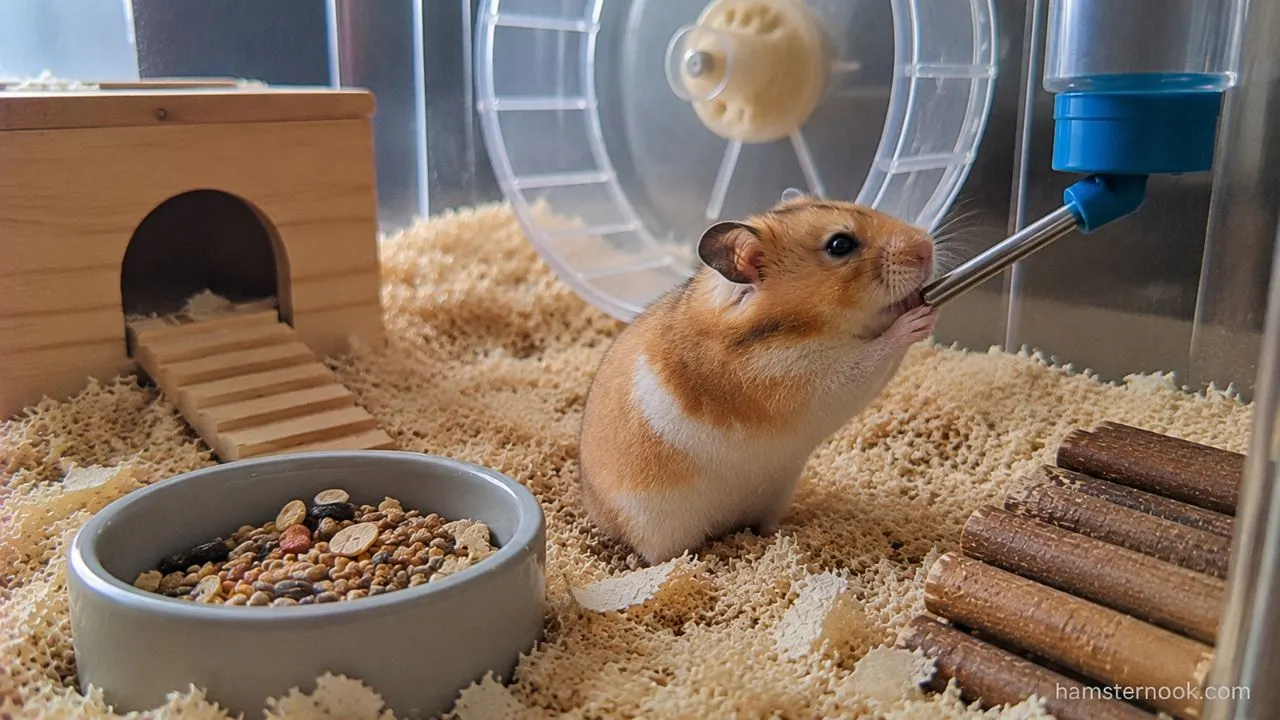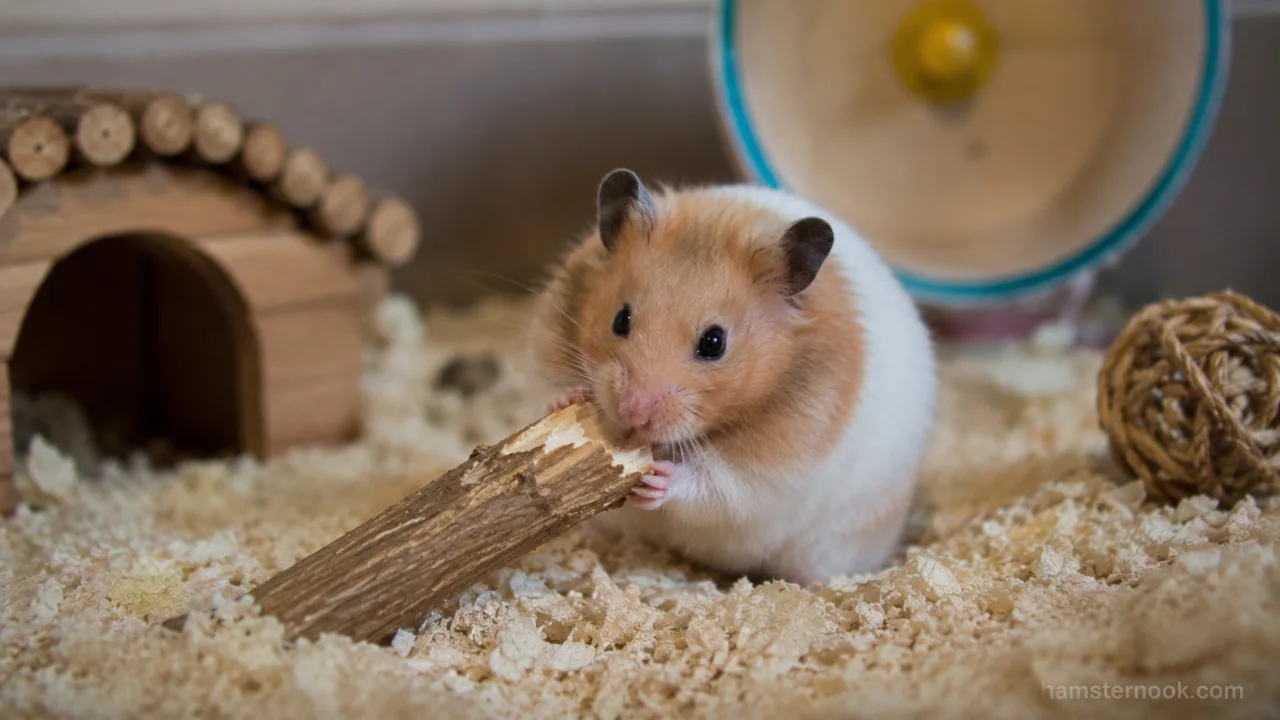
A hamster’s teeth never stop growing. While this may sound surprising to first-time owners, it’s completely normal. In the wild, hamsters constantly gnaw on roots, seeds, twigs, and other tough materials that naturally wear their teeth down.
In captivity, hamsters no longer spend hours gnawing on roots and tough plant materials, so safe things to chew and gnaw can help support the natural wear their continuously growing incisors need.
Without appropriate chew toys, a hamster’s teeth can become overgrown, making it difficult to eat, groom, or even close its mouth comfortably. Choosing the right chew toys is one of the simplest ways to support your hamster’s long-term health while also providing enrichment and preventing boredom.
If your hamster has already stopped eating due to possible dental discomfort, see Why Is My Hamster Not Eating? Common Causes and Solutions to learn what warning signs to watch for.
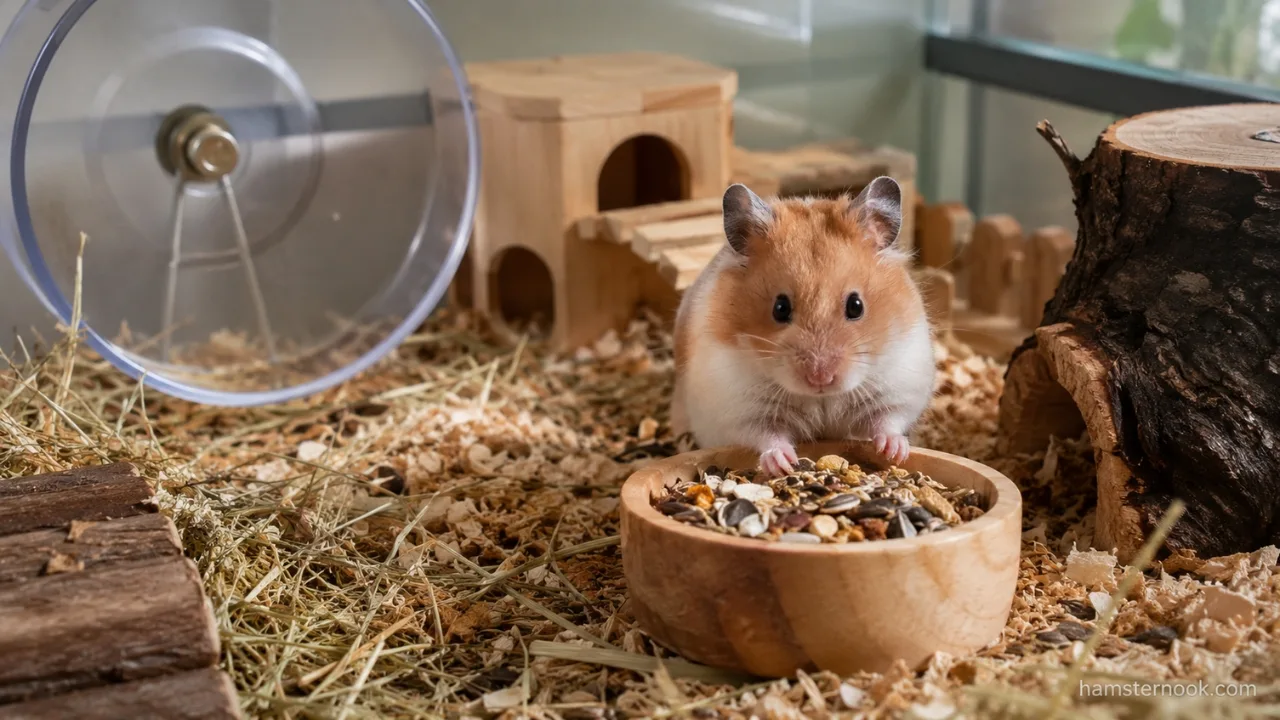
This guide covers the best hamster chew toys, how they help maintain healthy teeth, what materials are safest, and how to encourage a hamster to chew naturally.
Why Hamsters Need Chew Toys for Dental Health
Unlike human teeth, hamster incisors grow continuously throughout life. Their front teeth are designed for constant gnawing and naturally wear down through everyday chewing.
When adequate chewing opportunities are unavailable, teeth may grow too long and cause problems such as:
- Difficulty eating
- Weight loss
- Mouth injuries
- Drooling
- Reduced grooming
- Pain and discomfort
Providing safe chew toys helps mimic natural wear and supports proper dental function.
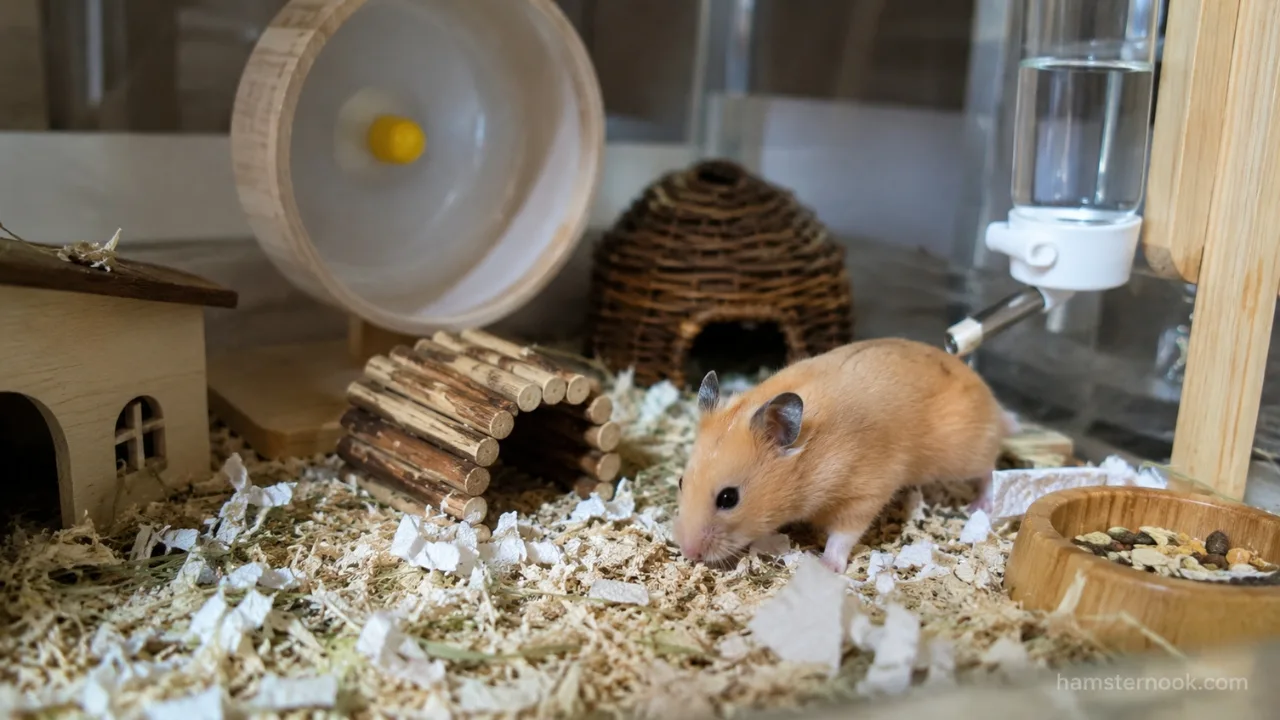
Daily equipment checks help catch damaged chew toys before they become unsafe. Read our Hamster Care Guide for Beginners for practical daily care and maintenance tips.
Many owners do not realize there is a problem until a hamster starts dropping food, losing weight, or struggling to chew. By that stage, the teeth may already be overgrown, which is why prevention is far easier than treatment.
How Chewing Helps Prevent Overgrown Teeth
Hamsters naturally wear their continuously growing incisors through gnawing and eating. Safe chewing materials can support this normal wear, but chew toys should not be treated as a guarantee against dental overgrowth or other dental problems.
While chew toys are important, they are only one part of dental care. A balanced diet, appropriate food textures, and regular observation of your hamster’s teeth also play a role.
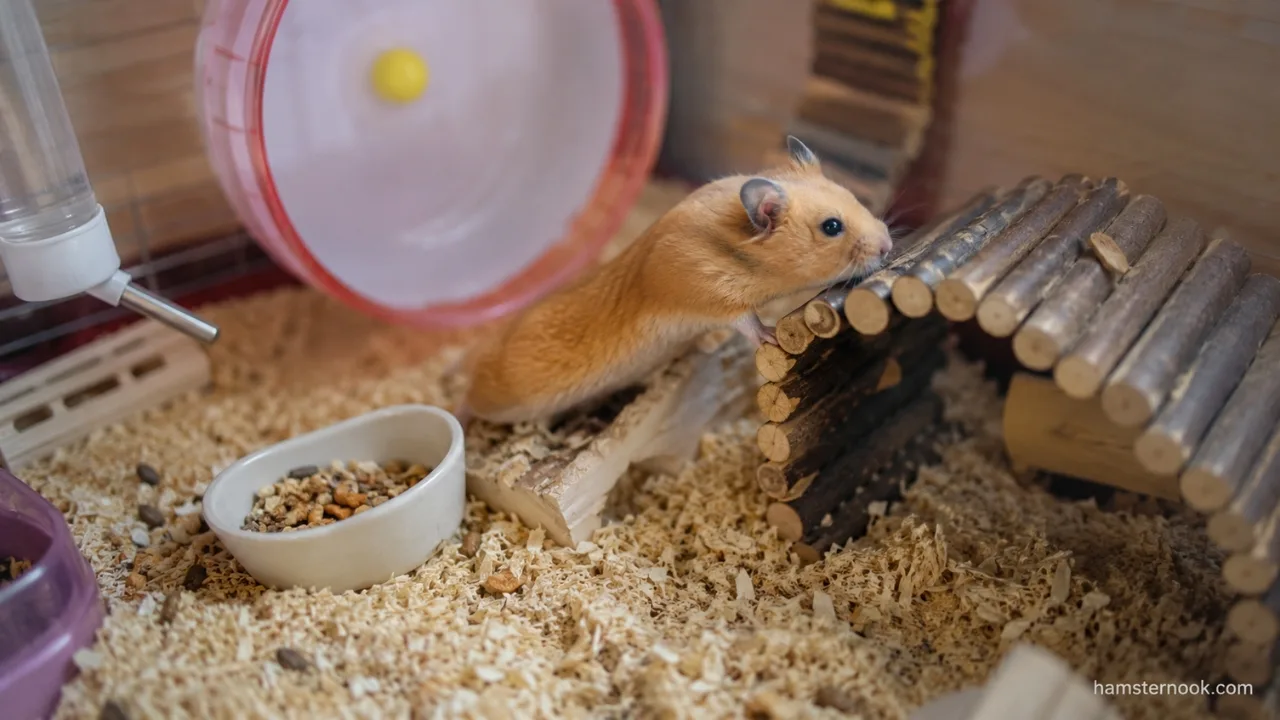
Good nutrition also supports healthy teeth throughout your hamster’s life. Our Complete Hamster Diet Guide: Best Foods, Safe Treats & Toxic Foods explains which foods encourage natural chewing while helping maintain overall dental health.
What Makes a Good Hamster Chew Toy?
Not all pet store chew toys are equally useful. The best options are safe, durable, and made from hamster-friendly materials.
A quality chew toy should be:
| Feature | Why It Matters |
|---|---|
| Non-toxic | Prevents accidental poisoning |
| Untreated | Avoids harmful chemicals and coatings |
| Durable | Provides long-lasting chewing opportunities |
| Appropriate Size | Easy for hamsters to handle |
| Natural Material | Mimics wild chewing surfaces |
Avoid products with excessive glue, paint, varnish, or unknown materials.
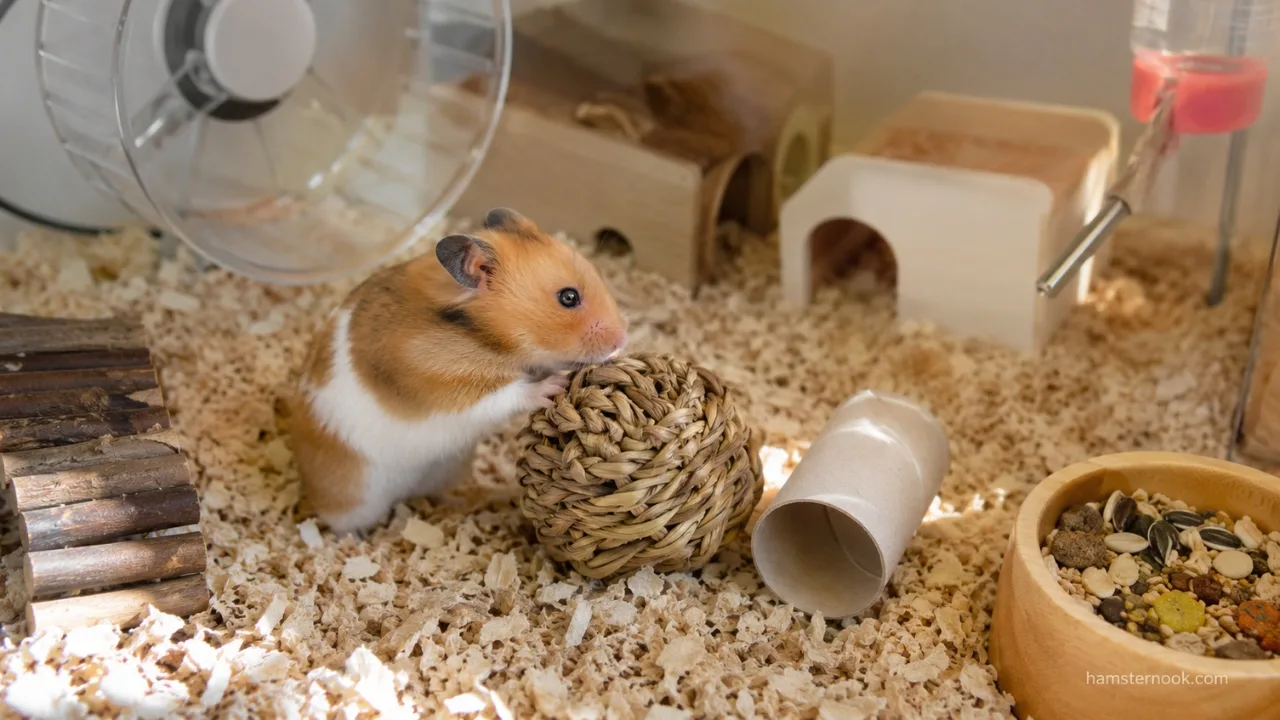
Best Wooden Chew Toys for Hamsters
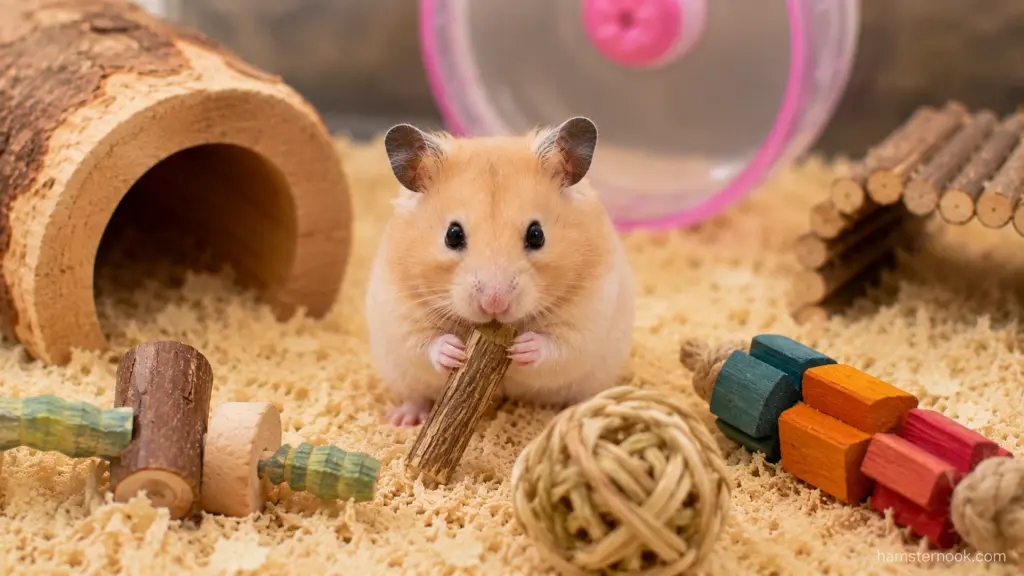
Wood remains one of the most popular and effective chewing materials.
Different woods vary in hardness, texture, and durability, giving hamsters multiple chewing experiences.
Apple Wood Chews
Apple wood is one commonly recommended untreated wood for hamster gnawing.
Benefits include:

- Natural texture
- Good durability
- Widely available
- Suitable for most hamster breeds
Some hamsters readily chew apple wood, while others prefer a different texture. If using wood, choose an untreated product intended to be safe for small animals rather than assuming every type of wood is suitable.
Willow Chew Toys
Willow is slightly softer than some hardwoods but remains an excellent chewing material.
Advantages include:
- Lightweight
- Easy to chew
- Safe for small pets
- Useful for younger hamsters
Willow balls and woven willow toys also provide enrichment opportunities.

Pear Wood Chews
Pear wood offers similar benefits to apple wood and is often included in natural small animal chew products.
It provides a firm surface that encourages regular gnawing.
Best Natural Chew Toys for Hamsters
Natural materials often provide both dental benefits and environmental enrichment.
| Natural Chew Material | Main Use |
|---|---|
| Untreated apple wood | Gnawing and texture variety |
| Willow | Gnawing and enrichment |
| Seagrass | Shredding and texture variety |
| Unbleached loofah | Shredding and enrichment |
| Cork | Chewing and hiding opportunities |
Offering multiple textures can help maintain your hamster’s interest.
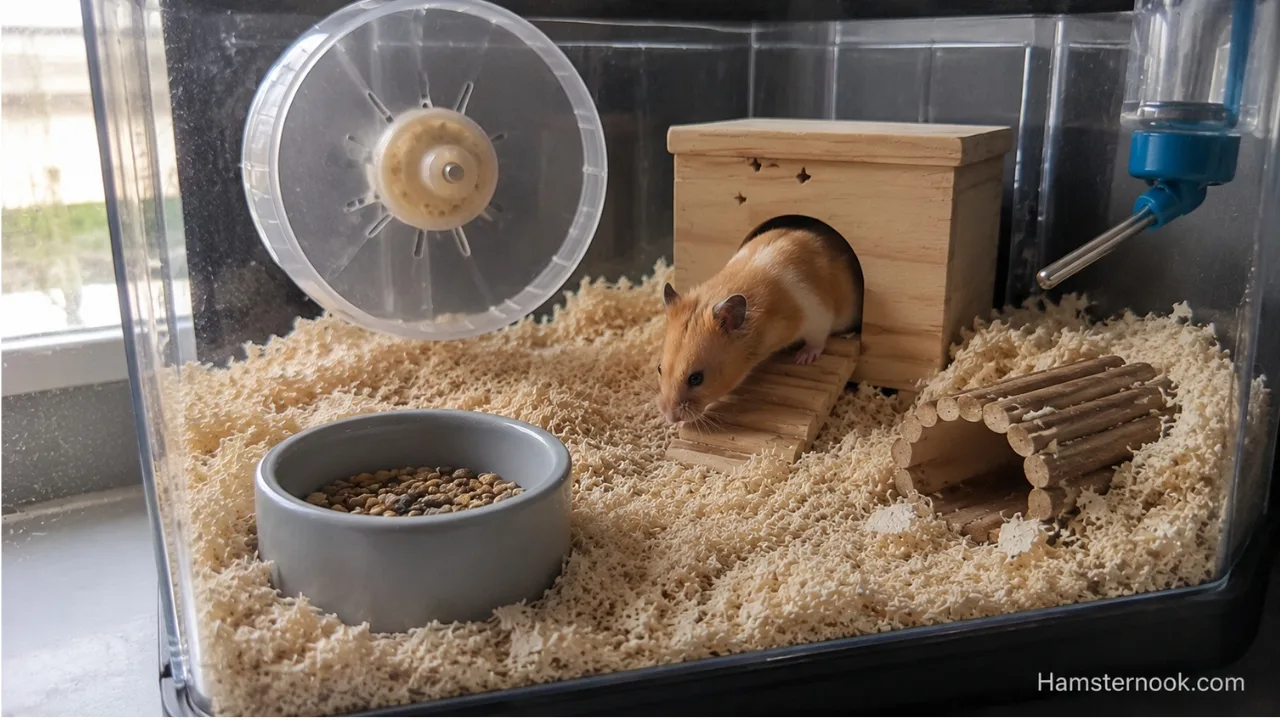
Chewing is only one part of enrichment, and Do Hamsters Get Bored in Their Cage? 6 Signs & How to Prevent It covers other ways to provide useful activity without relying on toys alone.
Chew Toys Made From Loofah
Natural loofah toys are becoming increasingly popular among hamster owners.
Loofah provides:
- A unique texture
- Gentle resistance
- Safe shredding opportunities
- Additional enrichment
Many hamsters enjoy tearing apart loofah pieces while simultaneously wearing down their teeth.
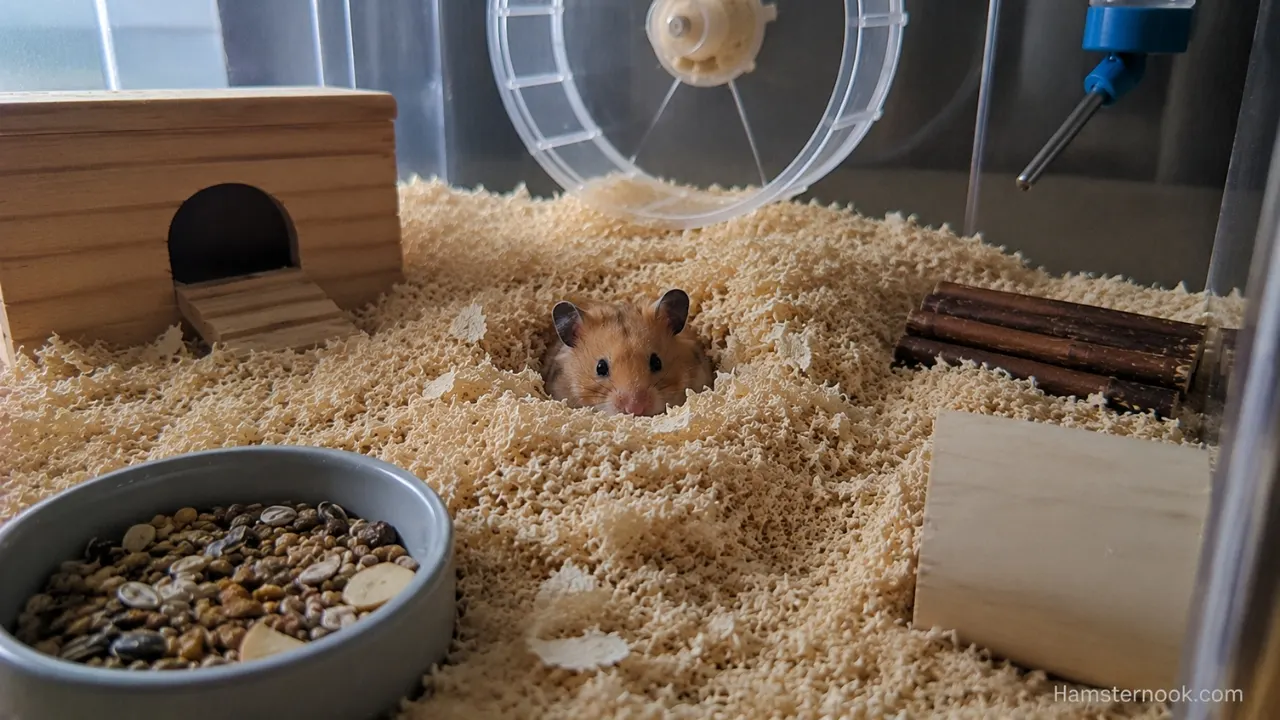
Edible Chews for Hamsters
Some chew products are designed to be partially edible while still supporting dental health.
Common examples include:
- Timothy hay-based chews
- Compressed forage blocks
- Herbal chew sticks
These products can encourage chewing while adding dietary variety.
However, edible chews should not replace durable gnawing materials.
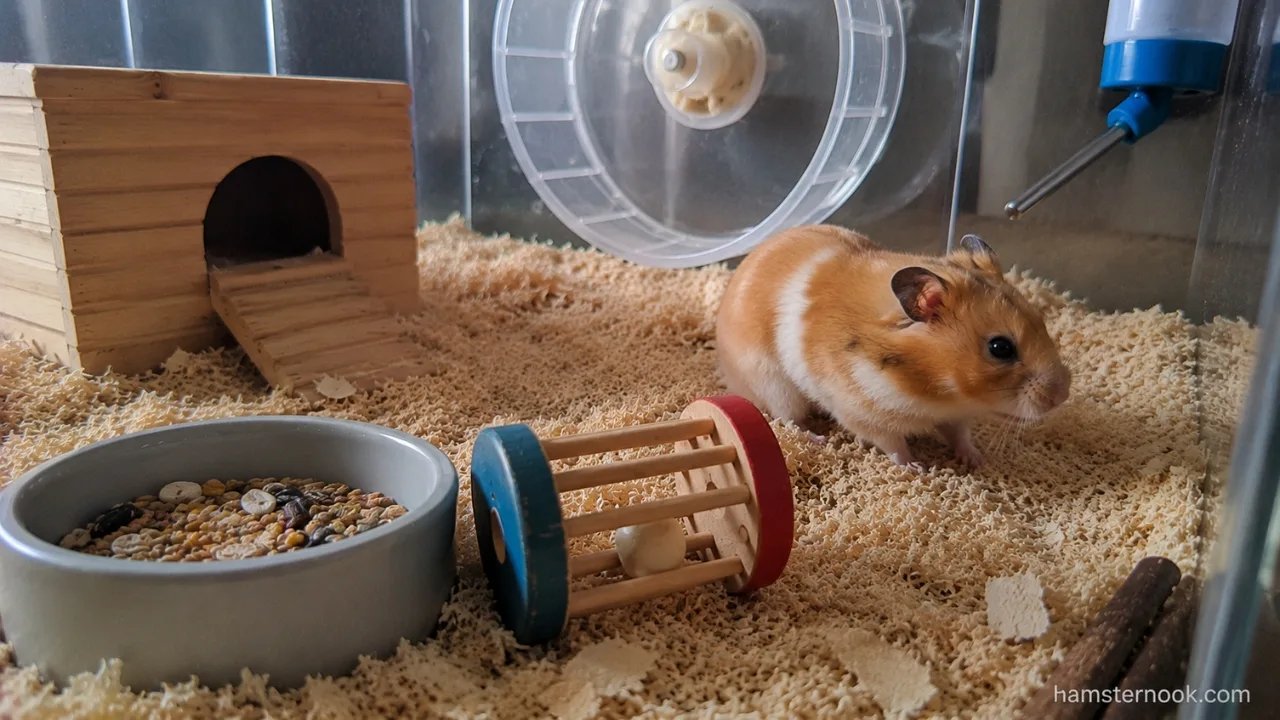
Best Chew Toys for Syrian Hamsters
Syrian hamsters are larger than dwarf hamsters, so chew items should be appropriately sized and easy for the individual hamster to use safely.
The following options often work well:
| Chew Toy Type | Suitable for Syrians |
|---|---|
| Apple Wood Sticks | Yes |
| Thick Willow Branches | Yes |
| Cork Logs | Yes |
| Large Loofah Pieces | Yes |
| Wooden Chew Blocks | Yes |
Larger toys tend to withstand Syrian hamster chewing better than small lightweight options.
Best Chew Toys for Dwarf Hamsters
For dwarf hamsters, choose chew items that are appropriately sized for the individual hamster and do not obstruct normal movement or access around the enclosure.

| Chew Toy Type | Suitable for Dwarfs |
|---|---|
| Thin Apple Sticks | Yes |
| Small Willow Balls | Yes |
| Mini Loofah Pieces | Yes |
| Seagrass Chews | Yes |
| Small Wooden Shapes | Yes |
Providing several smaller options often works better than one large chew item.
Chew Toys vs Mineral Stones: Which Is Better?
Many pet stores sell mineral blocks and mineral stones marketed as tooth-trimming products.
However, natural chew materials are generally preferred by many experienced hamster keepers.
| Option | Advantages | Drawbacks |
|---|---|---|
| Natural Wood Chews | Encourages normal chewing behavior | May need replacement |
| Willow Toys | Safe and enriching | Less durable |
| Cork Products | Multi-purpose enrichment | Not all hamsters chew them |
| Mineral Stones | Long-lasting | Some hamsters ignore them |
Natural chewing surfaces usually provide a more realistic and engaging experience.

Signs Your Hamster Needs More Chewing Opportunities
Changes in chewing habits are often easier to notice than changes in tooth length. If your hamster suddenly ignores hard foods, struggles to hold treats, or spends less time gnawing than usual, it may be worth checking both its chew toy selection and overall dental health.
A hamster lacking suitable chew options may show behavioral or physical warning signs.
Common signs include:
- Excessive bar chewing
- Overgrown front teeth
- Difficulty eating
- Drooling
- Weight loss
- Reduced activity
Regular observation helps identify problems early.

If your hamster starts losing weight despite continuing to eat, Why Is My Hamster Losing Weight Even Though It’s Eating? explains several underlying health problems, including dental issues that can make chewing difficult.
Check your hamster’s front teeth regularly as part of normal health observation. Look for obvious overgrowth, damage, or changes that make eating difficult. If a tooth looks abnormal or your hamster develops drooling, reduced appetite, weight loss, or difficulty eating, contact a veterinarian rather than trying to trim the teeth yourself.
How to Encourage a Hamster to Use Chew Toys
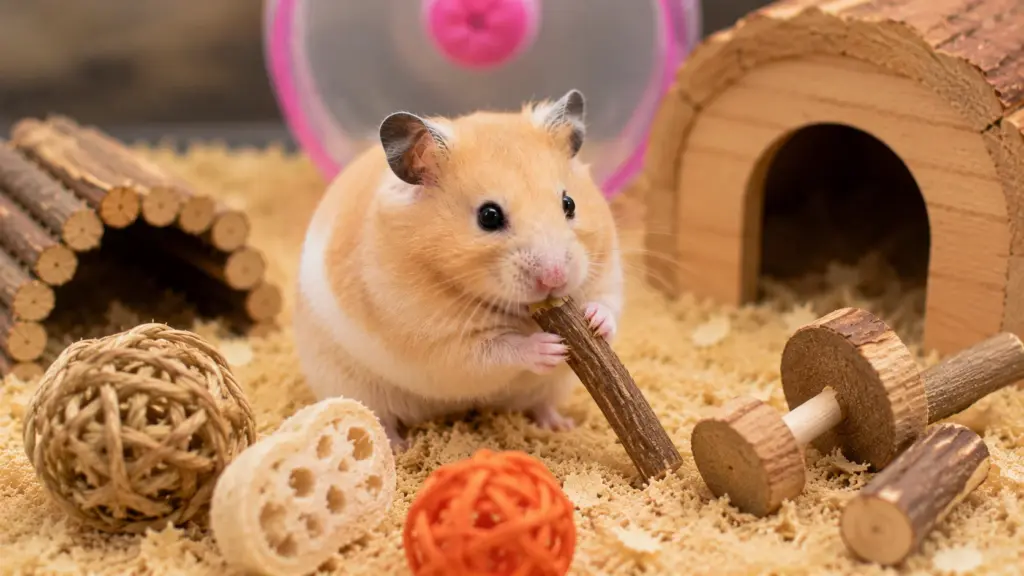
Some hamsters immediately begin chewing new toys, while others ignore them.
Helpful strategies include:

- Offering several textures
- Rotating chew toys periodically
- Offering chews in accessible areas without blocking normal pathways
- Providing different safe textures so your hamster can choose what it prefers
- Removing damaged toys and replacing them with fresh options
Hamsters often spend the most time chewing near secure resting spots. For ideas, see Best Hamster Hideouts and Sleeping Areas.
Patience is important because individual hamsters often have clear preferences.
Materials to Avoid in Hamster Chew Toys
Certain materials may be unsafe and should be avoided.
| Material or Product | Why to Avoid |
|---|---|
| Painted or varnished wood | Coatings may be unsuitable for chewing |
| Treated or chemically treated wood | Treatment chemicals may make it unsuitable |
| Damaged or brittle plastic | Can break or create sharp pieces |
| Unknown wood species | Safety cannot be established confidently |
| Strongly scented or chemically treated products | Unnecessary exposure to added chemicals |
Choosing chew toys from reputable small-pet brands makes it easier to avoid unsafe materials, poor-quality finishes, and products that may splinter more easily during regular use.

How Often Should Chew Toys Be Replaced?
Replacement frequency depends on the toy type and how aggressively your hamster chews.
Inspect chew toys regularly for:
- Sharp edges
- Excessive splintering
- Mold
- Dirt buildup
- Structural damage
Replacing worn toys keeps the habitat safe and interesting.
Even if a chew toy still looks usable, replacing or rotating it occasionally can encourage renewed interest. Many hamsters become more willing to chew when they discover a different texture or shape.
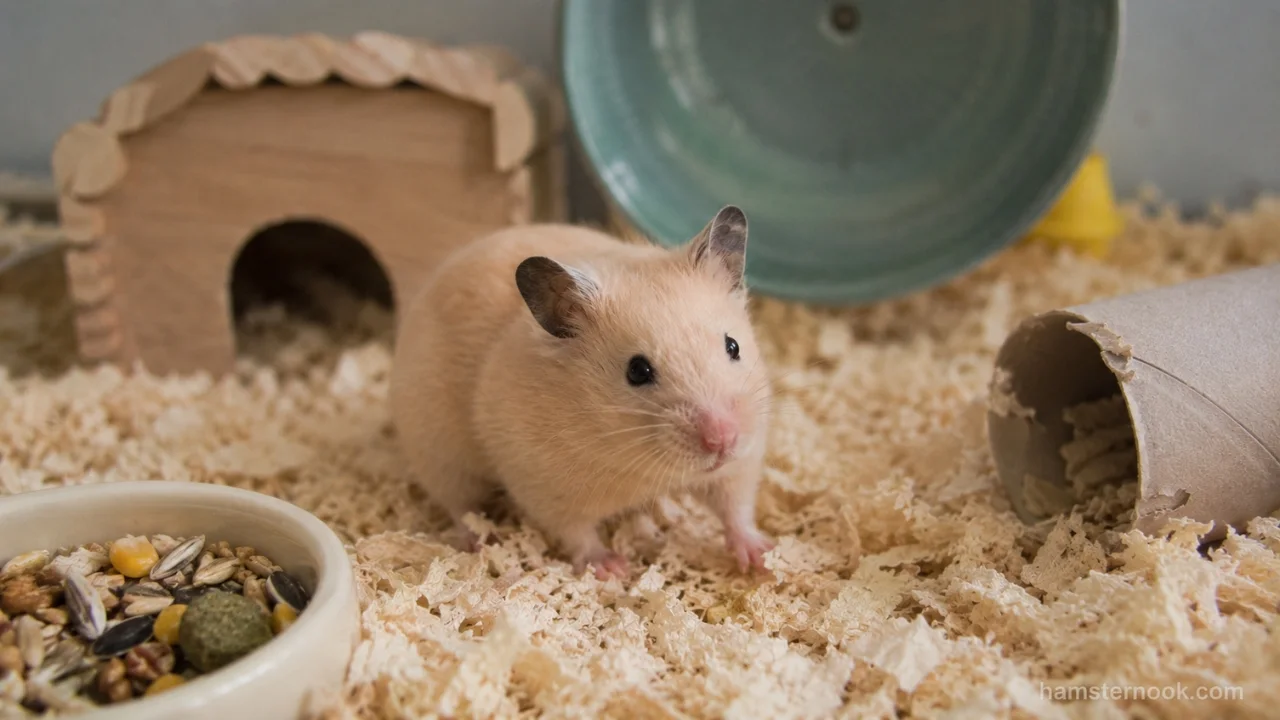
Building a Tooth-Friendly Hamster Habitat
The healthiest setup usually includes more than one chewing option.
A well-equipped habitat may contain:
- Apple wood sticks
- Willow toys
- Cork tunnels
- Loofah pieces
- Safe forage items
Chew toys work best when combined with a properly designed enclosure. See Best Hamster Cage Setup for Beginners.
Providing variety encourages natural behaviors while helping maintain proper tooth wear.

A broader enrichment setup can give your hamster more ways to explore and forage; Hamster Cage Enrichment: 10 Ideas to Prevent Boredom covers practical options beyond chew toys.
Can Chew Toys Completely Prevent Overgrown Teeth?
Not always. Chew toys help support natural tooth wear, but some hamsters can still develop dental problems due to genetics, injury, or tooth misalignment. Regular observation remains important even when plenty of chew toys are available.
When Dental Problems Need a Veterinarian
Chew toys are for prevention and enrichment, not for treating an already abnormal tooth. Contact a veterinarian if your hamster has difficulty eating, drools, loses weight, develops an obviously overgrown or damaged incisor, or shows other signs of dental discomfort. Do not try to cut or trim an overgrown tooth at home.
Final Thoughts
Many owners only think about chew toys after dental problems appear, but regular chewing opportunities are often one of the simplest ways to help prevent those problems from developing in the first place. They play an important role in maintaining healthy teeth, preventing overgrowth, reducing boredom, and encouraging natural hamster behaviors.

If your hamster is already eating less or struggling to chew, Why Is My Hamster Not Eating? 9 Causes, Warning Signs & What to Do covers the broader warning signs and when veterinary help is needed.
The best chew toys are usually made from safe natural materials such as apple wood, willow, cork, seagrass, and loofah. Offering several different textures allows your hamster to choose what it enjoys most while supporting healthy dental wear.
Regularly checking your hamster’s teeth and replacing worn chew toys can help prevent dental problems before they become serious.
Frequently Asked Questions
What is the best chew toy for hamster teeth?
Apple wood sticks are often considered one of the best options because they are safe, durable, and widely accepted by most hamsters.

Do hamsters really need chew toys?
Yes. Since hamster teeth grow continuously, chew toys help provide the natural wear needed to keep teeth at a healthy length.
Why won’t my hamster use its chew toys?
Some hamsters are selective about textures. Trying different materials such as willow, cork, loofah, or apple wood may help identify a preferred option.
Are mineral blocks necessary for hamsters?
Most healthy hamsters do not require mineral blocks specifically for tooth maintenance if they already have access to safe chew toys and a balanced diet.
How many chew toys should a hamster have?
There is no fixed number of chew toys every hamster needs. Offering a small variety of safe chewing materials lets you see which textures your hamster prefers while avoiding unnecessary clutter in the enclosure.

Can cardboard be used as a chew toy?
Plain, unprinted cardboard is often safe for supervised chewing and shredding, although it should not replace durable wooden chew toys.
References
This guide is based on hamster dental health, nutrition, chewing behavior, enrichment, and veterinary care guidance from trusted animal welfare and veterinary resources, including:
- RSPCA – Hamster Health & Welfare – Guidance on hamster dental health, signs of illness, health monitoring, and general welfare.
- RSPCA – What to Feed a Pet Hamster – Guidance on hamster nutrition, feeding, suitable foods, and supporting normal dental health.
- PDSA – Hamsters as Pets – Practical advice on hamster care, diet, dental health, enrichment, and common health problems.
- MSD Veterinary Manual – Disorders and Diseases of Hamsters – Veterinary information on hamster dental disorders, signs of illness, and conditions that may affect eating and overall health.
- MSD Veterinary Manual – Routine Health Care of Hamsters – Guidance on routine health observation and recognizing changes that may require veterinary evaluation.
- NC3Rs – Choosing Appropriate Enrichment – Guidance on providing suitable enrichment that supports natural behaviors such as chewing, gnawing, and foraging.

Narayan Kumar is the founder and author of HamsterNook. He creates practical, research-based hamster care guides covering hamster behavior, nutrition, cage setup, enrichment, health, and everyday care. His goal is to help hamster owners make informed decisions and provide safer, healthier lives for their pets through clear, beginner-friendly information based on trusted animal care resources.