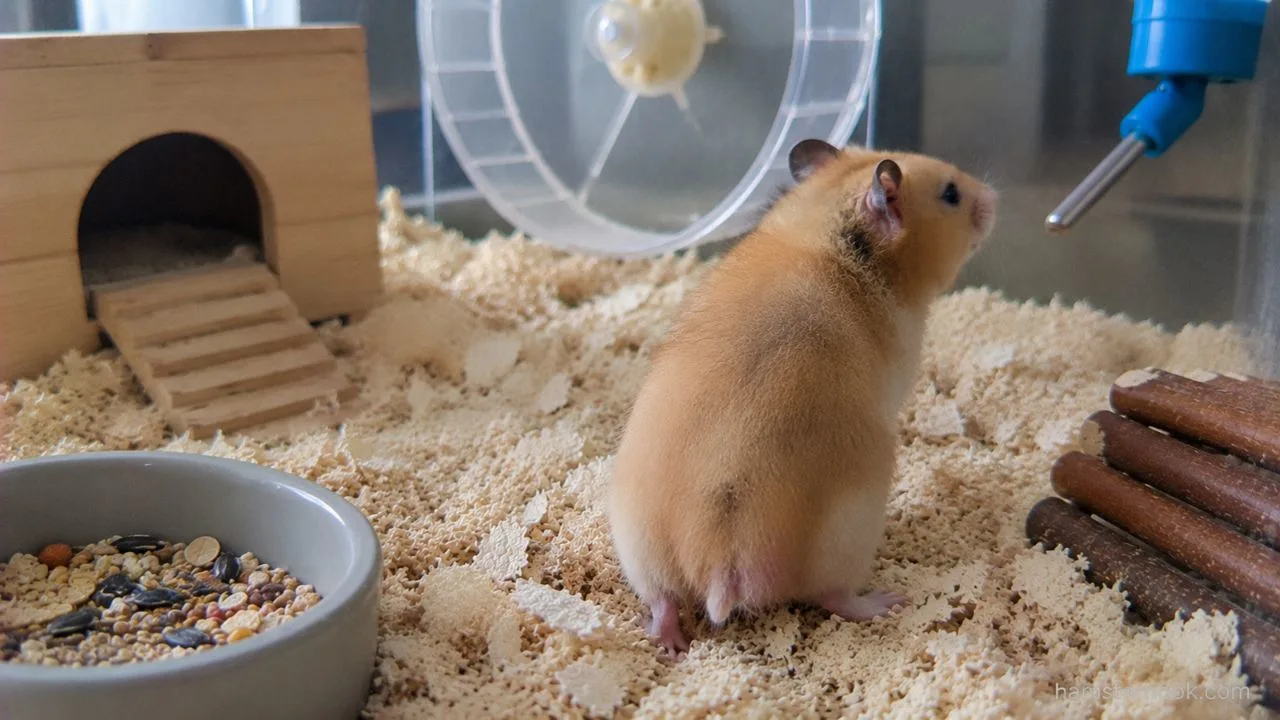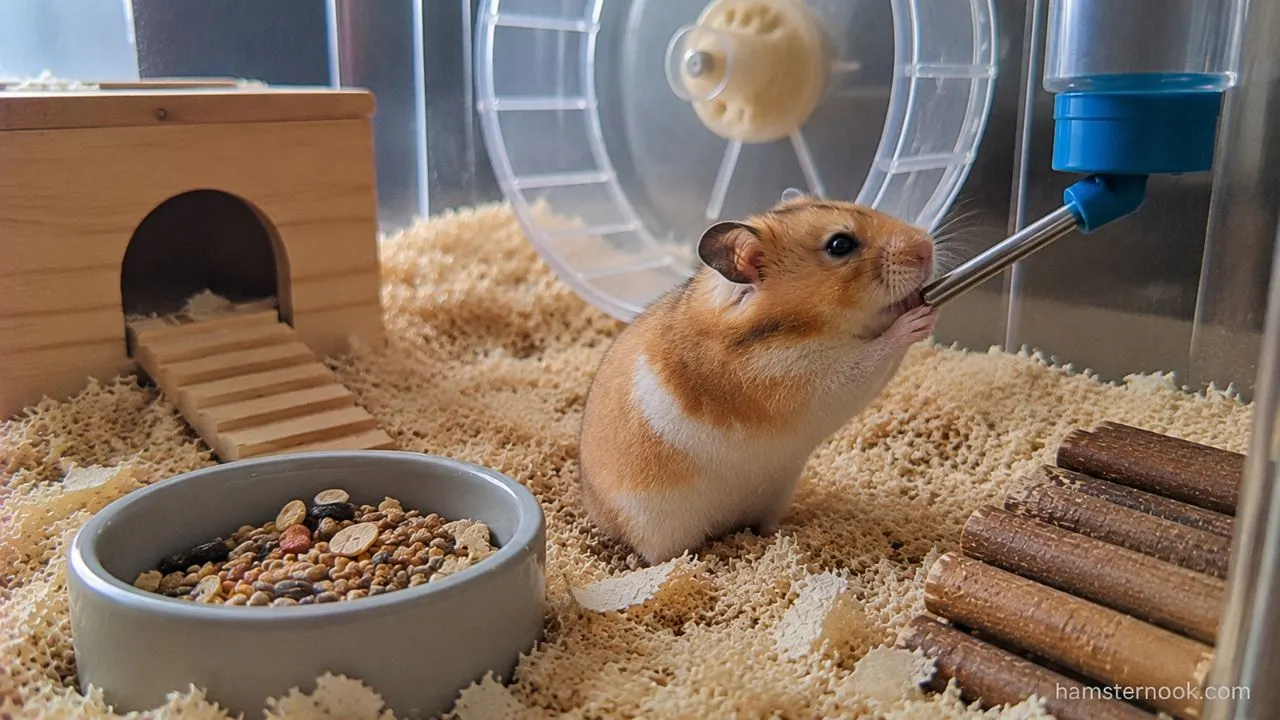
If you’re new to hamster ownership, one of the first questions you’ll probably ask is how often the bedding needs to be changed. It’s one of the most common questions new hamster owners have. Nobody wants their hamster living in a dirty enclosure, but cleaning too often can be just as stressful as not cleaning enough.
Many owners are surprised to learn that changing all of the bedding too often can actually create more problems than it solves.
Many well-meaning owners completely replace all bedding every week because they assume that’s the cleanest option. In reality, frequent full cleanouts can disrupt your hamster’s scent markings, destroy burrows, and create unnecessary stress. On the other hand, leaving soiled bedding untouched for too long can lead to unpleasant odors and hygiene issues.
The trick is finding a balance between cleanliness and keeping your hamster comfortable in an environment that still feels familiar. This guide explains how often hamster bedding should be replaced, what factors affect cleaning schedules, and how to keep your hamster’s enclosure fresh without causing stress.
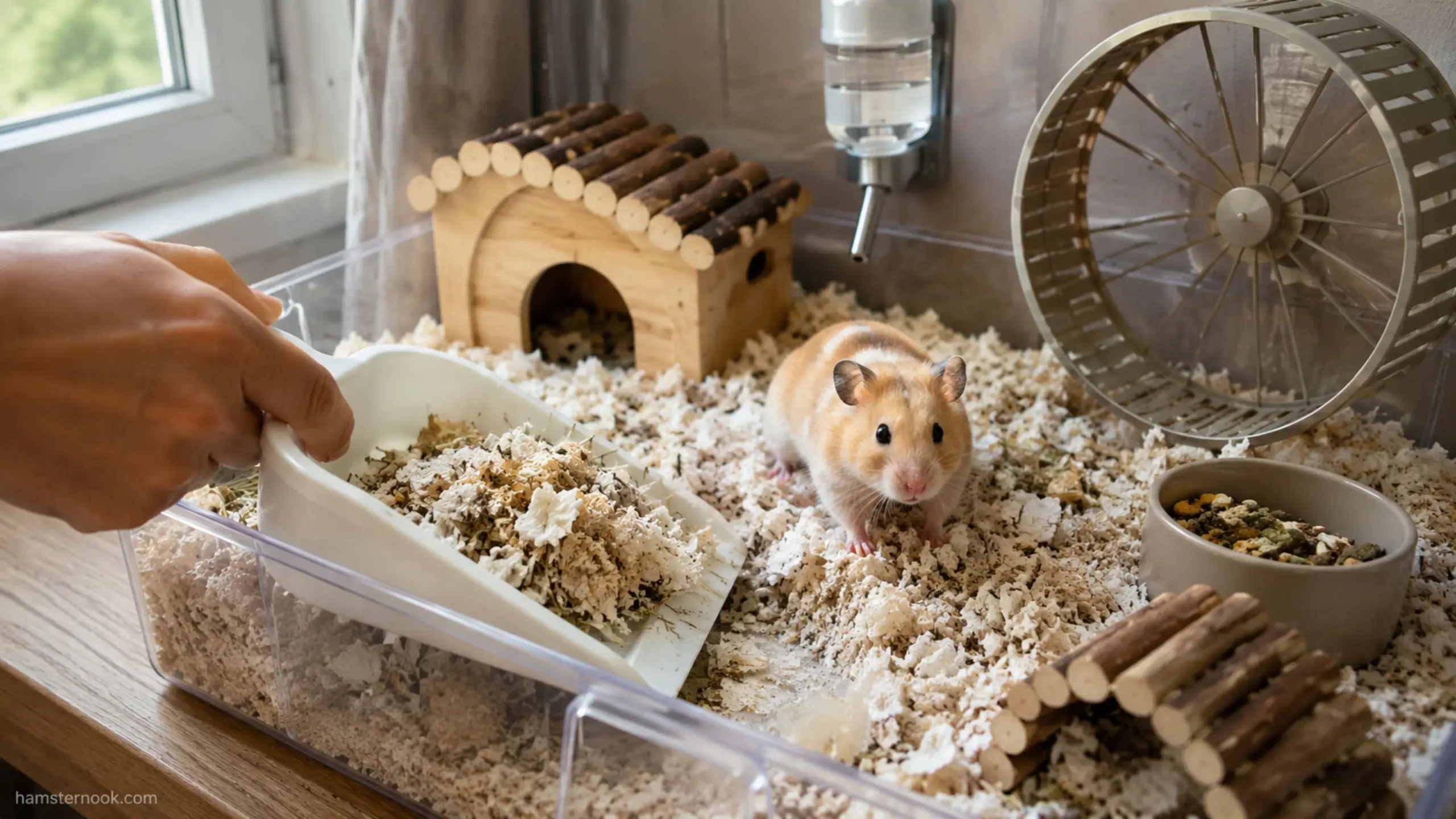
Why Bedding Is So Important for Hamsters
Many new owners think bedding is only there to absorb urine, but it serves several important purposes for a hamster.
For a hamster, bedding serves as:
- A sleeping area
- A burrowing material
- A nesting material
- A scent-marking environment
- A source of security
Hamsters naturally spend much of their time underground in complex burrow systems. Deep bedding allows them to express these natural instincts even in captivity. Learn how bedding fits into a complete habitat in our Hamster Cage Setup Guide.
When all bedding is removed at once, it can feel as though your hamster has suddenly lost its entire home.
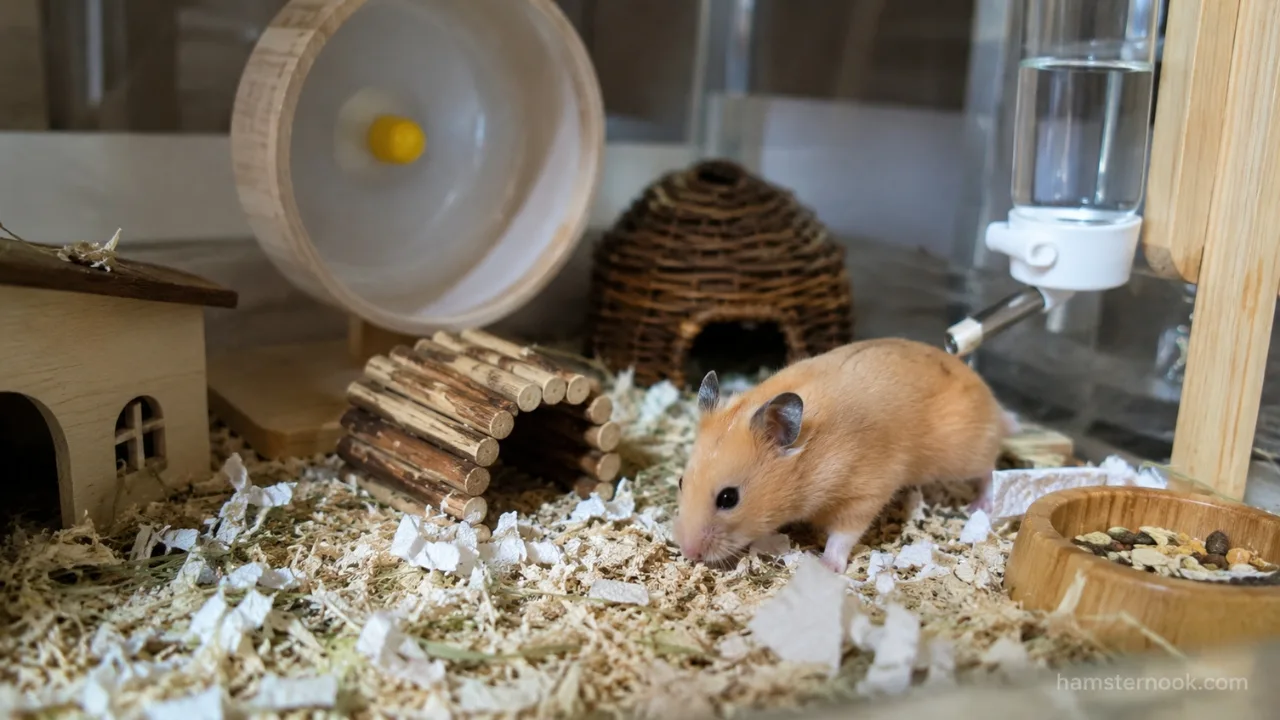
When Does Hamster Bedding Need Replacing?
Quick Answer:
There is no single bedding replacement schedule for every hamster. RSPCA guidance recommends removing soiled bedding, uneaten food, and faeces every few days, while a deeper cage clean is generally sufficient once or twice a month in most cases, depending on cage size and toilet habits. Keeping some clean, unsoiled bedding and nesting material helps preserve familiar smells during cleaning.
| Cleaning Task | Recommended Approach |
|---|---|
| Spot cleaning | Remove wet or soiled bedding and uneaten food every few days or whenever found |
| Deeper cage cleaning | In most cases, once or twice a month, depending on the enclosure and toilet habits |
| Full bedding replacement | Not a routine requirement; retain some clean, unsoiled bedding when cleaning |
Many owners are surprised by how long a properly maintained enclosure can stay fresh when deep bedding is used.
Why Weekly Full Cage Cleanouts Are Often a Mistake
Older hamster care advice often encouraged weekly full cage cleanouts, but modern care recommendations focus more on spot cleaning and preserving clean bedding.
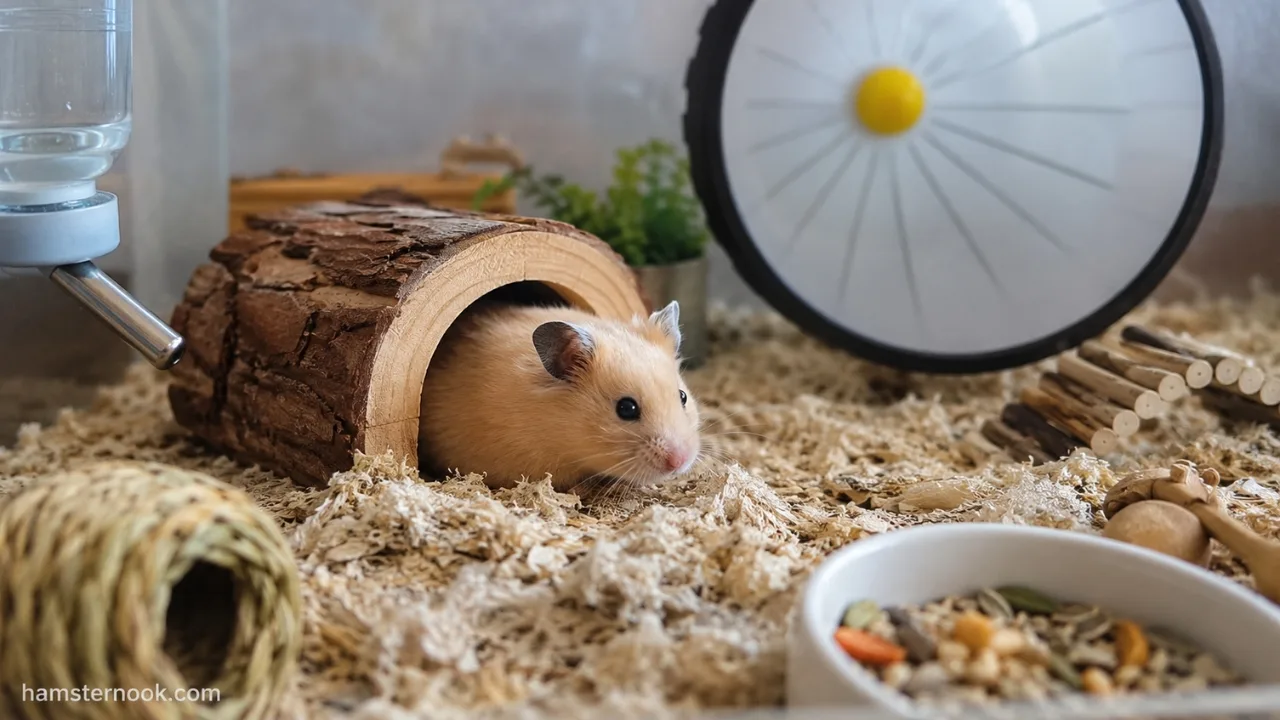
Modern hamster care generally takes a different approach.
A full cleanout removes:
- Familiar scents
- Burrow systems
- Nesting areas
- Food storage locations
For prey animals like hamsters, these familiar scents help create a sense of security.
When everything disappears at once, some hamsters become stressed and immediately begin re-marking their territory, which can actually increase scent marking and odor.
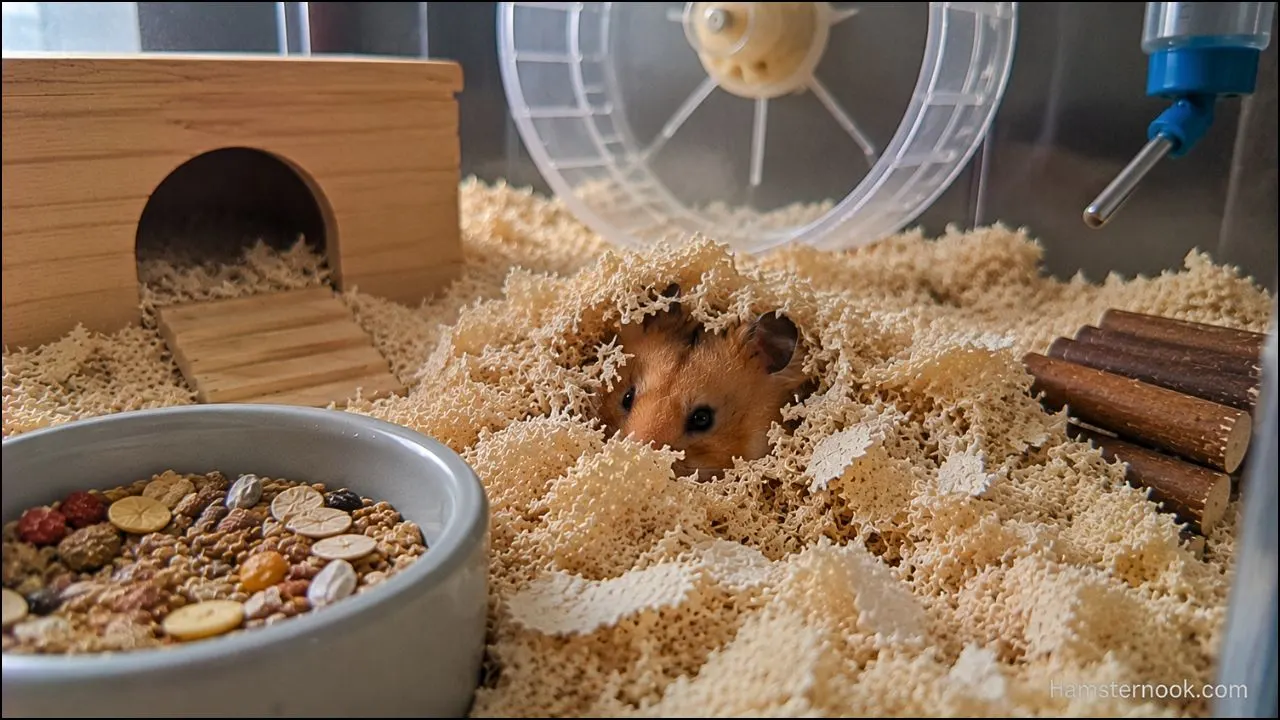
Signs Your Hamster Bedding Needs Cleaning
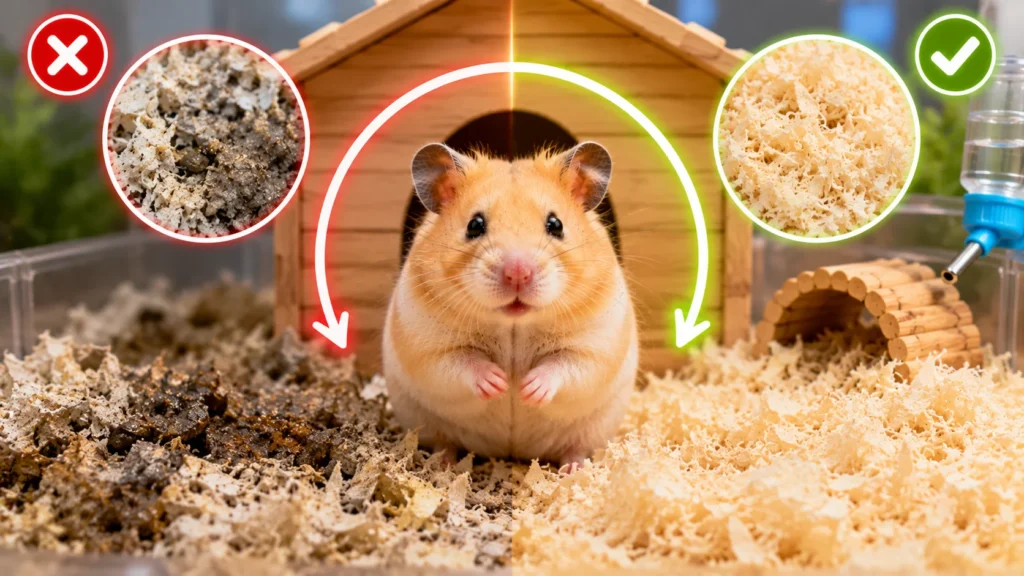
Instead of following a strict schedule, pay attention to what the enclosure is telling you.
Wet Bedding
Urine-soaked bedding should be removed as soon as it is discovered.
Wet bedding can:
- Produce odors
- Encourage bacterial growth
- Reduce cage hygiene
Many hamsters use the same bathroom area repeatedly, making spot cleaning relatively simple.
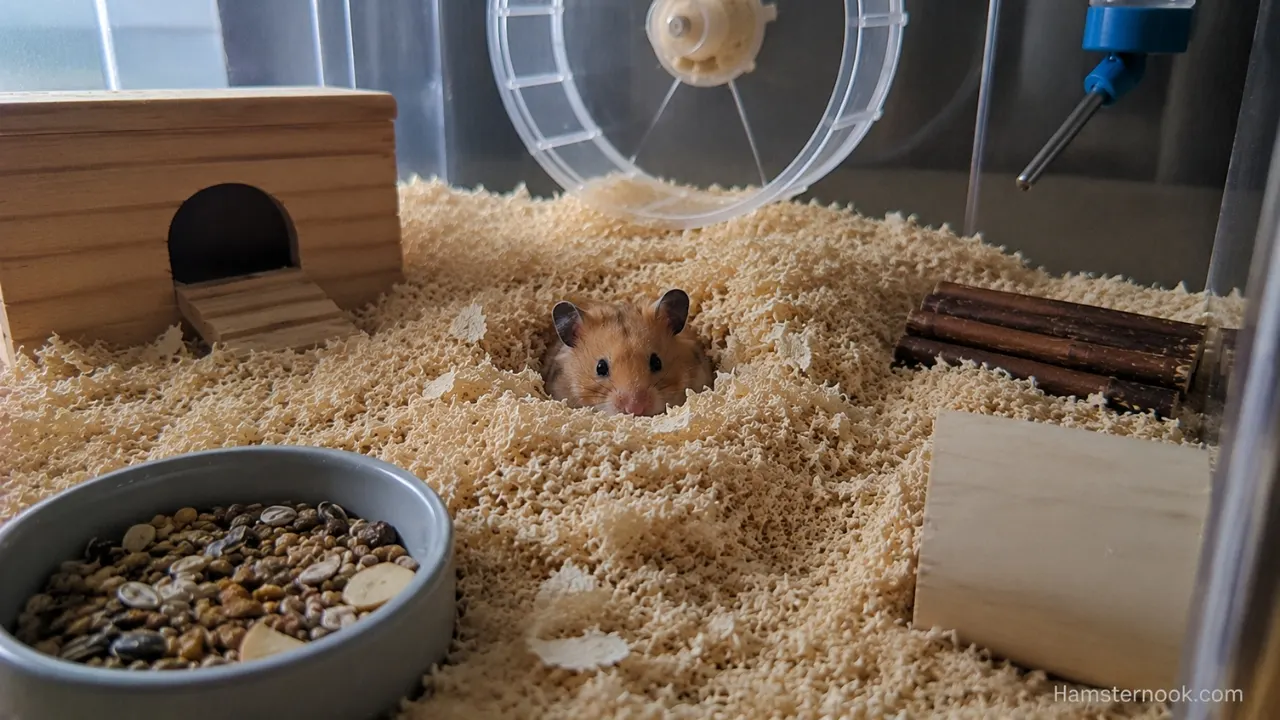
Strong Ammonia Smell
A healthy hamster enclosure should not produce a strong ammonia odor.
If you notice a sharp urine smell, check the enclosure for wet bedding, spoiled food, or other areas that need cleaning.
A noticeable ammonia smell is often a sign that some areas of the enclosure need attention.
Moldy Food Storage Areas
Hamsters often hide food inside their cages.
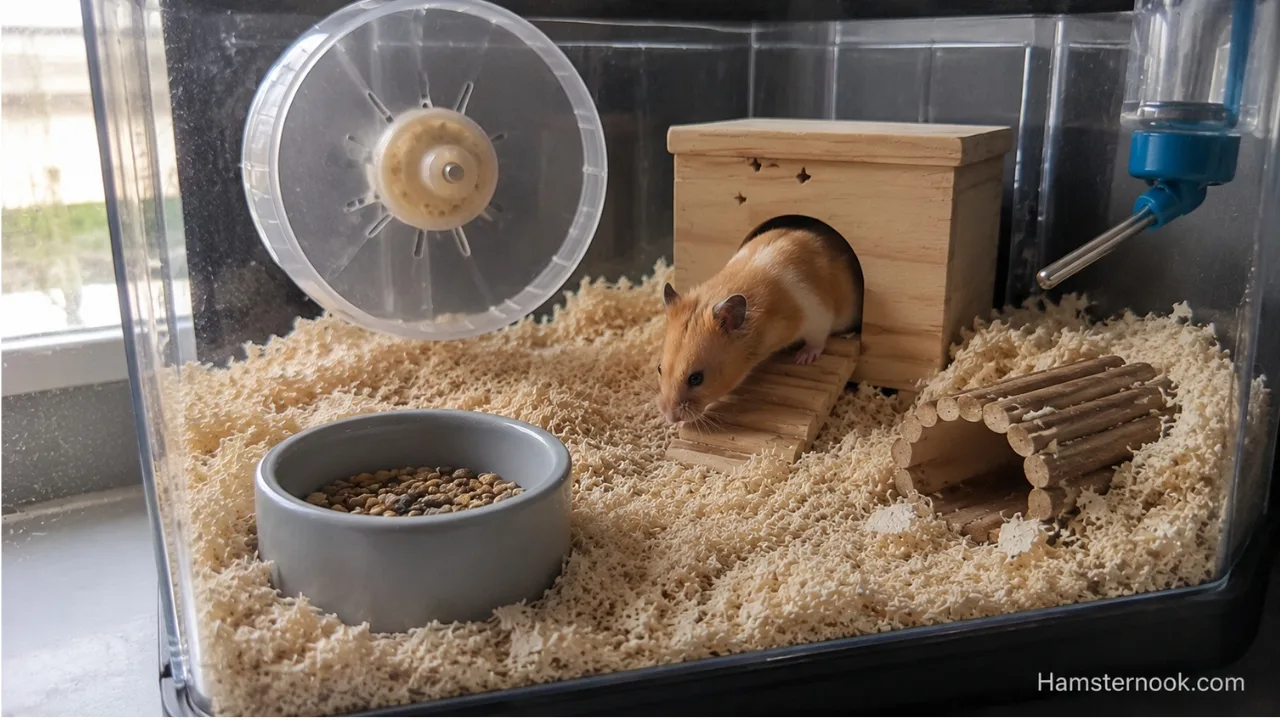
Fresh foods that are forgotten can spoil quickly. If you’re unsure which fresh foods are safe, read our What Can Hamsters Eat? guide.
Check food storage areas regularly for:
- Mold
- Moisture
- Rotting vegetables
- Old fruit pieces
Any spoiled food should be removed immediately.
Excessive Dirt Buildup
If large portions of bedding appear visibly dirty or compressed, a partial bedding replacement may be necessary.

Spot Cleaning vs Full Bedding Replacement
Understanding the difference between these cleaning methods helps prevent unnecessary stress.
| Cleaning Method | What It Involves | Best Use |
|---|---|---|
| Spot Cleaning | Remove wet or dirty bedding only | Routine maintenance |
| Partial Replacement | Replace some bedding while keeping most clean bedding | Periodic refresh |
| Full Replacement | Remove all bedding and clean entire enclosure | Rare situations |
For most hamsters, spot cleaning combined with occasional partial bedding replacement is sufficient.
Factors That Affect Bedding Replacement Frequency
Not every hamster enclosure gets dirty at the same rate.
Cage Size
Larger cages usually stay cleaner longer.

In a spacious enclosure, waste is spread over a greater area and odors accumulate more slowly.
| Cage Size | Typical Cleaning Demand |
|---|---|
| Small cage | Higher |
| Medium cage | Moderate |
| Large enclosure | Lower |
This is one reason modern hamster care emphasizes larger habitats.
Bedding Depth
Deep bedding often stays fresher longer because waste becomes dispersed throughout a larger volume of material.
Hamsters also benefit from deeper burrowing opportunities.

Deep bedding is important because hamsters need enough substrate to dig and burrow. Our How Much Bedding Does a Hamster Need? Minimum Depth Guide for Healthy Burrowing explains how bedding depth supports natural burrowing and how to choose a suitable setup.
Number of Hamsters
Hamsters should generally be housed alone in most situations.
More animals naturally create more waste, increasing cleaning requirements.
Bedding Type
Different bedding materials absorb moisture differently.

| Bedding Type | Guidance |
|---|---|
| Paper-based bedding | Suitable when clean, absorbent, and as dust-free as possible |
| Dust-free wood shavings | Can be suitable when free of harmful preservatives or chemicals |
| Cedar chips | Avoid |
| Fresh pine materials | Avoid |
| Fluffy cotton nesting material | Avoid because strands can become tangled around feet |
Safe bedding options generally provide better moisture control and comfort.
How to Spot Clean a Hamster Cage Properly
For most owners, spot cleaning does more to keep a cage fresh than frequent full cleanouts.
Step 1: Locate Bathroom Areas
Most hamsters choose one or two regular toilet locations.
These areas often contain:

- Damp bedding
- Stronger odors
- Concentrated waste
Step 2: Remove Soiled Bedding
Use a scoop or gloved hand to remove only dirty sections.
Avoid disturbing clean nesting areas whenever possible.
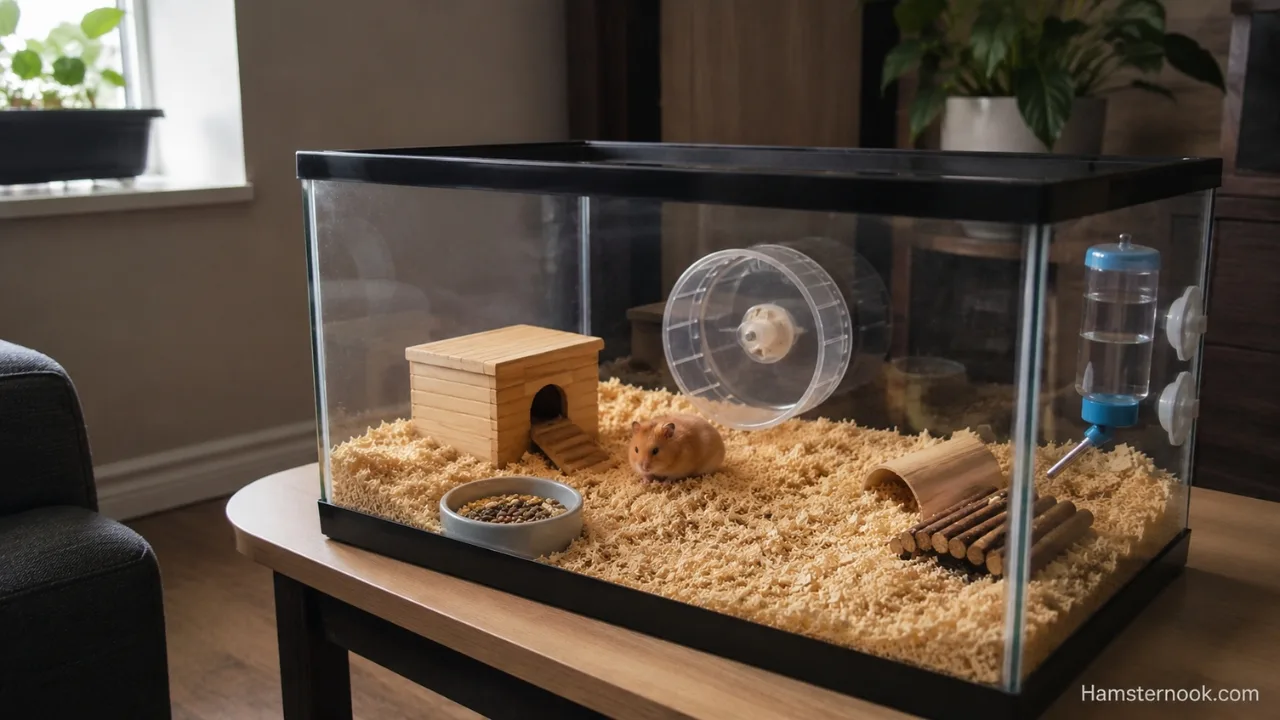
Step 3: Add Fresh Bedding
Replace removed material with fresh bedding.
This helps maintain bedding depth and burrow stability.
Step 4: Check Stored Food
Inspect food caches for spoiled fresh foods.
Discard anything that looks questionable.
How to Perform a Partial Bedding Change
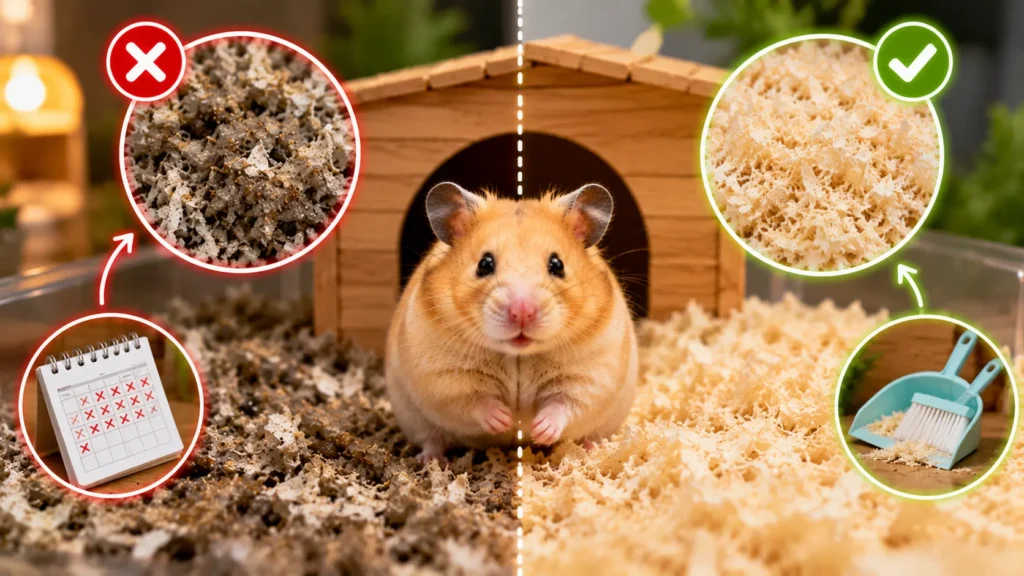
When bedding begins looking worn but isn’t completely dirty, a partial replacement can refresh the habitat.
A common approach is:

| Action | Recommendation |
|---|---|
| Remove dirty bedding | Yes |
| Keep clean bedding | Yes |
| Preserve nesting material | Usually |
| Add fresh bedding | Yes |
| Maintain familiar scent | Yes |
Retaining some clean bedding helps prevent unnecessary stress.
Situations That May Require a Full Bedding Change
Although full cleanouts should not be routine, certain situations justify them.
Examples include:
- Mold growth
- Parasite infestation
- Serious contamination
- Flooding from water bottle leaks
- Veterinary recommendations
In these cases, complete sanitation becomes more important than preserving scent.

How to Clean the Cage When a Deeper Clean Is Needed
When a deeper cage clean is necessary, move your hamster to a secure temporary enclosure while you clean. Remove soiled bedding and waste, clean the enclosure and allow it to dry completely, then add fresh bedding along with some clean, unsoiled bedding and nesting material from the previous setup.
Clean the cage when your hamster is awake rather than disturbing it during its normal sleep period. The goal is to restore a clean, dry habitat without unnecessarily removing every familiar scent.
Common Bedding Cleaning Mistakes
Many new owners unintentionally create problems during cleaning.
| Mistake | Why It’s Problematic |
|---|---|
| Replacing all bedding weekly | Can increase stress |
| Using scented cleaners | Strong smells may irritate hamsters |
| Removing every scent source | Eliminates familiar territory markers |
| Ignoring food caches | Can lead to spoiled food |
| Allowing wet bedding to remain | Reduces cage hygiene |
Avoiding these mistakes can improve both cleanliness and hamster welfare.
How to Reduce Bedding Odors Naturally
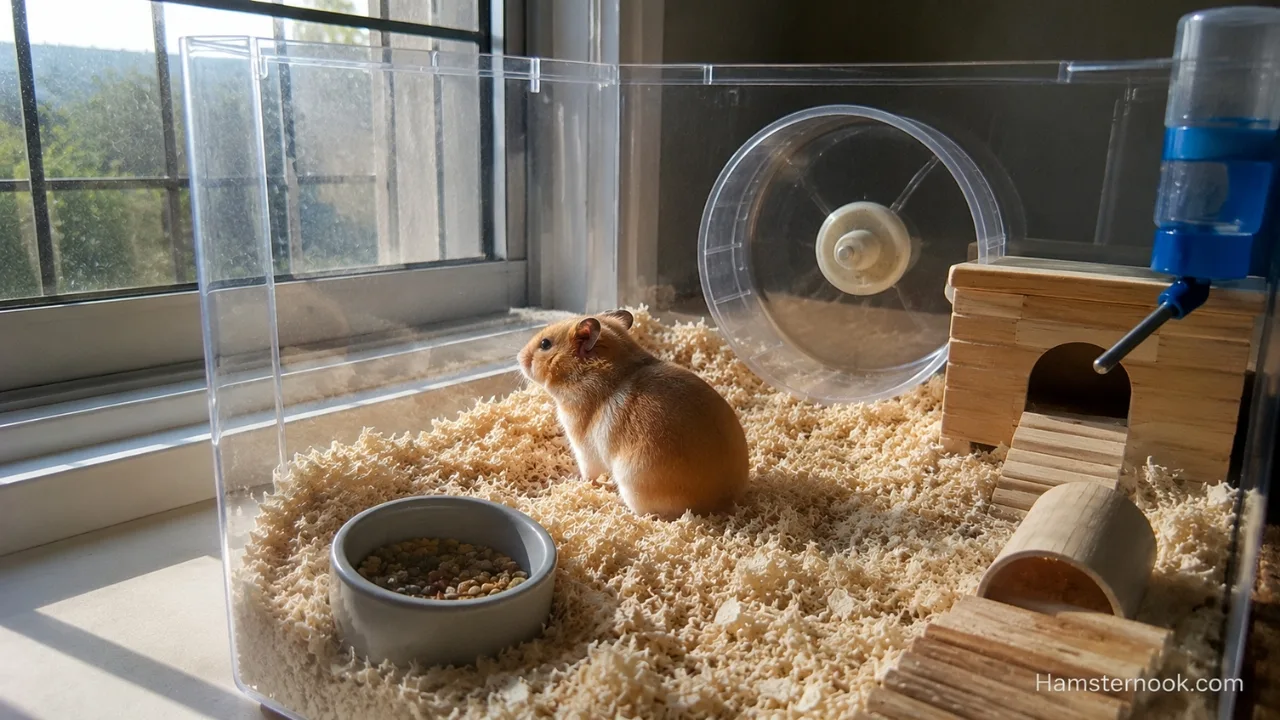
A healthy hamster enclosure should not smell strongly.
To keep odors under control:
- Spot clean regularly
- Use absorbent bedding
- Remove spoiled food promptly
- Provide adequate cage ventilation
- Maintain appropriate cage size
- Clean water bottle leaks quickly
Strong odors often indicate a husbandry issue rather than a need for constant full cleanouts.
What Happens If Bedding Is Changed Too Often?
Over-cleaning can create problems that many owners don’t anticipate.

Possible effects include:
- Increased stress
- More scent marking
- Reduced burrowing behavior
- Temporary anxiety
- Increased hiding
Frequent full cleanouts can also be one source of environmental stress. Our 7 Signs You’re Accidentally Stressing Your Hamster guide explains other changes that can make a hamster feel unsettled.
Final Thoughts
Hamster bedding does not need to be completely replaced on a strict weekly schedule. In most properly sized enclosures, regular spot cleaning and occasional partial bedding replacement are more effective and less stressful than frequent full cleanouts.
The best approach is to focus on removing wet bedding, cleaning food storage areas, and monitoring overall cage hygiene. By preserving clean bedding and familiar scents whenever possible, you can maintain a cleaner habitat while supporting your hamster’s natural behaviors and sense of security.

A clean cage is important, but helping your hamster feel safe and secure is equally important.
Frequently Asked Questions
Should I replace all of my hamster’s bedding every week?
No. Weekly full bedding replacement is usually unnecessary and may cause stress by removing familiar scents and burrows.
How often should I spot clean hamster bedding?
Check for wet or soiled bedding every few days and remove affected areas as needed. The exact routine depends on how quickly your hamster soils the enclosure.
Why does my hamster’s cage smell bad so quickly?
Common causes include wet bedding, spoiled food, inadequate cage size, poor ventilation, or insufficient spot cleaning.
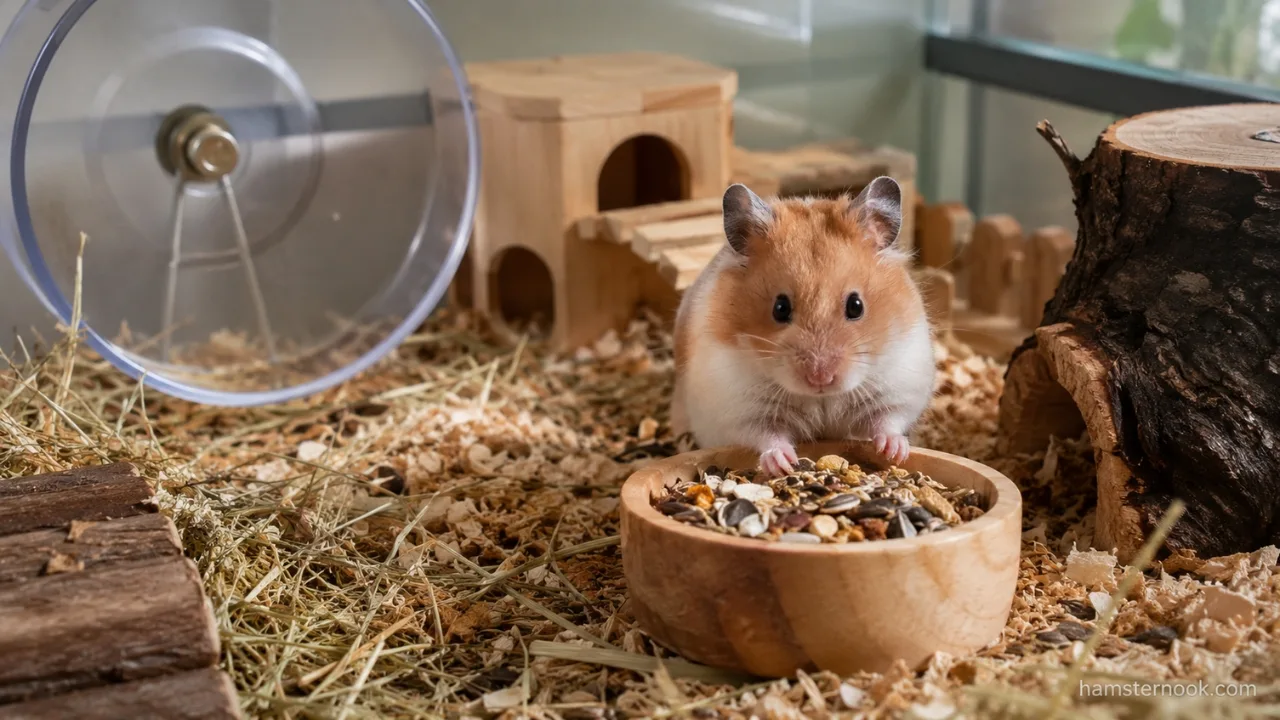
Is it okay to leave some old bedding in the cage?
Yes. Keeping clean bedding helps preserve familiar scents and reduces cleaning-related stress.
Can I wash and reuse hamster bedding?
No. Most hamster bedding is designed for single use and should be replaced rather than washed.
What type of bedding stays fresh the longest?
High-quality paper bedding is generally one of the most absorbent options and often provides excellent odor control when maintained properly.

Narayan Kumar is the founder and author of HamsterNook. He creates practical, research-based hamster care guides covering hamster behavior, nutrition, cage setup, enrichment, health, and everyday care. His goal is to help hamster owners make informed decisions and provide safer, healthier lives for their pets through clear, beginner-friendly information based on trusted animal care resources.