Choosing the right cage is important, but where that cage is placed can have a major impact on your hamster’s comfort, daily routine, and overall wellbeing. Many new owners focus on bedding, food, and toys while overlooking the environment surrounding the enclosure.
A cage placed in a noisy, bright, or drafty area can disrupt your hamster’s natural routines. Understanding what makes a good location helps create a safer and less stressful home for your pet.
Choosing the right location is only one part of proper hamster care. Our Hamster Care Guide for Beginners covers housing, diet, enrichment, health, and daily care essentials for new owners.
Quick Answer
The best place for a hamster cage is a quiet room with a stable temperature, away from direct sunlight, drafts, radiators, televisions, and heavy household traffic. Hamsters need a calm environment where they can rest during the day and become active at night without frequent disturbances. A spare room, home office, or quiet bedroom is often a better choice than a busy living room or kitchen.
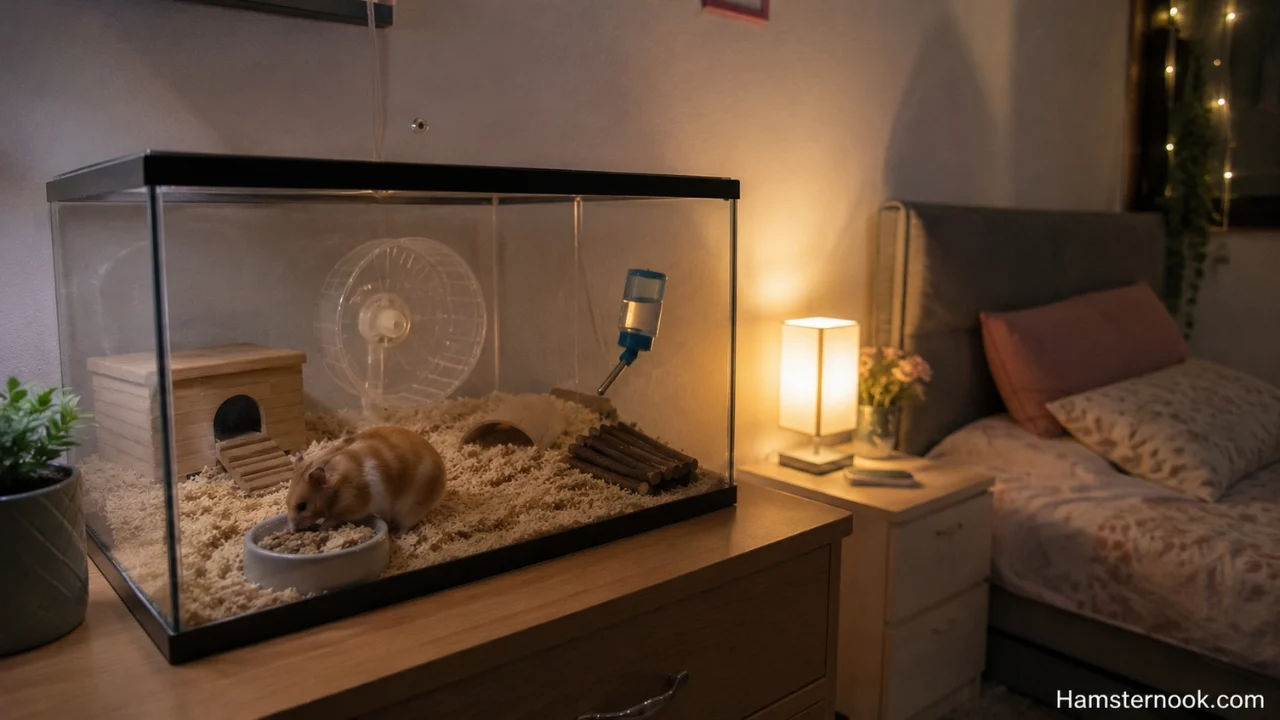
Why Cage Placement Matters
A hamster’s enclosure is more than just a place to sleep. It serves as its entire territory.
In the wild, hamsters spend much of their time underground in burrow systems where temperature, light, and noise levels remain relatively stable. Pet hamsters benefit from a similarly predictable environment.
Poor cage placement can expose a hamster to:
- Excessive noise
- Sudden temperature changes
- Direct sunlight
- Frequent disturbances
- Household predators
- Vibrations and stress
These factors can interfere with natural behaviors such as sleeping, foraging, grooming, and exploring.

According to animal welfare guidance from organizations such as the RSPCA and PDSA, hamsters require a secure environment that allows them to rest undisturbed during the day and remain comfortable throughout the year.
Characteristics of an Ideal Cage Location
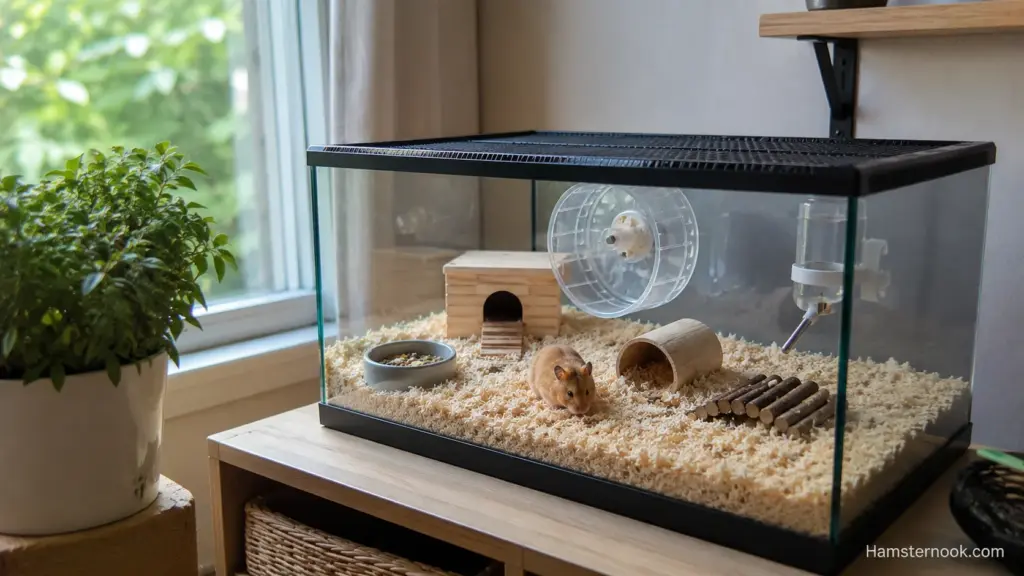
Before choosing a specific room, it’s helpful to understand what conditions hamsters generally need.
Stable Room Temperature
Hamsters cope best in environments that avoid sudden temperature swings.
A cage placed next to a radiator, heater, air-conditioning vent, frequently opened exterior door, or drafty window can expose the hamster to uncomfortable fluctuations.
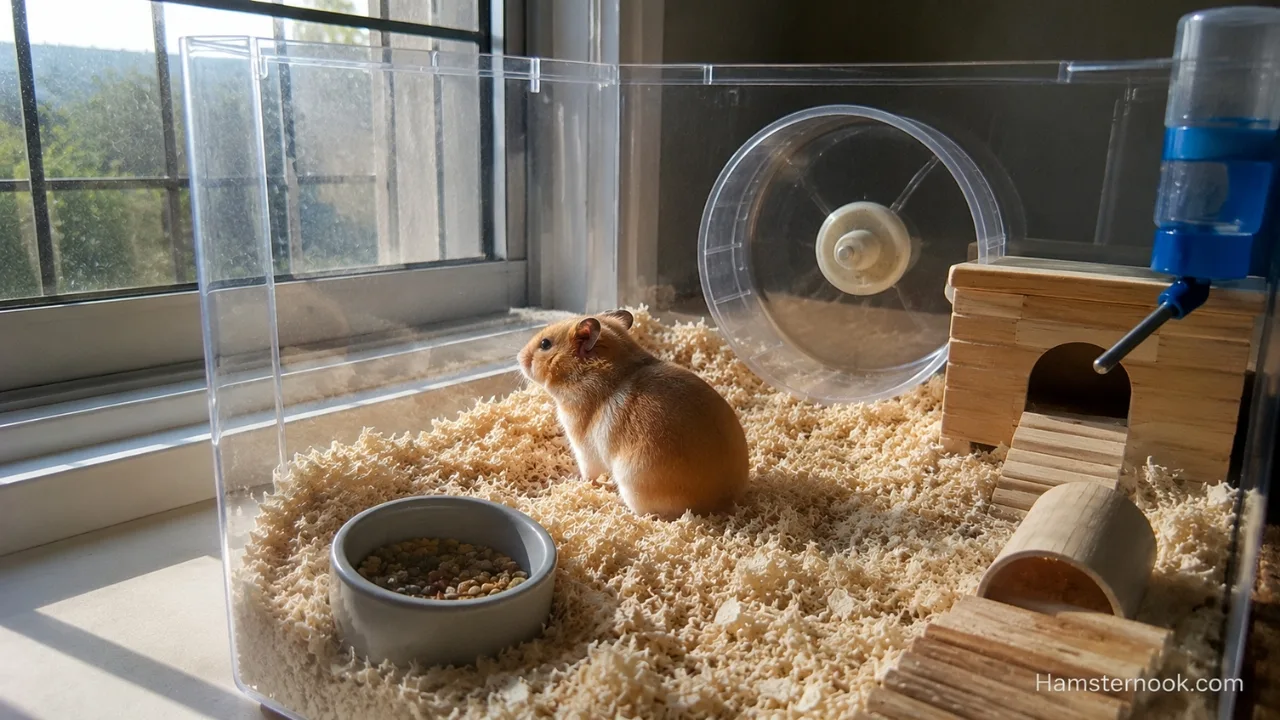
Consistent indoor temperatures are generally safer than locations where the room becomes very hot during the day and cold at night.
For more guidance on keeping the enclosure within a comfortable range, see our Hamster Temperature: Safe Range, Too Hot & Too Cold guide.
If you’re unsure about a room because its temperature changes noticeably during the day, check the room at different times rather than judging it from a single visit. The goal is a stable environment rather than a room that is only comfortable for part of the day.
If a room regularly feels uncomfortable to you because of heat, cold, or drafts, it is worth considering whether the environment may also be less comfortable for your hamster.
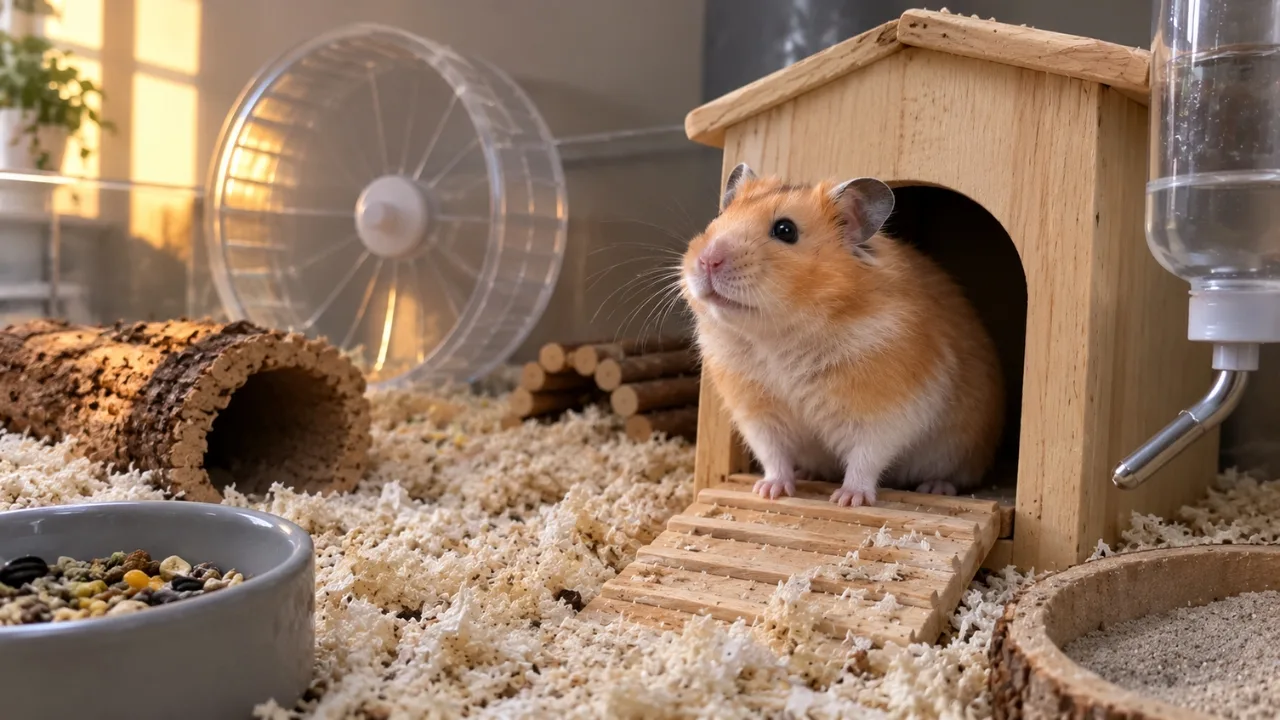
Low Noise Levels
Hamsters have sensitive hearing.
Sounds that seem ordinary to humans may feel far more disruptive to a small prey animal that relies heavily on hearing to detect potential danger.
Good cage locations minimize exposure to:
- Loud televisions
- Speakers
- Vacuum cleaners
- Constant conversations
- Slamming doors
- Gaming systems
Occasional household sounds are normal, but constant noise may interfere with restful daytime sleep.

Protection From Direct Sunlight
Direct sunlight can rapidly increase enclosure temperatures, particularly in glass tanks.
Even a few hours of intense afternoon sun can create conditions that are far warmer than the surrounding room.
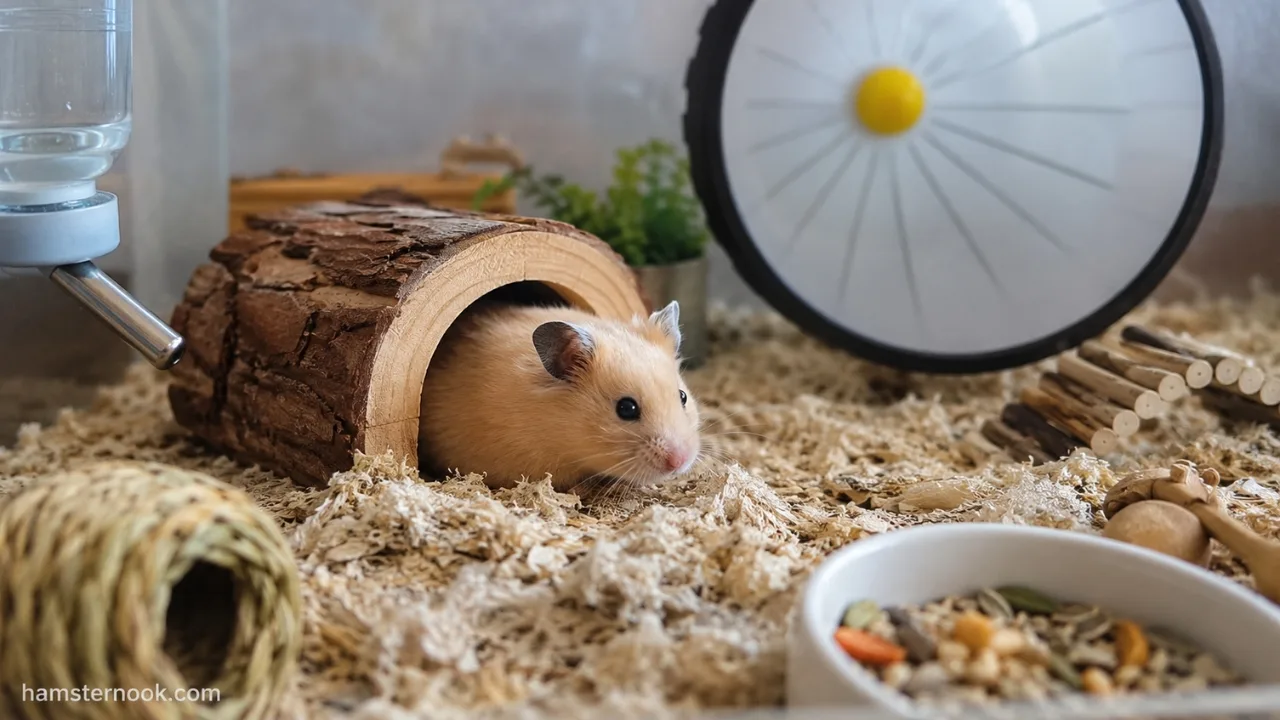
A naturally bright room is usually fine, but the enclosure itself should never sit in direct sunlight.
If you’re also deciding how much natural light your hamster should receive, our Can Hamsters Sleep With the Lights On? Safe Lighting Tips for Better Sleep guide explains how lighting can affect a hamster’s daily routine.
Limited Daytime Disturbance
Hamsters are generally most active during the evening, nighttime, and early morning hours.
During the day, they need opportunities to sleep without repeated interruptions.
Locations where people constantly walk past the enclosure may cause frequent waking and unnecessary stress.
What Makes One Room Better Than Another?
The best room is not necessarily the room where you spend the most time. Choose the space that gives your hamster the most stable combination of quiet, comfortable temperature, low traffic, and limited daytime disturbance.

A good room should:
- Stay comfortable throughout the day and night.
- Have no direct sunlight falling on the enclosure.
- Be away from heaters, air-conditioning vents, and drafty doors or windows.
- Allow your hamster to sleep without frequent interruptions.
- Have enough space for the enclosure to sit securely.
- Keep the cage protected from curious cats, dogs, and other household pets.
If two rooms seem equally suitable, choose the one with less noise and foot traffic rather than the one that is simply more convenient for you.
Comparing Different Rooms in the Home
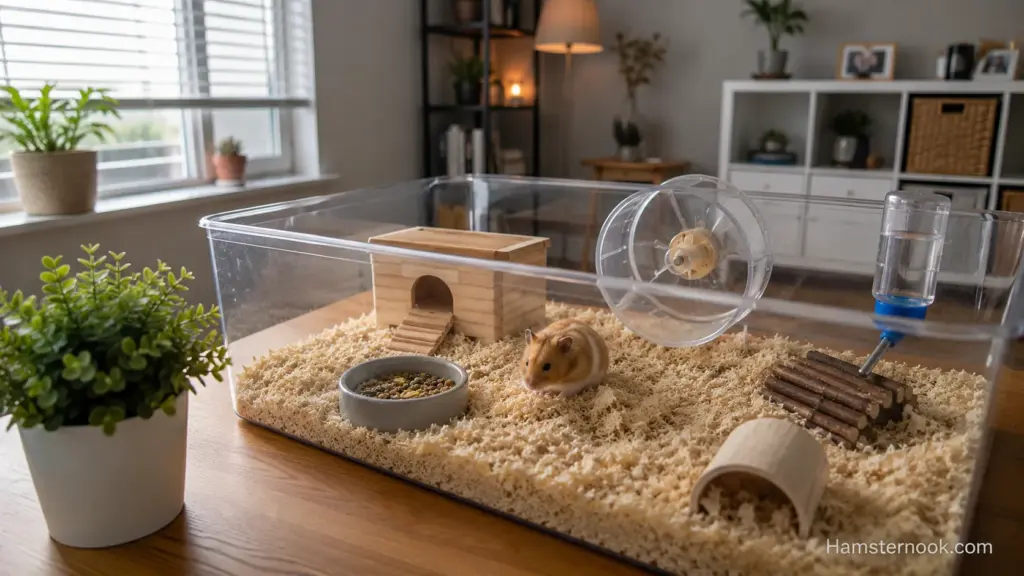
Not every room provides the same environment for a hamster.
| Room | Suitability | Why |
|---|---|---|
| Spare Bedroom | Excellent | Usually quiet, stable, and low traffic |
| Home Office | Excellent | Can be suitable when daytime activity does not repeatedly disturb sleep |
| Adult Bedroom | Good | Works well if nighttime wheel noise is acceptable |
| Living Room | Moderate | Can be noisy and busy during the day |
| Dining Room | Moderate | Depends on household activity levels |
| Kitchen | Poor | Heat, cooking fumes, and frequent activity |
| Bathroom | Poor | High humidity and temperature changes |
| Garage | Poor | Unstable temperatures and potential hazards |
| Conservatory/Sunroom | Poor | Risk of overheating and excessive sunlight |
Is the Living Room a Good Place for a Hamster Cage?
Many owners place the cage in the living room because it allows them to interact with their pet more frequently.

This arrangement can work in some households, but several factors should be considered.
Advantages
- Easier daily observation
- More opportunities for interaction
- Convenient feeding and cleaning routines
Disadvantages
- Television noise
- Visitors and household activity
- Bright evening lighting
- Frequent movement around the cage
A calm living room may work perfectly well, while a busy family room used throughout the day and late evening may not provide enough quiet time.
Observing whether your hamster maintains normal sleeping patterns during the day can help you judge whether household activity levels are appropriate.
Should You Keep a Hamster Cage in Your Bedroom?
This is one of the most common questions from first-time owners.
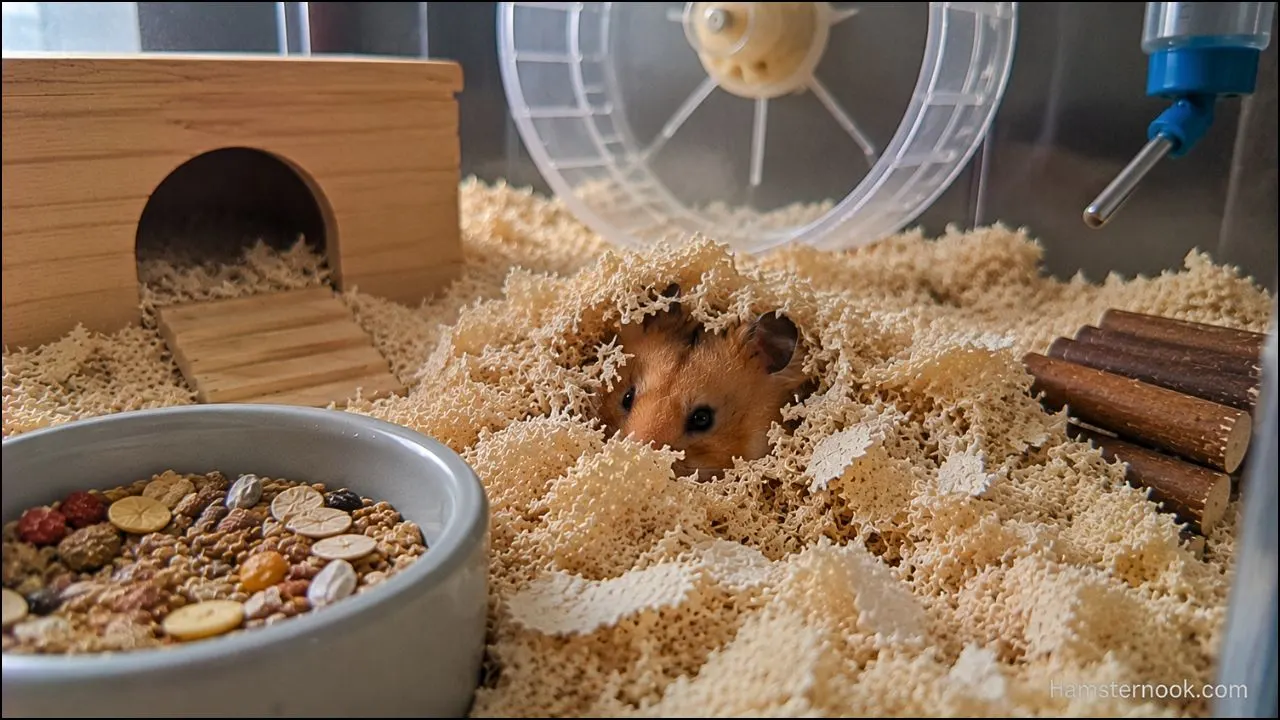
For the hamster, a bedroom is often a suitable environment because it is typically quieter than communal areas of the house.
However, owners should remember that hamsters are active while people are sleeping.
A healthy hamster may spend hours:
- Running on its wheel
- Digging
- Rearranging bedding
- Chewing enrichment items
- Carrying food around the enclosure
Some people sleep through these sounds easily, while others find them disruptive.
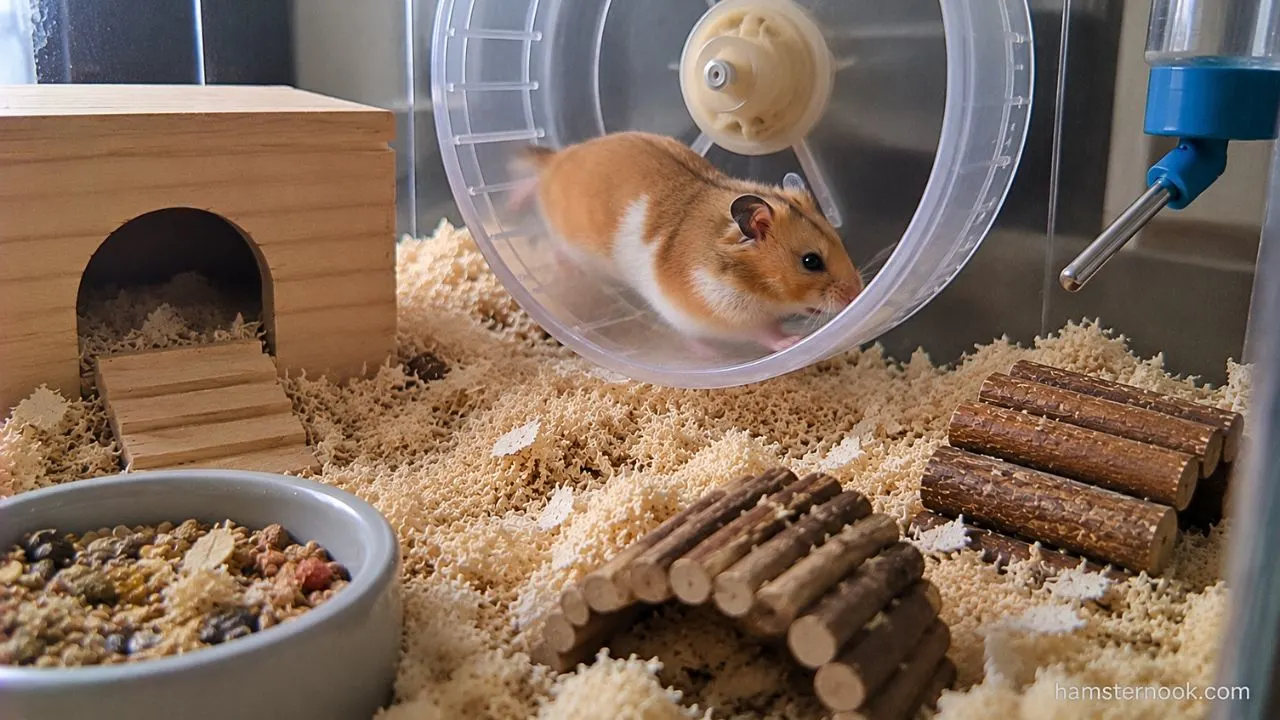
From the hamster’s perspective, the room itself is usually acceptable as long as temperature and noise levels remain stable.
Places You Should Avoid
Certain locations create unnecessary risks for hamsters.
Near Windows
Windows can expose the enclosure to:
- Direct sunlight
- Cold drafts
- Temperature fluctuations
Conditions may change dramatically throughout the day, especially during summer and winter.

Beside Radiators and Heaters
Heat sources can warm one side of the enclosure much more than the other.
This makes it difficult for the hamster to regulate its comfort.
Next to Air Conditioning Vents
Strong airflow may create drafts and lower temperatures unexpectedly.
In Hallways
Hallways experience constant movement and noise.
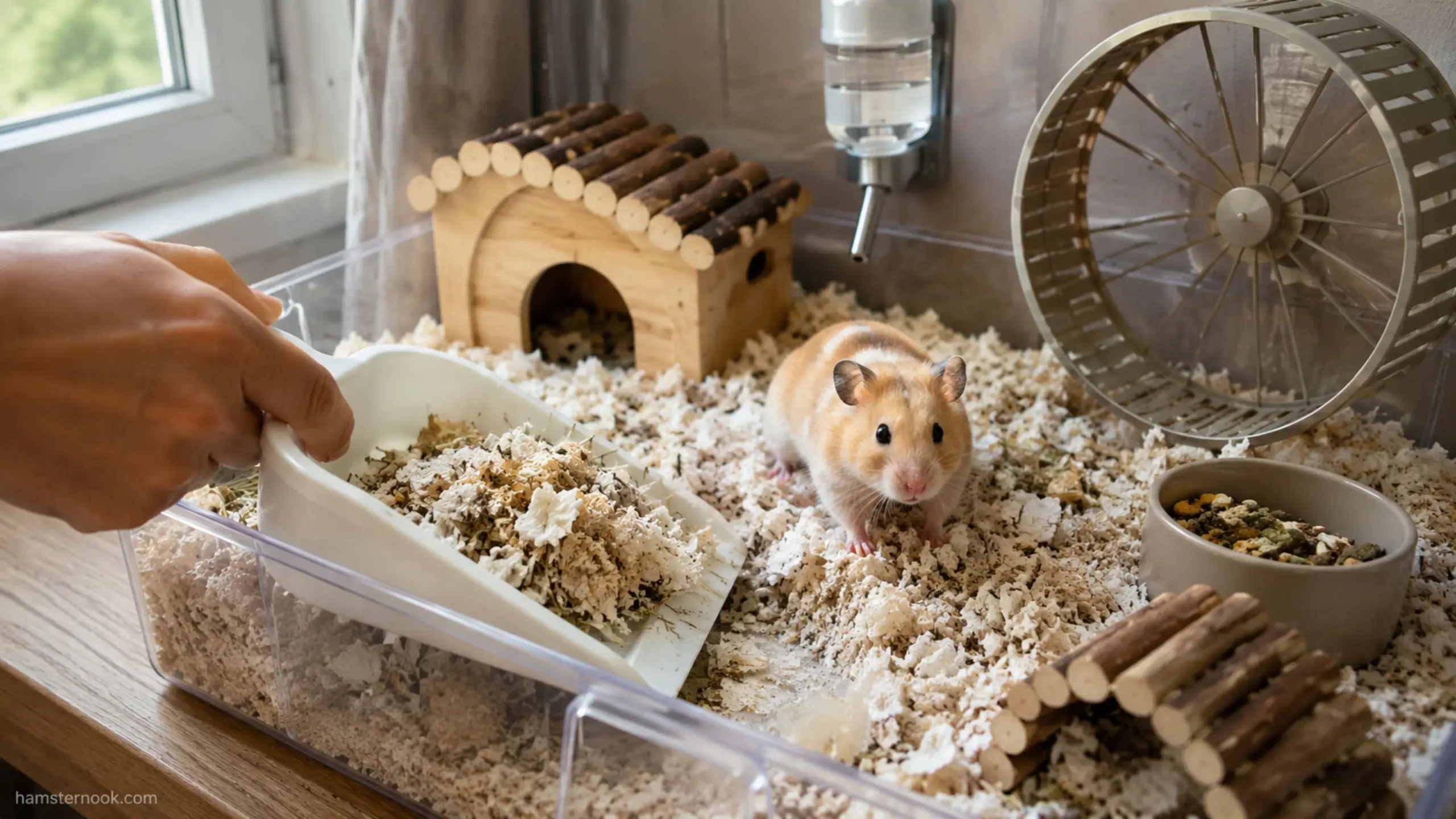
People frequently passing by may disturb a hamster’s daytime rest.
Near Other Pets
Dogs and cats often show intense curiosity toward small animals.
Even if a predator cannot physically reach the hamster, repeated staring, pawing, barking, or attempts to access the enclosure can cause stress.
Animal welfare organizations recommend ensuring small pets have protection from other household animals whenever possible.
How High Should a Hamster Cage Be?
Many owners focus only on room selection and forget about cage height.
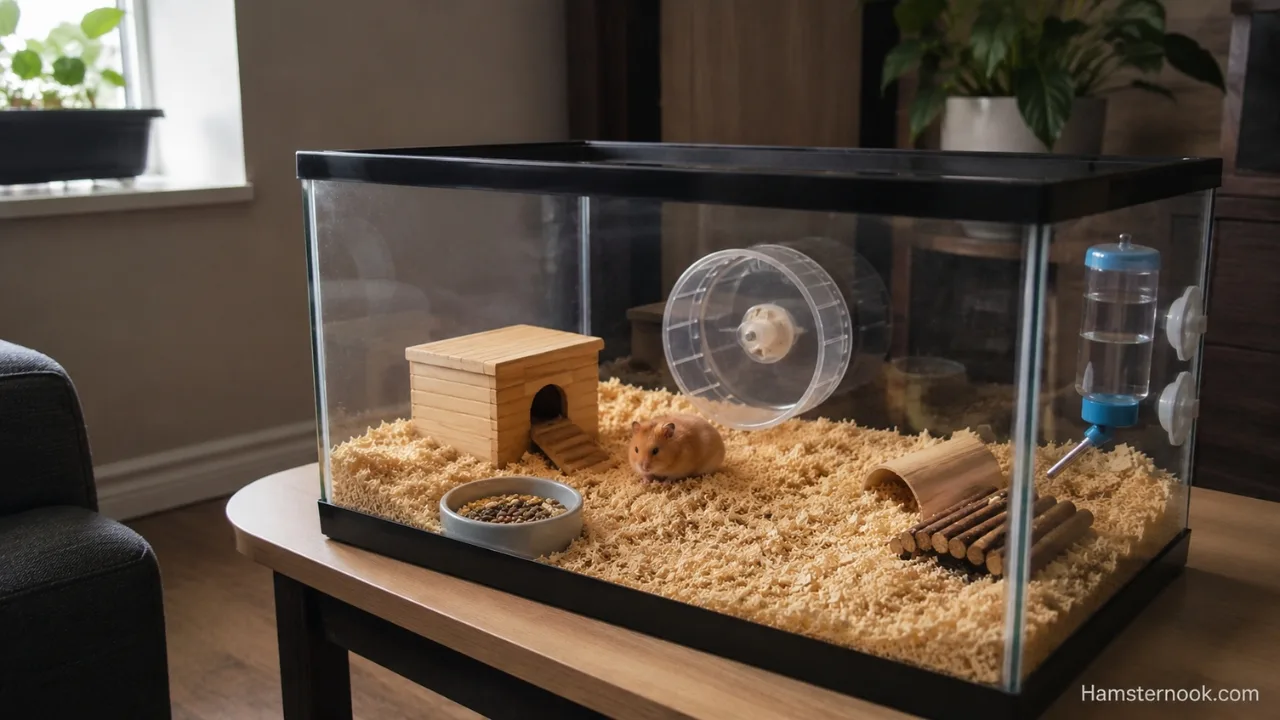
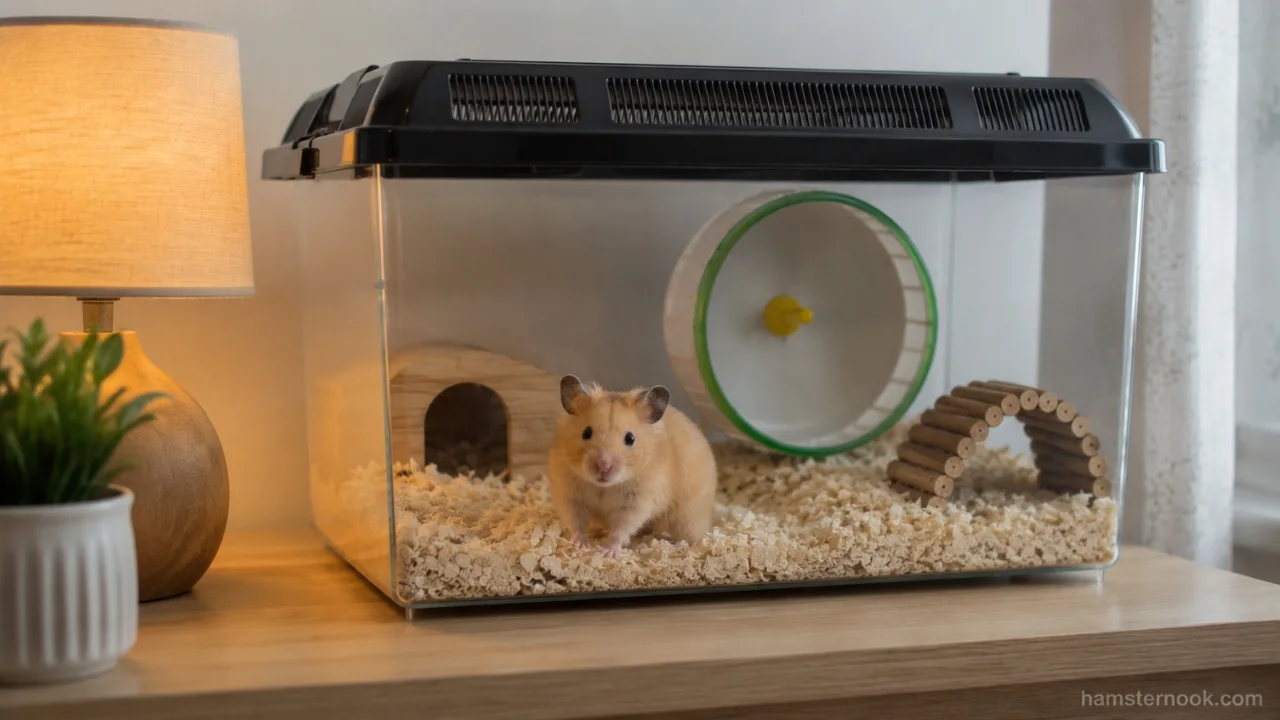
The enclosure should be positioned on a sturdy, secure surface.
Location is important, but the enclosure itself also needs to support your hamster’s natural behaviors and daily needs. Our Best Hamster Cage Setup for Beginners: Size, Bedding, Wheel & Essentials explains how to create a comfortable and enriching habitat.
Good options include:

- Solid cabinets
- Sturdy tables
- Dedicated pet stands
- Strong shelving designed for the cage’s weight
The cage should never be placed where it could be knocked over by children, pets, or accidental bumps.
A sturdy elevated surface can also reduce the risk of accidental bumps from people or pets, provided the cage is securely supported and cannot fall.
An elevated position can also make routine health checks, feeding, and cleaning easier without requiring owners to bend down frequently.
Practical Examples
Example 1: Quiet Home Office
A home office used mainly during daytime working hours often provides excellent conditions.

The room is typically quiet during the hamster’s sleeping period and calm during nighttime activity.
Example 2: Busy Family Living Room
A cage placed beside a television with children frequently running through the room may expose the hamster to constant disturbances.
While some hamsters adapt, many benefit from a quieter location.
Example 3: Sunny Window Area
A cage positioned near a south-facing window may appear bright and pleasant to humans, but direct sunlight can quickly create unsafe temperatures inside the enclosure.
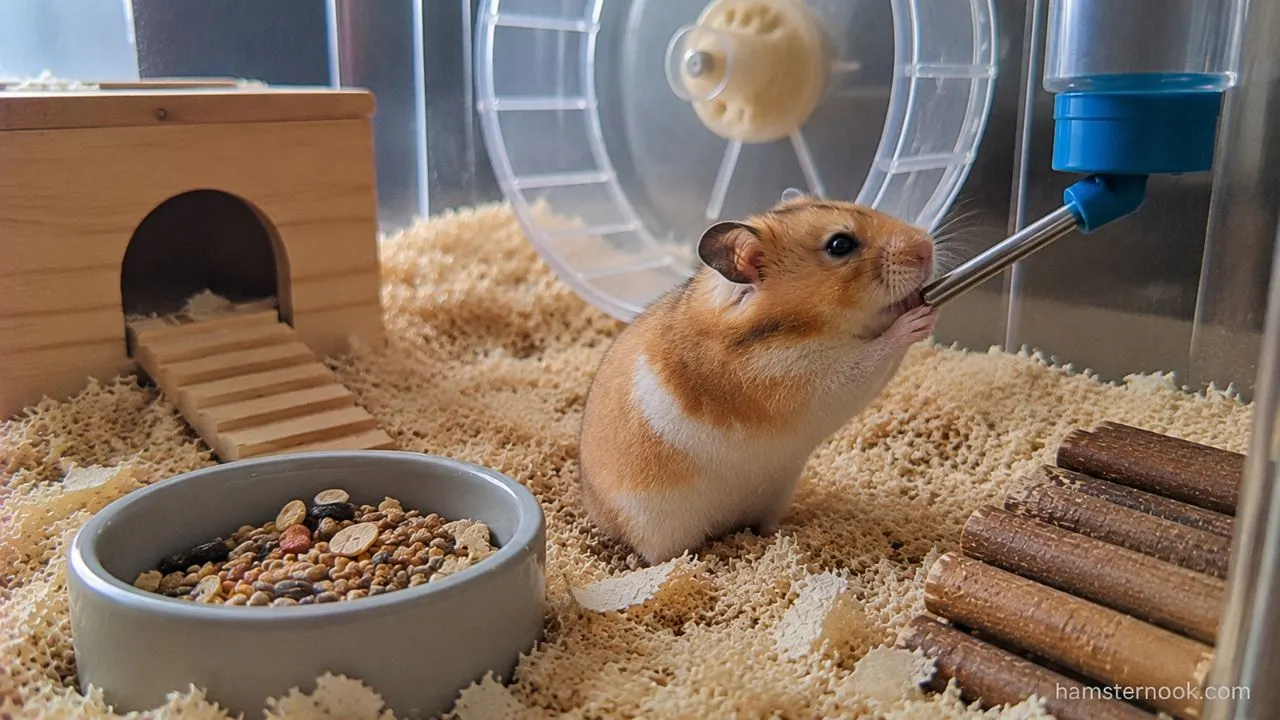
Example 4: Spare Bedroom
Many experienced owners find spare bedrooms ideal because they combine stable temperatures, reduced traffic, and fewer disturbances throughout the day.
Common Mistakes Owners Make
Even well-meaning owners sometimes choose cage locations based on convenience rather than the hamster’s needs.
Placing the Cage Where the Family Spends the Most Time
Many people assume a hamster will enjoy being in the center of household activity. In reality, hamsters are prey animals that generally prefer predictable surroundings and opportunities to rest undisturbed.
Putting the Cage in Direct Sunlight
A sunny spot may seem warm and inviting, but direct sunlight can quickly raise temperatures inside an enclosure, particularly glass tanks. Unlike humans, hamsters cannot simply move to another room if they become too hot.

Keeping the Cage Too Close to Electronics
Televisions, speakers, gaming systems, and other electronics may create constant noise and vibrations. While occasional sound is normal, continuous exposure can interfere with a hamster’s rest.
Ignoring Household Pets
A cat staring at a hamster enclosure for long periods or a dog repeatedly investigating the cage may cause stress, even when no physical contact is possible.
Choosing an Unstable Surface
Hamster cages should always sit on a secure, level surface. Wobbly tables, overloaded shelves, or furniture that moves easily can create unnecessary risks.
What You Should Do
When deciding where to place your hamster’s cage, focus on creating a calm, predictable environment.
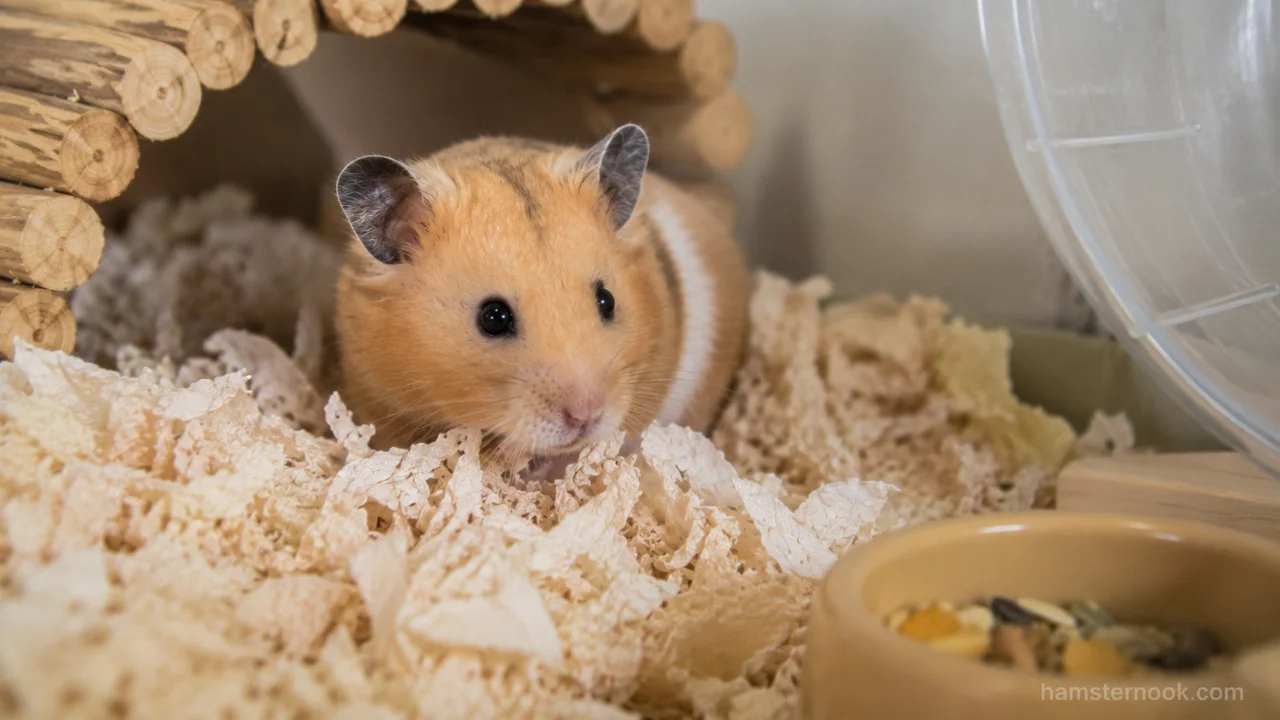
A good location should:
- Stay at a stable indoor temperature.
- Remain out of direct sunlight.
- Avoid drafts from doors, windows, and vents.
- Allow uninterrupted daytime sleep.
- Minimize exposure to loud sounds.
- Be inaccessible to cats, dogs, and other pets.
- Sit on a sturdy, secure surface.
If you’re deciding between two locations, choose the quieter and more stable option rather than the most convenient one for human interaction.
It’s also helpful to observe your hamster after moving the cage. A comfortable hamster will typically maintain normal behaviors such as eating, burrowing, wheel running, grooming, and exploring during its active hours.
If you’re unsure whether your hamster’s behavior is normal, see Hamster Behavior Guide: Understanding Every Common Hamster Behavior (2026).
Warning Signs the Cage Location May Not Be Ideal
Sometimes a hamster’s behavior can suggest that the surrounding environment is causing stress.
Watch for:
- Frequent startling at normal household activity.
- Persistent hiding beyond normal sleeping periods.
- Repeated attempts to escape the enclosure.
- Reluctance to emerge during usual active hours.
- Signs of overheating, such as spreading out on cool surfaces during hot conditions.
- Disturbed sleep caused by repeated daytime interruptions.
Environmental stress can affect both behavior and wellbeing. Learn how to recognize potential problems in 5 Warning Signs Your Hamster Is Stressed (And How to Help).
These behaviors do not automatically mean the cage location is responsible, but the surrounding environment is worth evaluating if they persist.

When to Worry
Most hamsters adjust well to normal household life when their enclosure is placed appropriately.
However, action should be taken if the cage location exposes the hamster to:
- Direct sunlight for extended periods.
- Extreme heat or cold.
- Continuous loud noise.
- Frequent harassment from other pets.
- Significant drafts.
- Unstable furniture or shelving.
If you suspect temperature-related stress or your hamster’s behavior changes suddenly and persists, consult an experienced exotic animal veterinarian and review the enclosure environment carefully.
Final Thoughts
The best place for a hamster cage is usually a quiet room with stable temperatures, limited daytime disturbance, and protection from direct sunlight, drafts, and excessive noise. While many homes can provide a suitable location, not every room offers the same level of comfort and security.

When choosing a spot, think about the environment from your hamster’s perspective rather than your own. A calm room where your hamster can sleep peacefully during the day and explore confidently at night will support natural behaviors and help create a more comfortable life for your pet.
A thoughtful cage location cannot replace proper enclosure size, enrichment, or daily care, but it remains an important part of supporting your hamster’s long-term welfare and comfort.
Frequently Asked Questions
What is the best room in the house for a hamster cage?
A spare bedroom or quiet home office is often ideal because it provides stable temperatures, reduced foot traffic, and fewer disturbances during the day.
Can I keep my hamster cage in the living room?
Yes, if the room is relatively calm and not constantly noisy. Busy living rooms with loud televisions and frequent activity may be less suitable.

Is it okay to keep a hamster cage in my bedroom?
For most hamsters, yes. Bedrooms are often quieter than shared household spaces. Owners should simply be prepared for nighttime activity and wheel noise.
Should a hamster cage be near a window?
No. Windows can expose the enclosure to direct sunlight, drafts, and significant temperature fluctuations.
Can I keep my hamster in the kitchen?
Kitchens are generally not recommended because of cooking fumes, heat from appliances, sudden temperature changes, and frequent household activity.
Does cage placement really affect hamster behavior?
Yes. Noise, temperature, light exposure, and disturbances can influence how comfortable and secure a hamster feels in its environment.

What Is the Quietest Room for a Hamster Cage?
A spare bedroom or quiet home office is often a good choice because these rooms can have less foot traffic and fewer daytime disturbances. The specific room matters less than maintaining stable temperature, low noise, and uninterrupted daytime sleep.
Can a hamster cage be kept on the floor?
It can, but a sturdy elevated surface is usually preferable because it reduces vibrations from foot traffic and lowers the risk of accidental bumps.
References
This guide is based on hamster housing, environmental welfare, and husbandry recommendations from trusted animal care organizations and veterinary resources, including:
- RSPCA – Hamsters: Environment, Housing and Welfare
- PDSA – Hamsters as Pets
- Blue Cross – Looking After Your Hamster
- NC3Rs – Housing and Husbandry: Hamster
- The Humane Society of the United States – Hamster Care Basics

Narayan Kumar is the founder and author of HamsterNook. He creates practical, research-based hamster care guides covering hamster behavior, nutrition, cage setup, enrichment, health, and everyday care. His goal is to help hamster owners make informed decisions and provide safer, healthier lives for their pets through clear, beginner-friendly information based on trusted animal care resources.