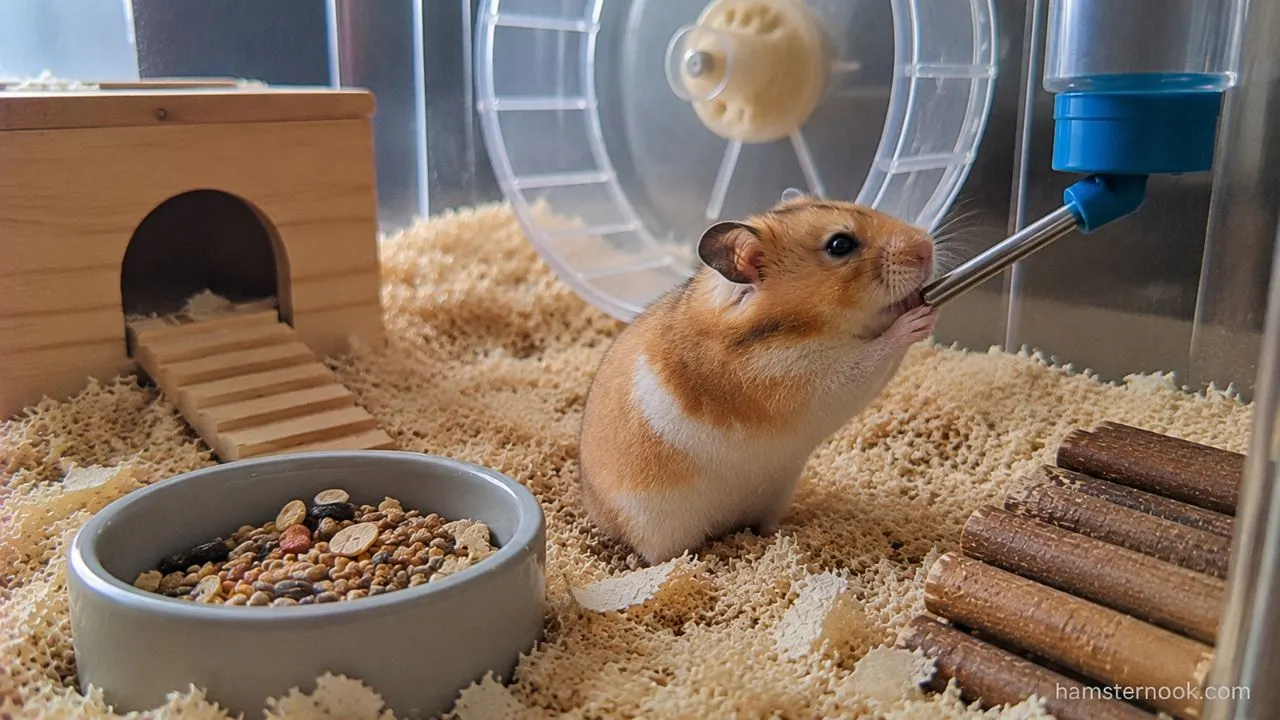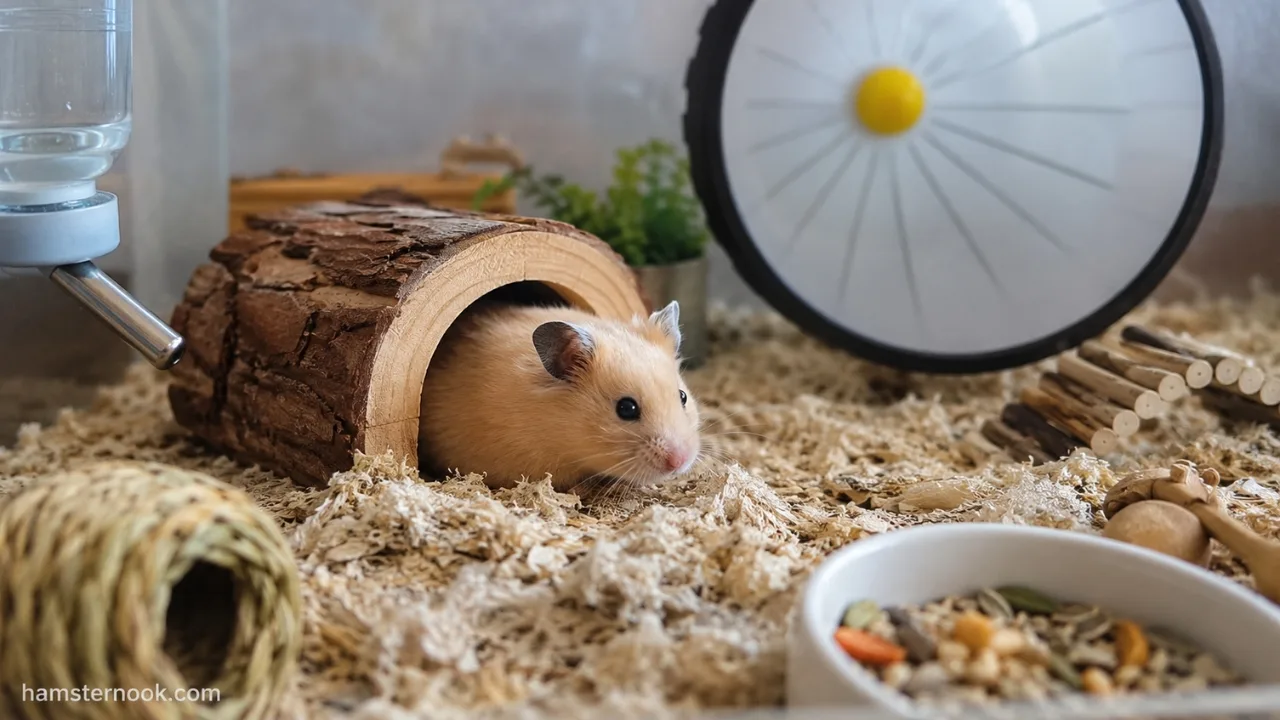
When people bring home their first hamster, they often focus on buying the right cage, wheel, bedding, and food. While those essentials are important, what often gets overlooked is whether the hamster actually feels safe and secure inside its new home.
A hamster can have an expensive enclosure filled with accessories and still feel stressed if its basic emotional and environmental needs aren’t met. Unlike dogs or cats, hamsters are prey animals. In the wild, their survival depends on avoiding predators, finding secure hiding places, and staying alert to changes in their surroundings. Those instincts don’t disappear simply because they now live as pets.
When a hamster feels safe, it’s usually more curious, active, confident, and much more willing to build trust with its owner over time. On the other hand, one that constantly feels threatened may hide excessively, become defensive, chew cage bars, or avoid interacting with its owner.
In this guide, we’ll explore the ten biggest factors that influence how secure a hamster feels in its cage. By understanding these needs, you’ll be able to create an environment where your hamster can thrive instead of simply survive.
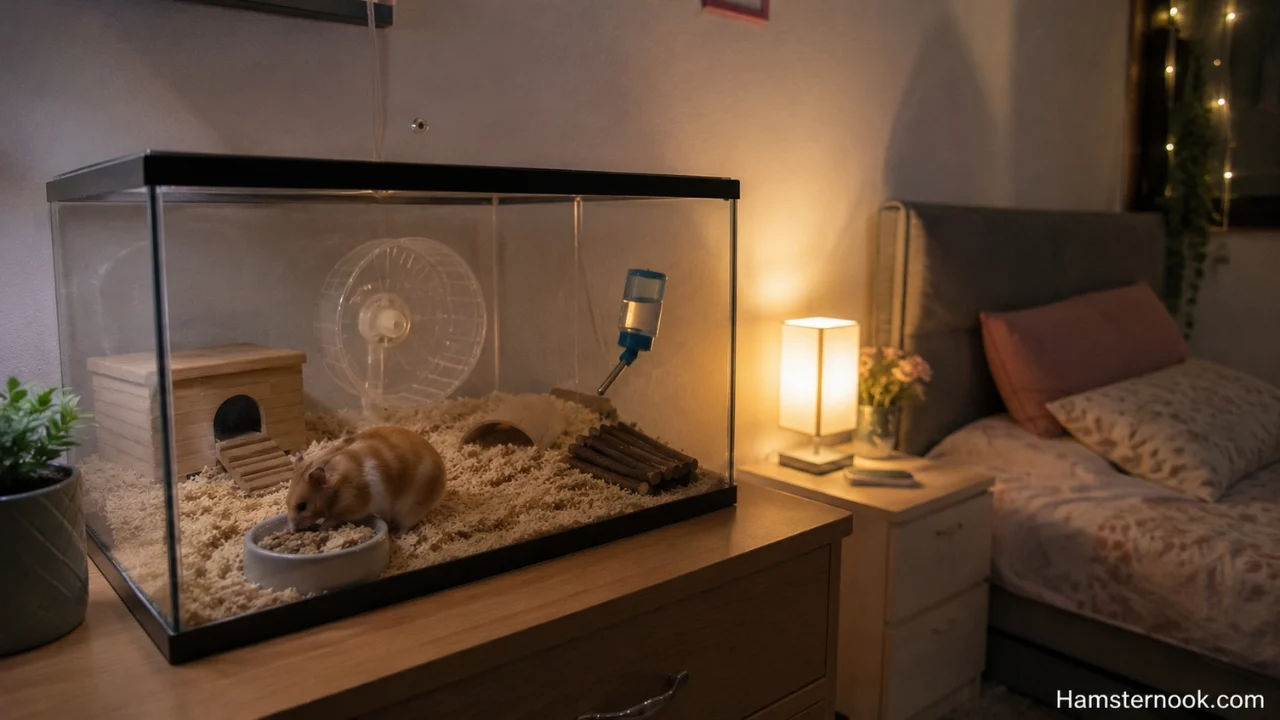
Creating a secure habitat doesn’t always require buying more accessories. In many cases, simple changes to the cage setup and your daily routine can make the biggest difference.
Why Feeling Safe Is Essential for a Hamster’s Well-Being
Unlike social animals that often seek reassurance from humans or other pets, hamsters rely on their surroundings to determine whether they are safe.
Sudden noises, unexpected movements, or major changes inside the enclosure can all trigger a hamster’s natural survival instincts. This doesn’t necessarily mean the hamster is unhappy—it simply means its instincts are working exactly as nature intended.
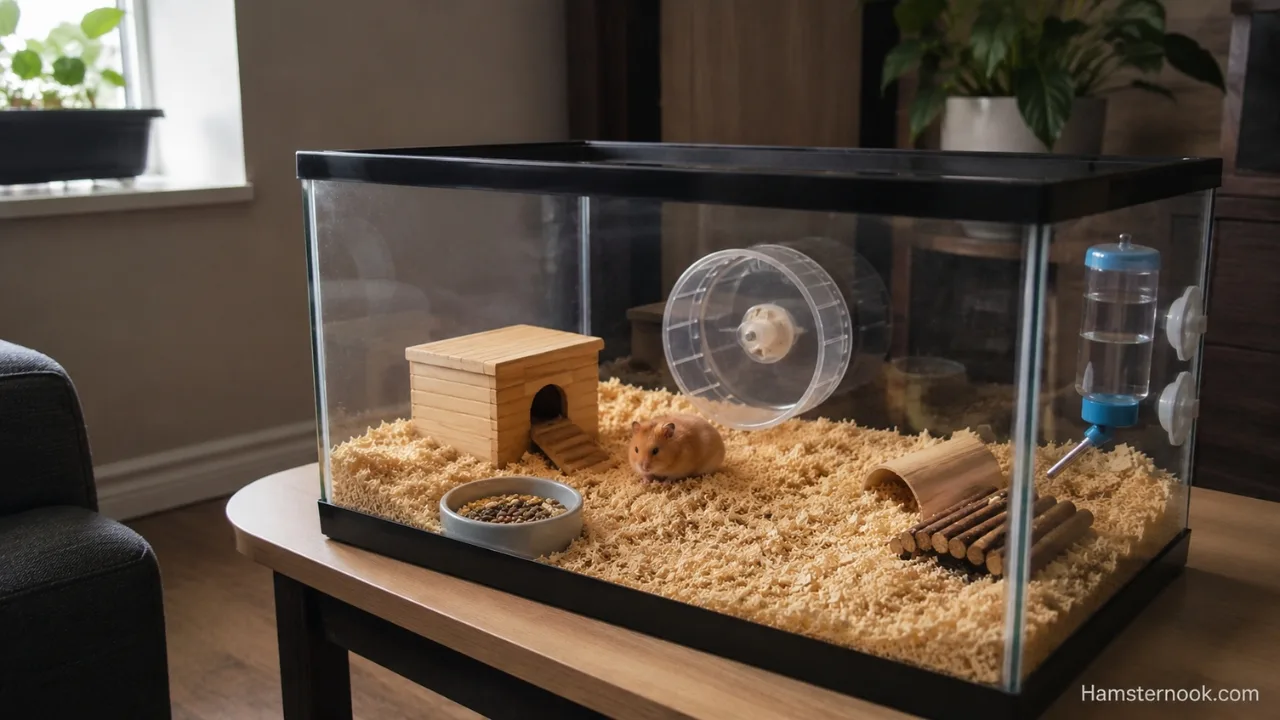
A secure hamster is more likely to:
- Eat and drink normally
- Explore the enclosure confidently
- Use its exercise wheel regularly
- Build nests
- Groom itself
- Accept treats from its owner
- Gradually develop trust
If you’re new to hamster ownership, Ultimate Hamster Care Guide for Beginners (2026) explains the basic daily care routine that supports these natural behaviors.
Signs Your Hamster May Not Feel Safe
Before improving the habitat, it’s helpful to recognize the warning signs of stress or insecurity.
| Possible Behavior | What It May Indicate |
|---|---|
| Hiding most of the time | Feeling vulnerable or adjusting to surroundings |
| Running away from hands | Fear or lack of trust |
| Freezing frequently | Alert response to perceived danger |
| Excessive bar chewing | Stress, boredom, or enclosure issues |
| Sudden aggression | Defensive behavior |
| Little interest in exploring | Lack of confidence in the environment |
These behaviors don’t always mean your hamster feels unsafe. Hiding, freezing, or avoiding interaction can also occur while a new hamster is adjusting, and sudden behavior changes can sometimes be related to health rather than the cage itself. Look at the overall pattern and whether the behavior is new, persistent, or accompanied by changes in eating, drinking, movement, or appearance.
1. A Properly Sized Cage Gives Hamsters a Sense of Security
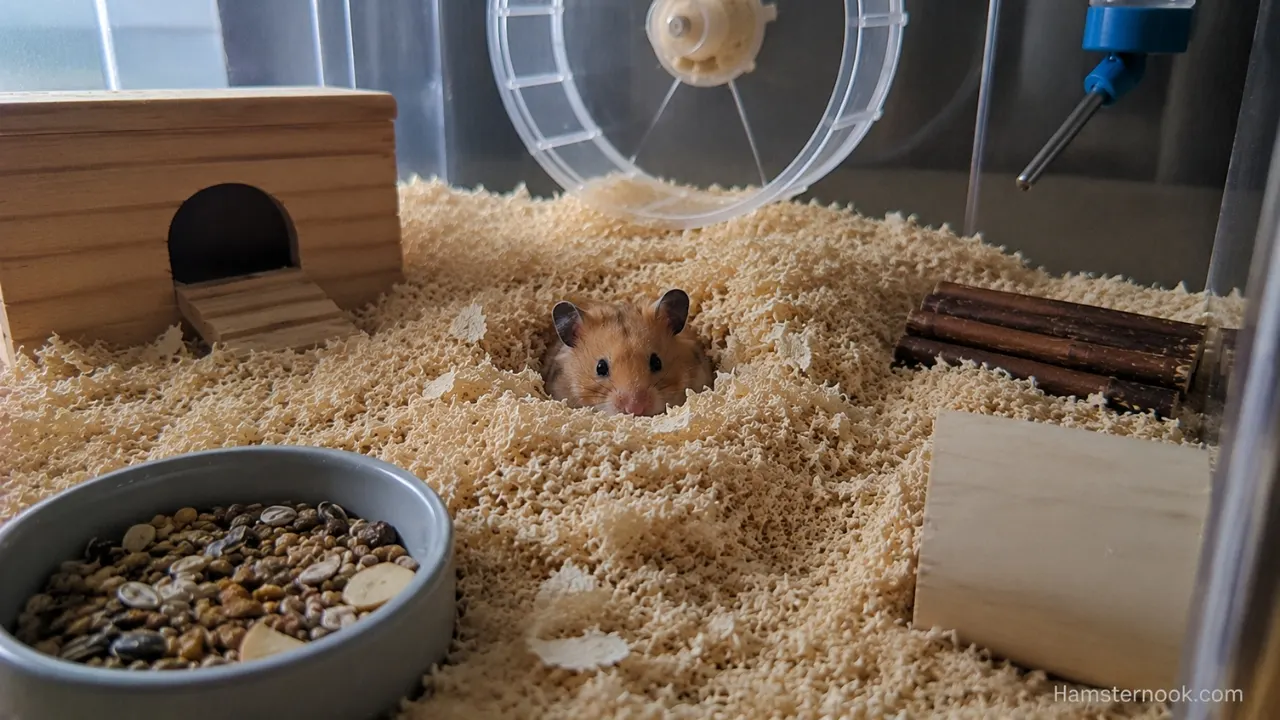
Many beginners assume that a small cage makes a hamster feel protected because the space is compact.
If several unusual behaviors appear together, 7 Signs You’re Accidentally Stressing Your Hamster explains common environmental and handling triggers owners can check.
Wild hamsters naturally travel considerable distances while searching for food. A cramped enclosure limits natural movement and often leads to frustration rather than comfort.
A spacious enclosure allows your hamster to:
- Explore safely
- Create separate sleeping and food storage areas
- Exercise naturally
- Retreat from activity when desired
Modern hamster care generally favors larger, uninterrupted floor space rather than tall cages with multiple levels.

Small Cage vs Spacious Cage
| Feature | Smaller enclosure | More spacious enclosure |
|---|---|---|
| Natural movement | More restricted | More room to explore |
| Separate activity areas | Harder to create | Easier to create |
| Bedding and enrichment | Less usable space | More room for deeper bedding and enrichment |
| Retreat options | More limited | More flexibility for hides and sheltered areas |
Giving your hamster enough uninterrupted floor space is one of the best long-term decisions you can make for its health and confidence.
2. Deep Bedding Helps Hamsters Feel Protected
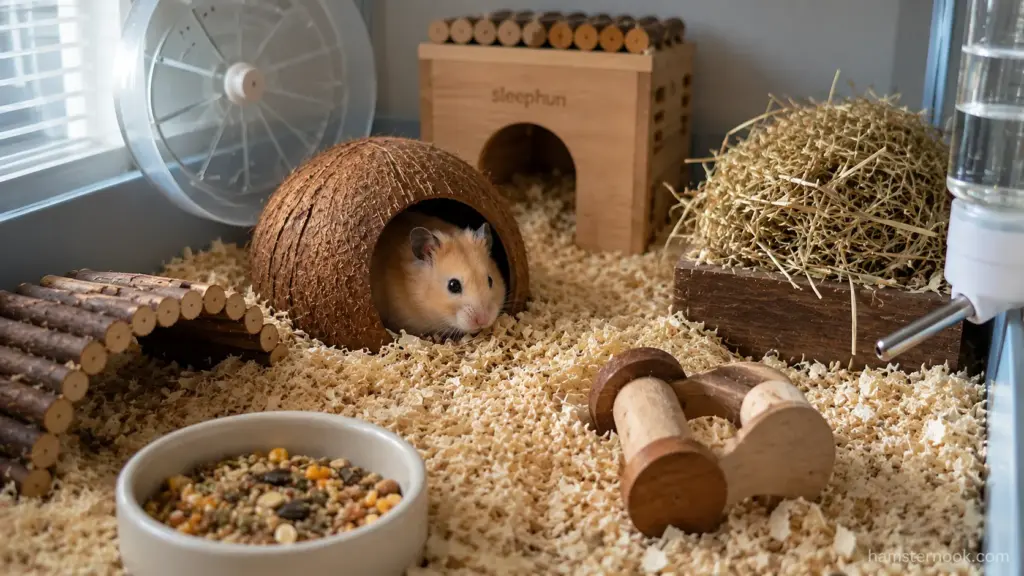
One of the strongest natural instincts a hamster has is digging.
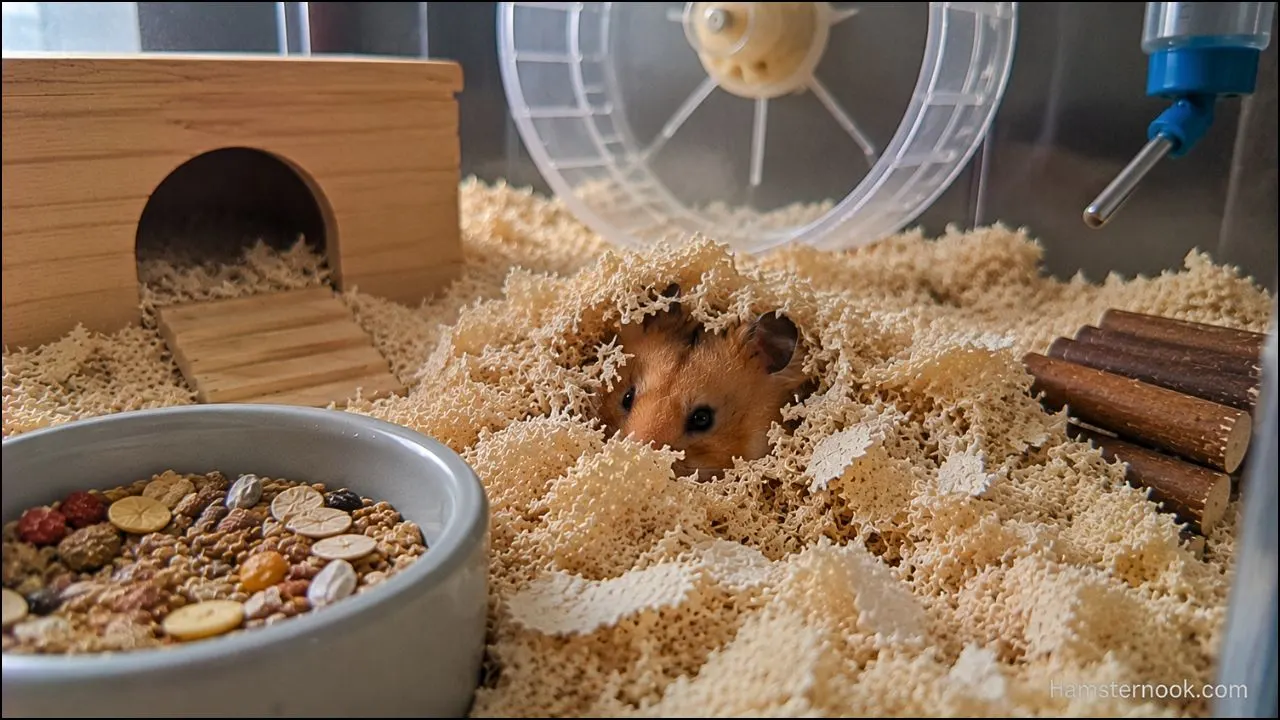
In the wild, hamsters spend much of their lives inside underground burrow systems. These tunnels provide protection from predators, weather, and bright daylight.
Pet hamsters still retain this instinct.
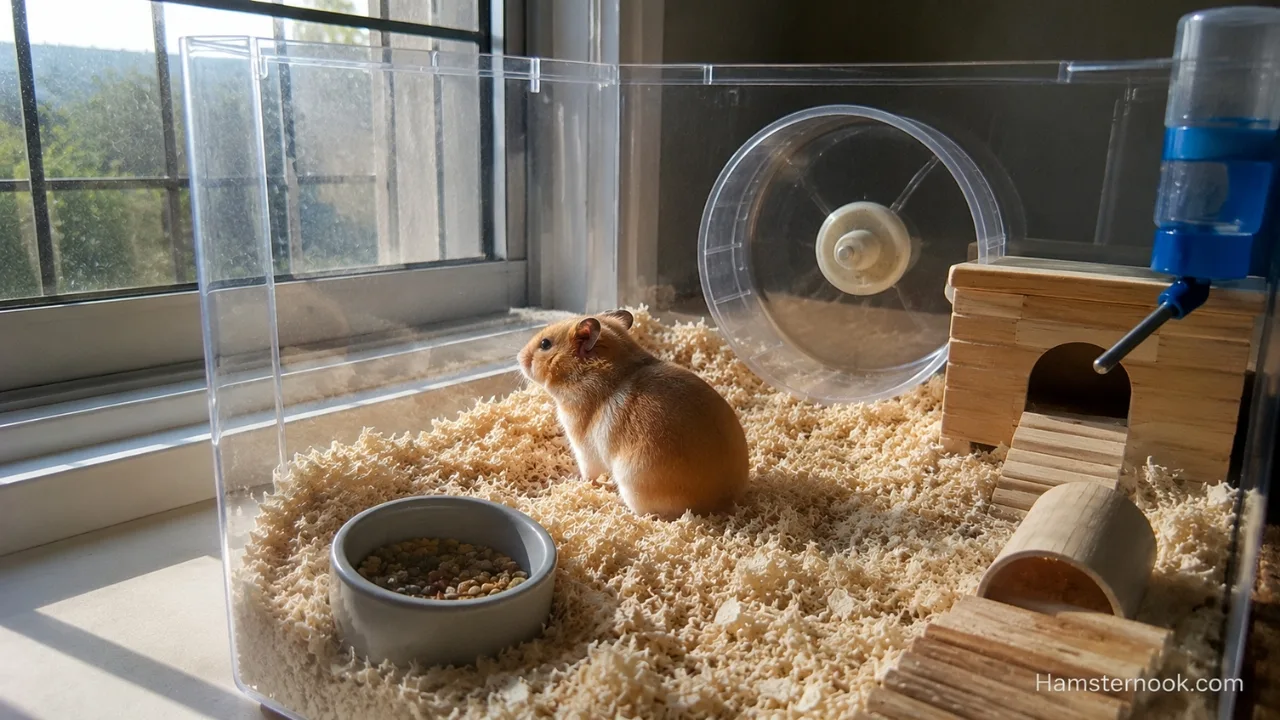
Deep bedding allows them to:
- Dig tunnels
- Build sleeping chambers
- Store food
- Hide when they feel nervous
The amount of usable bedding also matters for burrowing; How Much Bedding Does a Hamster Need? explains how bedding depth affects tunnel-building and enclosure setup.
A hamster that cannot burrow may feel exposed, even if every other aspect of the cage is well designed.
Many hamsters spend hours creating their own tunnel systems, sleeping chambers, and food storage areas when enough bedding is available.

Soft, dust-free paper-based bedding is commonly recommended because it holds tunnels well while remaining gentle on the respiratory system.
If you’re unsure which materials are suitable, Best Bedding for Hamsters: Safe vs Unsafe Options can help you compare common bedding choices.
3. Multiple Hiding Places Reduce Stress
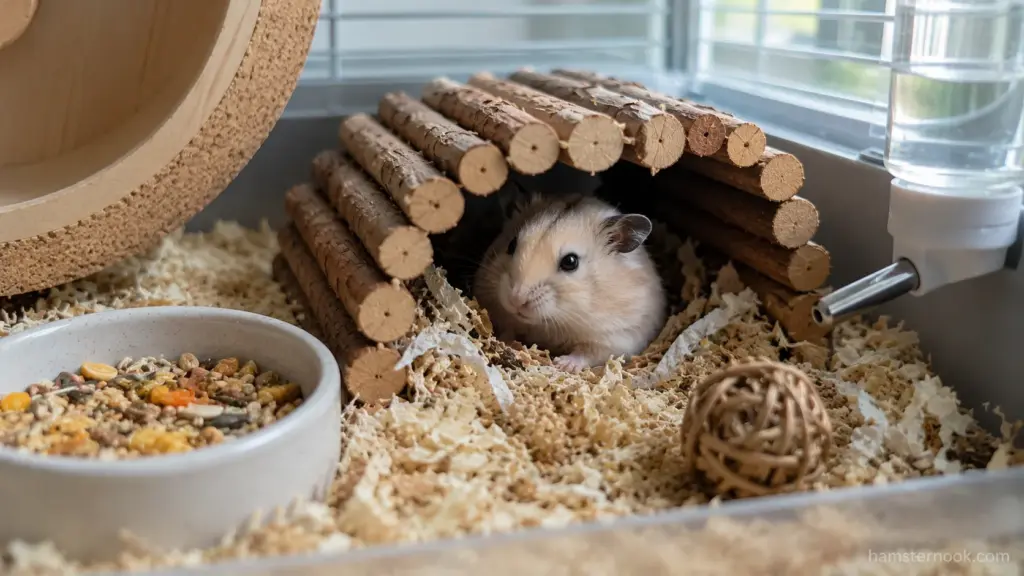
Imagine sleeping in a room with no walls or doors.
That’s similar to how a hamster may feel when its enclosure lacks secure hiding places.
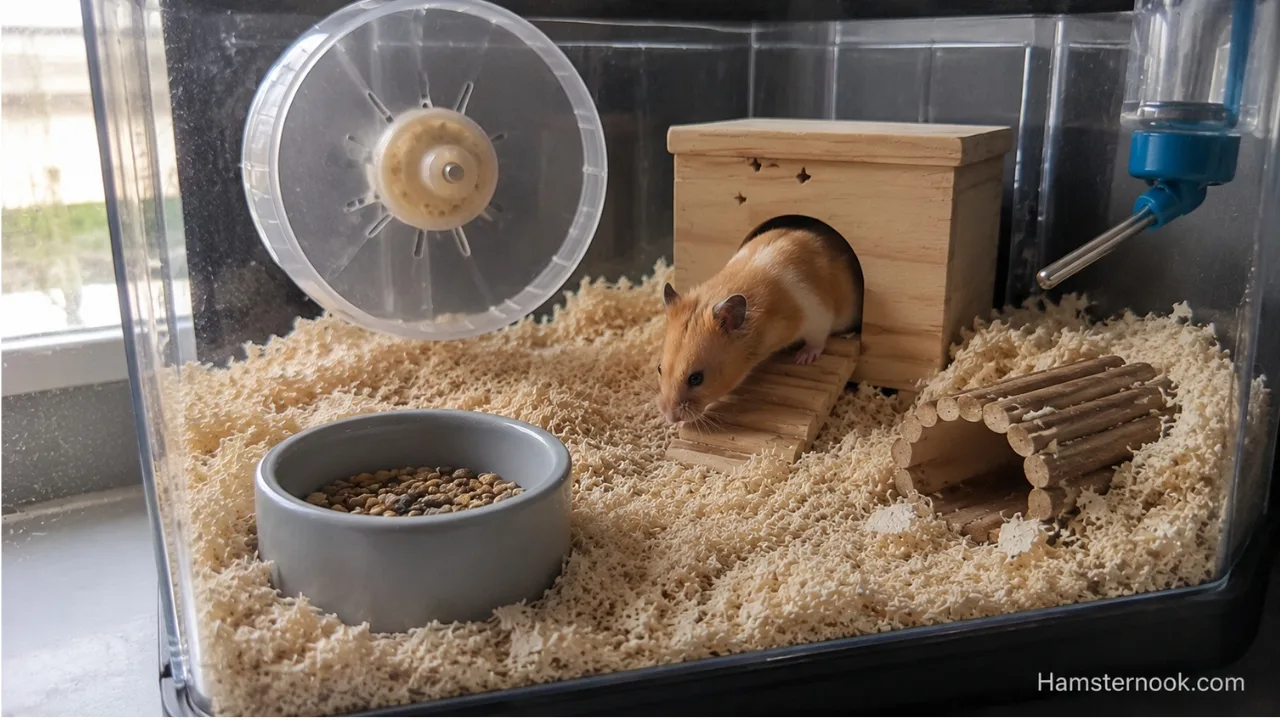
Provide at least one secure, enclosed shelter where your hamster can completely retreat from view. Additional hides, tunnels, and covered areas can give your hamster more choice about where to rest, nest, or retreat without forcing an exact number that suits every enclosure.
Good hiding places can include:
- Wooden houses
- Cork tunnels
- Ceramic hides
- Multi-chamber shelters
Hideouts aren’t just cage decorations. They give your hamster safe places to retreat whenever it wants privacy or rest.
4. A Consistent Daily Routine Builds Confidence
Hamsters quickly learn daily routines when their environment stays predictable.
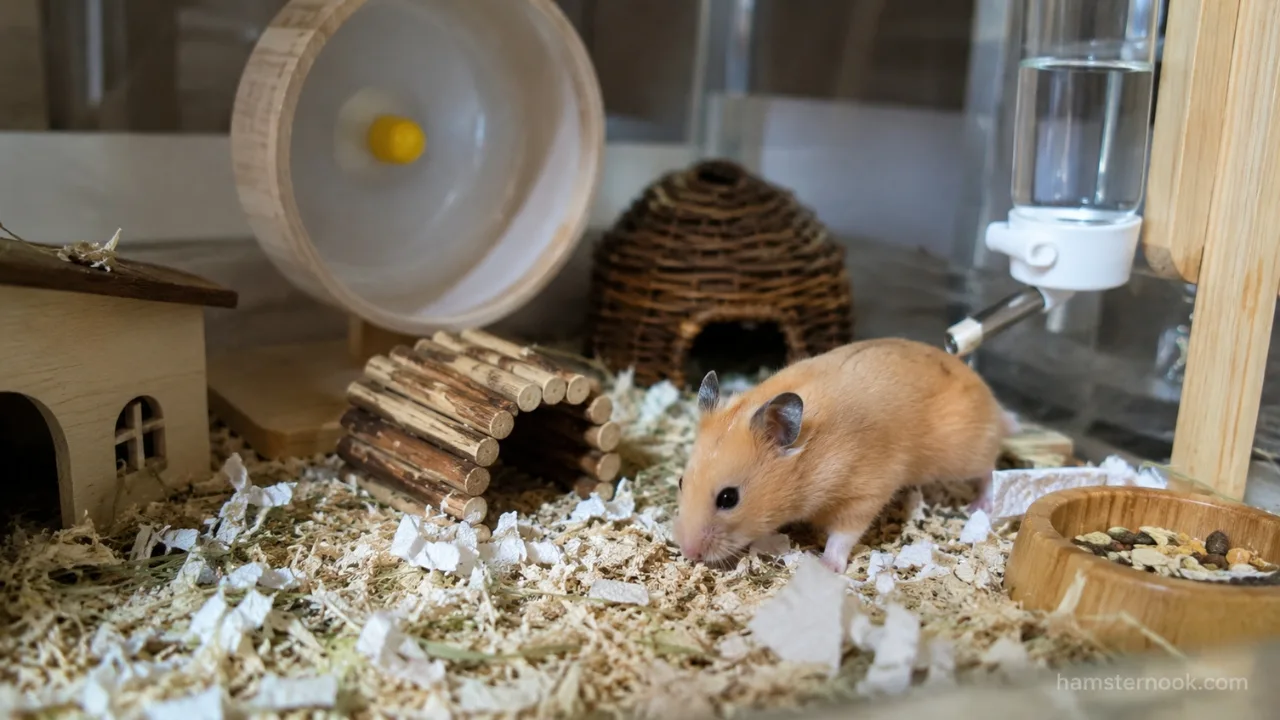
When feeding times, lighting, and household activity remain predictable, hamsters begin to understand what to expect.
Unexpected changes can temporarily increase stress.
Examples include:
- Frequently moving the cage
- Rearranging all cage accessories
- Loud parties near the enclosure
- Constant changes in lighting
Consistency allows a hamster to relax because its environment becomes familiar.

This is especially important during the first week after adoption. Owners often unintentionally create stress by interacting too much before the hamster has settled in. The Biggest Mistake New Hamster Owners Make in the First Week explains why patience is one of the best ways to build trust.
5. Quiet Surroundings Help Hamsters Stay Relaxed
Hamsters have excellent hearing.
Sounds that seem ordinary to us may be overwhelming for a small prey animal.
Common household noises that may disturb hamsters include:
- Loud televisions
- Vacuum cleaners
- Barking dogs
- Slamming doors
- Speakers with heavy bass
- Children shouting close to the cage
This doesn’t mean your home must be completely silent.
Instead, place the enclosure in a calm room where loud noises are less frequent and avoid startling your hamster during its active hours.
Simply moving the cage to a quieter part of your home can noticeably reduce everyday stress for many hamsters.
Placement also affects noise, light, drafts, and household disturbance, so Where Should You Put a Hamster Cage? covers the safest and least suitable locations in the home.
6. Familiar Scents Help Hamsters Feel at Home
Hamsters rely heavily on their sense of smell to understand their surroundings. Their cage doesn’t just look familiar—it smells familiar too.
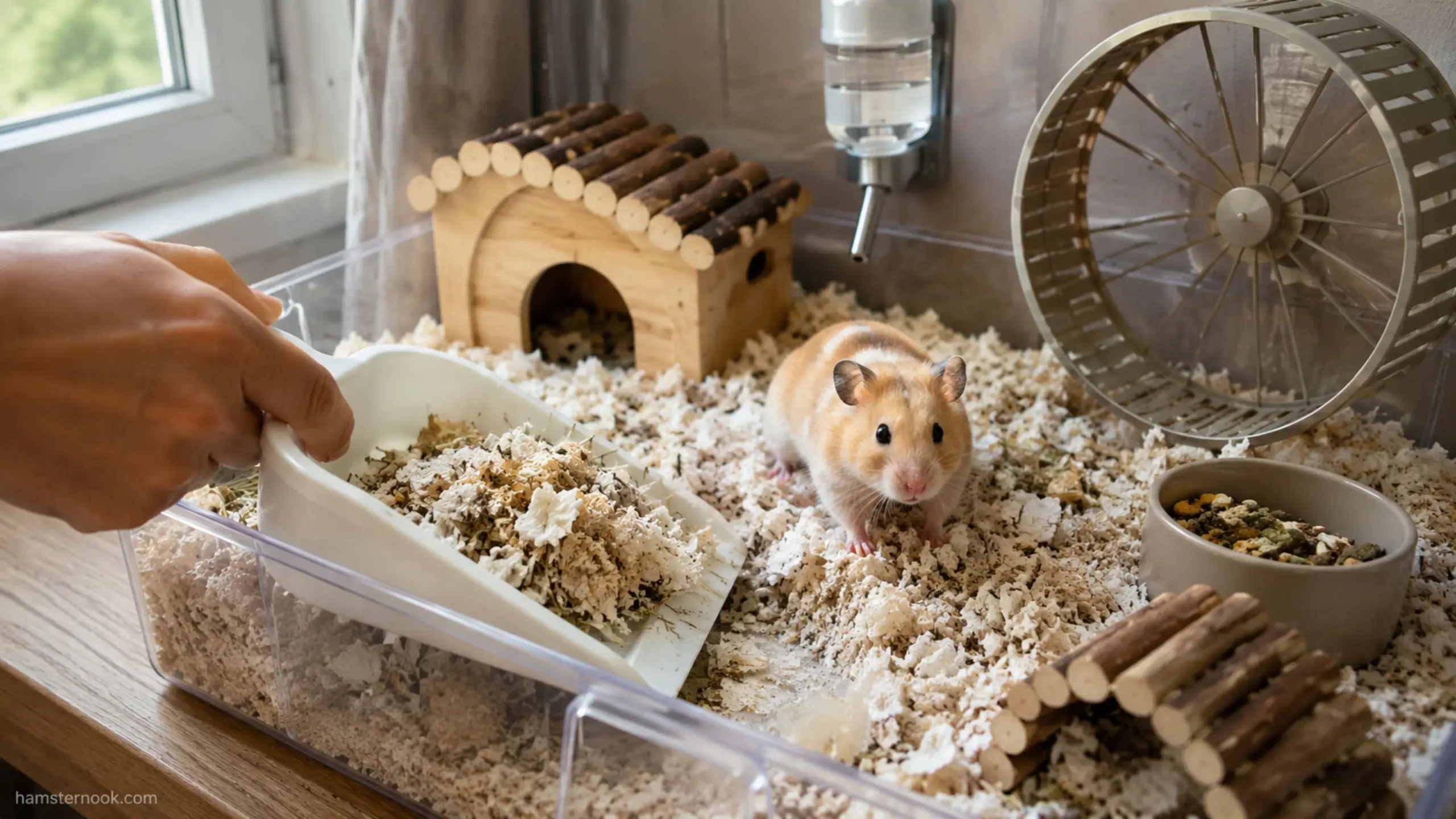
This is one reason why many hamsters seem unsettled after a full cage cleaning. Removing all bedding, nesting material, and scent markings at once can make the enclosure feel like an entirely new place.
Instead of replacing everything during every cleaning, many owners find it helpful to:
- Spot clean soiled bedding regularly.
- Leave some clean, familiar nesting material behind.
- Clean accessories on a rotating schedule rather than all at once.
- Avoid heavily scented cleaning products around the enclosure.
Keeping some familiar scents helps your hamster recognize its territory and settle back into its routine more quickly.
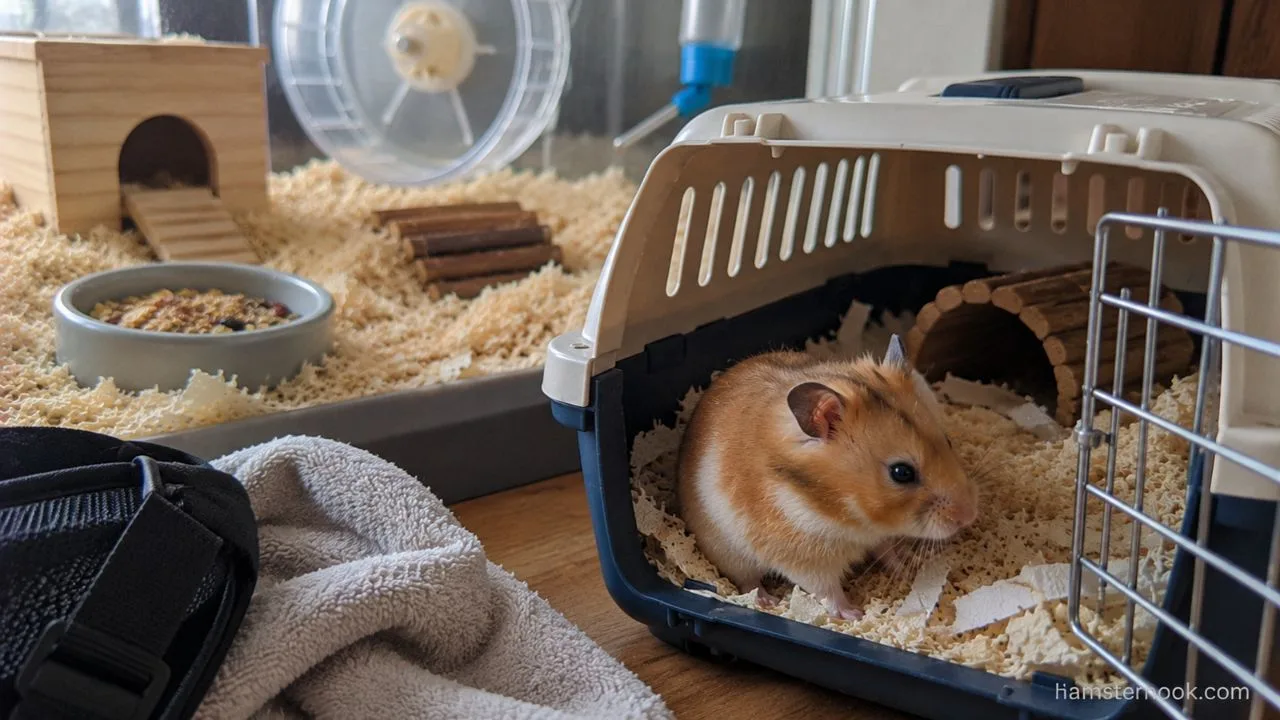
This is why spot cleaning is usually less stressful than replacing every bit of bedding during routine cage maintenance.
If you’re unsure how often cleaning is actually needed, How Often Should You Clean a Hamster Cage? explains how to balance cleanliness with your hamster’s comfort.
7. Enrichment Keeps the Mind Active Without Creating Stress
A hamster that feels secure doesn’t just sleep all day—it explores, digs, climbs, forages, and investigates new objects.
Providing enrichment encourages these natural behaviors while reducing boredom.

Useful enrichment items include:
- Safe chew toys
- Cardboard tubes
- Cork tunnels
- Dig boxes
- Foraging opportunities
- Branches from hamster-safe woods
More accessories don’t always mean a better habitat. Too many accessories packed into a small space can actually make movement difficult.
Instead, choose enrichment that allows your hamster to explore naturally while still leaving open floor space.
Helpful Enrichment Ideas
| Enrichment Item | Why Hamsters Enjoy It |
|---|---|
| Cardboard tubes | Hiding and exploring |
| Cork tunnels | Natural shelter |
| Dig box | Burrowing behavior |
| Chew toys | Helps wear down teeth |
| Scatter feeding | Encourages natural foraging |
| Wooden bridges | Exploration and climbing |
Changing enrichment occasionally can keep the enclosure interesting, but avoid rearranging the entire cage every few days.

8. Respecting Your Hamster’s Sleep Schedule Builds Trust
One of the fastest ways to make a hamster feel unsafe is repeatedly waking it during the day.
Hamsters are naturally most active during the evening, nighttime, and early morning hours. During daylight, they often remain inside their nest where they expect to rest without interruption.
Many beginners accidentally disturb their hamster because daytime is the most convenient time for interaction.
Avoid:

- Pulling your hamster out of its nest.
- Lifting hideouts while it’s sleeping.
- Knocking repeatedly on the cage.
- Allowing children to wake the hamster for playtime.
A hamster that is allowed to wake naturally is generally calmer and more willing to interact later.
If your hamster’s sleeping habits suddenly change without an obvious reason, Why Is My Hamster Suddenly Sleeping in a Different Spot? explains some common causes.
9. Gentle, Patient Handling Creates Long-Term Confidence
Building trust with a hamster always takes time, and every hamster progresses at its own pace.
Many owners expect their hamster to enjoy being held immediately after arriving home, but confidence develops gradually.

A hamster that feels safe around its owner usually reaches that point because every interaction has been calm and predictable.
Good trust-building habits include:
- Speaking softly near the cage.
- Letting the hamster approach your hand first.
- Offering treats occasionally.
- Keeping handling sessions short at first.
- Returning the hamster to its enclosure before it becomes stressed.
Ending handling sessions on a positive note helps your hamster associate your presence with safe, predictable experiences.
Avoid chasing your hamster around the cage or grabbing it unexpectedly from above. In the wild, predators often attack from overhead, so sudden movements may trigger a fear response.

Building trust slowly often produces a much friendlier hamster over time.
If you’re wondering whether your hamster is beginning to feel comfortable around you, Signs Your Hamster Trusts You explains the small behavior changes owners often notice as trust develops.
10. Reliable Food and Water Help Hamsters Feel Secure
Regular access to food and water helps your hamster feel that its environment is predictable and dependable.
A hamster that consistently finds fresh food and clean water learns that its environment is dependable.

Daily care should include:
- Fresh drinking water.
- A balanced hamster diet.
- Checking that the water bottle works correctly.
- Removing spoiled fresh foods.
- Monitoring eating habits.
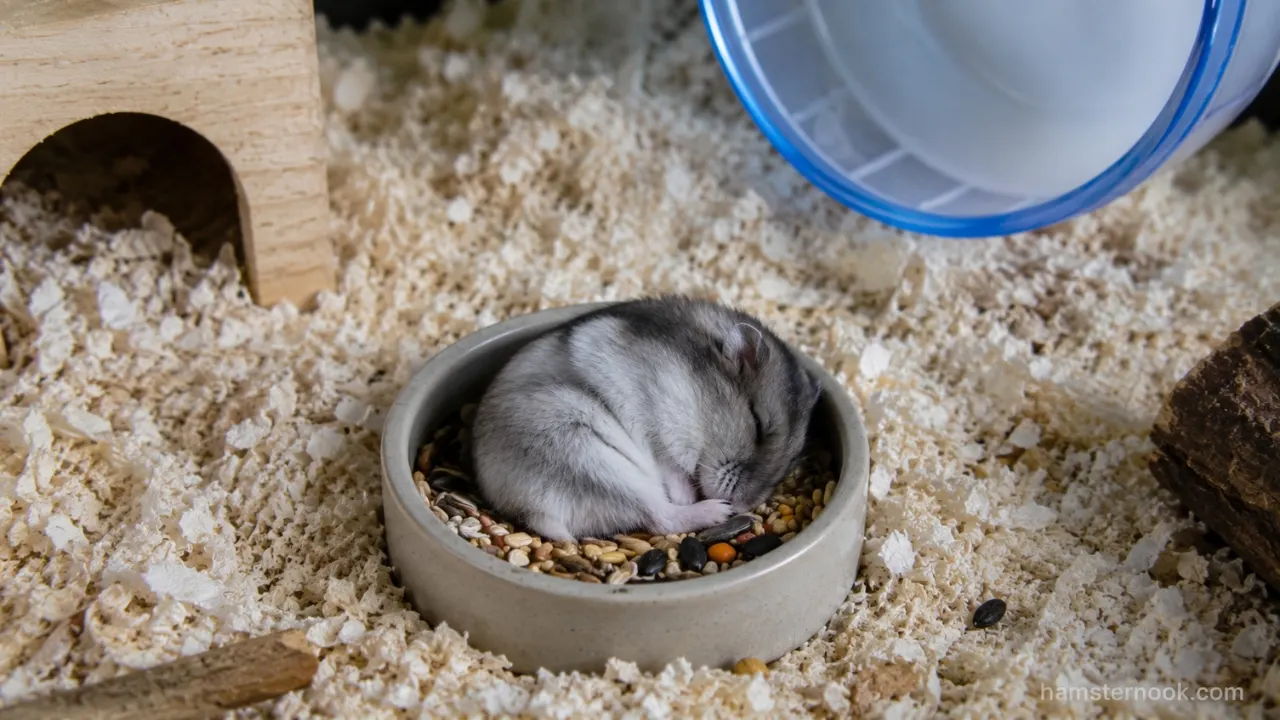
Scatter feeding can also provide mental stimulation by encouraging natural foraging behavior instead of eating from one fixed location.
Hydration is equally important. A malfunctioning water bottle or an unnoticed leak can quickly become a serious issue. If you’d like to learn more, Can Hamsters Get Dehydrated? Signs Every Owner Should Know explains what to watch for.
Common Mistakes That Make Hamsters Feel Unsafe
Even well-meaning owners sometimes create unnecessary stress.
| Common Mistake | Why It Can Be a Problem | Better Alternative |
|---|---|---|
| Handling immediately after adoption | Prevents adjustment | Allow several quiet days before regular handling |
| Using a very small cage | Limits natural behavior | Choose a spacious enclosure |
| Removing all bedding during cleaning | Eliminates familiar scents | Spot clean and retain some clean nesting material |
| Waking the hamster during the day | Interrupts natural sleep | Interact during evening hours |
| Frequently rearranging the cage | Makes the environment unpredictable | Keep the basic layout consistent |
| Placing the cage in a noisy area | Causes repeated stress | Choose a quiet room with stable conditions |
Avoiding these mistakes can significantly improve your hamster’s confidence and overall well-being.
A Safe Hamster Cage Checklist
Before finishing your hamster’s cage setup, make sure it includes:
- A spacious enclosure with plenty of uninterrupted floor space.
- Deep, dust-free bedding for burrowing.
- Two or more secure hideouts.
- An appropriately sized exercise wheel.
- Fresh food and clean drinking water every day.
- A quiet location away from constant noise.
- Safe enrichment items without overcrowding the cage.
- A consistent daily routine with minimal unnecessary disturbances.
Checking these essentials regularly helps create an environment where your hamster can feel safe, relaxed, and confident.
Final Thoughts
Helping a hamster feel safe has very little to do with buying expensive accessories and everything to do with understanding its natural instincts. By creating an environment that supports those natural behaviors, you’ll help your hamster feel more relaxed, confident, and secure every day.

A spacious enclosure, deep bedding, quiet surroundings, secure hiding places, and predictable daily routines all work together to reduce stress and build confidence. Just as importantly, patience allows trust to develop naturally between you and your hamster.
Every hamster adjusts at a different pace. Instead of expecting your hamster to feel secure within a fixed number of days, give it time to explore, establish a nest, learn the household routine, and approach interaction at its own pace.
Over time, a hamster that feels truly safe is more likely to explore confidently, accept gentle handling, and display the curious behaviors that make these small pets so rewarding to care for.
Frequently Asked Questions
How long does it take for a hamster to feel safe in a new cage?
There isn’t one reliable adjustment period for every hamster. Some begin exploring confidently relatively quickly, while others need longer. A secure setup, quiet surroundings, predictable care, and patient handling can help, but let your hamster’s behavior determine when it is ready for more interaction.
Do hamsters need more than one hideout?
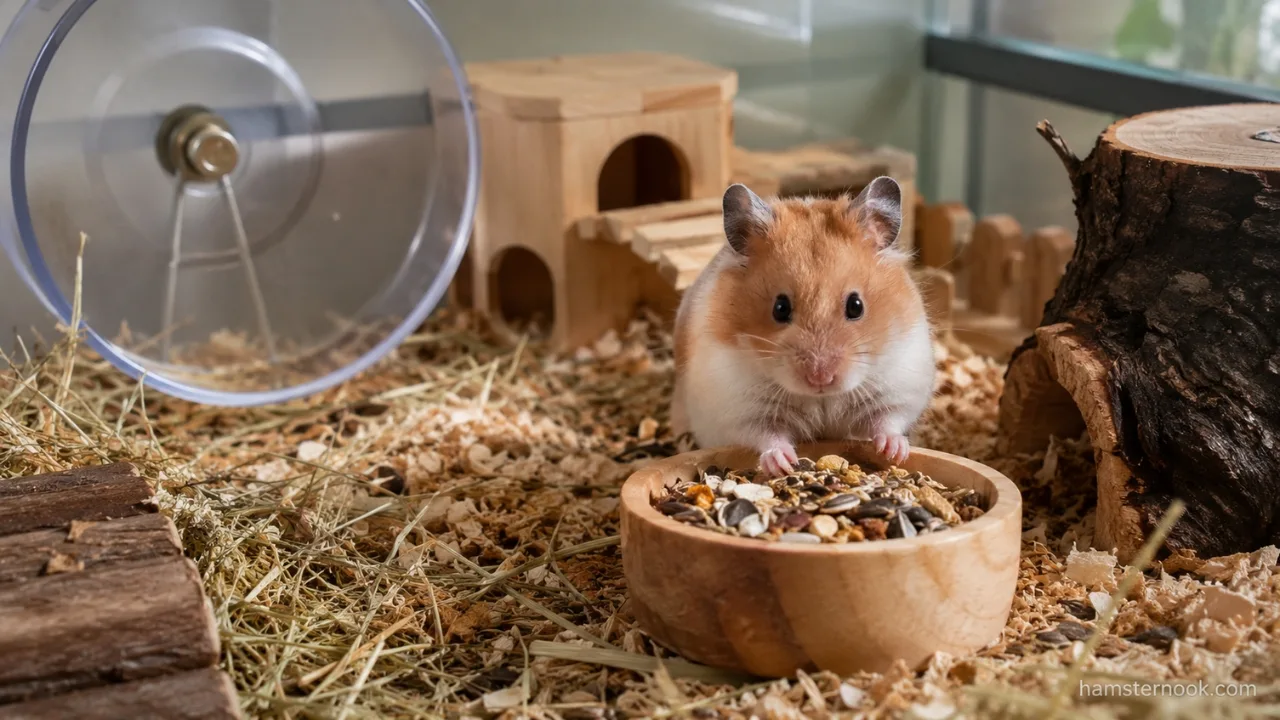
Multiple hiding and sheltered areas can give your hamster more choice about where to sleep, retreat, or store food. The important point is that your hamster can get completely out of view and has suitable sheltered areas without overcrowding the enclosure.
Can too many cage decorations make a hamster feel uncomfortable?
Yes. While enrichment is important, overcrowding the enclosure can reduce usable floor space and make it harder for a hamster to move naturally.
Why does my hamster hide even when the cage is large?
Hiding is a normal behavior for hamsters. Even confident, healthy hamsters spend a significant amount of time inside burrows or shelters because it reflects their natural instincts.
Should I rearrange my hamster’s cage often?
Not usually. Frequent changes can make the environment feel unfamiliar. It’s better to keep the basic layout consistent and introduce new enrichment items gradually.
Does talking to my hamster help it feel safe?
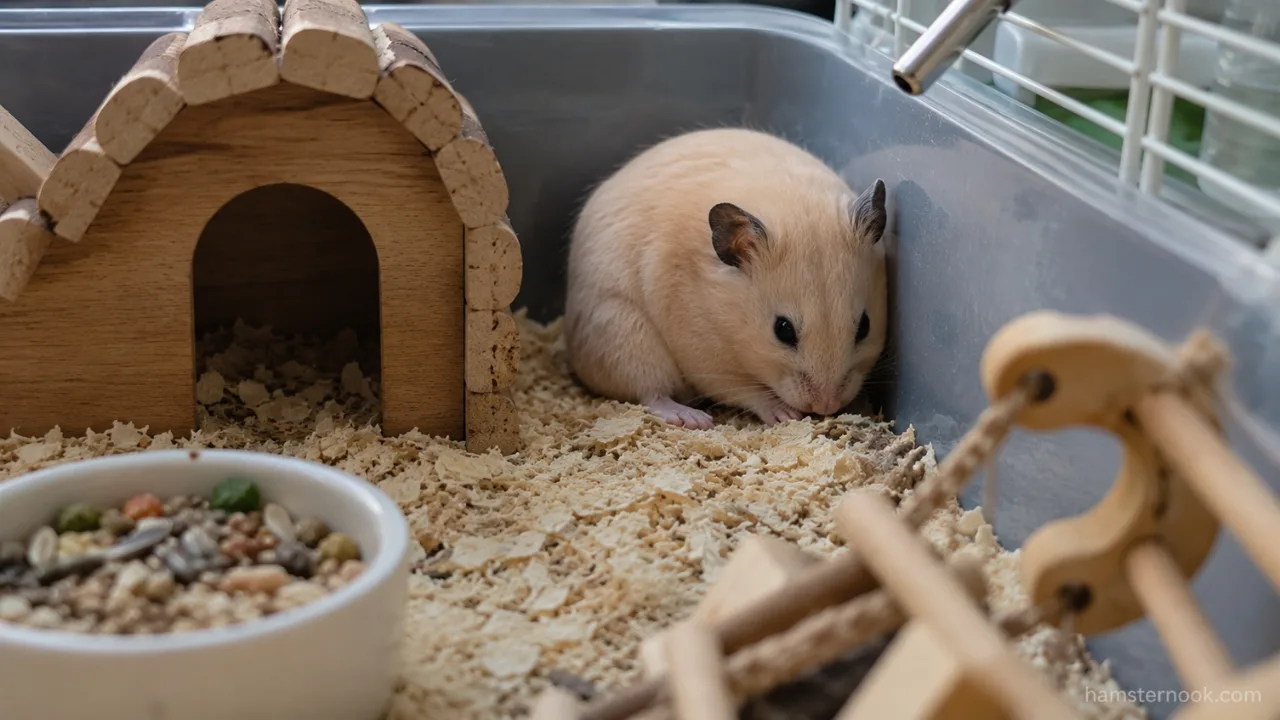
Speaking softly near the cage can help your hamster become familiar with your voice over time. Combined with gentle handling and a predictable routine, this can gradually build trust.
References
This guide is based on hamster housing, environmental care, behavior, enrichment, handling, and welfare guidance from trusted animal welfare and veterinary resources, including:
- RSPCA – Creating a Good Home for Hamsters – Guidance on enclosure space, bedding, nesting areas, environmental conditions, and creating a suitable home for hamsters.
- RSPCA – Hamster Behaviour – Information on natural hamster behavior, activity, sleeping patterns, handling, and reducing stress.
- RSPCA – Keeping Hamsters as Pets – General guidance on hamster care, housing, diet, enrichment, behavior, and welfare.
- Blue Cross – Hamster Care Guide – Practical advice on hamster housing, bedding, enrichment, handling, feeding, and wellbeing.
- MSD Veterinary Manual – Providing a Home for a Hamster – Veterinary guidance on hamster enclosure design, bedding, nesting, exercise, and environmental needs.
- NC3Rs – Housing and Husbandry: Hamster – Guidance on hamster housing, bedding, environmental conditions, enrichment, and species-appropriate husbandry.
- NC3Rs – Choosing Appropriate Enrichment – Principles for providing suitable enrichment that supports natural behaviors and animal welfare.

Narayan Kumar is the founder and author of HamsterNook. He creates practical, research-based hamster care guides covering hamster behavior, nutrition, cage setup, enrichment, health, and everyday care. His goal is to help hamster owners make informed decisions and provide safer, healthier lives for their pets through clear, beginner-friendly information based on trusted animal care resources.