If you use air conditioning during hot weather, you may wonder whether it’s safe for your hamster or if the cool air could make it sick. The answer isn’t simply yes or no. Air conditioning itself doesn’t make hamsters ill, but improper temperatures, cold drafts, and sudden changes in the environment can create problems. Understanding how hamsters regulate body temperature can help you keep them comfortable throughout the year.
Quick Answer
Air conditioning is not automatically harmful to hamsters. During hot weather, keeping the room comfortably cool can help reduce the risk of overheating. The main concerns are direct cold airflow, an excessively cold room, and large or sudden temperature changes. A practical target is a stable, comfortable indoor temperature around 18°C to 24°C (65°F to 75°F), while avoiding drafts and treating any single temperature number as a guide rather than a hard cutoff.
Why Temperature Matters So Much for Hamsters
Hamsters are small mammals with limited ability to regulate their body temperature compared to larger animals. Because of their size, they can lose or gain body heat quickly when their surroundings change.
In the wild, hamsters avoid extreme temperatures by spending much of their time underground, where burrows remain far more stable than the surface environment. Pet hamsters rely entirely on their owners to provide those stable indoor conditions.
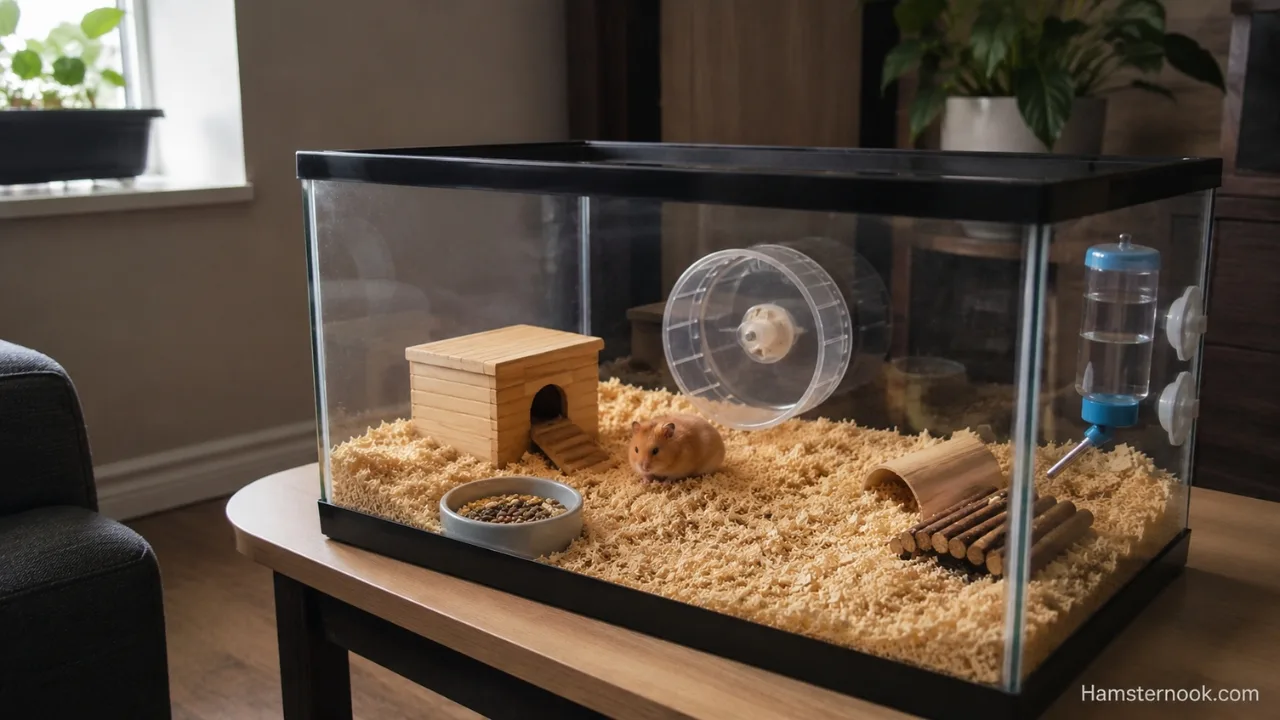
Because indoor temperatures can vary from one room to another, it’s worth checking the area around your hamster’s enclosure rather than relying only on the thermostat elsewhere in the house.
Along with temperature, a consistent lighting routine helps maintain a stable indoor environment. Learn more in How Much Light Does a Hamster Need? Day, Night, and Room Lighting Explained.
A room that feels comfortable to most people is generally suitable for a healthy hamster, provided the enclosure isn’t exposed to direct heat, cold drafts, or sudden temperature changes.
Can Air Conditioning Actually Make a Hamster Sick?
Air conditioning itself is not the main concern. The bigger issue is whether cooling creates an unsuitable environment for the hamster.

Problems are more likely when cooling causes:
- Cold air to blow directly into the enclosure
- The room to become too cold
- Large or sudden temperature changes
- Strong drafts around the nesting area
Stress caused by unsuitable temperatures may affect a hamster’s overall well-being, which is why maintaining consistent conditions is considered part of good husbandry.
Environmental stress can have several causes, so our 7 Signs You’re Accidentally Stressing Your Hamster (Without Even Realizing It) guide can help you identify common environmental stressors.
The Biggest Risk: Cold Drafts
A vent blowing directly toward your hamster’s cage is far more concerning than simply having the air conditioner running.
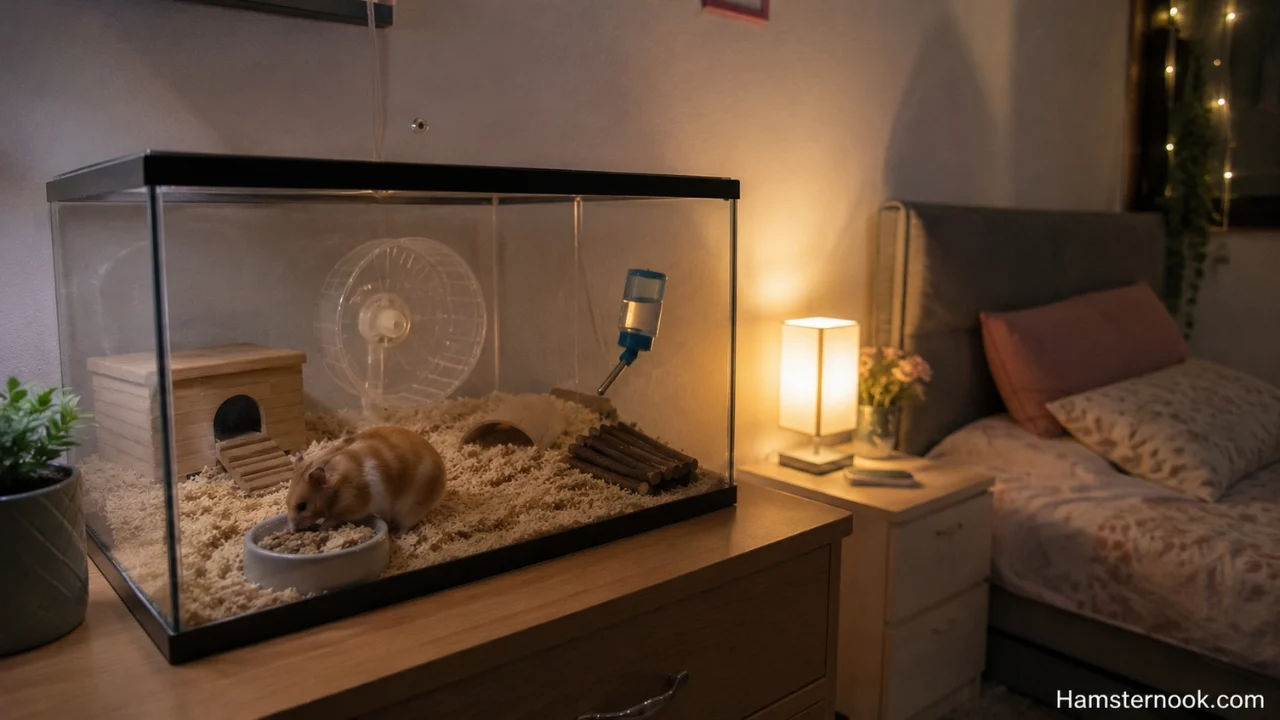
Constant moving air can cool one part of the enclosure much more than the rest, making it difficult for the hamster to choose a comfortable resting place.
Signs that the cage may be in a draft include:
- Bedding constantly moving
- Lightweight nesting material shifting on its own
- Cool airflow that you can easily feel with your hand
- One side of the enclosure noticeably colder than the other
If you notice these conditions, it’s better to move the enclosure than to turn off the air conditioning completely.
What Is the Safest Room Temperature?
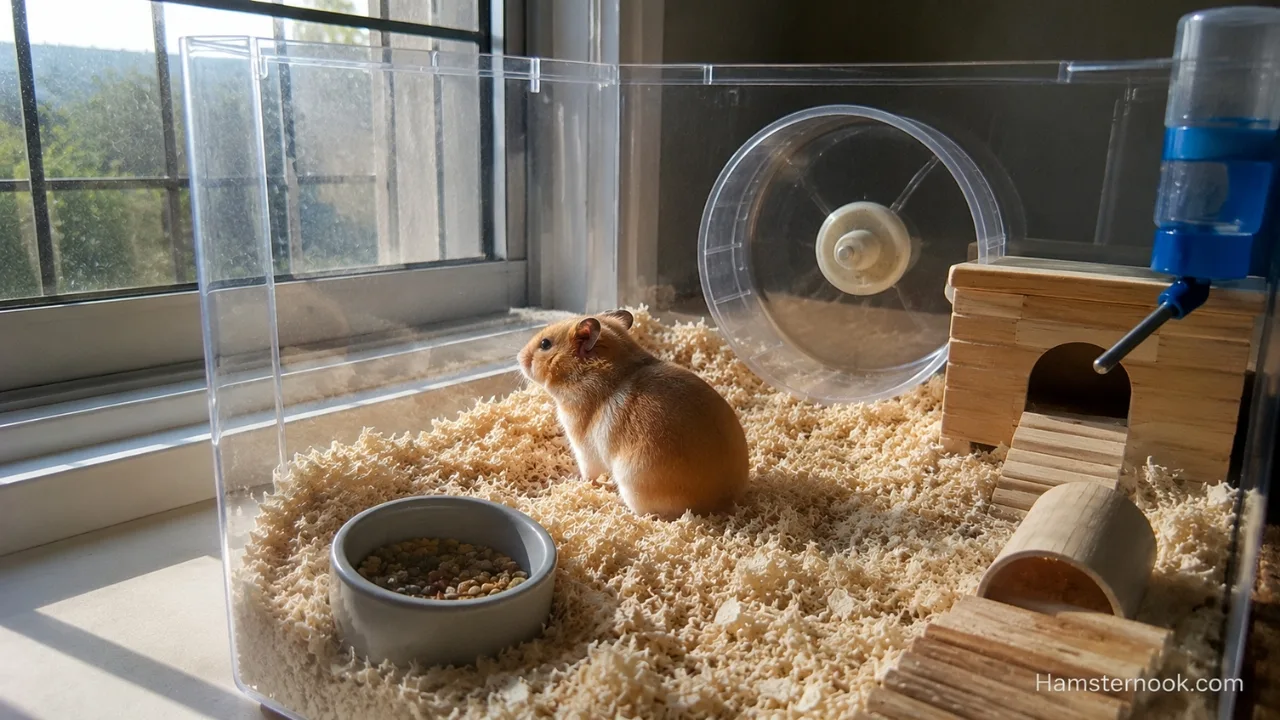
Most veterinary and animal welfare guidance recommends keeping pet hamsters in a stable environment between 65°F and 75°F (18°C to 24°C).
| Room Temperature | What It Means for Your Hamster |
|---|---|
| Below 60°F (16°C) | Too cold and may increase the risk of torpor if exposure continues. |
| 65–75°F (18–24°C) | Comfortable range for most healthy pet hamsters. |
| 76–80°F (24–27°C) | Generally acceptable if well ventilated and the hamster remains comfortable. |
| Above 80°F (27°C) | Increased risk of heat stress, especially if humidity is also high. |

Rather than trying to maintain one exact temperature, focus on keeping the room as stable as possible throughout the day.
Knowing the safe temperature range makes it easier to avoid both overheating and excessive cold. Read Safe Temperature for Hamsters: How Hot or Cold Is Too Much? for a detailed guide.
Sudden Temperature Changes Are Harder Than Constant Cool Air
Imagine taking your hamster from an 88°F (31°C) room into a heavily air-conditioned room at 64°F (18°C).
That rapid change is more stressful than remaining in either environment alone.
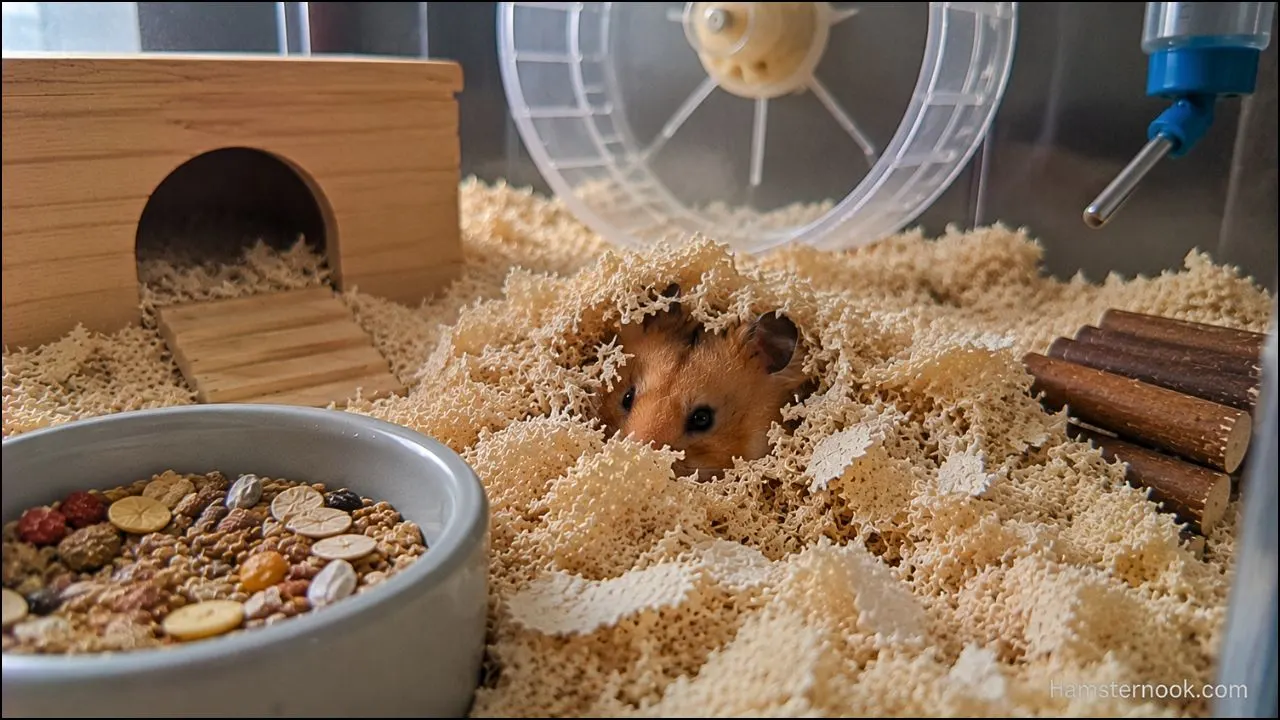
The same principle applies inside your home.
Avoid situations where the room temperature repeatedly swings by large amounts because the air conditioner cycles between extreme settings.
Instead, adjust temperatures gradually whenever possible.
Does Air Conditioning Help During Summer?
Yes.
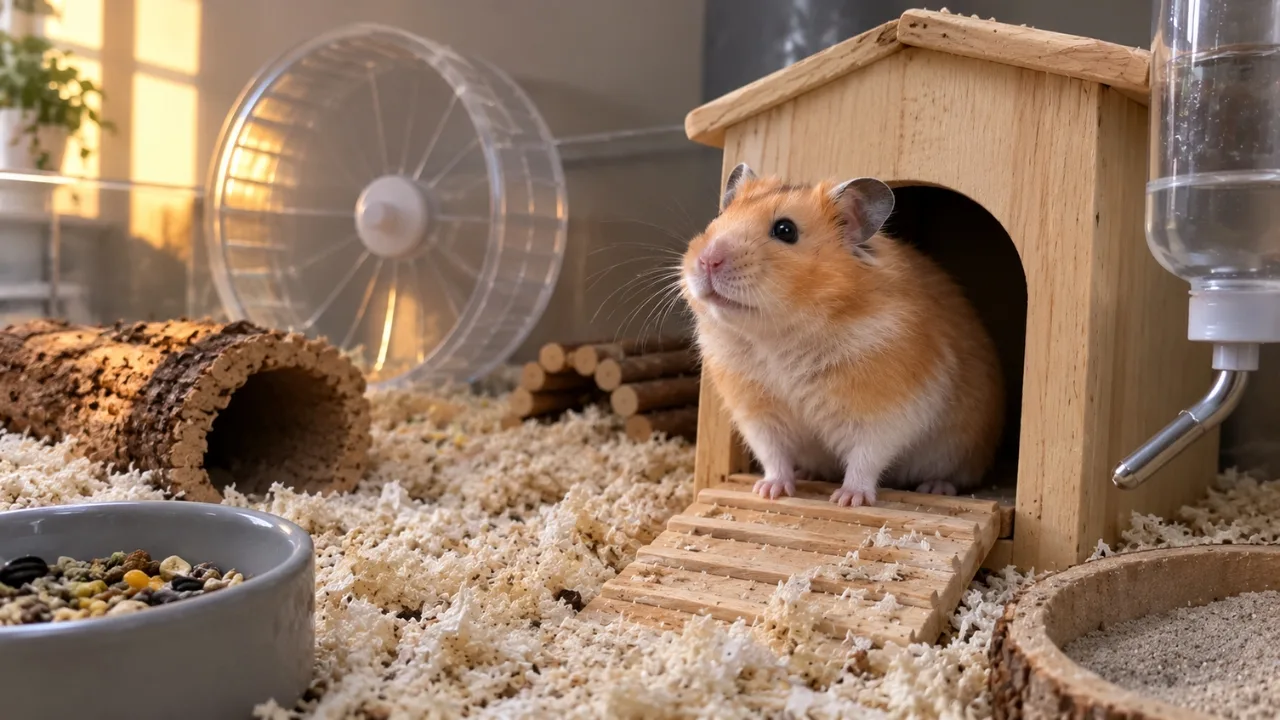
During heat waves, air conditioning can actually protect your hamster from overheating.
Unlike some pets, hamsters cannot sweat to cool themselves. They rely on behavioral changes and cooler surroundings to regulate body temperature.
Keeping the room comfortably cool during very hot weather is generally safer than allowing indoor temperatures to climb above recommended levels.
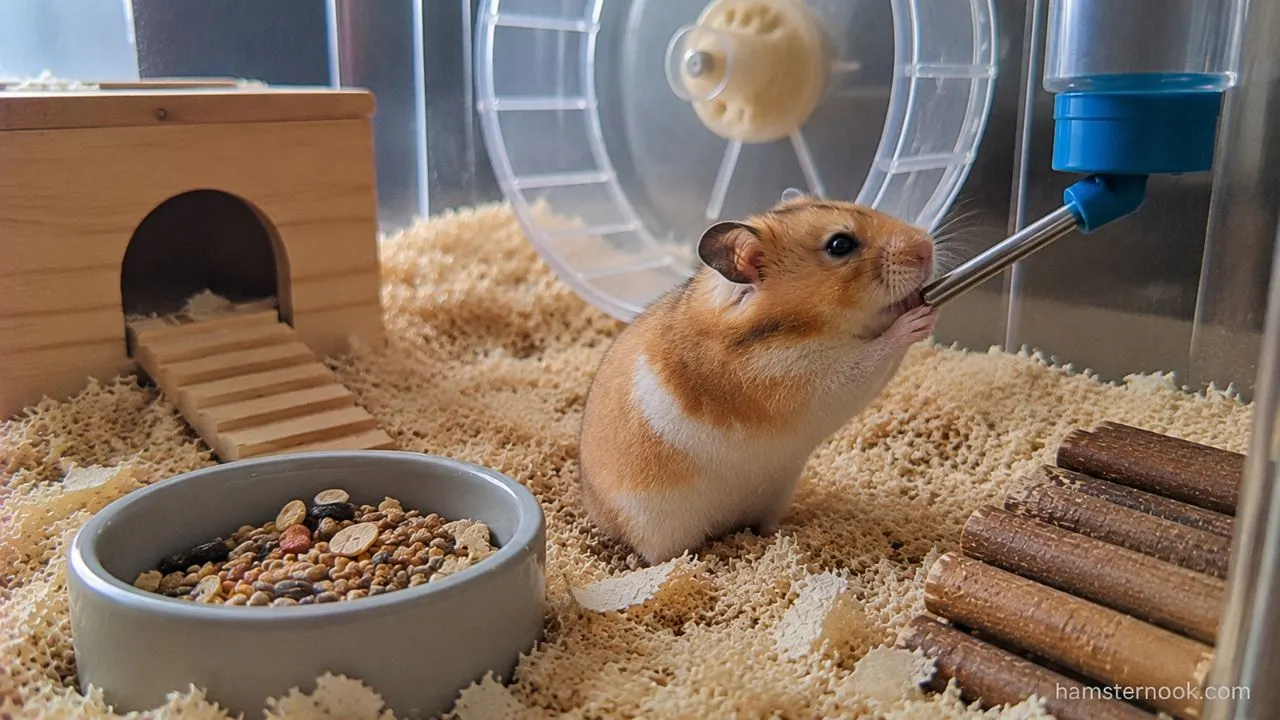
Along with air conditioning, you can also provide:
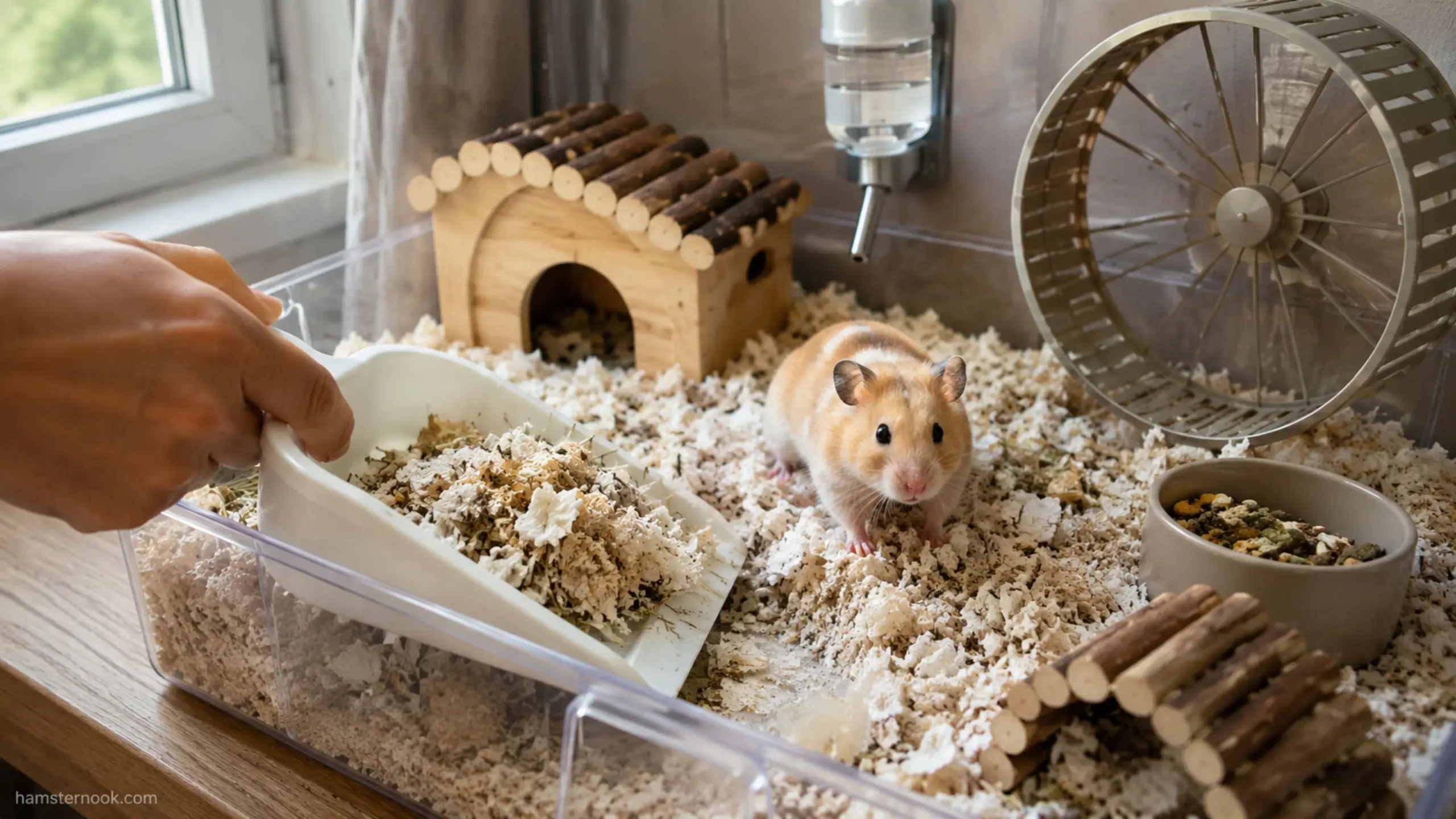
- Plenty of fresh drinking water
- A ceramic hide that stays naturally cool
- A sand bath in a shaded part of the enclosure
- Good airflow throughout the room without directing air onto the cage
Where Should You Place the Cage?
Where you place the enclosure is often just as important as the thermostat setting.
A good location is:
- Away from air-conditioning vents
- Out of direct sunlight
- Away from exterior doors that frequently open
- Far from radiators or heaters
- In a quiet room with consistent temperatures
Direct sunlight can quickly raise cage temperatures even when the room feels comfortable. See Should a Hamster Cage Be Near a Window? Risks Every Owner Should Know before choosing the enclosure’s location.
If you can comfortably sit beside the enclosure without feeling cold air blowing on you, it’s usually a good sign that the airflow is gentle enough.

If you’re unsure, place your hand near the enclosure while the air conditioner is running. If you can feel a steady stream of cool air, repositioning the cage slightly can often eliminate the draft without changing the room temperature.
Practical Examples
Example 1: The Cage Is Under an AC Vent
Each time the air conditioner turns on, cold air blows directly across the bedding.
Although the room temperature is appropriate, the constant draft creates an uneven environment.
Moving the enclosure a few feet away from the vent usually solves the problem.


Example 2: Cooling the House During a Heat Wave
It’s 95°F (35°C) outside, so you keep the indoor temperature around 72°F (22°C).
Your hamster remains active during the evening, continues eating normally, and sleeps comfortably during the day.
This is exactly the type of stable environment that helps reduce the risk of heat-related problems.
Example 3: Turning the Thermostat Very Low Overnight
Some owners reduce the temperature dramatically while sleeping.
If the room becomes much colder than recommended every night before warming up again each morning, your hamster experiences repeated temperature swings that could have been avoided.
Can Hamsters Sleep Comfortably in an Air-Conditioned Room?
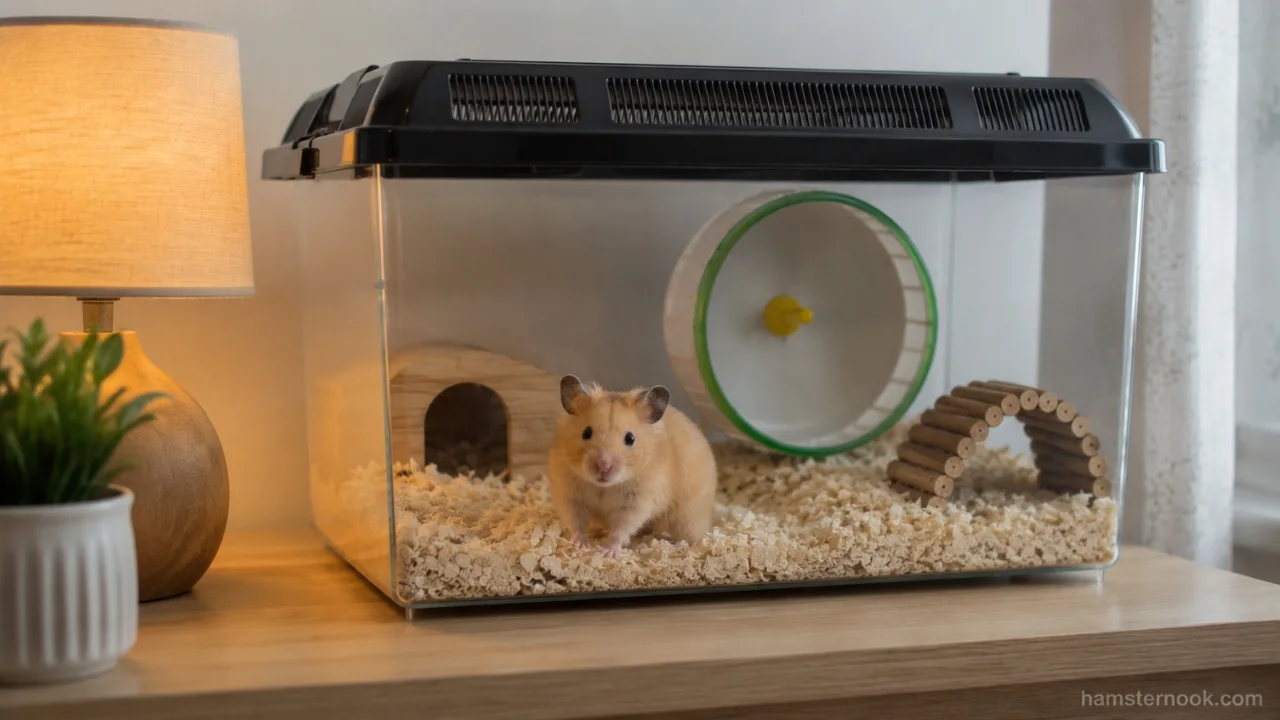
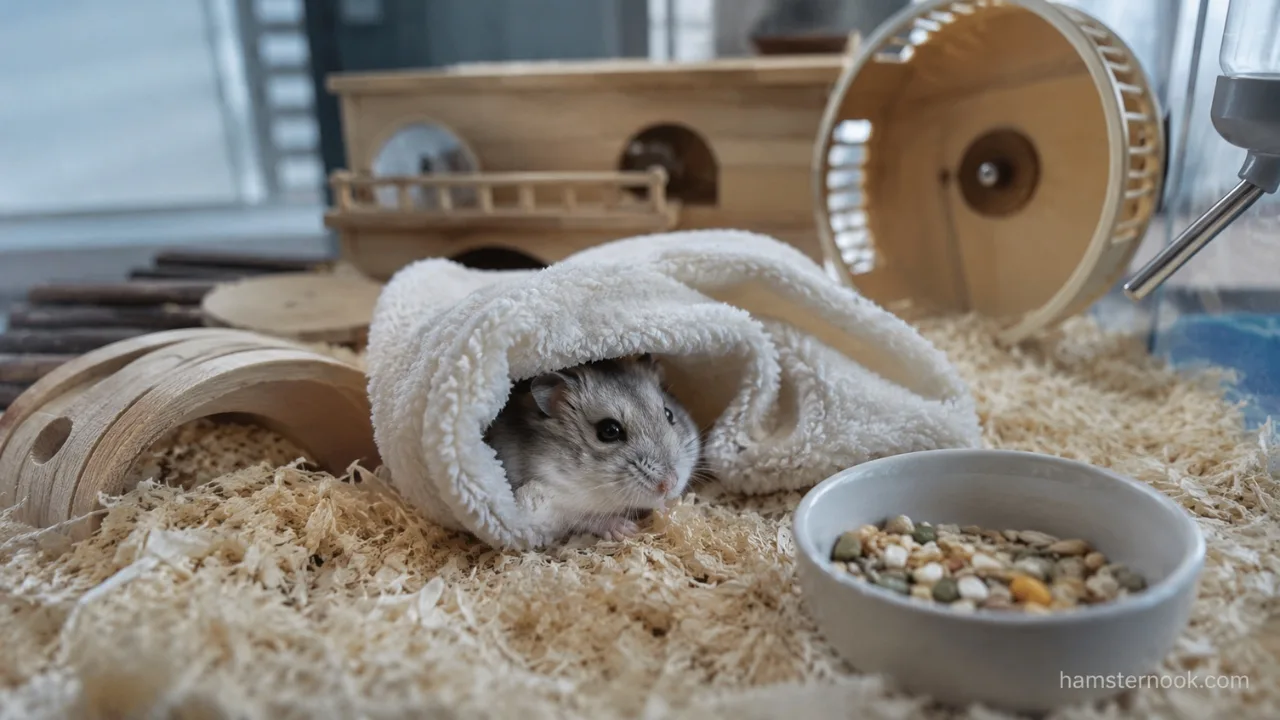
Yes, provided they have enough bedding to build an insulated nest.
Hamsters naturally regulate their sleeping environment by burrowing beneath the surface and arranging nesting material to suit their comfort.
Deep paper-based bedding allows them to create warmer sleeping chambers even when the surrounding room is slightly cooler.

Providing enough bedding lets your hamster build insulated nests and regulate its own comfort more effectively. Read How Much Bedding Does a Hamster Need? Minimum Depth Guide for Healthy Burrowing.
Providing adequate bedding depth is therefore just as important as maintaining a suitable room temperature.
Does the Type of Hamster Matter?
All common pet hamster species benefit from stable indoor temperatures, although individual preferences may vary slightly.
Syrian hamsters, dwarf hamsters, and Chinese hamsters should all be protected from:
- Direct drafts
- Extreme cold
- Excessive heat
- Rapid temperature fluctuations
The basic husbandry principles remain the same regardless of species.
Can Fans Replace Air Conditioning?
Fans can improve air circulation in a room, but they should never blow directly at a hamster’s enclosure.
If you are using a fan instead of air conditioning, our Can a Fan Blow Directly on a Hamster Cage? What Every Owner Should Know guide explains why airflow needs to be managed carefully.
Unlike air conditioning, ordinary fans do not significantly lower room temperature. During extremely hot weather, circulating hot air alone may not adequately protect a hamster from heat stress.

For this reason, keeping the room itself within a safe temperature range is generally more effective than relying solely on a fan.
Common Mistakes Owners Make
Many temperature-related problems happen because owners are trying to help. A few simple adjustments can make a big difference.
Placing the Cage Under an Air Vent
This is one of the most common mistakes. Even if the room temperature is ideal, cold air blowing directly into the enclosure creates an uncomfortable draft. Move the cage so the airflow passes around it rather than through it.
Setting the Air Conditioner Too Cold
Some people lower the thermostat as much as possible during hot weather. While this may feel refreshing to humans, there’s no benefit to keeping a hamster’s room unusually cold. A stable, moderate temperature is much safer.
Frequently Changing the Thermostat
Constantly switching between very cool and very warm temperatures forces your hamster to keep adjusting. Try to maintain a consistent indoor climate throughout the day.
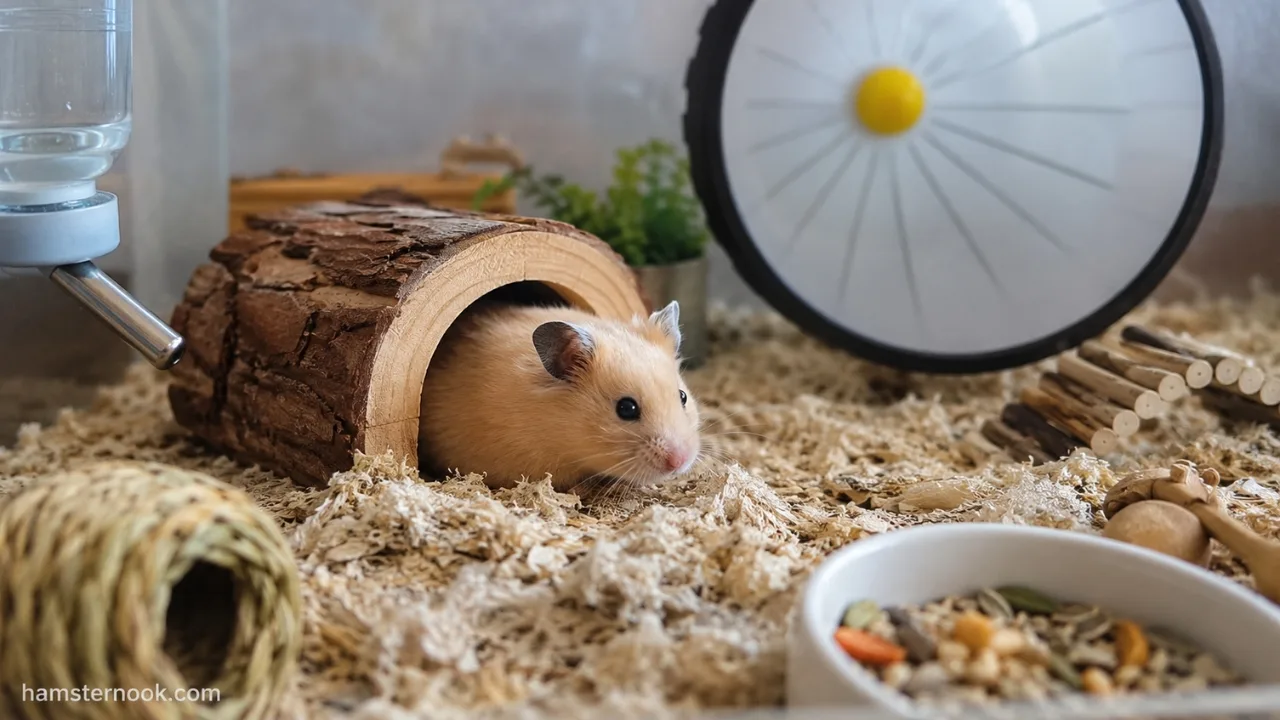
Forgetting About Bedding
Even in a well-controlled room, a hamster still needs plenty of bedding to create an insulated nest. Deep paper-based bedding allows your hamster to choose a warmer sleeping area when needed.
Assuming Every Quiet Hamster Is Too Cold
Hamsters naturally spend many hours sleeping during the day. A sleeping hamster isn’t necessarily cold. Look at its normal nighttime activity, appetite, and behavior before assuming the temperature is the problem.
What You Should Do
If you use air conditioning, a few simple habits will help keep your hamster comfortable year-round.
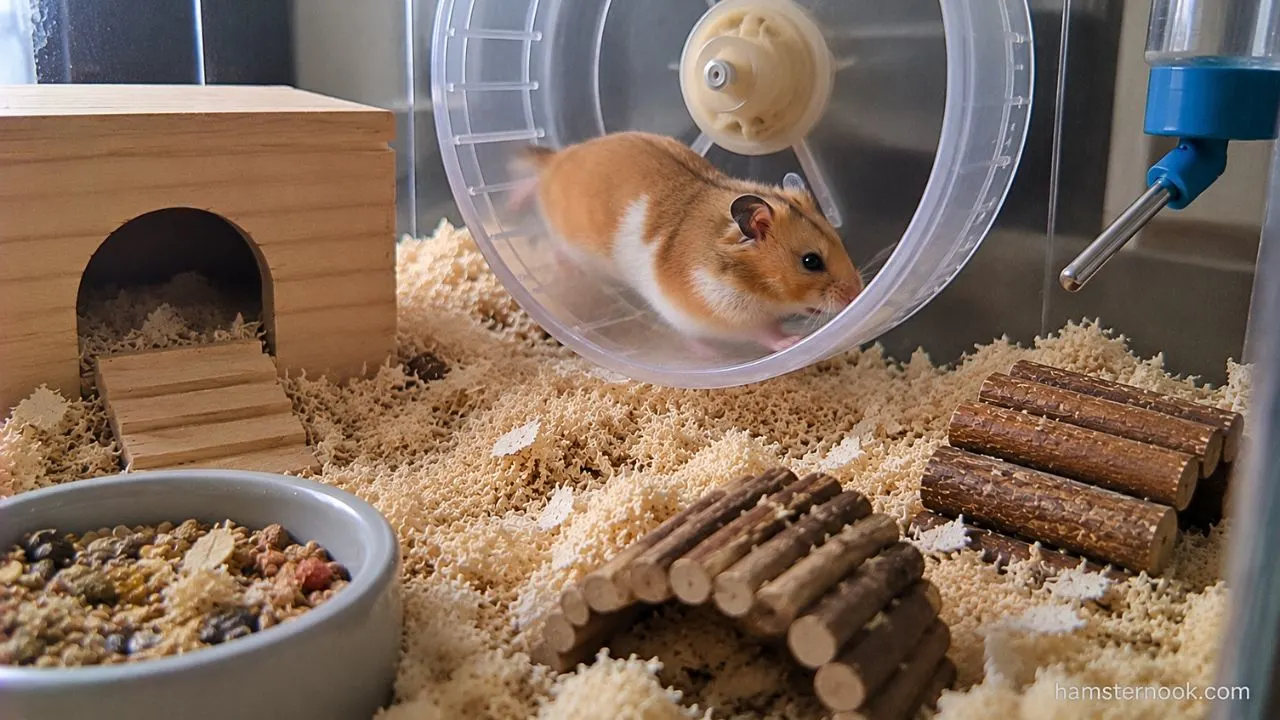
- Keep the room temperature between 65°F and 75°F (18°C–24°C) whenever possible.
- Place the enclosure away from air-conditioning vents and direct airflow.
- Provide deep, unscented paper bedding for nesting.
- Keep fresh drinking water available at all times.
- Avoid moving the cage between rooms with very different temperatures.
- Monitor your hamster’s activity during its normal evening hours rather than while it’s sleeping during the day.
- During heat waves, use air conditioning to maintain a safe indoor environment instead of allowing the room to become excessively warm.
Most healthy hamsters adapt well to air-conditioned homes when the indoor environment remains stable.
Warning Signs
Air conditioning itself doesn’t usually cause problems, but you should pay attention if your hamster shows unusual behavior that may suggest it’s becoming too cold or too hot.
Watch for:
- Staying curled tightly in one spot for unusually long periods during normal active hours.
- Becoming much less active than usual.
- Refusing food or water.
- Shivering or appearing unusually sluggish.
- Rapid breathing or panting during hot weather.
- Spending all of its time trying to escape the warmest or coolest part of the enclosure.
These signs don’t necessarily mean the air conditioner is responsible, but they do suggest it’s time to evaluate your hamster’s environment.
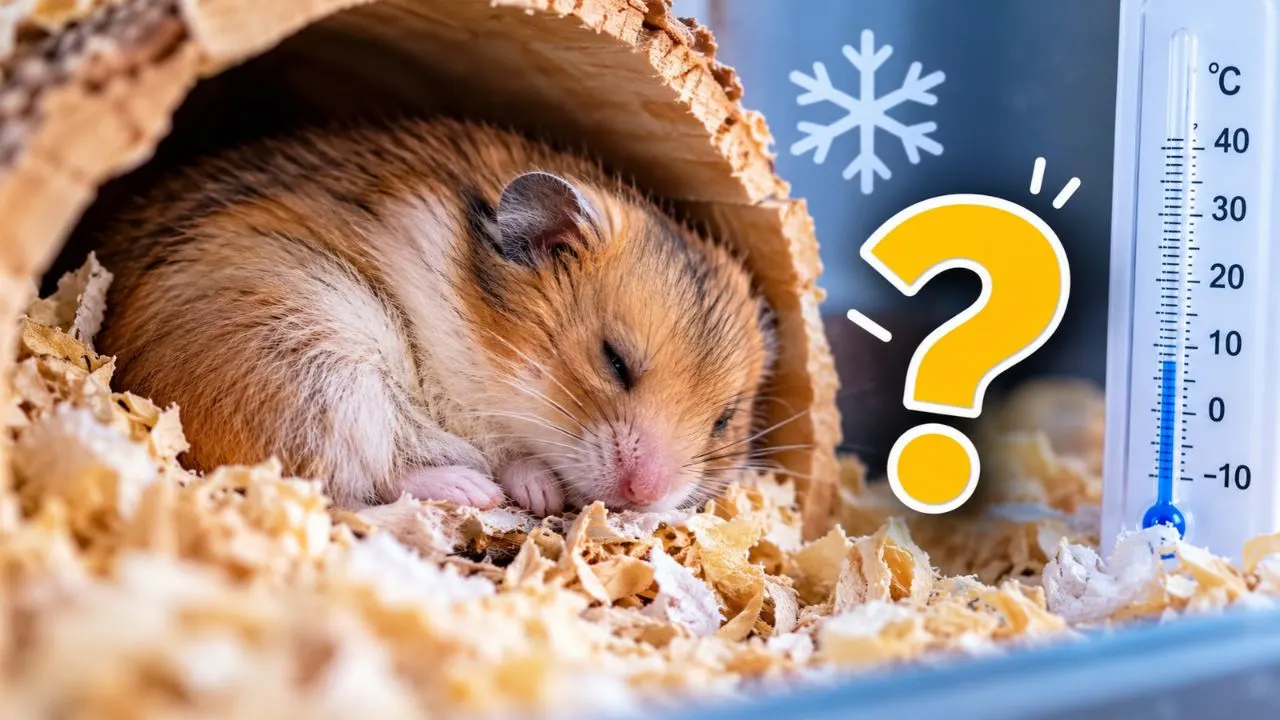
Looking at appetite, activity, posture, and behavior together gives a clearer picture than focusing on temperature alone. Read How to Tell If Your Hamster Is Happy, Healthy, Stressed, or Sick: Complete Owner’s Guide (2026).
When to Worry
A healthy hamster should remain alert and active during its usual waking hours.
Seek advice from an experienced exotic animal veterinarian if your hamster:
- Becomes extremely lethargic and is difficult to wake.
- Stops eating or drinking.
- Has trouble breathing.
- Appears weak or unable to move normally.
- Shows signs of injury or illness in addition to changes in body temperature.
Very low temperatures can contribute to torpor, a state in which a hamster’s body functions slow dramatically. Torpor is not normal sleep and can become dangerous if not recognized promptly. Likewise, overheating can quickly become an emergency, especially during extreme summer temperatures.

Medical Disclaimer: This article provides general educational information about hamster care and temperature management. It is not a substitute for professional veterinary advice. If your hamster appears ill, is having difficulty breathing, becomes unresponsive, or you suspect heatstroke or torpor, contact an experienced exotic animal veterinarian immediately.
Final Thoughts
Air conditioning doesn’t make hamsters sick on its own. In many homes, it actually helps create a safer environment during hot weather by preventing dangerous overheating.
The key is maintaining a stable room temperature, avoiding direct drafts, and giving your hamster enough bedding to build a comfortable nest. When those basic needs are met, most hamsters thrive in an air-conditioned home just as they would in any other well-managed indoor environment.
Instead of worrying about using the air conditioner, focus on consistency. A steady, comfortable environment is far more important than whether the cooling comes from an AC unit or naturally mild weather.
Frequently Asked Questions
Can my hamster sleep in an air-conditioned room?
Yes. As long as the room stays within a safe temperature range and the cage isn’t exposed to direct cold airflow, an air-conditioned room is perfectly suitable.
What temperature is too cold for a hamster?
Temperatures below about 60°F (16°C) increase the risk of cold-related problems, including torpor if exposure continues.
Is 72°F (22°C) good for a hamster?
Yes. Around 72°F (22°C) falls comfortably within the recommended range for most pet hamsters.
Should the air conditioner stay on all day?
It can, provided the room remains stable and the enclosure isn’t directly beneath a vent.
Can a fan cool my hamster instead of air conditioning?
A fan improves air circulation but doesn’t lower room temperature significantly. During very hot weather, keeping the room itself cool is generally more effective.
How can I tell if my hamster is uncomfortable because of temperature?
Changes in activity, appetite, breathing, or overall behavior are more useful indicators than any single posture or action. Consider the whole environment rather than focusing only on the thermostat.
References
This guide is based on hamster temperature management, housing, environmental conditions, heat and cold safety, and general health guidance from trusted veterinary and animal welfare resources, including:
- RSPCA – Creating a Good Home for Hamsters – Guidance on suitable environmental conditions, housing, bedding, ventilation, temperature, and protecting hamsters from unsuitable surroundings.
- RSPCA – Hamster Health & Welfare – Information on hamster health, signs of illness, monitoring behavior, and recognizing when veterinary attention may be needed.
- Blue Cross – Hamster Care Guide – Practical guidance on hamster housing, bedding, environmental care, enrichment, and maintaining comfortable living conditions.
- MSD Veterinary Manual – Providing a Home for a Hamster – Veterinary guidance on hamster housing, bedding, ventilation, environmental conditions, and appropriate home management.
- MSD Veterinary Manual – Disorders and Diseases of Hamsters – Veterinary reference information on hamster health problems, respiratory concerns, weakness, and other signs that may require veterinary evaluation.
- NC3Rs – Housing and Husbandry: Hamster – Guidance on hamster housing, environmental conditions, bedding, husbandry, and welfare considerations.
Medical Disclaimer
This article is intended for educational purposes only and should not be considered veterinary advice. Air conditioning and temperature changes can affect a hamster’s comfort and may contribute to health concerns in unsuitable conditions, but unusual symptoms should not automatically be attributed to temperature alone. If your hamster becomes extremely lethargic, stops eating or drinking, has difficulty breathing, appears weak or unable to move normally, or you suspect heatstroke or torpor, contact a qualified exotic animal veterinarian promptly.

Narayan Kumar is the founder and author of HamsterNook. He creates practical, research-based hamster care guides covering hamster behavior, nutrition, cage setup, enrichment, health, and everyday care. His goal is to help hamster owners make informed decisions and provide safer, healthier lives for their pets through clear, beginner-friendly information based on trusted animal care resources.