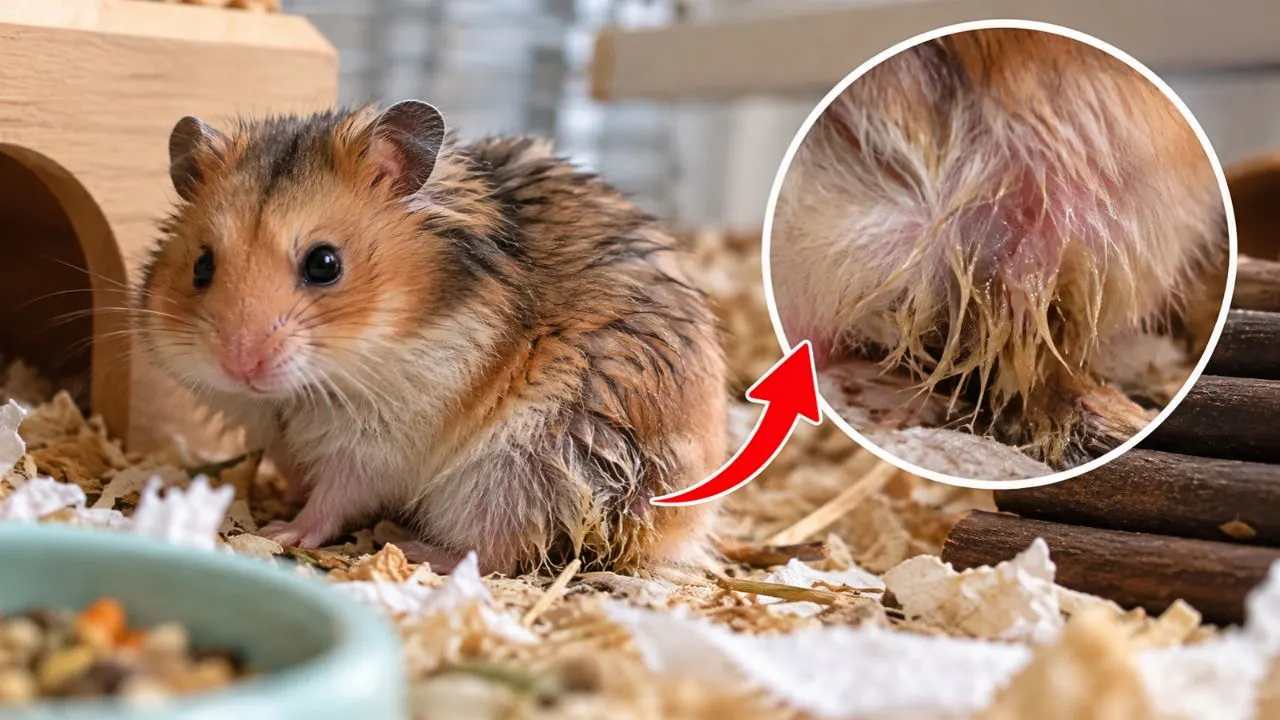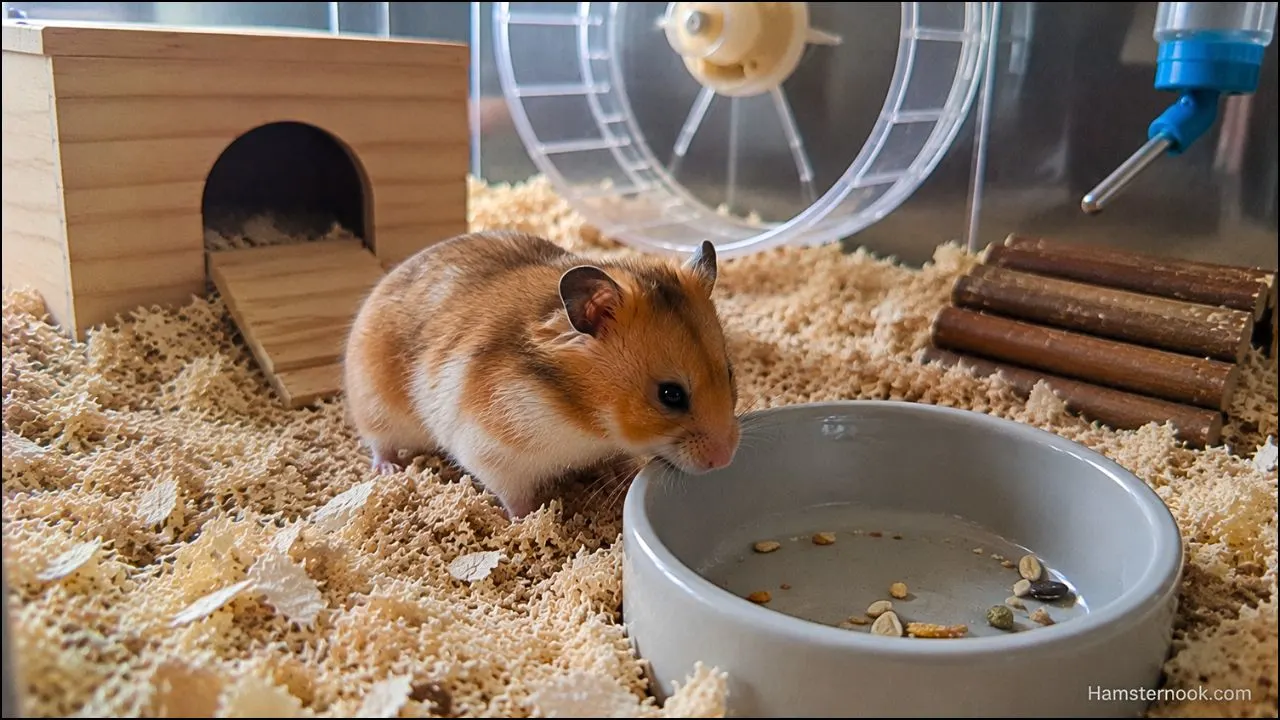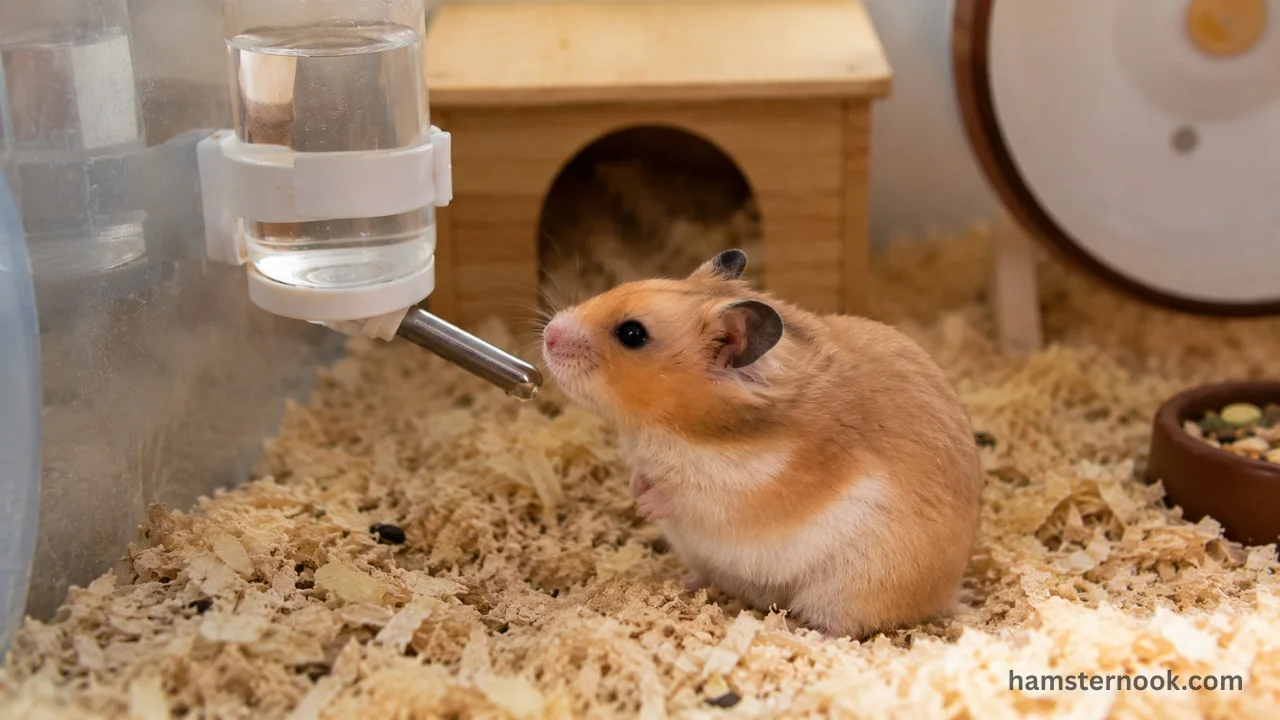
If you notice your hamster drinking less water than usual, it is natural to wonder whether something is wrong. If your hamster normally drinks regularly, this sudden change can be worrying.
In many cases, there is a straightforward explanation for the change, although persistent reductions in water intake should never be ignored. Sometimes the explanation is completely harmless, such as cooler weather, changes in diet, or a malfunctioning water bottle. However, a noticeable decrease in water intake can occasionally signal an underlying health issue that requires attention.
Knowing what can affect a hamster’s water intake makes it easier to decide when simple observation is enough and when veterinary advice is needed. This guide covers the most common reasons, warning signs to watch for, and practical steps you can take at home.
Is It Normal for Hamsters to Drink Less Sometimes?
A healthy hamster’s water intake can fluctuate slightly from day to day. What matters most is whether the decrease is temporary or accompanied by changes in eating habits, activity levels, weight, or overall behavior.
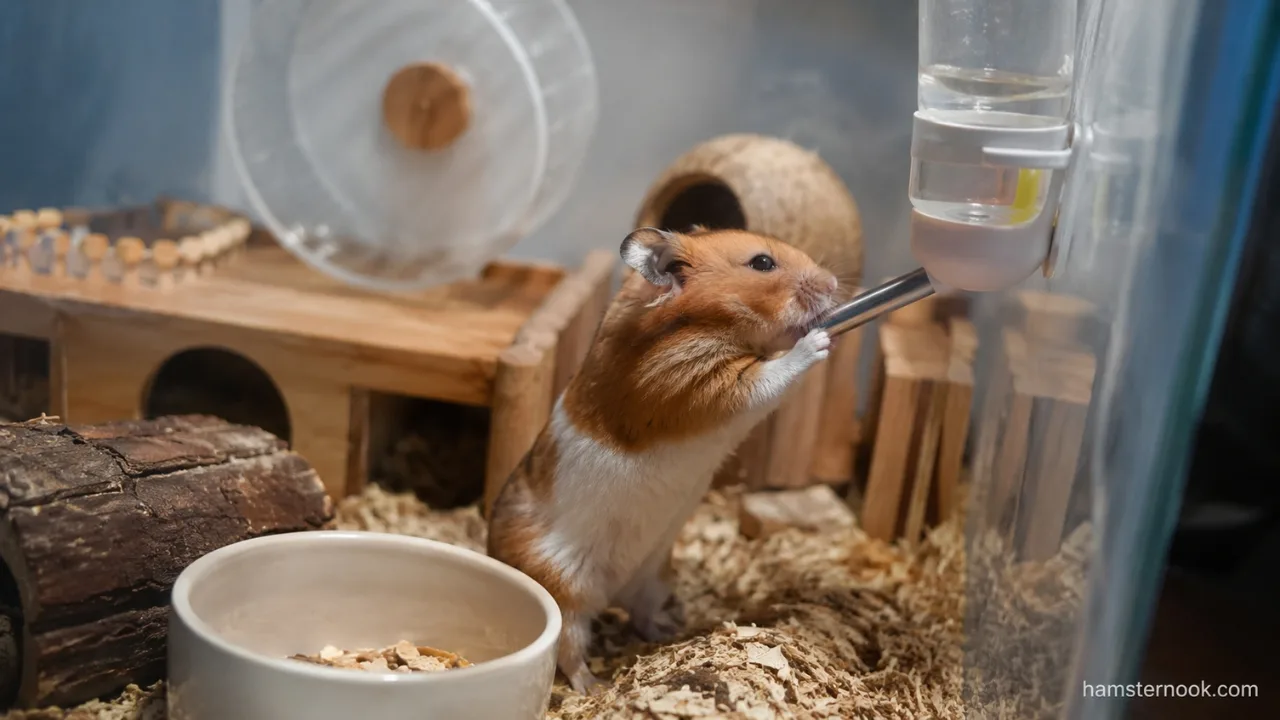
It is completely normal for a hamster’s water intake to vary slightly from one day to the next.
Just like humans, hamsters may drink more or less depending on:
- Temperature
- Activity level
- Diet
- Age
- Health status
- Environmental conditions
A small temporary decrease is not usually a cause for concern. The bigger concern is a sudden, significant, or ongoing reduction in drinking behavior, especially when combined with other symptoms.
Common Reasons Your Hamster Is Drinking Less Water
Not every drop in water consumption is linked to illness.

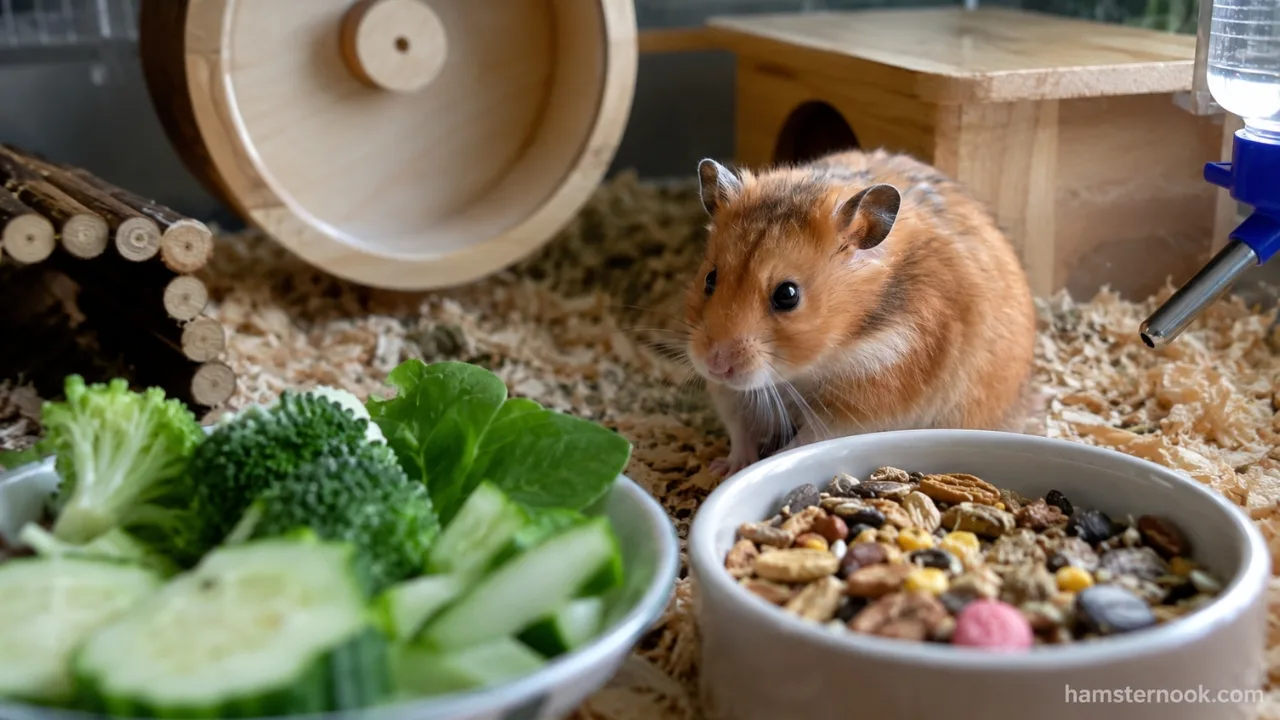
Fresh Foods May Be Providing More Moisture
One of the most common explanations is dietary change.
Many fresh foods contain a large amount of water.
| Food | Approximate Water Content |
|---|---|
| Cucumber | Very High |
| Lettuce | Very High |
| Zucchini | High |
| Bell Pepper | High |
| Apple | Moderate to High |
If your hamster recently received more fresh vegetables than usual, they may naturally drink less from their bottle.
Owners who regularly offer water-rich vegetables may also benefit from reading our Can Hamsters Eat Cucumber? guide for portion recommendations and feeding tips.
Cooler Room Temperatures
Hamsters often drink less during cooler periods.
When temperatures drop:
- Water loss through evaporation decreases
- Activity levels may slightly change
- The body’s hydration needs may be lower
A hamster that drinks less during cooler weather but otherwise behaves normally may simply be adjusting to environmental conditions.
Reduced Activity Levels
Hamsters generally drink more when they are active.
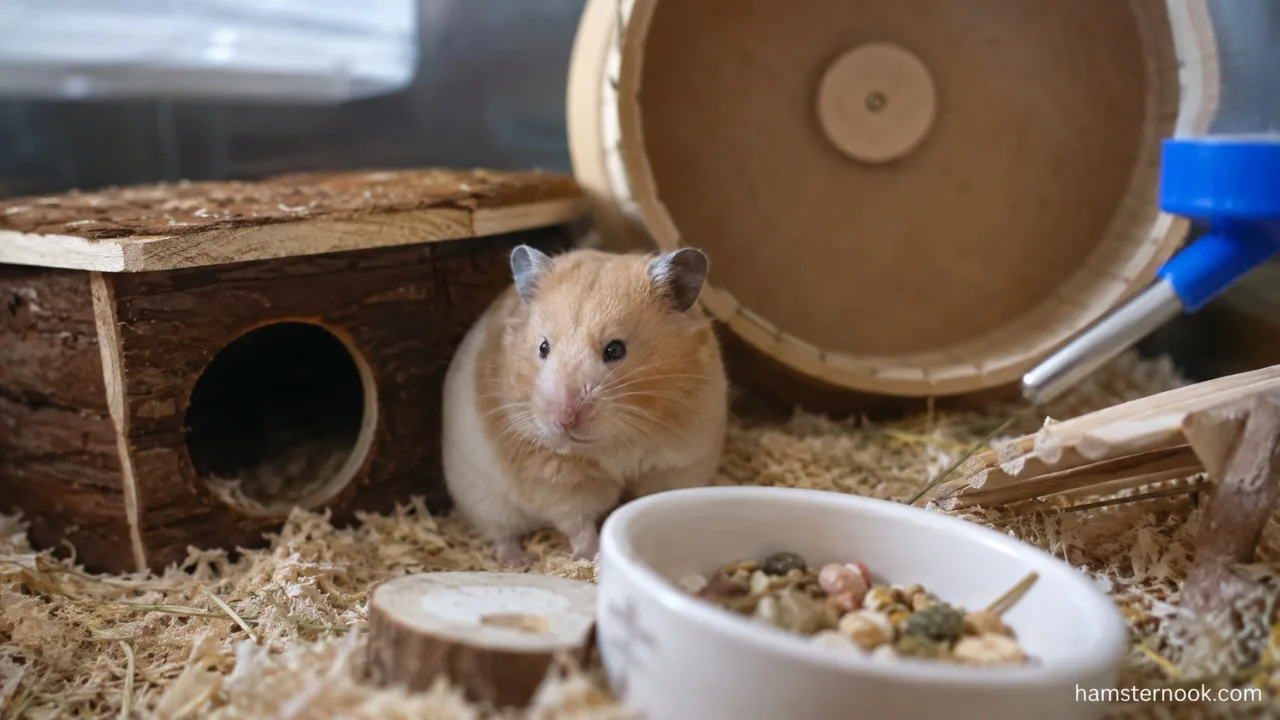
Changes that may reduce activity include:
- Aging
- Seasonal behavior changes
- Environmental changes
- Temporary sleep pattern shifts
Because active hamsters lose more moisture and energy, they often drink more than hamsters that spend most of their time resting.
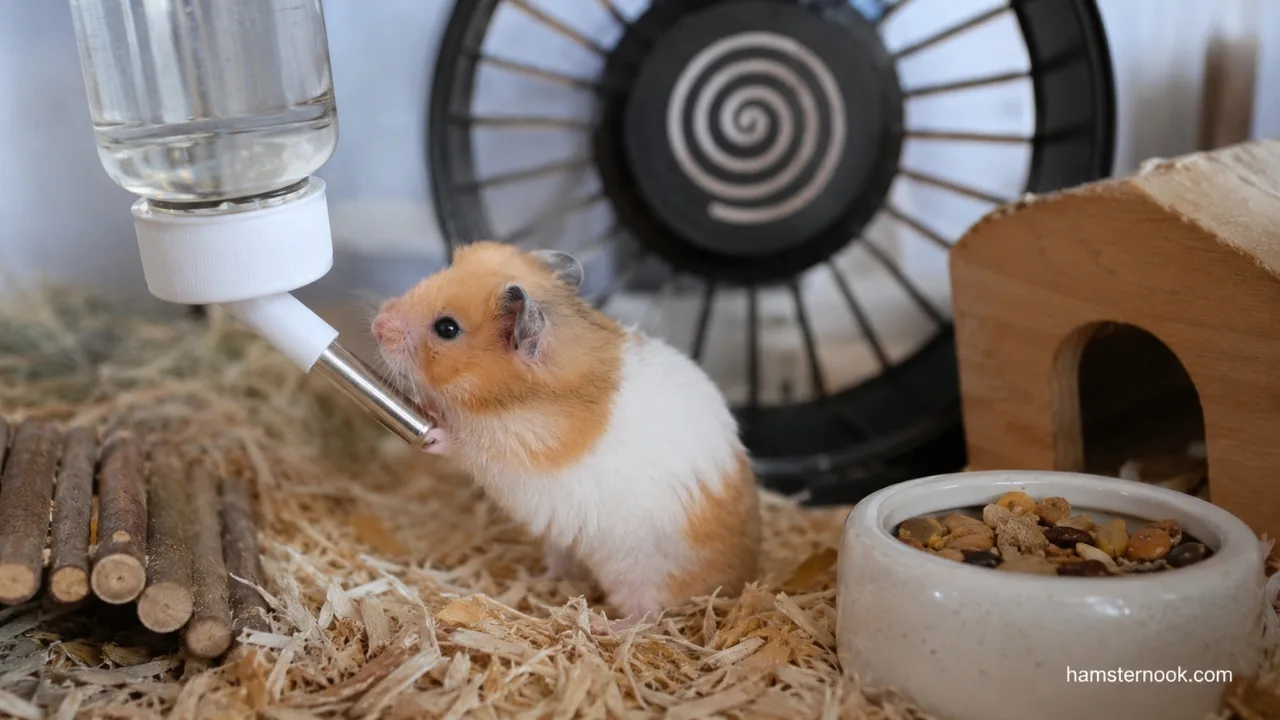
Check the Water Bottle First
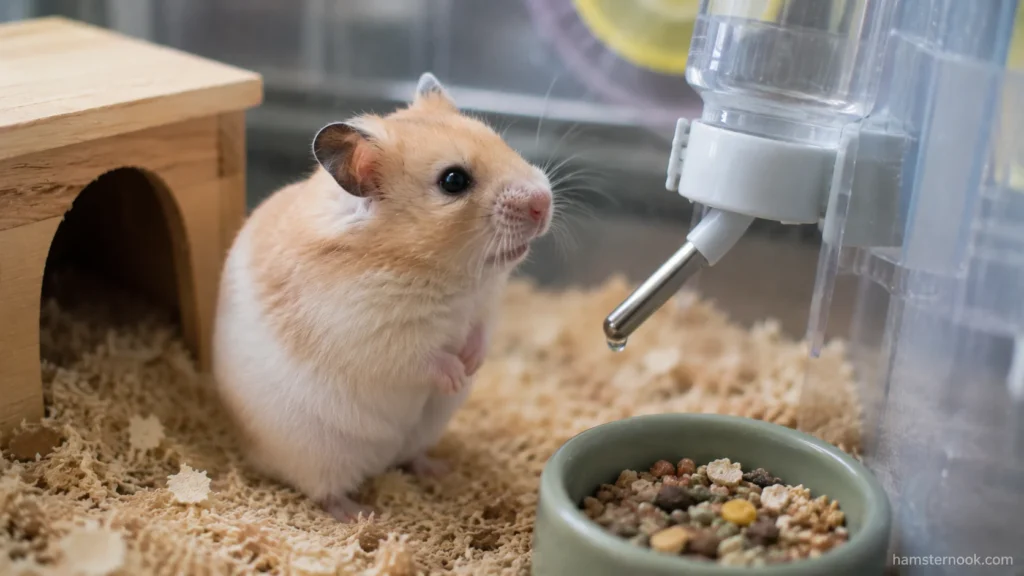
Before assuming a health problem, inspect the water source carefully.
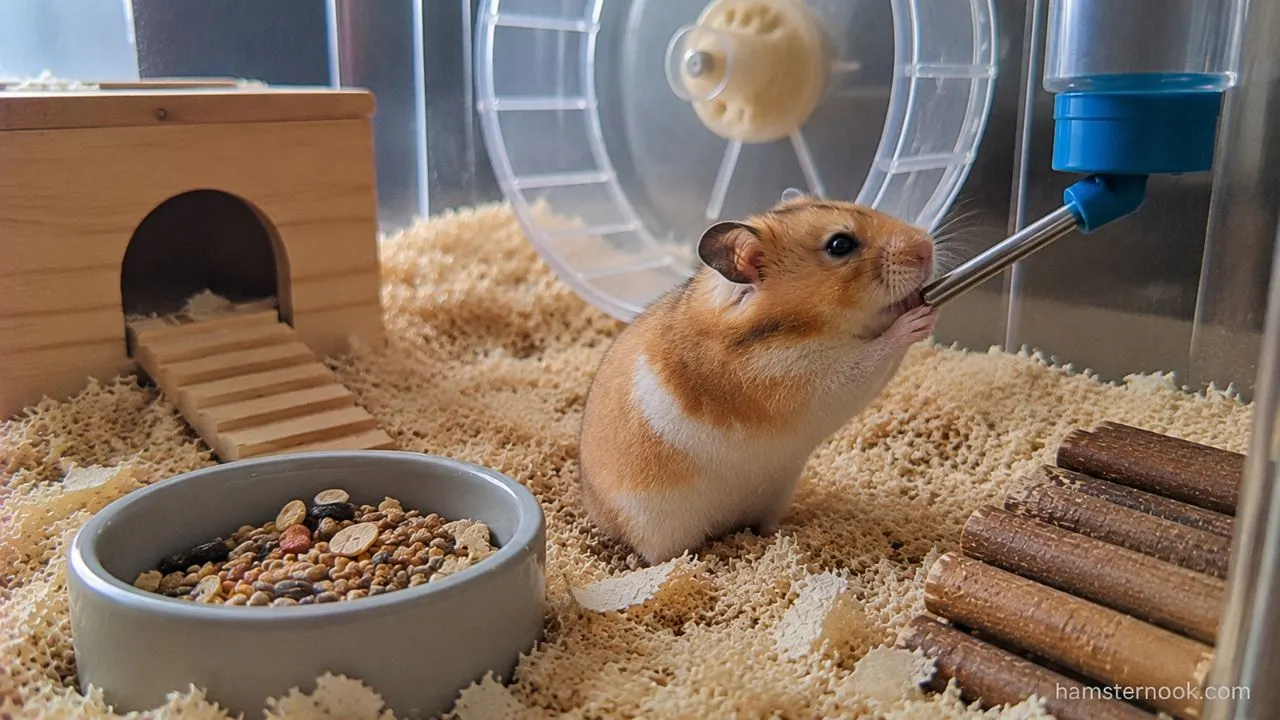
Water bottles can malfunction without being obvious.
Signs of a Faulty Water Bottle
| Problem | Possible Effect |
|---|---|
| Blocked nozzle | Water cannot flow properly |
| Air lock | Hamster cannot access water |
| Leaking bottle | Misleading water level changes |
| Dirty nozzle | Reduced water flow |
| Improper positioning | Difficult access |
Tap the nozzle gently and ensure water flows normally.
Before worrying about illness, make sure the water bottle is functioning properly, as equipment problems are surprisingly common.
Could Stress Cause Reduced Water Intake?
Yes, stress can sometimes affect drinking habits.
Hamsters are sensitive animals and may react to environmental changes.

Potential stressors include:
- Moving to a new cage
- New pets in the home
- Loud noises
- Recent travel
- Cage rearrangement
- Changes in routine
A stressed hamster may temporarily eat and drink less until it feels secure again.
If recent environmental changes seem to be affecting your hamster’s behavior, our How to Make Your Hamster Happy in a Small Cage guide covers several practical ways to reduce stress.
Age Can Influence Drinking Habits
Older hamsters sometimes show changes in water consumption.
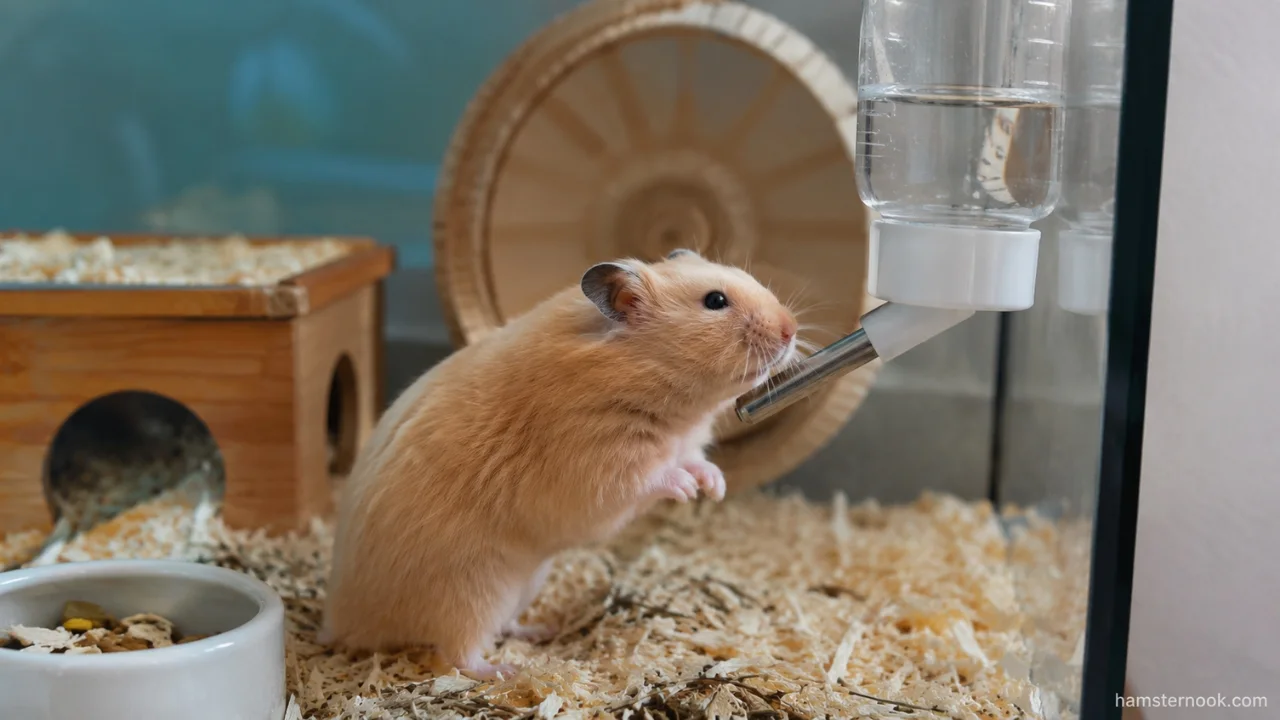
Senior hamsters may:
- Move less
- Sleep more
- Explore less frequently
- Have different dietary preferences
A gradual decrease in drinking that occurs alongside normal aging may not necessarily indicate illness, but sudden changes should still be monitored.
Health Problems That May Cause Reduced Drinking
Although many cases are harmless, decreased water intake can sometimes be associated with medical issues.
Dental Problems
Appetite changes caused by dental discomfort are often easier to spot when you understand normal eating habits, which we explain in What Do Hamsters Eat? Food List.
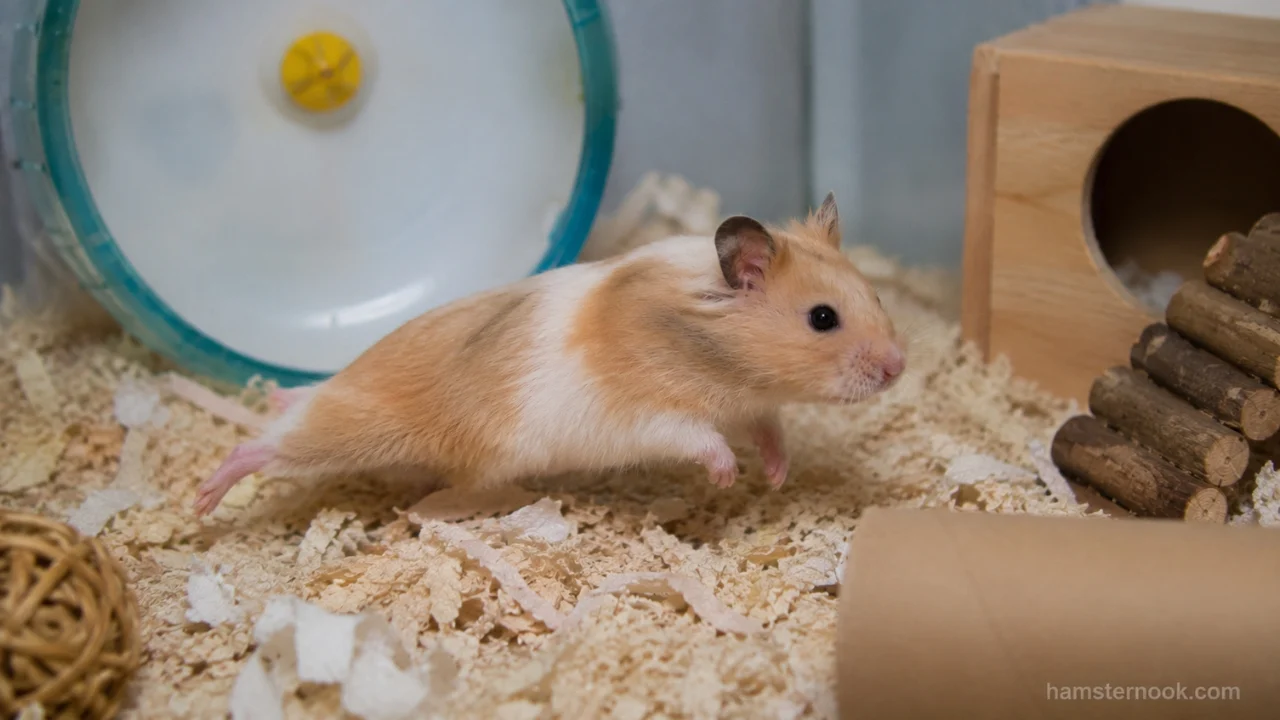
Hamsters rely on healthy teeth for eating and normal daily activities.
Dental issues may cause:
- Pain around the mouth
- Difficulty chewing
- Reduced appetite
- Less interest in drinking
Signs to watch for include drooling, weight loss, or difficulty eating.
Illness and General Weakness
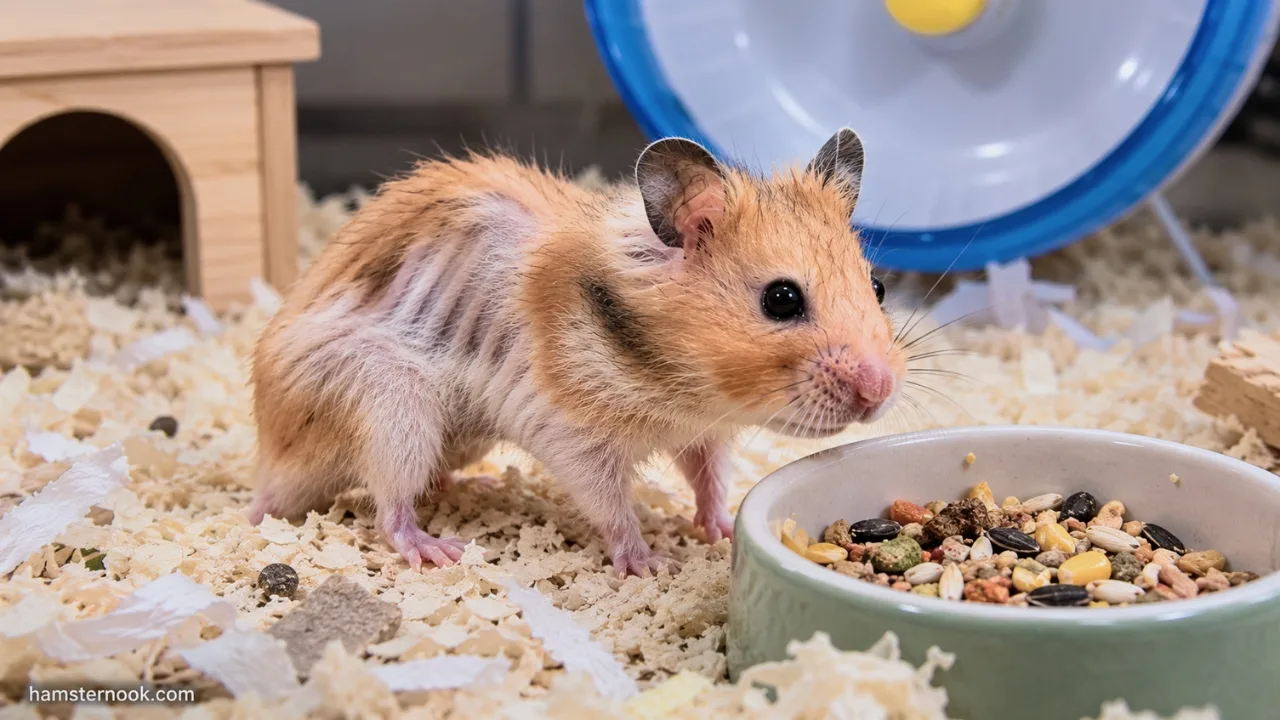
When hamsters feel unwell, they may drink less simply because they are less active or lack energy.

Potential warning signs include:
- Sleeping more than usual
- Hunched posture
- Weight loss
- Reduced appetite
- Lack of interest in surroundings
These symptoms deserve prompt veterinary attention.
Dehydration Can Become a Serious Concern
Ironically, reduced drinking can eventually contribute to dehydration.
Signs of dehydration may include:
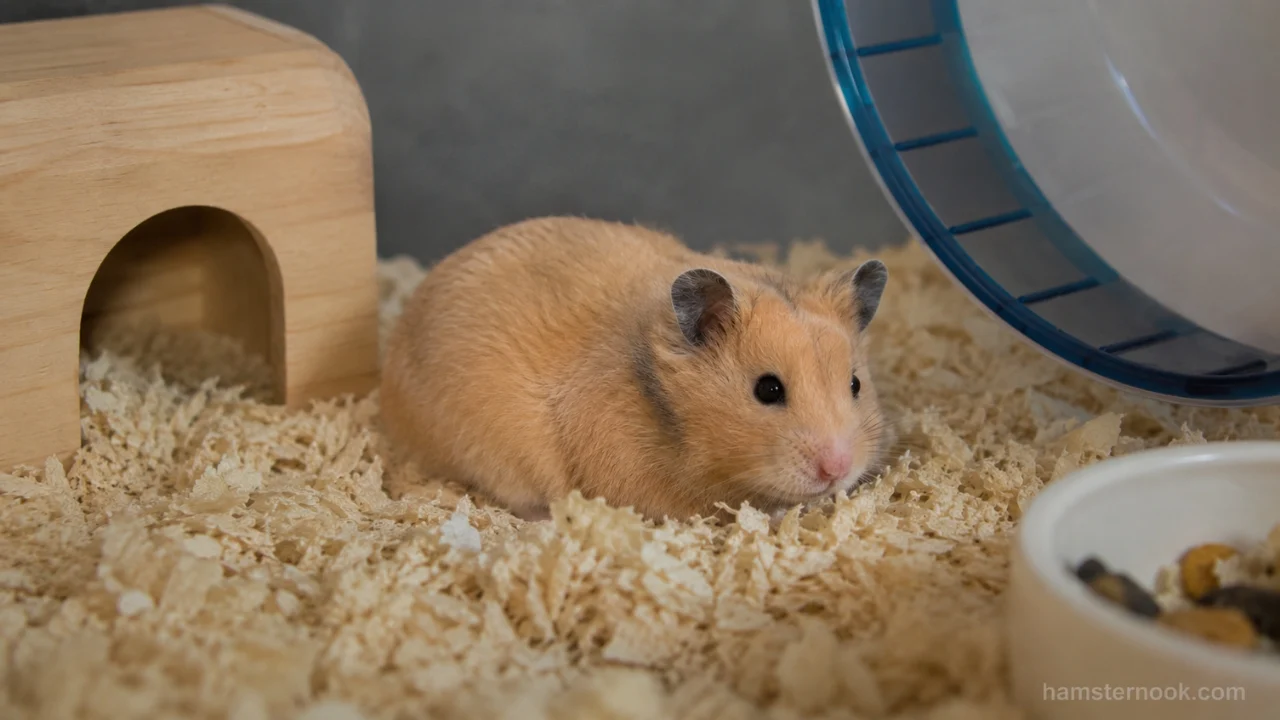
| Possible Sign | What You May Notice |
|---|---|
| Sunken eyes | Eyes appear less prominent |
| Lethargy | Unusual tiredness |
| Dry mouth | Reduced moisture around the mouth |
| Weakness | Reduced movement |
| Weight loss | Gradual decline in body condition |
Dehydration can become dangerous quickly in small animals.
How to Monitor Your Hamster’s Water Intake
A few simple observations can often tell you whether the change is temporary or something that needs closer attention.
Track Daily Water Levels
Choose a consistent time each day and note:
- Water bottle level
- Food consumption
- Activity level
- Bathroom habits
Small trends are often easier to spot when recorded.

Try measuring the water level at roughly the same time each day. This makes it easier to notice gradual changes and avoids mistaking normal day-to-day fluctuations for a health problem.
Observe Nighttime Behavior
Hamsters are primarily nocturnal.
Many owners mistakenly think their hamster is not drinking because they rarely see it happen.
Use a small pet camera or quietly observe during evening hours if possible.
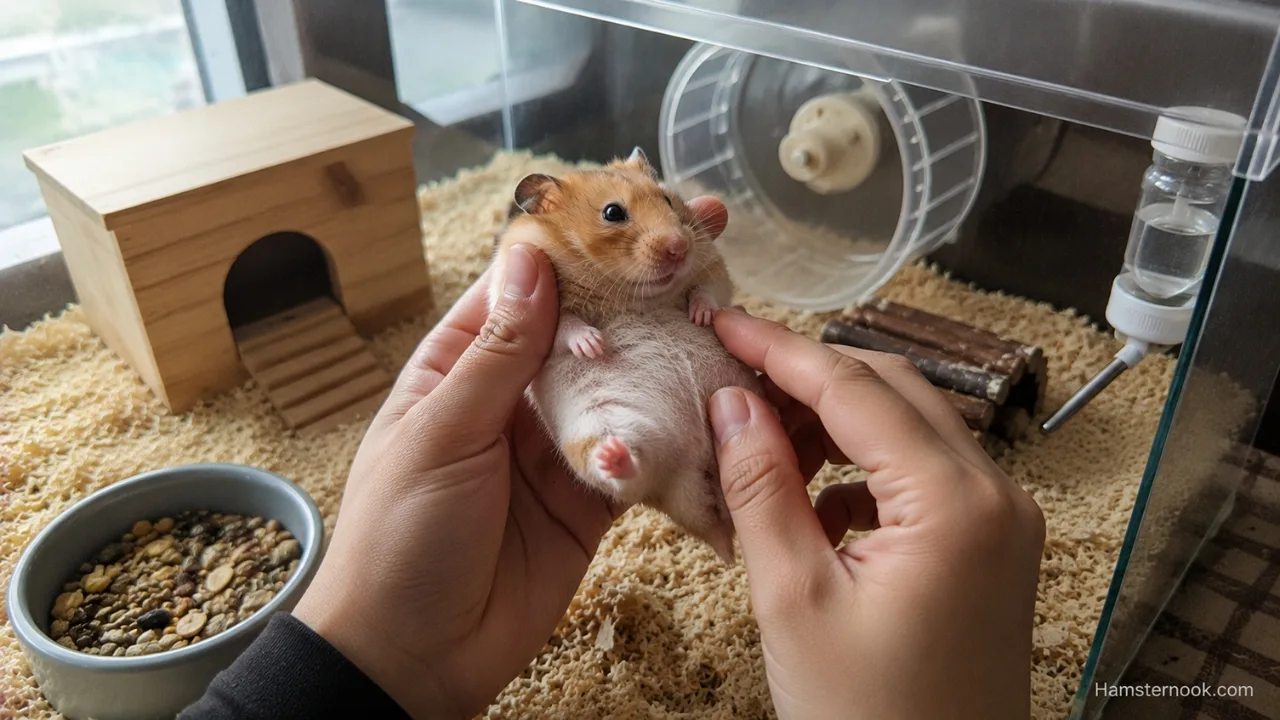
Monitor Weight Changes
Sudden weight loss is often one of the earliest signs that something is wrong, alongside several other symptoms covered in Signs of a Sick Hamster.
Weight loss combined with reduced drinking deserves attention.
| Observation | Recommended Action |
|---|---|
| Drinking slightly less but acting normal | Continue monitoring |
| Drinking less and eating less | Increase observation |
| Drinking less with weight loss | Contact a veterinarian |
| Drinking less with lethargy | Seek veterinary advice promptly |
What You Can Do at Home
If your hamster seems healthy but is drinking less, a few simple checks can help.
Ensure Fresh Water Is Always Available
Replace water daily, even if the bottle appears full.

Fresh water encourages normal drinking behavior.
Clean the Water Bottle Regularly
Bacteria and mineral deposits can build up inside bottles over time.
Routine cleaning helps maintain proper water flow.
Offer Water in a Small Dish Temporarily
Some owners temporarily provide a shallow water dish alongside the bottle.
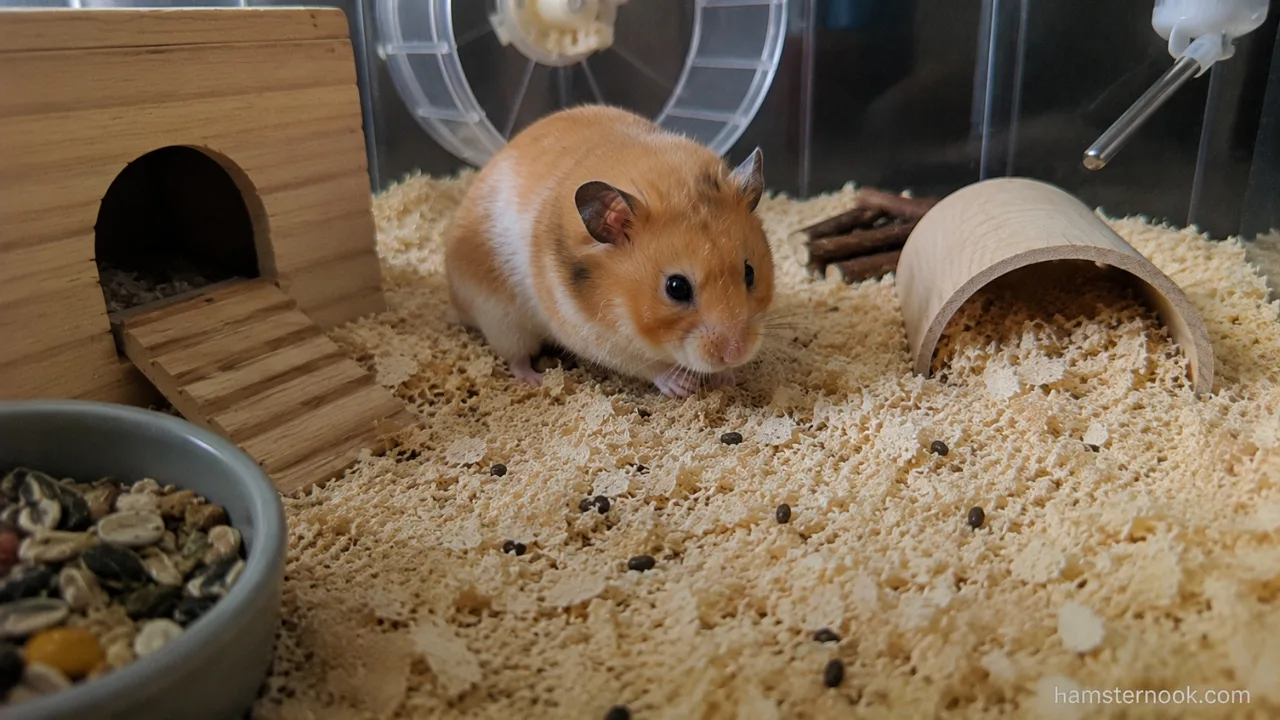
This can help determine whether the hamster is avoiding the bottle itself.
Always use a stable dish that cannot easily tip over.
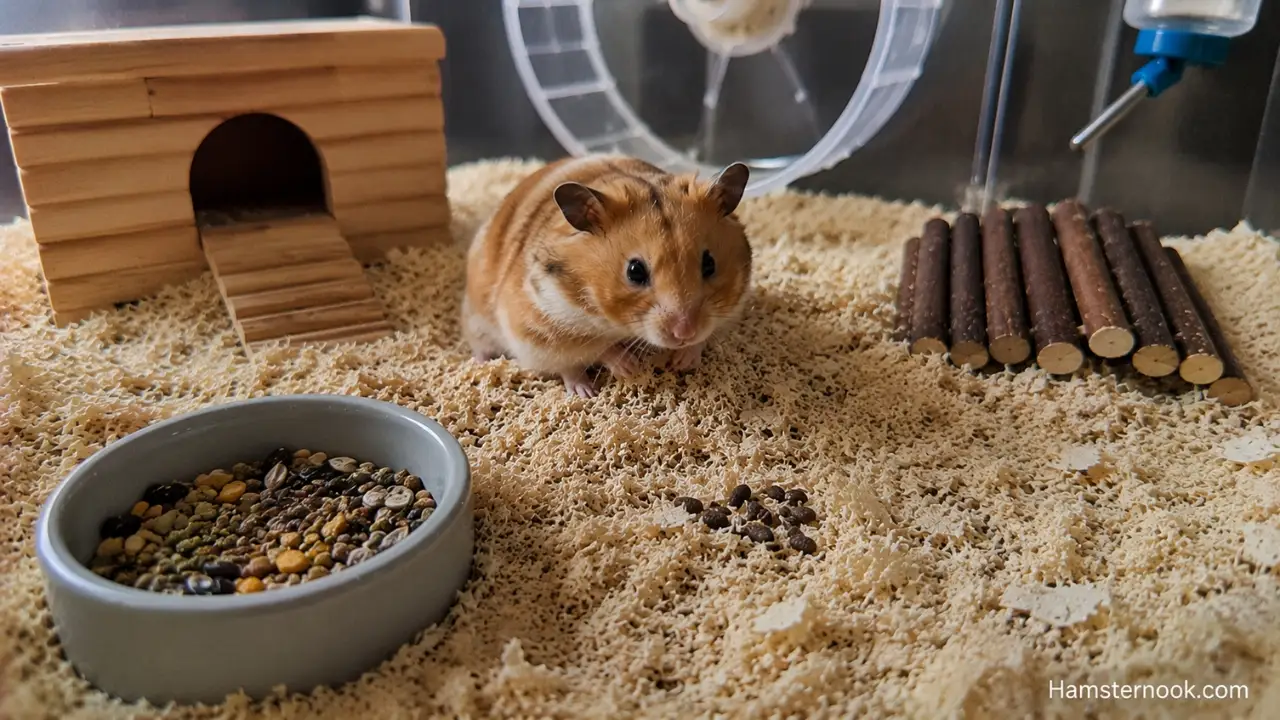
Review Recent Diet Changes
Ask yourself:
- Have I offered more vegetables recently?
- Did I introduce new foods?
- Has my hamster’s routine changed?
These factors often explain minor changes in water intake.
When Should You Contact a Veterinarian?
Reduced drinking becomes more concerning when accompanied by additional symptoms.
Seek veterinary advice if your hamster shows:
- Significant decrease in water intake lasting several days
- Weight loss
- Refusal to eat
- Lethargy
- Difficulty moving
- Drooling
- Labored breathing
- Changes in urination
Because hamsters are small prey animals, they often hide signs of illness until they become more serious.
How to Encourage Healthy Hydration
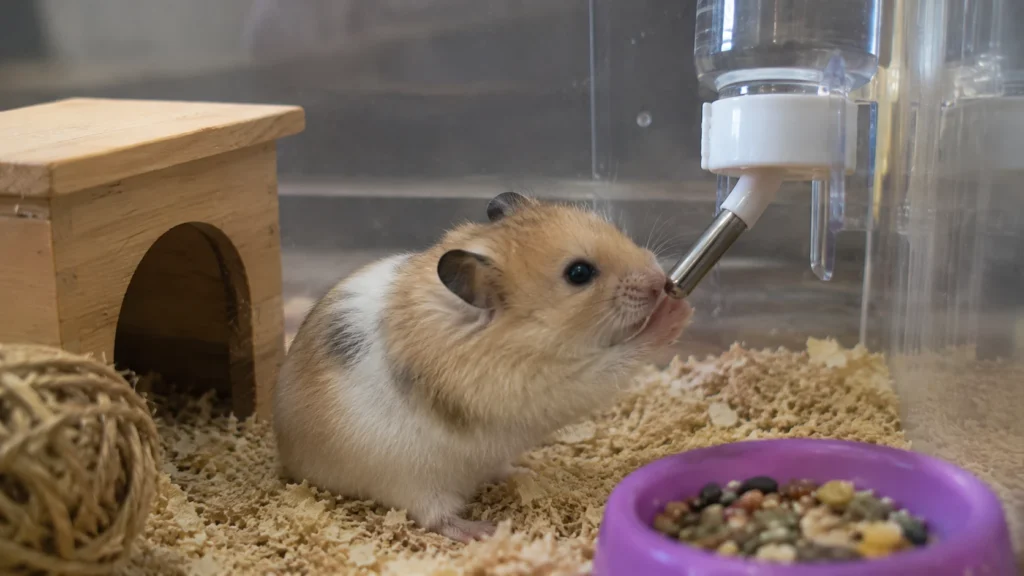
Maintaining good daily care habits is often the simplest way to prevent hydration problems.
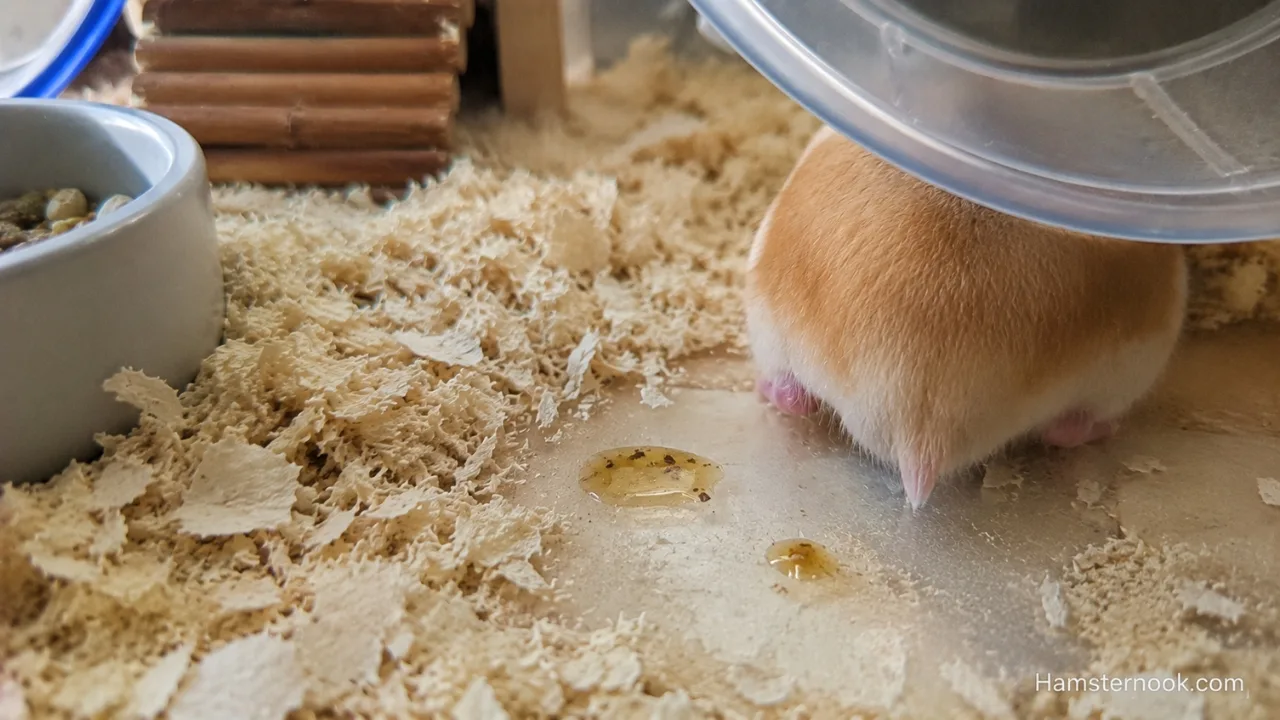
Best Practices for Supporting Hydration
| Practice | Benefit |
|---|---|
| Fresh water daily | Encourages drinking |
| Clean water bottle | Ensures proper flow |
| Stable room temperature | Supports normal hydration |
| Balanced diet | Prevents dietary imbalances |
| Regular health checks | Helps identify problems early |
Most healthy hamsters regulate their water intake very well when given proper care.
Good hydration starts with a balanced daily diet as well as constant access to fresh water. Our Complete Hamster Diet Guide: Best Foods, Safe Treats & Toxic Foods explains how nutrition and hydration work together to support your hamster’s overall health.
Avoid changing both your hamster’s diet and water bottle at the same time. Making one change at a time makes it much easier to identify the real cause if your hamster’s drinking habits suddenly change.
Understanding which foods support proper hydration is easier when you know the difference between safe and risky foods, covered in Safe vs Unsafe Foods for Hamsters.
Final Thoughts
A hamster suddenly drinking less water is not automatically a reason to panic. In many cases, the cause is something harmless, such as eating more fresh vegetables, cooler weather, or a recent change in routine. Careful observation over the next few days is often the best first step before assuming a medical problem.
Even though hamsters naturally have small daily water requirements, noticeable changes in drinking habits can still provide useful clues about their health. If reduced drinking continues for several days or occurs alongside symptoms like weight loss, lethargy, poor appetite, or behavioral changes, it should be taken seriously.
Careful observation, regular water bottle checks, and prompt veterinary attention when needed can help ensure your hamster stays healthy and properly hydrated.
Medical Disclaimer
The information provided in this article is for educational and informational purposes only and should not be considered veterinary advice, diagnosis, or treatment. If your hamster is showing signs of illness, injury, or unusual behavior, consult a qualified veterinarian as soon as possible.
Sources
- RSPCA – Hamster Care Guidance
- PDSA – Hamster Health Information
- Merck Veterinary Manual – Small Mammals
Frequently Asked Questions
My hamster is eating normally but drinking less. Should I worry?
Not necessarily. If your hamster recently started eating more fresh vegetables or the room temperature has changed, water intake may naturally decrease. Continue monitoring for any additional symptoms.
How long can a hamster go without drinking water?
Hamsters should always have access to fresh water. Going without water for extended periods can quickly lead to dehydration and serious health complications.
Can a clogged water bottle make it seem like my hamster is drinking less?
Yes. A blocked nozzle or air lock can prevent water from flowing properly, making it appear as though your hamster is choosing not to drink.
Do older hamsters drink less water?
Some senior hamsters may drink slightly less due to lower activity levels, but sudden or dramatic changes should still be evaluated.
Should I offer a water bowl if my hamster stops using its bottle?
A small, stable water dish can be offered temporarily while you check the bottle for problems. Many owners use this method to rule out equipment issues.
What is the biggest warning sign associated with reduced drinking?
Reduced water intake combined with weight loss, lethargy, poor appetite, or difficulty moving should be considered a potential health concern and evaluated by a veterinarian.

Narayan Kumar is the founder and author of HamsterNook. He creates practical, research-based hamster care guides covering hamster behavior, nutrition, cage setup, enrichment, health, and everyday care. His goal is to help hamster owners make informed decisions and provide safer, healthier lives for their pets through clear, beginner-friendly information based on trusted animal care resources.