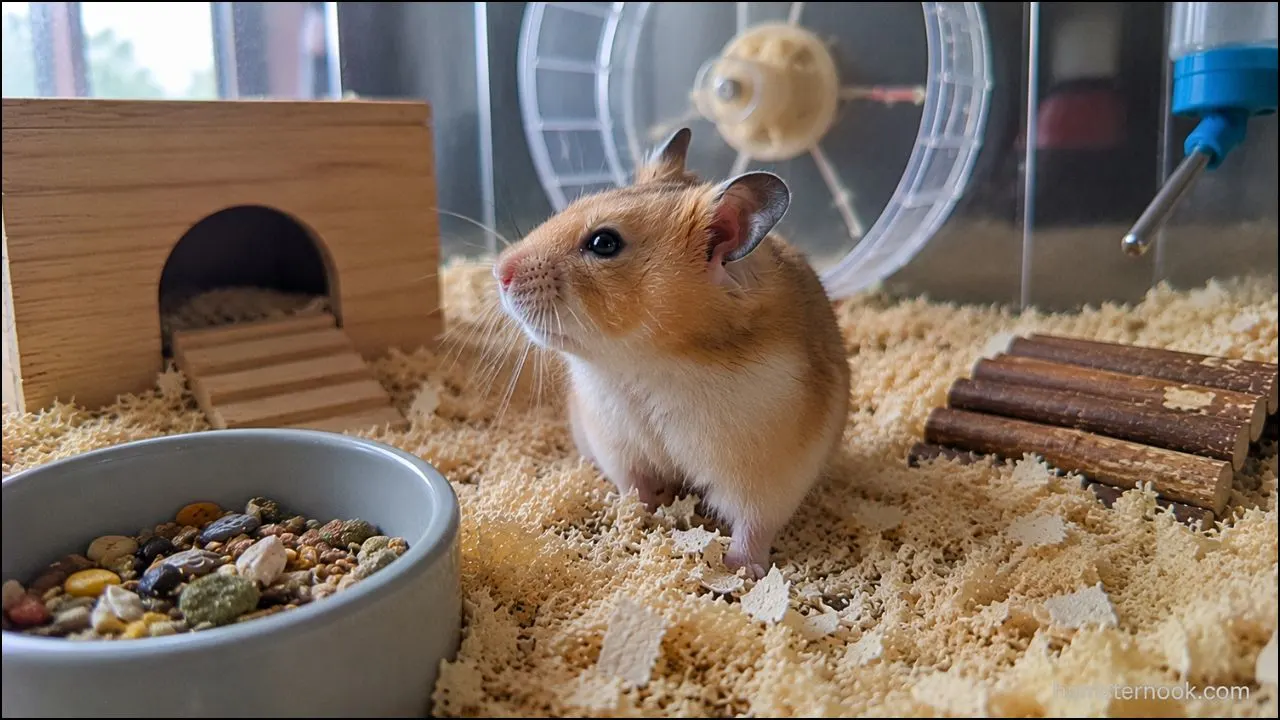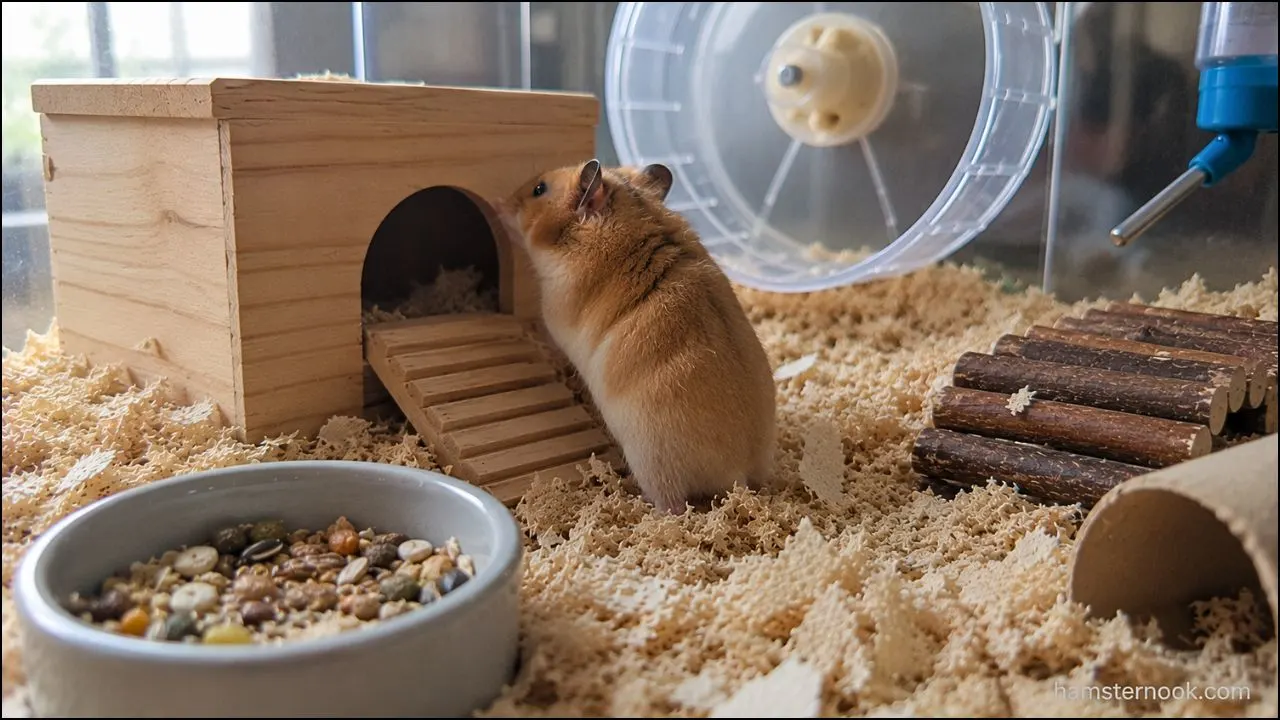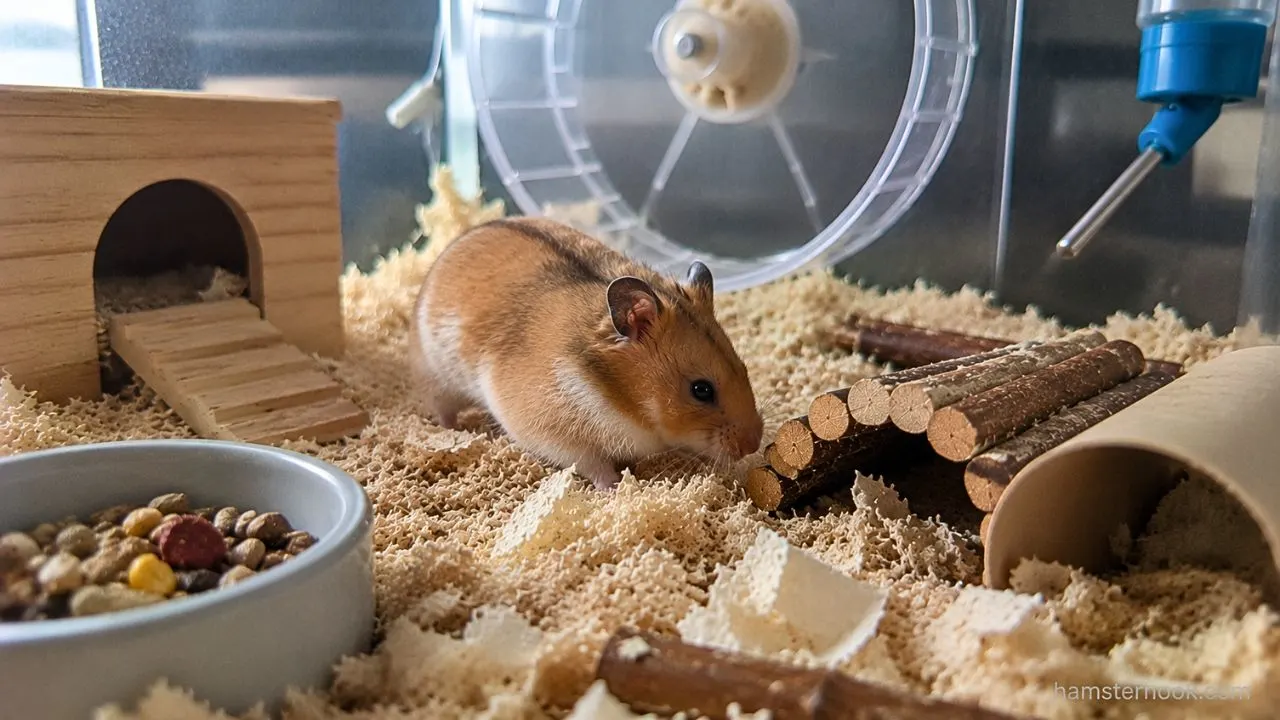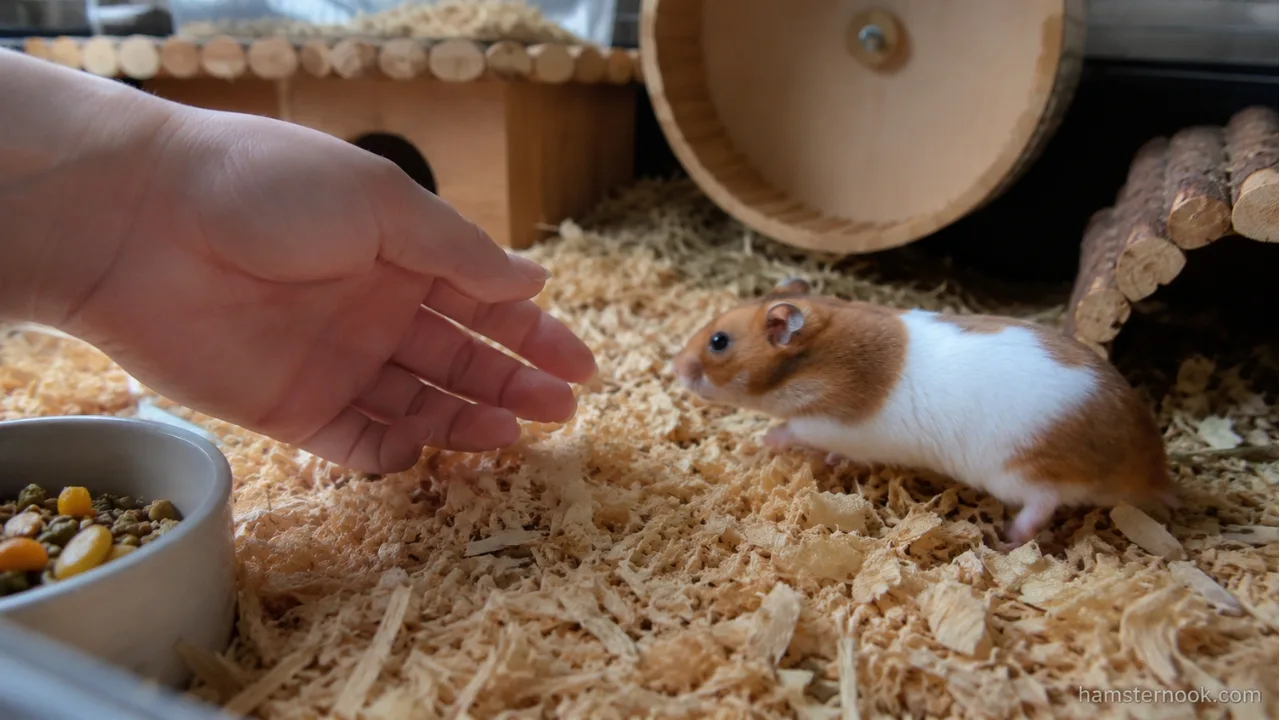
You open the cage, reach your hand inside, and your hamster immediately darts into a hideout or races to the opposite corner. For many owners, especially beginners, this can feel disappointing. You provide food, water, toys, and a safe home, so why does your hamster seem determined to avoid you?
In most cases, a hamster running away is not a sign of dislike. It’s usually a natural response to uncertainty, fear, excitement, or unfamiliar situations. In most cases, the behavior reflects how safe or comfortable the hamster feels at that moment. Hamsters are naturally prey animals, so their instincts encourage caution around anything large, unfamiliar, or unpredictable.
Once you identify what is causing the reaction, it becomes much easier to help your hamster feel more comfortable around you. Let’s look at what your hamster may actually be trying to tell you.
Quick Answer: Why Does My Hamster Run Away From Me?
Hamsters usually run away because they feel uncertain, startled, or unsafe. As prey animals, they instinctively avoid large moving objects, including human hands. Common reasons include being new to the environment, lack of trust, sudden movements, waking them while they sleep, strong unfamiliar scents, or previous negative experiences. Most hamsters become more comfortable over time when interactions remain calm and predictable.
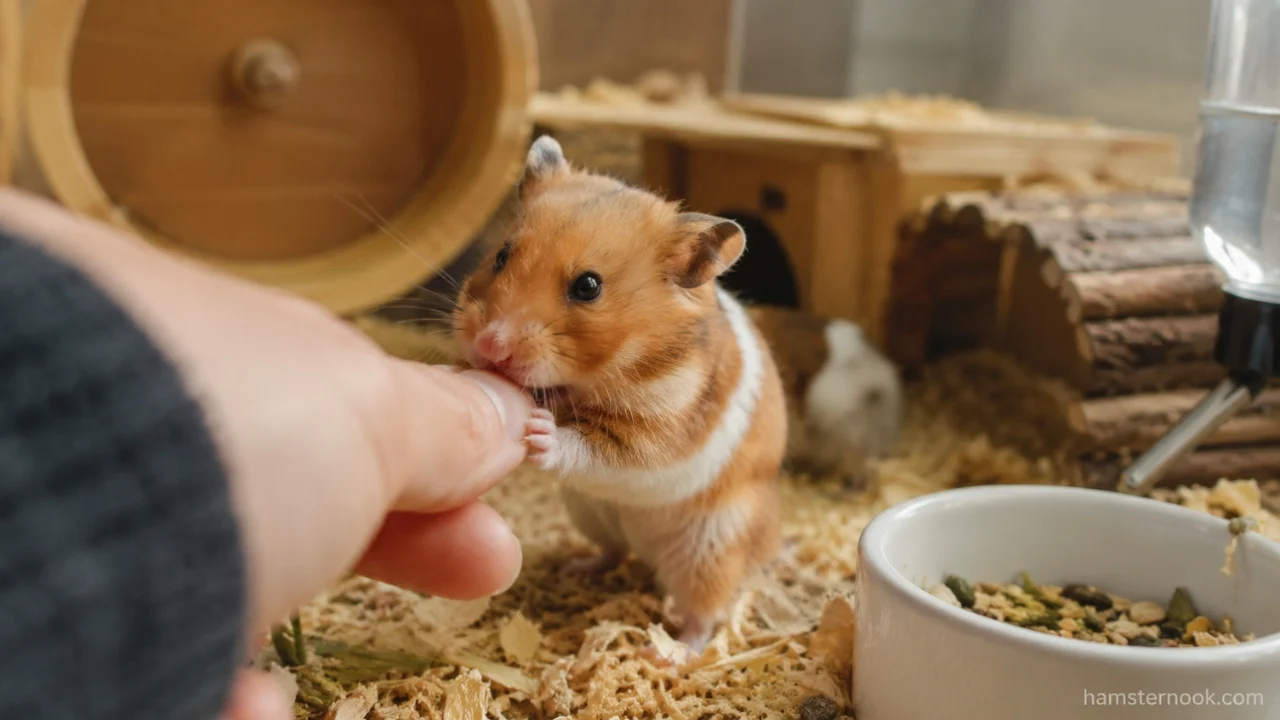
Why Hamsters Naturally Run Away From People
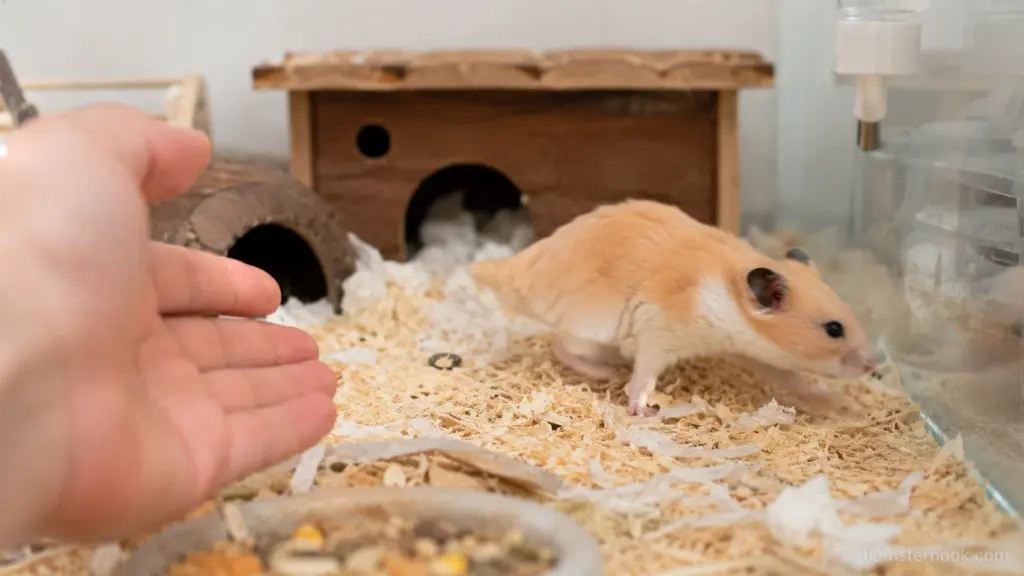
One of the biggest misconceptions among new owners is expecting a hamster to behave like a dog or cat.
In the wild, hamsters survive by avoiding predators. Birds, snakes, foxes, and other animals can pose serious threats. Because of this, hamsters evolved to react quickly to anything that appears large or unexpected.
From your hamster’s perspective, a giant hand reaching down from above may look frightening rather than friendly.
This natural survival instinct explains why even healthy, well-cared-for hamsters may initially run away from human interaction.
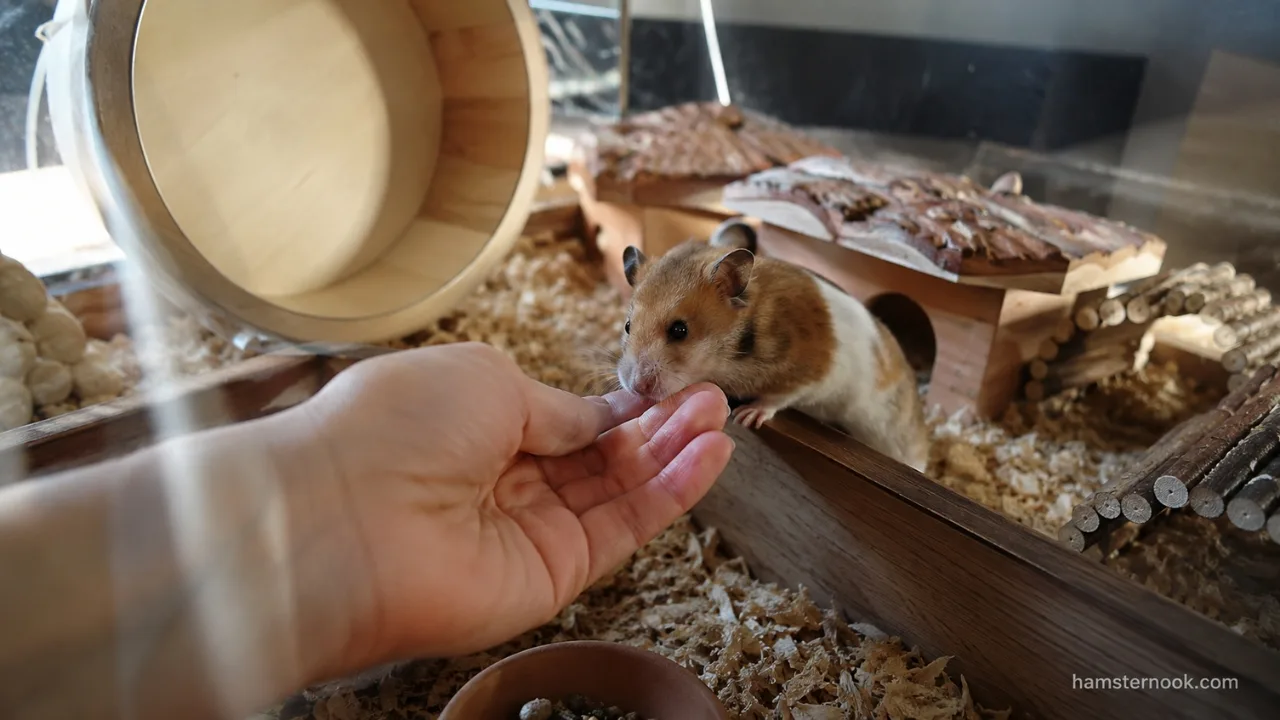
Is It Running Away or Simply Avoiding Interaction?
Many owners assume every retreat means fear, but that’s not always true.
A hamster may walk away because it is:
- Looking for food
- Exploring the enclosure
- Returning to a favorite hideout
- Protecting its sleep schedule
- Not interested in interaction at that moment
Context matters. A hamster that briefly walks away and continues normal activities is often behaving very differently from one that panics and hides immediately.
One helpful way to judge the situation is to watch what your hamster does a few minutes later. If it comes back out to explore, eat, groom itself, or use its wheel, the behavior is usually normal caution rather than ongoing fear.
7 Common Reasons Your Hamster Runs Away From You
A hamster that runs from your hand may be feeling nervous, while another may simply be busy exploring or protecting its sleeping area. Identifying the reason helps you respond appropriately.
Your Hamster Is Still Settling Into Its New Home
A newly adopted hamster is often overwhelmed.
Everything is unfamiliar:
- New smells
- New sounds
- New cage setup
- New people
- Different daily routines
During this adjustment period, running away is completely normal.
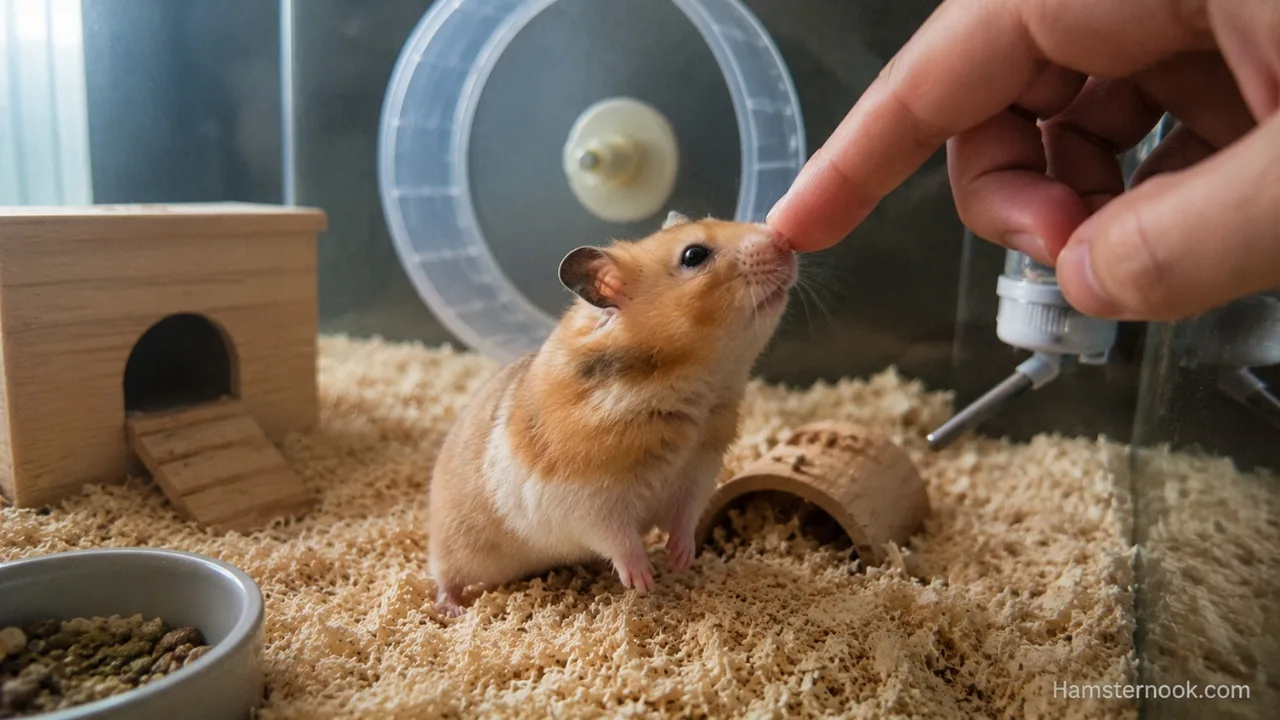
Helping a new hamster settle in calmly makes future bonding much easier. Our The Biggest Mistake New Hamster Owners Make in the First Week guide explains the mistakes that commonly slow trust-building.
Many hamsters need several days or even a few weeks before they begin feeling comfortable enough to interact confidently.
Your Hamster Doesn’t Trust You Yet
Trust develops gradually for most hamsters and cannot be rushed.
While owners often view themselves as caregivers, hamsters don’t immediately understand that. They need repeated positive experiences before they learn that your presence is safe.

A hamster that runs away whenever you approach may simply be saying:
“I don’t know you well enough yet.”
This is especially common if handling has been rushed or inconsistent.
How Long Does It Take a Hamster to Trust You?
There is no fixed timeline.
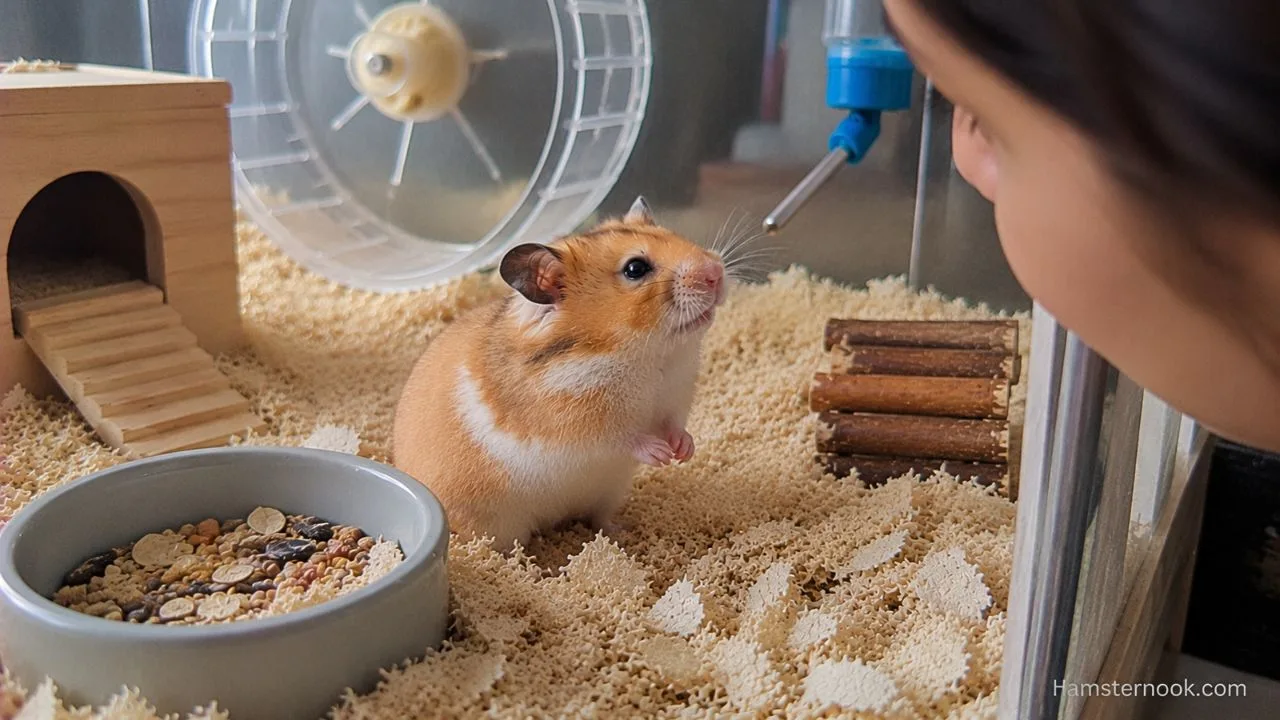
Some hamsters become comfortable within a few days, while others may need several weeks before voluntarily approaching a hand. Age, personality, previous experiences, and consistency of handling all influence how quickly trust develops.
Signs of Fear vs Signs of Normal Caution
Not every retreat is a sign of serious fear.
The table below can help you distinguish between normal hamster behavior and stress-related behavior.
| Behavior | Usually Normal | Potential Concern |
|---|---|---|
| Running into a hideout briefly | Yes | No |
| Pausing to watch you from a distance | Yes | No |
| Taking treats from your hand | Yes | No |
| Constant hiding for days | Sometimes | Possibly |
| Screaming or jumping when approached | No | Yes |
| Defensive biting every interaction | No | Yes |
| Refusing food and water | No | Yes |
A hamster that briefly retreats, watches you from a distance, and later resumes normal activity is usually displaying caution. Panic behaviors such as jumping, screaming, frantic running, or repeated defensive biting are more likely to indicate genuine fear or severe stress.
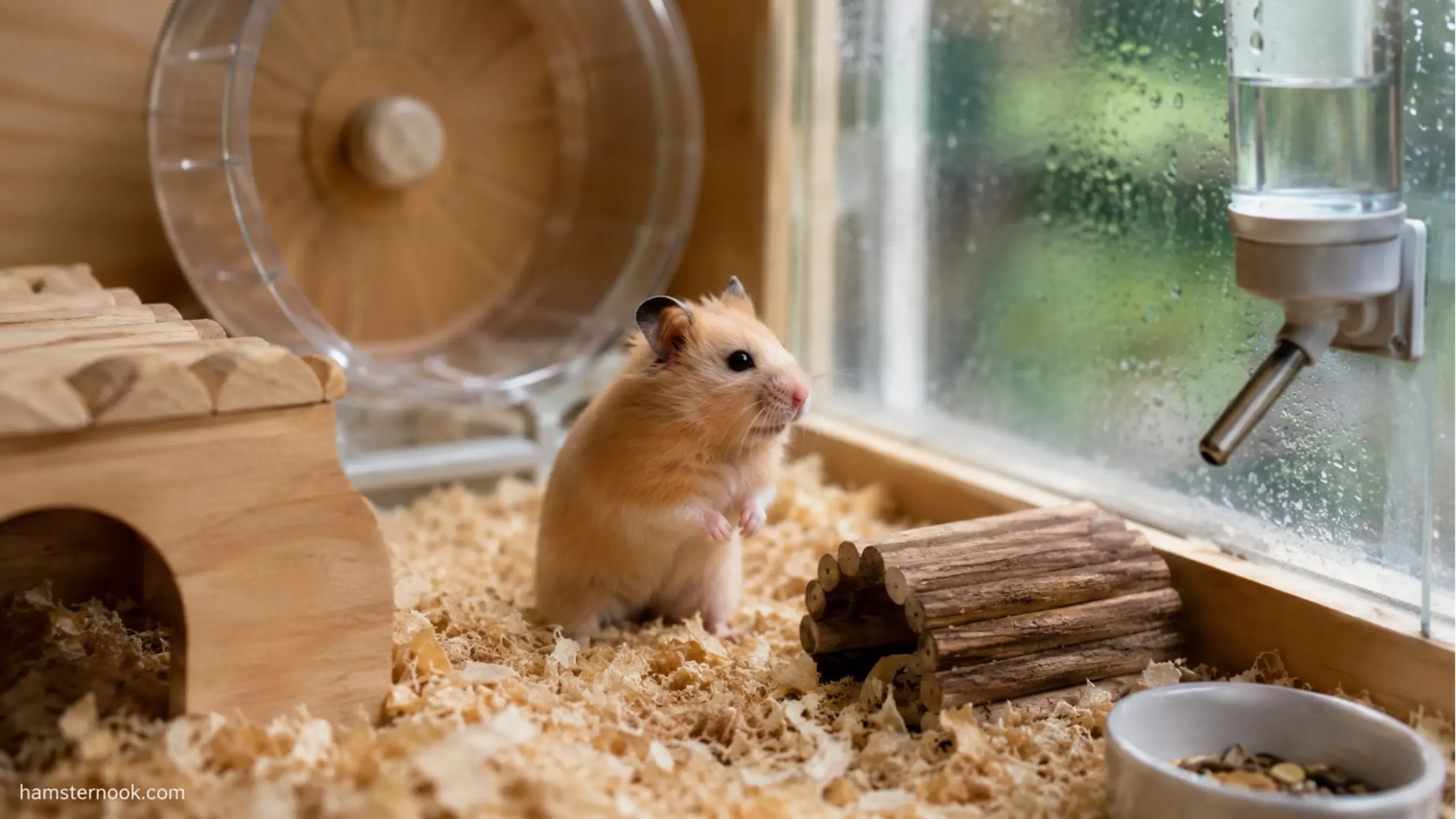
A cautious hamster is often simply observing. A fearful hamster may display more extreme avoidance behaviors.
Understanding subtle body language makes these differences much easier to recognize. Our Hamster Body Language Explained: Signs of Stress, Fear, Happiness & Trust guide explains common behaviors that owners often misinterpret.
Your Hand May Be Moving Too Fast
Hamsters rely heavily on movement detection.
Fast hand movements can trigger a prey-animal response.

Common mistakes include:
- Reaching suddenly into the cage
- Attempting to grab the hamster
- Moving hands directly over its head
- Chasing the hamster around the enclosure
Slow, predictable movements are much less threatening.
Allowing your hamster to approach you is almost always more effective than approaching it aggressively.
Your Hamster Might Be Sleeping
Hamsters are generally most active during the evening and nighttime hours.
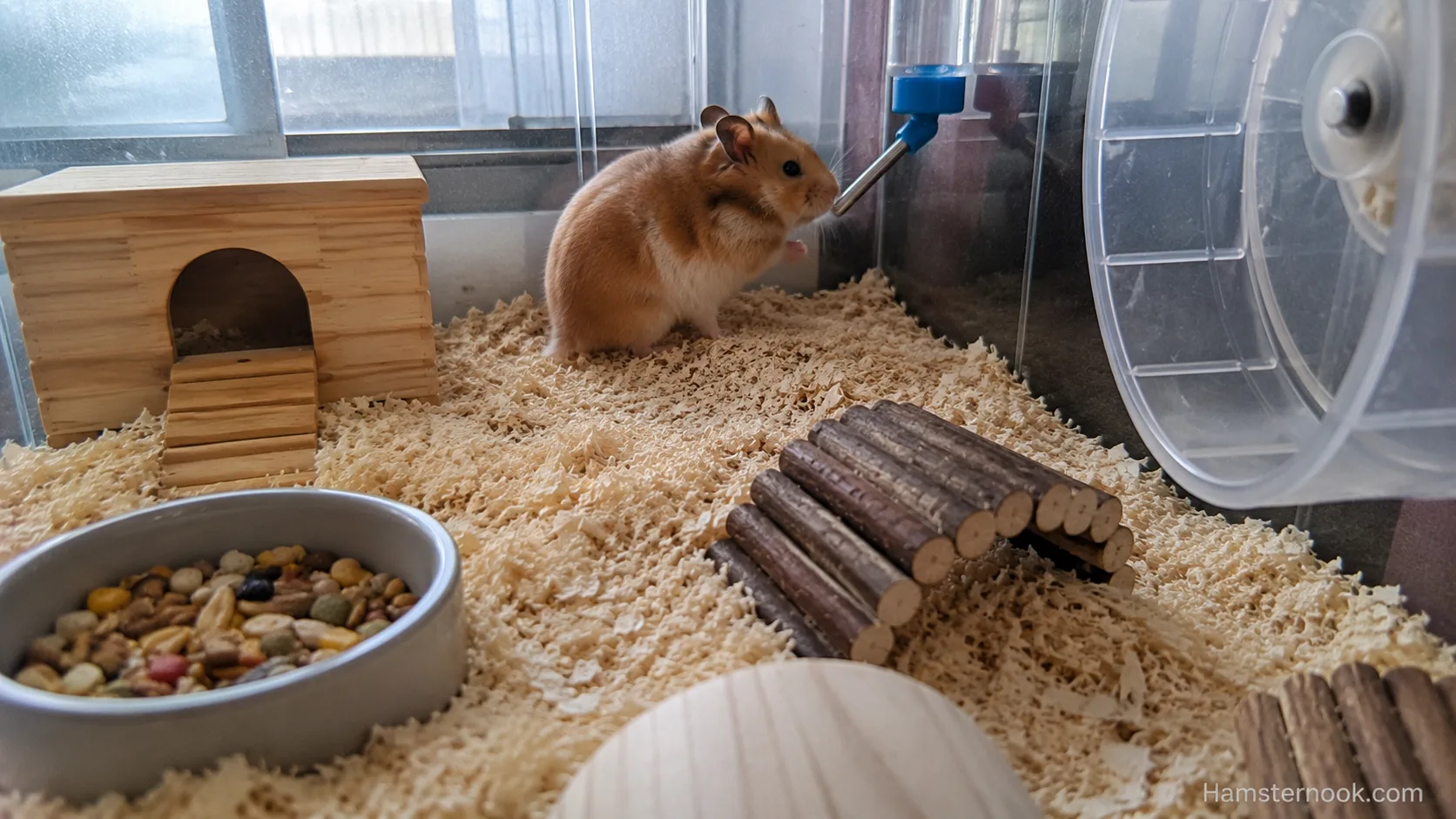
If you try interacting during the day, your hamster may run away simply because it wants to go back to sleep.
This is often confused with fear when it is actually part of a normal daily routine. Our Why Is My Hamster Always Hiding? When It’s Normal and When to Worry guide explains how normal hiding differs from behavior that may need attention.
Many owners accidentally interpret sleepy behavior as fear.
Before initiating interaction, make sure your hamster is naturally awake and alert.

Strong Smells Can Make Your Hamster Nervous
A hamster’s sense of smell is extremely powerful.
Certain scents may cause uncertainty or stress, including:
- Strong perfumes
- Scented lotions
- Cleaning chemicals
- Other pets’ scents
- Food odors on your hands
Washing your hands before handling can help your hamster recognize your natural scent more consistently.
Try to use the same calm voice each time you approach the enclosure. Consistent sounds, routines, and scent help your hamster learn that your presence is predictable and safe.
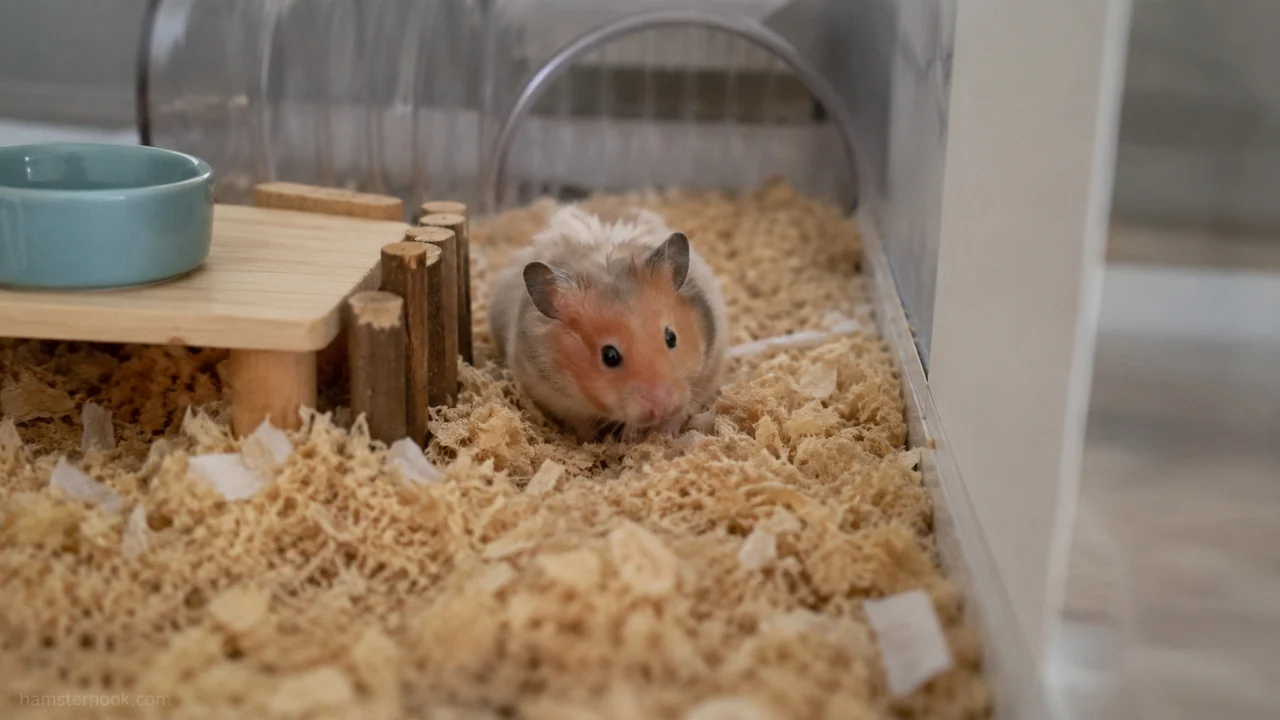
Over time, your hamster may begin associating that scent with safety and positive experiences.
A familiar scent becomes even more effective when it is paired with a consistent routine. Approaching the enclosure calmly at similar times each evening helps your hamster learn what to expect and can gradually reduce cautious behavior.
Your Hamster May Be Reacting to Shadows Above It
In nature, many predators attack from above.
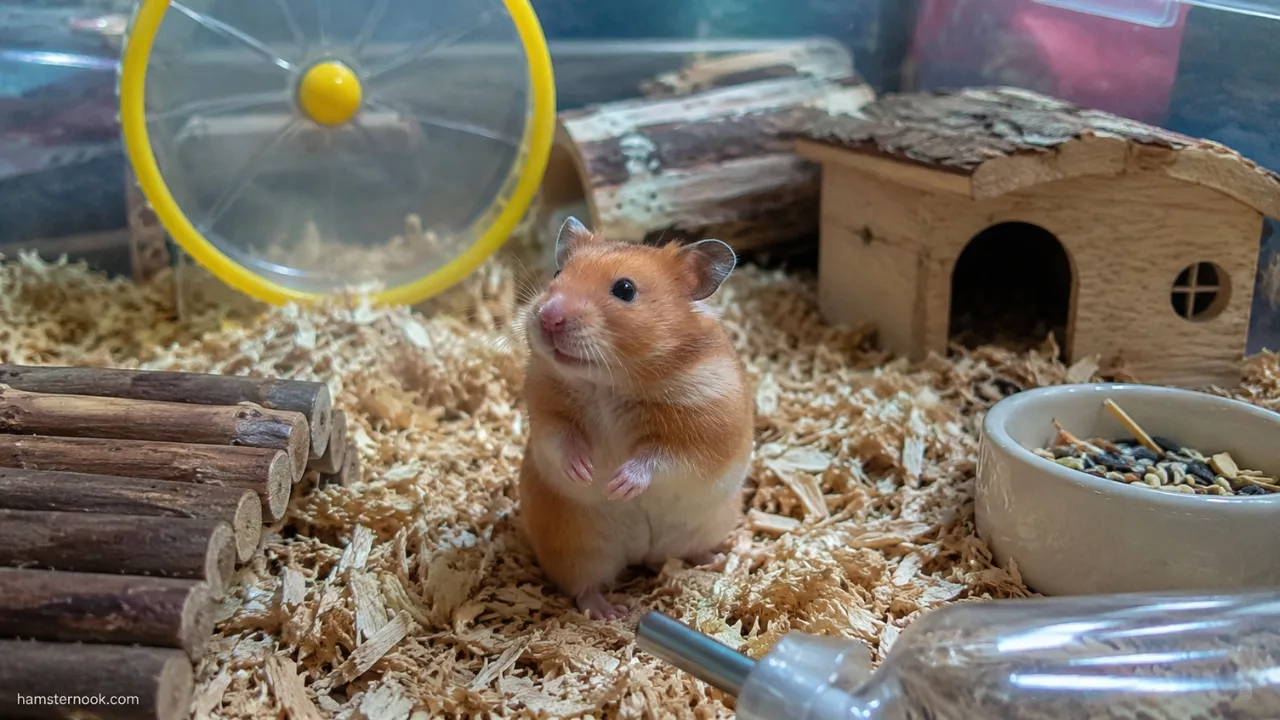
Because of this, hamsters are often more comfortable with hands approaching from the side rather than directly overhead. Reaching down from above can trigger an instinctive avoidance response even in otherwise friendly hamsters.
Has Your Hamster Had a Bad Experience?
Sometimes avoidance behavior develops because of previous negative experiences.
Examples include:
| Negative Experience | Possible Result |
|---|---|
| Being grabbed unexpectedly | Fear of hands |
| Falling during handling | Avoidance behavior |
| Rough handling by children | Increased stress |
| Frequent cage disturbances | Defensive behavior |
| Being awakened repeatedly | Reduced trust |
Fortunately, trust can often be rebuilt through patience, consistency, and many small positive experiences. Even hamsters that have had negative experiences frequently become more confident when they are allowed to interact at their own pace.
How to Help Your Hamster Feel Safe Around You
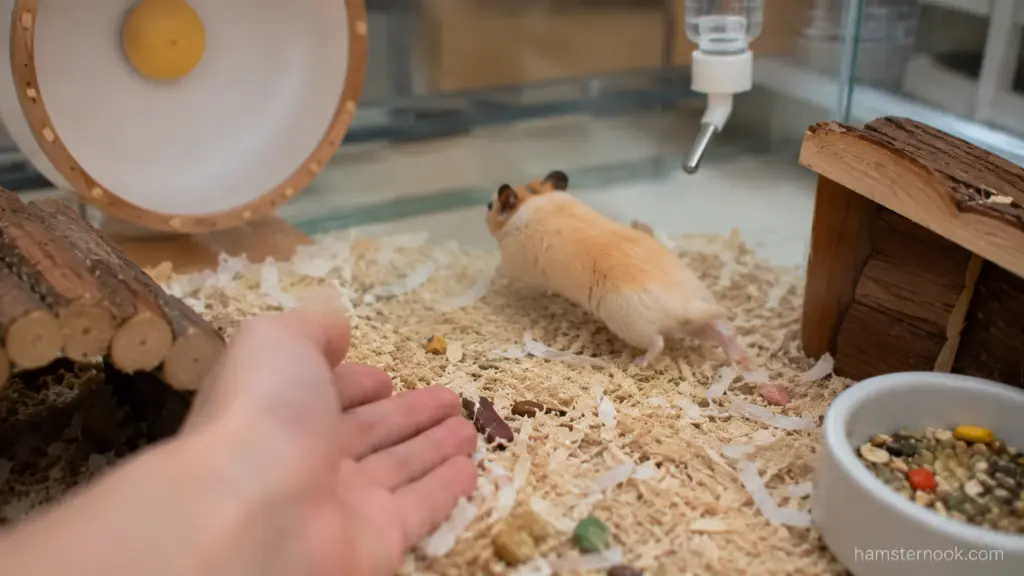
Building trust takes time, but there are proven ways to make progress.
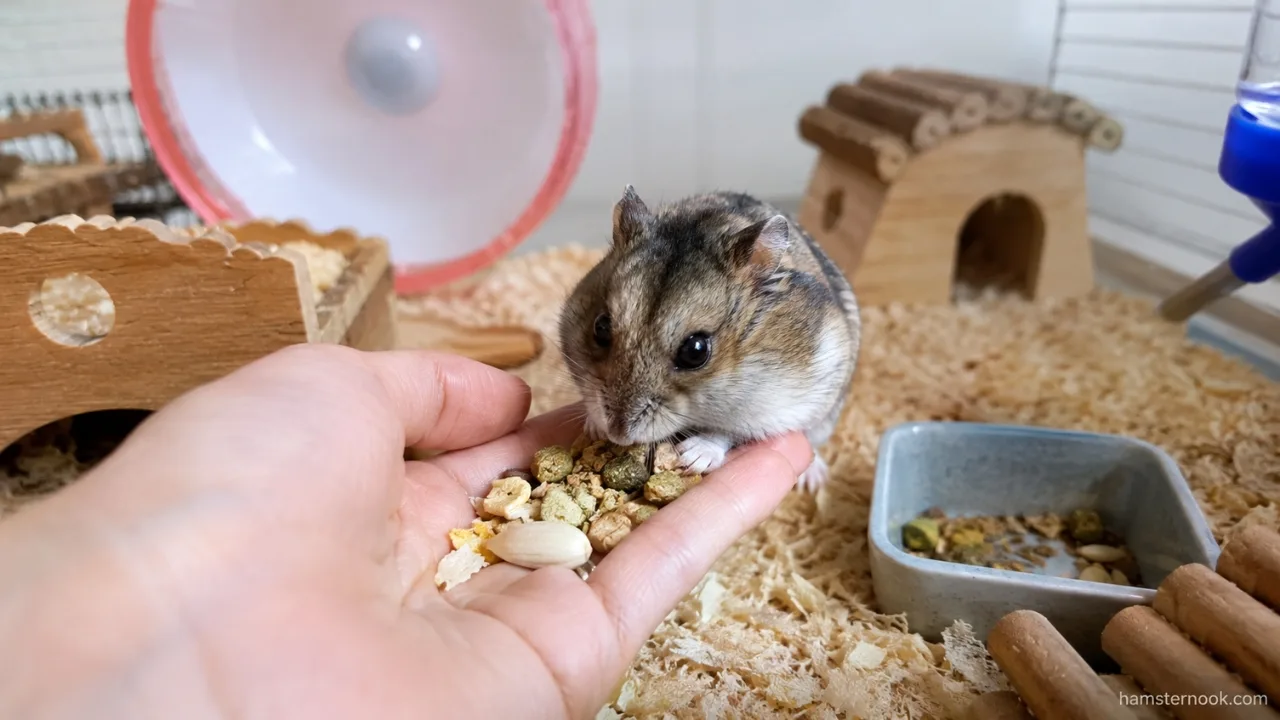
Let Your Hamster Approach First
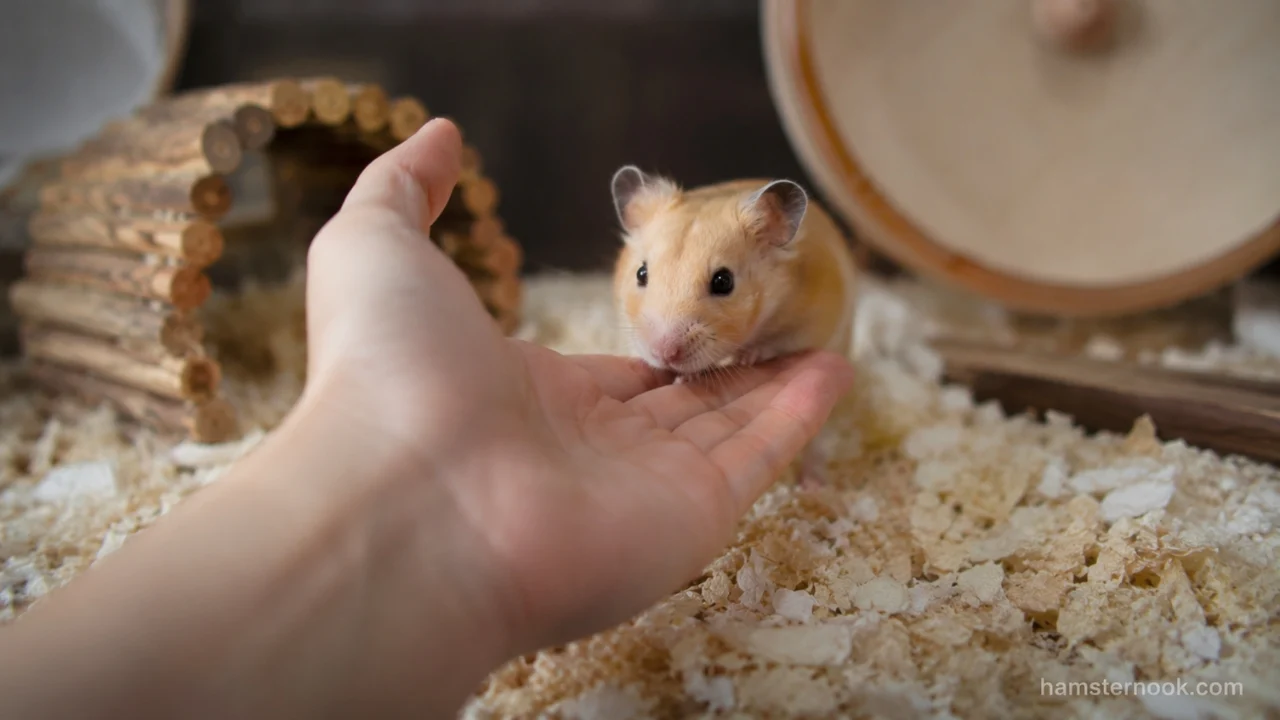
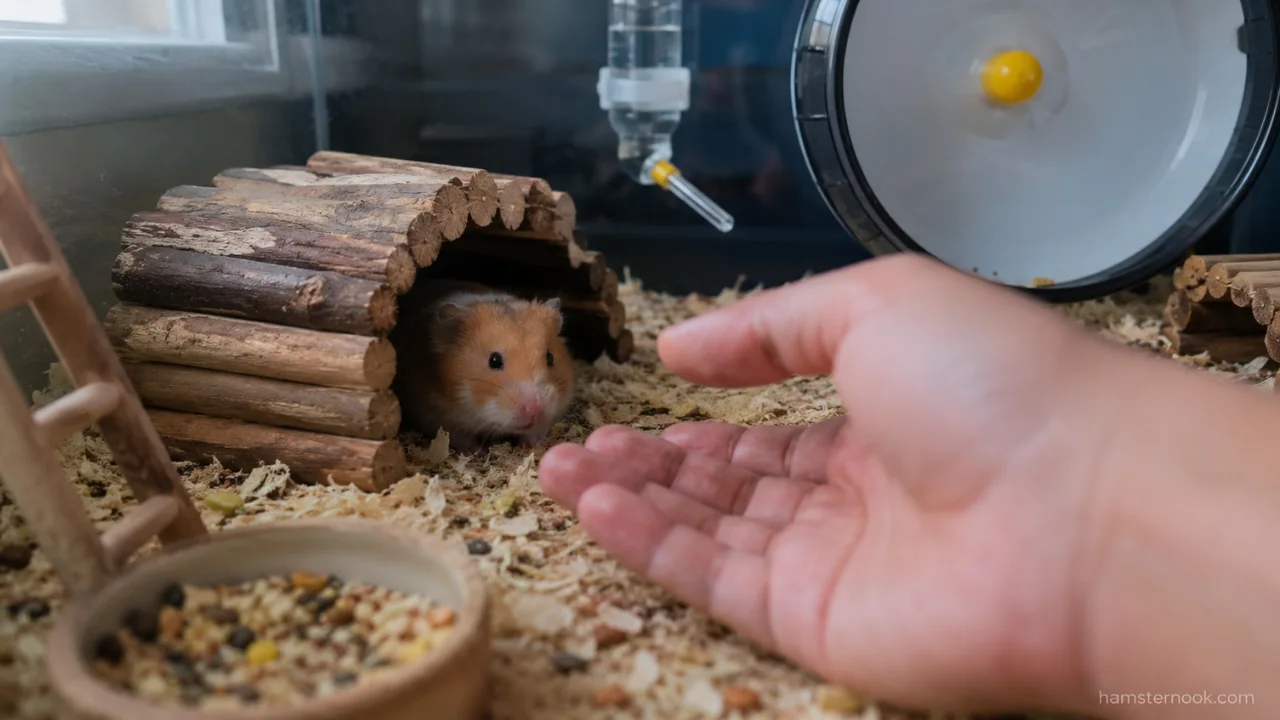
One of the most effective trust-building methods is simply placing your hand inside the cage without attempting to touch the hamster.
Allow your hamster to:
- Sniff your hand
- Walk around it
- Investigate at its own pace
Building trust is a gradual process rather than a single training session. Our How to Get a Hamster to Trust You Faster Without Stressing It Out guide explains the safest approach step by step.
This gives the hamster control over the interaction.
Use Food as a Positive Association
Small treats can help create positive experiences.
Safe examples include:
- Tiny seed pieces
- Small vegetable portions
- Hamster-safe treats
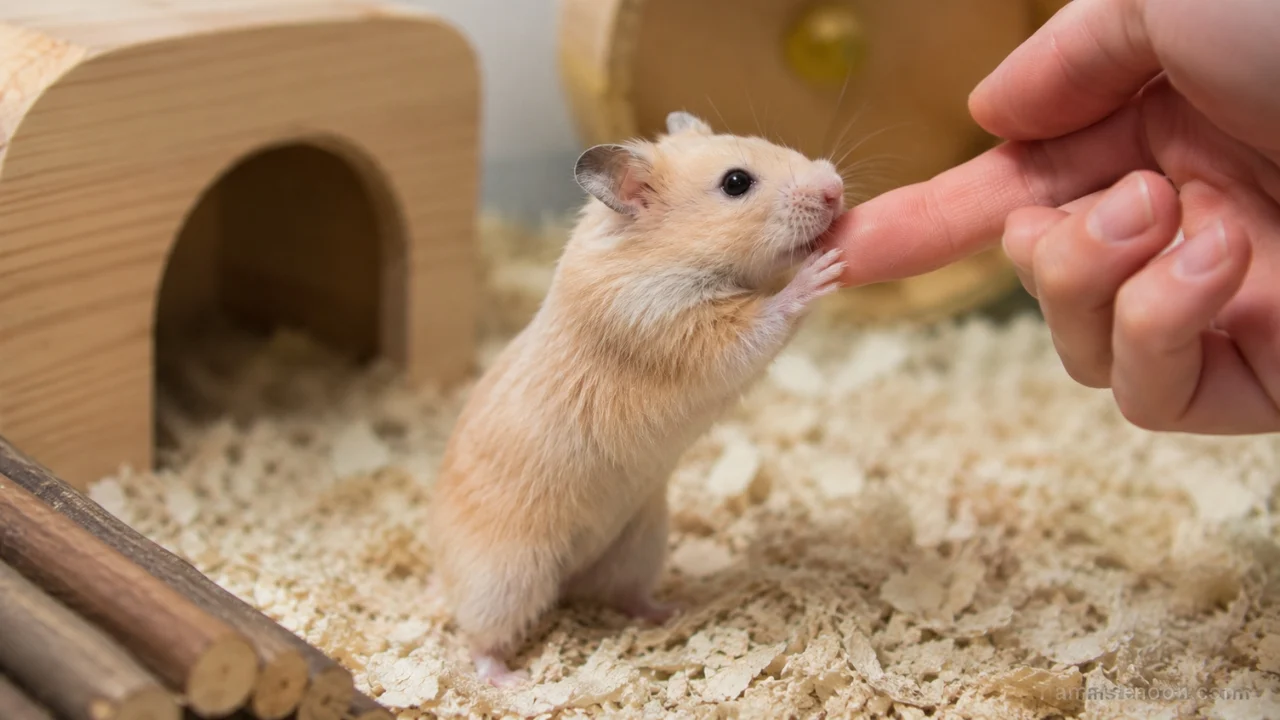
Offer treats from your fingertips and remain still.
Avoid moving the treat toward your hamster. Remaining completely still allows your hamster to decide whether it wants to approach, helping build confidence instead of creating pressure.
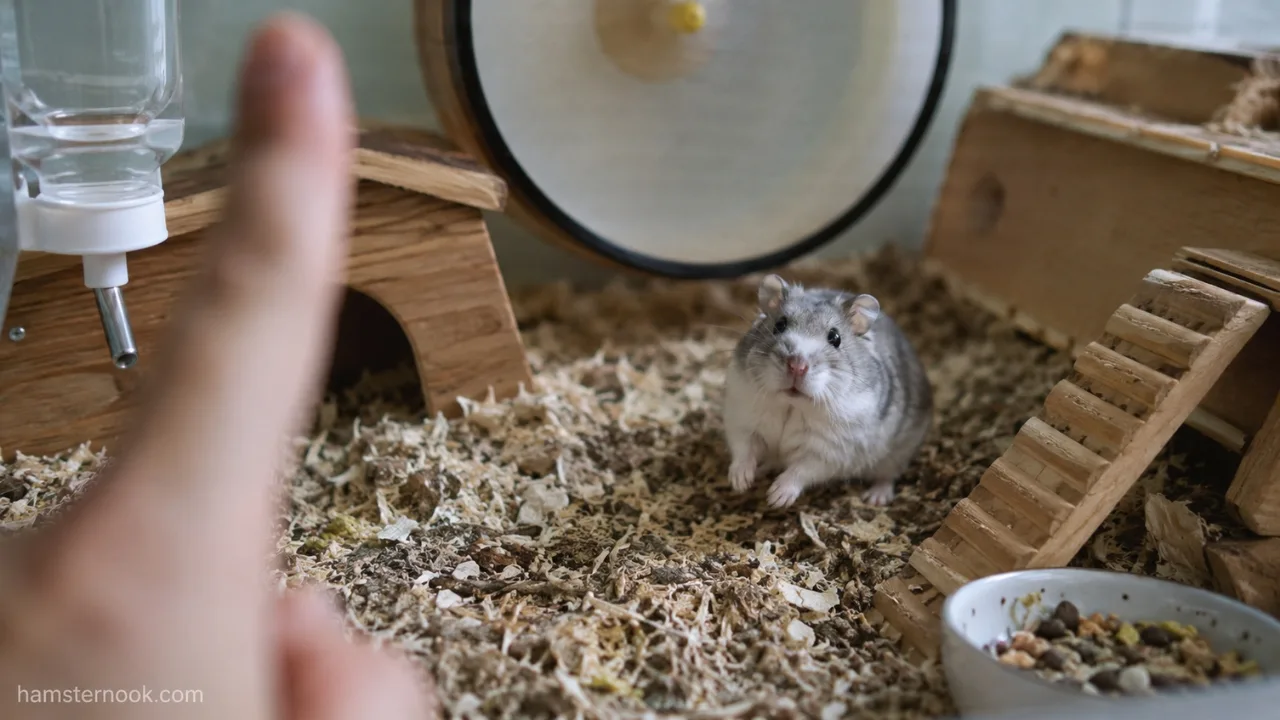
Over time, your hamster may begin approaching you voluntarily.
As your hamster becomes more comfortable approaching you, our Do Hamsters Get Excited to See You? Signs They Recognize & Trust You guide explains how recognition, familiarity, and trust can appear in everyday behavior.
Respect Personal Space
Even friendly hamsters sometimes prefer not to interact.
Signs your hamster wants space include:
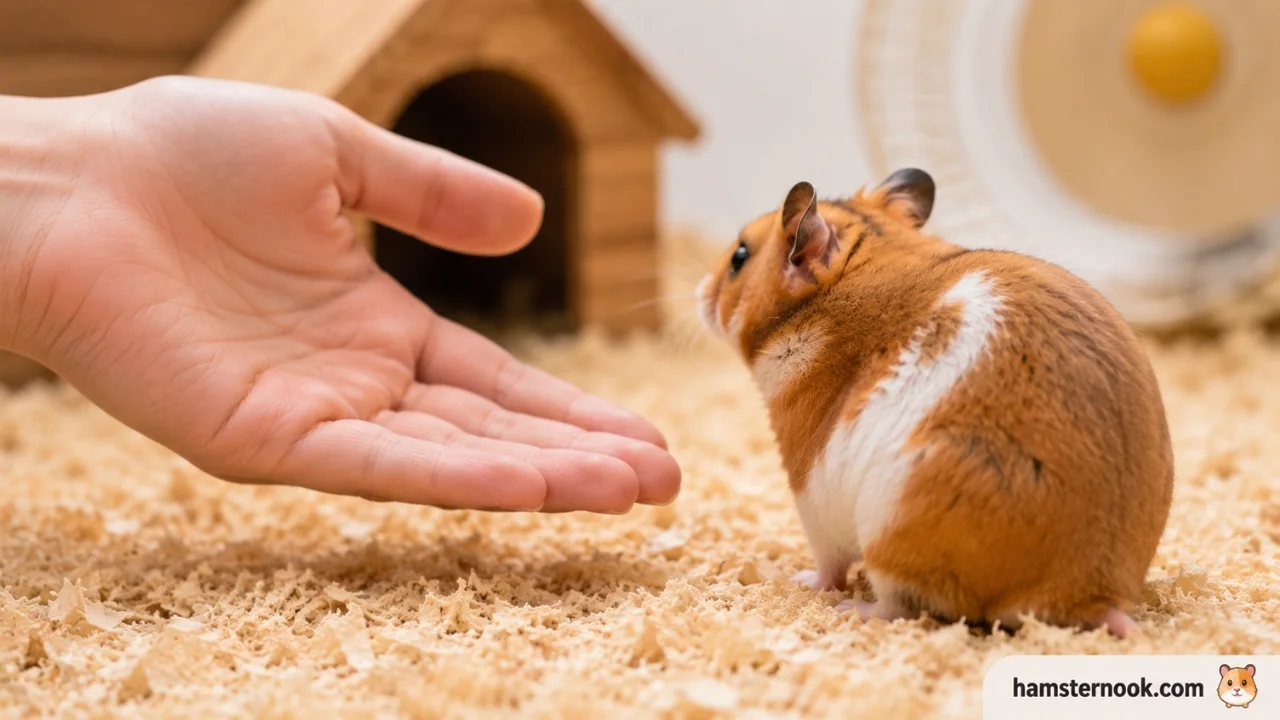
- Flattening against the ground
- Running immediately into a hideout
- Repeated attempts to escape interaction
Respecting these signals often builds trust faster than forcing contact.
Mistakes That Can Make the Problem Worse
Many well-meaning owners accidentally reinforce fear.
Avoid these common mistakes:
Chasing Your Hamster Around the Cage
When owners try to catch a running hamster, the hamster often interprets this as predator behavior.
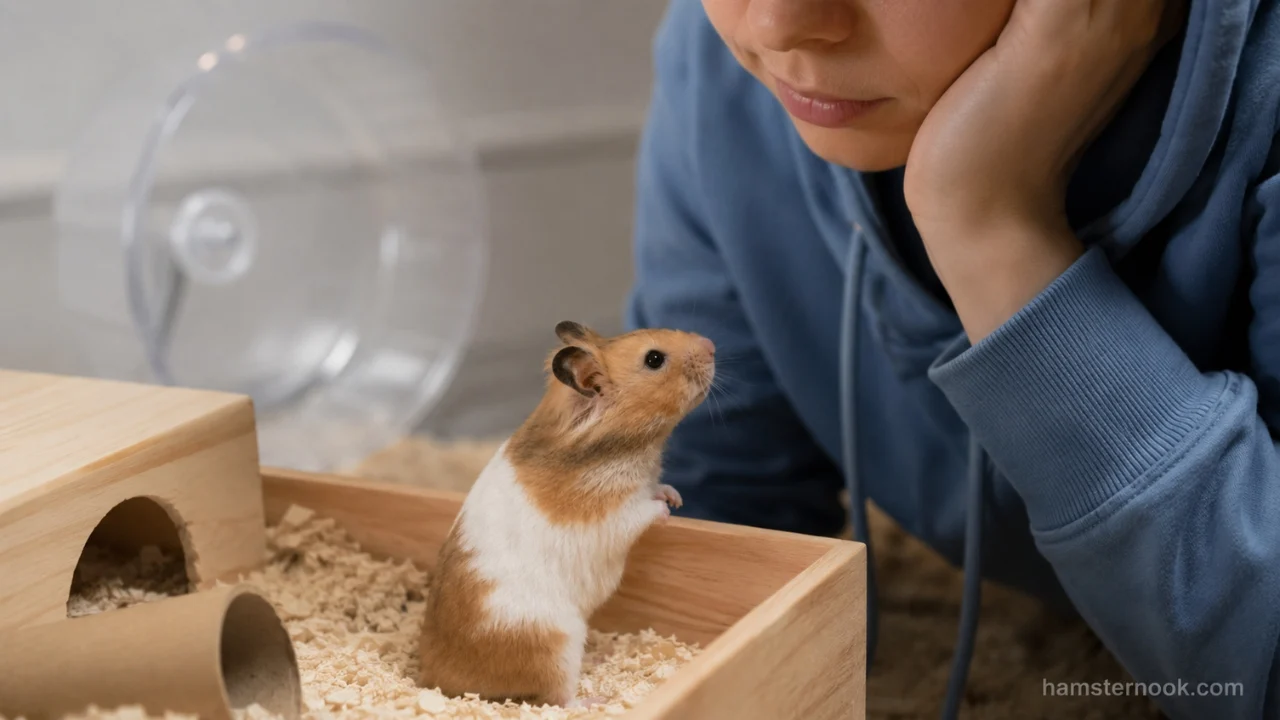
This usually increases fear rather than reducing it.
Forcing Handling Sessions
Picking up a hamster that clearly wants to escape rarely improves trust.
Short positive experiences are much more effective than long stressful ones.
If your hamster disappears for most of the day but becomes active in the evening, our Why Do Hamsters Sleep and Hide All Day? (Is It Normal?) guide explains why this is usually a normal behavior pattern.
Removing Every Hideout
Some owners remove hides because they want their hamster to be more visible.
This often backfires.
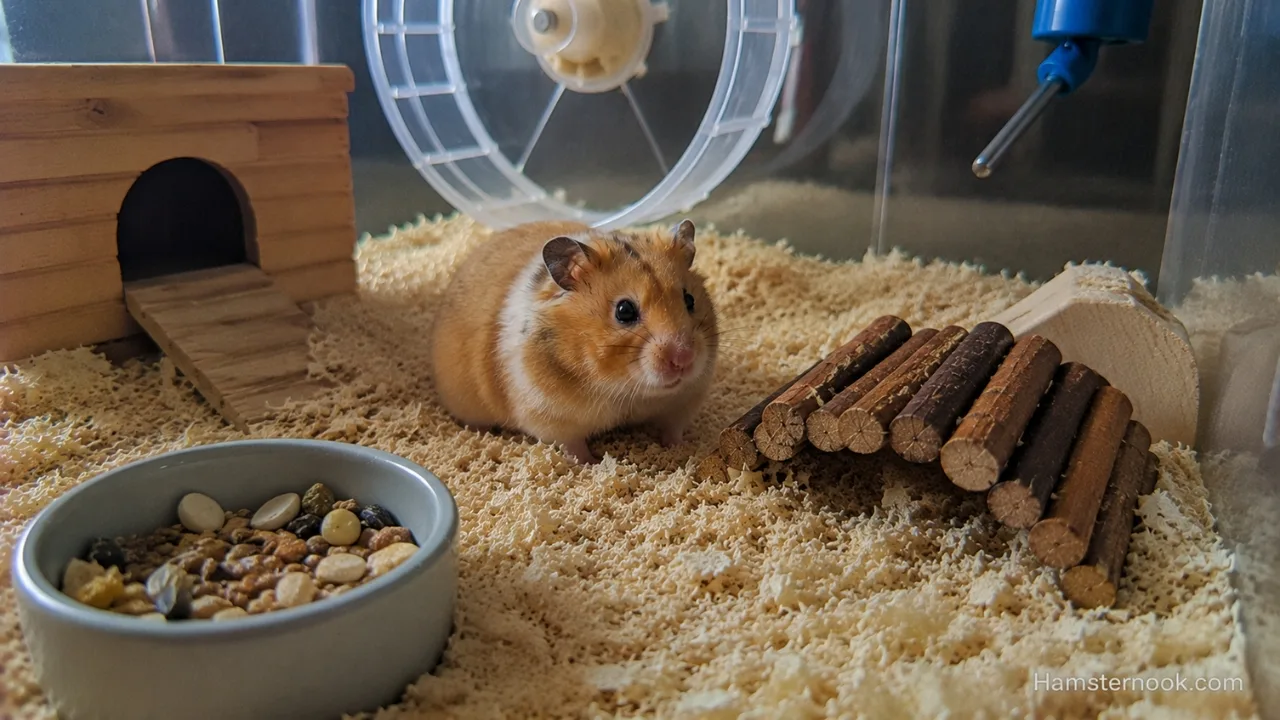
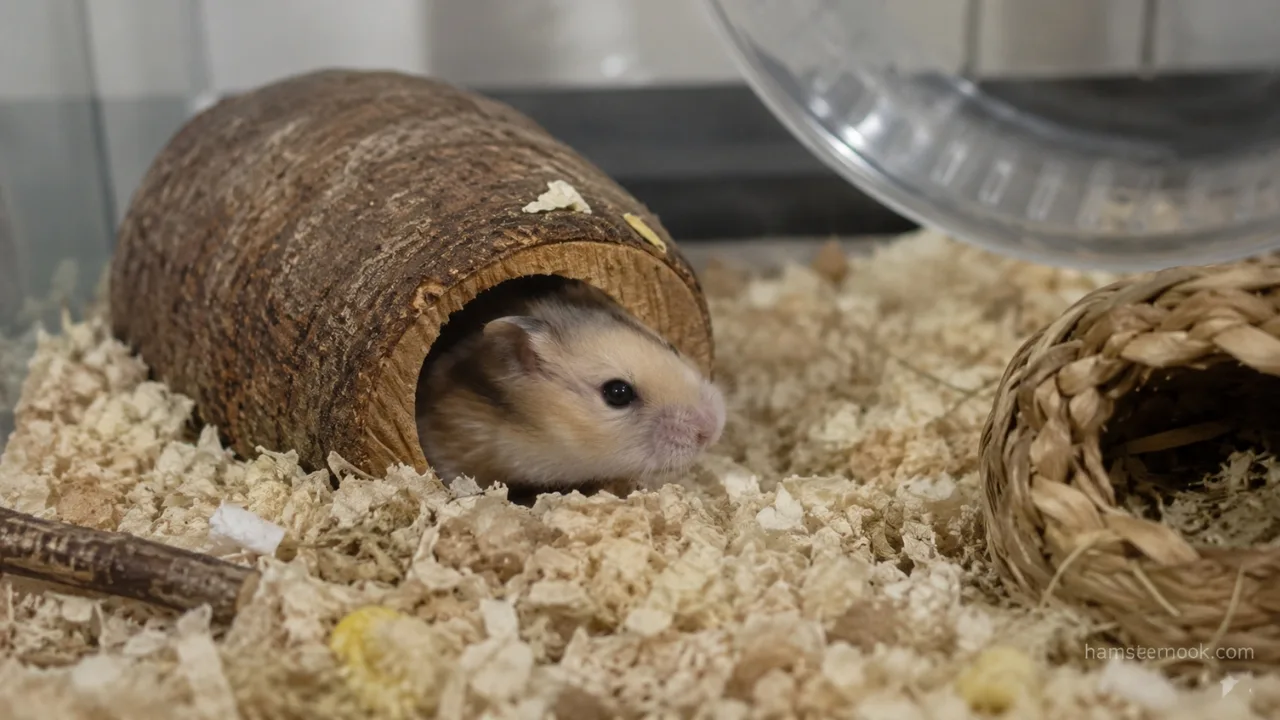
Hideouts provide security, and a hamster that feels safe is more likely to become confident over time.
Could a Health Problem Be Causing the Behavior?
Occasionally, running away may be related to discomfort or illness.
If running away is accompanied by physical symptoms instead of normal caution, our Signs of a Sick Hamster: 10 Warning Symptoms Every Owner Should Know guide explains the warning signs that require closer attention.
Watch for symptoms such as:
- Weight loss
- Changes in appetite
- Difficulty walking
- Unusual posture
- Excessive sleeping
- Poor grooming
A hamster experiencing pain may avoid interaction more than usual.
If behavioral changes appear suddenly, a veterinary examination may be necessary.
Sudden Behavior Changes Deserve Attention
A hamster that has always been comfortable around people but suddenly begins hiding, avoiding interaction, or running away more than usual may be experiencing stress, illness, pain, or changes within the environment.
Sudden behavioral shifts are often more significant than long-standing cautious behavior.
When Running Away Is Completely Normal
Some hamster owners worry because their pet never becomes highly social.
It’s important to remember that hamsters have individual personalities.

Some hamsters:
- Love climbing onto hands
- Seek interaction regularly
- Enjoy exploration
Others:
- Prefer observing from a distance
- Enjoy limited handling
- Remain naturally cautious
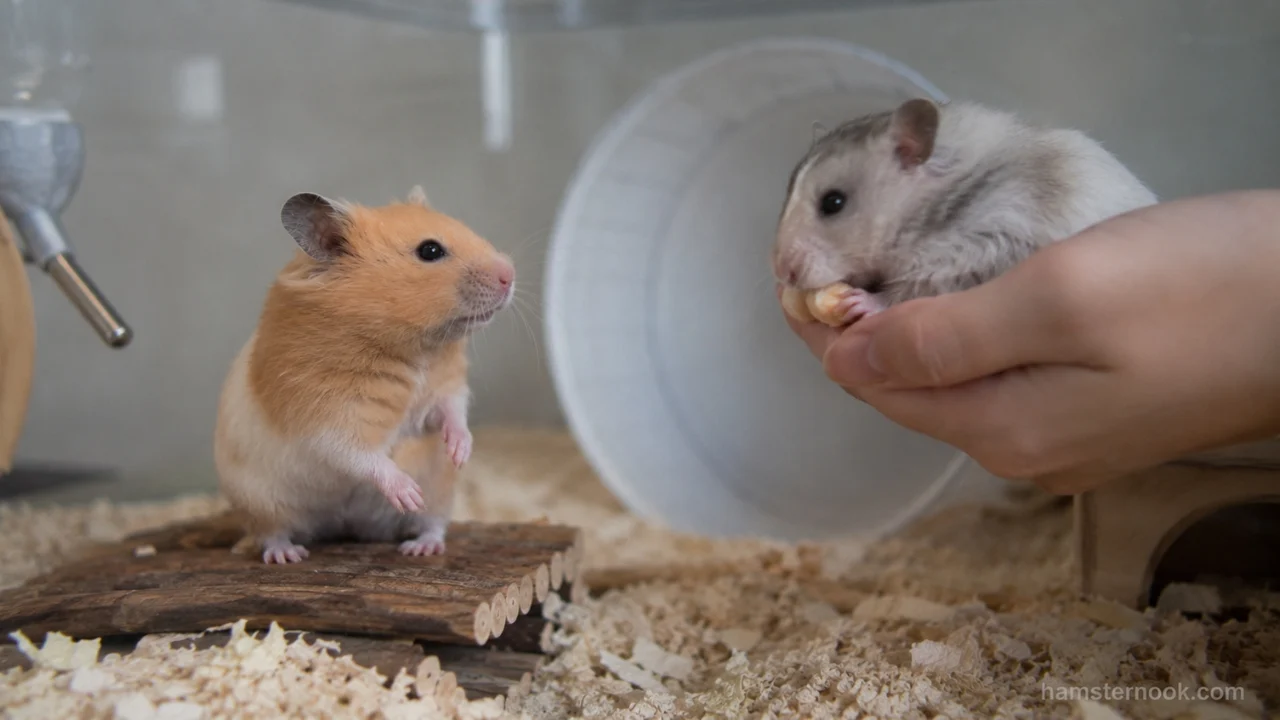
Both personality types can be perfectly healthy and happy.
Comparing your hamster with videos on social media can create unrealistic expectations. Some hamsters naturally enjoy more interaction than others, and both personalities can be completely normal.

Understanding your hamster’s individual comfort level is often more important than trying to change it.
How to Build Long-Term Trust With Your Hamster
Trust is usually built through hundreds of small positive experiences rather than a single breakthrough moment.
The most successful hamster owners focus on:
| Trust-Building Habit | Why It Helps |
|---|---|
| Consistent routines | Creates predictability |
| Gentle handling | Reduces fear |
| Offering treats occasionally | Builds positive associations |
| Speaking softly | Familiarizes your voice |
| Respecting boundaries | Prevents stress |
| Patience | Allows trust to develop naturally |
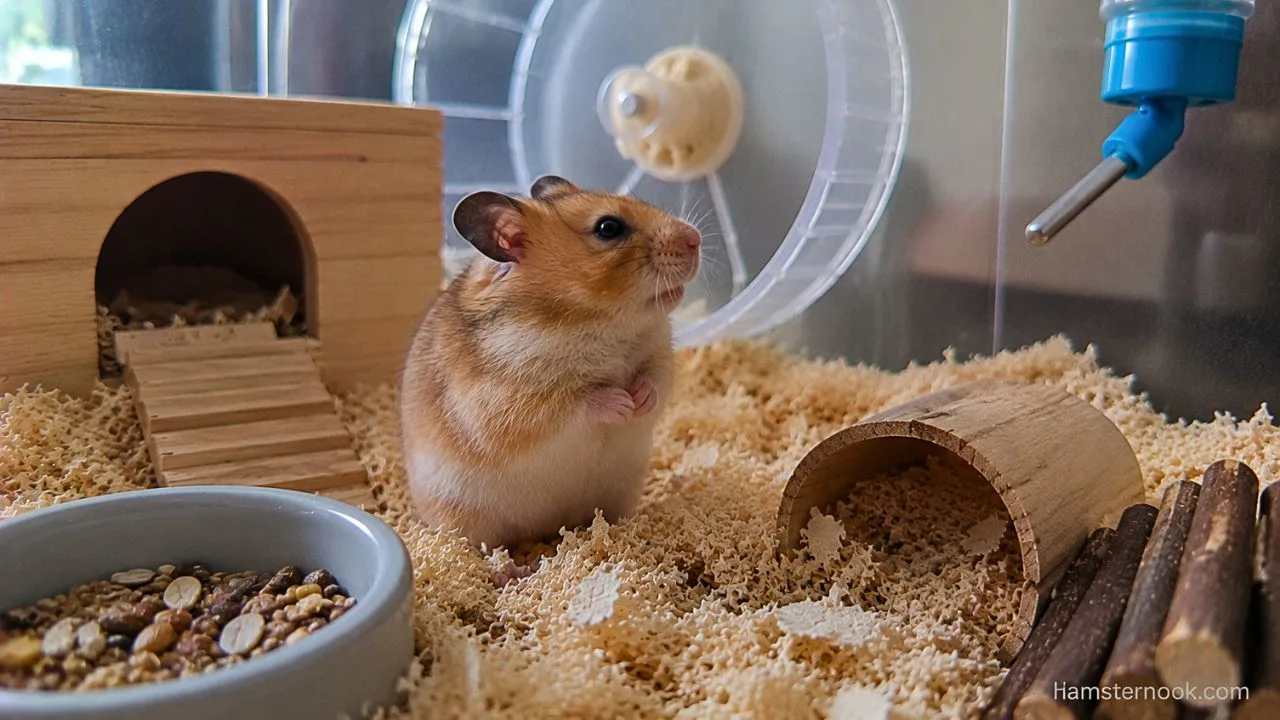
Many hamsters become significantly more confident once they realize their owner is predictable and safe.
If you’re wondering how long this usually takes, our How Long Does It Take for a Hamster to Trust You? article explains the typical timeline and the factors that influence progress.
Final Thoughts
When a hamster runs away from you, it is rarely being unfriendly. More often, it is communicating uncertainty, caution, or a desire for personal space.
By understanding your hamster’s natural instincts and responding with patience rather than frustration, you can gradually build trust and confidence. Avoid chasing, grabbing, or forcing interaction. Instead, focus on creating positive experiences and allowing the hamster to approach you on its own terms.
Many owners are surprised by how much a hamster’s confidence can improve once it learns that your presence consistently leads to safety, food, and positive experiences. If you’re wondering what those early trust milestones look like, our 10 Signs Your Hamster Trusts You guide explains the behaviors that usually appear as confidence grows.
Frequently Asked Questions
Why does my hamster run away when I put my hand in the cage?
Your hamster may not fully trust you yet, may feel startled by sudden movement, or may simply be following its natural prey-animal instincts.
Is it normal for a new hamster to avoid me?
Yes. Most new hamsters need time to adjust to their environment before they feel comfortable interacting with people.
How long does it take for a hamster to stop running away?
There is no fixed timeline. Some hamsters become comfortable after repeated calm interactions, while others may take several weeks or longer depending on personality, past experiences, and how consistently they are handled.
Does my hamster hate me if it runs away?
No. Running away is usually a sign of caution, fear, or uncertainty rather than dislike.
Should I pick up my hamster if it keeps running away?
It’s generally better to allow the hamster to approach voluntarily rather than forcing handling sessions.
Can stressed hamsters become friendlier over time?
Yes. With patience, consistent routines, and positive interactions, many hamsters become much more confident and trusting over time.
Why does my hamster run away even after taking a treat?
Some hamsters are comfortable accepting food but still need more time before they feel relaxed around hands. This is a normal stage of trust-building and usually improves with calm, consistent interactions.
References
This guide is based on hamster behavior, handling, trust-building, stress, body language, and welfare guidance from trusted animal welfare and veterinary resources, including:
- RSPCA – Hamster Behaviour – Guidance on natural hamster behavior, handling, body language, activity patterns, and signs of stress or fear.
- RSPCA – Keeping Hamsters as Pets – General guidance on hamster care, behavior, handling, housing, enrichment, and welfare.
- Blue Cross – Hamster Care Guide – Practical information on hamster handling, settling into a new home, enrichment, housing, and wellbeing.
- MSD Veterinary Manual – Hamsters – Veterinary reference information covering hamster health, behavior, husbandry, and conditions that can affect normal behavior.
- NC3Rs – Housing and Husbandry: Hamster – Guidance on hamster housing, environmental conditions, natural behavior, enrichment, and welfare.
- NC3Rs – Choosing Appropriate Enrichment – Guidance on providing appropriate enrichment and opportunities for hamsters to express natural behaviors.

Narayan Kumar is the founder and author of HamsterNook. He creates practical, research-based hamster care guides covering hamster behavior, nutrition, cage setup, enrichment, health, and everyday care. His goal is to help hamster owners make informed decisions and provide safer, healthier lives for their pets through clear, beginner-friendly information based on trusted animal care resources.