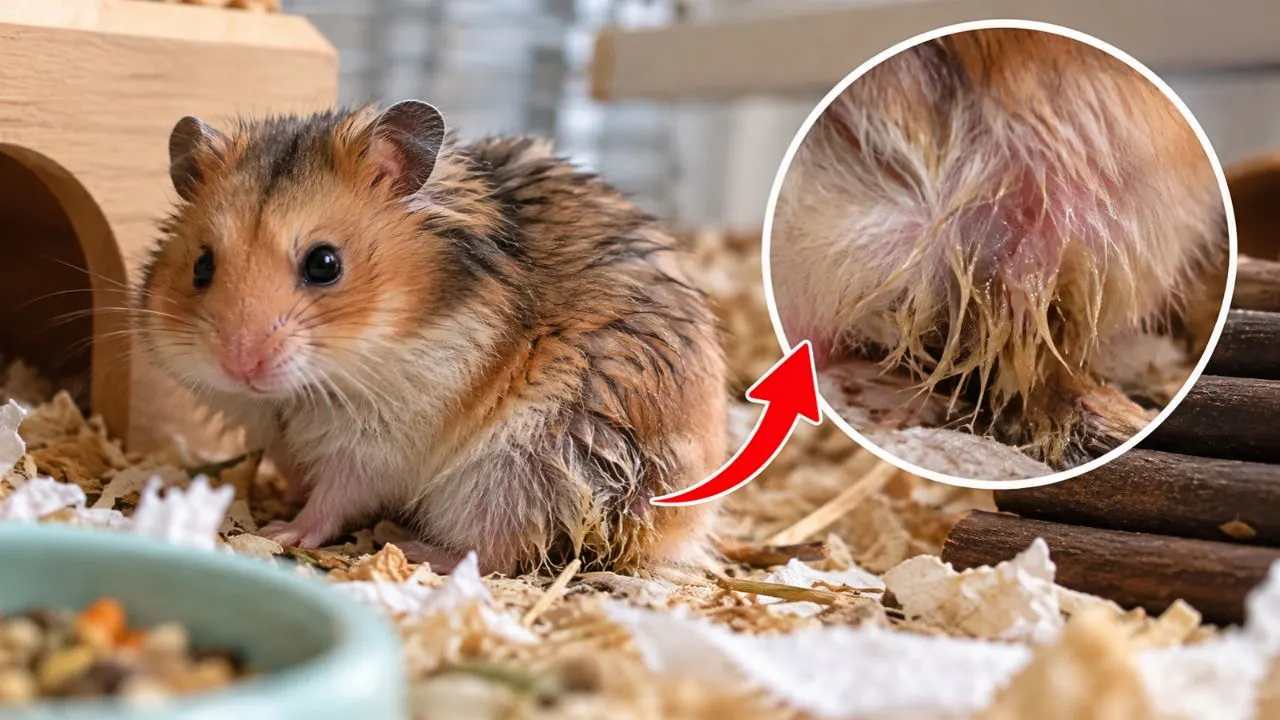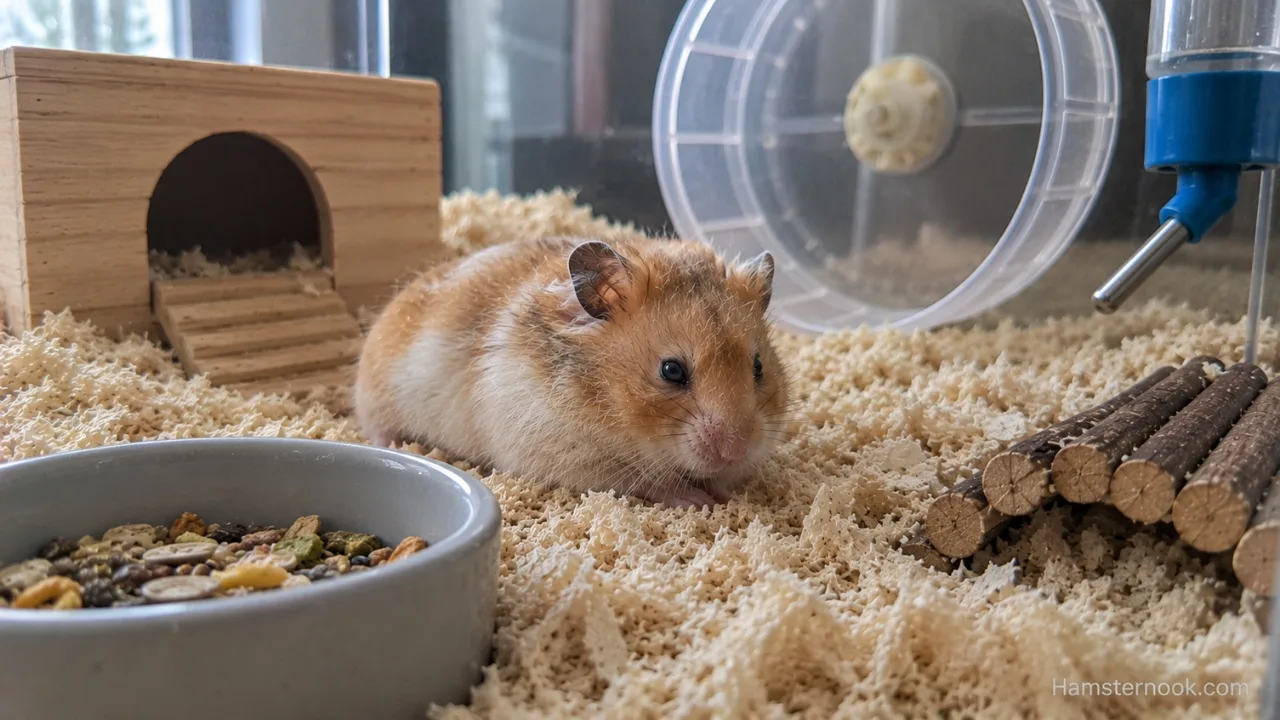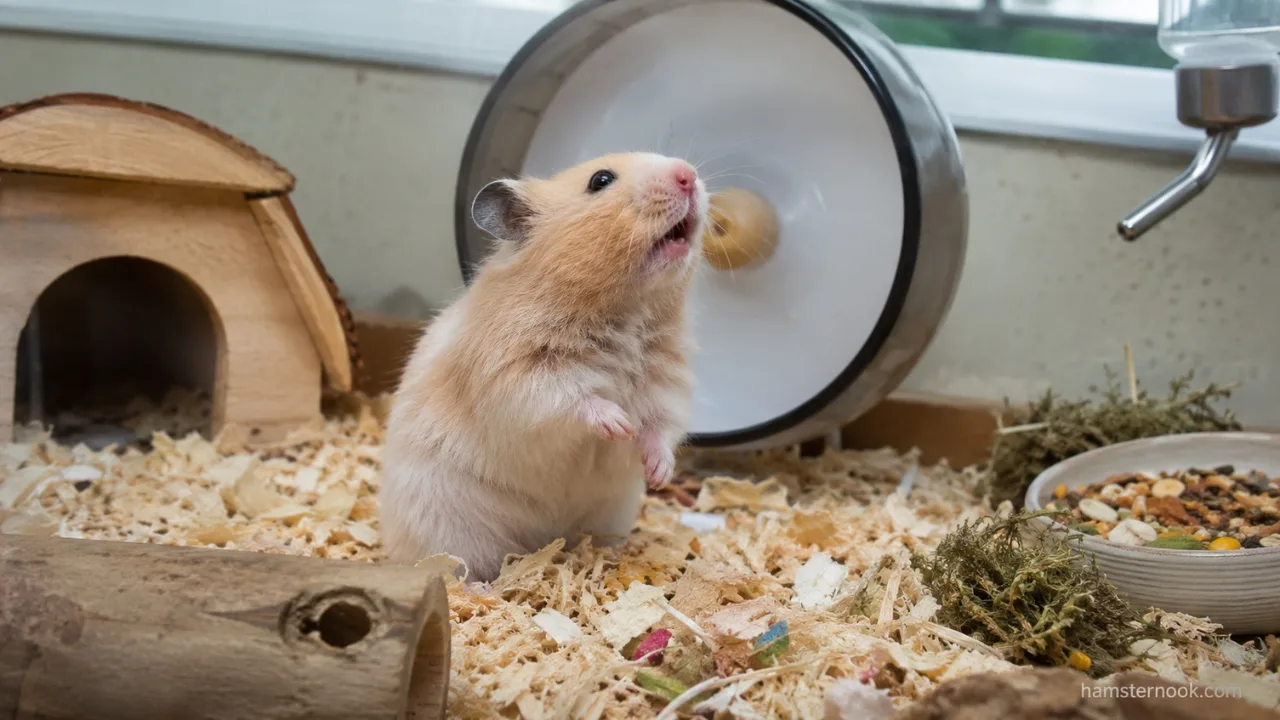
Noticing your hamster breathing faster than usual can be alarming, especially if it seemed perfectly healthy just hours earlier. Because hamsters are small prey animals, they naturally hide signs of illness whenever possible. Sometimes rapid breathing is completely harmless, such as after exercise or during moments of excitement. In other cases, it may signal stress, overheating, respiratory disease, or another health problem that requires attention.
The challenge is knowing when fast breathing is nothing to worry about and when it could be a sign that your hamster needs help. Understanding the most common causes and warning signs can help you respond appropriately and seek veterinary care when necessary.
Many owners first notice fast or heavy breathing when their hamster wakes up and becomes more active. The important distinction is whether the breathing is simply faster after activity or looks effortful, noisy, or unusual while your hamster is resting.
What Does Normal Hamster Breathing Look Like?
Quick Answer:

A hamster may breathe faster temporarily after exercise, excitement, fear, or heat. However, fast or heavy breathing that continues while your hamster is resting or sleeping, especially with wheezing, discharge, weakness, lethargy, or visible breathing effort, should be taken seriously and may require prompt veterinary attention.
Because hamsters are small animals with fast metabolisms, their breathing rate is naturally quicker than that of larger pets like cats or dogs.
How Fast Should a Hamster Breathe?
A hamster’s breathing can naturally be quite quick, so counting breaths alone is not a reliable way to decide whether something is wrong. What matters more is whether the breathing is smooth and quiet and whether it matches your hamster’s usual pattern.
Fast breathing is more concerning when it happens at rest or during sleep, persists without an obvious cause, or is accompanied by wheezing, nasal discharge, weakness, lethargy, open-mouth breathing, or visible effort to breathe. Fast breathing describes an increased rate, while heavy or labored breathing means your hamster appears to be working harder to breathe. Both can be concerning when they persist or occur with other signs of illness.
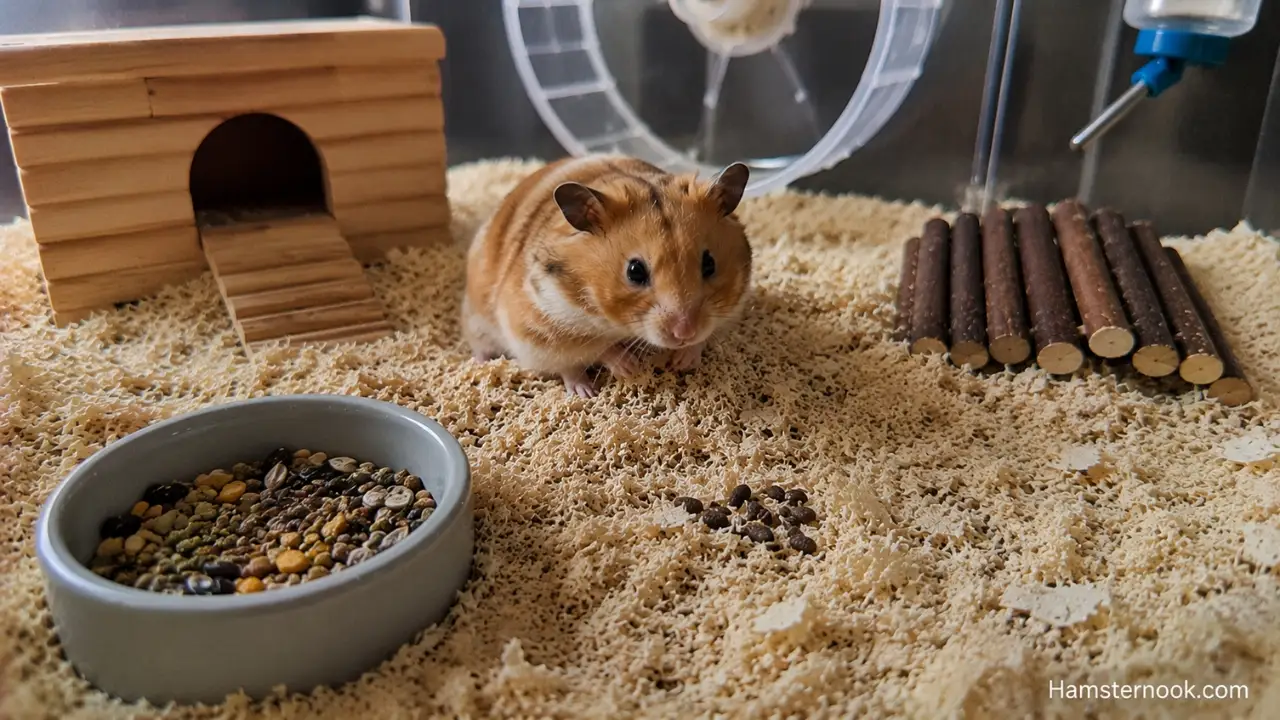
Before worrying about fast breathing, it helps to understand what normal breathing looks like.
Healthy hamsters typically breathe quietly and smoothly through their noses. Their breathing should be regular, without wheezing, clicking sounds, or visible struggle. Because hamsters are small animals with fast metabolisms, their breathing rate is naturally quicker than that of larger pets like cats or dogs.
A relaxed hamster should not appear to be:
- Gasping
- Panting
- Breathing with an open mouth
- Struggling to inhale
- Moving its entire body with each breath
If breathing appears labored or noticeably different from your hamster’s normal pattern, further observation is important.
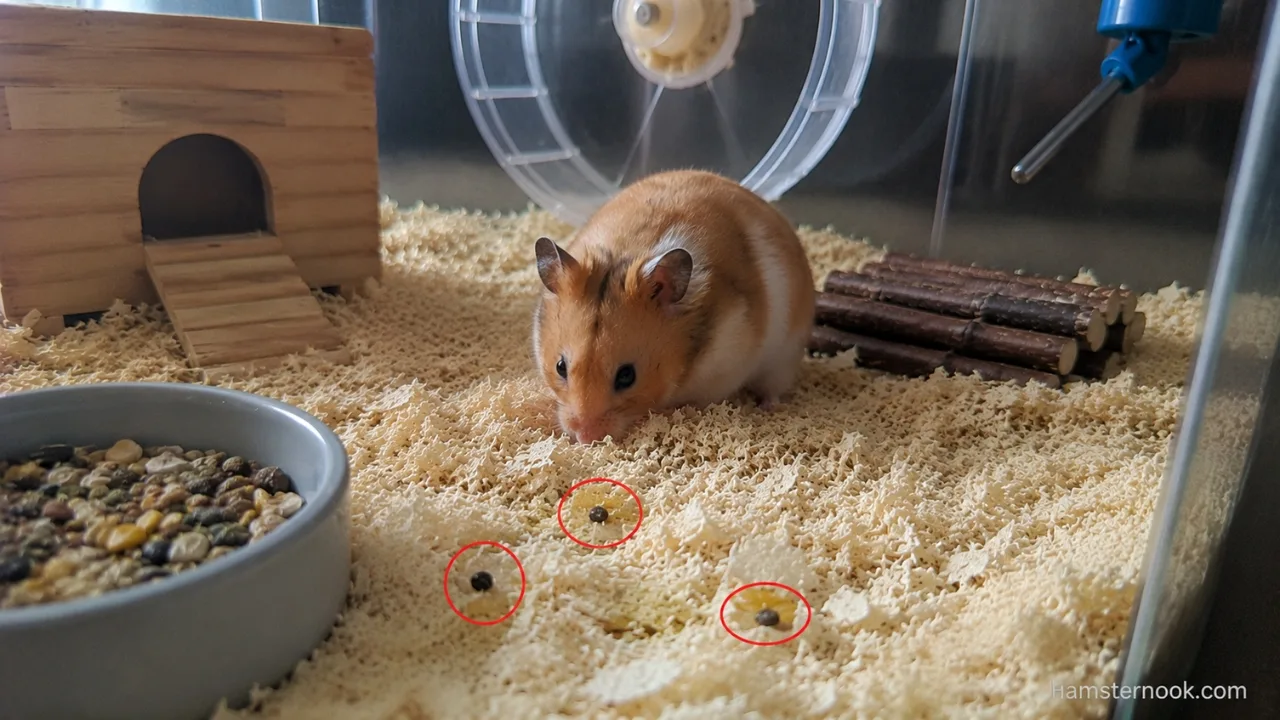
If you’re also noticing changes in your hamster’s activity, appetite, posture, or behavior, our Signs of a Sick Hamster: Symptoms, Warning Signs & When to See a Vet guide covers other signs that can indicate illness.
Common Reasons Why a Hamster May Breathe Fast
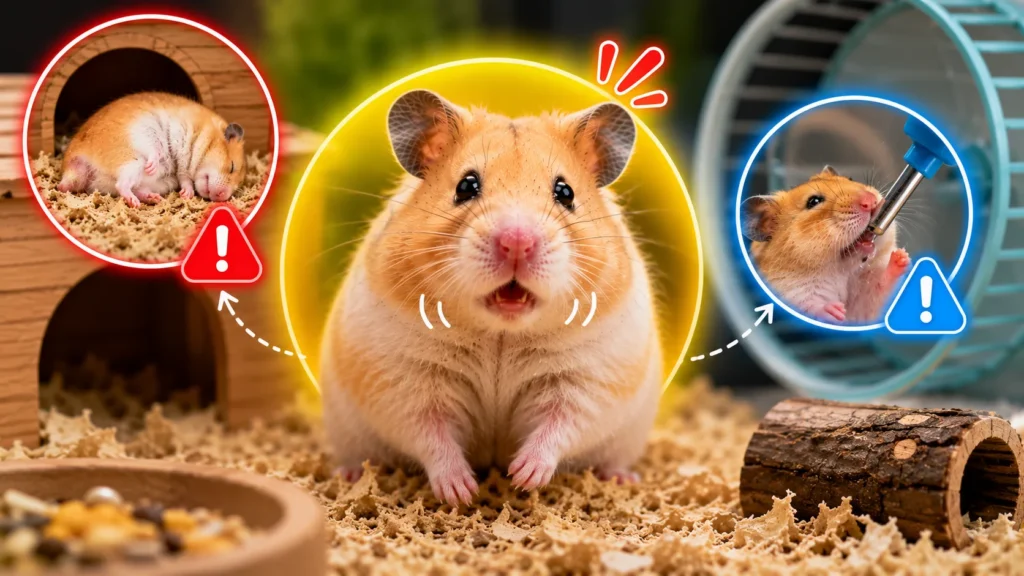
Seeing your hamster breathe quickly doesn’t automatically mean it’s sick. Some situations are temporary and harmless.
Fast Breathing After Exercise
Hamsters are highly active animals, especially during the evening and nighttime hours.
After:
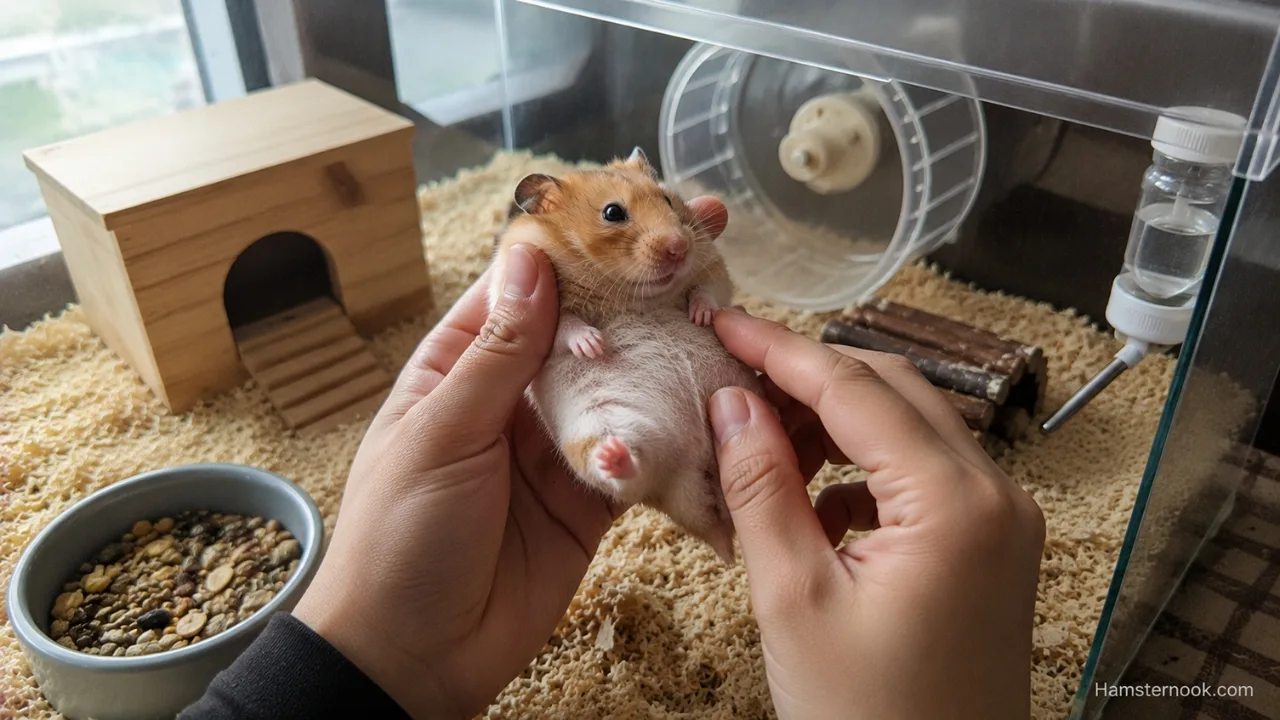
- Running on a wheel
- Climbing
- Exploring
- Playing
it is normal for breathing to become temporarily faster.
| Situation | Expected Breathing Change | Cause for Concern? |
|---|---|---|
| Running on wheel | Mild temporary increase | Usually no |
| Active exploration | Mild temporary increase | Usually no |
| Breathing remains rapid for long periods | Persistent increase | Yes |
| Difficulty breathing after exercise | Severe increase | Yes |
Breathing should gradually return to normal after a short rest period.
Every hamster recovers at a slightly different pace depending on its age, activity level, and the room temperature. What matters most is seeing the breathing gradually slow once the hamster has had time to rest in a calm environment.
Stress and Fear Can Trigger Rapid Breathing
Hamsters are sensitive animals and can become stressed easily. Understanding their daily routine can help reduce unnecessary stress. Our Are Hamsters Nocturnal? Their Natural Sleep Schedule Explained guide explains when hamsters are naturally active and resting.

Common stress triggers include:
- Loud noises
- Sudden handling
- New environments
- Predator scents
- Household disruptions
A frightened hamster may breathe rapidly while also showing other signs of anxiety.
A frightened hamster may breathe rapidly while also showing other signs of anxiety. If shaking is happening at the same time, our Why Is My Hamster Shaking? Common Causes, Warning Signs & What To Do guide covers other causes and warning signs to consider.
| Stress Sign | Often Seen With Fast Breathing |
|---|---|
| Freezing in place | Yes |
| Hiding excessively | Yes |
| Flattened posture | Yes |
| Sudden escape attempts | Yes |
| Trembling | Sometimes |
In many cases, breathing slows down naturally once the hamster feels safe again.

Overheating and Heat Stress
A properly designed enclosure can also help maintain a safer environment. Our Best Hamster Cage Setup for Beginners (Safe & Comfortable Ideas) guide explains how housing conditions can affect hamster health.
For practical guidance on keeping the enclosure within a safer temperature range, see our Hamster Temperature: Safe Range, Too Hot & Too Cold guide.
Heat stress is one of the most serious causes of rapid breathing in hamsters.
Hamsters tolerate cool temperatures much better than excessive heat. When temperatures rise too high, they may struggle to regulate body temperature.
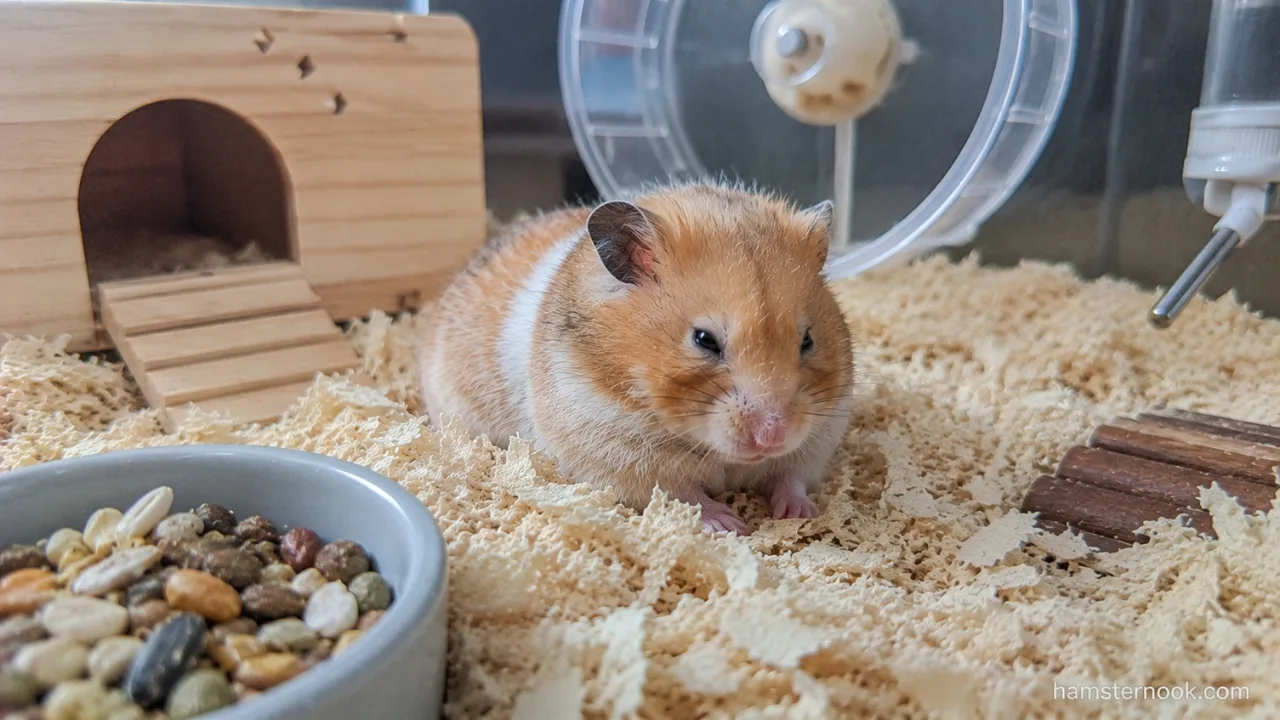
Signs of overheating may include:
- Fast breathing
- Panting
- Lethargy
- Stretching out flat
- Weakness
- Reduced activity
| Heat-Related Sign | Why It Matters |
|---|---|
| Fast breathing at rest | May indicate heat stress |
| Panting or breathing difficulty | Requires prompt attention |
| Lethargy or weakness | Possible sign of significant overheating |
| Stretching out flat | May occur when a hamster is trying to cope with heat |
| Collapse or severe distress | Emergency warning sign |
Heat-related illness can become life-threatening if not addressed quickly.
If your hamster is breathing rapidly in a hot environment, reduce exposure to the heat and seek veterinary advice promptly if the breathing does not settle or your hamster appears weak, lethargic, distressed, or otherwise unwell. Avoid relying on a single room-temperature number to decide whether your hamster is safe; the hamster’s symptoms and overall condition matter too.
Respiratory Infections in Hamsters
One of the more common health-related reasons for rapid breathing is a respiratory infection.
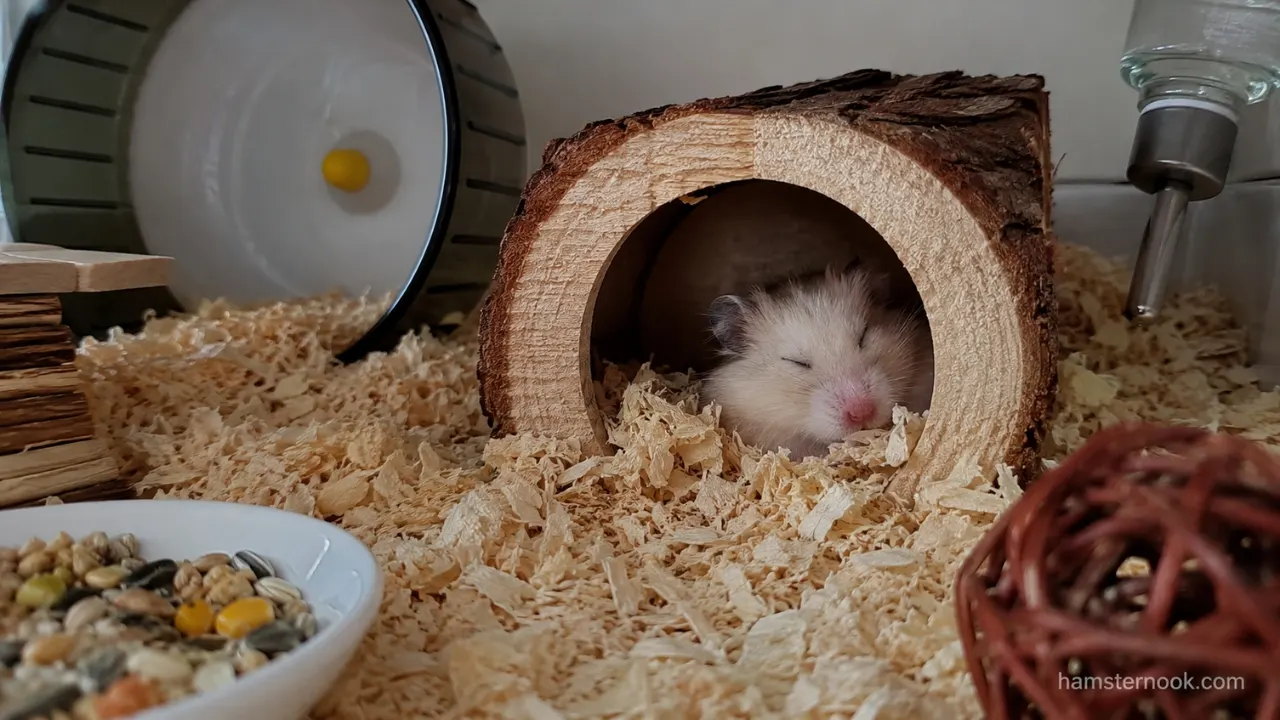
These infections may involve the nose, airways, or lungs and often require veterinary treatment.
Possible symptoms include:
- Rapid breathing
- Wheezing
- Sneezing
- Nasal discharge
- Loss of appetite
- Reduced activity
Respiratory infections can worsen quickly in small animals, so prompt veterinary evaluation is important.
Allergies or Irritating Cage Conditions
Poor air quality inside a cage can affect breathing.
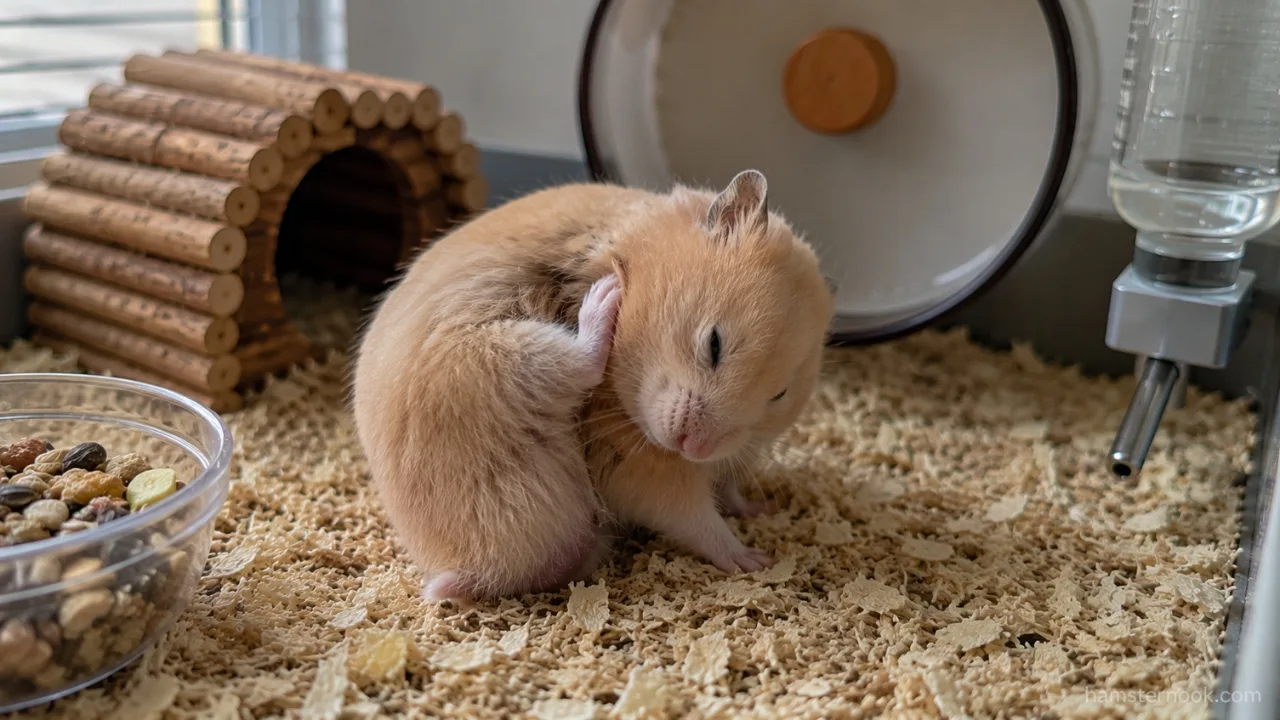
Potential irritants include:
- Dusty bedding
- Strong cleaning products
- Scented litter
- Smoke exposure
- Aerosol sprays
| Potential Irritant | Possible Effect |
|---|---|
| Dusty bedding | Respiratory irritation |
| Cigarette smoke | Breathing difficulties |
| Air fresheners | Airway irritation |
| Strong chemicals | Respiratory stress |
| Excess cage dust | Sneezing and fast breathing |
Using low-dust bedding and maintaining good ventilation can help reduce respiratory irritation.
Heart Problems and Fast Breathing
Older hamsters may occasionally develop heart-related conditions.
When the heart cannot circulate blood efficiently, breathing may become faster as the body attempts to compensate.
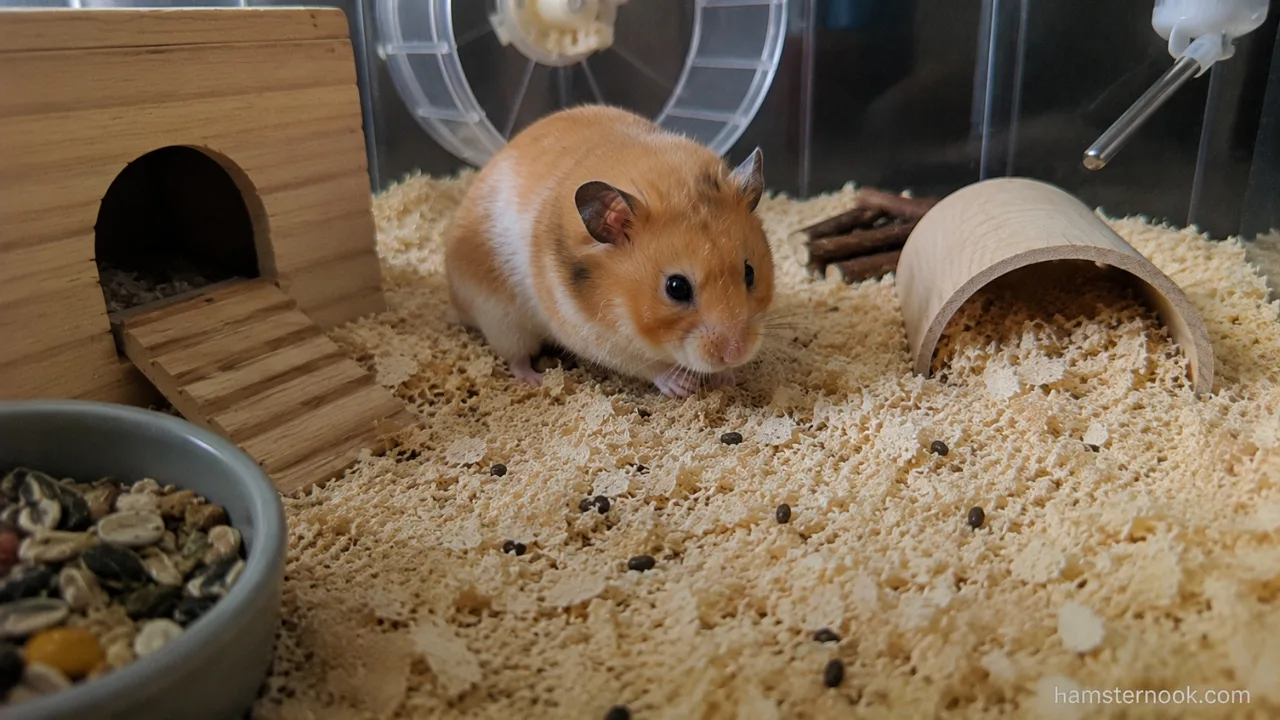
Potential warning signs include:
- Rapid breathing at rest
- Weakness
- Reduced activity
- Weight loss
- Poor exercise tolerance
Heart disease cannot be diagnosed at home and requires veterinary assessment.
Heart disease cannot be diagnosed at home and requires veterinary assessment. If weakness is also noticeable, our Why Is My Hamster Suddenly Weak? 9 Causes, Warning Signs & What to Do guide covers other warning signs that can occur alongside sudden weakness.
Pain or Injury Can Affect Breathing
A hamster experiencing pain may breathe faster than normal.
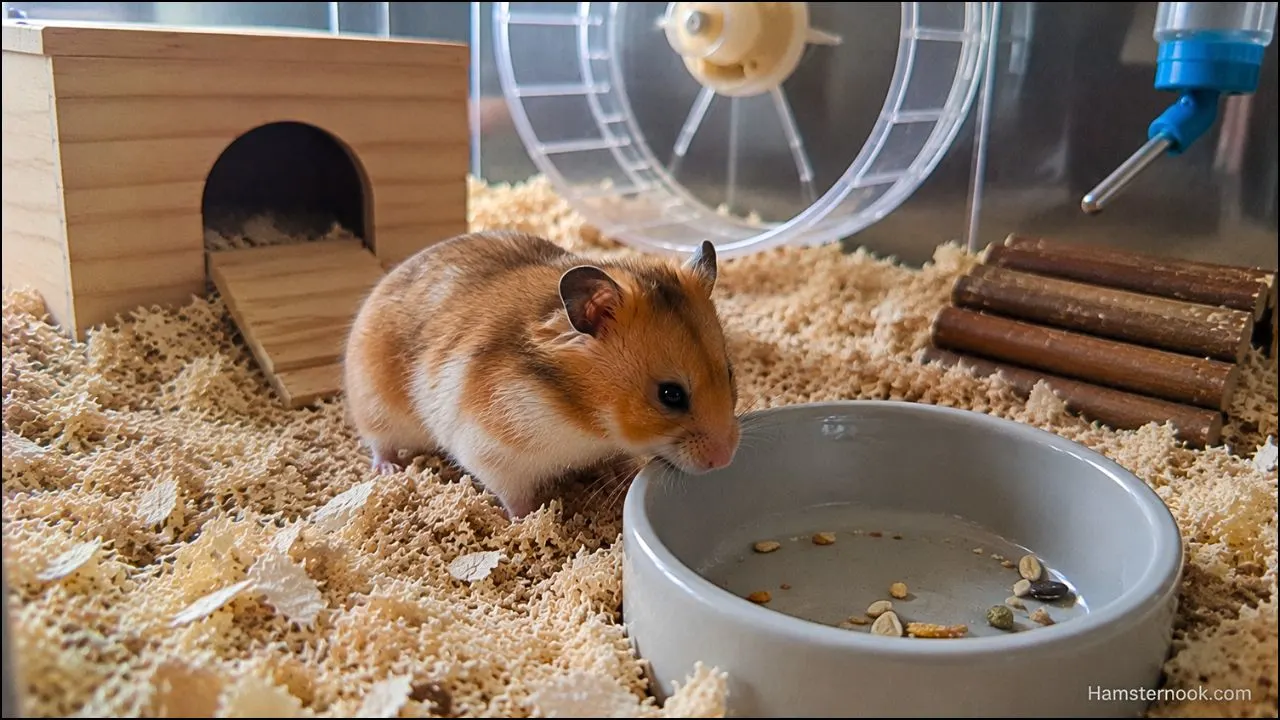
Possible causes include:
- Falls
- Internal injuries
- Dental problems
- Infection
- Other underlying illnesses
Pain-related breathing changes are often accompanied by behavioral changes such as hiding, reduced movement, or refusal to eat.
Because pain can be difficult to recognize in small pets, Signs Your Hamster Is in Pain explains the subtle behaviors that may indicate your hamster is uncomfortable even when there are no obvious injuries.
When Fast Breathing Becomes an Emergency
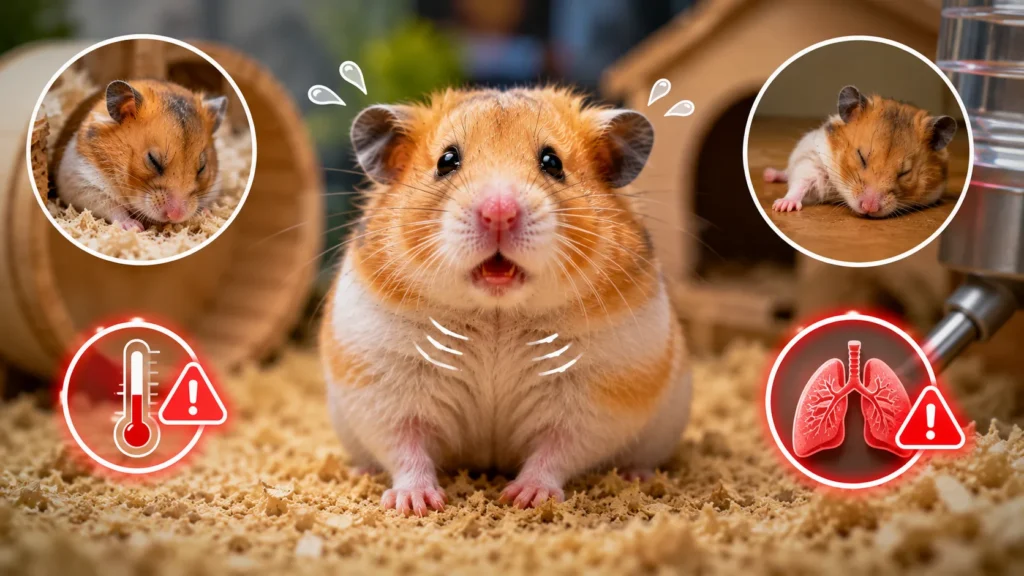
Some warning signs require immediate attention and shouldn’t be dismissed as normal behavior.
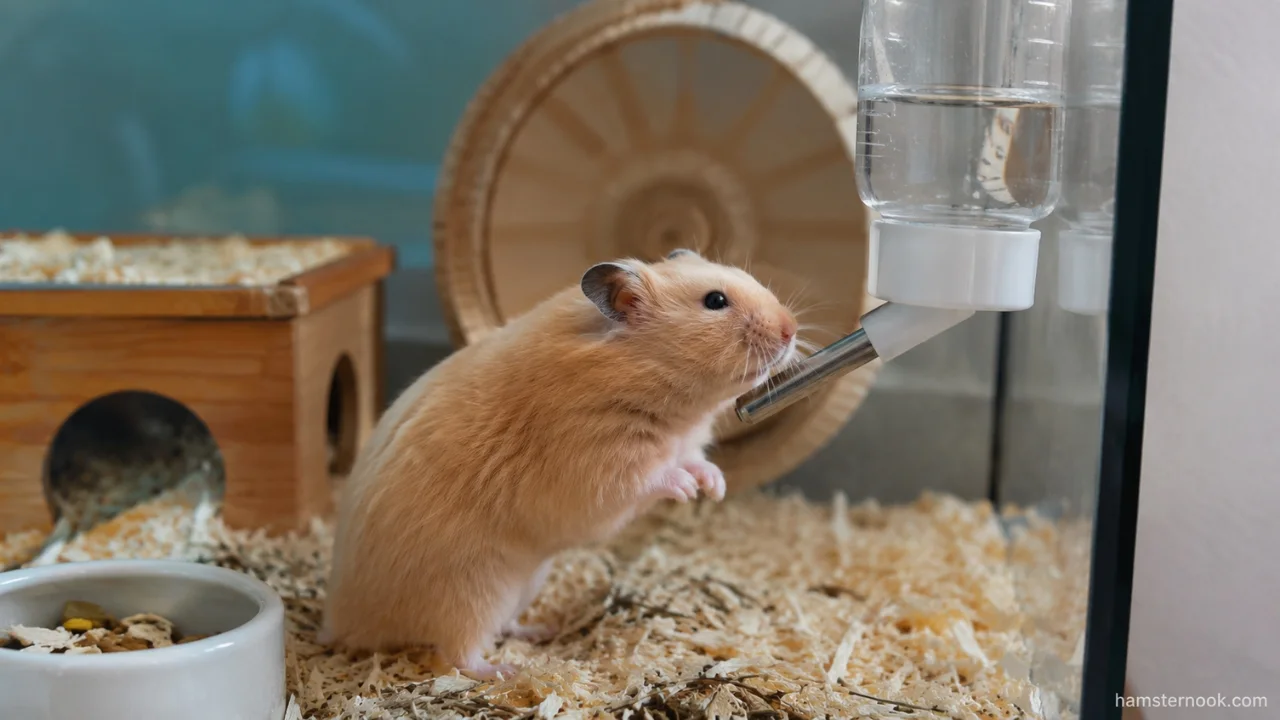
Seek veterinary care immediately if your hamster shows:
| Emergency Warning Sign | Why It Matters |
|---|---|
| Open-mouth breathing | Indicates significant breathing difficulty |
| Collapse | Medical emergency |
| Severe weakness or lethargy | May indicate serious illness |
| Wheezing with visible distress | Possible respiratory compromise |
| Labored or struggling breathing | Requires immediate veterinary attention |
| Breathing difficulty with nasal discharge or loss of appetite | Can occur with serious respiratory illness |
Hamsters can deteriorate quickly once serious illness develops.
Because small animals often hide symptoms until they become unwell, even minor breathing changes are worth monitoring closely.
How to Check Your Hamster Safely
If your hamster starts breathing faster than usual, take a moment to observe what else is happening before reacting.
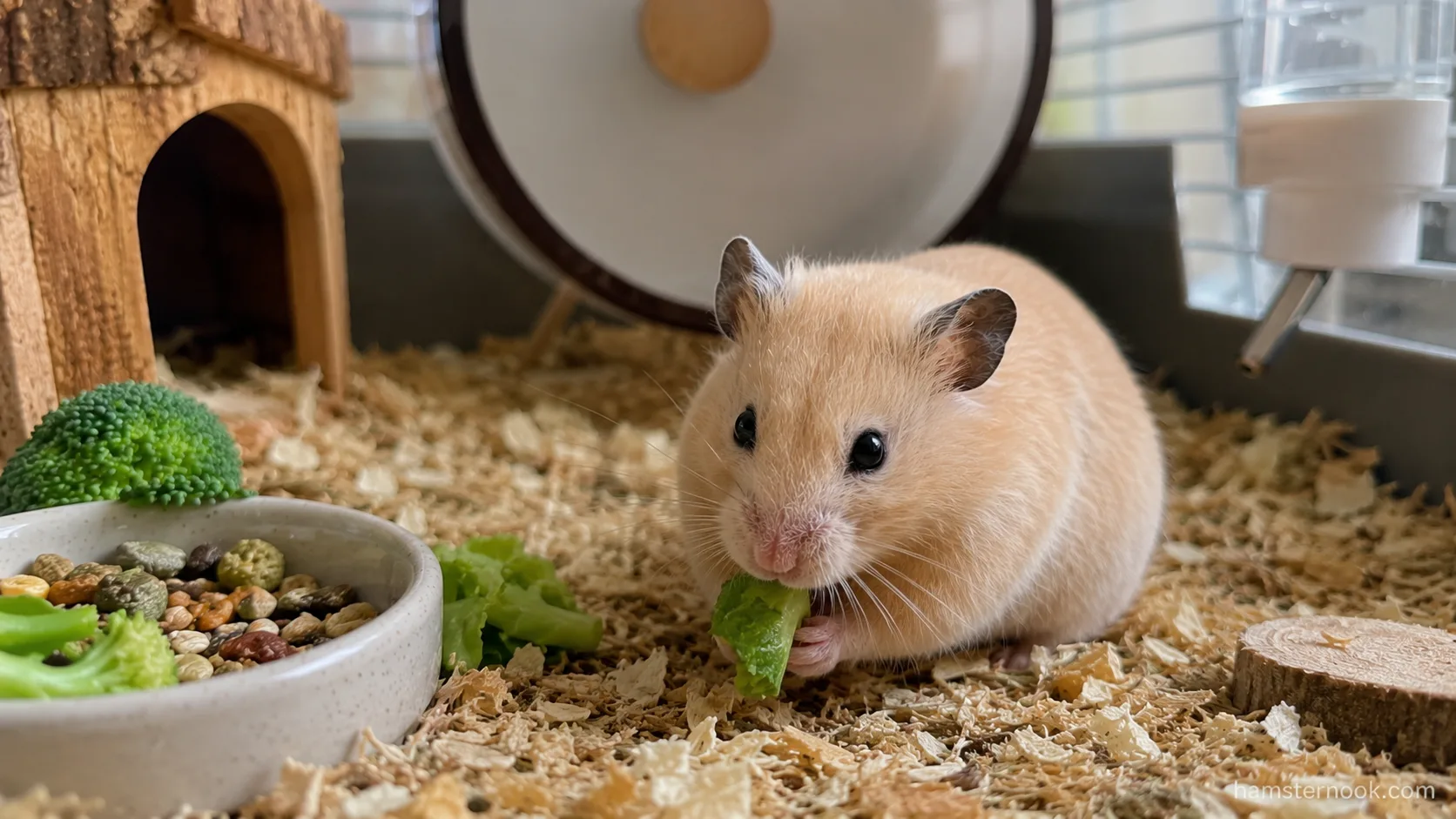
Check for:
- Activity level
- Eating habits
- Drinking habits
- Nasal discharge
- Sneezing
- Wheezing sounds
- Body posture
- Recent exposure to heat
Avoid excessive handling, as stress may worsen breathing problems.
If possible, observe your hamster quietly for several minutes before deciding whether the breathing is improving or becoming worse. Watching from outside the cage often gives a more accurate picture because additional handling can temporarily increase breathing rate in a frightened hamster.
What You Should Do If Your Hamster Is Breathing Fast
The appropriate response depends on the situation.

| Scenario | Recommended Action |
|---|---|
| After exercise | Monitor and allow rest |
| After a stressful event | Reduce stress and observe |
| During hot weather | Cool the environment safely |
| With respiratory symptoms | Contact a veterinarian |
| With emergency signs | Seek immediate veterinary care |
Never attempt to give human medications to a hamster unless specifically instructed by a veterinarian.
Providing easy access to fresh water is also important during illness. Learn more in our How Long Can a Hamster Go Without Water? guide.
Preventing Breathing Problems in Hamsters
Many respiratory and stress-related issues can be reduced through proper husbandry.
Keeping the enclosure clean and using appropriate bedding can also help reduce avoidable respiratory irritation. See our Best Hamster Bedding for Beginners: Safe, Unsafe & Best Choices guide for bedding choices and common safety concerns.

Helpful prevention measures include:
- Maintaining appropriate room temperatures
- Using low-dust bedding
- Cleaning cages regularly
- Providing proper ventilation
- Avoiding cigarette smoke exposure
- Minimizing stressful handling
- Scheduling veterinary care when illness is suspected
Simple habits like proper cage maintenance, clean bedding, and a balanced diet can go a long way toward keeping your hamster healthy.
Final Thoughts
Fast breathing in hamsters is not always a reason to panic. Exercise, excitement, and temporary stress can all cause short-term increases in breathing rate. However, breathing that remains rapid while resting, especially when combined with lethargy, wheezing, discharge, or signs of distress, should be taken seriously.
Since hamsters are naturally good at hiding signs of illness, even small changes in breathing are worth paying attention to. Early intervention can make a major difference when respiratory infections, heat stress, or other health conditions are involved.
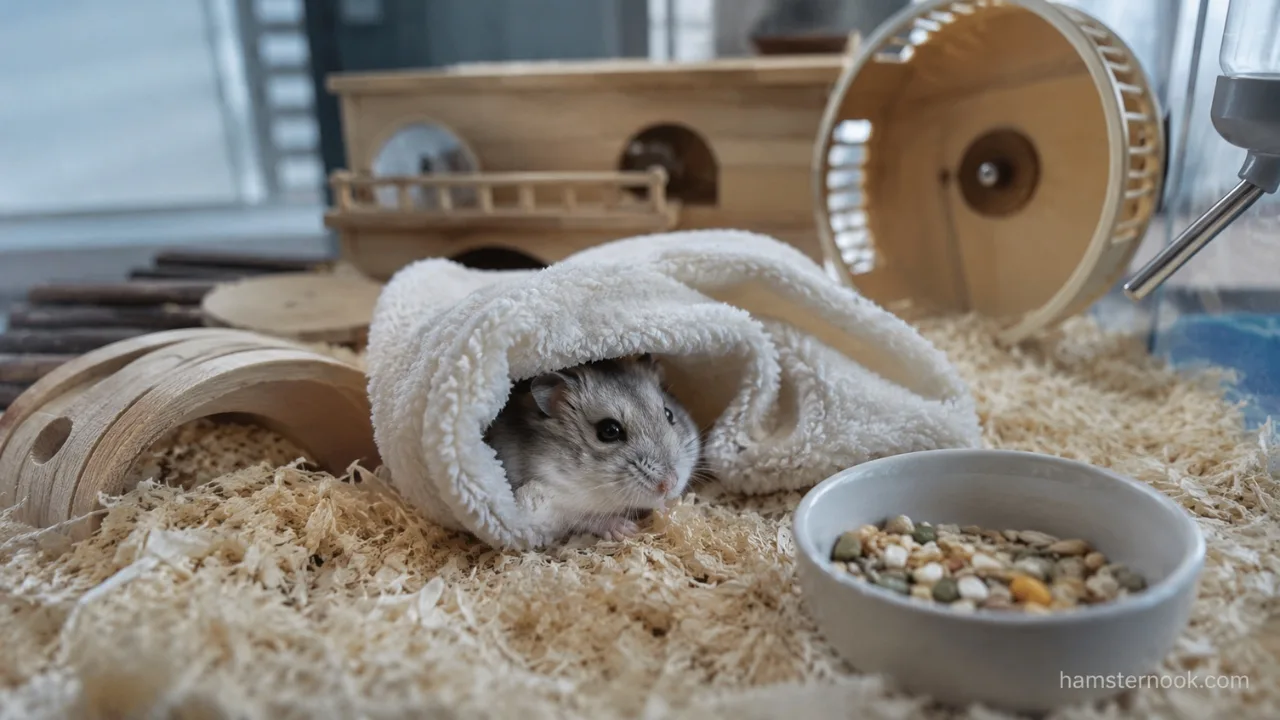
If you’re looking for complete advice on creating a healthy environment, preventing common illnesses, and understanding normal hamster behavior, our Ultimate Hamster Care Guide for Beginners (2026) brings everything together in one place.
Frequently Asked Questions
Should I worry if my hamster is breathing fast while sleeping?
Breathing may look different while a hamster is asleep, but persistent fast, heavy, noisy, or labored breathing during sleep should not be dismissed as normal. If it continues while your hamster is resting or is accompanied by weakness, discharge, wheezing, or visible breathing effort, contact a veterinarian promptly.
Can a hamster breathe fast because it is scared?
Yes. Fear, sudden handling, loud noises, or an unfamiliar environment can temporarily increase breathing. Give your hamster space and observe from outside the cage. If the breathing does not settle once the stressful event has passed, or if other symptoms appear, contact a veterinarian.
Why is my hamster breathing fast but still acting normal?
Recent exercise, excitement, or mild stress may cause temporary fast breathing. If the behavior continues without an obvious cause, further observation is recommended.
Can hot weather make a hamster breathe faster?
Yes. Overheating is a common reason for rapid breathing in hamsters and can become dangerous if temperatures remain too high.
What sounds are abnormal when a hamster breathes?
Wheezing, clicking, crackling, or persistent noisy breathing may indicate respiratory disease and should be evaluated by a veterinarian.
When should I take my hamster to a vet for breathing problems?
Seek veterinary attention if rapid breathing persists, occurs at rest, is accompanied by wheezing or discharge, or if your hamster appears weak, lethargic, or distressed.
Can stress alone cause fast breathing in hamsters?
Yes. Fear, sudden handling, loud noises, or unfamiliar environments can temporarily increase a hamster’s breathing rate. Breathing should return to normal once the hamster feels safe again.
References
This guide is based on hamster respiratory health, heat stress, illness symptoms, husbandry, and veterinary care guidance from trusted veterinary and animal welfare resources, including:
- RSPCA – Hamster Health & Welfare – Guidance on recognizing signs of illness, respiratory problems, heat-related concerns, veterinary care, and general hamster health.
- RSPCA – Creating a Good Home for Hamsters – Guidance on temperature, ventilation, bedding, enclosure conditions, and environmental factors that can affect hamster wellbeing.
- PDSA – Hamsters as Pets – Practical advice on hamster health, behavior, housing, diet, common illnesses, and when veterinary care may be needed.
- MSD Veterinary Manual – Disorders and Diseases of Hamsters – Veterinary information on respiratory disease, illness symptoms, infections, tumors, and other health conditions affecting hamsters.
- MSD Veterinary Manual – Routine Health Care of Hamsters – Veterinary guidance on monitoring hamster health, recognizing abnormalities, and providing appropriate routine care.
- MSD Veterinary Manual – Providing a Home for a Hamster – Veterinary guidance on housing, ventilation, temperature, bedding, and environmental management.
Medical Disclaimer
This article is intended for educational purposes only and should not be considered veterinary advice. Fast or labored breathing in a hamster can have several possible causes, including temporary stress or exercise as well as respiratory disease, overheating, pain, or other health problems. If rapid breathing persists while your hamster is resting, or occurs with wheezing, nasal discharge, weakness, lethargy, open-mouth breathing, collapse, or visible difficulty breathing, contact a qualified exotic animal veterinarian promptly. Never give human medication to a hamster unless specifically instructed by a veterinarian.

Narayan Kumar is the founder and author of HamsterNook. He creates practical, research-based hamster care guides covering hamster behavior, nutrition, cage setup, enrichment, health, and everyday care. His goal is to help hamster owners make informed decisions and provide safer, healthier lives for their pets through clear, beginner-friendly information based on trusted animal care resources.