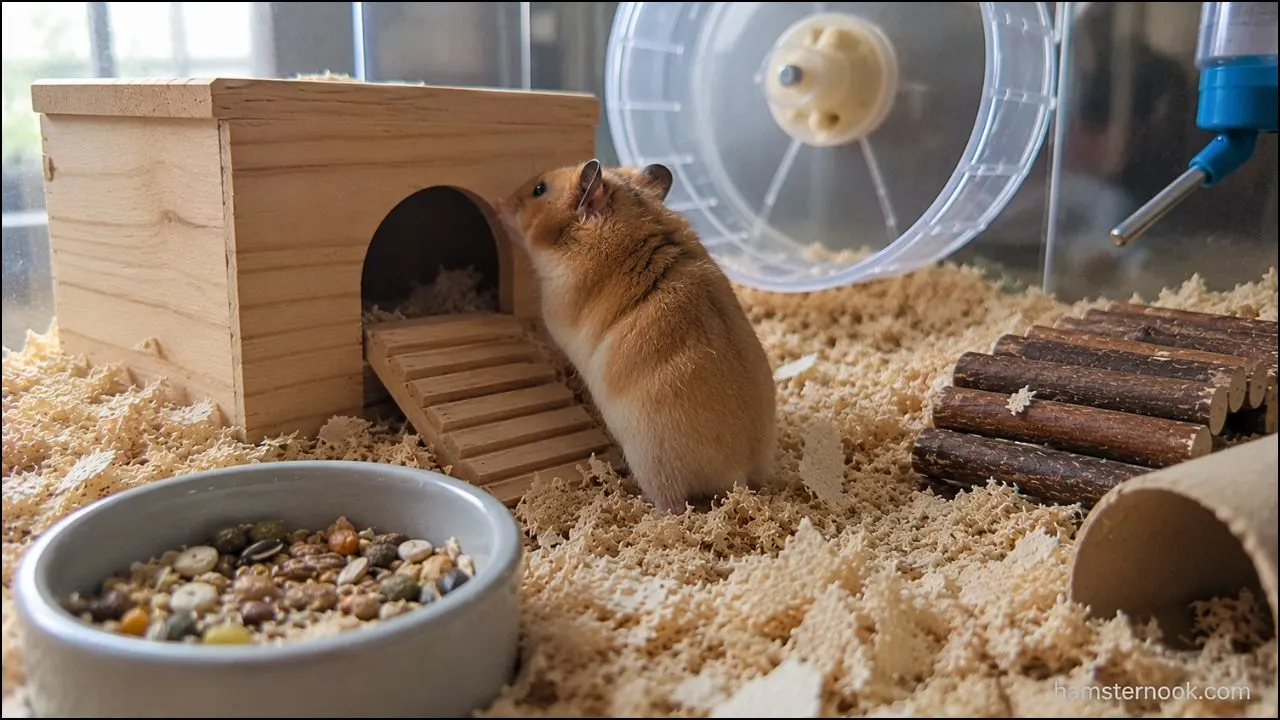
Finding bedding scattered outside your hamster’s cage can be frustrating, especially when you have just cleaned the enclosure and arranged everything neatly. But your hamster probably isn’t making a mess on purpose. Digging, pushing, and moving bedding are natural behaviors that help hamsters explore their surroundings, create burrows, and arrange their sleeping areas. Understanding why it happens can help you decide whether your hamster is simply behaving naturally or needs a better cage setup.
Quick Answer: Why Does My Hamster Keep Kicking Bedding Out of Its Cage?
Hamsters often kick bedding out of their cages because they naturally dig, burrow, push substrate, and rearrange their surroundings.
However, the amount of bedding being scattered can depend on the enclosure design, bedding depth, material, and placement of accessories.
Common reasons include:
- Natural digging: Your hamster is exploring and moving bedding around.
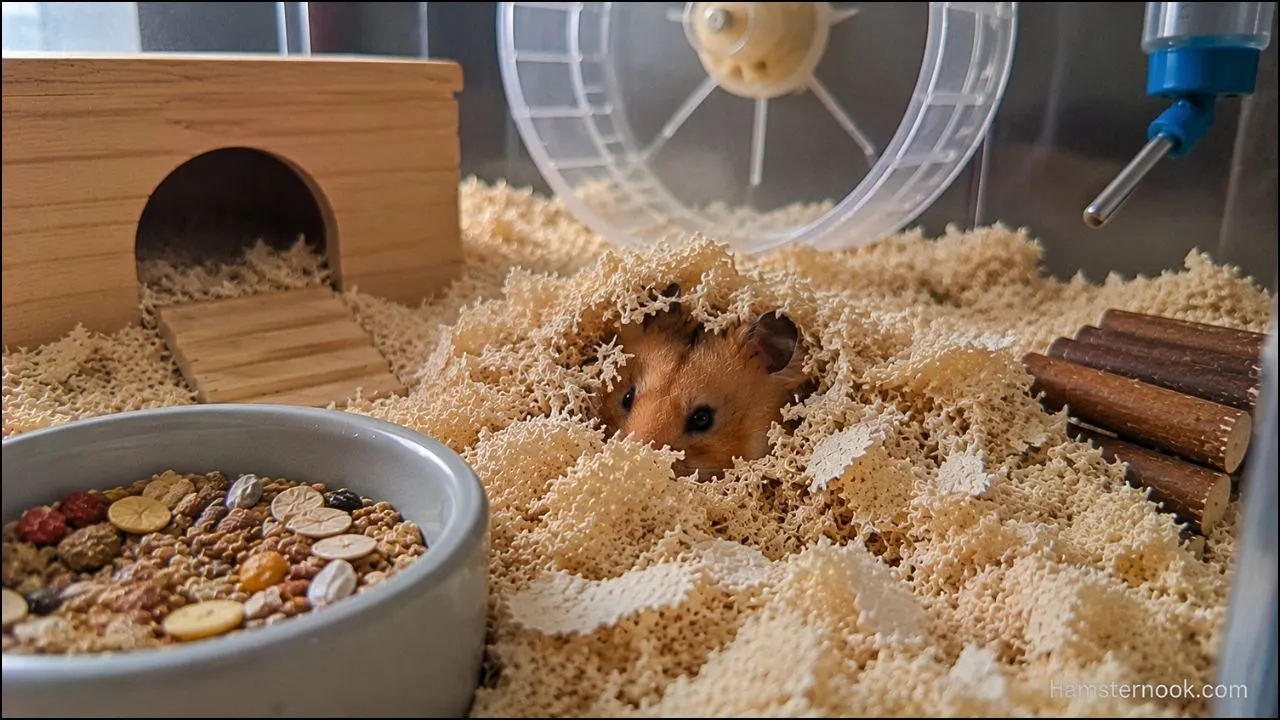
- Burrow building: It is trying to create tunnels or a comfortable sleeping area.
- Shallow bedding: There may not be enough depth for proper digging.
- Bedding near cage openings: Substrate can easily fall through gaps or between cage bars.
- Moving nesting material: Your hamster may be carrying bedding toward its preferred sleeping location.
- Exploring cage corners: Some hamsters repeatedly dig and push substrate in particular areas.
In most cases, kicking bedding around is normal hamster behavior. The best response is to provide suitable deep bedding, a secure enclosure, appropriate hiding places, and enough room for natural digging.
1. Your Hamster Is Following Its Natural Digging Instinct
Digging is a natural behavior for hamsters. In the wild, hamsters use burrows for shelter, nesting, and protection.
Your pet hamster still has the instinct to dig, even though it lives in a cage rather than a natural underground environment.
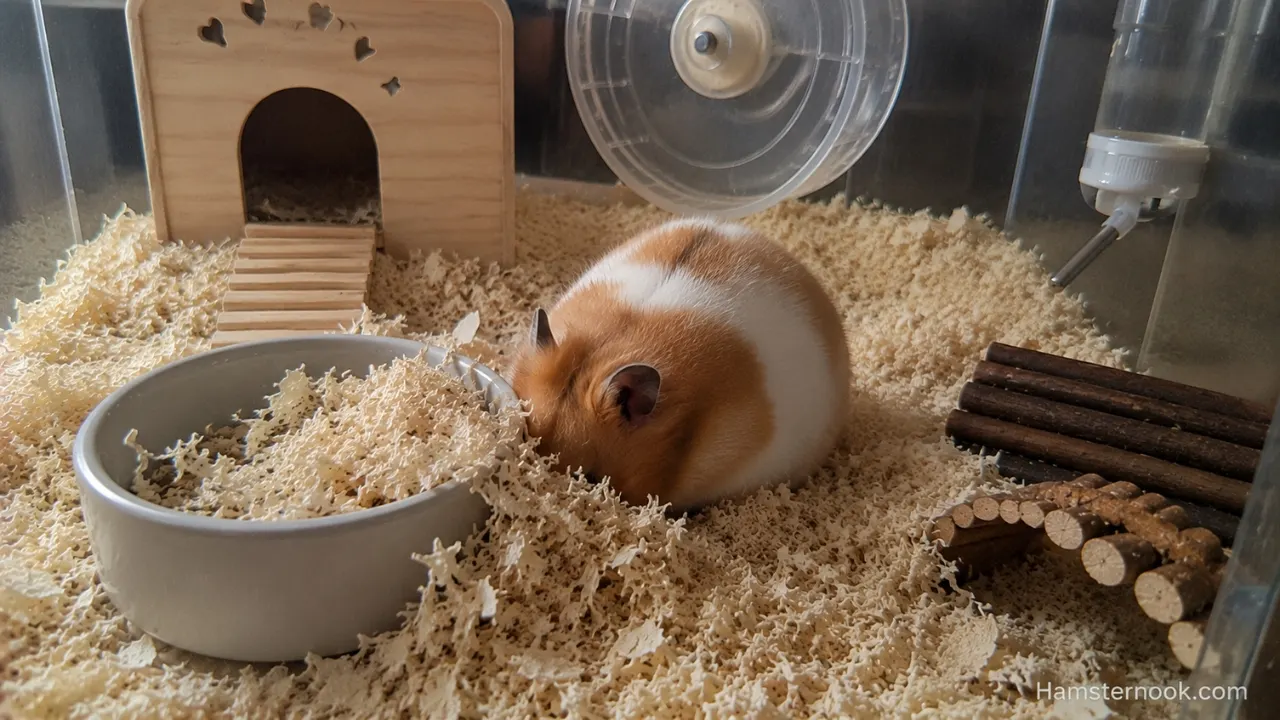
When your hamster pushes bedding backward with its front paws or kicks it with its hind legs, it may simply be moving substrate while exploring or creating a burrow.
You might notice your hamster:
- Digging repeatedly in one corner.
- Pushing bedding toward the cage walls.
- Throwing substrate behind its body.
- Making small holes in the bedding.
- Disappearing underneath the substrate.
- Returning to the same digging area after waking up.
These behaviors do not automatically mean your hamster is unhappy.
What you should do: Give your hamster an area with enough suitable bedding to dig and burrow. Instead of trying to stop the behavior, make sure the enclosure supports it safely.
2. Your Hamster May Not Have Enough Bedding Depth
One common reason to reassess a hamster’s enclosure is insufficient bedding depth.
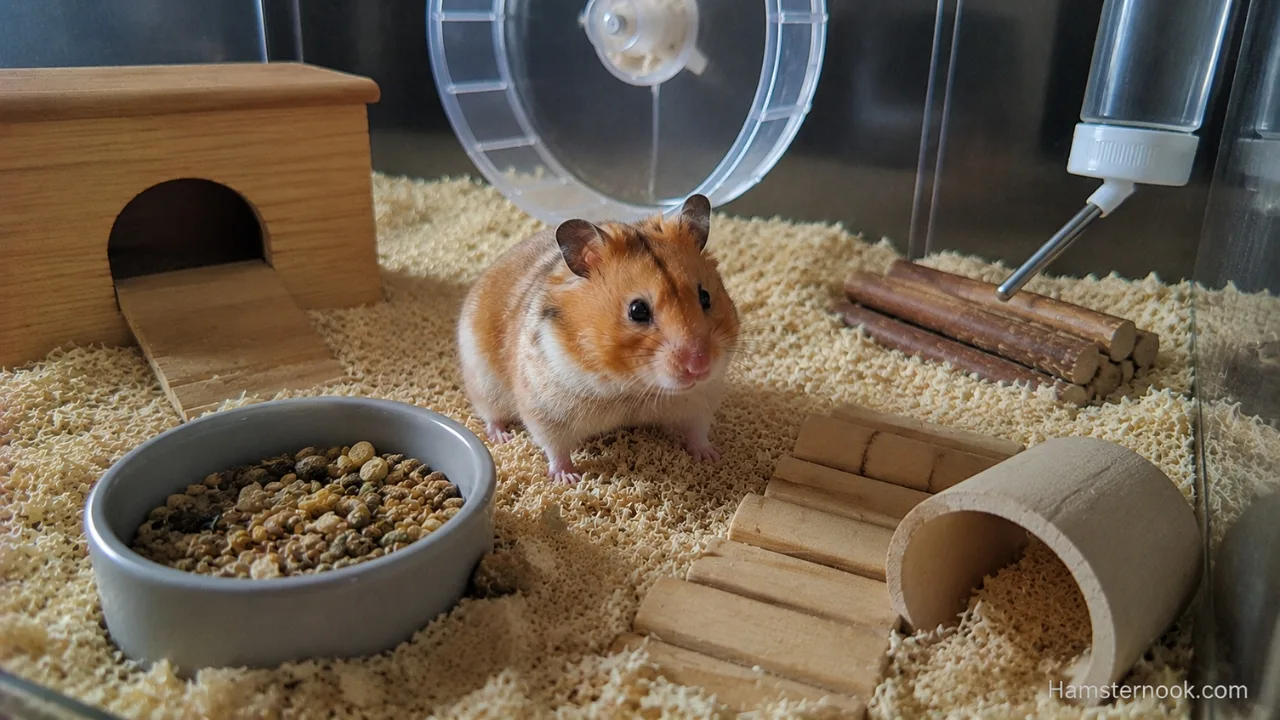
If the substrate is too shallow, your hamster may be able to scratch the surface but struggle to create a stable tunnel or burrow.
This can lead to repeated digging and bedding movement without producing the sheltered underground space it is trying to create.
How deep should hamster bedding be?
The exact recommended depth varies between animal-welfare and husbandry guidance.
The RSPCA recommends bedding deep enough for digging and, where possible, an area suitable for burrowing. Blue Cross also emphasizes providing plenty of deep bedding to support this natural behavior.
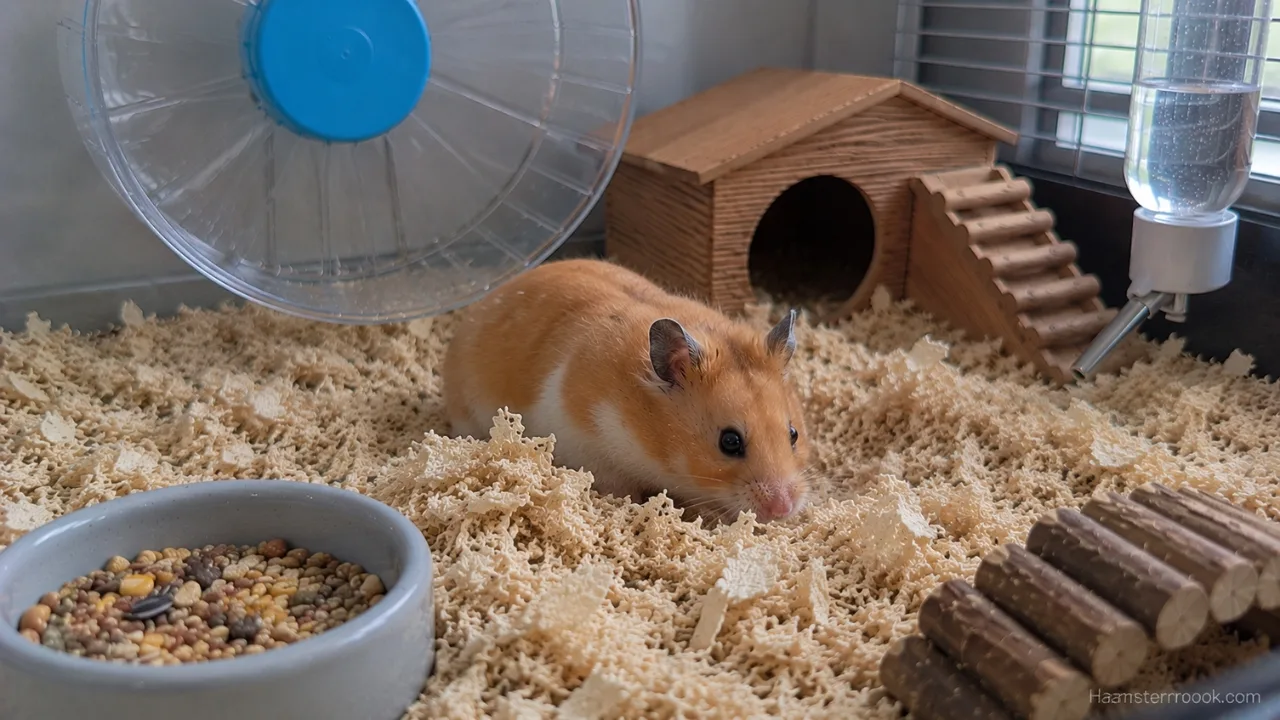
For a practical home setup, many hamster-care recommendations use approximately 8–12 inches of suitable bedding as a starting target, with deeper areas where the enclosure allows.
For a more detailed explanation of suitable bedding depth and how much substrate hamsters need for burrowing, see How Much Bedding Does a Hamster Need? Minimum Depth Guide for Healthy Burrowing.
However, depth alone is not enough. The material must also support burrows.
Signs your hamster needs a better digging area
- Your hamster reaches the cage floor quickly when digging.
- Tunnels collapse immediately.
- Your hamster repeatedly scratches the same shallow area.
- There is very little space underneath its hideout.
- Bedding is distributed in a thin, uneven layer.
What you should do: Increase bedding depth gradually and create a deeper section of the enclosure where your hamster can dig without disturbing essential equipment.

3. Your Hamster Is Moving Bedding to Build Its Nest
Hamsters do not always sleep in the place their owners choose for them.
Your hamster may prefer a particular corner, hideout, or section of the enclosure. It can move bedding toward that location to create a more comfortable nesting area.
For ideas on choosing suitable sleeping spaces and hideouts, see Best Hamster Hideouts and Sleeping Areas: What Hamsters Prefer.
You may see it:

- Carrying bedding in its cheek pouches.
- Pulling paper bedding into a hideout.
- Pushing substrate beneath a wooden house.
- Rearranging nesting material after waking.
- Covering the entrance to its sleeping area.
This is part of normal nesting behavior.
Hamsters also benefit from suitable nesting material that they can manipulate and arrange themselves.
How to make nesting easier
Provide:
- Plain, unscented paper-based nesting material.
- A suitable enclosed hideout.
- Enough bedding beneath and around the sleeping area.
- A quiet location where your hamster can rest undisturbed.
Avoid cotton wool, fluffy hamster bedding, and other materials that separate into long strands. These can become tangled around limbs or cause problems if swallowed.

4. The Cage Design May Be Allowing Bedding to Escape
Sometimes the problem isn’t how much your hamster digs. It’s how the cage is designed.
For example, a wire enclosure with a shallow plastic base may allow bedding to fall through the bars whenever your hamster digs near the sides.
The same thing can happen around doors, openings, and poorly fitted accessories.
Check these areas
- Gaps between cage bars.
- The space around cage doors.
- Openings near removable platforms.
- Areas where the base meets the cage walls.
- Corners where bedding collects against an opening.
If bedding repeatedly falls outside the enclosure from one particular location, inspect that area carefully.
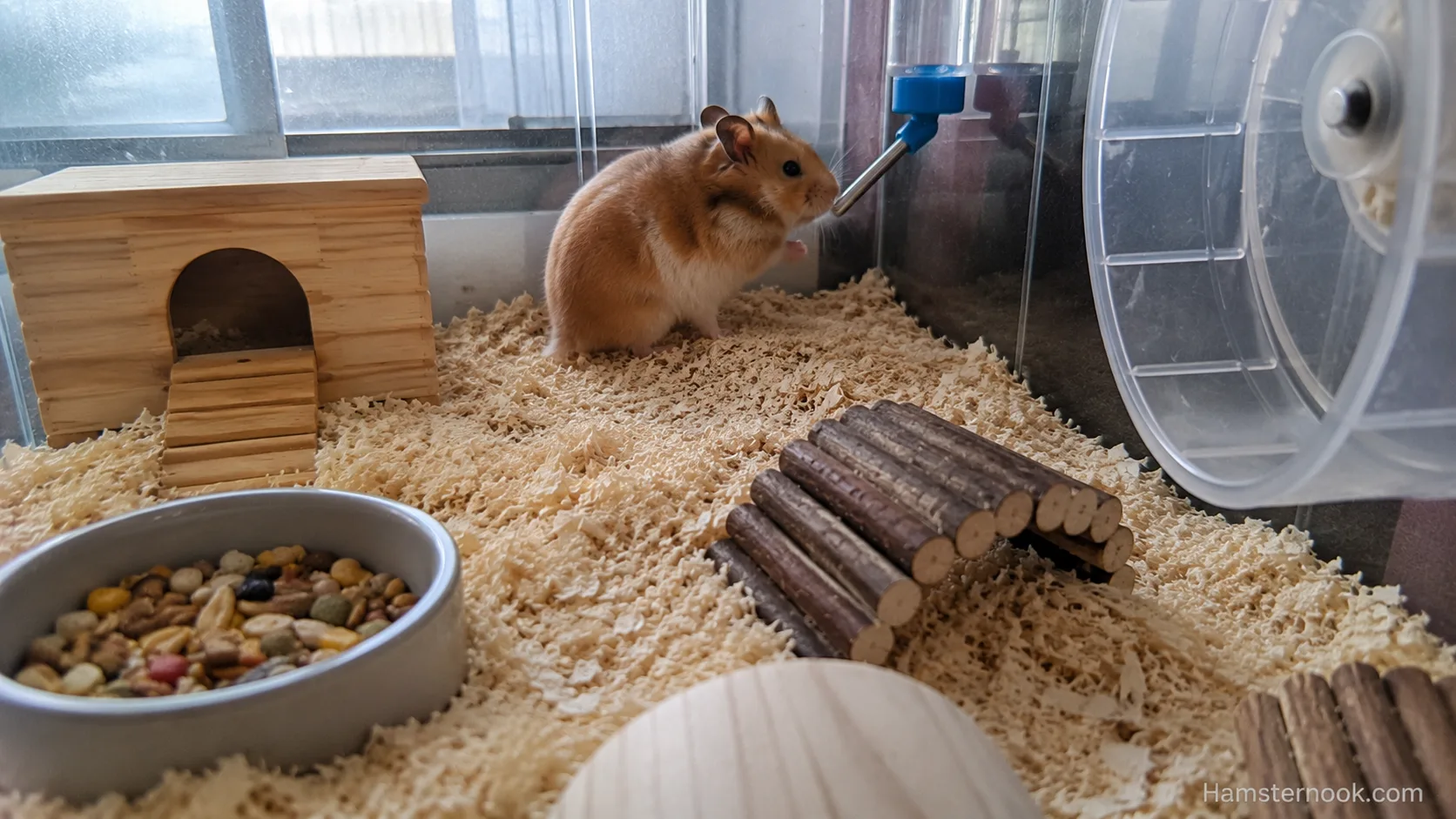
Do not cover ventilation openings with cardboard, fabric, or plastic to prevent bedding from escaping. Proper airflow must remain available.
What you should do: Consider an enclosure with a solid base and sufficiently high sides that can hold a deep bedding layer safely.
5. Your Hamster May Be Reacting to the Type of Bedding
Not all bedding materials behave the same way.
Some are easy to push around but do not hold tunnels well. Others provide better structure for burrowing.
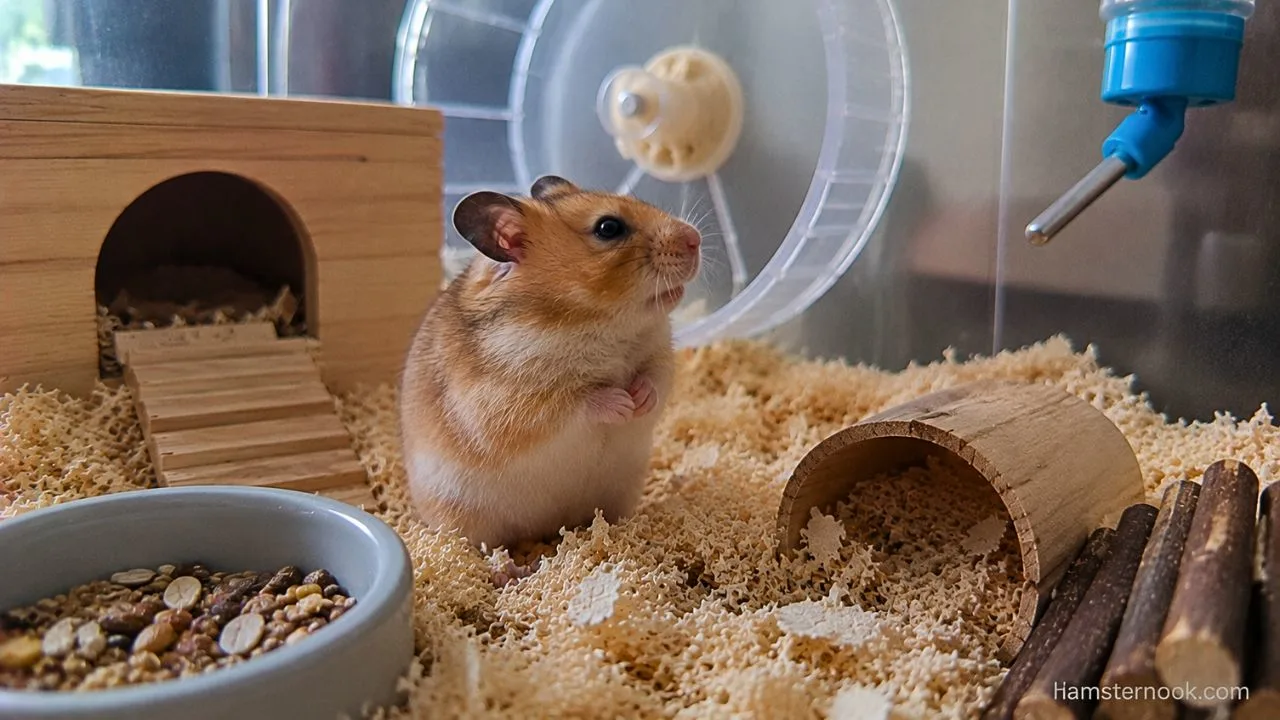
If your hamster constantly kicks bedding around and its tunnels collapse, the substrate may not be suitable for the type of digging you want to encourage.
Which bedding is suitable for hamsters?
| Bedding type | Burrowing suitability | What to know |
|---|---|---|
| Paper-based bedding | Generally suitable | Soft and easy to move; some products hold tunnels better than others. |
| Aspen shavings | Can be suitable | Use an appropriate, dust-extracted product. |
| Hemp bedding | Can be suitable | Check that the product is clean and low in dust. |
| Hay | Useful as an additional material | Can help add structure when mixed with suitable bedding. |
| Cedar shavings | Avoid | Not recommended for hamster housing. |
| Pine shavings | Avoid untreated or unsuitable products | Wood type and processing matter; choose bedding specifically established as safe for hamsters. |
| Cotton wool or fluffy bedding | Avoid | Fibers can become tangled around limbs and may cause harm if swallowed. |
| Scented bedding | Avoid | Fragrances are unnecessary and may irritate sensitive animals. |
Blue Cross recommends dust-extracted paper-based, wood-pulp, and hemp bedding. It also explains that mixing suitable bedding types can help create more stable burrows.
For a broader comparison of suitable bedding materials, their safety, and what to avoid, see Best Hamster Bedding: Safest Types, Depth, Burrowing & What to Avoid.
Should you mix different bedding materials?
You can use compatible, hamster-safe materials together if each product is suitable.

For example, a combination of paper-based bedding and appropriate hay may provide a different texture from paper bedding alone.
Introduce a new material gradually and watch how your hamster uses it.
Avoid adding several unfamiliar products at once because you won’t know which material your hamster prefers or whether a particular product causes irritation.
6. Your Hamster Is Digging Near the Cage Walls or Corners
Some hamsters repeatedly dig in the same location.
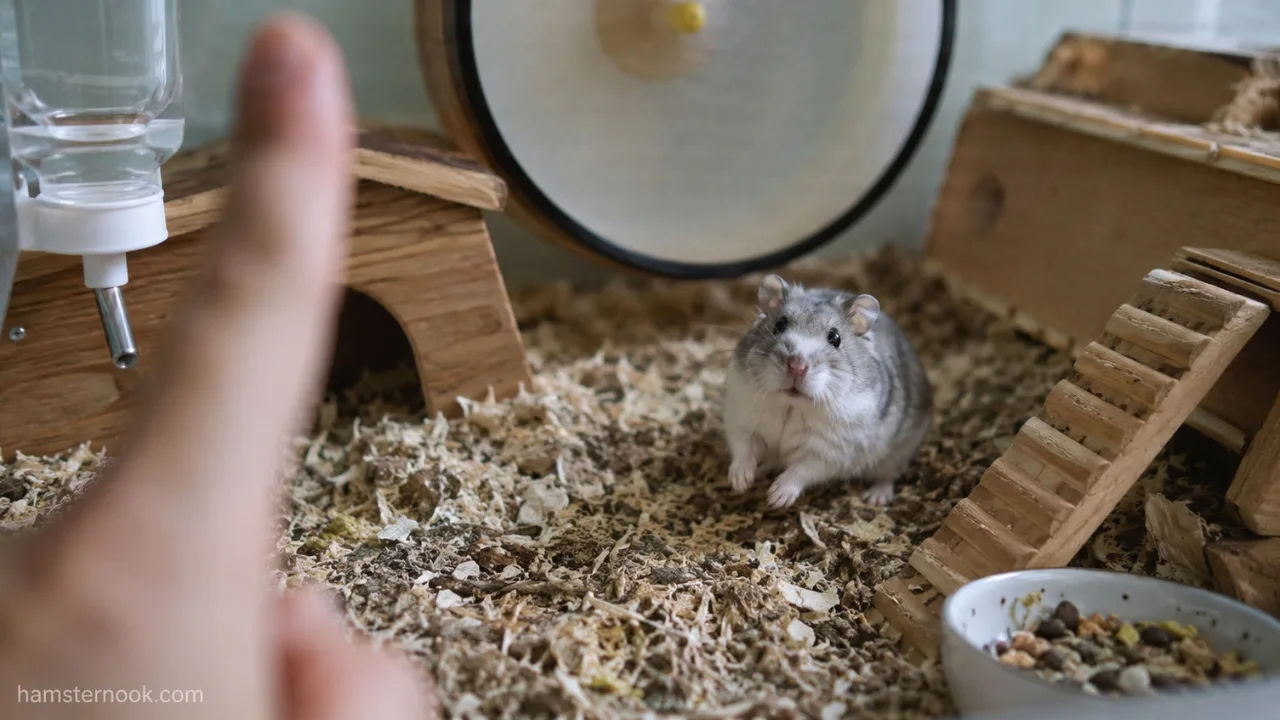
You may notice that bedding gets pushed outside the cage mainly around one corner, near the door, or along the enclosure walls.
This does not necessarily mean something is wrong.
Your hamster may simply prefer that location for exploring, moving substrate, or attempting to create a tunnel.
Why does my hamster keep digging in one corner?
Possible explanations include:
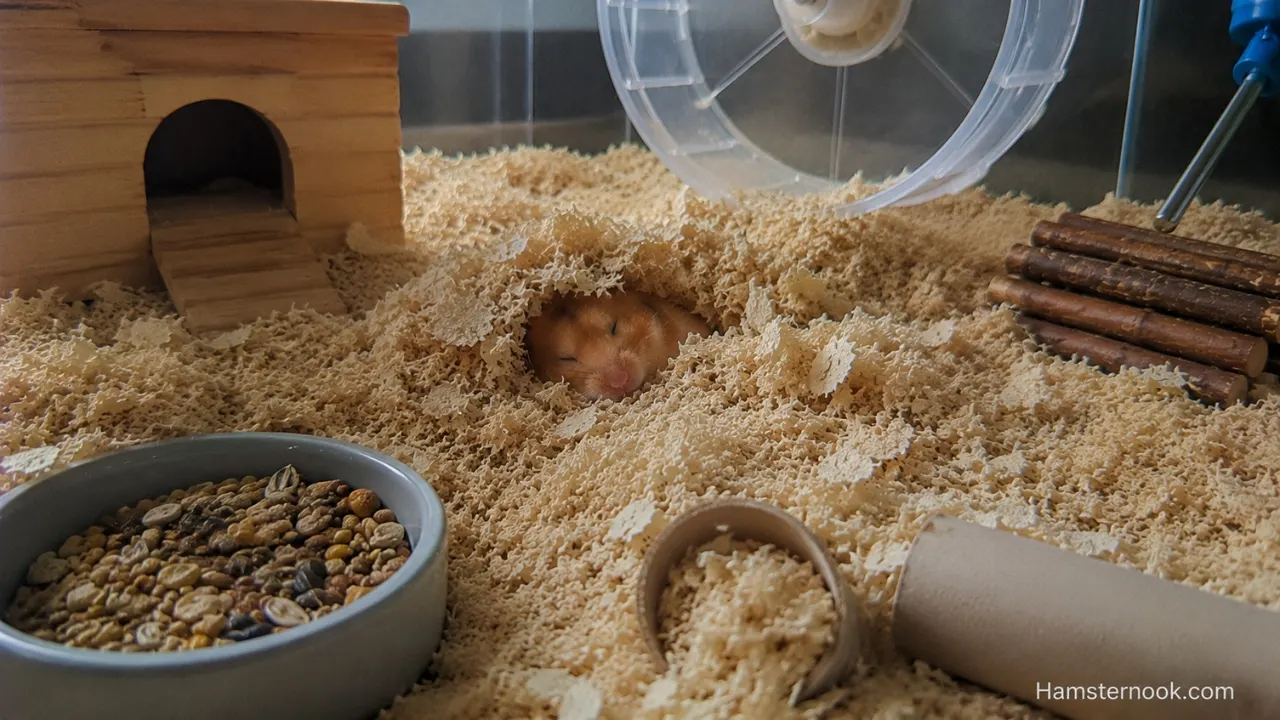
- The corner has a deeper bedding layer.
- There is more room to push substrate.
- A hideout or accessory is located nearby.
- Your hamster has developed a preferred digging area.
- The enclosure has a gap through which bedding can escape.
Look at the surrounding setup before making changes.
If the corner is safe and your hamster is otherwise behaving normally, there may be no reason to stop it.
However, if the hamster is repeatedly trying to escape through a gap, chewing dangerous cage components, or showing signs of distress, investigate the enclosure rather than treating the behavior as ordinary digging.
7. Your Hamster May Need More Enrichment
Bedding is not the only thing that makes a hamster enclosure interesting.
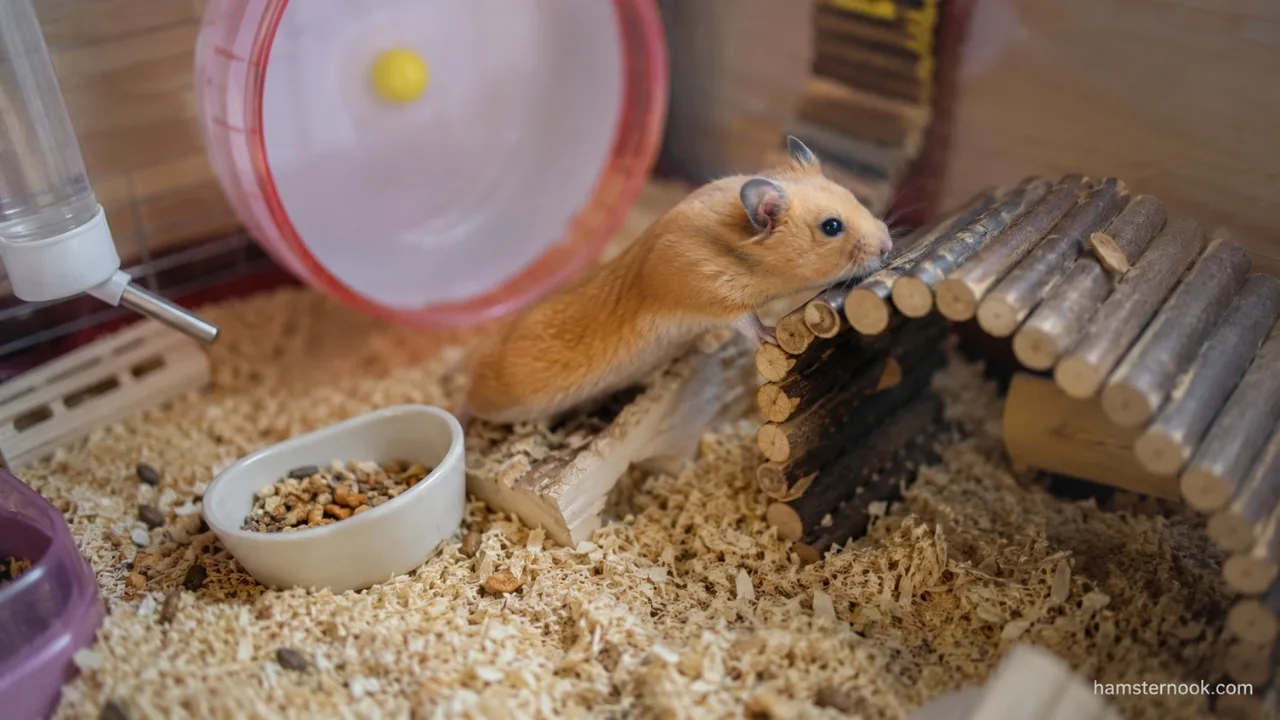
Hamsters also benefit from opportunities to explore, hide, forage, chew, and move around.
An enclosure with very little variety may not provide enough opportunities for these natural behaviors.
This does not mean that every hamster kicking bedding out of its cage is bored. Digging itself is a normal activity and can happen in a well-equipped enclosure.
Still, improving enrichment can make the habitat more useful and engaging.
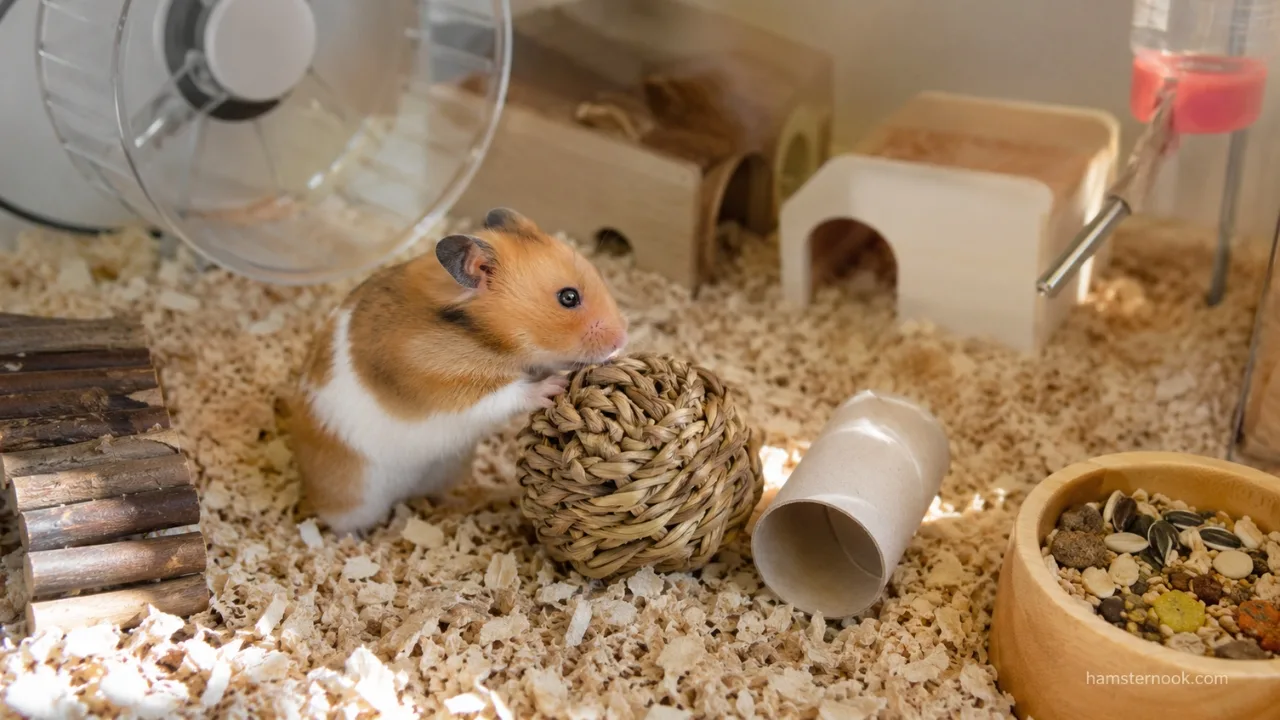
For more practical ways to provide safe activities and encourage natural behaviors, see Hamster Cage Enrichment: 10 Safe Ideas for Boredom & Natural Behavior.
Helpful enrichment ideas
Consider providing:
- Multiple hiding places: Give your hamster sheltered areas where it can rest without being exposed.
- Cardboard tunnels: Plain cardboard tubes and suitable tunnels provide additional places to explore.
- Safe chew items: Provide appropriate materials for natural gnawing.
- Foraging opportunities: Scatter some of the regular food through suitable areas of the enclosure.
- A suitable exercise wheel: Choose a wheel large enough for your hamster to run with a straight back.
- A suitable sand bath: Provide appropriate sand in a stable container.
Arrange accessories so they do not block the main burrowing area.
Heavy objects should be placed on a stable, solid surface rather than directly on loose bedding where digging could undermine their support.
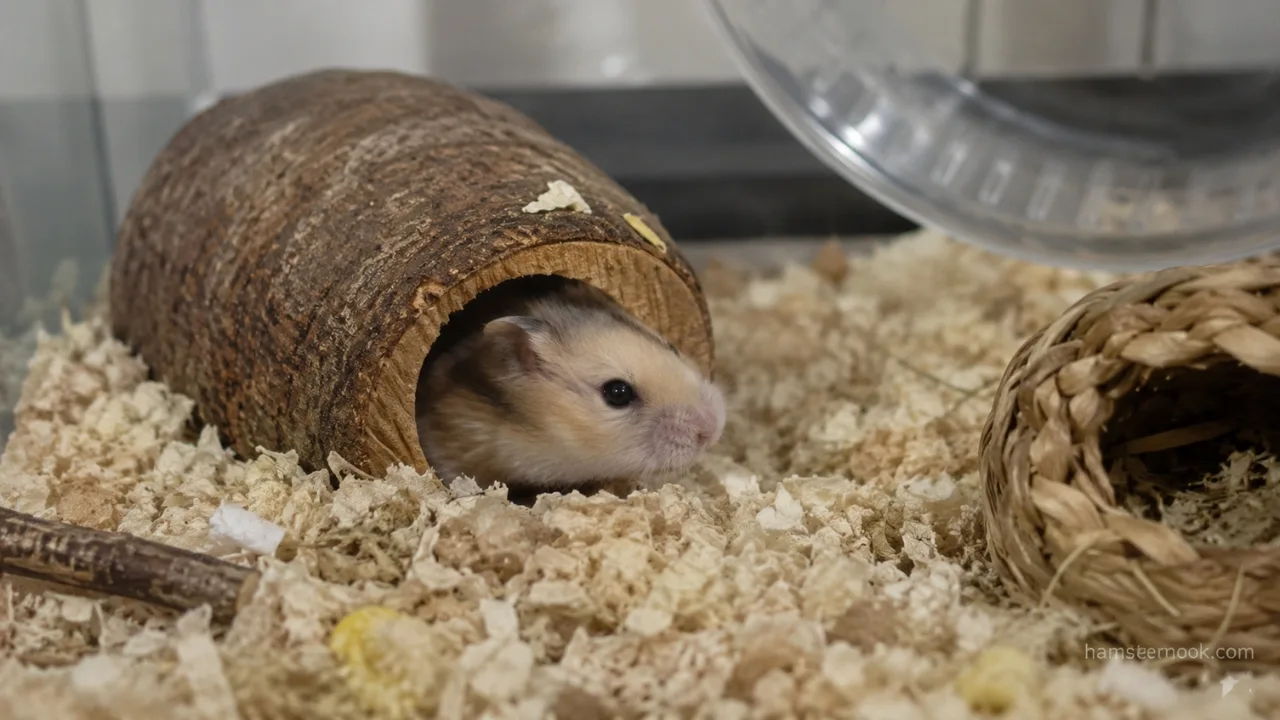
8. Is Your Hamster Kicking Bedding Because It Is Stressed?
Bedding movement alone is not enough to conclude that a hamster is stressed.
However, the surrounding circumstances can help you understand whether something in the environment needs attention.
Hamsters need a suitable, quiet, dry home where they can rest undisturbed. Environmental changes, excessive disturbance, and inadequate hiding places can affect their welfare.
For more ways to create a comfortable and secure enclosure, see How to Make a Hamsters Feel Safe in Its Cage: 10 Practical Ways.
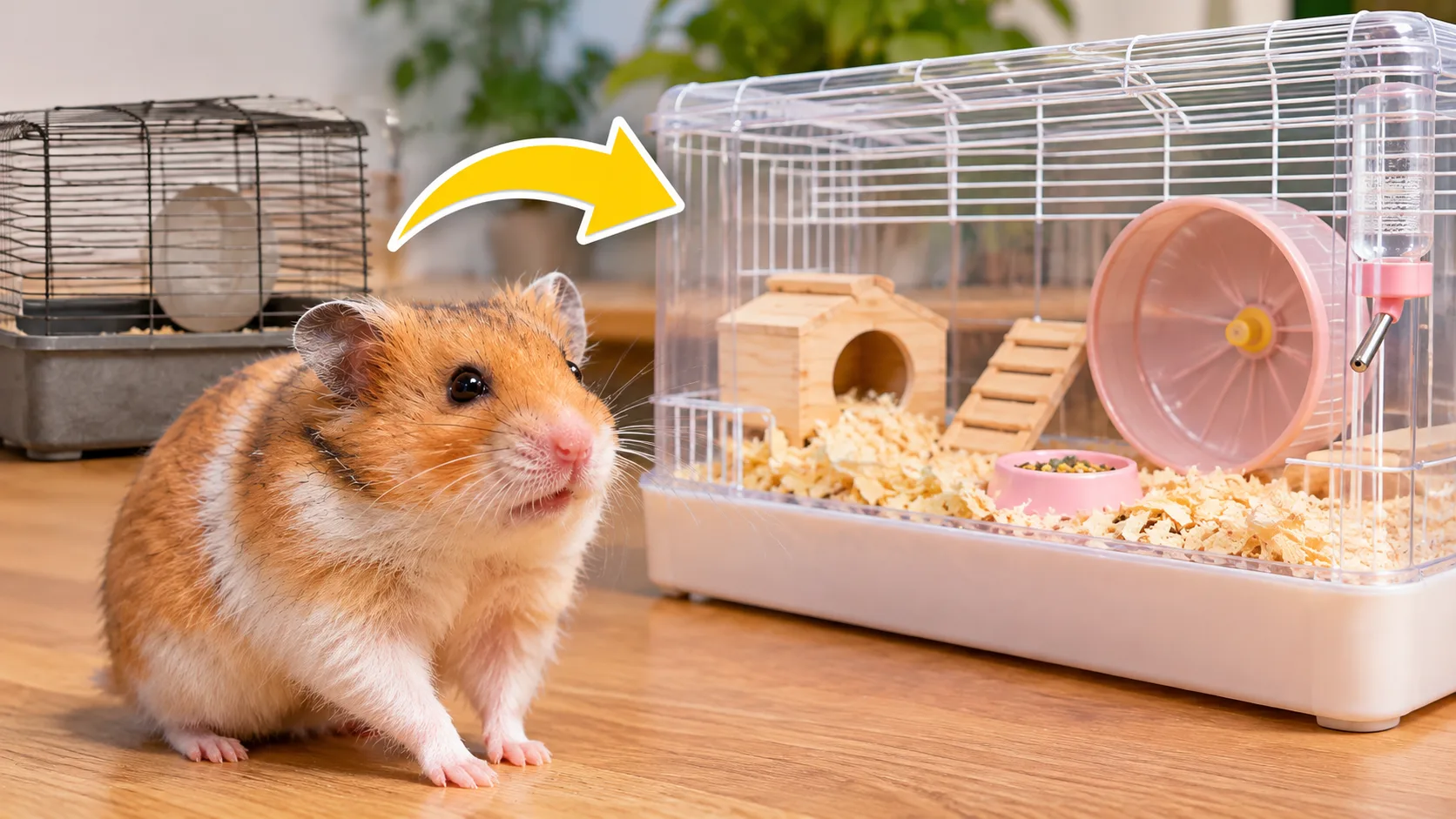
Check whether:
- The cage is located near loud household activity.
- Your hamster is frequently disturbed while sleeping.
- Bright lights are switched on unpredictably.
- Other pets regularly approach the enclosure.
- Your hamster has enough places to hide.
- The enclosure is exposed to drafts or damp conditions.
- You recently changed most of the bedding or rearranged the entire cage.
If you recently cleaned the enclosure completely, your hamster may spend time rearranging its surroundings.
Try to maintain a consistent environment and avoid unnecessary full-cage changes.
A useful distinction: A hamster that digs, eats, drinks, explores, and rests normally is different from one that suddenly becomes inactive, stops eating, or shows other signs of illness.
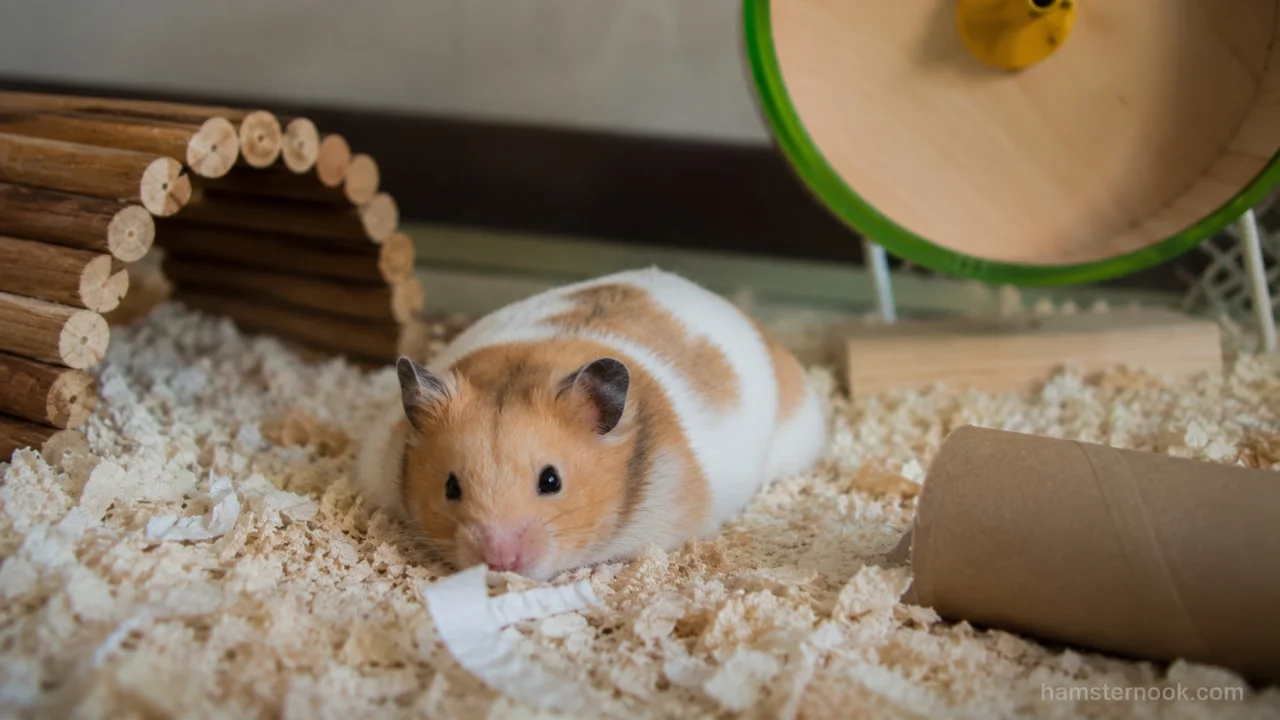
Normal Bedding Kicking vs. Behavior That Needs Attention
Use this comparison to decide whether you should simply adjust the enclosure or investigate further.
| Behavior | What it may indicate | What to do |
|---|---|---|
| Kicking bedding while digging | Normal digging behavior | Provide suitable deep bedding. |
| Carrying bedding into a hideout | Nest-building | Provide suitable nesting material. |
| Pushing bedding through cage bars | Cage design or bedding depth issue | Check the base and enclosure gaps. |
| Digging repeatedly in one corner | Preferred digging location or setup issue | Observe the area and check for escape gaps. |
| Sudden excessive digging with other unusual behavior | Possible environmental or health concern | Check the environment and contact a veterinarian if concerning signs appear. |
| Digging near a loose accessory | Potential enclosure safety issue | Secure or reposition the accessory safely. |
The behavior should always be considered alongside your hamster’s overall condition and normal routine.
How to Stop Your Hamster From Kicking Bedding Out of Its Cage
You probably cannot stop your hamster from digging, and you shouldn’t try to eliminate a natural behavior.
The better goal is to reduce unnecessary bedding loss while allowing your hamster to dig comfortably.
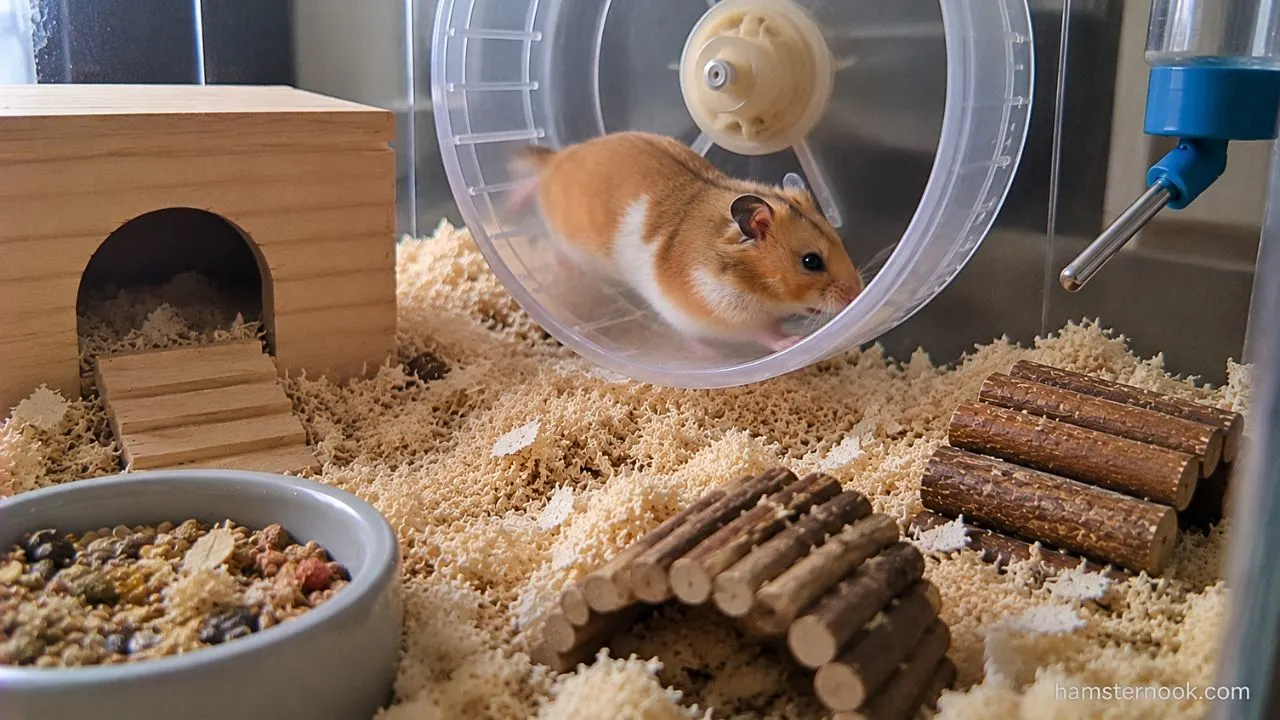
1. Use a deeper enclosure base
If your hamster repeatedly pushes bedding through the bars, consider an enclosure with a solid, deeper base.
This helps contain the substrate and provides room for a deeper digging area.
2. Keep bedding away from cage openings
Avoid filling bedding right up against doors or gaps where it can easily fall outside.
You can rearrange the bedding so your hamster has a deep digging area away from the opening.
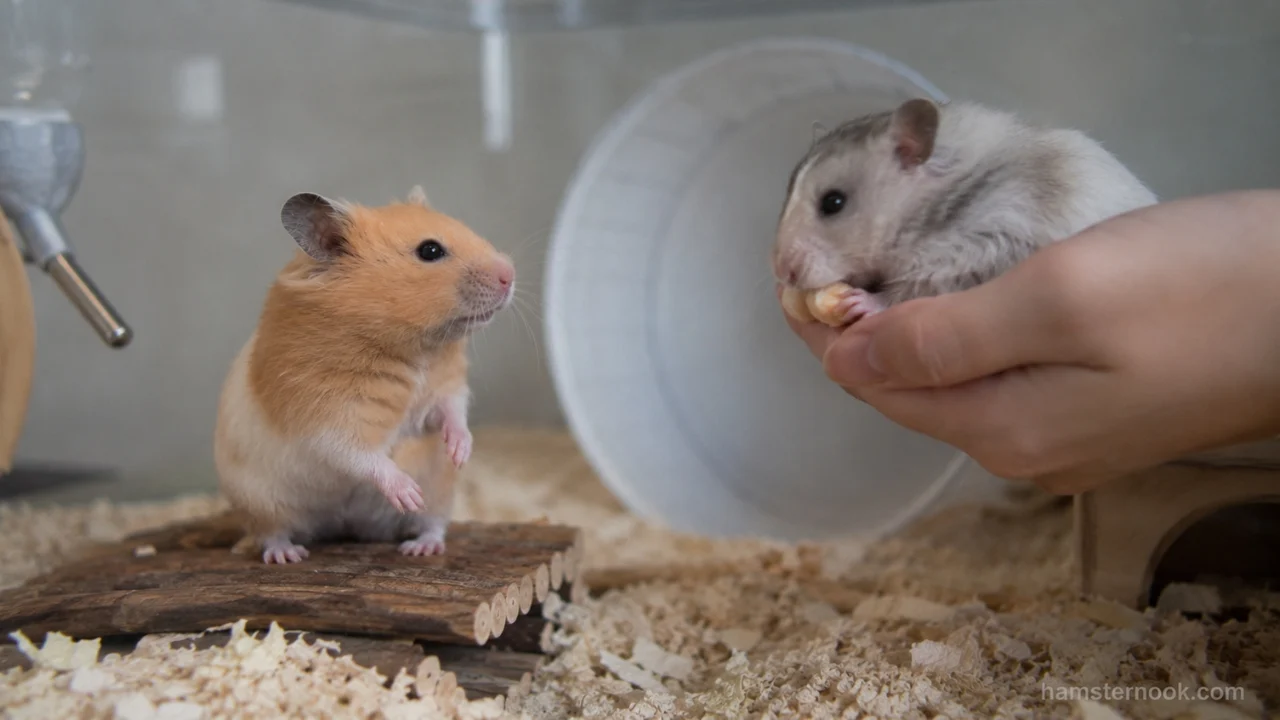
Do not reduce the overall bedding depth simply to keep the floor clean.
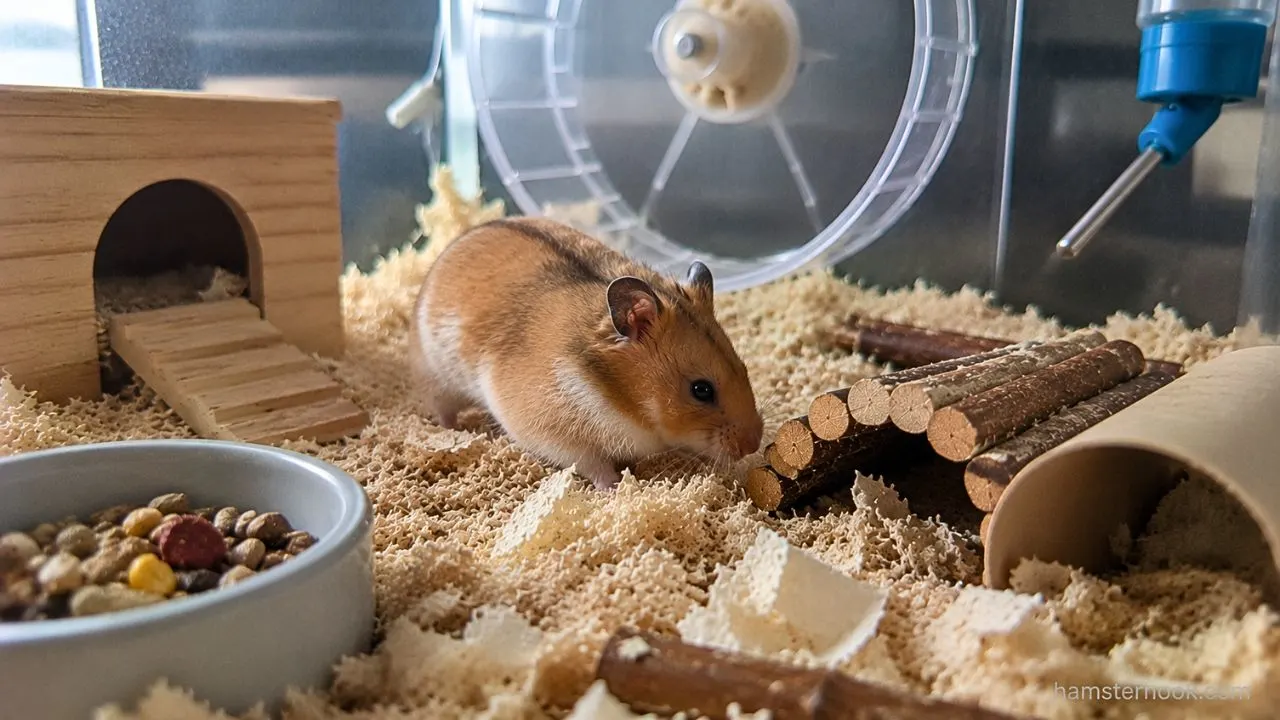
3. Create a dedicated burrowing area
Choose one section of the enclosure for deeper bedding.
Place suitable hideouts and tunnels nearby, leaving enough uninterrupted space for your hamster to dig.
This gives your hamster room to move substrate without constantly pushing it toward the cage entrance.
4. Choose bedding that supports tunnels
If your hamster’s tunnels collapse immediately, consider changing the bedding composition.
A suitable mixture of paper-based bedding and other safe materials may provide better structure.
Do not assume that adding more bedding will solve every problem if the material itself cannot support burrows.
5. Avoid unnecessary cage rearrangements
Hamsters use scent and familiar surroundings when navigating their environment.
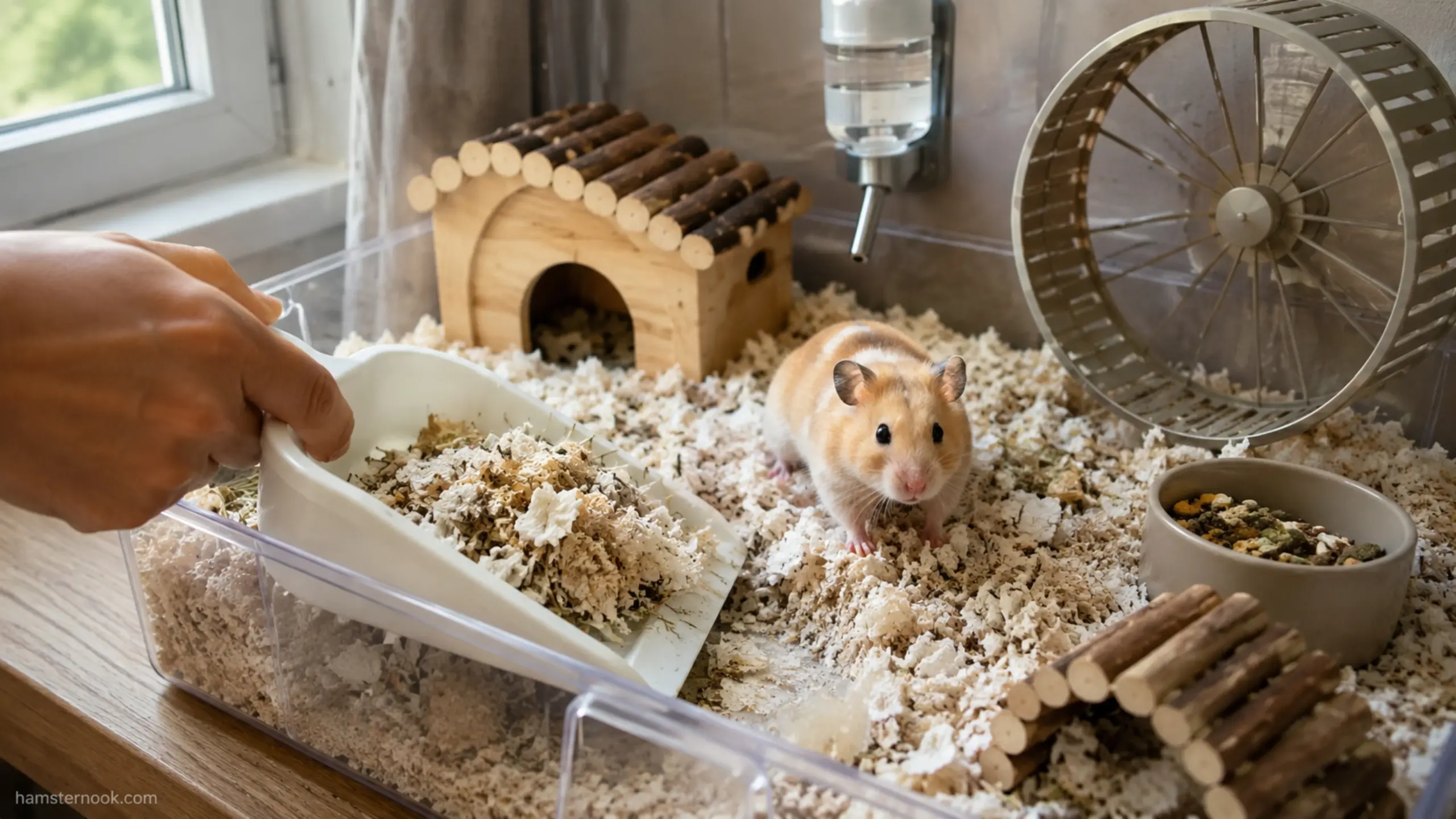
During routine cleaning, retain some clean, familiar bedding and nesting material when appropriate.
Avoid repeatedly moving every hideout, tunnel, and accessory just because your hamster has rearranged the enclosure.
6. Clean the area outside the cage without disturbing your hamster
You can sweep or vacuum scattered bedding around the enclosure when necessary.
If you use a vacuum, avoid directing loud noise or airflow toward your hamster.

There is no need to punish, frighten, or spray your hamster for kicking bedding out. It will not understand this as a correction.
Common Mistakes Hamster Owners Make
A few well-intentioned changes can actually make the problem worse.
Removing too much bedding
Some owners remove bedding because they are tired of cleaning it from the floor.
However, hamsters need suitable substrate for digging and burrowing. Reducing the depth too much can make the enclosure less suitable.

Using a wire-bottom cage
Wire floors do not provide an appropriate digging surface and can create foot problems.
Choose an enclosure with a solid floor that can safely hold suitable bedding.
Blocking ventilation openings
Covering cage bars or air vents with cardboard, cloth, or plastic may prevent bedding from escaping, but it can also compromise ventilation.
Fix the enclosure design rather than blocking airflow.
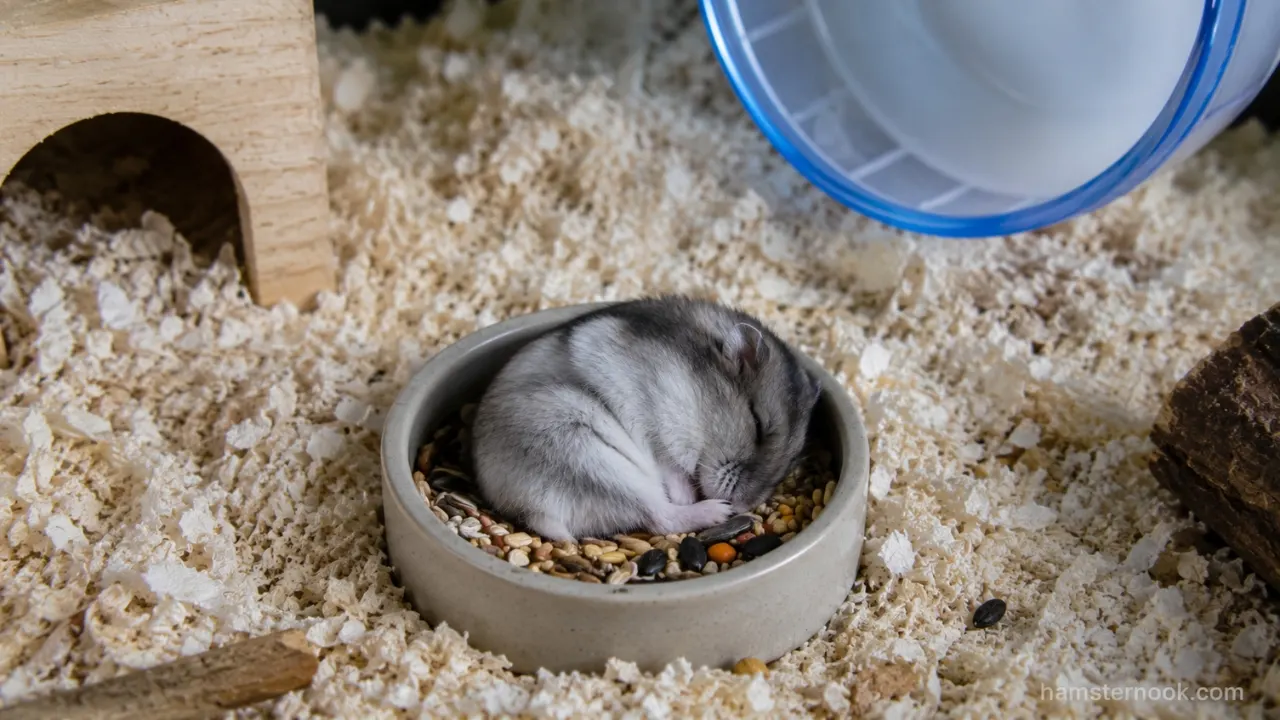
Using fluffy bedding to make the nest softer
Cotton wool and similar fluffy nesting materials can become tangled around a hamster’s limbs.
Use suitable paper-based nesting material instead.
Cleaning the entire cage too frequently
Excessive disturbance can be stressful.
Spot-clean soiled areas and remove spoiled food regularly. The frequency of larger cleans should depend on the enclosure, its condition, and your hamster’s toilet habits.
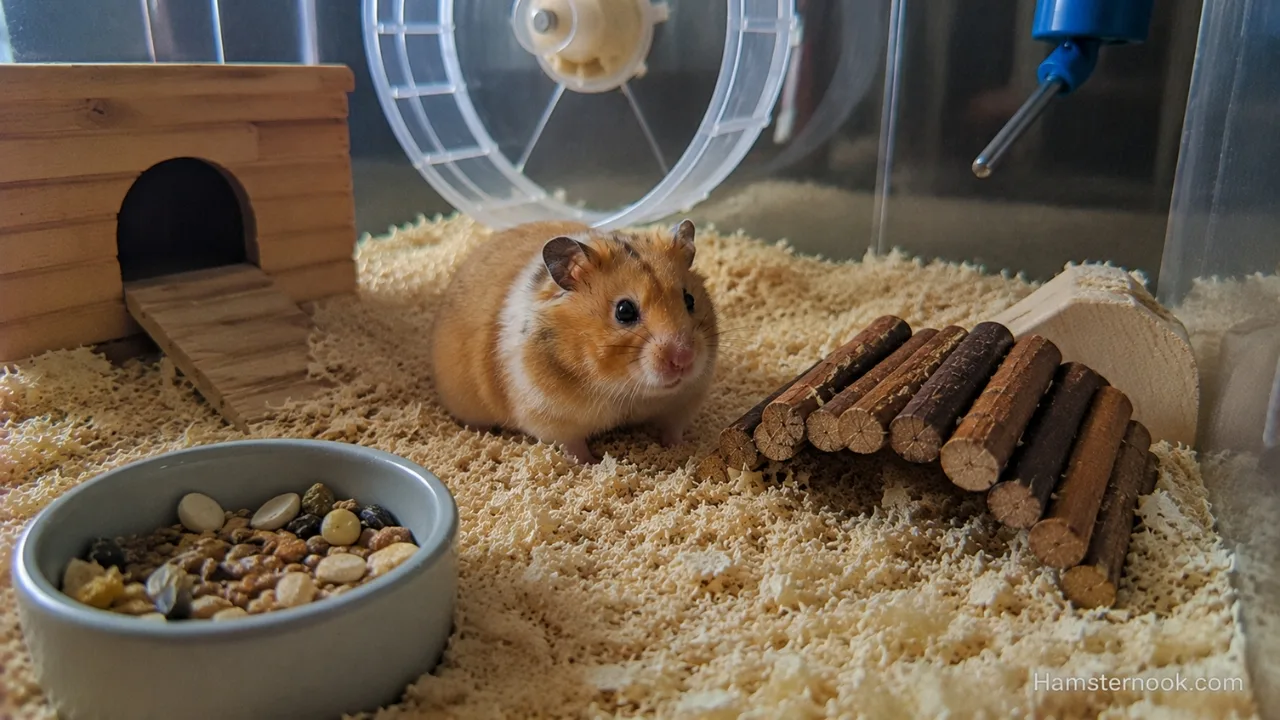
For a complete cleaning routine covering daily, weekly, and deeper cage cleaning, see How Often Should You Clean a Hamster Cage? Daily, Weekly & Deep Cleaning Guide.
Warning Signs: When Is Bedding Kicking Not Just Normal Digging?
Bedding kicking by itself is generally not a medical warning sign.
However, pay attention if the behavior changes suddenly or appears alongside other unusual signs.
Watch for:

- Loss of appetite.
- Unusual inactivity.
- Weight loss.
- A hunched posture.
- Difficulty walking.
- Labored or abnormal breathing.
- Wounds or unexplained injuries.
- Repeated attempts to escape accompanied by other signs of distress.
These signs do not prove that bedding behavior is related to illness. They simply indicate that you should look beyond the cage setup.
When should you contact a veterinarian?
Contact a veterinarian experienced with hamsters if your pet develops a noticeable change in appetite, activity, movement, or general condition.
Seek prompt veterinary attention for breathing difficulty, collapse, serious injury, or marked weakness.
Do not assume that a hamster is simply being difficult or behaving unusually when it shows signs of illness.
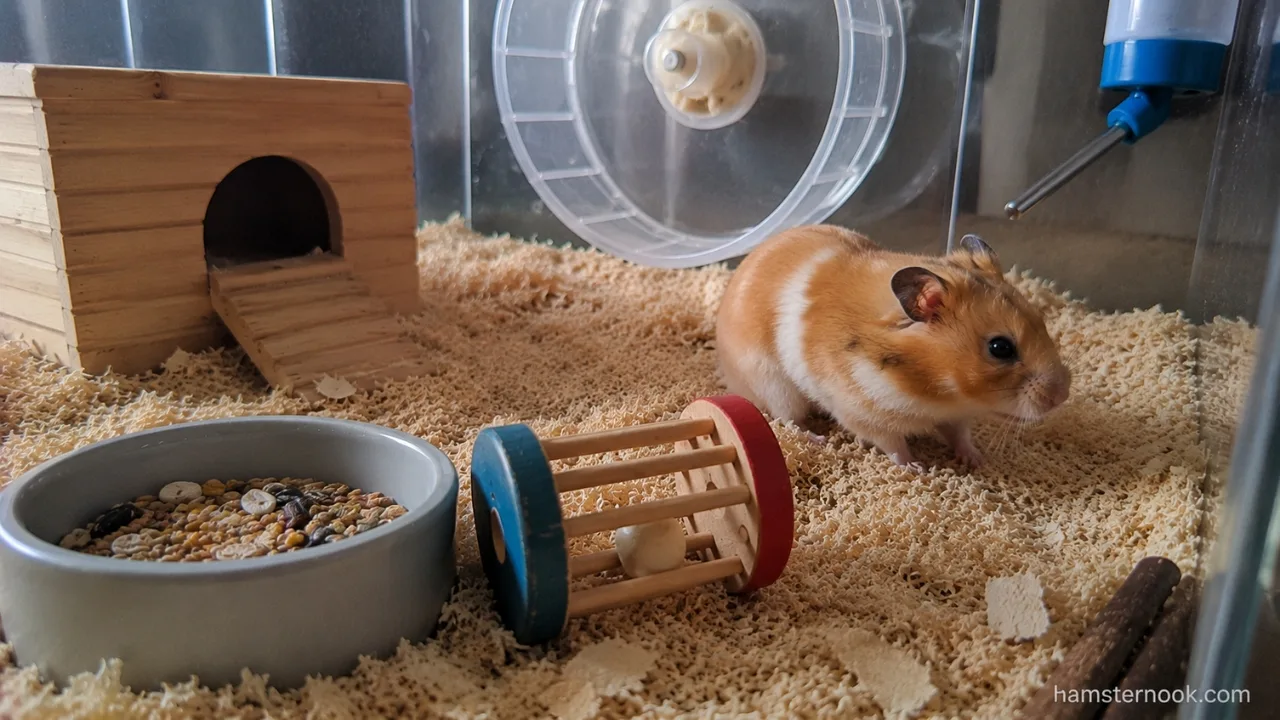
What You Should Do
If your hamster keeps kicking bedding out of its cage, follow this practical checklist:
- Observe where your hamster is digging most frequently.
- Check whether bedding is escaping through cage bars or openings.
- Make sure the enclosure has a solid, secure base.
- Provide a sufficiently deep area for burrowing.
- Use appropriate, dust-extracted bedding.
- Add suitable nesting material and hiding places.
- Keep heavy accessories stable and secure.
- Maintain a quiet, consistent environment.
- Avoid unnecessary full-cage cleaning.
- Monitor your hamster’s appetite, activity, and normal behavior.
You don’t need to stop your hamster from moving bedding around. You need to make sure it can do so safely.
Final Thoughts
If your hamster keeps kicking bedding out of its cage, it is usually doing something natural rather than deliberately making a mess.
Digging, burrowing, and moving nesting material are normal parts of hamster behavior. The important thing is to provide an enclosure that supports these activities without allowing bedding to escape through unsafe gaps.

Start by checking the bedding depth, substrate quality, cage design, and placement of hideouts. Make small adjustments and observe how your hamster responds.
A little bedding on the floor is often a small price to pay for an enclosure where your hamster can express its natural behaviors comfortably.
Frequently Asked Questions
1. Why does my hamster throw bedding everywhere?
Hamsters naturally dig, burrow, and push substrate around while exploring their surroundings. Your hamster may also be moving bedding to build a nest or create a comfortable sleeping area.
2. Is it normal for hamsters to kick bedding out of their cage?
Yes. Kicking and scattering bedding can be normal digging behavior. However, repeated bedding loss through cage gaps may indicate that the enclosure needs adjustment.
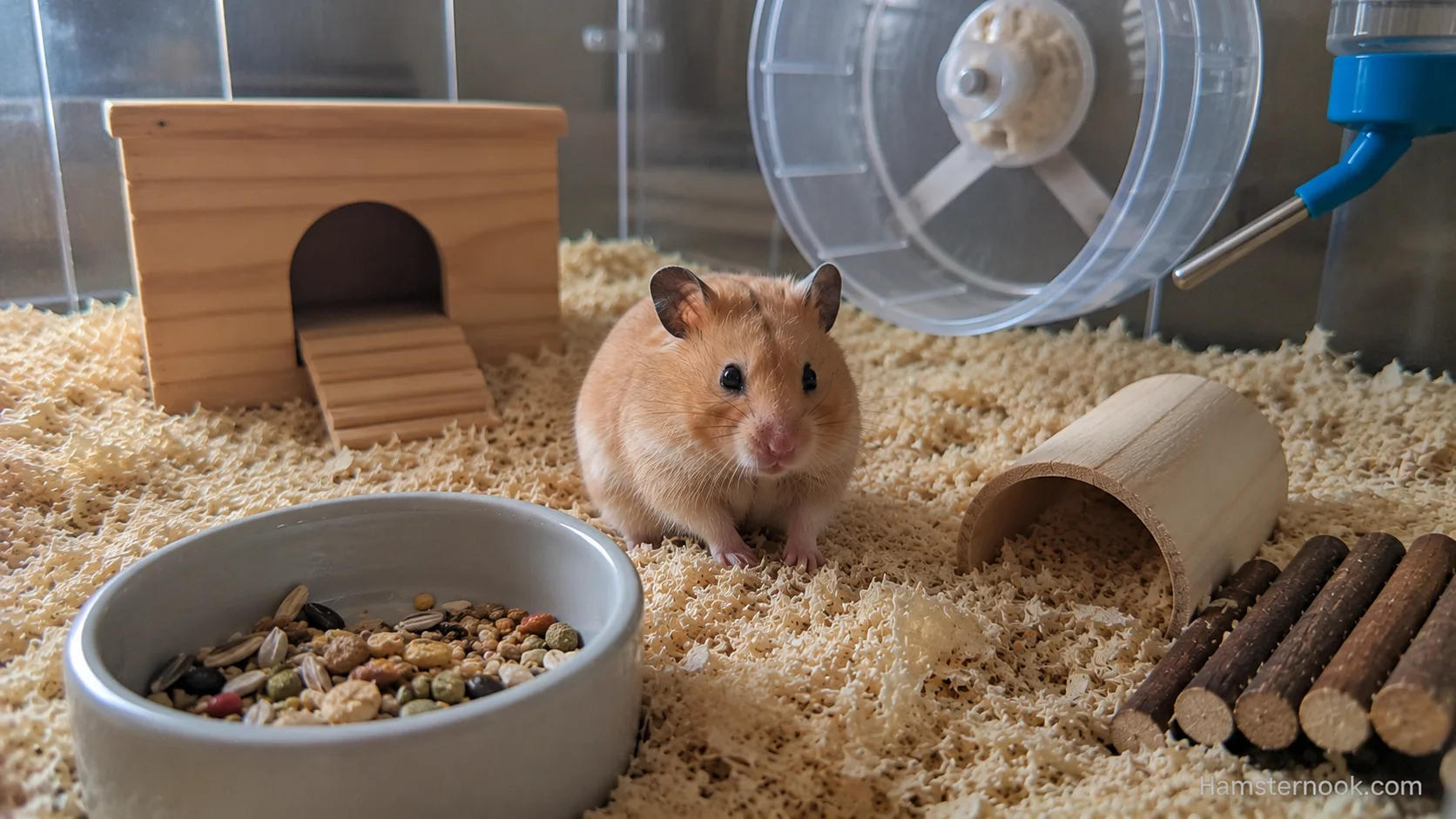
3. Why does my hamster dig in the corner of its cage?
Your hamster may prefer that location for digging or moving substrate. Check whether the corner has deeper bedding, a nearby hideout, or an opening through which bedding escapes.
4. Why does my hamster keep digging but never make a tunnel?
The bedding may be too shallow or may not hold its shape. Try providing a deeper area with suitable burrowing material that can support stable tunnels.
5. Should I stop my hamster from digging?
No. Digging is a natural hamster behavior. Instead of stopping it, provide enough appropriate bedding and a safe enclosure where your hamster can dig without creating hazards.
6. Do Syrian hamsters kick bedding more than dwarf hamsters?
Digging and burrowing are natural behaviors across hamster species. Individual preferences can vary, but there isn’t enough reliable evidence to establish that Syrian hamsters consistently scatter more bedding than dwarf hamsters.

7. What is the best bedding for hamsters that dig a lot?
Dust-extracted paper-based bedding, suitable wood-pulp bedding, and hemp bedding are commonly recommended options. The best choice should be safe, comfortable, and suitable for maintaining burrows.
8. Why does my hamster push bedding out of its food bowl?
Your hamster may be moving loose substrate while exploring or rearranging its surroundings. Check whether the food bowl is placed in an area where digging frequently occurs. A stable, appropriately positioned bowl can help reduce the mess.
9. Does kicking bedding mean my hamster is bored?
Not necessarily. Bedding kicking is often simply part of natural digging behavior. However, providing hiding places, tunnels, suitable chew materials, foraging opportunities, and enough space helps create a more enriching enclosure.
10. Why does my hamster scatter bedding mostly at night?
Hamsters are generally most active during the evening and night. Your hamster may therefore do more digging, exploring, and nesting during those hours. This is generally normal as long as its overall behavior remains healthy.

11. Should I add more bedding if my hamster keeps throwing it out?
If the current layer is too shallow for digging, increasing the depth can help. Make sure the enclosure has enough height and a solid base to contain the bedding safely.
12. How can I keep bedding from falling through cage bars?
Use an enclosure with a solid base and sufficiently high sides. Check gaps around doors and removable panels. Never block ventilation openings to prevent bedding from escaping.
References
This guide is based on trusted animal welfare and veterinary resources covering hamster housing, burrowing behavior, bedding, enrichment, routine health monitoring, and common health conditions, including:
- RSPCA – Creating a Good Home for Hamsters – Guidance on hamster burrowing behavior, suitable bedding depth, nesting materials, hiding places, cage design, and cleaning.
- Blue Cross – Hamster Care – Information about natural burrowing behavior, dust-extracted bedding, suitable substrate materials, and hamster enrichment.
- NC3Rs – Housing and Husbandry: Hamster – Guidance on hamster housing, nesting material, burrowing opportunities, and environmental enrichment.
- MSD Veterinary Manual – Routine Health Care of Hamsters – Veterinary guidance on monitoring normal behavior and recognizing changes in appetite, activity, movement, and general health.
- MSD Veterinary Manual – Disorders and Diseases of Hamsters – Veterinary reference for recognizing health problems that may cause changes in normal hamster behavior.
Medical Disclaimer: This article provides general hamster-care and behavior information. It is not a substitute for professional veterinary advice. If your hamster develops unusual symptoms or a sudden change in behavior accompanied by signs of illness, consult a veterinarian experienced with small mammals.

Narayan Kumar is the founder and author of HamsterNook. He creates practical, research-based hamster care guides covering hamster behavior, nutrition, cage setup, enrichment, health, and everyday care. His goal is to help hamster owners make informed decisions and provide safer, healthier lives for their pets through clear, beginner-friendly information based on trusted animal care resources.