Watching your hamster struggle to walk, lose its balance, or repeatedly fall onto its side can be frightening. You might wonder whether it is tired, getting older, or dealing with an injury. However, wobbling and falling over are not normal signs of aging or ordinary hamster behavior. They can indicate problems affecting balance, the nervous system, muscles, or general health. Understanding what might be happening and knowing when to seek veterinary care can make a real difference.
Quick Answer: Why Is My Hamster Wobbling and Falling Over?
A hamster that wobbles, walks in circles, leans to one side, or repeatedly falls over may have a balance disorder, an ear problem, an injury, or another medical condition.
Possible causes include:
- Inner or middle ear problems: Can interfere with balance and cause head tilting or falling to one side.
- Neurological problems: Conditions affecting the brain or nerves can interfere with coordinated movement.
- Head or spinal injuries: Falls, accidents, or physical trauma can affect walking and balance.
- General weakness: Illness, poor nutrition, or other health problems may make standing and walking difficult.
- Other underlying conditions: Several medical problems can produce similar symptoms.
A hamster with new or repeated balance problems needs prompt veterinary assessment, preferably the same day. If your hamster collapses, has seizures, struggles to breathe, or cannot stand, seek emergency veterinary care immediately.
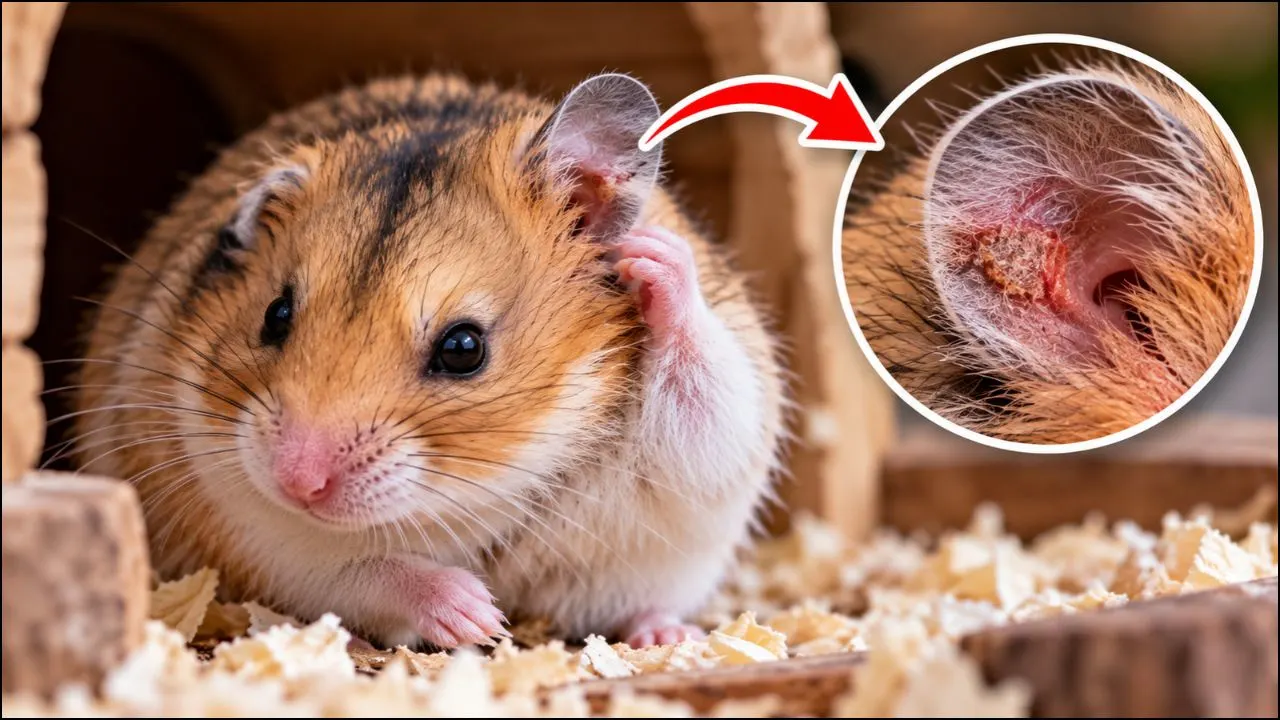
Do not assume the problem will disappear after rest. A veterinarian needs to determine the underlying cause before appropriate treatment can be chosen.
What Does Wobbling and Falling Over Look Like in Hamsters?
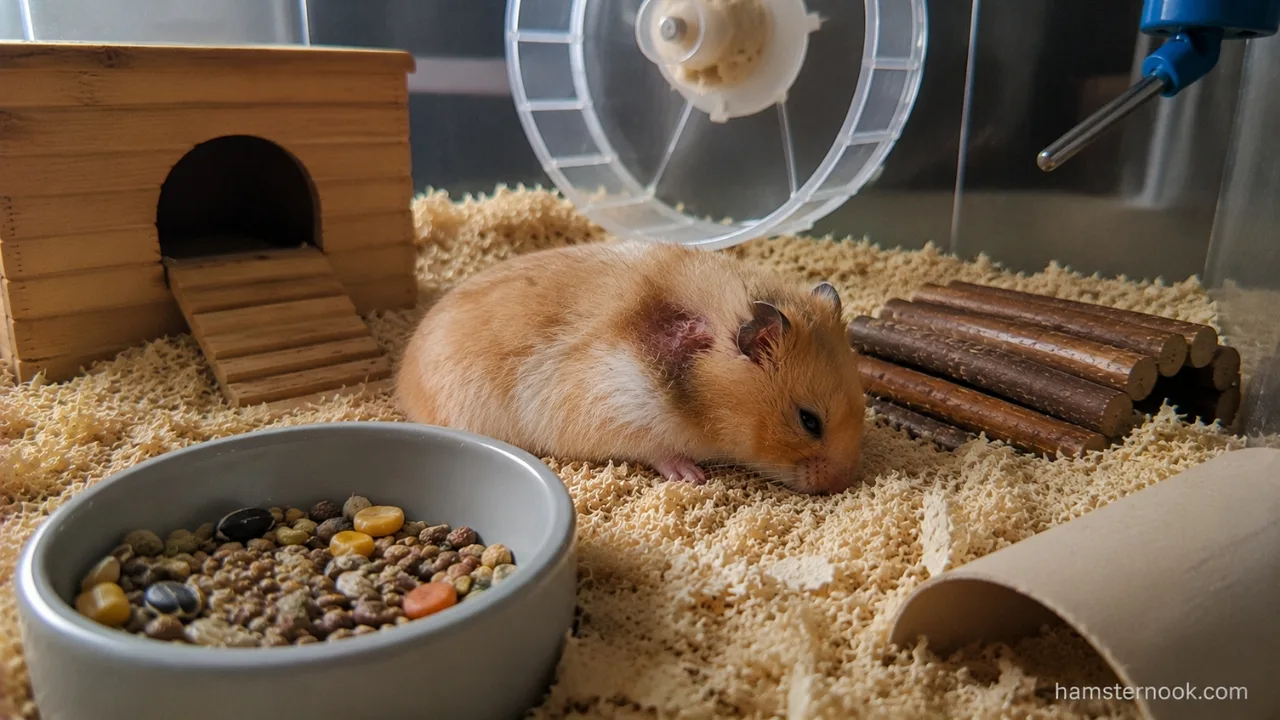
Wobbling does not always look the same. Some hamsters appear unsteady while walking, while others repeatedly lean, circle, or fall onto one side.
Watch for these changes:
- Walking with an unsteady or swaying gait.
- Leaning consistently toward one side.
- Falling over while trying to walk.
- Walking in circles instead of moving straight.
- Holding the head at an unusual angle.
- Struggling to stand after falling.
- Dragging one or more legs.
- Moving less than usual.
- Losing coordination when turning.
Some of these signs suggest a problem with balance, while others may indicate weakness, pain, or difficulty controlling movement.

What is ataxia in hamsters?
Ataxia is a veterinary term describing a lack of coordination during movement.
An animal with ataxia may have difficulty controlling its legs, maintaining a stable posture, or walking normally.
It is not a specific disease. Instead, it describes a clinical sign that can occur when parts of the nervous system responsible for coordinated movement are affected.
For example, an animal with a balance-related neurological problem may lean or fall to one side. Another animal may have difficulty placing its feet correctly or maintaining a steady walking pattern.

A veterinarian can assess these differences during a neurological examination.
7 Possible Reasons Your Hamster Is Wobbling and Falling Over
Several health problems can cause similar movement changes. The appearance of the wobbling alone cannot confirm which condition your hamster has.
1. Inner or Middle Ear Problems
The inner ear plays an important role in maintaining balance and coordinating head and body position.
Problems affecting the ear can interfere with this system and cause an animal to appear dizzy or unsteady.
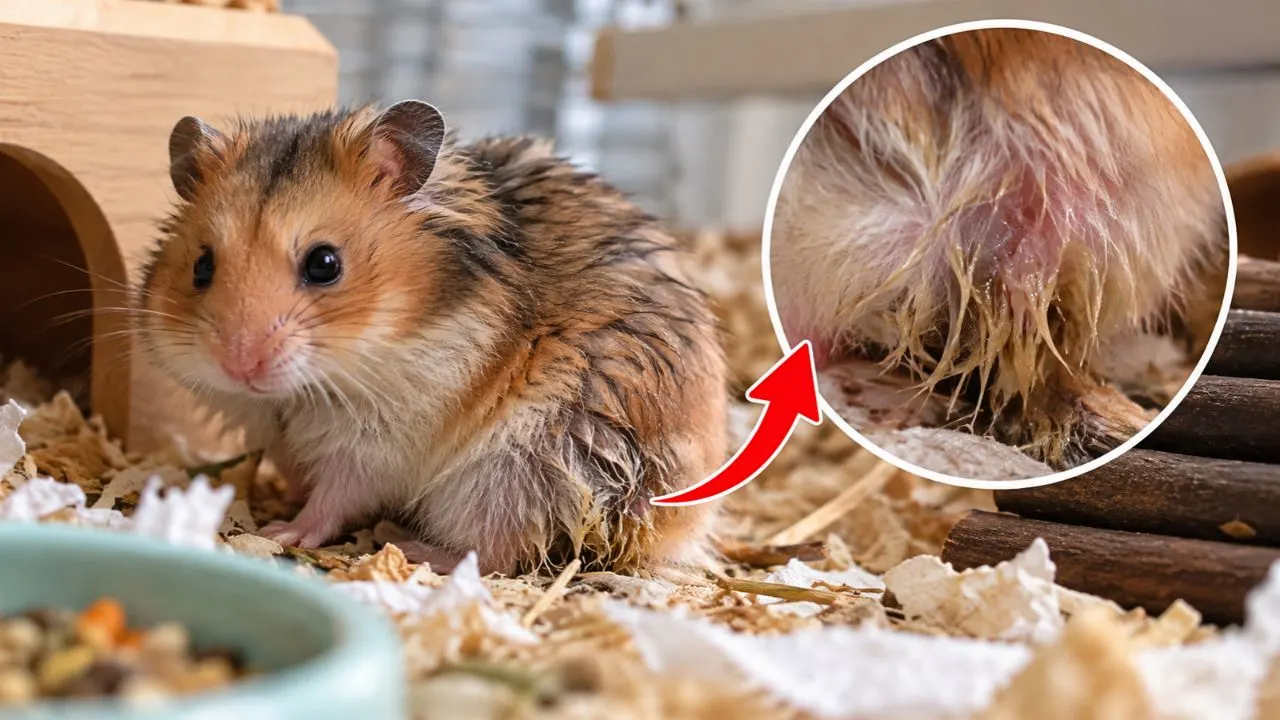
A hamster with a balance-related ear problem may show:
- Head tilting.
- Leaning toward one side.
- Walking in circles.
- Falling repeatedly.
- Difficulty maintaining a normal standing position.
Ear inflammation or infection is one possible explanation, but these signs are not enough to confirm an ear infection.
For a more detailed guide to possible ear conditions, their warning signs, and when veterinary attention is needed, see Hamster Ear Problems: Signs of Infection, Injury & When to See a Vet.
A veterinarian needs to examine the ears and assess the animal’s neurological function before recommending treatment.
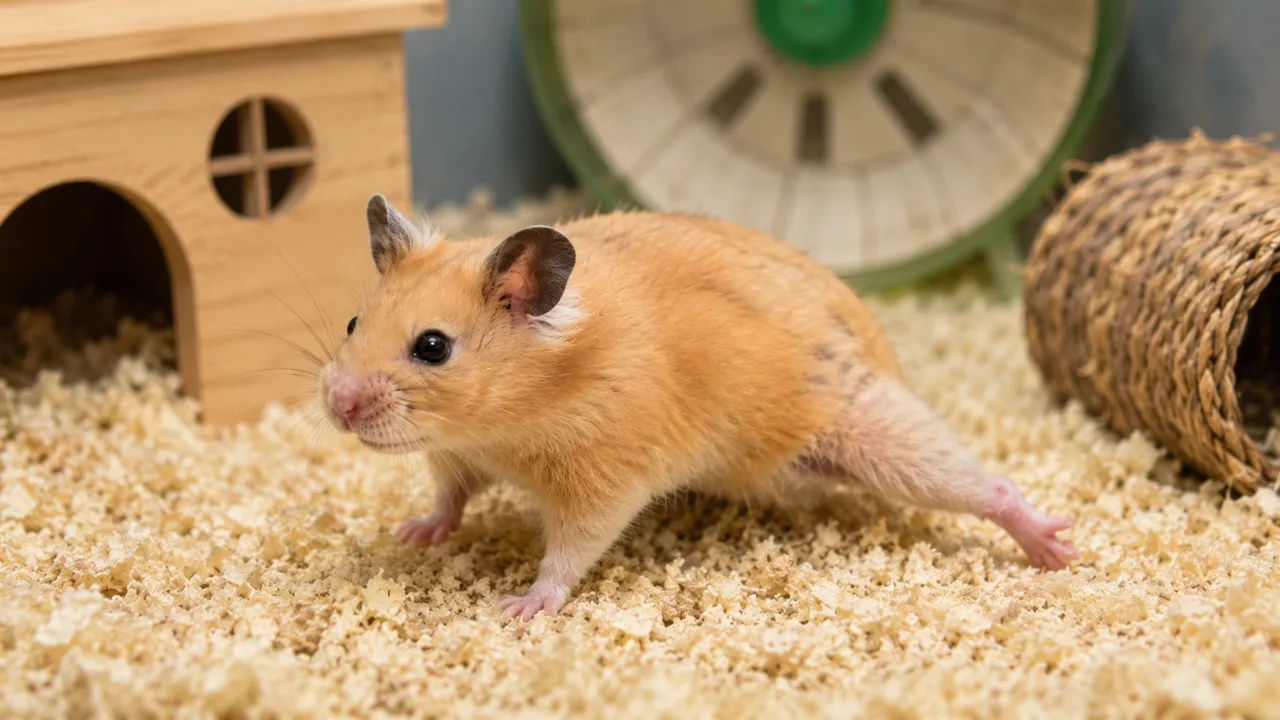
2. Neurological Problems
The brain, spinal cord, and nerves work together to control movement.
When something affects these systems, a hamster may lose coordination, develop unusual movements, or struggle to control its body.
Possible signs include:
- Uncoordinated walking.
- Repeated falling.
- Abnormal head movements.
- Circling.
- Trembling or unusual movements.
- Difficulty controlling one or more limbs.
Neurological signs can have different underlying causes, including trauma and disease. They should never be dismissed as a simple behavioral habit.

3. Head or Spinal Injury
Hamsters can injure themselves during falls or accidents.
For example, a hamster may fall from an elevated surface, become trapped in an unsuitable cage accessory, or experience an accident during handling.
Depending on the injury, the hamster may develop:
- Difficulty walking.
- Weakness in the legs.
- An unusual posture.
- Pain when moving.
- Loss of balance.
- Reduced activity.
An injury involving the head or spine can be particularly concerning because it may affect normal movement and neurological function.

For additional information about hamster injuries, recovery considerations, and when home care may not be appropriate, see Can Hamsters Recover From Minor Injuries? When Home Care Is Safe.
If your hamster starts wobbling after a fall, contact a veterinarian immediately. Do not wait to see whether it improves overnight.
4. General Weakness From Illness
Not every hamster that falls over has a primary balance disorder.
Some illnesses can cause weakness severe enough to interfere with standing and walking.
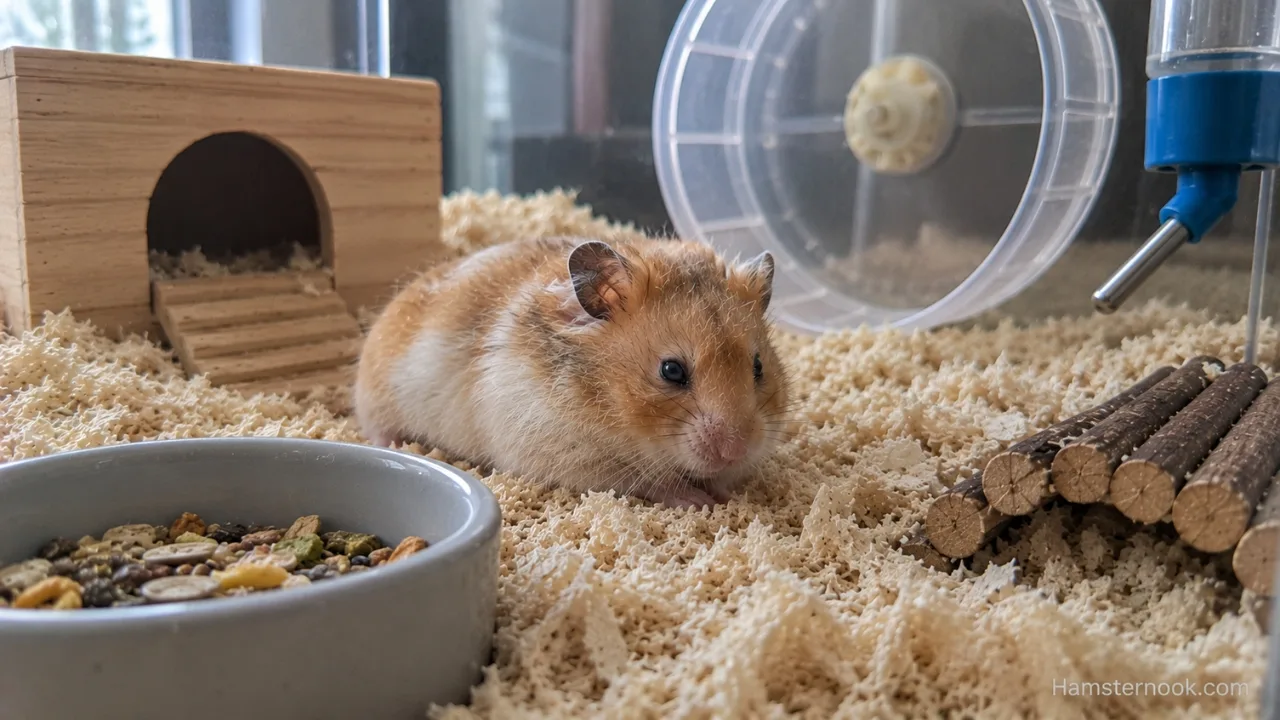
You may also notice:
- Reduced appetite.
- Weight loss.
- Unusual inactivity.
- A hunched posture.
- Changes in normal grooming.
- Difficulty reaching food or water.
The underlying problem may not be obvious from the outside. A veterinary examination is needed to distinguish weakness from a coordination disorder.
For more information about possible causes of sudden weakness and warning signs to monitor, see Why Is My Hamster Suddenly Weak? 9 Causes, Warning Signs & What to Do.
5. Nutritional Problems
An unbalanced diet can affect a hamster’s overall health.

For example, deficiencies in essential nutrients can cause health problems, and vitamin E deficiency is associated with muscle weakness and paralysis in hamsters.
However, wobbling alone does not establish a nutritional deficiency.
Do not start giving vitamin supplements or changing the diet dramatically without veterinary advice. The veterinarian may need to assess the current diet and investigate other possible explanations first.
6. Age-Related Health Problems
Older hamsters may become less active and experience changes in their physical condition.
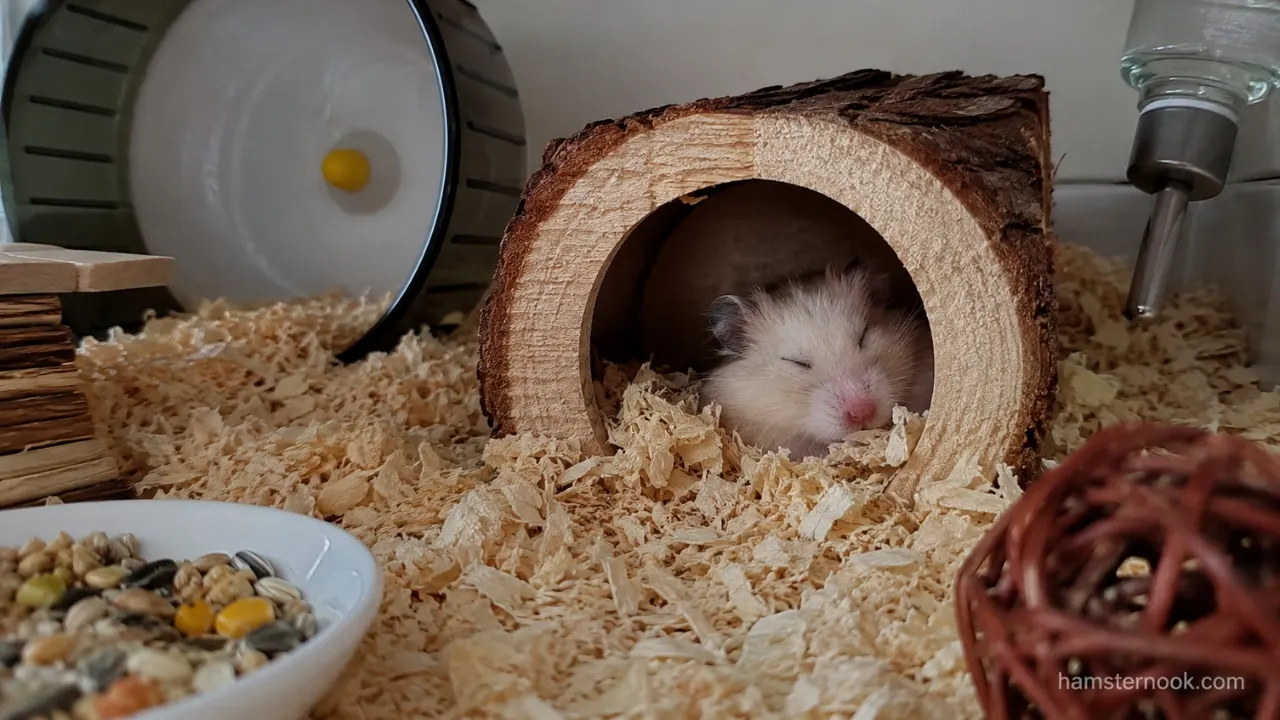
However, repeatedly falling, suddenly losing balance, or developing a head tilt should not be considered a normal part of aging.
An older hamster still needs an examination when new movement problems appear.
Age may be relevant to the veterinarian’s assessment, but it does not identify the cause by itself.
7. Other Underlying Medical Conditions
Different conditions can produce similar signs.
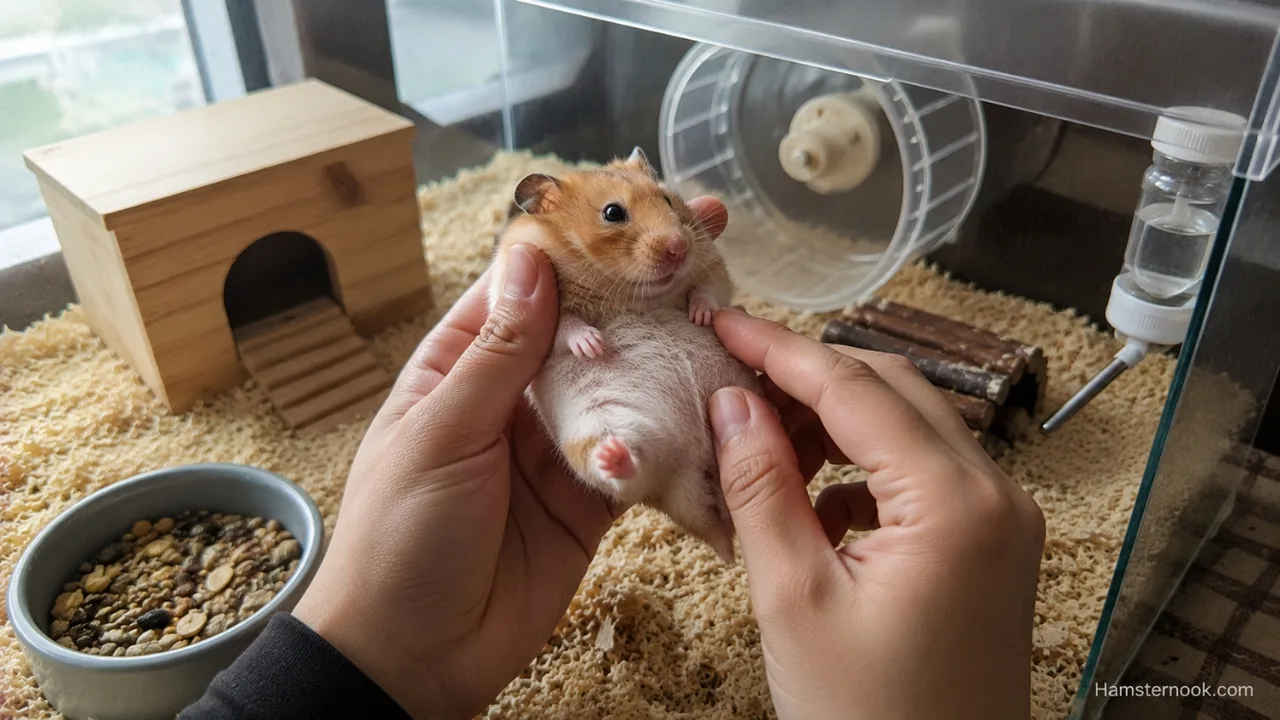
For example, musculoskeletal problems may cause limping or difficulty supporting body weight. Other neurological or systemic conditions may interfere with normal movement.
This is why it is risky to diagnose a hamster based on one symptom or a video alone.
A proper examination helps the veterinarian determine whether the problem involves balance, weakness, pain, or another medical issue.
How to Tell Whether Your Hamster Has a Balance Problem or Leg Weakness
This distinction can help you describe what you are seeing when you contact your veterinarian.
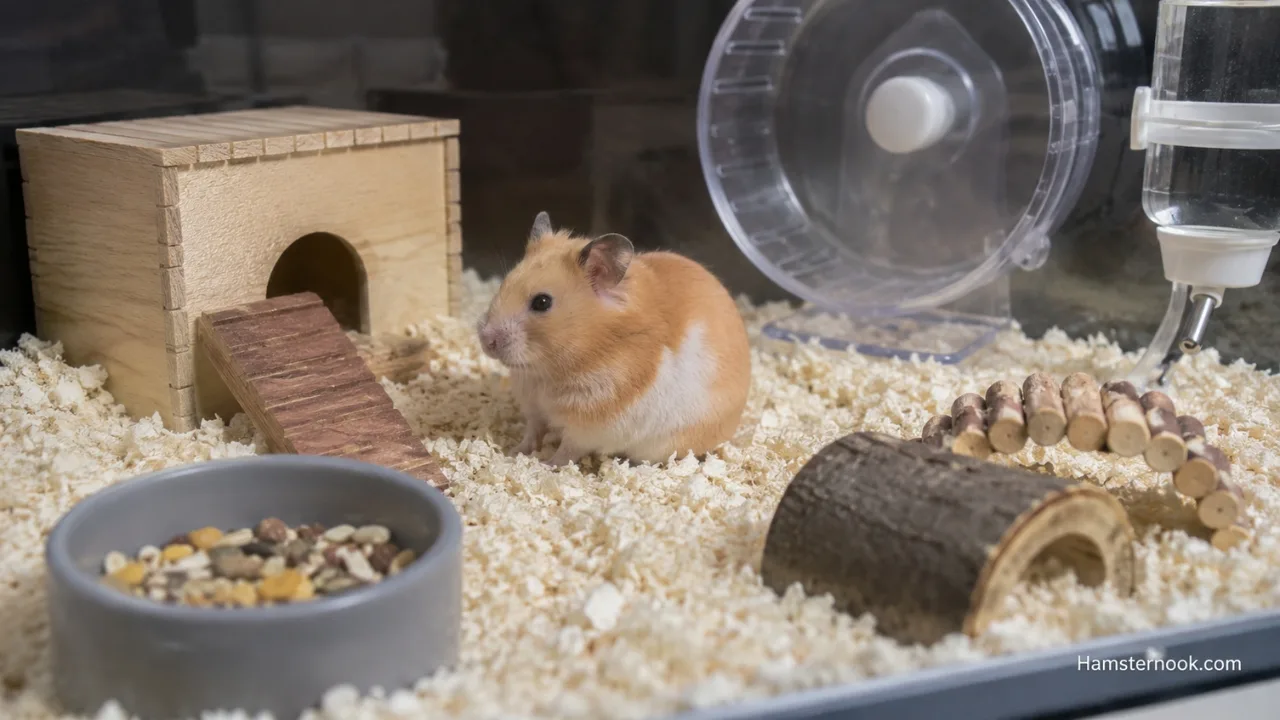
Although both problems can cause falling, they may look different.
| What you notice | Possible explanation |
|---|---|
| Hamster leans and falls toward one side | Balance or neurological problem |
| Head remains tilted while walking | Possible balance-related disorder |
| Walks in circles repeatedly | Possible neurological or balance problem |
| One leg appears difficult to use | Injury, pain, or limb weakness |
| Struggles to stand on multiple legs | General weakness or neurological problem |
| Walks unsteadily and seems disoriented | Possible coordination problem |
These are observations, not diagnostic tests. Different conditions can produce overlapping symptoms.
Do not try to test your hamster’s reflexes, force it to walk, or repeatedly turn it around to see whether it falls.
Why Is My Hamster Suddenly Falling Over?
Sudden changes deserve particular attention.
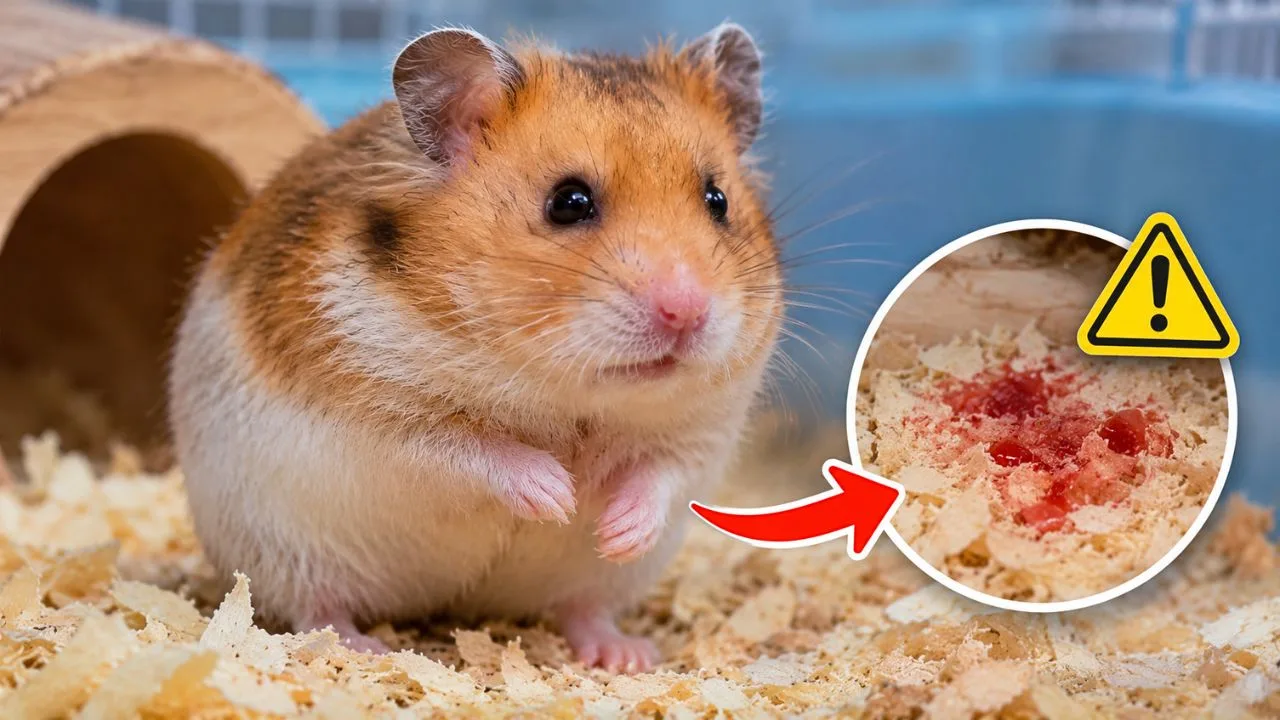
If your hamster was walking normally yesterday but is now wobbling, leaning, or repeatedly falling, contact a veterinarian immediately for a same-day assessment.
Sudden balance problems can occur with injuries or acute medical conditions.
Pay attention to what happened before the symptoms appeared.
Consider these questions:

- Did your hamster recently fall from a height?
- Was it caught in a wheel or cage accessory?
- Did you notice a head tilt before the falling started?
- Is it eating and drinking normally?
- Does it seem alert or unusually inactive?
- Is it dragging a leg?
- Are its movements getting worse?
- Have you noticed unusual breathing or other changes?
You do not need to answer every question before contacting a veterinarian. These details simply help explain the situation more clearly.
What Should You Do If Your Hamster Is Wobbling and Falling Over?
The priority is to prevent further injury and arrange veterinary care.
Step 1: Remove fall hazards immediately
If your hamster is struggling to balance, temporarily remove anything it could fall from or become trapped in.
This includes:

- Exercise wheels.
- Elevated platforms.
- Climbing structures.
- Multi-level cage accessories.
- Unstable tunnels or toys.
Keep the hamster in a safe, single-level environment while arranging veterinary assessment.
Step 2: Make the enclosure safer
Use a clean, familiar, low-level enclosure with appropriate soft bedding.
Make sure food and water are easy to reach without climbing.
Keep a familiar hideout available so your hamster can rest somewhere secure.

Avoid making unnecessary changes to the entire enclosure. The goal is to reduce the risk of another fall while keeping the surroundings as familiar as possible.
Step 3: Observe without repeatedly handling
Watch your hamster from a short distance.
Notice whether it:
- Leans consistently toward one side.
- Walks in circles.
- Has difficulty standing.
- Drags a limb.
- Keeps its head tilted.
- Appears unusually weak.
If possible, record a short video of the movement from a safe distance.
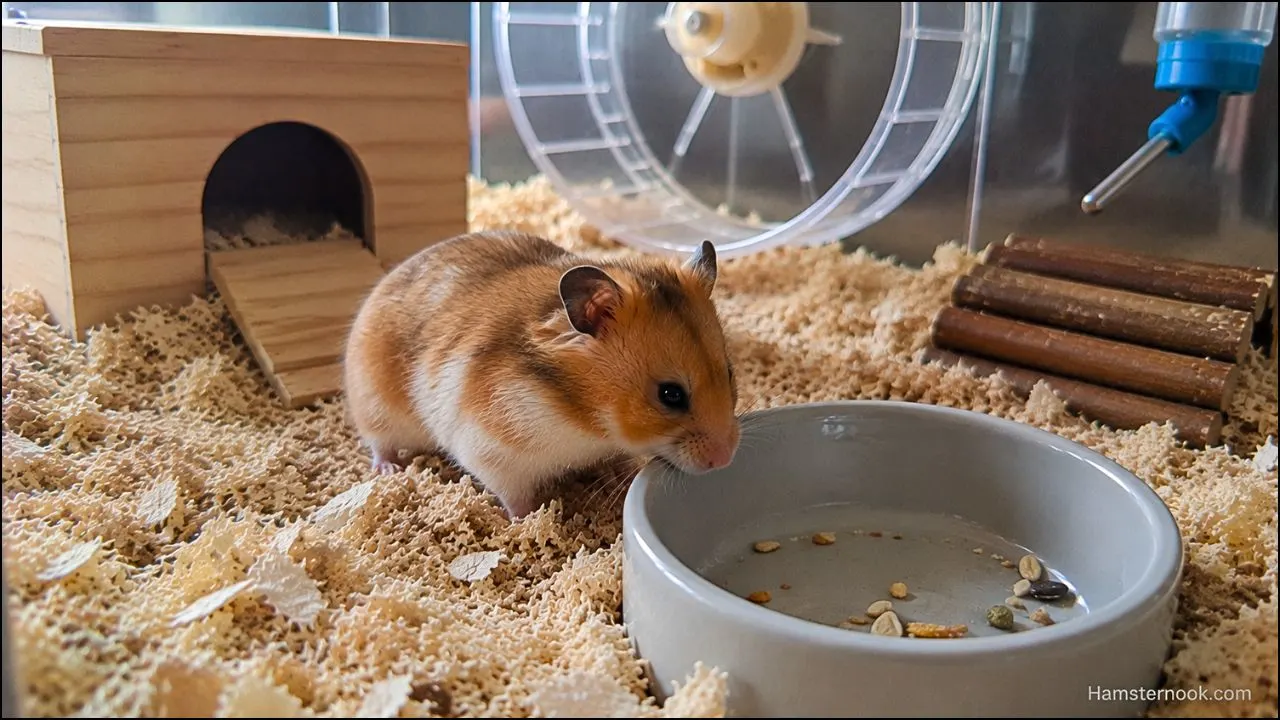
This can help the veterinarian understand what you observed, particularly if the behavior is intermittent.
Do not deliberately make your hamster walk to record a video.
Step 4: Contact a veterinarian experienced with hamsters
Explain that your hamster is having difficulty maintaining balance and is falling over.
Ask for an urgent appointment. If the hamster cannot stand, is collapsing, or has other severe symptoms, contact an emergency veterinary hospital immediately.

A veterinarian experienced with small mammals or exotic companion animals is preferable.
Step 5: Transport your hamster carefully
Use a secure, well-ventilated travel carrier.
Place familiar, clean bedding inside and avoid heavy accessories that could move during transport.
Keep the carrier level, away from direct sunlight, and at a comfortable temperature.

If you suspect a spinal injury, minimize handling and ask the veterinarian how best to transfer your hamster.
For more guidance on preparing for urgent veterinary situations, arranging safe transport, and keeping important emergency supplies ready, see Hamster Emergency Preparedness: First-Aid Supplies, Vet Contacts & Safe Transport.
What Will a Veterinarian Check?
The examination depends on your hamster’s symptoms and medical history.
Your veterinarian may assess several areas.
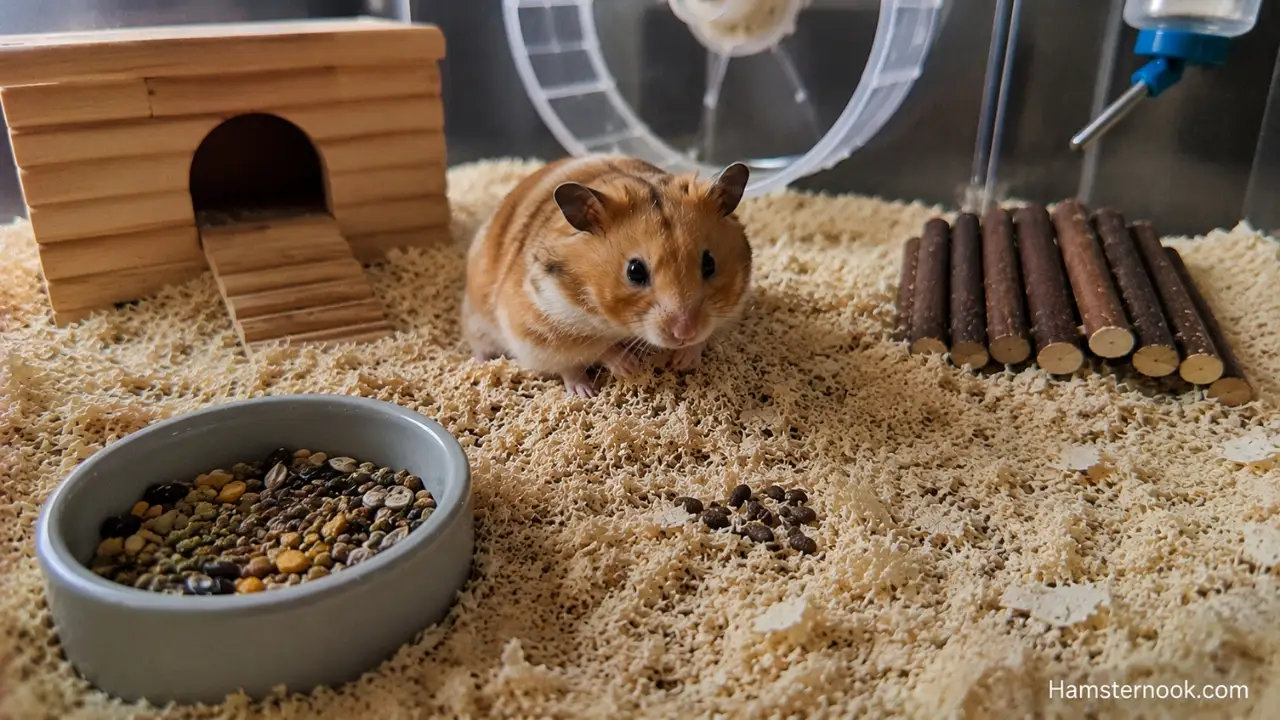
Physical examination
The veterinarian may check:
- General body condition.
- Hydration.
- Eyes and ears.
- Limb movement.
- Signs of pain or injury.
- Ability to maintain a normal posture.
Neurological examination
If the symptoms suggest a coordination problem, the veterinarian may assess posture, gait, limb positioning, and other neurological functions.
This helps distinguish different types of movement abnormalities.
Additional diagnostic tests
Depending on the findings, further investigations may be recommended.

These might include imaging or laboratory testing when clinically appropriate.
Not every hamster needs every test. The veterinarian will decide based on the suspected cause and the animal’s condition.
Can a Hamster Recover From Wobbling and Falling Over?
Recovery depends on the underlying cause, how severe the problem is, and whether appropriate treatment is possible.
Some conditions may respond to veterinary treatment, while others may require ongoing management.
For example, a treatable underlying ear problem is different from severe neurological damage or a significant spinal injury.
There is no reliable way to predict recovery based only on how frequently your hamster falls.
Early veterinary assessment gives your pet the best opportunity to receive appropriate care.
What if the hamster keeps falling even after treatment?
Contact your veterinarian again if the wobbling continues, becomes worse, or returns after treatment.
Do not increase medication doses, discontinue prescribed medication, or introduce supplements without veterinary guidance.
Your veterinarian may need to reassess the diagnosis or adjust the treatment plan.
Warning Signs: When Is Hamster Wobbling an Emergency?
Emergency veterinary attention
Some symptoms accompanying balance problems require immediate veterinary care.

| Warning sign | What to do |
|---|---|
| Cannot stand or repeatedly collapses | Seek emergency veterinary care |
| Seizures or uncontrolled movements | Contact an emergency veterinarian immediately |
| Difficulty breathing | Seek emergency care |
| Unresponsive or barely responsive | Seek emergency care |
| Suspected head or spinal injury | Contact a veterinarian immediately |
| Sudden severe weakness | Seek urgent veterinary assessment |
| Cannot reach or eat food and water | Contact a veterinarian promptly |
| Rapidly worsening balance | Seek urgent veterinary assessment |
Even without these additional signs, repeated wobbling and falling should be assessed promptly rather than monitored for several days.
Can I wait until tomorrow if my hamster is still eating?
Eating is encouraging, but it does not rule out a serious health problem.
A hamster can continue eating despite having a balance disorder or injury.
If the wobbling is new or repeated, arrange veterinary assessment the same day. If severe symptoms are present, do not wait until tomorrow.
Common Mistakes Owners Make When a Hamster Loses Its Balance
1. Assuming it is just old age
Older hamsters may become less active, but repeated falling is not something to dismiss as normal aging.
2. Waiting several days to see what happens
New balance problems can indicate significant health issues. Delaying assessment may allow an underlying condition to worsen.
3. Continuing to use the exercise wheel
A hamster with poor balance can fall or injure itself while using a wheel.
Remove it temporarily until your veterinarian advises that normal activity can safely resume.

4. Giving human medication
Human painkillers and other medicines should never be given without a veterinarian’s specific instructions.
Some medications can be dangerous to hamsters.
5. Trying home remedies for an ear infection
Do not put oil, water, or unprescribed ear drops into your hamster’s ears.
An apparent balance problem may not be caused by an ear infection at all.

6. Forcing the hamster to walk
Repeatedly picking up your hamster or making it walk to assess its balance can increase stress and create further injury risks.
Observe naturally instead.
What You Should Do: A Simple Action Checklist
If your hamster is wobbling or falling over, follow this checklist:
- Stop exercise-wheel use and remove elevated accessories.
- Move your hamster to a safe, single-level environment.
- Keep food and water easily accessible.
- Observe its head position, walking pattern, and general behavior.
- Record a short video if this can be done without disturbing it.
- Contact a hamster-experienced veterinarian for a same-day examination.
- Prepare a secure carrier with familiar bedding.
- Take notes about when the symptoms started and whether they are worsening.
- Follow the veterinarian’s treatment and follow-up instructions.
Do not attempt to diagnose or treat the underlying problem yourself.

Final Thoughts
If your hamster is wobbling and falling over, take the change seriously. It may be related to an ear problem, neurological condition, injury, or general weakness, but the symptoms alone cannot tell you which one.
Make the enclosure safer, remove climbing equipment and the exercise wheel temporarily, and arrange a veterinary examination as soon as possible.
Pay particular attention to sudden changes, head tilting, circling, difficulty standing, and unusual weakness. These signs deserve prompt attention, even if your hamster is still eating.
Your hamster cannot tell you when something feels wrong. Careful observation and timely veterinary help are essential when its normal movement changes.

Frequently Asked Questions
1. Why is my hamster walking sideways and falling over?
Walking sideways and falling can indicate a balance problem, neurological condition, ear disorder, or injury. A veterinarian needs to examine your hamster to identify the cause. Arrange an urgent appointment, preferably the same day.
2. Can an ear infection make a hamster lose its balance?
Yes. Problems affecting the middle or inner ear can interfere with balance. Affected animals may lean, tilt their heads, walk in circles, or fall over. However, these symptoms do not confirm an ear infection without a veterinary examination.
3. Why is my hamster walking in circles?
Repeated circling can be associated with neurological or balance-related problems. It may also occur alongside head tilting or other movement abnormalities. Do not assume it is a harmless habit, especially if the behavior is new.
4. Can stress make a hamster wobble?
Stress can affect a hamster’s behavior and activity, but persistent loss of balance or repeated falling should not automatically be blamed on stress. Have your hamster examined to investigate possible medical causes.
5. Is it normal for an old hamster to lose its balance?
No. Older hamsters may become less active, but repeated falling, head tilting, or difficulty walking should not be considered normal aging. A veterinary examination is necessary to identify possible underlying problems.
6. Why is my hamster falling onto one side?
Repeatedly falling toward one side can suggest a problem affecting balance or neurological function. An inner-ear disorder is one possibility, but other conditions can produce similar signs. Contact a veterinarian promptly.
7. Can a hamster recover from a balance disorder?
Recovery depends on the underlying condition, its severity, and the response to veterinary treatment. Some causes may be treatable, while others may require long-term management. An examination is necessary before making a prognosis.
8. Should I remove my hamster’s exercise wheel if it keeps falling?
Yes. Temporarily remove the exercise wheel and other elevated accessories to reduce the risk of further injury. Keep your hamster in a safe, single-level environment until your veterinarian advises otherwise.
9. Why is my hamster suddenly unable to stand?
Sudden inability to stand can indicate severe weakness, injury, or a neurological problem. This requires emergency veterinary attention. Avoid unnecessary handling and arrange safe transport.
10. Can a vitamin deficiency cause a hamster to wobble?
Certain nutritional deficiencies can affect muscle and nerve function. Vitamin E deficiency, for example, has been associated with weakness and paralysis in hamsters. However, wobbling alone does not establish a deficiency. A veterinarian should assess the diet and investigate other possible causes before supplements are considered.
References
This guide is based on veterinary and animal welfare resources covering hamster health, neurological conditions, abnormal movement, coordination problems, and signs of illness, including:
- MSD Veterinary Manual – Disorders and Diseases of Hamsters – Veterinary information covering hamster ear disorders, injuries, nutritional problems, and other medical conditions.
- MSD Veterinary Manual – The Neurologic Examination of Animals – Explains ataxia, abnormal gait, vestibular dysfunction, weakness, and neurological signs affecting coordination and movement.
- MSD Veterinary Manual – Routine Health Care of Hamsters – Veterinary guidance on recognizing abnormal walking, changes in appetite, weakness, and other signs of illness in hamsters.
- MSD Veterinary Manual – How to Tell When Your Hamster Is Sick – Reference identifying abnormal walking, inactivity, appetite changes, and other indicators of illness.
- RSPCA – Hamster Health and Welfare – Animal welfare guidance on recognizing illness, monitoring behavioral changes, careful handling, and seeking veterinary attention.
Medical Disclaimer: This article provides general educational information about hamster balance problems and is not a substitute for professional veterinary diagnosis or treatment. Wobbling and falling can have several underlying causes. Contact a veterinarian experienced with small mammals promptly, and seek emergency care for severe or rapidly worsening symptoms.

Narayan Kumar is the founder and author of HamsterNook. He creates practical, research-based hamster care guides covering hamster behavior, nutrition, cage setup, enrichment, health, and everyday care. His goal is to help hamster owners make informed decisions and provide safer, healthier lives for their pets through clear, beginner-friendly information based on trusted animal care resources.