Bringing home a hamster is exciting, especially when you’re choosing your first little companion. But before falling in love with the cutest face in the enclosure, take a few minutes to check its health, behavior, and living conditions. A hamster may look perfectly adorable while hiding signs of illness or poor care. Knowing what to look for can help you choose a healthier pet and avoid preventable problems after bringing it home.
Quick Answer: How Do You Pick a Healthy Hamster?
Choose a hamster that looks alert, has bright and clear eyes, clean ears, a dry nose, smooth fur, and a healthy-looking body condition. Watch how it moves, check for signs of injury, and observe its surroundings before making a decision.
Here are the 10 things to check:
- Bright, clear eyes without discharge.
- A clean nose and normal breathing.
- Smooth, clean fur without bald patches.
- A clean rear end without wet or dirty fur.
- Healthy-looking ears without discharge or obvious irritation.
- A healthy body condition without visible thinness.
- Normal movement without limping or weakness.
- Teeth that appear properly aligned, without drooling.
- An alert response to its surroundings.
- Clean living conditions and responsible care from the seller, breeder, or rescue.
No visual checklist can guarantee that a hamster is free from disease. A veterinary examination after adoption or purchase is still important.

1. Check the Hamster’s Eyes
The eyes are one of the easiest places to begin when assessing a hamster’s appearance.
A healthy-looking hamster should generally have bright, clear eyes without obvious discharge, crusting, or swelling.
What healthy eyes look like
Look for:
- Clear eyes without visible discharge.
- No obvious swelling around the eyelids.
- No thick crust around the corners.
- Both eyes appearing normally positioned.
- No obvious injury around the eye area.
Hamsters may have their eyes partly closed while sleeping or just after waking. Don’t mistake normal sleepiness for an eye problem.

Warning signs to notice
Be cautious if you see:
- Watery or sticky eyes.
- Crust around the eyelids.
- Redness or swelling.
- An eye that appears unusually closed.
- Cloudiness or an obvious injury.
These findings do not tell you exactly what is wrong, but they are reasons to ask for veterinary assessment rather than choosing that animal without further information.
2. Look at the Nose and Check Breathing
A hamster’s nose should look clean, without obvious discharge or crusting.
Watch the animal quietly for a short time instead of immediately picking it up.
What to look for
A healthy-looking hamster should breathe without obvious effort. You should not see persistent open-mouth breathing, pronounced chest movement, or repeated gasping.
Pay attention to:
- Discharge around the nostrils.
- Wetness or crusting around the nose.
- Repeated sneezing.
- Wheezing or unusual breathing sounds.
- Visible difficulty breathing.
An occasional sneeze does not automatically establish that a hamster is sick. Dust, environmental irritation, and other factors can contribute. However, repeated sneezing combined with nasal discharge or abnormal breathing deserves attention.
If the hamster appears to be struggling to breathe, do not proceed with the purchase without veterinary assessment.

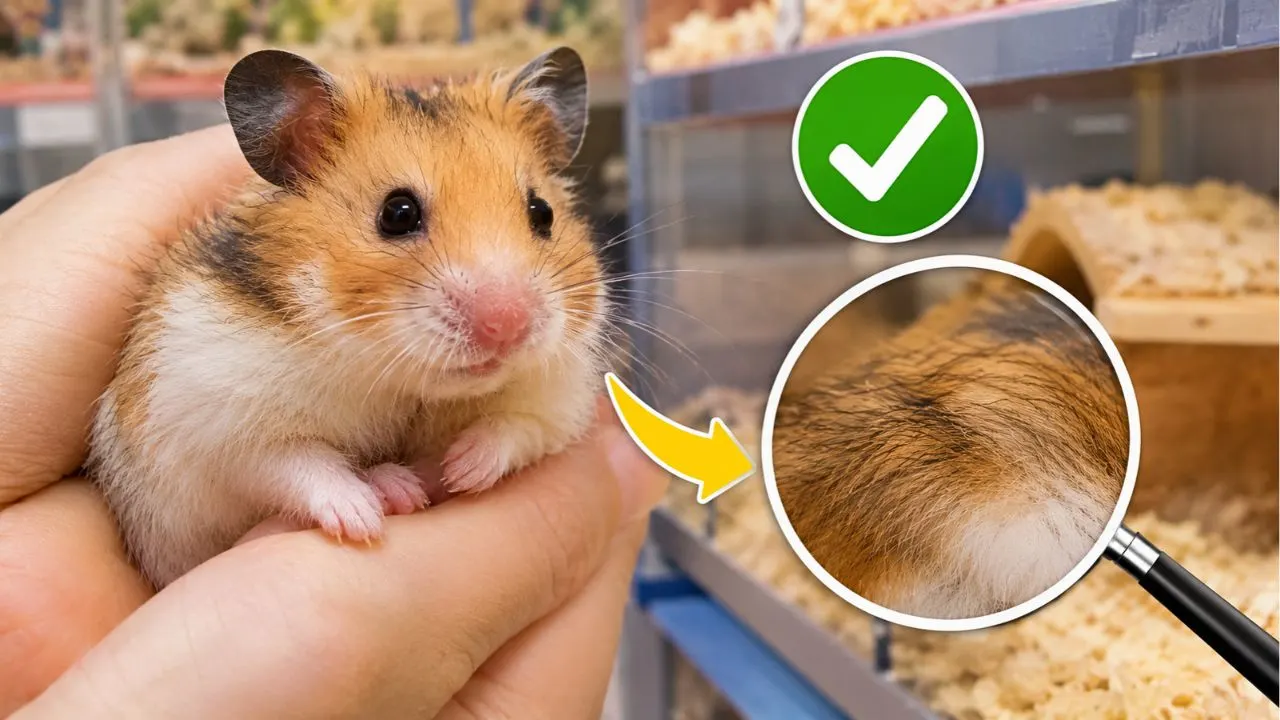
3. Examine the Fur and Skin
A hamster’s coat can provide useful clues about its general condition.
Look at the animal from different angles, including its back, sides, belly, and around the neck.
Signs of a healthy-looking coat
- Fur appears reasonably clean and well maintained.
- No obvious large bald patches.
- No visible wounds or scabs.
- No unusual wet or matted areas.
- No obvious parasites or excessive scratching.
Different hamster varieties naturally have different coat lengths and textures. A long-haired Syrian hamster, for example, will not look identical to a short-haired Syrian.
Don’t judge coat health by color or length alone.

When to be cautious
Avoid overlooking:
- Unexplained hair loss.
- Red or irritated skin.
- Multiple scabs or wounds.
- Excessive scratching.
- Matted or dirty fur.
- Visible parasites.
Some skin problems are not easy to identify just by looking. A veterinarian should assess suspicious changes.
4. Check the Rear End and Tail Area
This is an important check that beginners sometimes forget.
Gently observe the hamster’s rear end without forcing it into an uncomfortable position.

The fur around the anus should not be visibly wet, heavily soiled, or covered with diarrhea.
What should you look for?
- Clean fur around the rear.
- No obvious fecal staining.
- No wet or sticky appearance.
- No visible bleeding.
- No unusual discharge.
A dirty or wet rear end can indicate diarrhea or another health concern.
Young hamsters in particular can develop serious digestive problems, so do not dismiss this finding as ordinary dirt.
Avoid choosing a hamster with a wet or heavily soiled rear end until it has been properly assessed by a veterinarian.

5. Examine the Ears
A hamster’s ears should be checked for obvious injury, discharge, and irritation.
Look at both ears rather than examining only the side facing you.
Healthy-looking ears
- No obvious wounds.
- No discharge.
- No visible swelling.
- No significant crusting.
- No signs of repeated scratching or irritation.
Small differences in ear shape, fur coverage, or pigmentation can be natural.
The goal is not to find a hamster with perfectly identical ears. You’re looking for signs of injury or a possible health problem.

6. Check Body Condition and Weight
A healthy hamster should not look extremely thin or visibly underweight.
However, you should not choose a hamster simply because it looks particularly round or large.
Body shape varies between species, age groups, and individuals.
Signs that deserve attention
- Prominent bones or an unusually bony appearance.
- A noticeably sunken-looking body.
- Visible weakness.
- Unexplained swelling.
- An obviously distended abdomen.
- A poorly maintained coat combined with a thin appearance.
If the seller allows it, ask whether the hamster has a recent weight record.

You don’t need to make a diagnosis from its appearance. A veterinarian can assess its body condition more accurately.
7. Watch How the Hamster Walks and Moves
A hamster may look healthy while sitting still, but movement can reveal problems that aren’t immediately visible.
Ask whether you can observe the animal moving naturally in a safe, enclosed area.
If you notice an unusual walking pattern, limping, or difficulty moving, this guide explains possible causes and when veterinary attention may be needed: Why Is My Hamster Walking Weird? Causes & When to See a Vet.
What normal movement should look like
Look for a hamster that can:
- Walk without an obvious limp.
- Move all four limbs.
- Maintain its balance.
- Turn normally.
- Explore its surroundings when awake.
Be cautious if you notice:
- Dragging a leg.
- Repeated stumbling.
- Difficulty standing.
- An obvious limp.
- Unusual weakness.
- Difficulty coordinating movements.
A hamster that is sleeping should not be forced to walk just to satisfy your inspection.
Give it an opportunity to become naturally active, preferably during the late afternoon or evening when hamsters are generally more active.
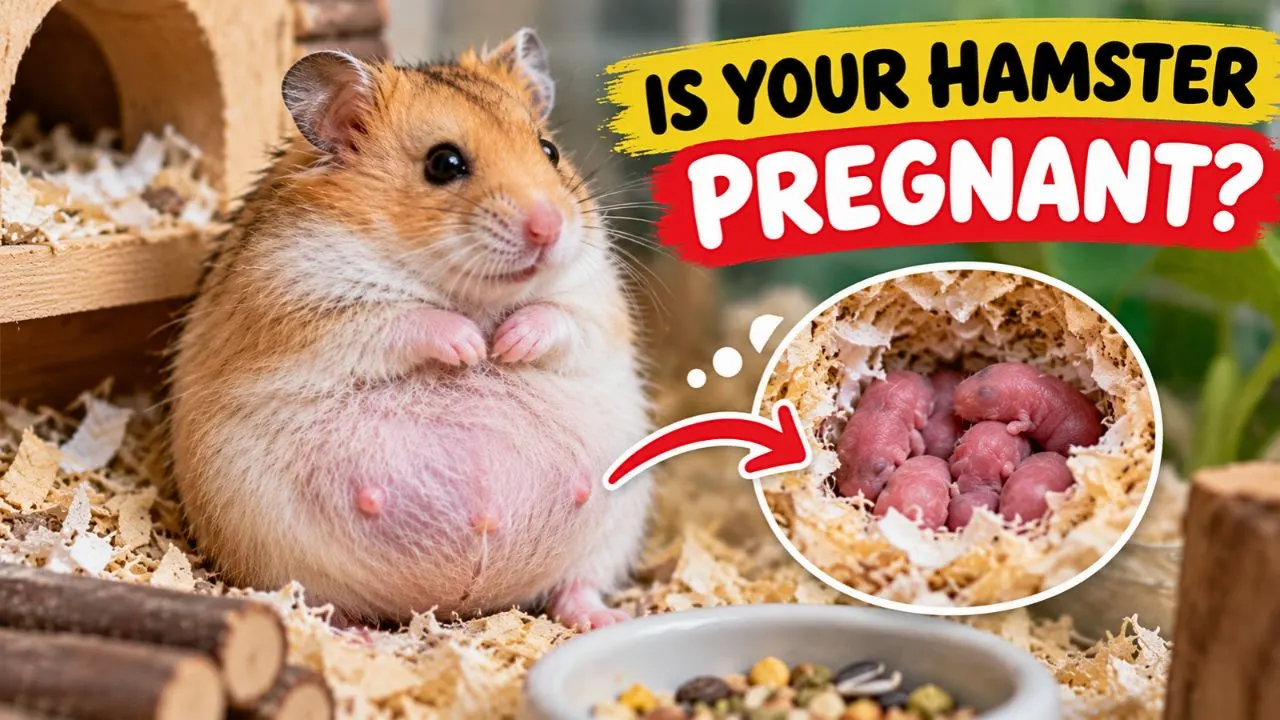
8. Look at the Teeth and Mouth
Hamsters have continuously growing front teeth, so dental health deserves attention before you bring one home.
You may not be able to inspect the mouth properly without handling the hamster, and you should never force its mouth open yourself.
Instead, observe its face and ask the seller or rescue whether any dental concerns have been identified.
What to look for
- Front teeth that do not appear obviously broken or severely overgrown.
- No visible drooling.
- No wet fur around the mouth.
- No obvious swelling around the jaw.
- No difficulty eating.
If the hamster is drooling, has visibly abnormal teeth, or appears unable to eat normally, ask for veterinary assessment.

Dental problems can interfere with eating, so they should not be ignored simply because the hamster is still moving around.
9. Observe Its Behavior and Temperament
A hamster’s behavior is another useful part of the selection process, but beginners often misunderstand what a friendly hamster should look like.
Hamsters are naturally cautious animals. Some investigate unfamiliar surroundings quickly, while others prefer to stay inside a hideout until they feel comfortable.
A shy hamster is not automatically unhealthy, and an energetic hamster is not automatically healthy.

What behavior should you look for?
When the hamster is naturally awake, observe whether it:
- Responds to sounds and movement.
- Shows interest in its surroundings.
- Moves around normally.
- Investigates objects when comfortable.
- Appears reasonably coordinated.
- Can settle down without continuously appearing distressed.
Does a healthy hamster need to be friendly?
No.
A hamster may initially avoid your hand, hide, or move away when approached. This does not necessarily mean it will never become comfortable with gentle handling.
Similarly, a hamster that bites when frightened should not automatically be labeled aggressive.

Understanding other signs of fear, stress, and communication can help you interpret these reactions more accurately. See Hamster Body Language: Signs of Happiness, Stress, Fear & Illness.
Ask whether the hamster has previously been handled and how it usually responds to people.
Give it time to approach rather than grabbing it suddenly.
Why you should avoid choosing only by appearance
A hamster that looks adorable but has obvious health concerns is not a better choice than an animal that looks less immediately approachable but appears healthy.

Prioritize health, appropriate care, and your ability to meet the animal’s needs.
10. Inspect the Hamster’s Living Conditions Before Buying
This final check is just as important as examining the hamster itself.
The environment can tell you a lot about the care the animals are receiving.
Before choosing one, look at the entire enclosure rather than focusing only on your preferred hamster.
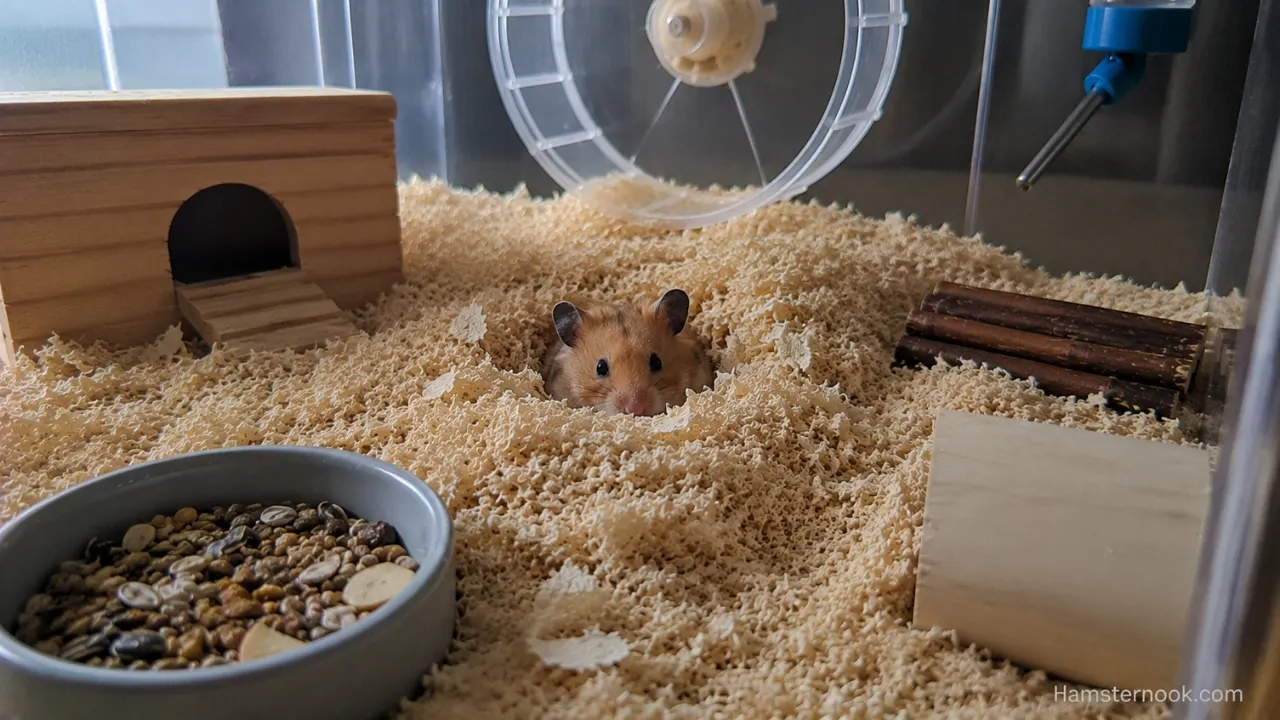
If you want to understand what a suitable hamster enclosure should include, see Best Hamster Cage Setup for Beginners: Size, Bedding, Wheel & Essentials.
Check cleanliness
Look for:
- Clean, reasonably maintained accommodation.
- Fresh food.
- Accessible drinking water.
- No obvious accumulation of spoiled food.
- No strong ammonia-like smell.
- No visibly contaminated bedding.
A messy corner or a small amount of scattered food does not automatically mean an enclosure is poorly maintained. Look at the overall conditions.
Check the other hamsters
Observe the animals sharing the enclosure, if any.

Are other hamsters displaying signs of illness, injury, or unusual weakness?
A hamster that appears healthy should not automatically be considered a safe choice if it has been living in an enclosure where other animals are visibly unwell.
If several animals appear sick, consider choosing another responsible rescue or breeder rather than taking a risk.
Ask how the hamsters are housed
Ask whether the animals are separated appropriately by species and sex.
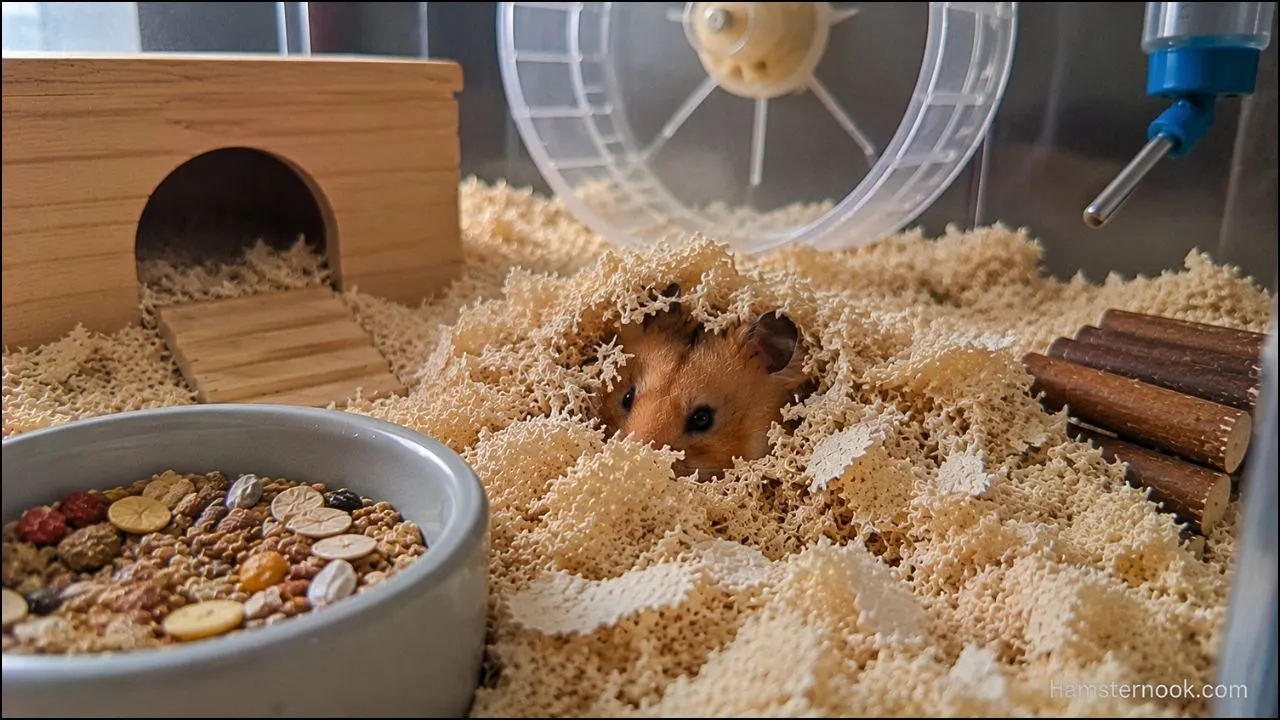
If you’re unsure how to identify a hamster’s sex safely, refer to How to Tell If a Hamster Is Male or Female: Safe Sexing Guide before relying on assumptions about its housing.
This matters because unintended breeding can occur when males and females are housed together.
Syrian hamsters should be housed individually. Housing arrangements for dwarf hamster species require species-specific knowledge and careful attention to compatibility.
A responsible seller should be able to explain the animals’ housing arrangements and how they prevent unwanted litters.

Healthy Hamster vs. Hamster That Needs Further Assessment
Use this comparison as a quick reference while choosing your new pet.
| What to check | Healthy-looking sign | Warning sign |
|---|---|---|
| Eyes | Bright and clear | Discharge, swelling, crusting |
| Nose | Clean and dry-looking | Discharge or persistent crusting |
| Fur | Clean and reasonably smooth | Bald patches, wounds, heavy matting |
| Rear end | Clean fur | Wetness or fecal staining |
| Ears | No obvious irritation | Wounds, discharge, swelling |
| Body condition | No obvious thinness | Prominent bones or unusual swelling |
| Walking | Coordinated movement | Limping or dragging limbs |
| Teeth | No obvious dental abnormality | Broken or overgrown teeth, drooling |
| Behavior | Responsive when awake | Marked weakness or unusual inactivity |
| Living conditions | Clean food, water, and accommodation | Contaminated bedding or visibly sick animals |
This comparison helps you identify concerns, but it is not a veterinary diagnostic test.
Where Should You Get Your Hamster?
You generally have three options: an animal rescue, a responsible breeder, or a pet store.
Each option deserves careful consideration.

1. Adopting from a hamster rescue
Adoption is worth considering before purchasing a hamster.
Rescues may have hamsters that need new homes because their previous owners could no longer care for them.
Potential advantages include:
- Information about the hamster’s previous home.
- Details about its known temperament.
- Information about its approximate age.
- Opportunity to discuss existing health concerns.
- Guidance about suitable housing and care.
Ask what veterinary checks have been performed and whether any medical history is available.
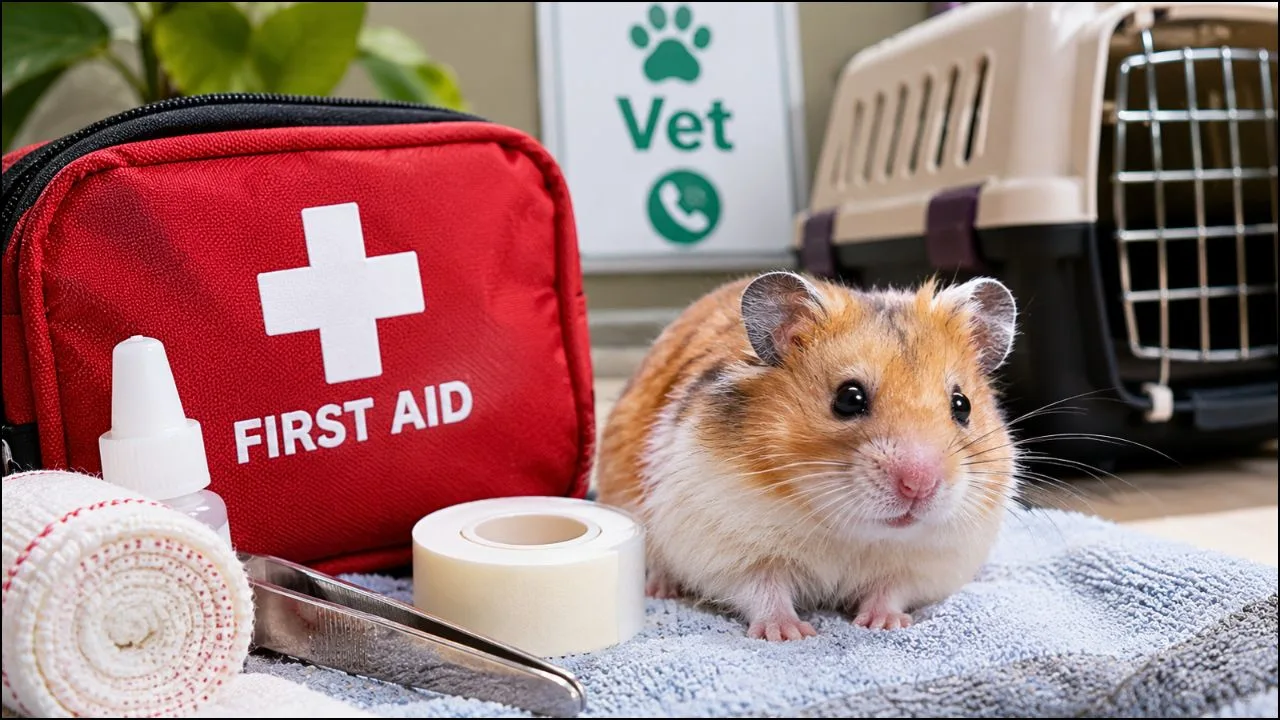
An adoption fee does not automatically guarantee that an animal is free from health problems.
2. Choosing a responsible breeder
If you choose a breeder, look for someone who prioritizes animal welfare rather than simply producing large numbers of hamsters.
A responsible breeder should be willing to discuss:
- The hamster’s age.
- Its parents and background, where known.
- Its living conditions.
- Its diet.
- Its handling and socialization history.
- Any known health concerns.
- How young hamsters are separated by sex.
Be cautious if the breeder refuses to answer basic questions or pressures you into buying immediately.
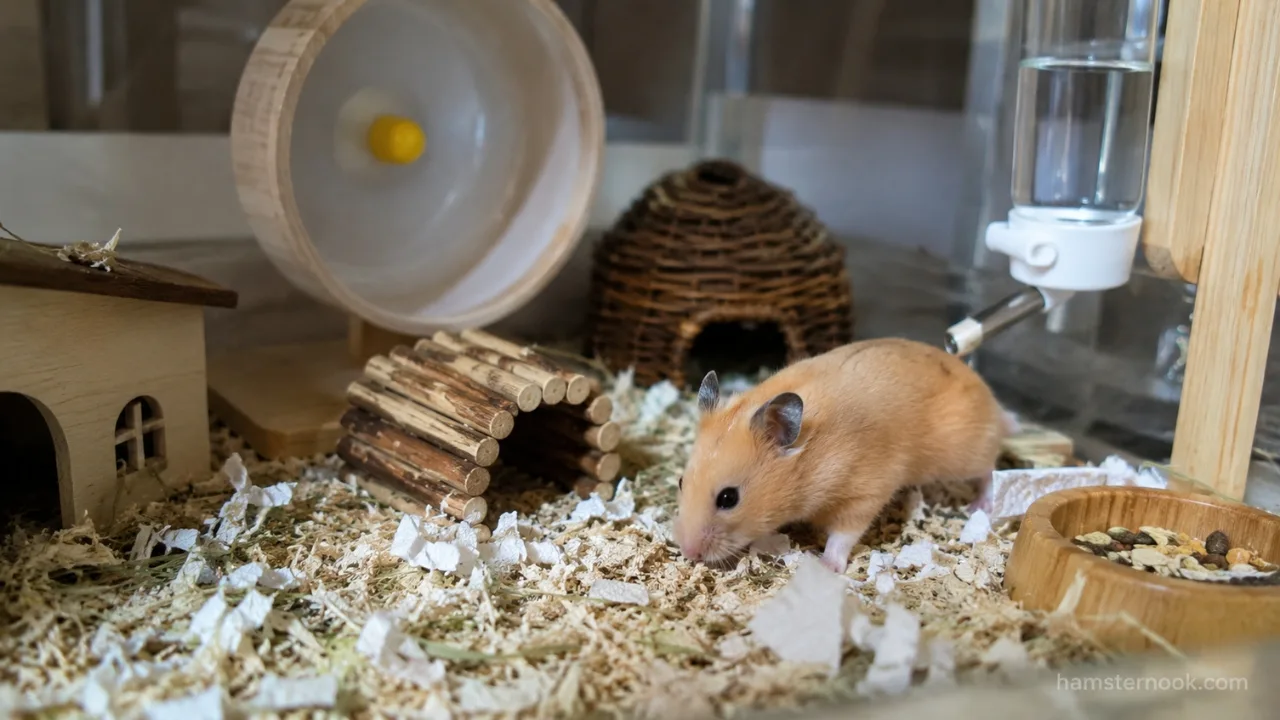
3. Buying from a pet store
A pet store may offer a convenient way to find a hamster, but you should carefully inspect its animal-care standards.
Ask staff about the hamster’s age, sex, source, feeding routine, and any previous health problems.
Also ask whether the store provides written health information and what its policy is if the hamster becomes ill shortly after purchase.
Do not assume that every hamster in a pet store has been raised or handled in the same way.

Questions to Ask Before Bringing a Hamster Home
Don’t feel uncomfortable asking questions. A responsible seller or rescue should understand that you want to make an informed decision.
Here are 10 useful questions:
| Question | Why it matters |
|---|---|
| How old is the hamster? | Helps you understand its life stage. |
| Is its sex confirmed? | Helps prevent accidental breeding. |
| Where did it come from? | Gives you information about its background. |
| What food is it currently eating? | Helps you maintain a familiar diet initially. |
| Has it had any health problems? | Provides useful medical history. |
| Has it been examined by a veterinarian? | Helps establish what health checks have been completed. |
| Has it been housed with other hamsters? | Helps you understand its previous housing. |
| Has it shown any unusual behavior? | Gives you information about its temperament. |
| Is it comfortable with gentle handling? | Helps you plan its settling-in period. |
| What happens if it becomes ill after purchase? | Clarifies the seller’s health policy. |
How old should a hamster be when you bring it home?
Age matters when choosing a hamster.
Blue Cross advises that hamsters should not be rehomed before six weeks of age. Very young hamsters need appropriate care and should not be separated prematurely.

Ask for the animal’s date of birth if available rather than relying on a guess based on its size.
A responsible seller should also be able to explain how young hamsters are weaned and separated by sex.
What to Do After Bringing Your New Hamster Home
Choosing a healthy hamster is only the beginning. Its first few days in your home are important because it needs time to become familiar with a new environment.
For more guidance on what to expect during your hamster’s first night and what to avoid while it settles in, read The First Night With a New Hamster: What to Expect and What to Avoid.

1. Prepare the enclosure before arrival
Set up the enclosure before collecting your hamster.
Make sure it has:
- Appropriate bedding for burrowing.
- A suitable hiding place.
- A properly sized exercise wheel.
- Fresh drinking water.
- Complete hamster food.
- Safe enrichment and chewing materials.
The enclosure should be ready before your hamster arrives so you don’t need to make major changes immediately.
2. Keep its familiar food initially
Ask the seller or rescue for the exact food your hamster has been eating.

Continue with its familiar food initially rather than introducing several new foods at once. If you plan to change its diet, make the transition gradually.
3. Give your hamster time to settle
Avoid immediately picking up your new hamster repeatedly.
Allow it to explore, find its hiding place, and become familiar with the sounds and smells of your home.
Approach calmly and begin gentle interaction when it appears comfortable.

4. Arrange a veterinary health examination
Schedule an initial examination with a veterinarian experienced in treating hamsters, preferably within the first few days after bringing your pet home.
Take any available health records and information about its previous diet.
A veterinarian can assess its teeth, weight, body condition, skin, and general health. Ask about an appropriate ongoing checkup schedule.
Common Mistakes to Avoid When Choosing a Hamster
Even experienced-looking buyers can overlook important details when they become excited about bringing home a new pet.

Avoid these mistakes:
Choosing only by color or appearance: A beautiful coat doesn’t guarantee good health.
Picking the most active hamster: Activity alone cannot establish that an animal is healthy.
Assuming a shy hamster is unhealthy: Some hamsters naturally take longer to become comfortable around people.
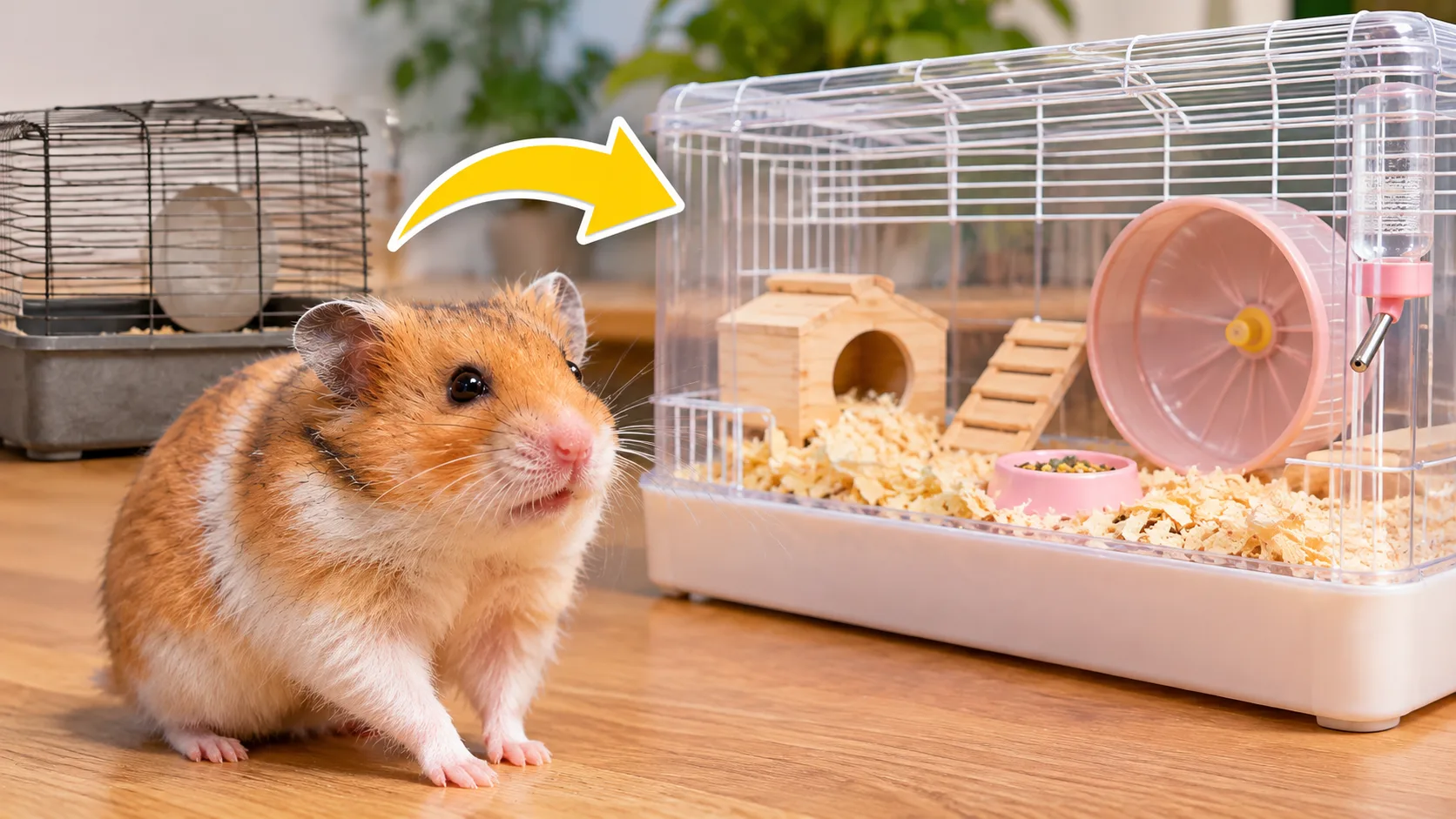
Ignoring the enclosure: Poor living conditions may indicate problems with animal care.
Forgetting to check the rear end: Wet or fecal-stained fur can be an important warning sign.
Buying without asking the age: Very young hamsters should not be separated prematurely.
Taking two hamsters because they look comfortable together: Syrian hamsters should live alone. Do not assume hamsters need a companion.
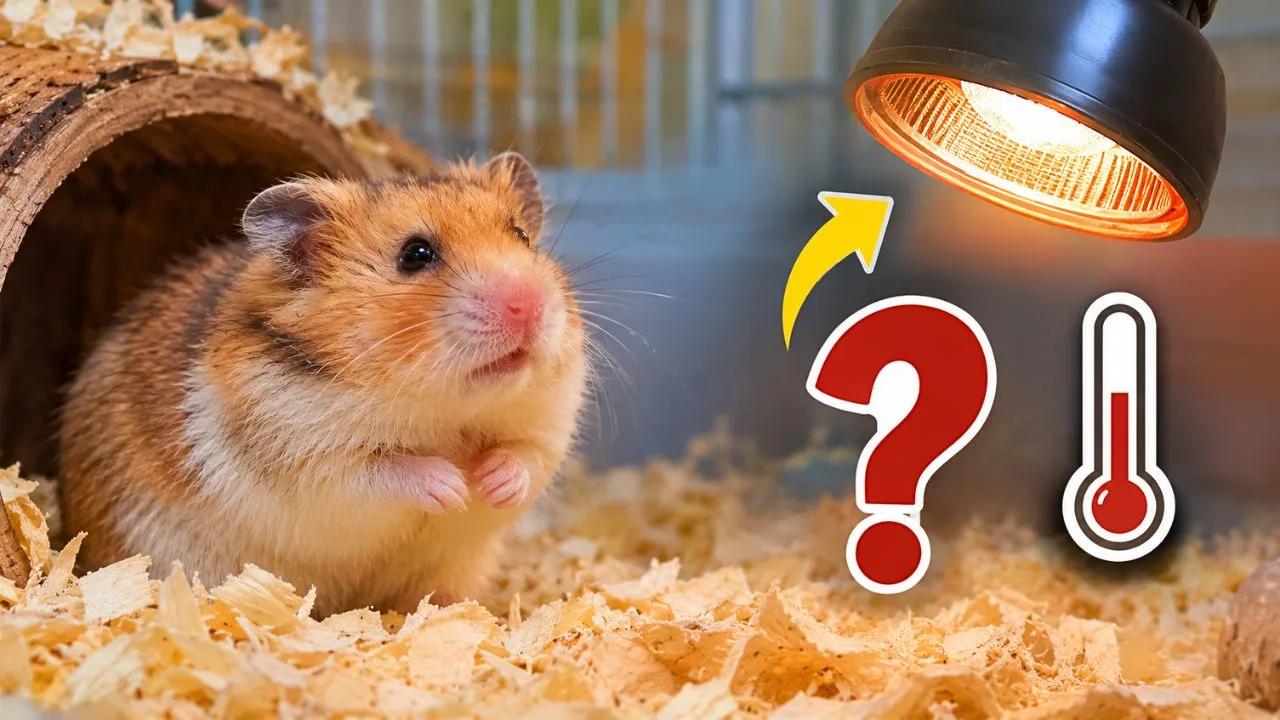
Skipping the veterinary examination: A hamster can have health problems that aren’t visible during a brief inspection.
What You Should Do Before Choosing Your Hamster
Use this practical checklist during your visit.
- Check both eyes for discharge or swelling.
- Observe the nose and breathing.
- Examine the fur and visible skin.
- Check the rear end for wetness or staining.
- Look at both ears.
- Assess the hamster’s general body condition.
- Watch it walk when naturally awake.
- Look for obvious dental problems.
- Observe its behavior without disturbing it.
- Inspect the enclosure and other animals.
- Ask about age, sex, food, and health history.
- Confirm the seller’s health policy.
- Arrange an initial veterinary examination.
If something doesn’t look right, don’t feel pressured to make a purchase. You can always take more time to find a suitable hamster.
Final Thoughts
Picking a healthy hamster involves more than choosing the smallest, cutest, or most active animal in the enclosure. Pay attention to its eyes, nose, fur, rear end, body condition, teeth, movement, and behavior. Just as importantly, look at the conditions in which it has been living and ask the seller or rescue questions about its background.

No inspection can guarantee perfect health, but these checks can help you recognize visible warning signs and make a more informed decision.
Give yourself time to choose. Bringing home a hamster is a commitment to its care, comfort, and well-being throughout its life.
For a broader overview of the responsibilities involved in keeping a healthy pet, see Ultimate Hamster Care Guide: Everything You Need to Know for a Healthy Hamster.
Frequently Asked Questions
1. How can I tell if a hamster is healthy before buying it?
Look for bright eyes, a clean nose, smooth fur, clean ears, a clean rear end, and normal movement. The hamster should respond to its surroundings when awake and should not show obvious signs of weakness or injury.

2. What is the healthiest age to buy a hamster?
Hamsters should not be rehomed before six weeks of age, according to Blue Cross guidance. Ask the breeder, rescue, or pet store for the hamster’s approximate or confirmed birth date.
3. Should I choose an active or quiet hamster?
Neither activity level alone guarantees good health. Observe the hamster when it is naturally awake. Look for normal movement, responsiveness, and an absence of obvious signs of illness.
4. Is it normal for a new hamster to hide?
Yes. Hiding is a normal hamster behavior, particularly in an unfamiliar environment. A newly adopted hamster may need time to explore and settle. However, unusual inactivity combined with weakness, appetite changes, or other concerning signs should be assessed by a veterinarian.
5. Should I buy a hamster that bites?
A hamster may bite when frightened, startled, or handled unexpectedly. Biting does not automatically mean the animal is unhealthy or unsuitable as a pet. Ask about its handling history and give it time to become comfortable with gentle interaction.

6. How do I know if a hamster is underweight?
An unusually thin appearance, prominent bones, or a noticeably poor body condition can be concerning. However, body shape varies between hamster species and individuals. Ask a veterinarian to assess its weight and body condition rather than judging by appearance alone.
7. Is a pet-store hamster healthy?
Some pet-store hamsters may be healthy, while others may have health or husbandry concerns. Inspect the animal, its enclosure, and the other hamsters. Ask about its age, sex, source, and health history before purchasing.
8. Should I adopt a hamster instead of buying one?
Adoption is worth considering because many hamsters need new homes. A rescue may also provide information about the animal’s previous care, age, and temperament. Ask about its veterinary history before adoption.
9. Should I take my hamster to the vet immediately after buying it?
Arrange an initial health examination promptly, preferably within the first few days. A veterinarian experienced with hamsters can check its general condition and identify problems that may not be obvious during a visual inspection.

10. Can I choose a hamster based on its color or breed?
You can certainly have a preference for a particular coat color or hamster variety, but health and appropriate care should come first. Choose an animal with a healthy appearance and make sure you can provide the housing, diet, and care its species requires.
References
This guide is based on trusted veterinary, animal welfare, and public health resources covering hamster selection, health assessment, responsible adoption, and general care, including:
- MSD Veterinary Manual – Selecting a Hamster – Veterinary guidance on assessing a hamster’s health, appearance, movement, living conditions, and suitability before purchase.
- VCA Animal Hospitals – Owning a Pet Hamster – Veterinary information about choosing a hamster, recognizing visible health concerns, and arranging an initial veterinary examination.
- Blue Cross – Hamster Care – Guidance on adopting hamsters, responsible breeders, pet stores, minimum rehoming age, and appropriate housing.
- RSPCA – Hamster Health and Welfare – Information about hamster health checks, dental care, handling, and recognizing changes in health and behavior.
- Centers for Disease Control and Prevention (CDC) – Small Mammals – Guidance on choosing healthy small mammals, recognizing signs of illness, and arranging veterinary examinations after bringing a pet home.
- Royal Veterinary College – Caring for Your Hamster – Veterinary guidance covering hamster behavior, housing, handling, and general care.
Medical Disclaimer: This article provides general guidance for selecting a hamster and recognizing visible health concerns. Appearance and behavior cannot confirm that an animal is disease-free. A veterinarian experienced with hamsters should perform a health examination after you bring your pet home. Seek veterinary advice promptly if you notice signs of illness.

Narayan Kumar is the founder and author of HamsterNook. He creates practical, research-based hamster care guides covering hamster behavior, nutrition, cage setup, enrichment, health, and everyday care. His goal is to help hamster owners make informed decisions and provide safer, healthier lives for their pets through clear, beginner-friendly information based on trusted animal care resources.