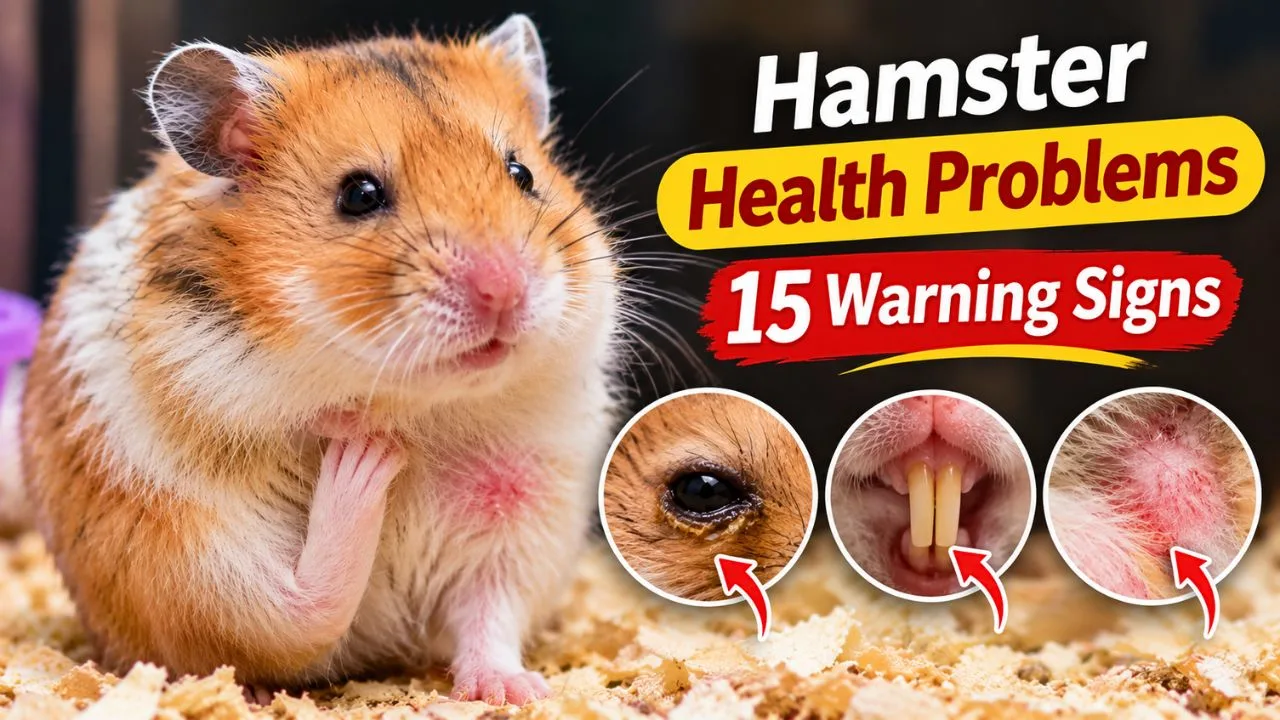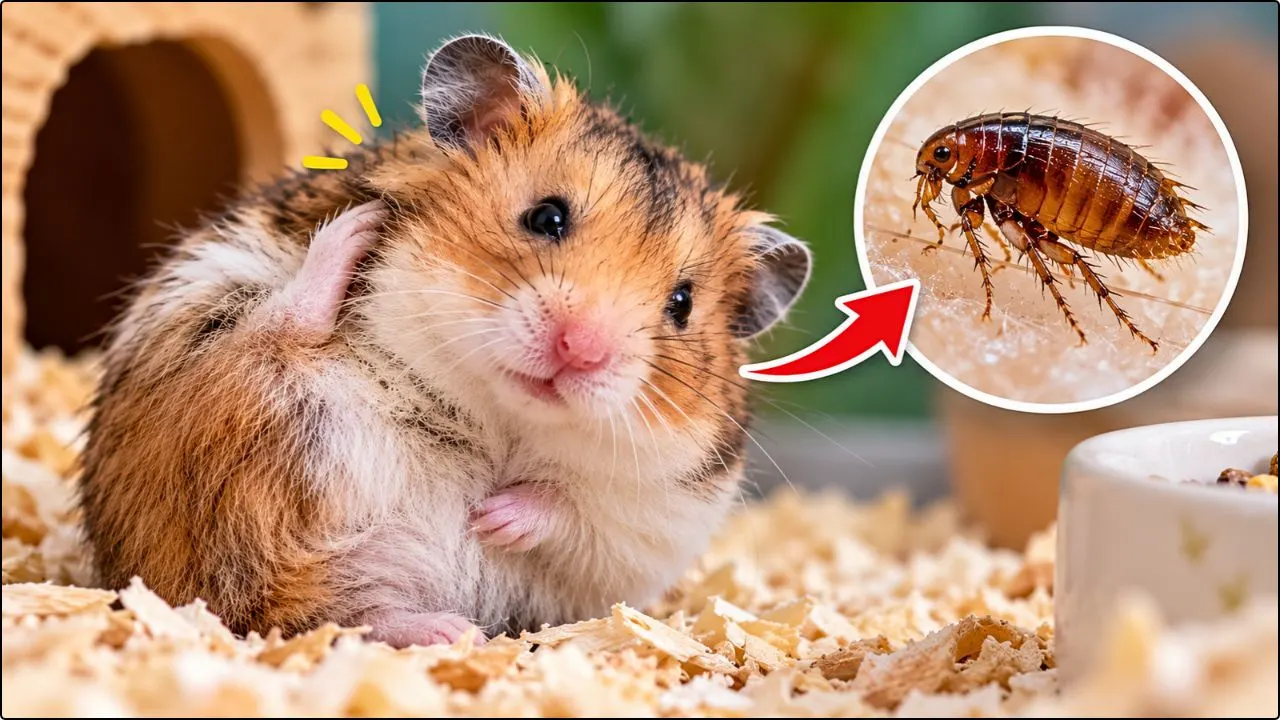
Noticing your hamster scratching more than usual can make you wonder whether fleas are hiding in its fur. Although fleas are far more commonly associated with cats and dogs, hamsters can occasionally be exposed to them too. The challenge is knowing whether you’re dealing with fleas, mites, irritated skin, or something else. Here’s how to recognize possible warning signs, check your hamster safely, and avoid treatments that could do more harm than good.
Quick Answer: Can Hamsters Get Fleas?
Yes, hamsters can get fleas, although flea infestations are not commonly reported in pet hamsters. Fleas may reach a hamster through an environment shared with infested animals, particularly dogs or cats.
However, scratching alone doesn’t mean your hamster has fleas. Mites, fungal infections, skin irritation, and other health problems can produce similar symptoms.
Here’s what you need to know:
- Fleas are small, wingless insects that feed on blood.
- Excessive scratching, irritated skin, and visible insects may suggest an infestation.
- Hamster mites can cause itching, flaky skin, and hair loss without visible fleas.
- A veterinarian should identify the parasite before treatment begins.
- Flea medications designed for cats or dogs should never be applied to hamsters without specific veterinary instructions.
- Keeping other household pets appropriately protected against fleas can help reduce exposure.
If you find a suspected flea, arrange a veterinary examination rather than attempting to treat your hamster yourself.
How Do Hamsters Get Fleas?
A hamster doesn’t need to go outdoors to encounter a flea. Fleas can enter indoor environments through other animals and establish themselves in places where pets spend time.
1. Fleas from cats or dogs
Cats and dogs are common hosts for fleas. If another household pet has an infestation, fleas may also be present in carpets, bedding, furniture, and surrounding areas.
A hamster living in that environment could potentially be exposed.
This doesn’t mean that a flea will automatically move from a dog to a hamster. Flea species differ in their preferred hosts, and not every exposure results in an established infestation.
Still, finding fleas on another pet is a good reason to examine your hamster’s surroundings more carefully.
2. Fleas in the home environment
Fleas don’t spend their entire life cycle feeding on an animal.
Eggs can fall into the environment, while immature stages develop in suitable protected areas. Adult fleas may later emerge and seek a host.
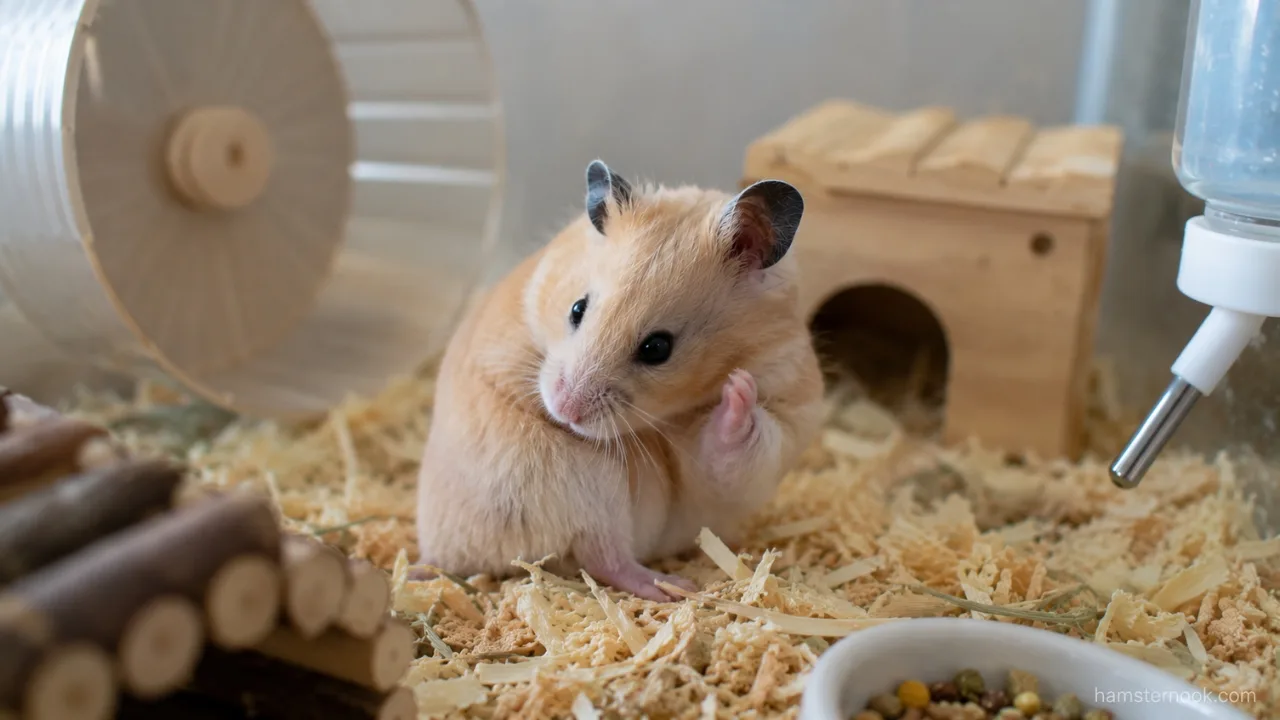
This is why addressing an established household flea problem often requires more than treating the animal on which fleas were first discovered.
If your home has a flea infestation, tell your veterinarian that you also keep a hamster. Any environmental treatment must account for your hamster’s safety.
3. Exposure through contaminated items
Items brought into an environment with an active flea infestation could potentially carry fleas or flea eggs.
However, there isn’t strong evidence that commercially packaged hamster bedding is a common source of flea infestations.

Avoid assuming that every new bedding package, toy, or food product contains parasites. If you discover insects in a product, identify them before deciding how to respond.
What Are the Signs of Fleas on a Hamster?
Flea bites can irritate an animal’s skin, but the symptoms aren’t specific enough to diagnose fleas without further examination.
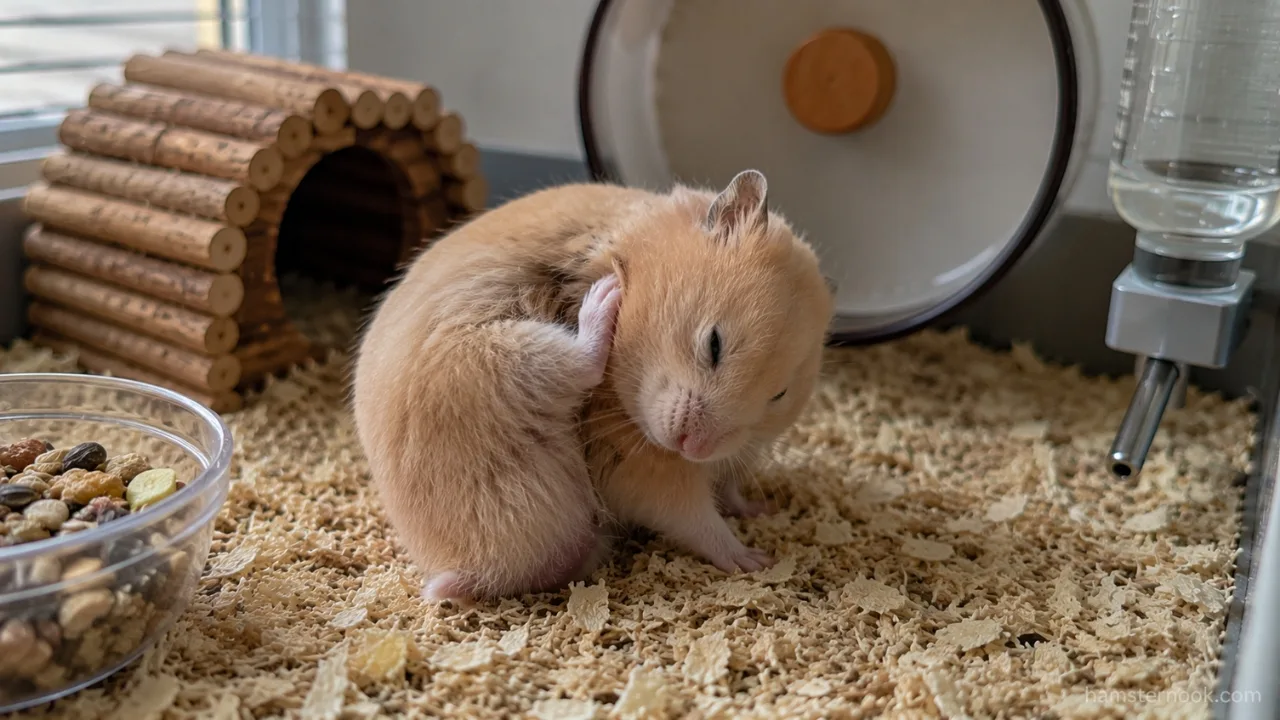
Excessive scratching
Hamsters normally groom themselves, including scratching and cleaning their fur.
Occasional scratching isn’t automatically concerning.
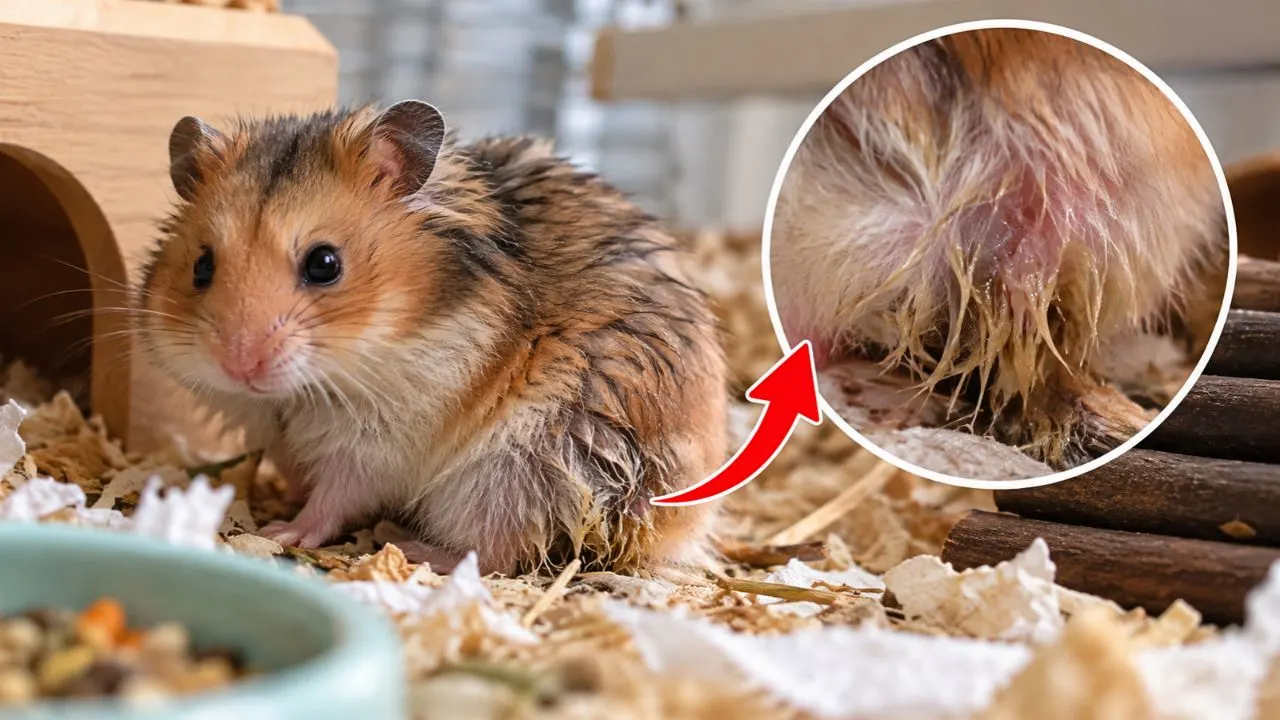
More persistent scratching, especially when accompanied by irritated skin or hair loss, deserves closer attention.
For a closer look at the possible reasons behind repeated scratching, see Why Does My Hamster Keep Scratching Itself? Normal Grooming, Causes & Warning Signs.
Watch for a noticeable change from your hamster’s usual grooming behavior rather than counting every scratch.
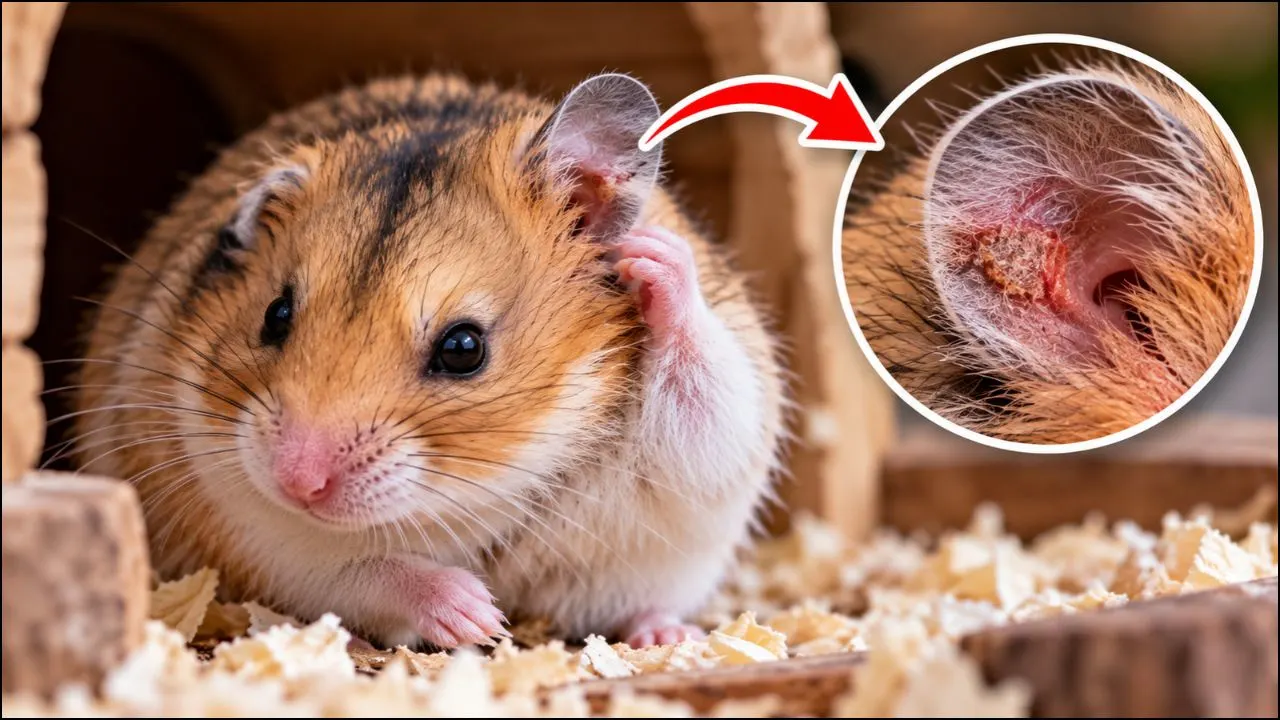
Red or irritated skin
Bites and repeated scratching may leave skin looking red or inflamed.

However, skin irritation can also result from mites, fungal infections, environmental irritants, or other medical conditions.
The appearance of irritated skin alone cannot confirm a flea infestation.
Hair loss or thinning fur
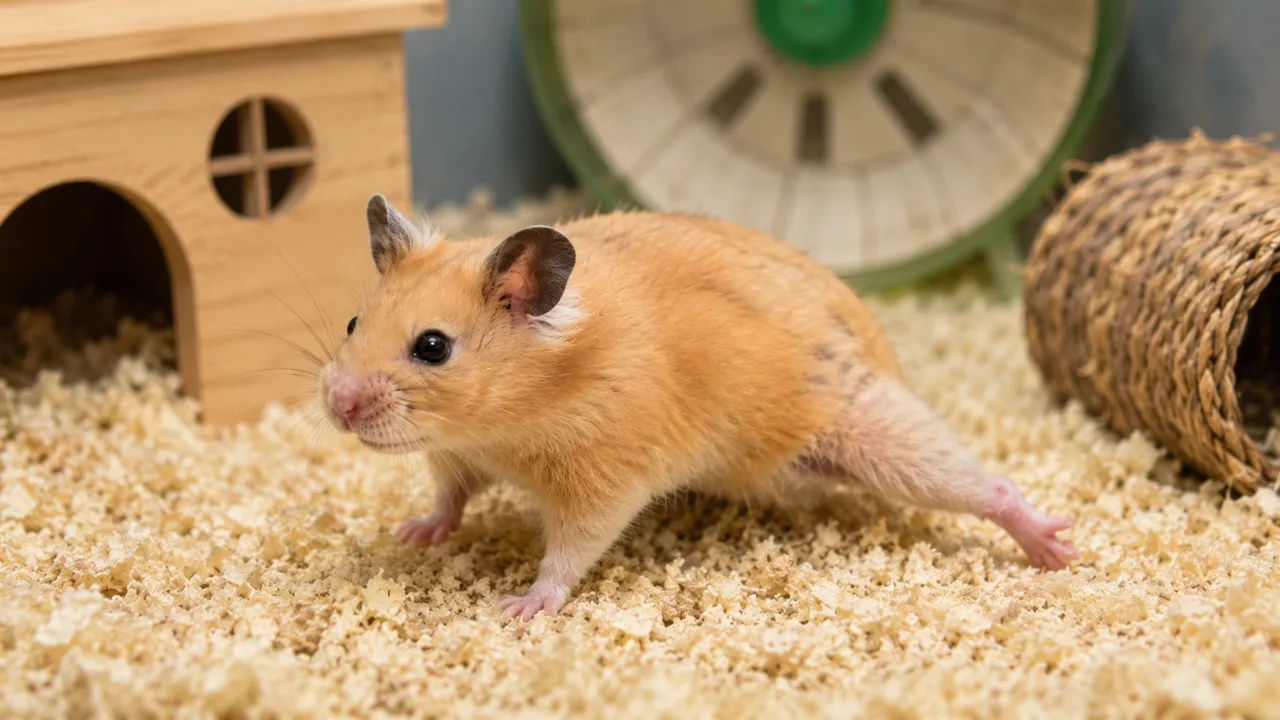
Some hamsters develop patches of thinning fur or bald areas when they have skin problems.
Veterinary references identify several possible causes of hamster hair loss, including mites, ringworm, rubbing against enclosure surfaces, and underlying illnesses.

Hair loss is therefore a reason to investigate, not proof of fleas.
For a more detailed look at possible causes of thinning fur and bald patches, see Why Is My Hamster Losing Hair? Causes, Bald Spots & When to See a Vet.
Small moving insects
Adult fleas are generally dark-colored, flattened insects that can move quickly and jump.
Finding a moving insect in your hamster’s fur raises concern, but identifying it correctly matters.
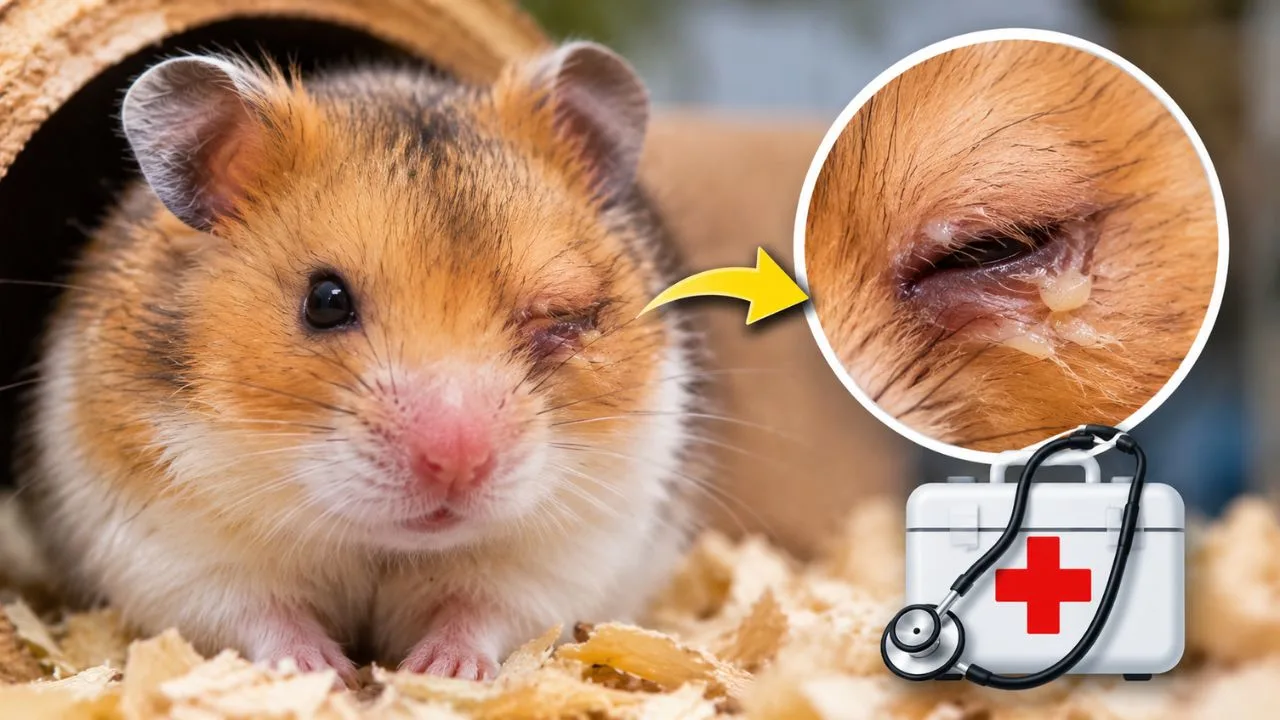
Not every tiny insect found in bedding or fur is a flea. A veterinarian can help distinguish fleas from other parasites or harmless environmental insects.
Dark specks in the fur
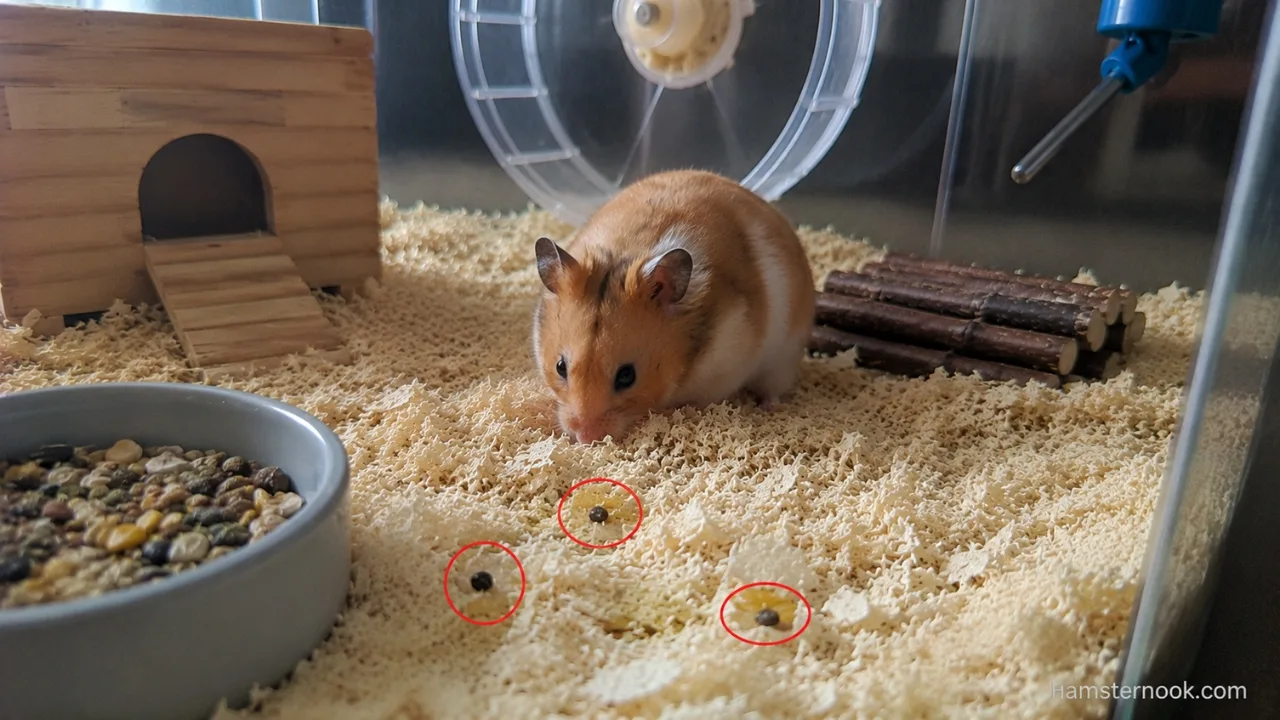
Flea dirt is flea feces containing digested blood. It may resemble small dark particles.
However, ordinary dirt, bedding fragments, and other debris can look similar.
Finding black specks doesn’t establish a diagnosis, especially if no fleas have been identified.

Fleas vs. Mites: How Can You Tell the Difference?
Mites are a particularly important alternative explanation for hamster skin problems.
The MSD Veterinary Manual describes several mite species affecting hamsters, including Demodex species associated with hair loss, scaling, and other skin changes.
Unlike fleas, many mites cannot be identified reliably without microscopic examination.
Copy Table HTML

| Feature | Fleas | Hamster mites |
|---|---|---|
| Parasite type | Small, blood-feeding insects | Very small arachnids |
| Visibility | Adult fleas may be visible moving through the fur | Many require magnification or microscopic examination |
| Scratching | May cause irritation and scratching | May cause itching, depending on the mite species |
| Hair loss | May occur because of irritation and scratching | Recognized with certain mite infestations |
| Flaky skin | May occur alongside skin irritation | Common with some mite-related conditions |
| Diagnosis | Veterinary identification of fleas or supporting evidence | Veterinary examination and sometimes skin sampling |
| Treatment | Depends on the confirmed parasite and hamster’s condition | Depends on the mite species and veterinary assessment |
The key difference: You may be able to see an adult flea, while mites affecting hamsters are often much harder to detect.
Neither parasite can be reliably diagnosed from scratching alone.
How to Check Your Hamster for Fleas Safely
You can perform a gentle visual check at home without attempting to diagnose or treat the condition yourself.
Step 1: Choose a calm moment
Hamsters are generally more active during the evening and nighttime.

Wait until your hamster is naturally awake rather than waking it abruptly for an examination.
Approach gently and avoid sudden movements.
Step 2: Use a secure examination area
Choose a safe, enclosed space where your hamster cannot fall or escape.
A secure container with appropriate ventilation may help if your hamster doesn’t tolerate being held.

Avoid restraining your hamster tightly or placing pressure on its body.
Step 3: Look through the fur
Under good lighting, gently examine the coat without pulling the skin or fur.
Pay attention to:
- Visible moving insects.
- Areas of thinning fur.
- Redness or irritated skin.
- Scabs or flaky patches.
- Unusual dark particles.
If your hamster becomes distressed, stop and allow it to settle.

Step 4: Examine the enclosure
Look for unusual insects around the bedding, hideouts, and enclosure edges.
Also check whether another household pet has been scratching or has a confirmed flea infestation.
Keep in mind that the absence of visible insects doesn’t rule out a parasite problem.
Step 5: Record what you notice
A clear photograph of a skin lesion or suspected insect may help your veterinarian.

You can also note when the scratching began and whether your hamster’s appetite, activity, or appearance has changed.
Avoid repeated handling just to obtain a better photograph.
Can Hamster Fleas Spread to Humans or Other Pets?
Fleas associated with household animals can bite humans, although humans are not their preferred long-term hosts.
Whether a flea found on a hamster could spread to another animal depends on the flea species and circumstances.

If fleas are confirmed in a home with cats or dogs, all affected animals and the environment may need a coordinated management plan.
That does not mean every pet should receive the same medication.
Never share flea treatments between different animal species. Products appropriate for dogs or cats may be unsuitable for hamsters.
Washing your hands after handling pets or cleaning enclosures is also a sensible routine hygiene practice.
How Are Fleas on Hamsters Treated?
A suspected flea infestation should be assessed by a veterinarian experienced with hamsters or other small mammals.
Treatment depends on the parasite identified, the hamster’s age and condition, and whether other animals or the surrounding environment are affected.
Veterinary examination and diagnosis
A veterinarian may examine your hamster’s coat and skin, look for evidence of external parasites, and investigate other possible causes of irritation.
If mites are suspected, skin samples may be needed.

Accurate identification matters because fleas, mites, and fungal skin infections require different approaches.
Veterinary-prescribed parasite treatment
Veterinarians have medications available for treating certain external parasites in small mammals.
However, a medicine used for one parasite or animal species is not automatically appropriate for another.
Hamsters are particularly vulnerable to dosing errors because of their small size.

Only use a medication when a veterinarian has confirmed that it is appropriate for your individual hamster and provided specific instructions.
Treating the environment
If fleas are confirmed, your veterinarian may recommend addressing the surrounding environment as well as the affected animals.
This could include cleaning appropriate household areas, washing washable fabrics, and arranging safe flea control for other pets.
Environmental insecticides require special care around small mammals.

Keep your hamster away from sprays, powders, foggers, and treated areas unless a veterinarian has specifically confirmed how to manage the exposure safely.
Common Flea Treatment Mistakes to Avoid
Some products marketed as convenient flea solutions can create unnecessary risks for hamsters.
Using dog or cat flea drops
Never apply flea drops intended for dogs or cats to a hamster without specific veterinary direction.
Even a small quantity may be inappropriate, and the product’s safety cannot be judged simply by using less than the amount recommended for a larger pet.

Spraying insecticide directly onto the hamster
Household flea sprays are not substitutes for veterinary treatment.
Do not spray your hamster, its bedding, or enclosure with a household pesticide.
If environmental pest control is necessary, obtain professional guidance that specifically accounts for small pets.
Trying essential oils or home remedies
Tea tree oil, peppermint oil, and other concentrated essential oils should not be used as homemade flea treatments for hamsters.
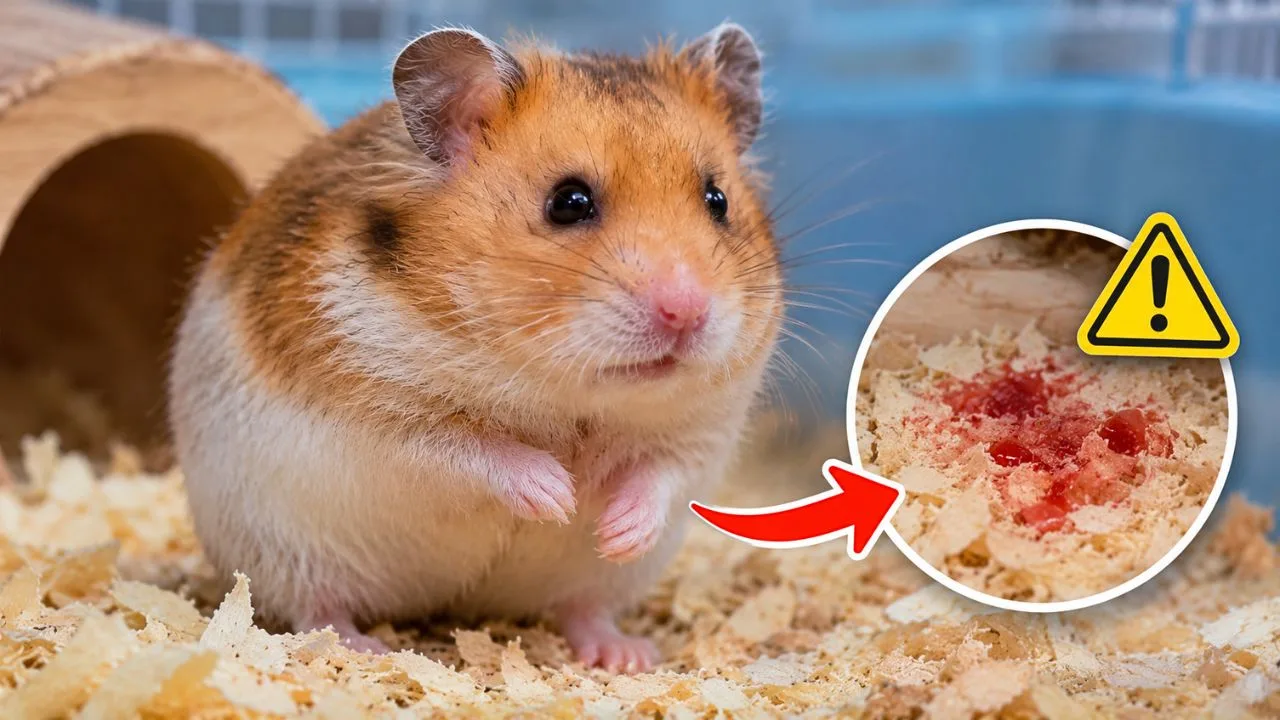
There is insufficient reliable evidence supporting their safe and effective use for this purpose, and concentrated products can expose small animals to unnecessary risks.
Giving your hamster a bath
Hamsters should not be given water baths as a routine flea-control method.
Bathing can cause significant stress and may leave the animal chilled if not managed properly.
A water bath is not a reliable treatment for an infestation.

Assuming scratching always means fleas
Treating an unconfirmed flea infestation can delay diagnosis of mites, ringworm, or another skin condition.
If your hamster has persistent itching or hair loss, arrange a veterinary assessment rather than trying several treatments.
What You Should Do If You Suspect Fleas
If you’ve noticed unusual scratching or found an insect near your hamster, use the following steps.
- Observe your hamster. Look for visible insects, changes in grooming, skin irritation, or hair loss.
- Check other household pets. If you have cats or dogs, look for signs of a flea problem and arrange appropriate veterinary care.
- Avoid applying medication. Do not use flea drops, powders, shampoos, or home remedies without veterinary instructions.
- Contact a small-mammal veterinarian. Explain what you’ve observed and whether other animals in the home have fleas.
- Maintain normal enclosure hygiene. Remove soiled bedding and spoiled food, and clean enclosure items appropriately without using unapproved chemicals.
- Follow the treatment plan. If fleas or another parasite are diagnosed, follow the prescribed treatment and environmental recommendations.
If your hamster is eating normally, active during its usual waking hours, and showing only occasional scratching without other abnormalities, you can observe its behavior briefly.

Persistent scratching, visible parasites, skin lesions, or hair loss warrants veterinary assessment.
Warning Signs: When Should You Worry?
A suspected parasite problem becomes more concerning when your hamster shows signs of illness beyond occasional scratching.
Contact a veterinarian promptly if you notice:
- Persistent or intense scratching.
- New or expanding bald patches.
- Bleeding, open wounds, or inflamed skin.
- Extensive scabbing or crusting.
- Reduced appetite.
- Unusual inactivity or weakness.
- Rapidly worsening skin changes.
Severe parasite infestations can be particularly concerning in small animals, although the severity cannot be determined from appearance alone.

Seek emergency veterinary care if your hamster collapses, has difficulty breathing, becomes severely weak, or is unresponsive.
Do not assume these symptoms are caused by fleas. They may indicate a different serious medical problem.
For a broader overview of changes that may indicate illness, see How to Tell If Your Hamster Is Sick: Signs, Symptoms & When to See a Vet.
How to Prevent Fleas on Hamsters Safely
Prevention focuses on reducing exposure and maintaining a healthy environment rather than routinely applying flea products to hamsters.

Keep cats and dogs protected
If you have dogs or cats, follow your veterinarian’s recommendations for species-appropriate flea prevention.
Managing fleas in other household pets can help reduce the chance of fleas becoming established in your home.
Keep your hamster safely separated from larger pets, even when those animals appear friendly.
Maintain a clean enclosure
Regularly remove soiled bedding and check for spoiled food.

For a practical cleaning schedule, see How Often Should You Clean a Hamster Cage? Daily, Weekly & Deep Cleaning Guide.
Clean enclosure accessories when necessary using hamster-safe methods, and allow washed items to dry before returning them.
Avoid unnecessary full enclosure cleanouts that remove all familiar nesting material, unless a veterinarian recommends a more thorough cleaning because of a confirmed infestation.
Choose appropriate bedding
Use suitable, low-dust bedding designed for small animals.

For help choosing suitable materials and understanding bedding depth, see Best Hamster Bedding: Safest Types, Depth, Burrowing & What to Avoid.
Inspect new supplies for obvious contamination or damage, but don’t assume that ordinary commercial bedding contains fleas.
Low-dust bedding is valuable for general hamster welfare, though it does not specifically prevent fleas.
Check your hamster regularly
Become familiar with your hamster’s normal appearance and grooming habits.

During ordinary interactions, watch for changes in fur condition, skin appearance, appetite, and activity.
Early recognition of an unusual change makes it easier to seek veterinary advice before a problem becomes more serious.
Avoid unnecessary flea products
A healthy hamster does not generally need routine flea medication simply because cats or dogs in the household receive preventive treatment.
There is no reason to expose your hamster to insecticides without a specific veterinary indication.
Final Thoughts
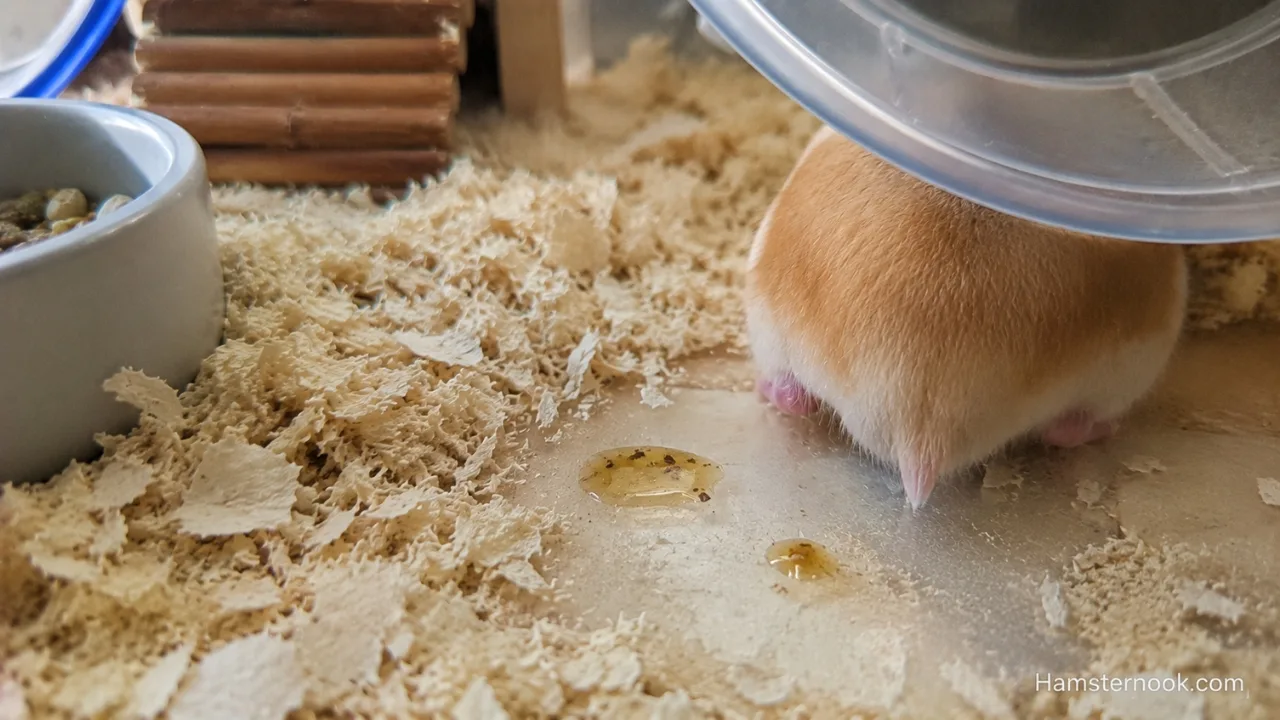
Hamsters can get fleas, but scratching and hair loss are not reliable proof of a flea infestation. Mites, fungal infections, and other skin conditions can produce similar changes.
If you suspect fleas, examine your hamster gently, check for possible exposure from other household pets, and contact a veterinarian for an accurate diagnosis.
Avoid dog or cat flea products, insecticide sprays, essential oils, and homemade treatments. These can introduce risks without addressing the actual cause.
The safest approach is straightforward: maintain a suitable enclosure, manage flea problems in other household animals, recognize changes in your hamster’s health, and use veterinary-guided treatment when needed.

Frequently Asked Questions
1. Can indoor hamsters get fleas?
Yes. Indoor hamsters can potentially encounter fleas if the insects enter the home through other animals or an existing environmental infestation. However, fleas are not a commonly reported parasite problem in pet hamsters.
2. How do I know if my hamster has fleas?
You may notice unusual scratching, irritated skin, or small moving insects. However, these findings aren’t enough to confirm fleas in every case. A veterinarian can identify the parasite and investigate other causes of skin problems.
3. Can hamsters get fleas from cats or dogs?
Potentially, yes. Fleas associated with cats and dogs can infest household environments, creating opportunities for exposure. Keep your hamster separated from other pets and follow appropriate flea-control advice for affected animals.
4. Are fleas or mites more common in hamsters?
Veterinary literature describes mite infestations as a recognized hamster health problem. Flea infestations are less commonly documented. If your hamster has itching or hair loss, mites are an important possibility, but only a veterinary examination can establish the cause.
5. Can I use cat flea treatment on my hamster?
No. Never use cat flea treatment on a hamster unless a veterinarian has specifically prescribed that exact product and provided instructions for your hamster. Products intended for larger animals may be inappropriate or dangerous.
6. Can I use flea powder on my hamster?
Do not apply flea powder without veterinary instructions. Powders may expose your hamster through inhalation, grooming, or contact with the skin, and their safety depends on the ingredients and formulation.
7. Can fleas cause hair loss in hamsters?
Flea-related irritation and scratching could contribute to fur damage, but hair loss has many possible causes. Mites, fungal infections, rubbing, and underlying medical conditions should also be considered.
8. Can hamster fleas bite humans?
Fleas that infest household animals can bite humans. Whether fleas found on a hamster will bite people depends on the flea species. If fleas are confirmed in your home, seek appropriate veterinary and environmental pest-control advice.
9. Should I change all my hamster’s bedding if I find fleas?
If fleas are confirmed, your veterinarian may recommend more thorough enclosure cleaning and replacement of contaminated bedding as part of an overall treatment plan. Avoid using household insecticides directly on the enclosure or bedding.
10. Can a hamster have mites without visible bugs?
Yes. Many hamster mites are too small to see without magnification. A hamster can have mite-related skin problems even when no insects are visible. Veterinary examination and, when appropriate, skin sampling can help identify the cause.
11. Is it normal for hamsters to scratch themselves?
Occasional scratching is part of normal grooming. Persistent, intense, or unusual scratching, particularly when accompanied by hair loss or irritated skin, should be assessed by a veterinarian.
12. Do hamsters need monthly flea prevention?
Routine monthly flea medication is not generally recommended for healthy pet hamsters. Unlike common preventive programs for dogs and cats, parasite treatment in hamsters should be based on veterinary assessment and individual circumstances.
References
This guide is based on veterinary guidance about hamster skin health, external parasites, itching, hair loss, and appropriate diagnosis and treatment from trusted veterinary resources, including:
- ESCCAP – External Parasites Guideline – explains that hamsters can be affected by several flea species, although infestations are uncommon, and describes possible exposure through contact with other animals.
- MSD Veterinary Manual – Disorders and Diseases of Hamsters – covers hamster skin disorders, mites, hair loss, and veterinary diagnosis.
Medical Disclaimer: This article provides general educational information and does not replace veterinary diagnosis or treatment. If your hamster has suspected parasites, persistent skin problems, or signs of illness, consult a veterinarian experienced with small mammals. Never use flea medications or home remedies without professional guidance.

Narayan Kumar is the founder and author of HamsterNook. He creates practical, research-based hamster care guides covering hamster behavior, nutrition, cage setup, enrichment, health, and everyday care. His goal is to help hamster owners make informed decisions and provide safer, healthier lives for their pets through clear, beginner-friendly information based on trusted animal care resources.