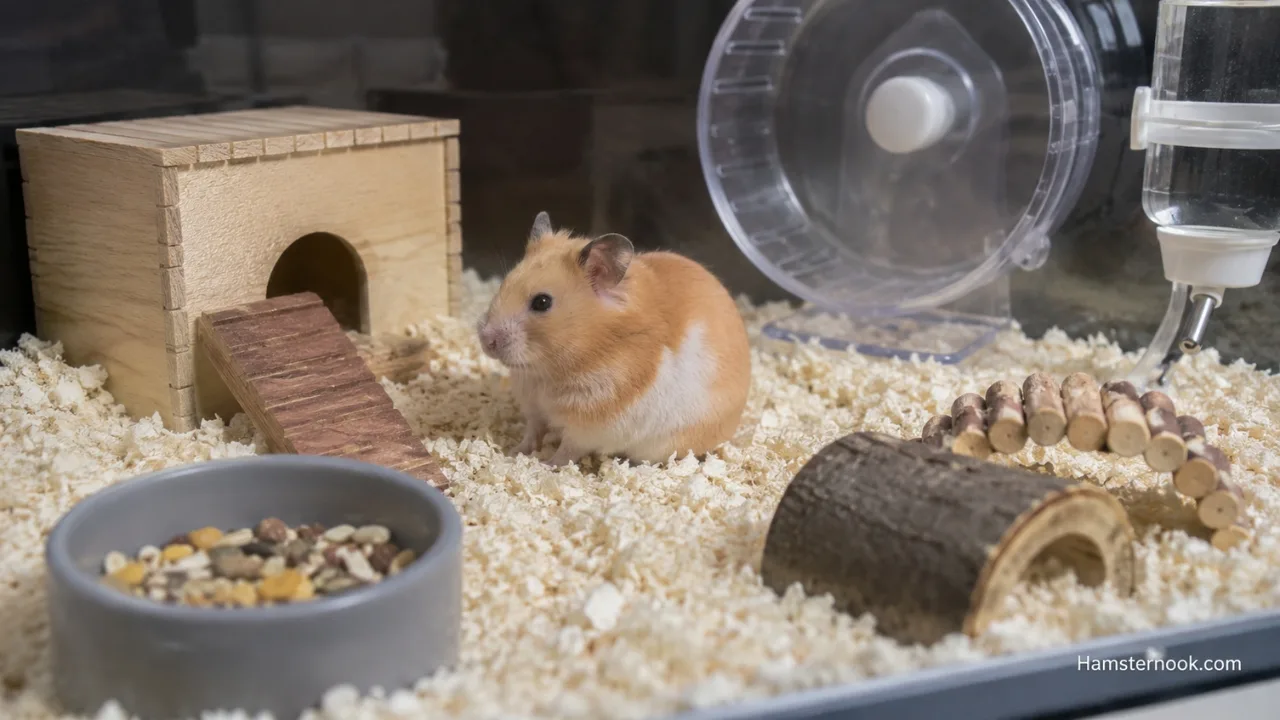
You glance into your hamster’s enclosure and notice something unusual. Instead of running on the wheel, digging through bedding, or exploring tunnels, your hamster is sitting in the same spot for long periods. For many owners, this behavior immediately raises concerns. Is the hamster sick? Bored? Stressed? Or is this actually normal?
The answer depends on the situation. Hamsters naturally spend a lot of time resting, grooming, and observing their surroundings. However, if a hamster suddenly starts sitting in one place more than usual, especially alongside other behavioral changes, it can sometimes signal a problem that deserves attention.
Knowing what normal resting looks like makes it much easier to spot when a hamster may actually need attention.
Is It Normal for a Hamster to Sit in One Spot?
Yes, sometimes.
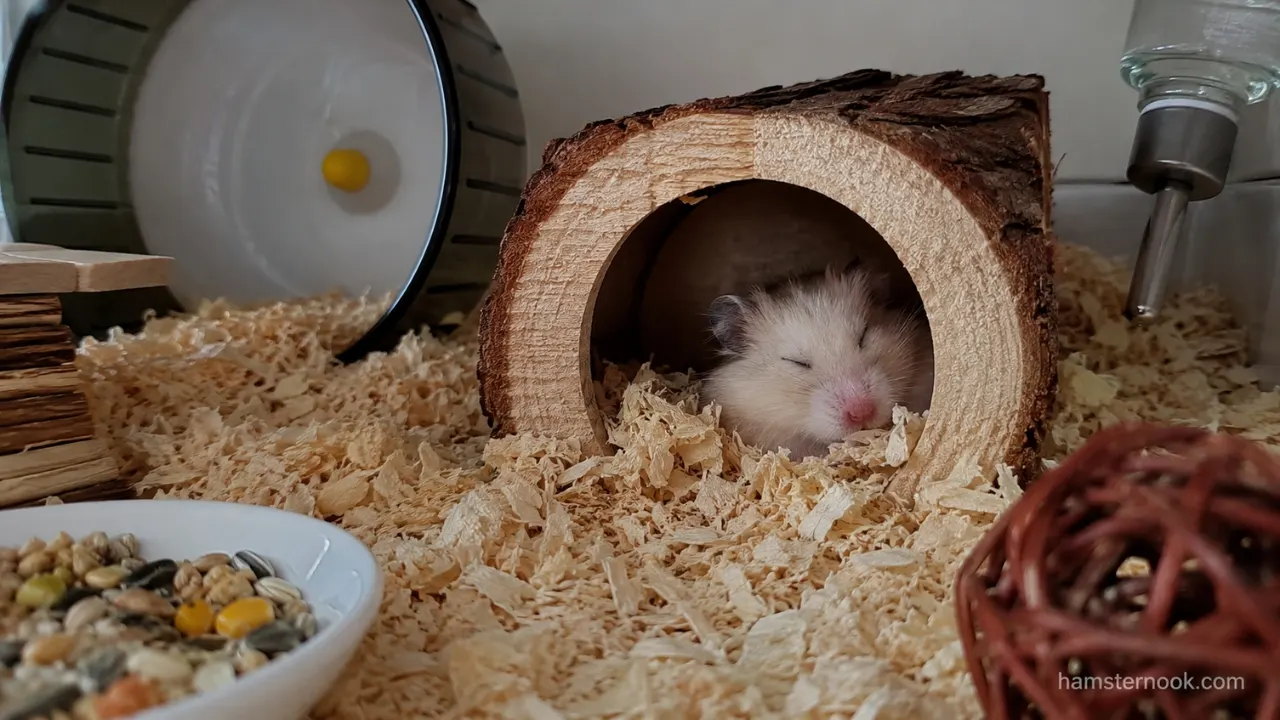
Hamsters are not constantly active animals. Unlike dogs or cats, they spend much of their time sleeping, resting, grooming, or quietly observing their environment.
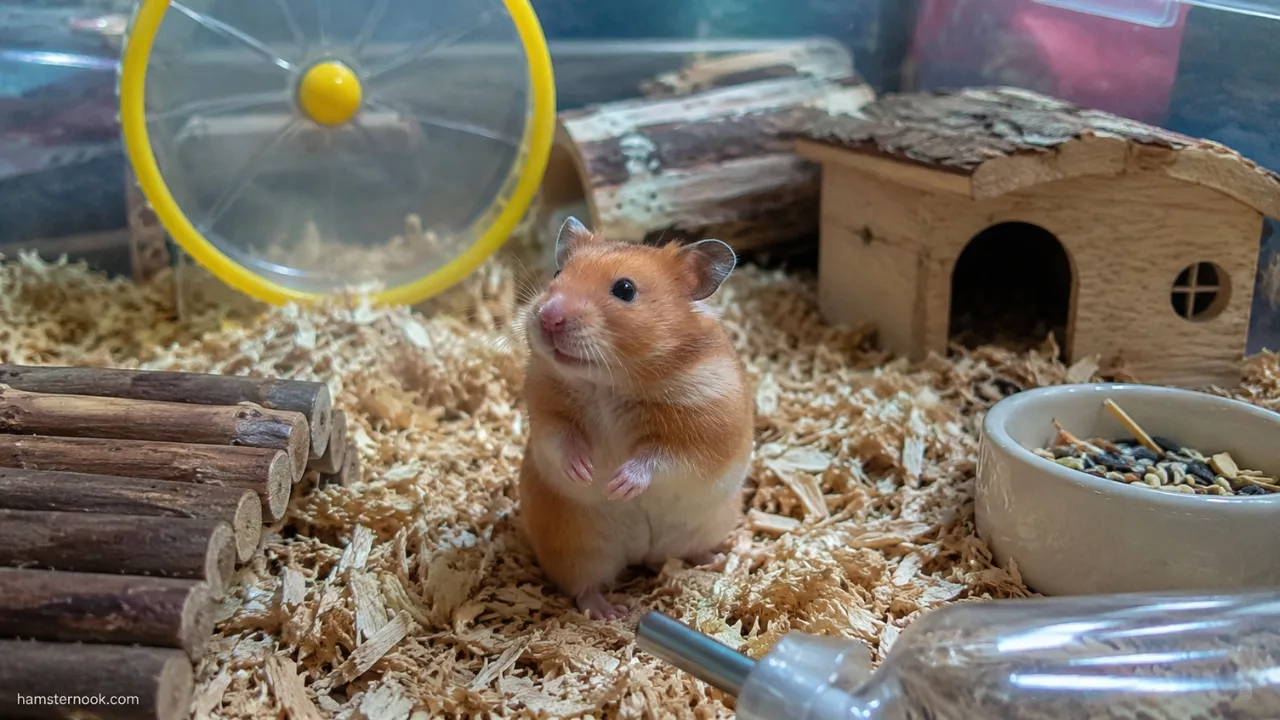
A hamster sitting still is not automatically a reason for concern. Many healthy hamsters will:
- Rest after exercise
- Sit quietly before becoming active
- Observe noises or movement nearby
- Relax in a favorite area of the cage
- Groom themselves while remaining in one place
One behavior rarely tells the whole story, so it’s important to pay attention to everything else your hamster is doing as well.
When Sitting Still Is Completely Normal
Certain situations naturally cause hamsters to remain stationary.
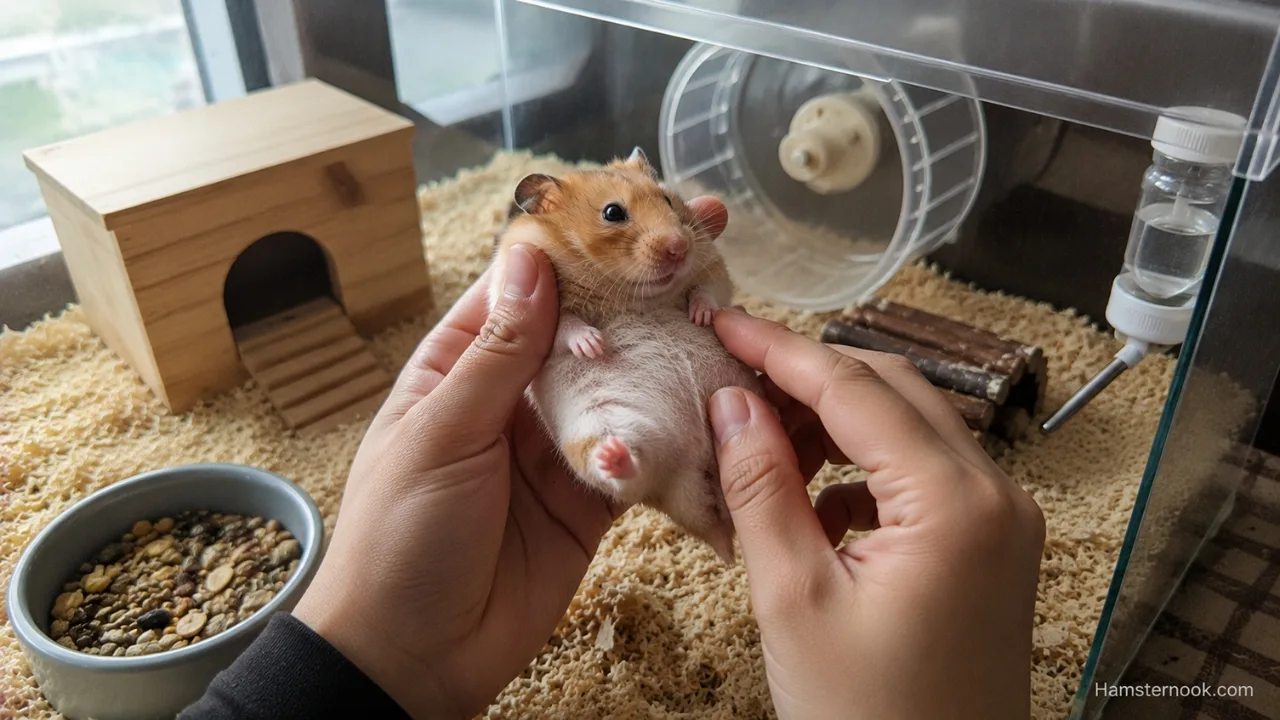
| Situation | Why It Happens | Usually Normal? |
|---|---|---|
| Waking up | Hamsters often take time to become active | Yes |
| After exercise | Resting after wheel running or exploration | Yes |
| Listening to sounds | Assessing surroundings for safety | Yes |
| Grooming sessions | Cleaning fur can take several minutes | Yes |
| Relaxing in a favorite hide | Feeling secure and comfortable | Yes |
If your hamster eventually resumes normal activity, there is usually no reason to worry.
Common Reasons a Hamster Keeps Sitting in One Spot
A hamster that remains in one place for extended periods may be reacting to environmental, behavioral, or health-related factors.
Your Hamster Is Resting During the Day
One of the most common explanations is simply timing.
Hamsters are generally nocturnal or crepuscular, meaning they are most active during the evening, night, and early morning hours.

Many owners accidentally assume something is wrong because they check on their hamster during daytime hours.
Typical daytime behavior includes:
- Sleeping
- Sitting quietly
- Minimal movement
- Staying inside hides
A hamster that appears inactive during the day may become highly active once the lights go out.
If you’re unsure when hamsters are naturally awake, see Are Hamsters Nocturnal or Crepuscular?
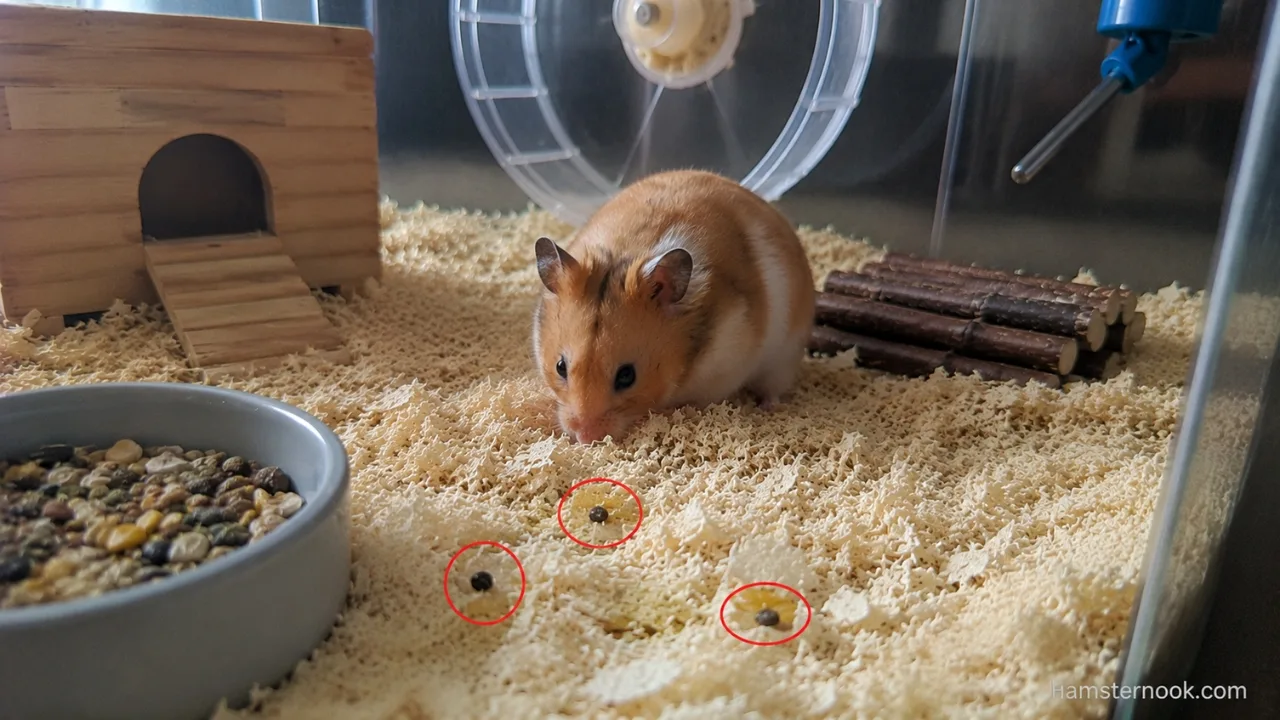
Your Hamster Feels Safe in That Location
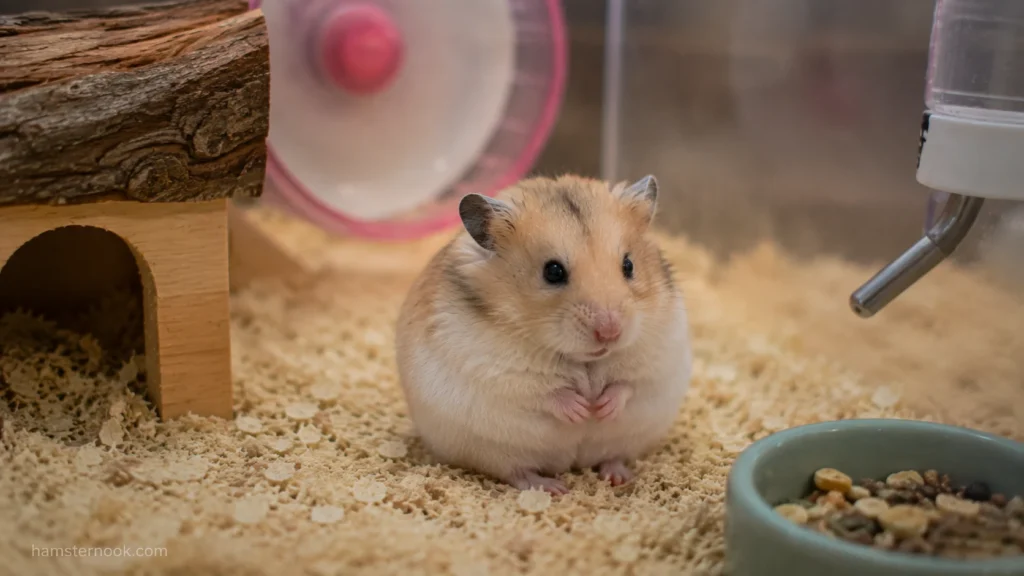
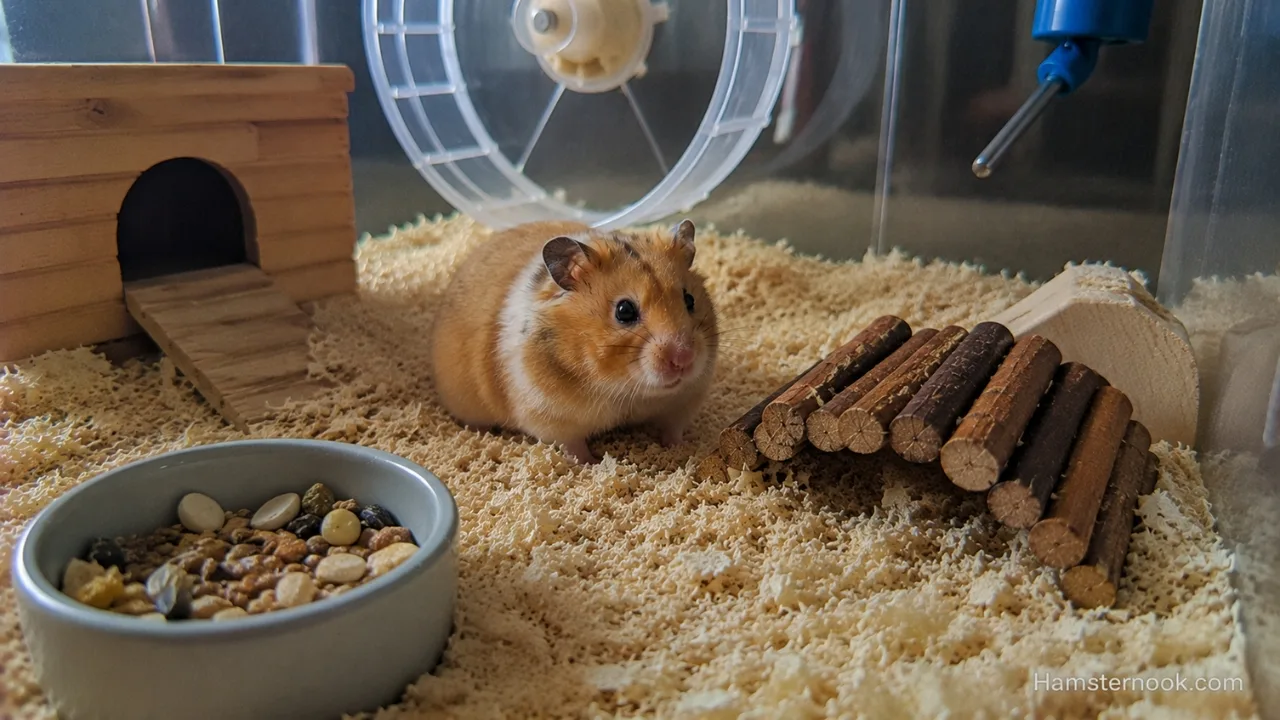
Over time, many hamsters develop favorite resting spots that they return to whenever they want to relax or observe their surroundings.
These spots may include:
- Multi-chamber hides
- Nesting areas
- Corners with deep bedding
- Covered tunnels
- Platforms near shelters
If your hamster repeatedly sits in the same safe location but otherwise behaves normally, it may simply be a preferred resting area.
Many hamsters choose secure sleeping spots based on instinct. Read Best Hamster Hideouts and Sleeping Areas.
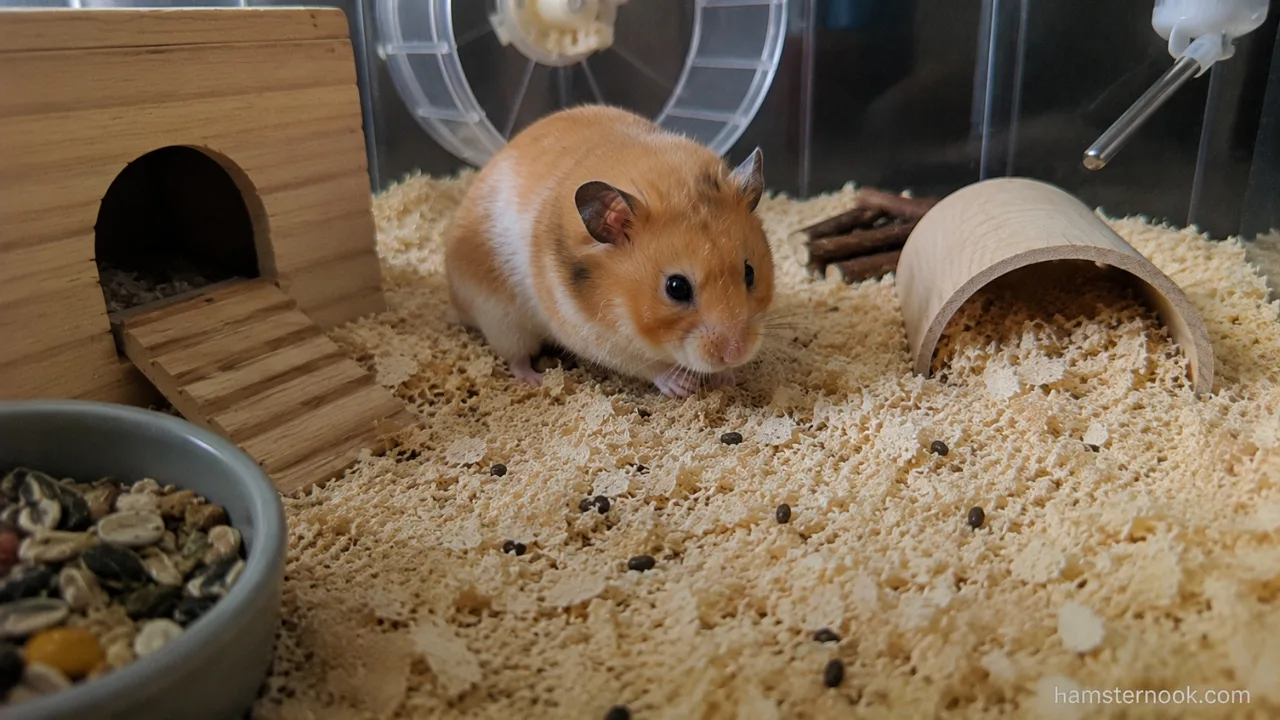
Recent Changes Are Causing Caution
Hamsters can be surprisingly sensitive to changes.
A hamster may spend more time sitting still if you recently:
| Environmental Change | Possible Reaction |
|---|---|
| Moved the cage | Increased caution |
| Changed bedding | Temporary uncertainty |
| Added new accessories | Observation behavior |
| Rearranged the enclosure | Reduced exploration initially |
| Brought home the hamster recently | Adjustment period |
Many hamsters become more active again after a few days once they feel comfortable.
The Cage Temperature Is Too Hot
Heat can significantly affect hamster activity.
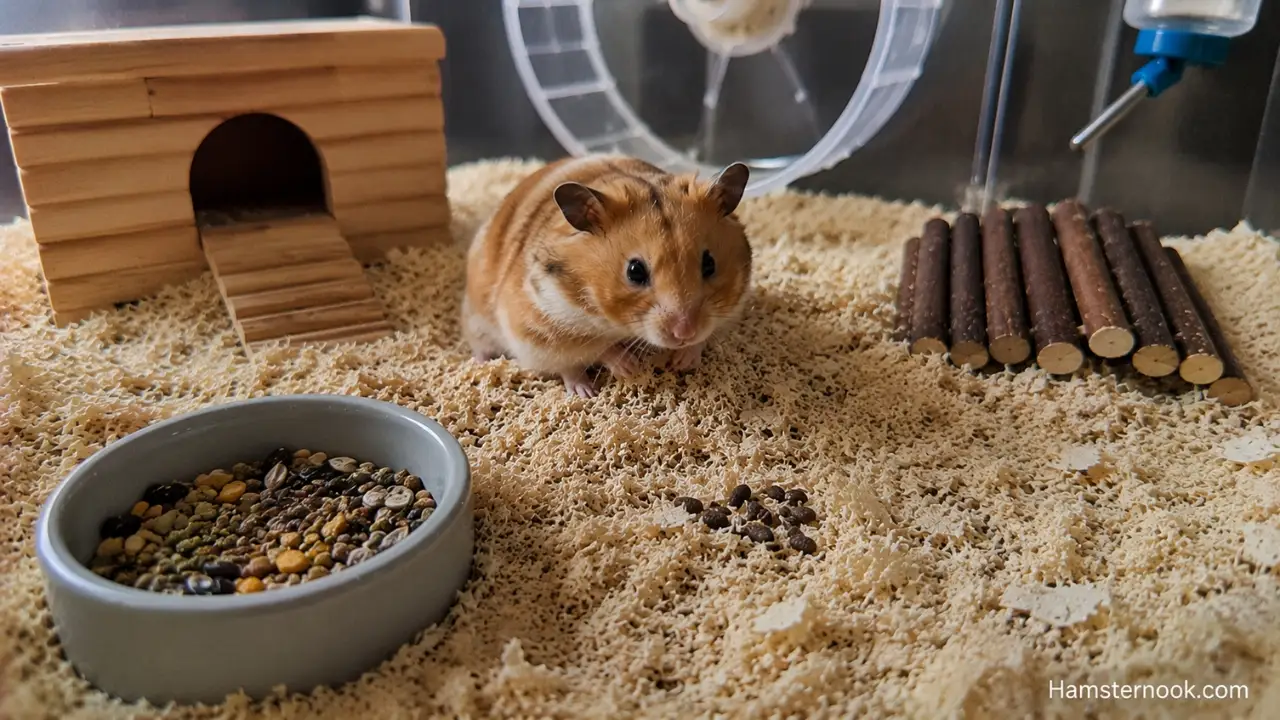
When temperatures become too warm, hamsters often reduce movement to avoid overheating.
Signs of heat-related inactivity may include:
- Stretching out on cool surfaces
- Remaining motionless for long periods
- Reduced wheel running
- Seeking shaded areas
Hamsters generally thrive in moderate indoor temperatures rather than extreme heat.
The Cage Temperature Is Too Cold
Cold temperatures can also reduce activity.
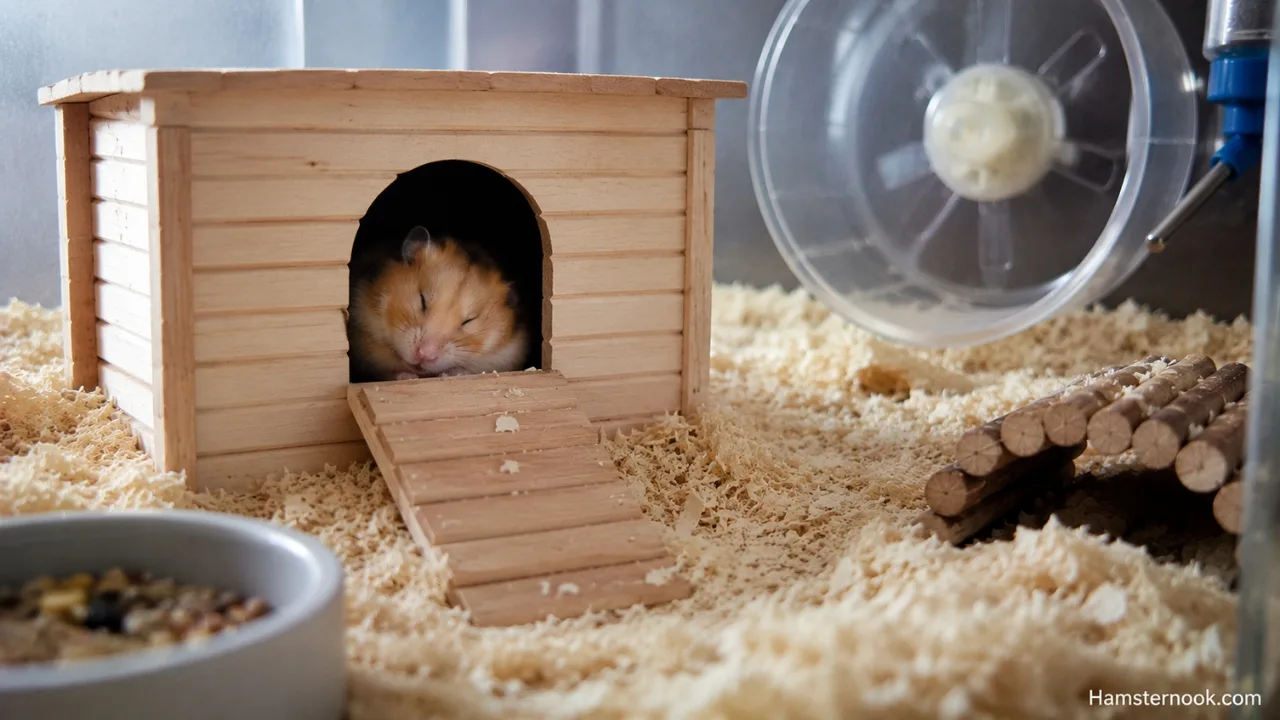
A hamster may remain curled up in one location if it feels chilled.
Signs can include:
- Staying inside nests longer
- Reduced exploration
- Curling tightly into bedding
- Increased nesting behavior
Extremely cold conditions can become dangerous for hamsters.
Boredom or Lack of Enrichment
A hamster living in an unstimulating environment may become less active over time.
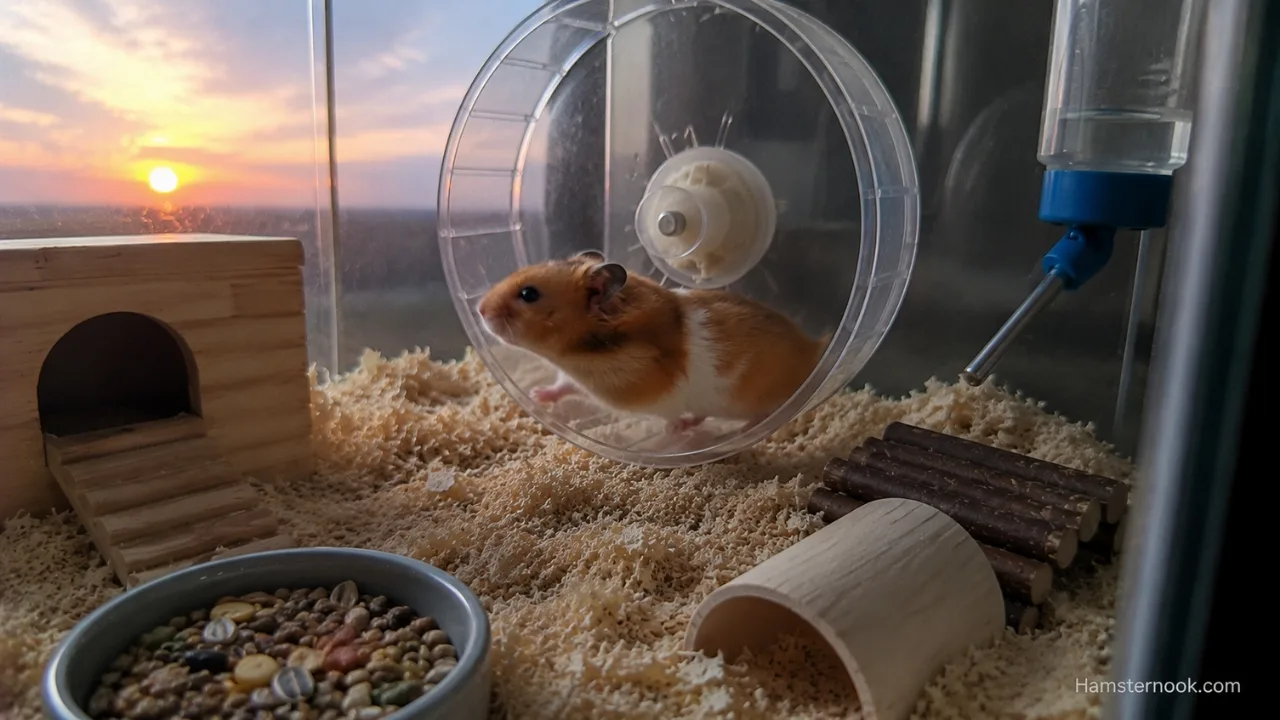
Insufficient enrichment can contribute to:
- Reduced exploration
- Longer periods of inactivity
- Repetitive behaviors
- Lack of curiosity
Proper enclosure size also plays a major role in activity levels. See How Big Should a Hamster Cage Be?
A well-designed enclosure should provide opportunities for:
- Digging
- Foraging
- Climbing where appropriate
- Chewing
- Exploring
Stress Can Cause Reduced Activity
Stress affects hamsters differently.
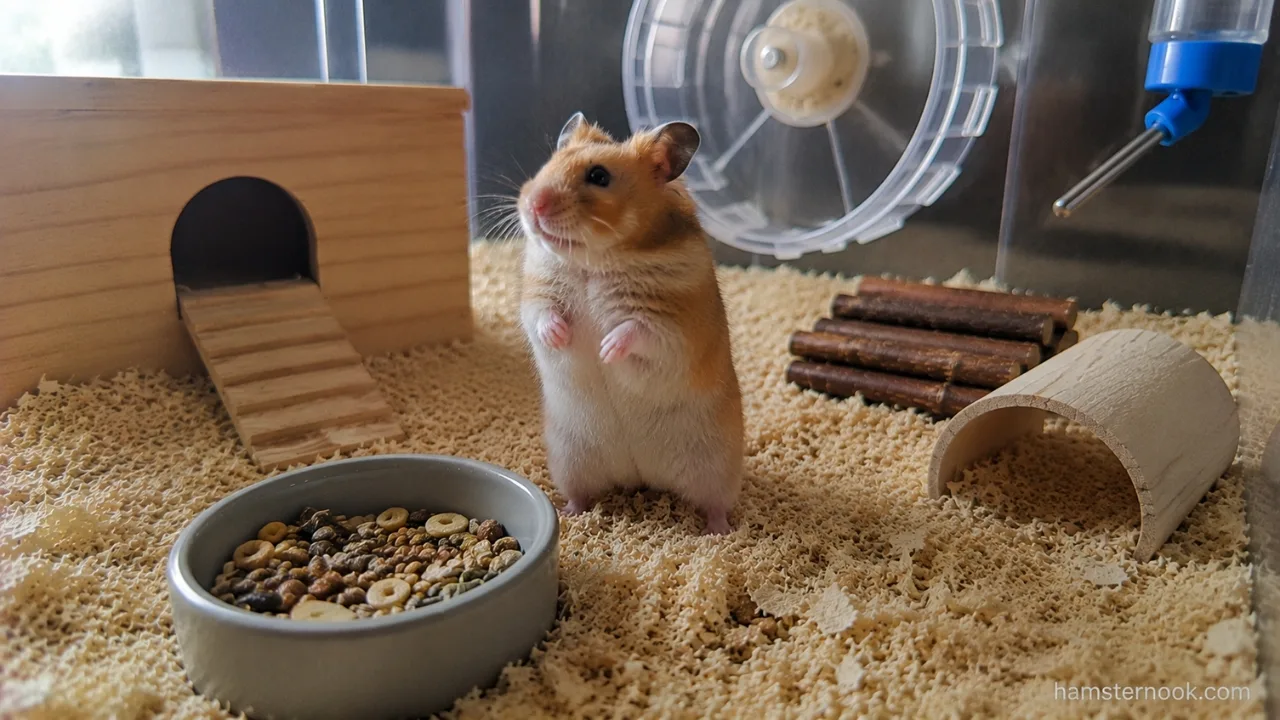
If you’re unsure whether stress may be affecting your hamster, our 5 Warning Signs Your Hamster May Be Stressed guide explains the behaviors owners commonly observe.
While some stressed hamsters become hyperactive, others may become unusually quiet and withdrawn.
Potential stress triggers include:
- Loud noises
- Frequent disturbances
- Inadequate cage size
- Lack of hiding places
- Other pets nearby
Looking for other changes in behavior often makes it easier to tell whether stress is involved.
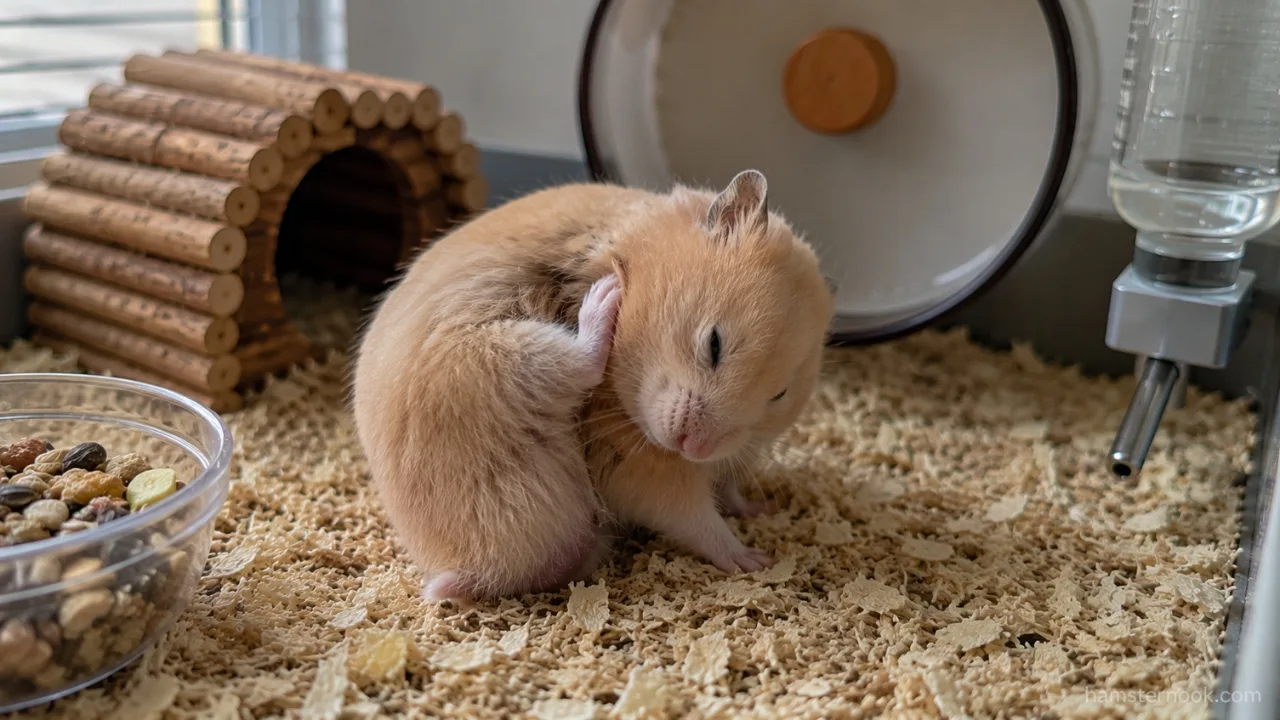
Health Problems That May Cause Excessive Sitting
Sometimes a hamster that remains in one place is experiencing discomfort or illness.
This is especially concerning if the behavior appears suddenly or is accompanied by other symptoms.
Warning Signs That Require Closer Attention
| Symptom | Possible Concern |
|---|---|
| Loss of appetite | Illness or pain |
| Weight loss | Underlying health issue |
| Labored breathing | Respiratory problems |
| Hunched posture | Pain or discomfort |
| Wet tail area | Digestive illness |
| Discharge from eyes or nose | Infection |
| Difficulty walking | Injury or illness |
| Lack of grooming | Poor health |
A hamster showing multiple symptoms should be evaluated by a veterinarian promptly.
Our Signs of a Sick Hamster: Warning Symptoms Every Owner Should Know guide explains the health changes that often appear before serious illness becomes obvious.
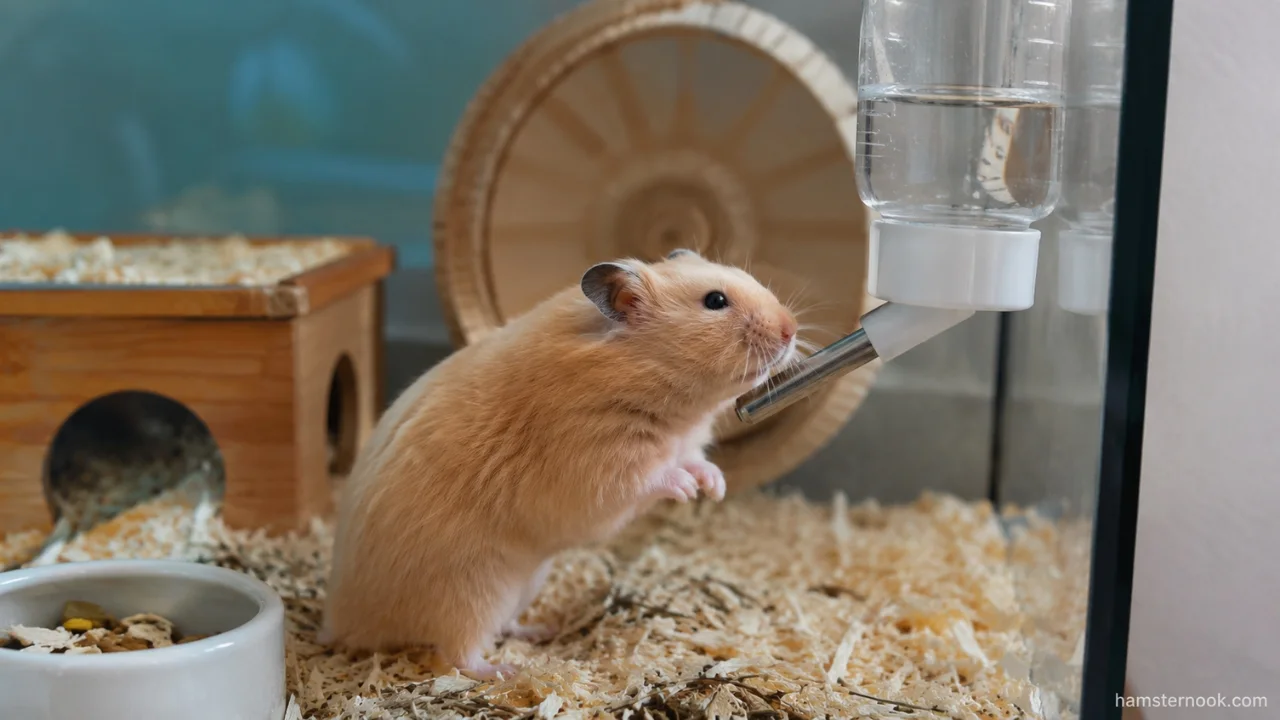
Is Your Hamster Getting Older?
Senior hamsters naturally become less active than younger ones.
Age-related changes may include:
- Longer rest periods
- Slower movement
- Less wheel running
- Increased sleeping
Older hamsters can still enjoy a good quality of life, but activity levels often decrease gradually with age.
A sudden decline, however, should not automatically be blamed on aging.

When Sitting in One Spot Is Usually Not an Emergency
Many owners immediately assume the worst when they notice a hamster sitting still for long periods. In reality, healthy hamsters often spend time resting, observing their surroundings, grooming, or relaxing in favorite areas of the enclosure.
The biggest concern is not the sitting itself, but whether it is accompanied by other changes such as appetite loss, breathing difficulties, weight loss, weakness, or reduced nighttime activity.
Because appetite changes can be an important warning sign, our guide to why hamsters stop eating covers other possible causes and signs that may need veterinary attention.
How to Tell the Difference Between Resting and Illness
One useful approach is to compare behavior patterns.
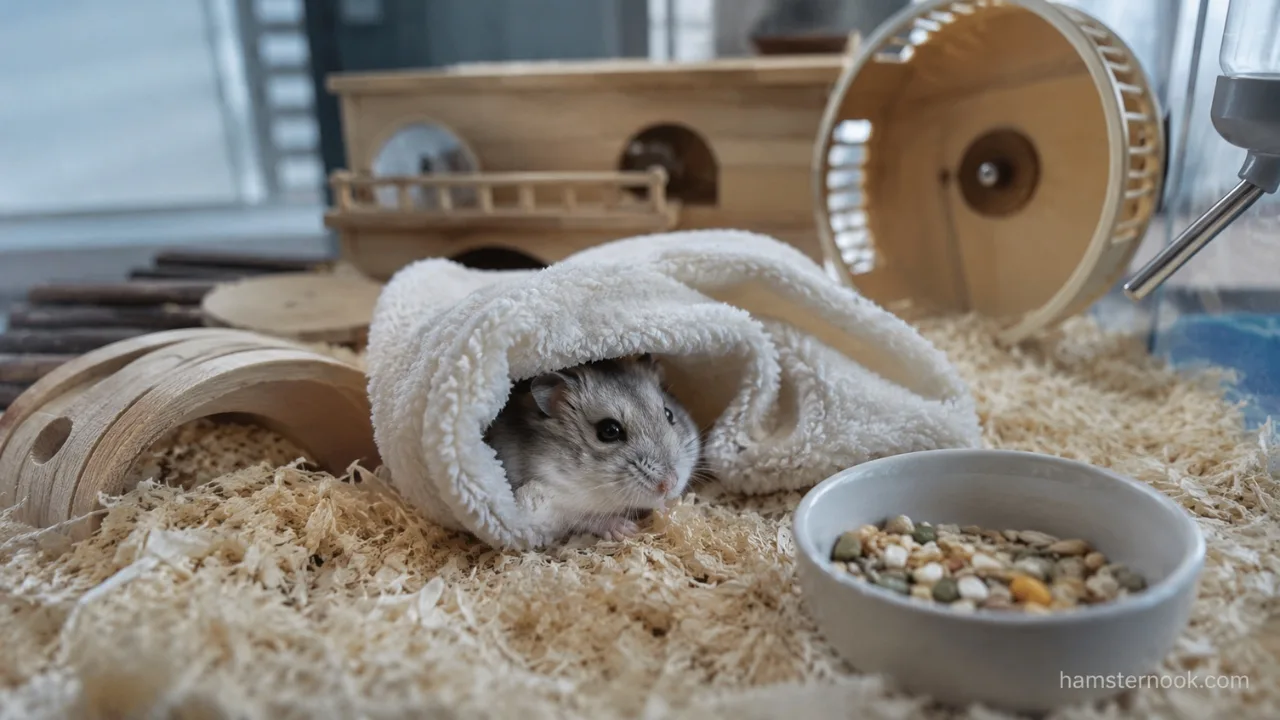
| Behavior | Normal Resting | Potential Health Issue |
|---|---|---|
| Eats normally | Yes | Often reduced |
| Drinks normally | Yes | May decrease |
| Responds to sounds | Yes | Often reduced |
| Moves when necessary | Yes | May remain inactive |
| Grooms regularly | Yes | May stop grooming |
| Activity at night | Usually present | Often reduced |
A healthy hamster typically becomes active at some point during its normal waking hours.
If you’re also noticing an unusual sleeping posture, our hamster sleeping position guide explains what common positions may mean and which changes deserve closer attention.
What You Should Do If Your Hamster Keeps Sitting Still
Before assuming the worst, spend a few days observing patterns.
Check the following:
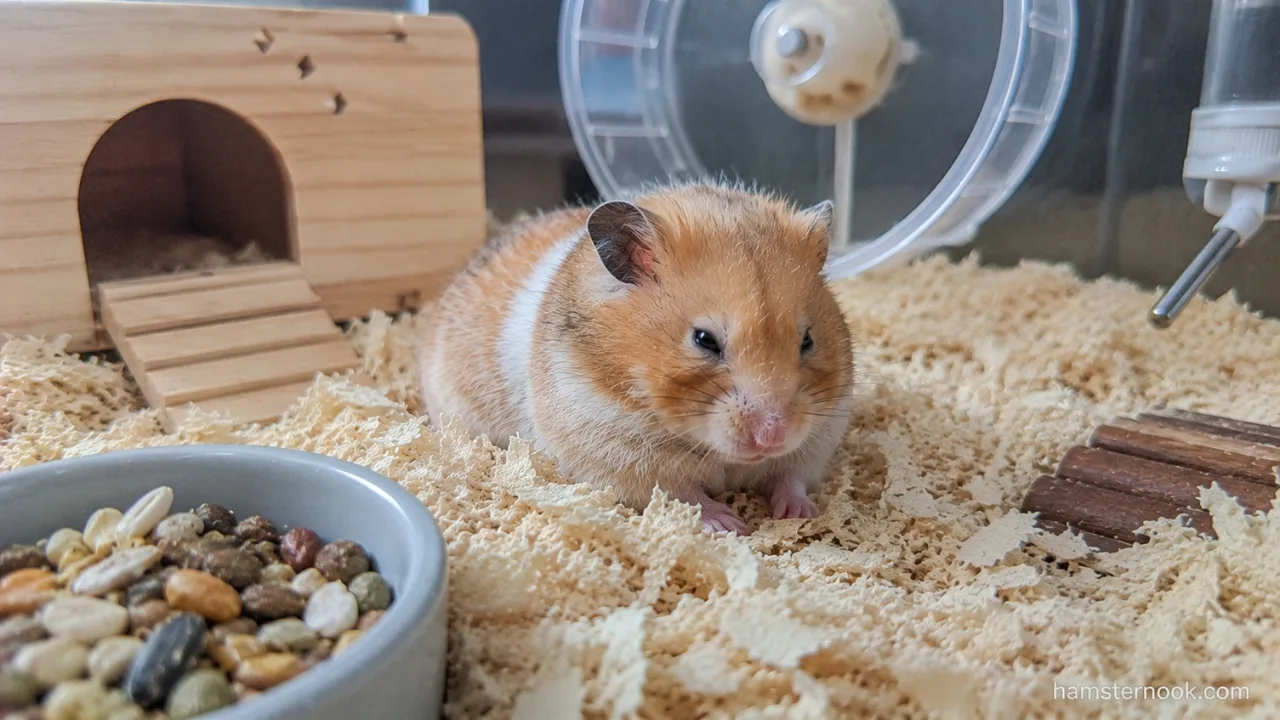
- Is your hamster eating normally?
- Is fresh water being consumed?
- Does activity increase at night?
- Has the environment changed recently?
- Is the cage temperature comfortable?
- Are there any signs of illness?
Even a few simple observations over several days can reveal patterns that are easy to miss at first.
Keeping a simple record of eating habits, activity levels, and sleeping patterns can make it easier to identify gradual changes before they become serious.
Ways to Encourage Healthy Activity
If your hamster appears healthy but inactive, small improvements may help increase engagement.
Consider adding:
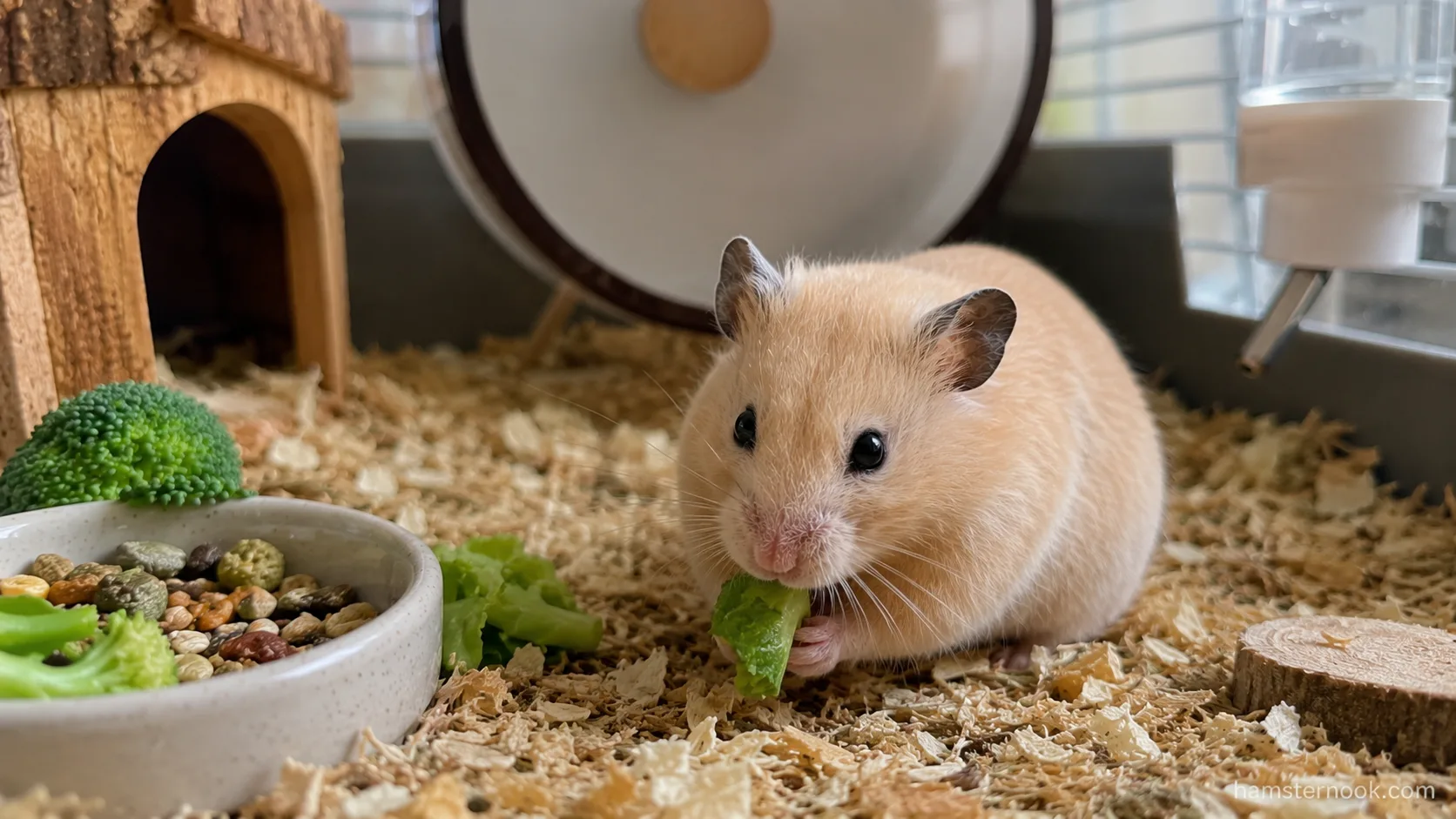
| Enrichment Item | Benefit |
|---|---|
| Deep bedding | Encourages burrowing |
| Foraging toys | Promotes natural behavior |
| Sand bath | Supports grooming and exploration |
| Cork tunnels | Creates new hiding areas |
| Safe chew toys | Provides stimulation |
| Multi-chamber hide | Increases security |
Avoid forcing interaction, as this may increase stress rather than improve activity.
Digging opportunities can significantly increase daily activity. Providing enough bedding can help support these natural behaviors. Learn more in our Hamster Bedding Depth Guide.
When to Contact a Veterinarian
A hamster that sits in one place occasionally is usually behaving normally.
However, veterinary attention is recommended if you notice:
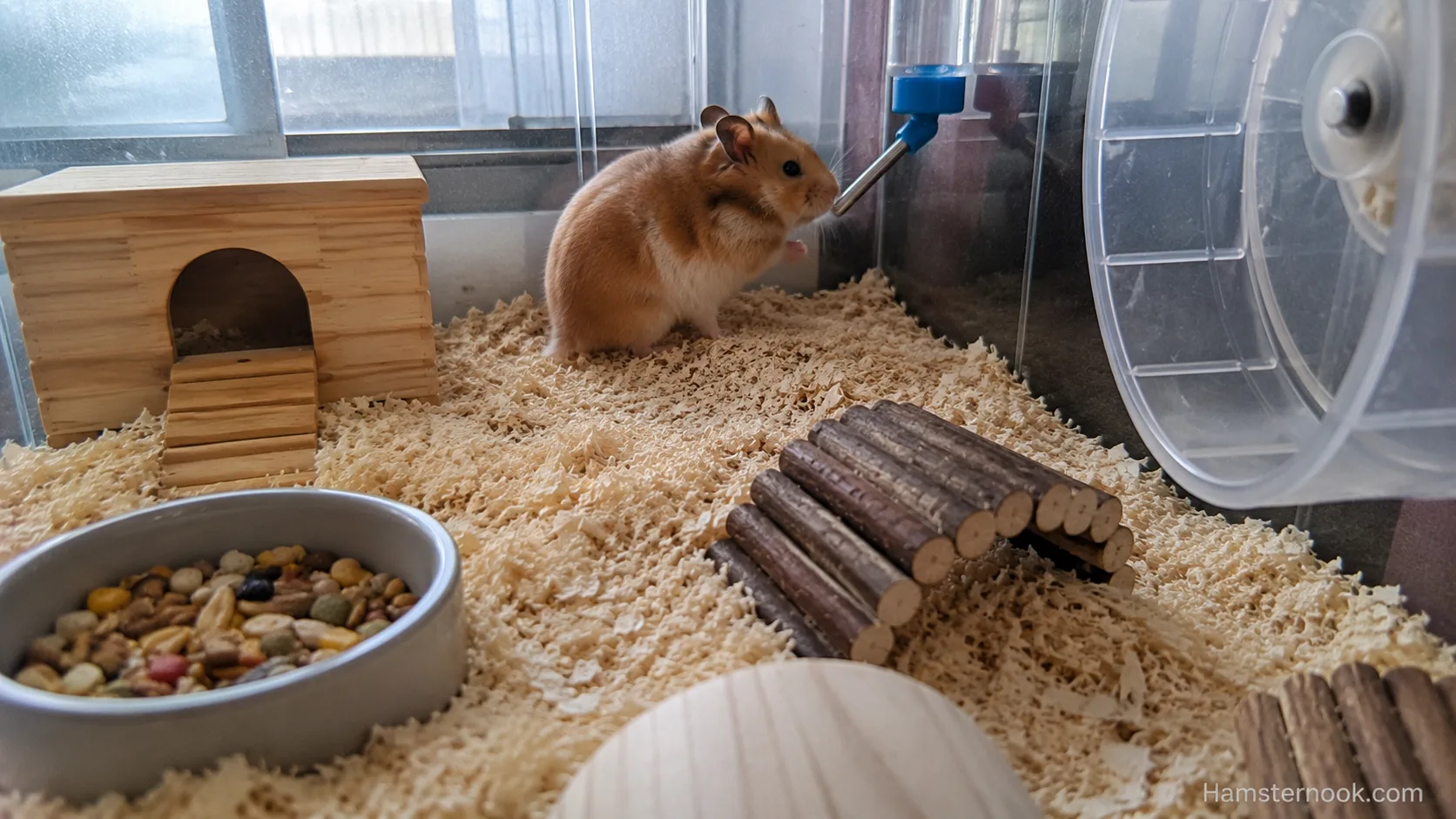
- Refusal to eat or drink
- Difficulty breathing
- Sudden lethargy
- Hunched posture
- Rapid weight loss
- Signs of injury
- Persistent inactivity during normal active hours
Early treatment often leads to better outcomes when illness is involved.
Final Thoughts
Seeing your hamster sit quietly in one place can look unusual at first, but it is often completely normal, especially if the hamster is otherwise healthy and active during its usual waking hours. In many cases, it simply reflects normal resting behavior, especially during daylight hours or after activity. Hamsters often enjoy relaxing in secure locations where they feel safe and comfortable.
The important factor is context. If your hamster continues eating, drinking, grooming, and becoming active during its usual waking hours, occasional stillness is typically nothing to worry about. On the other hand, if prolonged inactivity is paired with appetite loss, breathing changes, weight loss, or other unusual symptoms, further investigation is necessary.
By paying attention to behavior patterns rather than isolated moments, owners can better distinguish between normal hamster habits and situations that may require medical care.
Frequently Asked Questions
My hamster sits in one corner every day. Is that normal?
Yes, many hamsters develop favorite resting locations. If your hamster is otherwise eating, drinking, and behaving normally, this is usually not a concern.
Why does my hamster sit still when I walk near the cage?
Hamsters often pause and observe movement or sounds to assess whether they are safe. This behavior is normal and comes from their natural instincts.
Should I wake my hamster if it keeps sitting still?
No. Hamsters need uninterrupted rest. Waking them unnecessarily can cause stress and may lead to defensive behavior.
Can boredom cause a hamster to stay in one place?
Yes. A cage lacking enrichment, space, or opportunities for natural behaviors can sometimes lead to reduced activity and engagement.

Environmental enrichment often improves activity and confidence. You may also find How to Build Trust With Your Hamster helpful for encouraging natural exploration and confidence.
Why is my hamster sitting still with its eyes partially closed?
This may simply mean the hamster is resting or becoming sleepy. However, if it also appears weak, loses appetite, or shows other symptoms, a health issue should be considered.
How long should I monitor the behavior before becoming concerned?
If the inactivity is sudden or occurs with appetite loss, breathing difficulty, weakness, weight loss, injury, or other unusual symptoms, contact a veterinarian promptly rather than waiting to see if it passes. If your hamster is otherwise well and becomes active during its normal waking hours, continue observing its usual behavior pattern.
Why does my hamster sit still but run on the wheel at night?
This is usually normal. Many hamsters rest quietly during daylight hours and become much more active during their natural waking periods in the evening and overnight.
References
This guide is based on hamster health, welfare, and behavior information from trusted veterinary references and recognized animal care organizations, including:
- RSPCA – Hamster Care Guidance
- PDSA – Hamster Health Information
- MSD Veterinary Manual – Routine Health Care of Hamsters
- Blue Cross – Small Pet Care Resources
Medical Disclaimer
The information provided in this article is for educational and informational purposes only and should not be considered veterinary advice, diagnosis, or treatment. If your hamster is showing signs of illness, injury, or unusual behavior, consult a qualified veterinarian as soon as possible.

Narayan Kumar is the founder and author of HamsterNook. He creates practical, research-based hamster care guides covering hamster behavior, nutrition, cage setup, enrichment, health, and everyday care. His goal is to help hamster owners make informed decisions and provide safer, healthier lives for their pets through clear, beginner-friendly information based on trusted animal care resources.


