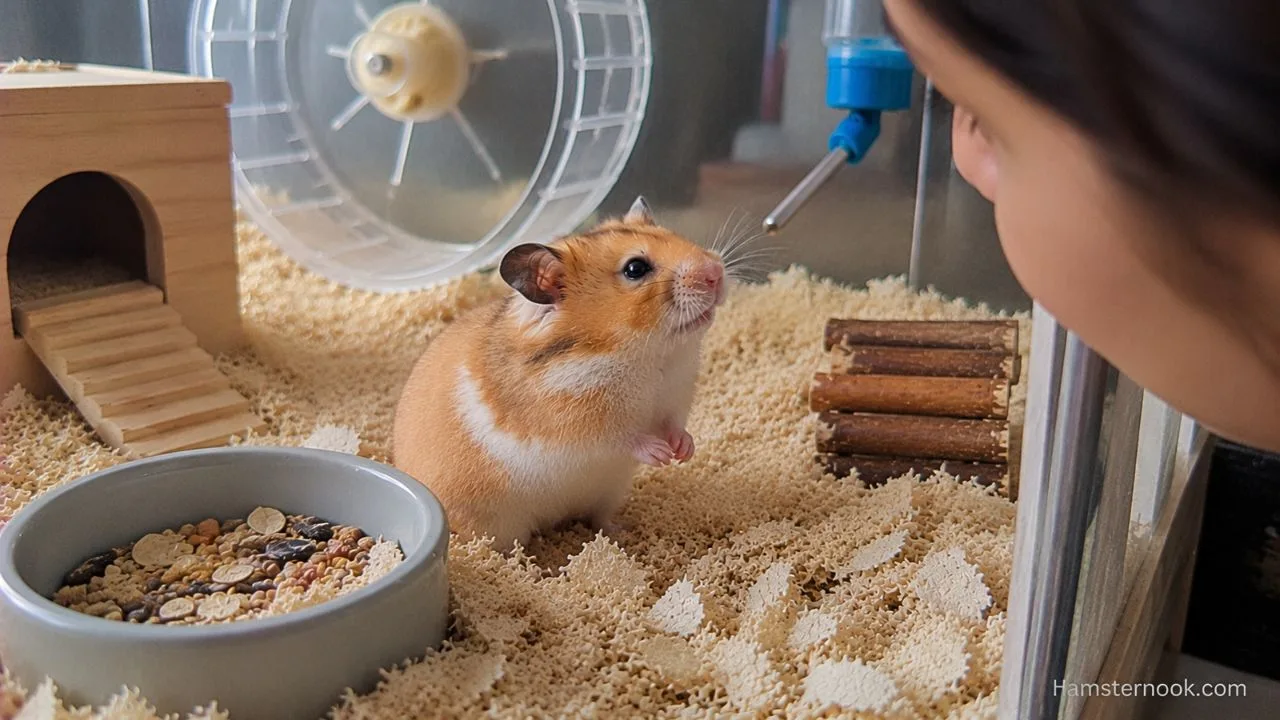
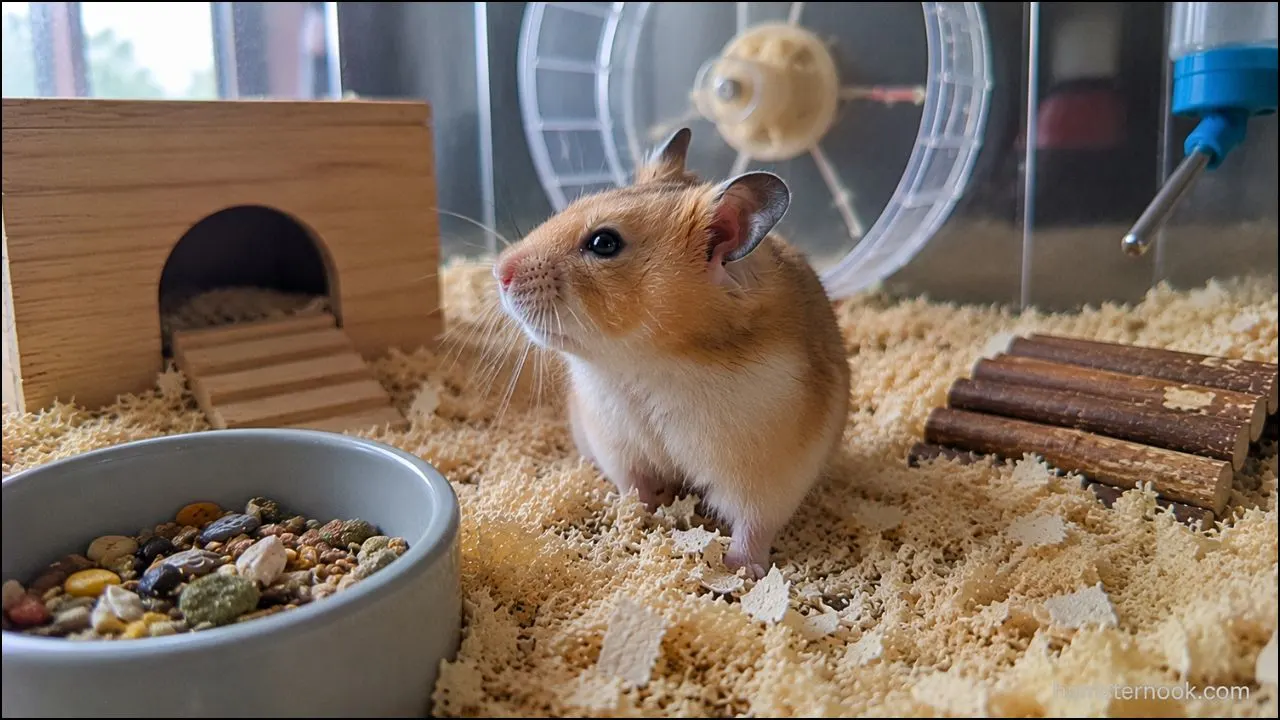
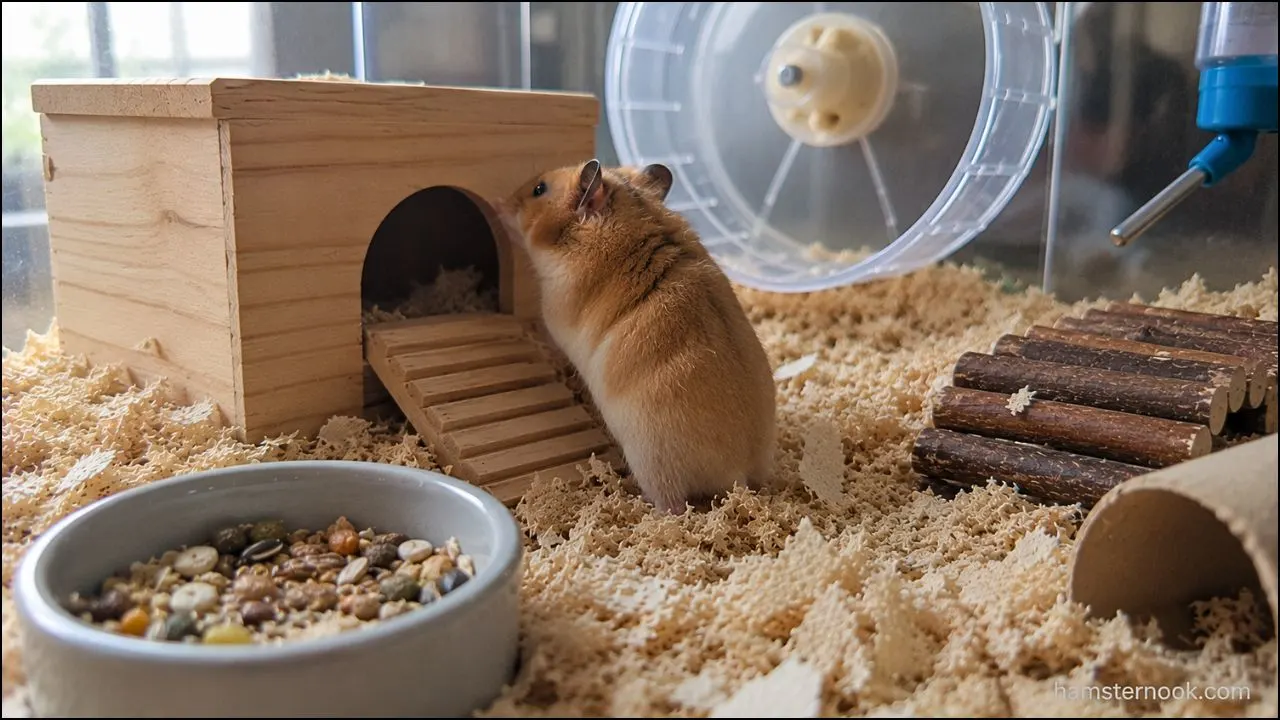
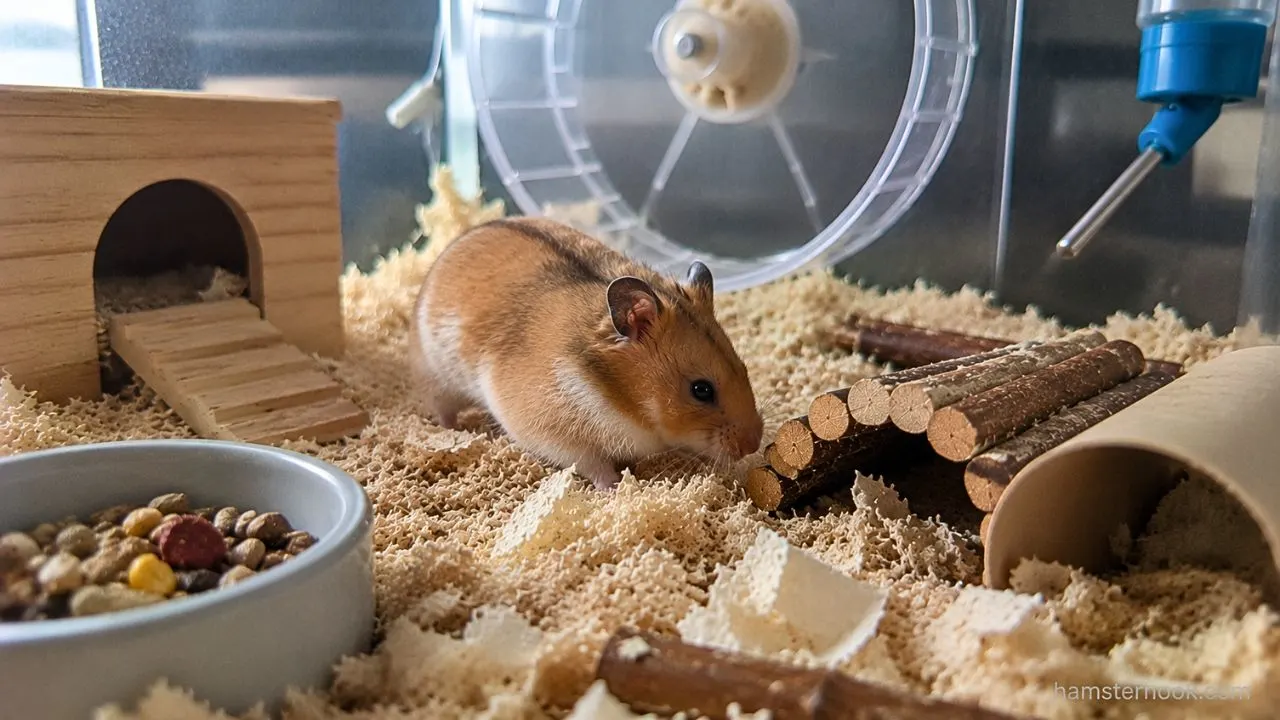
You carefully set up a cozy hideout, added soft bedding, and expected your hamster to spend most of its sleeping hours inside its house. Then one day, you notice your hamster curled up in a corner, stretched out behind the wheel, or sleeping right in the open. Naturally, that can be concerning.
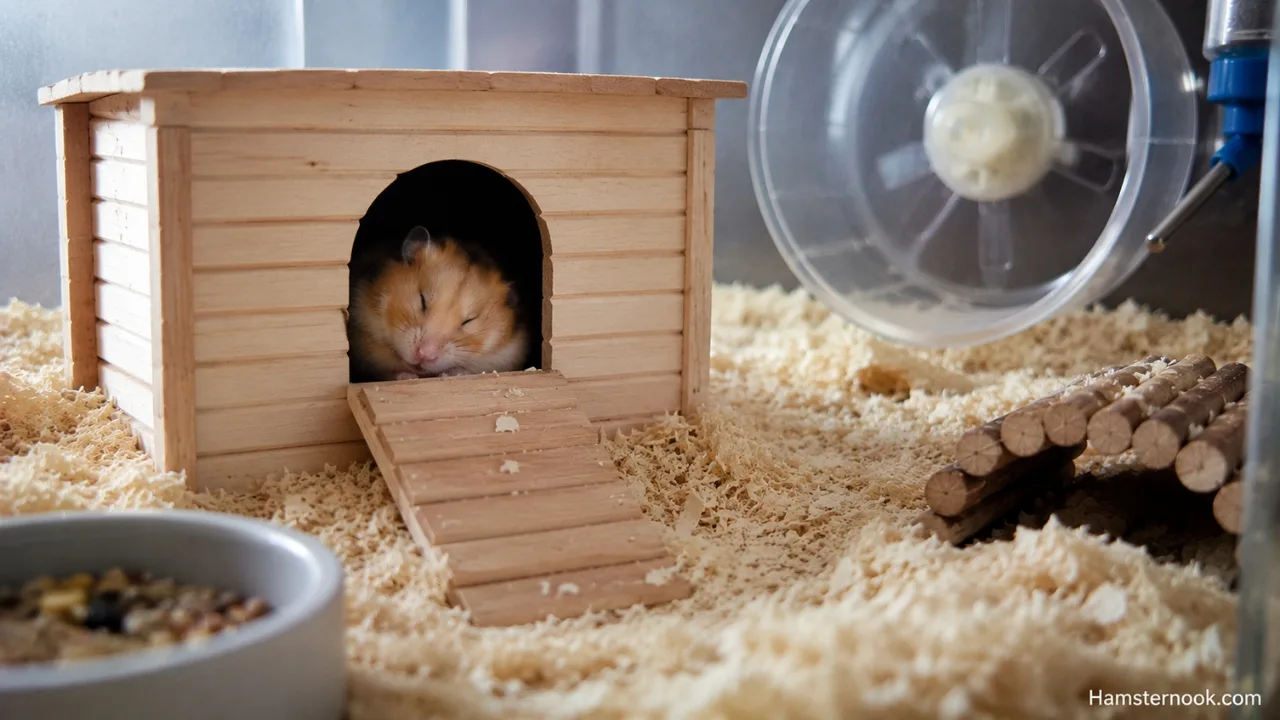
A hamster sleeping outside its house is often displaying normal behavior. Hamsters may choose an open area, burrow, tunnel, or another sheltered spot because it feels cooler, safer, quieter, or more comfortable than their usual hideout.
The change deserves closer attention when your hamster suddenly abandons its normal sleeping area and also develops appetite loss, unusual lethargy, breathing difficulty, weight loss, or other changes in normal behavior.
Quick Answer
Yes, a hamster sleeping outside its house is usually normal if it continues eating, drinking, grooming, exploring, and behaving normally when awake. Heat, a new nest, deeper bedding, an unsuitable hideout, cage changes, or simple preference can all cause a hamster to sleep somewhere else. Look closer when the change occurs alongside other unusual symptoms.
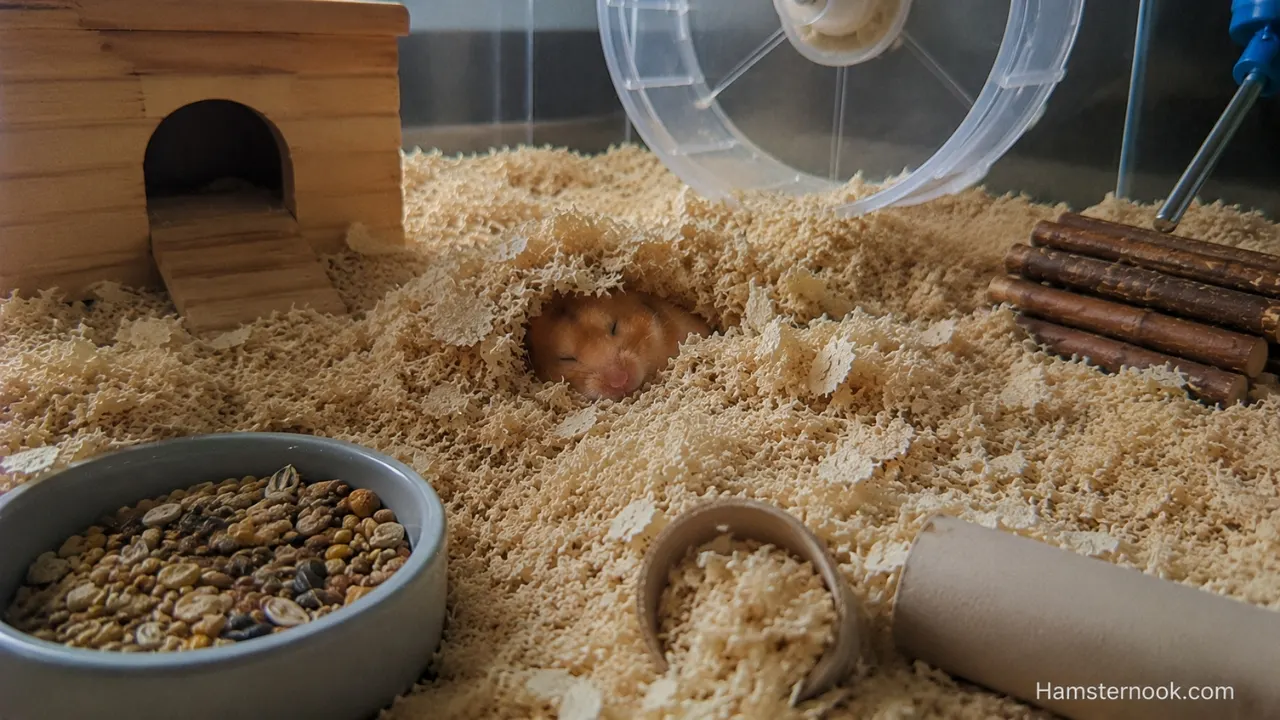
Is It Normal for a Hamster to Sleep Outside Its House?
Many owners first notice this behavior after cleaning the cage or during warmer weather, when hamsters are more likely to experiment with different sleeping spots.
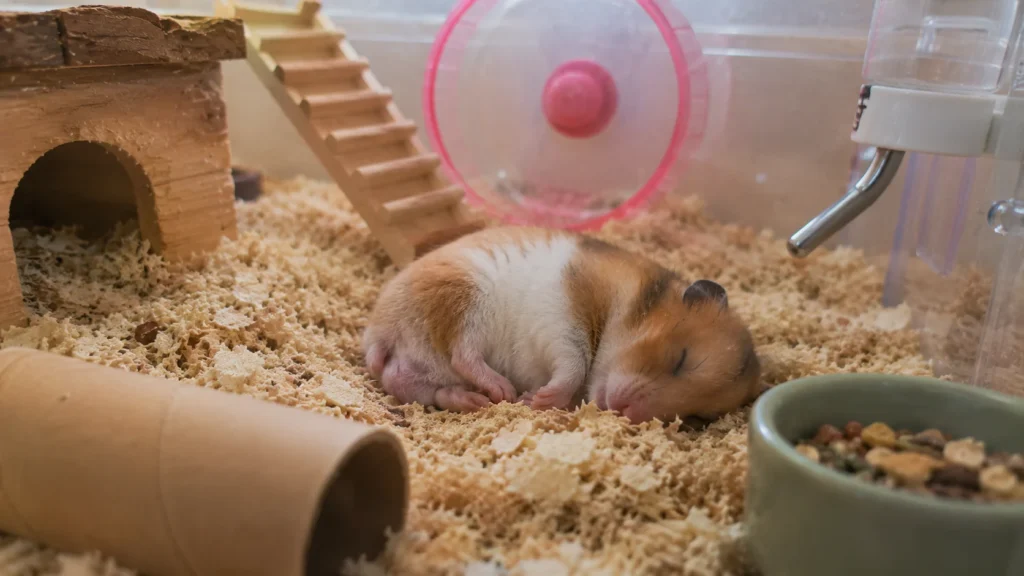
Yes, in most cases it is completely normal. Healthy hamsters often switch sleeping locations based on temperature, comfort, bedding depth, or personal preference.
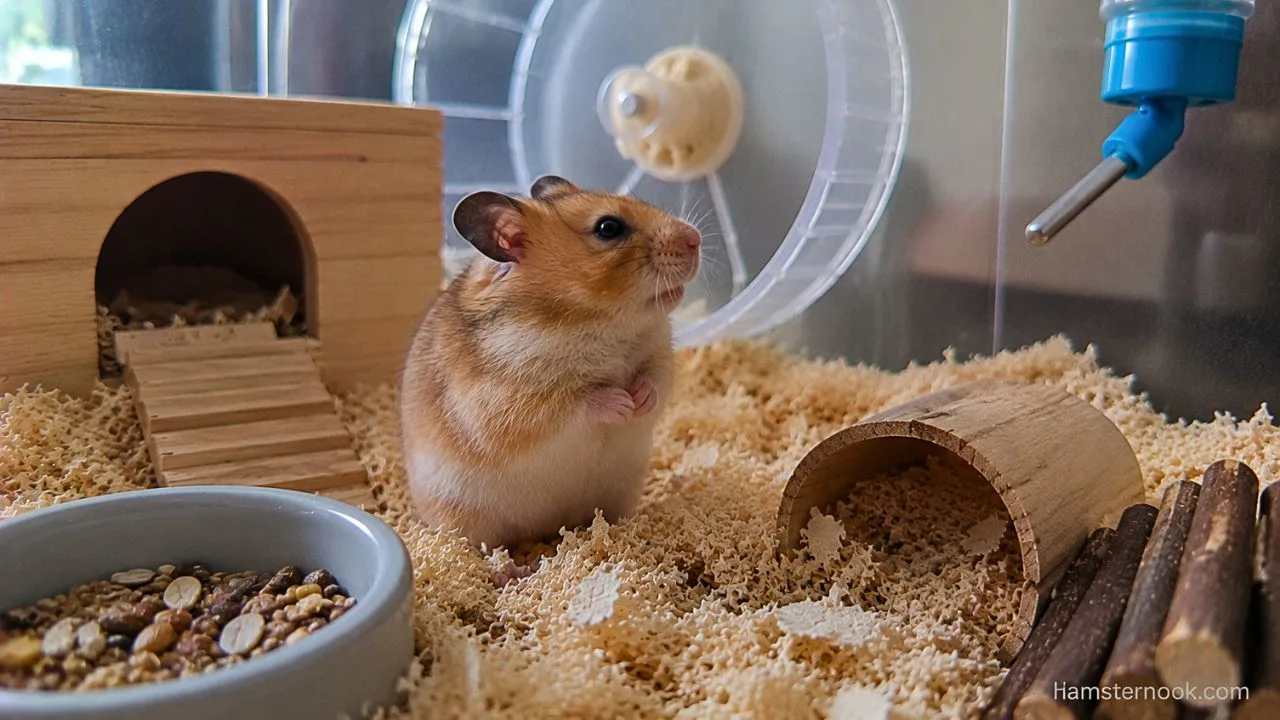
Hamsters are individuals with their own preferences. Some consistently sleep in one hideout, while others regularly switch between different sleeping areas. A hamster may decide that a tunnel, burrow, sand bath corner, or bedding pile feels more comfortable than its designated house.
Rather than focusing only on the sleeping location, pay attention to your hamster’s overall behavior. If your hamster is eating, drinking, exploring, and behaving normally, occasional sleeping outside the house is usually not a cause for concern.
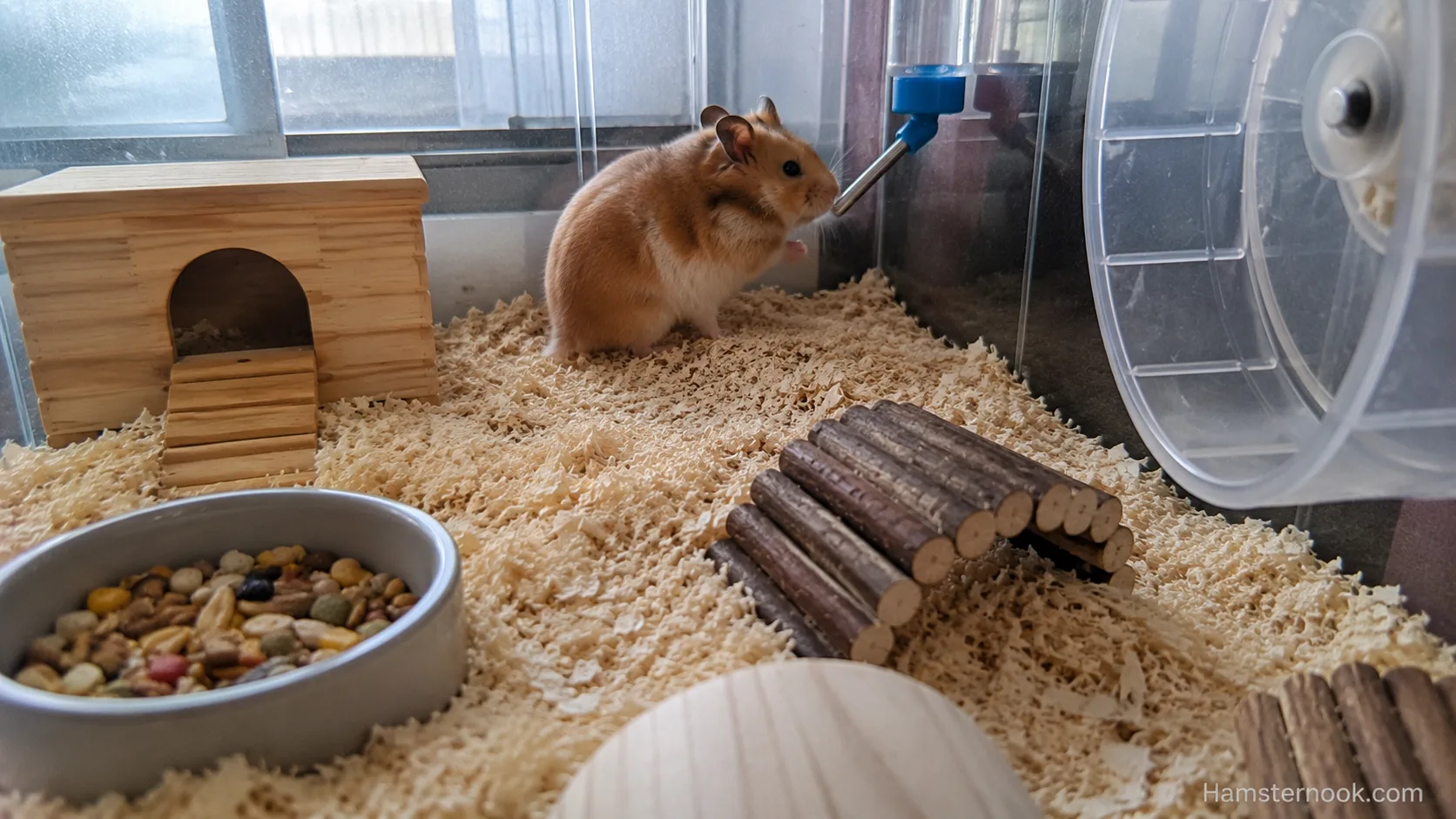
Quick Guide: When to Worry and When Not to Worry
| Situation | Usually Normal? | Should You Monitor Closely? |
|---|---|---|
| Sleeping in a different corner occasionally | Yes | No |
| Choosing a burrow instead of a house | Yes | No |
| Sleeping outside during hot weather | Yes | Monitor temperature |
| Suddenly abandoning a favorite hideout | Sometimes | Yes |
| Sleeping exposed while appearing weak or sick | No | Yes |
| Sleeping outside with loss of appetite | No | Yes |
| Sleeping in unusual positions with lethargy | No | Yes |
Reason #1: The House May Feel Too Warm
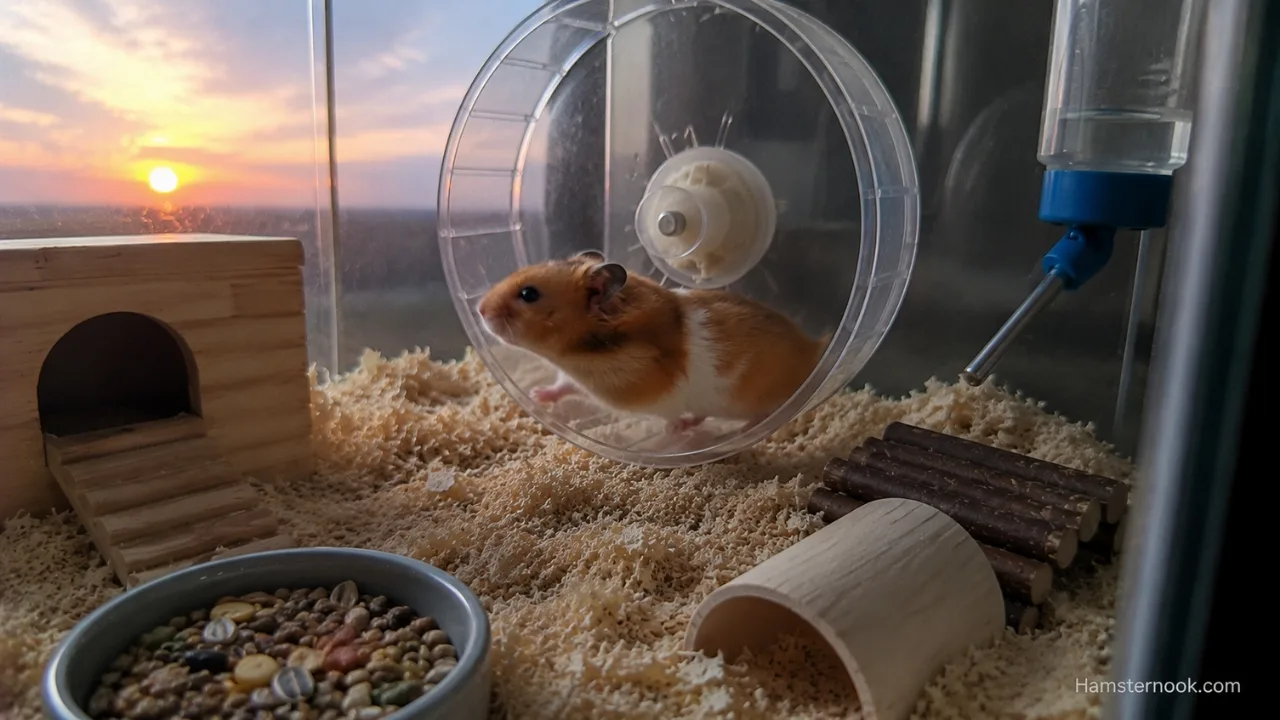
One of the most common reasons a hamster sleeps outside its house is temperature.
A warmer room can make an enclosed hideout less comfortable than an open sleeping area with better airflow. Our What Temperature Is Too Hot or Too Cold for Hamsters? guide explains suitable room conditions and warning signs of excessive heat or cold.
Hamster houses trap body heat. During warmer months, the inside of a hideout can become less comfortable than an open area with better airflow.
You may notice your hamster:
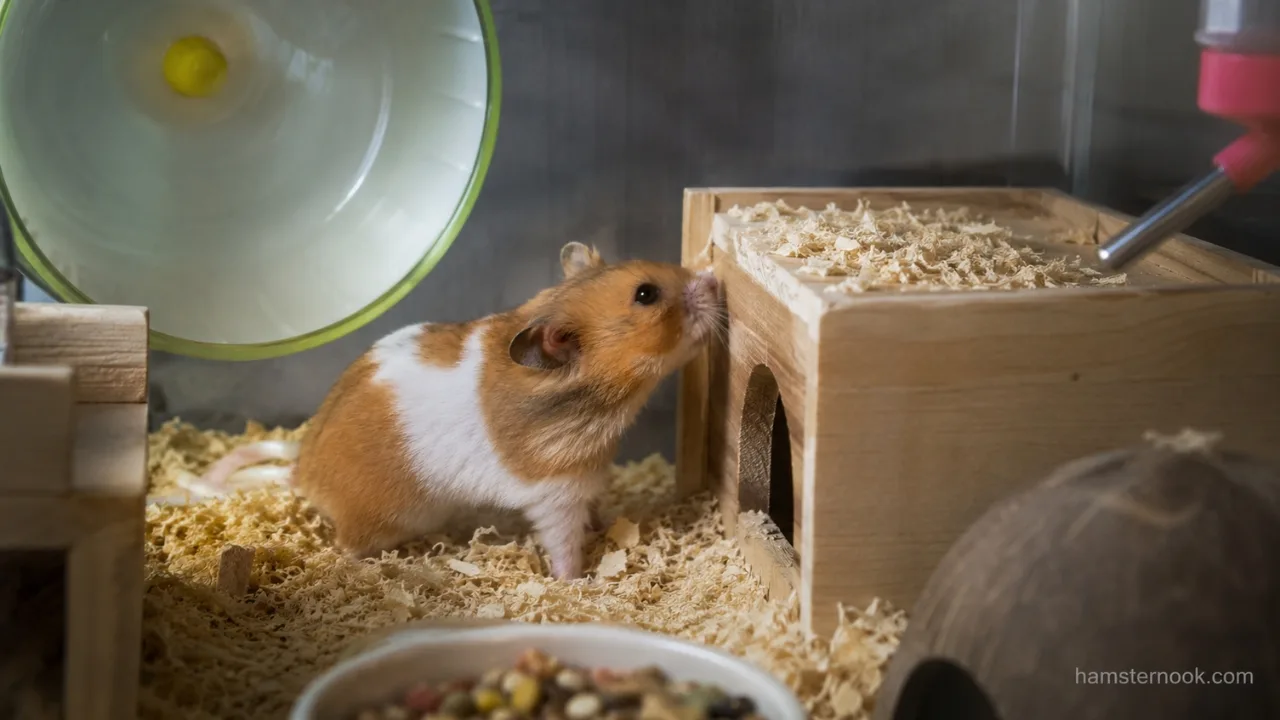
- Sleeping stretched out instead of curled up
- Resting on cooler surfaces
- Choosing exposed areas
- Spending more time outside the nest
If the room feels warm to you, your hamster may also be looking for a cooler sleeping location.
Small differences in room temperature can make a noticeable difference inside an enclosed hideout. Checking the room temperature before assuming your hamster is behaving unusually can often explain a sudden change in sleeping location.
Reason #2: Your Hamster Has Created a Preferred Nest Elsewhere
Hamsters naturally build nests wherever they feel safest.
A hamster may ignore its house once it discovers that deep bedding provides a better place to build its own nest. Our Hamster Bedding Depth Guide explains how bedding depth and stability support natural burrowing and nesting behavior.
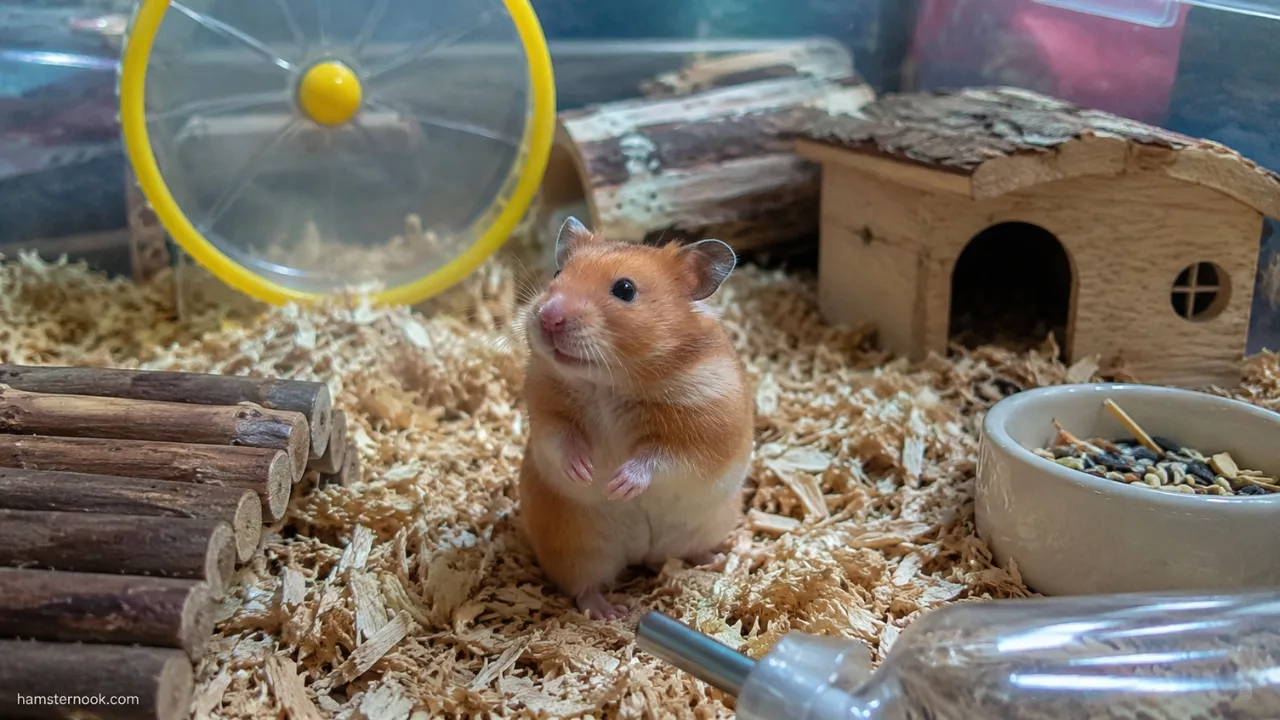
Many owners assume the purchased hideout will automatically become the hamster’s bedroom. In reality, hamsters often choose their own sleeping location.
Common alternative nesting spots include:
- Under deep bedding
- Inside tunnels
- Behind a wheel
- Beneath platforms
- In multi-chamber hides
If your hamster has built a nest elsewhere, it may simply prefer that location.
Reason #3: The Hideout May Be Too Small
As hamsters grow, a hideout that once seemed comfortable may start feeling cramped.
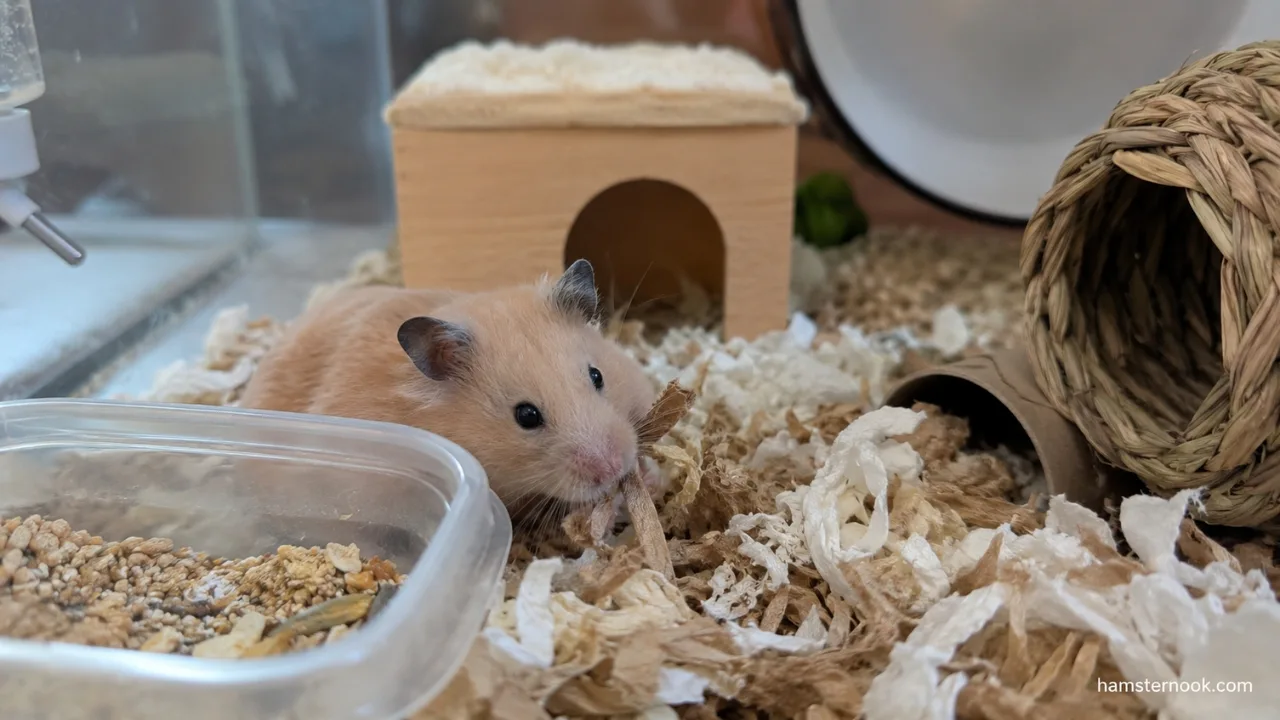
A house that is too small can make it difficult for a hamster to:
- Turn around comfortably
- Store food
- Build a proper nest
- Maintain separate sleeping areas
Larger Syrian hamsters are particularly likely to outgrow small pet store hideouts.
Signs the House May Be Too Small
| Sign | What It May Mean |
|---|---|
| Hamster barely fits inside | House is undersized |
| Nesting material spills out | Limited interior space |
| Hamster sleeps beside the house | House may feel cramped |
| Food hoards fill most of the space | Not enough room for nesting |
Reason #4: The House Doesn’t Feel Safe
Hamsters look for sleeping locations that provide security.
Hideout placement is only one part of making an enclosure feel secure. Our Best Hamster Cage Setup for Beginners guide explains how bedding, hides, floor space, enrichment, and enclosure layout work together to support natural behavior.

Some hideouts may unintentionally make a hamster feel exposed due to:
- Large openings
- Transparent walls
- Excessive light exposure
- Frequent disturbances
A dark, enclosed sleeping area often feels safer than a bright or exposed one.
If the house sits in a high-traffic area of the cage, your hamster may relocate to a quieter location.
What Makes a Good Hamster Hideout?
A suitable sleeping hideout should provide enough room for the hamster to turn around, carry nesting material inside, and rest without feeling exposed. A dark interior, stable placement, suitable entrance size, and enough surrounding bedding can make the area feel more secure. The hideout should also remain dry and allow appropriate ventilation.
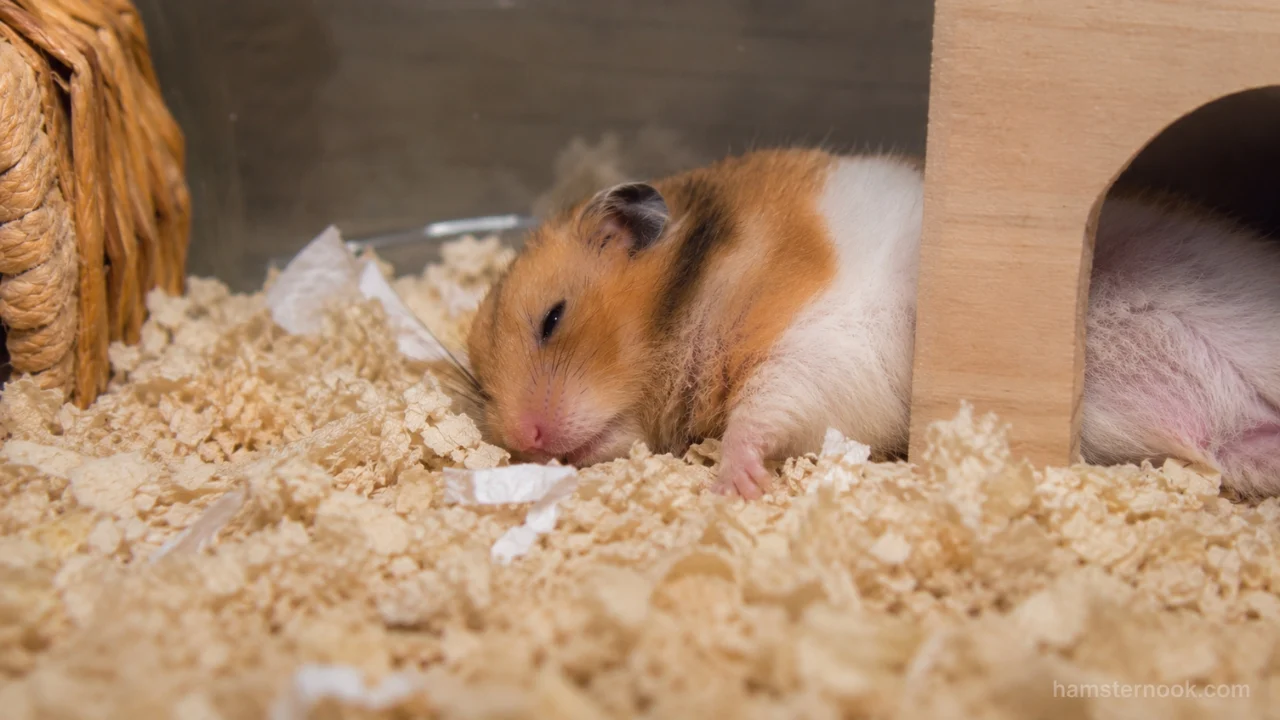
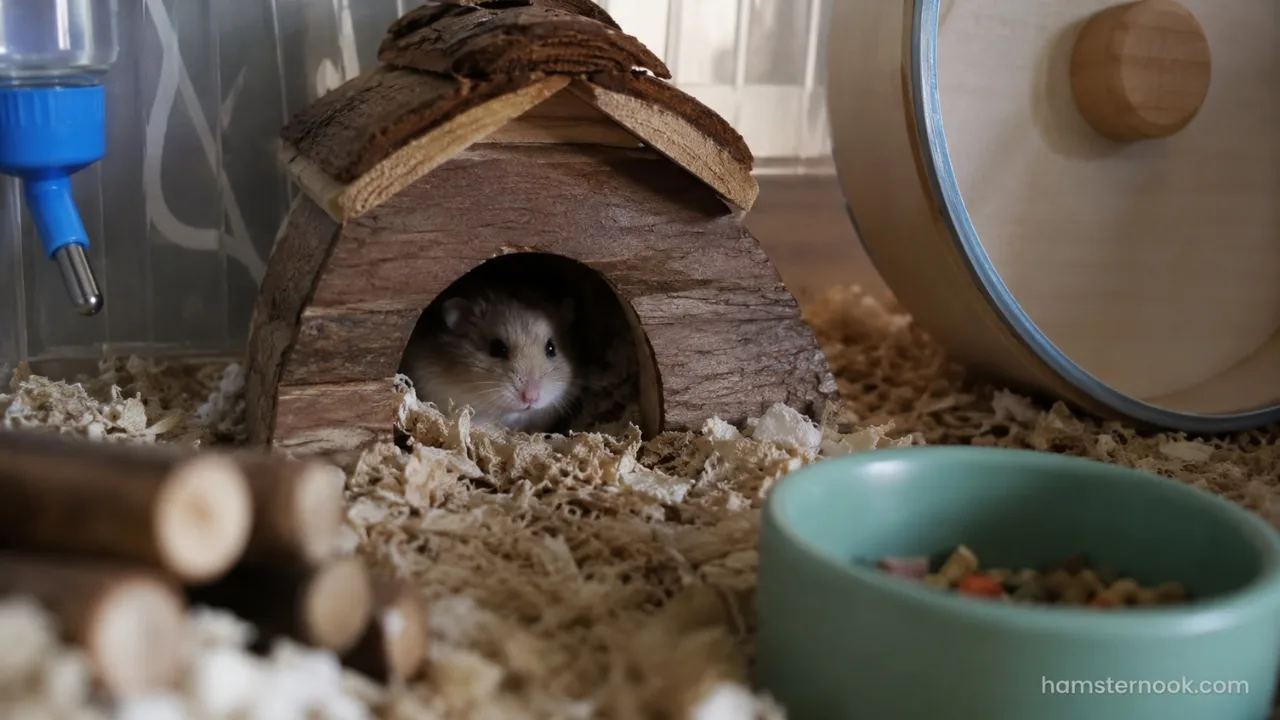
Reason #5: Bedding Depth Is Better Somewhere Else
A hamster that has enough suitable bedding may prefer creating its own sleeping chamber instead of using a manufactured hideout. This is normal burrowing behavior and does not mean the house must be used.
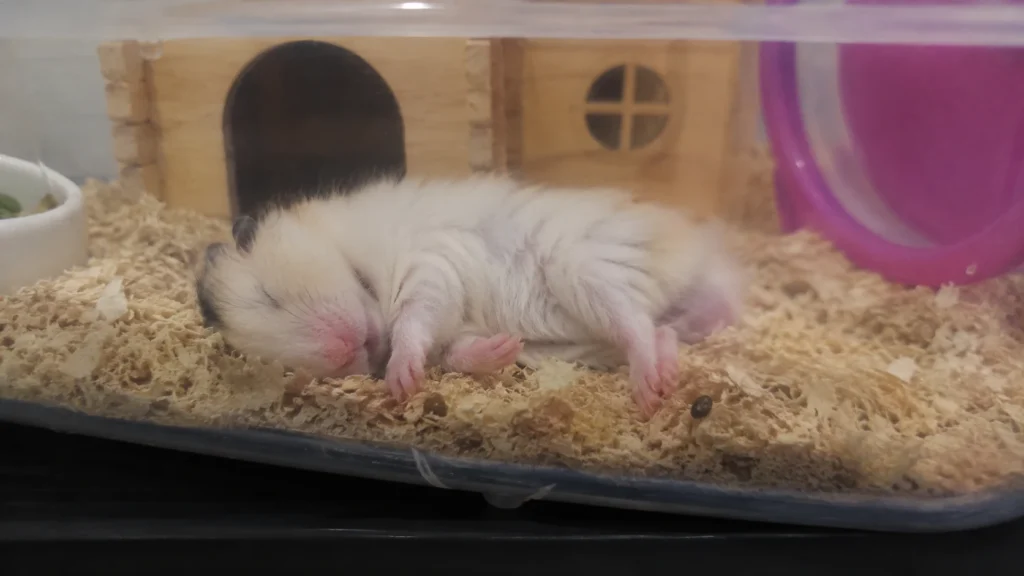
Deep bedding gives hamsters the opportunity to create their own tunnels, nests, and sleeping chambers. If one section of the enclosure provides better burrowing conditions than the hideout, your hamster may naturally choose to sleep there instead.
Burrows allow hamsters to:
- Feel protected
- Regulate temperature
- Create custom sleeping chambers
- Store food nearby
This behavior is especially common in well-enriched enclosures.
Reason #6: Your Hamster Is Exploring New Habits
Hamsters do not always follow predictable routines.
A hamster that has always slept in one location may suddenly decide to try a new spot. This can happen after:
- Cage cleaning
- Rearranging accessories
- Adding new enrichment
- Seasonal temperature changes
- Normal behavioral variation
If your hamster is otherwise acting normally, occasional changes in sleeping habits are usually nothing to worry about.
Sleeping outside a house is one type of sleeping-location change, but hamsters may also switch between different burrows, corners, tunnels, and hides. Our Why Is My Hamster Sleeping in a Different Spot? guide explains the broader reasons hamsters relocate their nests or resting areas.

Reason #7: Stress or Health Issues Could Be Involved
Although sleeping outside the house is often normal, it can sometimes be associated with stress or health concerns.
Pay attention if the sleeping change occurs alongside other unusual symptoms.
Warning Signs That Need Attention
| Symptom | Possible Concern |
|---|---|
| Loss of appetite | Illness or stress |
| Weight loss | Health problem |
| Lethargy | Medical issue |
| Hunched posture | Discomfort or pain |
| Wet tail area | Digestive illness |
| Difficulty breathing | Veterinary emergency |
| Lack of activity during normal waking hours | Potential illness |
When sleeping outside the house occurs together with these symptoms, veterinary advice may be necessary.
Breathing changes are more significant than sleeping location alone. Our Why Is My Hamster Breathing Fast? guide explains common causes of rapid breathing and the warning signs that may require veterinary attention.
How to Tell Whether Your Hamster Is Comfortable
Instead of focusing only on where your hamster sleeps, evaluate overall behavior.
Sleeping location should be considered alongside posture, activity, grooming, appetite, and other behaviors. Our Hamster Body Language Explained guide explains common signals that can help owners better interpret how a hamster is responding to its environment.
A comfortable hamster typically:
- Eats normally
- Drinks normally
- Uses the wheel
- Explores regularly
- Builds nests
- Maintains grooming habits
- Responds normally during active hours
Where your hamster sleeps is only one piece of the puzzle.
Should You Move Your Hamster Back Into Its House?
Usually not.
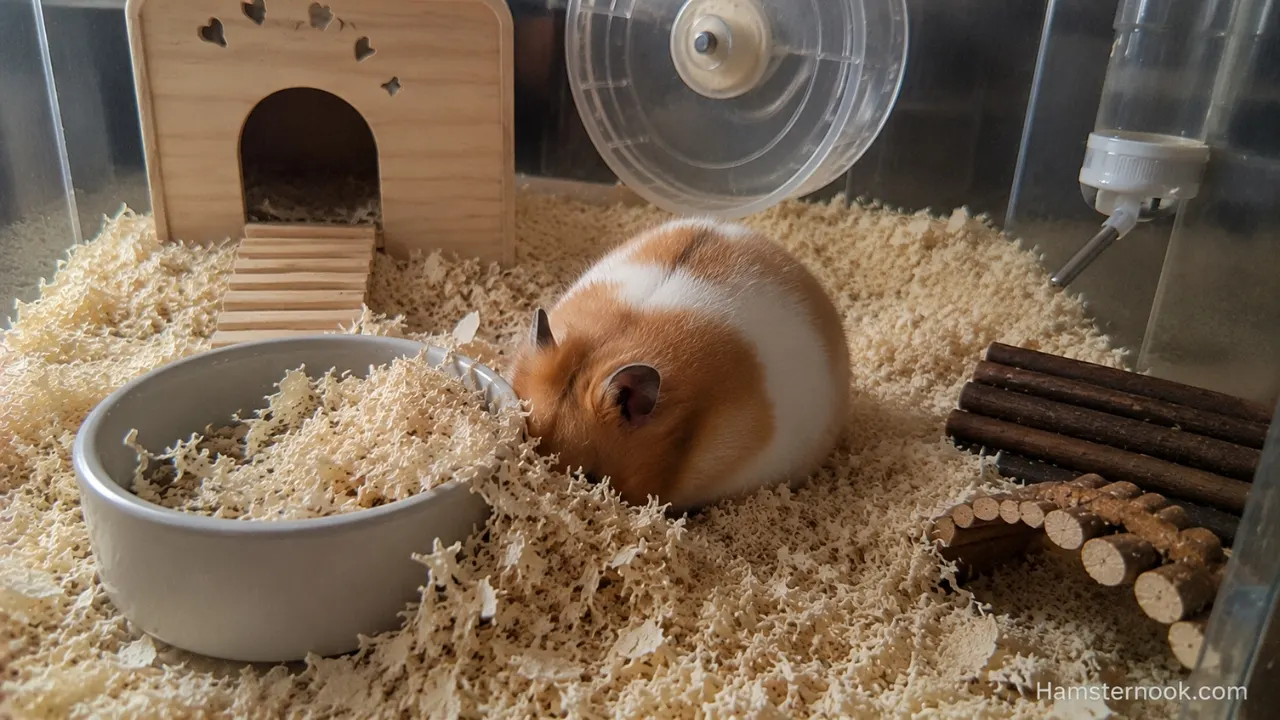
If the chosen spot is safe, dry, and comfortable, it is generally best to allow your hamster to choose where it sleeps.
Moving a sleeping hamster can:
- Cause stress
- Disrupt sleep cycles
- Damage nest structures
- Create anxiety
If your hamster has selected a safe sleeping spot, it is usually better to leave it alone.
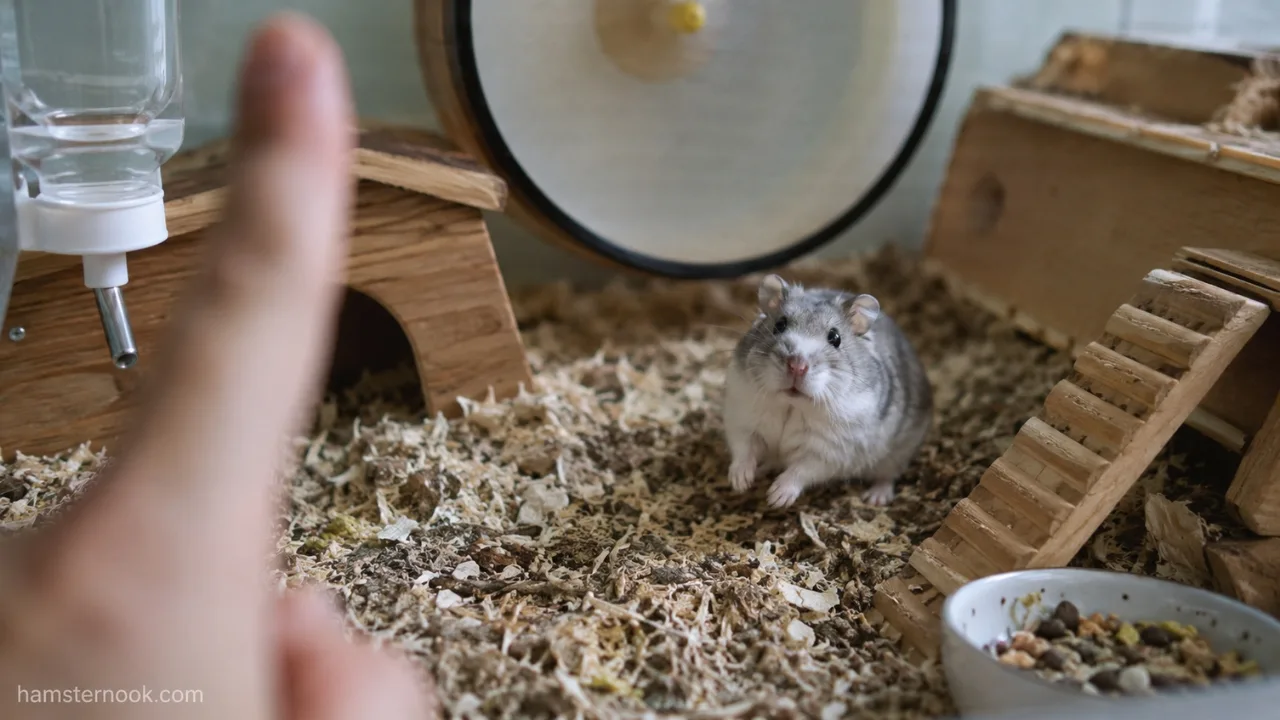
Intervention may be appropriate if the sleeping area is wet, contaminated with spoiled food, exposed to unsafe heat or cold, positioned near a hazard, or associated with signs that your hamster is unwell. In those cases, address the underlying environment or health concern rather than simply moving the hamster into its house.
If your hamster changes sleeping locations every few days but continues eating, drinking, and staying active, this is usually part of its normal behavior rather than something that needs to be corrected. Many hamsters simply choose the spot that feels most comfortable at the time.
How to Encourage House Use Without Forcing It
If you would like your hamster to use its house more often, focus on making the hideout more appealing.
Helpful Adjustments
| Adjustment | Potential Benefit |
|---|---|
| Add soft nesting material | Improves comfort |
| Upgrade to a larger house | Provides more space |
| Reduce light exposure | Creates security |
| Place house in a quiet area | Reduces disturbances |
| Use multi-chamber hides | Mimics natural burrows |
| Increase bedding around the house | Encourages nesting |
Allow your hamster to decide whether the changes improve the space.
Common Owner Mistakes
Several well-meaning actions can accidentally discourage house use.
Avoid:
- Waking your hamster to move it
- Frequently rearranging the nest
- Cleaning the entire sleeping area too often
- Removing all stored food
- Constantly checking inside the hideout
Hamsters feel safest when their nesting area remains stable.
Final Thoughts
Finding your hamster asleep outside its house is not automatically a sign that something is wrong. In many cases, hamsters simply choose a location that feels cooler, safer, quieter, or more comfortable. They may also prefer a self-made burrow over a manufactured hideout.

The sleeping location matters far less than how your hamster is behaving overall. A hamster that eats well, stays active during waking hours, and shows normal habits is usually doing just fine, regardless of where it chooses to sleep.
Sleeping preferences are influenced by the overall habitat, including bedding, hideouts, temperature, enrichment, and enclosure layout. Our Ultimate Hamster Care Guide for Beginners covers these care essentials together and explains how they support normal hamster behavior.
However, if sleeping outside the house is accompanied by lethargy, weight loss, breathing problems, or other unusual symptoms, it deserves closer attention. Understanding the difference between normal preferences and potential warning signs will help you provide the best possible care.
Frequently Asked Questions
Do hamsters have to sleep inside a house?
No. Many hamsters choose to sleep in burrows, tunnels, bedding piles, or other areas of the enclosure instead of a hideout.
Why did my hamster suddenly stop sleeping in its house?
Changes in temperature, bedding arrangement, cage setup, comfort preferences, or stress can all influence sleeping location choices.
Is it bad if my hamster sleeps in the open?
Not necessarily. Some hamsters occasionally sleep in exposed areas, especially when they feel secure or are trying to stay cool.
Why does my hamster sleep behind the wheel?
The area behind a wheel often provides shelter and privacy, making it an attractive resting spot for some hamsters.
Should I buy a different hideout if my hamster avoids its current one?
Possibly. If the house is too small, too bright, or lacks privacy, a larger or more enclosed hideout may be more appealing.
Why is my hamster suddenly sleeping outside its house after cage cleaning?
Cleaning can disturb familiar scent markers, bedding, and established nesting areas. Your hamster may temporarily choose another sleeping spot while rebuilding its nest or reorganizing the enclosure. Preserving clean familiar bedding during routine cleaning can reduce unnecessary disruption.
When should I contact a veterinarian?
Seek veterinary advice if sleeping outside the house occurs alongside symptoms such as weight loss, lethargy, breathing difficulties, diarrhea, loss of appetite, or other unusual behavioral changes.
References
This guide is based on hamster behavior, health, housing, and welfare information from trusted veterinary and animal care resources, including:
- RSPCA – Hamster Care Guidance
- PDSA – Hamster Health Information
- Veterinary Partner – Small Animal Health Resources
- Blue Cross – Small Pet Care Resources
Medical Disclaimer:
The information provided in this article is for educational and informational purposes only and should not be considered veterinary advice, diagnosis, or treatment. If your hamster is showing signs of illness, injury, or unusual behavior, consult a qualified veterinarian as soon as possible.

Narayan Kumar is the founder and author of HamsterNook. He creates practical, research-based hamster care guides covering hamster behavior, nutrition, cage setup, enrichment, health, and everyday care. His goal is to help hamster owners make informed decisions and provide safer, healthier lives for their pets through clear, beginner-friendly information based on trusted animal care resources.