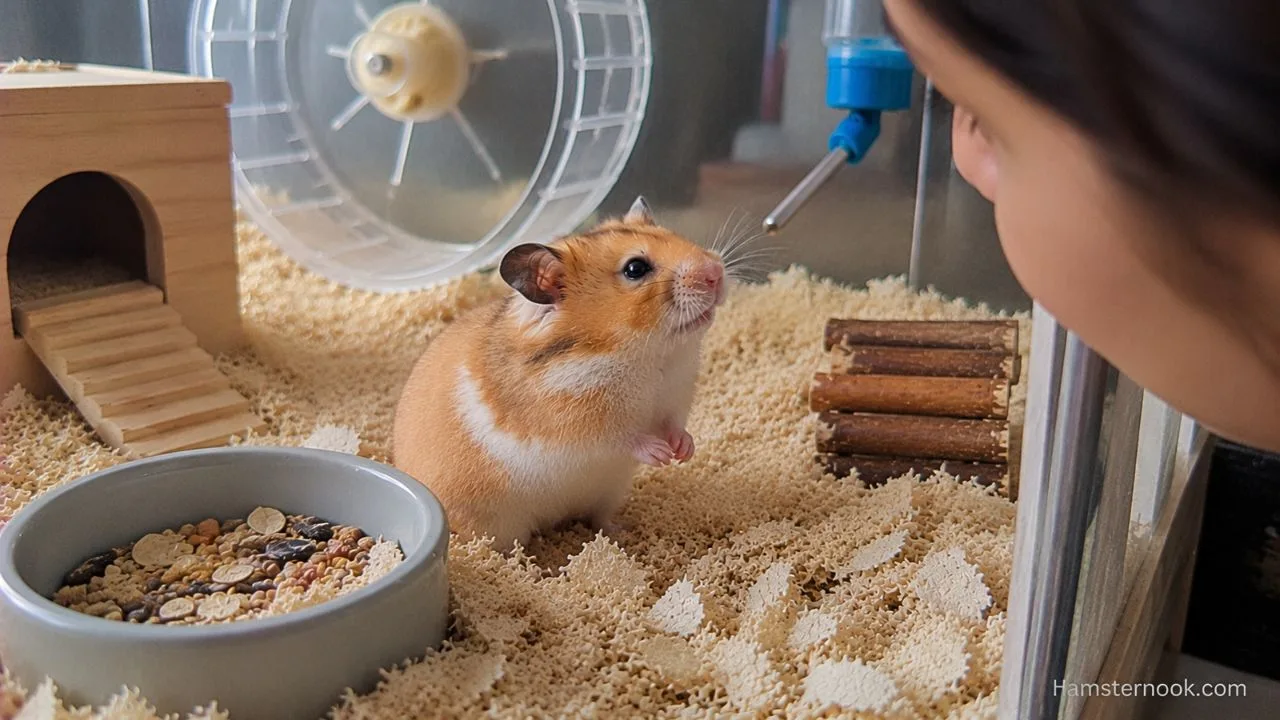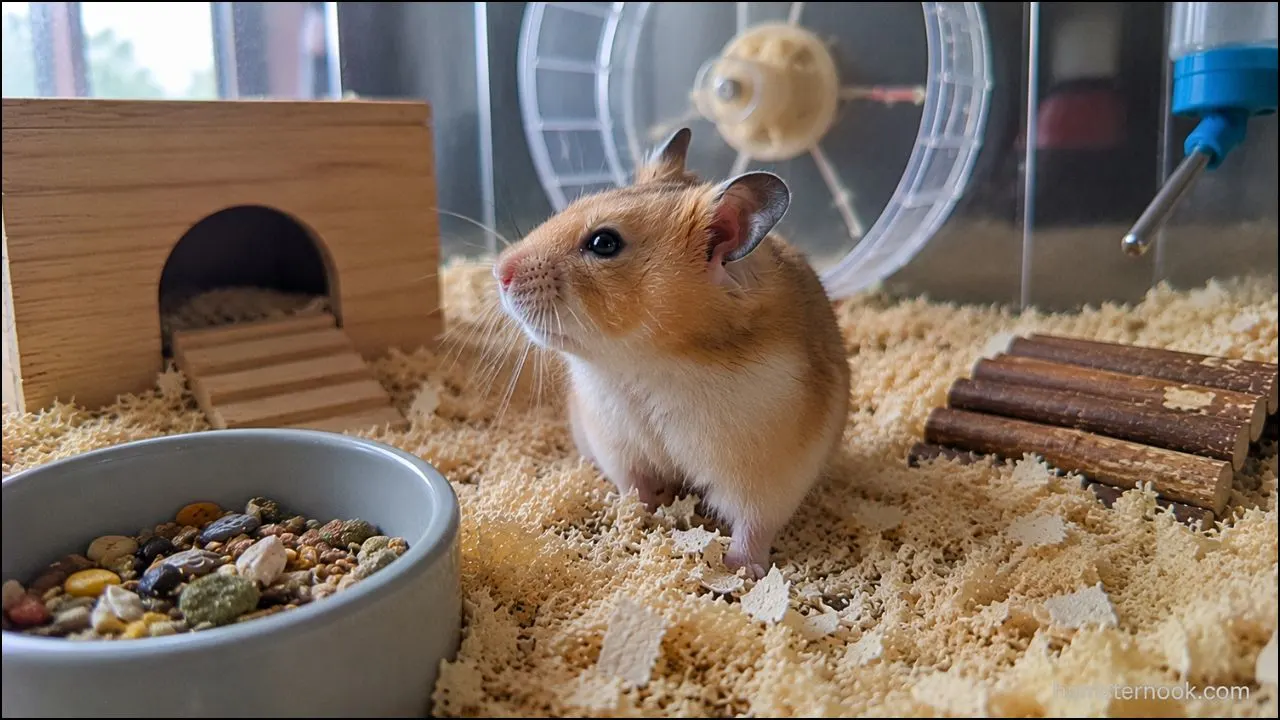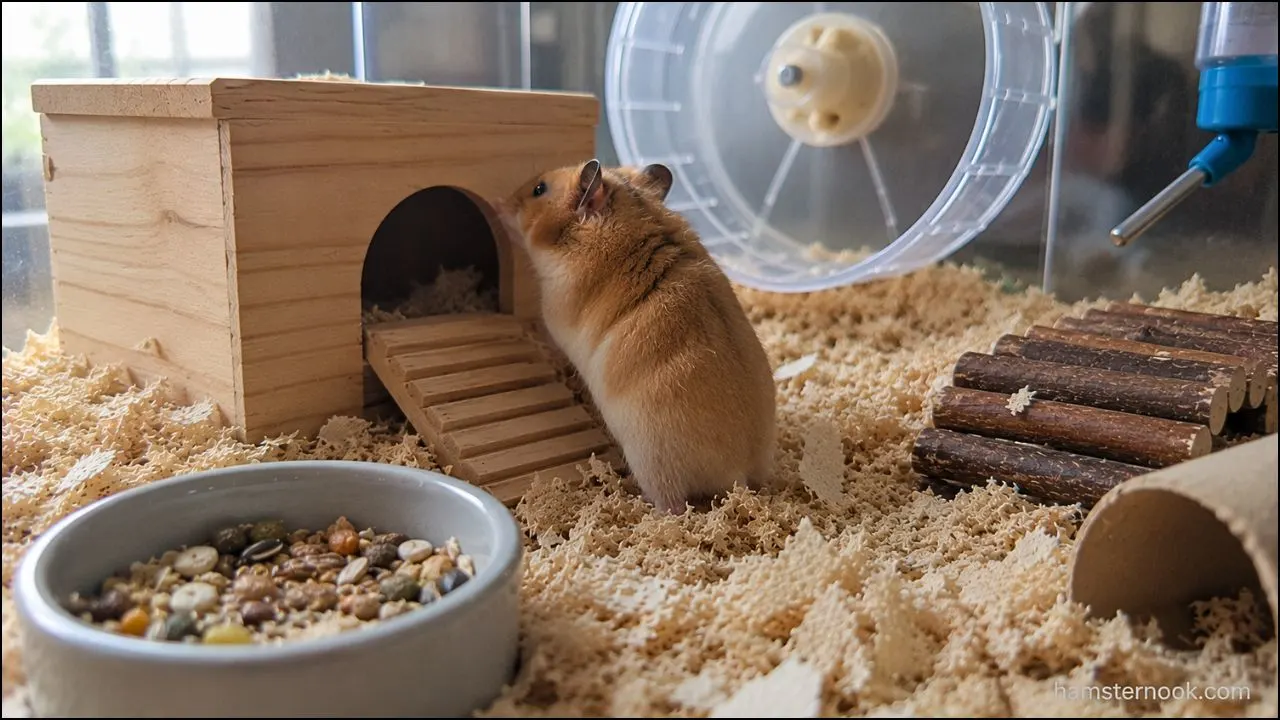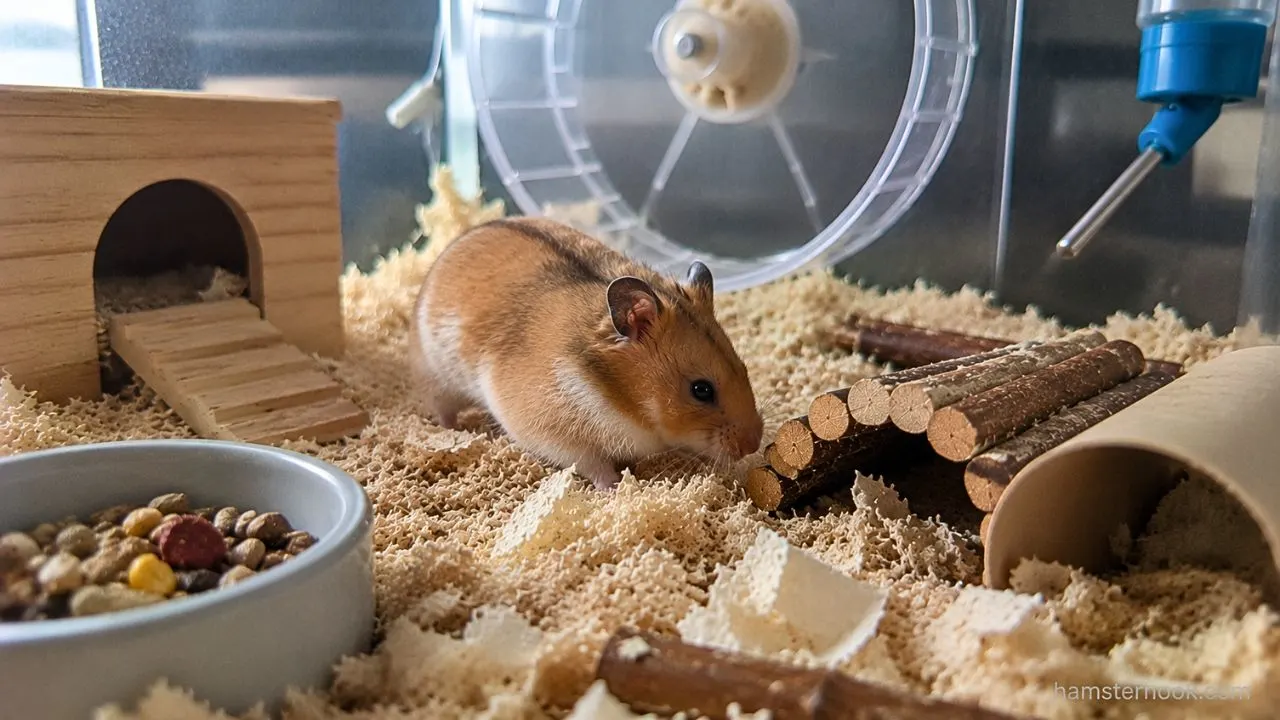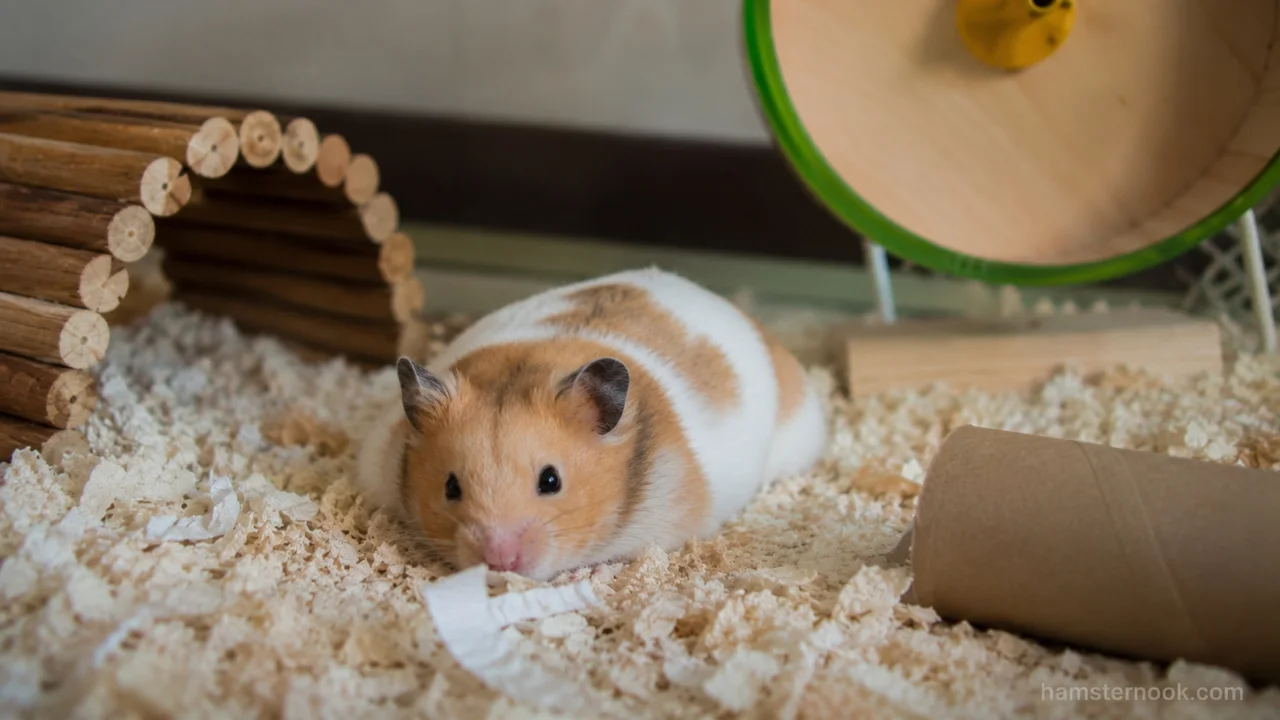
A bored hamster may show repetitive or unusually limited behavior when its enclosure does not provide enough opportunities for digging, foraging, chewing, hiding, exploring, and other natural activities. However, behaviors that look like boredom can also have other environmental, behavioral, or health-related explanations.
Repeated pacing, persistent attempts to reach enclosure edges, bar chewing, repetitive digging, or a lack of engagement while awake can all be reasons to examine the hamster’s environment more closely. No single behavior proves boredom by itself.
This guide covers eight possible signs of hamster boredom, how to distinguish them from normal curiosity or illness, and practical ways to make the enclosure more engaging.
Quick Answer
A bored hamster may show repetitive behaviors such as pacing, persistent bar chewing, repeated escape attempts, or limited engagement with its environment. These behaviors are not specific to boredom, so first consider the enclosure setup, available enrichment, normal activity patterns, and whether any physical symptoms are present. Providing opportunities for burrowing, foraging, chewing, hiding, and exploring can make the environment more varied.
Why Hamsters Get Bored in Captivity
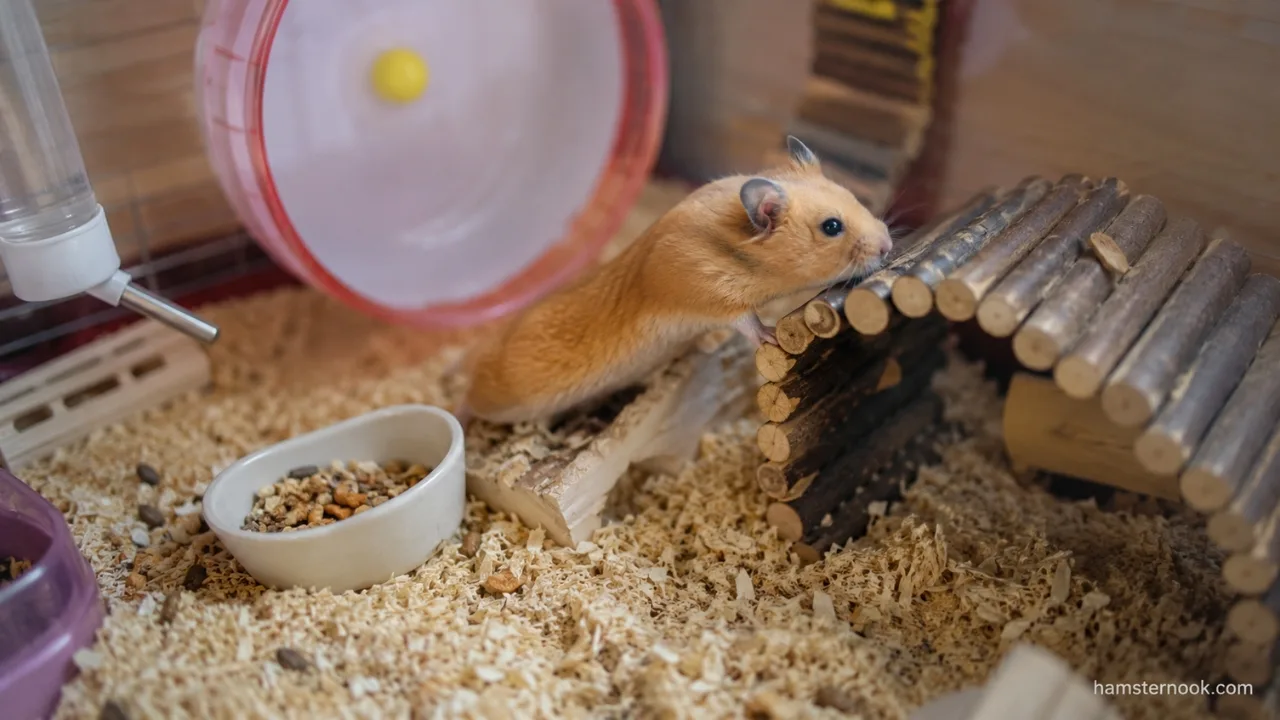
Wild hamsters spend much of their time searching for food, exploring territory, digging tunnels, building nests, and avoiding predators. These activities provide both physical exercise and mental stimulation.
Pet hamsters still perform behaviors such as digging, foraging, nesting, chewing, and exploring. An enclosure that provides few opportunities for these activities may offer limited behavioral stimulation.
Common causes of hamster boredom include:
- Limited usable enclosure space
- Few opportunities for burrowing or digging
- Limited foraging opportunities
- Lack of suitable chew items
- Few hiding or exploration options
- An unsuitable or unavailable wheel
- An environment offering little behavioral variety
Boredom should not be treated as a reason to add another hamster to the enclosure. Social housing requirements vary by species and circumstances, and introducing another hamster can create serious compatibility and welfare problems.

If the enclosure offers few opportunities for natural activity, our Hamster Cage Enrichment: 10 Safe Ideas for Boredom & Natural Behavior guide covers practical ways to improve the habitat with enrichment that encourages natural hamster behaviors.
Can Hamsters Really Get Bored?
Hamsters can benefit from an environment that allows varied species-appropriate behaviors such as digging, foraging, chewing, nesting, hiding, and exploring. When those opportunities are limited, repetitive or poorly varied behavior may indicate that the enclosure needs closer evaluation.
Quick Overview of Common Boredom Signs
| Behavior | What It May Suggest | What Else to Check |
|---|---|---|
| Persistent bar chewing | Frustration or repeated interaction with enclosure barriers | Space, enrichment, bar access |
| Repetitive pacing | Limited behavioral variety or stress | Recent changes, enclosure layout |
| Repeated escape attempts | Strong exploration or environmental dissatisfaction | Usable space, hides, enrichment |
| Repetitive climbing | Attempts to explore enclosure boundaries | Setup and safe movement options |
| Heavy reliance on wheel | Wheel is a major available activity | Whether other activities are available |
| Repetitive corner digging | Burrowing attempt or interaction with enclosure boundary | Bedding depth and digging areas |
| Destructive chewing | Normal gnawing or repeated interaction with unsuitable objects | Safe chew opportunities |
| Unusual inactivity while awake | Reduced engagement or possible health issue | Appetite, activity history, physical symptoms |
Excessive Bar Chewing
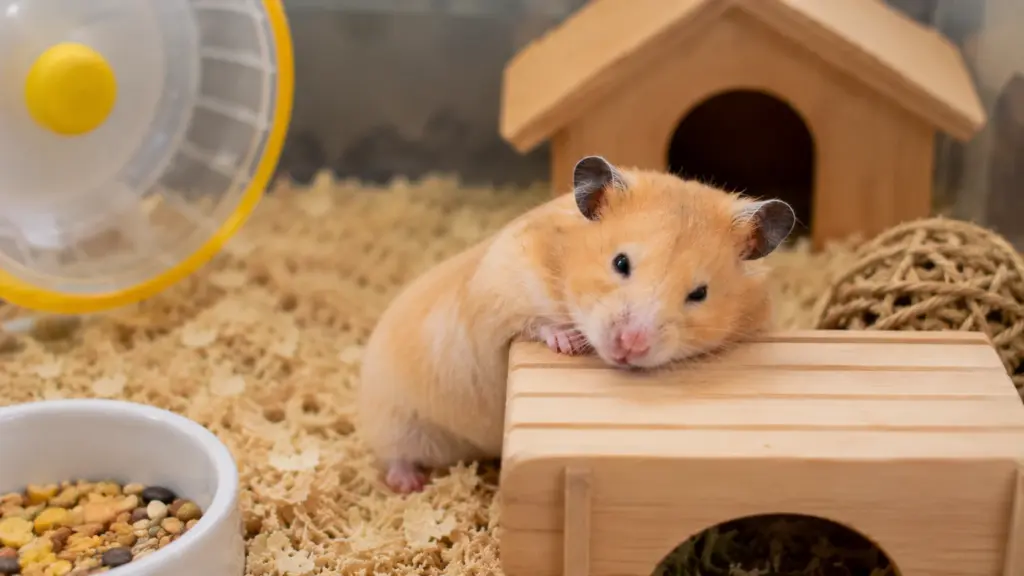
Persistent bar chewing can be a reason to review the enclosure and the hamster’s available activities, although the behavior should not automatically be attributed to boredom.
Look at when the behavior occurs, how often it repeats, and whether the hamster has other opportunities to forage, dig, chew, hide, run, and explore.
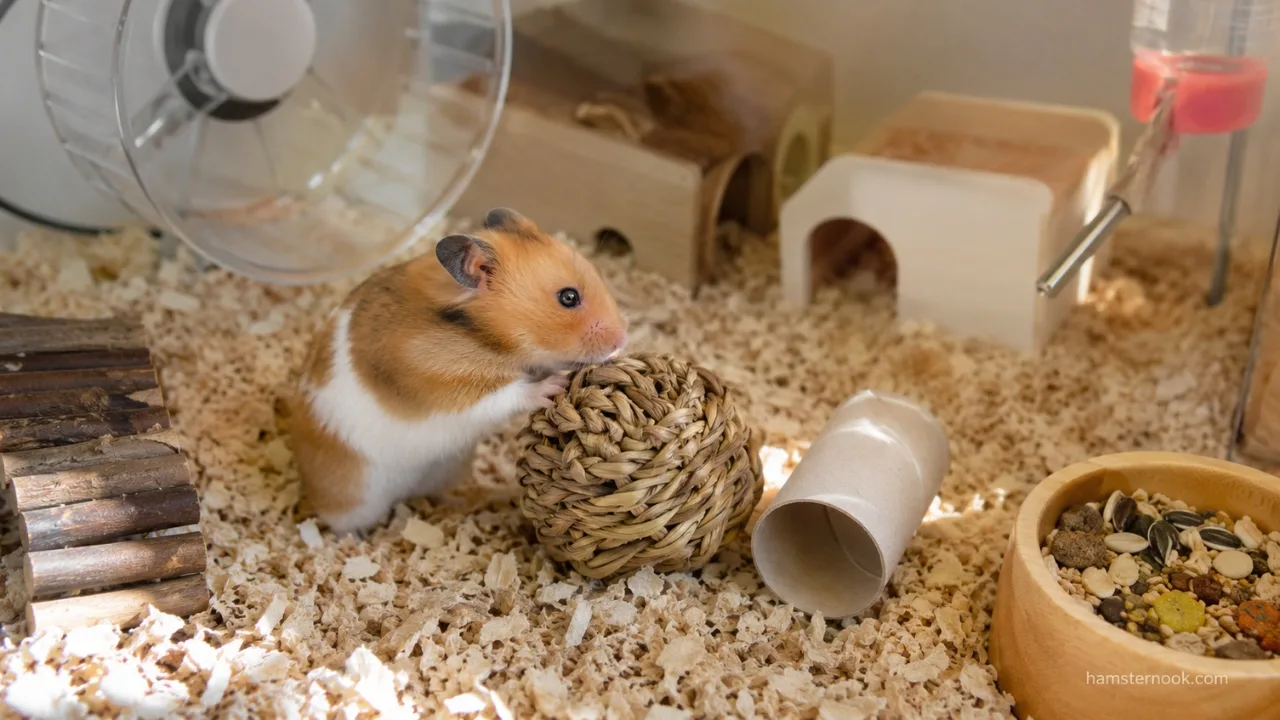
Potential consequences include:
Persistent bar chewing deserves attention because repeated contact with enclosure bars can injure the mouth or teeth. If the behavior continues, review the hamster’s usable space, bedding, hiding areas, foraging opportunities, and other enrichment rather than trying to stop the chewing alone.
Repeated contact with enclosure bars may also create a risk of mouth or dental injury, so persistent bar chewing deserves attention even when the hamster otherwise appears active.
Address the enclosure rather than simply trying to block the behavior. Review usable space, bedding, hiding areas, foraging opportunities, safe chew materials, and other enrichment options.
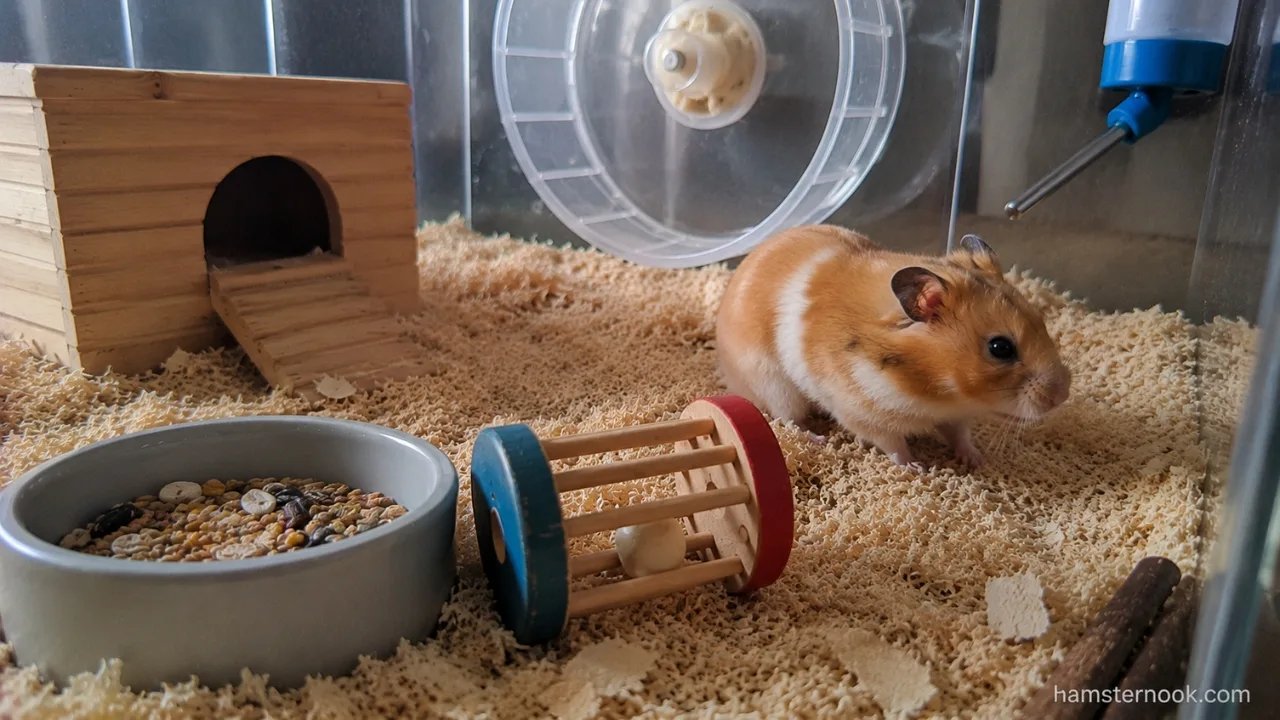
Usable enclosure space affects how many burrowing, hiding, foraging, and activity areas can be provided. Our Do Hamsters Need a Bigger Cage? Signs Your Cage Is Too Small guide explains what to consider when planning enclosure space.
Repeated Pacing Along the Same Path
A bored hamster may walk the same route repeatedly.
This behavior, sometimes called route tracing, can look like:
- Running identical loops
- Following cage edges continuously
- Moving back and forth across one section of the enclosure
Repetition is the important clue. Normal exploration usually changes as the hamster investigates different areas, while route tracing repeatedly follows a similar path.
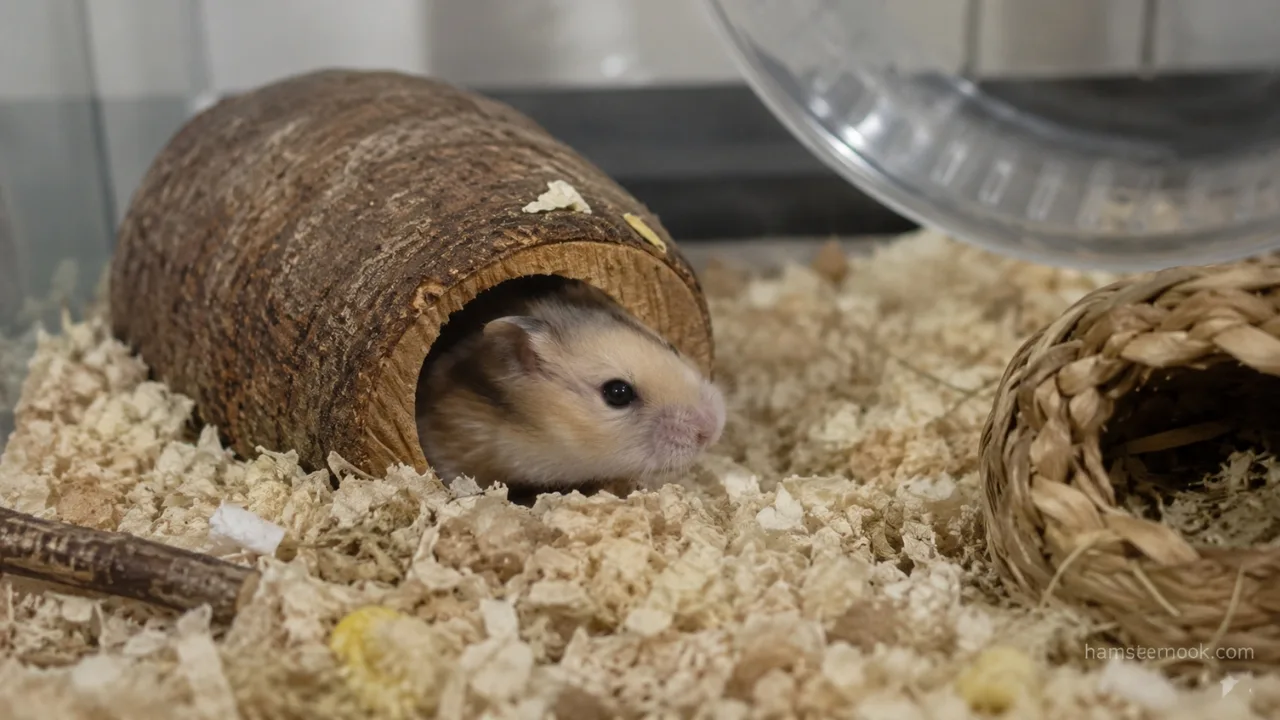
Repetitive pacing can also occur alongside stress or environmental disturbance, so consider recent changes in the enclosure and the hamster’s other behavior before labeling it boredom.
Constant Escape Attempts
Hamsters are naturally curious animals, so occasional attempts to investigate outside the cage are normal.
Pay closer attention when attempts to reach enclosure boundaries become persistent or dominate normal waking activity, such as:
- Climbing walls
- Hanging from cage bars
- Pushing at corners
- Searching every edge for an opening
This pattern is a reason to review usable space, environmental complexity, hiding opportunities, bedding, exercise equipment, and other enrichment rather than assuming one specific cause.
Obsessive Wheel Running
Wheel running is healthy and completely normal for hamsters.
The difference is in how it occurs.
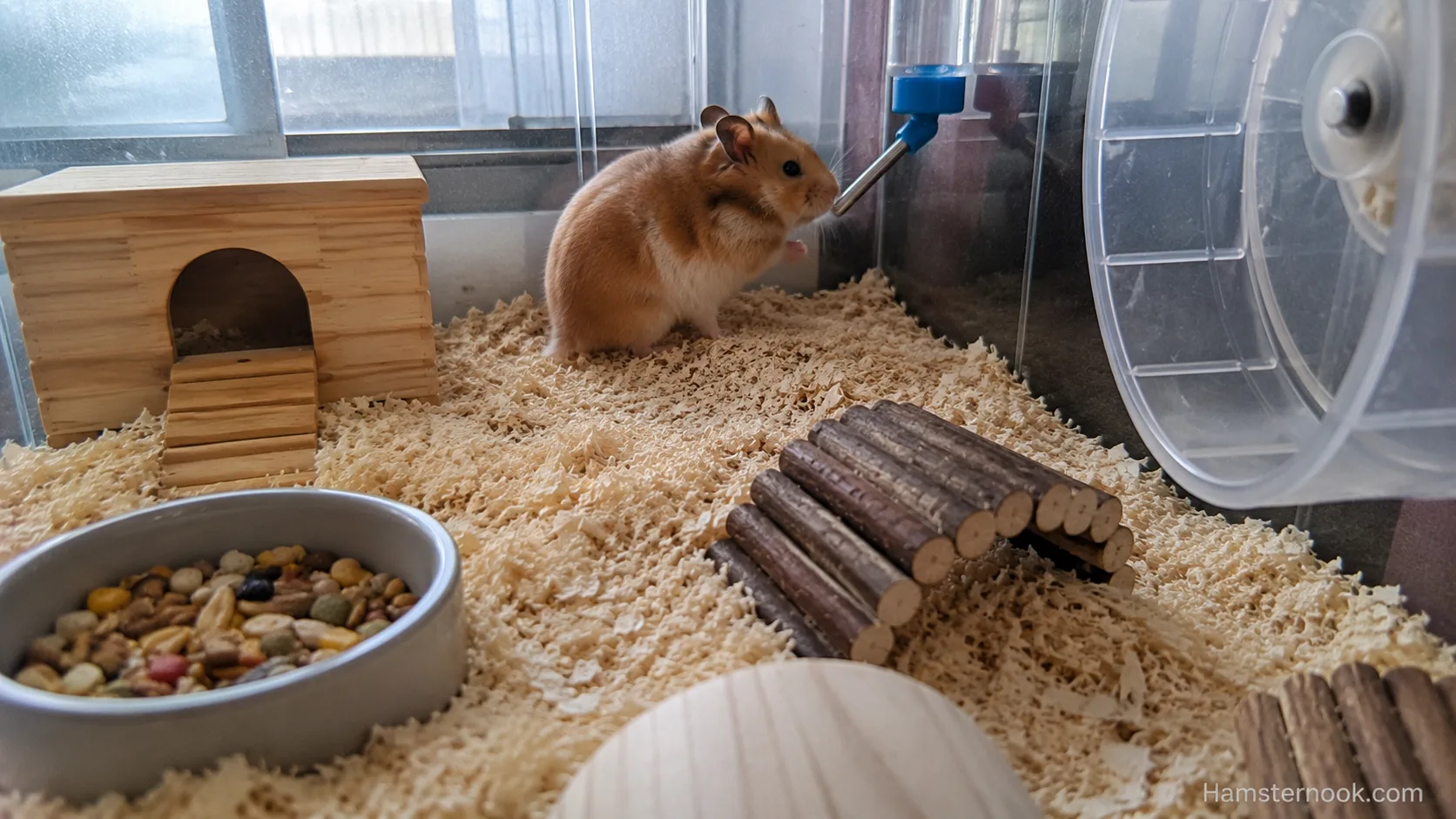
Wheel running is a normal activity and should not be treated as evidence of boredom by itself. Instead, look at whether the hamster also uses other parts of the enclosure for digging, foraging, nesting, hiding, chewing, and exploration.
If the wheel appears to be one of very few usable activities in the enclosure, expanding the range of enrichment is more useful than trying to reduce normal wheel use.
Digging in Cage Corners
Hamsters naturally enjoy digging, but boredom-related digging often focuses on cage corners and walls.
This behavior may look like:
- Scratching continuously at one corner
- Digging against glass or plastic walls
- Attempting to tunnel where no bedding exists
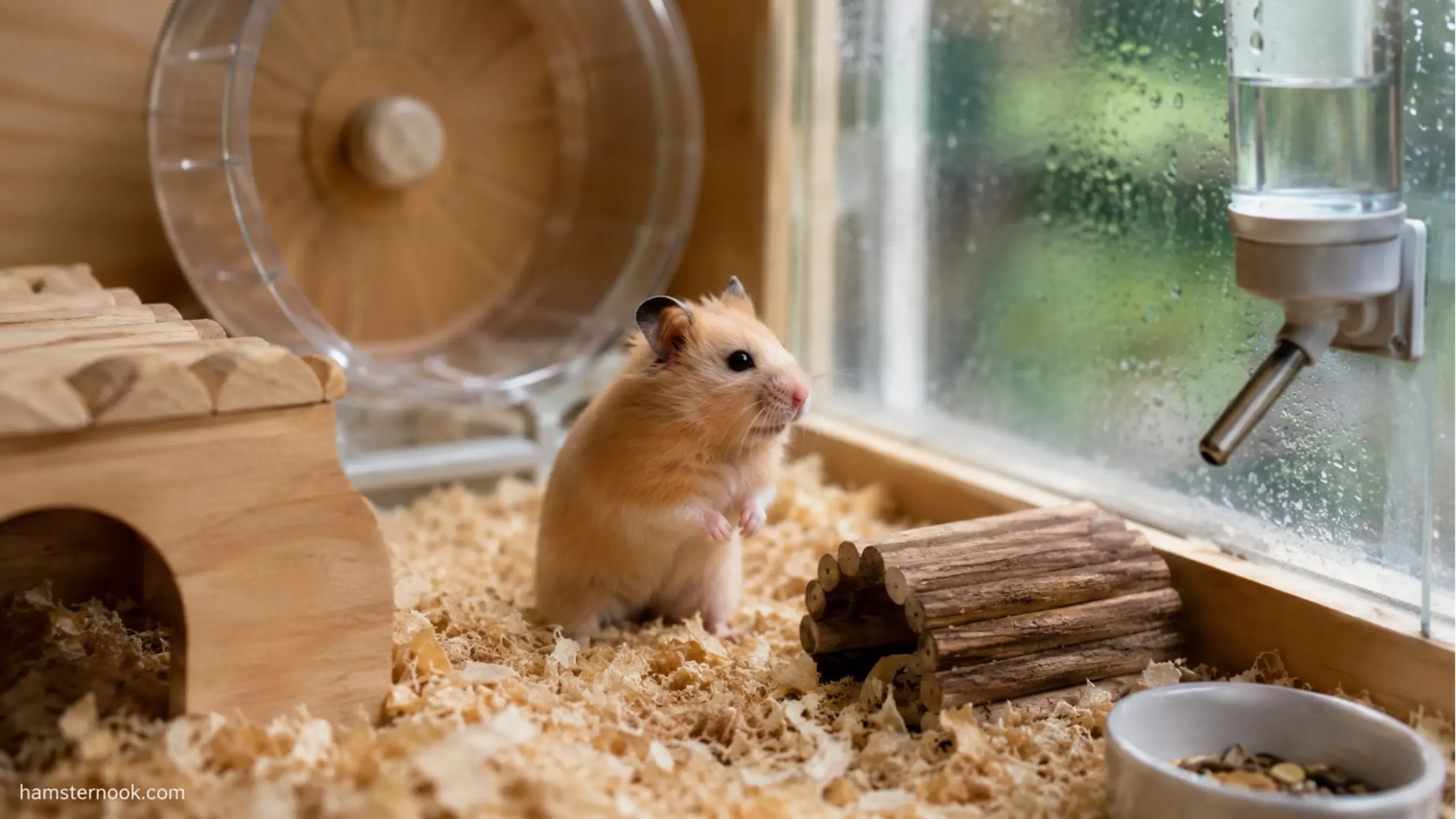
Corner digging can reflect normal digging behavior, an attempt to burrow where substrate is limited, or repeated interaction with an enclosure boundary. Context matters.
Providing a suitable area for burrowing can give digging behavior somewhere productive to occur. Our How Much Bedding Does a Hamster Need? Minimum Depth Guide for Healthy Burrowing covers bedding setup and tunnel-building considerations.
Destructive Chewing of Non-Food Items
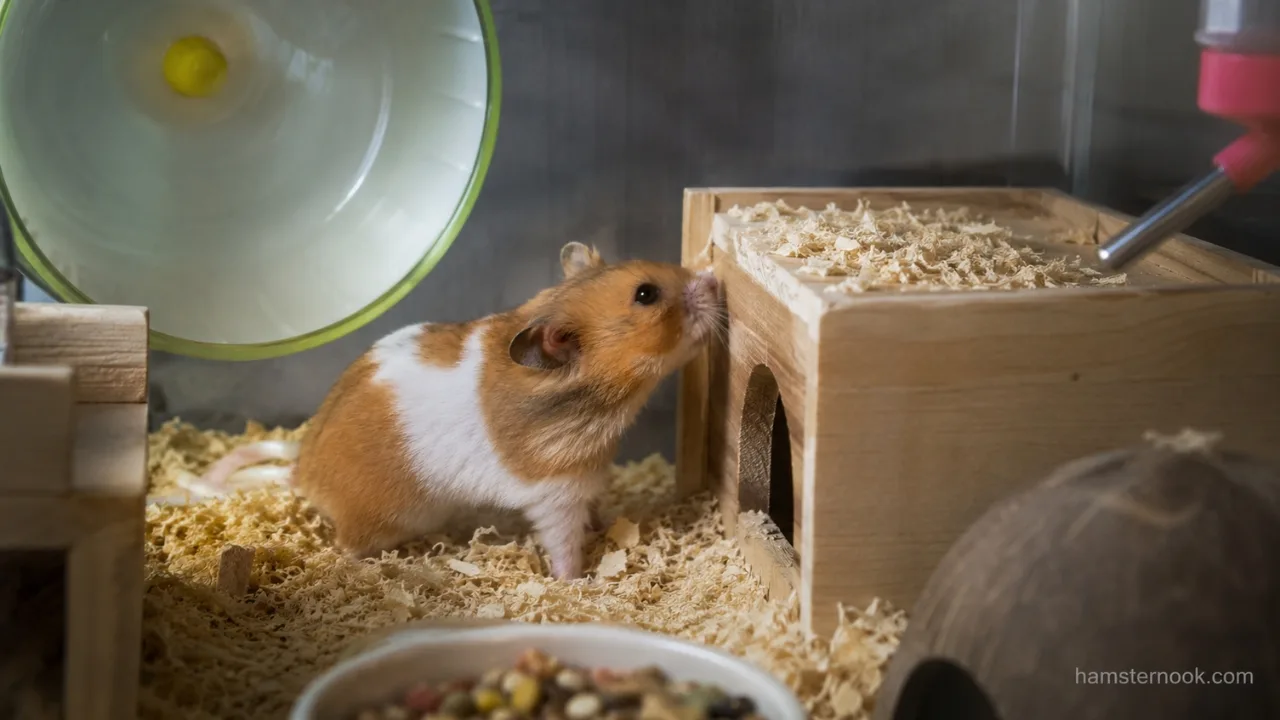
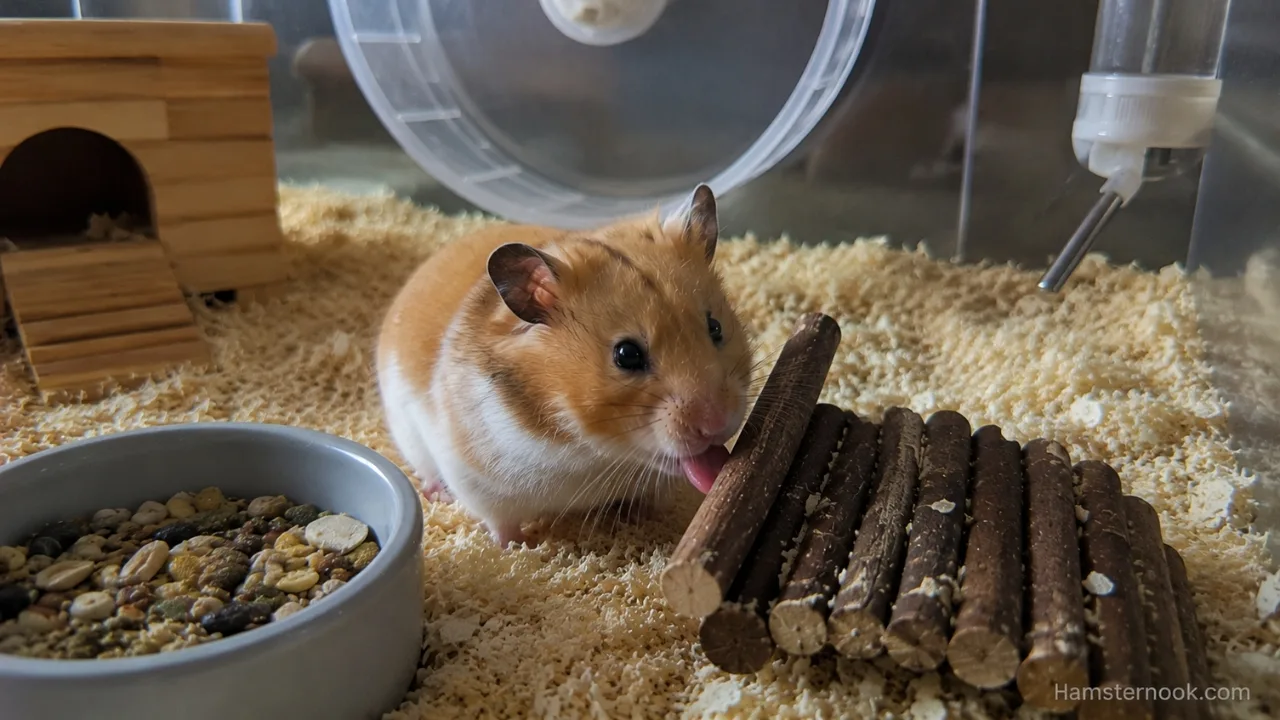
Gnawing is normal hamster behavior, but repeated chewing of unsuitable enclosure items can be a reason to review both the objects available and the wider environment.
However, boredom may cause excessive chewing of:
- Plastic accessories
- Cage corners
- Water bottle holders
- Hideouts
- Non-food objects
Provide suitable chew materials alongside other forms of enrichment rather than relying on a single chew toy to address repetitive behavior.
Reduced Interest in Exploring

Not every bored hamster becomes hyperactive.
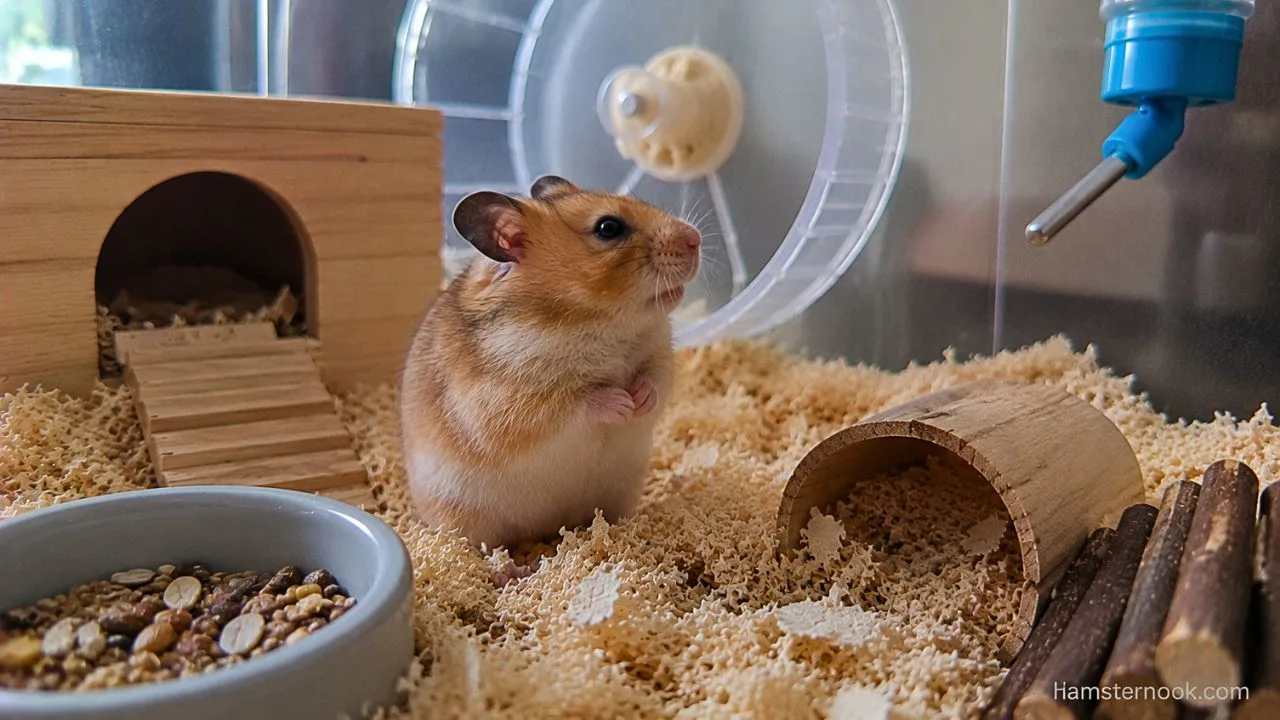
Some may show the opposite response.
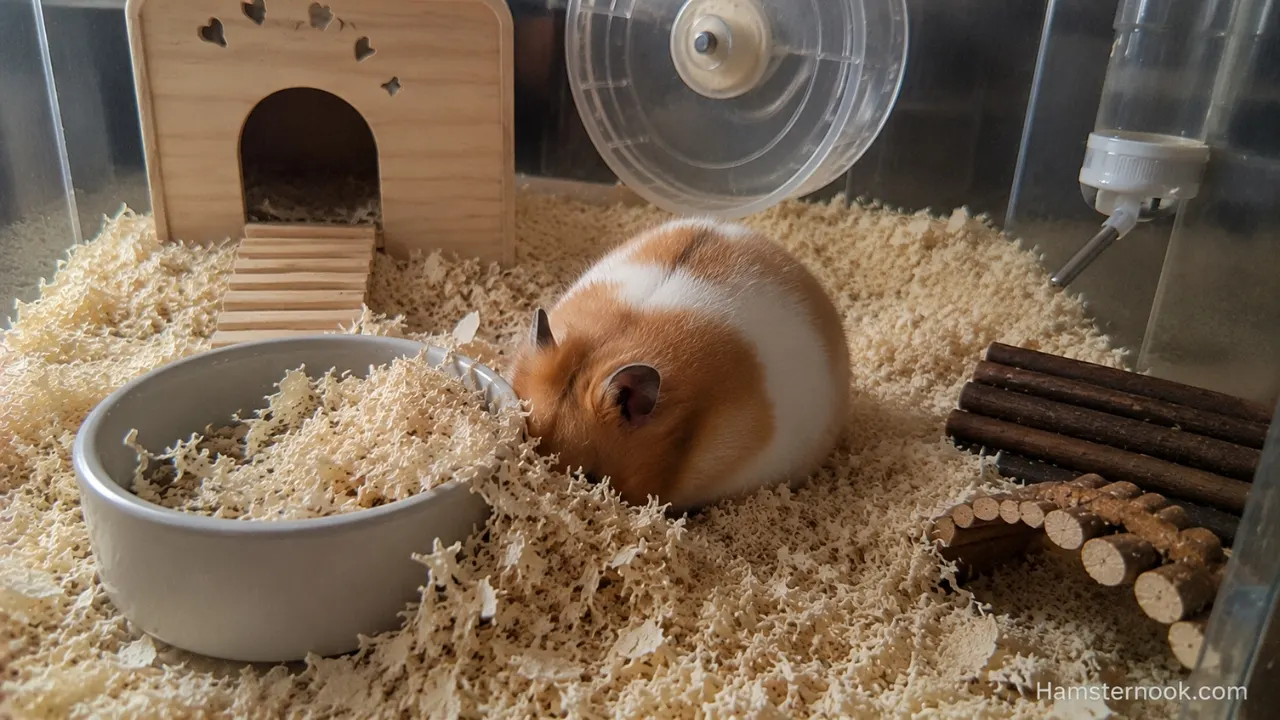
A noticeable reduction in exploration while the hamster is normally awake can indicate reduced engagement, but it can also occur with stress, environmental change, pain, or illness.
Possible signs include:
- Remaining in one area for long periods
- Ignoring enrichment items
- Limited exploration
- Reduced curiosity
This is often easier to notice when compared with the hamster’s previous behavior patterns.

For a broader explanation of how to interpret changes in hamster behavior, see our Hamster Behavior Guide: Body Language, Habits & What They Mean.
Changes in Normal Waking Activity
Hamsters sleep through much of the day and become active during darker periods, so boredom should be evaluated during the individual hamster’s normal waking time rather than simply from daytime sleep.
A bored hamster may develop unusual activity habits such as:
- Repetitive activity with little variation
- Noticeably reduced engagement while awake
- A clear change from the hamster’s usual activity pattern
Changes should always be evaluated carefully because health issues can sometimes produce similar signs.
Our Are Hamsters Nocturnal? guide explains normal hamster sleep and activity timing, which can help distinguish daytime sleeping from an actual change in waking behavior.
Boredom vs Normal Hamster Behavior
One challenge for owners is distinguishing boredom from ordinary hamster habits.
| Behavior | Normal Context | Reason to Look Closer |
|---|---|---|
| Wheel running | Part of varied nightly activity | One of very few activities available |
| Digging | Burrowing or nest building | Repetitive interaction with a bare corner or boundary |
| Chewing | Normal gnawing on suitable material | Persistent chewing of bars or unsuitable objects |
| Exploring | Moving between different areas and activities | Replaced by repetitive route tracing |
| Climbing | Brief investigation where setup permits | Repeated attempts to reach enclosure boundaries |
Context is important. A behavior becomes more concerning when it is repetitive, excessive, or replaces other natural activities.
Is My Hamster Bored or Just Curious?
Curiosity is usually brief and changes from one activity to another. A curious hamster might explore a new tunnel, investigate a scent, dig for a few minutes, and then move on. Boredom-related behaviors tend to be repetitive, happening over and over without variation. If one repetitive behavior consistently replaces a wider range of normal activities, review the enclosure and recent changes before deciding what is causing it.
Why Boredom Matters
Some owners assume boredom is a minor issue, but prolonged boredom can affect welfare.
Environmental enrichment is part of giving captive animals opportunities to perform a broader range of species-appropriate behaviors. A setup that supports digging, hiding, foraging, chewing, nesting, and exercise gives the hamster more ways to interact with its surroundings.
Providing enrichment helps support both mental and physical health.
The goal is not to keep a hamster constantly active. Good enrichment gives the hamster meaningful choices during its normal waking period, including where to dig, hide, forage, chew, nest, and explore.
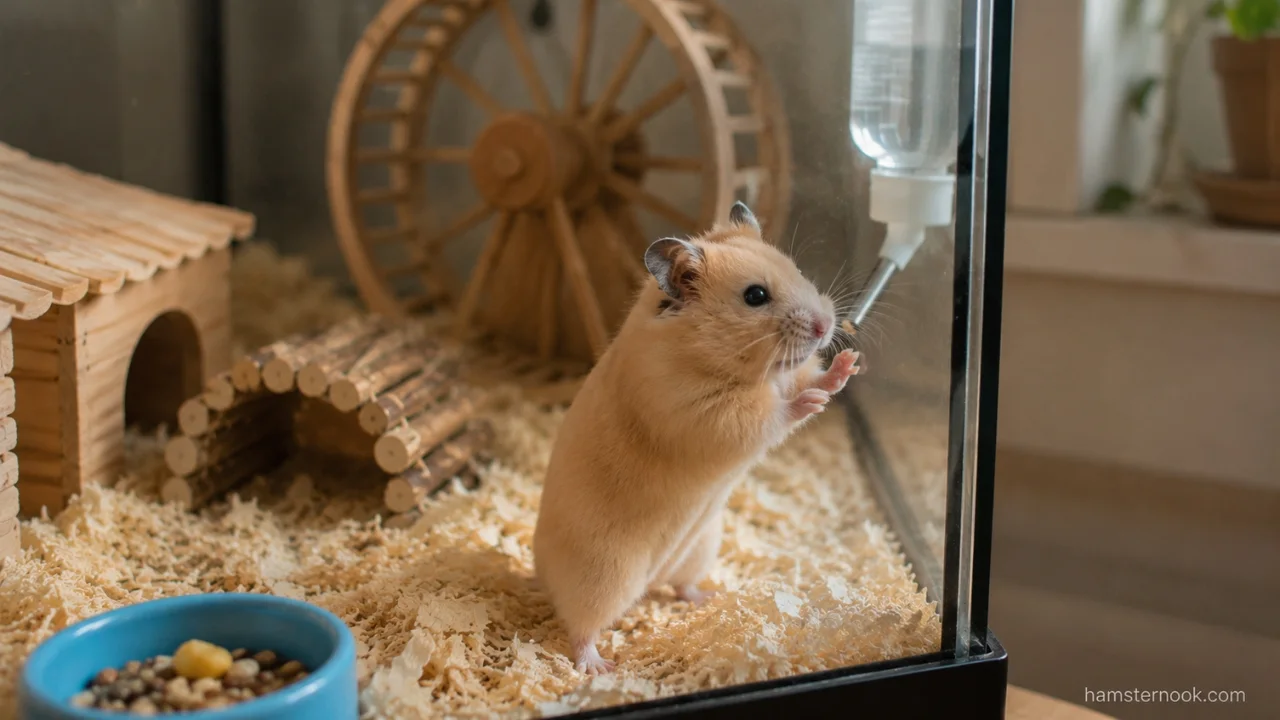
How to Add More Enrichment for a Bored Hamster
When the enclosure offers limited behavioral variety, improve the environment gradually rather than changing everything at once.
Start with the areas that are most limited. For example, if there is little usable bedding, improve the burrowing area; if food is always provided in one place, add safe foraging opportunities; if hiding options are limited, provide suitable hideouts. This makes it easier to see which changes your hamster actually uses.
Increase Cage Space
Usable enclosure space can make it easier to provide separate areas for burrowing, hiding, foraging, exercise, and exploration.
Hamsters generally benefit from:
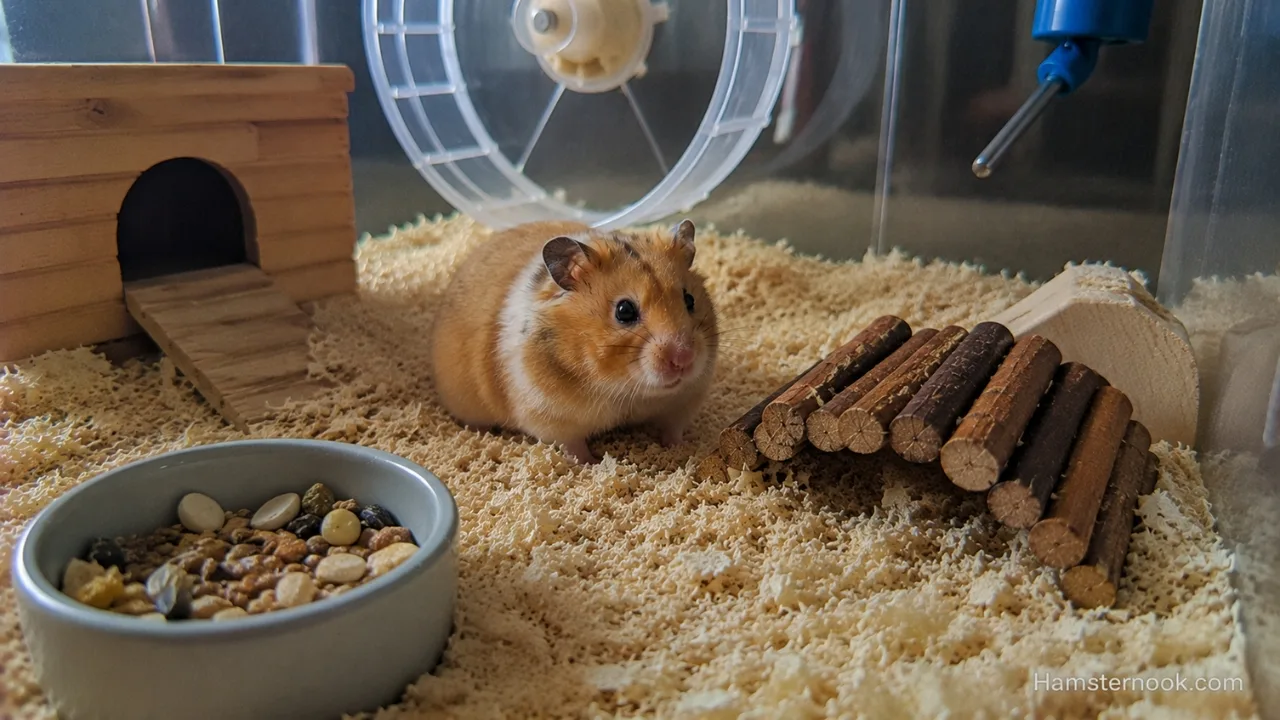
- More floor space
- Additional hiding areas
- Separate activity zones
Add Deep Bedding
Deep bedding encourages one of a hamster’s favorite activities: burrowing.
Provide an area of suitable bedding that allows digging, nest building, and, where the substrate can support it, tunnel formation. Bedding should be chosen for safety and function rather than added only for visual depth.
For practical bedding depth and burrowing guidance, see How Much Bedding Does a Hamster Need? Minimum Depth Guide for Healthy Burrowing.
Introduce Foraging Activities
Foraging encourages hamsters to work for food instead of simply eating from a bowl.
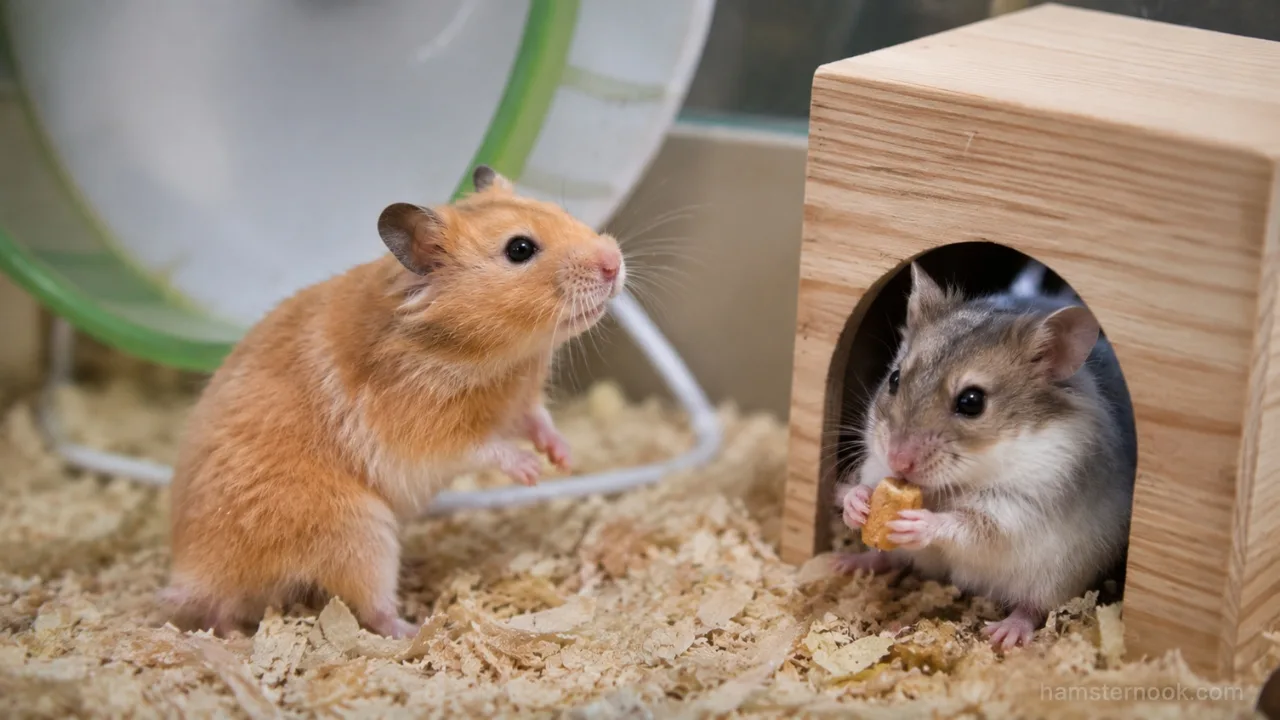
Ideas include:
- Scatter feeding
- Forage mixes
- Treats hidden in bedding
- Cardboard puzzles
- Paper-based enrichment toys
Use part of the hamster’s normal food ration for foraging activities so enrichment does not depend on repeatedly adding extra treats.
Rotate Enrichment Items
Constantly replacing everything can be stressful, but occasional changes can help maintain interest.
Consider rotating:
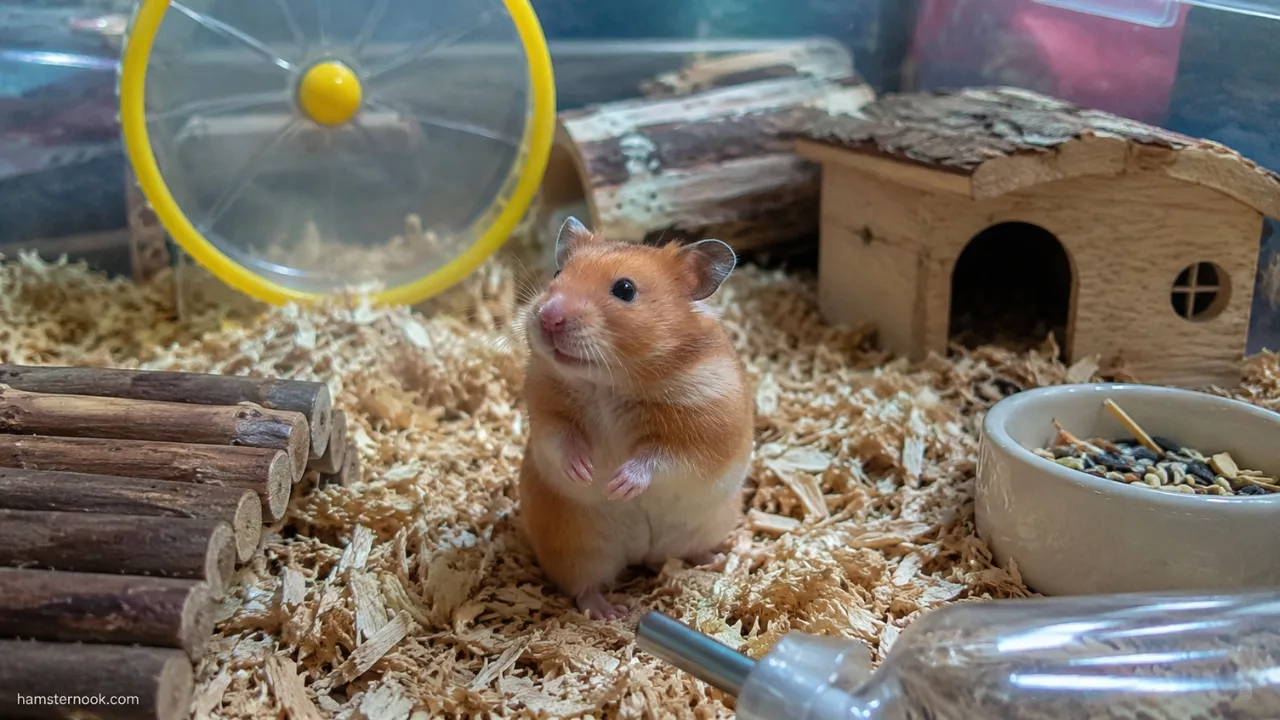
- Chew toys
- Tunnels
- Cork logs
- Foraging items
- Climbing structures
Provide Appropriate Exercise Equipment
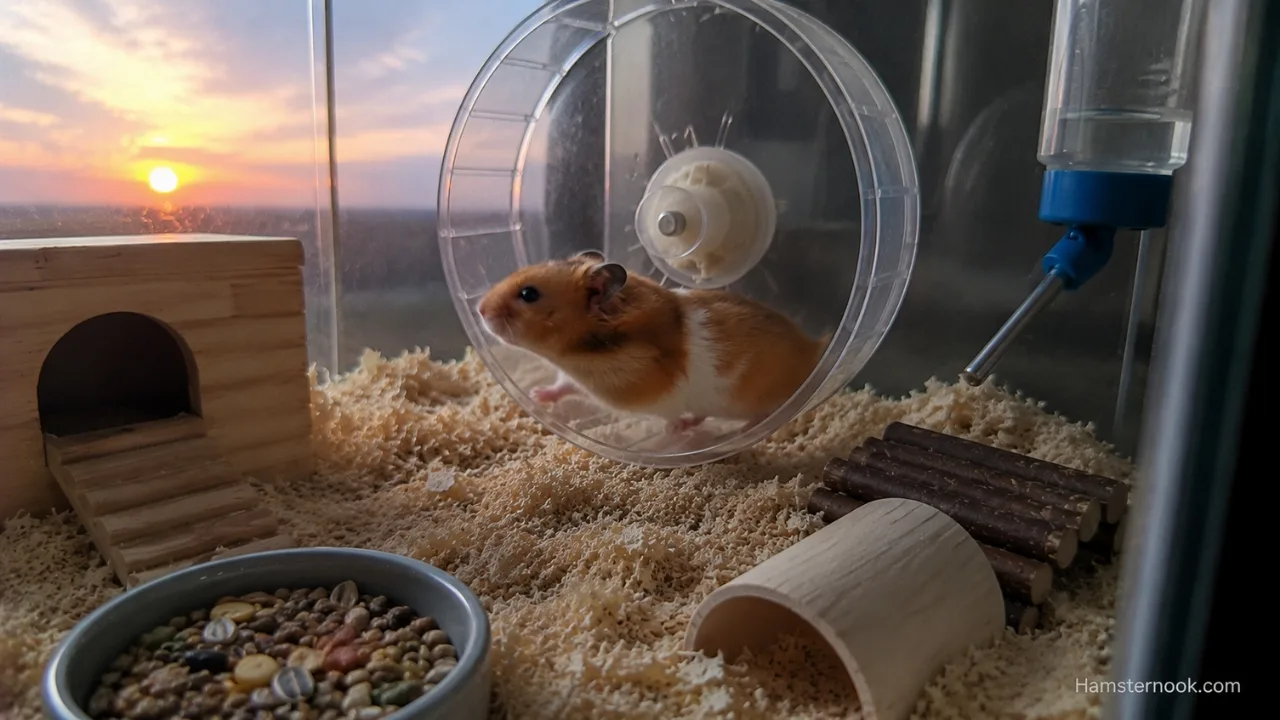
A properly sized wheel remains one of the most important enrichment tools.
A wheel should be part of a varied enclosure rather than the only substantial activity available. Choose a design that allows comfortable running and keep access unobstructed.
Ensure the wheel allows your hamster to run with a straight back and comfortable posture.
Enrichment Ideas That Help Prevent Boredom
| Enrichment Type | Benefits |
|---|---|
| Sand bath | Digging and grooming opportunities |
| Cork tunnels | Exploration and hiding |
| Forage sprays | Natural food searching |
| Cardboard tubes | Chewing and exploration |
| Multi-chamber hide | Mimics underground burrows |
| Suitable hamster-safe natural materials | Chewing and investigation |
| Dig boxes | Extra stimulation |
The best environments combine multiple enrichment types rather than relying on a single toy.
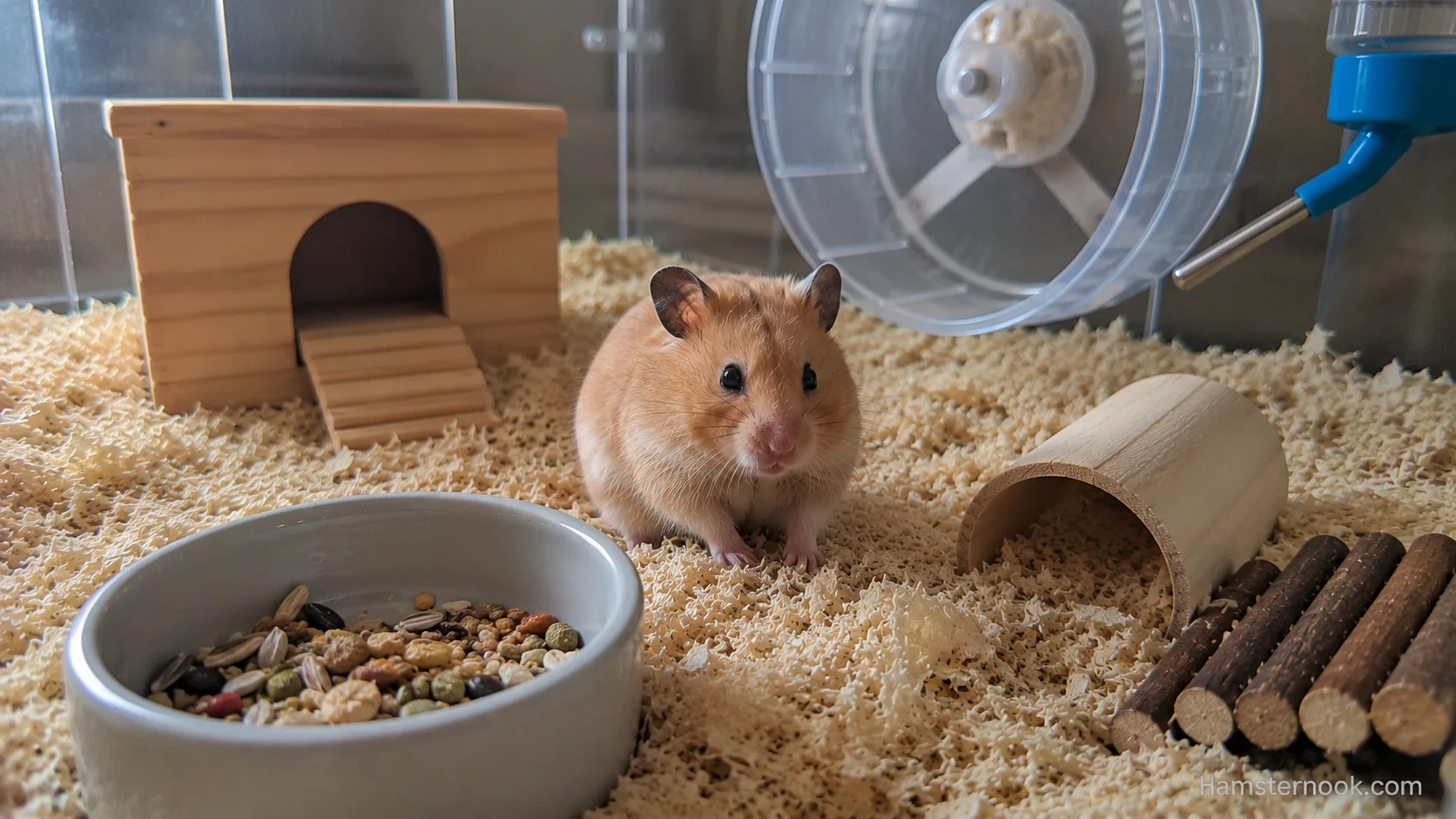
Boredom vs Illness: How To Tell the Difference
Boredom and illness can both change normal behavior, but repetitive activity should not be used to rule out a health problem. Appetite loss, unexplained weight change, diarrhea, abnormal breathing, weakness, poor grooming, or a significant reduction in normal activity deserve attention regardless of the enclosure setup.
If a hamster becomes unusually inactive while awake or shows physical symptoms, address the health concern before assuming it simply needs more enrichment.
Our How to Tell If Your Hamster Is Sick: Signs, Symptoms & When to See a Vet guide covers broader warning signs that can help separate an enrichment question from a possible health problem.
Is My Hamster Bored or Stressed?
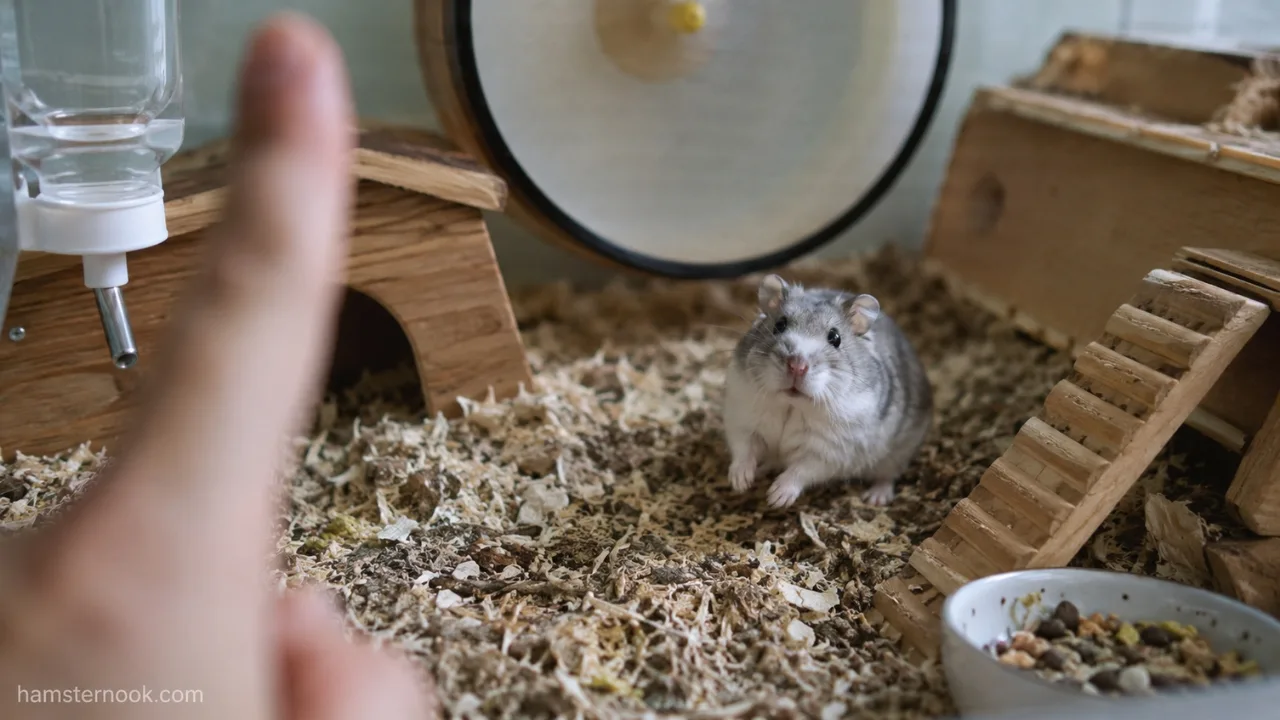
Boredom and stress can overlap because both may appear as changes in activity or repetitive behavior. The difference cannot always be determined from one behavior alone.
If the behavior appears alongside fear, frequent disturbance, or other stress-related changes, our 7 Ways You’re Accidentally Stressing Your Hamster: Signs & What to Do guide covers common stress triggers and warning signs.
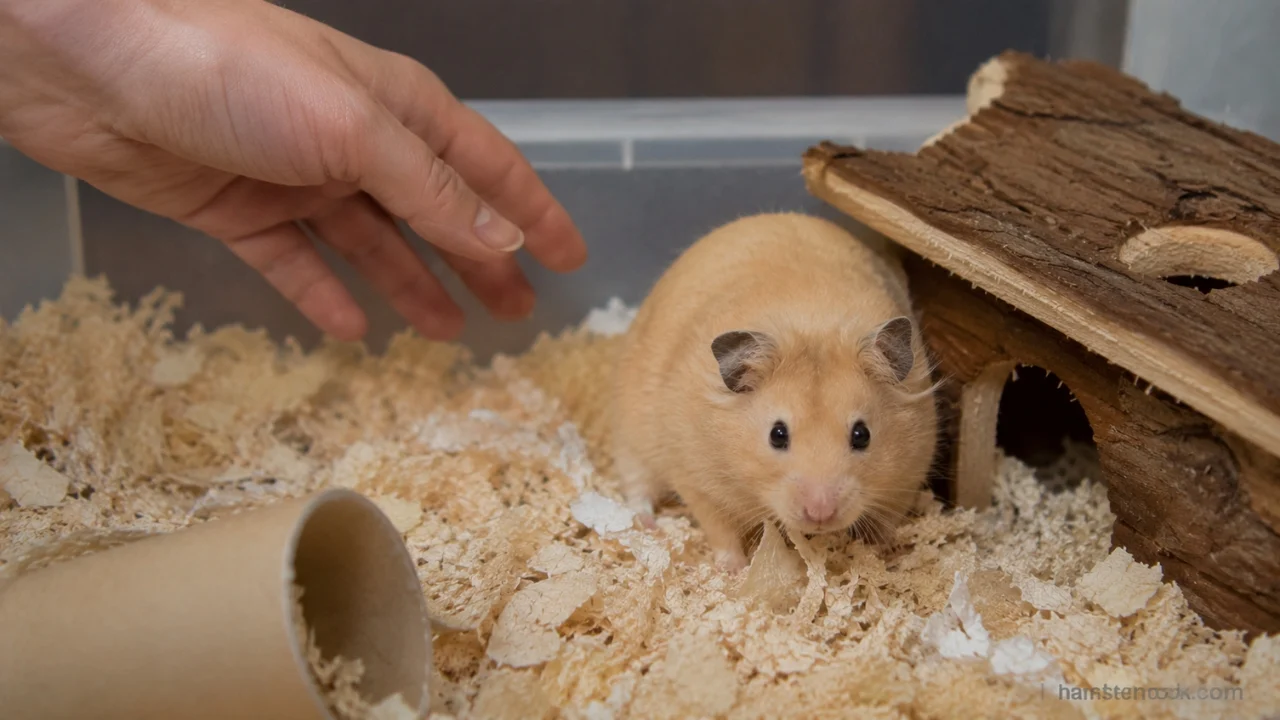
Review what changed before the behavior started. Limited opportunities for digging, foraging, hiding, chewing, and exploring may point toward an enrichment problem, while frequent disturbance, sudden environmental changes, unsuitable conditions, or fear-related situations may contribute to stress. Both can exist at the same time.
Our 7 Ways You’re Accidentally Stressing Your Hamster: Signs & What to Do guide covers common stress triggers and behavioral signs in more detail.
Individual behaviors such as digging, hiding, chewing, pacing, and changes in activity can have different meanings depending on context. Our Hamster Behavior Guide provides a broader overview of common hamster behaviors and how to interpret them.
Final Thoughts
A bored hamster may show repetitive or poorly varied behavior, but bar chewing, pacing, digging, escape attempts, wheel running, or inactivity should not be interpreted in isolation. Look at the hamster’s entire environment and compare the behavior with its usual activity pattern.
A varied enclosure should provide opportunities for burrowing, hiding, foraging, chewing, nesting, exercise, and exploration. Introduce improvements gradually and observe which activities your hamster actually uses.
When a behavioral change appears with appetite loss, weakness, abnormal breathing, diarrhea, weight change, poor grooming, or other physical symptoms, consider a health problem rather than assuming boredom is responsible.
Frequently Asked Questions
Can a hamster get bored even with toys?
Yes. Toys help, but boredom can still occur if the cage is too small, enrichment lacks variety, or natural behaviors like digging and foraging are limited.
Is bar chewing always a sign of boredom?
Not always. Persistent bar chewing is a reason to review the enclosure, available space, enrichment, and other environmental factors, but the behavior should not automatically be attributed to boredom.
How often should I change my hamster’s enrichment?
There is no fixed schedule. Introduce small changes when useful while preserving familiar nesting, hiding, feeding, and activity areas. Avoid repeatedly rearranging the entire enclosure simply to create novelty.
Does wheel running mean my hamster is happy?
Wheel running is normal behavior, but wheel use alone cannot tell you whether a hamster is happy or bored. Consider the full range of behavior, including digging, foraging, nesting, exploring, eating, grooming, and normal rest.
Can boredom make a hamster aggressive?
Biting or defensive behavior can have several causes, including fear, handling, territorial responses, discomfort, or environmental factors. Do not assume aggression is caused by boredom without considering the context.

What is the fastest way to reduce hamster boredom?
Start by reviewing the enclosure as a whole: usable space, bedding, hides, wheel, foraging opportunities, chew materials, and exploration areas. Improve obvious gaps gradually rather than making a complete setup change at once.
Health Note: Repetitive or unusual behavior does not diagnose boredom. Significant changes in appetite, activity, breathing, stool, weight, grooming, or physical condition should be discussed with a veterinarian.
References
This guide is based on hamster behavior, enrichment, housing, natural activity, stress, and welfare guidance from trusted animal welfare and veterinary resources, including:
- RSPCA – Hamster Behaviour – Guidance on natural hamster behaviors, activity, communication, handling, and behavioral changes.
- RSPCA – Creating a Good Home for Hamsters – Guidance on enclosure space, bedding, hiding places, enrichment, exercise, and environmental needs.
- RSPCA – Keeping Hamsters as Pets – General hamster care, housing, enrichment, diet, behavior, and welfare guidance.
- Blue Cross – Hamster Care Guide – Practical information on hamster housing, bedding, enrichment, exercise, handling, and wellbeing.
- NC3Rs – Housing and Husbandry: Hamster – Guidance on appropriate hamster housing, bedding, environmental conditions, exercise, and species-appropriate behavior.
- NC3Rs – Choosing Appropriate Enrichment – Guidance on selecting enrichment that supports natural behaviors such as foraging, exploration, chewing, and burrowing.
- MSD Veterinary Manual – Hamsters – Veterinary reference information on hamster health, behavior, husbandry, and conditions that may cause changes in normal activity.
Medical Disclaimer
This article is intended for educational purposes only and should not be considered veterinary advice. Repetitive or unusual behavior does not by itself confirm boredom, and similar changes can sometimes be associated with stress, environmental problems, pain, or illness. If your hamster shows significant changes in appetite, activity, breathing, weight, grooming, stool, movement, or overall condition, consult a qualified exotic animal veterinarian for proper evaluation.

Narayan Kumar is the founder and author of HamsterNook. He creates practical, research-based hamster care guides covering hamster behavior, nutrition, cage setup, enrichment, health, and everyday care. His goal is to help hamster owners make informed decisions and provide safer, healthier lives for their pets through clear, beginner-friendly information based on trusted animal care resources.