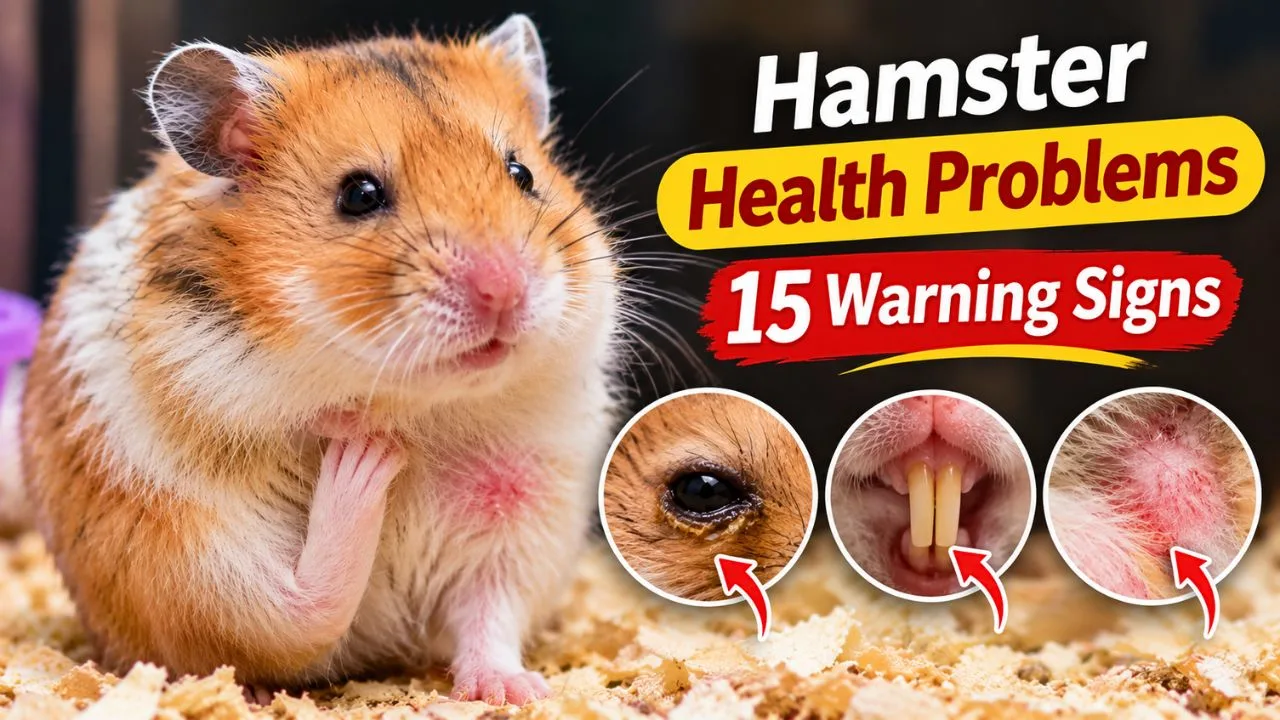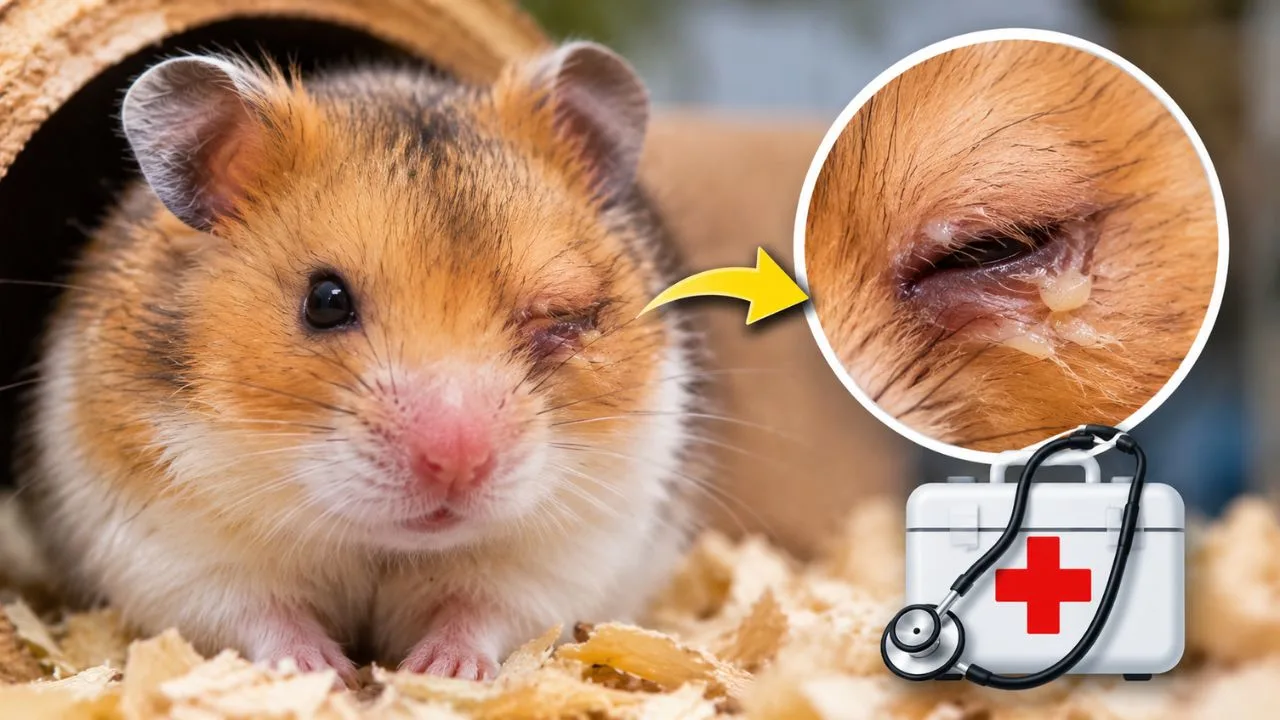
A hamster’s eyes should generally look clear, open, and free from unusual discharge. But what if you notice one eye stuck shut, crust around the eyelids, or a watery substance collecting near the corner? These changes can have several causes, from minor irritation to an eye injury or infection. Knowing what to look for, how to avoid making the problem worse, and when to contact a veterinarian can help protect your hamster’s eyesight and overall health.
Quick Answer: Why Does My Hamster Have Sticky or Watery Eyes?
Hamsters can develop sticky eyes, eye discharge, redness, and swelling because of irritation, injury, conjunctivitis, infection, or dental problems.
A small amount of dried material around the eyelids after sleeping may not always indicate a serious problem. However, an eye that repeatedly sticks shut, produces ongoing discharge, looks swollen, or becomes difficult to open needs veterinary attention.
Common causes include:
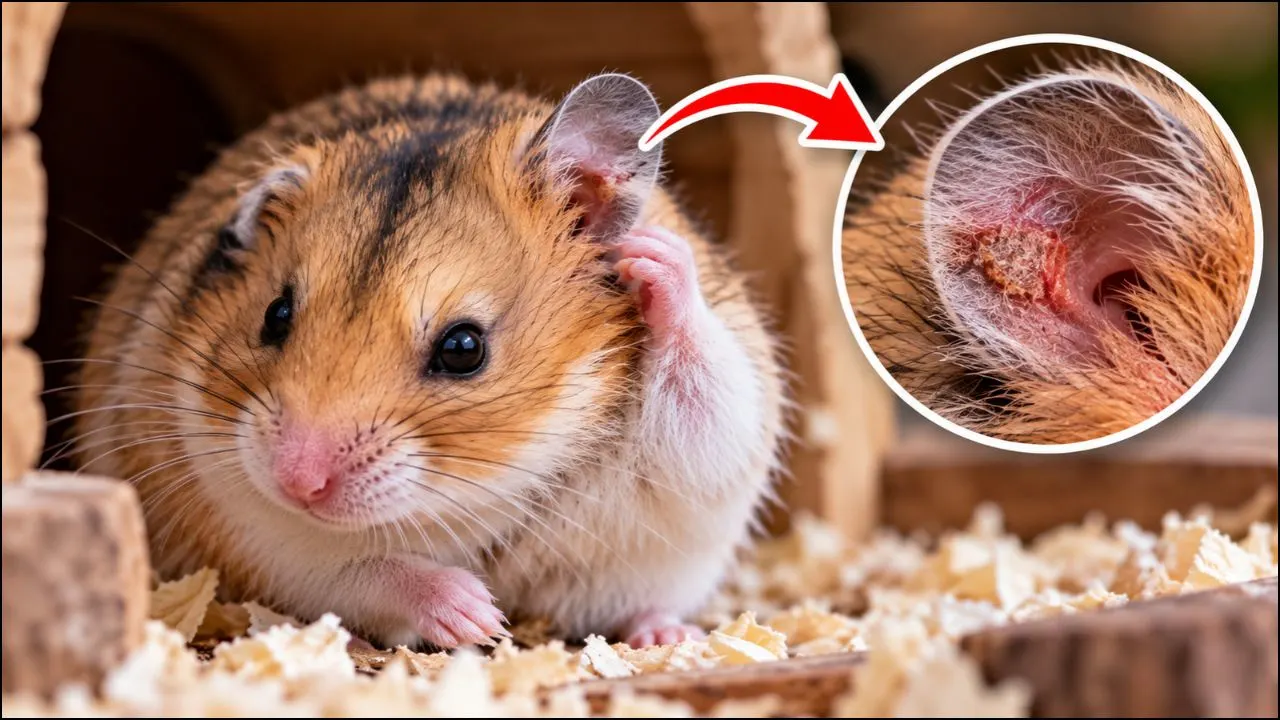
- Dust or bedding particles irritating the eye.
- Conjunctivitis (inflammation of the eye’s outer tissues).
- Bacterial or other infections.
- Scratches or other eye injuries.
- Dental problems affecting tissues around the eye.
- Foreign material trapped near the eyelid.
Never assume that a sticky eye is simply a cleaning problem. If discharge returns, the eye becomes red or swollen, or your hamster appears uncomfortable, arrange a veterinary examination.
What Do Healthy Hamster Eyes Look Like?
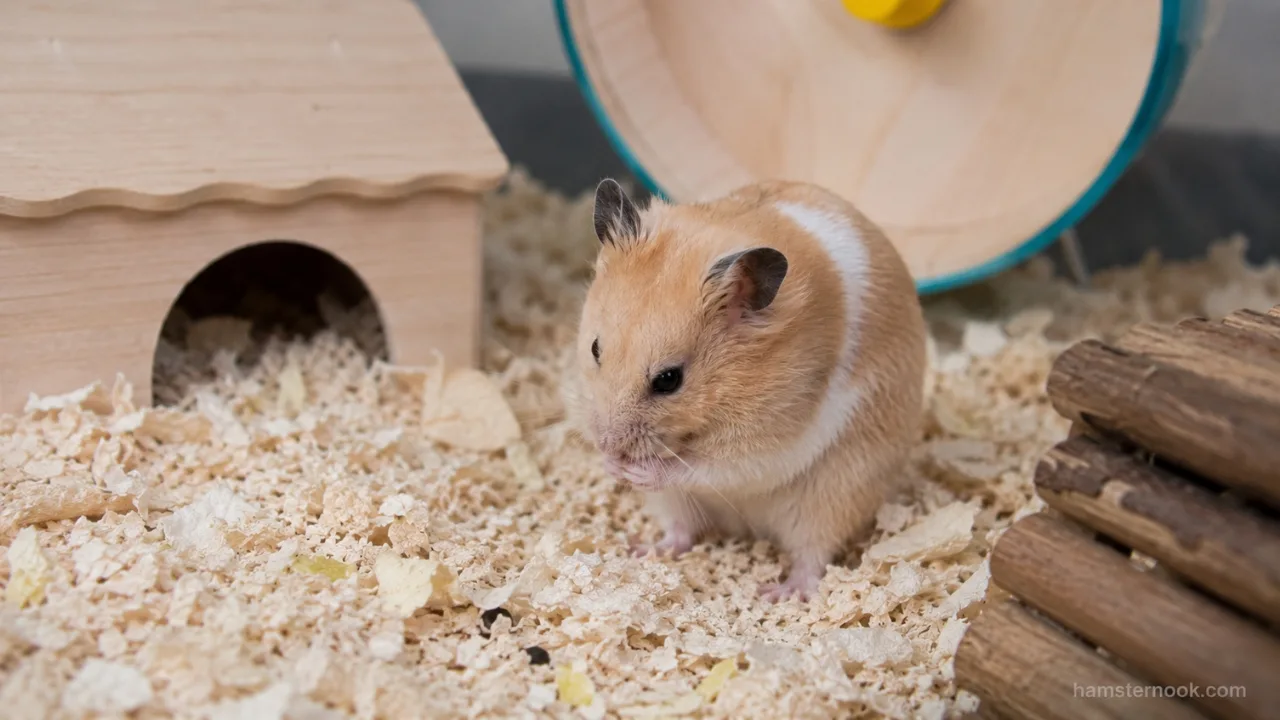
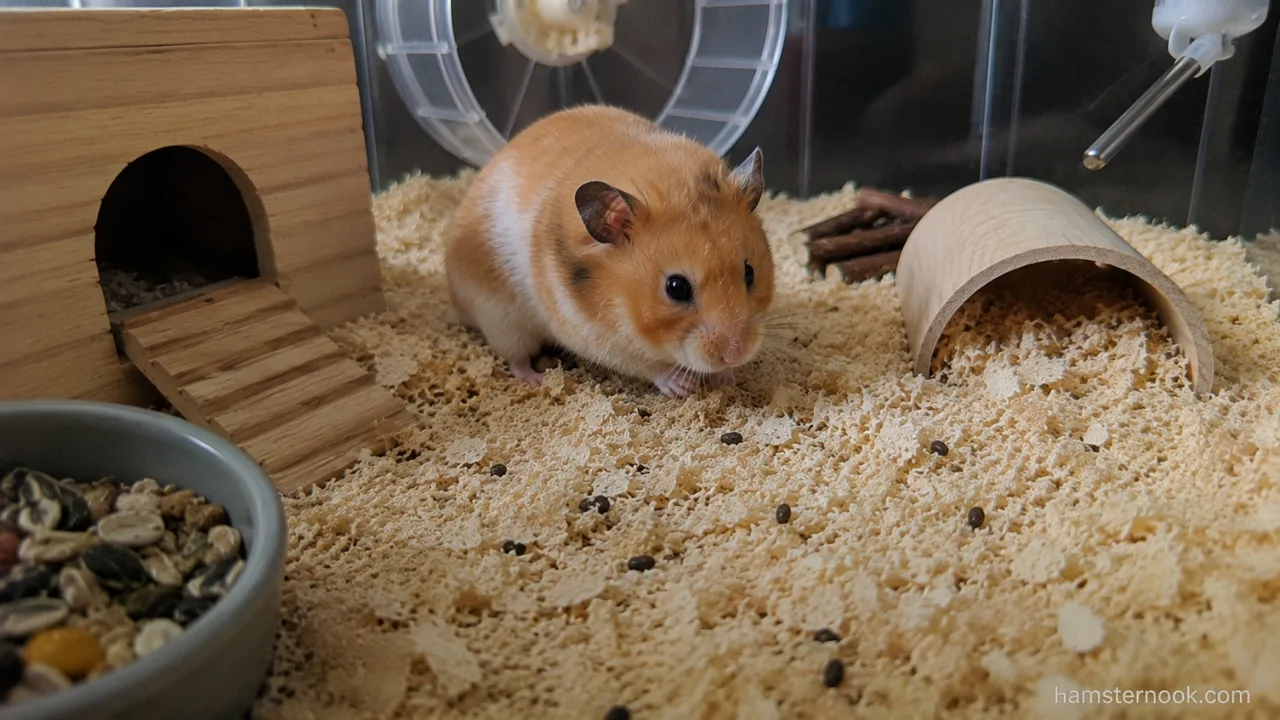
A healthy hamster’s eyes should generally appear clear, open, and free from noticeable swelling or persistent discharge.
Depending on the hamster’s coloring and individual appearance, the eyes may be black, dark brown, or reddish. Eye color alone does not indicate an infection.
When observing your pet, look for:

- Both eyes opening normally.
- No persistent wetness around the eyelids.
- No noticeable swelling around the eye.
- No thick yellow, green, or white discharge.
- No repeated rubbing or scratching of the face.
- No obvious difference between the appearance of the two eyes.
A hamster may occasionally have a small amount of dried material near an eyelid after resting. What matters is whether the eye opens normally and whether the discharge keeps returning.
A new or persistent change deserves attention.
Common Hamster Eye Problems and Their Symptoms
Not every eye problem has the same cause. Looking at the type of discharge, swelling, and your hamster’s behavior can help you describe the problem accurately to a veterinarian.
1. Sticky Eyes and Crusted Eyelids
Sticky eyes are a common concern among hamster owners.

You might notice that one eyelid is partially or completely stuck shut, with dried material around the edges.
Possible causes include:
- Dried tear discharge.
- Eye irritation.
- Conjunctivitis.
- An eye injury.
- Infection affecting the eyelids or surrounding tissues.
A hamster that has difficulty opening its eye should not automatically be assumed to have a harmless buildup of sleep-related material.
If the eye repeatedly becomes stuck, remains closed, or looks inflamed, arrange a veterinary examination.

2. Watery Eyes
Watery eyes occur when tears collect around the eye or run down the surrounding fur.
Possible explanations include irritation, inflammation, an injury, or a problem affecting normal tear drainage.
Check whether the watering affects one eye or both.
Also notice whether your hamster is rubbing its face, squinting, or showing other changes.
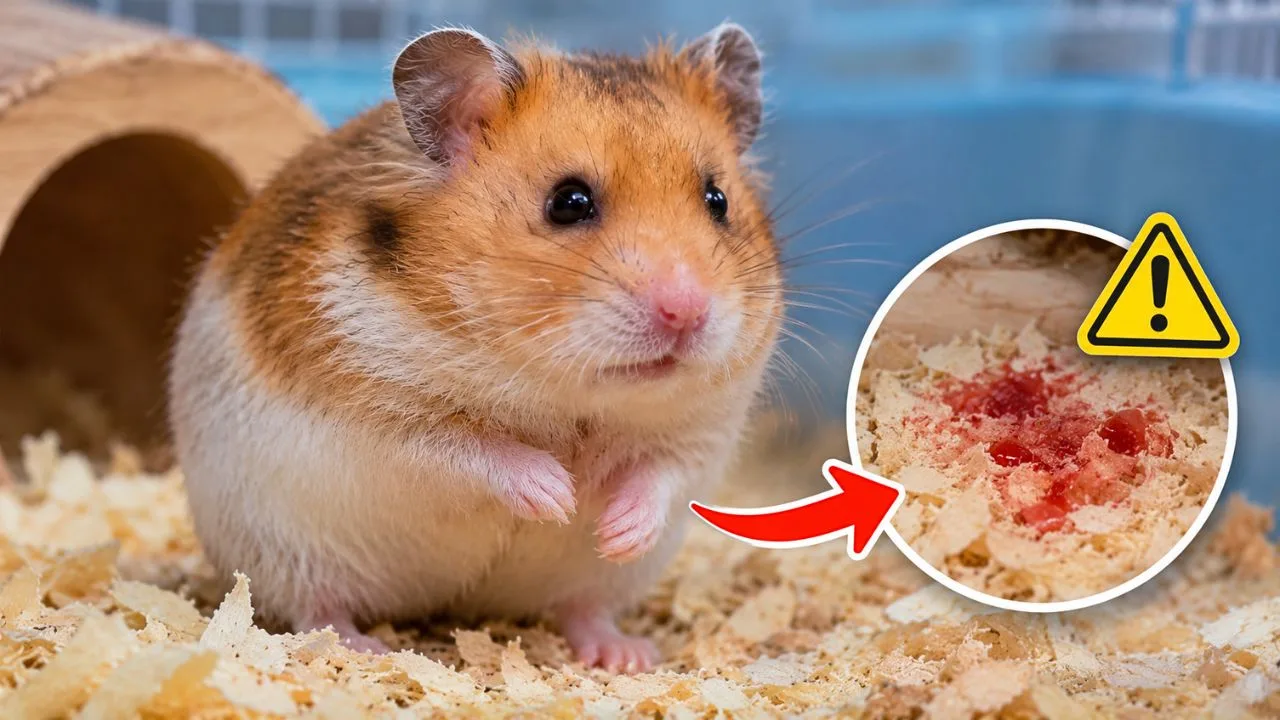
Persistent watering should be examined by a veterinarian because the underlying cause cannot reliably be identified from appearance alone.
3. White, Yellow, or Green Eye Discharge
Thicker discharge is more concerning than an occasional small amount of dried material.
You may notice:
- White or creamy discharge.
- Yellow material around the eyelids.
- Greenish discharge.
- Sticky eyelids that repeatedly close.
- Wet fur surrounding the affected eye.
These changes can occur with conjunctivitis or other eye conditions.
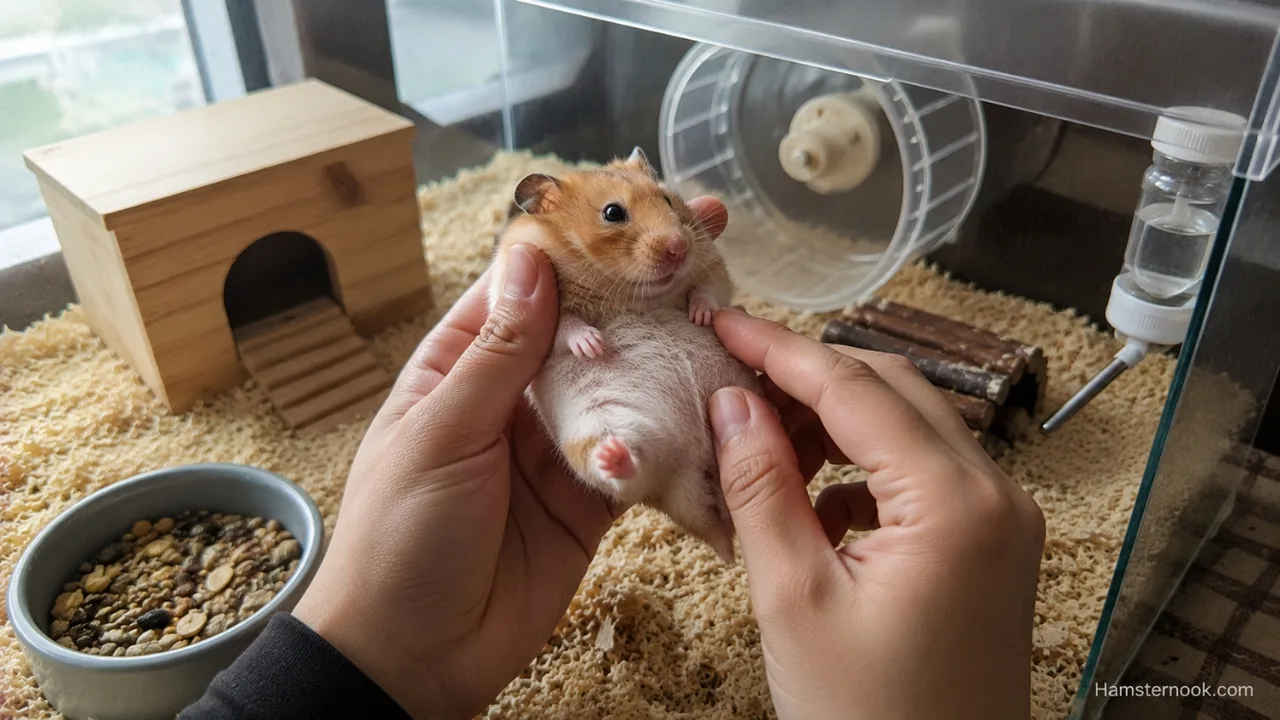
Colored discharge does not prove that a particular bacterium is responsible. A veterinarian needs to examine the eye and determine whether infection, injury, or another problem is involved.
4. Red or Swollen Eyes
Redness around the eyelids or swelling around the eye can indicate inflammation, injury, or infection.
Sometimes swelling also affects the surrounding face.
Pay attention to whether your hamster:
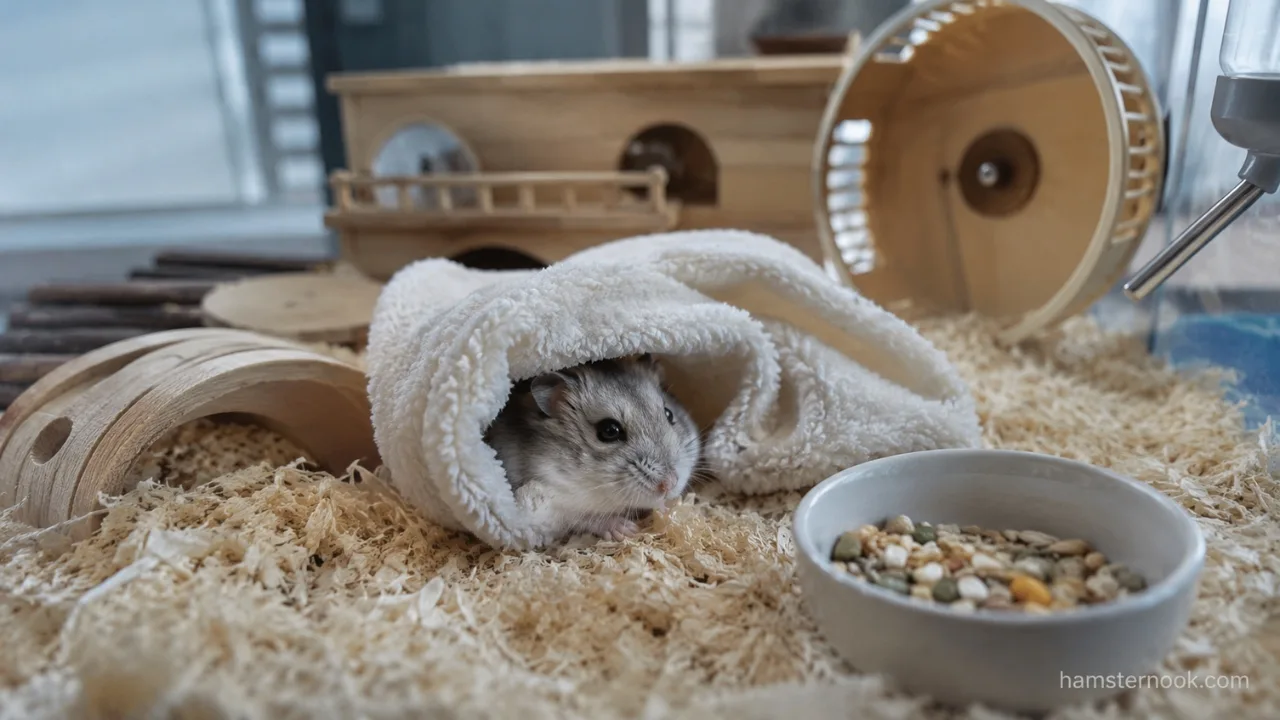
- Keeps the affected eye partially closed.
- Repeatedly rubs its face.
- Avoids touching the area.
- Has difficulty eating.
- Shows swelling on one side of the face.
Facial swelling deserves particular attention because dental disease can sometimes affect tissues around a hamster’s eye.
5. Cloudy Eyes
A healthy-looking eye should not suddenly develop a noticeable cloudy appearance.
Cloudiness can involve different structures of the eye, including the cornea or lens. Its cause cannot be established just by looking at a photograph.
A cloudy eye, particularly when accompanied by redness, discharge, squinting, or changes in behavior, should be assessed promptly by a veterinarian.
6. Bulging or Protruding Eyes
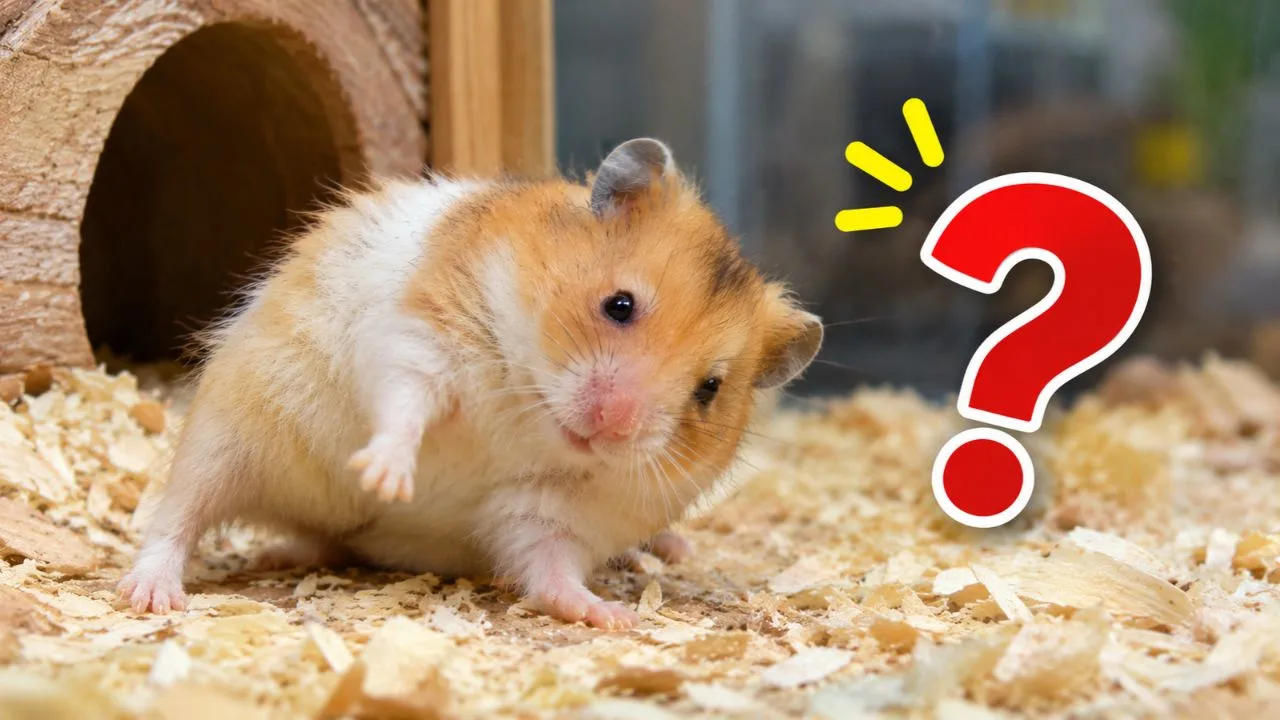
A hamster’s eye appearing unusually enlarged or pushed forward is a serious warning sign.
This may be associated with trauma, infection, or pressure affecting the tissues behind the eye.
Hamsters can also develop an eye that protrudes from its socket, a condition known as proptosis.
Emergency veterinary care

An eyeball that has moved out of its normal position requires immediate veterinary attention.
Do not attempt to push it back into place, press on the eye, or tightly restrain your hamster.
The sooner appropriate treatment begins, the better the chance of preserving the eye.
Why Do Hamsters Develop Eye Problems?
There isn’t one single cause of sticky or infected eyes. A veterinarian may need to examine the eye, surrounding tissues, teeth, and enclosure conditions to identify what is happening.

1. Dust and bedding irritation
Dusty bedding can irritate the delicate tissues around a hamster’s eyes.
For help choosing suitable low-dust materials and avoiding irritating bedding, see Best Hamster Bedding: Safest Types, Depth, Burrowing & What to Avoid.
Small particles may enter the eye or cause irritation around the eyelids. This can lead to watering, rubbing, or redness.
Check your hamster’s bedding for:

- Excessive fine dust.
- Strong chemical or fragrance smells.
- Damp or dirty patches.
- Accumulated food debris.
- Poor enclosure hygiene.
Choose appropriate, low-dust bedding and keep the enclosure clean. Avoid scented bedding and strongly aromatic wood shavings.
Changing bedding may help remove an environmental irritant, but it will not treat an existing infection or injury.
2. Conjunctivitis (pink eye)
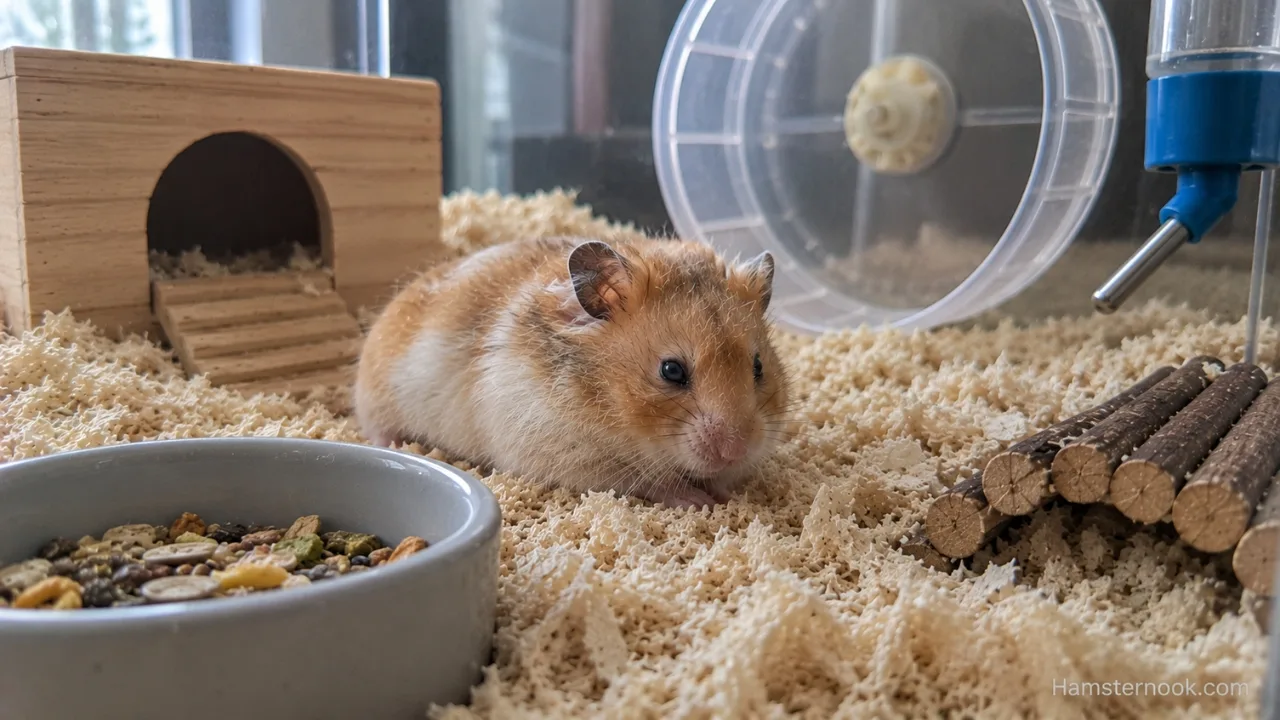
Conjunctivitis is inflammation of the conjunctiva, the tissue covering the front of the eye and lining the inside of the eyelids.
In hamsters, it can be associated with:
- Bacterial infection.
- Physical injury.
- Dust irritation.
- Other underlying eye problems.
Possible signs include redness, watery discharge, swollen eyelids, and sticky material that makes the eye difficult to open.
Conjunctivitis needs veterinary assessment because irritation and infection can look similar. Treatment depends on the underlying cause.
3. Eye injuries and foreign objects
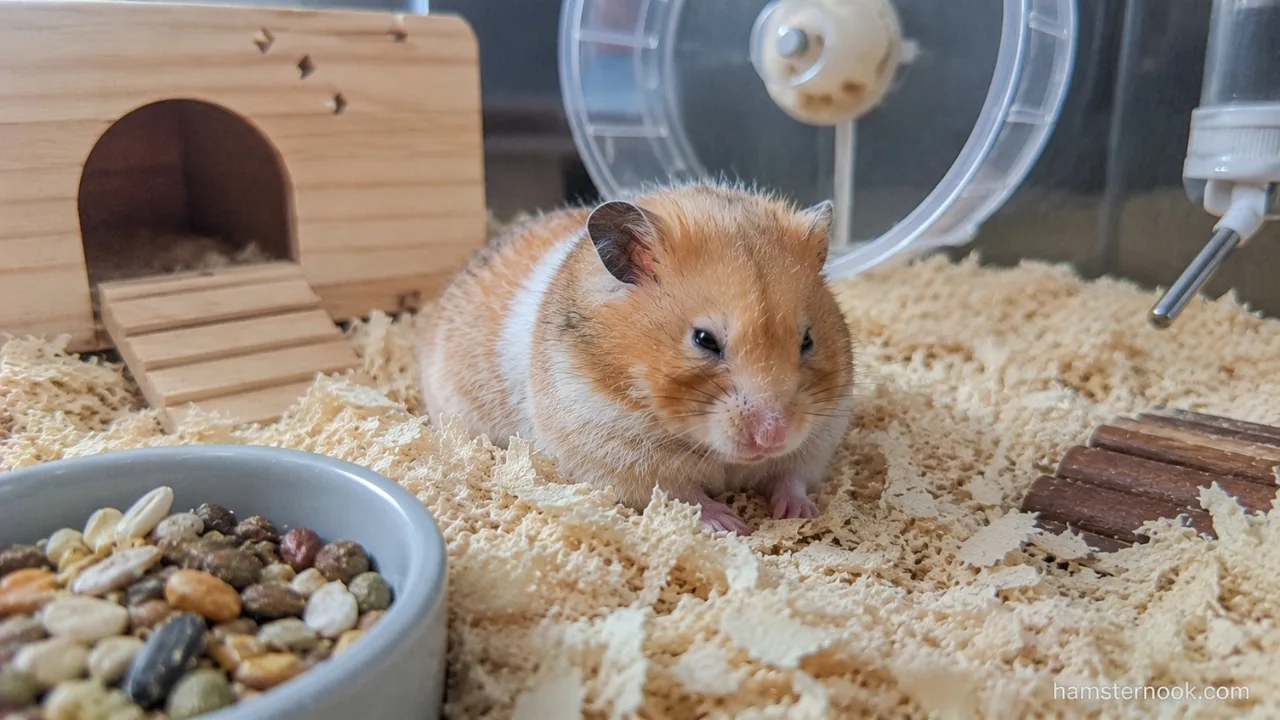
A hamster can injure its eye through accidental contact with an enclosure object or by rubbing against something rough.
Dust, bedding particles, or other foreign material may also irritate the eye.
Look for:
- Sudden watering in one eye.
- Squinting or keeping one eye closed.
- Repeated face rubbing.
- Redness after a suspected injury.
- A cloudy appearance.
Never try to remove an object that appears embedded in the eye. This requires veterinary attention.
4. Dental problems affecting the eye
This is a less obvious cause that hamster owners sometimes overlook.
Problems involving the teeth can affect tissues around the face and eye. Overgrown or diseased teeth may be associated with facial swelling and eye inflammation.
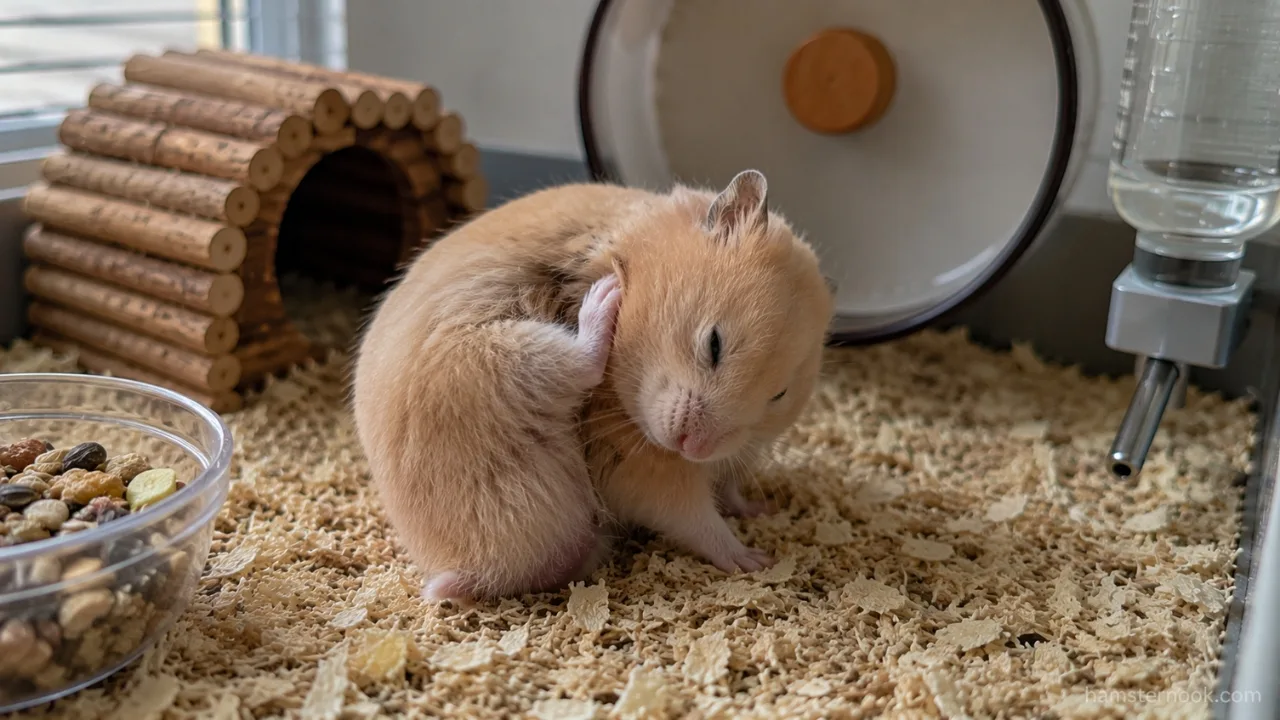
For guidance on suitable chewing materials and supporting normal dental wear, see Best Hamster Chew Toys: Safe Materials, Dental Care & What to Avoid.
Watch for additional signs such as:
- Drooling.
- Difficulty chewing.
- Reduced appetite.
- Weight loss.
- Swelling on one side of the face.
- Changes in normal eating behavior.
If an eye problem occurs alongside difficulty eating or facial swelling, a veterinarian should examine the mouth and teeth as well as the eye.
5. Infection affecting the surrounding tissues
An infection may affect the eye itself or tissues behind and around it.
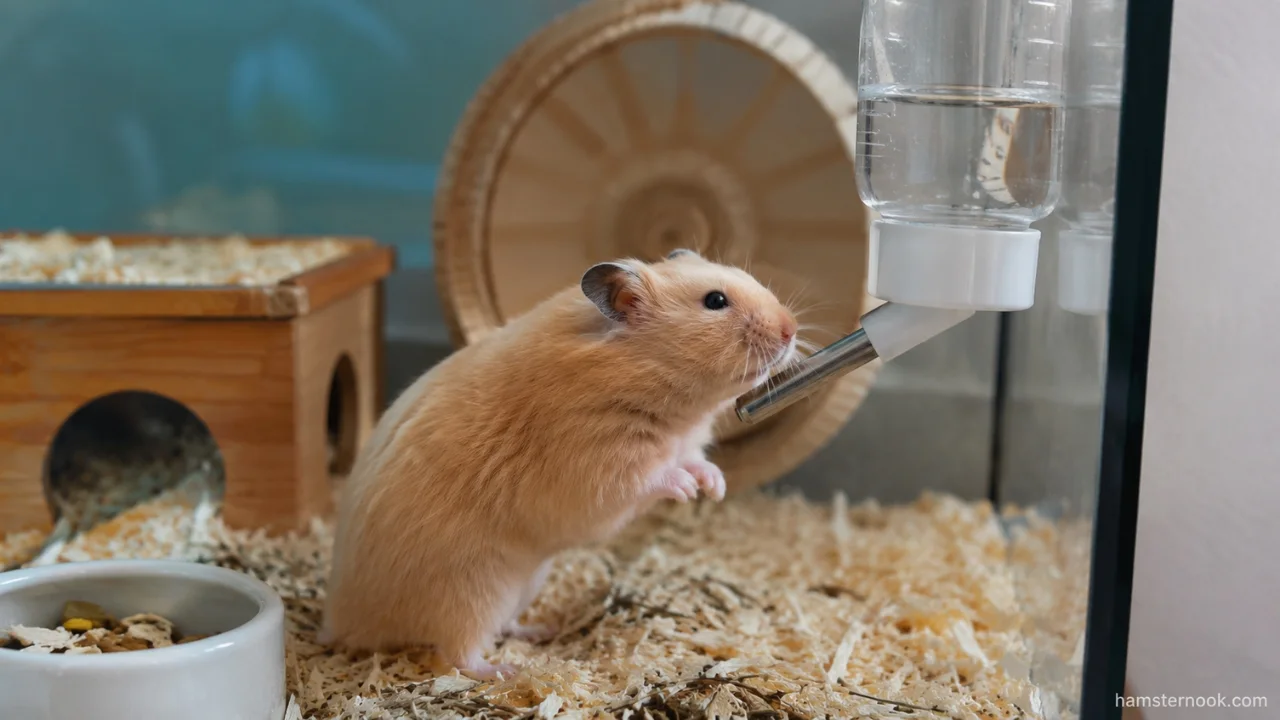
In some cases, swelling or discharge can develop alongside other signs of illness.
A hamster with eye discharge, reduced appetite, low energy, or breathing difficulties needs prompt veterinary assessment.
Do not assume that cleaning the visible discharge will resolve the underlying problem.
Sticky Eye vs. Eye Infection: How Can You Tell the Difference?
These conditions can look similar, particularly during the early stages.
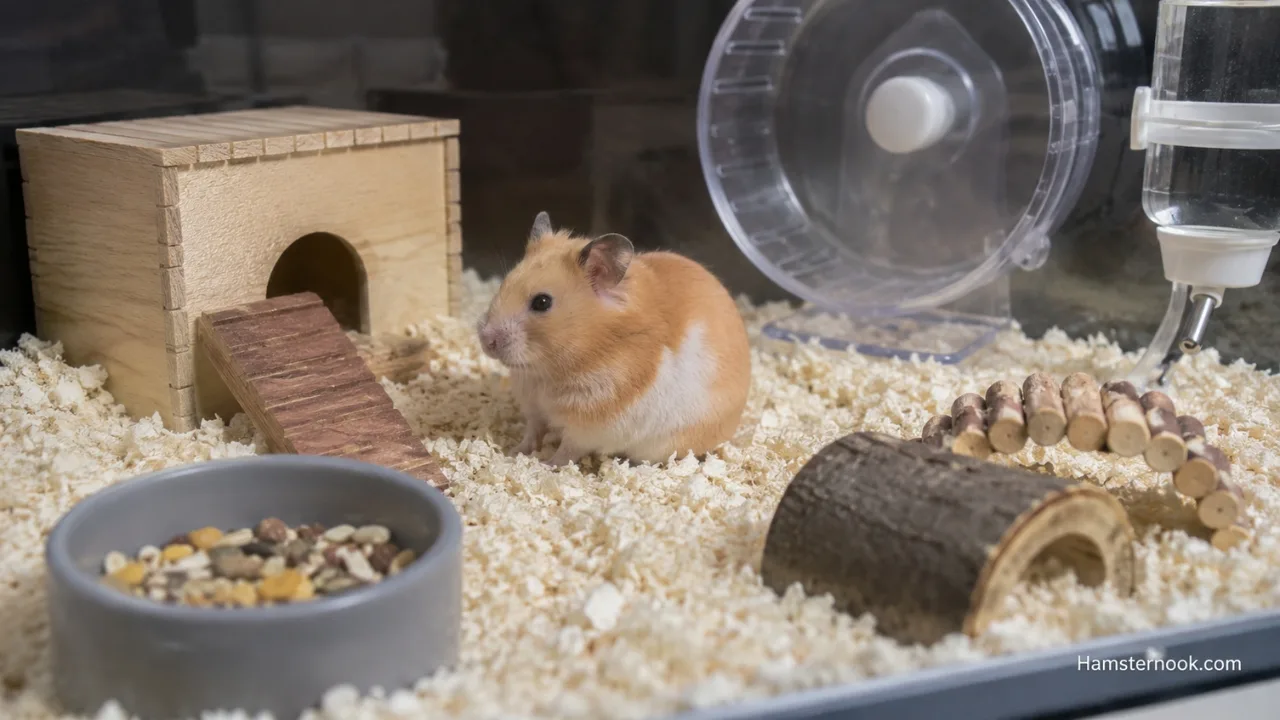
The following comparison can help you understand what to observe, but it cannot replace a veterinary examination.
| What you notice | Possible explanation | What to do |
|---|---|---|
| Small amount of dried material | Minor crusting or dried tears | Check whether the eye opens normally |
| One eyelid repeatedly stuck shut | Irritation or inflammation | Arrange a veterinary examination |
| Clear, persistent watering | Irritation, injury, or tear-drainage problem | Contact a veterinarian |
| Thick white, yellow, or green discharge | Possible infection or significant inflammation | Seek prompt veterinary care |
| Redness and swollen eyelids | Inflammation, injury, or infection | Arrange prompt examination |
| Cloudy eye | Possible corneal or internal eye problem | Contact a veterinarian promptly |
| Eye pushed out of its socket | Proptosis or severe injury | Emergency veterinary care |
The color of discharge alone cannot establish the diagnosis. A veterinarian needs to assess the eye and determine whether additional tests are required.
How to Clean a Hamster’s Sticky Eye Safely
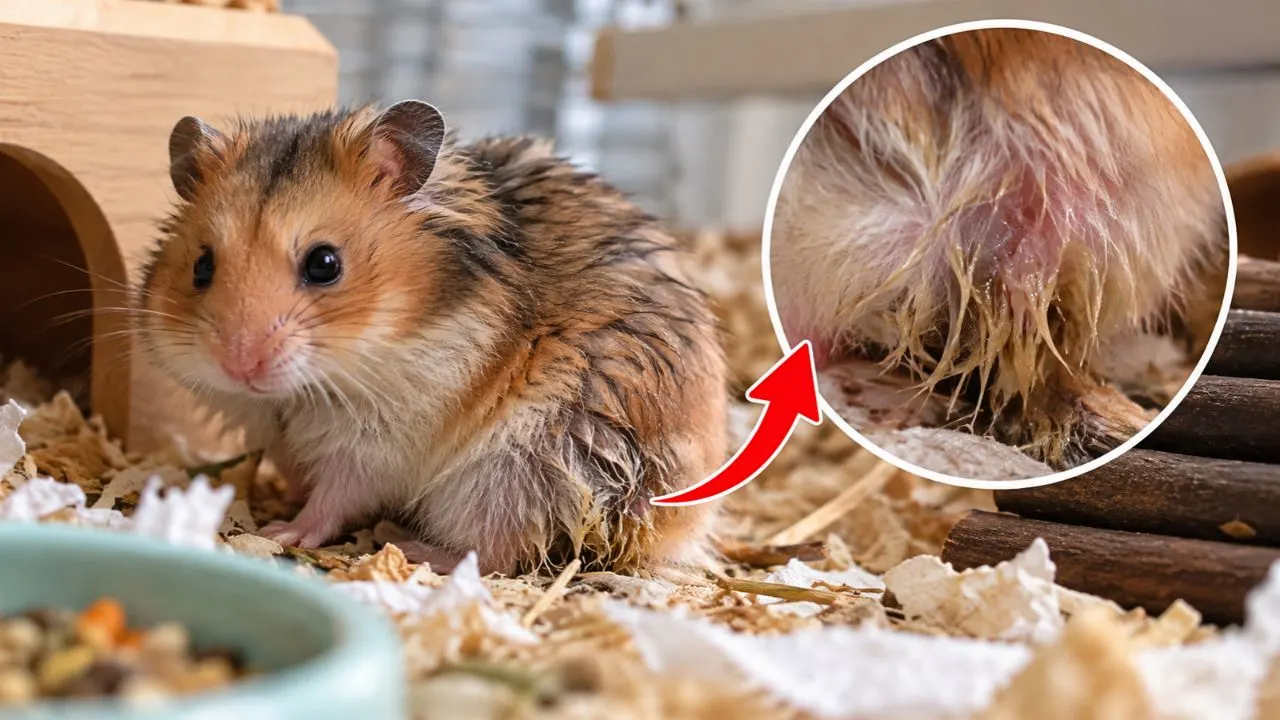
If your hamster has dried material around its eyelids, gentle cleaning may help remove the crust. However, cleaning is not a substitute for treating an infection, injury, or dental problem.
The MSD Veterinary Manual describes using warm water to help remove crusted material around hamster eyes.
Step-by-step cleaning guidance
- Prepare clean materials. Use a clean, soft, lint-free pad and comfortably warm water.
- Wash your hands. Do this before handling your hamster or anything that will touch the eye area.
- Keep your hamster secure. Allow it to remain in a comfortable position. Avoid squeezing or tightly restraining its head.
- Moisten the crust. Gently hold the damp pad against the dried material around the closed eyelid so it can soften.
- Wipe gently. Remove loosened material from the surrounding fur without pressing on the eyeball.
- Stop if your hamster struggles. Do not force the eyelids apart or continue if cleaning causes distress.
- Observe the eye. Check whether the eyelids open normally and whether discharge returns.
Important distinction
You are cleaning the fur and crust around the eye, not treating the eye itself.
If the eyelid remains stuck, the eye is red or swollen, or discharge continues to appear, contact a veterinarian.
Can you use saline solution?
A veterinarian may recommend sterile saline for flushing an affected eye or removing foreign material.
However, do not use homemade saltwater, contact-lens cleaning solutions, or other eye products without veterinary guidance.
The correct product and method depend on the condition being treated.
What should you never put in a hamster’s eye?
Avoid:
- Human eye drops.
- Human antibiotic ointments.
- Tea or herbal preparations.
- Honey or milk-based home remedies.
- Essential oils.
- Homemade saltwater.
- Contact-lens disinfecting solutions.
- Products containing alcohol or strong antiseptics.
Never use leftover medication from another pet. Even if two animals appear to have similar symptoms, their treatment requirements may be different.

When Should You Take Your Hamster to a Vet?
Eye problems deserve attention because the visible symptoms do not always reveal how serious the underlying condition is.
For a broader overview of illness symptoms and when veterinary attention may be needed, see How to Tell If Your Hamster Is Sick: Signs, Symptoms & When to See a Vet.
A veterinarian experienced with hamsters or other small exotic mammals is the best person to examine the eye.
Arrange a prompt veterinary appointment if you notice:
- Repeated sticky eyelids.
- Persistent watery discharge.
- Yellow, green, or creamy discharge.
- Redness around the eye.
- Swollen eyelids.
- Frequent rubbing or scratching.
- A cloudy appearance.
- Difficulty opening one or both eyes.
- Discharge that returns after cleaning.
Do not repeatedly clean the eye for several days while waiting for the problem to disappear.
Seek emergency veterinary care if:
- The eyeball is protruding from its socket.
- There is severe eye trauma or uncontrolled bleeding.
- The eye suddenly becomes severely swollen.
- Your hamster has significant facial swelling with marked weakness.
- Your hamster is struggling to breathe or collapses.
An eye that has moved out of its normal position is particularly urgent. Do not try to reposition it yourself.
What Happens During a Veterinary Eye Examination?
If you take your hamster to the veterinarian, the examination may involve more than simply looking at the discharge.
Depending on the symptoms, your veterinarian may:
- Examine both eyes and the surrounding tissues.
- Check for redness, swelling, and injuries.
- Assess the eyelids and visible eye structures.
- Examine the teeth and mouth.
- Check for facial swelling.
- Look for foreign material.
- Recommend additional eye tests if necessary.
For example, a veterinarian may use a special stain to investigate a suspected corneal injury.
If an infection is suspected, additional examination or testing may help determine the appropriate treatment.
How are hamster eye infections treated?
Treatment depends on the cause.
A veterinarian may recommend:
- Appropriate eye cleaning or flushing.
- Prescription antibiotic eye medication when a bacterial infection is present.
- Pain relief when appropriate.
- Treatment of an underlying dental problem.
- Management of an injury or foreign object.
- Further procedures in severe cases.
Not every red or watery eye needs antibiotics. Giving medication without identifying the underlying problem can delay appropriate care.
Follow the prescribed instructions and complete the recommended treatment course unless your veterinarian advises otherwise.
How to Prevent Hamster Eye Problems
You cannot prevent every eye condition, but good enclosure maintenance and careful handling can reduce some avoidable risks.
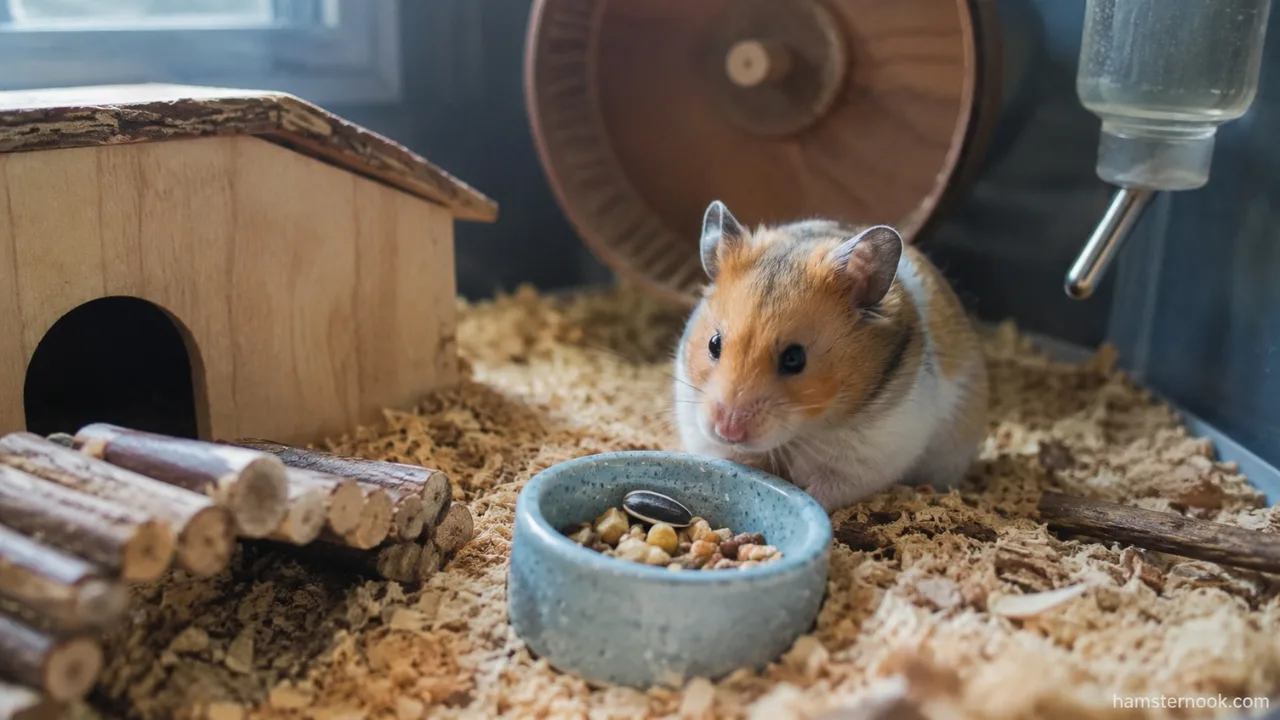
1. Choose suitable, low-dust bedding
Use appropriate bedding that does not release excessive dust.
Avoid strongly scented materials and bedding that becomes damp or dirty.
2. Keep the enclosure clean
Remove soiled bedding and spoiled food regularly.
For a practical cleaning routine that helps maintain a hygienic enclosure, see How Often Should You Clean a Hamster Cage? Daily, Weekly & Deep Cleaning Guide.
Maintain a clean environment without unnecessarily disturbing your hamster’s nest.
3. Avoid sharp enclosure accessories
Inspect toys, hides, tunnels, and other accessories for rough edges or damaged surfaces.
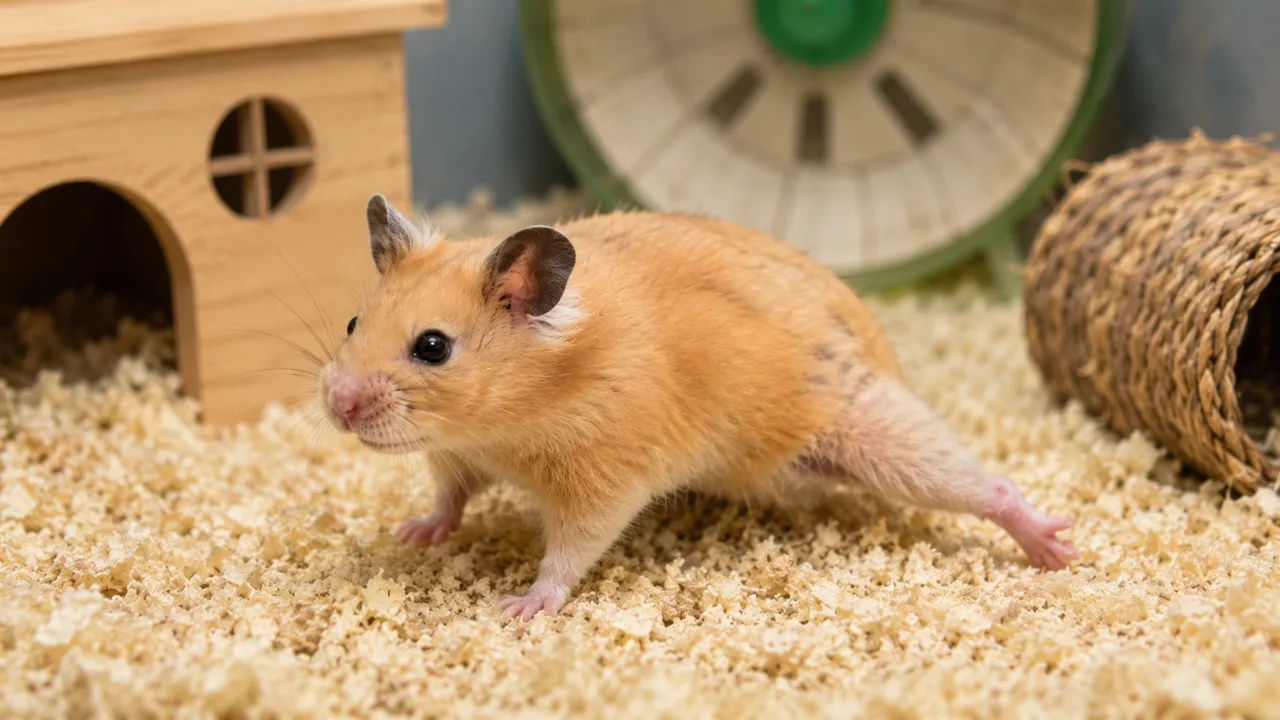
Replace anything that could cause an injury.
4. Handle your hamster gently
Never squeeze your hamster’s body or apply pressure around its head and neck.
Avoid picking it up by the skin at the back of the neck. Rough restraint can cause serious eye injuries, including an eyeball protruding from its socket.
Use a gentle, secure method of handling or allow your hamster to enter a small container when necessary.
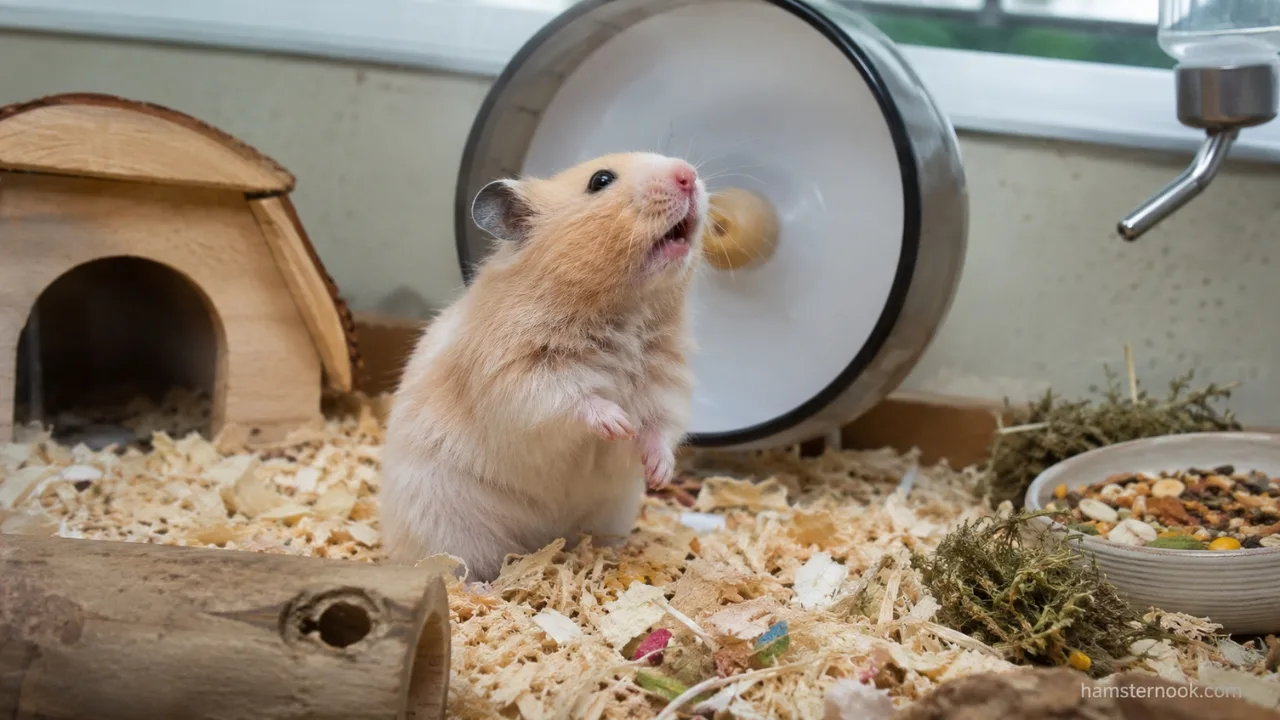
5. Monitor the eyes regularly
During normal daily observation, check:
- Whether both eyes open normally.
- Whether discharge is present.
- Whether the surrounding fur is wet.
- Whether your hamster rubs its face frequently.
- Whether its appetite and activity remain normal.
For a more complete routine health-monitoring routine, see How Often Should You Check Your Hamster Health? A Weekly Wellness Checklist.
You do not need to handle your hamster every time you check its eyes. Observe it during its normal active period.
Common Mistakes Hamster Owners Make With Eye Problems
Even when owners are trying to help, certain actions can make an eye problem worse or delay proper treatment.

1. Assuming every sticky eye is harmless
Dried material around an eyelid may look minor, but repeated sticking can indicate inflammation or another underlying problem.
Pay attention to whether the eye opens normally and whether the discharge returns.
2. Using human eye drops
Human eye drops are not automatically suitable for hamsters. Some products contain ingredients that may be inappropriate for an injured or infected eye.
Use only products recommended by your veterinarian.

3. Scrubbing away dried discharge
Pulling crust away from the eyelids can irritate delicate tissues.
Soften external crust gently with a clean, warm, damp pad instead. Never scrape the eyelid or press on the eyeball.
4. Ignoring dental problems
An eye problem accompanied by facial swelling, drooling, or difficulty eating should not be treated as an isolated eye issue.
Dental problems can affect surrounding facial tissues and require a proper examination.
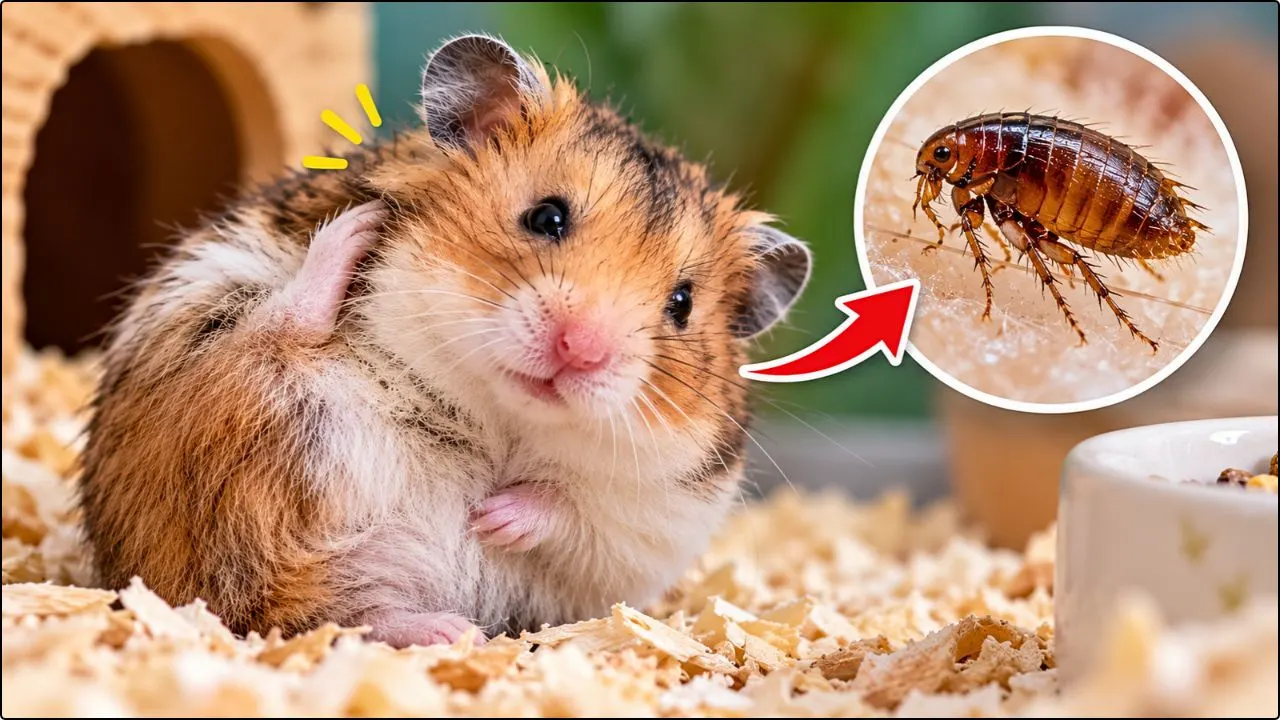
5. Waiting for both eyes to become affected
An injury or localized infection may initially affect only one eye.
You do not need to wait for the other eye to develop symptoms before contacting a veterinarian.
What You Should Do If Your Hamster Has an Eye Problem
Follow this practical checklist when you notice an unusual change:
- Observe whether one eye or both eyes are affected.
- Check for redness, swelling, cloudiness, and discharge.
- Notice whether your hamster is rubbing its face or keeping an eye closed.
- Check whether it is eating, drinking, and moving normally.
- Inspect the enclosure for dusty bedding or damaged accessories.
- Avoid applying human eye drops or home remedies.
- Gently remove external crust only if appropriate, without pressing on the eye.
- Arrange veterinary care for persistent or concerning symptoms.
- Seek emergency help if the eyeball protrudes or serious injury occurs.
- Take a photograph of the affected area if it can be done without stressing your hamster.
When speaking to the veterinarian, explain when the problem started, whether the discharge has changed, and whether your hamster has experienced any recent injury.
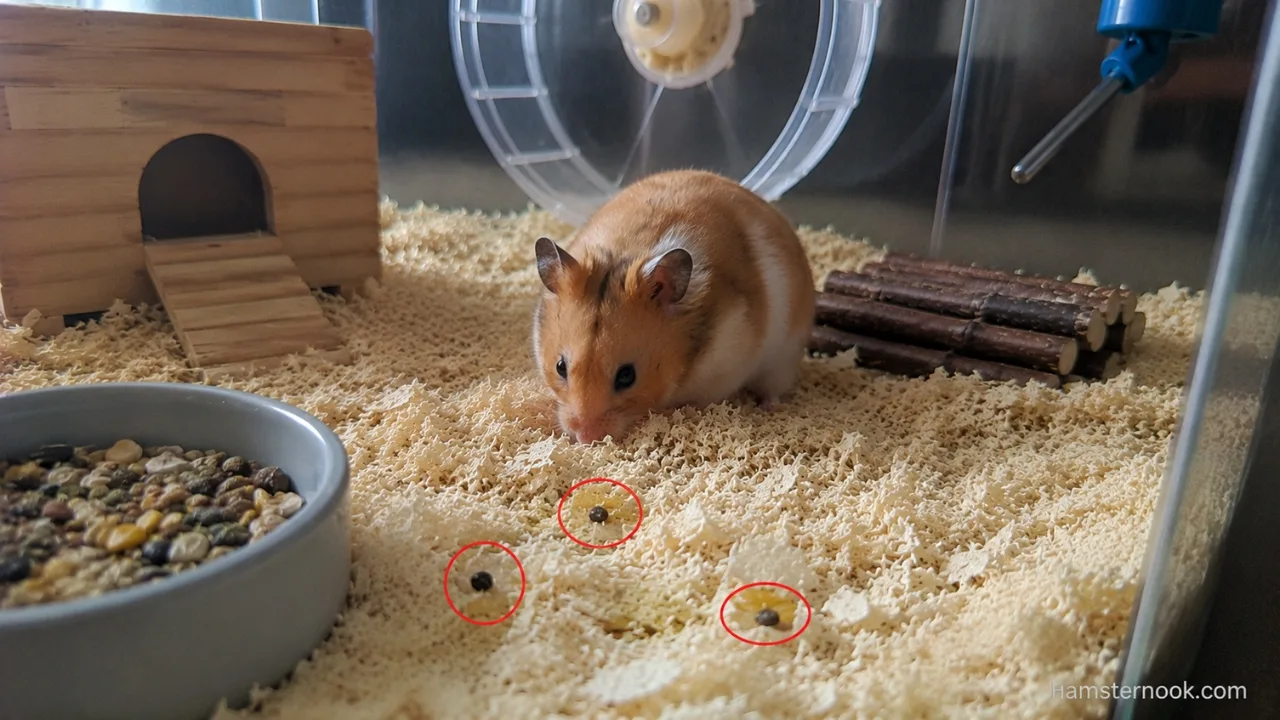
These details can make the examination more useful.
Final Thoughts
Hamster eye problems can range from mild irritation to injuries and infections that need veterinary treatment. Sticky eyelids, watery eyes, unusual discharge, redness, and swelling should never be judged by appearance alone.
If your hamster has a small amount of external crust, gentle cleaning may help. However, recurring discharge, difficulty opening an eye, swelling, or cloudiness needs professional attention.
Keep the enclosure clean, choose suitable low-dust bedding, and handle your hamster carefully. Most importantly, don’t experiment with human eye drops or home remedies.
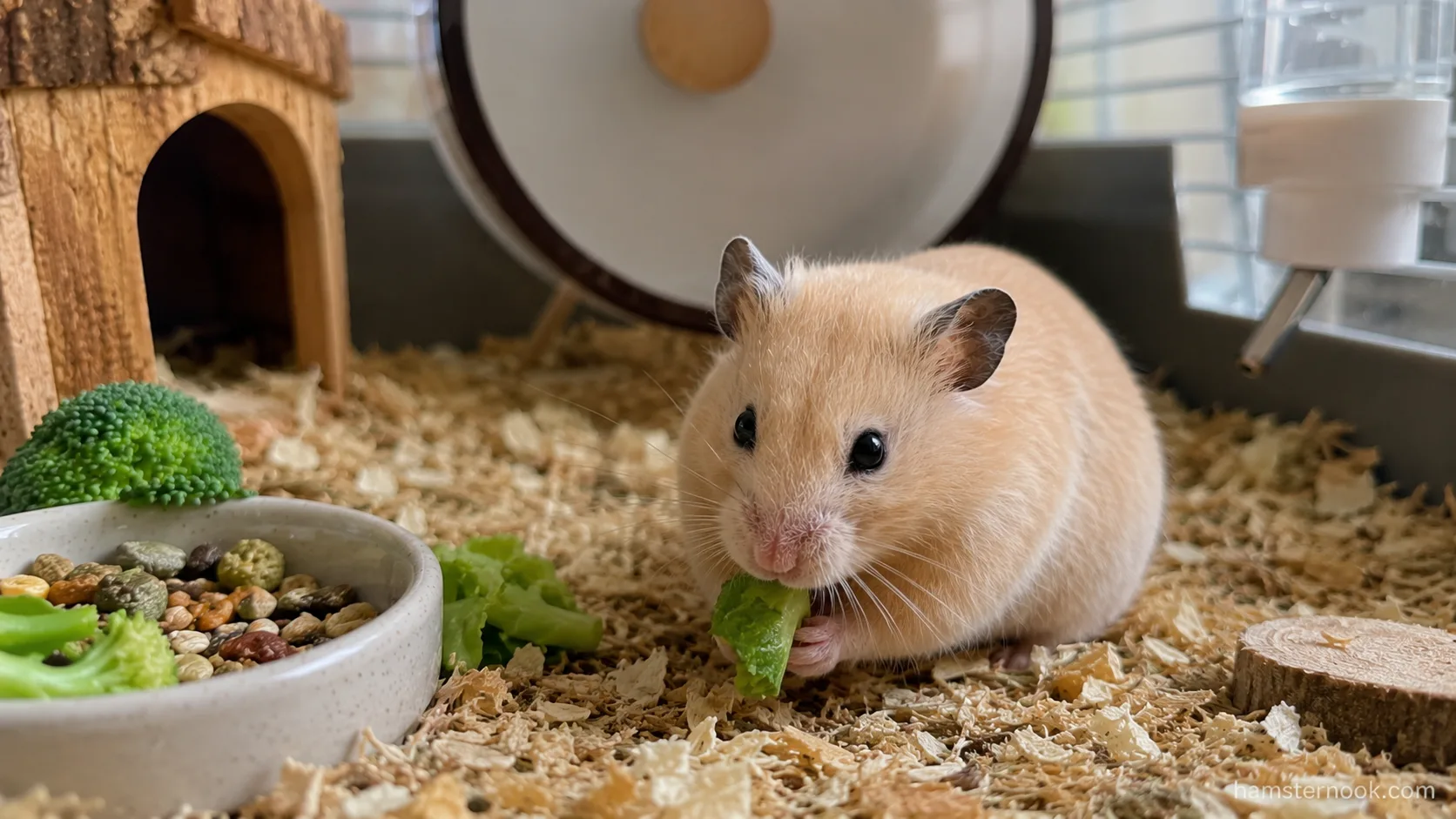
A timely veterinary examination is the safest way to identify the cause and protect your hamster’s eyesight.
Frequently Asked Questions
1. Why is my hamster’s eye stuck shut?
An eyelid can become stuck because of dried discharge, irritation, inflammation, or infection. If the eye repeatedly closes or your hamster struggles to open it, arrange a veterinary examination.
2. Can hamsters get eye infections?
Yes. Hamsters can develop conjunctivitis and other eye infections. Signs may include redness, swelling, watery discharge, and sticky eyelids. A veterinarian should determine the cause and appropriate treatment.
3. Why does my hamster have white stuff around its eye?
White or creamy material may be eye discharge associated with inflammation or infection. It can also dry around the eyelids and make them sticky. Persistent or recurring discharge should be checked by a veterinarian.
4. Is yellow discharge from a hamster’s eye dangerous?
Yellow discharge is a concerning sign because it may occur with an eye infection or significant inflammation. It does not identify the exact cause, but you should arrange prompt veterinary care.
5. Can I clean my hamster’s sticky eye with warm water?
Warm water can help soften dried crust around the eyelids. Use a clean, soft, damp pad and wipe gently without pressing on the eyeball. If the eye remains stuck or discharge returns, contact a veterinarian.
6. Can I use human eye drops on my hamster?
No. Do not use human eye drops unless a veterinarian specifically instructs you to use a particular product. Some ingredients may be unsuitable for hamsters or inappropriate for the underlying condition.
7. Why is only one of my hamster’s eyes watery?
One-sided watering can occur with localized irritation, an injury, a foreign object, or another eye problem. It can also be associated with problems affecting surrounding tissues. A veterinarian should examine persistent watering.

8. Can dusty bedding cause hamster eye problems?
Yes. Dust can irritate the eyes and contribute to conjunctivitis. Choose suitable low-dust bedding, avoid scented materials, and keep the enclosure clean. If symptoms continue after improving the environment, seek veterinary advice.
9. Why is my hamster rubbing its eye?
Repeated rubbing can indicate irritation, discomfort, or an injury. Check for visible swelling and discharge without forcing the eye open. Arrange a veterinary examination if the behavior continues.
10. Can hamster eye infections heal without treatment?
Some mild irritation may improve when the source is removed, but an infection or injury may require veterinary treatment. You cannot reliably distinguish these conditions at home, so persistent eye symptoms should not be left untreated.
11. Can dental problems cause hamster eye swelling?
Yes. Dental disease, including overgrown or diseased teeth, can be associated with facial swelling and eye problems. If your hamster has eye swelling alongside drooling, difficulty eating, or facial changes, seek veterinary examination.
12. Is a bulging eye an emergency in hamsters?
Yes. An eyeball that protrudes from its normal position is an emergency. Do not push it back into place or apply pressure. Contact an emergency veterinarian immediately.
13. Can older hamsters develop sticky eyes?
Older hamsters can develop eye problems, but persistent discharge or difficulty opening an eye should not automatically be attributed to age. A veterinarian should investigate the cause.
14. Should I separate my hamster if it has an eye infection?
Most pet hamsters are housed individually, so separation from another hamster is generally not an issue. If your hamster shares an enclosure, ask your veterinarian whether separation is necessary based on the suspected condition and injury risk.
References
This guide is based on veterinary guidance about hamster eye conditions, eye injuries, infections, dental problems, and general health monitoring from trusted veterinary and animal welfare resources, including:
- MSD Veterinary Manual – Disorders and Diseases of Hamsters – Veterinary information about conjunctivitis, eye irritation, injuries, dental-related facial swelling, crust removal, and protruding eyeballs.
- PDSA – Hamsters as Pets – Veterinary guidance covering conjunctivitis, dental problems, eye injuries, protruding eyeballs, and general hamster health.
- MSD Veterinary Manual – Routine Health Care of Hamsters – Guidance on recognizing illness, examining the eyes and teeth, handling hamsters safely, and medication precautions.
- RSPCA – Signs of Illness in Hamsters – Hamster health guidance covering eye discharge, changes in activity, appetite, breathing, and other signs requiring veterinary attention.
Medical Disclaimer: This article provides general hamster eye-care information and is not a substitute for professional veterinary diagnosis or treatment. Eye discharge, swelling, and injuries can have different underlying causes. Consult a veterinarian experienced with small mammals for persistent or concerning eye symptoms. Emergency signs require immediate veterinary attention.

Narayan Kumar is the founder and author of HamsterNook. He creates practical, research-based hamster care guides covering hamster behavior, nutrition, cage setup, enrichment, health, and everyday care. His goal is to help hamster owners make informed decisions and provide safer, healthier lives for their pets through clear, beginner-friendly information based on trusted animal care resources.