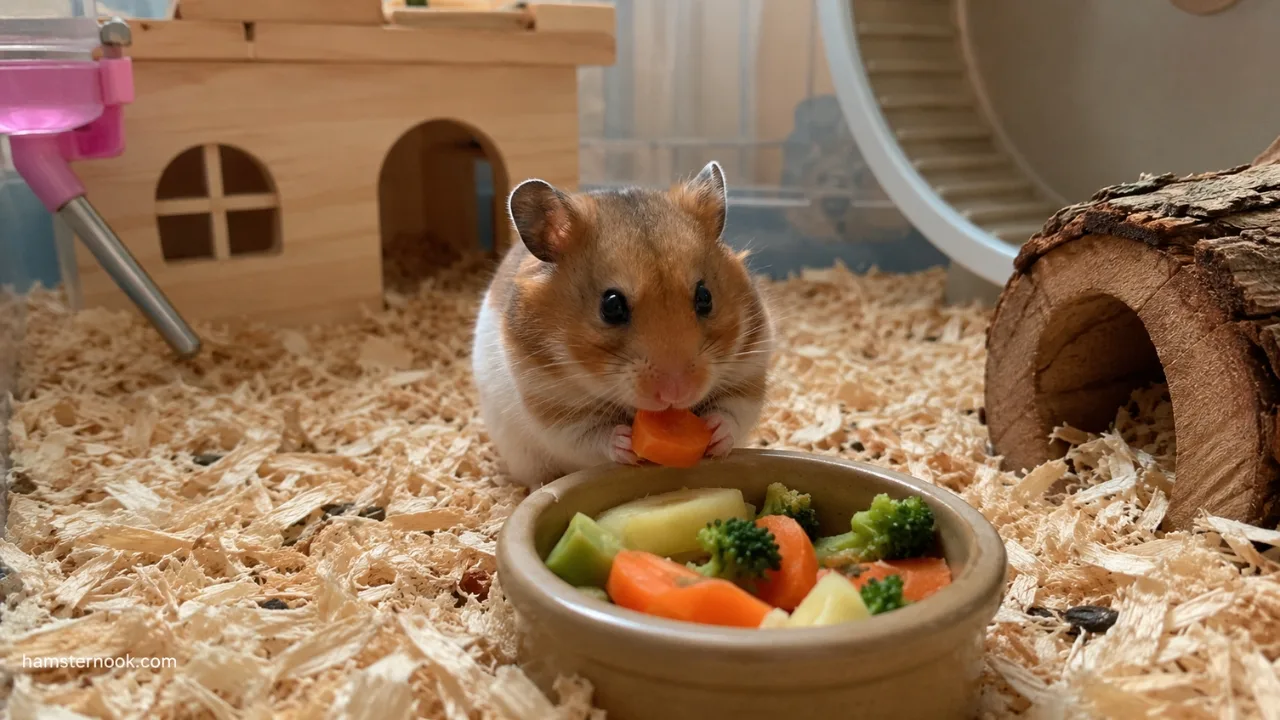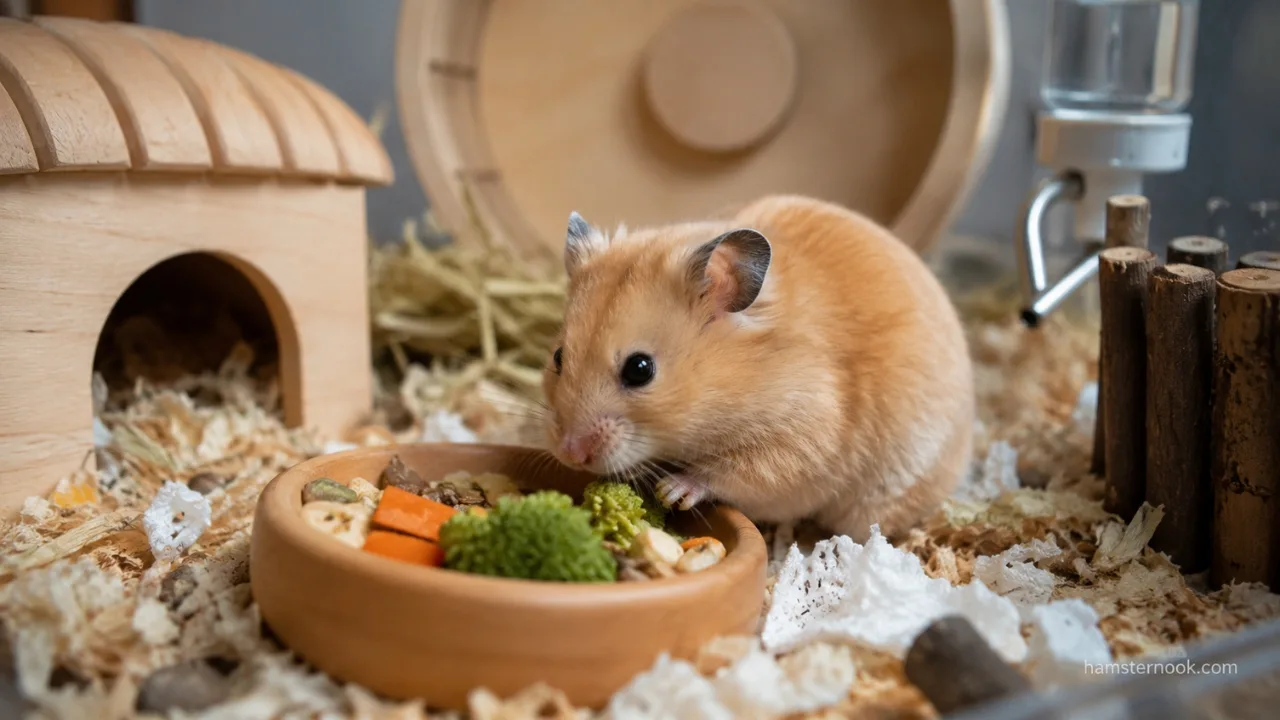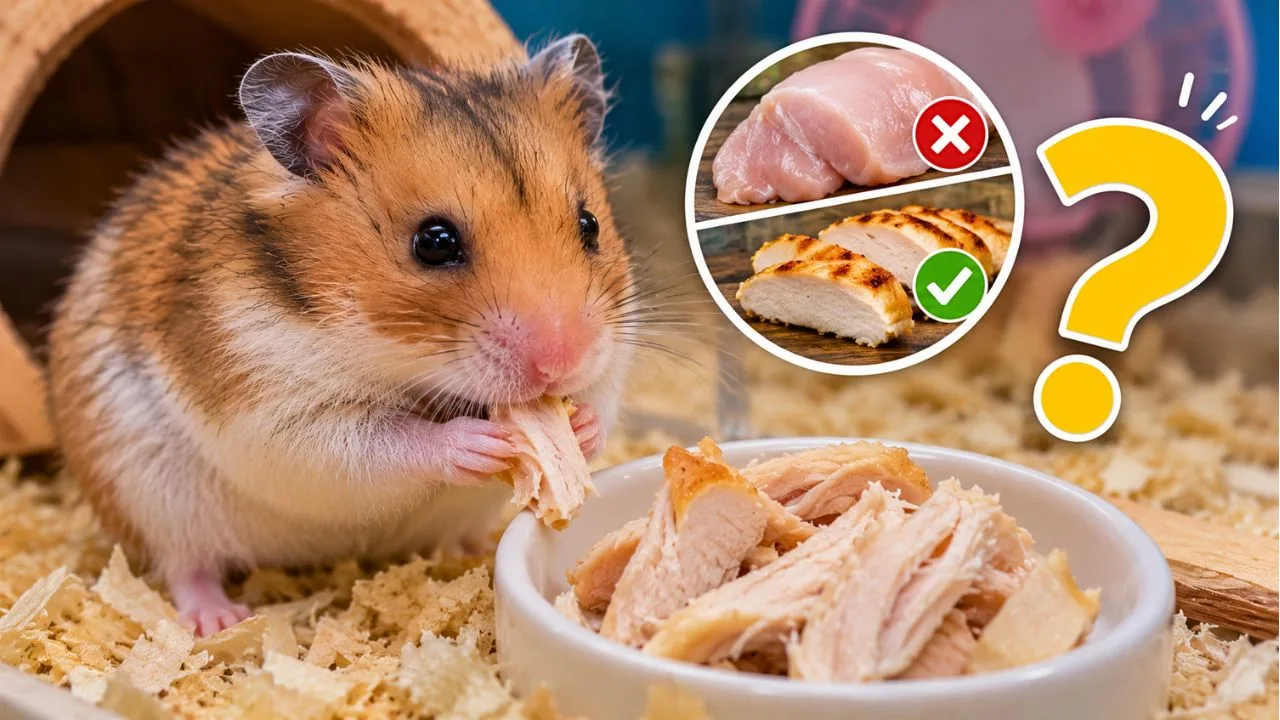
If you’re preparing chicken for dinner, you might wonder whether your hamster can have a tiny piece too. The answer is yes, but only when the chicken is fully cooked, plain, and served in a very small amount. Raw chicken, fried chicken, seasoned meat, and processed chicken products are different matters. Knowing how to prepare it safely can help you offer an occasional protein-rich treat without disrupting your hamster’s balanced diet.
Quick Answer: Can Hamster Eat Chicken?
Yes, hamsters can eat plain, fully cooked chicken in small amounts as an occasional treat. Hamsters are omnivores, meaning their natural diet includes both plant-based foods and animal-based foods.
Chicken should be:
- Fully cooked throughout.
- Plain and unseasoned.
- Boneless and skinless.
- Free from oil, butter, sauces, and marinades.
- Cooled completely before serving.
- Cut into a tiny, manageable piece.
Never feed raw or undercooked chicken. Avoid fried chicken, deli chicken, chicken nuggets, sausages, and heavily seasoned meat.
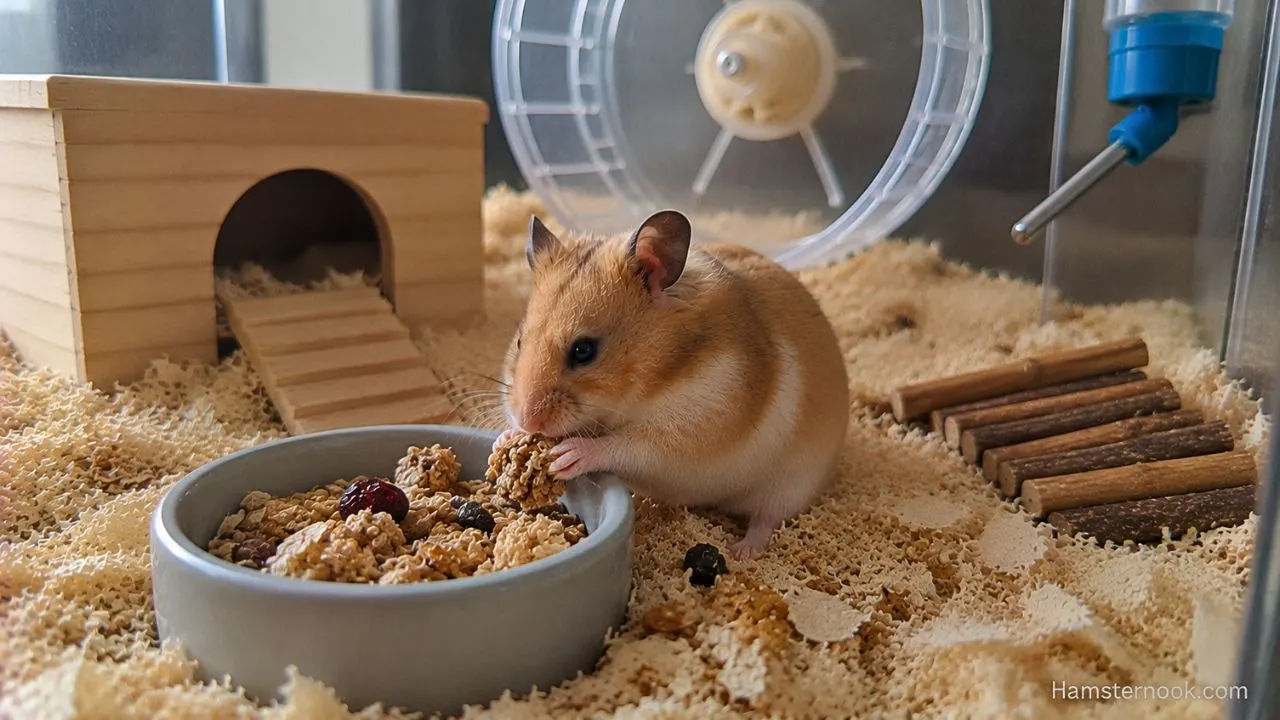
Chicken is not a replacement for complete hamster food. It is simply an optional extra that can provide some dietary variety.
Why Can Hamsters Eat Chicken?
Hamsters are omnivores. In the wild, they eat a mixture of seeds, grains, vegetation, and animal-based foods such as insects and insect larvae.
This means their digestive systems are adapted to a varied diet rather than a diet consisting entirely of plants.
Chicken is an animal-based protein source, so a small amount of properly prepared chicken can fit into an occasional treat routine.

However, hamsters do not need chicken specifically to remain healthy. A good-quality, nutritionally complete commercial hamster food should already provide the nutrients they need.
Does chicken provide protein for hamsters?
Yes. Chicken contains protein, which is an essential nutrient involved in normal growth and the maintenance of body tissues.
Plain chicken also provides nutrients naturally present in meat, including some B vitamins and minerals.
However, adding more protein does not automatically make a hamster’s diet healthier. If its regular food is already nutritionally complete, additional chicken is unnecessary as a daily protein source.
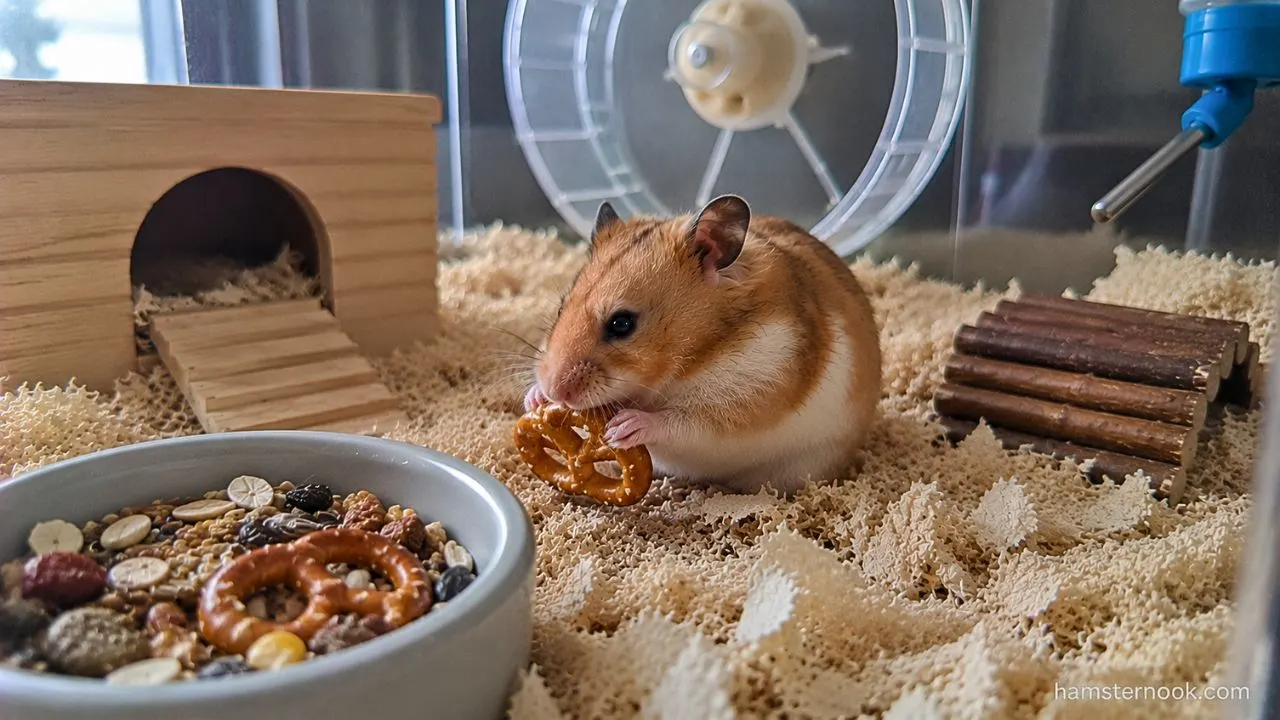
For most healthy pet hamsters, occasional small treats are more appropriate than routinely adding meat to meals.
Can Hamsters Eat Cooked Chicken?
Suitable occasionally
Yes. Plain, fully cooked chicken is the preferred way to offer chicken to a hamster.
The safest preparation is simple: cook a small piece of boneless, skinless chicken without adding salt, seasoning, oil, butter, or sauce.
How to prepare chicken safely
Follow these steps:
- Choose fresh, plain chicken breast or another lean, boneless cut.
- Remove the skin and any visible bones.
- Boil or bake the chicken without seasonings or added fats.
- Make sure it is thoroughly cooked throughout. For food-safety purposes, poultry should reach an internal temperature of 165°F (74°C).
- Allow it to cool completely.
- Separate a tiny piece using clean utensils.
- Cut it into a small, manageable portion before offering it.
Do not serve chicken straight from a hot pan or refrigerator.
A plain piece of boiled chicken breast is a straightforward option because it avoids the additional ingredients commonly found in prepared meat products.
Is boiled chicken better than baked chicken?
Both can be suitable when prepared correctly.
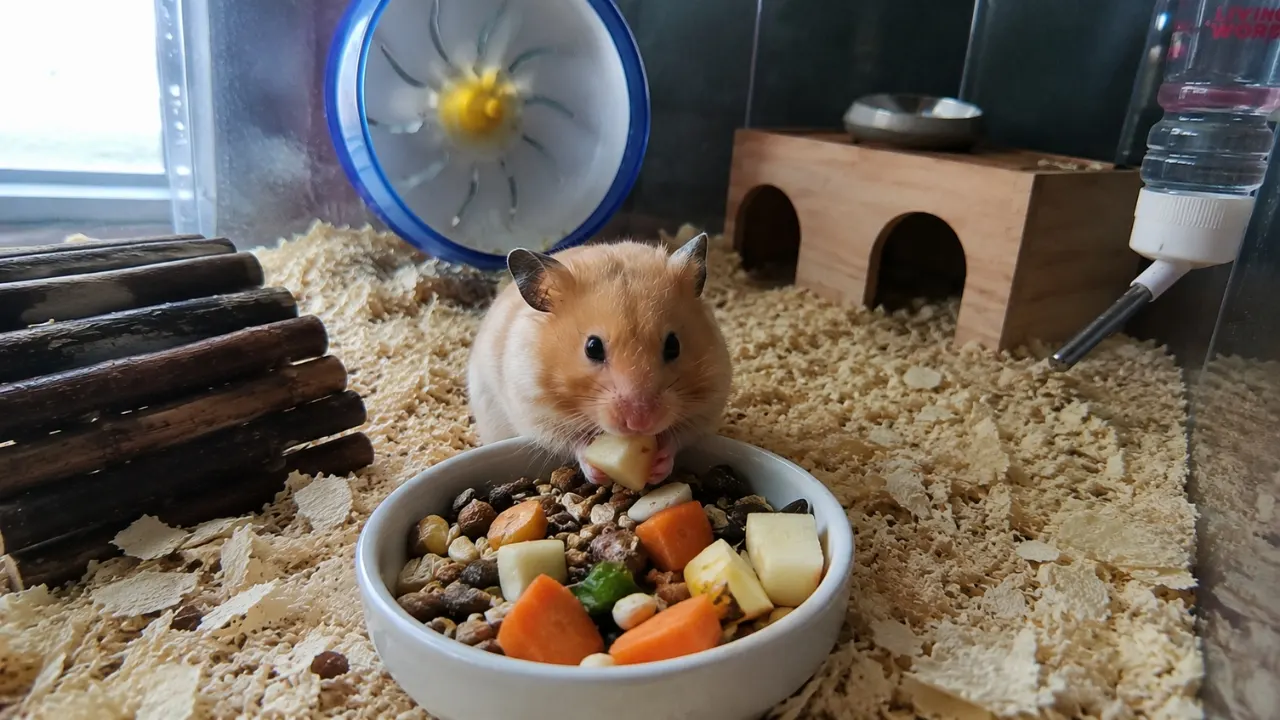
| Chicken preparation | Suitable? | Explanation |
|---|---|---|
| Plain boiled chicken | Yes, occasionally | No added salt, oil, or seasoning |
| Plain baked chicken | Yes, occasionally | Fully cooked without coatings or seasonings |
| Plain steamed chicken | Yes, occasionally | Must be cooked thoroughly |
| Grilled chicken | Only if completely plain | Avoid charred, seasoned, or oily portions |
| Fried chicken | No | Contains added fat and often breading and seasoning |
| Rotisserie chicken | Avoid | Usually contains salt, seasoning, skin, or other additions |
| Chicken with gravy | No | Often contains salt, fat, and seasonings |
| Chicken nuggets | No | Processed, breaded, and commonly seasoned |
The cooking method matters less than the ingredients and whether the chicken is fully cooked.
Can Hamsters Eat Raw Chicken?
Do not feed raw chicken
No. Raw chicken should never be offered to your hamster.
Raw poultry can carry harmful bacteria, including:
- Salmonella
- Campylobacter
These bacteria can cause foodborne illness in animals and people. Handling raw chicken also creates a risk of spreading contamination to your hands, kitchen surfaces, food bowls, and other household items.
Cooking chicken thoroughly helps reduce these food-safety risks.
What about slightly undercooked chicken?
Avoid it completely.
Chicken that looks cooked on the outside may still be undercooked inside. Appearance alone cannot reliably establish that poultry has reached a safe internal temperature.
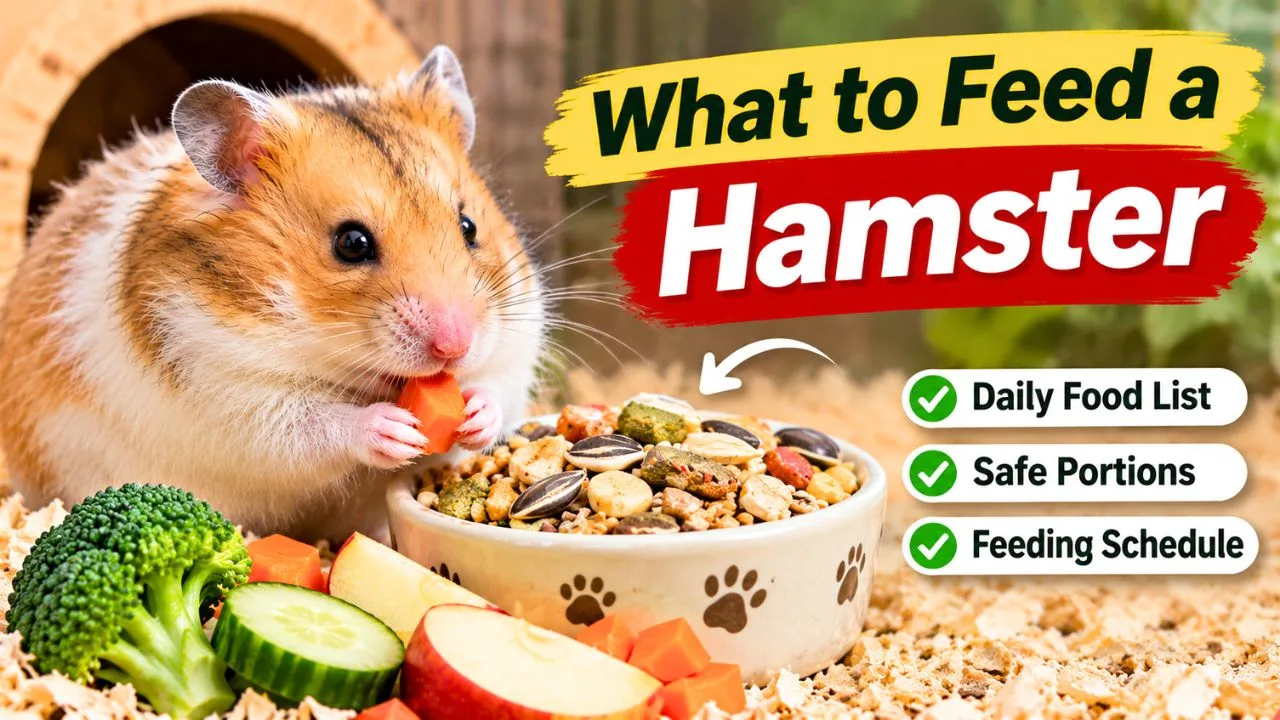
Use a food thermometer when preparing chicken. The recommended safe internal temperature for poultry is 165°F (74°C).
Never give your hamster chicken that is:
- Raw.
- Partially cooked.
- Pink or undercooked inside.
- Left unrefrigerated for an extended period.
- Spoiled or of uncertain freshness.
If your hamster accidentally eats raw chicken, contact a veterinarian for advice. Tell them approximately how much was eaten and when.
How Much Chicken Can a Hamster Eat?
Portion size matters because chicken is an additional treat, not a complete meal.

There is no scientifically established universal serving size specifically for chicken across all hamster species. A cautious approach is to offer a tiny piece rather than a full mouthful.
Suggested portion by hamster type
| Hamster type | Conservative serving |
|---|---|
| Syrian hamster | A tiny piece, approximately pea-sized or smaller |
| Campbell’s dwarf hamster | A piece smaller than a pea |
| Winter White dwarf hamster | A piece smaller than a pea |
| Roborovski hamster | A very tiny piece |
| Chinese hamster | A very tiny piece |
These are cautious practical portions, not clinically established dosage recommendations. Your hamster’s size, age, health, and existing diet should also be considered.
How often can you feed chicken?
Chicken should remain an occasional treat rather than a daily food.
For more suitable treat ideas and guidance on how often to offer them, see Best Hamster Treats: 10 Healthy & Safe Options + How Often to Feed.

A small serving once in a while is sufficient for a healthy hamster that already receives a complete diet.
Avoid combining chicken with several other protein-rich treats on the same day. For example, don’t offer chicken, boiled egg, and multiple mealworms together simply because your hamster enjoys them.
The aim is variety without unnecessary additions.
Can Syrian and Dwarf Hamsters Eat Chicken?
Yes. Both Syrian and dwarf hamsters can eat a tiny amount of properly prepared, plain cooked chicken.

However, their different body sizes make portion control particularly important.
Syrian hamsters
Syrian hamsters are larger, so they can generally manage a slightly larger treat than a dwarf hamster.
Even so, chicken should remain a small occasional extra. Their main diet should still consist of complete hamster food.
Dwarf hamsters
Dwarf hamsters need particularly small portions because of their smaller body size.
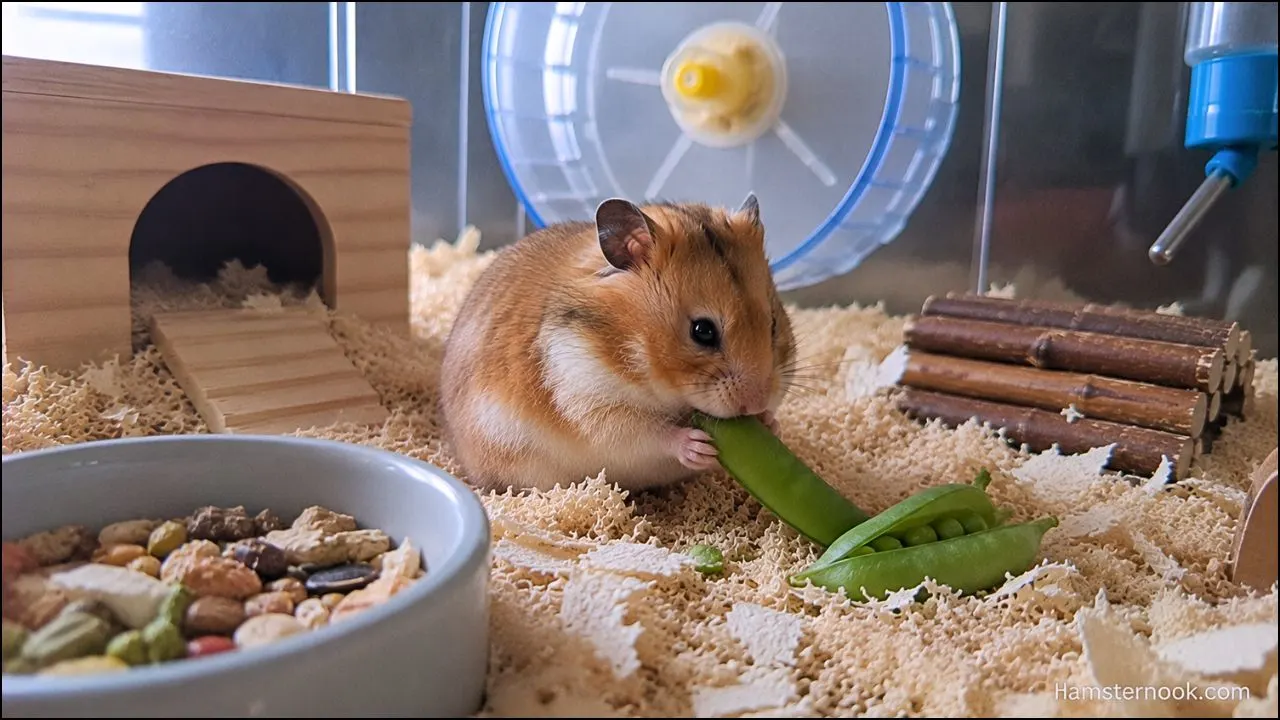
Some dwarf hamster species are also more prone to diabetes. Although plain chicken contains no added sugar, that doesn’t make it a reason to offer large or frequent portions.
Avoid processed chicken products, sweet marinades, honey-glazed chicken, and sugary sauces.
Which Parts of Chicken Can Hamsters Eat?
Not every part of a chicken is equally suitable.
For a simple and predictable treat, boneless, skinless chicken breast is a sensible choice.

| Chicken part | Recommendation | Reason |
|---|---|---|
| Plain chicken breast | Suitable occasionally | Lean, boneless meat |
| Plain chicken thigh | Less preferable | Can contain more fat and may have difficult-to-remove bones |
| Chicken skin | Avoid | Often contains substantial fat and may have seasonings |
| Chicken bones | Never offer | Can cause choking or physical injury |
| Chicken liver | Not recommended as a routine treat | Organ meat has a different nutrient composition |
| Chicken wings | Avoid | Bones, skin, and possible seasoning |
| Chicken feet | Avoid | Bones, connective tissue, and preparation concerns |
| Chicken scraps | Avoid unless ingredients are confirmed | May contain salt, oil, sauces, or seasonings |
You don’t need to experiment with different chicken parts. Plain, boneless chicken breast is the easier option.
Can Hamsters Eat Chicken With Salt, Oil or Spices?
No. Prepare chicken specifically for your hamster rather than sharing a piece from your dinner plate.
Many common cooking ingredients are unnecessary or unsuitable for small pets.
Salt
Avoid salted chicken, seasoning blends, and salty marinades.

Hamsters do not need added salt from human meals.
Garlic and onion
Never intentionally feed chicken prepared with garlic or onion.
For a broader list of ingredients and foods that should be kept away from hamsters, see What Foods Should Hamsters Never Eat? Toxic & Unsafe Foods to Avoid.
These ingredients are not appropriate additions to a hamster’s diet, and some allium foods can be harmful to animals.

Butter and cooking oil
Avoid chicken cooked with butter, oil, or greasy coatings.
Plain chicken is preferable to fatty, heavily prepared meat.
Spicy seasoning
Do not offer chicken containing chili powder, pepper blends, curry seasoning, or other strong flavorings.
Sauces and marinades
Avoid:

- Barbecue sauce.
- Soy sauce.
- Tomato-based sauces with added seasonings.
- Honey marinades.
- Creamy sauces.
- Ready-made chicken gravies.
These products can contain combinations of salt, sugar, fat, and other ingredients that are unsuitable for hamsters.
Can Hamsters Eat Chicken Nuggets, Sausages or Deli Chicken?
No. Processed chicken products are not suitable hamster treats.
They are designed for human consumption and commonly contain additional ingredients.
| Human chicken food | Safe for hamsters? |
|---|---|
| Chicken nuggets | No |
| Chicken popcorn | No |
| Chicken sausage | No |
| Chicken hot dogs | No |
| Deli chicken slices | Avoid |
| Smoked chicken | Avoid |
| Canned chicken | Avoid |
| Chicken sandwich filling | No |
| Plain homemade cooked chicken | Yes, in a tiny occasional portion |
Even products advertised as low-fat or high-protein may contain salt, preservatives, flavorings, or other additives.

Choose plain chicken prepared separately instead.
How to Introduce Chicken to Your Hamster for the First Time
If your hamster has never eaten chicken before, don’t give it a large serving.
A new food should be introduced carefully so you can observe how your pet responds.
For a more detailed step-by-step approach to introducing unfamiliar foods, see How to Introduce New Foods to a Hamster Safely: Step-by-Step Guide.

Follow this simple approach:
- Prepare a tiny piece of plain, fully cooked chicken.
- Let it cool completely.
- Offer the piece in a clean feeding area.
- Allow your hamster to approach and eat voluntarily.
- Avoid introducing other new foods at the same time.
- Remove any uneaten chicken promptly.
- Observe your hamster’s appetite, droppings, and normal behavior.
Do not force-feed chicken or place it directly into your hamster’s mouth.
Why should uneaten chicken be removed?
Chicken is a moist, perishable food. If your hamster carries it into its bedding or hides it in its nest, it can spoil.
Hamsters naturally store food in hidden places, so check their food-storage areas after offering fresh meat.

Remove leftover chicken promptly rather than allowing it to remain hidden in the enclosure.
This is particularly important in warm conditions, where perishable food can deteriorate more quickly.
What If Your Hamster Accidentally Eats Raw or Seasoned Chicken?
Don’t panic, but take the situation seriously.
The next steps depend on what your hamster ate, how much it consumed, and which ingredients were involved.

If your hamster ate raw chicken
- Remove any remaining raw chicken.
- Prevent access to contaminated food or surfaces.
- Note approximately how much was eaten.
- Contact a veterinarian for advice.
- Watch for changes in appetite, droppings, and normal behavior.
If your hamster ate seasoned chicken
Check the ingredients carefully.
If the chicken contained garlic, onion, excessive salt, or an unknown seasoning mixture, contact a veterinarian and explain the exposure.
Do not attempt to make your hamster vomit or administer human medication.
Warning signs to watch for
After eating unsuitable or contaminated food, watch for:
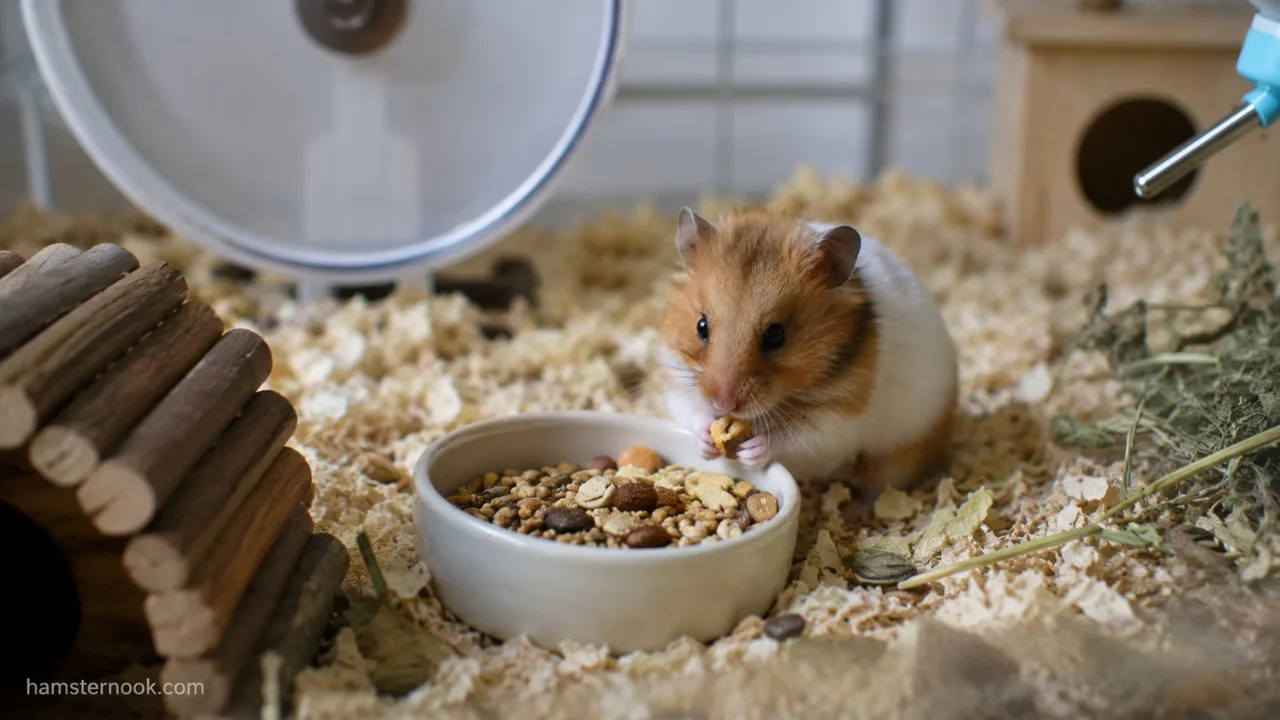
- Diarrhea or unusually wet droppings.
- Loss of appetite.
- Unusual tiredness or weakness.
- A hunched posture.
- Noticeable changes in normal behavior.
- Wet or soiled fur around the rear.
These signs do not prove that chicken caused an illness, but they warrant veterinary attention.
When to worry: Contact a veterinarian promptly if your hamster develops diarrhea, stops eating, or becomes unusually inactive. Severe weakness, collapse, or breathing difficulty requires emergency veterinary care.
Healthier Protein Alternatives to Chicken
Chicken isn’t the only way to provide occasional protein-rich treats.
Hamsters can enjoy other suitable foods as part of a varied diet.
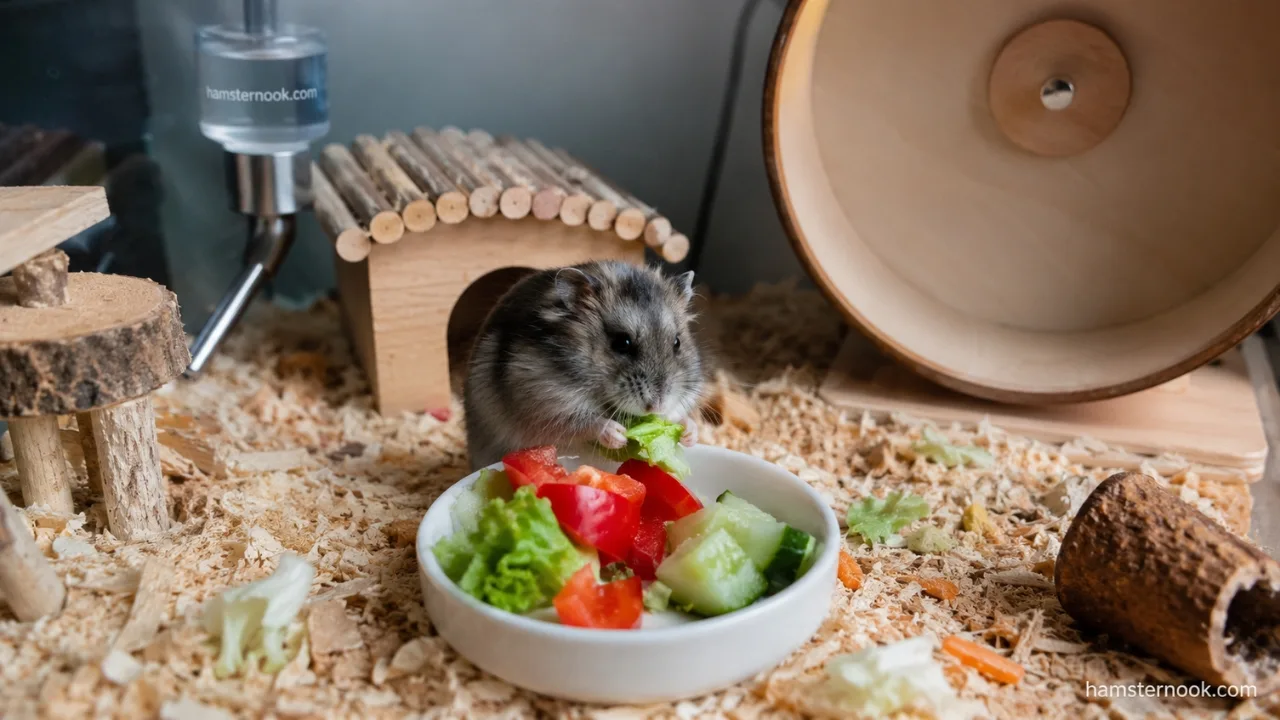
One alternative protein-rich treat to consider is egg; see Can Hamsters Eat Eggs? Safe Amounts, Benefits & Risks for preparation and portion guidance.
| Protein source | How to offer it | Feeding guidance |
|---|---|---|
| Plain boiled egg | Tiny piece | Fully cooked, without salt or butter |
| Dried mealworms | One or a small amount | Choose products intended for small pets |
| Plain cooked chicken | Tiny piece | Fully cooked, boneless and unseasoned |
| Plain cooked turkey | Tiny piece | No skin, bones, salt, or seasoning |
| Suitable insects | Small amount | Use commercially prepared pet-food insects |
Your hamster’s complete commercial food should remain the nutritional foundation.
You don’t need to provide every protein source. Choose suitable options occasionally and avoid excessive treats.
Common Mistakes Hamster Owners Make When Feeding Chicken
1. Giving chicken every day
Chicken is an optional treat, not a daily requirement. Frequent additions can interfere with the balance of the regular diet.

2. Sharing leftover dinner chicken
Human meals commonly contain salt, spices, oil, garlic, onion, or sauces.
Prepare a separate plain piece if you want to offer chicken.
3. Feeding raw chicken because hamsters are omnivores
Being an omnivore does not mean that raw poultry is safe. Raw chicken can carry harmful bacteria.
Always cook it thoroughly.
4. Offering bones for chewing
Chicken bones are not appropriate hamster chews. They can create choking and injury risks.
5. Giving too much at once
A hamster only needs a tiny taste. A large piece is unnecessary.
6. Forgetting about hidden leftovers
Hamsters carry food into their nests and hiding places. Chicken can spoil if left there, so check for uneaten pieces.
What You Should Do: Safe Chicken Feeding Checklist
Before offering chicken, check these points:
- Chicken is fresh.
- Chicken is completely cooked.
- No bones are present.
- Skin and visible fatty portions have been removed.
- No salt or seasoning has been added.
- No garlic, onion, oil, butter, or sauce is present.
- Chicken has cooled completely.
- The portion is tiny.
- Chicken is offered occasionally.
- Uneaten pieces are removed promptly.
If you cannot confirm the ingredients or preparation method, don’t feed it.
Final Thoughts
Can hamsters eat chicken? Yes, plain, fully cooked chicken can be an occasional protein-rich treat for both Syrian and dwarf hamsters.
The safest approach is to use a tiny piece of boneless, skinless chicken prepared without salt, oil, garlic, onion, or seasoning. Never offer raw or undercooked chicken, bones, fried chicken, or processed meat products.
Remember that chicken is optional. Your hamster’s regular complete food should provide the foundation of its nutrition, with suitable vegetables and occasional treats adding variety.

A little plain chicken once in a while is enough. There is no need to turn it into a regular meal.
Frequently Asked Questions
1. Can hamsters eat boiled chicken?
Yes. Plain boiled chicken is suitable as an occasional treat when it is fully cooked, boneless, skinless, and free from salt and seasonings. Allow it to cool before serving.
2. Can hamsters eat chicken breast?
Yes. Plain chicken breast is a practical choice because it is relatively lean and can easily be prepared without bones or skin. Offer only a tiny piece.
3. Can hamsters eat raw chicken?
No. Raw chicken can carry harmful bacteria, including Salmonella and Campylobacter. Always cook chicken thoroughly before offering it.
4. Can Syrian hamsters eat chicken?
Yes. Syrian hamsters can have a tiny piece of plain cooked chicken occasionally. It should never replace their normal complete hamster food.
5. Can dwarf hamsters eat chicken?
Yes. Dwarf hamsters can also have plain cooked chicken in a very small portion. Because they are smaller, keep the serving particularly tiny.
6. Can hamsters eat chicken skin?
Chicken skin is best avoided. It can contain substantial fat and may carry salt or seasoning from cooking. Skinless chicken is a better choice.
7. Can hamsters eat chicken bones?
No. Never give chicken bones to a hamster. They can create choking and physical injury risks.

8. Can hamsters eat rotisserie chicken?
It is best avoided. Store-bought rotisserie chicken commonly contains salt, seasonings, oils, or other added ingredients. Prepare a separate plain piece of chicken instead.
9. Can hamsters eat frozen chicken?
Hamsters should not be given frozen chicken. If you use frozen chicken for preparation, thaw and cook it safely according to food-safety guidance, then cool a small plain portion completely before offering it.
10. Can hamsters eat chicken every day?
No. Chicken is an occasional extra, not an everyday dietary requirement. A complete hamster food should remain the main source of nutrition.
11. Is chicken better than mealworms for hamsters?
Neither needs to be considered universally better. Both can provide animal-based protein when appropriately prepared. Mealworms are a more natural-style insect treat, while plain cooked chicken offers another occasional option.

For specific feeding guidance on this insect-based option, see Can Hamsters Eat Mealworms? Safe Amounts, Benefits & Risks.
12. What happens if my hamster eats a little seasoned chicken?
The risk depends on the ingredients and amount consumed. Check the seasoning and contact a veterinarian if it contains potentially harmful ingredients such as garlic or onion, or if you are unsure what was used. Monitor your hamster for changes in normal behavior.
References
This guide is based on trusted hamster nutrition, veterinary feeding recommendations, animal welfare guidance, and food safety information from the following sources:
- RSPCA – What to Feed Your Pet Hamster – Guidance on hamster omnivorous dietary needs, balanced commercial food, supplementary foods, and monitoring eating habits.
- PDSA – Hamsters as Pets – Veterinary guidance on hamster nutrition, protein-rich treats, complete pellets, and suitable supplementary foods.
- Blue Cross – Hamster Care – Information on suitable fresh foods, lean cooked meat, boiled egg, and appropriate treat portions.
- Woodgreen Pets Charity – What to Feed Your Hamster – Guidance on hamster omnivorous feeding habits, protein requirements, plain cooked chicken, and foods to avoid.
- USDA Food Safety and Inspection Service – Safe Minimum Internal Temperature Chart – Food safety guidance recommending a minimum internal cooking temperature of 165°F (74°C) for poultry.
- Centers for Disease Control and Prevention – Chicken and Food Safety – Information on food-safety risks associated with raw and undercooked chicken and the importance of proper handling and cooking.
Medical Disclaimer
This article provides general hamster nutrition and food-safety information. It is not a substitute for professional veterinary advice, diagnosis, or treatment. If your hamster eats raw or potentially contaminated chicken or develops concerning symptoms, contact a veterinarian experienced with small mammals.

Narayan Kumar is the founder and author of HamsterNook. He creates practical, research-based hamster care guides covering hamster behavior, nutrition, cage setup, enrichment, health, and everyday care. His goal is to help hamster owners make informed decisions and provide safer, healthier lives for their pets through clear, beginner-friendly information based on trusted animal care resources.