Complete celery-focused article body is required here. The current body cannot be safely patched paragraph-by-paragraph because essentially every major section is about spinach rather than celery. This is the primary ranking/content error.
Celery is one of those vegetables many hamster owners already have in the kitchen, so it’s natural to wonder whether a small piece is safe to share. The good news is that celery is generally considered a suitable vegetable for hamsters when it is washed, prepared properly, and offered in a small amount.
If you’re unsure how fresh vegetables fit into your hamster’s overall feeding routine, our What Do Hamsters Eat? Complete Food List for Beginners guide explains how fresh foods should fit alongside a balanced hamster diet.
Celery should still be treated as a fresh-food addition rather than a replacement for a balanced hamster diet. Because hamsters are small, even a seemingly tiny human-sized portion can be more than they need.

Is Celery Safe for Hamsters?
Yes. Hamsters can eat small amounts of fresh celery as part of a varied diet. PDSA specifically lists celery among vegetables suitable for hamsters and recommends washing vegetables and feeding them in moderation.
The safest approach is to offer plain, fresh celery without salt, sauces, seasoning, butter, or other added ingredients. Celery should complement the hamster’s normal balanced food rather than become a major part of the diet.

Nutritional Benefits of Celery for Hamsters
Celery can be a useful fresh-food addition because it adds variety and moisture without replacing the balanced food your hamster needs every day. PDSA lists celery among vegetables suitable for hamsters and recommends washing vegetables and offering them in moderation.
Celery is best thought of as an occasional fresh vegetable rather than a food your hamster needs for specific vitamins or minerals. The main benefit is variety and a different texture from the dry foods that make up most of the diet.

What Does Celery Actually Add to a Hamster’s Diet?
Celery is most useful as a source of variety and moisture rather than as a major nutritional food. A small piece can give your hamster a different texture to explore while adding a fresh-food option to a balanced diet.
It should not be treated as a vitamin supplement or as something your hamster needs every day. The staple hamster diet should provide the bulk of daily nutrition, while foods such as celery are simply small extras.
How Much Celery Can a Hamster Eat?
There is no well-established hamster-specific celery serving size, so avoid treating a human-sized piece as an appropriate portion.
| Celery Feeding Question | Practical Answer |
|---|---|
| Can hamsters eat celery? | Yes, in small amounts |
| How much? | Start with a very small piece |
| How often? | Rotate with other fresh vegetables rather than feeding celery as the only vegetable |
| Best preparation | Washed and plain |
| Celery stalks? | Yes, cut into a small manageable piece |
| Celery leaves? | Only a small washed amount; hamster-specific guidance is limited |
| Seasoned celery? | Avoid |
| Large amounts? | Avoid because too much fresh food can upset digestion |
PDSA recommends only a small daily portion of fresh fruit, vegetables, and herbs overall—around one to two teaspoons per day for a hamster. That amount is for the total fresh-food portion, not celery alone.
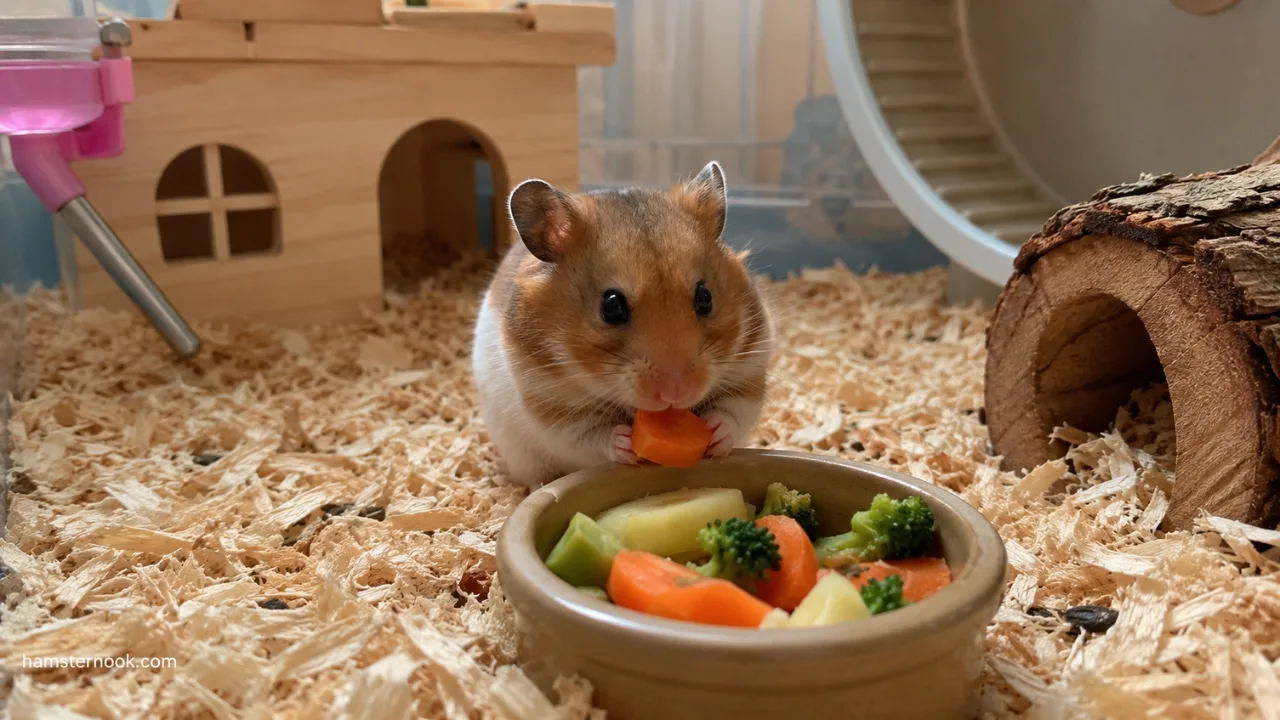
For a new food, start with a very small piece of washed celery. Smaller hamsters should receive a correspondingly smaller piece. If your hamster tolerates it well, celery can remain a small part of the fresh foods you rotate.
How Often Can Hamsters Eat Celery?
Celery does not need to be fed every day. Fresh vegetables are meant to add variety alongside a balanced staple diet, not replace it.
If you already offer other vegetables, rotate them rather than making celery the only fresh food your hamster receives. Sudden changes in diet can upset a hamster’s digestion, so introduce new foods gradually.
For more ideas on rotating fresh foods, our Best Fruits and Vegetables for Hamsters: Safe Foods, Portion Sizes & Feeding Tips guide covers other suitable vegetables and practical serving guidance.

How to Prepare Celery for Hamsters
Preparing celery is simple:
- Wash the celery thoroughly before feeding it.
- Remove any visibly damaged or spoiled parts.
- Cut a small piece that your hamster can easily handle.
- Serve it plain, without salt, butter, sauces, oil, or seasoning.
- Remove uneaten fresh food before it becomes soiled or spoiled.
Washing fresh vegetables and offering them in small amounts is specifically recommended in hamster feeding guidance from PDSA and RSPCA.
If you’re unsure about washing fresh produce before feeding it, our Should You Wash Fruits and Vegetables Before Feeding Your Hamster? guide explains what owners should know before serving fresh foods.
Can Hamsters Eat Celery Stalks?
Yes. The celery stalk is the simplest part to offer because it can be washed and cut into a small hamster-sized piece.

Avoid giving a large whole stalk. A hamster only needs a tiny amount of fresh vegetable, and offering more does not make the food more beneficial.
Can Hamsters Eat Celery Leaves?
Hamster-specific veterinary and welfare guidance clearly supports celery as a suitable vegetable, but it does not provide separate feeding guidance for celery leaves.
For that reason, don’t make a strong claim that celery leaves are specifically beneficial or required. If you choose to offer a small amount of the leaf, treat it the same way as any other new fresh food: wash it thoroughly, offer only a tiny amount, and monitor your hamster’s digestion.
Raw vs. Cooked Celery for Hamsters
Plain raw celery is the simplest option because it requires no added ingredients.
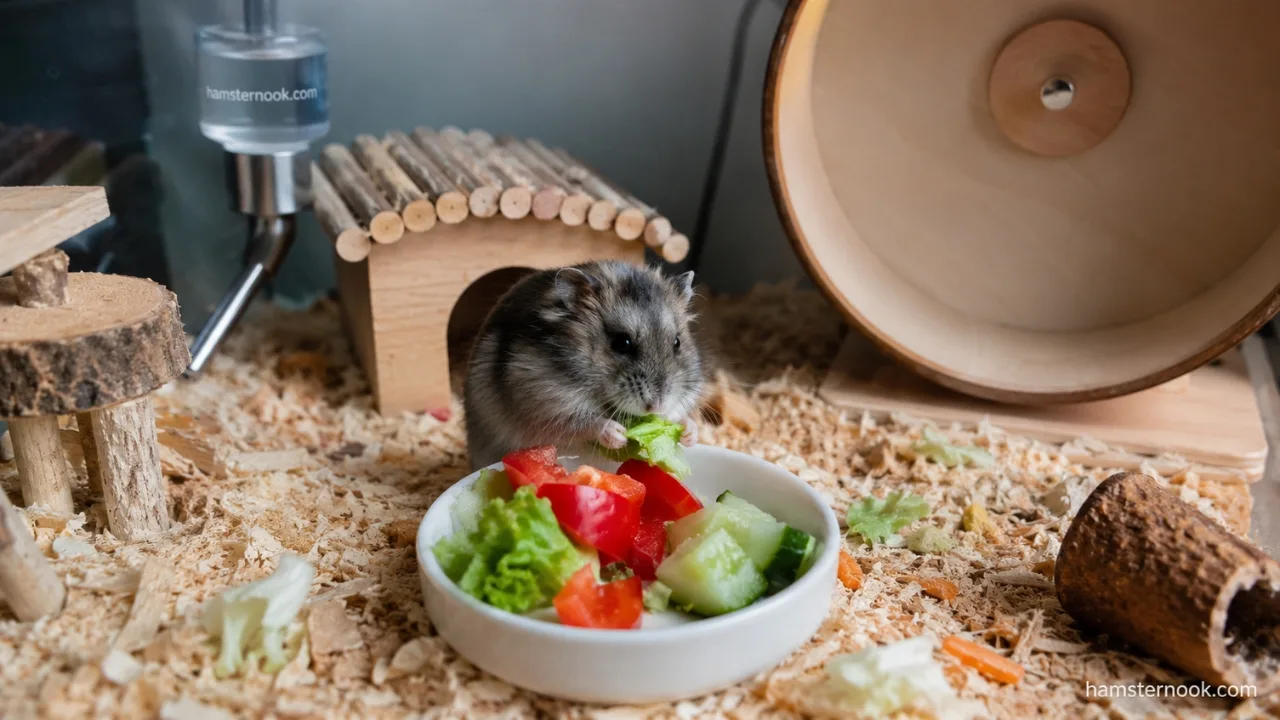
There is no need to cook celery before offering it. If celery is cooked, only offer it if it is completely plain and cooled. Avoid celery prepared with added salt, butter, oil, sauces, or seasoning.
What Are the Risks of Feeding Too Much Celery?
The biggest concern with any new fresh food is overfeeding or introducing it too quickly.
A hamster that eats too much fresh food may develop digestive upset, including softer or wetter droppings. Sudden diet changes can also upset the stomach. RSPCA advises owners to avoid sudden dietary changes and to speak to a vet if a hamster starts eating less or develops moist droppings or a soiled hind end.
If you’re introducing celery for the first time, our How to Introduce New Foods to a Hamster Safely: Step-by-Step Guide explains how to add new foods without making a sudden change to your hamster’s diet.
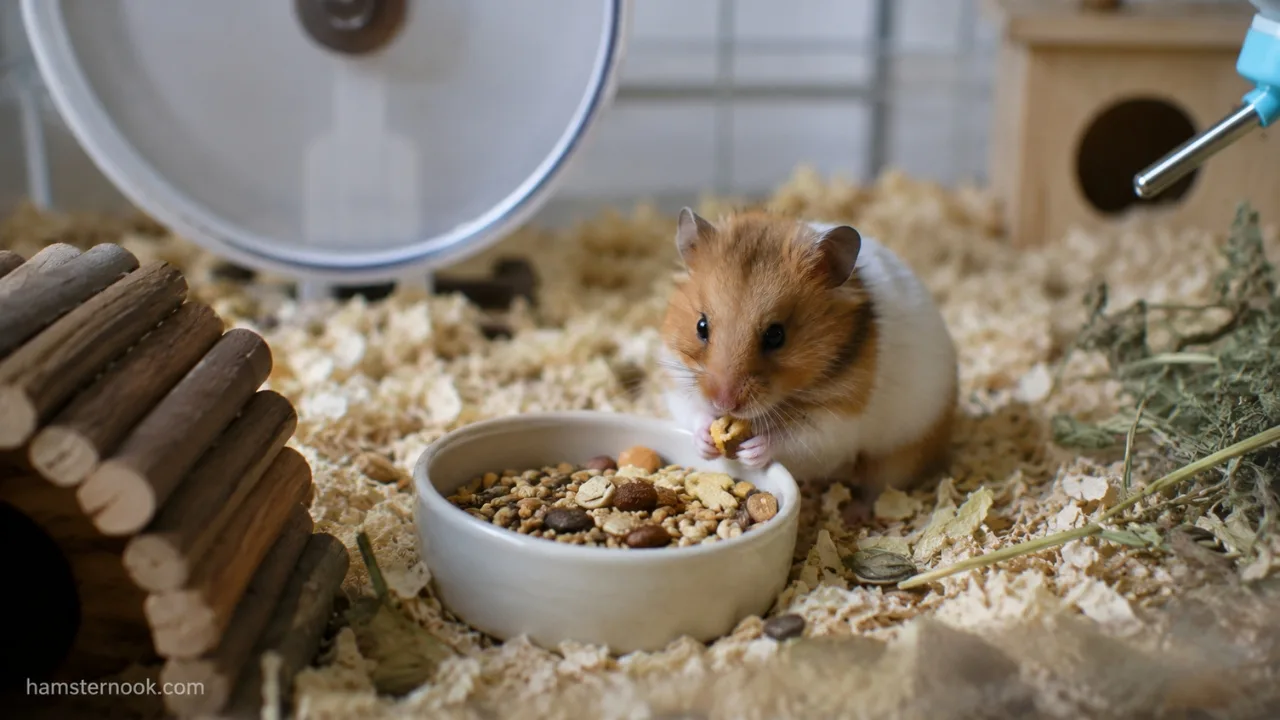
Celery should therefore remain a small addition to a balanced hamster diet rather than becoming a major part of the daily food intake.
Signs Your Hamster May Not Tolerate Celery Well
After introducing celery, watch your hamster’s normal eating and bathroom habits.
Potential warning signs include:
- Softer or unusually wet droppings
- Reduced appetite
- Unusual lethargy
- A soiled hind end
- A noticeable change in normal behavior
If your hamster becomes unwell, stops eating, or develops significant or persistent digestive symptoms, stop offering the new food and contact a veterinarian. Hamsters can lose condition quickly when they are ill.
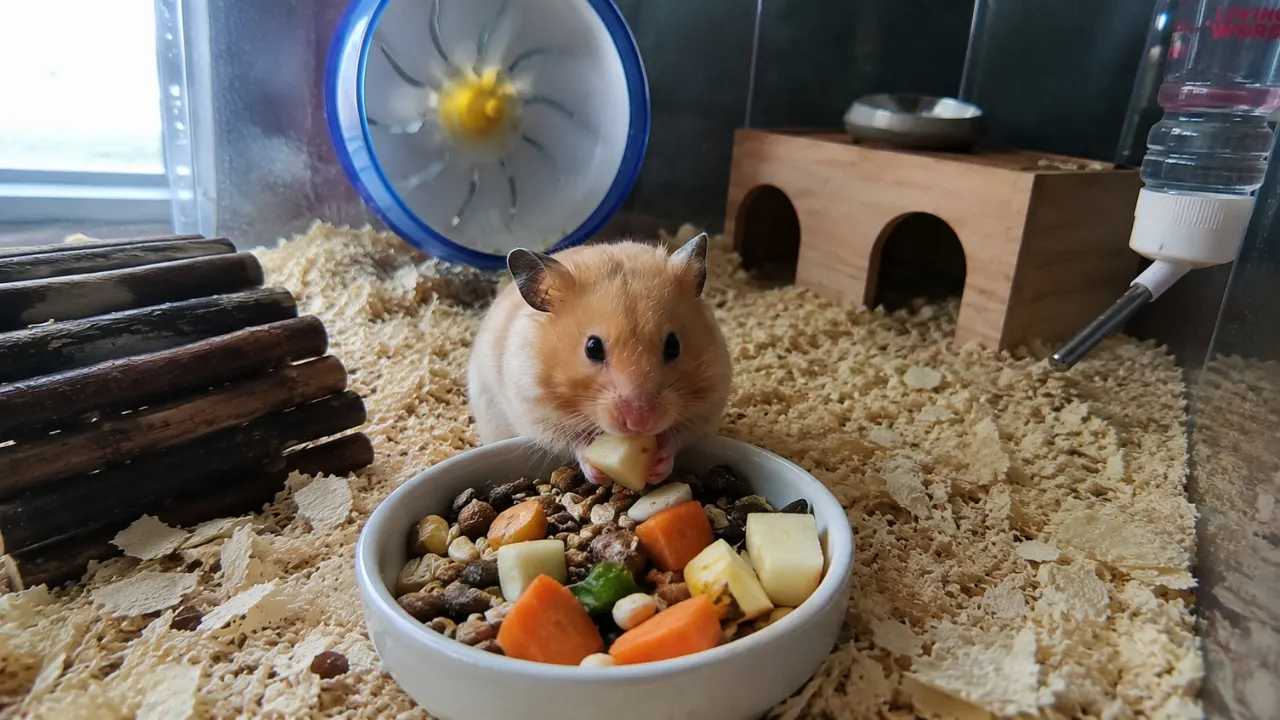
If your hamster’s appetite changes along with other unusual symptoms, our Signs of a Sick Hamster: Symptoms, Warning Signs & When to See a Vet guide explains which changes should not be ignored.
Celery vs. Your Hamster’s Main Diet
Celery should never replace the food that provides the foundation of your hamster’s nutrition.
A balanced hamster diet should remain the priority, with fresh vegetables used in small quantities for variety. Merck Veterinary Manual also recommends a complete, balanced hamster diet and keeping fruits and vegetables as limited extras rather than the main food.
Final Thoughts
Yes, hamsters can eat celery in small amounts. PDSA specifically includes celery among suitable hamster vegetables, provided fresh vegetables are washed and offered in moderation.
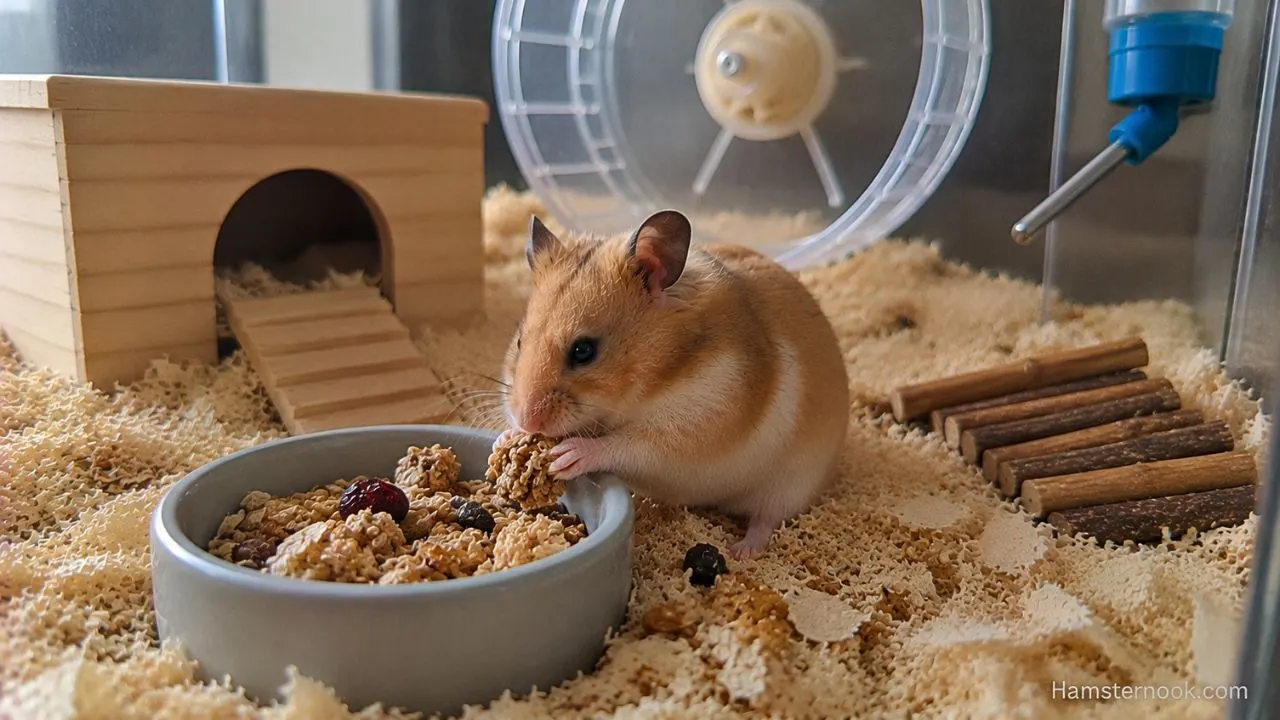
The safest approach is simple: start with a tiny piece, introduce it gradually, keep it plain, and don’t let celery replace your hamster’s balanced staple food.
If your hamster develops digestive problems or stops eating after trying a new food, don’t keep increasing the portion. Stop the new food and seek veterinary advice if symptoms are significant or persistent.
Frequently Asked Questions
Can hamsters eat celery every day?
Celery does not need to be fed every day. Fresh vegetables should remain a small part of a varied diet rather than becoming a major part of the daily food intake.
Can dwarf hamsters eat celery?
Yes. Celery is listed among suitable vegetables for hamsters, but dwarf hamsters should still receive appropriately small portions because of their smaller body size.

Is celery safe for Syrian hamsters?
Yes. Celery is listed as a suitable hamster vegetable when washed and fed in moderation.
Can hamsters eat celery leaves?
Hamster-specific guidance does not clearly provide a separate recommendation for celery leaves. If offered, keep the amount very small, wash it thoroughly, and monitor your hamster after introducing it.
What happens if a hamster eats too much celery?
Too much fresh food can contribute to digestive upset. If your hamster develops unusually wet droppings, reduced appetite, or other concerning changes, stop offering the new food and contact a veterinarian if the symptoms are significant or persistent.
Should celery be cooked before giving it to a hamster?
No. Plain raw celery is the simplest option. If celery is cooked, it should be completely plain and cooled, with no salt, butter, oil, sauce, or seasoning.

References
This guide is based on hamster nutrition, feeding, fresh-food safety, and general health guidance from trusted veterinary and animal welfare organizations, including:
- RSPCA – Hamster Care and Feeding Guidance – Guidance on hamster diet, fresh vegetables, feeding practices, and general welfare.
- PDSA – Hamsters as Pets – Hamster nutrition, suitable vegetables, portion guidance, and general care recommendations.
- Blue Cross – Looking After Your Hamster – Hamster feeding, fresh foods, husbandry, and welfare guidance.
- Merck Veterinary Manual – Hamsters – Veterinary information on hamster nutrition, digestive health, and general care.
- U.S. Food and Drug Administration (FDA) – Selecting and Serving Produce Safely – Food-safety guidance relevant to washing and preparing fresh produce.
Medical Disclaimer: The information in this article is for educational purposes only and is not a substitute for veterinary diagnosis or treatment. If your hamster stops eating, develops significant digestive problems, becomes unusually weak, or shows other concerning symptoms, contact a qualified veterinarian.

Narayan Kumar is the founder and author of HamsterNook. He creates practical, research-based hamster care guides covering hamster behavior, nutrition, cage setup, enrichment, health, and everyday care. His goal is to help hamster owners make informed decisions and provide safer, healthier lives for their pets through clear, beginner-friendly information based on trusted animal care resources.