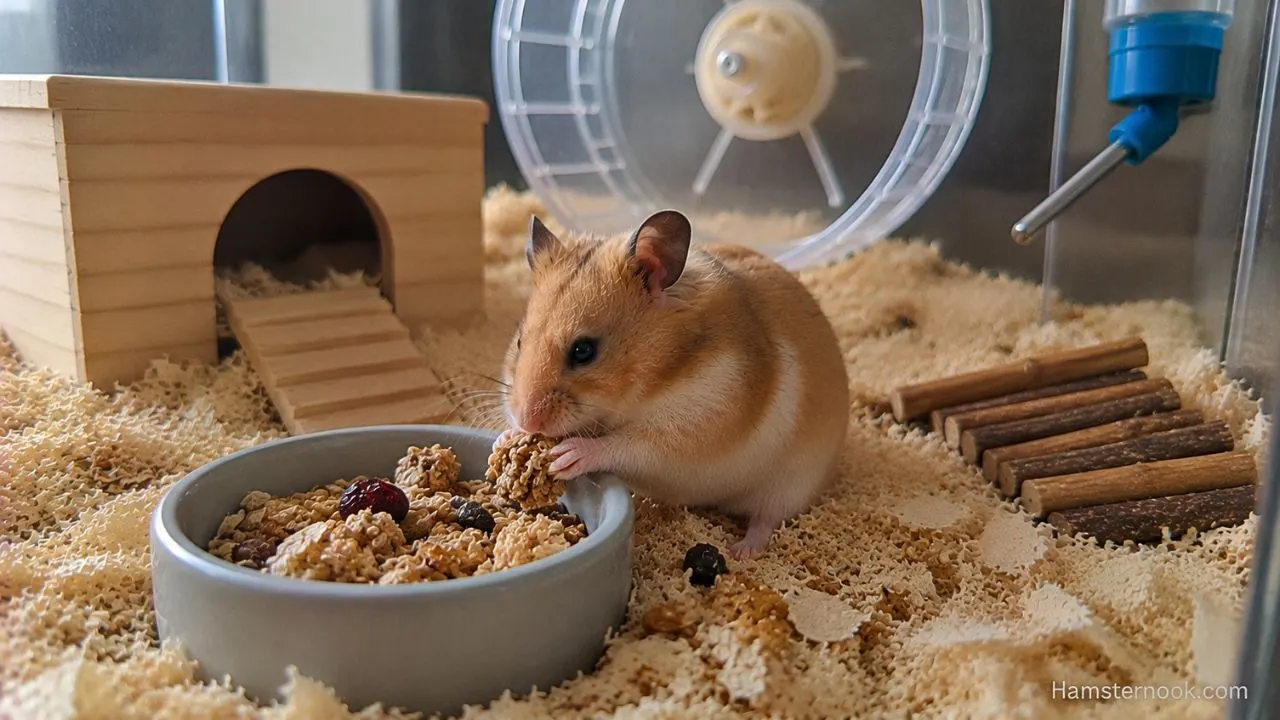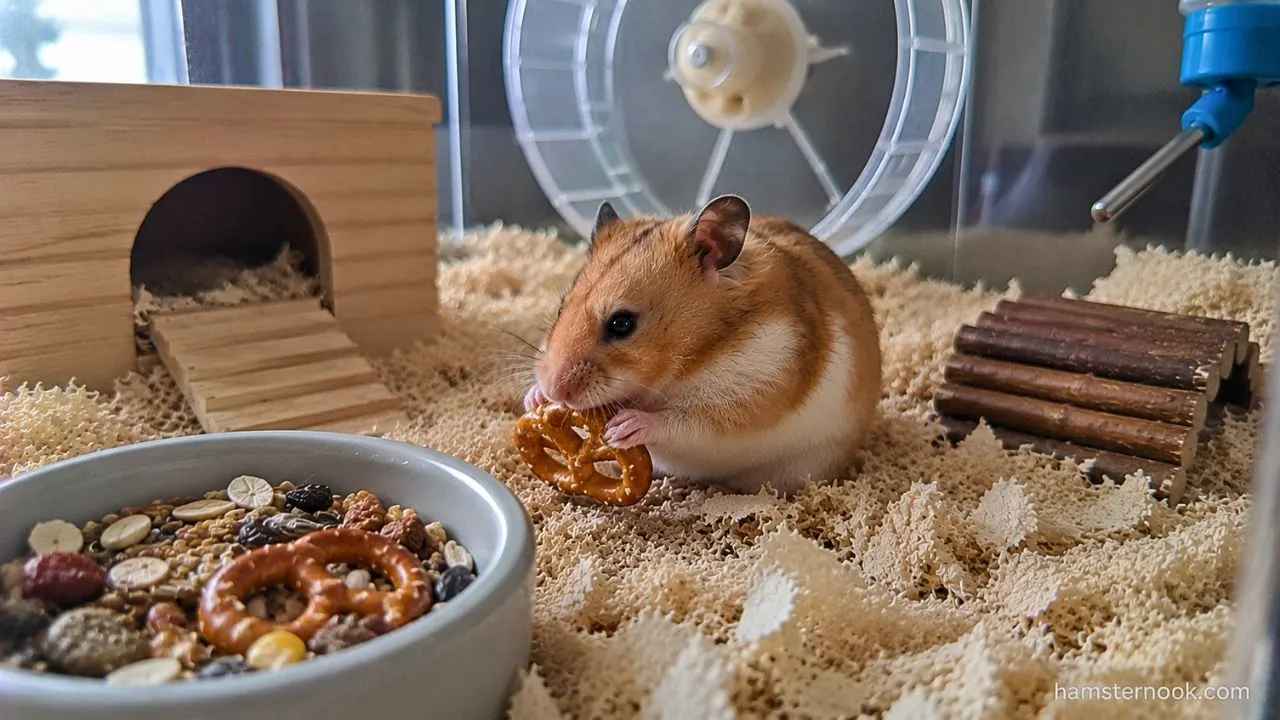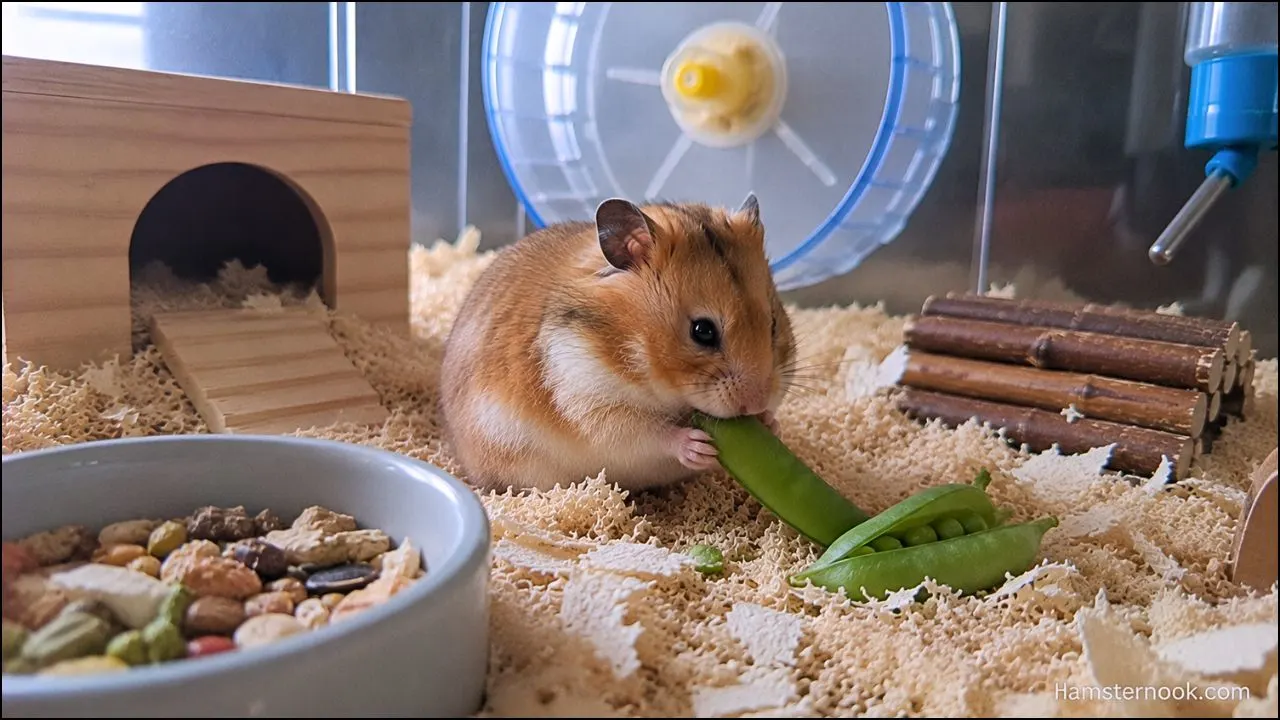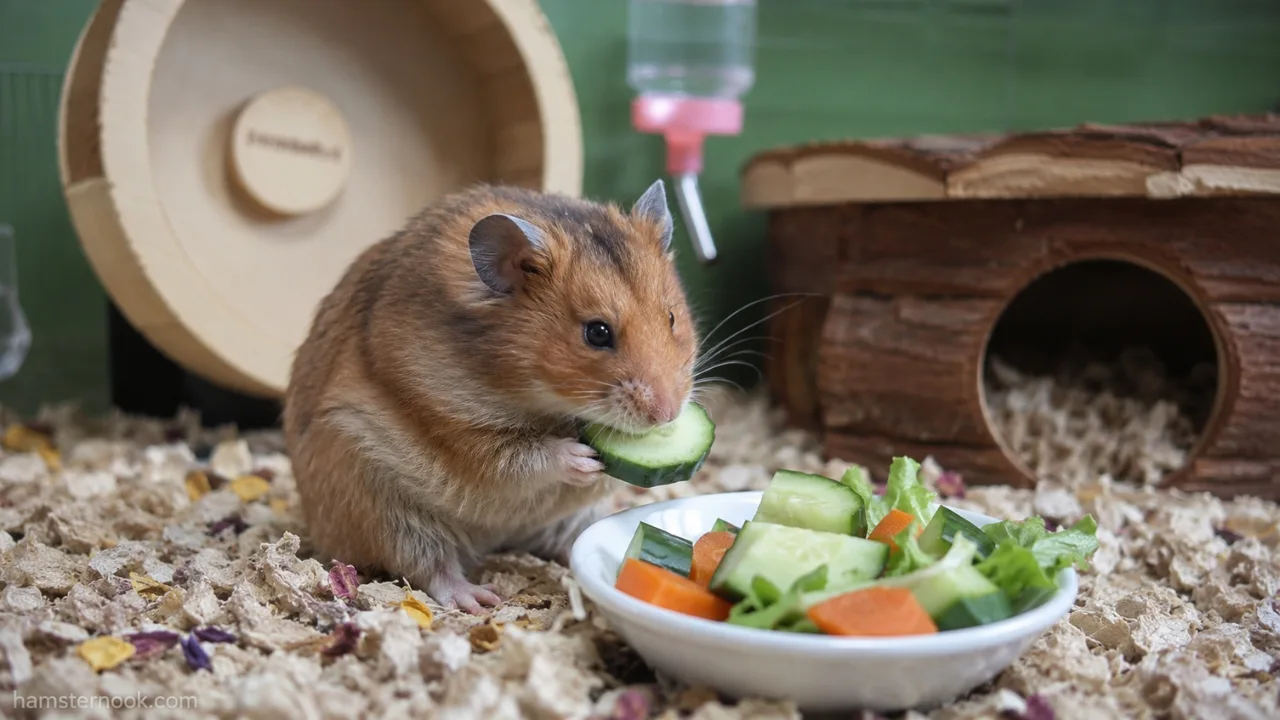
Giving your hamster a small piece of cucumber, carrot, or apple can feel like a healthy way to add variety to its diet. But before placing fresh produce into your pet’s food bowl, there’s one simple question every owner should ask: Should fruits and vegetables be washed first?
For fresh produce that is not labeled pre-washed or ready-to-eat, wash it under clean running water before feeding it to your hamster. If packaged produce is clearly labeled pre-washed or ready-to-eat, follow the package instructions rather than assuming it must be washed again. Washing loose fresh produce helps reduce surface dirt and contamination before feeding.
In this guide, you’ll learn why washing produce matters, the safest way to prepare fruits and vegetables, common mistakes to avoid, and when washing alone may not be enough.
Quick Answer
For fresh, unwashed produce, yes—rinse it thoroughly under clean running water before preparing a portion for your hamster. Washing can reduce surface dirt and some contaminants, but it does not remove everything. Produce labeled pre-washed or ready-to-eat generally does not need to be washed again. After preparing the food, offer a small portion and remove uneaten fresh food before it spoils.

Why Washing Fruits and Vegetables Matters for Hamsters
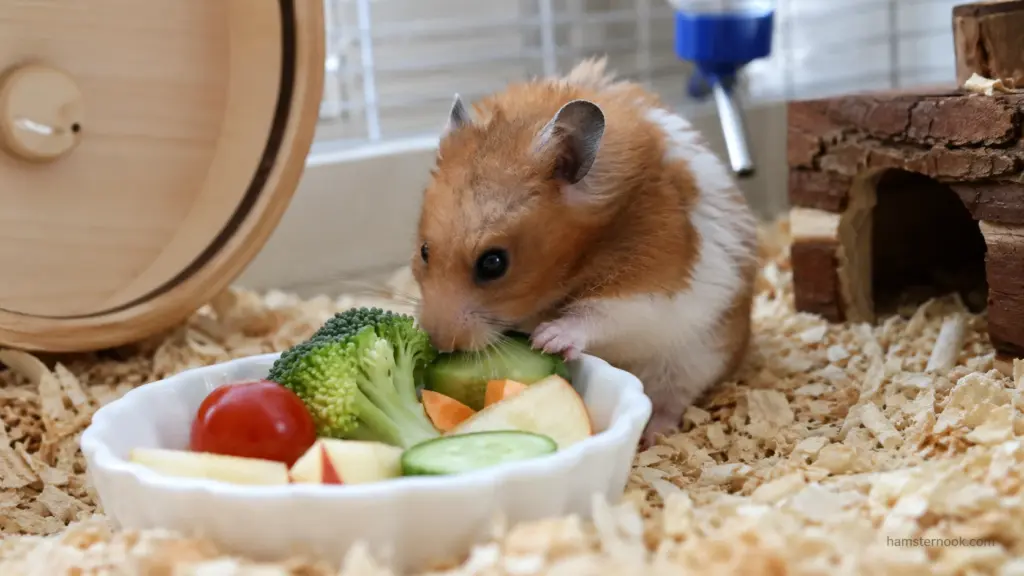
Fresh produce can be an excellent source of variety, hydration, and nutrients when offered appropriately. However, fruits and vegetables often travel a long way before reaching your kitchen. During growing, harvesting, packaging, transportation, and storage, they may come into contact with soil, dust, insects, bacteria, or agricultural chemicals.
Washing produce also removes dust and residue picked up during transport and storage. While it cannot eliminate every contaminant, rinsing fruits and vegetables under clean running water helps reduce many surface residues and is one of the easiest food safety habits every hamster owner can follow.
Even if you’re only offering a single slice of cucumber or a tiny piece of apple, preparing it properly is worth the extra few seconds. Small portions don’t eliminate the need for good food hygiene.
Proper preparation also includes checking that the fruit or vegetable itself is safe for hamsters. Washing makes food cleaner, but it does not make naturally unsafe foods safe to eat.
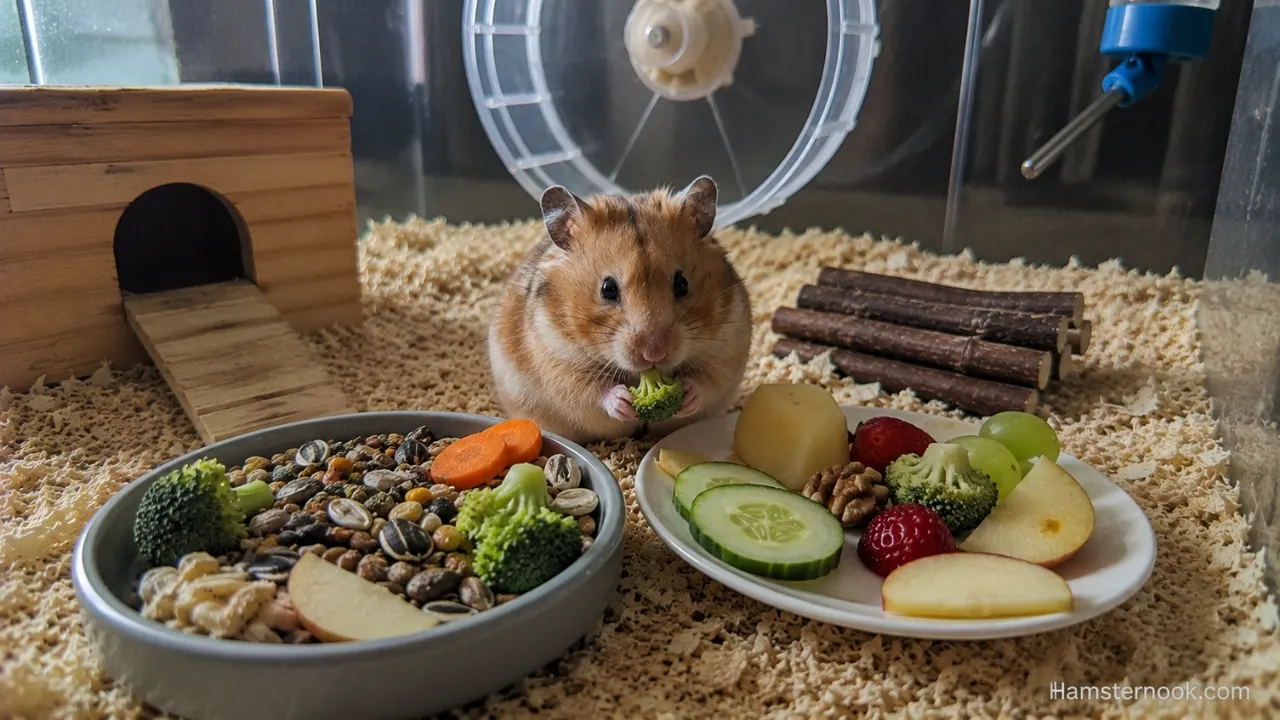
Before offering any new fruit or vegetable, our Foods Hamsters Should Never Eat guide explains which foods should always be avoided, even after washing.
What Can Be on Unwashed Fruits and Vegetables?
Fresh fruits and vegetables may carry substances that you cannot see.
These can include:
- Dirt and soil
- Dust from storage or transport
- Surface pesticide residues
- Natural bacteria from the environment
- Mold spores on damaged produce
Good food hygiene is still important when preparing fresh produce for a hamster. Washing reduces avoidable surface contamination, but it does not sterilize the food or guarantee that every contaminant has been removed.
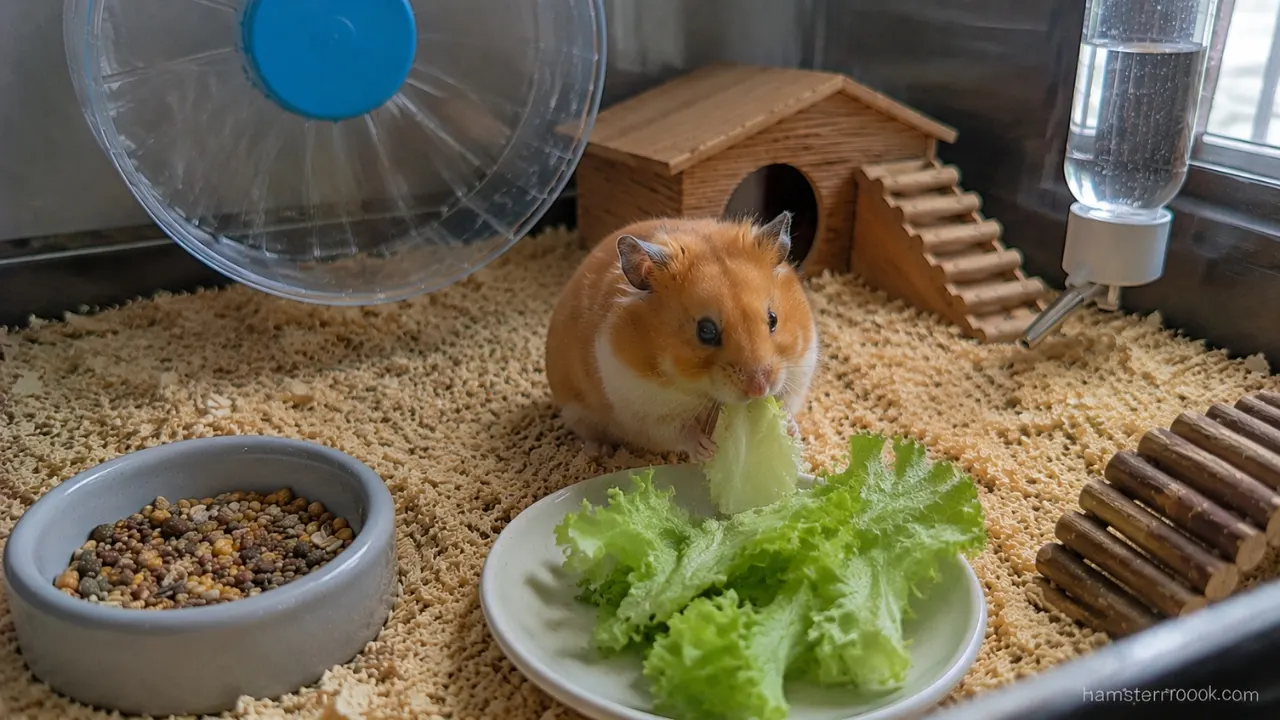
Washing won’t sterilize produce, but it lowers unnecessary exposure to substances that don’t belong in your hamster’s diet.
Does Washing Remove All Pesticides?
No. Washing does not completely remove every pesticide or chemical residue.
However, thoroughly rinsing produce under clean running water can help reduce dirt and many residues found on the surface. It is considered a good food safety practice for both people and pets.
Peeling certain fruits and vegetables may further reduce surface exposure, although peeling is not always necessary or practical. Some produce also contains valuable nutrients in or just beneath the skin.
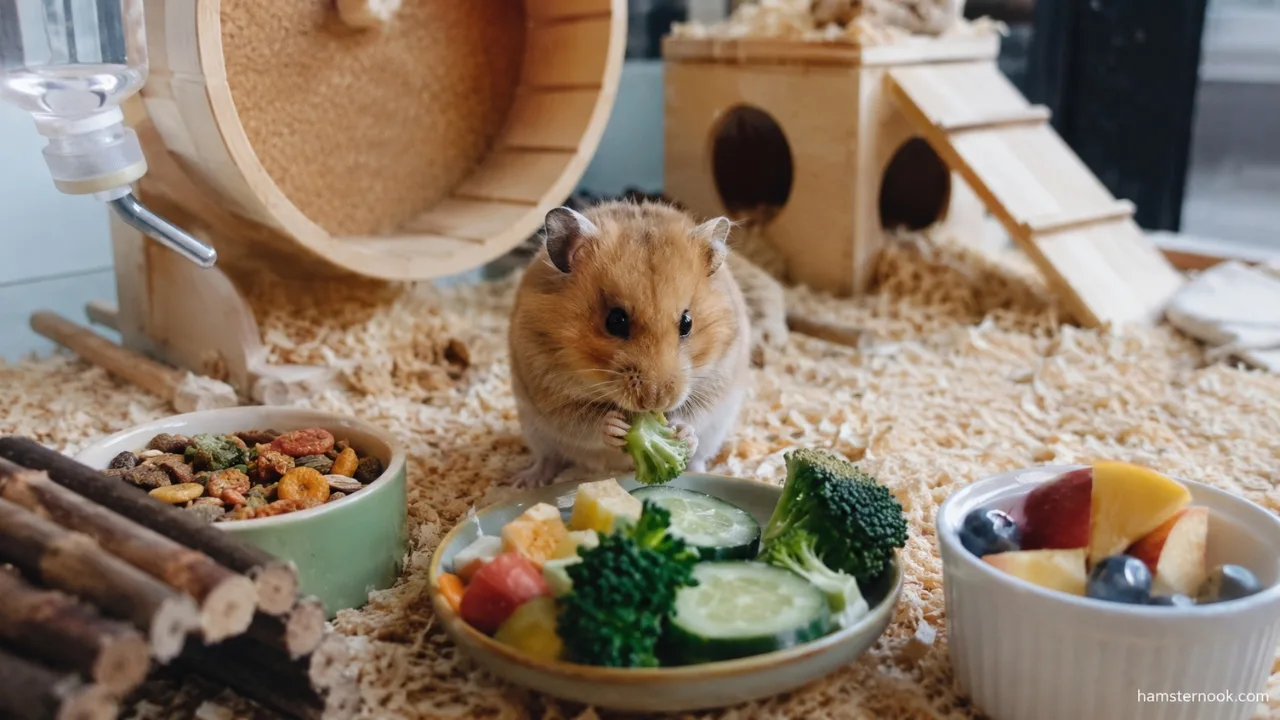
The idea isn’t to remove every possible contaminant. It’s simply to make fresh food a little safer before offering it to your hamster.
Which Fruits and Vegetables Should Always Be Washed?
As a general rule, every fresh fruit and vegetable should be washed before being offered to your hamster, even if you plan to peel it afterward.
This includes common hamster treats such as:
| Fruit or Vegetable | Wash Before Feeding? | Notes |
|---|---|---|
| Apple | Yes | Remove seeds before serving |
| Cucumber | Yes | Serve small slices only |
| Carrot | Yes | Can be fed with skin after washing |
| Broccoli | Yes | Offer small florets |
| Bell Pepper | Yes | Remove seeds and stem |
| Blueberries | Yes | Rinse gently before feeding |
| Strawberry | Yes | Wash thoroughly and remove leaves |
| Celery | Yes | Cut into tiny pieces after washing |
Making washing a habit helps ensure you never accidentally skip this important step.

How to Wash Fruits and Vegetables Safely
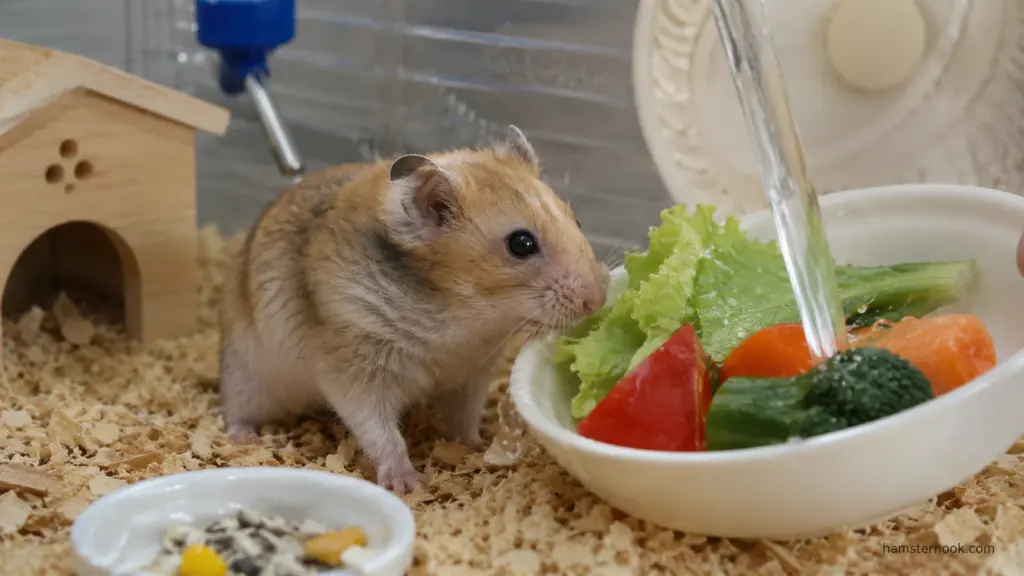
You don’t need special sprays, soaps, or expensive produce washes. A proper rinse under cool running water is enough for most hamster-safe fruits and vegetables.
Follow these simple steps:
1. Wash Your Hands First
Clean hands help prevent transferring bacteria to your hamster’s food.
2. Rinse Under Running Water
Hold the fruit or vegetable under cool running water while gently rubbing the surface with your fingers.
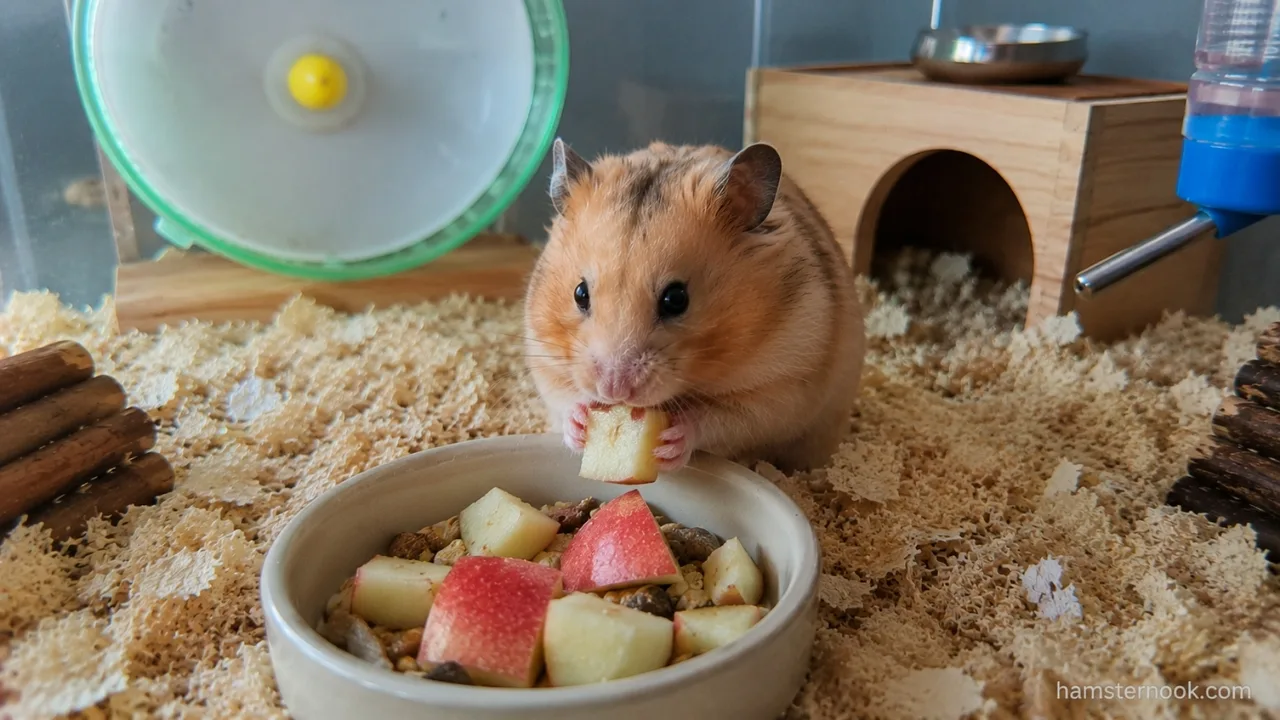
For firmer produce like carrots or cucumbers, gently rubbing the skin can help remove more dirt.
3. Remove Damaged Areas
If you notice bruises, mold, or spoiled sections, trim them away.
If produce appears heavily spoiled, discard it instead of feeding it.
4. Dry Before Cutting
Pat the produce dry using a clean paper towel or cloth before preparing small hamster-sized portions.

5. Cut Appropriate Serving Sizes
Hamsters need only tiny amounts of fresh produce.
Preparing only one serving at a time also helps reduce waste and lowers the chance of spoiled food being forgotten inside the enclosure.
Large chunks may increase the risk of waste, food hoarding, or spoilage inside the cage.
If you’re unsure how much fresh food your hamster actually needs, What Should Hamsters Eat Every Day? A Complete Daily Feeding Guide provides safe portion recommendations.
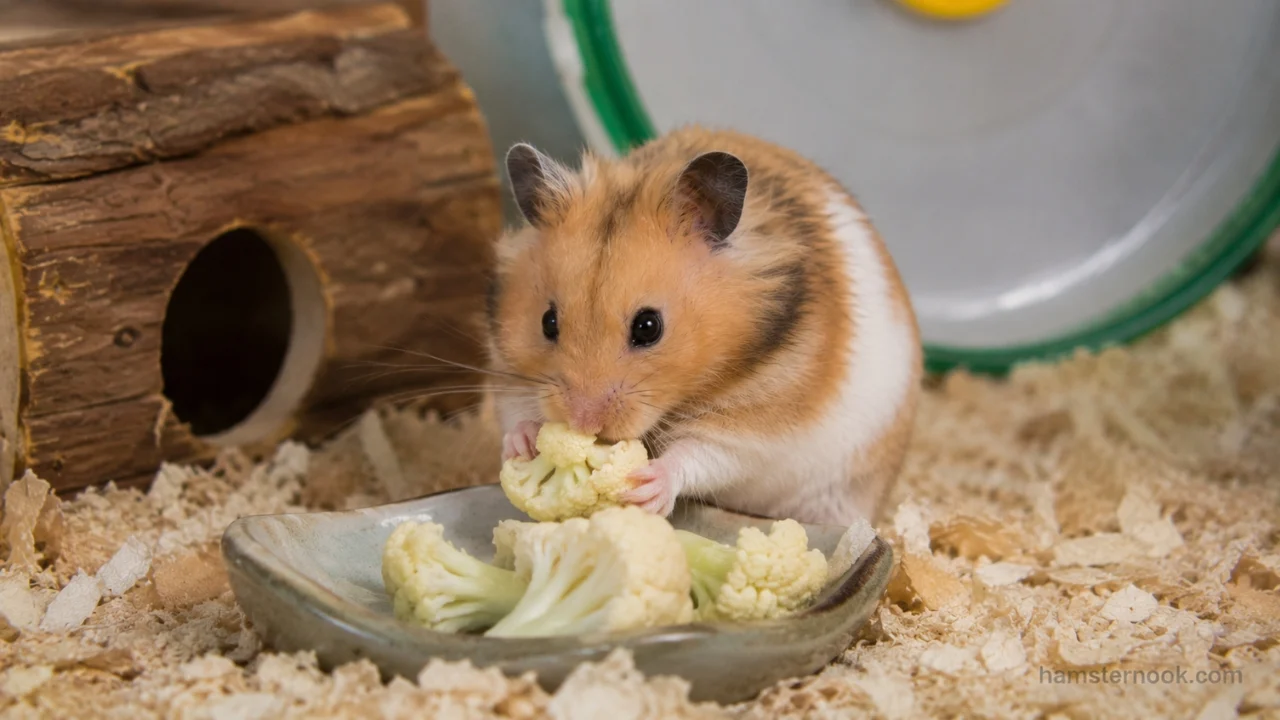
Should You Use Fruit and Vegetable Wash Products?
Most veterinary and food safety organizations recommend washing produce with clean running water rather than soap, detergent, bleach, or household cleaning products.
Many commercial produce washes are marketed for human use, but there is limited evidence that they provide meaningful advantages over proper rinsing for routine home preparation.
More importantly, soap and household cleaners should never be used on produce intended for hamsters because residues from these products may themselves be harmful if ingested.
For most owners, clean running water is all that’s needed to prepare fresh produce safely.

Avoid soaking fruits or vegetables for long periods, as this can affect their texture and make some foods less appealing to your hamster. A thorough rinse under cool running water is usually all that is needed.
Organic vs Conventional Produce: Does It Matter?
Some owners believe organic produce never needs washing.
That’s a common misunderstanding. Organic produce may still carry soil, dust, bacteria, and residues from handling.
Whether produce is organic or conventionally grown, washing is still recommended.
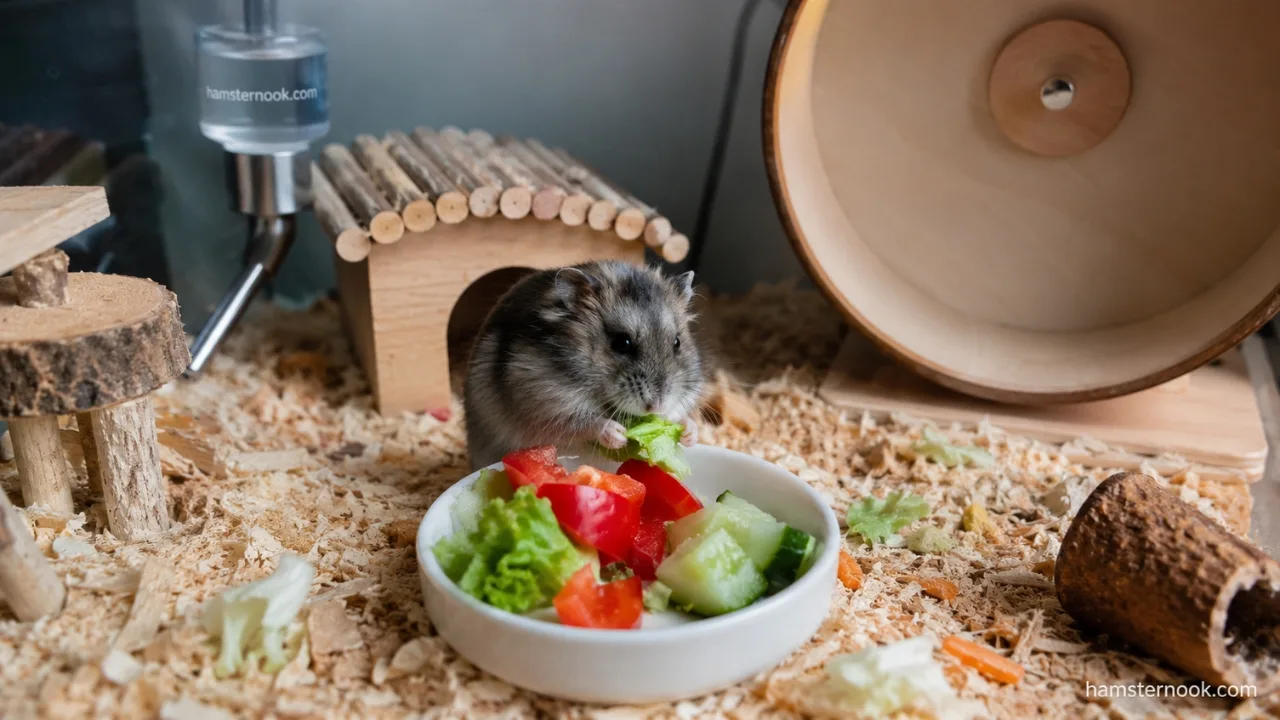
Organic farming methods differ from conventional agriculture, but organic fruits and vegetables can still collect:
- Dirt
- Dust
- Natural bacteria
- Insects
- Handling contamination during transport
Whether you buy produce from a supermarket, local market, or your own garden, washing it before feeding is still the safest approach.
Common Mistakes Hamster Owners Make
Many feeding mistakes are simple to avoid once you know what to look for.
| Mistake | Why It’s a Problem | Better Alternative |
|---|---|---|
| Feeding produce without washing | May expose the hamster to dirt or surface residues | Always rinse thoroughly first |
| Offering large fruit pieces | Encourages overeating and food storage | Cut into tiny bite-sized portions |
| Leaving fresh food overnight | Fresh produce spoils quickly | Remove uneaten food after a few hours |
| Feeding too much fruit | High natural sugar intake | Keep fruit as an occasional treat |
| Assuming all vegetables are safe | Some foods are unsuitable for hamsters | Research each food before offering |
If you’re introducing fresh foods, our Can Hamsters Eat Watermelon? Safe Amount, Seeds & Rind Explained guide covers preparation, portion size, and the risks of offering too much fruit.

Can Washing Prevent Digestive Problems?
Washing produce helps reduce exposure to surface contaminants, but it cannot prevent every digestive issue.
Hamsters may still experience stomach upset if:
- They eat too much fresh food.
- A new food is introduced too quickly.
- The food itself is unsuitable for hamsters.
- Spoiled produce is fed.
Washing is only one part of safe feeding. Offering appropriate portions and choosing hamster-safe foods are just as important.
Should You Peel Fruits and Vegetables Before Feeding Them?
Peeling isn’t usually required, although some owners prefer it for certain fruits and vegetables with thicker skins.
For many hamster-safe foods, a thorough rinse under clean running water is enough. However, some owners choose to peel produce with thicker skins if they are concerned about surface residues or if the peel is particularly tough for a hamster to eat.
Here’s a quick guide:
| Food | Peel Recommended? | Notes |
|---|---|---|
| Apple | Optional | Wash well and always remove the seeds. |
| Carrot | Optional | Wash thoroughly; peeling is not required. |
| Cucumber | Optional | Most hamsters can eat the skin if it has been washed. |
| Pear | Optional | Remove seeds before serving. |
| Potato | Not Recommended Raw | Raw potato should not be fed to hamsters. |
Always wash produce first, even if you plan to remove the peel, to avoid transferring dirt from the outside to the edible part while cutting. Even produce that will be peeled should be rinsed first to help prevent transferring dirt or residues from the skin to the edible portion while cutting.
How Much Fresh Produce Should a Hamster Eat?
Fresh fruits and vegetables should only make up a small part of a hamster’s overall diet.
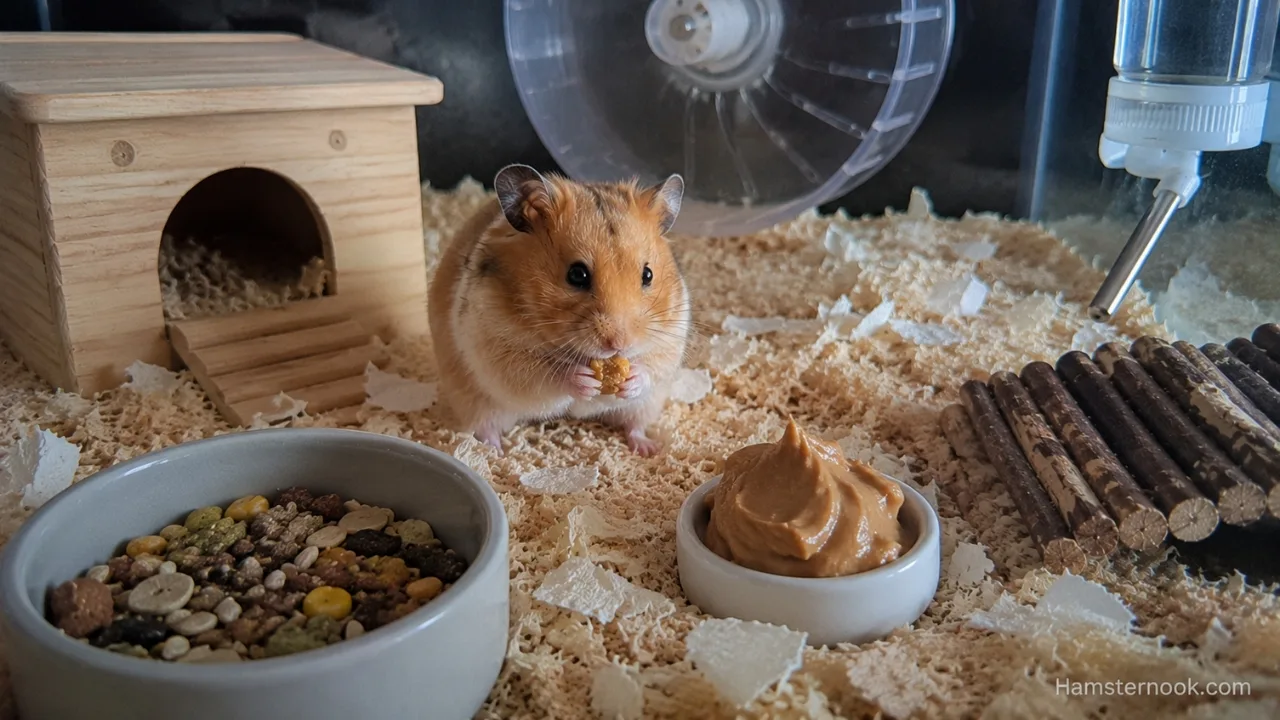
A healthy hamster should receive most of its nutrition from:
- A high-quality hamster pellet or fortified food mix
- Appropriate seeds and grains
- Occasional safe vegetables
- Small portions of fruit as treats
Fresh produce is meant to provide variety, not replace the staple diet.
If you’re looking for more safe produce options, our Best Fruits and Vegetables for Hamsters guide compares suitable fruits, vegetables, and how often they can be offered.
How to Store Washed Produce Safely
Washing food properly is important, but storing it correctly afterwards helps keep it fresh and safe to feed.
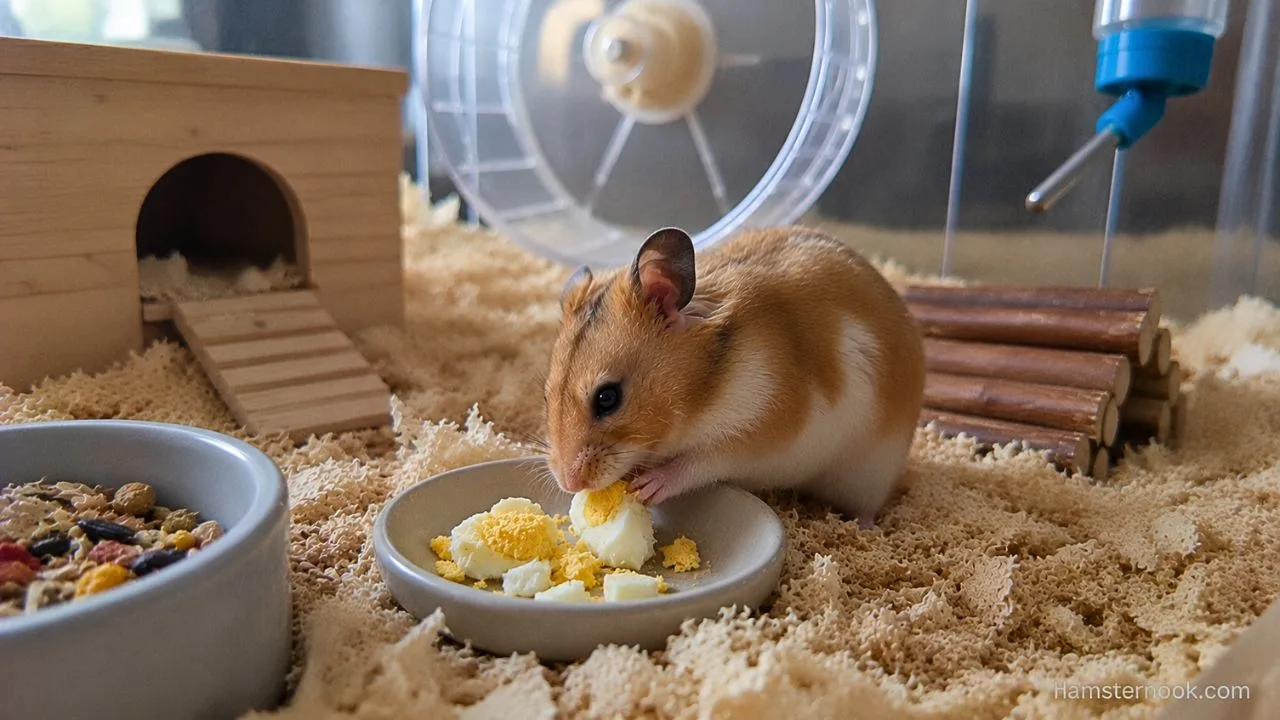
After washing fruits and vegetables:
- Store them in the refrigerator if appropriate for that food.
- Keep produce in clean containers or bags.
- Avoid leaving cut fruits or vegetables at room temperature for long periods.
- Discard produce that becomes moldy, slimy, or develops an unusual smell.
For your hamster, only prepare the amount needed for a single feeding whenever possible.
Remove Leftover Fresh Food Promptly
Unlike dry hamster food, fresh fruits and vegetables spoil quickly.
Hamsters also have a natural instinct to hide food in bedding or nesting areas. If fresh produce is stored in these hidden spots, it can spoil before the owner notices.

After offering fresh food:
- Check the enclosure within a few hours.
- Remove any uneaten pieces.
- Inspect common food storage spots during routine spot cleaning.
This simple habit helps reduce the risk of mold growth and keeps the enclosure cleaner.
Signs That Fresh Produce May Not Agree With Your Hamster
Even hamster-safe foods should be introduced gradually.
Watch for changes such as:

| Possible Sign | What It Could Mean |
|---|---|
| Soft stools | Too much fresh food or sudden diet change |
| Reduced appetite | Digestive upset or another health issue |
| Less activity | Illness or discomfort |
| Food left untouched | The hamster may dislike the food or already be full |
If digestive problems continue or your hamster appears unwell, discontinue the new food and consult an experienced exotic animal veterinarian.
Safe Feeding Tips Every Owner Should Follow
Building good feeding habits is easier when you keep a few simple rules in mind.
- Wash all fruits and vegetables before feeding.
- Cut food into hamster-sized pieces.
- Remove seeds, pits, and other unsafe parts.
- Introduce one new food at a time.
- Feed fresh produce in moderation.
- Remove leftovers before they spoil.
- Always provide clean drinking water.
Remember to check your hamster’s nest and food hoard during routine spot cleaning, as fresh fruits and vegetables are often hidden in bedding where they can spoil unnoticed.
Following these simple habits makes fresh foods both safer and more enjoyable for your hamster without adding much extra effort to your daily routine.
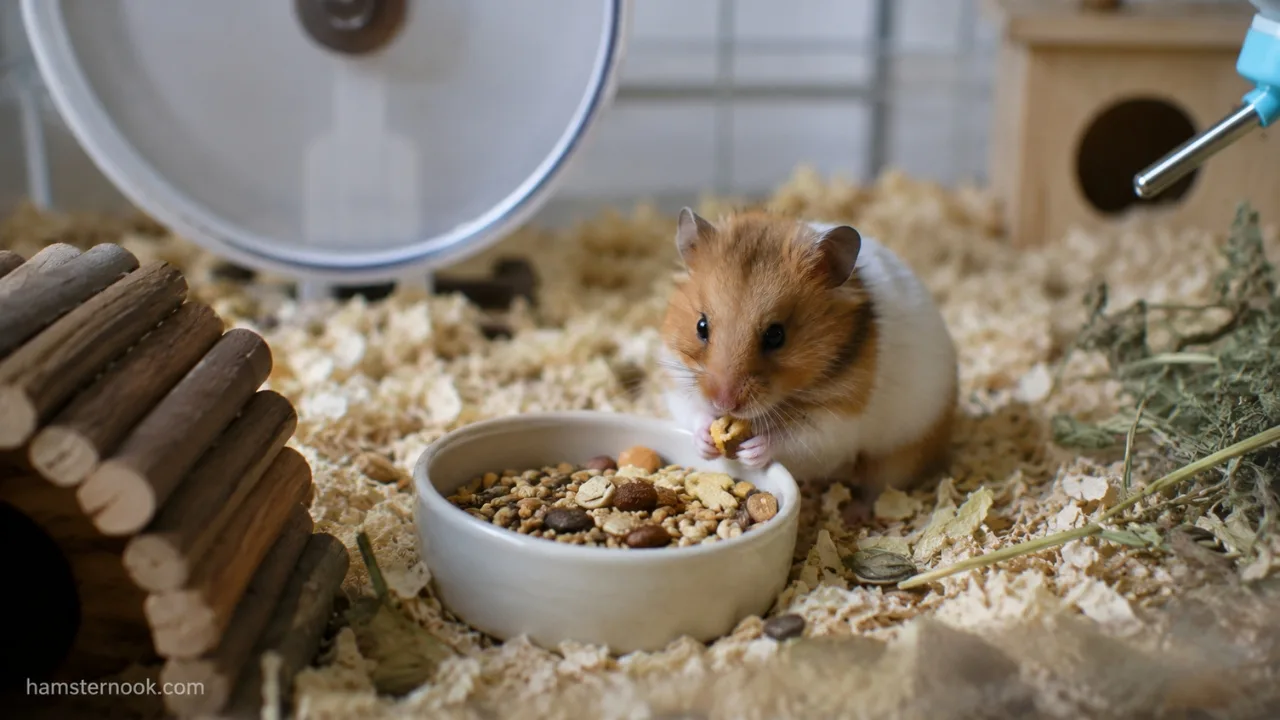
Fresh fruits and vegetables are only one part of healthy treat rotation. Our 10 Healthy Treats Hamsters Absolutely Love guide includes other safe treats that can be offered in moderation.
Washing Is Just One Part of Safe Feeding
Many beginners focus only on whether a food is “safe,” but preparation is equally important.
For example:
- A safe fruit served in excessive amounts can still cause digestive upset.
- A washed vegetable left in the cage overnight can become spoiled.
- A healthy treat fed too frequently can upset the balance of the overall diet.
Safe hamster feeding is a combination of choosing appropriate foods, preparing them correctly, serving proper portions, and maintaining good cage hygiene.

Final Thoughts
Yes. Washing every fruit and vegetable before feeding it to your hamster should be a regular part of your feeding routine.
Although washing cannot remove every possible contaminant, rinsing unwashed produce under running water helps reduce surface dirt and contamination. It is a simple preparation step, but it does not make an otherwise unsafe food safe or eliminate every food-safety risk.
Remember that washing alone does not guarantee safe feeding. Choosing hamster-safe foods, serving appropriate portions, removing seeds when necessary, and cleaning up leftovers are all equally important parts of responsible hamster care.
Taking a few extra moments to wash, prepare, and portion fresh foods correctly helps reduce avoidable risks and gives your hamster a safer, healthier diet over the long term.

Frequently Asked Questions
Should I wash vegetables even if they are labeled pre-washed?
If produce is clearly labeled pre-washed or ready-to-eat, it generally does not need to be washed again. Follow the package instructions and handle it with clean hands and utensils to avoid cross-contamination.
Can I wash fruits with soap before giving them to my hamster?
No. Soap, detergents, bleach, and household cleaners should never be used on fruits or vegetables intended for hamsters because residues may remain on the food.
Is organic produce safe to feed without washing?
No. Organic fruits and vegetables should still be washed because they can carry dirt, dust, bacteria, and other contaminants from harvesting, packaging, and transport.
How long can fresh fruits or vegetables stay in a hamster’s cage?
It’s best to remove uneaten fresh food within a few hours. Fresh produce spoils much faster than dry food and may become unsafe if left in the enclosure too long.

Can washing make toxic foods safe for hamsters?
No. Washing only helps remove surface contaminants. Foods that are naturally unsuitable or unsafe for hamsters remain unsafe regardless of washing.
What is the safest way to prepare fresh food for a hamster?
Wash the produce thoroughly under cool running water, remove any unsafe parts such as seeds or pits when necessary, cut it into small bite-sized pieces, and offer only a modest portion as part of a balanced diet.
References
This guide is based on hamster nutrition, fresh food preparation, food safety, and general pet welfare guidance from trusted veterinary, animal welfare, and public health resources, including:
- RSPCA – Hamster Diet – Guidance on hamster nutrition, suitable foods, feeding habits, fresh foods, and maintaining a balanced diet.
- PDSA – Hamsters as Pets – Practical advice on hamster feeding, nutrition, general care, and welfare.
- Blue Cross – Hamster Care – Guidance on hamster diet, fresh foods, feeding practices, and general husbandry.
- U.S. Food & Drug Administration (FDA) – Selecting and Serving Produce Safely – Food safety guidance on washing fresh fruits and vegetables under running water and reducing surface contamination.
- CDC – Food Safety for Fruits and Vegetables – Guidance on washing and handling fresh produce safely to reduce foodborne contamination risks.
- Merck Veterinary Manual – Hamsters – Veterinary reference information covering hamster nutrition, digestive health, husbandry, and common health considerations.

Narayan Kumar is the founder and author of HamsterNook. He creates practical, research-based hamster care guides covering hamster behavior, nutrition, cage setup, enrichment, health, and everyday care. His goal is to help hamster owners make informed decisions and provide safer, healthier lives for their pets through clear, beginner-friendly information based on trusted animal care resources.