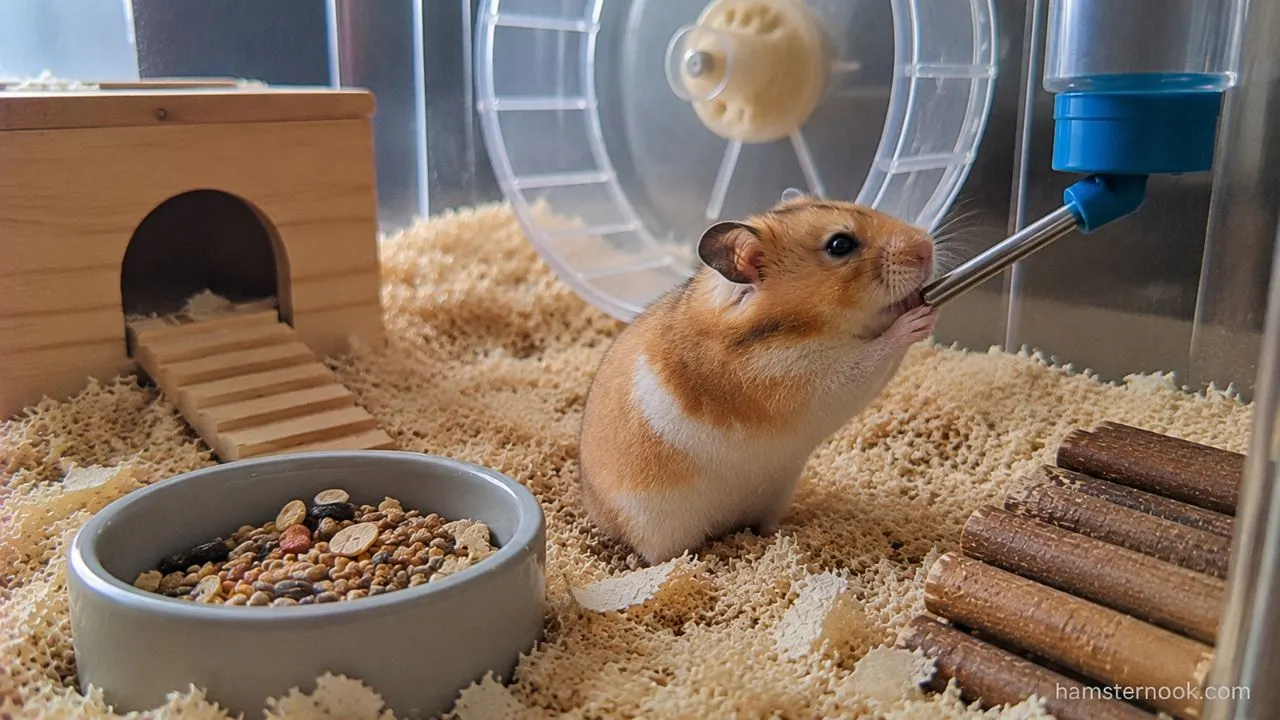
Hamsters may be small and quiet, but they constantly communicate through posture, movement, facial expressions, vocalizations, and daily habits. Learning to recognize these signals helps owners build trust, reduce stress, and identify potential health concerns much earlier.
A hamster cannot tell you when something feels wrong. Instead, it shows clues through its ears, eyes, movements, sleeping habits, and reactions to people. Learning how to read these signs helps you create a safer, happier environment and avoid common beginner mistakes.
Hamster body language can reveal whether your pet feels relaxed, curious, frightened, stressed, or physically unwell. The key is to look at several behaviors together and compare them with your hamster’s normal routine rather than judging one signal on its own.
Quick Answer
Hamster body language includes posture, ear position, movement, vocalizations, grooming habits, and activity levels. Relaxed grooming, confident exploration, and gentle treat-taking often indicate comfort, while repeated hiding, bar chewing, flattening against the ground, loud squeaking, or sudden aggression may signal fear, stress, or illness.
How Do Hamsters Communicate?
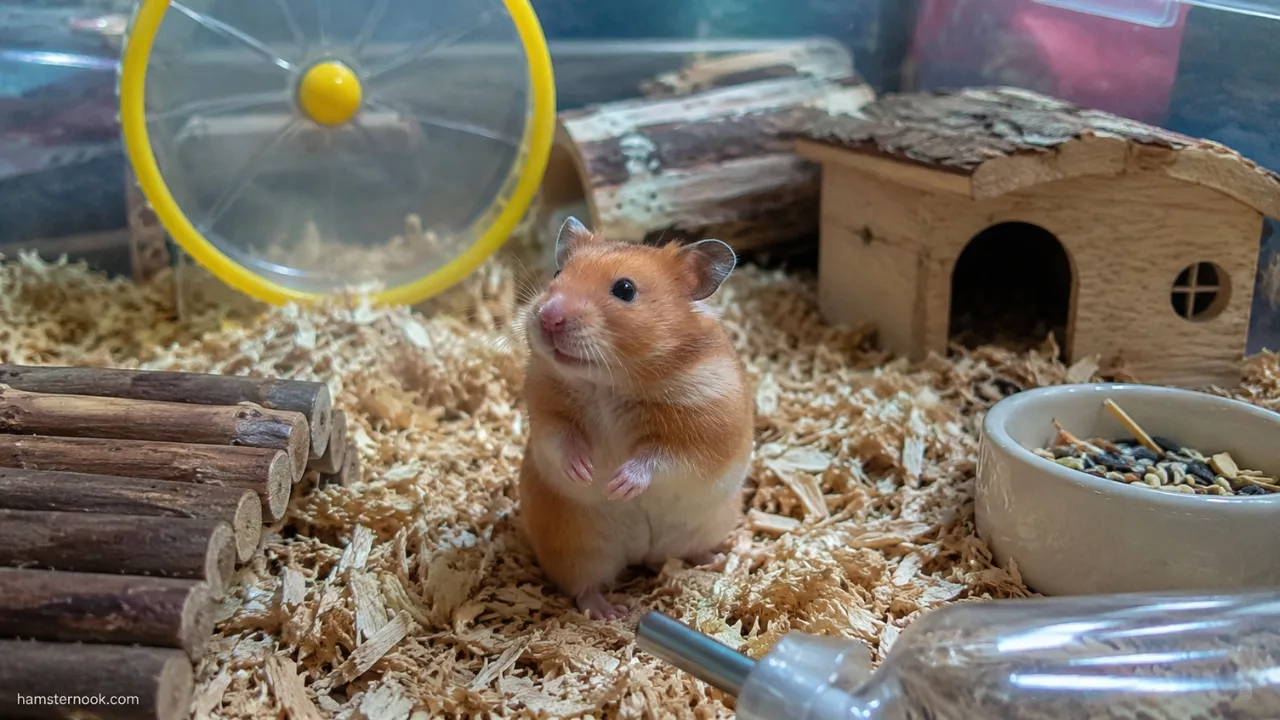
Hamsters communicate through body language, movement, sounds, scent, and changes in their normal behavior. Ears, posture, grooming, freezing, hiding, vocalizations, and scent-related behaviors can all provide useful clues. Because one behavior can have more than one meaning, the most reliable approach is to look at several signals together and compare them with your hamster’s usual routine.
For a deeper look at the different ways hamsters communicate, including sounds and scent-related behavior, see How Do Hamster Communicate? Body Language, Sounds & Scent Marking Explained.
Why Understanding Hamster Body Language Matters
Many hamster behaviors are misunderstood. A hamster that bites is not always “aggressive.” A hamster that freezes is not always calm. Sometimes these behaviors are signs of fear, stress, confusion, or poor handling.
For a broader care foundation, see our Ultimate Hamster Care Guide: Everything You Need to Know for a Healthy Hamster, which covers housing, handling, enrichment, health, and normal hamster behavior.
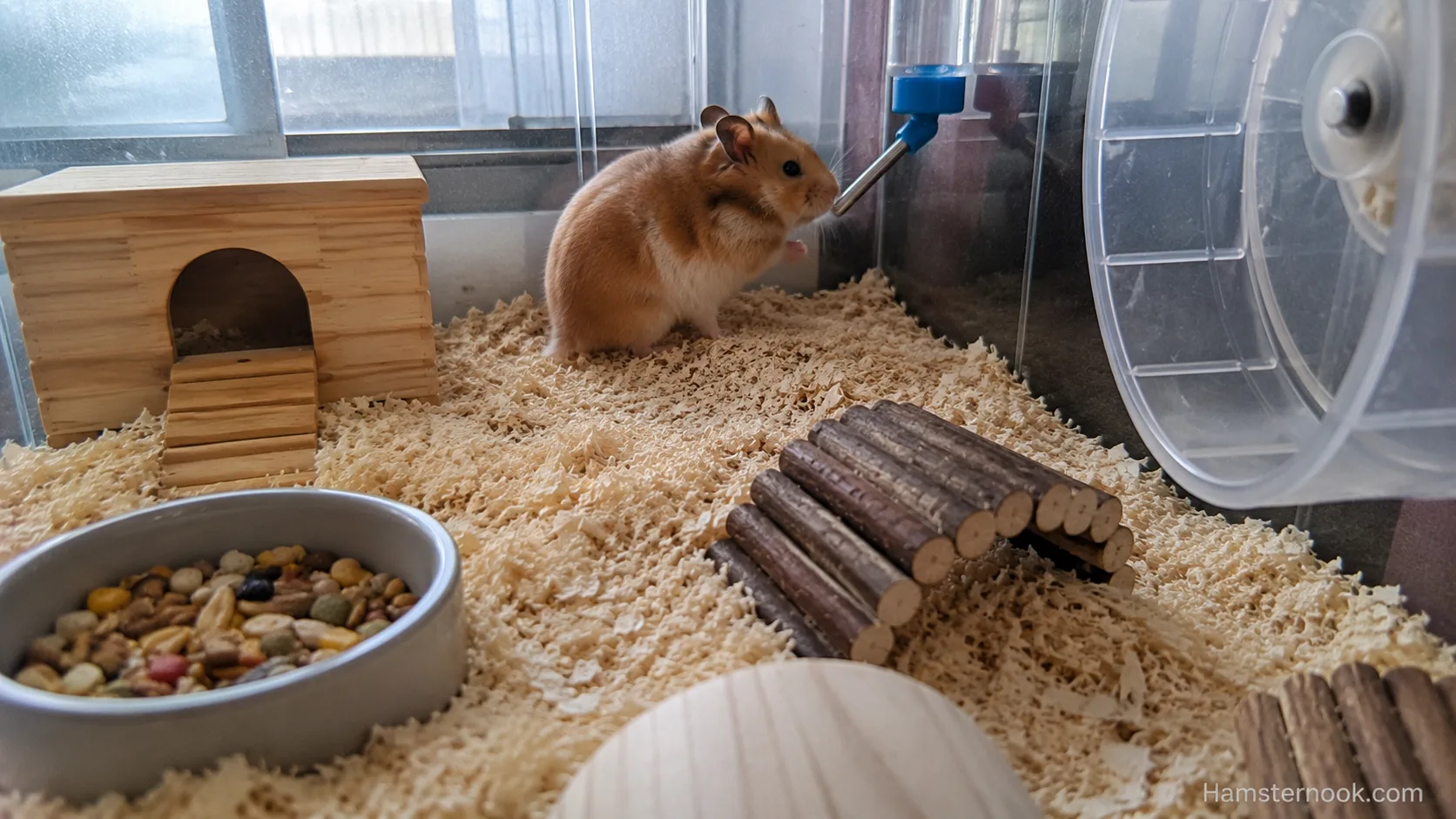
Understanding body language helps you:
- Build trust faster
- Reduce biting and defensive behavior
- Improve handling sessions
- Recognize stress before it becomes serious
- Create a healthier habitat
- Notice possible illness earlier
Because hamsters are prey animals in the wild, they naturally hide weakness and fear. Small behavioral changes are often the first warning signs owners notice.
Common Hamster Body Language and What It Means
The table below explains some of the most common hamster behaviors and their possible meanings.
| Hamster Behavior | What It Usually Means | Should You Worry? |
|---|---|---|
| Relaxed grooming | Comfortable and calm | No |
| Stretching after waking up | Relaxed and healthy | No |
| Sitting still with relaxed posture | Feeling safe | No |
| Ears forward and alert | Curious or interested | No |
| Standing on back legs | Exploring surroundings | No |
| Freezing suddenly | Nervous or listening for danger | Sometimes |
| Flattening body to ground | Fear or uncertainty | Yes, if frequent |
| Hiding constantly | Stress, fear, illness, or poor setup | Possibly |
| Bar chewing | Stress, boredom, or enclosure issues | Yes |
| Repeated pacing | Stress or insufficient space | Yes |
| Loud squeaking during handling | Fear, pain, or discomfort | Yes |
| Teeth chattering | Warning sign or irritation | Yes |
| Sudden biting | Fear, territorial behavior, or stress | Sometimes |
How to Read Your Hamster’s Body Language as a Whole
Remember that body language should always be judged in context. One isolated behavior may not mean much, but repeated patterns often reveal how your hamster feels.
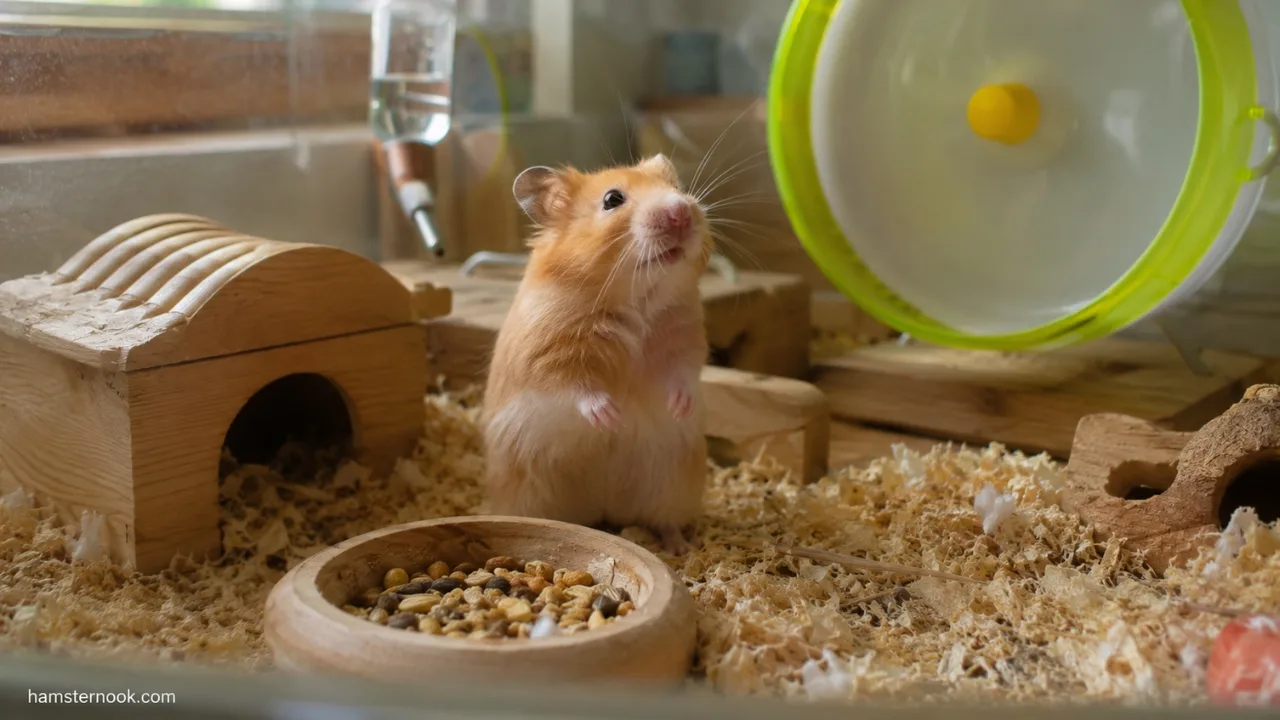
A single behavior is rarely enough to tell you what your hamster is feeling. Look at the whole picture instead. A hamster that freezes briefly after a sudden noise may simply be startled, while freezing combined with repeated hiding, reduced activity, or appetite changes deserves more attention.
The same idea applies to positive behavior. Exploring, grooming, eating, and using the wheel normally are more reassuring when they match your hamster’s usual routine. If several parts of that routine change at once, treat the pattern as more meaningful than any one behavior.
Looking at several behaviors together usually provides a much more accurate picture than focusing on a single action. For example, occasional hiding is completely normal, but hiding combined with weight loss, poor appetite, and reduced activity deserves much closer attention.
Signs Your Hamster Is Happy and Comfortable
A comfortable hamster usually shows relaxed, natural behavior rather than one specific “happy” signal. Because every hamster has its own personality, the best comparison is your pet’s normal routine. Regular grooming, confident exploration, normal eating, burrowing, and relaxed interaction are more useful when they appear consistently together.

Body language becomes much easier to understand when you know which everyday behaviors indicate a healthy emotional state. Our 10 Signs of a Happy and Healthy Hamster Every Owner Should Know guide explains how to recognize the difference between confidence, stress, and discomfort.
Relaxed Grooming
Hamsters groom themselves frequently when they feel safe. Washing the face, cleaning fur, and licking paws are normal healthy behaviors.
A hamster that grooms itself in front of you is often comfortable in its environment.
Exploring the Enclosure Confidently
Happy hamsters are naturally curious. They explore tunnels, bedding, hides, and toys regularly instead of staying frozen or hidden all night.

Signs of confident exploration include:
- Sniffing new objects
- Walking calmly around the cage
- Digging and burrowing
- Climbing safely
- Using exercise wheels regularly
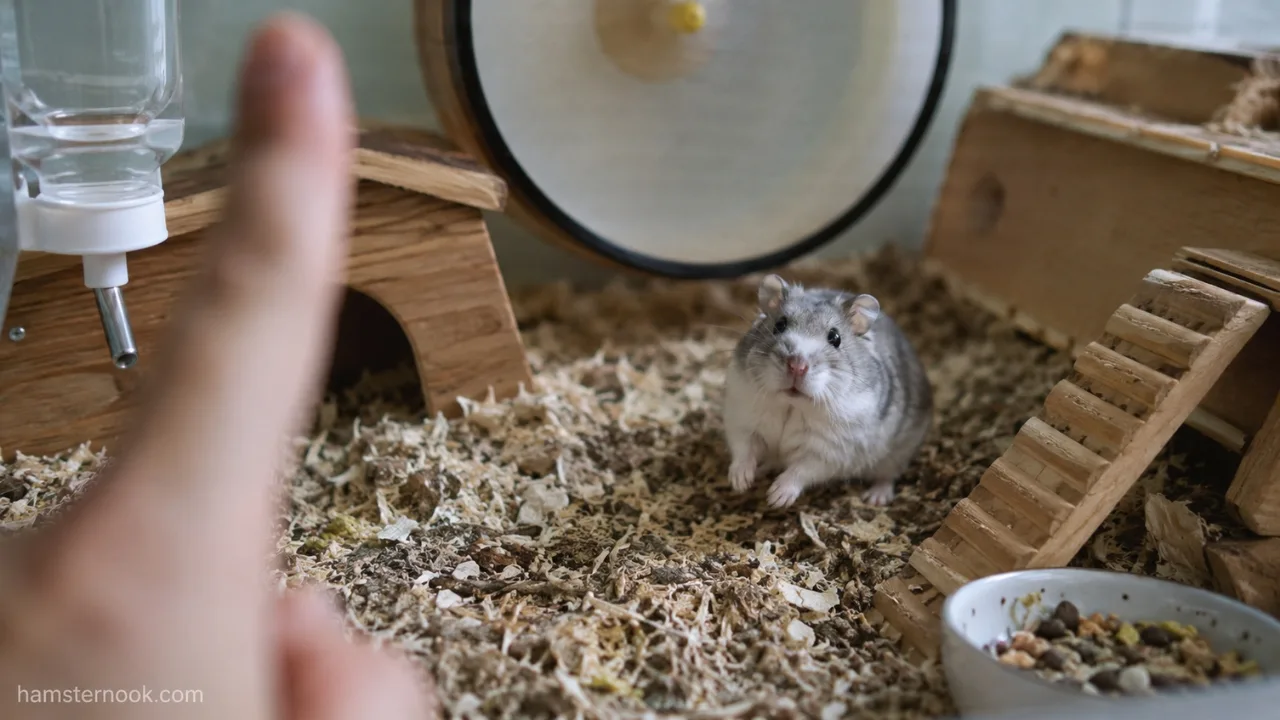
Taking Treats Gently
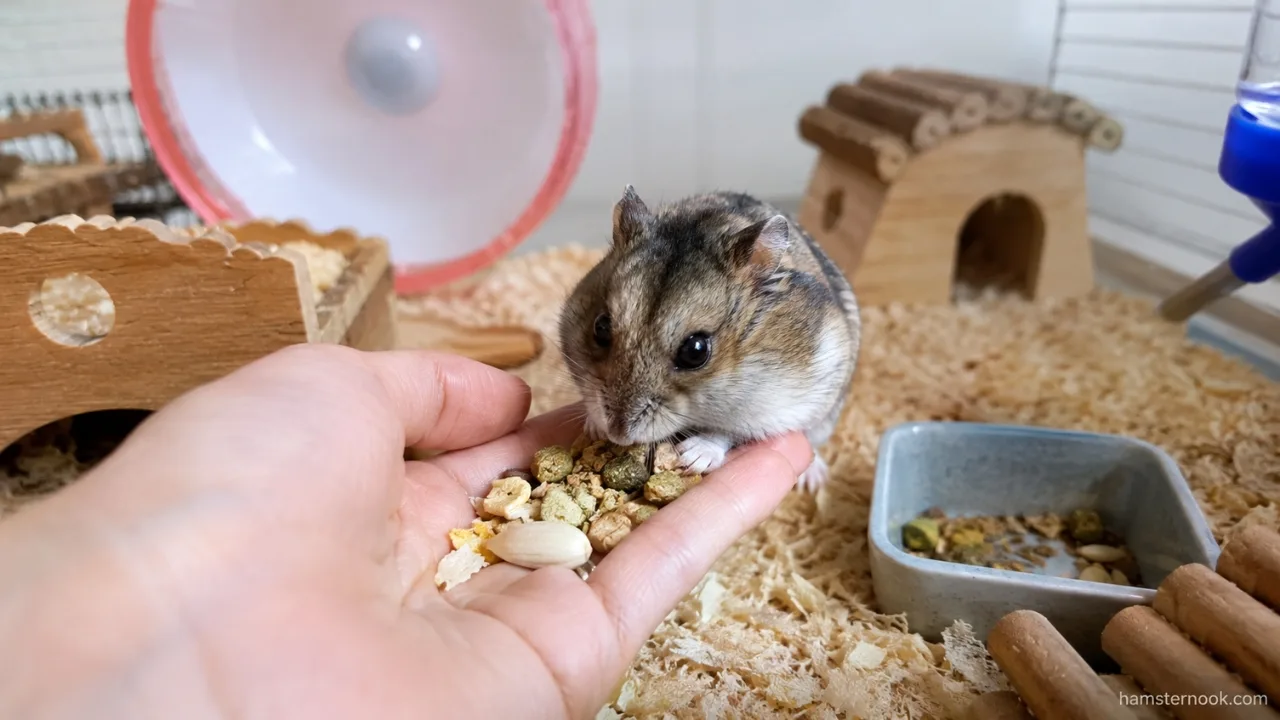
When a hamster calmly takes food from your hand, it usually shows growing trust.
Nervous hamsters may:
- Grab food quickly and run away
- Refuse treats entirely
- Bite fingers accidentally
Gentle treat-taking is a positive sign.
Sleeping Comfortably in the Open
Most hamsters prefer hidden sleeping areas, but relaxed hamsters sometimes nap in partially visible spots without panic.
A hamster that feels secure does not constantly react to every sound or movement.
Stretching and Yawning
Like many animals, hamsters stretch after waking up. Slow stretching, relaxed movements, and occasional yawning are generally signs of comfort.
Signs Your Hamster Is Scared or Nervous
Fear behaviors are extremely common, especially in newly adopted hamsters. Since hamsters are prey animals, they instinctively react cautiously to unfamiliar people, smells, and environments.
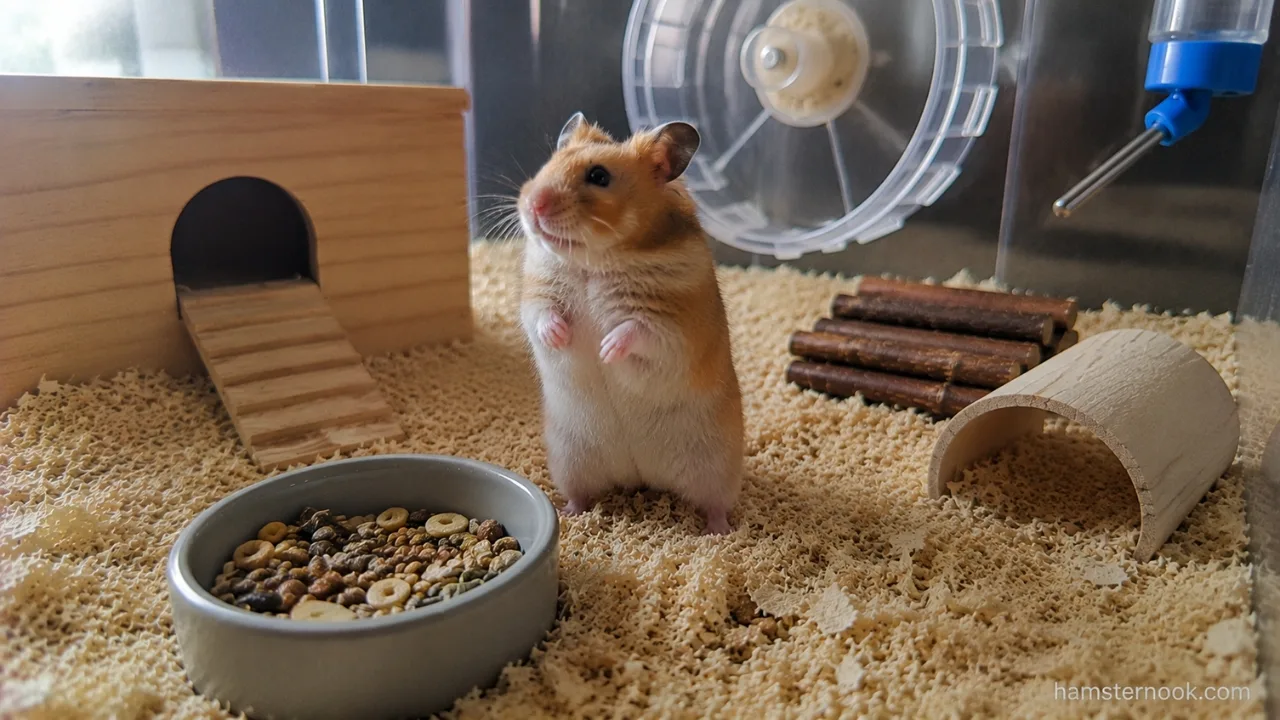
Many newly adopted hamsters display several of these behaviors during their first few days at home. As long as your hamster gradually becomes more relaxed over time, these reactions are usually part of the normal adjustment process rather than a sign of a long-term problem.
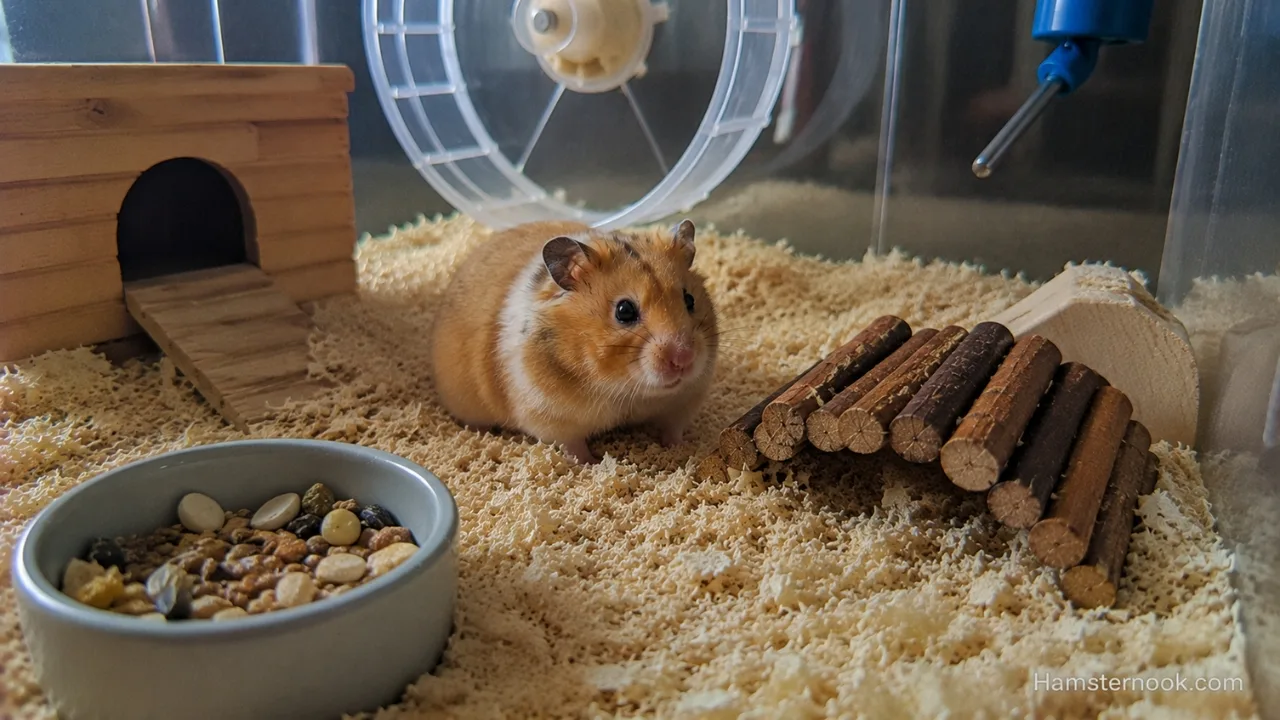
Freezing in Place
A scared hamster may suddenly stop moving completely. This behavior helps prey animals avoid detection in the wild.
Short freezing episodes are normal, especially after sudden noises or movements.
Frequent freezing may mean:
- The room is too loud
- Handling is too fast
- The hamster still feels unsafe
Flattening Against the Ground
A hamster that presses its body low to the ground is usually frightened or uncertain.
This posture often appears when:
- A hand approaches too quickly
- The hamster hears unfamiliar sounds
- The enclosure feels exposed
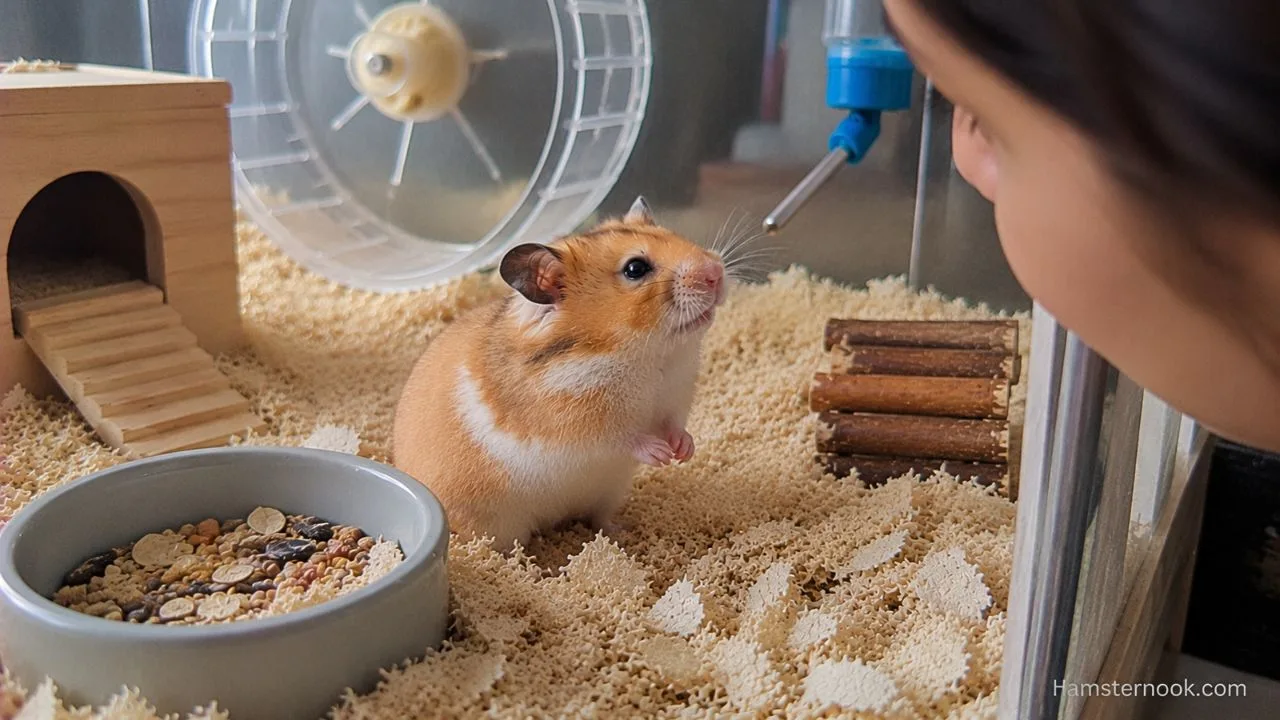
Running Away and Hiding
Hiding is natural, but excessive hiding can signal stress or fear.
Your hamster may hide more if:
- The enclosure is too bright
- There are not enough hideouts
- Other pets are nearby
- Handling happens too often
Squeaking or Screaming
Soft squeaks can occasionally happen during excitement or minor disagreements, but loud repeated squealing usually means fear, pain, or distress.
Never ignore intense vocalizations during handling.
Defensive Biting
Hamsters rarely bite “for no reason.” Most bites happen because the hamster feels threatened, startled, trapped, or territorial.
Understanding why defensive biting happens also makes taming much easier. Our How to Tame a Hamster That Bites: 7 Safe Steps to Build Trust guide explains how patience and gradual trust-building help reduce fear-based bites.
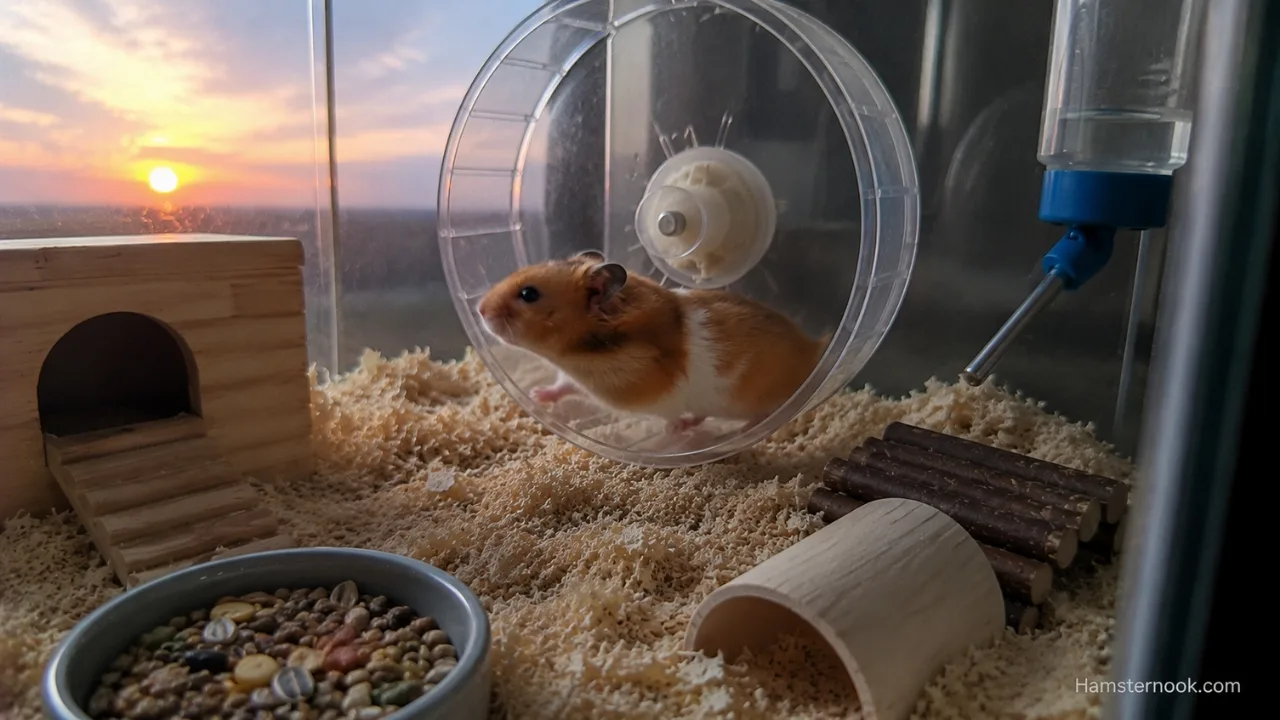
Common causes include:
- Waking the hamster suddenly
- Reaching into its sleeping area
- Smelling like food
- Moving too fast
- Forcing handling sessions
Signs of Stress in Hamsters You Should Not Ignore
Long-term stress can affect a hamster’s physical and mental health. Chronic stress may weaken the immune system, reduce appetite, and increase aggressive behavior.
Bar Chewing
Repeated bar chewing is one of the most common signs of stress in hamsters kept in small cages.
It often suggests:
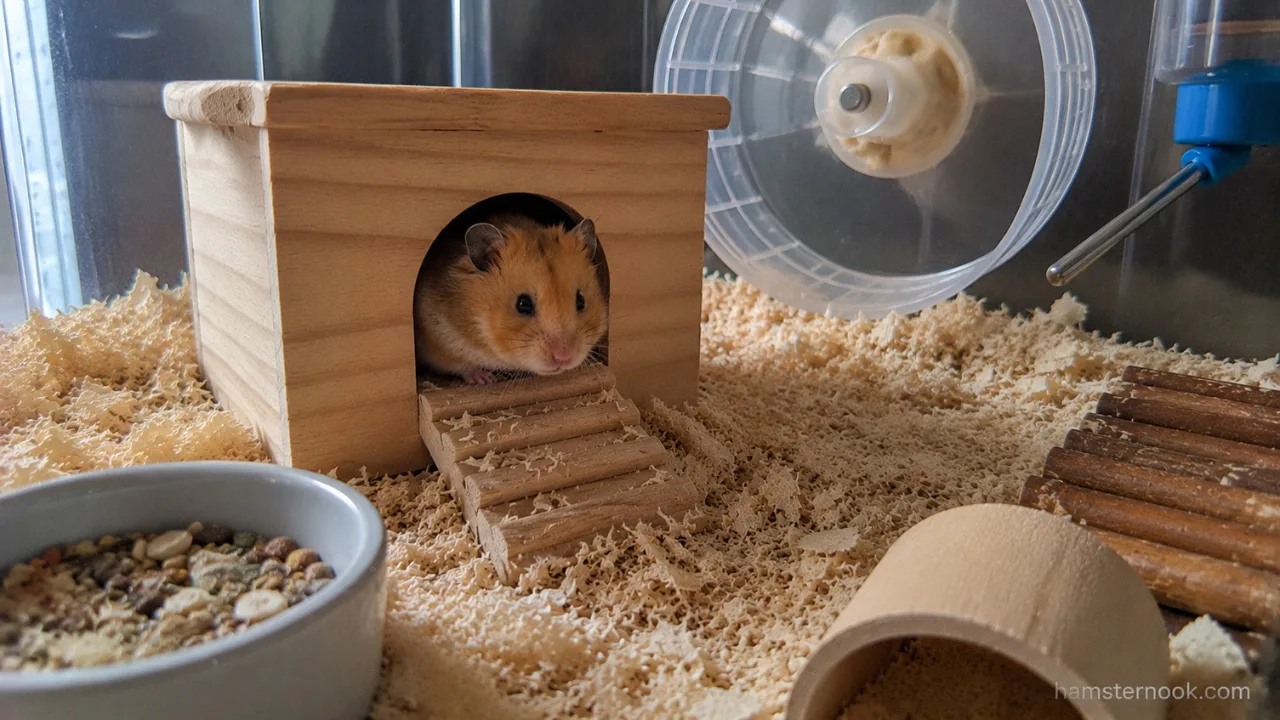
- Insufficient enclosure size
- Boredom
- Lack of enrichment
- Frustration from restricted movement
Choose an enclosure that provides adequate usable space, a solid floor, deep suitable bedding, safe hiding areas, and good ventilation rather than judging the setup by enclosure type alone.
Repeated bar chewing can be a sign that your hamster’s environment or enrichment needs attention, so see our Why Is My Hamster Biting the Cage? Causes & Easy Fixes guide for the common causes and practical fixes.
Pacing or Repetitive Running
A hamster that constantly runs the same route repeatedly may be experiencing enclosure stress.
This behavior can happen when:
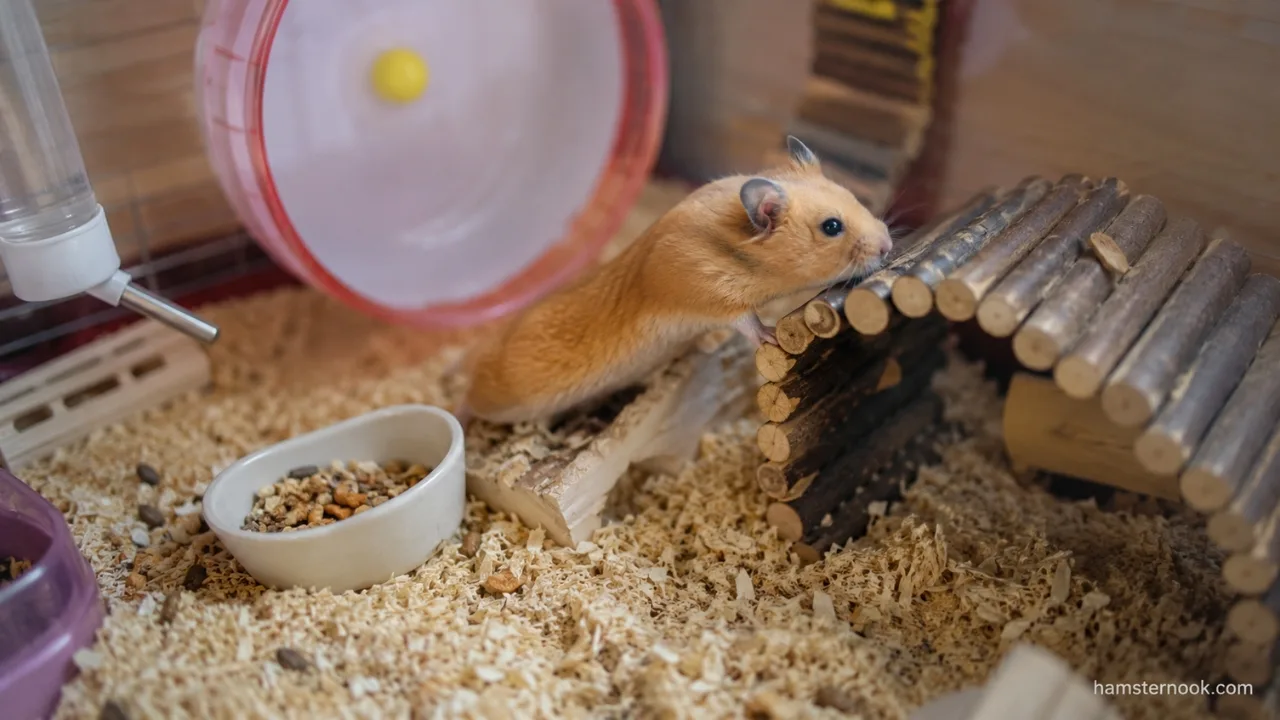
- Space is too limited
- There are not enough activities
- The hamster cannot burrow properly
Overgrooming
Some stressed hamsters groom excessively, sometimes causing fur thinning or skin irritation.
Possible triggers include:
- Anxiety
- Poor environment
- Sudden changes
- Medical problems
If fur loss appears, a veterinarian should check for mites, infections, or illness.
Sudden Aggression
A normally calm hamster becoming aggressive suddenly may indicate:
- Pain
- Illness
- Stress
- Fear
- Territorial behavior
Behavior changes should never be ignored.
If several stress-related behaviors appear together, our 7 Ways You’re Accidentally Stressing Your Hamster: Signs & What to Do guide covers common triggers and practical ways to reduce unnecessary stress.
Refusing Food or Water
Stress can temporarily reduce appetite, but ongoing refusal to eat or drink requires attention.
Loss of appetite may also signal serious illness.

Appetite changes are often one of the earliest health warnings owners notice. Our Why Is My Hamster Not Eating? guide explains the most common reasons behind sudden food refusal and when veterinary care may be needed.
Normal vs Problematic Hamster Behaviors
Some behaviors may look unusual to beginners even though they are often normal hamster behavior.
Behaviors That Are Usually Normal
| Normal Behavior | Why It Happens |
|---|---|
| Sleeping during the day | Hamsters are mostly nocturnal |
| Hoarding food | Natural survival instinct |
| Digging constantly | Normal burrowing behavior |
| Occasional nibbling | Exploring with teeth |
| Short freezing moments | Natural caution response |
| Rearranging bedding | Nest-building instinct |
Behaviors That May Need Attention
| Concerning Behavior | Possible Cause |
|---|---|
| Constant bar chewing | Stress or boredom |
| Loud screaming often | Fear or pain |
| Sudden extreme aggression | Illness or stress |
| Persistent lethargy | Health issue |
| Refusing food | Stress or illness |
| Repetitive pacing | Poor enclosure setup |
| Fur loss | Stress or medical condition |
How to Help a Stressed Hamster Feel Safe
If your hamster shows nervous or stressed behavior, small changes can make a big difference.
Upgrade the Enclosure Size
An enclosure that limits normal movement, burrowing, exploration, or access to suitable enrichment can contribute to stress.
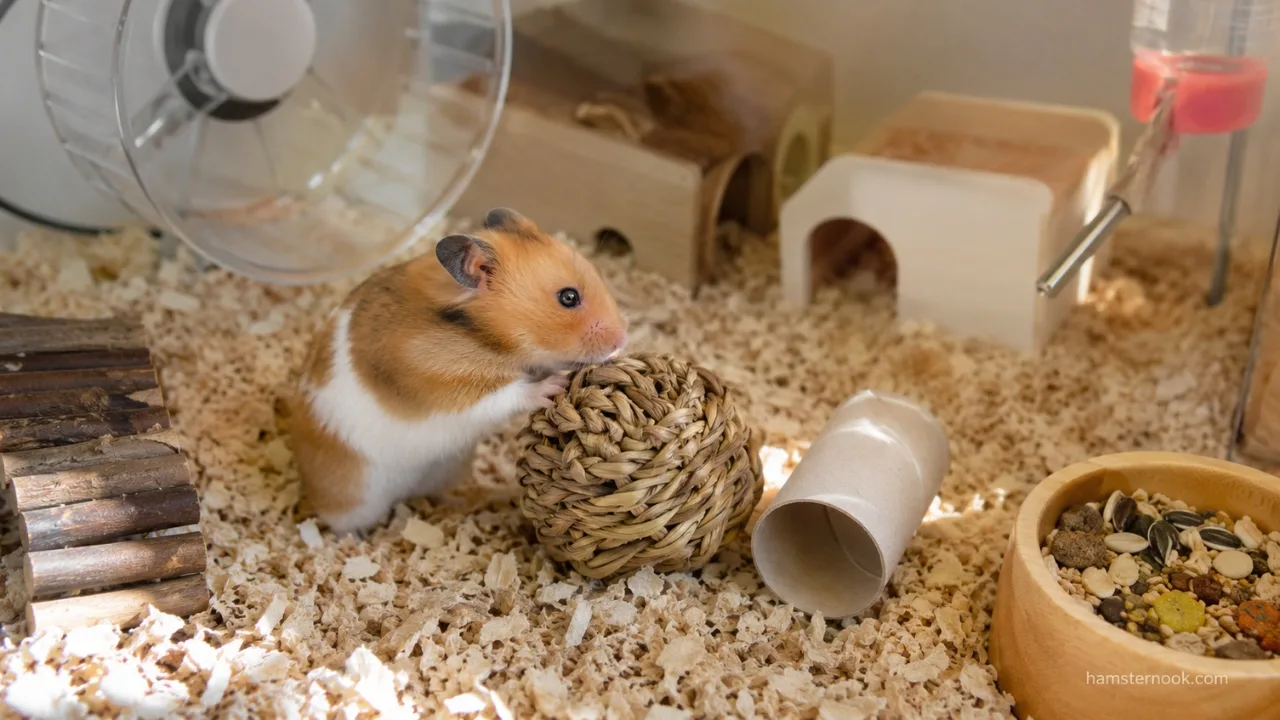
A proper hamster setup should include:
- Deep bedding for burrowing
- Multiple hideouts
- Exercise wheel
- Chew toys
- Space to explore
The goal is not simply to choose a larger enclosure. The habitat should provide enough usable space and suitable enrichment for natural behaviors such as digging, nesting, exploring, and exercising.
A suitable enclosure with deep bedding, hiding areas, enrichment, and good ventilation can support healthier and more natural behavior.
This is consistent with RSPCA and MSD guidance on space, bedding, hiding areas, enrichment, and housing.

Because enclosure size, bedding, hideouts, and enrichment can directly affect behavior, see our Best Hamster Cage Setup for Beginners: Size, Bedding & Essentials guide for the complete setup.
Avoid Waking Your Hamster Suddenly
Hamsters dislike being disturbed during sleep. Sudden waking often causes defensive reactions.
Instead:
- Let the hamster wake naturally
- Interact during evening hours
- Speak softly before handling
Use Slow Hand Movements
Fast movements can scare prey animals.
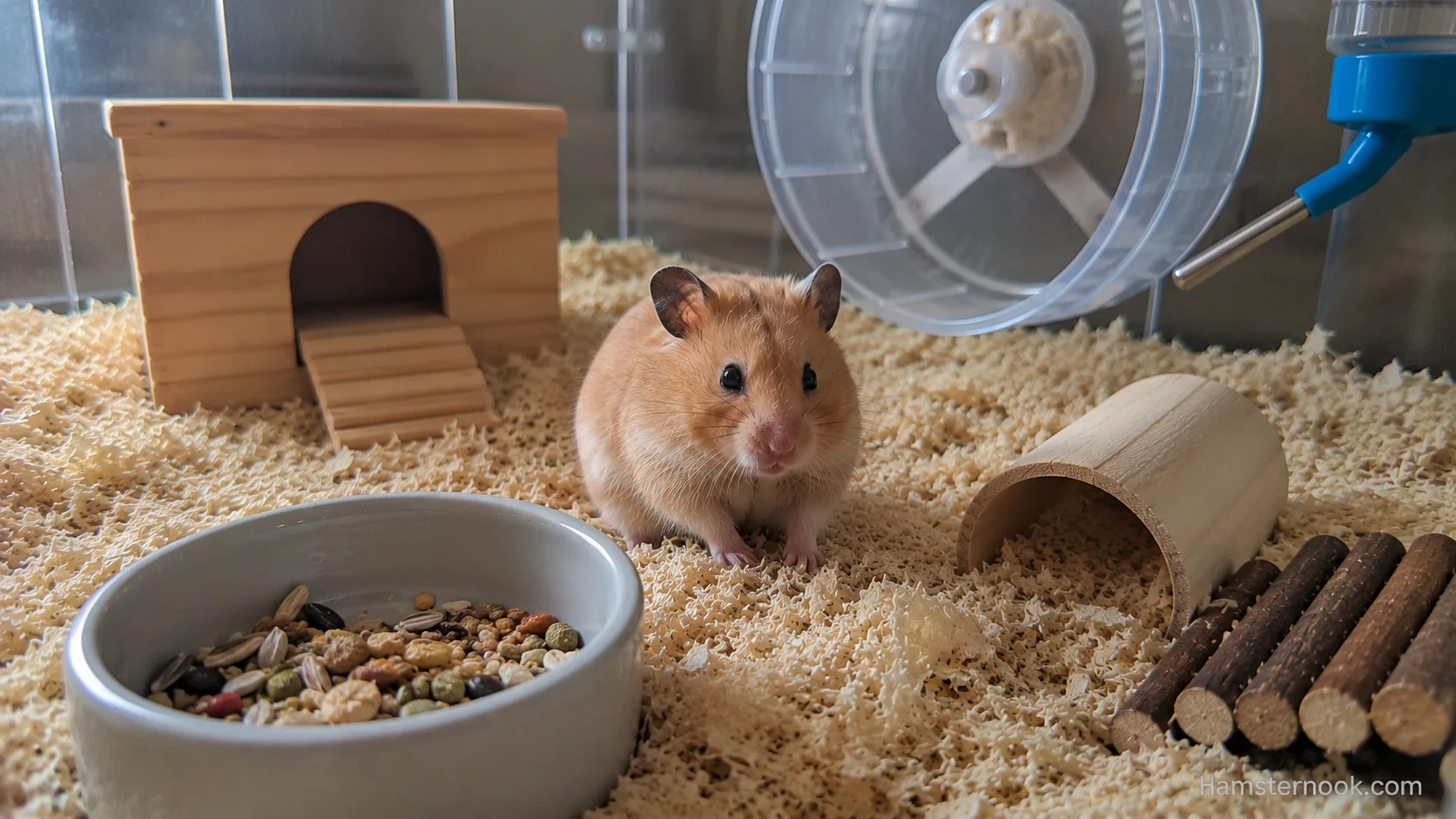
When interacting:
- Move slowly
- Let the hamster approach voluntarily
- Avoid grabbing from above
Hands approaching suddenly from above can feel threatening to hamsters.
Provide More Enrichment
Mental stimulation helps reduce boredom and stress.
Good enrichment options include:

- Cardboard tunnels
- Sand baths
- Chew toys
- Dig boxes
- Scatter feeding
- Safe climbing items
Keep the Environment Quiet
Loud TVs, barking dogs, constant touching, and bright lights can overwhelm hamsters.
Place the enclosure in a calm, low-stress area of the home.
Watch for Gradual Improvements Instead of Perfection
Building trust rarely happens overnight. Rather than expecting immediate changes, pay attention to small improvements such as accepting treats more calmly, exploring while you’re nearby, or spending less time hiding. These gradual changes usually show that your hamster is becoming more comfortable in its environment.
How Long Does It Take for a Hamster to Trust You?
Trust-building depends on the hamster’s personality, age, past experiences, and handling quality.

Some hamsters become comfortable within days, while others need several weeks.
Good trust-building habits include:
- Offering treats by hand
- Talking softly
- Avoiding forced handling
- Respecting hiding behavior
- Keeping routines consistent
Patience and consistency are very important when building trust. Rushing taming often increases fear and biting.
When Hamster Body Language May Indicate Illness
Not every unusual behavior is emotional. Sometimes body language changes happen because a hamster feels physically unwell.

Sometimes changes in posture or movement are among the earliest clues that something is physically wrong. Our What Your Hamster Does Right Before It Gets Sick guide explains the subtle warning signs owners often notice before obvious illness develops.
Watch for:
- Hunched posture
- Closed eyes while awake
- Difficulty walking
- Shaking or trembling
- Heavy breathing
- Wet tail area
- Sudden inactivity
Behavior changes are more concerning when they appear alongside physical signs such as difficulty walking, unusual breathing, appetite loss, obvious weakness, or a major change from your hamster’s normal activity. Hamsters can hide illness, so a sudden combination of behavioral and physical changes should not automatically be treated as “just stress.”
If these symptoms appear, contact an exotic veterinarian quickly.

Hamsters often hide signs of illness, so noticeable symptoms should be taken seriously.
For a broader checklist of illness warning signs, see How to Tell If Your Hamster Is Sick: Signs, Symptoms & When to See a Vet.
Keeping a simple record of changes in your hamster’s appetite, activity, posture, and grooming habits can help you notice gradual problems that might otherwise be overlooked. Even small changes become easier to recognize when you know what’s normal for your individual hamster.
Learning to read hamster body language isn’t about memorizing individual behaviors—it’s about understanding patterns over time. The better you know your hamster’s normal routine, the easier it becomes to notice when something changes.

Final Thoughts
Understanding your hamster’s body language allows you to respond with confidence instead of guesswork. By paying attention to consistent patterns in posture, activity, appetite, grooming, and interaction, you’ll be better prepared to support your hamster’s physical health and emotional well-being throughout its life.
The more time you spend observing your hamster calmly, the easier these signals become to recognize. A relaxed hamster typically explores confidently, grooms comfortably, and interacts without panic. On the other hand, repeated hiding, bar chewing, screaming, or aggressive behavior may indicate fear, stress, or environmental problems that need attention.
Patience, proper housing, gentle handling, and a quiet environment are the foundation of building trust with any hamster. Over time, learning your hamster’s unique personality and body language can help create a calmer, safer, and more comfortable environment.
FAQ About Hamster Body Language
Why does my hamster freeze when I walk near the cage?
Freezing is a natural prey-animal response. Your hamster may be listening for danger or reacting to sudden movement. Gentle, consistent interaction usually helps reduce this behavior over time.
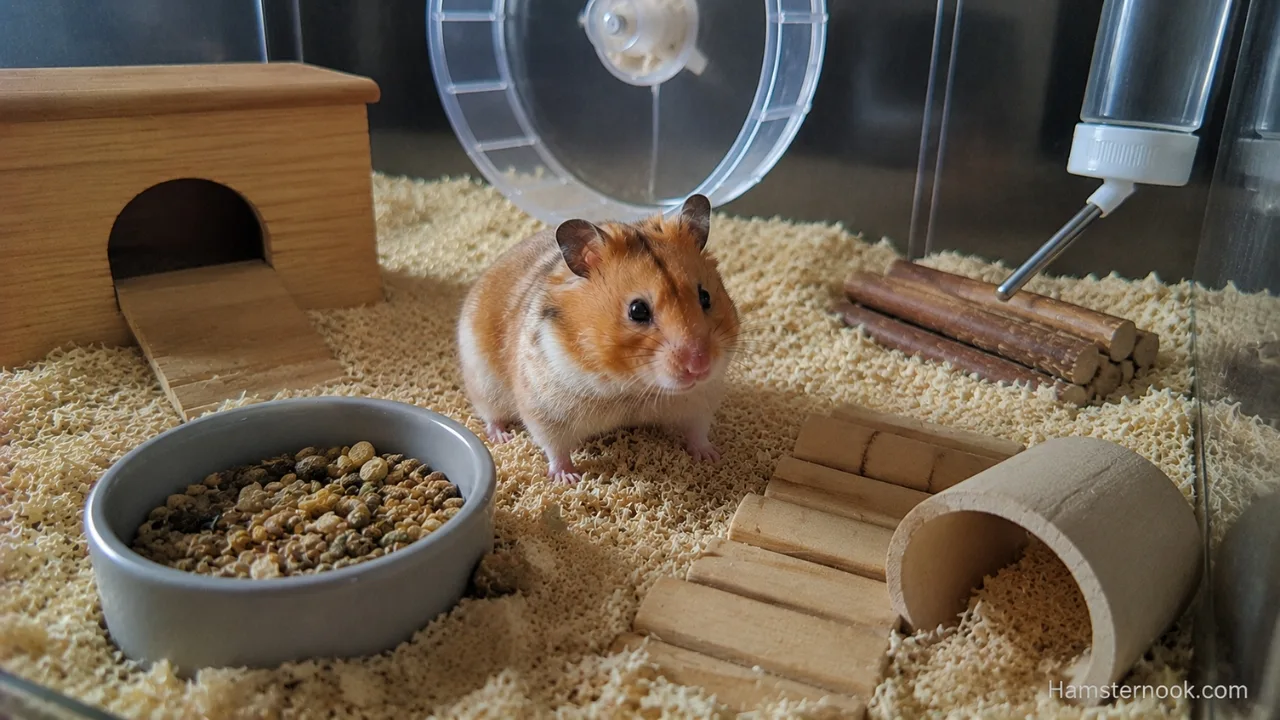
Is my hamster happy if it runs on the wheel a lot?
Usually yes. Wheel running is natural exercise behavior. However, frantic nonstop running combined with stress signs like bar chewing or pacing may indicate enclosure frustration.
Why does my hamster flatten its body when I touch it?
Flattening often signals fear or uncertainty. Your hamster may not fully trust handling yet or may feel startled.
Do hamsters squeak when they are happy?
Soft occasional squeaks can happen during excitement, but loud repeated squealing is more commonly linked to fear, stress, pain, or discomfort.
Why does my hamster bite me even though I feed it?
Biting usually happens because the hamster feels scared, surprised, territorial, or confused. Building trust slowly and avoiding sudden handling often reduces biting.
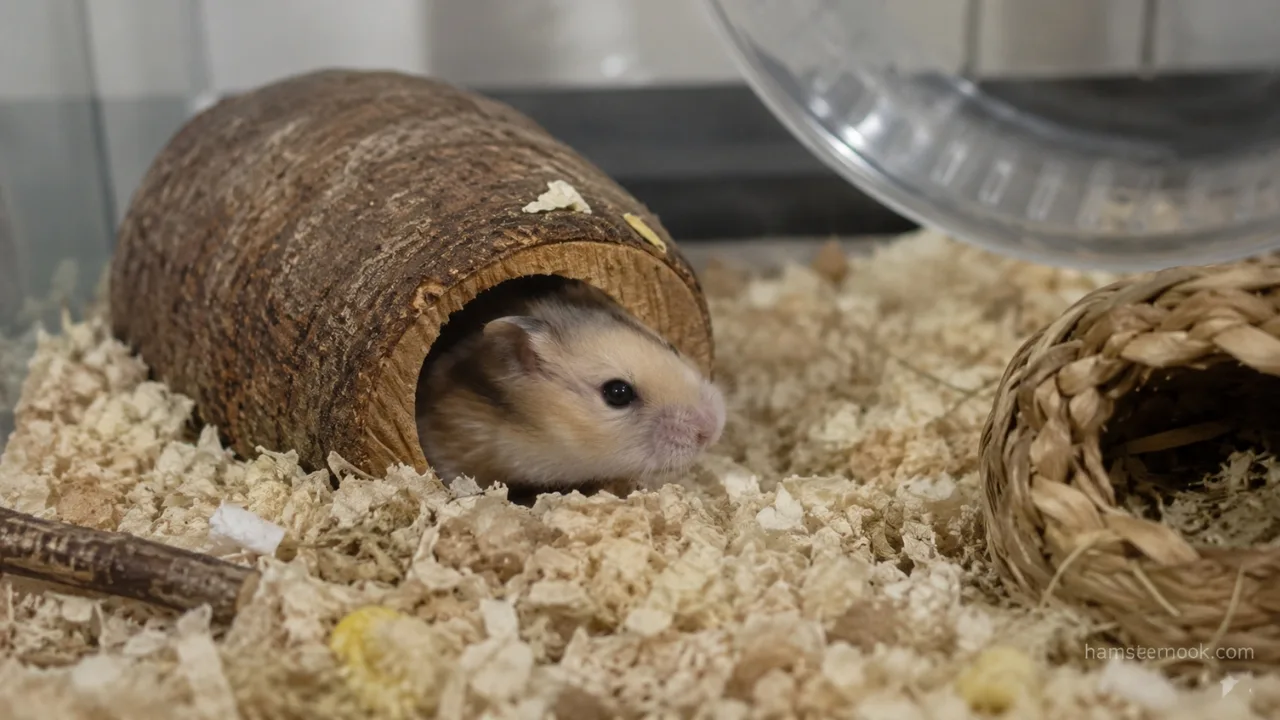
Can stressed hamsters get sick?
Yes. Long-term stress may weaken the immune system and contribute to health problems, behavioral changes, and reduced appetite.
Can hamster body language change with age?
Yes. Younger hamsters are often more energetic and curious, while older hamsters may naturally become calmer and less active. Sudden changes, however, should always be evaluated alongside appetite, grooming, and overall health to rule out illness.
References
This guide is based on hamster behavior, body language, handling, stress, enrichment, and welfare guidance from trusted animal welfare and veterinary resources, including:

- RSPCA – Understanding Hamster Behaviour – Natural behavior, handling, activity, stress, and communication cues.
- RSPCA – Hamster Health & Welfare Tips – Health monitoring, changes in behavior, stress, signs of illness, and handling welfare.
- PDSA – Hamsters as Pets – Hamster behavior, handling, enrichment, housing, activity, and common health concerns.
- Blue Cross – Looking After Your Hamster – Hamster care, handling, housing, enrichment, and behavioral welfare.
- Merck Veterinary Manual – Hamsters – Veterinary information on hamster behavior, husbandry, physical examination, and health-related behavioral changes.
- Merck Veterinary Manual – Providing a Home for a Hamster – Housing, enrichment, temperament, handling, and environmental considerations.
Medical Disclaimer: This article is intended for educational purposes only and should not be considered veterinary advice. Hamster body language can vary between individual animals, and behavioral changes may sometimes be associated with stress, pain, illness, or other health problems. If your hamster shows sudden or persistent changes in behavior, appetite, activity, posture, breathing, grooming, or mobility, consult a qualified exotic animal veterinarian for proper evaluation and treatment.

Narayan Kumar is the founder and author of HamsterNook. He creates practical, research-based hamster care guides covering hamster behavior, nutrition, cage setup, enrichment, health, and everyday care. His goal is to help hamster owners make informed decisions and provide safer, healthier lives for their pets through clear, beginner-friendly information based on trusted animal care resources.